

Super enhancer regulation of cytokine-induced chemokine production in alcoholic hepatitis
Open accessThe DOI matches its Crossref record; 68 of the 68 references it cites were found in a registry or an index.
Abstract
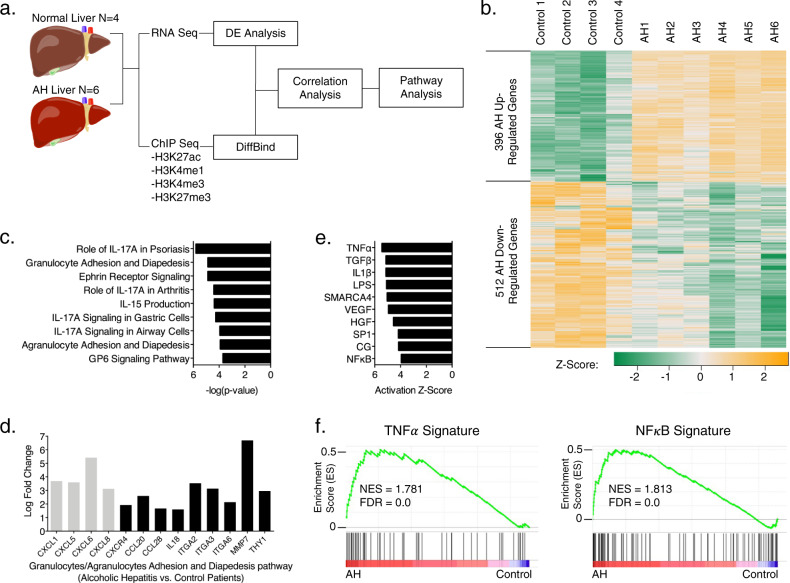
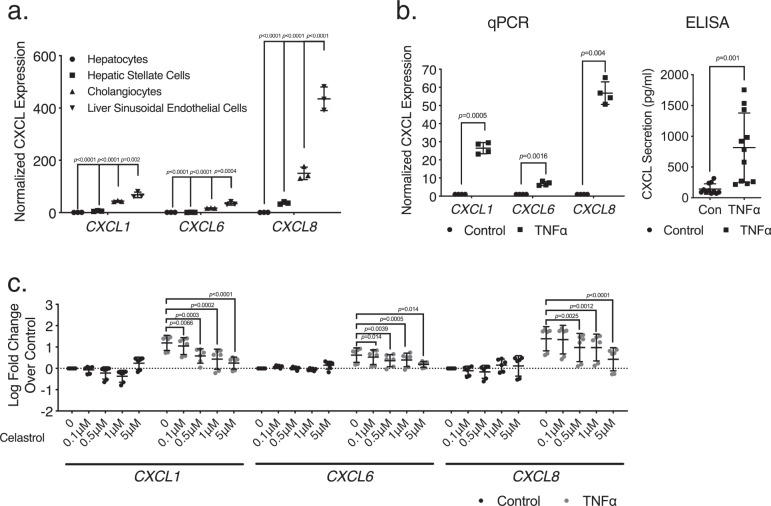
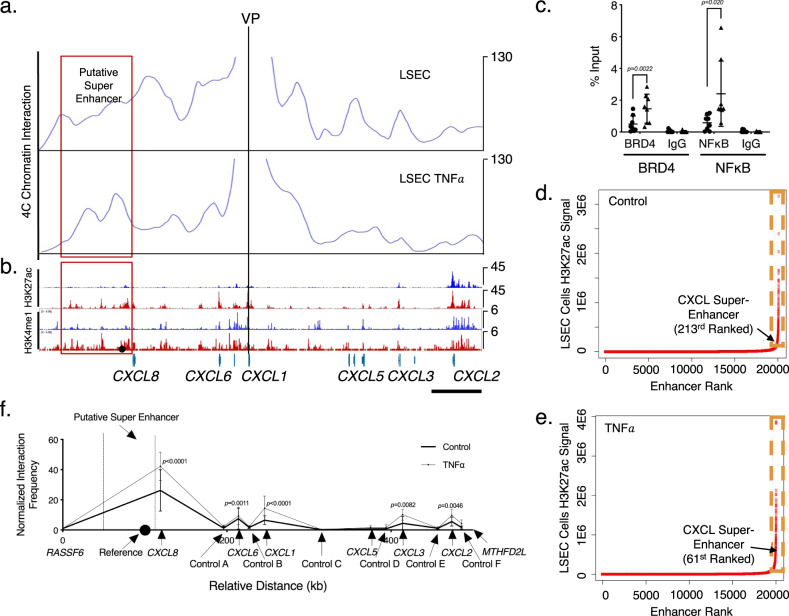
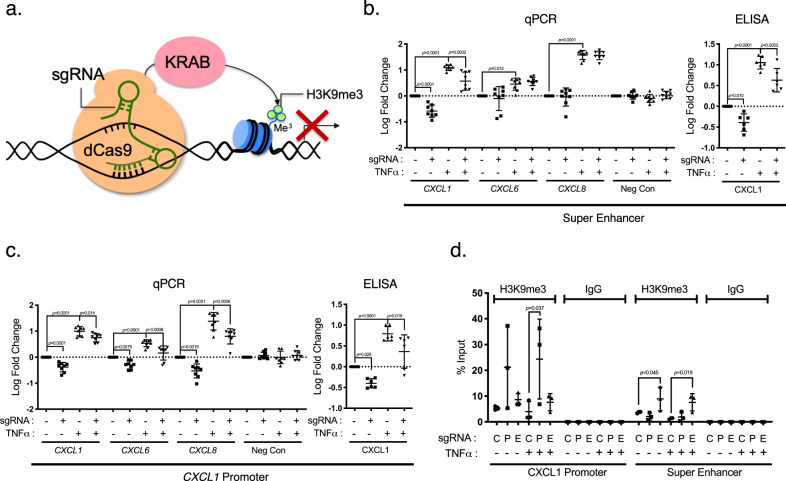
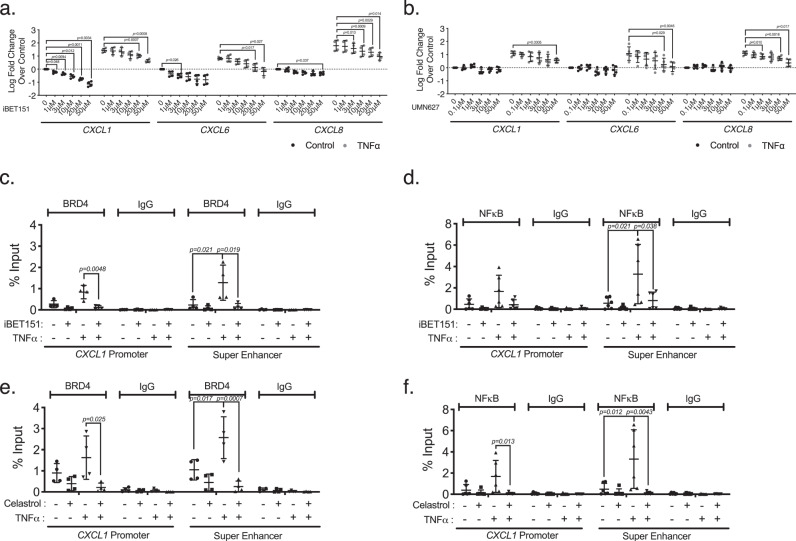
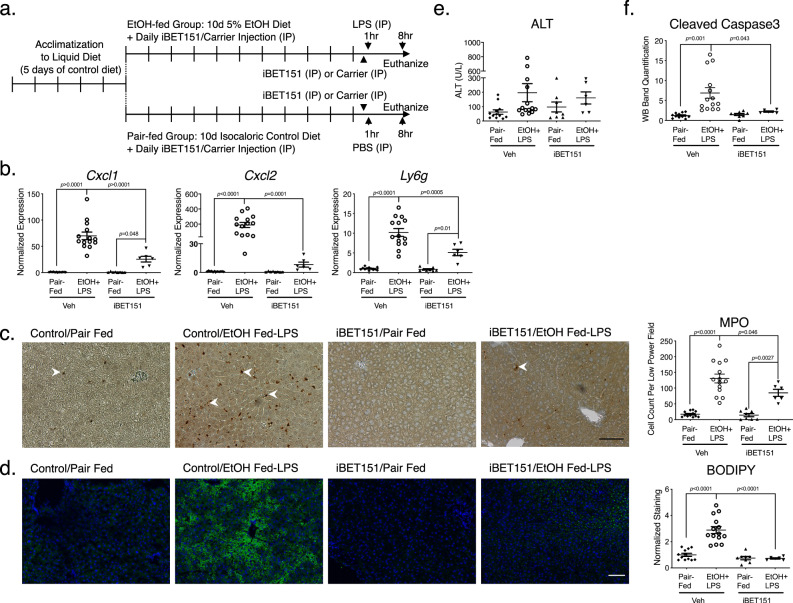
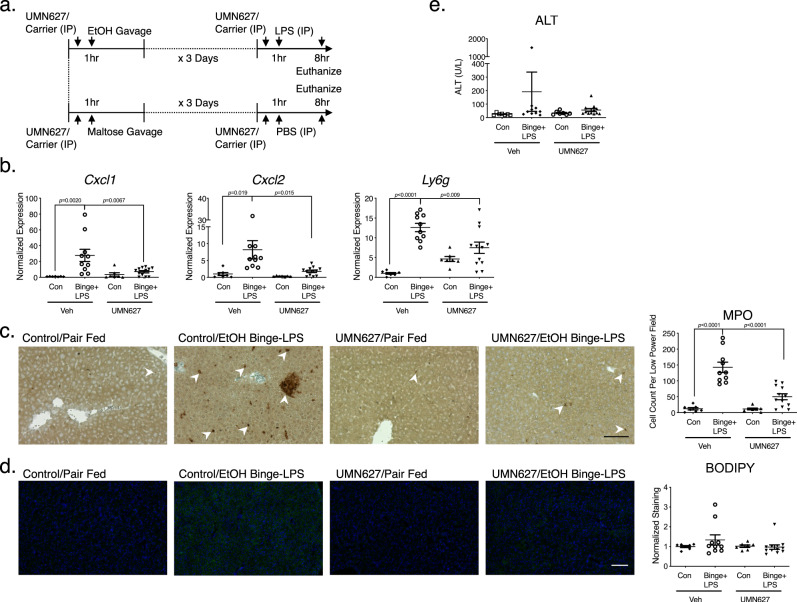
Alcoholic hepatitis (AH) is associated with liver neutrophil infiltration through activated cytokine pathways leading to elevated chemokine expression. Super-enhancers are expansive regulatory elements driving augmented gene expression. Here, we explore the mechanistic role of super-enhancers linking cytokine TNFα with chemokine amplification in AH. RNA-seq and histone modification ChIP-seq of human liver explants show upregulation of multiple CXCL chemokines in AH. Liver sinusoidal endothelial cells (LSEC) are identified as an important source of CXCL expression in human liver, regulated by TNFα/NF-κB signaling. A super-enhancer is identified for multiple CXCL genes by multiple approaches. dCas9-KRAB-mediated epigenome editing or pharmacologic inhibition of Bromodomain and Extraterminal (BET) proteins, transcriptional regulators vital to super-enhancer function, decreases chemokine expression in vitro and decreases neutrophil infiltration in murine models of AH. Our findings highlight the role of super-enhancer in propagating inflammatory signaling by inducing chemokine expression and the therapeutic potential of BET inhibition in AH treatment.
Overview
The claims and statistics of this paper haven’t been checked yet.
Free: it reads the open-access text and checks the first 5 claims that cite a source we can check. Create a free account to check every claim.
Integrity signals
Registry
Cites
Statistics
Figures
Verification
Claims the paper makes
The claims and statistics of this paper haven’t been checked yet.
Free: it reads the open-access text and checks the first 5 claims that cite a source we can check. Create a free account to check every claim.
Claims other papers make about this one
Each is checked against this paper’s own text: does it say what the citing paper says it does?
In the citing paper
“Pharmacological inhibition of BRD4 in a murine model of AH reduces chemokine expression and neutrophil infiltration in the liver [312].”
From Inflammation and immunity in liver homeostasis and disease: a nexus of hepatocytes, nonparenchymal cells and immune cells (2025) · doi:10.1038/s41423-025-01313-7 · cites this paper as [312]
In the citing paper
“Indeed, tumor necrosis factor alpha (TNFα) augments the expression of several chemokines in LSECs, including CXCL1, CXCL6, and CXCL8, through NF-κB and bromodomain-containing protein 4 (BRD4) binding to a common superenhancer (Fig. 4) [312].”
From Inflammation and immunity in liver homeostasis and disease: a nexus of hepatocytes, nonparenchymal cells and immune cells (2025) · doi:10.1038/s41423-025-01313-7 · cites this paper as [312]
Self-check
Percentages, sums and reported differences re-computed from the paper’s own numbers.
The self-check needs the paper’s full text.
Citations
Cites
An integrated encyclopedia of DNA elements in the human genome
The ENCODE Project Consortium (2012) · Nature · doi:10.1038/nature11247 · Cited by 18,072
A 3D Map of the Human Genome at Kilobase Resolution Reveals Principles of Chromatin Looping
Rao, S. S. P., Huntley, M. H., Durand, N. C., Stamenova, E. K., Bochkov, I. D., Robinson, J. T., Sanborn, A. L., Machol, I., Omer, A. D., Lander, E. S., et al. (2014) · Cell · doi:10.1016/j.cell.2014.11.021 · Cited by 9,212
Neutrophil recruitment and function in health and inflammation
Kolaczkowska, E., & Kubes, P. (2013) · Nature Reviews Immunology · doi:10.1038/nri3399 · Cited by 5,472
Histone H3K27ac separates active from poised enhancers and predicts developmental state
Creyghton, M. P., Cheng, A. W., Welstead, G. G., Kooistra, T., Carey, B. W., Steine, E. J., Hanna, J., Lodato, M. A., Frampton, G. M., Sharp, P. A., et al. (2010) · Proceedings of the National Academy of Sciences · doi:10.1073/pnas.1016071107 · Cited by 4,302
CRISPR-Mediated Modular RNA-Guided Regulation of Transcription in Eukaryotes
Gilbert, L. A., Larson, M. H., Morsut, L., Liu, Z., Brar, G. A., Torres, S. E., Stern-Ginossar, N., Brandman, O., Whitehead, E. H., Doudna, J. A., et al. (2013) · Cell · doi:10.1016/j.cell.2013.06.044 · Cited by 3,696
Epigenetic modifications and human disease
Portela, A., & Esteller, M. (2010) · Nature Biotechnology · doi:10.1038/nbt.1685 · Cited by 2,836
Hilton, I. B., D'Ippolito, A. M., Vockley, C. M., Thakore, P. I., Crawford, G. E., Reddy, T. E., & Gersbach, C. A. (2015) · Nature Biotechnology · doi:10.1038/nbt.3199 · Cited by 1,885
NF-κB, the first quarter-century: remarkable progress and outstanding questions
Hayden, M. S., & Ghosh, S. (2012) · Genes & Development · doi:10.1101/gad.183434.111 · Cited by 1,693
Single cell RNA sequencing of human liver reveals distinct intrahepatic macrophage populations
MacParland, S. A., Liu, J. C., Ma, X.-Z., Innes, B. T., Bartczak, A. M., Gage, B. K., Manuel, J., Khuu, N., Echeverri, J., Linares, I., et al. (2018) · Nature Communications · doi:10.1038/s41467-018-06318-7 · Cited by 1,552
Transcriptional enhancers: from properties to genome-wide predictions
Shlyueva, D., Stampfel, G., & Stark, A. (2014) · Nature Reviews Genetics · doi:10.1038/nrg3682 · Cited by 1,356
Cited by
Liver diseases: epidemiology, causes, trends and predictions
Gan, C., Yuan, Y., Shen, H., Gao, J., Kong, X., Che, Z., Guo, Y., Wang, H., Dong, E., & Xiao, J. (2025) · Signal Transduction and Targeted Therapy · doi:10.1038/s41392-024-02072-z · Cited by 310
“358 Growing evidence has emphasized the signi fi - cance of neutrophil in liver diseases, as they are thought to promote liver in fl ammation by releasing cytokines and chemo-kines, along with recruiting various other immune cells and potentially contributing to the formation of microthrombi.”
Self-citationAlcohol-associated liver disease
Mackowiak, B., Fu, Y., Maccioni, L., & Gao, B. (2024) · Journal of Clinical Investigation · doi:10.1172/jci176345 · Cited by 359
“Epigenetics in ALD has also been received much attention in the past (123, 124), while gene splicing is another area that has been investigated recently.”
BackgroundBataller, R., Arab, J. P., & Shah, V. H. (2022) · New England Journal of Medicine · doi:10.1056/nejmra2207599 · Cited by 259
Self-citationThe intersection between alcohol-related liver disease and nonalcoholic fatty liver disease
Díaz, L. A., Arab, J. P., Louvet, A., Bataller, R., & Arrese, M. (2023) · Nature Reviews Gastroenterology & Hepatology · doi:10.1038/s41575-023-00822-y · Cited by 207
“In patients with alcohol-related hepatitis, ethanol can also promote the release of CXCL chemokines from liver sinusoidal endothelial cells and infiltrating immune cells in a process that is regulated by the TNF–nuclear factor-κB (NF-κB) signalling axis 131 .”
BackgroundSelf-citationThe evolving role of liver sinusoidal endothelial cells in liver health and disease
McConnell, M. J., Kostallari, E., Ibrahim, S. H., & Iwakiri, Y. (2023) · Hepatology · doi:10.1097/hep.0000000000000207 · Cited by 189
“Among the differentially expressed genes in this disease, several CXCL chemokines such as CXCL1, 6, and 8, implicated in neutrophil recruitment, show markedly elevated expression in the livers of patients with AH (129, 131).”
CRISPR/dCas9 Tools: Epigenetic Mechanism and Application in Gene Transcriptional Regulation
Cai, R., Lv, R., Shi, X., Yang, G., & Jin, J. (2023) · International Journal of Molecular Sciences · doi:10.3390/ijms241914865 · Cited by 174
(2025) · doi:10.1038/s41423-025-01313-7 · Cited by 97
“Pharmacological inhibition of BRD4 in a murine model of AH reduces chemokine expression and neutrophil in fi ltration in the liver [312].”
Greuter, T., Yaqoob, U., Gan, C., Jalan-Sakrikar, N., Kostallari, E., Lu, J., Gao, J., Sun, L., Liu, M., Sehrawat, T. S., et al. (2022) · Journal of Hepatology · doi:10.1016/j.jhep.2022.03.029 · Cited by 92
Self-citationMa, J., Guillot, A., Yang, Z., Mackowiak, B., Hwang, S., Park, O., Peiffer, B. J., Ahmadi, A. R., Melo, L., Kusumanchi, P., et al. (2022) · Journal of Clinical Investigation · doi:10.1172/jci157780 · Cited by 90
“A positive correlation among NCF1, intercellular adhesion molecule 1 ( ICAM1), and CXCL1 was observed with the trend in its correlation with IL6, TNFα, TNFAIP8, CCL2, and CXCL8 in patients with SAH (Figure 5D); this was reported to be associated with prognosis among AH patients (32, 33).”
Self-citationAngiocrine signaling in sinusoidal homeostasis and liver diseases
Gao, J., Lan, T., Kostallari, E., Guo, Y., Lai, E., Guillot, A., Ding, B., Tacke, F., Tang, C., & Shah, V. H. (2024) · Journal of Hepatology · doi:10.1016/j.jhep.2024.05.014 · Cited by 90
Self-citationThe “Domino effect” in MASLD: The inflammatory cascade of steatohepatitis
Mladenić, K., Lenartić, M., Marinović, S., Polić, B., & Wensveen, F. M. (2024) · European Journal of Immunology · doi:10.1002/eji.202149641 · Cited by 98
Xu, H., Lin, S., Zhou, Z., Li, D., Zhang, X., Yu, M., Zhao, R., Wang, Y., Qian, J., Li, X., et al. (2023) · Cellular and Molecular Immunology · doi:10.1038/s41423-023-01032-x · Cited by 85
“Owing to their broad activity against a large number of inflammatory genes and their specificity for their target genes, SEs are attractive candidates for pharmacological intervention [164, 218, 240].”
BackgroundThe role of neutrophils in alcohol-related hepatitis
Khan, R. S., Lalor, P. F., Thursz, M., & Newsome, P. N. (2023) · Journal of Hepatology · doi:10.1016/j.jhep.2023.05.017 · Cited by 57
Organ-on-a-chip microengineering for bio-mimicking disease models and revolutionizing drug discovery
Ahmed, T. (2022) · Biosensors and Bioelectronics X · doi:10.1016/j.biosx.2022.100194 · Cited by 70
Alcohol-associated liver disease: Natural history, management and novel targeted therapies
Alvarado‐Tápias, E., Pose, E., Gratacós‐Ginès, J., Clemente, A. P. G., López‐Pelayo, H., & Bataller, R. A. (2024) · Clinical and Molecular Hepatology · doi:10.3350/cmh.2024.0709 · Cited by 65
“…of hepatic stellate cells (HSC), enhancing transforming growth factor-β (TGF-β) secretion, collagen synthesis, and accumulation of extracellular matrix around hepatocytes and sinusoidal cells, generating a “chicken wire” pattern and favoring the development of portal hypertension(114,115).”
BackgroundSelf-citationLi, Z., Zhang, H., Li, Q., Feng, W., Jia, X., Zhou, R., Huang, Y., Li, Y., Hu, Z., Hu, X., et al. (2023) · Scientific Data · doi:10.1038/s41597-023-02257-1 · Cited by 62
Immunological mechanisms and emerging therapeutic targets in alcohol-associated liver disease
Shen, H., Liangpunsakul, S., Iwakiri, Y., Szabó, G., & Wang, H. (2025) · Cellular and Molecular Immunology · doi:10.1038/s41423-025-01291-w · Cited by 57
“The chemokines they release, such as CXCL1 and CXCL2, attract monocytes and neutrophils to the liver, where they contribute to the localization and ampli fi cation of in fl ammatory responses [180].”
A Structure-based Design Approach for Generating High Affinity BRD4 D1-Selective Chemical Probes
Cui, H., Divakaran, A., Hoell, Z. J., Ellingson, M. O., Scholtz, C. R., Zahid, H., Johnson, J. A., Griffith, E. C., Gee, C. T., Lee, A. L., et al. (2022) · Journal of Medicinal Chemistry · doi:10.1021/acs.jmedchem.1c01779 · Cited by 46
Self-citationInflammation in Alcohol-Associated Hepatitis: Pathogenesis and Therapeutic Targets
Feng, D., Hwang, S., Guillot, A., Wang, Y., Guan, Y., Chen, C., Maccioni, L., & Gao, B. (2024) · Cellular and Molecular Gastroenterology and Hepatology · doi:10.1016/j.jcmgh.2024.04.009 · Cited by 44
Epigenetics of alcohol-related liver diseases
Habash, N. W., Sehrawat, T. S., Shah, V. H., & Cao, S. (2022) · JHEP Reports · doi:10.1016/j.jhepr.2022.100466 · Cited by 41
“In fact, our group found suppression of CXCL expression in mice undergoing alcohol binges/LPS injection using the novel selective BD1 inhibitor, UMN627.”
BackgroundMethodInfluentialSelf-citationInterleukin-11 drives human and mouse alcohol-related liver disease
Effenberger, M., Widjaja, A. A., Grabherr, F., Schaefer, B., Grander, C., Mayr, L., Schwärzler, J., Enrich, B., Moser, P. L., Fink, J., et al. (2022) · Gut · doi:10.1136/gutjnl-2021-326076 · Cited by 46
CXCL6: A potential therapeutic target for inflammation and cancer
Dai, C.-L., Yang, H.-X., Liu, Q., Rahman, K., & Zhang, H. (2023) · Clinical and Experimental Medicine · doi:10.1007/s10238-023-01152-8 · Cited by 43
“Neutrophil infiltration is a hallmark of alcoholic hepatitis and is relevant to increased chemokine expression through activated cytokine pathways [43, 44].”
Tian, T., Zhao, C., Li, S., Huang, Z., Guo, Y., Dai, W., Bai, R., Tang, C., Lin, Y., & Gao, J. (2023) · ACS Applied Materials & Interfaces · doi:10.1021/acsami.2c22579 · Cited by 41
Self-citationManagement of alcoholic hepatitis: A clinical perspective
Kasper, P., Lang, S., Steffen, H., & Demir, M. (2023) · Liver International · doi:10.1111/liv.15701 · Cited by 43
Gupta, V., Sehrawat, T. S., Pinzani, M., & Strazzabosco, M. (2024) · Gastroenterology · doi:10.1053/j.gastro.2024.07.044 · Cited by 43
Self-citationFelli, É., Nulan, Y., Ortega‐Ribera, M., Fernández‐Iglesias, A., & Gracia‐Sancho, J. (2025) · Journal of Hepatology · doi:10.1016/j.jhep.2025.10.017 · Cited by 40
Filipescu, D., Carcamo, S., Agarwal, A., Tung, N., Humblin, É., Goldberg, M. S., Vyas, N. S., Beaumont, K. G., Demircioğlu, D., Sridhar, S., et al. (2023) · Nature Cell Biology · doi:10.1038/s41556-023-01208-7 · Cited by 35
Mechanism and Therapeutic Opportunities of Histone Modifications in Chronic Liver Disease
Cai, Q., Gan, C., Tang, C., Wu, H. M., & Gao, J. (2021) · Frontiers in Pharmacology · doi:10.3389/fphar.2021.784591 · Cited by 32
“Frontiers in Pharmacology | www.frontiersin.org November 2021 | Volume 12 | Article 7845916 endothelial cells (LSECs) and reduce neutrophil infiltration in murine models of alcoholic hepatitis (Figure 2) (Liu et al., 2021).”
BackgroundSelf-citationGuo, Y., Zhao, C., Dai, W., Wang, B., Lai, E., Xiao, Y., Tang, C., Huang, Z., & Gao, J. (2023) · International Journal of Biological Sciences · doi:10.7150/ijbs.83530 · Cited by 30
“Immune cells play a central role in regulating proinflammatory signaling pathways and liver fibrosis.[7-11] The abovementioned results identified that the proinflammatory and profibrotic signaling pathways participate in the antifibrotic effects of CVC.”
BackgroundSelf-citationHou, S., Wang, D., Yuan, X., Yuan, X., & Yuan, Q. (2023) · Frontiers in Immunology · doi:10.3389/fimmu.2023.1146693 · Cited by 33
“gov/geo/) with accession numbers GSE28619 (19), GSE103580 (20), GSE155907 (21), GSE142530 (7) and GSE97234 (22), the basic information of our selected samples is shown in Supplementary Table S1.”
InfluentialSuper enhancer lncRNAs: a novel hallmark in cancer
Song, P., Han, R., & Yang, F. (2024) · Cell Communication and Signaling · doi:10.1186/s12964-024-01599-6 · Cited by 33
“AZD5153 is a bivalent BET bromodomain inhibitor [56, 67].”
BackgroundReview article: current and emerging therapies for acute alcohol‐associated hepatitis
Rattan, P., & Shah, V. H. (2022) · Alimentary Pharmacology & Therapeutics · doi:10.1111/apt.16969 · Cited by 31
Self-citationXie, H., Jiang, Y., Xiang, Y., Wu, B., Zhao, J., Huang, R., Wang, M., Wang, Y., Liu, J., Wu, D., et al. (2024) · Neuro-Oncology · doi:10.1093/neuonc/noae065 · Cited by 28
Therapeutic advances in alcohol-associated hepatitis
Szabó, G., Thursz, M. R., & Shah, V. H. (2022) · Journal of Hepatology · doi:10.1016/j.jhep.2022.03.025 · Cited by 25
Self-citationNeutrophil subsets in noncancer liver diseases: Cellular crosstalk and therapeutic targets
Huang, C., Fan, X., Shen, Y., Shen, M., & Yang, L. (2023) · European Journal of Immunology · doi:10.1002/eji.202250324 · Cited by 26
Wang, A., Yan, S., Liu, J., Chen, X., Hu, M., Du, X., Jiang, W., Pan, Z., Fan, L., & Sun, G. (2025) · Cell Death and Disease · doi:10.1038/s41419-025-07356-y · Cited by 24
Qin, Q., Chen, W., King, C. D., Kumar, S. P., Farran, C. A. E., Vogel, P., Tweedell, R. E., & Kanneganti, T. (2025) · Proceedings of the National Academy of Sciences · doi:10.1073/pnas.2525296122 · Cited by 27
“Analysis of publicly available datasets identified that NINJ1 expression was increased in patients with ALD compared with healthy controls across multiple datasets [GSE28619 and GSE155907 (43–46)] (Fig.”
Rungratanawanich, W., Ballway, J. W., Wang, X., Won, K., Hardwick, J. P., & Song, B. (2023) · Pharmacology & Therapeutics · doi:10.1016/j.pharmthera.2023.108547 · Cited by 26
Alcohol-Associated Liver Disease Outcomes: Critical Mechanisms of Liver Injury Progression
Osna, N. A., Tikhanovich, I., Ortega‐Ribera, M., Mueller, S., Zheng, C., Mueller, J. H., Li, S., Sakane, S., Weber, R. C. G., Kim, H. Y., et al. (2024) · Biomolecules · doi:10.3390/biom14040404 · Cited by 28
“In alcohol-associated hepatitis, sinusoidal endothelial cells are identified as an important source of CXCL expression, which is driven by epigenetic super-enhancer activation downstream of TNF α signaling [65].”
BackgroundLiu, Y., Liu, T., Zhang, F., & Gao, Y. (2023) · International Journal of Biological Sciences · doi:10.7150/ijbs.87975 · Cited by 23
“…cis-regulatory elements and their corresponding epigenetic regulation in AH is critical to gain insight into the disease pathogenesis and may open new avenues for the development of novel mechanistic therapies applicable to other inflammatory diseases in the liver and other organ systems [74].”
Self-citationGan, C., Yaqoob, U., Lu, J., Xie, M., Anwar, A., Jalan-Sakrikar, N., Jerez, S., Sehrawat, T. S., Navarro-Corcuera, A., Kostallari, E., et al. (2024) · JCI Insight · doi:10.1172/jci.insight.174775 · Cited by 21
“The detailed protocols were described in a previous paper (14).”
BackgroundSelf-citationMyeloid cells in chronic liver inflammation
Patseas, D., El-Masry, A., Liu, Z., Ramachandran, P., & Triantafyllou, E. (2025) · Cellular and Molecular Immunology · doi:10.1038/s41423-025-01324-4 · Cited by 22
“Several chemokines released from hepatocytes, HSCs, KCs, and LSECs, including CXCL1, CXCL2, and CXCL8, promote neutrophil recruitment [105, 106].”
Proangiogenic role of circRNA ‐007371 in liver fibrosis
Zhao, C., Qian, S., Tai, Y., Guo, Y., Tang, C., Huang, Z., & Gao, J. (2023) · Cell Proliferation · doi:10.1111/cpr.13432 · Cited by 19
Self-citationLiu, H., Jiang, Y., Shi, R., Hao, Y., Li, M., Bai, J., Wang, H., Guan, X., Song, X., Ma, C., et al. (2024) · International Journal of Biological Macromolecules · doi:10.1016/j.ijbiomac.2024.130853 · Cited by 19
Angiocrine Signaling in Sinusoidal Health and Disease
Cooper, S. A., Kostallari, E., & Shah, V. H. (2023) · Seminars in Liver Disease · doi:10.1055/a-2128-5907 · Cited by 15
Self-citationPang, Q., Zhou, S., Wang, Y., Pan, H., Wang, Z., Qin, X., Zhu, C., Chen, S., Liu, H., Hu, X., et al. (2025) · Redox Biology · doi:10.1016/j.redox.2025.103509 · Cited by 17
“Immune cells play a central role in regulating pro-inflammatory signaling pathways and LF [31,32].”
Boutagy, N. E., Fowler, J. W., Grabińska, K. A., CARDONE, R. L., Sun, Q., Vazquez, K. R., Whalen, M. B., Zhu, X., Chakraborty, R., Martin, K. A., et al. (2023) · Proceedings of the National Academy of Sciences · doi:10.1073/pnas.2218150120 · Cited by 16
“At this juncture, it is unclear what dictates the site - specificity of histone acetylation secondary to elevated PDH flux but may depend on the recruit ment profiles of histone acetylase and deacetylase machinery (42), particularly at gene loci with super - enhancers (33).”
BackgroundResultSaga of monokines in shaping tumour-immune microenvironment: Origin to execution
Challagundla, N., Shah, D., Yadav, S., & Agrawal-Rajput, R. (2022) · Cytokine · doi:10.1016/j.cyto.2022.155948 · Cited by 14
Narrative Review: Glucocorticoids in Alcoholic Hepatitis—Benefits, Side Effects, and Mechanisms
Lü, H. (2022) · Journal of Xenobiotics · doi:10.3390/jox12040019 · Cited by 14
“CXCL2 is highly expressed in normal human hepatocytes [208,209].”
BackgroundJiang, Y., Xi, Y., Li, Y., Zuo, Z., Zeng, C., Fan, J., Zhang, D., Tao, H., & Guo, Y. (2022) · Bioengineered · doi:10.1080/21655979.2022.2030557 · Cited by 11
“discovered Endothelial cells upregulate Cxcl1 and other chemokines in response to TNFα given exogenously or secreted by Kupffer cells, resulting in immune cell infiltration by releasing soluble factors, such as chemokines [37].”
BackgroundWu, Y., Jia, Q., Tang, Q., Chen, L., Deng, H., He, Y., & Tang, F. (2024) · Cellular & Molecular Biology Letters · doi:10.1186/s11658-024-00607-4 · Cited by 12
Doskey, L. C., Scholtz, C. R., Vail, N. R., Khanal, S., Lee, A. L., Kandanur, S. G. S., Hoell, Z. J., Huehls, A. M., Issa, M. R., Kostallari, E., et al. (2025) · Journal of Medicinal Chemistry · doi:10.1021/acs.jmedchem.4c02555 · Cited by 10
Self-citationPrecision scalpels for the epigenome: next-gen editing tools in targeted therapies
Zhang, R., Yao, T., Fan, M.-Y., Jiang, X., Wang, K., Cui, M., Bing, K.-J., & Xia, X. (2025) · Frontiers in Medicine · doi:10.3389/fmed.2025.1613722 · Cited by 10
Epigenetically controlled endothelial promyelocytic leukemia drives liver inflammation and fibrosis
Gan, C., Lai, E., Tai, Y., Chen, S., Zhao, C., Dai, W., Yang, Z., Li, B., Lan, T., Xiao, Y., et al. (2026) · Journal of Clinical Investigation · doi:10.1172/jci196730 · Cited by 9
“We have previously shown that LSECs induce liver inflammation by recruiting neutrophils or macrophages during alcohol-associated hepatitis (AH) and liver fibrosis, respectively (5, 6).”
InfluentialSelf-citationIntestinal Microbiotas and Alcoholic Hepatitis: Pathogenesis and Therapeutic Value
Zheng, J., Li, Z., & Xu, H. (2023) · International Journal of Molecular Sciences · doi:10.3390/ijms241914809 · Cited by 10
“Several studies have suggested that dysregulation of the intestinal ecosystem due to chronic alcohol consumption and inflammation may be a significant contributing factor [39–41].”
Portal Hypertension in Alcohol-Associated Hepatitis
McConnell, M. J., & Iwakiri, Y. (2023) · Current Hepatology Reports · doi:10.1007/s11901-023-00601-y · Cited by 12
IL-6 trans-Signaling Regulates Neutrophilic Inflammation in Alcohol-Associated Hepatitis
Sarode, G. V., Hsu, M.-F., Haj, F. G., Barace, S., Argemí, J., Liu, M., Pandita, P., Cao, S., Shah, V. H., Gui, D., et al. (2025) · American Journal Of Pathology · doi:10.1016/j.ajpath.2025.05.023 · Cited by 9
Self-citationYang, W.-D., Zhang, Z., Zhao, M.-Y., Shao, K., Ma, Y.-F., Shen, Q., Lu, M.-R., Shao, Z., Xu, J., Cao, M., et al. (2025) · Communications Biology · doi:10.1038/s42003-025-08430-z · Cited by 9
Singh, M. M., Shah, A., Rajak, S., Chaturvedi, C. P., & Sinha, R. A. (2025) · World Journal of Hepatology · doi:10.4254/wjh.v17.i12.111153 · Cited by 7
Alcohol-Induced Activation of Chemokine System and Neuroinflammation Development
Викторовна, М. Е., Vyalova, N. M., Bokhan, N. A., & Ivanova, S. А. (2024) · Biochemistry (Moscow) · doi:10.1134/s0006297924110038 · Cited by 8
Ma, J., Wang, H., Yin, Y., Meng, X., Huang, C., Xu, F., Qin, C., Wang, H., Chai, Z., Kangzhu, Y., et al. (2025) · International Journal of Biological Macromolecules · doi:10.1016/j.ijbiomac.2025.144784 · Cited by 5
Targeting super-enhancers in liver cancer: from pathogenic mechanisms to clinical applications
Li, C., Yao, Z., Sun, A., Cao, J., & Wang, Z. (2025) · Frontiers in Pharmacology · doi:10.3389/fphar.2025.1589455 · Cited by 6
CRISPR-Based Regulation for High-Throughput Screening
Jiao, L., Zhou, Q., & Sun, D. (2025) · ACS Synthetic Biology · doi:10.1021/acssynbio.5c00076 · Cited by 6
Targeting super enhancers for liver disease: a review
Yang, Z., Liu, Y., Cheng, Q., & Chen, T. (2023) · PeerJ · doi:10.7717/peerj.14780 · Cited by 5
Winkler, R., & Lü, H. (2023) · Mediators of Inflammation · doi:10.1155/2023/4399998 · Cited by 5
“…in fl am-mation versus bacterial infection, mimicked by the treatment with TNF α and LPS. TNF α is an endogenous protein rapidly produced by immune cells [18] in response to a variety of infectious and noninfectious assaults such as IRI [19], and is known to induce CXC chemokines in the liver [20].”
InfluentialWang, Y., Chen, S., Xue, M., Ma, J., Yi, X., Li, X., Lu, X., Zhu, M., Peng, J., Tang, Y., et al. (2024) · Animal Bioscience · doi:10.5713/ab.23.0423 · Cited by 5
Severe alcoholic hepatitis as precipitant for organ failure and ACLF
Trebicka, J., Louvet, A., Arroyo, V., Jalan, R., Shah, V. H., & Moreau, R. (2022) · Zeitschrift für Gastroenterologie · doi:10.1055/a-1713-3796 · Cited by 4
“…receptor at the surface of liver sinusoidal endothelial cells (LSECs) to activate nuclear factor κ B family, regulate a super enhancer, and induce multiple C-X-C motif chemokines (in particular, growth-regulated alpha protein [encoded by CXCL1 ], interleukin (IL)-8 [encoded by CXCL8 ]) [18].”
Self-citationWu, Y., Huang, C., Shi, T., & Li, J. (2023) · Toxicology and Applied Pharmacology · doi:10.1016/j.taap.2023.116406 · Cited by 3
Scholtz, C. R., Doskey, L. C., Kandanur, S. G. S., Vail, N. R., Roderick, E. R., Peterson, E. J., Hoell, Z. J., Shi, K., Aihara, H., Kostallari, E., et al. (2025) · European Journal of Medicinal Chemistry · doi:10.1016/j.ejmech.2025.118519 · Cited by 3
Self-citationWu, D., Hao, O., Hu, W., Wu, Z., Bian, L., Wang, H., & Zhu, J. (2023) · Scandinavian Journal of Gastroenterology · doi:10.1080/00365521.2023.2286190 · Cited by 3
Neutrophil and macrophage crosstalk might be a potential target for liver regeneration
Chen, Y., Yang, Y., Lu, J., Chen, H., Shi, Z., Wang, X., Xu, N., Xu, X., & Wang, S. (2024) · FEBS Open Bio · doi:10.1002/2211-5463.13803 · Cited by 3
“KCs can also indirectly promote neutrophil recruitment by stimulating other cell types, such as hepatic stellate and endothelial cells [42].”
BackgroundGuo, Q., Satthawiwat, N., Sano, A., Meroueh, C., Hamdi, A., 戴新, Warasnhe, K., Washington, A. M., Starlinger, P. P., Krivonos, A., et al. (2026) · Hepatology · doi:10.1097/hep.0000000000001742 · Cited by 2
Self-citationAngiocrine signaling drives liver fibrosis: From mechanism to early clinical translation
Cao, S., & Shah, V. H. (2026) · Cell · doi:10.1016/j.cell.2026.04.001 · Cited by 2
Self-citationEnhancer profiling uncovers Jmjd1c as an essential suppressor in neuropathic pain by targeting Socs3
Zhang, L., Xie, Y., Wang, S., Gong, M., Chen, Z., Wang, C., & Li, P. (2025) · Genes & Diseases · doi:10.1016/j.gendis.2025.101545 · Cited by 2
Deng, Z., Lu, Z., Cheng, Q., Pan, L., Zhou, L., Zhou, W., Xue, C., Liu, Z., Ye, Q., Zhou, R., et al. (2025) · Liver International · doi:10.1111/liv.70315 · Cited by 2
“…a well-characterised chemokine of the CXC family secreted by stressed hepatocytes, macrophages, hepatic stellate cells and liver sinusoidal endothelial cells [21–23], serves as a pivotal mediator in recruiting neutrophils and macrophages across diverse liver diseases including hepatic IRI [24].”
Genome Restructuring around Innate Immune Genes in Monocytes in Alcohol-associated HepatitisPreprint
Kim, A., McMullen, M. R., Bellar, A., Streem, D. W., Dasarathy, J., Welch, N., & Dasarathy, S. (2024) · eLife · doi:10.1101/2024.08.07.607014 · Cited by 2
“Monocytes in AH express significantly more pro-inflammatory genes in response to innate immune stimuli 20-22 .”
A body map of super-enhancers and their function in pig
Yang, Y., Li, X., Zhu, M., Liu, Y., Qian, K., Chu, M., & Pan, Z. (2023) · Frontiers in Veterinary Science · doi:10.3389/fvets.2023.1239965 · Cited by 2
Low-dose fluoride exposure disrupts CD4+ T cell balance in humans and rats
Zhou, J., Zhu, S., Zhang, Y., Xie, F., Liu, B., Yuan, L., Liu, X., Sun, D., & Wei, W. (2025) · Environmental Research · doi:10.1016/j.envres.2025.122482 · Cited by 2
Szczerbińska, A., Roliński, J., Surdacka, A., & Cichoż‐Lach, H. (2025) · International Journal of Molecular Sciences · doi:10.3390/ijms262311717 · Cited by 1
“The study by Liu et al. [38] implies that patients with AH present with a systemic increase in CXCL16 synthesis, which is in agreement with our findings.”
Zhang, S., Yan, D., Cheng, S., Jin, J., Cui, J., Liu, C., Li, Y., & Qiu, F. (2026) · Journal of Ethnopharmacology · doi:10.1016/j.jep.2026.121356 · Cited by 1
Pathogenesis and interaction of neutrophils and extracellular vesicles in noncancer liver diseases
Sun, J., Yang, F., Zheng, Y., Huang, C., Fan, X., & Yang, L. (2024) · International Immunopharmacology · doi:10.1016/j.intimp.2024.112442 · Cited by 1
Li, X., Wang, J., Hu, S., Chu, S., Wang, X., Zong, W., & Liu, R. (2025) · International Journal of Biological Macromolecules · doi:10.1016/j.ijbiomac.2025.141780 · Cited by 1
Saha, R., Chakraborty, D., Roshan, A. M. F., Sharma, S., Loganathan, T., Shalimar, S., & Acharya, P. (2023) · bioRxiv (Cold Spring Harbor Laboratory) · doi:10.1101/2023.08.16.553495
“3.5 OVERLAPPING GENE EXPRESSION PATTERNS ACROSS CIRCULATING NEUTROPHILS IN ACLF AND PUBLISHED LIVER TISSUE TRANSCRIPTOME OF ALCOHOLIC LIVER DISEASE In order to identify any overlapping alcohol responsive genes which are relevant during alcohol induced liver injury, a comparative analysis of our neutrophils (Alcoholic…”
BackgroundInfluentialAlkoholische Hepatitis – Aktuelle und zukünftige Behandlungskonzepte
Kasper, P., & Demir, M. (2023) · DMW - Deutsche Medizinische Wochenschrift · doi:10.1055/a-1941-7187
Liver Sinusoidal Cells in alcohol-associated liver disease
Iwakiri, Y. (2024) · Elsevier eBooks · doi:10.1016/b978-0-323-95262-0.00013-9
The liver sinusoid in acute-on-chronic liver failure
Schierwagen, R., Brol, M. J., Klein, S., Uschner, F. E., & Trebicka, J. (2024) · Elsevier eBooks · doi:10.1016/b978-0-323-95262-0.00016-4
Severe alcoholic hepatitis: current concepts and treatment perspectives
Дуданова, О. П. (2024) · Meditsinskaya sestra · doi:10.29296/25879979-2024-05-02
Mykytenko, A. О., Akimov, O. Y., Yeroshenko, G. А., & Neporada, K. N. (2024) · Regulatory Mechanisms in Biosystems · doi:10.15421/022457
Lazo, Y. N. Z. (2024) · Universidad Científica del Sur · doi:10.21142/te.2024.3315
Genome Restructuring around Innate Immune Genes in Monocytes in Alcohol-associated HepatitisPreprint
Kim, A., McMullen, M. R., Bellar, A., Streem, D. W., Dasarathy, J., Welch, N., & Dasarathy, S. (2025) · eLife · doi:10.7554/elife.102626.1
Genome Restructuring around Innate Immune Genes in Monocytes in Alcohol-associated HepatitisPreprint
Kim, A., McMullen, M. R., Bellar, A., Streem, D. W., Dasarathy, J., Welch, N., & Dasarathy, S. (2026) · eLife · doi:10.7554/elife.102626
Li, H., Song, M., Hylemon, P. B., & Zhou, H. (2025) · Gut · doi:10.1136/gutjnl-2025-335259 · Cited by 2
Metadata
- Authors
- Liu, M., Cao, S., He, L., Gao, J., Arab, J. P., Cui, H., Xuan, W., Gao, Y., Sehrawat, T. S., Hamdan, F. H., Ventura-Cots, M., Argemi, J., Pomerantz, W. C. K., Johnsen, S. A., Lee, J.-H., Gao, F., Ordog, T., Mathurin, P., Revzin, A., Bataller, R., Yan, H., & Shah, V. H.
- Affiliations
- Mayo Clinic (US)
- Tongji Hospital (CN)
- Sichuan University (CN)
- Pontificia Universidad Católica de Chile (CL)
- University of Minnesota (US)
- Université de Lille (FR)
- University of Pittsburgh (US)
- Corresponding author
- Yan, Huihuang
- Shah, Vijay H.
- ORCID
- Venue
- Nature Communications
- Published
- 2021-07-27
- Volume
- 12
- Issue
- 1
- Pages
- 4560-4560
- ISSN
- 2041-1723 (ISSN-L)
- PMC
- PMC8316465
- OpenAlex
- W3186731637
- Semantic Scholar
- c52434a939ec2e1dbb949bf34ee51e9a9e82043d
- Cited by
- 120
- References
- 68
- Citations by year
- 2026: 18 · 2025: 28 · 2024: 26 · 2023: 34 · 2022: 13 · 2021: 1
- FWCI
- 12.50
- Type
- journal article
- Language
- en
- Open access
- gold
- doi.org
- Licence
- cc-by
- creativecommons.org/licenses/by/4.0 (tdm)
- creativecommons.org/licenses/by/4.0 (vor)
- Locations
- Nature Communications (publishedVersion, cc-by)
- PubMed Central (publishedVersion, cc-by)
- PubMed (publishedVersion)
- HAL (submittedVersion, cc-by)
- RePEc: Research Papers in Economics (submittedVersion)
- DOAJ (DOAJ: Directory of Open Access Journals) (submittedVersion, cc-by-sa)
- LillOA (Université de Lille (University Of Lille)) (submittedVersion)
- Funders
- National Institutes of Health (DK59615, R01 DK59615, R01 AA21171)
- National Institute on Alcohol Abuse and Alcoholism (R01AA021171)
- National Institute of Diabetes and Digestive and Kidney Diseases (R01DK059615, P30DK084567)
- Topics
- Health Sciences › Medicine › Pathology and Forensic Medicine › Alcohol Consumption and Health Effects
- Life Sciences › Biochemistry, Genetics and Molecular Biology › Molecular Biology › Genomics and Chromatin Dynamics
- Health Sciences › Medicine › Hepatology › Liver physiology and pathology
- Keywords
- alcoholic hepatitis, super-enhancers, chemokine expression, CXCL chemokines, TNF-α, NF-κB signaling, liver sinusoidal endothelial cells, BET proteins, epigenome editing, dCas9-KRAB, histone modifications, liver inflammation
- MeSH terms
- RNA-Seq, Animals, Disease Models, Animal, Enhancer Elements, Genetic, Gene Expression Regulation, Hepatitis, Alcoholic, Histones, Humans, Lipopolysaccharides, Liver, Mice, Inbred C57BL, Neutrophils, Promoter Regions, Genetic, Transcription Factors, Tumor Necrosis Factor-alpha, Signal Transduction, Cytokines, NF-kappa B, Chemokines, Endothelial Cells, Epigenesis, Genetic, Mice
About these checks
Registry, retraction, Cites and statistics results are computed, not judged, with one exception: a printed reference that no index lists is read once by a model before it counts as a citation error. Claims are extracted by a model and kept only when their quote appears verbatim in the text; each cited source is then checked, with a model’s help, for whether it says what the claim relies on. Those verdicts can be wrong — read the claim’s quote and the cited source before relying on one.
Statistics and arithmetic are recomputed, not judged.
Confidence bands are shown only for fields calibrated on our annotated test set. None is calibrated yet, so no band is shown.
What counts as a claim ›How we measure confidence ›How we check this ›
Are you an author, or do you see a problem with this page? Request a review
Data sources
Bibliographic data: Semantic Scholar, OpenAlex, Crossref.
Contains information from the Semantic Scholar Academic Graph Datasets, made available under the ODC Attribution License (ODC-BY 1.0).
Semantic Scholar’s data is described in: Kinney, R., et al. (2023). The Semantic Scholar Open Data Platform. arXiv:2301.10140.
