

Epigenetic control of melanoma cell invasiveness by the stem cell factor SALL4
Open accessThe DOI matches its Crossref record; 90 of the 95 references it cites were found in a registry or an index; 35 of the 48 sources its claims cite were checked for support.
Abstract
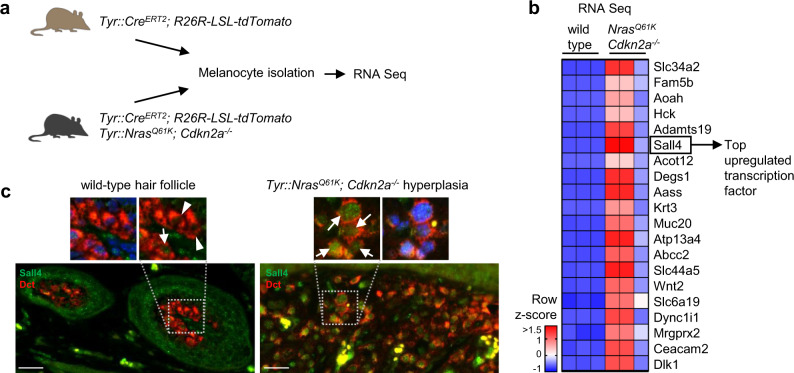
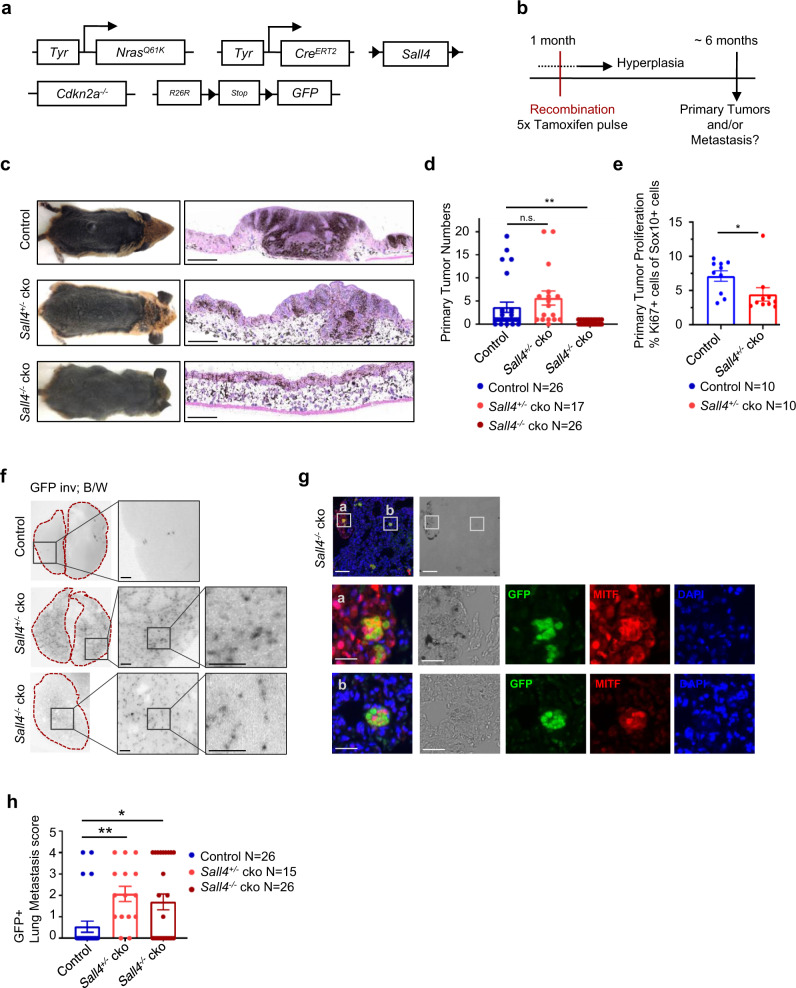
Abstract Melanoma cells rely on developmental programs during tumor initiation and progression. Here we show that the embryonic stem cell (ESC) factor Sall4 is re-expressed in the Tyr::Nras Q61K ; Cdkn2a −/− melanoma model and that its expression is necessary for primary melanoma formation. Surprisingly, while Sall4 loss prevents tumor formation, it promotes micrometastases to distant organs in this melanoma-prone mouse model. Transcriptional profiling and in vitro assays using human melanoma cells demonstrate that SALL4 loss induces a phenotype switch and the acquisition of an invasive phenotype. We show that SALL4 negatively regulates invasiveness through interaction with the histone deacetylase (HDAC) 2 and direct co-binding to a set of invasiveness genes. Consequently, SALL4 knock down, as well as HDAC inhibition, promote the expression of an invasive signature, while inhibition of histone acetylation partially reverts the invasiveness program induced by SALL4 loss. Thus, SALL4 appears to regulate phenotype switching in melanoma through an HDAC2-mediated mechanism.
Overview
CoChat Summary
## TL;DR
SALL4 is re-expressed in melanoma-prone melanocytes and is needed for primary melanoma growth, but its loss shifts cells toward an invasive, micrometastatic state. The paper links this switch to SALL4’s repression of invasiveness genes through HDAC2-dependent epigenetic control.
## Key findings
- In Tyr::NrasQ61K; Cdkn2a−/− mice, Sall4 was among the top 20 upregulated genes in hyperplastic versus wild-type melanocytes, with logFC 9.59 and p < 0.0001; SALL4 protein was also detected in human melanoma tissue but not healthy human melanocytes.
- Conditional Sall4 ablation impaired primary melanoma formation, while Sall4−/− cko and Sall4+/− cko mice had significantly more lung micrometastases than controls.
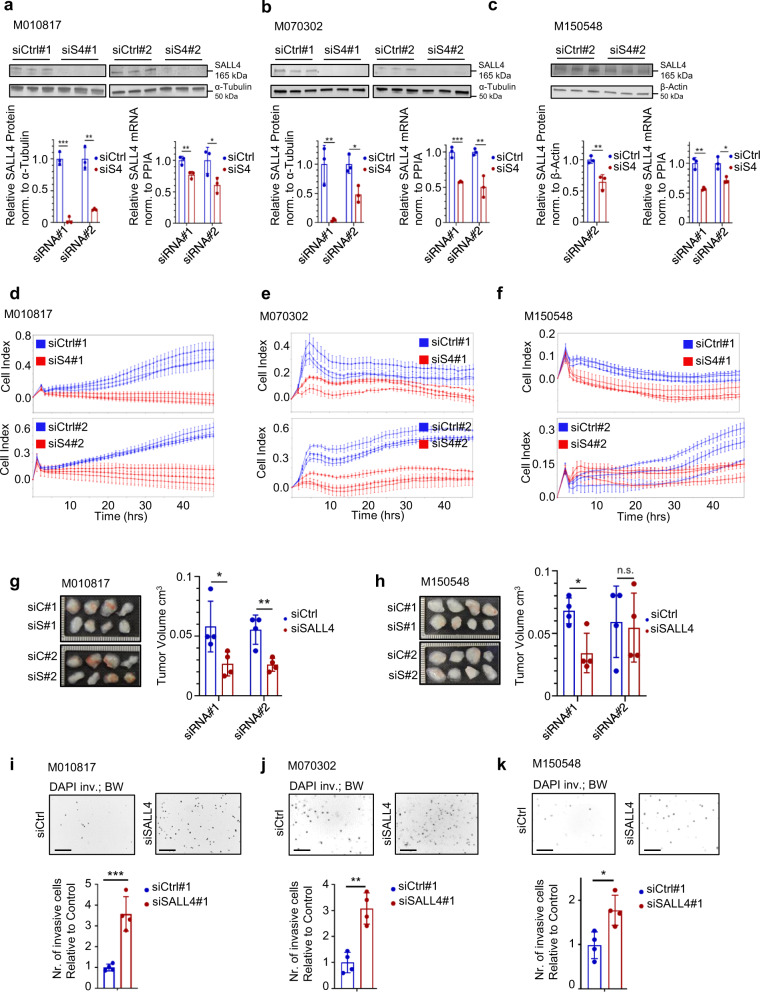
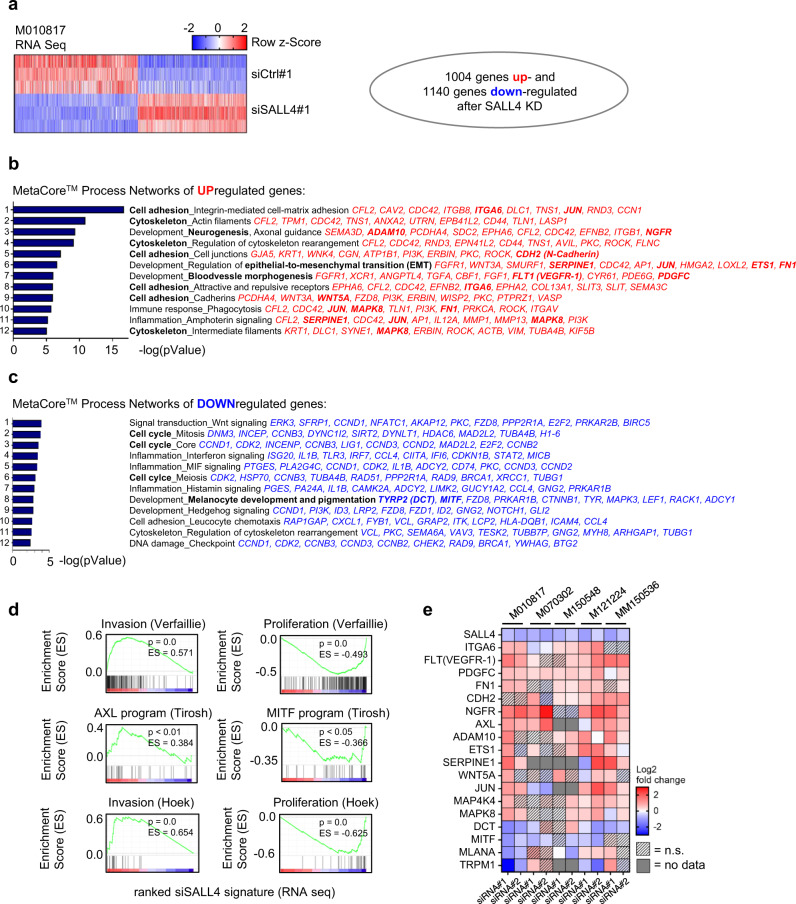
- In human melanoma cells, SALL4 knockdown decreased proliferation and increased invasion; RNA-seq found 1004 genes upregulated and 1140 genes downregulated after siSALL4 treatment.
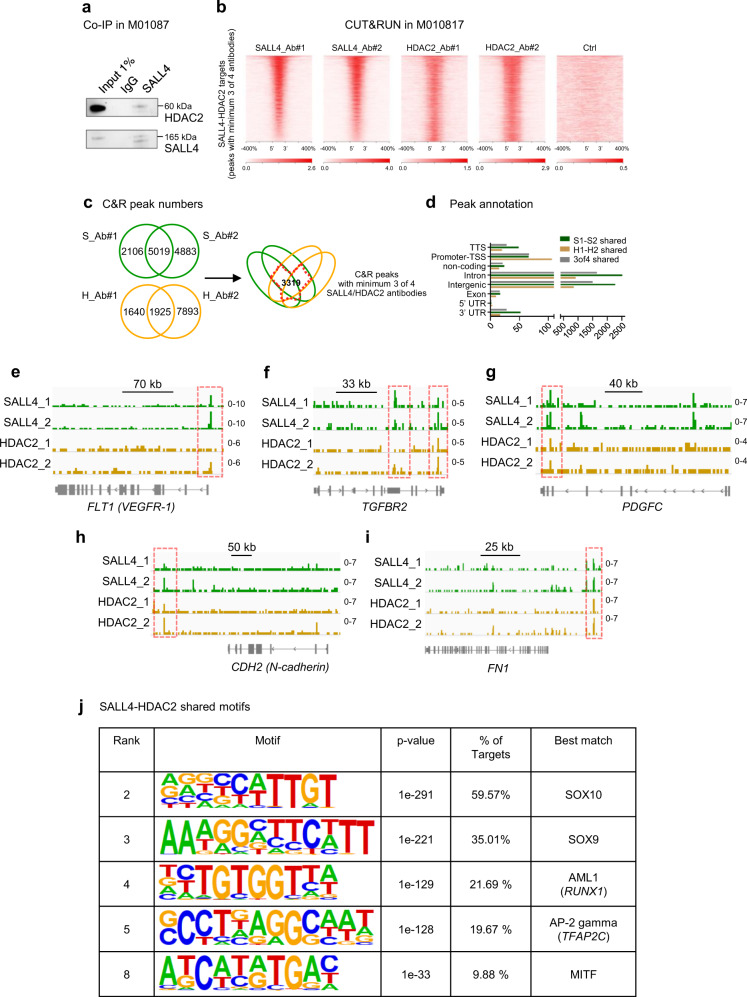
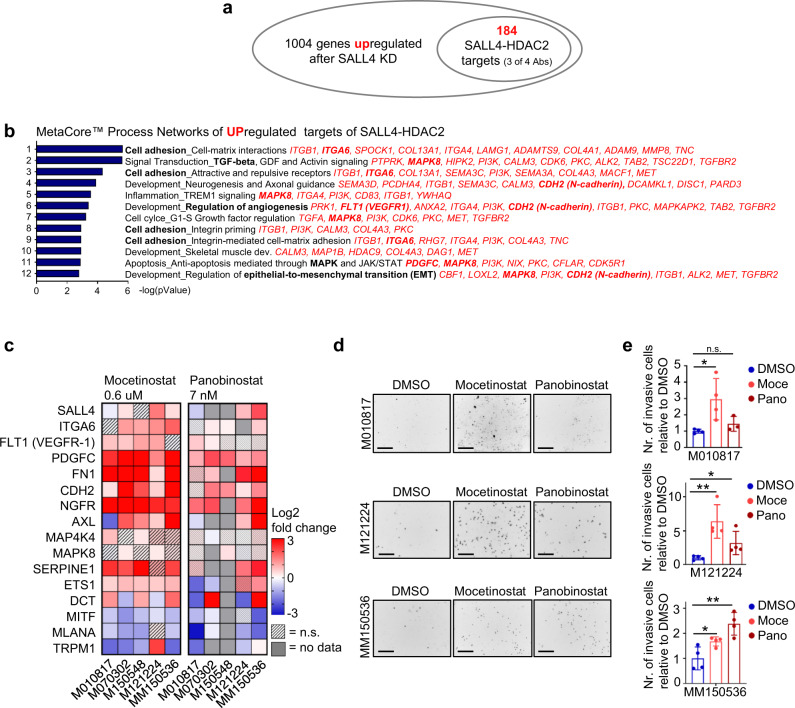
- SALL4 and HDAC2 co-occupied direct target loci, including invasiveness-associated genes; the paper reports 184 direct SALL4-HDAC2 targets that increased expression after SALL4 knockdown, enriched for cell adhesion, TGFβ signaling, angiogenesis, and EMT.
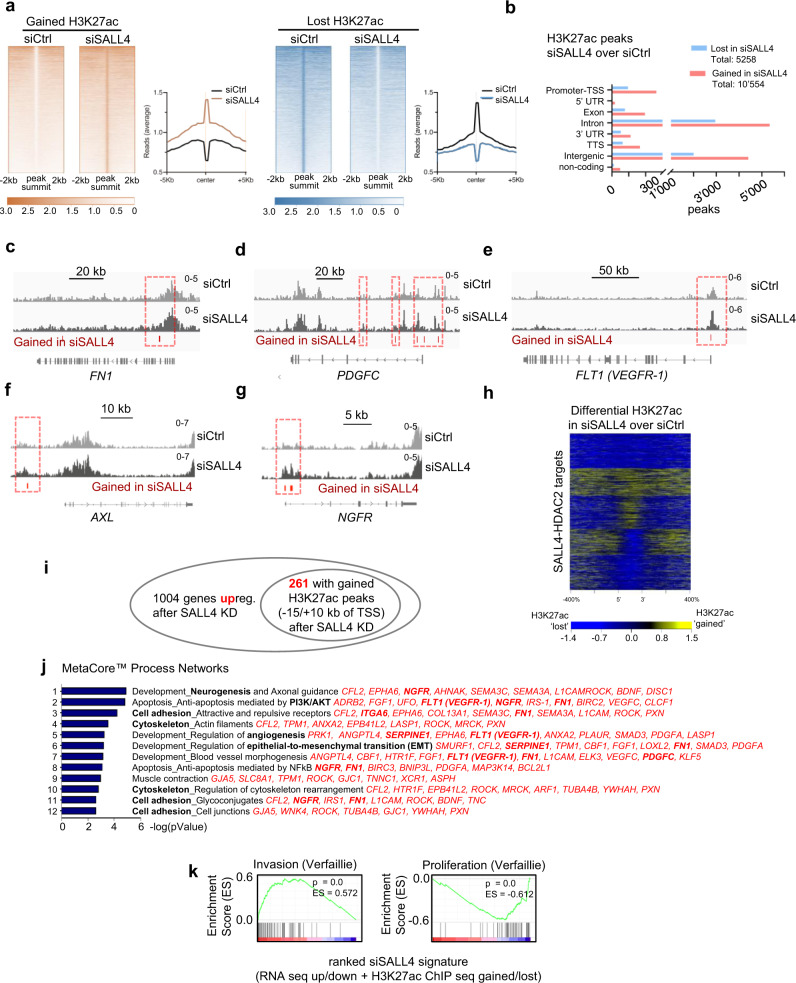
- H3K27ac ChIP-seq after SALL4 knockdown showed more gained than lost acetylation peaks; within TSS-proximal changes, there were 2566 genes with gained H3K27ac and 1131 with lost H3K27ac, and 261 of the gained-H3K27ac genes also had increased mRNA while 137 of the lost-H3K27ac genes had decreased mRNA.
## Methods
- In vivo mouse model: Tyr::NrasQ61K; Cdkn2a−/− melanoma-prone mice were crossed with Tyr::CreERT2, Sall4lox/lox, and R26R-LSL-GFP lines; tamoxifen was used for conditional Sall4 deletion and melanoma growth/metastasis were quantified.
- Human cell work: Multiple human melanoma cell lines (including M010817, M070302, M150548, WM1361A, MM150536, M121224) were used for siRNA knockdown, proliferation, migration, invasion assays, xenografts, qRT-PCR, RNA-seq, Co-IP, CUT&RUN, and H3K27ac ChIP-seq.
- Analysis: Differential expression was analyzed with edgeR for mouse RNA-seq and DESeq2 for human RNA-seq; enrichment used MetaCore and GSEA; CUT&RUN peaks were called with SEACR, and H3K27ac ChIP-seq peaks with HOMER.
## Limitations
- The paper states that the exact genomic loci regulated by the SALL4/HDAC2 complex are difficult to define because some acetylation changes may occur at distant regulatory elements rather than at the same bound site.
- It notes that for some previously known SALL4 targets (for example PTEN and SALL1), binding was detected but no differential acetylation or transcriptional changes were observed here, suggesting SALL4 regulates a specific subset of targets in melanoma.
- Evident from the text: several conclusions rely on cell lines and mouse models, so direct patient-level clinical impact is not established in the paper.
Model-written summary. Check it against the paper before relying on it.
Integrity signals
Registry
Cites
Statistics
Figures
Verification
Claims the paper makes
20 Valid · 3 Not valid · 5 Not checked · 89 Own results and interpretations
The cited sources that could be checked couldn’t confirm or dispute this claim.
In the paper
“we could not detect SALL4 expression in melanocytes of healthy human skin”
§ Epigenetic control of melanoma cell invasiveness by the stem cell factor SALL4 > Results > Sall4 is re-expressed in hyperplastic murine melanocytes
What the sources say
- Could not verifycites [30] Reemann P Melanocytes in the skin—-comparative whole transcriptome analysis of main skin cell types PLoS ONE 2014 9 e115717 10.1371/journal.pone.0115717 25545474 PMC4278762 sourceExperimental — accuracy not yet measured
The Introduction describes transcriptome analysis of cells from healthy subjects, and the Results and Discussion report expression of several melanocyte genes. Neither states whether SALL4 was detectable. Searches for “SALL4” and the claimed absence of expression returned no passage addressing it. (LLM, conf=0.70)
hedged- Asserted: passes — The authors put it forward as true.
- Checkable: passes — It can be checked against evidence.
- Load-bearing: unclear — It is unclear whether the paper’s conclusions depend on it.
- Based: passes — The paper gives a reason why it holds.
- Could not verify
Every source the paper cites for this claim was checked and supports it.
In the paper
“Notably, SALL4 negatively controls melanoma invasiveness-related genes, as for instance NGFR, a potent regulator of phenotype switching22, FN1, VEGFR-1, CDH2 (N-cadherin), and other genes implicated in melanoma invasiveness.”
§ Epigenetic control of melanoma cell invasiveness by the stem cell factor SALL4 > Discussion
What the sources say
- Supportedcites [22] Restivo G The low affinity neurotrophin receptor CD271 regulates phenotype switching in Melanoma Nat. Commun. 2017 8 1988 10.1038/s41467-017-01573-6 29215016 PMC5719420 source
The citation is attached to the description of NGFR as a regulator of phenotype switching, not to the claim that SALL4 controls the listed genes. The Introduction identifies CD271 as NGFR, and the Discussion identifies CD271 as a mediator of phenotype switching in melanoma. (LLM, conf=0.94)
plainstates a cause- Asserted: passes — The authors put it forward as true.
- Checkable: passes — It can be checked against evidence.
- Load-bearing: passes — The paper’s conclusions depend on it.
- Based: passes — The paper gives a reason why it holds.
- Supported
The cited sources support only part of this claim — read each source’s verdict below.
In the paper
“based on tandem mass spectrometry studies on ESCs and 293 T cells overexpressing SALL4, it has been shown that SALL4 can also bind to the NuRD complex members HDAC1 and HDAC245”
§ Epigenetic control of melanoma cell invasiveness by the stem cell factor SALL4 > Discussion
What the sources say
- Partly supportedcites [45] Lu J Stem cell factor SALL4 represses the transcriptions of PTEN and SALL1 through an epigenetic repressor complex PLoS ONE 2009 4 e5577 10.1371/journal.pone.0005577 19440552 PMC2679146 sourceExperimental — accuracy not yet measured
The Results section (“SALL4 associates with Mi-2/NuRD complex in vitro”) reports HDAC1 in the tandem mass spectrometry analysis of SALL4B-expressing 293T cells, and reports HDAC1 and HDAC2 bound to SALL4 in follow-up experiments using 293T and mouse embryonic stem cells. The binding claim is supported, but the citing sentence inaccurately describes tandem mass spectrometry as having been performed on both cell types; the stem-cell evidence came from coimmunoprecipitation and Western blotting. (LLM, conf=0.86)
plainstates an association- Asserted: passes — The authors put it forward as true.
- Checkable: passes — It can be checked against evidence.
- Load-bearing: passes — The paper’s conclusions depend on it.
- Based: passes — The paper gives a reason why it holds.
- Partly supported
The cited sources support only part of this claim — read each source’s verdict below.
In the paper
“among the SALL4-HDAC2 targets upregulated upon SALL4 knockdown, we found integrins (ITGB1, ITGA6, ITGA4), N-cadherin (CDH2), TGFBR2, VEGFR-1, PDGFC, LOXL2, MAPK8, and many others which are associated with invasive melanoma phenotypes40–42”
§ Epigenetic control of melanoma cell invasiveness by the stem cell factor SALL4 > Results > Differentially expressed SALL4-HDAC2 targets enrich in cell adhesion-related processes
What the sources say
- Not checked — no full text of the sourcecites [40] Hoek KS In vivo switching of human melanoma cells between proliferative and invasive states Cancer Res. 2008 68 650 656 10.1158/0008-5472.CAN-07-2491 18245463 source
- Partly supportedcites [41] Verfaillie A Decoding the regulatory landscape of melanoma reveals TEADS as regulators of the invasive cell state Nat. Commun. 2015 6 6683 10.1038/ncomms7683 25865119 PMC4403341 sourceExperimental — accuracy not yet measured
The Results section ('Proliferative and invasive gene signatures in tumour samples'; page unavailable) identifies an invasive melanoma gene signature and links it to TGF-β and JNK signalling, migration, and EMT. Our copy does not identify the listed genes individually as associated with invasive melanoma phenotypes. The SALL4-HDAC2 targets and their upregulation are presented as the citing authors’ own findings, not as findings attributed to this source. (LLM, conf=0.84)
- Could not verifycites [42] Tirosh I Dissecting the multicellular ecosystem of metastatic melanoma by single-cell RNA-seq Science 2016 352 189 196 10.1126/science.aad0501 27124452 PMC4944528 sourceExperimental — accuracy not yet measured
The section on dormant, drug-resistant melanoma subpopulations describes MITF-high and AXL-high expression programs, but does not link the listed genes to an invasive melanoma phenotype. Searches for the named genes and invasive-phenotype terminology found no passage establishing that association. The SALL4-knockdown result is presented as the citing authors’ own finding, rather than a finding attributed to this source. (LLM, conf=0.73)
plainstates an association- Asserted: passes — The authors put it forward as true.
- Checkable: passes — It can be checked against evidence.
- Load-bearing: passes — The paper’s conclusions depend on it.
- Based: passes — The paper gives a reason why it holds.
The cited sources that could be checked couldn’t confirm or dispute this claim.
In the paper
“we could not detect any altered MYC expression upon SALL4 knockdown”
§ Epigenetic control of melanoma cell invasiveness by the stem cell factor SALL4 > Results > SALL4 and HDAC2 interact and directly regulate a set of target genes
What the sources say
- Could not verifycites [38] Liu L SALL4 as an epithelial-mesenchymal transition and drug resistance inducer through the regulation of c-Myc in endometrial cancer PLoS ONE 2015 10 1 15 PMC4583418 26407074 sourceExperimental — accuracy not yet measured
The Results section reports that c-Myc expression was positively associated with SALL4 in endometrial cancer cells; the Methods describe SALL4 knockdown in an endometrial carcinoma cell line. Our copy does not report MYC expression after SALL4 knockdown in melanoma cells (searched: melanoma SALL4 knockdown MYC expression; SALL4 knockdown c-Myc expression). The endometrial finding cannot establish or contradict the melanoma claim. (LLM, conf=0.76)
hedgedSingle case- Asserted: passes — The authors put it forward as true.
- Checkable: passes — It can be checked against evidence.
- Load-bearing: passes — The paper’s conclusions depend on it.
- Based: passes — The paper gives a reason why it holds.
- Could not verify
60 more claims · 4 with their cited sources checked
Create a free account to see all 117 claims and to verify the 3 references still open.
- It may state two separate claims as one. 32
- Probably not a substantial claim. 26
- The quote only partly states this claim. 1
Claims other papers make about this one
Each is checked against this paper’s own text: does it say what the citing paper says it does?
The cited source says what the claim attributes to it.
In the citing paper
“Here, the Sall4/Hdac2 complex represses their expression through an epigenetic switch involving the reduction of H3K27ac levels (Diener et al., 2021).”
From HDACs and the epigenetic plasticity of cancer cells: target the complexity (2022) · cites this paper as Diener et al., 2021
The cited source says what the claim attributes to it.
In the citing paper
“knockdown of SALL4 in human melanoma cells decreases cell proliferation and impairs the expression of genes related to cell cycle, inflammation, and developmental processes [22]”
From SALL4 is a CRL3REN/KCTD11 substrate that drives Sonic Hedgehog-dependent medulloblastoma (2024) · cites this paper as [22]
In the citing paper
“Although Sall4 is required for primary tumor growth, loss of Sall4 results in increased metastatic burden.”
From HDACs and the epigenetic plasticity of cancer cells: target the complexity (2022) · cites this paper as Diener et al., 2021
In the citing paper
“The TF Sall4, also known as stem cell factor (Zhan et al., 2006), is strongly upregulated in hyperplastic, melanoma-prone murine melanocytes, where it sustains cell proliferation (Diener et al., 2021).”
From HDACs and the epigenetic plasticity of cancer cells: target the complexity (2022) · cites this paper as Diener et al., 2021
Self-check
Percentages, sums and reported differences re-computed from the paper’s own numbers.
Self-check results appear here once an independent check has confirmed them.
Cited works that were retracted
Works this paper cites that were later retracted, from the retraction notices publishers deposit. Major when the notice came out before this paper was published.
A note, not an issue: for example, a cited work that was retracted only after this paper was published, which its authors could not have known.
In the paper
“Liu L SALL4 as an epithelial-mesenchymal transition and drug resistance inducer through the regulation of c-Myc in endometrial cancer PLoS ONE 2015 10 1 15 PMC4583418 26407074”
Cited work 10.1371/journal.pone.0138515 · retracted 2024-02-13 · notice 10.1371/journal.pone.0298990 · this paper published 2021-08-20
Citations
Cites
1 retracted
Liu, L., Zhang, J., Yang, X., Fang, C., Xu, H., & Xi, X. (2015) · PLOS ONE · doi:10.1371/journal.pone.0138515 · Cited by 67
RetractedThe Sequence Alignment/Map format and SAMtools
Li, H., Handsaker, B., Wysoker, A., Fennell, T., Ruan, J., Homer, N., Marth, G., Abecasis, G., Durbin, R., & 1000 Genome Project Data Processing Subgroup (2009) · Bioinformatics · doi:10.1093/bioinformatics/btp352 · Cited by 62,041
Subramanian, A., Tamayo, P., Mootha, V. K., Mukherjee, S., Ebert, B. L., Gillette, M. A., Paulovich, A., Pomeroy, S. L., Golub, T. R., Lander, E. S., et al. (2005) · Proceedings of the National Academy of Sciences · doi:10.1073/pnas.0506580102 · Cited by 53,625
Hanahan, D., & Weinberg, R. A. (2000) · Cell · doi:10.1016/s0092-8674(00)81683-9 · Cited by 29,219
Ultrafast and memory-efficient alignment of short DNA sequences to the human genome.
Langmead, B., Trapnell, C., Pop, M., & Salzberg, S. L. (2009) · Genome Biology · doi:10.1186/gb-2009-10-3-r25 · Cited by 21,849
Dissecting the multicellular ecosystem of metastatic melanoma by single-cell RNA-seq
Tirosh, I., Izar, B., Prakadan, S. M., Wadsworth, M. H., Treacy, D., Trombetta, J. J., Rotem, A., Rodman, C., Lian, C., Murphy, G., et al. (2016) · Science · doi:10.1126/science.aad0501 · Cited by 4,944
Histone acetylation in chromatin structure and transcription
Grunstein, M. (1997) · Nature · doi:10.1038/38664 · Cited by 2,884
Erasers of Histone Acetylation: The Histone Deacetylase Enzymes
Seto, E., & Yoshida, M. (2014) · Cold Spring Harbor Perspectives in Biology · doi:10.1101/cshperspect.a018713 · Cited by 1,989
Role of the INK4a Locus in Tumor Suppression and Cell Mortality
Serrano, M., Lee, H.-W., Chin, L., Cordon-Cardo, C., Beach, D., & DePinho, R. A. (1996) · Cell · doi:10.1016/s0092-8674(00)81079-x · Cited by 1,585
Histone Deacetylase Inhibitors as Anticancer Drugs
Eckschlager, T., Plch, J., Stiborova, M., & Hrabeta, J. (2017) · International Journal of Molecular Sciences · doi:10.3390/ijms18071414 · Cited by 1,206
Cited by
Cancer stem cells: advances in knowledge and implications for cancer therapy
Chu, X., Tian, W., Ning, J., Xiao, G., Zhou, Y., Wang, Z., Zhai, Z., Tanzhu, G., Yang, J., & Zhou, R. (2024) · Signal Transduction and Targeted Therapy · doi:10.1038/s41392-024-01851-y · Cited by 553
Multi-stage mechanisms of tumor metastasis and therapeutic strategies
Liu, Z., Chen, J., Ren, Y., Liu, S., Ba, Y., Zuo, A., Luo, P., Cheng, Q., Xu, H., & Han, X. (2024) · Signal Transduction and Targeted Therapy · doi:10.1038/s41392-024-01955-5 · Cited by 184
“56 CIN, characterized by persistent errors in chromosome segregation during mitosis, is a hallmark of cancer.”
BackgroundHDACs and the epigenetic plasticity of cancer cells: target the complexity
Brancolini, C., Gagliano, T., & Minisini, M. (2022) · Pharmacology & Therapeutics · doi:10.1016/j.pharmthera.2022.108190 · Cited by 55
SALL4 Oncogenic Function in Cancers: Mechanisms and Therapeutic Relevance
Sun, B., Xu, L., Bi, W., & Ou, W. (2022) · International Journal of Molecular Sciences · doi:10.3390/ijms23042053 · Cited by 58
“SALL4 is a potential target for the diagnosis and treatment of cancer [18,30].”
BackgroundInfluentialGenetic and Genomic Pathways of Melanoma Development, Invasion and Metastasis
Motwani, J., & Eccles, M. R. (2021) · Genes · doi:10.3390/genes12101543 · Cited by 52
The overall process of metastasis: From initiation to a new tumor
Fan, T., Kuang, G., Long, R., Han, Y., & Wang, J. (2022) · Biochimica et Biophysica Acta (BBA) - Reviews on Cancer · doi:10.1016/j.bbcan.2022.188750 · Cited by 36
New Insights into the Phenotype Switching of Melanoma
Pagliuca, C., Leo, L. D., & Zio, D. D. (2022) · Cancers · doi:10.3390/cancers14246118 · Cited by 33
“This epigenetic factor is highly involved in primary melanoma formation and cooperates with histone deacetylase 2 (HDAC2) to favor a more proliferative state by epigenetically repressing genes of the invasive signature [35].”
BackgroundThe developmental and evolutionary origins of cellular pluripotency in the vertebrate neural crest
Schock, E. N., York, J. R., & LaBonne, C. (2022) · Seminars in Cell and Developmental Biology · doi:10.1016/j.semcdb.2022.04.008 · Cited by 28
Epigenetics Regulates Antitumor Immunity in Melanoma
Chen, Y., Yi, X., Sun, N., Guo, W., & Li, C. (2022) · Frontiers in Immunology · doi:10.3389/fimmu.2022.868786 · Cited by 28
Epigenetic control of pancreatic cancer metastasis
Krauß, L., Schneider, C., Heßmann, E., Saur, D., & Schneider, G. (2023) · Cancer and Metastasis Reviews · doi:10.1007/s10555-023-10132-z · Cited by 23
“However, it should be noted that a study in melanoma cells observed an epigenetic silencing of invasiveness genes partly via HDAC2 [135].”
BackgroundCancer stem cell biomarkers and related signalling pathways
Wang, Z., Li, R. Q., Yang, G., & Wang, Y. (2023) · Journal of drug targeting · doi:10.1080/1061186x.2023.2295222 · Cited by 15
“…cell carcinoma [90] β-catenin [90], nf-κb [91], Vegf [92], Hif [92] Sall4 HCC [94], oesophageal squamous cell carcinoma [95], nSClC [96], melanoma [97] Wnt/β-catenin [95], egfr [96], Vegfr [97], PTen [97] EpCAM the epithelial cell Adhesion Molecule (epcAM) gene primarily encodes a…”
BackgroundInfluentialSALL4 is a CRL3REN/KCTD11 substrate that drives Sonic Hedgehog-dependent medulloblastoma
Lospinoso Severini, L., Loricchio, E., Navacci, S., Basili, I., Alfonsi, R., Bernardi, F., Moretti, M., Conenna, M., Cucinotta, A., Coni, S., et al. (2024) · Cell Death & Differentiation · doi:10.1038/s41418-023-01246-6 · Cited by 13
“Recently, it has been reported that knockdown of SALL4 in human melanoma cells decreases cell proliferation and impairs the expression of genes related to cell cycle, in fl ammation, and developmental processes [22].”
Fragale, A., Stellacci, E., Romagnoli, G., Licursi, V., Parlato, S., Canini, I., Remedi, G., Buoncervello, M., Matarrese, P., Pedace, L., et al. (2023) · International Journal of Cancer · doi:10.1002/ijc.34602 · Cited by 13
“Recent works have highlighted the potential role of HDACs in melanoma progression.(7,41,42) The epigenetic control of MITF/AXL status has been reported in several types of cancer.”
BackgroundExhaustive identification of genome-wide binding events of transcriptional regulators
Nordin, A., Pagella, P., Zambanini, G., & Cantù, C. (2024) · Nucleic Acids Research · doi:10.1093/nar/gkae180 · Cited by 11
Self-citationLSD1 is a promising target to treat cancers by modulating cell stemness
Tong, Y., Wang, X., Li, R., Xu, X., Dai, M., Wang, N., Fan, B., Feng, S., & Ma, T. (2024) · Biochemical Pharmacology · doi:10.1016/j.bcp.2024.116549 · Cited by 10
Guendisch, U., Loos, B., Cheng, P. F., Dummer, R., Levesque, M. P., Varum, S., & Sommer, L. (2022) · Frontiers in Cell and Developmental Biology · doi:10.3389/fcell.2022.916033 · Cited by 7
“To assess the metastatic potential of shYY1 and shCtrl human melanoma cells, we dissected the lungs of the animals at experimental endpoint and performed FACS analysis to isolate RFP-traced melanoma cells from the dissociated tissue (Figure 4N) as described before (Zingg et al., 2018; Diener et al., 2021).”
BackgroundMethodSelf-citationYepes, S., Tucker, M. A., Koka, H., Xiao, Y., Zhang, T., Jones, K. M., Vogt, A. L., Burdette, L. A., Luo, W., Zhu, B., et al. (2022) · Journal of Investigative Dermatology · doi:10.1016/j.jid.2022.01.029 · Cited by 5
Rahmani, S., Babajani, A., Abolhasani, M., Ghods, R., Kalantari, E., & Madjd, Z. (2025) · World Journal of Surgical Oncology · doi:10.1186/s12957-025-03681-w · Cited by 3
Epigenetic Echoes: Decoding the Acetylation Journey from Neural Crest to Melanocyte
Nasreen, A., Chowdhury, S., Selvam, D. A., & Natarajan, V. T. (2025) · Results and problems in cell differentiation · doi:10.1007/978-3-031-91459-1_7 · Cited by 5
Acetylation-enhanced Sp1 transcriptional activity suppresses Mlph expression
Jo, C. S., Zhao, H., & Hwang, J. S. (2025) · Scientific Reports · doi:10.1038/s41598-025-86282-7 · Cited by 3
“Especially, more recent evidence has been revealed in skin melanocytes 30–32 .”
P300 regulates Melanophilin expression by modulating TFAP2A binding through histone acetylation
Jo, C. S., Hairu, Z., Baek, G. C., Lee, E. J., You, C. M., & Hwang, J. S. (2025) · Journal of Dermatological Science · doi:10.1016/j.jdermsci.2025.04.002 · Cited by 2
Recent Advancements in Stem Cell-Based Therapies
Ahmed, M. (2024) · Pure and Applied Biology · doi:10.19045/bspab.2024.130041 · Cited by 3
Potential application of human SALL4 on oral squamous cell carcinoma
Matos, L. L., & da Silva, J. B. (2022) · Annals of Translational Medicine · doi:10.21037/atm-22-3982 · Cited by 1
“As consequence, they can promote mRNA degradation or translation repression of targets, through binding to the region 3'.”
Li, H.-Q., Zheng, L., Huang, W., Yu, X., Zhang, X., Lin, L., Lv, S., Yan, X.-Y., & Chen, X.-Y. (2025) · World Journal of Gastroenterology · doi:10.3748/wjg.v31.i28.108990 · Cited by 1
Bree, B. A. V., & Eichner, L. J. (2026) · Science Advances · doi:10.1126/sciadv.aee7295 · Cited by 6
“SALL4 was found to regulate a melanoma-specific invasion program via HDAC2-mediated epigenetic silencing of proin-vasive genes including nerve growth factor receptor ( NGFR) ( 83 ).”
Identifying memory gene expression from single-sample scRNA-seq data using power-law signatures
Ghosh, S., Chakrabarti, S., & Raju, A. (2026) · Cell Systems · doi:10.1016/j.cels.2026.101707 · Cited by 4
Zhang, W. (2021) · Research Square · doi:10.21203/rs.3.rs-1195553/v1
“SALL4 is involved in the proliferation, apoptosis, migration, invasion, and metastasis of a variety of tumor cells[14,15], as well as in diverse signaling pathways, such as the Akt/GSK-3β[16], epithelial mesenchymal transition (EMT)[17] and Wnt[18] signaling pathways.”
BackgroundExhaustive identification of genome-wide binding events of transcriptional regulators with ICEBERGPreprint
Cantù, C., Nordin, A., Pagella, P., & Zambanini, G. (2023) · Research Square · doi:10.21203/rs.3.rs-3124696/v1
Self-citationSALL4 Oncogene in Acute Myeloid Leukemia: Expression Levels and Prognostic Impact
(2024) · The Egyptian Journal of Hospital Medicine · doi:10.21608/ejhm.2024.358272
“One zinc finger transcription factor that regulates self-renewal and pluripotency in embryonic stem cells is oncofetal SALL4 [5,6] .”
BackgroundZhu, Y. H., Yi, C., Zhao, J., Wang, L., Huang, T., Xiang, B., Zhang, L., He, X., & Wu, L. (2025) · Chemical Biology & Drug Design · doi:10.1111/cbdd.70158
Debbache, J., Gwerder, M., Rushing, E. J., & Sommer, L. (2025) · Disease Models & Mechanisms · doi:10.1242/dmm.052471
“It is well established that developmental programs reminiscent of embryonic NC become reactivated in melanoma (Diener et al., 2021), and it is conceivable that this also occurs in our MPNST model, similar to processes described in MPNSTs driven by genetic loss of NF1 and PRC2 deficiency (Zhang et…”
Self-citationTargeting SALL4 with an HLA Class I–Restricted TCR for Cancer Immunotherapy
Khelil, M. B., Fredon, M., Adib, N., Bouard, A., Perchaud, M., Abdeljaoued, S., Mantion, C.-F., Asgarov, K., Guillaume, P., Spehner, L., et al. (2025) · Cancer Immunology Research · doi:10.1158/2326-6066.cir-24-0207
Camacho, L. Q., & Fallahi‐Sichani, M. (2026) · PLoS Computational Biology · doi:10.1371/journal.pcbi.1014018
Lu, X., Gu, Y., Wei, Y., Wang, H., & Ou, W. (2026) · Biochimica et Biophysica Acta (BBA) - Molecular Cell Research · doi:10.1016/j.bbamcr.2026.120179
Metadata
- Authors
- Diener, J., Baggiolini, A., Pernebrink, M., Dalcher, D., Lerra, L., Cheng, P. F., Varum, S., Häusel, J., Stierli, S., Treier, M., Studer, L., Basler, K., Levesque, M. P., Dummer, R., Santoro, R., Cantù, C., & Sommer, L.
- Affiliations
- University of Zurich (CH)
- Memorial Sloan Kettering Cancer Center (US)
- Linköping University (SE)
- University Hospital Zurich (CH)
- Max Delbrück Center (DE)
- Corresponding author
- Sommer, Lukas
- ORCID
- Venue
- Nature Communications
- Published
- 2021-08-20
- Volume
- 12
- Issue
- 1
- Pages
- 5056-5056
- ISSN
- 2041-1723 (ISSN-L)
- PMC
- PMC8379183
- OpenAlex
- W3193314715
- Cited by
- 34
- References
- 95
- Citations by year
- 2026: 4 · 2025: 8 · 2024: 6 · 2023: 5 · 2022: 9 · 2021: 2
- FWCI
- 1.73
- Type
- journal article
- Language
- en
- Open access
- gold
- doi.org
- Licence
- cc-by
- creativecommons.org/licenses/by/4.0 (tdm)
- creativecommons.org/licenses/by/4.0 (vor)
- Locations
- Nature Communications (publishedVersion, cc-by)
- Europe PMC (PubMed Central) (publishedVersion, other-oa)
- PubMed Central (publishedVersion, cc-by)
- PubMed (publishedVersion)
- Zurich Open Repository and Archive (University of Zurich) (acceptedVersion, cc-by)
- Zurich Open Repository and Archive (University of Zurich) (acceptedVersion, other-oa)
- MDC Repository (Max-Delbrueck-Center for Molecular Medicine) (acceptedVersion)
- DiVA (Linkoping University) (submittedVersion, other-oa)
- RePEc: Research Papers in Economics (submittedVersion)
- DOAJ (DOAJ: Directory of Open Access Journals) (submittedVersion, cc-by-sa)
- Zurich Open Repository and Archive (University of Zurich) (submittedVersion, cc-by)
- Zurich Open Repository and Archive (University of Zurich)
- Funders
- National Science Foundation
- Schweizerischer Nationalfonds zur Förderung der Wissenschaftlichen Forschung (169859, 192075, 310030)
- Cancerfonden (CAN 2018/542)
- Knut och Alice Wallenbergs Stiftelse
- Universität Zürich
- Swiss Cancer Research Foundation
- Functional Genomics Center Zurich
- National Cancer Institute (P30CA008748)
- Topics
- Life Sciences › Biochemistry, Genetics and Molecular Biology › Molecular Biology › Melanoma and MAPK Pathways
- Life Sciences › Biochemistry, Genetics and Molecular Biology › Molecular Biology › Epigenetics and DNA Methylation
- Health Sciences › Medicine › Oncology › Cancer Cells and Metastasis
- Keywords
- SALL4, melanoma, tumor invasion, HDAC2, histone acetylation, epigenetic regulation, micrometastases, phenotypic switching, NRAS Q61K, histone deacetylase inhibition
- MeSH terms
- Acetylation, Animals, Base Sequence, Cell Adhesion, DNA-Binding Proteins, Histones, Humans, Melanocytes, Melanoma, Mice, Nude, Mice, Transgenic, Neoplasm Invasiveness, Protein Binding, Skin Neoplasms, Transcription Factors, Gene Expression Regulation, Neoplastic, Cell Lineage, Stem Cell Factor, Gene Expression Profiling, Epigenesis, Genetic, Cell Line, Tumor, Tumor Burden, Cell Proliferation, Mice, Histone Deacetylase 2, Neoplasm Micrometastasis, Carcinogenesis
About these checks
Registry, retraction, Cites and statistics results are computed, not judged, with one exception: a printed reference that no index lists is read once by a model before it counts as a citation error. Claims are extracted by a model and kept only when their quote appears verbatim in the text; each cited source is then checked, with a model’s help, for whether it says what the claim relies on. Those verdicts can be wrong — read the claim’s quote and the cited source before relying on one.
The claim verdicts this report counts are experimental: their accuracy is not yet measured.
A language model drew the claims from the paper on 2026-09-30, under version 3 of the claim definition (model deepseek-v4.1-flash, prompt extract-v3).
A second model labelled each claim on 2026-09-30 (model jev-1.13-20260917, definition revision gold-guideline-v0.2).
Cited sources are checked with a language model’s help (gpt-6-sol).
Statistics and arithmetic are recomputed, not judged.
Confidence bands are shown only for fields calibrated on our annotated test set. None is calibrated yet, so no band is shown.
What counts as a claim ›How we measure confidence ›How we check this ›
Are you an author, or do you see a problem with this page? Request a review
Data sources
Bibliographic data: Semantic Scholar, OpenAlex, Crossref.
Contains information from the Semantic Scholar Academic Graph Datasets, made available under the ODC Attribution License (ODC-BY 1.0).
Semantic Scholar’s data is described in: Kinney, R., et al. (2023). The Semantic Scholar Open Data Platform. arXiv:2301.10140.
