

Epigenetic control of melanoma cell invasiveness by the stem cell factor SALL4
Open accessThe DOI matches its Crossref record; 90 of the 95 references it cites were found in a registry or an index; 35 of the 48 sources its claims cite were checked for support.
Abstract
Abstract Melanoma cells rely on developmental programs during tumor initiation and progression. Here we show that the embryonic stem cell (ESC) factor Sall4 is re-expressed in the Tyr::Nras Q61K ; Cdkn2a −/− melanoma model and that its expression is necessary for primary melanoma formation. Surprisingly, while Sall4 loss prevents tumor formation, it promotes micrometastases to distant organs in this melanoma-prone mouse model. Transcriptional profiling and in vitro assays using human melanoma cells demonstrate that SALL4 loss induces a phenotype switch and the acquisition of an invasive phenotype. We show that SALL4 negatively regulates invasiveness through interaction with the histone deacetylase (HDAC) 2 and direct co-binding to a set of invasiveness genes. Consequently, SALL4 knock down, as well as HDAC inhibition, promote the expression of an invasive signature, while inhibition of histone acetylation partially reverts the invasiveness program induced by SALL4 loss. Thus, SALL4 appears to regulate phenotype switching in melanoma through an HDAC2-mediated mechanism.
Overview
CoChat Summary
## TL;DR
SALL4 is re-expressed in melanoma-prone melanocytes and is needed for primary melanoma growth, but its loss shifts cells toward an invasive, micrometastatic state. The paper links this switch to SALL4’s repression of invasiveness genes through HDAC2-dependent epigenetic control.
## Key findings
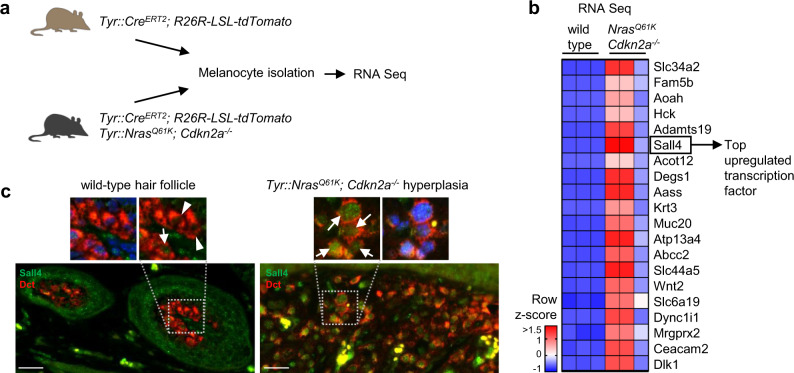
- In Tyr::NrasQ61K; Cdkn2a−/− mice, Sall4 was among the top 20 upregulated genes in hyperplastic versus wild-type melanocytes, with logFC 9.59 and p < 0.0001; SALL4 protein was also detected in human melanoma tissue but not healthy human melanocytes.
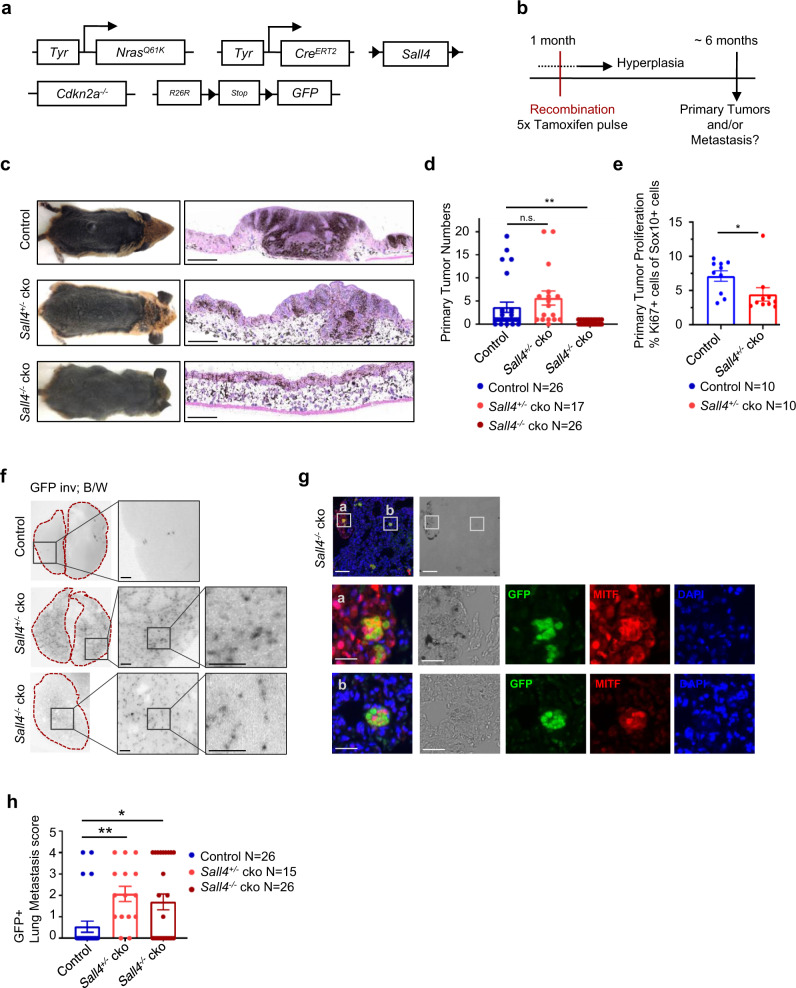
- Conditional Sall4 ablation impaired primary melanoma formation, while Sall4−/− cko and Sall4+/− cko mice had significantly more lung micrometastases than controls.
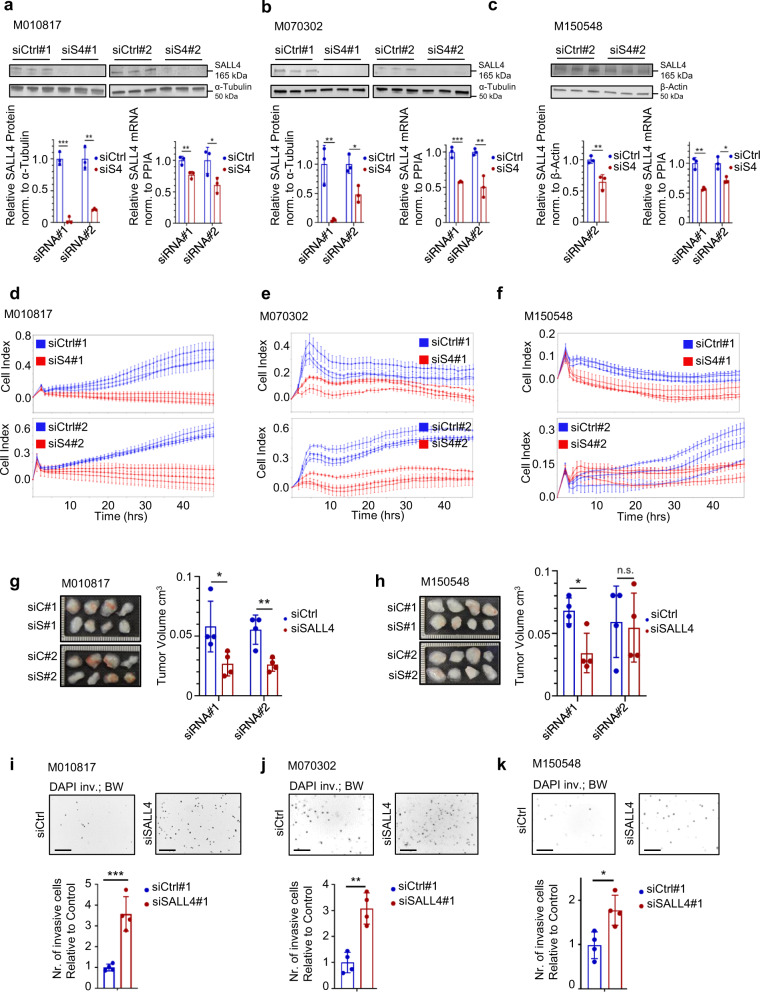
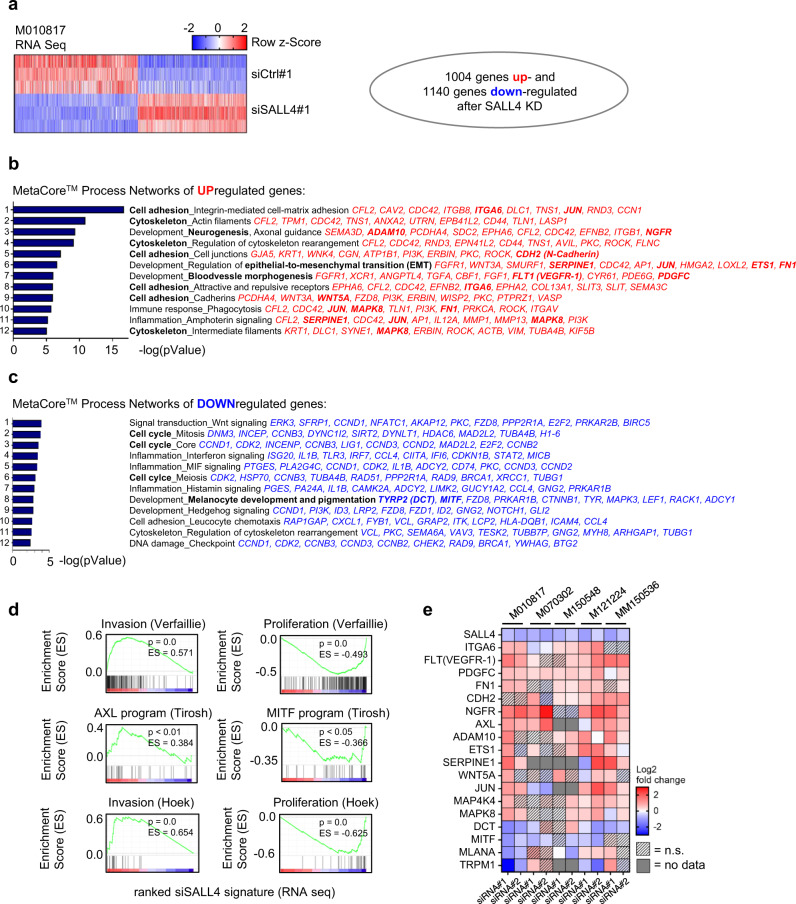
- In human melanoma cells, SALL4 knockdown decreased proliferation and increased invasion; RNA-seq found 1004 genes upregulated and 1140 genes downregulated after siSALL4 treatment.
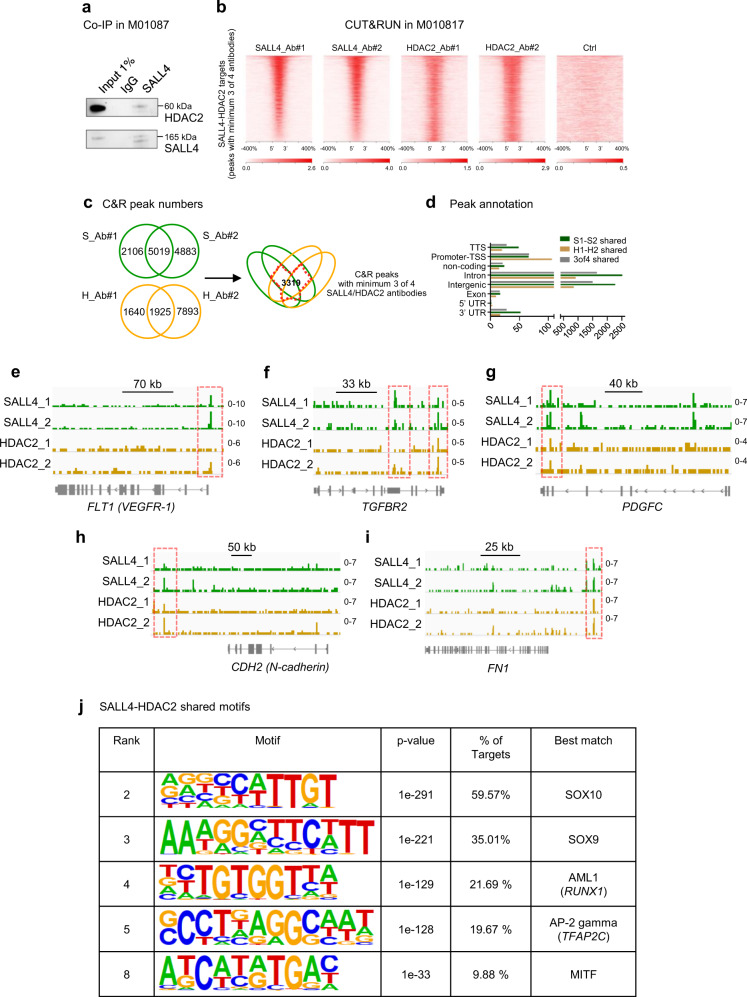
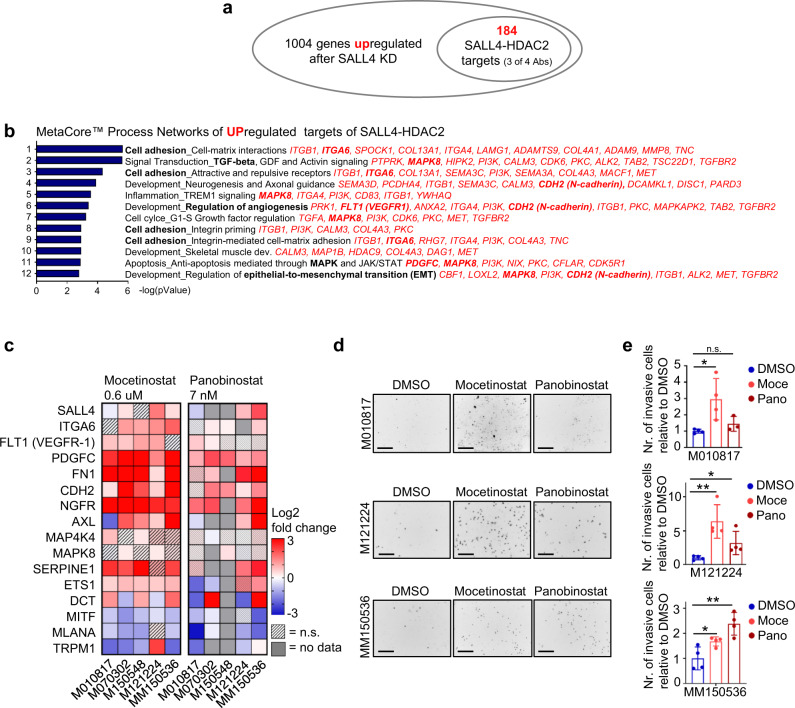
- SALL4 and HDAC2 co-occupied direct target loci, including invasiveness-associated genes; the paper reports 184 direct SALL4-HDAC2 targets that increased expression after SALL4 knockdown, enriched for cell adhesion, TGFβ signaling, angiogenesis, and EMT.
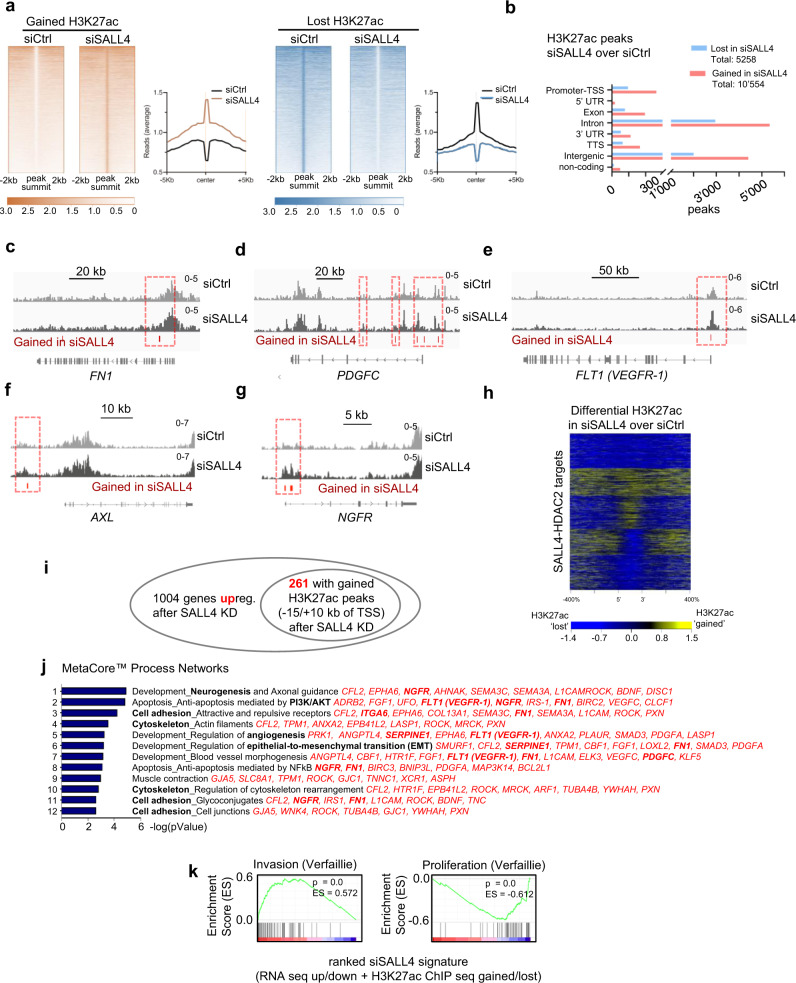
- H3K27ac ChIP-seq after SALL4 knockdown showed more gained than lost acetylation peaks; within TSS-proximal changes, there were 2566 genes with gained H3K27ac and 1131 with lost H3K27ac, and 261 of the gained-H3K27ac genes also had increased mRNA while 137 of the lost-H3K27ac genes had decreased mRNA.
## Methods
- In vivo mouse model: Tyr::NrasQ61K; Cdkn2a−/− melanoma-prone mice were crossed with Tyr::CreERT2, Sall4lox/lox, and R26R-LSL-GFP lines; tamoxifen was used for conditional Sall4 deletion and melanoma growth/metastasis were quantified.
- Human cell work: Multiple human melanoma cell lines (including M010817, M070302, M150548, WM1361A, MM150536, M121224) were used for siRNA knockdown, proliferation, migration, invasion assays, xenografts, qRT-PCR, RNA-seq, Co-IP, CUT&RUN, and H3K27ac ChIP-seq.
- Analysis: Differential expression was analyzed with edgeR for mouse RNA-seq and DESeq2 for human RNA-seq; enrichment used MetaCore and GSEA; CUT&RUN peaks were called with SEACR, and H3K27ac ChIP-seq peaks with HOMER.
## Limitations
- The paper states that the exact genomic loci regulated by the SALL4/HDAC2 complex are difficult to define because some acetylation changes may occur at distant regulatory elements rather than at the same bound site.
- It notes that for some previously known SALL4 targets (for example PTEN and SALL1), binding was detected but no differential acetylation or transcriptional changes were observed here, suggesting SALL4 regulates a specific subset of targets in melanoma.
- Evident from the text: several conclusions rely on cell lines and mouse models, so direct patient-level clinical impact is not established in the paper.
Model-written summary. Check it against the paper before relying on it.
Integrity signals
Registry
Cites
Statistics
Figures
Verification
Claims the paper makes
20 Valid · 3 Not valid · 5 Not checked · 89 Own results and interpretations
The cited sources that could be checked couldn’t confirm or dispute this claim.
In the paper
“we could not detect SALL4 expression in melanocytes of healthy human skin”
§ Epigenetic control of melanoma cell invasiveness by the stem cell factor SALL4 > Results > Sall4 is re-expressed in hyperplastic murine melanocytes
What the sources say
- Could not verifycites [30] Reemann P Melanocytes in the skin—-comparative whole transcriptome analysis of main skin cell types PLoS ONE 2014 9 e115717 10.1371/journal.pone.0115717 25545474 PMC4278762 sourceExperimental — accuracy not yet measured
The Introduction describes transcriptome analysis of cells from healthy subjects, and the Results and Discussion report expression of several melanocyte genes. Neither states whether SALL4 was detectable. Searches for “SALL4” and the claimed absence of expression returned no passage addressing it. (LLM, conf=0.70)
hedged- Asserted: passes — The authors put it forward as true.
- Checkable: passes — It can be checked against evidence.
- Load-bearing: unclear — It is unclear whether the paper’s conclusions depend on it.
- Based: passes — The paper gives a reason why it holds.
- Could not verify
Every source the paper cites for this claim was checked and supports it.
In the paper
“Notably, SALL4 negatively controls melanoma invasiveness-related genes, as for instance NGFR, a potent regulator of phenotype switching22, FN1, VEGFR-1, CDH2 (N-cadherin), and other genes implicated in melanoma invasiveness.”
§ Epigenetic control of melanoma cell invasiveness by the stem cell factor SALL4 > Discussion
What the sources say
- Supportedcites [22] Restivo G The low affinity neurotrophin receptor CD271 regulates phenotype switching in Melanoma Nat. Commun. 2017 8 1988 10.1038/s41467-017-01573-6 29215016 PMC5719420 source
The citation is attached to the description of NGFR as a regulator of phenotype switching, not to the claim that SALL4 controls the listed genes. The Introduction identifies CD271 as NGFR, and the Discussion identifies CD271 as a mediator of phenotype switching in melanoma. (LLM, conf=0.94)
plainstates a cause- Asserted: passes — The authors put it forward as true.
- Checkable: passes — It can be checked against evidence.
- Load-bearing: passes — The paper’s conclusions depend on it.
- Based: passes — The paper gives a reason why it holds.
- Supported
The cited sources support only part of this claim — read each source’s verdict below.
In the paper
“based on tandem mass spectrometry studies on ESCs and 293 T cells overexpressing SALL4, it has been shown that SALL4 can also bind to the NuRD complex members HDAC1 and HDAC245”
§ Epigenetic control of melanoma cell invasiveness by the stem cell factor SALL4 > Discussion
What the sources say
- Partly supportedcites [45] Lu J Stem cell factor SALL4 represses the transcriptions of PTEN and SALL1 through an epigenetic repressor complex PLoS ONE 2009 4 e5577 10.1371/journal.pone.0005577 19440552 PMC2679146 sourceExperimental — accuracy not yet measured
The Results section (“SALL4 associates with Mi-2/NuRD complex in vitro”) reports HDAC1 in the tandem mass spectrometry analysis of SALL4B-expressing 293T cells, and reports HDAC1 and HDAC2 bound to SALL4 in follow-up experiments using 293T and mouse embryonic stem cells. The binding claim is supported, but the citing sentence inaccurately describes tandem mass spectrometry as having been performed on both cell types; the stem-cell evidence came from coimmunoprecipitation and Western blotting. (LLM, conf=0.86)
plainstates an association- Asserted: passes — The authors put it forward as true.
- Checkable: passes — It can be checked against evidence.
- Load-bearing: passes — The paper’s conclusions depend on it.
- Based: passes — The paper gives a reason why it holds.
- Partly supported
The cited sources support only part of this claim — read each source’s verdict below.
In the paper
“among the SALL4-HDAC2 targets upregulated upon SALL4 knockdown, we found integrins (ITGB1, ITGA6, ITGA4), N-cadherin (CDH2), TGFBR2, VEGFR-1, PDGFC, LOXL2, MAPK8, and many others which are associated with invasive melanoma phenotypes40–42”
§ Epigenetic control of melanoma cell invasiveness by the stem cell factor SALL4 > Results > Differentially expressed SALL4-HDAC2 targets enrich in cell adhesion-related processes
What the sources say
- Not checked — no full text of the sourcecites [40] Hoek KS In vivo switching of human melanoma cells between proliferative and invasive states Cancer Res. 2008 68 650 656 10.1158/0008-5472.CAN-07-2491 18245463 source
- Partly supportedcites [41] Verfaillie A Decoding the regulatory landscape of melanoma reveals TEADS as regulators of the invasive cell state Nat. Commun. 2015 6 6683 10.1038/ncomms7683 25865119 PMC4403341 sourceExperimental — accuracy not yet measured
The Results section ('Proliferative and invasive gene signatures in tumour samples'; page unavailable) identifies an invasive melanoma gene signature and links it to TGF-β and JNK signalling, migration, and EMT. Our copy does not identify the listed genes individually as associated with invasive melanoma phenotypes. The SALL4-HDAC2 targets and their upregulation are presented as the citing authors’ own findings, not as findings attributed to this source. (LLM, conf=0.84)
- Could not verifycites [42] Tirosh I Dissecting the multicellular ecosystem of metastatic melanoma by single-cell RNA-seq Science 2016 352 189 196 10.1126/science.aad0501 27124452 PMC4944528 sourceExperimental — accuracy not yet measured
The section on dormant, drug-resistant melanoma subpopulations describes MITF-high and AXL-high expression programs, but does not link the listed genes to an invasive melanoma phenotype. Searches for the named genes and invasive-phenotype terminology found no passage establishing that association. The SALL4-knockdown result is presented as the citing authors’ own finding, rather than a finding attributed to this source. (LLM, conf=0.73)
plainstates an association- Asserted: passes — The authors put it forward as true.
- Checkable: passes — It can be checked against evidence.
- Load-bearing: passes — The paper’s conclusions depend on it.
- Based: passes — The paper gives a reason why it holds.
The cited sources that could be checked couldn’t confirm or dispute this claim.
In the paper
“we could not detect any altered MYC expression upon SALL4 knockdown”
§ Epigenetic control of melanoma cell invasiveness by the stem cell factor SALL4 > Results > SALL4 and HDAC2 interact and directly regulate a set of target genes
What the sources say
- Could not verifycites [38] Liu L SALL4 as an epithelial-mesenchymal transition and drug resistance inducer through the regulation of c-Myc in endometrial cancer PLoS ONE 2015 10 1 15 PMC4583418 26407074 sourceExperimental — accuracy not yet measured
The Results section reports that c-Myc expression was positively associated with SALL4 in endometrial cancer cells; the Methods describe SALL4 knockdown in an endometrial carcinoma cell line. Our copy does not report MYC expression after SALL4 knockdown in melanoma cells (searched: melanoma SALL4 knockdown MYC expression; SALL4 knockdown c-Myc expression). The endometrial finding cannot establish or contradict the melanoma claim. (LLM, conf=0.76)
hedgedSingle case- Asserted: passes — The authors put it forward as true.
- Checkable: passes — It can be checked against evidence.
- Load-bearing: passes — The paper’s conclusions depend on it.
- Based: passes — The paper gives a reason why it holds.
- Could not verify
60 more claims · 4 with their cited sources checked
Create a free account to see all 117 claims and to verify the 3 references still open.
- It may state two separate claims as one. 32
- Probably not a substantial claim. 26
- The quote only partly states this claim. 1
Claims other papers make about this one
Each is checked against this paper’s own text: does it say what the citing paper says it does?
The cited source says what the claim attributes to it.
In the citing paper
“Here, the Sall4/Hdac2 complex represses their expression through an epigenetic switch involving the reduction of H3K27ac levels (Diener et al., 2021).”
From HDACs and the epigenetic plasticity of cancer cells: target the complexity (2022) · cites this paper as Diener et al., 2021
The cited source says what the claim attributes to it.
In the citing paper
“knockdown of SALL4 in human melanoma cells decreases cell proliferation and impairs the expression of genes related to cell cycle, inflammation, and developmental processes [22]”
From SALL4 is a CRL3REN/KCTD11 substrate that drives Sonic Hedgehog-dependent medulloblastoma (2024) · cites this paper as [22]
In the citing paper
“Although Sall4 is required for primary tumor growth, loss of Sall4 results in increased metastatic burden.”
From HDACs and the epigenetic plasticity of cancer cells: target the complexity (2022) · cites this paper as Diener et al., 2021
In the citing paper
“The TF Sall4, also known as stem cell factor (Zhan et al., 2006), is strongly upregulated in hyperplastic, melanoma-prone murine melanocytes, where it sustains cell proliferation (Diener et al., 2021).”
From HDACs and the epigenetic plasticity of cancer cells: target the complexity (2022) · cites this paper as Diener et al., 2021
Self-check
Percentages, sums and reported differences re-computed from the paper’s own numbers.
Self-check results appear here once an independent check has confirmed them.
Cited works that were retracted
Works this paper cites that were later retracted, from the retraction notices publishers deposit. Major when the notice came out before this paper was published.
A note, not an issue: for example, a cited work that was retracted only after this paper was published, which its authors could not have known.
In the paper
“Liu L SALL4 as an epithelial-mesenchymal transition and drug resistance inducer through the regulation of c-Myc in endometrial cancer PLoS ONE 2015 10 1 15 PMC4583418 26407074”
Cited work 10.1371/journal.pone.0138515 · retracted 2024-02-13 · notice 10.1371/journal.pone.0298990 · this paper published 2021-08-20
Citations
Cites
1 retracted
Liu, L., Zhang, J., Yang, X., Fang, C., Xu, H., & Xi, X. (2015) · PLOS ONE · doi:10.1371/journal.pone.0138515 · Cited by 67
RetractedThe Sequence Alignment/Map format and SAMtools
Li, H., Handsaker, B., Wysoker, A., Fennell, T., Ruan, J., Homer, N., Marth, G., Abecasis, G., Durbin, R., & 1000 Genome Project Data Processing Subgroup (2009) · Bioinformatics · doi:10.1093/bioinformatics/btp352 · Cited by 62,041
Subramanian, A., Tamayo, P., Mootha, V. K., Mukherjee, S., Ebert, B. L., Gillette, M. A., Paulovich, A., Pomeroy, S. L., Golub, T. R., Lander, E. S., et al. (2005) · Proceedings of the National Academy of Sciences · doi:10.1073/pnas.0506580102 · Cited by 53,625
Hanahan, D., & Weinberg, R. A. (2000) · Cell · doi:10.1016/s0092-8674(00)81683-9 · Cited by 29,219
Ultrafast and memory-efficient alignment of short DNA sequences to the human genome.
Langmead, B., Trapnell, C., Pop, M., & Salzberg, S. L. (2009) · Genome Biology · doi:10.1186/gb-2009-10-3-r25 · Cited by 21,849
Dissecting the multicellular ecosystem of metastatic melanoma by single-cell RNA-seq
Tirosh, I., Izar, B., Prakadan, S. M., Wadsworth, M. H., Treacy, D., Trombetta, J. J., Rotem, A., Rodman, C., Lian, C., Murphy, G., et al. (2016) · Science · doi:10.1126/science.aad0501 · Cited by 4,944
Histone acetylation in chromatin structure and transcription
Grunstein, M. (1997) · Nature · doi:10.1038/38664 · Cited by 2,884
Erasers of Histone Acetylation: The Histone Deacetylase Enzymes
Seto, E., & Yoshida, M. (2014) · Cold Spring Harbor Perspectives in Biology · doi:10.1101/cshperspect.a018713 · Cited by 1,989
Role of the INK4a Locus in Tumor Suppression and Cell Mortality
Serrano, M., Lee, H.-W., Chin, L., Cordon-Cardo, C., Beach, D., & DePinho, R. A. (1996) · Cell · doi:10.1016/s0092-8674(00)81079-x · Cited by 1,585
Histone Deacetylase Inhibitors as Anticancer Drugs
Eckschlager, T., Plch, J., Stiborova, M., & Hrabeta, J. (2017) · International Journal of Molecular Sciences · doi:10.3390/ijms18071414 · Cited by 1,206
Zhang, Y., Ng, H.-H., Erdjument-Bromage, H., Tempst, P., Bird, A., & Reinberg, D. (1999) · Genes & Development · doi:10.1101/gad.13.15.1924 · Cited by 1,103
Reconstructing and Reprogramming the Tumor-Propagating Potential of Glioblastoma Stem-like Cells
Suvà, M. L., Rheinbay, E., Gillespie, S. M., Patel, A. P., Wakimoto, H., Rabkin, S. D., Riggi, N., Chi, A. S., Cahill, D. P., Nahed, B. V., et al. (2014) · Cell · doi:10.1016/j.cell.2014.02.030 · Cited by 944
Caribbean Corals in Crisis: Record Thermal Stress, Bleaching, and Mortality in 2005
Eakin, C. M., Morgan, J. A., Heron, S. F., Smith, T. B., Liu, G., Alvarez-Filip, L., Baca, B., Bartels, E., Bastidas, C., Bouchon, C., et al. (2010) · PLoS ONE · doi:10.1371/journal.pone.0013969 · Cited by 915
Shain, A. H., & Bastian, B. C. (2016) · Nature Reviews Cancer · doi:10.1038/nrc.2016.37 · Cited by 896
Toward Minimal Residual Disease-Directed Therapy in Melanoma
Rambow, F., Rogiers, A., Marin-Bejar, O., Aibar, S., Femel, J., Dewaele, M., Karras, P., Brown, D., Chang, Y. H., Debiec-Rychter, M., et al. (2018) · Cell · doi:10.1016/j.cell.2018.06.025 · Cited by 771
Self-citationIn vivo Switching of Human Melanoma Cells between Proliferative and Invasive States
Hoek, K. S., Eichhoff, O. M., Schlegel, N. C., Döbbeling, U., Kobert, N., Schaerer, L., Hemmi, S., & Dummer, R. (2008) · Cancer Research · doi:10.1158/0008-5472.can-07-2491 · Cited by 743
Self-citationHuman melanoma-initiating cells express neural crest nerve growth factor receptor CD271
Boiko, A. D., Razorenova, O. V., van de Rijn, M., Swetter, S. M., Johnson, D. L., Ly, D. P., Butler, P. D., Yang, G. P., Joshua, B., Kaplan, M. J., et al. (2010) · Nature · doi:10.1038/nature09161 · Cited by 720
Epigenetic reprogramming in cancer
Suvà, M. L., Riggi, N., & Bernstein, B. E. (2013) · Science · doi:10.1126/science.1230184 · Cited by 706
Winkler, T. W., Justice, A. E., Graff, M., Barata, L., Feitosa, M. F., Chu, S., Czajkowski, J., Esko, T., Fall, T., Kilpeläinen, T. O., et al. (2015) · PLOS Genetics · doi:10.1371/journal.pgen.1005378 · Cited by 662
SOX2 controls tumour initiation and cancer stem-cell functions in squamous-cell carcinoma
Boumahdi, S., Driessens, G., Lapouge, G., Rorive, S., Nassar, D., Le Mercier, M., Delatte, B., Caauwe, A., Lenglez, S., Nkusi, E., et al. (2014) · Nature · doi:10.1038/nature13305 · Cited by 656
Melanomas resist T-cell therapy through inflammation-induced reversible dedifferentiation
Landsberg, J., Kohlmeyer, J., Renn, M., Bald, T., Rogava, M., Cron, M., Fatho, M., Lennerz, V., Wölfel, T., Hölzel, M., et al. (2012) · Nature · doi:10.1038/nature11538 · Cited by 632
Transcription factor AP-2 is expressed in neural crest cell lineages during mouse embryogenesis.
Mitchell, P. J., Timmons, P. M., Hébert, J. M., Rigby, P. W., & Tjian, R. (1991) · Genes & Development · doi:10.1101/gad.5.1.105 · Cited by 593
Neural tube, skeletal and body wall defects in mice lacking transcription factor AP-2
Zhang, J., Hagopian-Donaldson, S., Serbedzija, G., Elsemore, J., Plehn-Dujowich, D., McMahon, A. P., Flavell, R. A., & Williams, T. (1996) · Nature · doi:10.1038/381238a0 · Cited by 589
Cancer stemness, intratumoral heterogeneity, and immune response across cancers
Miranda, A., Hamilton, P. T., Zhang, A. W., Pattnaik, S., Becht, E., Mezheyeuski, A., Bruun, J., Micke, P., de Reynies, A., & Nelson, B. H. (2019) · Proceedings of the National Academy of Sciences · doi:10.1073/pnas.1818210116 · Cited by 576
Zhang, J., Tam, W.-L., Tong, G. Q., Wu, Q., Chan, H.-Y., Soh, B.-S., Lou, Y., Yang, J., Ma, Y., Chai, L., et al. (2006) · Nature Cell Biology · doi:10.1038/ncb1481 · Cited by 568
Peak calling by Sparse Enrichment Analysis for CUT&RUN chromatin profiling
Meers, M. P., Tenenbaum, D., & Henikoff, S. (2019) · Epigenetics & Chromatin · doi:10.1186/s13072-019-0287-4 · Cited by 556
A Switch in the Expression of Embryonic EMT-Inducers Drives the Development of Malignant Melanoma
Caramel, J., Papadogeorgakis, E., Hill, L., Browne, G. J., Richard, G., Wierinckx, A., Saldanha, G., Osborne, J., Hutchinson, P., Tse, G., et al. (2013) · Cancer Cell · doi:10.1016/j.ccr.2013.08.018 · Cited by 517
Decoding the regulatory landscape of melanoma reveals TEADS as regulators of the invasive cell state
Verfaillie, A., Imrichova, H., Atak, Z. K., Dewaele, M., Rambow, F., Hulselmans, G., Christiaens, V., Svetlichnyy, D., Luciani, F., Van den Mooter, L., et al. (2015) · Nature Communications · doi:10.1038/ncomms7683 · Cited by 489
Improved CUT&RUN chromatin profiling tools
Meers, M. P., Bryson, T. D., Henikoff, J. G., & Henikoff, S. (2019) · eLife · doi:10.7554/elife.46314 · Cited by 487
Cancer epigenetics: Moving forward
Nebbioso, A., Tambaro, F. P., Dell’Aversana, C., & Altucci, L. (2018) · PLOS Genetics · doi:10.1371/journal.pgen.1007362 · Cited by 480
The melanocyte lineage in development and disease
Mort, R. L., Jackson, I. J., & Patton, E. E. (2015) · Development · doi:10.1242/dev.106567 · Cited by 416
A zebrafish melanoma model reveals emergence of neural crest identity during melanoma initiation
Kaufman, C. K., Mosimann, C., Fan, Z. P., Yang, S., Thomas, A. J., Ablain, J., Tan, J. L., Fogley, R. D., van Rooijen, E., Hagedorn, E. J., et al. (2016) · Science · doi:10.1126/science.aad2197 · Cited by 398
A systematic review of geographical variation in access to chemotherapy
Chamberlain, C., Owen-Smith, A., Donovan, J., & Hollingworth, W. (2016) · BMC Cancer · doi:10.1186/s12885-015-2026-y · Cited by 390
Civenni, G., Walter, A., Kobert, N., Mihic-Probst, D., Zipser, M., Belloni, B., Seifert, B., Moch, H., Dummer, R., van den Broek, M., et al. (2011) · Cancer Research · doi:10.1158/0008-5472.can-10-3997 · Cited by 326
Self-citationAckermann, J., Frutschi, M., Kaloulis, K., McKee, T., Trumpp, A., & Beermann, F. (2005) · Cancer Research · doi:10.1158/0008-5472.can-04-2970 · Cited by 306
Yamashita, K., Motohashi, M., & Yashiki, T. (1989) · Journal of Chromatography B: Biomedical Sciences and Applications · doi:10.1016/s0378-4347(00)83043-1 · Cited by 285
Sox10 promotes the formation and maintenance of giant congenital naevi and melanoma
Shakhova, O., Zingg, D., Schaefer, S. M., Hari, L., Civenni, G., Blunschi, J., Claudinot, S., Okoniewski, M., Beermann, F., Mihic-Probst, D., et al. (2012) · Nature Cell Biology · doi:10.1038/ncb2535 · Cited by 274
Self-citationMolecular targeted therapy for the treatment of gastric cancer
Xu, W., Yang, Z., & Lu, N. (2016) · Journal of Experimental & Clinical Cancer Research · doi:10.1186/s13046-015-0276-9 · Cited by 273
Oncofetal Gene SALL4 in Aggressive Hepatocellular Carcinoma
Yong, K. J., Gao, C., Lim, J. S. J., Yan, B., Yang, H., Dimitrov, T., Kawasaki, A., Ong, C. W., Wong, K.-F., Lee, S., et al. (2013) · New England Journal of Medicine · doi:10.1056/nejmoa1300297 · Cited by 257
Neural crest progenitors and stem cells: From early development to adulthood
Dupin, E., & Sommer, L. (2012) · Developmental Biology · doi:10.1016/j.ydbio.2012.02.035 · Cited by 244
Self-citationExtraction of Pharmacokinetic Evidence of Drug–Drug Interactions from the Literature
Kolchinsky, A., Lourenço, A., Wu, H.-Y., Li, L., & Rocha, L. M. (2015) · PLOS ONE · doi:10.1371/journal.pone.0122199 · Cited by 222
Phenotype Switching: Tumor Cell Plasticity as a Resistance Mechanism and Target for Therapy
Kemper, K., de Goeje, P. L., Peeper, D. S., & van Amerongen, R. (2014) · Cancer Research · doi:10.1158/0008-5472.can-14-1174 · Cited by 216
Murine inner cell mass-derived lineages depend on Sall4 function
Elling, U., Klasen, C., Eisenberger, T., Anlag, K., & Treier, M. (2006) · Proceedings of the National Academy of Sciences · doi:10.1073/pnas.0607884103 · Cited by 186
Self-citationImmunotherapy Resistance by Inflammation-Induced Dedifferentiation
Mehta, A., Kim, Y. J., Robert, L., Tsoi, J., Comin-Anduix, B., Berent-Maoz, B., Cochran, A. J., Economou, J. S., Tumeh, P. C., Puig-Saus, C., et al. (2018) · Cancer Discovery · doi:10.1158/2159-8290.cd-17-1178 · Cited by 183
Sato, R., Semba, T., Saya, H., & Arima, Y. (2016) · Stem Cells · doi:10.1002/stem.2406 · Cited by 175
Lu, J., Jeong, H., Kong, N., Yang, Y., Carroll, J., Luo, H. R., Silberstein, L. E., YupoMa, & Chai, L. (2009) · PLoS ONE · doi:10.1371/journal.pone.0005577 · Cited by 168
Characterization of melanocyte‐specific inducible Cre recombinase transgenic mice
Bosenberg, M., Muthusamy, V., Curley, D. P., Wang, Z., Hobbs, C., Nelson, B., Nogueira, C., Horner, J. W., DePinho, R., & Chin, L. (2006) · genesis · doi:10.1002/dvg.20205 · Cited by 160
SOX10 Expression in Malignant Melanoma, Carcinoma, and Normal Tissues
Mohamed, A., Gonzalez, R. S., Lawson, D., Wang, J., & Cohen, C. (2013) · Applied Immunohistochemistry & Molecular Morphology · doi:10.1097/pai.0b013e318279bc0a · Cited by 159
Ocio, E. M., Vilanova, D., Atadja, P., Maiso, P., Crusoe, E., Fernandez-Lazaro, D., Garayoa, M., San-Segundo, L., Hernandez-Iglesias, T., de Alava, E., et al. (2010) · Haematologica · doi:10.3324/haematol.2009.015495 · Cited by 157
A Novel SALL4/OCT4 Transcriptional Feedback Network for Pluripotency of Embryonic Stem Cells
Yang, J., Gao, C., Chai, L., & Ma, Y. (2010) · PLoS ONE · doi:10.1371/journal.pone.0010766 · Cited by 152
Kohlhase, J., Schuh, R., Dowe, G., Kühnlein, R. P., Jäckle, H., Schroeder, B., Schulz-Schaeffer, W., Kretzschmar, H. A., Köhler, A., Müller, U., et al. (1996) · Genomics · doi:10.1006/geno.1996.0631 · Cited by 145
EZH2-Mediated Primary Cilium Deconstruction Drives Metastatic Melanoma Formation
Zingg, D., Debbache, J., Peña‐Hernández, R., Antunes, A. T., Schaefer, S. M., Cheng, P. F., Zimmerli, D., Häusel, J., Calçada, R. R., Tuncer, E., et al. (2018) · Cancer Cell · doi:10.1016/j.ccell.2018.06.001 · Cited by 145
Self-citationMarmigère, F., Montelius, A., Wegner, M., Groner, Y., Reichardt, L. F., & Ernfors, P. (2006) · Nature Neuroscience · doi:10.1038/nn1631 · Cited by 141
SALL4, the missing link between stem cells, development and cancer
Tatetsu, H., Kong, N. R., Chong, G., Amabile, G., Tenen, D. G., & Chai, L. (2016) · Gene · doi:10.1016/j.gene.2016.02.019 · Cited by 130
Reversal of pre-existing NGFR-driven tumor and immune therapy resistance
Boshuizen, J., Vredevoogd, D. W., Krijgsman, O., Ligtenberg, M. A., Blankenstein, S., de Bruijn, B., Frederick, D. T., Kenski, J. C. N., Parren, M., Brüggemann, M., et al. (2020) · Nature Communications · doi:10.1038/s41467-020-17739-8 · Cited by 124
Shakhova, O., Cheng, P., Mishra, P. J., Zingg, D., Schaefer, S. M., Debbache, J., Häusel, J., Matter, C., Guo, T., Davis, S., et al. (2015) · PLOS Genetics · doi:10.1371/journal.pgen.1004877 · Cited by 111
Self-citationKloet, S. L., Baymaz, H. I., Makowski, M., Groenewold, V., Jansen, P. W. T. C., Berendsen, M., Niazi, H., Kops, G. J., & Vermeulen, M. (2015) · The FEBS Journal · doi:10.1111/febs.12972 · Cited by 107
Jiang, G., Wang, H., Zhang, F., Zhang, K.-S., Liu, Z., Fang, R., Wang, H., Cai, S., & Du, J. (2012) · Biochimica et Biophysica Acta (BBA) - Molecular Cell Research · doi:10.1016/j.bbamcr.2012.12.002 · Cited by 104
Woods, D. M., Woan, K., Cheng, F., Wang, H., Perez-Villarroel, P., Lee, C., Lienlaf, M., Atadja, P., Seto, E., Weber, J., et al. (2013) · Melanoma Research · doi:10.1097/cmr.0b013e328364c0ed · Cited by 100
Cheng, P. F., Shakhova, O., Widmer, D. S., Eichhoff, O. M., Zingg, D., Frommel, S. C., Belloni, B., Raaijmakers, M. I., Goldinger, S. M., Santoro, R., et al. (2015) · Genome Biology · doi:10.1186/s13059-015-0594-4 · Cited by 100
Self-citationMaertens, O., Kuzmickas, R., Manchester, H. E., Emerson, C. E., Gavin, A. G., Guild, C. J., Wong, T. C., De Raedt, T., Bowman-Colin, C., Hatchi, E., et al. (2019) · Cancer Discovery · doi:10.1158/2159-8290.cd-18-0879 · Cited by 95
Krumm, A., Barckhausen, C., Kücük, P., Tomaszowski, K.-H., Loquai, C., Fahrer, J., Krämer, O. H., Kaina, B., & Roos, W. P. (2016) · Cancer Research · doi:10.1158/0008-5472.can-15-2680 · Cited by 91
Sox10‐iCreERT2: A mouse line to inducibly trace the neural crest and oligodendrocyte lineage
Simon, C., Lickert, H., Götz, M., & Dimou, L. (2012) · genesis · doi:10.1002/dvg.22003 · Cited by 86
He, J., Zhou, M., Chen, X., Yue, D., Yang, L., Qin, G., Zhang, Z., Gao, Q., Wang, D., Zhang, C., et al. (2016) · Journal of Experimental & Clinical Cancer Research · doi:10.1186/s13046-016-0378-z · Cited by 85
TFAP2 paralogs regulate melanocyte differentiation in parallel with MITF
Seberg, H. E., Van Otterloo, E., Loftus, S. K., Liu, H., Bonde, G., Sompallae, R., Gildea, D. E., Santana, J. F., Manak, J. R., Pavan, W. J., et al. (2017) · PLOS Genetics · doi:10.1371/journal.pgen.1006636 · Cited by 85
Kohlhase, J., Heinrich, M., Liebers, M., Fröhlich Archangelo, L., Reardon, W., & Kispert, A. (2002) · Cytogenetic and Genome Research · doi:10.1159/000071048 · Cited by 82
Role of SALL4 in the progression and metastasis of colorectal cancer
Forghanifard, M. M., Moghbeli, M., Raeisossadati, R., Tavassoli, A., Mallak, A. J., Boroumand-Noughabi, S., & Abbaszadegan, M. R. (2013) · Journal of Biomedical Science · doi:10.1186/1423-0127-20-6 · Cited by 82
The low affinity neurotrophin receptor CD271 regulates phenotype switching in melanoma
Restivo, G., Diener, J., Cheng, P. F., Kiowski, G., Bonalli, M., Biedermann, T., Reichmann, E., Levesque, M. P., Dummer, R., & Sommer, L. (2017) · Nature Communications · doi:10.1038/s41467-017-01573-6 · Cited by 82
Self-citationMiller, A., Ralser, M., Kloet, S. L., Loos, R., Nishinakamura, R., Bertone, P., Vermeulen, M., & Hendrich, B. (2016) · Development · doi:10.1242/dev.139113 · Cited by 78
Schlegel, N. C., von Planta, A., Widmer, D. S., Dummer, R., & Christofori, G. (2015) · Experimental Dermatology · doi:10.1111/exd.12580 · Cited by 72
Self-citationGao, C., Dimitrov, T., Yong, K. J., Tatetsu, H., Jeong, H.-W., Luo, H. R., Bradner, J. E., Tenen, D. G., & Chai, L. (2013) · Blood · doi:10.1182/blood-2012-04-424275 · Cited by 65
Varum, S., Baggiolini, A., Zurkirchen, L., Atak, Z. K., Cantù, C., Marzorati, E., Bossart, R., Wouters, J., Häusel, J., Tuncer, E., et al. (2019) · Cell Stem Cell · doi:10.1016/j.stem.2019.03.011 · Cited by 65
Self-citationMelanocytes in the Skin – Comparative Whole Transcriptome Analysis of Main Skin Cell Types
Reemann, P., Reimann, E., Ilmjärv, S., Porosaar, O., Silm, H., Jaks, V., Vasar, E., Kingo, K., & Kõks, S. (2014) · PLoS ONE · doi:10.1371/journal.pone.0115717 · Cited by 64
Diener, J., & Sommer, L. (2021) · Stem Cells Translational Medicine · doi:10.1002/sctm.20-0351 · Cited by 64
Self-citationOncofetal Gene SALL4 in Aggressive Hepatocellular Carcinoma
Yong, K. J., Chai, L., & Tenen, D. G. (2013) · New England Journal of Medicine · doi:10.1056/nejmc1308785 · Cited by 59
SALL4 is a key transcription regulator in normal human hematopoiesis
Gao, C., Kong, N. R., Li, A., Tatetu, H., Ueno, S., Yang, Y., He, J., Yang, J., Ma, Y., Kao, G. S., et al. (2013) · Transfusion · doi:10.1111/j.1537-2995.2012.03888.x · Cited by 58
Zinc finger protein SALL4 functions through an AT-rich motif to regulate gene expression
Kong, N. R., Bassal, M. A., Tan, H. K., Kurland, J. V., Yong, K. J., Young, J. J., Yang, Y., Li, F., Lee, J. D., Liu, Y., et al. (2021) · Cell Reports · doi:10.1016/j.celrep.2020.108574 · Cited by 56
Cancer stemness, intratumoral heterogeneity, and immune response across cancersPreprint
Miranda, A., Hamilton, P. T., Zhang, A. W., et al. (2018) · bioRxiv (Cold Spring Harbor Laboratory) · doi:10.1101/352559 · Cited by 54
Leone, S., Bär, D., Slabber, C. F., Dalcher, D., & Santoro, R. (2017) · EMBO Reports · doi:10.15252/embr.201744330 · Cited by 53
Self-citationThe neural crest cell cycle is related to phases of migration in the head
Ridenour, D. A., McLennan, R., Teddy, J. M., Semerad, C. L., Haug, J. S., & Kulesa, P. M. (2014) · Development · doi:10.1242/dev.098855 · Cited by 51
Zinc Finger Protein SALL4 Functions through an AT-Rich Motif to Regulate Gene ExpressionPreprint
Kong, N., Bassal, M., Tan, H.-K., Kurland, J. V., Yong, K. J., Young, J. J., Yang, Y., Li, F.-D., Lee, J. D., Liu, Y. J., et al. (2020) · bioRxiv · doi:10.1101/2020.07.03.186783 · Cited by 51
Inhibition of histone deacetylases in melanoma—a perspective from bench to bedside
Hornig, E., Heppt, M. V., Graf, S. A., Ruzicka, T., & Berking, C. (2016) · Experimental Dermatology · doi:10.1111/exd.13089 · Cited by 50
Kumar, P., Tripathi, S., & Pandey, K. N. (2014) · Journal of Biological Chemistry · doi:10.1074/jbc.m113.511444 · Cited by 47
The Neural Crest and Cancer: A Developmental Spin on Melanoma
Kulesa, P. M., Morrison, J. A., & Bailey, C. M. (2013) · Cells Tissues Organs · doi:10.1159/000348418 · Cited by 47
Raaijmakers, M. I. G., Widmer, D. S., Maudrich, M., Koch, T., Langer, A., Flace, A., Schnyder, C., Dummer, R., & Levesque, M. P. (2015) · Experimental Dermatology · doi:10.1111/exd.12683 · Cited by 45
Self-citationHuman Melanoma Cells Over-Express Extracellular Matrix 1 (ECM1) Which Is Regulated by TFAP2C
Lal, G., Contreras, P. G., Kulak, M. V., Woodfield, G. W., Bair, T., Domann, F. E., & Weigel, R. J. (2013) · PLoS ONE · doi:10.1371/journal.pone.0073953 · Cited by 41
Giricz, O., Mo, Y., Dahlman, K. B., Cotto-Rios, X. M., Vardabasso, C., Nguyen, H., Matusow, B., Bartenstein, M., Polishchuk, V., Johnson, D. B., et al. (2018) · JCI Insight · doi:10.1172/jci.insight.120422 · Cited by 40
A comparison of the psychotropic profiles of tofisopam and diazepam
Bond, A. J., & LADER, M. H. (1982) · European Journal of Clinical Pharmacology · doi:10.1007/bf00542458 · Cited by 39
Melanoma-Derived iPCCs Show Differential Tumorigenicity and Therapy Response
Bernhardt, M., Novak, D., Assenov, Y., Orouji, E., Knappe, N., Weina, K., Reith, M., Larribere, L., Gebhardt, C., Plass, C., et al. (2017) · Stem Cell Reports · doi:10.1016/j.stemcr.2017.03.007 · Cited by 37
Scale and information-processing thresholds in holocene social evolution
Shin, J., Price, M. H., Wolpert, D. H., Shimao, H., Tracey, B., & Kohler, T. A. (2020) · Nature Communications · doi:10.1038/s41467-020-16035-9 · Cited by 32
PAX3 and FOXD3 Promote CXCR4 Expression in Melanoma
Kubic, J. D., Lui, J. W., Little, E. C., Ludvik, A. E., Konda, S., Salgia, R., Aplin, A. E., & Lang, D. (2015) · Journal of Biological Chemistry · doi:10.1074/jbc.m115.670976 · Cited by 25
Díaz-Núñez, M., Díez-Torre, A., Wever, O. D., Andrade, R., Arluzea, J., Silió, M., & Aréchaga, J. (2016) · BMC Cancer · doi:10.1186/s12885-016-2693-3 · Cited by 23
Cited by
Cancer stem cells: advances in knowledge and implications for cancer therapy
Chu, X., Tian, W., Ning, J., Xiao, G., Zhou, Y., Wang, Z., Zhai, Z., Tanzhu, G., Yang, J., & Zhou, R. (2024) · Signal Transduction and Targeted Therapy · doi:10.1038/s41392-024-01851-y · Cited by 553
Multi-stage mechanisms of tumor metastasis and therapeutic strategies
Liu, Z., Chen, J., Ren, Y., Liu, S., Ba, Y., Zuo, A., Luo, P., Cheng, Q., Xu, H., & Han, X. (2024) · Signal Transduction and Targeted Therapy · doi:10.1038/s41392-024-01955-5 · Cited by 184
“56 CIN, characterized by persistent errors in chromosome segregation during mitosis, is a hallmark of cancer.”
BackgroundHDACs and the epigenetic plasticity of cancer cells: target the complexity
Brancolini, C., Gagliano, T., & Minisini, M. (2022) · Pharmacology & Therapeutics · doi:10.1016/j.pharmthera.2022.108190 · Cited by 55
SALL4 Oncogenic Function in Cancers: Mechanisms and Therapeutic Relevance
Sun, B., Xu, L., Bi, W., & Ou, W. (2022) · International Journal of Molecular Sciences · doi:10.3390/ijms23042053 · Cited by 58
“SALL4 is a potential target for the diagnosis and treatment of cancer [18,30].”
BackgroundInfluentialGenetic and Genomic Pathways of Melanoma Development, Invasion and Metastasis
Motwani, J., & Eccles, M. R. (2021) · Genes · doi:10.3390/genes12101543 · Cited by 52
Metadata
- Authors
- Diener, J., Baggiolini, A., Pernebrink, M., Dalcher, D., Lerra, L., Cheng, P. F., Varum, S., Häusel, J., Stierli, S., Treier, M., Studer, L., Basler, K., Levesque, M. P., Dummer, R., Santoro, R., Cantù, C., & Sommer, L.
- Affiliations
- University of Zurich (CH)
- Memorial Sloan Kettering Cancer Center (US)
- Linköping University (SE)
- University Hospital Zurich (CH)
- Max Delbrück Center (DE)
- Corresponding author
- Sommer, Lukas
- ORCID
- Venue
- Nature Communications
- Published
- 2021-08-20
- Volume
- 12
- Issue
- 1
- Pages
- 5056-5056
- ISSN
- 2041-1723 (ISSN-L)
- PMC
- PMC8379183
- OpenAlex
- W3193314715
- Cited by
- 34
- References
- 95
- Citations by year
- 2026: 4 · 2025: 8 · 2024: 6 · 2023: 5 · 2022: 9 · 2021: 2
- FWCI
- 1.73
- Type
- journal article
- Language
- en
- Open access
- gold
- doi.org
- Licence
- cc-by
- creativecommons.org/licenses/by/4.0 (tdm)
- creativecommons.org/licenses/by/4.0 (vor)
- Locations
- Nature Communications (publishedVersion, cc-by)
- Europe PMC (PubMed Central) (publishedVersion, other-oa)
- PubMed Central (publishedVersion, cc-by)
- PubMed (publishedVersion)
- Zurich Open Repository and Archive (University of Zurich) (acceptedVersion, cc-by)
- Zurich Open Repository and Archive (University of Zurich) (acceptedVersion, other-oa)
- MDC Repository (Max-Delbrueck-Center for Molecular Medicine) (acceptedVersion)
- DiVA (Linkoping University) (submittedVersion, other-oa)
- RePEc: Research Papers in Economics (submittedVersion)
- DOAJ (DOAJ: Directory of Open Access Journals) (submittedVersion, cc-by-sa)
- Zurich Open Repository and Archive (University of Zurich) (submittedVersion, cc-by)
- Zurich Open Repository and Archive (University of Zurich)
- Funders
- National Science Foundation
- Schweizerischer Nationalfonds zur Förderung der Wissenschaftlichen Forschung (169859, 192075, 310030)
- Cancerfonden (CAN 2018/542)
- Knut och Alice Wallenbergs Stiftelse
- Universität Zürich
- Swiss Cancer Research Foundation
- Functional Genomics Center Zurich
- National Cancer Institute (P30CA008748)
- Topics
- Life Sciences › Biochemistry, Genetics and Molecular Biology › Molecular Biology › Melanoma and MAPK Pathways
- Life Sciences › Biochemistry, Genetics and Molecular Biology › Molecular Biology › Epigenetics and DNA Methylation
- Health Sciences › Medicine › Oncology › Cancer Cells and Metastasis
- Keywords
- SALL4, melanoma, tumor invasion, HDAC2, histone acetylation, epigenetic regulation, micrometastases, phenotypic switching, NRAS Q61K, histone deacetylase inhibition
- MeSH terms
- Acetylation, Animals, Base Sequence, Cell Adhesion, DNA-Binding Proteins, Histones, Humans, Melanocytes, Melanoma, Mice, Nude, Mice, Transgenic, Neoplasm Invasiveness, Protein Binding, Skin Neoplasms, Transcription Factors, Gene Expression Regulation, Neoplastic, Cell Lineage, Stem Cell Factor, Gene Expression Profiling, Epigenesis, Genetic, Cell Line, Tumor, Tumor Burden, Cell Proliferation, Mice, Histone Deacetylase 2, Neoplasm Micrometastasis, Carcinogenesis
About these checks
Registry, retraction, Cites and statistics results are computed, not judged, with one exception: a printed reference that no index lists is read once by a model before it counts as a citation error. Claims are extracted by a model and kept only when their quote appears verbatim in the text; each cited source is then checked, with a model’s help, for whether it says what the claim relies on. Those verdicts can be wrong — read the claim’s quote and the cited source before relying on one.
The claim verdicts this report counts are experimental: their accuracy is not yet measured.
A language model drew the claims from the paper on 2026-09-30, under version 3 of the claim definition (model deepseek-v4.1-flash, prompt extract-v3).
A second model labelled each claim on 2026-09-30 (model jev-1.13-20260917, definition revision gold-guideline-v0.2).
Cited sources are checked with a language model’s help (gpt-6-sol).
Statistics and arithmetic are recomputed, not judged.
Confidence bands are shown only for fields calibrated on our annotated test set. None is calibrated yet, so no band is shown.
What counts as a claim ›How we measure confidence ›How we check this ›
Are you an author, or do you see a problem with this page? Request a review
Data sources
Bibliographic data: Semantic Scholar, OpenAlex, Crossref.
Contains information from the Semantic Scholar Academic Graph Datasets, made available under the ODC Attribution License (ODC-BY 1.0).
Semantic Scholar’s data is described in: Kinney, R., et al. (2023). The Semantic Scholar Open Data Platform. arXiv:2301.10140.
