

Self-assembled multifunctional neural probes for precise integration of optogenetics and electrophysiology
Open accessThe DOI matches its Crossref record; 29 of the 29 references it cites were found in a registry or an index.
Abstract
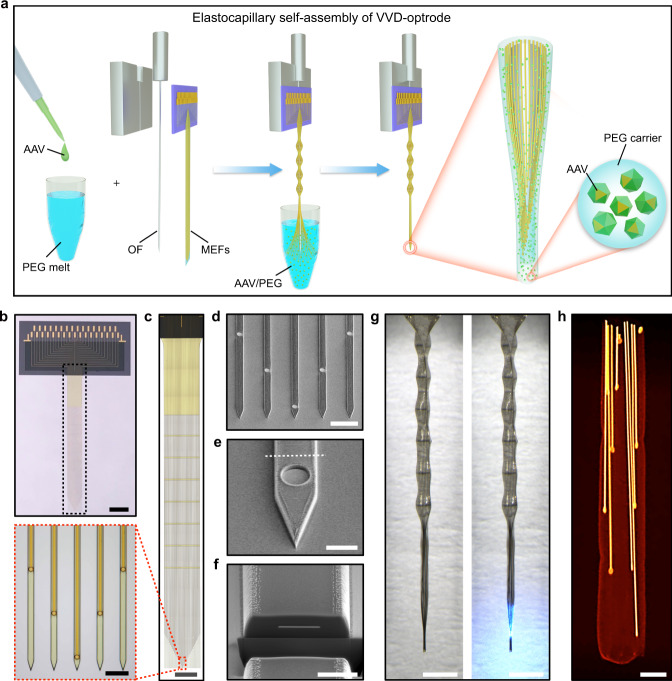
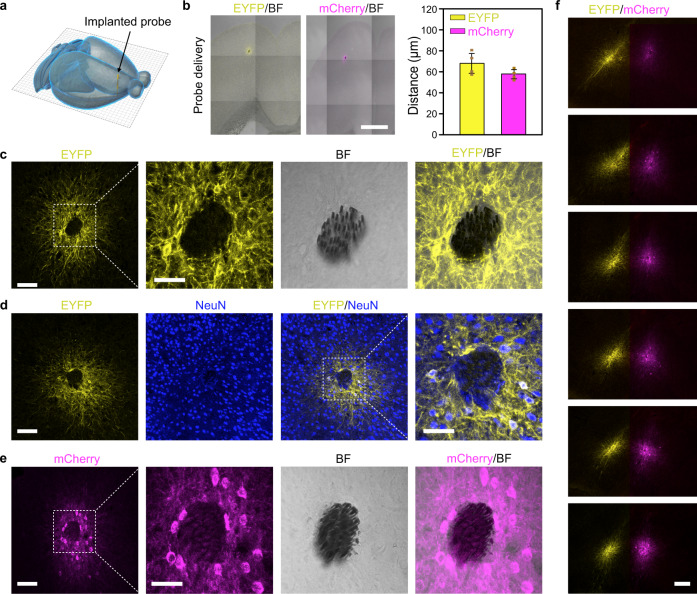
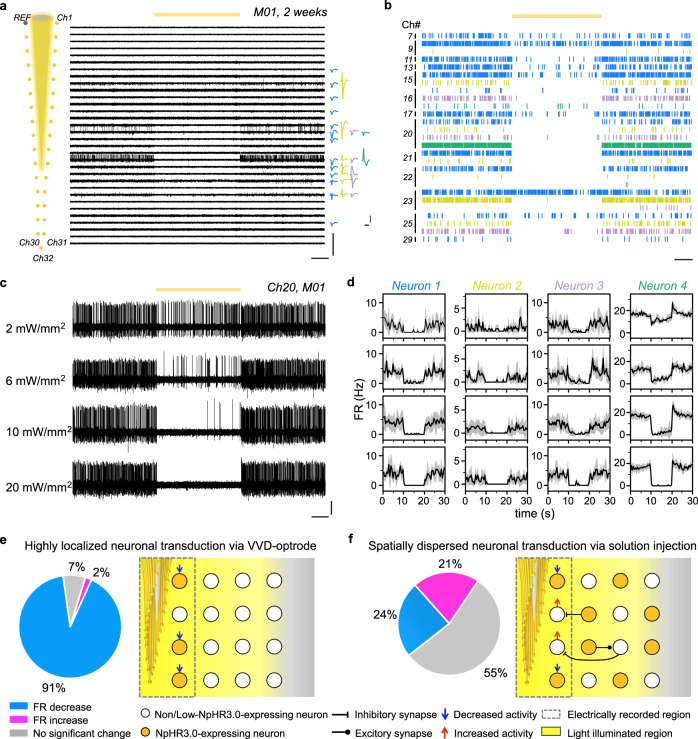
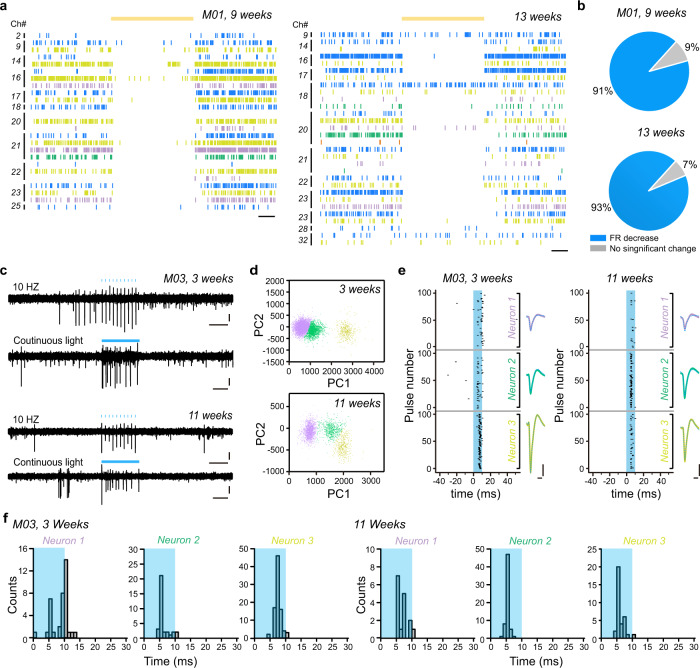
Optogenetics combined with electrical recording has emerged as a powerful tool for investigating causal relationships between neural circuit activity and function. However, the size of optogenetically manipulated tissue is typically 1-2 orders of magnitude larger than that can be electrically recorded, rendering difficulty for assigning functional roles of recorded neurons. Here we report a viral vector-delivery optrode (VVD-optrode) system for precise integration of optogenetics and electrophysiology in the brain. Our system consists of flexible microelectrode filaments and fiber optics that are simultaneously self-assembled in a nanoliter-scale, viral vector-delivery polymer carrier. The highly localized delivery and neuronal expression of opsin genes at microelectrode-tissue interfaces ensure high spatial congruence between optogenetically manipulated and electrically recorded neuronal populations. We demonstrate that this multifunctional system is capable of optogenetic manipulation and electrical recording of spatially defined neuronal populations for three months, allowing precise and long-term studies of neural circuit functions.
Overview
The claims and statistics of this paper haven’t been checked yet.
Free: it reads the open-access text and checks the first 5 claims that cite a source we can check. Create a free account to check every claim.
Integrity signals
Registry
Cites
Statistics
Figures
Verification
Claims the paper makes
The claims and statistics of this paper haven’t been checked yet.
Free: it reads the open-access text and checks the first 5 claims that cite a source we can check. Create a free account to check every claim.
Claims other papers make about this one
Each is checked against this paper’s own text: does it say what the citing paper says it does?
The check wasn’t confident either way, so it gives no verdict — never disputed.
In the citing paper
“Integrating epidermal electrodes, which provide opportunities in intimate, long-term interfaces to the human body,[602] on amputees’ remaining extremities has been tested in some studies.[603]”
From Flexible Electronics and Devices as Human–Machine Interfaces for Medical Robotics (2022) · cites this paper as [602]
Experimental — accuracy not yet measured
Self-check
Percentages, sums and reported differences re-computed from the paper’s own numbers.
The self-check needs the paper’s full text.
Citations
Cites
Millisecond-timescale, genetically targeted optical control of neural activity
Boyden, E. S., Zhang, F., Bamberg, E., Nagel, G., & Deisseroth, K. (2005) · Nature Neuroscience · doi:10.1038/nn1525 · Cited by 4,861
The origin of extracellular fields and currents — EEG, ECoG, LFP and spikes
Buzsáki, G., Anastassiou, C. A., & Koch, C. (2012) · Nature Reviews Neuroscience · doi:10.1038/nrn3241 · Cited by 4,225
Fully integrated silicon probes for high-density recording of neural activity
Jun, J. J., Steinmetz, N. A., Siegle, J. H., Denman, D. J., Bauza, M., Barbarits, B., Lee, A. K., Anastassiou, C. A., Andrei, A., Aydın, Ç., et al. (2017) · Nature · doi:10.1038/nature24636 · Cited by 2,190
The rise of plastic bioelectronics
Someya, T., Bao, Z., & Malliaras, G. G. (2016) · Nature · doi:10.1038/nature21004 · Cited by 1,884
Large-scale recording of neuronal ensembles
Buzsáki, G. (2004) · Nature Neuroscience · doi:10.1038/nn1233 · Cited by 1,875
Injectable, Cellular-Scale Optoelectronics with Applications for Wireless Optogenetics
Kim, T.-I., McCall, J. G., Jung, Y. H., Huang, X., Siuda, E. R., Li, Y., Song, J., Song, Y. M., Pao, H. A., Kim, R.-H., et al. (2013) · Science · doi:10.1126/science.1232437 · Cited by 1,174
Therapeutic in vivo gene transfer for genetic disease using AAV: Progress and challenges
Mingozzi, F., & High, K. A. (2011) · Nature Reviews Genetics · doi:10.1038/nrg2988 · Cited by 893
Campbell, P. K., Jones, K. E., Huber, R. J., Horch, K. W., & Normann, R. A. (1991) · IEEE Transactions on Biomedical Engineering · doi:10.1109/10.83588 · Cited by 881
Genetic Dissection of Neural Circuits
Luo, L., Callaway, E. M., & Svoboda, K. (2008) · Neuron · doi:10.1016/j.neuron.2008.01.002 · Cited by 756
Gray, C. M., Maldonado, P. E., Wilson, M., & McNaughton, B. (1995) · Journal of Neuroscience Methods · doi:10.1016/0165-0270(95)00085-2 · Cited by 742
Research works printed but not linked: 1
- 30. Zou, L., Tian, H. & Fang, Y. Preparation and implantation of a viral vector- delivery optrode. Protoc. Exch. https://doi.org/10.21203/rs.3.pex-1607/v1 (2021). · doi:10.21203/rs.3.pex-1607/v1
Cited by
Flexible Electronics and Devices as Human–Machine Interfaces for Medical Robotics
Heng, W., Solomon, S., & Gao, W. (2022) · Advanced Materials · doi:10.1002/adma.202107902 · Cited by 609
Kong, L., Li, W., Zhang, T., Ma, H., Cao, Y., Wang, K., Zhou, Y., Shamim, A., Zheng, L., Wang, X., et al. (2024) · Advanced Materials · doi:10.1002/adma.202400333 · Cited by 227
Electron Conductive and Transparent Hydrogels for Recording Brain Neural Signals and Neuromodulation
Liang, Q., Shen, Z., Sun, X., Yu, D., Liu, K., Mugo, S. M., Chen, W., Wang, D., & Zhang, Q. M. (2023) · Advanced Materials · doi:10.1002/adma.202211159 · Cited by 81
Transparent neural implantable devices: a comprehensive review of challenges and progress
Cho, Y. U., Lim, S. L., Hong, J.-H., & Yu, K. J. (2022) · npj Flexible Electronics · doi:10.1038/s41528-022-00178-4 · Cited by 81
Xu, S., Momin, M., Ahmed, S., Hossain, A., Veeramuthu, L., Pandiyan, A., Kuo, C., & Zhou, T. (2023) · Advanced Materials · doi:10.1002/adma.202303267 · Cited by 73
Li, H., Wang, J., & Fang, Y. Z. (2023) · Microsystems & Nanoengineering · doi:10.1038/s41378-022-00444-5 · Cited by 73
Self-citationAdvanced near‐infrared light approaches for neuroimaging and neuromodulation
Yin, H., Jiang, W., Liu, Y., Zhang, D., Wu, F., Zhang, Y., Li, C., Chen, G., & Wang, Q. (2023) · BMEMat · doi:10.1002/bmm2.12023 · Cited by 54
Recent Progress of Soft and Bioactive Materials in Flexible Bioelectronics
Wu, X., Ye, Y., Sun, M., Mei, Y., Ji, B., Wang, M., & Song, E. (2025) · Cyborg and Bionic Systems · doi:10.34133/cbsystems.0192 · Cited by 72
“Optogenetics is a neuromodulation technique that can manipulate neurons at millisecond-order temporal accuracy through optical stimulation by expressing photoactive microbial opsin proteins in the desired nerve cells [ 202 , 203 ].”
Implantable Soft Neural Electrodes of Liquid Metals for Deep Brain Stimulation
Kwon, Y. W., Kim, E., Koh, C. S., Park, Y., Hong, Y., Lee, S., Lee, J., Kim, T. J., Mun, W., Min, S. H., et al. (2025) · ACS Nano · doi:10.1021/acsnano.4c18030 · Cited by 54
Self-assembled ultraflexible probes for long-term neural recordings and neuromodulation
Guan, S., Tian, H., Yang, Y., Liu, M., Ding, J., Wang, J., & Fang, Y. Z. (2023) · Nature Protocols · doi:10.1038/s41596-023-00824-9 · Cited by 51
Self-citationSoft monolithic infrared neural interface for simultaneous neurostimulation and electrophysiology
Meneghetti, M., Kaur, J., Sui, K., Sørensen, J. F., Berg, R. W., & Markos, C. (2023) · Light Science & Applications · doi:10.1038/s41377-023-01164-9 · Cited by 47
Flexible Microinterventional Sensors for Advanced Biosignal Monitoring
Liu, Y., Fan, P., Pan, Y., & Ping, J. F. (2025) · Chemical Reviews · doi:10.1021/acs.chemrev.5c00115 · Cited by 43
Multimodal neural probes for combined optogenetics and electrophysiology
Tian, H., Xu, K., Zou, L., & Fang, Y. Z. (2021) · iScience · doi:10.1016/j.isci.2021.103612 · Cited by 45
Self-citationDeGrip, W. J., & Ganapathy, S. (2022) · Frontiers in Chemistry · doi:10.3389/fchem.2022.879609 · Cited by 43
Cho, Y. U., Kim, K., Dutta, A., Park, S., Lee, J. Y., Kim, H. W., Park, J., Kim, J., Min, W. K., Won, C., et al. (2023) · Advanced Functional Materials · doi:10.1002/adfm.202310908 · Cited by 32
Jing, R., Yu, B., Ren, S., & Yao, W. (2024) · Computer Methods in Applied Mechanics and Engineering · doi:10.1016/j.cma.2024.117546 · Cited by 30
Soft Bioelectronics Using Nanomaterials and Nanostructures for Neuroengineering
Kim, M.-J., Lee, H., Nam, S., Kim, D., & Cha, G. D. (2024) · Accounts of Chemical Research · doi:10.1021/acs.accounts.4c00163 · Cited by 36
Shang, X., Ling, W., Chen, Y., Li, C., & Huang, X. L. (2023) · Small · doi:10.1002/smll.202302241 · Cited by 27
Implantable neural electrodes: from preparation optimization to application
Zhang, B., Xie, R., Jiang, J., Hao, S., Fang, B., Zhang, J., Bai, H., Peng, B., Li, L., Liu, Z., et al. (2023) · Journal of Materials Chemistry C · doi:10.1039/d2tc05162a · Cited by 29
Flexible multimaterial fibers in modern biomedical applications
Kim, J., & Jia, X. (2024) · National Science Review · doi:10.1093/nsr/nwae333 · Cited by 28
“This advancement has led into an explosion of innovative bidirectional devices with electrical and optical modalities [87 –91 ].”
BackgroundEngineering Brain Organoids: Toward Mature Neural Circuitry with an Intact Cytoarchitecture
Jang, H., Kim, S. H., Koh, Y., & Yoon, K. (2022) · International Journal of Stem Cells · doi:10.15283/ijsc22004 · Cited by 23
“enrich the knowledge in this field by manipulating the electrical activity of specific neurons (155, 156).”
BackgroundYi, D., Yao, Y., Wang, Y., & Chen, L. (2024) · Journal of Manufacturing Processes · doi:10.1016/j.jmapro.2024.07.100 · Cited by 22
Soft Bioelectronics for Neuroengineering: New Horizons in the Treatment of Brain Tumor and Epilepsy
Yoo, S., Kim, M.-J., Choi, C., Kim, D., & Cha, G. D. (2023) · Advanced Healthcare Materials · doi:10.1002/adhm.202303563 · Cited by 23
Zou, L., Chen, Z., Fang, R., Liu, X., Xu, K., Ding, J., Wang, J., Zhang, F., Fang, Y. Z., & Tian, H. (2025) · ACS Nano · doi:10.1021/acsnano.4c16490 · Cited by 15
Self-citationT-DOpE probes reveal sensitivity of hippocampal oscillations to cannabinoids in behaving mice
Kim, J., Huang, H., Gilbert, E. T., Arndt, K. C., English, D. F., & Jia, X. (2024) · Nature Communications · doi:10.1038/s41467-024-46021-4 · Cited by 17
“It has led to the widespread adoption of bi-directional devices, which are able to monitor electrical activity and apply optical stimulation 4,17 – 20 .”
Multimaterial Glass Fiber Probe for Deep Neural Stimulation and Detection
Dai, Y., Du, M., Huang, L., Zheng, J., Wei, L., Qiu, J., Ren, C., & Zhou, S. (2022) · Advanced Optical Materials · doi:10.1002/adom.202202184 · Cited by 12
Remote neural regulation mediated by nanomaterials
Zou, L., Xu, K., Tian, H., & Fang, Y. Z. (2022) · Nanotechnology · doi:10.1088/1361-6528/ac62b1 · Cited by 12
“Since visible light is absorbed and scattered strongly when penetrating neural tissues [ 24, 25 ] , optical fi bers [ 26 – 28 ] or optoelectronic devices [ 29 – 31 ] , such as microscale light-emitting diodes ( μ LEDs ) , have to be implanted into targeted brain regions for the localized delivery of…”
Self-citationSpatially Precise Genetic Engineering at the Electrode‐Tissue Interface
Xu, K., Yang, Y., Ding, J., Wang, J., Fang, Y. Z., & Tian, H. (2024) · Advanced Materials · doi:10.1002/adma.202401327 · Cited by 9
Self-citationDesign and Evaluation of a Receiver for Wired Nano-Communication Networks
Dambri, O. A., Cherkaoui, S., & Makrakis, D. (2022) · IEEE Transactions on NanoBioscience · doi:10.1109/tnb.2022.3182587 · Cited by 9
“6 (mW/mm2),2 which is safe to be used in vivo for medical applications as confirmed by the experimental study reported in [69].”
MethodEmerging trends in the development of flexible optrode arrays for electrophysiology
Almasri, R. M., Ladouceur, F. J., Mawad, D., Esrafilzadeh, D., Firth, J., Lehmann, T., Poole-Warren, L. A., Lovell, N. H., & Abed, A. A. (2023) · APL Bioengineering · doi:10.1063/5.0153753 · Cited by 7
Seah, I. Y. J., Goh, D., Banerjee, A., & Su, X. (2024) · Frontiers in Medicine · doi:10.3389/fmed.2024.1328474 · Cited by 10
“In recent times, optogenetic-based technologies that enable optical methods of assessing electrophysiology have emerged (114).”
BackgroundOptogenetics: Pinpoint Light on Precise Neuromodulation
Guo, J., Yeung, K., Jiang, C., Duan, L., Han, X., & Qiao, W. (2025) · IEEE Reviews in Biomedical Engineering · doi:10.1109/rbme.2025.3624697 · Cited by 5
“The delivery of viral vectors encoding optogenes into the CNS is commonly facilitated by stereotaxic injection, as it allows precise and efficient targeting of specific brain regions [125], [126].”
Sapphire-Based Optrode for Low Noise Neural Recording and Optogenetic Manipulation
Xu, Y., Li, B., Huang, X., Liu, Y., Liang, Z., Yang, X., Lin, L., Wang, L., Xia, Y., Ridenour, M., et al. (2025) · ACS Chemical Neuroscience · doi:10.1021/acschemneuro.4c00602 · Cited by 5
A tassel-type multilayer flexible probe for invasive neural recording
Ye, Z.-P., Jing, Q., Ni, Y.-L., Wu, Z., Xiao, X., & Xiong, S. (2022) · Chip · doi:10.1016/j.chip.2022.100024 · Cited by 5
Kim, J., Gilbert, E. T., Arndt, K. C., Huang, H., Oleniacz, P. W., Jiang, S., Kimbrough, I. F., Sontheimer, H. W., English, D. F., & Jia, X. (2024) · Biosensors and Bioelectronics · doi:10.1016/j.bios.2024.116696 · Cited by 5
Chu, C., Chen, Z., Liang, C., Wu, P., Guo, W., Chen, B.-W., Huang, C., Li, S., Chang, C., Liang, Y., et al. (2025) · Advanced Science · doi:10.1002/advs.202515060 · Cited by 5
Mingliang, 徐. X., Fangyuan, 李. L., Yueqi, 刘. L., Jinhui, 张. Z., Yazhou, 师. S., & Fei, 何. H. (2023) · Chinese Journal of Lasers · doi:10.3788/cjl221482 · Cited by 4
Multilayer Graphene Based MRI Compatible MEMS Neural Probes for both Stimulation and Recording
Tu, K., Wang, L., Chen, H., Xu, Q., Cao, J., Jiang, C., Yang, B., Wei, H., & Liu, J. (2025) · Small · doi:10.1002/smll.202506633 · Cited by 3
Mohammadiaria, M., Bianco, M., Balena, A., Andriani, M. S., Montinaro, C., Spagnola, B., Pisano, F., Pisanello, F., & Vittorio, M. D. (2024) · Neurophotonics · doi:10.1117/1.nph.11.s1.s11514 · Cited by 3
“57 After implantation, the PEG dissolves, releasing the AAV for localized transduction of nearby neurons.”
MethodZhang, X., Ding, J., Zou, L., Tian, H., Fang, Y. Z., & Wang, J. (2023) · Journal of Materials Chemistry B · doi:10.1039/d2tb02665a · Cited by 4
Self-citationHuang, F., Baset, A., Bello, S. T., Chen, X., & He, J. (2025) · Communications Biology · doi:10.1038/s42003-025-07597-9 · Cited by 4
Opto-juxtacellular interrogation of neural circuits in freely moving mice
Ding, L., Balsamo, G., Diamantaki, M., Preston‐Ferrer, P., & Burgalossi, A. (2023) · Nature Protocols · doi:10.1038/s41596-023-00842-7 · Cited by 2
Neural Interfaces: Applications, Innovative Approaches, Biocompatibility, Biomimetics
Zemlyanskov, M. S., Arsentiev, K. A., Shtol, V. S., Konovalova, S. P., Grinevich, V. P., & Евгеньевич, М. П. (2025) · Journal of Evolutionary Biochemistry and Physiology · doi:10.1134/s0022093025040118 · Cited by 2
“Another effective solu(cid:2) tion involves opsin gene delivery and localized gene expression using self-assembled viral vector-deliver(cid:2) ing (VVD) optorodes [47].”
Liu, L., Zhang, W., Wen, B., Wang, M., Wang, A., Zhang, J., Zhang, Y., Le, S., Jiang, H., Zhai, R., et al. (2023) · International Winter Conference on Brain-Computer Interface (BCI) · doi:10.1109/bci57258.2023.10078610 · Cited by 3
“Photogenetic technology is a widely used neural regulation technology [1-3], which can make nerve cells transfected with photosensitive protein genes generate neural signals by irradiating them with light waves of specific wavelengths.”
BackgroundBrain-computer interface—Brain information reading and activity control
Xu, W., Chen, L., Sui, X., Yun, T., & Liu, Z. (2022) · Chinese Science Bulletin (Chinese Version) · doi:10.1360/tb-2022-0338 · Cited by 5
Zhuochen, 马. M., Zhengnan, 吴. W., Leshui, 余. Y., & Bing, 韩. H. (2026) · Laser & Optoelectronics Progress · doi:10.3788/lop252099 · Cited by 1
Wang, M., Shang, S., Xu, Y., Zhou, C., You, X., Jiang, H., Fan, X., Zhou, X., Wang, W., Zhang, W., et al. (2026) · Biosensors and Bioelectronics · doi:10.1016/j.bios.2026.118987 · Cited by 2
Speed Gradient Control Algorithm for Optogenetic Modeling
Borisenok, S. (2021) · European Journal of Science and Technology · doi:10.31590/ejosat.1011271 · Cited by 1
“Together with electrophysiological data, it provides the selfassembled multifunctional neural probes as a powerful tool for investigating causal relationships between neural circuit activity and function (Zou et al., 2021).”
Kim, J., Huang, H., Gilbert, E. T., Arndt, K. C., English, D. F., & Jia, X. (2023) · bioRxiv (Cold Spring Harbor Laboratory) · doi:10.1101/2023.06.08.544251
Yiheng, 唐. T., Yang, 翁. W., Zequn, 陈. C., Xiaojing, 李. L., Ke, 斯. S., Wei, 龚. G., Hongtao, 林. L., & Li, L. (2023) · Laser & Optoelectronics Progress · doi:10.3788/lop231425
Carey, C. P. (2024) · The Research Repository @ WVU (West Virginia University) · doi:10.33915/etd.12408
Differential Neurotoxicity Induced in Rats by Injection of PMs from 31 Major Cities in China
Xing, Q., Liu, H., Zhu, C., Zhang, L., & Yao, M. (2025) · Environmental Science & Technology · doi:10.1021/acs.est.4c10408 · Cited by 1
Emerging bioelectronics and optogenetics for neurogastroenterology
Liu, H., Luo, W., Xu, M., Zhang, S., Xue, J., Chen, Q., Zhao, Y., Hu, N., & Gao, Z. (2025) · Biosensors and Bioelectronics · doi:10.1016/j.bios.2025.117795
Developing a wearable automated system for measuring bio-impedance
Sarah, U. T. (2023) · theses.fr (ABES) · doi:10.70675/3734f827za0f3z400ez9fcdz63cf50e11584
Qian, X., Liu, C., Zhang, Y., Subramaniam, S., Fang, Q., Deen, J., & Jiang, W. (2026) · Progress in Biomedical Engineering · doi:10.1088/2516-1091/ae67c5 · Cited by 1
“Furthermore, optogenetic actuators enable high-precise optical manipulation of neural circuits [13–15].”
Guo, B., Oh, K., & Ha, S. (2026) · International Journal of Extreme Manufacturing · doi:10.1088/2631-7990/ae6ea4
Cheng, Z., Liu, Y., Qin, J., Yuan, Z., Zhang, Z., Zeng, L., & Ji, X. (2026) · Journal of Innovative Optical Health Sciences · doi:10.1142/s1793545826400158
Gu, W., Ju, J., & Wang, L. (2026) · Small · doi:10.1002/smll.74206
Yue, Z., Li, H., Zheng, D., Min, R., Liu, Q., Ding, H., He, F., Junior, A. G. L., & Li, X. (2026) · Intelligent Opto-Electronics · doi:10.67704/ioe.2026.260013
Decoding Anxiety Circuits by Integrating Behavioral Assays with Neural Recordings
Bordes, J., Ricci, D., Stont, L., Bittar, T. P., & Beyeler, A. (2026) · Neuromethods · doi:10.1007/978-1-0716-5599-3_17
Metadata
- Authors
- Zou, L., Tian, H., Guan, S., Ding, J., Gao, L., Wang, J., & Fang, Y.
- Affiliations
- Chinese Academy of Sciences (CN)
- National Center for Nanoscience and Technology (CN)
- Corresponding author
- Fang, Ying
- Venue
- Nature Communications
- Published
- 2021-10-07
- Volume
- 12
- Issue
- 1
- Pages
- 5871-5871
- ISSN
- 2041-1723 (ISSN-L)
- PMC
- PMC8497603
- OpenAlex
- W3040707082
- Cited by
- 60
- References
- 29
- Citations by year
- 2026: 8 · 2025: 12 · 2024: 11 · 2023: 17 · 2022: 9 · 2021: 3
- FWCI
- 4.60
- Type
- journal article
- Language
- en
- Open access
- gold
- doi.org
- Licence
- cc-by
- creativecommons.org/licenses/by/4.0 (tdm)
- creativecommons.org/licenses/by/4.0 (vor)
- Locations
- Nature Communications (publishedVersion, cc-by)
- PubMed Central (publishedVersion, cc-by)
- PubMed (publishedVersion)
- RePEc: Research Papers in Economics (submittedVersion)
- DOAJ (DOAJ: Directory of Open Access Journals) (submittedVersion, cc-by-sa)
- Funders
- National Natural Science Foundation of China (22102040, 21790393, 21673057)
- Chinese Academy of Sciences (XDB32030100)
- Topics
- Life Sciences › Neuroscience › Cellular and Molecular Neuroscience › Neuroscience and Neural Engineering
- Life Sciences › Neuroscience › Cellular and Molecular Neuroscience › Photoreceptor and optogenetics research
- Social Sciences › Education › Undergraduate Neuroscience Education and Research
- Keywords
- optrode, optogenetics, electrophysiology, viral gene delivery, self-assembly, microelectrodes, fiber optics, opsin expression, neural circuit mapping, long-term neural recording
- MeSH terms
- Animals, Brain, Male, Mice, Inbred C57BL, Microelectrodes, Neurons, Polymers, Mice, Opsins, Electrophysiological Phenomena, Optogenetics
About these checks
Registry, retraction, Cites and statistics results are computed, not judged, with one exception: a printed reference that no index lists is read once by a model before it counts as a citation error. Claims are extracted by a model and kept only when their quote appears verbatim in the text; each cited source is then checked, with a model’s help, for whether it says what the claim relies on. Those verdicts can be wrong — read the claim’s quote and the cited source before relying on one.
Statistics and arithmetic are recomputed, not judged.
Confidence bands are shown only for fields calibrated on our annotated test set. None is calibrated yet, so no band is shown.
What counts as a claim ›How we measure confidence ›How we check this ›
Are you an author, or do you see a problem with this page? Request a review
Data sources
Bibliographic data: Semantic Scholar, OpenAlex, Crossref.
Contains information from the Semantic Scholar Academic Graph Datasets, made available under the ODC Attribution License (ODC-BY 1.0).
Semantic Scholar’s data is described in: Kinney, R., et al. (2023). The Semantic Scholar Open Data Platform. arXiv:2301.10140.
