

A human multi-lineage hepatic organoid model for liver fibrosis
Open accessPublished version of a preprint
The DOI matches its Crossref record; 124 of the 124 references it cites were found in a registry or an index.
Abstract
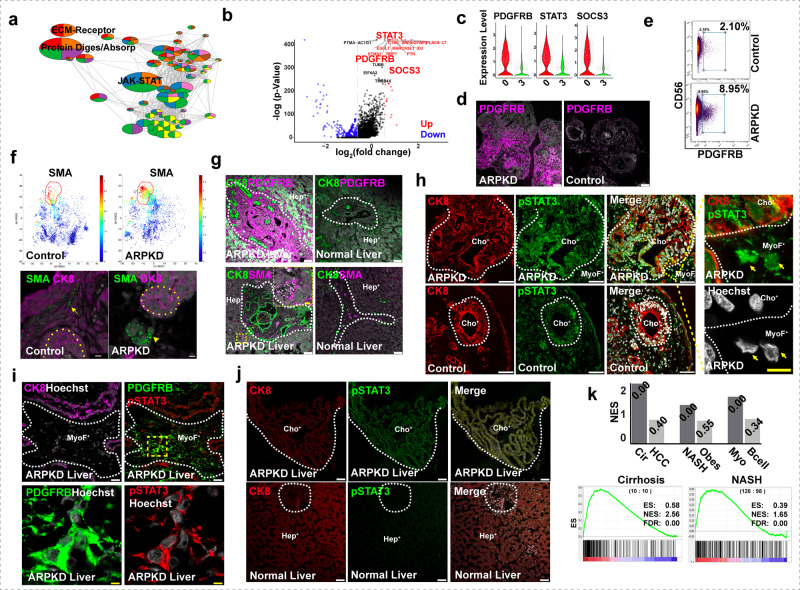
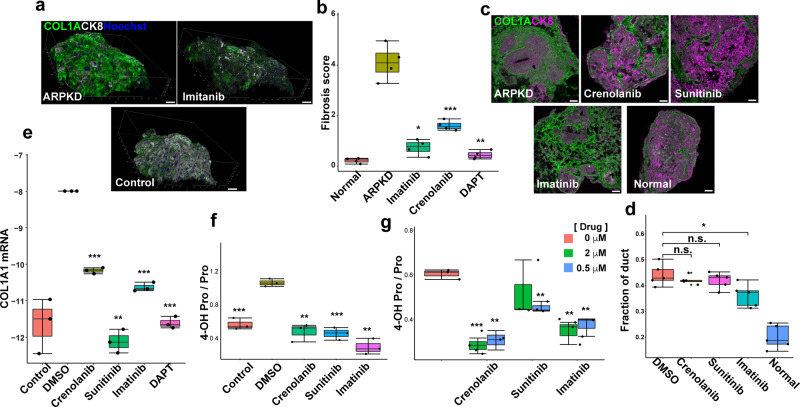
To investigate the pathogenesis of a congenital form of hepatic fibrosis, human hepatic organoids were engineered to express the most common causative mutation for Autosomal Recessive Polycystic Kidney Disease (ARPKD). Here we show that these hepatic organoids develop the key features of ARPKD liver pathology (abnormal bile ducts and fibrosis) in only 21 days. The ARPKD mutation increases collagen abundance and thick collagen fiber production in hepatic organoids, which mirrors ARPKD liver tissue pathology. Transcriptomic and other analyses indicate that the ARPKD mutation generates cholangiocytes with increased TGFβ pathway activation, which are actively involved stimulating myofibroblasts to form collagen fibers. There is also an expansion of collagen-producing myofibroblasts with markedly increased PDGFRB protein expression and an activated STAT3 signaling pathway. Moreover, the transcriptome of ARPKD organoid myofibroblasts resemble those present in commonly occurring forms of liver fibrosis. PDGFRB pathway involvement was confirmed by the anti-fibrotic effect observed when ARPKD organoids were treated with PDGFRB inhibitors. Besides providing insight into the pathogenesis of congenital (and possibly acquired) forms of liver fibrosis, ARPKD organoids could also be used to test the anti-fibrotic efficacy of potential anti-fibrotic therapies.
Overview
The claims and statistics of this paper haven’t been checked yet.
Free: it reads the open-access text and checks the first 5 claims that cite a source we can check. Create a free account to check every claim.
Integrity signals
Registry
Cites
Statistics
Figures
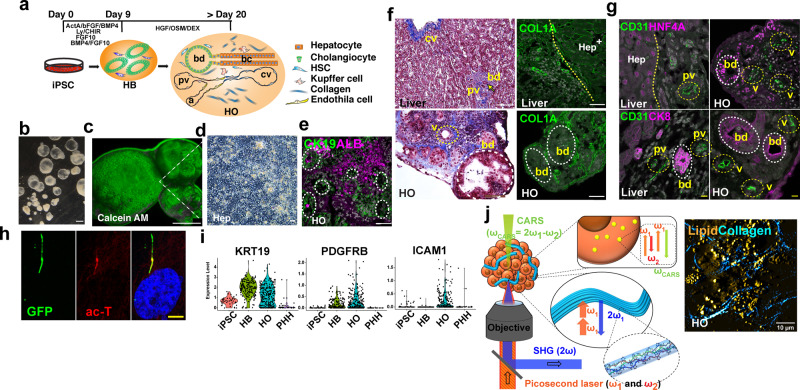
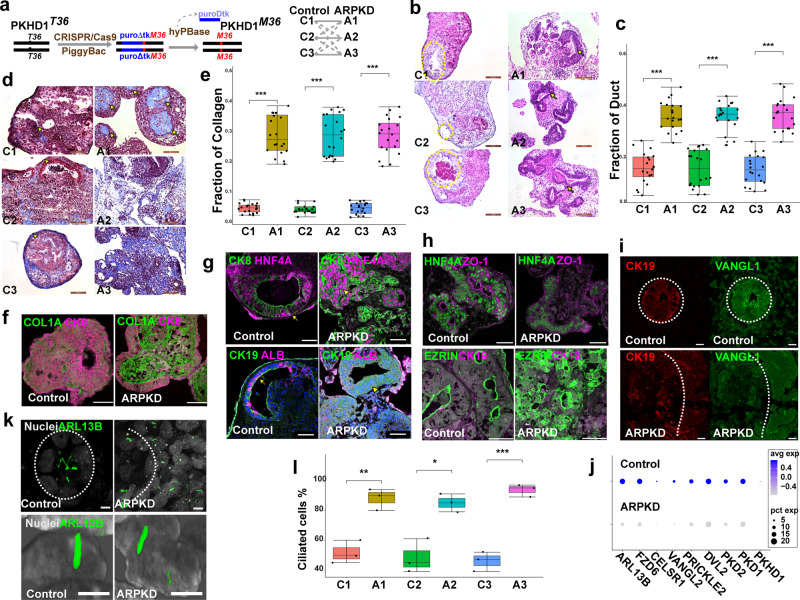
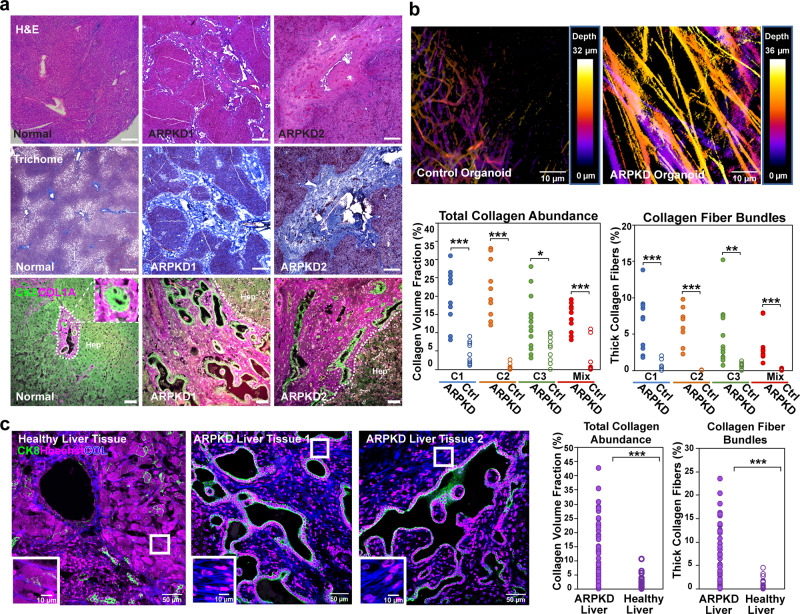
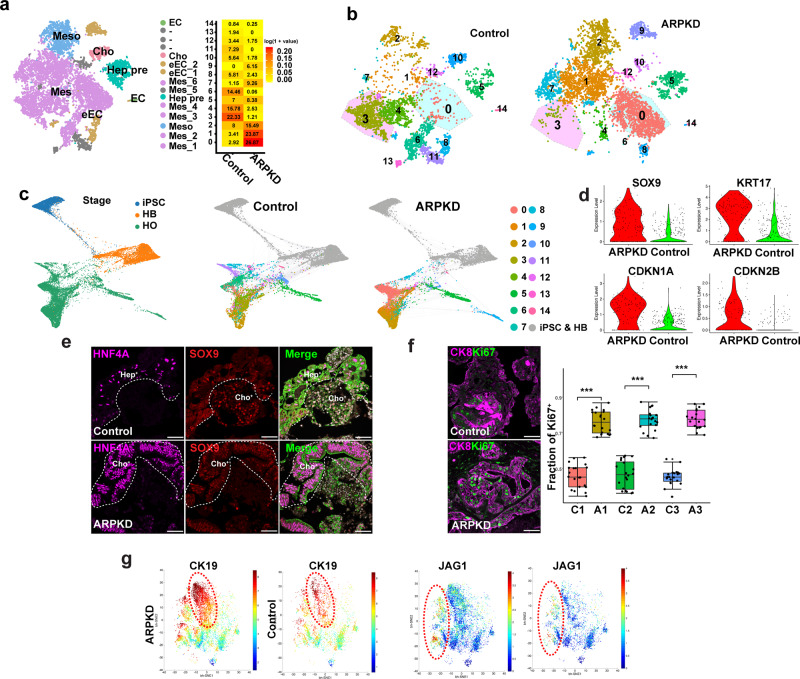
Verification
Claims the paper makes
The claims and statistics of this paper haven’t been checked yet.
Free: it reads the open-access text and checks the first 5 claims that cite a source we can check. Create a free account to check every claim.
Claims other papers make about this one
Each is checked against this paper’s own text: does it say what the citing paper says it does?
The source backs part of the claim, not all of it — or backs it for a different population, condition or comparison.
In the citing paper
“Furthermore, the organoid could recapitulate several liver diseases, including fatty liver disease, cirrhosis, and monogenic metabolic diseases (Guan et al., 2017;Wang et al., 2020;Guan et al., 2021).”
From Fast formation and maturation enhancement of human liver organoids using a liver-organoid-on-a-chip (2024) · cites this paper as Guan et al., 2021
Experimental — accuracy not yet measured
Self-check
Percentages, sums and reported differences re-computed from the paper’s own numbers.
The self-check needs the paper’s full text.
Citations
Cites
1 retracted
Spirlì, C., Locatelli, L., Morell, C. M., Fiorotto, R., Morton, S. D., Cadamuro, M., Fabris, L., & Strazzabosco, M. (2013) · Hepatology · doi:10.1002/hep.26554 · Cited by 49
RetractedSubramanian, A., Tamayo, P., Mootha, V. K., Mukherjee, S., Ebert, B. L., Gillette, M. A., Paulovich, A., Pomeroy, S. L., Golub, T. R., Lander, E. S., et al. (2005) · Proceedings of the National Academy of Sciences · doi:10.1073/pnas.0506580102 · Cited by 53,625
KEGG: Kyoto Encyclopedia of Genes and Genomes
Kanehisa, M. (2000) · Nucleic Acids Research · doi:10.1093/nar/28.1.27 · Cited by 37,077
KEGG: Kyoto Encyclopedia of Genes and Genomes
Ogata, H., Goto, S., Sato, K., Fujibuchi, W., Bono, H., & Kanehisa, M. (1999) · Nucleic Acids Research · doi:10.1093/nar/27.1.29 · Cited by 31,232
Comprehensive Integration of Single-Cell Data
Stuart, T., Butler, A., Hoffman, P., Hafemeister, C., Papalexi, E., Mauck, W. M., Hao, Y., Stoeckius, M., Smibert, P., & Satija, R. (2019) · Cell · doi:10.1016/j.cell.2019.05.031 · Cited by 15,453
Integrating single-cell transcriptomic data across different conditions, technologies, and species
Butler, A., Hoffman, P., Smibert, P., Papalexi, E., & Satija, R. (2018) · Nature Biotechnology · doi:10.1038/nbt.4096 · Cited by 13,174
Younossi, Z. M., Koenig, A. B., Abdelatif, D., Fazel, Y., Henry, L., & Wymer, M. (2016) · Hepatology · doi:10.1002/hep.28431 · Cited by 10,781
The Reactome pathway Knowledgebase
Fabregat, A., Sidiropoulos, K., Garapati, P., Gillespie, M., Hausmann, K., Haw, R., Jassal, B., Jupe, S., Korninger, F., McKay, S., et al. (2016) · Nucleic Acids Research · doi:10.1093/nar/gkv1351 · Cited by 5,605
DNA targeting specificity of RNA-guided Cas9 nucleases
Hsu, P. D., Scott, D. A., Weinstein, J. A., Ran, F. A., Konermann, S., Agarwala, V., Li, Y., Fine, E. J., Wu, X., Shalem, O., et al. (2013) · Nature Biotechnology · doi:10.1038/nbt.2647 · Cited by 4,741
GEOquery: a bridge between the Gene Expression Omnibus (GEO) and BioConductor
Davis, S., & Meltzer, P. S. (2007) · Bioinformatics · doi:10.1093/bioinformatics/btm254 · Cited by 3,303
Cited by
Items 101–150 of 150
Hung, Y.-H., Sritharan, R., Vohl, M., Ilkayeva, O., Biertho, L. D., Tchernof, A., White, P. J., & Sethupathy, P. (2021) · bioRxiv (Cold Spring Harbor Laboratory) · doi:10.1101/2021.08.20.457162 · Cited by 10
“with previous observations of SOCS3 as a direct target of STAT3 and the co-activation of STAT3 and SOCS3 in a human liver organoid model of fibrosis(72).”
MethodSelf-Assembled Generation of Multi-zonal Liver Organoids from Human Pluripotent Stem CellsPreprint
Reza, H. A., Santangelo, C., Reza, A. A., Iwasawa, K., Sachiko, S., Glaser, K., Bondoc, A. J., Merola, J., & Takebe, T. (2024) · bioRxiv (Cold Spring Harbor Laboratory) · doi:10.1101/2024.08.30.610426 · Cited by 4
Bahtiri, S., Hagens, T. M. S., van de Water, B., & Niemeijer, M. (2025) · Expert Opinion on Drug Metabolism & Toxicology · doi:10.1080/17425255.2025.2516051 · Cited by 3
“The organoid’s immaturity and differentiation method could result in altered composition and structure as shown in a study of Guan et al. [64].”
Revolutionising oral organoids with artificial intelligence.
Yang, J., Fischer, N. G., & Ye, Z. (2024) · PubMed Central · doi:10.12336/biomatertransl.2024.04.004 · Cited by 12
“77, 78 3D bioprinting technology is revolutionising oral organoid manufacturing by overcoming limitations of traditional 3D culture methods, such as size constraints and lack of reproducibility, as well as insufficient vascular and immune cell interactions.”
Global landscape of hepatic organoid research: A bibliometric and visual study
Li, T., Bo, R., Yan, J., Johnson, N. L., Liao, M.-T., Li, Y., Chen, Y., Lin, J., Li, J., Chu, F., et al. (2025) · World Journal of Hepatology · doi:10.4254/wjh.v17.i2.95624 · Cited by 3
Miyamoto, Y., Koshidaka, Y., Murase, K., Kanno, S., Noguchi, H., Miyado, K., Ikeya, T., Suzuki, S. O., Yagi, T., Teramoto, N., et al. (2022) · Materials · doi:10.3390/ma15217823 · Cited by 6
Li, J., Wu, B., Zeng, L., Lin, Y., Chen, Q., Wang, H., An, L., Zhang, J., Chen, S., Huang, J., et al. (2023) · Frontiers in Pharmacology · doi:10.3389/fphar.2023.1101703 · Cited by 5
“Currently, domestic and international studies have confirmed that the Stat3 signaling pathway is closely linked to the secretion of pro-inflammatory factors and this pathway also plays a crucial role in the fibrosis process of liver (Guan et al., 2021) (Ma et al.”
BackgroundSelf-citationGenetic and pharmacological perturbation of hepatitis-C virus entry
Carriquí-Madroñal, B., Laßwitz, L., von Hahn, T., & Gerold, G. (2023) · Current Opinion in Virology · doi:10.1016/j.coviro.2023.101362 · Cited by 7
Wang, H., Yanqiao, X., Longchan, L., Weiman, Z., Lihua, G., Xiong, A., Zhengtao, W., & Li, Y. (2025) · Biosensors and Bioelectronics · doi:10.1016/j.bios.2025.117499 · Cited by 5
Bea-Mascato, B., Giudice, G., Pinheiro‐de‐Sousa, I., Solarat, C., Petsalaki, E., & Valverde, D. (2022) · bioRxiv (Cold Spring Harbor Laboratory) · doi:10.1101/2022.11.04.514246 · Cited by 3
Gao, Q., Cui, Y., Gao, F., Yang, Y., Huangfu, W., & Wang, M. (2025) · Medicine · doi:10.1097/md.0000000000041797 · Cited by 2
“[21] Then we looked at how PDGFRB gets expressed in different clinical stages.”
Self-citationModeling hepatic fibrosis in TP53 knockout iPSC ‐derived human liver organoids
Karabicici, M., Akbari, S., Çalışkan, C., Celiker, C., Öz, Ö., Binokay, L., Karakülah, G., Şentürk, Ş., & Erdal, E. (2025) · Molecular Oncology · doi:10.1002/1878-0261.70119 · Cited by 4
Xu, J., Sang, X., He, Y., Ke, J., Xu, J., Liu, T., Wang, J., Zhai, H., Chen, X., Shi, X., et al. (2025) · Frontiers in Pharmacology · doi:10.3389/fphar.2025.1730255 · Cited by 3
Self-citationA cell atlas of multiple liver organoids and the fetal liver based on scRNA-seq
QinFeng, M., Zhang, X., & Pan, J. (2026) · iScience · doi:10.1016/j.isci.2026.114955 · Cited by 5
“Most differentiation protocols follow a stepwise approach involving definitive endoderm induction, hepatic specification, and organoid maturation (e.g., Ouchi et 6,14–16 to generate multicellular liver-like structures.”
AI in the Prediction of Hepatic Fibrosis Progression Using Non-Coding RNAs
Roy, D., Hussain, M. S., Khan, Y., Patel, D. N., Smerat, A., Bainsal, N., Ashique, S., Kumar, A., Khan, I. A., Ochilova, D., et al. (2026) · Clinica Chimica Acta · doi:10.1016/j.cca.2026.120973 · Cited by 3
The rise of bone marrow organoids as next-generation models for blood formation and failure
Stolz, A., Harmon, L. M., Li, J., Rettkowski, J., Rodríguez-Meira, A., Shiroshita, K., Tran, V. L., Khan, A. O., & Klein, C. (2026) · Experimental Hematology · doi:10.1016/j.exphem.2026.105428 · Cited by 2
Characterization of Pro-Fibrotic Signaling Pathways using Human Hepatic OrganoidsPreprint
Guan, Y., Fang, Z., Hu, A., Roberts, S., Wang, M., Ren, W., Johansson, P. K., Heilshorn, S. C., Enejder, A. M. K., & Peltz, G. (2023) · bioRxiv (Cold Spring Harbor Laboratory) · doi:10.1101/2023.04.25.538102 · Cited by 2
“The spatial distribution and morphology of the collagen fibers in HOs were examined using Second Harmonic Generation ( SHG ) microscopy 14, 15 , which has previously been used to quantitatively analyze liver fibrosis in human patients 16, 17 and to monitor fibrosis in ARPKD HOs 12 .”
BackgroundMethodResultInfluentialSelf-citationRecent advances in multicellular human liver models
Mun, S. J., Lee, J., Shin, Y., Eun, V., Ji, Y., & Son, M. J. (2022) · Organoid · doi:10.51335/organoid.2022.2.e26 · Cited by 1
“To this end, treatment with PDGFRB inhibitors elicited an anti-fibrotic effect in the organoid model of liver fibrosis [45].”
BackgroundInfluentialŞişli, H. B., Şenkal, S., Okumuş, E. B., Böke, Ö. B., Erdoğmuş, Ö., Kül, B., Sümer, E., & Doğan, A. (2024) · Molecular Biology Reports · doi:10.1007/s11033-024-09660-w · Cited by 1
“In recent years, PSCs have been used to generate various organoids, including lung organoids [4, 5], liver orga-noids [6], cardiac organoids [7], intestinal organoids [8, 9], and pancreas organoids [10].”
Advanced strategies in organoids for metabolic monitoring and metabolic disease modeling
Ma, W., Xu, Y., Gu, Z., & Li, D. (2025) · Nano Research · doi:10.26599/nr.2025.94907988 · Cited by 2
Bea-Mascato, B., Giudice, G., Pinheiro‐de‐Sousa, I., Solarat, C., Barbeito, P., Petsalaki, E., & Valverde, D. (2025) · Scientific Reports · doi:10.1038/s41598-025-22584-0 · Cited by 4
“It controls processes related to cell proliferation and migration and is associated with several pathologies such as liver or kidney fibrosis, recurrent phenotypes in ciliopathies (Zhang et al., 2017; Guan et al., 2021; McConnachie et al., 2021).”
Voges, H. K., Durrant-Whyte, J., See, M., Iaprintsev, V., Yeow, S., Parker, B. L., Bibby, K., Keen, E., King, I., Piers, A. T., et al. (2026) · Cell stem cell · doi:10.1016/j.stem.2026.07.010 · Cited by 1
Liver Organoids: From Disease Modelling to Regenerative Medicine
Wang, T., Qu, X., Si, J., Meng, J., Zhang, T., & Niu, S. (2026) · Cell Proliferation · doi:10.1111/cpr.70268 · Cited by 2
“The mutation increased the activity of the TGFβ pathway in the cells of the bile ducts, which caused them to produce more collagen [59].”
Kim, M. J., Lee, J., Mun, S. J., Son, M. J., & Kim, J. (2022) · Organoid · doi:10.51335/organoid.2022.2.e5 · Cited by 1
“Mature hepatic organoids are currently limited to research on inflammatory signaling and fibrosis occurring in the real human body and require additional injury-induced activation to induce an inflammatory response and fibrosis [32–34].”
The liver organoid's past, present and future: a personalized medicine strategy
Abady, M. M., Zahran, I. A., & Elmokhtar, Y. M. (2024) · International Journal of Health Sciences · doi:10.53730/ijhs.v8ns1.14980 · Cited by 2
“These findings highlight the potential of liver organoids in studying fibrosis mechanisms and testing therapeutic interventions [9].”
BackgroundZhang, J., Qin, X., Qin, Y., Qi, F., Wang, Y., Sun, J., Li, Y., Sun, W., & Guo, X. (2025) · Biochimica et Biophysica Acta (BBA) - Molecular Basis of Disease · doi:10.1016/j.bbadis.2025.167768 · Cited by 1
Erdal, E., Karabicici, M., Akbari, S., Çalışkan, C., Celiker, C., Öz, Ö., Binokay, L., Karakülah, G., & Şentürk, Ş. (2024) · Research Square · doi:10.21203/rs.3.rs-3935080/v1
Engineering Nanocellulose-based Matrices for 3D Cell Cultures
Curvello, R., Raghuwanshi, V. S., & Garnier, G. (2022) · Pulp and Paper Fundamental Research Symposium · doi:10.15376/frc.2022.1.291
Biomimetic injectable hydrogels of gelatin and hyaluronic acid for hepatic cell culture
Rodríguez-Fernández, J. (2024) · RiuNet (Universitat Politècnica de València) · doi:10.4995/thesis/10251/207128
Shin, D., Son, M. J., Bae, M., & Kim, H. (2024) · ACS Biomaterials Science & Engineering · doi:10.1021/acsbiomaterials.4c01242
Becker-Kojić, Z. A., Schott, A.-K., Zipančić, I., Picard, L., & Hernández‐Rabaza, V. (2025) · Neuromethods · doi:10.1007/978-1-0716-4354-9_8
Taghiyev, Z. T., Arneth, B. M., Altrawy, A., Mohamed, R., Ghazy, A., Hamdy, D., & Sabit, H. (2025) · Elsevier eBooks · doi:10.1016/b978-0-443-29890-5.00001-4
Emerging frontiers in cHCC-CCA organoid models: bridging stem cell innovation to precision oncology
Sun, J., Liu, W., Gao, Y., & Liu, Y. (2025) · Egyptian Liver Journal · doi:10.1186/s43066-025-00445-9
“Subsequently, Guan et al. [30] established an iPSC-derived liver parenchymal organoid model containing bile duct structures.”
Andriianov, V. S., Malyutina, A., Panferov, E., Karabelsky, A. V., Ivanov, R. A., Minskaia, E., & Reshetnikov, V. V. (2025) · International Journal of Molecular Sciences · doi:10.3390/ijms26199432
“Guan et al. [79] studied this interaction, finding that a common TOF-causing Gly274Asp JAG1 mutation has no effect on the liver organoid formation, despite the mutated protein being unable to activate the Notch pathway due to an altered glycosylation pattern, while iPSCs carrying the C829X and…”
Research Progress on Ciliary-Related Genes in Childhood Cholestatic Diseases
王, 湘. (2026) · Advances in Clinical Medicine · doi:10.12677/acm.2026.1631147
Organoïdes hépatiques: De la promesse à la complexité fonctionnelle
Luce, E., & Duclos‐Vallée, J. (2026) · médecine/sciences · doi:10.1051/medsci/2026035
Multiscale Comparative Analyses of OVB-Organoids and Cerebral Organoids
Yang, J., Zhang, X., Li, S., & Gao, Z. (2026) · Cells · doi:10.3390/cells15080703
“Various organoids have been developed to simulate or replicate the main features of organ development in the brain [5–7], intestine [8,9], liver [10,11], heart [12,13], breast [14,15], lung [16,17], retina [18,19] and skin [20,21].”
Recapitulation of bile acid metabolism in hepatobiliary organoids derived from hiPSC
Xu, J., Sang, X., Ke, J., Li, J., Xu, J., Chen, X., Lin, S., Cai, R., Shi, X., & Wu, F. (2026) · JHEP Reports · doi:10.1016/j.jhepr.2026.101884
“12,31 BA-HBOs approximated major hepatic cell populations and certain features of adult liver architecture, thereby reducing lineage biases observed in current organoid platforms and providing an improved in vitro model.”
Self-citationZhang, S., Jiang, J., & Zheng, S. (2026) · Biomedicines · doi:10.3390/biomedicines14061233
“Guan et al. (2021) generated human induced pluripotent stem cell (iPSC)-derived multilineage liver organoids that recapitulated key ARPKD-associated liver phenotypes, including abnormal bile duct architecture, collagen deposition, and fibrosis-like remodeling within 21 days [54].”
Designing complex organoids through developmental principles
Brassard, J. A., & Wells, J. M. (2026) · Cell stem cell · doi:10.1016/j.stem.2026.05.004 · Cited by 1
Jiao, M., Sun, Y. X., Liu, R., Yin, X., Hou, X., Yuan, H., Dai, Z., Chen, Q., & Zhu, C. (2026) · Communications Biology · doi:10.1038/s42003-026-10476-6
Generating Tumor Organoid Cultures from the Lung Adenocarcinoma Cell Line
Zhao, X., He, Y., Lin, X., & Guo, B. (2026) · Journal of Visualized Experiments · doi:10.3791/70387
Shin, Y., Moon, H., Lee, Y. M., & Son, M. J. (2026) · Archives of Pharmacal Research · doi:10.1007/s12272-026-01627-8
“Accordingly, international organizations have begun to establish guidance documents, validation roadmaps, and community standards for NAM-based toxicology (Wang et al. 2021; Anklam et al. 2022; Baran et al. 2022).”
InfluentialMagmaFlow : A desktop platform for artificial intelligence‐driven expression analysis
Buss, C. E., Li, A., Gilglioni, E. H., Bansal, M., Singh, S. P., Bakiri, L., Cardozo, A. K., & Gurzov, E. N. (2026) · FEBS Open Bio · doi:10.1002/2211-5463.70288
“Independent corroboration by Guan et al. [43] of CXCL1 and CXCL8 as key inflammatory mediators confirms MagmaFlow’s capacity to generate biologically meaningful insights aligned with published findings from identical datasets.”
Sun, C., Wu, G., Wu, D., Du, Q., Lu, Q. W., Hu, W., Wang, J., xie, A., Yao, Z., Xia, M., et al. (2026) · Bioactive Materials · doi:10.1016/j.bioactmat.2026.06.041 · Cited by 2
“Guan et al. [165] revealed that PKHD1 mutations trigger a TGF-β mediated transition in cholangiocytes, leading to the formation of thick collagen fibers and a significant rise in matrix modulus.”
Self-citationA practical toolbox for modelling fibrosis in vitro
Morsink, M. A. J., Fleischer, S., Nash, T. R., Falcucci, T., Leonard‐Duke, J., Li, V. Y., Pinezich, M. R., Sahoo, J. K., Hasturk, O., Lee, A., et al. (2026) · Nature Biomedical Engineering · doi:10.1038/s41551-026-01749-w · Cited by 1
“Recent studies have demonstrated that organoids can faithfully model cardiac 77 , liver 78 and lung fibrosis 79 .”
Liver organoids: modelling complexity in homeostasis and disease
Dowbaj, A. M., & Huch, M. (2026) · FEBS Letters · doi:10.1002/1873-3468.70432 · Cited by 1
Phelps, J., Orr, A., & Willerth, S. M. (2026) · Expert Opinion on Drug Discovery · doi:10.1080/17460441.2026.2742992
3D bioprinting technologies for the development of in vitro tissue and organ models
Jeong, W., Atala, A., & Lee, S. J. (2026) · Elsevier eBooks · doi:10.1016/b978-0-443-16110-0.00022-4
Metadata
- Authors
- Guan, Y., Enejder, A., Wang, M., Fang, Z., Cui, L., Chen, S.-Y., Wang, J., Tan, Y., Wu, M., Chen, X., Johansson, P. K., Osman, I., Kunimoto, K., Russo, P., Heilshorn, S. C., & Peltz, G.
- Affiliations
- Stanford Medicine (US)
- Stanford University (US)
- Institute of Biomedical Sciences, Academia Sinica (TW)
- University of Pennsylvania (US)
- Corresponding author
- Peltz, Gary
- ORCID
- Venue
- Nature Communications
- Published
- 2021-10-22
- Volume
- 12
- Issue
- 1
- Pages
- 6138-6138
- ISSN
- 2041-1723 (ISSN-L)
- PMC
- PMC8536785
- OpenAlex
- W3205254301
- Cited by
- 149
- References
- 123
- Citations by year
- 2026: 26 · 2025: 45 · 2024: 37 · 2023: 22 · 2022: 16 · 2021: 3
- FWCI
- 10.85
- Type
- journal article
- Language
- en
- Open access
- gold
- doi.org
- Licence
- cc-by
- creativecommons.org/licenses/by/4.0 (tdm)
- creativecommons.org/licenses/by/4.0 (vor)
- Locations
- Nature Communications (publishedVersion, cc-by)
- bioRxiv (Cold Spring Harbor Laboratory) (acceptedVersion)
- PubMed Central (publishedVersion, cc-by)
- PubMed (publishedVersion)
- RePEc: Research Papers in Economics (submittedVersion)
- DOAJ (DOAJ: Directory of Open Access Journals) (submittedVersion, cc-by-sa)
- Funders
- National Science Foundation (2033302)
- Stanford Bio-X
- National Heart, Lung, and Blood Institute (R01HL142718)
- National Institute on Drug Abuse (5U01DA04439902)
- National Institute of Diabetes and Digestive and Kidney Diseases (R01DK102182)
- National Institute of Biomedical Imaging and Bioengineering (R01EB027171)
- Division of Chemical, Bioengineering, Environmental, and Transport Systems
- Topics
- Health Sciences › Medicine › Hepatology › Liver physiology and pathology
- Life Sciences › Biochemistry, Genetics and Molecular Biology › Genetics › Genetic and Kidney Cyst Diseases
- Health Sciences › Medicine › Hepatology › Liver Disease Diagnosis and Treatment
- Keywords
- hepatic organoids, liver fibrosis, autosomal recessive polycystic kidney disease, congenital liver fibrosis, cholangiocytes, myofibroblasts, collagen fiber formation, TGF-beta signaling, PDGFRβ, STAT3 signaling, antifibrotic therapy, bile duct abnormalities, organoid models
- MeSH terms
- Bile Duct Diseases, Collagen, Epithelial Cells, Humans, Liver, Liver Cirrhosis, Models, Biological, Mutation, Organoids, Signal Transduction, Transforming Growth Factor beta, Polycystic Kidney, Autosomal Recessive, Receptor, Platelet-Derived Growth Factor beta, STAT3 Transcription Factor, Induced Pluripotent Stem Cells, Myofibroblasts
About these checks
Registry, retraction, Cites and statistics results are computed, not judged, with one exception: a printed reference that no index lists is read once by a model before it counts as a citation error. Claims are extracted by a model and kept only when their quote appears verbatim in the text; each cited source is then checked, with a model’s help, for whether it says what the claim relies on. Those verdicts can be wrong — read the claim’s quote and the cited source before relying on one.
Statistics and arithmetic are recomputed, not judged.
Confidence bands are shown only for fields calibrated on our annotated test set. None is calibrated yet, so no band is shown.
What counts as a claim ›How we measure confidence ›How we check this ›
Are you an author, or do you see a problem with this page? Request a review
Data sources
Bibliographic data: Semantic Scholar, OpenAlex, Crossref.
Contains information from the Semantic Scholar Academic Graph Datasets, made available under the ODC Attribution License (ODC-BY 1.0).
Semantic Scholar’s data is described in: Kinney, R., et al. (2023). The Semantic Scholar Open Data Platform. arXiv:2301.10140.
