

A human multi-lineage hepatic organoid model for liver fibrosis
Open accessPublished version of a preprint
The DOI matches its Crossref record; 124 of the 124 references it cites were found in a registry or an index.
Abstract
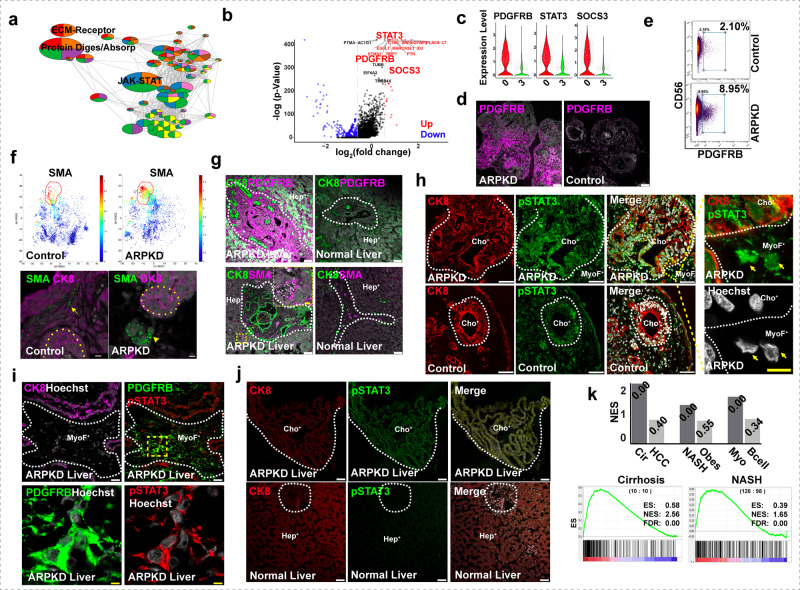
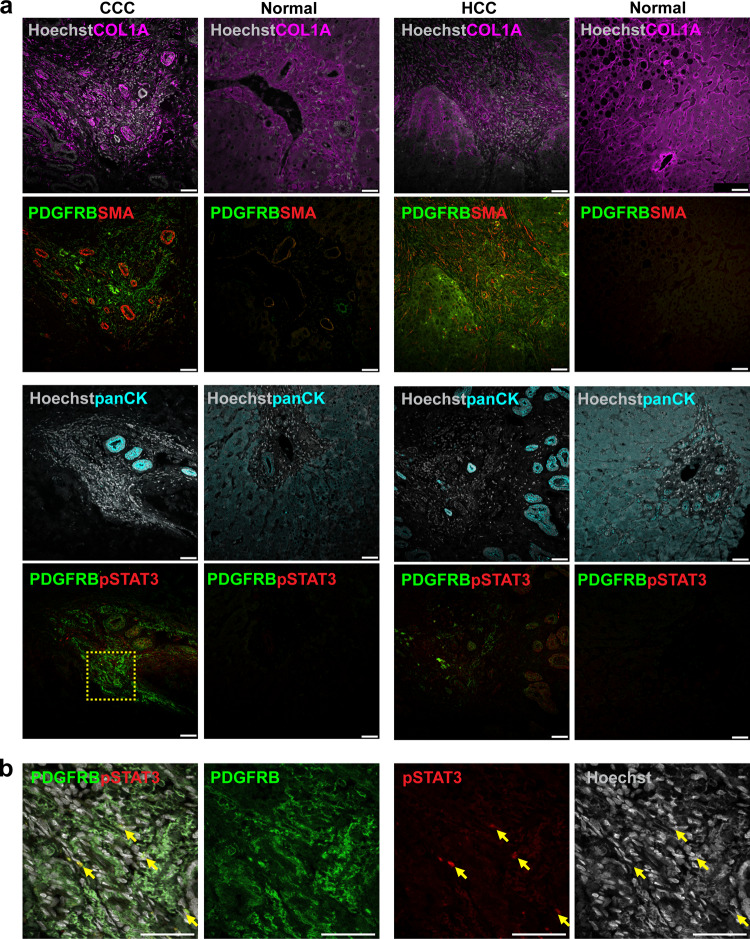
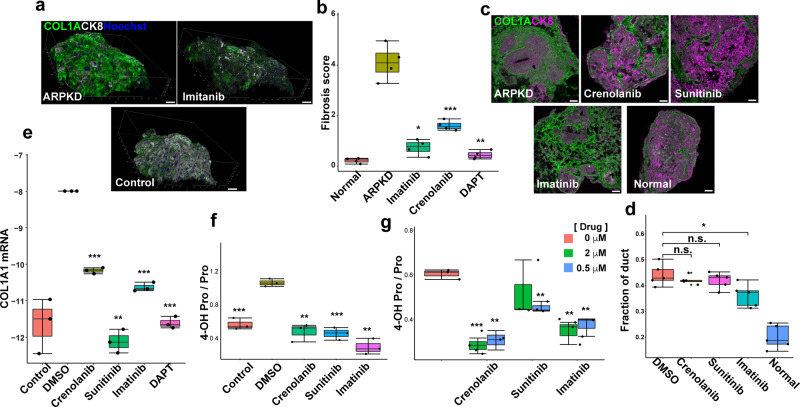
To investigate the pathogenesis of a congenital form of hepatic fibrosis, human hepatic organoids were engineered to express the most common causative mutation for Autosomal Recessive Polycystic Kidney Disease (ARPKD). Here we show that these hepatic organoids develop the key features of ARPKD liver pathology (abnormal bile ducts and fibrosis) in only 21 days. The ARPKD mutation increases collagen abundance and thick collagen fiber production in hepatic organoids, which mirrors ARPKD liver tissue pathology. Transcriptomic and other analyses indicate that the ARPKD mutation generates cholangiocytes with increased TGFβ pathway activation, which are actively involved stimulating myofibroblasts to form collagen fibers. There is also an expansion of collagen-producing myofibroblasts with markedly increased PDGFRB protein expression and an activated STAT3 signaling pathway. Moreover, the transcriptome of ARPKD organoid myofibroblasts resemble those present in commonly occurring forms of liver fibrosis. PDGFRB pathway involvement was confirmed by the anti-fibrotic effect observed when ARPKD organoids were treated with PDGFRB inhibitors. Besides providing insight into the pathogenesis of congenital (and possibly acquired) forms of liver fibrosis, ARPKD organoids could also be used to test the anti-fibrotic efficacy of potential anti-fibrotic therapies.
Overview
The claims and statistics of this paper haven’t been checked yet.
Free: it reads the open-access text and checks the first 5 claims that cite a source we can check. Create a free account to check every claim.
Integrity signals
Registry
Cites
Statistics
Figures
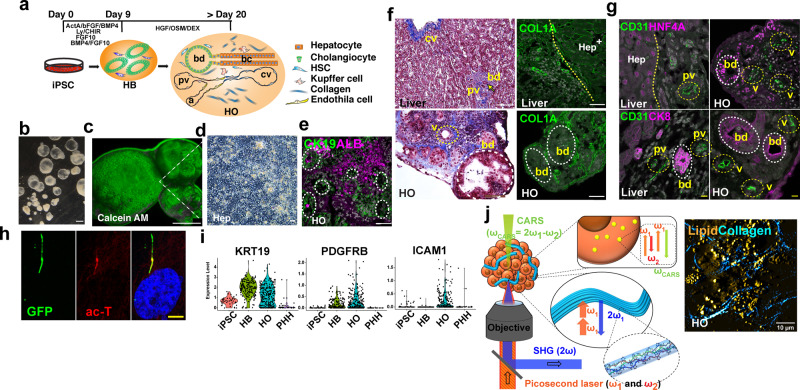
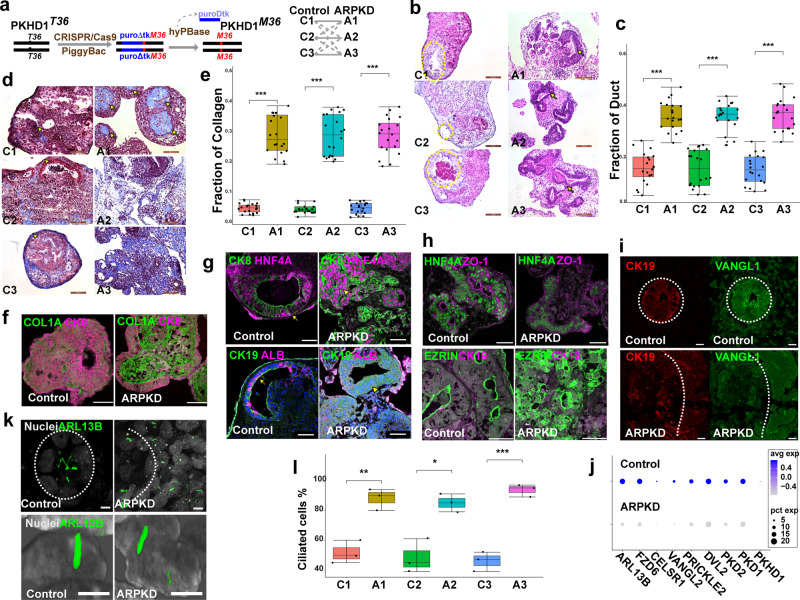
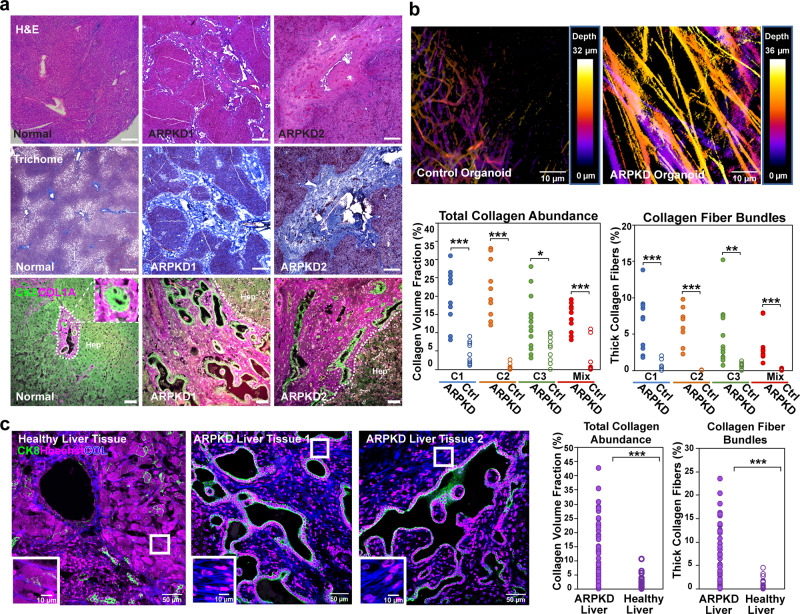
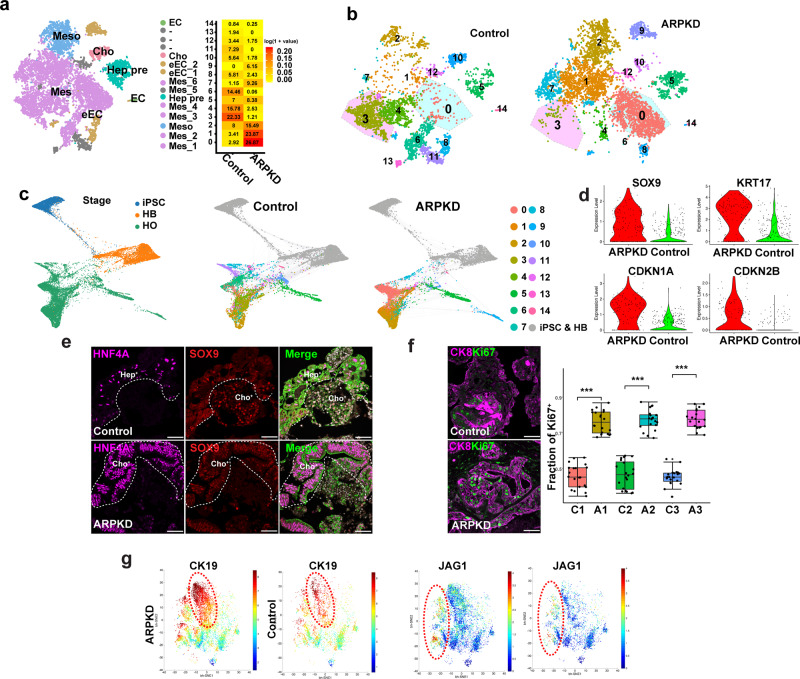
Verification
Claims the paper makes
The claims and statistics of this paper haven’t been checked yet.
Free: it reads the open-access text and checks the first 5 claims that cite a source we can check. Create a free account to check every claim.
Claims other papers make about this one
Each is checked against this paper’s own text: does it say what the citing paper says it does?
The source backs part of the claim, not all of it — or backs it for a different population, condition or comparison.
In the citing paper
“Furthermore, the organoid could recapitulate several liver diseases, including fatty liver disease, cirrhosis, and monogenic metabolic diseases (Guan et al., 2017;Wang et al., 2020;Guan et al., 2021).”
From Fast formation and maturation enhancement of human liver organoids using a liver-organoid-on-a-chip (2024) · cites this paper as Guan et al., 2021
Experimental — accuracy not yet measured
Self-check
Percentages, sums and reported differences re-computed from the paper’s own numbers.
The self-check needs the paper’s full text.
Citations
Cites
1 retracted
Spirlì, C., Locatelli, L., Morell, C. M., Fiorotto, R., Morton, S. D., Cadamuro, M., Fabris, L., & Strazzabosco, M. (2013) · Hepatology · doi:10.1002/hep.26554 · Cited by 49
RetractedSubramanian, A., Tamayo, P., Mootha, V. K., Mukherjee, S., Ebert, B. L., Gillette, M. A., Paulovich, A., Pomeroy, S. L., Golub, T. R., Lander, E. S., et al. (2005) · Proceedings of the National Academy of Sciences · doi:10.1073/pnas.0506580102 · Cited by 53,625
KEGG: Kyoto Encyclopedia of Genes and Genomes
Kanehisa, M. (2000) · Nucleic Acids Research · doi:10.1093/nar/28.1.27 · Cited by 37,077
KEGG: Kyoto Encyclopedia of Genes and Genomes
Ogata, H., Goto, S., Sato, K., Fujibuchi, W., Bono, H., & Kanehisa, M. (1999) · Nucleic Acids Research · doi:10.1093/nar/27.1.29 · Cited by 31,232
Comprehensive Integration of Single-Cell Data
Stuart, T., Butler, A., Hoffman, P., Hafemeister, C., Papalexi, E., Mauck, W. M., Hao, Y., Stoeckius, M., Smibert, P., & Satija, R. (2019) · Cell · doi:10.1016/j.cell.2019.05.031 · Cited by 15,453
Integrating single-cell transcriptomic data across different conditions, technologies, and species
Butler, A., Hoffman, P., Smibert, P., Papalexi, E., & Satija, R. (2018) · Nature Biotechnology · doi:10.1038/nbt.4096 · Cited by 13,174
Younossi, Z. M., Koenig, A. B., Abdelatif, D., Fazel, Y., Henry, L., & Wymer, M. (2016) · Hepatology · doi:10.1002/hep.28431 · Cited by 10,781
The Reactome pathway Knowledgebase
Fabregat, A., Sidiropoulos, K., Garapati, P., Gillespie, M., Hausmann, K., Haw, R., Jassal, B., Jupe, S., Korninger, F., McKay, S., et al. (2016) · Nucleic Acids Research · doi:10.1093/nar/gkv1351 · Cited by 5,605
DNA targeting specificity of RNA-guided Cas9 nucleases
Hsu, P. D., Scott, D. A., Weinstein, J. A., Ran, F. A., Konermann, S., Agarwala, V., Li, Y., Fine, E. J., Wu, X., Shalem, O., et al. (2013) · Nature Biotechnology · doi:10.1038/nbt.2647 · Cited by 4,741
GEOquery: a bridge between the Gene Expression Omnibus (GEO) and BioConductor
Davis, S., & Meltzer, P. S. (2007) · Bioinformatics · doi:10.1093/bioinformatics/btm254 · Cited by 3,303
Cited by
GSEApy: a comprehensive package for performing gene set enrichment analysis in Python
Fang, Z., Liu, X., & Peltz, G. (2023) · Bioinformatics · doi:10.1093/bioinformatics/btac757 · Cited by 1,170
Self-citationOrganoids: The current status and biomedical applications
Yang, S., Hu, H., Kung, H., Zou, R., Dai, Y., Hu, Y., Wang, T., Lv, T., Yu, J., & Li, F. (2023) · MedComm · doi:10.1002/mco2.274 · Cited by 266
Accelerating scientific discovery with Co-Scientist
Gottweis, J., Weng, W.-H., Daryin, A., Tu, T., Sirkovic, P., Myaskovsky, A., Glowaty, G., Weissenberger, F., Orlandi, A., Popovici, D., et al. (2025) · arXiv · doi:10.48550/arxiv.2502.18864 · Cited by 158
“Nature | Vol 655 | 9 July 2026 | 495 for severe liver fibrosis 1,26,27 .”
Self-citationHuman pluripotent-stem-cell-derived organoids for drug discovery and evaluation
Vandana, J. J., Manrique, C., Lacko, L. A., & Chen, S. (2023) · Cell stem cell · doi:10.1016/j.stem.2023.04.011 · Cited by 148
Self-citationRecent advances in lung organoid development and applications in disease modeling
Vazquez‐Armendariz, A. I., & Tata, P. R. (2023) · Journal of Clinical Investigation · doi:10.1172/jci170500 · Cited by 144
Advanced 3D imaging and organoid bioprinting for biomedical research and therapeutic applications
Maharjan, S., Ma, C., Singh, B., Kang, H., Orive, G., Yao, J., & Zhang, Y. S. (2024) · Advanced Drug Delivery Reviews · doi:10.1016/j.addr.2024.115237 · Cited by 114
Yao, Q., Cheng, S., Pan, Q., Yu, J., Cao, G., Li, L., & Cao, H. (2024) · MedComm · doi:10.1002/mco2.735 · Cited by 123
“In the same year, Guan et al. 102 developed a human multilineage liver organoid model exhibiting abnormal bile ducts and fibrosis characteristics.”
BackgroundIn Vivo and In Vitro Models to Study Liver Fibrosis: Mechanisms and Limitations
Lee, Y.-S., & Seki, E. (2023) · Cellular and Molecular Gastroenterology and Hepatology · doi:10.1016/j.jcmgh.2023.05.010 · Cited by 94
Swart, A. L., Laventie, B., Sütterlin, R., Junne, T., Lauer, L., Manfredi, P., Jakonia, S., Yu, X., Karagkiozi, E., Okujava, R., et al. (2024) · Nature Microbiology · doi:10.1038/s41564-024-01718-6 · Cited by 88
Multi-zonal liver organoids from human pluripotent stem cells
Reza, H. A., Santangelo, C., Iwasawa, K., Reza, A. A., Sekiya, S., Glaser, K., Bondoc, A., Merola, J., & Takebe, T. (2025) · Nature · doi:10.1038/s41586-025-08850-1 · Cited by 71
Antifibrotic therapy in nonalcoholic steatohepatitis: time for a human-centric approach
Brennan, P. N., Elsharkawy, A. M., Kendall, T. J., Loomba, R., Mann, D. A., & Fallowfield, J. A. (2023) · Nature Reviews Gastroenterology & Hepatology · doi:10.1038/s41575-023-00796-x · Cited by 68
Zhai, M., Gong, S., Luan, P., Shi, Y., Kou, W., Zeng, Y., Shi, J., Yu, G., Hou, J., Yu, Q., et al. (2022) · Nature Communications · doi:10.1038/s41467-022-35330-1 · Cited by 70
Chen, L., Wei, X., Gu, D., Xu, Y., & Zhou, H. (2023) · Cancer Letters · doi:10.1016/j.canlet.2022.216048 · Cited by 61
Engineered organoids for biomedical applications
de Barros, N. R., Wang, C., Maity, S., Peirsman, A., Nasiri, R., Herland, A., Ermis, M., Kawakita, S., de Carvalho, B. G., Kouchehbaghi, N. H., et al. (2023) · Advanced Drug Delivery Reviews · doi:10.1016/j.addr.2023.115142 · Cited by 64
Hess, A., Gentile, S. D., Ben Saad, A., Rahman, R., Habboub, T., Pratt, D. S., & Mullen, A. C. (2023) · The EMBO Journal · doi:10.15252/embj.2023113898 · Cited by 52
“Trajectory inference reconstructs the emergence of major HLO lineages and injury-specific terminal states. have been studied so far by oleic acid (OA) treatment (Ouchi et al , 2019) and genetic manipulation (Guan et al , 2021).”
BackgroundOrganoids from pluripotent stem cells and human tissues: When two cultures meet each other
Artegiani, B., & Hendriks, D. F. G. (2025) · Developmental Cell · doi:10.1016/j.devcel.2025.01.005 · Cited by 58
Shao, W., Xu, H., Zeng, K., Ye, M., Pei, R., & Wang, K. (2025) · Stem Cell Research & Therapy · doi:10.1186/s13287-025-04139-2 · Cited by 65
Two-photon polymerization-based 3D micro-scaffolds toward biomedical devices
Wang, W., Chen, Z., Lin, B., Liu, M., Zhang, Y., Liu, S., Li, Y., & Zhao, Q. (2024) · Chemical Engineering Journal · doi:10.1016/j.cej.2024.152469 · Cited by 58
Jiang, S., Xu, F., Jin, M., Wang, Z., Xu, X., Zhou, Y., Wang, J., Gu, L., Han, F., Fan, Y., et al. (2022) · Biofabrication · doi:10.1088/1758-5090/ac933c · Cited by 55
“The utilized scaffolds include decellularized liver extracellular matrix [42], alginate [43], collagen [44], and polyethylene glycol and their derivatives [45].”
MethodResultSelf-citationSelf-organization of sinusoidal vessels in pluripotent stem cell-derived human liver bud organoids
Saiki, N., Nio, Y., Yoneyama, Y., Kawamura, S., Iwasawa, K., Kawakami, E., Araki, K., Fukumura, J., Sakairi, T., Kono, T., et al. (2025) · Nature Biomedical Engineering · doi:10.1038/s41551-025-01416-6 · Cited by 57
Examining the gut-liver axis in liver cancer using organoid models
Shek, D., Chen, D., Read, S. A., & Ahlenstiel, G. (2021) · Cancer Letters · doi:10.1016/j.canlet.2021.04.008 · Cited by 40
Organoid-guided precision hepatology for metabolic liver disease
Osonoi, S., & Takebe, T. (2024) · Journal of Hepatology · doi:10.1016/j.jhep.2024.01.002 · Cited by 45
Decoding organ fibrosis: mechanistic insights and emerging therapeutic strategies
Chen, X., Zhang, J., Guo, L., Wu, C., Zhou, J., Xu, M., Mo, L., Li, Y., & He, J. (2026) · Signal Transduction and Targeted Therapy · doi:10.1038/s41392-025-02532-0 · Cited by 59
Self-citationZhu, Y., Jiang, D., Qiu, Y. L., Liu, X., Bian, Y., Tian, S., Wang, X., Hsia, K. J., Wan, H., Zhuang, L., et al. (2024) · Bioactive Materials · doi:10.1016/j.bioactmat.2024.05.019 · Cited by 55
Tricot, T., Verfaillie, C. M., & Kumar, M. (2022) · Cells · doi:10.3390/cells11030442 · Cited by 45
The role of interleukin-33 in organ fibrosis
Carmine, S. D., Scott, M. M., McLean, M. H., & McSorley, H. J. (2022) · Discovery Immunology · doi:10.1093/discim/kyac006 · Cited by 36
“Indeed, recent studies demonstrated organoids to be successful in representing pro-fibrotic pathology of the lung, liver, and gastrointestinal tract [124–126].”
BackgroundHuman induced pluripotent stem cell-derived planar neural organoids assembled on synthetic hydrogels
Majumder, J., Torr, E., Aisenbrey, E. A., Lebakken, C. S., Favreau, P. F., Richards, W. D., Yin, Y., Chang, Q., & Murphy, W. L. (2024) · Journal of Tissue Engineering · doi:10.1177/20417314241230633 · Cited by 34
Dynamic hydrogel mechanics in organoid engineering: From matrix design to translational paradigms
Zhang, C., Shen, Y. C., Huang, M.-Y., Wang, G., Miao, Q., Shi, H., Gao, R., Wang, K., & Luo, M. B. (2025) · Bioactive Materials · doi:10.1016/j.bioactmat.2025.09.021 · Cited by 96
“Pathological matrix stiffening (fibrosis) represents a universal feature in chronic diseases affecting multiple organs including liver, lung, kidney, heart, and skin [94,95].”
XIAP-mediated degradation of IFT88 disrupts HSC cilia to stimulate HSC activation and liver fibrosis
Hong, R., Tan, Y., Tian, X., Huang, Z., Wang, J., Ni, H., Yang, J. N., Bu, W., Yang, S., Li, T., et al. (2024) · EMBO Reports · doi:10.1038/s44319-024-00092-y · Cited by 33
“Transforming growth factor-β (TGF-β ) plays a key role in the conversion of quiescent HSCs into fi brotic myo fi broblasts (Dewidar et al, 2019; Guan et al, 2021).”
Self-citationScaffold-mediated liver regeneration: A comprehensive exploration of current advances
Supriya Bhatt, S., Kumar, J. K., Laya, S., Thakur, G., & Nune, M. (2024) · Journal of Tissue Engineering · doi:10.1177/20417314241286092 · Cited by 30
“182,194,195 In this study, liver functions have been successfully maintained in vitro through 2D co-cultures, demonstrating activity in xenobiotic-metabolizing enzymes.”
BackgroundEngineered Human Organoids for Biomedical Applications
Zhu, Y., Sun, L., Wu, X., Gu, Z., & Zhao, Y. (2023) · Advanced Functional Materials · doi:10.1002/adfm.202310961 · Cited by 32
Wang, K., Chen, X.-Y., Zhang, R.-W.-Y., Yue, Y., Wen, X., Yang, Y., Han, C., Ma, Y., Liu, H., & Zhu, H. (2024) · Biomaterials · doi:10.1016/j.biomaterials.2024.122635 · Cited by 28
Self-citationYouhanna, S. C., Kemas, A. M., Wright, S. C., Zhong, Y., Klumpp, B., Klein, K., Motso, A., Michel, M., Ziegler, N., Shang, M.-M., et al. (2024) · Advanced Science · doi:10.1002/advs.202407572 · Cited by 41
Potential Use of Organoids in Regenerative Medicine
Septiana, W. L., & Pawitan, J. A. (2024) · Tissue Engineering and Regenerative Medicine · doi:10.1007/s13770-024-00672-y · Cited by 28
Landon‐Brace, N., Li, N. T., & McGuigan, A. P. (2023) · Advanced Healthcare Materials · doi:10.1002/adhm.202300903 · Cited by 28
Human‐based new approach methodologies to accelerate advances in nutrition research
Cassotta, M., Cianciosi, D., Elexpuru-Zabaleta, M., Elío, I., Cano, S. S., Giampieri, F., & Battino, M. A. (2024) · Food Frontiers · doi:10.1002/fft2.369 · Cited by 28
Application Prospect of Induced Pluripotent Stem Cells in Organoids and Cell Therapy
Zhang, T., Qian, C., Song, M., Tang, Y., Zhou, Y., Dong, G., Shen, Q., Chen, W., Wang, A., Shen, S., et al. (2024) · International Journal of Molecular Sciences · doi:10.3390/ijms25052680 · Cited by 27
“A multitude of researchers are currently focused on developing various liver organoids tailored to address numerous liver conditions [59–62], including fatty liver [63], hepatic steatosis [64], hepatitis, liver fibrosis [65], and irreversibly damaged liver.”
BackgroundHan, D., Xu, K., Jin, Z., Xu, Y., Li, Y., Wang, L., Cao, Q., Kim, K.-P., Ryu, D. H., Hong, K., et al. (2023) · International Journal of Biological Sciences · doi:10.7150/ijbs.85145 · Cited by 24
“(198, 199, 238) Steatosis, HSC activation, Ductular reaction, Oxidative”
Engineered Hydrogels for Organoid Models of Human Nonalcoholic Fatty Liver Disease
Liu, Y., Gilchrist, A. E., Johansson, P. K., Guan, Y., Deras, J. D., Liu, Y., Ceva, S., Huang, M. S., Navarro, R. S., Enejder, A. M. K., et al. (2025) · Advanced Science · doi:10.1002/advs.202417332 · Cited by 29
Self-citationRevealing the clinical potential of high-resolution organoids
Ko, J., Hyung, S., Cheong, S., Chung, Y., & Jeon, N. L. (2024) · Advanced Drug Delivery Reviews · doi:10.1016/j.addr.2024.115202 · Cited by 24
Advances in organoid-on-a-chip for recapitulation of human physiological events
Park, B. J., Park, J., Han, S., Kwon, T., Sung, J. Y., Kim, J., Safarkhani, M., Min, K.-H., Lee, E.-H., Kang, S., et al. (2025) · Materials Today · doi:10.1016/j.mattod.2025.02.002 · Cited by 23
Human liver immunology: from in vitro models to new insights
Rezvani, M. (2025) · Cellular and Molecular Immunology · doi:10.1038/s41423-025-01312-8 · Cited by 23
AI‐Assisted Drug Re‐Purposing for Human Liver Fibrosis
Guan, Y., Cui, L., Inchai, J., Fang, Z., Law, J., Brito, A. A. G., Pawlosky, A., Gottweis, J., Daryin, A., Myaskovsky, A., et al. (2025) · Advanced Science · doi:10.1002/advs.202508751 · Cited by 33
Self-citationAdvances in liver organoids: model systems for liver disease
Lee, J., Mun, S. J., Shin, Y., Lee, S., & Son, M. J. (2022) · Archives of Pharmacal Research · doi:10.1007/s12272-022-01390-6 · Cited by 22
Genetics of liver disease in adults
Konkwo, C., Chowdhury, S., & Vilarinho, S. (2024) · Hepatology Communications · doi:10.1097/hc9.0000000000000408 · Cited by 23
Guidelines for Manufacturing and Application of Organoids: Liver
Moon, H., Mun, S. J., Kim, T. H., Kim, H., Kang, D., Kim, S., Shin, J. H., Choi, D., Ahn, S.-J., & Son, M. J. (2024) · International Journal of Stem Cells · doi:10.15283/ijsc24044 · Cited by 23
“Recent progress in generating matured liver organoids, characterized by multi-lineage incorporation and vascularization, has significantly advanced the replication of the liver’s structural complexity and intercellular communication, enhancing its over-all functionality (17, 18).”
Chi, K. Y., Kim, G., Kim, H., Kim, H., Jo, S., Lee, J., Lee, Y., Yoon, H., Cho, S.-H., Kim, J., et al. (2024) · Biomaterials · doi:10.1016/j.biomaterials.2024.122898 · Cited by 23
Using Liver Organoids as Models to Study the Pathobiology of Rare Liver Diseases
Obeid, D. A., Mir, T. A., Alzhrani, A., Altuhami, A., Shamma, T., Ahmed, S. G., Kazmi, S., Fujitsuka, I., Ikhlaq, M., Mir, M. S., et al. (2024) · Biomedicines · doi:10.3390/biomedicines12020446 · Cited by 20
“The upregulations of the Wnt, EGF, FGF, and HGF pathways for human liver organoid development are commonly supplied as signaling components for cell differentiation and niche functions [13,32,43,51–53].”
BackgroundLiver organoids: From fabrication to application in liver diseases
Liu, Q., Zeng, A., Liu, Z., Wu, C., & Song, L. (2022) · Frontiers in Physiology · doi:10.3389/fphys.2022.956244 · Cited by 19
“The generation of liver organoids with a common pathogenic mutation in ARPKD demonstrated that the increased TGFβ expression generated by this mutation in bile duct cells could stimulate myofibroblasts to form collagen fibers (Guan et al., 2021), which ultimately resulted in the development of liver fibrosis.”
BackgroundResearch progress and application of liver organoids for disease modeling and regenerative therapy
Hu, Y., Geng, Q., Wang, L., Wang, Y., Huang, C., Fan, Z., & Kong, D. (2024) · Journal of Molecular Medicine · doi:10.1007/s00109-024-02455-3 · Cited by 21
“In 2021, Guan et al. [114] used CRISPR technology to edit and design liver organoids derived from iPSCs expressing mutations associated with autosomal recessive polycystic kidney disease (ARPKD).”
BackgroundEmerging biotechnologies for engineering liver organoids
Zhao, J., Zhi, Y., Ren, H., Wang, J., & Zhao, Y. (2024) · Bioactive Materials · doi:10.1016/j.bioactmat.2024.11.002 · Cited by 34
Self-citationHuman Hepatobiliary Organoids: Recent Advances in Drug Toxicity Verification and Drug Screening
Fang, H., Xu, H., Yu, J., Cao, H., & Li, L. (2024) · Biomolecules · doi:10.3390/biom14070794 · Cited by 20
Organoids: A new frontier in precision medicine and engineering
Gao, Q., Wu, Y., Mao, Y., Chen, X., Geng, Z., & Su, J. (2025) · Precision medicine and engineering. · doi:10.1016/j.preme.2025.100049 · Cited by 20
Self-citationModeling immune lineage co-development in human pluripotent stem cell-derived liver organoids
Rezvani, M., Quach, S., Lewis, K., Saiki, N., Xue, C., Kimura, M., Iwasawa, K., Weihs, J., Elzobair, T., Reza, H. A., et al. (2025) · Journal of Hepatology · doi:10.1016/j.jhep.2025.11.018 · Cited by 20
Mao, W., Bui, H. D., Cho, W., & Yoo, H. S. (2023) · Advanced Drug Delivery Reviews · doi:10.1016/j.addr.2023.115074 · Cited by 16
Verma, S., Ishteyaque, S., Washimkar, K. R., Verma, S., & Mugale, M. N. (2023) · Experimental Cell Research · doi:10.1016/j.yexcr.2023.113878 · Cited by 13
Fan, H., Shang, J., Li, J., Yang, B., Zhou, D., Jiang, S., Fan, Y., Zhou, Y., Wang, Y., Liu, P., et al. (2025) · Advanced Science · doi:10.1002/advs.202407945 · Cited by 27
Platelets as a Gauge of Liver Disease Kinetics?
Chen, S., Tsai, S., & Lu, H.-C. (2022) · International Journal of Molecular Sciences · doi:10.3390/ijms231911460 · Cited by 14
“Platelet characteristics, including platelet shape, platelet granule content, and platelet adhesion receptor density, are fundamental for stable clot formation under high-flow conditions [9].”
BackgroundSelf-citationFast formation and maturation enhancement of human liver organoids using a liver-organoid-on-a-chip
Byeon, J. H., Jung, D. J., Han, H.-J., Son, W.-C., & Jeong, G. S. (2024) · Frontiers in Cell and Developmental Biology · doi:10.3389/fcell.2024.1452485 · Cited by 15
Human Liver Organoid Models for Assessment of Drug Toxicity at the Preclinical Stage
Karabicici, M., Akbari, S., Ertem, Ö., Gümüştekin, M., & Erdal, E. (2023) · Endocrine Metabolic & Immune Disorders - Drug Targets · doi:10.2174/1871530323666230411100121 · Cited by 12
Pan, T., Zhao, Z., Lu, J., Wen, H., Zhang, J., Xu, Y., Chen, Y., & Jin, X. (2023) · Life Sciences · doi:10.1016/j.lfs.2023.122321 · Cited by 13
Wang, W., Lian, H., Liang, Y., Ye, Y., Tam, P. K. H., & Chen, Y. (2024) · Cells · doi:10.3390/cells13231997 · Cited by 13
“Organoids hold potential in regenerative medicine, as they can be used for tissue repair and regeneration, and may even be used for organ transplantation in the future [147].”
Myeloid cells in alcoholic liver diseases: Mechanism and prospect
Xu, W., Wu, M., Chen, B., & Wang, H. (2022) · Frontiers in Immunology · doi:10.3389/fimmu.2022.971346 · Cited by 11
“used a human multi-lineage hepatic organoid model for the study of liver fibrosis (52, 53).”
MethodSelf-citationShi, Y., Sang, X., Deng, J., Wang, Y., Chen, X., Lin, S., Wu, F., & Xu, A. (2023) · Journal of Cancer · doi:10.7150/jca.76809 · Cited by 12
“For the enrichment analysis, STRING implements well-known classification systems and offers unique classification systems that rely on high-throughput data mining [19, 20].”
MethodSelf-citationGong, D., Mo, J., Zhai, M., Zhou, F., Wang, G., Ma, S., Dai, X., & Deng, X. (2025) · Frontiers in Medicine · doi:10.3389/fmed.2024.1521851 · Cited by 15
Hypoxia and Multilineage Communication in 3D Organoids for Human Disease Modeling
Ehab, S., Gaser, O. A., & Dayem, A. A. (2025) · Biomimetics · doi:10.3390/biomimetics10090624 · Cited by 13
“…human multilineage hepatic organoid model was developed to study liver fibrosis in autosomal recessive polycystic kidney disease (ARPKD) (Figure 4) [232]. iPSCs were differentiated into hepatic organoids using sequential growth factors; the common disease-causing PKHD1 Thr36Met mutation was…”
Mechanobiological engineering strategies for organoid culture
Taghizadeh, M., Taghizadeh, A. A., & Kim, H. S. (2025) · APL Bioengineering · doi:10.1063/5.0275439 · Cited by 14
Chen, Q., Luo, J., Liu, J., Yu, H., Zhou, M., Yu, L., Chen, Y., Zhang, S., & Mo, Z. (2023) · Journal of Traditional and Complementary Medicine · doi:10.1016/j.jtcme.2023.11.008 · Cited by 8
“The recruitment of CAFs in the serum of SDS-HCC mice was attenuated by PDGFRB inhibitors (imatinib) 32,33 to inhibit PDGFA-PDGFRB receptor-ligand pair communication (Fig.”
BackgroundStrategic use of organoids and organs-on-chip as biomimetic tools
Santos, A. K., Scalzo, S., Souza, R. T. V., Santana, P. H. G., Marques, B. L., de Oliveira, L. F., Filho, D. M., Kihara, A. H., Santiago, H. C., Parreira, R. C., et al. (2022) · Seminars in Cell and Developmental Biology · doi:10.1016/j.semcdb.2022.09.010 · Cited by 9
Chen, S., Zhu, Y., Wang, J., Zhao, X., Zhai, X., Hu, L., He, X., Li, Z., Guo, Y., Wang, S., et al. (2025) · Journal of Ethnopharmacology · doi:10.1016/j.jep.2025.120029 · Cited by 7
Self-citationChallenges of in vitro modelling of liver fibrosis
Ros-Tárraga, P., Villanueva-Bádenas, E., Sanchez-Gonzalez, E., Ferrer, G. G., Donato, M. T., & Tolosa, L. (2025) · Frontiers in Cell and Developmental Biology · doi:10.3389/fcell.2025.1567916 · Cited by 13
Yuan, Y., Liu, X., Zhou, T., Zhou, Z., Gong, M., & Li, Y. (2025) · Molecular Medicine Reports · doi:10.3892/mmr.2025.13599 · Cited by 8
“PSP attenuates liver injury in rats with LF. collagen depo‑ sition and structural disorganization of the liver lobules are typical pathological features of lF (27).”
Centimeter‐Scale Self‐Assembling Tendon Organoids Drive Tissue Regeneration
Fang, T., Zhang, H., Xie, Y., Li, X., Liu, X., Wang, Z., Xue, Y., Xia, X., Wang, Z., Lei, T., et al. (2025) · Advanced Science · doi:10.1002/advs.202509453 · Cited by 9
Self-citationNavik, U., Singh, S. K., Khurana, A., & Weiskirchen, R. (2025) · Expert Review of Gastroenterology & Hepatology · doi:10.1080/17474124.2025.2455581 · Cited by 10
“The development of multi-lineage hepatic organoids using iPSCs and genome editing has paved the way to replicate this complexity [14].”
Wang, X., Wang, Y., Li, X., Qin, S., Xu, J., & Xie, J. (2022) · Annals of Translational Medicine · doi:10.21037/atm-22-3593 · Cited by 7
“The organoid models of hepatic fibrosis are often designed as ARPKD, and studies have shown that TGF-β activation in the model is involved in fibrosis production (10,43,44).”
Updates on Organoid Model for the Study of Liver Cancer
El-Khobar, K. E., & Sukowati, C. H. C. (2023) · Technology in Cancer Research & Treatment · doi:10.1177/15330338231154090 · Cited by 9
“A different approach has also successfully produced multilineage liver organoids from human PSCs that are intra-luminally polarized and were comprised mainly hepatic epithelial cells, co-differentiated with stellate-like and hepatic macrophage-like cells that can be used for liver inflammation modeling.(34) The lack o…”
Background9-cis-Retinoic Acid Improves Disease Modelling in iPSC-Derived Liver Organoids
Dastjerd, M. K., Merens, V., Smout, A., Wolf, R. D., Chesné, C., Verfaillie, C. M., Verhulst, S., & van Grunsven, L. A. (2025) · Cells · doi:10.3390/cells14130983 · Cited by 7
“Future studies will investigate whether 9CRA is also beneficial for iPSC-derived liver-like cultures using methods established by others [8,49,50].”
Chaudhary, N., & Villa-Diaz, L. G. (2025) · Frontiers in Toxicology · doi:10.3389/ftox.2025.1667573 · Cited by 10
Mastering Organoid Growth: A Complete Guide to Overcoming Methodological Challenges
Jiao, C., Karakaya, O. F., Dadgar, N., Wehrle, C. J., Massoud, Z., Hong, H., Fairchild, R. L., Leipzig, N. D., Aucejo, F., Ma, W. W., et al. (2026) · MedComm · doi:10.1002/mco2.70571 · Cited by 12
“Coculture systems in organoid research integrating multiple cell types together with endothelial cells simulate the complexity of vascular human tissues which more accurately mimics in vivo environments, promoting enhanced tissue function and disease modeling [ 23, 47, 164–166 ].”
Hepatic organoids move from adolescence to maturity
Guan, Y., & Peltz, G. (2024) · Liver International · doi:10.1111/liv.15893 · Cited by 6
“30 Hence, genome engineering of multi-lineage hepatic organoids enables in vitro models to be quickly generated, which manifests the features of human genetic liver diseases.”
BackgroundInfluentialSelf-citationCiliopathy organoid models: a comprehensive review
Kuzinska, M. Z., Lin, S. Y.-Y., Klämbt, V., Bufler, P., & Rezvani, M. (2024) · American Journal of Physiology-Cell Physiology · doi:10.1152/ajpcell.00343.2024 · Cited by 8
Live-cell imaging of human liver fibrosis using hepatic micro-organoids
Guan, Y., Fang, Z., Hu, A., Roberts, S., Wang, M., Ren, W., Johansson, P. K., Heilshorn, S. C., Enejder, A., & Peltz, G. (2025) · JCI Insight · doi:10.1172/jci.insight.187099 · Cited by 6
“The spatial distribution and morphology of the collagen fibers in HOs were examined using second harmonic generation (SHG) microscopy (14, 15), which has previously been used to quantitatively analyze liver fibrosis in human patients (16, 17) and to monitor fibrosis in ARPKD HOs (11).”
InfluentialSelf-citationRecent Advances in Three-Dimensional In Vitro Models for Studies of Liver Fibrosis
Chi, K. Y., Kim, G., Son, J. S., Han, J., & Kim, J. (2025) · Tissue Engineering and Regenerative Medicine · doi:10.1007/s13770-025-00719-8 · Cited by 13
“…cholangiocytes, HSCs, and ECs, successfully replicated the complex cellular architecture of the liver and revealed that the ARPKD mutation resulted in increased collagen production and the formation of thick collagen fibers, closely mimicking the fibrotic pathology found in ARPKD liver tissues [46].”
Mazzocchi, A. R., Yoo, K. M., Nairon, K. G., Kirk, L. M., Rahbar, E., Söker, S., & Skardal, A. (2022) · Biomedical Materials · doi:10.1088/1748-605x/ac45eb · Cited by 8
“Matrigel-supported induced pluripotent stem cell-derived hepatic organoids have been developed [37], which were used to model fibrosis through engineering a genetic mutation that causes the autosomal recessive polycystic kidney disease [38].”
Recent advances in applications of nanoparticles and decellularized ECM for organoid engineering
Lee, S.-J., Cho, J., Heo, T.-H., Yang, D. H., Chun, H. J., Yoon, J., & Jeong, G. (2025) · Materials Today Bio · doi:10.1016/j.mtbio.2025.102274 · Cited by 12
“For instance, they have proven useful in investigating pathophysiology, therapeutic responses, and drug safety in disease-specific contexts, such as neurodegenerative disorders, liver fibrosis, and cancer [8 – 12].”
Jin, Y., Park, S., & Cho, S. (2026) · Nature Reviews Bioengineering · doi:10.1038/s44222-025-00384-5 · Cited by 9
Transformative potential of three-dimensional bioprinting technology for advanced organoid research
Yoon, J., Yoon, G., & Jang, J. (2024) · Organoid · doi:10.51335/organoid.2024.4.e8 · Cited by 9
Li, K., Ren, K., Du, S., Gao, X., & Yu, J. (2024) · Technology in Cancer Research & Treatment · doi:10.1177/15330338241285097 · Cited by 7
“82 Along-termcanineliverorganoidmodelwasestablishedtodemon-strate that gene supplementation in the liver organoids of COMMD1-de fi cient dogs can recover function and be an effective treatment for copper storage disease.”
BackgroundXu, Z.-Y., Wang, M., Shi, J.-Y., Liu, Y., Yu, C., Zhang, X.-Y., Zhang, C.-W., He, Q.-F., Pan, C., Zhou, J., et al. (2025) · Materials Today Bio · doi:10.1016/j.mtbio.2025.101700 · Cited by 5
“The isolated hepatocytes were filtered through a 70-μ m mesh (Biosharp, BS-70-XBS) and resuspended in cold, advanced DMEM/F12 medium [28].”
Self-citationQin, S., Bo, X., Liu, H., Zhang, Z., Zhao, Z., & Xia, Q. (2025) · Hepatology · doi:10.1097/hep.0000000000001321 · Cited by 8
Ma, M., Wang, X., Liu, X., Han, Y., Chu, Y., Guan, Y., & Liu, H. (2023) · Archives of Pharmacal Research · doi:10.1007/s12272-023-01435-4 · Cited by 5
“Masson and Sirius staining are the main methods to determine the content of collagen fibers, which is the main pathological feature of fibrosis (Klepfish et al. 2020; Guan et al. 2021).”
MethodSelf-citationRezvani, M., Lewis, K., Quach, S., Iwasawa, K., Weihs, J., Reza, H. A., Cai, Y., Kimura, M., Zhang, R., Milton, Y., et al. (2024) · bioRxiv (Cold Spring Harbor Laboratory) · doi:10.1101/2024.10.11.617794 · Cited by 7
Wu, T., Li, B., Hao, L., Zhao, F., & Liu, Z. (2025) · Frontiers in Oncology · doi:10.3389/fonc.2025.1604362 · Cited by 7
Li, R., Wu, Y., Zheng, Z., Zhou, F., Xu, K., & Su, J. (2026) · MedComm · doi:10.1002/mco2.70575 · Cited by 8
“[ 165 ] Cholangiocyte organoids were cultured in defined viscoelastic hyaluronan hydrogels engineered to mimic stress relaxation properties of liver tissue.”
Dai, G., Lin, J., Jiang, Y., Liu, X., Chen, P., Zhang, Y., Song, Z., Zhuang, X., Cong, J., Li, Y., et al. (2025) · Frontiers in Oncology · doi:10.3389/fonc.2024.1517226 · Cited by 6
Decoding Liver Fibrosis: How Omics Technologies and Innovative Modeling Can Guide Precision Medicine
Codotto, G., Blarasin, B., Tiribelli, C., Bellarosa, C., & Licastro, D. (2025) · International Journal of Molecular Sciences · doi:10.3390/ijms26062658 · Cited by 6
“The deposition of collagen fibers and the stiffness of the tissue were considered indicative factors in characterizing fibrosis severity [39].”
Chen, Q., Li, C., Ding, W., & Kong, D. (2025) · Advanced Healthcare Materials · doi:10.1002/adhm.202503273 · Cited by 7
The gene regulatory networks shaping macrophage plasticity and altered function in fibrosis
Kolostyák, Z., & Nagy, L. (2026) · Frontiers in Immunology · doi:10.3389/fimmu.2026.1767954 · Cited by 6
Gilglioni, E. H., Bansal, M., St‐Pierre‐Wijckmans, W., Talamantes, S., Kasarinaite, A., Hay, D. C., & Gurzov, E. N. (2025) · Obesity Reviews · doi:10.1111/obr.13899 · Cited by 4
Applications and limitations of pluripotent stem cell-derived liver organoids
Feng, Z., Zhou, B., Shuai, Q., Mu, J., & Xie, J. (2025) · Chinese Medical Journal · doi:10.1097/cm9.0000000000003707 · Cited by 6
Metadata
- Authors
- Guan, Y., Enejder, A., Wang, M., Fang, Z., Cui, L., Chen, S.-Y., Wang, J., Tan, Y., Wu, M., Chen, X., Johansson, P. K., Osman, I., Kunimoto, K., Russo, P., Heilshorn, S. C., & Peltz, G.
- Affiliations
- Stanford Medicine (US)
- Stanford University (US)
- Institute of Biomedical Sciences, Academia Sinica (TW)
- University of Pennsylvania (US)
- Corresponding author
- Peltz, Gary
- ORCID
- Venue
- Nature Communications
- Published
- 2021-10-22
- Volume
- 12
- Issue
- 1
- Pages
- 6138-6138
- ISSN
- 2041-1723 (ISSN-L)
- PMC
- PMC8536785
- OpenAlex
- W3205254301
- Cited by
- 149
- References
- 123
- Citations by year
- 2026: 26 · 2025: 45 · 2024: 37 · 2023: 22 · 2022: 16 · 2021: 3
- FWCI
- 10.85
- Type
- journal article
- Language
- en
- Open access
- gold
- doi.org
- Licence
- cc-by
- creativecommons.org/licenses/by/4.0 (tdm)
- creativecommons.org/licenses/by/4.0 (vor)
- Locations
- Nature Communications (publishedVersion, cc-by)
- bioRxiv (Cold Spring Harbor Laboratory) (acceptedVersion)
- PubMed Central (publishedVersion, cc-by)
- PubMed (publishedVersion)
- RePEc: Research Papers in Economics (submittedVersion)
- DOAJ (DOAJ: Directory of Open Access Journals) (submittedVersion, cc-by-sa)
- Funders
- National Science Foundation (2033302)
- Stanford Bio-X
- National Heart, Lung, and Blood Institute (R01HL142718)
- National Institute on Drug Abuse (5U01DA04439902)
- National Institute of Diabetes and Digestive and Kidney Diseases (R01DK102182)
- National Institute of Biomedical Imaging and Bioengineering (R01EB027171)
- Division of Chemical, Bioengineering, Environmental, and Transport Systems
- Topics
- Health Sciences › Medicine › Hepatology › Liver physiology and pathology
- Life Sciences › Biochemistry, Genetics and Molecular Biology › Genetics › Genetic and Kidney Cyst Diseases
- Health Sciences › Medicine › Hepatology › Liver Disease Diagnosis and Treatment
- Keywords
- hepatic organoids, liver fibrosis, autosomal recessive polycystic kidney disease, congenital liver fibrosis, cholangiocytes, myofibroblasts, collagen fiber formation, TGF-beta signaling, PDGFRβ, STAT3 signaling, antifibrotic therapy, bile duct abnormalities, organoid models
- MeSH terms
- Bile Duct Diseases, Collagen, Epithelial Cells, Humans, Liver, Liver Cirrhosis, Models, Biological, Mutation, Organoids, Signal Transduction, Transforming Growth Factor beta, Polycystic Kidney, Autosomal Recessive, Receptor, Platelet-Derived Growth Factor beta, STAT3 Transcription Factor, Induced Pluripotent Stem Cells, Myofibroblasts
About these checks
Registry, retraction, Cites and statistics results are computed, not judged, with one exception: a printed reference that no index lists is read once by a model before it counts as a citation error. Claims are extracted by a model and kept only when their quote appears verbatim in the text; each cited source is then checked, with a model’s help, for whether it says what the claim relies on. Those verdicts can be wrong — read the claim’s quote and the cited source before relying on one.
Statistics and arithmetic are recomputed, not judged.
Confidence bands are shown only for fields calibrated on our annotated test set. None is calibrated yet, so no band is shown.
What counts as a claim ›How we measure confidence ›How we check this ›
Are you an author, or do you see a problem with this page? Request a review
Data sources
Bibliographic data: Semantic Scholar, OpenAlex, Crossref.
Contains information from the Semantic Scholar Academic Graph Datasets, made available under the ODC Attribution License (ODC-BY 1.0).
Semantic Scholar’s data is described in: Kinney, R., et al. (2023). The Semantic Scholar Open Data Platform. arXiv:2301.10140.
