

A calcium-based plasticity model for predicting long-term potentiation and depression in the neocortex
Open accessPublished version of a preprint
The DOI matches its Crossref record; 128 of the 129 references it cites were found in a registry or an index.
Abstract
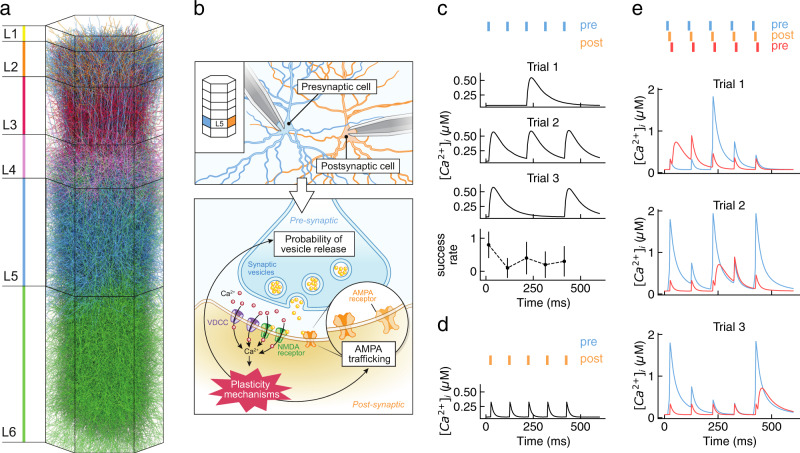
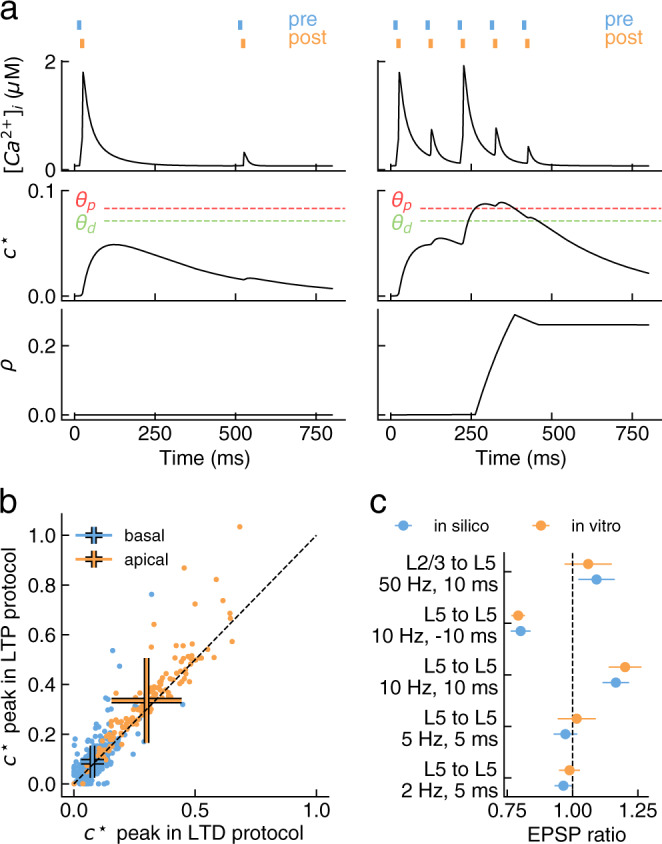
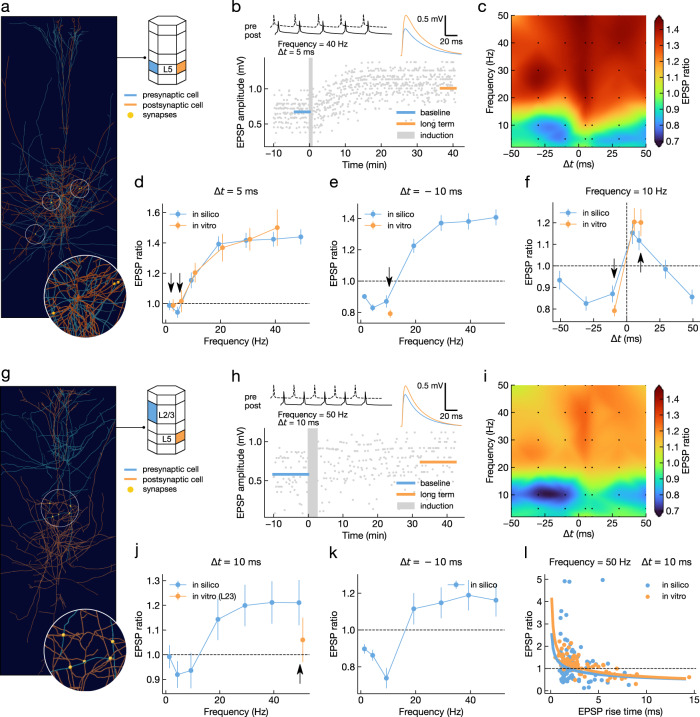
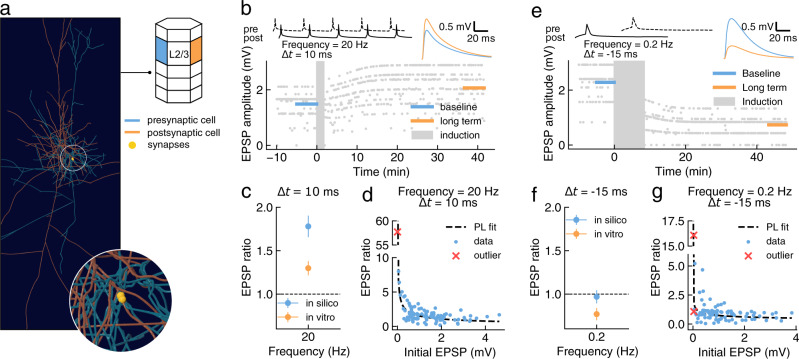
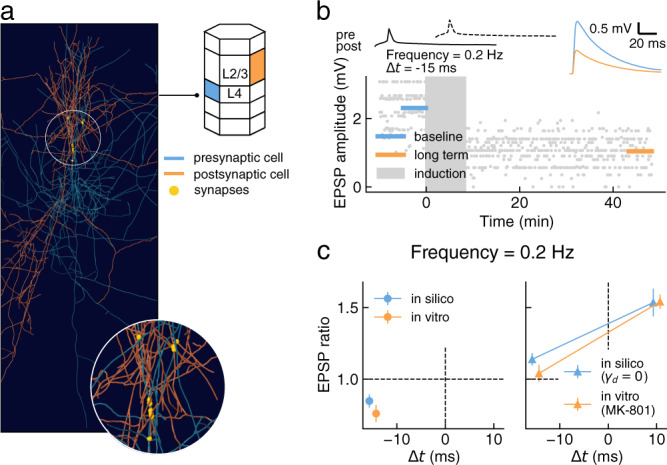
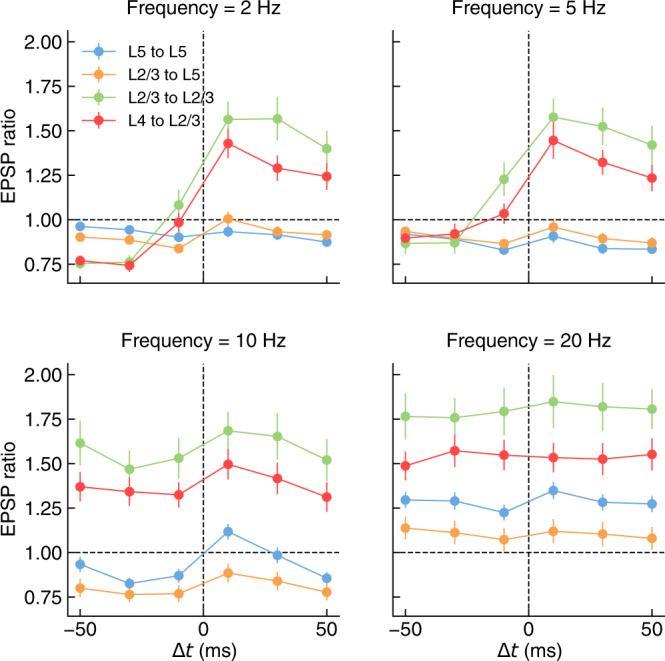
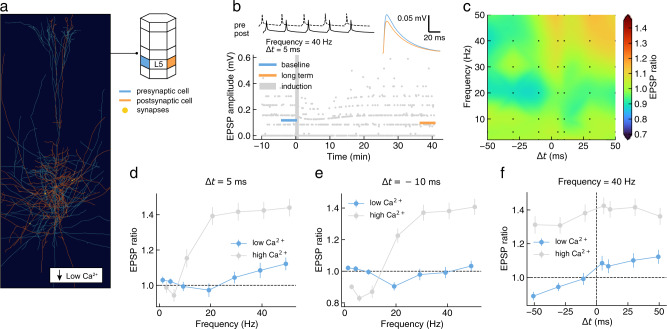
Pyramidal cells (PCs) form the backbone of the layered structure of the neocortex, and plasticity of their synapses is thought to underlie learning in the brain. However, such long-term synaptic changes have been experimentally characterized between only a few types of PCs, posing a significant barrier for studying neocortical learning mechanisms. Here we introduce a model of synaptic plasticity based on data-constrained postsynaptic calcium dynamics, and show in a neocortical microcircuit model that a single parameter set is sufficient to unify the available experimental findings on long-term potentiation (LTP) and long-term depression (LTD) of PC connections. In particular, we find that the diverse plasticity outcomes across the different PC types can be explained by cell-type-specific synaptic physiology, cell morphology and innervation patterns, without requiring type-specific plasticity. Generalizing the model to in vivo extracellular calcium concentrations, we predict qualitatively different plasticity dynamics from those observed in vitro. This work provides a first comprehensive null model for LTP/LTD between neocortical PC types in vivo, and an open framework for further developing models of cortical synaptic plasticity.
Overview
The claims and statistics of this paper haven’t been checked yet.
Free: it reads the open-access text and checks the first 5 claims that cite a source we can check. Create a free account to check every claim.
Integrity signals
Registry
Cites
Statistics
Figures
Verification
Claims the paper makes
The claims and statistics of this paper haven’t been checked yet.
Free: it reads the open-access text and checks the first 5 claims that cite a source we can check. Create a free account to check every claim.
Self-check
Percentages, sums and reported differences re-computed from the paper’s own numbers.
The self-check needs the paper’s full text.
Citations
Cites
XGBoost: A Scalable Tree Boosting System
Chen, T., & Guestrin, C. (2016) · Proceedings of the 22nd ACM SIGKDD International Conference on Knowledge Discovery and Data Mining · doi:10.1145/2939672.2939785 · Cited by 54,569
Matplotlib: a 2D graphics environment
Hunter, J. D. (2007) · Computing in Science & Engineering · doi:10.1109/mcse.2007.55 · Cited by 39,249
SciPy 1.0: fundamental algorithms for scientific computing in Python
Virtanen, P., Gommers, R., Oliphant, T. E., Haberland, M., Reddy, T., Cournapeau, D., Burovski, E., Peterson, P., Weckesser, W., Bright, J., et al. (2020) · Nature Methods · doi:10.1038/s41592-019-0686-2 · Cited by 38,430
Harris, C. R., Millman, K. J., van der Walt, S. J., Gommers, R., Virtanen, P., Cournapeau, D., Wieser, E., Taylor, J., Berg, S., Smith, N. J., et al. (2020) · Nature · doi:10.1038/s41586-020-2649-2 · Cited by 23,826
Harris, C., Millman, K., van der Walt, S., Gommers, R., Virtanen, P., Cournapeau, D., Wieser, E., Taylor, J., Berg, S., Smith, N., et al. (2020) · RePEc: Research Papers in Economics · Cited by 17,844
A synaptic model of memory: long-term potentiation in the hippocampus
Bliss, T. V. P., & Collingridge, G. L. (1993) · Nature · doi:10.1038/361031a0 · Cited by 11,566
Data Structures for Statistical Computing in Python
McKinney, W. (2010) · Proceedings of the Python in Science Conference · doi:10.25080/majora-92bf1922-00a · Cited by 11,032
SciPy 1.0: fundamental algorithms for scientific computing in Python
Virtanen, P., Gommers, R., Oliphant, T. E., Haberland, M., Reddy, T., Cournapeau, D., Burovski, E., Peterson, P., Weckesser, W., Bright, J., et al. (2019) · Apollo - University of Cambridge Repository · doi:10.17863/cam.64134 · Cited by 10,460
Bliss, T. V. P., & Gardner‐Medwin, A. R. (1973) · The Journal of Physiology · doi:10.1113/jphysiol.1973.sp010274 · Cited by 7,437
Structural absorption by barbule microstructures of super black bird of paradise feathers
McCoy, D. E., Feo, T., Harvey, T. A., & Prum, R. O. (2018) · Nature Communications · doi:10.1038/s41467-017-02088-w · Cited by 7,424
Cited by
Spike timing-dependent plasticity and memory
Debanne, D., & Inglebert, Y. (2023) · Current Opinion in Neurobiology · doi:10.1016/j.conb.2023.102707 · Cited by 84
Spike-based local synaptic plasticity: a survey of computational models and neuromorphic circuits
Khacef, L., Klein, P., Cartiglia, M., Rubino, A., Indiveri, G., & Chicca, E. (2023) · Neuromorphic Computing and Engineering · doi:10.1088/2634-4386/ad05da · Cited by 88
“In a recent work, Chindemi et al [7] use a modified version of the C-STDP rule based on data-constrained postsynaptic calcium dynamics according to experimental data.”
MethodIontronics: Neuromorphic Sensing and Energy Harvesting
Ro, Y. G., Na, S., Kim, J., Chang, Y., Lee, S., Kwak, M. S., Jung, S., & Ko, H. (2025) · ACS Nano · doi:10.1021/acsnano.5c04885 · Cited by 51
Romani, A., Antonietti, A., Bella, D., Budd, J., Giacalone, E., Kurban, K., Sáray, S., Abdellah, M., Arnaudon, A., Boci, E., et al. (2024) · PLOS Biology · doi:10.1371/journal.pbio.3002861 · Cited by 39
Self-citationHuang, B., Fan, T., Wang, K., Zhang, H., Yu, C., Nie, S., Qi, Y., Zheng, W.-M., Han, J., Fan, Z., et al. (2023) · Bioinformatics · doi:10.1093/bioinformatics/btad122 · Cited by 34
Structure of the reduced microsporidian proteasome bound by PI31-like peptides in dormant spores
Jespersen, N., Ehrenbolger, K., Winiger, R. R., Svedberg, D., Vossbrinck, C. R., & Barandun, J. (2022) · Nature Communications · doi:10.1038/s41467-022-34691-x · Cited by 28
Reductive evolution in the structure of the microsporidian proteasome
(2022) · doi:10.1101/2022.07.11.499521 · Cited by 28
Cortical cell assemblies and their underlying connectivity: An in silico study
Ecker, A., Santander, D. E., Bolaños‐Puchet, S., Isbister, J. B., & Reimann, M. (2024) · PLoS Computational Biology · doi:10.1371/journal.pcbi.1011891 · Cited by 35
Self-citation3D synaptic organization of layer III of the human anterior cingulate and temporopolar cortex
Cano-Astorga, N., Plaza-Alonso, S., DeFelipe, J., & Alonso-Nanclares, L. (2023) · Cerebral Cortex · doi:10.1093/cercor/bhad232 · Cited by 26
Self-citationRevisiting astrocytic calcium signaling in the brain
Bai, Y., Zhou, Z., Han, B., Xiang, X., Huang, W., & Yao, H. (2024) · Fundamental Research · doi:10.1016/j.fmre.2023.11.021 · Cited by 33
The role of astrocytes from synaptic to non-synaptic plasticity
Sanz-Gálvez, R., Falardeau, D., Kolta, A., & Inglebert, Y. (2024) · Frontiers in Cellular Neuroscience · doi:10.3389/fncel.2024.1477985 · Cited by 29
A stochastic model of hippocampal synaptic plasticity with geometrical readout of enzyme dynamics
Rodrigues, Y. E., Tigaret, C. M., Marie, H., O’Donnell, C., & Veltz, R. (2023) · eLife · doi:10.7554/elife.80152 · Cited by 24
Dendritic Excitability and Synaptic Plasticity In Vitro and In Vivo
Gonzalez, K. C., Losonczy, A., & Negrean, A. (2022) · Neuroscience · doi:10.1016/j.neuroscience.2021.12.039 · Cited by 23
Isbister, J. B., Ecker, A., Pokorny, C., Bolaños‐Puchet, S., Santander, D. E., Arnaudon, A., Awile, O., Barros-Zulaica, N., Alonso, J. B., Boci, E., et al. (2026) · eLife · doi:10.1101/2023.05.17.541168 · Cited by 28
Self-citationMaking time and space for calcium control of neuron activity
Jędrzejewska‐Szmek, J., Dormán, D. B., & Blackwell, K. T. (2023) · Current Opinion in Neurobiology · doi:10.1016/j.conb.2023.102804 · Cited by 21
Unambiguous identification of asymmetric and symmetric synapses using volume electron microscopy
Cano-Astorga, N., Plaza-Alonso, S., Turegano-Lopez, M., Rodrigo-Rodríguez, J., Merchan-Perez, A., & DeFelipe, J. (2024) · Frontiers in Neuroanatomy · doi:10.3389/fnana.2024.1348032 · Cited by 20
Self-citationChaotic recurrent neural networks for brain modelling: A review
Mattera, A., Alfieri, V., Granato, G., & Baldassarre, G. (2024) · Neural Networks · doi:10.1016/j.neunet.2024.107079 · Cited by 25
Volume electron microscopy analysis of synapses in primary regions of the human cerebral cortex
Cano‐Astorga, N., Plaza‐Alonso, S., DeFelipe, J., & Alonso‐Nanclares, L. (2024) · Cerebral Cortex · doi:10.1093/cercor/bhae312 · Cited by 16
Self-citationLi, X., He, L. S., Hu, X., Huang, F., Wang, X., Chen, M., Yoon, E. G., Bello, S. T., Chen, T., Chen, X., et al. (2023) · iScience · doi:10.1016/j.isci.2023.106542 · Cited by 14
Linking temporal coordination of hippocampal activity to memory function
Etter, G., Carmichael, J. E., & Williams, S. (2023) · Frontiers in Cellular Neuroscience · doi:10.3389/fncel.2023.1233849 · Cited by 19
“However, several studies have since challenged the idea that spike-timing-dependent plasticity can form in vivo on the basis that it requires a high number of pairings that would be unrealistic for in vivo conditions, where online learning occurs on short timescales, and in vitro calcium concentrations typically tend…”
BackgroundEnd-to-End deep structure generative model for protein designPreprint
Lai, B., McPartlon, M., & Xu, J. (2022) · bioRxiv (Cold Spring Harbor Laboratory) · doi:10.1101/2022.07.09.499440 · Cited by 16
Dainauskas, J. J., Marie, H., Migliore, M., & Saudargienė, A. (2023) · Frontiers in Synaptic Neuroscience · doi:10.3389/fnsyn.2023.1113957 · Cited by 13
“Biophysical models rely on biologically realistic descriptions of the electrophysiological and biochemical processes, usually are based on intracellular calcium dynamics, and involve detailed biochemical reactions to explain synaptic plasticity (Bhalla and Iyengar, 1999; Senn et al., 2001; Shouval et al., 2002; Badoua…”
BackgroundAsymmetric Voltage Attenuation in Dendrites Can Enable Hierarchical Heterosynaptic Plasticity
Moldwin, T., Kalmenson, M., & Segev, I. (2023) · eNeuro · doi:10.1523/eneuro.0014-23.2023 · Cited by 11
Self-citationPlaza‐Alonso, S., Cano‐Astorga, N., DeFelipe, J., & Alonso‐Nanclares, L. (2025) · eLife · doi:10.7554/elife.96144 · Cited by 12
“It has been proposed that synaptic size correlates with release probability, synaptic strength, efficacy, and plasticity (see Chindemi et al., 2022 and references therein).”
InfluentialSelf-citationDynamics of striatal action selection and reinforcement learning
Lindsey, J. W., Markowitz, J. E., Gillis, W. F., Datta, S. R., & Litwin-Kumar, A. (2025) · eLife · doi:10.7554/elife.101747.3 · Cited by 10
Ecker, A., Santander, D. E., Abdellah, M., Alonso, J. B., Bolaños‐Puchet, S., Chindemi, G., Mariyappan, D. P. G., Isbister, J. B., King, J. G., Kumbhar, P., et al. (2025) · eLife · doi:10.7554/elife.101850 · Cited by 14
Self-citationIsbister, J. B., Ecker, A., Pokorny, C., Bolaños‐Puchet, S., Santander, D. E., Arnaudon, A., Awile, O., Barros-Zulaica, N., Alonso, J. B., Boci, E., et al. (2024) · eLife · doi:10.7554/elife.99693.1 · Cited by 13
Self-citationBeck, C. L., & Kunze, A. (2024) · Small · doi:10.1002/smll.202406678 · Cited by 10
Lopez-Ortega, E., Choi, J. Y., Hong, I., Roth, R. H., Cudmore, R. H., & Huganir, R. L. (2024) · Cell Reports · doi:10.1016/j.celrep.2024.113966 · Cited by 8
“47,48 In conclusion, this study provides unprecedented knowledge regarding how visual information modifies V1 circuitry and the underlying changes in synaptic plasticity.”
Grand Challenge at the Frontiers of Synaptic Neuroscience
Sjöström, P. J. (2021) · Frontiers in Synaptic Neuroscience · doi:10.3389/fnsyn.2021.748937 · Cited by 9
Efficient inference of synaptic plasticity rule with Gaussian process regression
Chen, S., Yang, Q., & Lim, S. (2023) · iScience · doi:10.1016/j.isci.2023.106182 · Cited by 9
“However, recent in-vitro studies showed several additional factors that affect synaptic plasticity rules, such as neuromodulators, dendritic locations or external calcium levels.(3,18,19) As noted previously, GPR can be extended to infer dependence on arbitrary high dimensional input and, thus, more complex models of…”
BackgroundExpansion of epileptogenic networks via neuroplasticity in neural mass models
Ersöz, E. K., Benquet, P., & Wendling, F. (2024) · PLoS Computational Biology · doi:10.1371/journal.pcbi.1012666 · Cited by 9
Moldwin, T., Azran, L. S., & Segev, I. (2024) · bioRxiv · doi:10.1101/2023.07.13.548837 · Cited by 2
Self-citationDynamics of striatal action selection and reinforcement learningPreprint
Lindsey, J. W., Markowitz, J. E., Gillis, W. F., Datta, S. R., & Litwin-Kumar, A. (2025) · eLife · doi:10.7554/elife.101747 · Cited by 13
Intergenerational transmission of complex traits and the offspring methylome
Hagenbeek, F. A., Pool, R., Asselt, A. J. V., Ehli, E. A., Smit, A. B., Bartels, M., Hottenga, J., Dolan, C. V., van Dongen, J., & Boomsma, D. I. (2025) · Molecular Psychiatry · doi:10.1038/s41380-025-02981-7 · Cited by 8
Wang, Z., Wang, L., Gao, F., Dai, Y., Liu, C., Wu, J., Wang, M., Yan, Q., Chen, Y., Wang, C., et al. (2025) · Frontiers in Neuroscience · doi:10.3389/fnins.2025.1405637 · Cited by 7
Challenging Backpropagation: Evidence for Target Learning in the NeocortexPreprint
Aceituno, P. V., de Haan, S., Loidl, R., Beumer, L., & Grewe, B. F. (2024) · bioRxiv (Cold Spring Harbor Laboratory) · doi:10.1101/2024.04.10.588837 · Cited by 16
“…studies showing a correlation between learning and reactivations (Chen and Wilson, 2023), as well as with direct causal tests where blocking reactivations prevented animals from learning altogether (Jadhav et al., 2012), while prolonging them enhanced learning (Fern´andez-Ruiz et al., 2019).”
Majumder, P., Chatterjee, B., Akter, K., Ahsan, A., Tan, S. J., Huang, C.-C. S., Chu, J.-F., & Shen, C.-K. J. (2025) · Cellular & Molecular Biology Letters · doi:10.1186/s11658-024-00684-5 · Cited by 6
“Entry of Ca 2 + through the transmembrane receptors and release of Ca 2 + from the internal storage of cellular calcium are the hallmarks of gp1 mGluR-mediated synaptic transmission, and have been considered crucial to the prolonged mGluR1/5 activation that results in neuronal LTD [78, 94].”
Exploring the role of synaptic plasticity in the frequency-dependent complexity domain
Nunzio, M. P. D., Tenti, J. M., Arlego, M., Rosso, O. A., & Montani, F. (2025) · Chaos An Interdisciplinary Journal of Nonlinear Science · doi:10.1063/5.0239820 · Cited by 7
Ecker, A., Santander, D. E., Abdellah, M., Alonso, J. B., Bolaños‐Puchet, S., Chindemi, G., Mariyappan, D. P. G., Isbister, J. B., King, J. G., Kumbhar, P., et al. (2025) · eLife · doi:10.1101/2023.08.07.552264 · Cited by 4
Self-citationAmos, G., Vasiliauskaitė, V., Duru, J., Saramago, M. L. A., Schmid, T., Suter, A., Torren, F. C., Küchler, J., Ruff, T., Vörös, J., et al. (2026) · iScience · doi:10.1016/j.isci.2026.115488 · Cited by 3
The plasticity of pyramidal neurons in the behaving brain
Regele-Blasco, E., & Palmer, L. (2024) · Philosophical Transactions B · doi:10.1098/rstb.2023.0231 · Cited by 4
Ecker, A., Santander, D. E., Abdellah, M., Alonso, J. B., Bolaños‐Puchet, S., Chindemi, G., Mariyappan, D. P. G., Isbister, J. B., King, J. G., Kumbhar, P., et al. (2024) · eLife · doi:10.7554/elife.101850.1 · Cited by 6
Self-citationAge and gender effects in European Portuguese spontaneous speech
Albuquerque, L., Valente, A. R., Teixeira, A. R., Oliveira, C., & de Figueiredo, D. M. P. (2021) · Loquens · doi:10.3989/loquens.2021.077 · Cited by 4
Self-Regulatory Neuronal Mechanisms and Long-Term Challenges in Schizophrenia Treatment
Markiewicz-Gospodarek, A., Markiewicz, R., Borowski, B., Dobrowolska, B. B., & Łoza, B. (2023) · Brain Sciences · doi:10.3390/brainsci13040651 · Cited by 4
“Two major opposite forms of synaptic plasticity, long-term potentiation (LTP) and long-term depression (LTD), associated with changes in AMPA (α-amino-3-hydroxy-5-methyl-4isoxazolepropionic acid) and NMDA (N-methyl-d-aspartate) receptors, are usually present in parallel in synapses in response to different patterns of…”
BackgroundFurukawa, R., Kume, K., & Tateno, T. (2024) · Frontiers in Neuroscience · doi:10.3389/fnins.2024.1448365 · Cited by 3
Plasticity in networks of active chemical cells with pulse coupling
Ванаг, В. К. (2022) · Chaos An Interdisciplinary Journal of Nonlinear Science · doi:10.1063/5.0110190 · Cited by 3
A biophysically-detailed model of inter-areal interactions in cortical sensory processingPreprint
Bolaños‐Puchet, S., & Reimann, M. (2024) · bioRxiv (Cold Spring Harbor Laboratory) · doi:10.1101/2024.10.13.618022 · Cited by 3
“To this end, the model could be readily equipped with the calcium-dependent functional plasticity model (Chindemi et al., 2022) that underlies a plastic version of the base model (Ecker, Santander, et al., 2024).”
MethodDynamics of striatal action selection and reinforcement learningPreprint
Lindsey, J. W., Markowitz, J. E., Gillis, W. F., Datta, S. R., & Litwin-Kumar, A. (2024) · eLife · doi:10.7554/elife.101747.1 · Cited by 6
Dixit, N., Pyari, G., Bansal, H., & Roy, S. (2025) · Scientific Reports · doi:10.1038/s41598-025-95355-6 · Cited by 4
“Such models provide mechanistic understanding of the dynamics of intracellular Ca 2+ concentration, and the processes for long-term potentiation and long-term depression during different stimulation conditions 29,30 .”
InfluentialA unified framework to model synaptic dynamics during the sleep–wake cycle
Kinoshita, F. L., Yamada, R. G., Ode, K. L., & Ueda, H. R. (2025) · PLoS Biology · doi:10.1371/journal.pbio.3003198 · Cited by 3
“Some computational studies have investigated synaptic changes in neural networks under STDP protocols using Ca 2 ⁺ -based plasticity models [21,56] while other studies have also examined how SWO affect synaptic plasticity under STDP conditions [49].”
Direct encoding of new visual concepts in early visual cortex
Klinkowski, S., Seewald, A., Fath, B., Kasties, V., Iliopoulos, P., Schmidt, S., Voss, F., Erb, M., Scheffler, K., Gais, S., et al. (2026) · Progress in Neurobiology · doi:10.1016/j.pneurobio.2026.102956 · Cited by 2
Lube, A. J., Ma, X., & Carlson, B. A. (2023) · Journal of Neurophysiology · doi:10.1152/jn.00498.2022 · Cited by 2
“(56) showed that modeling longterm potentiation (LTP)/long-term depression (LTD) in pyramidal cells in the neocortex based on in vitro stimulation protocols created stereotypical potentiation and depression as expected, but when the model was adjusted for physiological levels of calcium LTP/LTD magnitudes were greatly…”
BackgroundMohácsi, M., Török, M. P., Sáray, S., Tar, L., Farkas, G., & Káli, S. (2024) · PLoS Computational Biology · doi:10.1371/journal.pcbi.1012039 · Cited by 4
Moldwin, T., Azran, L. S., & Segev, I. (2025) · Journal of Computational Neuroscience · doi:10.1007/s10827-025-00894-6 · Cited by 8
Self-citationModeling of neuronal hyperexcitability modulated by Aβ-mediated astrocyte dysfunction
Li, Y., Yang, X., Yang, H., & Kurths, J. (2025) · Physical review. E · doi:10.1103/1r82-x54p · Cited by 3
Mechanisms of functional and morphological synapse plasticity
Maximov, D. (2026) · Biosystems · doi:10.1016/j.biosystems.2026.105786 · Cited by 2
Postsynaptic spiking determines anti-Hebbian LTD in visual cortex basket cells
Chou, C. Y. C., Droogers, W. J., Lalanne, T., Fineberg, E., Klimenko, T., Owens, H., & Sjöström, P. J. (2025) · Frontiers in Synaptic Neuroscience · doi:10.3389/fnsyn.2025.1548563 · Cited by 3
Nowinski, W. L. (2025) · Lecture notes in computer science · doi:10.1007/978-3-031-97554-7_21 · Cited by 3
MOD2IR: High-Performance Code Generation for a Biophysically Detailed Neuronal Simulation DSL
Mitenkov, G., Magkanaris, I., Awile, O., Kumbhar, P., Schürmann, F., & Donaldson, A. F. (2023) · ACM SIGPLAN International Conference on Compiler Construction (CC) · doi:10.1145/3578360.3580268 · Cited by 1
Self-citationA Digital Realization of Calcium Movement in the Cellular Bouton
Rahmatinezhad, M., & Ahmadi, A. (2024) · IEEE Access · doi:10.1109/access.2024.3519562 · Cited by 1
Li, X., Wang, X., Hu, X., Tang, P., Chen, C., He, L. S., Chen, M., Bello, S. T., Chen, T., Wang, X., et al. (2025) · eNeuro · doi:10.1523/eneuro.0045-24.2024 · Cited by 2
“Given the importance of calcium in synaptic plasticity induction, variations in calcium concentration in vitro or in vivo may in fl uence LTP induction results (Inglebert et al., 2020; Chindemi et al., 2022).”
Kumar, A., Shahul, A. K., & Bhalla, U. S. (2025) · Journal of Neurophysiology · doi:10.1152/jn.00617.2024 · Cited by 1
BayesTME: A unified statistical framework for spatial transcriptomicsPreprint
Zhang, H., Hunter, M. V., Chou, J., Quinn, J. F., Zhou, M., White, R. M., & Tansey, W. (2022) · bioRxiv (Cold Spring Harbor Laboratory) · doi:10.1101/2022.07.08.499377 · Cited by 1
Isbister, J. B., Ecker, A., Pokorny, C., Bolaños‐Puchet, S., Santander, D. E., Arnaudon, A., Awile, O., Barros-Zulaica, N., Alonso, J. B., Boci, E., et al. (2026) · eLife · doi:10.7554/elife.99693 · Cited by 18
Self-citationIsbister, J. B., Ecker, A., Pokorny, C., Bolaños‐Puchet, S., Santander, D. E., Arnaudon, A., Awile, O., Barros-Zulaica, N., Alonso, J. B., Boci, E., et al. (2025) · eLife · doi:10.7554/elife.99693.2 · Cited by 2
Self-citationMylonaki, K., Alvarez-Saavedra, M., Russier, M., Debanne, D., & Incontro, S. (2025) · bioRxiv (Cold Spring Harbor Laboratory) · doi:10.64898/2025.12.07.692819 · Cited by 1
“Physiological calcium levels deeply modify synaptic plasticity rules induced by spike-timing (Inglebert et al. , 2020; Chindemi et al. , 2022).”
A Detailed Model for Understanding the Human NeocortexPreprint
Barros-Zulaica, N., Kanari, L., Sood, V., Rai, P., Arnaudon, A., Shi, Y., Mandge, D., Geit, W. A. H. V., Zbili, M., Reva, M., et al. (2026) · bioRxiv (Cold Spring Harbor Laboratory) · doi:10.64898/2026.01.29.702592 · Cited by 2
“We can also use these type of models to study different brain abilities as neuromodulation [45] or plasticity [46].”
Self-citationCortical cell assemblies and their underlying connectivity: an in silico studyPreprint
Ecker, A., Santander, D. E., Bolaños‐Puchet, S., Isbister, J. B., & Reimann, M. (2023) · bioRxiv (Cold Spring Harbor Laboratory) · doi:10.1101/2023.02.24.529863
Self-citationBiophysical modeling of neural computation at cell and network levels : three case studies
Latimer, B. (2023) · MOspace Institutional Repository (University of Missouri) · doi:10.32469/10355/97058
George, V. K., Morar, V., & Silva, G. A. (2023) · Research Square · doi:10.21203/rs.3.rs-3576634/v1
Action at a Distance: Theoretical Mechanisms of Cross-Dendritic Heterosynaptic Modification
Moza, S. (2023) · eNeuro · doi:10.1523/eneuro.0419-23.2023
“They investigate plasticity by implementing a model synapse from the Blue Brain Project (Chindemi et al., 2022).”
MethodMohasci, M., Török, M. P., Sáray, S., Tar, L., & Káli, S. (2024) · bioRxiv (Cold Spring Harbor Laboratory) · doi:10.1101/2024.04.03.587881
Vigil, J. J., Tiemeier, E., Chalmers, N. E., Herson, P. S., & Quillinan, N. (2025) · bioRxiv (Cold Spring Harbor Laboratory) · doi:10.1101/2025.01.28.635307 · Cited by 1
“…duration, and localization of calcium responses all influence plasticity and are known to mediate directionality of plasticity, either LTP or LTD, and therefore learning and memory (Bauer et al., 2002; Chindemi et al., 2022; Evans & Blackwell, 2015; Nanou & Catterall, 2018; Yang et al., 1999).”
Biophysically plausible models of synaptic plasticity
Shouval, H. Z. (2025) · Elsevier eBooks · doi:10.1016/b978-0-443-15754-7.00071-7
Dynamics of striatal action selection and reinforcement learningPreprint
Lindsey, J. W., Markowitz, J. E., Gillis, W. F., Datta, S. R., & Litwin-Kumar, A. (2025) · eLife · doi:10.7554/elife.101747.2 · Cited by 2
Freire‐Cobo, C., Medalla, M., Varghese, M., William, G., Luebke, J. I., & Hof, P. R. (2025) · SSRN Electronic Journal · doi:10.2139/ssrn.5204663
Ecker, A., Santander, D. E., Abdellah, M., Alonso, J. B., Bolaños‐Puchet, S., Chindemi, G., Mariyappan, D. P. G., Isbister, J. B., King, J. G., Kumbhar, P., et al. (2025) · eLife · doi:10.7554/elife.101850.2
Self-citationMoore, M., Linne, M., & Mäki‐Marttunen, T. (2025) · bioRxiv (Cold Spring Harbor Laboratory) · doi:10.1101/2025.07.02.662758
The gliotransmitter S100β regulates synaptic plasticity in the visual cortexPreprint
Inglebert, Y., Sanz-Gálvez, R., & Kolta, A. (2025) · bioRxiv (Cold Spring Harbor Laboratory) · doi:10.1101/2025.07.29.667525
“Spike Timing-Dependent Plasticity (STDP) is currently the leading theoretical framework for understanding synaptic plasticity and how the brain processes and stores information (Debanne and Inglebert, 2023).”
InfluentialAmos, G., Vasiliauskaitė, V., Duru, J., Saramago, M. L. A., Schmid, T., Suter, A., Torren, F. C., Küchler, J., Ruff, T., Vörös, J., et al. (2025) · SSRN Electronic Journal · doi:10.2139/ssrn.5433767
Microstructural Spine Alterations Increase Neuronal Excitability in Focal Cortical DysplasiaPreprint
Gim, J., Seo, N., Kim, G. H., Lee, K. J., & Choi, J. H. (2025) · bioRxiv (Cold Spring Harbor Laboratory) · doi:10.1101/2025.10.16.682987
Ahokainen, I., & Linne, M. (2026) · PLoS Computational Biology · doi:10.1371/journal.pcbi.1014730
“Integrated models of short-term and long-term plasticity have recently gained increasing attention [19,22,24], but their effects on network dynamics and information capacity in RNNs have not been studied systemically.”
Freire‐Cobo, C., Medalla, M., Varghese, M., Janssen, W. G. M., Luebke, J. I., & Hof, P. R. (2025) · GeroScience · doi:10.1007/s11357-025-01944-8 · Cited by 2
The Impact of Neuroplasticity on Skill Acquisition and Cognitive Growth
Yashwant, R. P. B., & Wong, E. H. (2025) · IGI Global eBooks · doi:10.4018/979-8-3373-2292-6.ch001
Modeling the Co-existence of NMDAR-Dependent and AMPAR-Regulated Long-Term Potentiation/DepressionPreprint
Arslan, B., Akturk, I., Şengör, N., & Alpturk, O. (2025) · bioRxiv · doi:10.64898/2025.12.01.691560
“…the amplitude and duration of postsynaptic calcium determine the thresholds for inducing LTP versus LTD, while Chindemi et al. extended this framework to large-scale neocortical microcircuit simulations, demonstrating that a single parameter set could reproduce diverse experimental outcomes [10].”
Bae, Y., Lee, K.-S., Lee, S.-M., Lee, J.-O., & Yoo, K. (2025) · Lab on a Chip · doi:10.1039/d5lc00542f
The role of temporal sensitivity of synaptic plasticity in representation learningPreprint
Rubisch, P., Stefan, M. I., & Hennig, M. H. (2024) · bioRxiv (Cold Spring Harbor Laboratory) · doi:10.1101/2024.09.27.615415
Mylonaki, K., Incontro, S., Russier, M., & Debanne, D. (2026) · bioRxiv (Cold Spring Harbor Laboratory) · doi:10.64898/2026.01.14.699613
Petkovic, J., Eggl, M. F., Pathirana, D., Chater, T. E., Hasenauer, J., Rizzoli, S. O., & Tchumatchenko, T. (2026) · bioRxiv (Cold Spring Harbor Laboratory) · doi:10.64898/2026.01.29.702571
“Furthermore, recent work suggests an important role for the initial (basal) state of the individual synapse as a driver of variability in plasticity outcomes [6, 7].”
InfluentialShibah, S. R. M. (2026) · SSRN Electronic Journal · doi:10.2139/ssrn.6173723
Unifying experimental heterogeneity in a geometrical synaptic plasticity model
Rodrigues, Y. E. (2021) · theses.fr (ABES) · doi:10.70675/62ca5e06zd2c0z4133za51ez04d3f2ee6023 · Cited by 1
Das, S. K., Naha, K., Bhattacharjee, D., Hussain, S. A., & Bhattacharjee, D. (2026) · ACS Applied Engineering Materials · doi:10.1021/acsaenm.6c00145
The calcium-binding protein S100β regulates synaptic plasticity in the visual cortex
Inglebert, Y., Sanz-Gálvez, R., & Kolta, A. (2026) · iScience · doi:10.1016/j.isci.2026.115793
Tracking long-term natural changes in hippocampal excitatory to inhibitory synapses from spikesPreprint
Ren, N., Mankili, A., & Stevenson, I. H. (2026) · bioRxiv (Cold Spring Harbor Laboratory) · doi:10.64898/2026.05.27.728158
Modeling the coexistence of NMDAR-dependent LTP and LTD mediated by changes in AMPAR conductance
Arslan, B. O., Aktürk, İ., Şengör, N. S., & Alptürk, O. (2026) · Neurobiology of Learning and Memory · doi:10.1016/j.nlm.2026.108184
Tian, Y., Kadak, K., Kankaria, K., Upasena, R., Murty, V. K., Chen, R., & Griffiths, J. D. (2026) · bioRxiv (Cold Spring Harbor Laboratory) · doi:10.64898/2026.07.09.737614
“Postsynaptic calcium concentration is regulated by the dynamics of the N-methyl-D-aspartate (NMDA) receptor, which receives glutamate neurotransmitters and serves as the primary pathway for intracellular calcium influx [40, 31].”
Liu, S. X., Maxim, Z. L., Walls, C., Kilpatrick, C., Faulk, C. D., Georgieff, M., & Tran, P. V. (2026) · bioRxiv (Cold Spring Harbor Laboratory) · doi:10.64898/2026.07.22.740094
Amyloid Precursor Protein as a Functional Hub of Synaptic Plasticity
САБУРОВА, Е. А., Sarantseva, S. V., & Krivoi, I. I. (2026) · Journal of Evolutionary Biochemistry and Physiology · doi:10.1134/s0022093026040174
“Calcium is a universal second messenger and a master regulator of synaptic plasticity, which con(cid:2) verts neural activity into dynamic processes such as LTP or LTD [169].”
From Cause to Treatment: Brain Metallomics in Neuropsychiatric Disorders
Bederska‐Łojewska, D., Turek, J., & Szewczyk, B. (2026) · Neuromethods · doi:10.1007/978-1-0716-5468-2_10
Metadata
- Authors
- Chindemi, G., Abdellah, M., Amsalem, O., Benavides-Piccione, R., Delattre, V., Doron, M., Ecker, A., Jaquier, A. T., King, J., Kumbhar, P., Monney, C., Perin, R., Rössert, C., Tuncel, A. M., Van Geit, W., DeFelipe, J., Graupner, M., Segev, I., Markram, H., & Muller, E. B.
- Affiliations
- École Polytechnique Fédérale de Lausanne (CH)
- Beth Israel Deaconess Medical Center (US)
- Hebrew University of Jerusalem (IL)
- Consejo Superior de Investigaciones Científicas (ES)
- Centre National de la Recherche Scientifique (FR)
- Mila - Quebec Artificial Intelligence Institute (CA)
- Corresponding author
- Chindemi, Giuseppe
- Muller, Eilif B.
- ORCID
- Venue
- Nature Communications
- Published
- 2022-06-01
- Volume
- 13
- Issue
- 1
- Pages
- 3038-3038
- ISSN
- 2041-1723 (ISSN-L)
- PMC
- PMC9160074
- OpenAlex
- W4281640213
- Cited by
- 102
- References
- 124
- Citations by year
- 2026: 20 · 2025: 31 · 2024: 24 · 2023: 19 · 2022: 5
- FWCI
- 8.72
- Type
- journal article
- Language
- en
- Open access
- gold
- doi.org
- Licence
- cc-by
- creativecommons.org/licenses/by/4.0 (tdm)
- creativecommons.org/licenses/by/4.0 (vor)
- Locations
- Nature Communications (publishedVersion, cc-by)
- bioRxiv (Cold Spring Harbor Laboratory) (acceptedVersion, cc-by-nc-nd)
- PubMed Central (publishedVersion, cc-by)
- PubMed (publishedVersion)
- HAL (submittedVersion)
- RePEc: Research Papers in Economics (submittedVersion)
- DIGITAL.CSIC (Spanish National Research Council (CSIC)) (submittedVersion, cc-by)
- DOAJ (DOAJ: Directory of Open Access Journals) (submittedVersion, cc-by-sa)
- Infoscience (Ecole Polytechnique Fédérale de Lausanne) (submittedVersion, cc-by-nc-nd)
- Funders
- Canadian Institute for Advanced Research
- Gatsby Charitable Foundation
- École Polytechnique Fédérale de Lausanne
- Ministerio de Ciencia e Innovación (B-I00, PGC2018-094307-B-I00, PGC2018)
- Centre de recherche du CHU Sainte-Justine
- Institut de Valorisation des Données
- Board of the Swiss Federal Institutes of Technology
- Fonds de Recherche du Québec - Santé
- Topics
- Life Sciences › Neuroscience › Cellular and Molecular Neuroscience › Neuroscience and Neuropharmacology Research
- Life Sciences › Neuroscience › Cognitive Neuroscience › Neural dynamics and brain function
- Life Sciences › Neuroscience › Cognitive Neuroscience › Memory and Neural Mechanisms
- Keywords
- synaptic plasticity, long-term potentiation, long-term depression, neocortex, pyramidal neurons, cortical learning, null models
- MeSH terms
- Calcium, Depression, Neuronal Plasticity, Long-Term Potentiation, Neocortex
About these checks
Registry, retraction, Cites and statistics results are computed, not judged, with one exception: a printed reference that no index lists is read once by a model before it counts as a citation error. Claims are extracted by a model and kept only when their quote appears verbatim in the text; each cited source is then checked, with a model’s help, for whether it says what the claim relies on. Those verdicts can be wrong — read the claim’s quote and the cited source before relying on one.
Statistics and arithmetic are recomputed, not judged.
Confidence bands are shown only for fields calibrated on our annotated test set. None is calibrated yet, so no band is shown.
What counts as a claim ›How we measure confidence ›How we check this ›
Are you an author, or do you see a problem with this page? Request a review
Data sources
Bibliographic data: Semantic Scholar, OpenAlex, Crossref.
Contains information from the Semantic Scholar Academic Graph Datasets, made available under the ODC Attribution License (ODC-BY 1.0).
Semantic Scholar’s data is described in: Kinney, R., et al. (2023). The Semantic Scholar Open Data Platform. arXiv:2301.10140.
