

Clinical sequencing of soft tissue and bone sarcomas delineates diverse genomic landscapes and potential therapeutic targets
Open accessPublished version of a preprint
The DOI matches its Crossref record; 68 of the 68 references it cites were found in a registry or an index.
Abstract
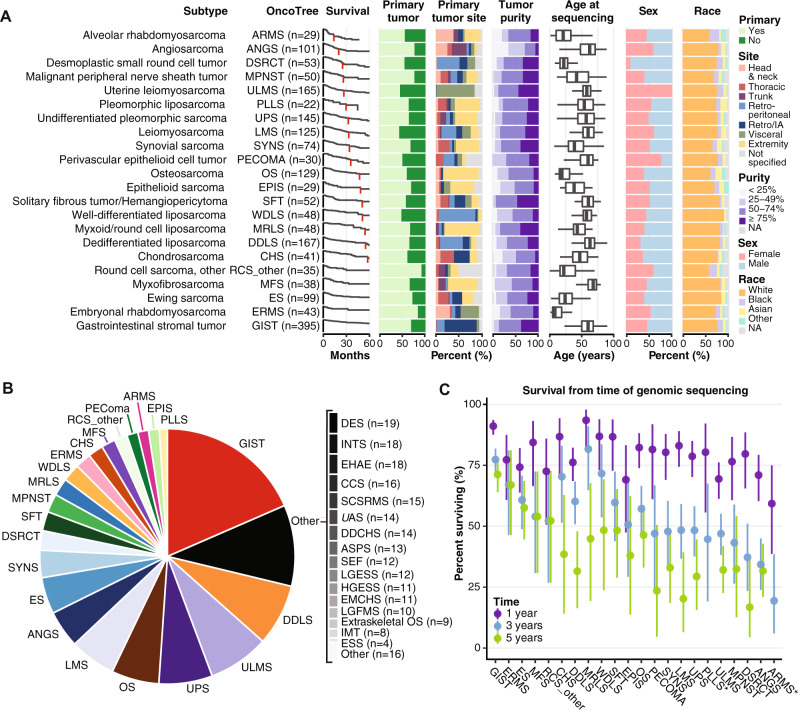
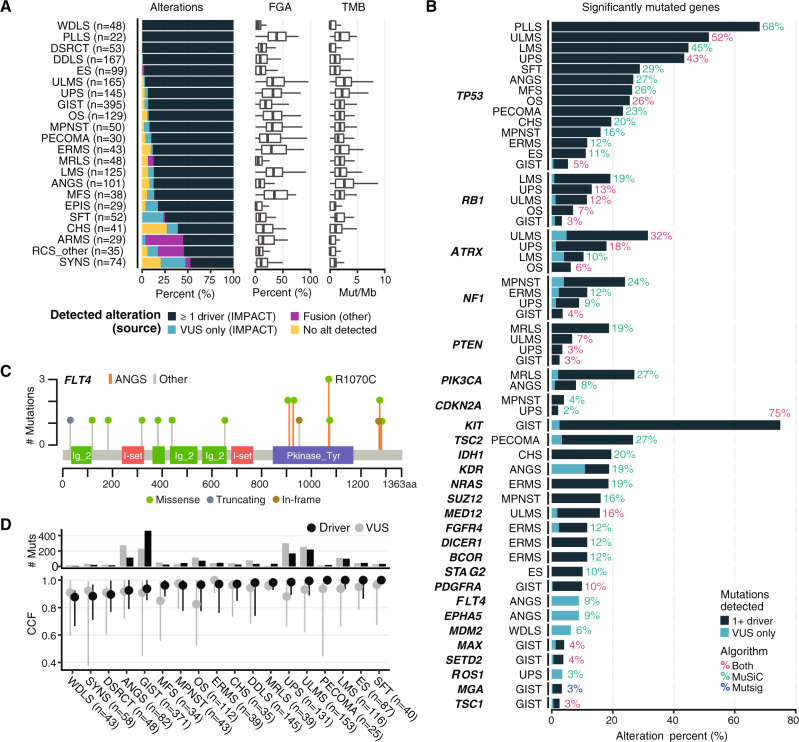
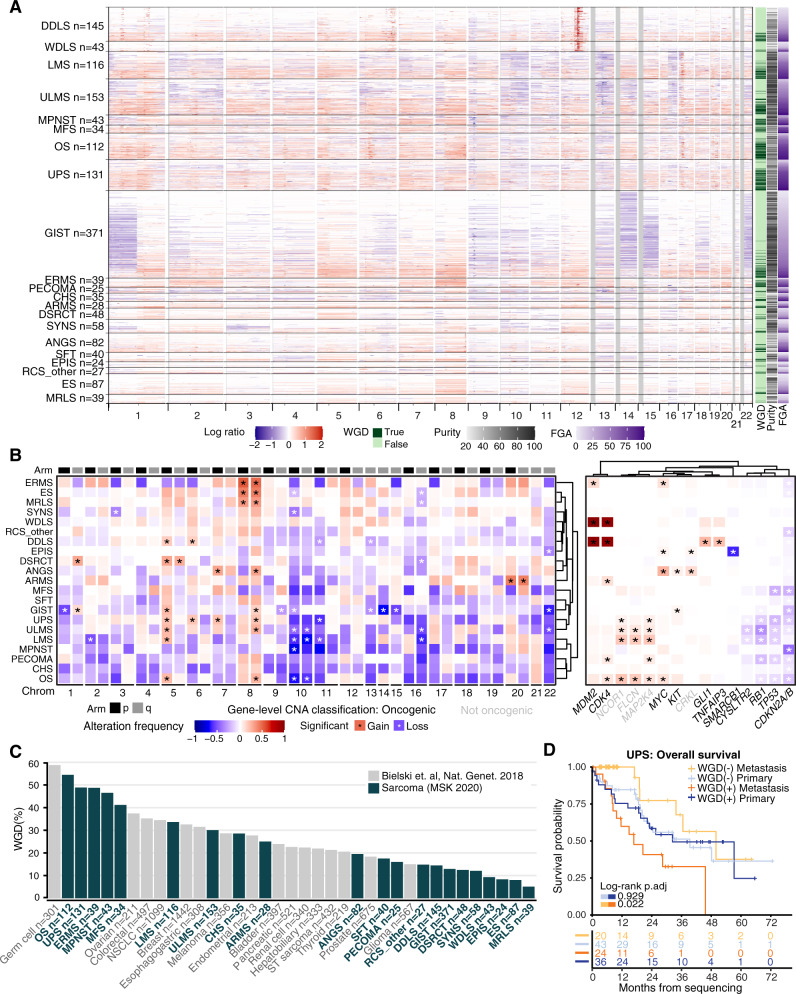
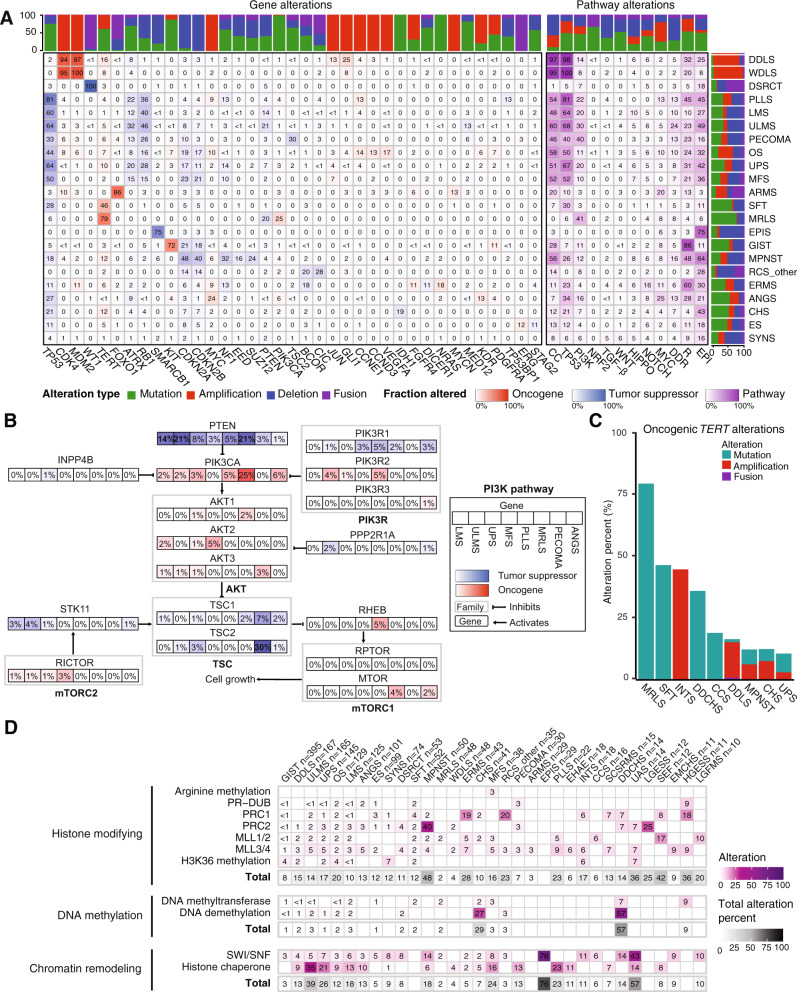
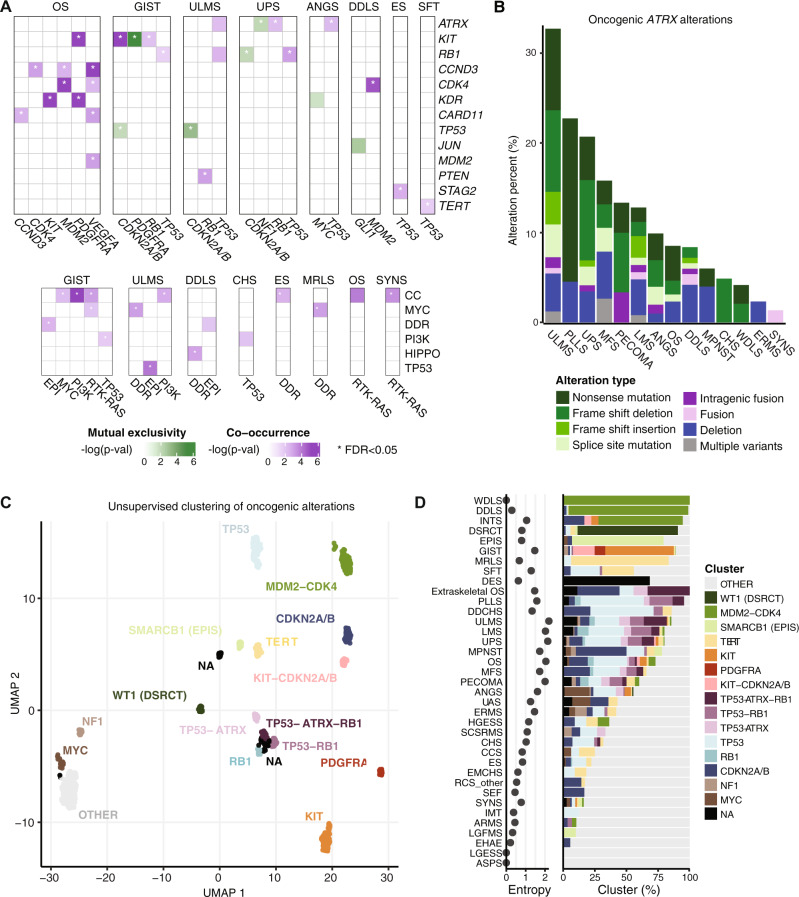
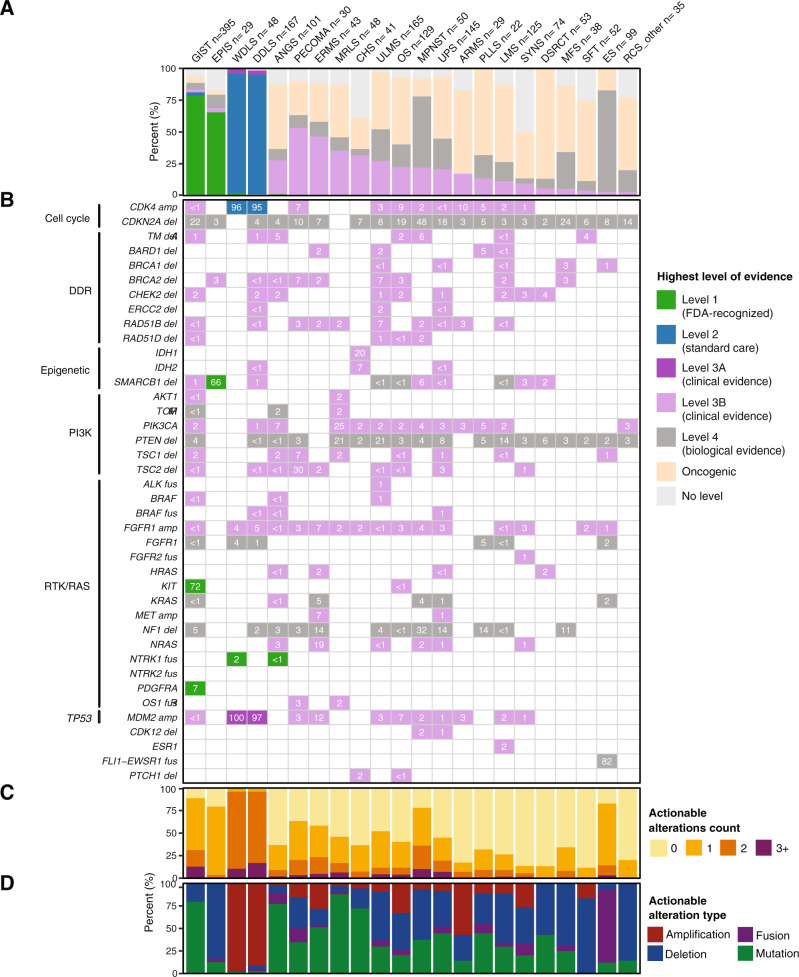
The genetic, biologic, and clinical heterogeneity of sarcomas poses a challenge for the identification of therapeutic targets, clinical research, and advancing patient care. Because there are > 100 sarcoma subtypes, in-depth genetic studies have focused on one or a few subtypes. Herein, we report a comparative genetic analysis of 2,138 sarcomas representing 45 pathological entities. This cohort is prospectively analyzed using targeted sequencing to characterize subtype-specific somatic alterations in targetable pathways, rates of whole genome doubling, mutational signatures, and subtype-agnostic genomic clusters. The most common alterations are in cell cycle control and TP53 , receptor tyrosine kinases/PI3K/RAS, and epigenetic regulators. Subtype-specific associations include TERT amplification in intimal sarcoma and SWI/SNF alterations in uterine adenosarcoma. Tumor mutational burden, while low compared to other cancers, varies between and within subtypes. This resource will improve sarcoma models, motivate studies of subtype-specific alterations, and inform investigations of genetic factors and their correlations with treatment response.
Overview
The claims and statistics of this paper haven’t been checked yet.
Free: it reads the open-access text and checks the first 5 claims that cite a source we can check. Create a free account to check every claim.
Integrity signals
Registry
Cites
Statistics
Figures
Verification
Claims the paper makes
The claims and statistics of this paper haven’t been checked yet.
Free: it reads the open-access text and checks the first 5 claims that cite a source we can check. Create a free account to check every claim.
Claims other papers make about this one
Each is checked against this paper’s own text: does it say what the citing paper says it does?
The source backs part of the claim, not all of it — or backs it for a different population, condition or comparison.
In the citing paper
“Despite their genetic complexity, these sarcomas share genomic alterations causing PI3K/Akt/mTOR and MAPK pathway activation”
From Targeting eIF4A-dependent translation in genetically complex sarcoma (2026) · cites this paper as [8]
Experimental — accuracy not yet measuredThe cited source says what the claim attributes to it.
In the citing paper
“However, due to the high heterogeneity of somatic mutations in osteosarcoma,14,15 the use of a tumor-agnostic MRD panel would compromise sensitivity, leading to reduced sequencing depth and overlooking unique somatic variants.”
From Tumor-informed deep sequencing of ctDNA detects minimal residual disease and predicts relapse in osteosarcoma (2024) · cites this paper as [14]
Self-check
Percentages, sums and reported differences re-computed from the paper’s own numbers.
The self-check needs the paper’s full text.
Citations
Cites
PD-1 and PD-L1 Immune Checkpoint Blockade to Treat Breast Cancer
Hartkopf, A. D., Taran, F.-A., Wallwiener, M., Walter, C. B., Krämer, B., Grischke, E.-M., & Brucker, S. Y. (2016) · Breast Care · doi:10.1159/000453569 · Cited by 30,845
Cerami, E., Gao, J., Dogrusoz, U., Gross, B. E., Sumer, S. O., Aksoy, B. A., Jacobsen, A., Byrne, C. J., Heuer, M. L., Larsson, E., et al. (2012) · Cancer Discovery · doi:10.1158/2159-8290.cd-12-0095 · Cited by 17,455
Self-citationSiegel, R. L., Miller, K. D., & Jemal, A. (2018) · CA: A Cancer Journal for Clinicians · doi:10.3322/caac.21442 · Cited by 16,579
Bioconductor: open software development for computational biology and bioinformatics
Gentleman, R. C., Carey, V. J., Bates, D. M., Bolstad, B., Dettling, M., Dudoit, S., Ellis, B., Gautier, L., Ge, Y., Gentry, J., et al. (2004) · Genome Biology · doi:10.1186/gb-2004-5-10-r80 · Cited by 12,172
Mutational landscape determines sensitivity to PD-1 blockade in non–small cell lung cancer
Rizvi, N. A., Hellmann, M. D., Snyder, A., Kvistborg, P., Makarov, V., Havel, J. J., Lee, W., Yuan, J., Wong, P., Ho, T. S., et al. (2015) · Science · doi:10.1126/science.aaa1348 · Cited by 7,802
Mismatch repair deficiency predicts response of solid tumors to PD-1 blockade
Le, D. T., Durham, J. N., Smith, K. N., Wang, H., Bartlett, B. R., Aulakh, L. K., Lu, S., Kemberling, H., Wilt, C., Luber, B. S., et al. (2017) · Science · doi:10.1126/science.aan6733 · Cited by 6,645
Mutational heterogeneity in cancer and the search for new cancer-associated genes
Lawrence, M. S., Stojanov, P., Polak, P., Kryukov, G. V., Cibulskis, K., Sivachenko, A., Carter, S. L., Stewart, C., Mermel, C. H., Roberts, S. A., et al. (2013) · Nature · doi:10.1038/nature12213 · Cited by 5,461
Tumor mutational load predicts survival after immunotherapy across multiple cancer types
Samstein, R. M., Lee, C.-H., Shoushtari, A. N., Hellmann, M. D., Shen, R., Janjigian, Y. Y., Barron, D. A., Zehir, A., Jordan, E. J., Omuro, A., et al. (2019) · Nature Genetics · doi:10.1038/s41588-018-0312-8 · Cited by 4,071 · cited 1×
“Indeed, recent work suggests that the highest quintile of TMB within a specific cancer 405 type is associated with improved outcomes following checkpoint inhibitor therapy and, following 406 from that observation, that the TMB threshold for benefit is not absolute (49).”
BackgroundSelf-citationThe repertoire of mutational signatures in human cancer
Alexandrov, L. B., Kim, J., Haradhvala, N. J., Huang, M. N., Tian Ng, A. W., Wu, Y., Boot, A., Covington, K. R., Gordenin, D. A., Bergstrom, E. N., et al. (2020) · Nature · doi:10.1038/s41586-020-1943-3 · Cited by 3,496 · cited 1×
“480 Mutational signatures for samples with ≥ 15 synonymous and nonsynonymous single nucleotide 481 variants (SNVs) were extracted using the COSMIC v3 catalog of exome reference signatures 482 and default parameters (59) (https://github.”
MethodSelf-citationZehir, A., Benayed, R., Shah, R. H., Syed, A., Middha, S., Kim, H. R., Srinivasan, P., Gao, J., Chakravarty, D., Devlin, S. M., et al. (2017) · Nature Medicine · doi:10.1038/nm.4333 · Cited by 3,380 · cited 3×
“160 Because a pan-cancer MSK-IMPACT analysis identified TERT promoter mutations in a subset 161 of sarcomas (18), we investigated their frequency as a function of sarcoma subtype (Fig.”
BackgroundMethodSelf-citation
Cited by
Items 201–236 of 236
Absence of PD-L1 Protein Expression in Classic Dermatofibrosarcoma Protuberans
Gambichler, T., Devrim, Y., Weyer-Fahlbusch, S. S., & Susok, L. (2026) · Dermato · doi:10.3390/dermato6020011
“DFSP is a fusion-driven tumor (classically COL1A1– PDGFB) with generally low tumor mutational burden (TMB) on genomic profiling [19,21].”
Bobak, K., Piątkowski, J., Golik, P., Seliga, K. A., Błoński, P. J., Spalek, M. J., Szumera‐Ciećkiewicz, A., Tysarowski, A., Borkowska, A. M., Wągrodzki, M., et al. (2026) · Research Square · doi:10.21203/rs.3.rs-8725409/v1
Next-Generation Sequencing in Malignant Mesenchymal Tumors
Sioletic, S., Bellan, E., & Cin, P. D. (2026) · Current clinical pathology · doi:10.1007/978-3-032-18790-1_7
Li, L., Liu, J., Zhao, Y., Pang, S., Zhang, B., Wen, J., Liu, Y., Zhang, Y., Zhang, Y., Li, J., et al. (2026) · Frontiers in Immunology · doi:10.3389/fimmu.2026.1766639
“Meanwhile, the mean TMB in OSA is only 0.79 – 1.96 mut/ Mb, far below the threshold associated with immunotherapy bene fi t, further limiting the potential of TMB in clinical decision-making for OSA (43, 44).”
InfluentialGenetic profiling of soft tissue and bone tumors using SarcDBasePreprint
Difilippo, V., Saba, K. H., Wallander, K., Styring, E., Nathrath, M., Baumhoer, D., Haglund, F., & Nord, K. H. (2026) · bioRxiv (Cold Spring Harbor Laboratory) · doi:10.64898/2026.05.13.724790
Biondi, N., Ratto, M. L., Pal, R., Rausch, T., Stirl, S., Villacorta, L., Hadzic, A., Knotz, C., Sieverling, L., González-Woge, M. A., et al. (2026) · bioRxiv (Cold Spring Harbor Laboratory) · doi:10.64898/2026.05.17.725728
Kulkarni, N. J., Kelly, C. M., & Bartlett, E. K. (2026) · Human Vaccines & Immunotherapeutics · doi:10.1080/21645515.2026.2674185
“23 24–27 Therefore, simple karyotype sarcomas with low TMB, such as ASPS, would be hypothesized to generate fewer neoantigens as compared to sarcomas with complex karyotypes, such as UPS, yet ASPS appears to be the most sensitive of any of the sarcoma subtypes to checkpoint inhibition.”
Self-citationPasquali, S., Doldi, V., SHIPLEY, J. M., Man, Y., Postel-Vinay, S. C., Herbel, N., Meister, M. T., van de Wetering, M., Métayer, L., Minard‐Colin, V., et al. (2026) · Critical Reviews in Oncology/Hematology · doi:10.1016/j.critrevonc.2026.105418
Park, L., Demicco, E. G., Howarth, K., Elliott, M., Chung, P. W. M., Birkeälv, S., Alcaide, M., Lee, J., Seguí, N., Arones, L., et al. (2026) · Clinical Cancer Research · doi:10.1158/1078-0432.ccr-26-0323 · Cited by 4
Baluszek, S., Kober, P., Woroniecka, R., Maławska, N., Wągrodzki, M., Kunicki, J., Mandat, T., Grygalewicz, B., & Bujko, M. (2026) · Neoplasia · doi:10.1016/j.neo.2026.101325 · Cited by 1
“For comparison with other sarcomas a MSK-IMPACT dataset, available from www.cbioportal.org, comprising of 2,138 samples was utilized[23].”
The Role of AXL Signaling and Mutant Isocitrate Dehydrogenase 1/2 in Conventional Chondrosarcoma
Chu, M., Barron, Z., Basbay, S., Weiss, K. R., Schoedel, K. E., & Lohse, I. (2026) · Cancers · doi:10.3390/cancers18121929
“Complementing these findings, Nacev et al. analyzed 2138 sarcomas across 45 histologic subtypes using MSK-IMPACT and demonstrated recurrent IDH1 mutations alongside TERT promoter alterations in CS [36].”
Role of Genetics in Sarcoma for the Practicing General Surgeon
Steensma, M. (2026) · Surgical Clinics of North America · doi:10.1016/j.suc.2026.04.002
Lin, L. H., Odintsov, I., Towery, E. A., Quade, B. J., Nucci, M. R., Ordulu, Z., & Kolin, D. L. (2026) · Histopathology · doi:10.1111/his.70201
Khanh, N. V., Dũng, T. T., Hai, H., Sang, N. T. Q., Tran, T. D., Quang, D. M., Ha, N. T., Chi, N. B. T., Anh, P. T., Duc, P. M., et al. (2026) · Journal of bone oncology · doi:10.1016/j.jbo.2026.100781
“Recent system-level research has reframed OS as a complex ecosystem in which tumor cells interact dynamically with the surrounding stroma and immune components [16 – 18].”
Ali, A., Ali, A., Zhang, Y., Fang, Z., & Zhan, X. (2026) · Journal of Neuro and Oncology Research · doi:10.46889/jnor.2026.6205
Zeal, J., Woodcock, M. G., Chen, K. Y., & Stein, J. S. (2026) · Frontiers in Oncology · doi:10.3389/fonc.2026.1842108
“No ROS1 fusions were detected in 101 angiosarcomas (Supplemental material (34)).”
Goodsell, K. E., Carter, J. A., Abrams, H. R., Mogal, H., Loggers, E. T., & Sharib, J. M. (2026) · Journal of Surgical Oncology · doi:10.1002/jso.70326
The evolution of cellular therapies in sarcoma: Breakthroughs, challenges, and future directions
Wannaphut, C., Thirasastr, P., Livingston, J., Araujo, D. M., Conley, A. P., Keung, E. Z.-Y., Roland, C. L., & Somaiah, N. (2026) · Human Vaccines & Immunotherapeutics · doi:10.1080/21645515.2026.2708435
Zhuang, A., Zhou, X., Chengfei, X., Chen, Y., Wang, X., Li, R., Hu, J., Cheng, Y., Wan, Y., Wu, T., et al. (2026) · Cancer and Metastasis Reviews · doi:10.1007/s10555-026-10363-w
“Broad sarcoma sequencing resources and genomic-guided precision-oncology studies provide context for interpreting such cargo, but they are best used to frame testable alterations rather than to upgrade amplification or expression alone into clinical actionability [75–77].”
Butters, T., Oukrif, D., Tannirandorn, P., van Belzen, I. A. E. M., Chen, J., Davies, C., Lin, R., Noon, S. D., Taher, D., Cutler, C., et al. (2026) · Cell Reports Methods · doi:10.1016/j.crmeth.2026.101570
Gross, J. M., Warmke, L. M., Argani, P., & Gjeorgjievski, S. G. (2026) · Seminars in Diagnostic Pathology · doi:10.1016/j.semdp.2026.151048
Yakoub, M. A., Saoud, C., Kim, D., Dickson, M. D., Crago, A. M., Hameed, M., & Agaram, N. P. (2026) · Genes Chromosomes and Cancer · doi:10.1002/gcc.70166
Self-citationMiyamoto, R., Park, J., Dwosh, G. H., Zuco, V., Pasquali, S., Dickson, B. C., & Kirsch, D. G. (2026) · bioRxiv (Cold Spring Harbor Laboratory) · doi:10.64898/2026.09.01.748640
“Clinical sequencing data for EPS have recently become available 14,27 ( Supplementary Fig.”
Subramanian, A., Nouth, S. C. L., Nemat‐Gorgani, N., Soudi, S., Ballman, K. V., Heise, R. S., Johns, C., Sears, T. J., Roohani, S., Krcek, R., et al. (2026) · Journal of Clinical Oncology · doi:10.1200/jco-26-00769 · Cited by 1
Molecular events underlying sarcoma development and progression: the diagnostic relevance
Wiśniewska, A., Sobczuk, P., & Rutkowski, P. (2026) · Expert Review of Molecular Diagnostics · doi:10.1080/14737159.2026.2733191
Anandraj Vaithy, K., Shukla, A., Bhengra, A., Venuturumilli, R., Aara, F., & Gusani, J. (2026) · Cureus · doi:10.7759/cureus.116199
Therapeutic Vulnerabilities of the Key Genetic Drivers in Leiomyosarcoma
Lesovaya, E. A., Fetisov, T. I., Bokhyan, B. Y., Павловна, М. В., Kulikov, E. P., Belitsky, G. A., Игоревич, К. К., & Геннадиевна, Я. М. (2026) · Medical Sciences · doi:10.3390/medsci14050571
Vilhais, G., & Esperança‐Martins, M. (2026) · ESMO rare cancers. · doi:10.1016/j.esmorc.2026.100538
Vita, A. D., Violani, S., Miserocchi, G., Xerxa, E., Bajorath, J., & Vanni, S. (2026) · Current Oncology Reports · doi:10.1007/s11912-026-01828-w
“…versus somatic origin when relevant, functional evidence, drug availability, and the level of clinical evidence supporting a matched intervention, ideally according to standardized actionability and reporting frameworks such as ESCAT and ESMO genomic-reporting recommendations [30, 53, 54, 66].”
Precision therapeutic strategies for advanced gastrointestinal stromal tumors
Ooki, A., Osumi, H., Shimozaki, K., Udagawa, S., & Yamaguchi, K. (2026) · Cancer and Metastasis Reviews · doi:10.1007/s10555-026-10381-8 · Cited by 2
Zhao, X., Liu, J., Li, Z., Wang, Z., & Li, R. (2026) · Research Square · doi:10.21203/rs.3.rs-10952508/v1
A Practical Compass to Biological Digital Resources and Omics Integration in Ewing Sarcoma
Henon, C., Koster, J., Waterfall, J. J., & Grünewald, T. G. P. (2026) · Methods in molecular biology · doi:10.1007/978-1-0716-5587-0_26
Deng, Z., Jin, T., Mingwei, L., Guo, J., Sun, Y., Yongkun, Y., Zhang, Q., Qin, J., Lou, F., Cao, S., et al. (2026) · Therapeutic Advances in Medical Oncology · doi:10.1177/17588359261494096
Xu, Z., Du, Z., Niu, Q., Wang, X., Wang, H., Zhang, M., & Liu, M. (2026) · Frontiers in Pharmacology · doi:10.3389/fphar.2026.1980493
CellMinerCDB Instance Protocol Files
Luna, A., & Elloumi, F. (2025) · Zenodo (CERN European Organization for Nuclear Research) · doi:10.5281/zenodo.15126549
Metadata
- Authors
- Nacev, B. A., Sanchez-Vega, F., Smith, S. A., Antonescu, C. R., Rosenbaum, E., Shi, H., Tang, C., Socci, N. D., Rana, S., Gularte-Mérida, R., Zehir, A., Gounder, M. M., Bowler, T. G., Luthra, A., Jadeja, B., Okada, A., Strong, J. A., Stoller, J., Chan, J. E., Chi, P., D’Angelo, S. P., Dickson, M. A., Kelly, C. M., Keohan, M. L., Movva, S., Thornton, K., Meyers, P. A., Wexler, L. H., Slotkin, E. K., Glade Bender, J. L., Shukla, N. N., Hensley, M. L., Healey, J. H., La Quaglia, M. P., Alektiar, K. M., Crago, A. M., Yoon, S. S., Untch, B. R., Chiang, S., Agaram, N. P., Hameed, M. R., Berger, M. F., Solit, D. B., Schultz, N., Ladanyi, M., Singer, S., & Tap, W. D.
- Affiliations
- Memorial Sloan Kettering Cancer Center (US)
- Corresponding author
- Singer, Samuel
- Tap, William D.
- ORCID
- Nacev, Benjamin A.
- Sanchez-Vega, Francisco
- Smith, Shaleigh A.
- Antonescu, Cristina R.
- Shi, Hongyu
- Socci, Nicholas D.
- Rana, Satshil
- Gularte-Mérida, Rodrigo
- Zehir, Ahmet
- Gounder, Mrinal M.
- Luthra, Anisha
- Jadeja, Bhumika
- Chan, Jason E.
- Chi, Ping
- D’Angelo, Sandra P.
- Dickson, Mark A.
- Kelly, Ciara M.
- Keohan, Mary Louise
- Movva, Sujana
- Meyers, Paul A.
- Wexler, Leonard H.
- Slotkin, Emily K.
- Glade Bender, Julia L.
- Shukla, Neerav N.
- Hensley, Martee L.
- Healey, John H.
- Alektiar, Kaled M.
- Crago, Aimee M.
- Yoon, Sam S.
- Untch, Brian R.
- Chiang, Sarah
- Agaram, Narasimhan P.
- Hameed, Meera R.
- Berger, Michael F.
- Solit, David B.
- Schultz, Nikolaus
- Ladanyi, Marc
- Singer, Samuel
- Tap, William D.
- Venue
- Nature Communications
- Published
- 2022-06-15
- Volume
- 13
- Issue
- 1
- Pages
- 3405-3405
- ISSN
- 2041-1723 (ISSN-L)
- PMC
- PMC9200818
- OpenAlex
- W4282977145
- Semantic Scholar
- c33a8ac1986143d3e230f2a4fed6bcf6e494b74d
- Cited by
- 232
- References
- 68
- Citations by year
- 2026: 58 · 2025: 64 · 2024: 59 · 2023: 45 · 2022: 6
- FWCI
- 28.69
- Type
- journal article
- Language
- en
- Open access
- gold
- doi.org
- Licence
- cc-by
- creativecommons.org/licenses/by/4.0 (tdm)
- creativecommons.org/licenses/by/4.0 (vor)
- Locations
- Nature Communications (publishedVersion, cc-by)
- medRxiv (acceptedVersion, cc-by-nc-nd)
- PubMed Central (publishedVersion, cc-by)
- PubMed (publishedVersion)
- RePEc: Research Papers in Economics (submittedVersion)
- DOAJ (DOAJ: Directory of Open Access Journals) (submittedVersion, cc-by-sa)
- Funders
- U.S. Department of Health & Human Services | National Institutes of Health (P50 CA217694, P30 CA008748)
- Topics
- Health Sciences › Medicine › Oncology › Sarcoma Diagnosis and Treatment
- Life Sciences › Biochemistry, Genetics and Molecular Biology › Molecular Biology › Chromatin Remodeling and Cancer
- Life Sciences › Biochemistry, Genetics and Molecular Biology › Cancer Research › Cancer Genomics and Diagnostics
- Keywords
- soft tissue sarcoma, bone sarcoma, sarcoma subtypes, somatic alterations, therapeutic target, whole-genome duplication, mutational signatures, tumor mutational burden, TP53, receptor tyrosine kinase, epigenetic regulators, TERT amplification, intimal sarcoma, uterine adenosarcoma, genomic heterogeneity
- MeSH terms
- Bone Neoplasms, Humans, Sarcoma, Osteosarcoma, Soft Tissue Neoplasms, Genomics
About these checks
Registry, retraction, Cites and statistics results are computed, not judged, with one exception: a printed reference that no index lists is read once by a model before it counts as a citation error. Claims are extracted by a model and kept only when their quote appears verbatim in the text; each cited source is then checked, with a model’s help, for whether it says what the claim relies on. Those verdicts can be wrong — read the claim’s quote and the cited source before relying on one.
Statistics and arithmetic are recomputed, not judged.
Confidence bands are shown only for fields calibrated on our annotated test set. None is calibrated yet, so no band is shown.
What counts as a claim ›How we measure confidence ›How we check this ›
Are you an author, or do you see a problem with this page? Request a review
Data sources
Bibliographic data: Semantic Scholar, OpenAlex, Crossref.
Contains information from the Semantic Scholar Academic Graph Datasets, made available under the ODC Attribution License (ODC-BY 1.0).
Semantic Scholar’s data is described in: Kinney, R., et al. (2023). The Semantic Scholar Open Data Platform. arXiv:2301.10140.
