

Clinical sequencing of soft tissue and bone sarcomas delineates diverse genomic landscapes and potential therapeutic targets
Open accessPublished version of a preprint
The DOI matches its Crossref record; 68 of the 68 references it cites were found in a registry or an index.
Abstract
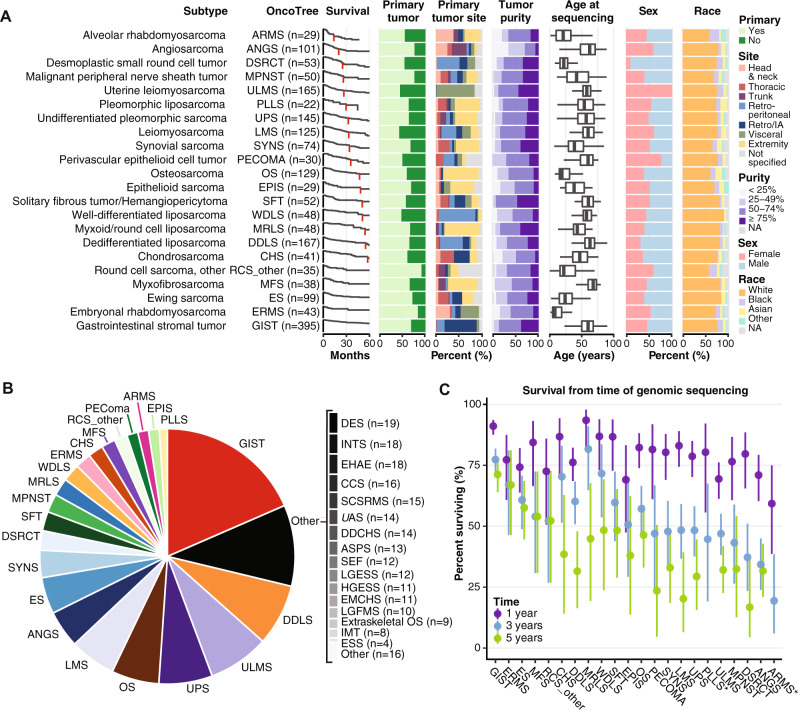
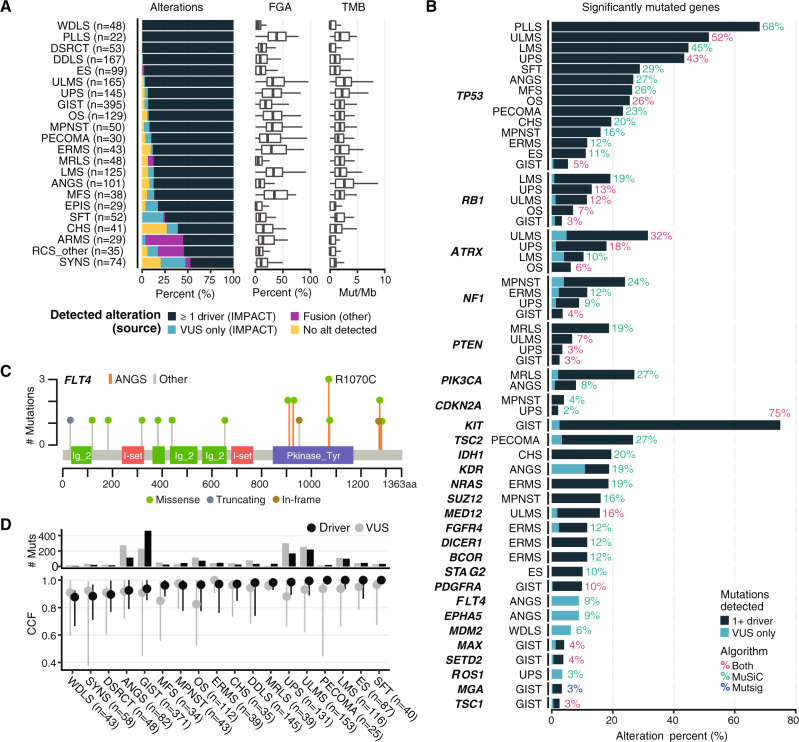
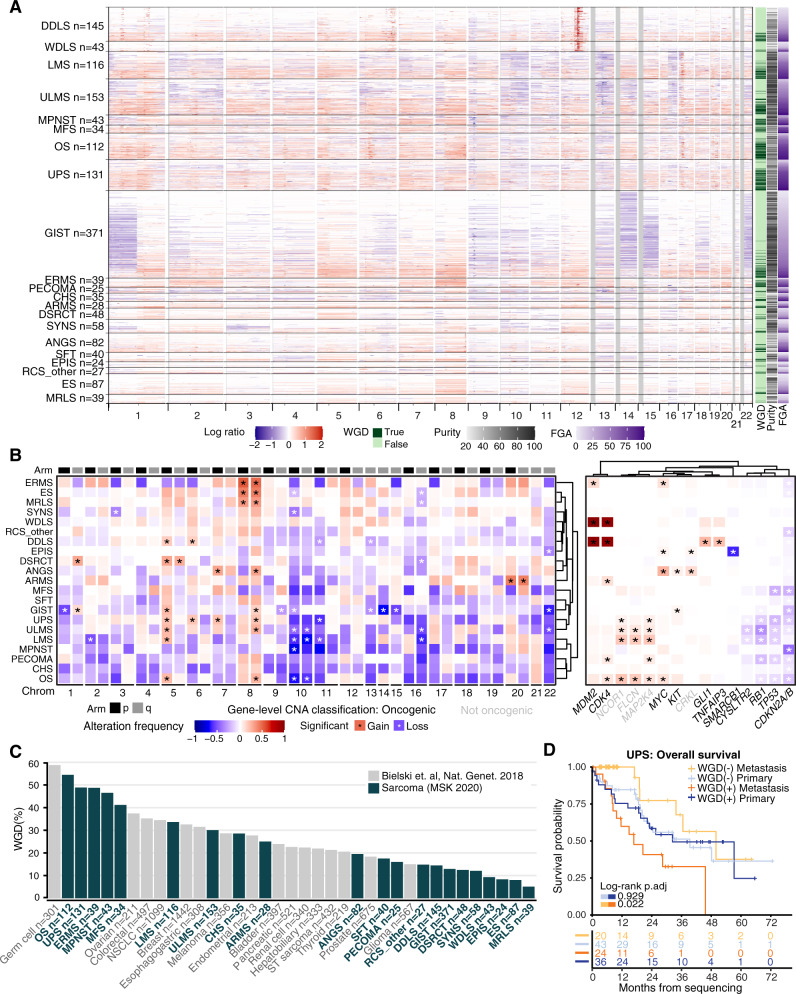
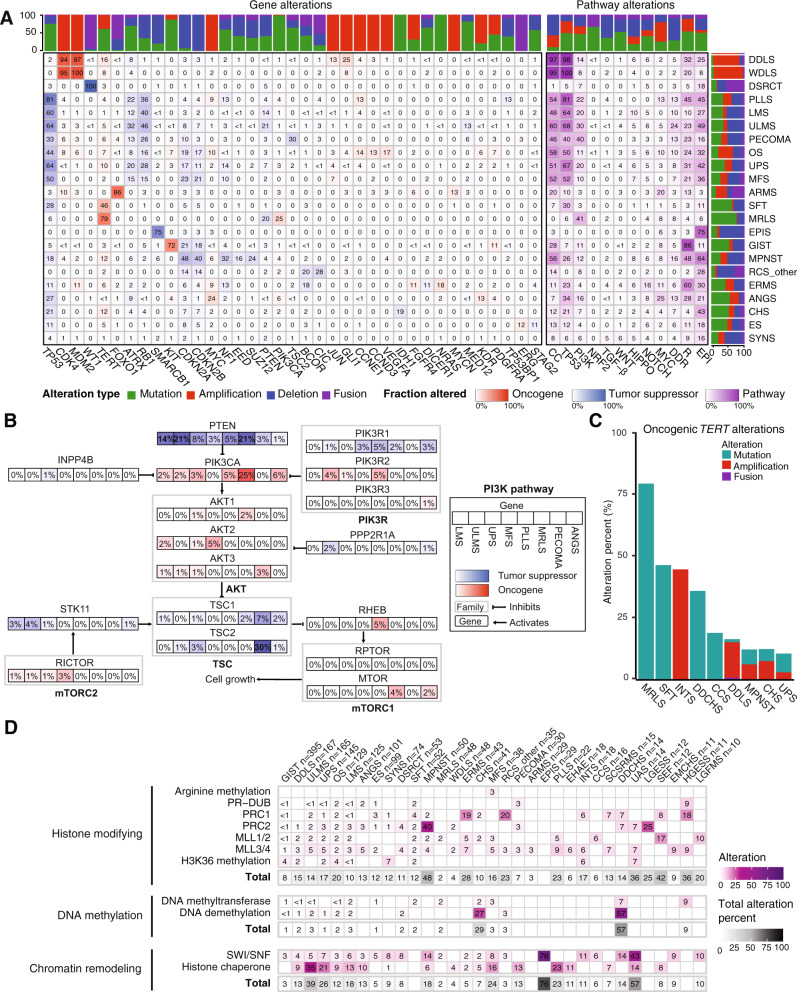
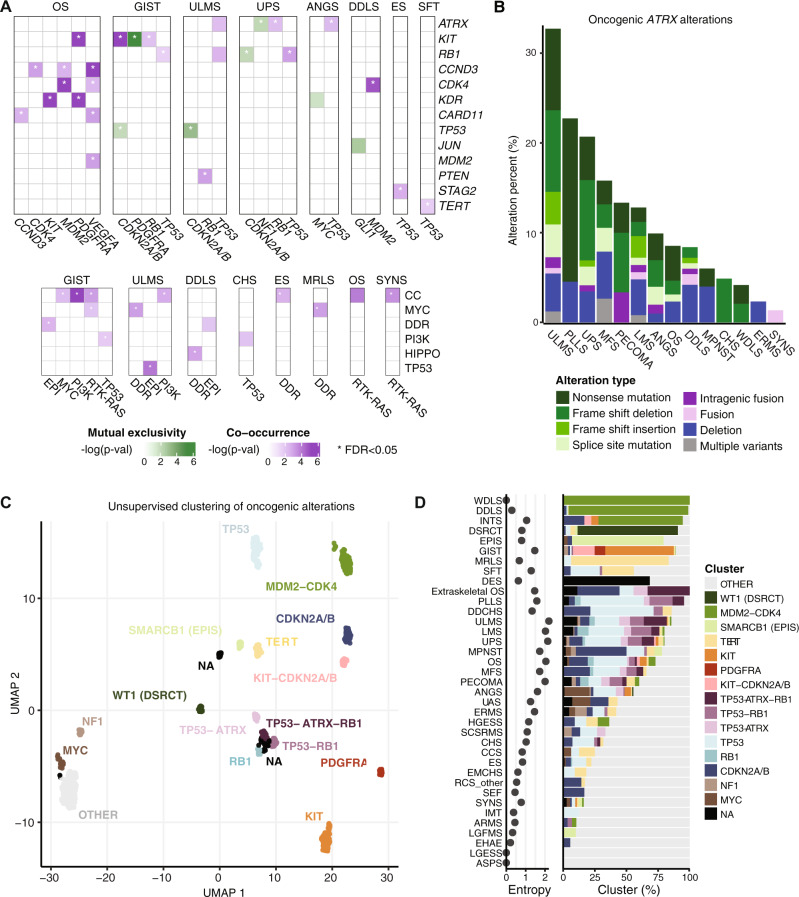
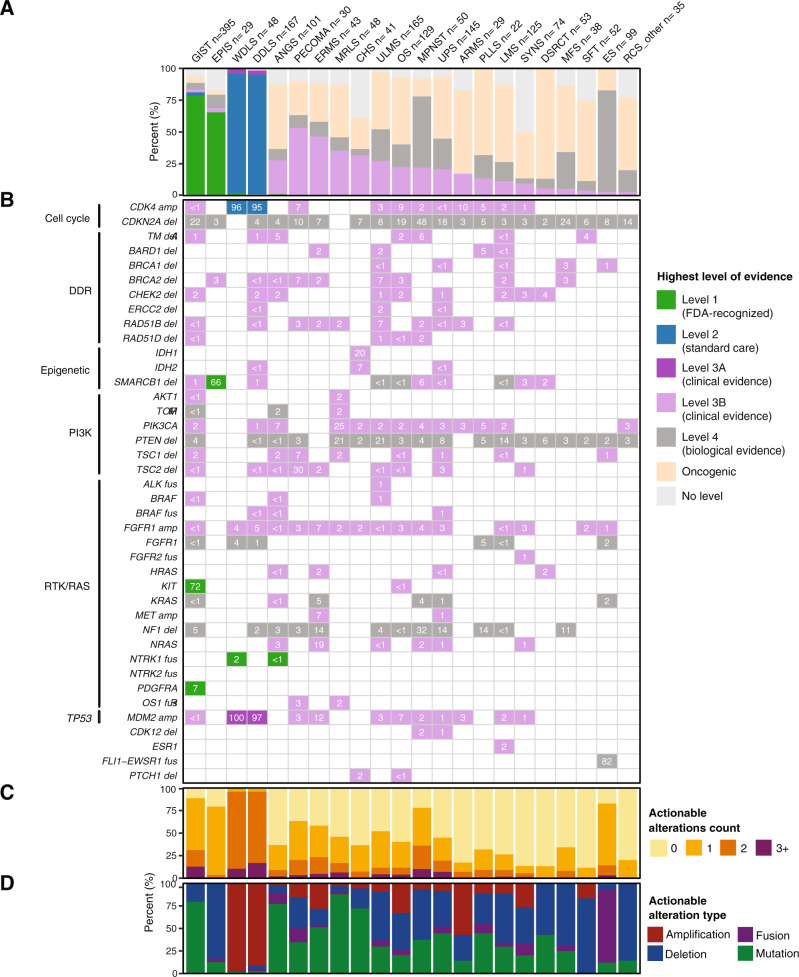
The genetic, biologic, and clinical heterogeneity of sarcomas poses a challenge for the identification of therapeutic targets, clinical research, and advancing patient care. Because there are > 100 sarcoma subtypes, in-depth genetic studies have focused on one or a few subtypes. Herein, we report a comparative genetic analysis of 2,138 sarcomas representing 45 pathological entities. This cohort is prospectively analyzed using targeted sequencing to characterize subtype-specific somatic alterations in targetable pathways, rates of whole genome doubling, mutational signatures, and subtype-agnostic genomic clusters. The most common alterations are in cell cycle control and TP53 , receptor tyrosine kinases/PI3K/RAS, and epigenetic regulators. Subtype-specific associations include TERT amplification in intimal sarcoma and SWI/SNF alterations in uterine adenosarcoma. Tumor mutational burden, while low compared to other cancers, varies between and within subtypes. This resource will improve sarcoma models, motivate studies of subtype-specific alterations, and inform investigations of genetic factors and their correlations with treatment response.
Overview
The claims and statistics of this paper haven’t been checked yet.
Free: it reads the open-access text and checks the first 5 claims that cite a source we can check. Create a free account to check every claim.
Integrity signals
Registry
Cites
Statistics
Figures
Verification
Claims the paper makes
The claims and statistics of this paper haven’t been checked yet.
Free: it reads the open-access text and checks the first 5 claims that cite a source we can check. Create a free account to check every claim.
Claims other papers make about this one
Each is checked against this paper’s own text: does it say what the citing paper says it does?
The source backs part of the claim, not all of it — or backs it for a different population, condition or comparison.
In the citing paper
“Despite their genetic complexity, these sarcomas share genomic alterations causing PI3K/Akt/mTOR and MAPK pathway activation”
From Targeting eIF4A-dependent translation in genetically complex sarcoma (2026) · cites this paper as [8]
Experimental — accuracy not yet measuredThe cited source says what the claim attributes to it.
In the citing paper
“However, due to the high heterogeneity of somatic mutations in osteosarcoma,14,15 the use of a tumor-agnostic MRD panel would compromise sensitivity, leading to reduced sequencing depth and overlooking unique somatic variants.”
From Tumor-informed deep sequencing of ctDNA detects minimal residual disease and predicts relapse in osteosarcoma (2024) · cites this paper as [14]
Self-check
Percentages, sums and reported differences re-computed from the paper’s own numbers.
The self-check needs the paper’s full text.
Citations
Cites
PD-1 and PD-L1 Immune Checkpoint Blockade to Treat Breast Cancer
Hartkopf, A. D., Taran, F.-A., Wallwiener, M., Walter, C. B., Krämer, B., Grischke, E.-M., & Brucker, S. Y. (2016) · Breast Care · doi:10.1159/000453569 · Cited by 30,845
Cerami, E., Gao, J., Dogrusoz, U., Gross, B. E., Sumer, S. O., Aksoy, B. A., Jacobsen, A., Byrne, C. J., Heuer, M. L., Larsson, E., et al. (2012) · Cancer Discovery · doi:10.1158/2159-8290.cd-12-0095 · Cited by 17,455
Self-citationSiegel, R. L., Miller, K. D., & Jemal, A. (2018) · CA: A Cancer Journal for Clinicians · doi:10.3322/caac.21442 · Cited by 16,579
Bioconductor: open software development for computational biology and bioinformatics
Gentleman, R. C., Carey, V. J., Bates, D. M., Bolstad, B., Dettling, M., Dudoit, S., Ellis, B., Gautier, L., Ge, Y., Gentry, J., et al. (2004) · Genome Biology · doi:10.1186/gb-2004-5-10-r80 · Cited by 12,172
Mutational landscape determines sensitivity to PD-1 blockade in non–small cell lung cancer
Rizvi, N. A., Hellmann, M. D., Snyder, A., Kvistborg, P., Makarov, V., Havel, J. J., Lee, W., Yuan, J., Wong, P., Ho, T. S., et al. (2015) · Science · doi:10.1126/science.aaa1348 · Cited by 7,802
Mismatch repair deficiency predicts response of solid tumors to PD-1 blockade
Le, D. T., Durham, J. N., Smith, K. N., Wang, H., Bartlett, B. R., Aulakh, L. K., Lu, S., Kemberling, H., Wilt, C., Luber, B. S., et al. (2017) · Science · doi:10.1126/science.aan6733 · Cited by 6,645
Mutational heterogeneity in cancer and the search for new cancer-associated genes
Lawrence, M. S., Stojanov, P., Polak, P., Kryukov, G. V., Cibulskis, K., Sivachenko, A., Carter, S. L., Stewart, C., Mermel, C. H., Roberts, S. A., et al. (2013) · Nature · doi:10.1038/nature12213 · Cited by 5,461
Tumor mutational load predicts survival after immunotherapy across multiple cancer types
Samstein, R. M., Lee, C.-H., Shoushtari, A. N., Hellmann, M. D., Shen, R., Janjigian, Y. Y., Barron, D. A., Zehir, A., Jordan, E. J., Omuro, A., et al. (2019) · Nature Genetics · doi:10.1038/s41588-018-0312-8 · Cited by 4,071 · cited 1×
“Indeed, recent work suggests that the highest quintile of TMB within a specific cancer 405 type is associated with improved outcomes following checkpoint inhibitor therapy and, following 406 from that observation, that the TMB threshold for benefit is not absolute (49).”
BackgroundSelf-citationThe repertoire of mutational signatures in human cancer
Alexandrov, L. B., Kim, J., Haradhvala, N. J., Huang, M. N., Tian Ng, A. W., Wu, Y., Boot, A., Covington, K. R., Gordenin, D. A., Bergstrom, E. N., et al. (2020) · Nature · doi:10.1038/s41586-020-1943-3 · Cited by 3,496 · cited 1×
“480 Mutational signatures for samples with ≥ 15 synonymous and nonsynonymous single nucleotide 481 variants (SNVs) were extracted using the COSMIC v3 catalog of exome reference signatures 482 and default parameters (59) (https://github.”
MethodSelf-citationZehir, A., Benayed, R., Shah, R. H., Syed, A., Middha, S., Kim, H. R., Srinivasan, P., Gao, J., Chakravarty, D., Devlin, S. M., et al. (2017) · Nature Medicine · doi:10.1038/nm.4333 · Cited by 3,380 · cited 3×
“160 Because a pan-cancer MSK-IMPACT analysis identified TERT promoter mutations in a subset 161 of sarcomas (18), we investigated their frequency as a function of sarcoma subtype (Fig.”
BackgroundMethodSelf-citationOncogenic Signaling Pathways in The Cancer Genome Atlas
Sanchez-Vega, F., Mina, M., Armenia, J., Chatila, W. K., Luna, A., La, K. C., Dimitriadoy, S., Liu, D. L., Kantheti, H. S., Saghafinia, S., et al. (2018) · Cell · doi:10.1016/j.cell.2018.03.035 · Cited by 3,201
PARP inhibitors: Synthetic lethality in the clinic
Lord, C. J., & Ashworth, A. (2017) · Science · doi:10.1126/science.aam7344 · Cited by 2,880 · cited 1×
“170 Alterations in DNA damage repair (DDR) pathway genes have been associated with 171 development of sarcomas (20), and are of particular clinical interest as PARP inhibition has 172 activity in select carcinomas with homologous recombination deficiency and immune checkpoint 173 blockade has activity in certain tumor…”
BackgroundDensity-Based Clustering Based on Hierarchical Density Estimates
Campello, R. J. G. B., Moulavi, D., & Sander, J. (2013) · Lecture Notes in Computer Science · doi:10.1007/978-3-642-37456-2_14 · Cited by 2,680
OncoKB: A Precision Oncology Knowledge Base
Chakravarty, D., Gao, J., Phillips, S., Kundra, R., Zhang, H., Wang, J., Rudolph, J. E., Yaeger, R., Soumerai, T., Nissan, M. H., et al. (2017) · JCO Precision Oncology · doi:10.1200/po.17.00011 · Cited by 2,589
Self-citationMemorial Sloan Kettering-Integrated Mutation Profiling of Actionable Cancer Targets (MSK-IMPACT)
Cheng, D. T., Mitchell, T. N., Zehir, A., Shah, R. H., Benayed, R., Syed, A., Chandramohan, R., Liu, Z. Y., Won, H. H., Scott, S. N., et al. (2015) · The Journal of Molecular Diagnostics · doi:10.1016/j.jmoldx.2014.12.006 · Cited by 2,119 · cited 3×
“Paired tumor and normal DNA samples were analyzed using the FDA-cleared 39 Memorial Sloan Kettering-Integrated Mutation Profiling of Actionable Cancer Targets (MSK40 IMPACT) next generation sequencing platform (5).”
MethodSelf-citationAmplification of a gene encoding a p53-associated protein in human sarcomas
Oliner, J. D., Kinzler, K. W., Meltzer, P. S., George, D. L., & Vogelstein, B. (1992) · Nature · doi:10.1038/358080a0 · Cited by 1,949
Highly Recurrent TERT Promoter Mutations in Human Melanoma
Huang, F. W., Hodis, E., Xu, M. J., Kryukov, G. V., Chin, L., & Garraway, L. A. (2013) · Science · doi:10.1126/science.1229259 · Cited by 1,816 · cited 2×
“19 transcription of the TERT gene (42,43).”
TERT Promoter Mutations in Familial and Sporadic Melanoma
Horn, S., Figl, A., Rachakonda, P. S., Fischer, C., Sucker, A., Gast, A., Kadel, S., Moll, I., Nagore, E., Hemminki, K., et al. (2013) · Science · doi:10.1126/science.1230062 · Cited by 1,799 · cited 1×
“19 transcription of the TERT gene (42,43).”
Tawbi, H. A., Burgess, M., Bolejack, V., Van Tine, B. A., Schuetze, S. M., Hu, J., D'Angelo, S., Attia, S., Riedel, R. F., Priebat, D. A., et al. (2017) · The Lancet Oncology · doi:10.1016/s1470-2045(17)30624-1 · Cited by 1,452 · cited 1×
“296 Tumor Mutational Burden, Microsatellite Instability, and Mutational Signatures 297 Two recent immune checkpoint blockade trials in sarcoma demonstrated low overall response 298 rates, though rates varied among subtypes (33,34).”
BackgroundSelf-citationShen, R., & Seshan, V. E. (2016) · Nucleic Acids Research · doi:10.1093/nar/gkw520 · Cited by 1,258
Comprehensive and Integrated Genomic Characterization of Adult Soft Tissue Sarcomas
Abeshouse, A., Adebamowo, C., Adebamowo, S. N., Akbani, R., Akeredolu, T., Ally, A., Anderson, M. L., Anur, P., Appelbaum, E. L., Armenia, J., et al. (2017) · Cell · doi:10.1016/j.cell.2017.10.014 · Cited by 1,069
Self-citationdbscan: Fast Density-Based Clustering with R
Hahsler, M., Piekenbrock, M., & Doran, D. (2019) · Journal of Statistical Software · doi:10.18637/jss.v091.i01 · Cited by 802
D'Angelo, S. P., Mahoney, M. R., Van Tine, B. A., Atkins, J., Milhem, M. M., Jahagirdar, B. N., Antonescu, C. R., Horvath, E., Tap, W. D., Schwartz, G. K., et al. (2018) · The Lancet Oncology · doi:10.1016/s1470-2045(18)30006-8 · Cited by 759 · cited 1×
“296 Tumor Mutational Burden, Microsatellite Instability, and Mutational Signatures 297 Two recent immune checkpoint blockade trials in sarcoma demonstrated low overall response 298 rates, though rates varied among subtypes (33,34).”
BackgroundSelf-citationShern, J. F., Chen, L., Chmielecki, J., Wei, J. S., Patidar, R., Rosenberg, M., Ambrogio, L., Auclair, D., Wang, J., Song, Y. K., et al. (2014) · Cancer Discovery · doi:10.1158/2159-8290.cd-13-0639 · Cited by 756 · cited 1×
“Both alterations were more 209 prevalent in our population than in prior studies (26,27).”
ResultSubtype-specific genomic alterations define new targets for soft-tissue sarcoma therapy
Barretina, J., Taylor, B. S., Banerji, S., Ramos, A. H., Lagos-Quintana, M., DeCarolis, P. L., Shah, K., Socci, N. D., Weir, B. A., Ho, A., et al. (2010) · Nature Genetics · doi:10.1038/ng.619 · Cited by 735
Self-citationMuSiC: Identifying mutational significance in cancer genomes
Dees, N. D., Zhang, Q., Kandoth, C., Wendl, M. C., Schierding, W., Koboldt, D. C., Mooney, T. B., Callaway, M. B., Dooling, D., Mardis, E. R., et al. (2012) · Genome Research · doi:10.1101/gr.134635.111 · Cited by 677
Genome doubling shapes the evolution and prognosis of advanced cancers
Bielski, C. M., Zehir, A., Penson, A. V., Donoghue, M. T. A., Chatila, W., Armenia, J., Chang, M. T., Schram, A. M., Jonsson, P., Bandlamudi, C., et al. (2018) · Nature Genetics · doi:10.1038/s41588-018-0165-1 · Cited by 654 · cited 2×
“Mod Pathol 2016;29(12):1511-22 doi 694 10.”
BackgroundSelf-citationBurningham, Z., Hashibe, M., Spector, L., & Schiffman, J. D. (2012) · Clinical Sarcoma Research · doi:10.1186/2045-3329-2-14 · Cited by 639
Nguyen, B., Fong, C., Luthra, A., Smith, S. A., DiNatale, R. G., Nandakumar, S., Walch, H., Chatila, W. K., Madupuri, R., Kundra, R., et al. (2022) · Cell · doi:10.1016/j.cell.2022.01.003 · Cited by 623
Self-citationWhole-exome sequencing identifies a recurrent NAB2-STAT6 fusion in solitary fibrous tumors
Chmielecki, J., Crago, A. M., Rosenberg, M., O'Connor, R., Walker, S. R., Ambrogio, L., Auclair, D., McKenna, A., Heinrich, M. C., Frank, D. A., et al. (2013) · Nature Genetics · doi:10.1038/ng.2522 · Cited by 606
Self-citationTelomerase activation by genomic rearrangements in high-risk neuroblastoma
Peifer, M., Hertwig, F., Roels, F., Dreidax, D., Gartlgruber, M., Menon, R., Krämer, A., Roncaioli, J. L., Sand, F., Heuckmann, J. M., et al. (2015) · Nature · doi:10.1038/nature14980 · Cited by 595
Alternative lengthening of telomeres renders cancer cells hypersensitive to ATR inhibitors
Flynn, R. L., Cox, K. E., Jeitany, M., Wakimoto, H., Bryll, A. R., Ganem, N. J., Bersani, F., Pineda, J. R., Suvà, M. L., Benes, C. H., et al. (2015) · Science · doi:10.1126/science.1257216 · Cited by 506
George, S., Miao, D., Demetri, G. D., Adeegbe, D., Rodig, S. J., Shukla, S., Lipschitz, M., Amin-Mansour, A., Raut, C. P., Carter, S. L., et al. (2017) · Immunity · doi:10.1016/j.immuni.2017.02.001 · Cited by 483
Gounder, M., Schöffski, P., Jones, R. L., Agulnik, M., Cote, G. M., Villalobos, V. M., Attia, S., Chugh, R., Chen, T. W.-W., Jahan, T., et al. (2020) · The Lancet Oncology · doi:10.1016/s1470-2045(20)30451-4 · Cited by 427 · cited 1×
“Given synthetic lethality between the 370 loss of the SWI/SNF component SMARCB1 in epithelioid sarcoma and EZH2 inhibition with the 371 now FDA-approved drug tazemetostat, EZH2 inhibition may represent a future therapeutic 372 strategy in uterine adenosarcoma (41).”
BackgroundSelf-citationThe expanding landscape of ‘oncohistone’ mutations in human cancers
Nacev, B. A., Feng, L., Bagert, J. D., Lemiesz, A. E., Gao, J., Soshnev, A. A., Kundra, R., Schultz, N., Muir, T. W., & Allis, C. D. (2019) · Nature · doi:10.1038/s41586-019-1038-1 · Cited by 384 · cited 1×
“Analyses of alterations in oncogenic signaling 458 pathways were performed using the set of pathway definitions previously curated by our group, 459 which we expanded to include the DDR and epigenetic modifier pathways using additional 460 templates curated from literature subtypes (24,51-53).”
MethodSelf-citationMiddha, S., Zhang, L., Nafa, K., Jayakumaran, G., Wong, D., Kim, H. R., Sadowska, J., Berger, M. F., Delair, D. F., Shia, J., et al. (2017) · JCO Precision Oncology · doi:10.1200/po.17.00084 · Cited by 377
Self-citationTan, M. C. B., Brennan, M. F., Kuk, D., Agaram, N. P., Antonescu, C. R., Qin, L.-X., Moraco, N., Crago, A. M., & Singer, S. (2016) · Annals of Surgery · doi:10.1097/sla.0000000000001149 · Cited by 357 · cited 1×
“112 Despite sharing CDK4 and MDM2 amplification events, DDLS is more aggressive than WDLS 113 and has increased risk for distant spread (10).”
BackgroundSelf-citationN-CoR controls differentiation of neural stem cells into astrocytes
Hermanson, O., Jepsen, K., & Rosenfeld, M. G. (2002) · Nature · doi:10.1038/nature01156 · Cited by 307 · cited 1×
“Moreover, since the activity of NCOR1 is 359 modulated by PI3K/Akt-mediated control of nuclear localization, both inhibition of that pathway 360 and of HDAC3 warrant further exploration as potential therapeutic strategies in NCOR1361 amplified ULMS, LMS, or OS (38).”
BackgroundGastrointestinal Stromal Tumors
von Mehren, M., & Joensuu, H. (2018) · Journal of Clinical Oncology · doi:10.1200/jco.2017.74.9705 · Cited by 306
Henson, J. D., Hannay, J. A., McCarthy, S. W., Royds, J. A., Yeager, T. R., Robinson, R. A., Wharton, S. B., Jellinek, D. A., Arbuckle, S. M., Yoo, J., et al. (2005) · Clinical Cancer Research · doi:10.1158/1078-0432.217.11.1 · Cited by 305
Emerging roles of the corepressors NCoR1 and SMRT in homeostasis
Mottis, A., Mouchiroud, L., & Auwerx, J. (2013) · Genes & Development · doi:10.1101/gad.214023.113 · Cited by 297 · cited 1×
“13 retinoic acid receptor and thyroid hormone receptor (30), was altered in 10% of ULMS, 19% of 233 LMS, and 21% of OS, mostly through amplification.”
BackgroundPainter, C. A., Jain, E., Tomson, B. N., Dunphy, M., Stoddard, R. E., Thomas, B. S., Damon, A. L., Shah, S., Kim, D., Gómez Tejeda Zañudo, J., et al. (2020) · Nature Medicine · doi:10.1038/s41591-019-0749-z · Cited by 276
NCoR1 Is a Conserved Physiological Modulator of Muscle Mass and Oxidative Function
Yamamoto, H., Williams, E. G., Mouchiroud, L., Cantó, C., Fan, W., Downes, M., Héligon, C., Barish, G. D., Desvergne, B., Evans, R. M., et al. (2011) · Cell · doi:10.1016/j.cell.2011.10.017 · Cited by 263
Singer, S., Socci, N. D., Ambrosini, G., Sambol, E., Decarolis, P., Wu, Y., O'Connor, R., Maki, R., Viale, A., Sander, C., et al. (2007) · Cancer Research · doi:10.1158/0008-5472.can-07-0584 · Cited by 250 · cited 1×
“Cancer Res 592 2007;67(14):6626-36 doi 10.”
Self-citationZhao, S., Bellone, S., Lopez, S., Thakral, D., Schwab, C., English, D. P., Black, J., Cocco, E., Choi, J., Zammataro, L., et al. (2016) · Proceedings of the National Academy of Sciences · doi:10.1073/pnas.1614120113 · Cited by 228
Monogenic and polygenic determinants of sarcoma risk: an international genetic study
Ballinger, M. L., Goode, D. L., Ray-Coquard, I., James, P. A., Mitchell, G., Niedermayr, E., Puri, A., Schiffman, J. D., Dite, G. S., Cipponi, A., et al. (2016) · The Lancet Oncology · doi:10.1016/s1470-2045(16)30147-4 · Cited by 213 · cited 1×
“170 Alterations in DNA damage repair (DDR) pathway genes have been associated with 171 development of sarcomas (20), and are of particular clinical interest as PARP inhibition has 172 activity in select carcinomas with homologous recombination deficiency and immune checkpoint 173 blockade has activity in certain tumor…”
BackgroundNacev, B. A., Jones, K. B., Intlekofer, A. M., Yu, J. S. E., Allis, C. D., Tap, W. D., Ladanyi, M., & Nielsen, T. O. (2020) · Nature Reviews Cancer · doi:10.1038/s41568-020-0288-4 · Cited by 209
Self-citationThe Architecture and Evolution of Cancer Neochromosomes
Garsed, D. W., Marshall, O. J., Corbin, V. D. A., Hsu, A., Di Stefano, L., Schröder, J., Li, J., Feng, Z.-P., Kim, B. W., Kowarsky, M., et al. (2014) · Cancer Cell · doi:10.1016/j.ccell.2014.09.010 · Cited by 194
Doros, L., Yang, J., Dehner, L., Rossi, C. T., Skiver, K., Jarzembowski, J. A., Messinger, Y., Schultz, K. A., Williams, G., André, N., et al. (2012) · Pediatric Blood & Cancer · doi:10.1002/pbc.24020 · Cited by 167 · cited 1×
“Both alterations were more 209 prevalent in our population than in prior studies (26,27).”
ResultMED12 Alterations in Both Human Benign and Malignant Uterine Soft Tissue Tumors
Pérot, G., Croce, S., Ribeiro, A., Lagarde, P., Velasco, V., Neuville, A., Coindre, J.-M., Stoeckle, E., Floquet, A., MacGrogan, G., et al. (2012) · PLoS ONE · doi:10.1371/journal.pone.0040015 · Cited by 159
Contemporary Sarcoma Diagnosis, Genetics, and Genomics
Schaefer, I., Cote, G. M., & Hornick, J. L. (2017) · Journal of Clinical Oncology · doi:10.1200/jco.2017.74.9374 · Cited by 145 · cited 6×
“Lancet Oncol 653 2018;19(3):416-26 doi 10.”
BackgroundInfluentialOncoTree: A Cancer Classification System for Precision Oncology
Kundra, R., Zhang, H., Sheridan, R., Sirintrapun, S. J., Wang, A., Ochoa, A., Wilson, M., Gross, B., Sun, Y., Madupuri, R., et al. (2021) · JCO Clinical Cancer Informatics · doi:10.1200/cci.20.00108 · Cited by 144 · cited 1×
“We further standardized diagnoses by mapping each tumor to a 445 unique code from the OncoTree ontology (50) except for round cell sarcoma other (RCS (other)) 446 and extraskeletal osteosarcoma, which were categories created for this study.”
MethodSelf-citationBode‐Lesniewska, B., Zhao, J., Speel, E. M., Biraima, A., Turina, M. I., Komminoth, P., & Heitz, P. U. (2001) · Archiv für Pathologische Anatomie und Physiologie und für Klinische Medicin · doi:10.1007/s004280000313 · Cited by 143 · cited 1×
“The TERT locus is distinct from that of the MDM2 and CDK4 168 amplifications (19) that are hallmarks of INTS, implicating TERT amplification as a potential 169 independent contributor to pathogenesis.”
BackgroundSuehara, Y., Alex, D., Bowman, A., Middha, S., Zehir, A., Chakravarty, D., Wang, L., Jour, G., Nafa, K., Hayashi, T., et al. (2019) · Clinical Cancer Research · doi:10.1158/1078-0432.ccr-18-4032 · Cited by 135 · cited 1×
“In OS, KDR alterations 247 co-occurred with KIT and PDGFRA, as did the latter two with each other, suggesting 248 dysregulation of signaling through these 3 RTK genes located at the 4q12 locus (29).”
BackgroundSelf-citationTERT promoter mutations and prognosis in solitary fibrous tumor
Bahrami, A., Lee, S., Schaefer, I., Boland, J. M., Patton, K. T., Pounds, S. B., & Fletcher, C. D. �. (2016) · Modern Pathology · doi:10.1038/modpathol.2016.126 · Cited by 126
Taylor, B. S., DeCarolis, P. L., Angeles, C. V., Brenet, F., Schultz, N., Antonescu, C. R., Scandura, J. M., Sander, C., Viale, A. J., Socci, N. D., et al. (2011) · Cancer Discovery · doi:10.1158/2159-8290.cd-11-0181 · Cited by 124 · cited 1×
“218 As epigenetic alterations are more frequent in DDLS (25%) than WDLS (8%) and we have 219 previously found epigenetic dysregulation to contribute to DDLS (28), we further examined 220 differences between DDLS and WDLS.”
BackgroundSelf-citationGenomic Landscape of Uterine Sarcomas Defined Through Prospective Clinical Sequencing
Hensley, M. L., Chavan, S. S., Solit, D. B., Murali, R., Soslow, R. A., Chiang, S., Jungbluth, A. A., Bandlamudi, C., Srinivasan, P., Tap, W. D., et al. (2020) · Clinical Cancer Research · doi:10.1158/1078-0432.ccr-19-3959 · Cited by 124 · cited 1×
“Consistent with a previous report in 180 uterine sarcomas (23), nearly half of BRCA2 (41%) and RAD51B (47%) alterations occurred in 181 sarcomas of uterine origin, with RAD51B or BRCA2 each mutated in 7% of ULMS cases.”
ResultSelf-citationGLI1-amplifications expand the spectrum of soft tissue neoplasms defined by GLI1 gene fusions
Agaram, N. P., Zhang, L., Sung, Y., Singer, S., Stevens, T. M., Granada, C. N. P., Bishop, J. A., Wood, B. A., Swanson, D. M., Dickson, B. C., et al. (2019) · Modern Pathology · doi:10.1038/s41379-019-0293-x · Cited by 122
Self-citationUterine adenosarcoma: An analysis on management, outcomes, and risk factors for recurrence
Carroll, A. R., Ramirez, P. T., Westin, S. N., Soliman, P. T., Munsell, M. F., Nick, A. M., Schmeler, K. M., Klopp, A. H., & Fleming, N. D. (2014) · Gynecologic Oncology · doi:10.1016/j.ygyno.2014.10.022 · Cited by 118
Stalled replication forks within heterochromatin require ATRX for protection
Huh, M. S., Ivanochko, D., Hashem, L. E., Curtin, M., Delorme, M., Goodall, E., Yan, K., & Picketts, D. J. (2016) · Cell Death & Disease · doi:10.1038/cddis.2016.121 · Cited by 89 · cited 1×
“In addition to epigenetic and ALT functions, ATRX helps 390 maintain genomic integrity (48).”
BackgroundIntegrated exome and RNA sequencing of dedifferentiated liposarcoma
Hirata, M., Asano, N., Katayama, K., Yoshida, A., Tsuda, Y., Sekimizu, M., Mitani, S., Kobayashi, E., Komiyama, M., Fujimoto, H., et al. (2019) · Nature Communications · doi:10.1038/s41467-019-13286-z · Cited by 89
Agelopoulos, K., Richter, G. H. S., Schmidt, E., Dirksen, U., von Heyking, K., Moser, B., Klein, H.-U., Kontny, U., Dugas, M., Poos, K., et al. (2015) · Clinical Cancer Research · doi:10.1158/1078-0432.ccr-14-2744 · Cited by 79
MAX inactivation is an early event in GIST development that regulates p16 and cell proliferation
Schaefer, I.-M., Wang, Y., Liang, C.-W., Bahri, N., Quattrone, A., Doyle, L., Mariño-Enríquez, A., Lauria, A., Zhu, M., Debiec-Rychter, M., et al. (2017) · Nature Communications · doi:10.1038/ncomms14674 · Cited by 67
Self-citationN-CoR Pathway Targeting Induces Glioblastoma Derived Cancer Stem Cell Differentiation
Park, D. M., Li, J., Okamoto, H., Akeju, O., Kim, S. H., Lubensky, I., Vortmeyer, A., Dambrosia, J., Weil, R. J., Oldfield, E. H., et al. (2007) · Cell Cycle · doi:10.4161/cc.6.4.3856 · Cited by 57 · cited 1×
“NCOR1 is a transcriptional corepressor that 355 regulates transcription factors specific to mesenchymal lineages and can suppress 356 differentiation when overexpressed (31,37).”
BackgroundTargeted exome sequencing profiles genetic alterations in leiomyosarcoma
Agaram, N. P., Zhang, L., Loarer, F. L., Silk, T., Sung, Y., Scott, S. N., Kuk, D., Qin, L., Berger, M. F., Antonescu, C. R., et al. (2015) · Genes Chromosomes and Cancer · doi:10.1002/gcc.22318 · Cited by 56
Self-citationCermakova, K., & Hodges, H. C. (2018) · Molecules · doi:10.3390/molecules23081958 · Cited by 48
E, E. R. P., Jonsson, P., Seier, K., Qin, L., Chi, P., Dickson, M. A., Gounder, M. M., Kelly, C. M., Keohan, M. L., Nacev, B. A., et al. (2020) · JCO Precision Oncology · doi:10.1200/po.20.00122 · Cited by 42
Self-citationTERT Promoter Mutations in Soft Tissue Sarcomas
Campanella, N. C., Penna, V., Abrahão‐Machado, L. F., Cruvinel‐Carloni, A., Ribeiro, G., Soares, P., Scapulatempo‐Neto, C., & Reis, R. M. (2015) · The International Journal of Biological Markers · doi:10.5301/jbm.5000168 · Cited by 16 · cited 1×
“However, the rate in SFT was 381 greater than observed in prior studies (45), which may be explained by differences in disease 382 aggressiveness, as TERT mutations associate with worse prognosis (46).”
Result
Cited by
The landscape of drug sensitivity and resistance in sarcoma
Shihabi, A. A., Tebon, P. J., Nguyen, H. T. L., Chantharasamee, J., Sartini, S., Davarifar, A., Jensen, A. Y., Diaz-Infante, M. B., Cox, H., Gonzalez, A. E., et al. (2024) · Cell stem cell · doi:10.1016/j.stem.2024.08.010 · Cited by 87
ESGO/EURACAN/GCIG guidelines for the management of patients with uterine sarcomas
Ray-Coquard, I. L., Casali, P. G., Croce, S., Fennessy, F. M., Fischerová, D., Jones, R. L., Sanfilippo, R. G., Zapardiel, I., Amant, F. C., Blay, J., et al. (2024) · International Journal of Gynecological Cancer · doi:10.1136/ijgc-2024-005823 · Cited by 87
“40 The diagnosis of PEComa is based on morphology, and melanocytic marker expression (see Table 1).”
Self-citationBiology and Management of High-Grade Chondrosarcoma: An Update on Targets and Treatment Options
Tlemsani, C., Larousserie, F., Percin, S. D., Audard, V., Hadjadj, D., Chen, J., Biau, D. J., Anract, P., Terris, B., Goldwasser, F., et al. (2023) · International Journal of Molecular Sciences · doi:10.3390/ijms24021361 · Cited by 59
“The most extensive cohort includes 55 conventional or dedifferentiated CS and has been performed by the MSKCC-IMPACT program [28].”
MethodThe proteomic landscape of soft tissue sarcomas
Burns, J., Wilding, C. P., Krásný, L., Zhu, X., Chadha, M., Tam, Y. B., Hari, P. S., Mahalingam, A. H., Lee, A. T. J., Arthur, A., et al. (2023) · Nature Communications · doi:10.1038/s41467-023-39486-2 · Cited by 50
Luo, T., Fan, Z., Zeng, A., Wang, A., Pan, Y., Xu, Y., Chen, H., Chen, W., Nie, D., Lin, J., et al. (2024) · Advanced Science · doi:10.1002/advs.202410427 · Cited by 45
Metadata
- Authors
- Nacev, B. A., Sanchez-Vega, F., Smith, S. A., Antonescu, C. R., Rosenbaum, E., Shi, H., Tang, C., Socci, N. D., Rana, S., Gularte-Mérida, R., Zehir, A., Gounder, M. M., Bowler, T. G., Luthra, A., Jadeja, B., Okada, A., Strong, J. A., Stoller, J., Chan, J. E., Chi, P., D’Angelo, S. P., Dickson, M. A., Kelly, C. M., Keohan, M. L., Movva, S., Thornton, K., Meyers, P. A., Wexler, L. H., Slotkin, E. K., Glade Bender, J. L., Shukla, N. N., Hensley, M. L., Healey, J. H., La Quaglia, M. P., Alektiar, K. M., Crago, A. M., Yoon, S. S., Untch, B. R., Chiang, S., Agaram, N. P., Hameed, M. R., Berger, M. F., Solit, D. B., Schultz, N., Ladanyi, M., Singer, S., & Tap, W. D.
- Affiliations
- Memorial Sloan Kettering Cancer Center (US)
- Corresponding author
- Singer, Samuel
- Tap, William D.
- ORCID
- Nacev, Benjamin A.
- Sanchez-Vega, Francisco
- Smith, Shaleigh A.
- Antonescu, Cristina R.
- Shi, Hongyu
- Socci, Nicholas D.
- Rana, Satshil
- Gularte-Mérida, Rodrigo
- Zehir, Ahmet
- Gounder, Mrinal M.
- Luthra, Anisha
- Jadeja, Bhumika
- Chan, Jason E.
- Chi, Ping
- D’Angelo, Sandra P.
- Dickson, Mark A.
- Kelly, Ciara M.
- Keohan, Mary Louise
- Movva, Sujana
- Meyers, Paul A.
- Wexler, Leonard H.
- Slotkin, Emily K.
- Glade Bender, Julia L.
- Shukla, Neerav N.
- Hensley, Martee L.
- Healey, John H.
- Alektiar, Kaled M.
- Crago, Aimee M.
- Yoon, Sam S.
- Untch, Brian R.
- Chiang, Sarah
- Agaram, Narasimhan P.
- Hameed, Meera R.
- Berger, Michael F.
- Solit, David B.
- Schultz, Nikolaus
- Ladanyi, Marc
- Singer, Samuel
- Tap, William D.
- Venue
- Nature Communications
- Published
- 2022-06-15
- Volume
- 13
- Issue
- 1
- Pages
- 3405-3405
- ISSN
- 2041-1723 (ISSN-L)
- PMC
- PMC9200818
- OpenAlex
- W4282977145
- Cited by
- 232
- References
- 68
- Citations by year
- 2026: 58 · 2025: 64 · 2024: 59 · 2023: 45 · 2022: 6
- FWCI
- 28.69
- Type
- journal article
- Language
- en
- Open access
- gold
- doi.org
- Licence
- cc-by
- creativecommons.org/licenses/by/4.0 (tdm)
- creativecommons.org/licenses/by/4.0 (vor)
- Locations
- Nature Communications (publishedVersion, cc-by)
- medRxiv (acceptedVersion, cc-by-nc-nd)
- PubMed Central (publishedVersion, cc-by)
- PubMed (publishedVersion)
- RePEc: Research Papers in Economics (submittedVersion)
- DOAJ (DOAJ: Directory of Open Access Journals) (submittedVersion, cc-by-sa)
- Funders
- U.S. Department of Health & Human Services | National Institutes of Health (P50 CA217694, P30 CA008748)
- Topics
- Health Sciences › Medicine › Oncology › Sarcoma Diagnosis and Treatment
- Life Sciences › Biochemistry, Genetics and Molecular Biology › Molecular Biology › Chromatin Remodeling and Cancer
- Life Sciences › Biochemistry, Genetics and Molecular Biology › Cancer Research › Cancer Genomics and Diagnostics
- Keywords
- soft tissue sarcoma, bone sarcoma, sarcoma subtypes, somatic alterations, therapeutic target, whole-genome duplication, mutational signatures, tumor mutational burden, TP53, receptor tyrosine kinase, epigenetic regulators, TERT amplification, intimal sarcoma, uterine adenosarcoma, genomic heterogeneity
- MeSH terms
- Bone Neoplasms, Humans, Sarcoma, Osteosarcoma, Soft Tissue Neoplasms, Genomics
About these checks
Registry, retraction, Cites and statistics results are computed, not judged, with one exception: a printed reference that no index lists is read once by a model before it counts as a citation error. Claims are extracted by a model and kept only when their quote appears verbatim in the text; each cited source is then checked, with a model’s help, for whether it says what the claim relies on. Those verdicts can be wrong — read the claim’s quote and the cited source before relying on one.
Statistics and arithmetic are recomputed, not judged.
Confidence bands are shown only for fields calibrated on our annotated test set. None is calibrated yet, so no band is shown.
What counts as a claim ›How we measure confidence ›How we check this ›
Are you an author, or do you see a problem with this page? Request a review
Data sources
Bibliographic data: Semantic Scholar, OpenAlex, Crossref.
Contains information from the Semantic Scholar Academic Graph Datasets, made available under the ODC Attribution License (ODC-BY 1.0).
Semantic Scholar’s data is described in: Kinney, R., et al. (2023). The Semantic Scholar Open Data Platform. arXiv:2301.10140.
