

Imbalanced gut microbiota fuels hepatocellular carcinoma development by shaping the hepatic inflammatory microenvironment
Open accessThe DOI matches its Crossref record; 91 of the 91 references it cites were found in a registry or an index.
Abstract
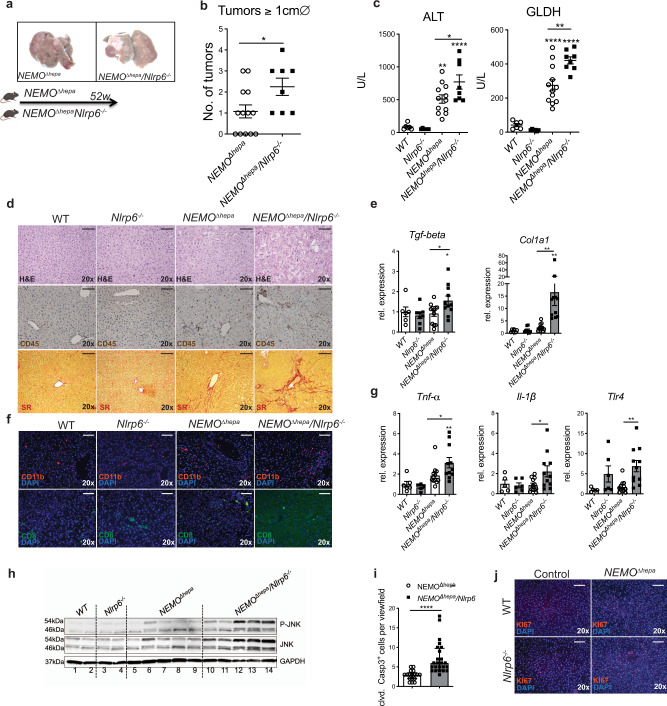
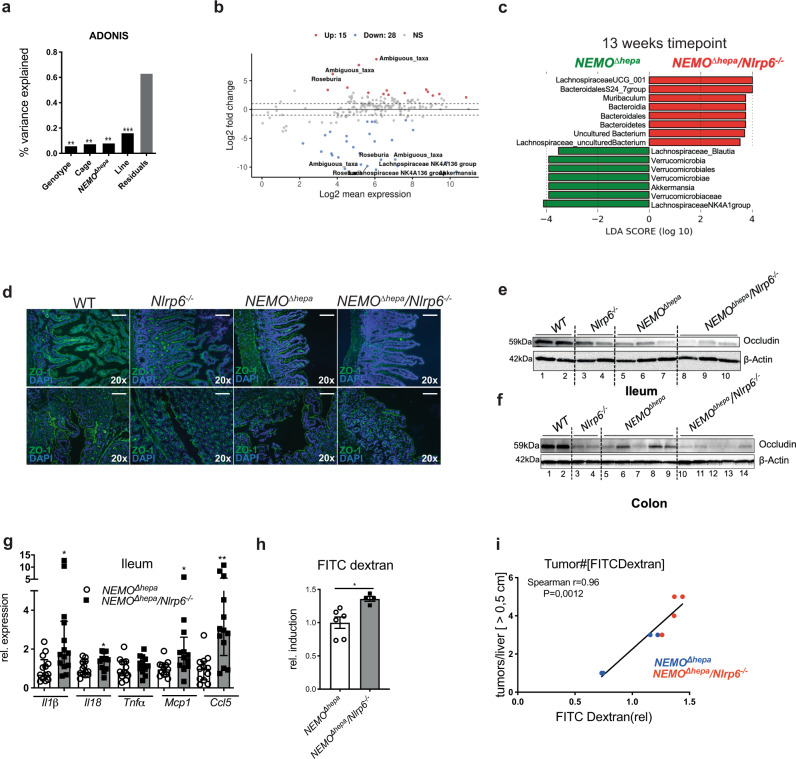
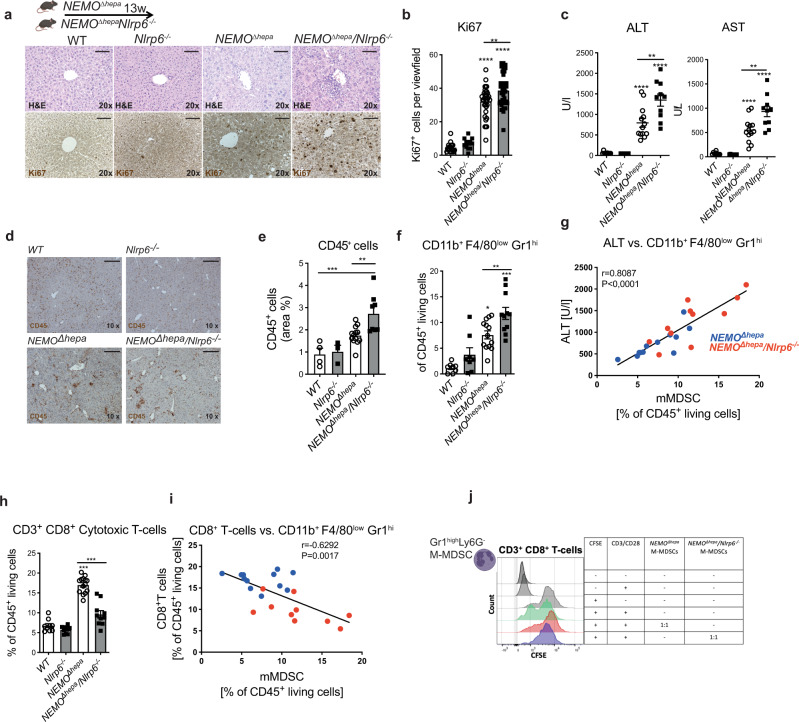
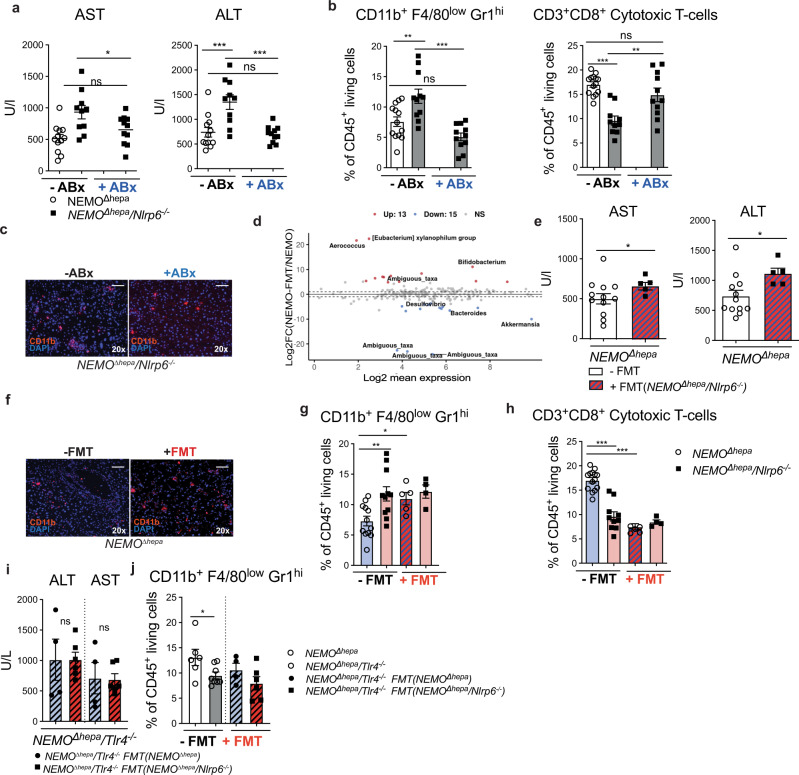
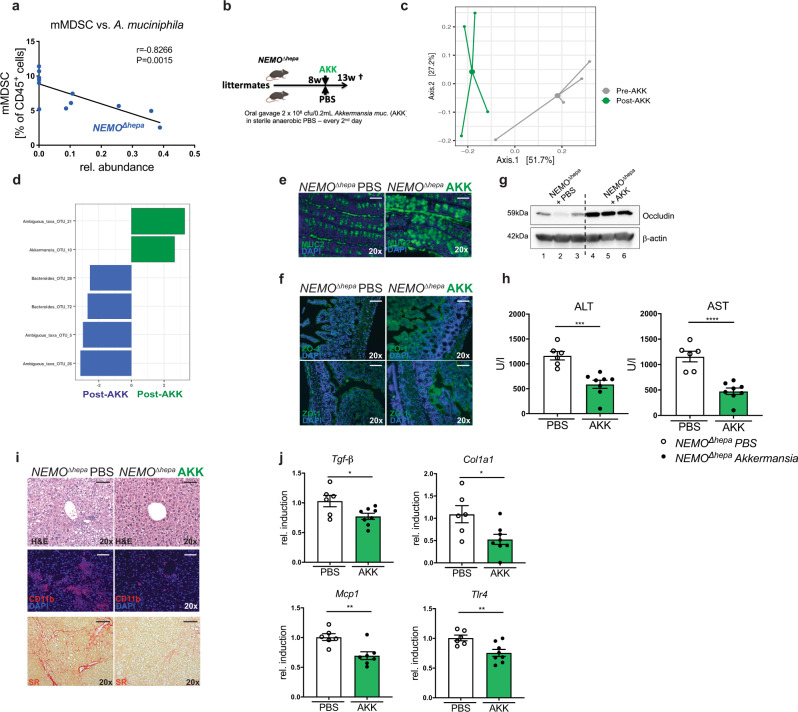
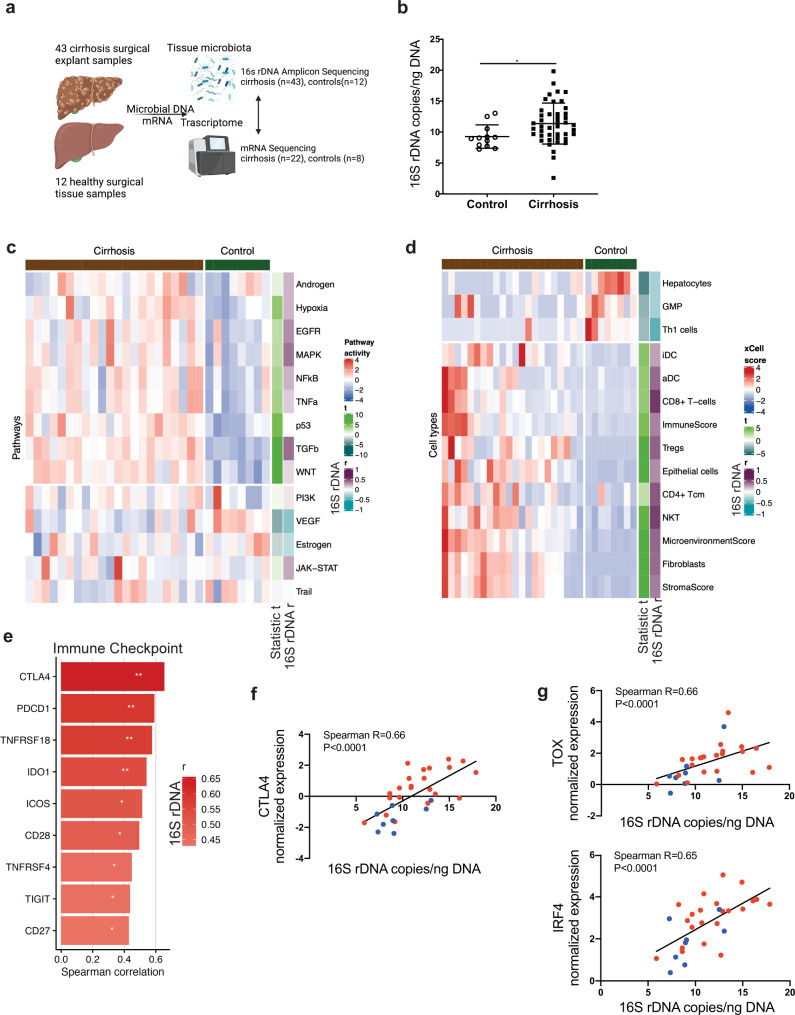
Hepatocellular carcinoma (HCC) is a leading cause of cancer-related deaths worldwide, and therapeutic options for advanced HCC are limited. Here, we observe that intestinal dysbiosis affects antitumor immune surveillance and drives liver disease progression towards cancer. Dysbiotic microbiota, as seen in Nlrp6 −/− mice, induces a Toll-like receptor 4 dependent expansion of hepatic monocytic myeloid-derived suppressor cells (mMDSC) and suppression of T-cell abundance. This phenotype is transmissible via fecal microbiota transfer and reversible upon antibiotic treatment, pointing to the high plasticity of the tumor microenvironment. While loss of Akkermansia muciniphila correlates with mMDSC abundance, its reintroduction restores intestinal barrier function and strongly reduces liver inflammation and fibrosis. Cirrhosis patients display increased bacterial abundance in hepatic tissue, which induces pronounced transcriptional changes, including activation of fibro-inflammatory pathways as well as circuits mediating cancer immunosuppression. This study demonstrates that gut microbiota closely shapes the hepatic inflammatory microenvironment opening approaches for cancer prevention and therapy.
Overview
The claims and statistics of this paper haven’t been checked yet.
Free: it reads the open-access text and checks the first 5 claims that cite a source we can check. Create a free account to check every claim.
Integrity signals
Registry
Cites
Statistics
Figures
Verification
Claims the paper makes
The claims and statistics of this paper haven’t been checked yet.
Free: it reads the open-access text and checks the first 5 claims that cite a source we can check. Create a free account to check every claim.
Claims other papers make about this one
Each is checked against this paper’s own text: does it say what the citing paper says it does?
The source backs part of the claim, not all of it — or backs it for a different population, condition or comparison.
In the citing paper
“Akkermansia muciniphila is a Gram-negative homeostatic commensal bacteria that influences host metabolism to maintain glucose tolerance and intestinal barrier function.”
From Gut OncoMicrobiome Signatures (GOMS) as next-generation biomarkers for cancer immunotherapy (2023) · cites this paper as [103]
Experimental — accuracy not yet measuredIn the citing paper
“Together, these findings validate those obtained in preclinical avatar models involving the oral transfer of patient-derived stool samples to mice harbouring hepatocarcinomas103, sarcomas, or kidney, lung or prostate tumours28,41.”
From Gut OncoMicrobiome Signatures (GOMS) as next-generation biomarkers for cancer immunotherapy (2023) · cites this paper as [103]
Self-check
Percentages, sums and reported differences re-computed from the paper’s own numbers.
The self-check needs the paper’s full text.
Citations
Cites
Moderated estimation of fold change and dispersion for RNA-seq data with DESeq2
Love, M. I., Huber, W., & Anders, S. (2014) · Genome Biology · doi:10.1186/s13059-014-0550-8 · Cited by 95,106 · cited 1×
“OTUs were considered significantly DA between genotypes if their adjusted p-value was <0.05 and if the estimated 2-fold change was >2 (Love et al., 2014, McMurdie and Holmes, 2014).”
InfluentialBray, F., Ferlay, J., Soerjomataram, I., Siegel, R. L., Torre, L. A., & Jemal, A. (2018) · CA: A Cancer Journal for Clinicians · doi:10.3322/caac.21492 · Cited by 84,109
Robinson, M. D., McCarthy, D. J., & Smyth, G. K. (2010) · Bioinformatics · doi:10.1093/bioinformatics/btp616 · Cited by 41,364
limma powers differential expression analyses for RNA-sequencing and microarray studies
Ritchie, M. E., Phipson, B., Wu, D., Hu, Y., Law, C. W., Shi, W., & Smyth, G. K. (2015) · Nucleic Acids Research · doi:10.1093/nar/gkv007 · Cited by 40,458
The SILVA ribosomal RNA gene database project: improved data processing and web-based tools
Quast, C., Pruesse, E., Yilmaz, P., Gerken, J., Schweer, T., Yarza, P., Peplies, J., & Glöckner, F. O. (2012) · Nucleic Acids Research · doi:10.1093/nar/gks1219 · Cited by 33,055
phyloseq: An R Package for Reproducible Interactive Analysis and Graphics of Microbiome Census Data
McMurdie, P. J., & Holmes, S. (2013) · PLoS ONE · doi:10.1371/journal.pone.0061217 · Cited by 21,322
UPARSE: highly accurate OTU sequences from microbial amplicon reads
Edgar, R. C. (2013) · Nature Methods · doi:10.1038/nmeth.2604 · Cited by 16,707
ggplot2: Elegant Graphics for Data Analysis
Wickham, H. (2009) · doi:10.1007/978-0-387-98141-3 · Cited by 14,447
EASL Clinical Practice Guidelines: Management of hepatocellular carcinoma
Galle, P. R., Forner, A., Llovet, J. M., Mazzaferro, V., Piscaglia, F., Raoul, J.-L., Schirmacher, P., & Vilgrain, V. (2018) · Journal of Hepatology · doi:10.1016/j.jhep.2018.03.019 · Cited by 11,406
Global patterns of 16S rRNA diversity at a depth of millions of sequences per sample
Caporaso, J. G., Lauber, C. L., Walters, W. A., Berg-Lyons, D., Lozupone, C. A., Turnbaugh, P. J., Fierer, N., & Knight, R. (2011) · Proceedings of the National Academy of Sciences · doi:10.1073/pnas.1000080107 · Cited by 9,711
Cited by
Items 201–241 of 241
He, Y., Wu, S., Chen, L., Chen, W., Zhan, X., Li, J., Wang, B., Gao, C., Wu, J., Wang, Q., et al. (2024) · Biochemical and Biophysical Research Communications · doi:10.1016/j.bbrc.2024.150633 · Cited by 1
The Microbiome and Innate Immunity: Role in the Tumor Microenvironment
Bueno-Urquiza, L. J., Martínez-Barajas, M. G., Pereira-Suárez, A. L., Villegas‐Mercado, C. E., & Bermúdez, M. (2024) · Interdisciplinary cancer research · doi:10.1007/16833_2024_367 · Cited by 1
Functional Applications of Human Microbiome Diversity Studies
Nkera-Gutabara, C. K., Hurrell, T., & Naidoo, J. (2024) · Elsevier eBooks · doi:10.1016/b978-0-443-13320-6.00039-1
Yang, F., Li, F., Chen, X., Lv, P., Xiao, R., Ding, D., & Li, Q. (2024) · Journal of Biomedical Nanotechnology · doi:10.1166/jbn.2024.3903
Advances in Cuproptosis of Hepatocellular Carcinoma
Gao, Y., & Lu, L. (2024) · Journal of Biosciences and Medicines · doi:10.4236/jbm.2024.128012
Shi, Q., Ran, S., Song, L., Yang, H., Wang, W., Liu, H., & Liu, Q. (2025) · PubMed Central · doi:10.12122/j.issn.1673-4254.2025.01.15 · Cited by 3
Research Progress of Non-Alcoholic Fatty Liver Disease from the Perspective of Intestinal Flora
罗, 雪. (2025) · Advances in Clinical Medicine · doi:10.12677/acm.2025.153639
Liu, X., Ke, L., Lei, K., Yu, Q., Zhang, W., Li, C., & Tian, Z. (2024) · Figshare · doi:10.6084/m9.figshare.26603905
Liu, X., Ke, L., Lei, K., Yu, Q., Zhang, W., Li, C., & Tian, Z. (2024) · Figshare · doi:10.6084/m9.figshare.26603902
Ikenaga, H., Kozuka, R., Inoue, K., Matsubara, T., Odagiri, N., Yoshida, K., Kotani, K., Kawamura, E., Hagihara, A., Fujii, H., et al. (2026) · Cancers · doi:10.3390/cancers18040542
The role of gut microbiota and its metabolites in preventing oncogenesis
Li, Z., Yan, J., Zeng, Z., & Zhao, L. (2026) · Frontiers in Cell and Developmental Biology · doi:10.3389/fcell.2026.1790063
“This dysbiosis promotes hepatocellular carcinoma development by shaping the hepatic inflammatory microenvironment through activation of TLR4 and TLR9 signaling (Schneider et al., 2022).”
Liao, J., Liang, D.-K., Zhang, L.-Y., Jiang, X., Tang, X., Xu, J., & Liu, G.-M. (2026) · Journal of International Medical Research · doi:10.1177/03000605261429828
“2 Notably, NAFLD represents the most rapidly increasing etiological factor for HCC, with an age-standardized increase in incidence of 33.2% between 2010 and 2019.”
InfluentialLv, S., Lu, K., Yang, Y., & Wang, L. (2026) · Journal of Agriculture and Food Research · doi:10.1016/j.jafr.2026.102868 · Cited by 1
[ATPase H+ transporter expression with prognosis in hepatocellular carcinoma].
Yuan, Q., Jin, Y. Q., Cao, Y. X., Cheng, L. J., Fan, H. M., Liu, Y., & Yang, L. (2026) · PubMed · doi:10.3760/cma.j.cn501113-20250709-00269
Microbiome influence on cancer
Khan, F., Ahmed, S., & Tayyaba, U. (2026) · Elsevier eBooks · doi:10.1016/b978-0-443-40551-8.00005-6
Infection-Associated Microecology and Hepatocellular Carcinoma
Song, Q. (2026) · Methods in molecular biology · doi:10.1007/978-1-0716-5264-0_11
Chen, Y., Zhou, X., Chen, Q., Yao, S., & Cheng, M. (2026) · International Immunopharmacology · doi:10.1016/j.intimp.2026.116887
The Gut–Liver Axis in HCC Immunotherapy
Taliente, F., Rose, A. M. D., Maresca, P., Iacobelli, V., Campisi, A., Stella, L., Creta, E., Ponziani, F. R., & Giuliante, F. (2026) · Gastroenterology Insights · doi:10.3390/gastroent17020034
“Therapeutic modulation occurs against a background of cirrhosis-related immune dysfunction, fluctuating intestinal permeability, and frequent exposure to concomitant medications, all of which can profoundly influence intervention efficacy [44].”
Zhang, X., Fu, Y., Chen, J., Shen, H., Du, Y., Wu, J., Lai, H., Liu, Y., Chen, J., Hou, X., et al. (2026) · PLoS ONE · doi:10.1371/journal.pone.0351316
“Moreover, microbiota transfer experiments in mice suggest a causative role in several non-communicable diseases, including cirrhosis and metabolic disorders [12,13].”
Microbiome and hepatocellular carcinoma
Κουρτίδου, Σ. Κ. (2026) · University of Thessaly Institutional Repository (University of Thessaly)
Protective and Detrimental Roles of NLRP6 in Infection and Cancer
Yamauchi, T., Jain, V., & Gregory, S. G. (2026) · Receptors · doi:10.3390/receptors5030023
Li, M., Xu, S., Zhang, M., Wang, X., Wang, S., Wang, X., Hu, R., & Xue, H. (2026) · Nutrients · doi:10.3390/nu18142215
“The gut microbiota can influence hepatic inflammation and fibrogenesis through microbial metabolites and gut-derived factors, such as short-chain fatty acids and lipopolysaccharide (LPS) [15].”
Fang, Y., Yang, S., Xie, Y., Wang, Y., Sui, B., Chen, Y., Yuan, X., & Zhang, Y. (2026) · International Journal of Molecular Sciences · doi:10.3390/ijms27146308 · Cited by 1
Microbiome testing in gastrointestinal cancers: From microbial signatures to clinical translation
Nikitina, D., Morkūnas, E., Šabanas, P., Jonaitis, P., Urbonas, T., Gedgaudiene, G., Gedgaudas, R., Kupčinskienė, K., Macas, A., Simenas, Š., et al. (2026) · Best Practice & Research Clinical Gastroenterology · doi:10.1016/j.bpg.2026.102127
Xu, S., Li, W., Li, X., & Chen, W. (2026) · Hepatoma Research · doi:10.20517/2394-5079.2026.71
Ostafe, M. R., Volovăț, S. R., Clement, A., Litcanu, C.-I., Tabarcea, S., Volovăț, C. C., Panaite, D. I., Augustin, I. G., & Volovăț, C. (2026) · International Journal of Molecular Sciences · doi:10.3390/ijms27177543
“Chronic hepatic inflammation and dysbiosis-associated immune modulation can reshape this ecosystem by altering antigen presentation, cytotoxic lymphocyte activity, and myeloid cell polarization [26].”
InfluentialHe, X., Gan, H., Wu, F., Wang, Y., & Zhang, H. (2026) · Translational Cancer Research · doi:10.21037/tcr-2026-0975
“A growing body of work links gut dysbiosis to the onset and progression of HCC, primarily by sustaining pro-tumorigenic hepatic inflammation and compromising antitumor immunity (19,20).”
Bibliometric Analysis of Gut Microbiota and Hepatocellular Carcinoma: Research Trends and Frontiers
Zhao, C., & Hu, X. (2026) · Journal of Hepatocellular Carcinoma · doi:10.2147/jhc.s631427
“Therefore, by integrating Figures 10 and 11”
The gut microbiome and the pathogenesis of trans-arterial chemoembolization-associated liver injury
Engelman, J., Jia, K., & Riordan, S. M. (2026) · Hepatoma Research · doi:10.20517/2394-5079.2026.61
关晓欢 (2026) · Journal of Hepatocellular Carcinoma · doi:10.2147/jhc.s636365
“6,10,13 In experimental models, its administration improved barrier function and reduced inflammatory or immunosuppressive changes.”
InfluentialIdentifying metabolic alterations in inflammatory-driven tumours
Stanley, F. U. (n.d.) · Archivio Istituzionale della Ricerca - Università Vita-Salute San Raffaele
Haque, M., Lesker, T. R., Rolle-Kampczyk, U. E., Segers, A., de Vos, W. M., Molinaro, A., Raju, T. B., Chen, Y., Backhaus, M., Mohamed, M. R., et al. (2026) · Gut · doi:10.1136/gutjnl-2026-338178
Self-citationYu, X., Chen, C., Liu, X., Chen, B., You, Q., Cui, J., Lin, J., Cao, A., Liu, Y., Yin, X., et al. (2026) · Brain Behavior and Immunity · doi:10.1016/j.bbi.2026.107041
Pomej, K., Frick, A., Scheiner, B., Baumgartner, M., Schmetterer, K. G., Reyna-Blanco, C. S., Balcar, L., Pajancic, L., Kreuter, A., Séneca, J., et al. (2026) · Nature Communications · doi:10.1038/s41467-026-78219-z
Regulation of host chromatin by bacterial metabolites
Sjöland, W., & Krautkramer, K. A. (2026) · Elsevier eBooks · doi:10.1016/b978-0-443-19001-8.00031-3
Gut microbiota in hepatocellular carcinoma: pathogenic mechanisms and clinical translation
Zhang, K., Xue, T., Hu, J., & Wang, L. (2026) · Hepatoma Research · doi:10.20517/2394-5079.2026.74
Liu, Y., Zang, D., & Chen, J. (2026) · Frontiers in Immunology · doi:10.3389/fimmu.2026.1922678
“Animal studies have shown (14) that imbalanced gut microbial diversity can induce pro-in fl ammatory responses in the liver, aggravate in fl ammation and fi brosis, and eventually promote hepatocarcinogenesis.”
Microbiota-derived toxicants targeting mitochondria
Bahitham, W., Almuaiqly, G., Abumelha, W., Ghazzawi, R., Ghazzawi, G., Alsahafi, R., Sanai, F. M., Sergi, C. M., & Rosado, A. S. (2026) · Elsevier eBooks · doi:10.1016/b978-0-443-45078-5.00023-3
Adhikari, J., Babarinde, O. A., Jin, A., Taylor, K. C., Guinn, B. E., Zhang, C. H., Kavalukas, S., & DuPre, N. C. (2026) · Nutrition and Cancer · doi:10.1080/01635581.2026.2757871
Wang, Y., Ma, L., Hu, J., Liu, Y., Zhao, B., & Gao, Y. (2026) · Frontiers in Microbiology · doi:10.3389/fmicb.2026.1983781
Tyc, O., Arif, S., Uschner, F. E., Jung, N., Gu, W., Ortiz, C., Klein, S., Zarei, S., Torres, S., Kraus, N., et al. (2026) · Journal of Hepatology · doi:10.1016/j.jhep.2026.10.036
Self-citation
Metadata
- Authors
- Schneider, K. M., Mohs, A., Gui, W., Galvez, E. J. C., Candels, L. S., Hoenicke, L., Muthukumarasamy, U., Holland, C. H., Elfers, C., Kilic, K., Schneider, C. V., Schierwagen, R., Strnad, P., Wirtz, T. H., Marschall, H.-U., Latz, E., Lelouvier, B., Saez-Rodriguez, J., de Vos, W., Strowig, T., Trebicka, J., & Trautwein, C.
- Affiliations
- Universitätsklinikum Aachen (DE)
- Medizinische Hochschule Hannover (DE)
- Heidelberg University (DE)
- Goethe University Frankfurt (DE)
- University of Gothenburg (SE)
- University of Bonn (DE)
- University of Helsinki (FI)
- Corresponding author
- Trautwein, Christian
- ORCID
- Schneider, Kai Markus
- Mohs, Antje
- Gui, Wenfang
- Galvez, Eric J. C.
- Candels, Lena Susanna
- Hoenicke, Lisa
- Holland, Christian H.
- Elfers, Carsten
- Schneider, Carolin Victoria
- Schierwagen, Robert
- Strnad, Pavel
- Wirtz, Theresa H.
- Marschall, Hanns-Ulrich
- Latz, Eicke
- Lelouvier, Benjamin
- Saez-Rodriguez, Julio
- de Vos, Willem
- Strowig, Till
- Trebicka, Jonel
- Trautwein, Christian
- Venue
- Nature Communications
- Published
- 2022-07-08
- Volume
- 13
- Issue
- 1
- Pages
- 3964-3964
- ISSN
- 2041-1723 (ISSN-L)
- PMC
- PMC9270328
- OpenAlex
- W4284975790
- Semantic Scholar
- b86cfe077d85165580d906118c8754cea11269c9
- Cited by
- 225
- References
- 91
- Citations by year
- 2026: 44 · 2025: 65 · 2024: 58 · 2023: 51 · 2022: 7
- FWCI
- 14.78
- Type
- journal article
- Language
- en
- Open access
- gold
- doi.org
- Licence
- cc-by
- creativecommons.org/licenses/by/4.0 (tdm)
- creativecommons.org/licenses/by/4.0 (vor)
- Locations
- Nature Communications (publishedVersion, cc-by)
- PubMed Central (publishedVersion, cc-by)
- PubMed (publishedVersion)
- Socio-Environmental Systems Modeling (submittedVersion, other-oa)
- RePEc: Research Papers in Economics (submittedVersion)
- DOAJ (DOAJ: Directory of Open Access Journals) (submittedVersion, cc-by-sa)
- Työväentutkimus Vuosikirja (submittedVersion)
- DZNE Pub (submittedVersion, other-oa)
- RWTH Publications (RWTH Aachen) (submittedVersion, other-oa)
- Data Archiving and Networked Services (DANS) (submittedVersion, cc-by)
- RWTH Publications (RWTH Aachen)
- Funders
- Deutsche Forschungsgemeinschaft (Tr 285/10-2)
- Topics
- Life Sciences › Biochemistry, Genetics and Molecular Biology › Molecular Biology › Gut microbiota and health
- Life Sciences › Immunology and Microbiology › Immunology › Immune cells in cancer
- Health Sciences › Medicine › Hepatology › Hepatocellular Carcinoma Treatment and Prognosis
- Keywords
- hepatocellular carcinoma, gut microbiota, gut dysbiosis, myeloid-derived suppressor cells, TLR4, Akkermansia muciniphila, NLRP6, fecal microbiota transplantation, antibiotic therapy, T cell suppression, liver fibrosis, liver cirrhosis, intestinal barrier function, tumor immunosuppression, liver cancer prevention
- MeSH terms
- Gastrointestinal Microbiome, Animals, Carcinoma, Hepatocellular, Liver Neoplasms, Mice, Tumor Microenvironment, Microbiota, Dysbiosis
About these checks
Registry, retraction, Cites and statistics results are computed, not judged, with one exception: a printed reference that no index lists is read once by a model before it counts as a citation error. Claims are extracted by a model and kept only when their quote appears verbatim in the text; each cited source is then checked, with a model’s help, for whether it says what the claim relies on. Those verdicts can be wrong — read the claim’s quote and the cited source before relying on one.
Statistics and arithmetic are recomputed, not judged.
Confidence bands are shown only for fields calibrated on our annotated test set. None is calibrated yet, so no band is shown.
What counts as a claim ›How we measure confidence ›How we check this ›
Are you an author, or do you see a problem with this page? Request a review
Data sources
Bibliographic data: Semantic Scholar, OpenAlex, Crossref.
Contains information from the Semantic Scholar Academic Graph Datasets, made available under the ODC Attribution License (ODC-BY 1.0).
Semantic Scholar’s data is described in: Kinney, R., et al. (2023). The Semantic Scholar Open Data Platform. arXiv:2301.10140.
