

Dicer ablation in Kiss1 neurons impairs puberty and fertility preferentially in female mice
Open accessThe DOI matches its Crossref record; 65 of the 65 references it cites were found in a registry or an index.
Abstract
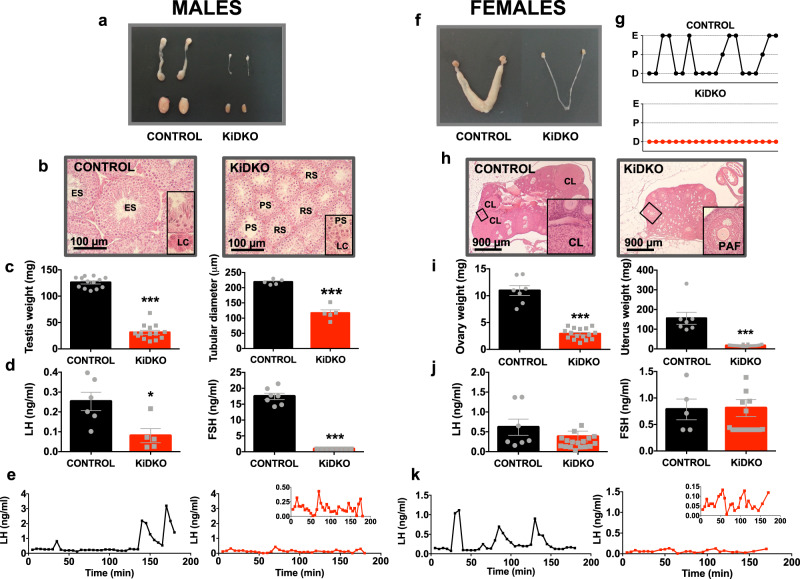
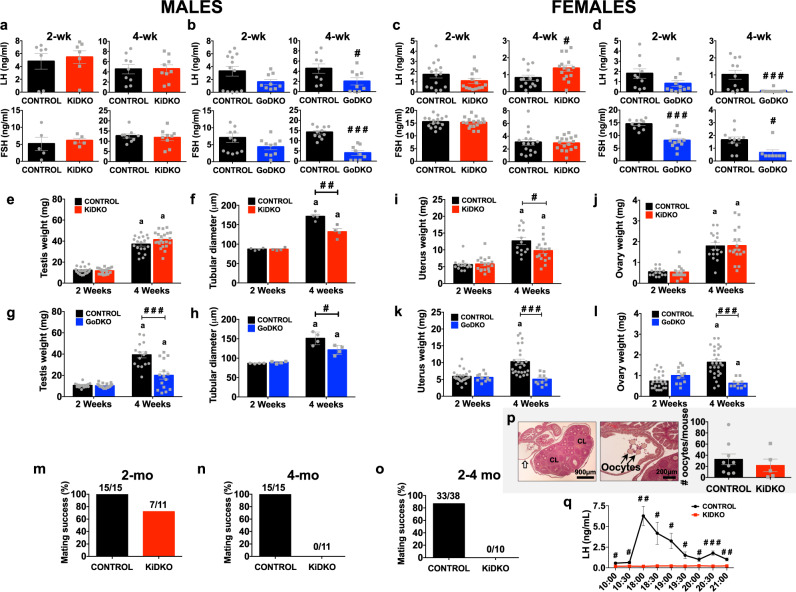
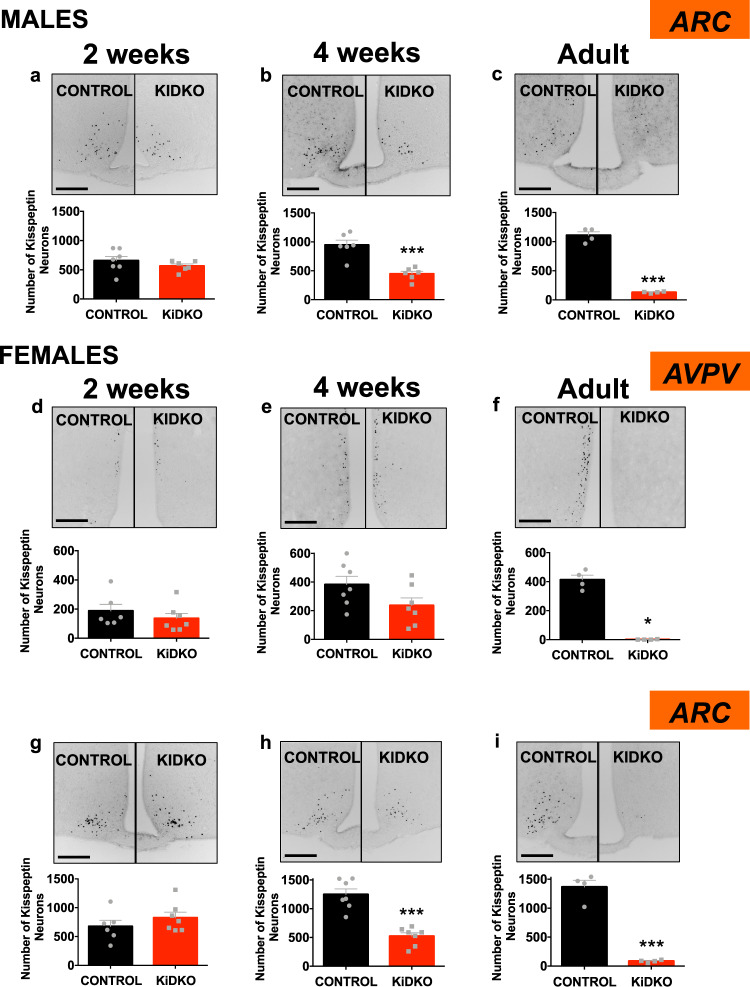
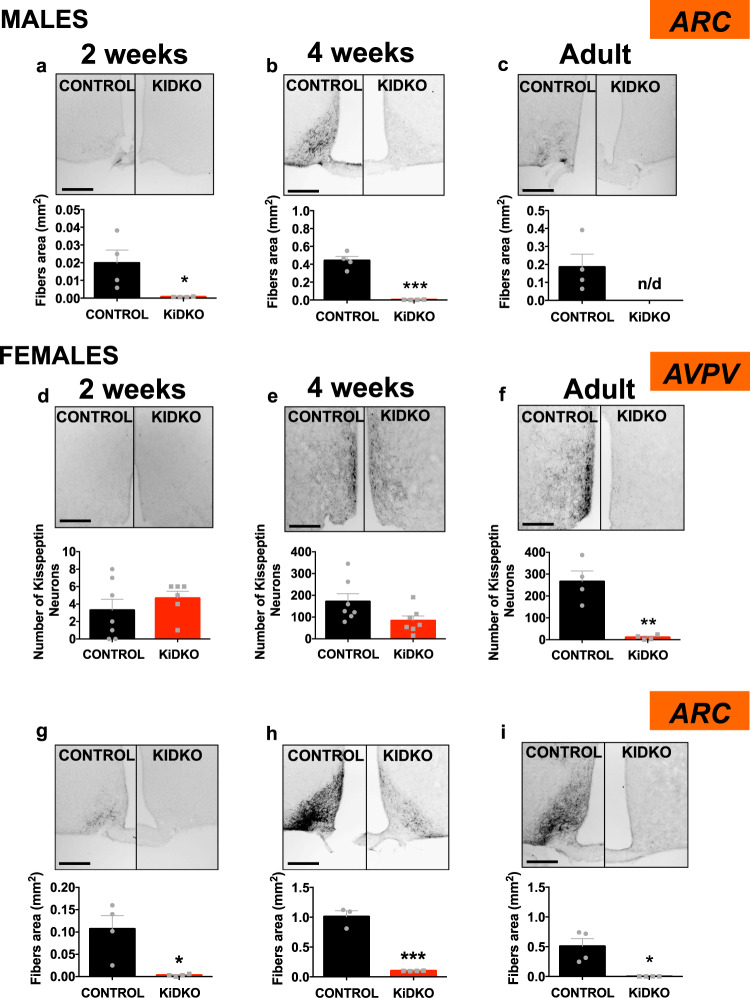
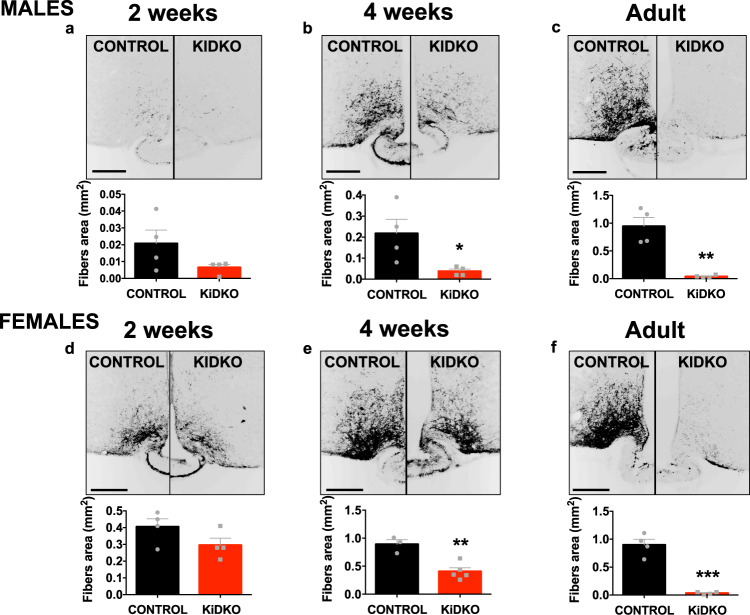
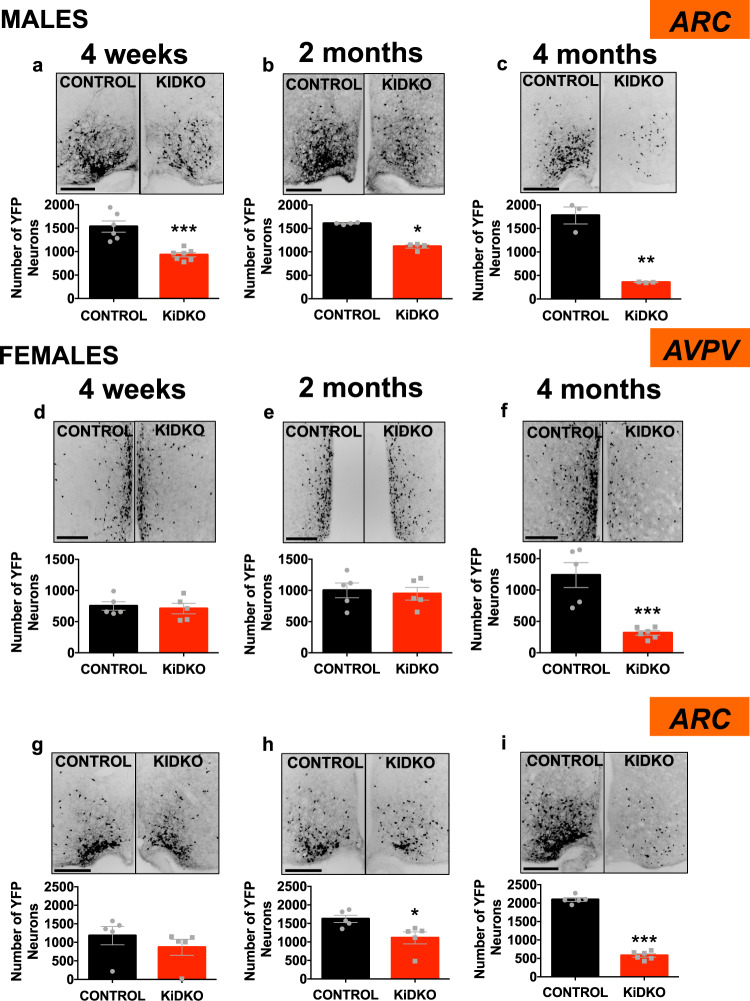
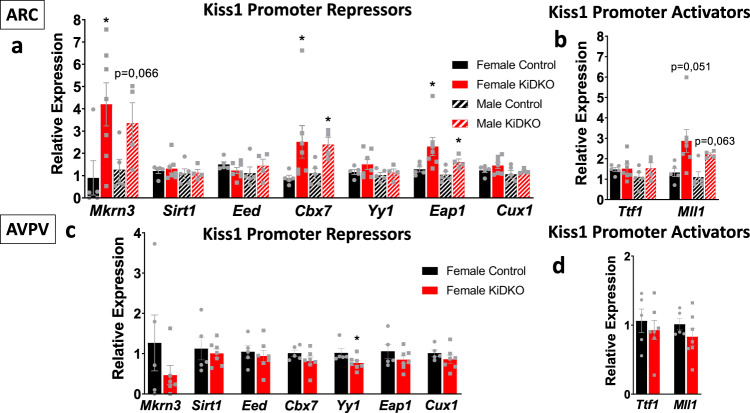
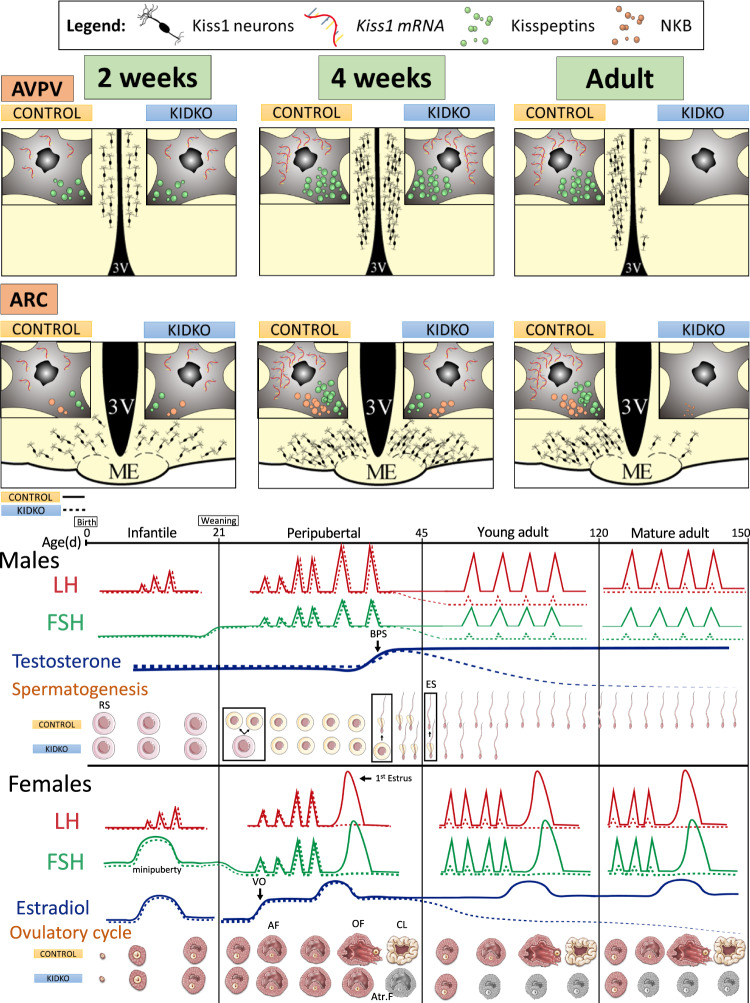
Kiss1 neurons, producing kisspeptins, are essential for puberty and fertility, but their molecular regulatory mechanisms remain unfolded. Here, we report that congenital ablation of the microRNA-synthesizing enzyme, Dicer, in Kiss1 cells, causes late-onset hypogonadotropic hypogonadism in both sexes, but is compatible with pubertal initiation and preserved Kiss1 neuronal populations at the infantile/juvenile period. Yet, failure to complete puberty and attain fertility is observed only in females. Kiss1-specific ablation of Dicer evokes disparate changes of Kiss1-cell numbers and Kiss1/kisspeptin expression between hypothalamic subpopulations during the pubertal-transition, with a predominant decline in arcuate-nucleus Kiss1 levels, linked to enhanced expression of its repressors, Mkrn3, Cbx7 and Eap1. Our data unveil that miRNA-biosynthesis in Kiss1 neurons is essential for pubertal completion and fertility, especially in females, but dispensable for initial reproductive maturation and neuronal survival in both sexes. Our results disclose a predominant miRNA-mediated inhibitory program of repressive signals that is key for precise regulation of Kiss1 expression and, thereby, reproductive function.
Overview
The claims and statistics of this paper haven’t been checked yet.
Free: it reads the open-access text and checks the first 5 claims that cite a source we can check. Create a free account to check every claim.
Integrity signals
Registry
Cites
Statistics
Figures
Verification
Claims the paper makes
The claims and statistics of this paper haven’t been checked yet.
Free: it reads the open-access text and checks the first 5 claims that cite a source we can check. Create a free account to check every claim.
Claims other papers make about this one
Each is checked against this paper’s own text: does it say what the citing paper says it does?
The check wasn’t confident either way, so it gives no verdict — never disputed.
In the citing paper
“As there are ~3000 ARNKISS neurons in the adult mouse brain37”
From Brainstem noradrenergic modulation of the kisspeptin neuron GnRH pulse generator in mice (2025) · cites this paper as [37]
Experimental — accuracy not yet measured
Self-check
Percentages, sums and reported differences re-computed from the paper’s own numbers.
The self-check needs the paper’s full text.
Citations
Cites
Most mammalian mRNAs are conserved targets of microRNAs
Friedman, R. C., Farh, K. K.-H., Burge, C. B., & Bartel, D. P. (2009) · Genome Research · doi:10.1101/gr.082701.108 · Cited by 8,462
The 21-nucleotide let-7 RNA regulates developmental timing in Caenorhabditis elegans
Reinhart, B. J., Slack, F. J., Basson, M., Pasquinelli, A. E., Bettinger, J. C., Rougvie, A. E., Horvitz, H. R., & Ruvkun, G. (2000) · Nature · doi:10.1038/35002607 · Cited by 4,981
Regulation of microRNA function in animals
Gebert, L. F. R., & MacRae, I. J. (2019) · Nature Reviews Molecular Cell Biology · doi:10.1038/s41580-018-0045-7 · Cited by 2,284
Dynamics of gonadotropin-releasing hormone release during a pulse.
Moenter, S. M., Brand, R. M., Midgley, A. R., & Karsch, F. J. (1992) · Endocrinology · doi:10.1210/endo.130.1.1727719 · Cited by 1,244
Kisspeptins and Reproduction: Physiological Roles and Regulatory Mechanisms
Pinilla, L., Aguilar, E., Dieguez, C., Millar, R. P., & Tena-Sempere, M. (2012) · Physiological Reviews · doi:10.1152/physrev.00037.2010 · Cited by 801
Self-citationNavarro, V. M., Gottsch, M. L., Chavkin, C., Okamura, H., Clifton, D. K., & Steiner, R. A. (2009) · The Journal of Neuroscience · doi:10.1523/jneurosci.1569-09.2009 · Cited by 779
The RNaseIII enzyme Dicer is required for morphogenesis but not patterning of the vertebrate limb
Harfe, B. D., McManus, M. T., Mansfield, J. H., Hornstein, E., & Tabin, C. J. (2005) · Proceedings of the National Academy of Sciences · doi:10.1073/pnas.0504834102 · Cited by 646
Wakabayashi, Y., Nakada, T., Murata, K., Ohkura, S., Mogi, K., Navarro, V. M., Clifton, D. K., Mori, Y., Tsukamura, H., Maeda, K.-I., et al. (2010) · The Journal of Neuroscience · doi:10.1523/jneurosci.5848-09.2010 · Cited by 597
ADACHI, S., YAMADA, S., TAKATSU, Y., MATSUI, H., KINOSHITA, M., TAKASE, K., SUGIURA, H., OHTAKI, T., MATSUMOTO, H., UENOYAMA, Y., et al. (2007) · Journal of Reproduction and Development · doi:10.1262/jrd.18146 · Cited by 580
Dicing and slicing: The core machinery of the RNA interference pathway
Hammond, S. M. (2005) · FEBS Letters · doi:10.1016/j.febslet.2005.08.079 · Cited by 545
Research works printed but not linked: 1
- Prevot, V. In Knobil and Neill’s Physiology of Reproduction Ch. 30 (Academic Press, 2015).
Cited by
Molecular basis of normal and pathological puberty: from basic mechanisms to clinical implications
Argente, J., Dunkel, L., Kaiser, U. B., Latronico, A. C., Lomniczi, A., Soriano‐Guillén, L., & Tena‐Sempere, M. (2023) · The Lancet Diabetes & Endocrinology · doi:10.1016/s2213-8587(22)00339-4 · Cited by 116
Self-citationMetabolic control of puberty: 60 years in the footsteps of Kennedy and Mitra’s seminal work
Anderson, G. M., Hill, J. W., Kaiser, U. B., Navarro, V. M., Ong, K. K., Perry, J. R. B., Prévot, V., Tena‐Sempere, M., & Elias, C. F. (2023) · Nature Reviews Endocrinology · doi:10.1038/s41574-023-00919-z · Cited by 61
Self-citationKisspeptin and neurokinin B: roles in reproductive health
Koysombat, K., Tsoutsouki, J., Patel, A., Comninos, A. N., Dhillo, W. S., & Abbara, A. (2025) · Physiological Reviews · doi:10.1152/physrev.00015.2024 · Cited by 46
Endocrine Disruptors and Metabolic Changes: Impact on Puberty Control
Peralta, M., & Lizcano, F. (2024) · Endocrine Practice · doi:10.1016/j.eprac.2024.01.006 · Cited by 38
Hypothalamic control of puberty: from neuronal circuits to mechanisms for its metabolic regulation
Jiménez-Puyer, M., Sobrino, V., Colledge, W. H., Jones, S., & Tena‐Sempere, M. (2025) · Reviews in Endocrine and Metabolic Disorders · doi:10.1007/s11154-025-10001-w · Cited by 19
“Yet, onset of puberty was preserved in both sexes after prevention of mature miRNA biogenesis in Kiss1 cells, and only females failed to complete pubertal maturation and attain fertility, whereas males were initially fertile although rapidly progressed into reproductive failure [58].”
Self-citationJiang, C., Dong, W., Gao, G., Sun, W., Wang, Y., Zhan, B., Sun, Y., & Yu, J. (2024) · Reproductive Toxicology · doi:10.1016/j.reprotox.2024.108543 · Cited by 12
Avendaño, M. S., Perdices-López, C., Guerrero‐Ruiz, Y., Ruíz-Pino, F., Rodriguez-Sanchez, A. B., Sanchez-Tapia, M. J., Sobrino, V., Pineda, R., Barroso, A., Correa-Sáez, A., et al. (2024) · Metabolism · doi:10.1016/j.metabol.2024.155932 · Cited by 13
Self-citationZacharjasz, J., Sztachera, M., Smuszkiewicz, M., & Piwecka, M. (2024) · FEBS Letters · doi:10.1002/1873-3468.14948 · Cited by 12
“…(Kiss) neurons and GnRH neurons caused a dramatic decrease in several respective mature neuronal populations, which impacted the reproductive organs (atrophy) and provoked infertility [30,55], in line with the physiological function of these neurons in the regulation of reproductive functions.”
Kacimi, L., & Prévot, V. (2025) · Endocrinology · doi:10.1210/endocr/bqaf033 · Cited by 10
Diversity of Molecular Functions of RNA-Binding Ubiquitin Ligases from the MKRN Protein Family
Guseva, E. A., Emelianova, M. A., Sidorova, V., Tyulpakov, A. N., Донцова, О. А., & Владимирович, С. П. (2024) · Biochemistry (Moscow) · doi:10.1134/s0006297924090037 · Cited by 11
“Congenital ablation of Dicer in Kiss1-expressing neurons in mice promoted a significant increase in the Mkrn3 expression [96].”
Intranasal kisspeptin administration rapidly stimulates gonadotropin release in humans
Mills, E., Silva, M. S. B., Delli, V., Decoster, L., Ternier, G., Tsoutsouki, J., Thurston, L., Phylactou, M., Patel, B., Yang, L., et al. (2025) · EBioMedicine · doi:10.1016/j.ebiom.2025.105689 · Cited by 10
Brainstem noradrenergic modulation of the kisspeptin neuron GnRH pulse generator in mice
Vas, S., Morris, P. G., Gul, Z., Ruiz-Cruz, M., Han, S. Y., & Herbison, A. E. (2025) · Nature Communications · doi:10.1038/s41467-025-60837-8 · Cited by 7
“As there are ~3000 ARN KISS neurons in the adult mouse brain 37 , this represents a NA-responsive population of ~1200 cells.”
Self-citationGavrish, M. S., Urazov, M. D., Mishchenko, T. A., Turubanova, V. D., Epifanova, E. A., Krut’, V. G., Babaev, A. A., Vedunova, M. V., & Mitroshina, Е. V. (2022) · International Journal of Molecular Sciences · doi:10.3390/ijms23179733 · Cited by 7
“At the age of 28–35 days, puberty occurs in female mice; significant hormonal changes with the further establishment of a regular cycle are observed in animals [57,58].”
BackgroundChanges in Circulating Levels of miR-30b During Minipuberty and Puberty in Girls
Albrechtsen, H. M., Saritaş, G., Winge, S. B., Main, A. M., Hagen, C. P., Busch, A. S., Juul, A., Almstrup, K., & Mørup, N. (2025) · The Journal of Clinical Endocrinology & Metabolism · doi:10.1210/clinem/dgaf489 · Cited by 5
“…the mechanism of action of MKRN3 in pubertal regulation is not fully understood. miRNAs, which are small non-coding RNAs ( ∼ 22 nucleotides) that regulate gene expression at the post-transcriptional level, have recently been reported to be involved in the regulation of pubertal timing (9, 20-22).”
Rodríguez-Vázquez, E., Torrecillas, Á. A., López-Sancho, M., Jiménez-Puyer, M., Daza‐Dueñas, S., Barroso, A., Sobrino, V., Gaytán, F., Òbis, È., Castellano, J. M., et al. (2025) · American Journal of Physiology-Endocrinology and Metabolism · doi:10.1152/ajpendo.00493.2024 · Cited by 4
Self-citationStrauss, L., Junnila, A., Wärri, A. M., Manti, M., Jiang, Y., Löyttyniemi, E., Stener‐Victorin, E., Lagerquist, M. K., Kukoricza, K., Heinosalo, T., et al. (2024) · Journal of Endocrinology · doi:10.1530/joe-23-0204 · Cited by 3
Self-citationRodríguez-Vázquez, E., Torrecillas, Á. A., Jiménez-Puyer, M., Freire-Agulleiro, Ó., Sanchez-Tapia, M. J., Ruiz-Cruz, M., Heras, V., López-Sancho, M., Ongaro, L., Perdices-López, C., et al. (2026) · Yearbook of pediatric endocrinology · doi:10.1073/pnas.2510886123 · Cited by 1
“To this end, we carried out isolation of Kiss1 neurons, from these two main hypothalamic sites, namely ARC and AVPV, using fluorescent - activated cell sorting (FACS), in the Kiss1 Cre/− ::tdTomato loxP/− mouse line, validated in our group (38).”
Self-citationBizerea, T. O., Chisavu, F., Chisavu, L. A., Pitulice, L., Moga, T. V., Bugi, M.-A., Foghiș, C. F., Isac, R., Mărginean, O., & Balica, N. C. (2026) · International Journal of Molecular Sciences · doi:10.3390/ijms27188159 · Cited by 1
“These changes are associated with altered KNDy neuronal projections and sensitivity to gonadal steroid feedback, supporting a role for microRNAs in the structural and functional maturation of hypothalamic reproductive circuits [23].”
Castellano, J. M., Heras, V., Ruíz-Pino, F., & Tena‐Sempere, M. (2024) · Elsevier eBooks · doi:10.1016/b978-0-443-21477-6.00142-5
Self-citationDan, N., Shah, H., Shah, H., Upadhyay, P., Bulusu, S., Ramachandran, A. V., & Pandya, P. (2025) · Journal of Endocrinology & Reproduction · doi:10.18311/jer/2024/45500 · Cited by 2
The endogenous ghrelin antagonist, LEAP2, accelerates puberty onset in conditions of early obesity
Torres-Granados, C., Morris, P. G., Ruiz-Cruz, M., Pomares, O., Guerrero‐Ruiz, Y., Uceda‐Rodriguez, E., Rodríguez-Vázquez, E., Torrecillas, Á. A., Garcés, C., Gaytán, F., et al. (2026) · Metabolism · doi:10.1016/j.metabol.2026.156695
Self-citationGenetic and epigenetic modifiers of metastasis: Context matters
Welch, D. R., Swancutt, K. L., Walsh, R. M., & Fisette, G. (2026) · Quarterly Reviews of Biophysics · doi:10.1017/s0033583526100201
Metadata
- Authors
- Roa, J., Ruiz-Cruz, M., Ruiz-Pino, F., Onieva, R., Vazquez, M. J., Sanchez-Tapia, M. J., Ruiz-Rodriguez, J. M., Sobrino, V., Barroso, A., Heras, V., Velasco, I., Perdices-Lopez, C., Ohlsson, C., Avendaño, M. S., Prevot, V., Poutanen, M., Pinilla, L., Gaytan, F., & Tena-Sempere, M.
- Affiliations
- Instituto de Salud Carlos III (ES)
- University of Gothenburg (SE)
- University of Turku (FI)
- Corresponding author
- Roa, Juan
- ORCID
- Venue
- Nature Communications
- Published
- 2022-08-09
- Volume
- 13
- Issue
- 1
- Pages
- 4663-4663
- ISSN
- 2041-1723 (ISSN-L)
- PMC
- PMC9363423
- OpenAlex
- W4291019685
- Semantic Scholar
- e4cfbc49c13866ea8a541823a5bce617aac607e4
- Cited by
- 22
- References
- 65
- Citations by year
- 2026: 4 · 2025: 8 · 2024: 7 · 2023: 2 · 2022: 1
- FWCI
- 3.79
- Type
- journal article
- Language
- en
- Open access
- gold
- doi.org
- Licence
- cc-by
- creativecommons.org/licenses/by/4.0 (tdm)
- creativecommons.org/licenses/by/4.0 (vor)
- Locations
- Nature Communications (publishedVersion, cc-by)
- PubMed Central (publishedVersion, cc-by)
- PubMed (publishedVersion)
- UTUPub (University of Turku) (submittedVersion)
- RISalud Institutional Health Repository of Andalucía (submittedVersion, cc-by)
- RePEc: Research Papers in Economics (submittedVersion)
- DOAJ (DOAJ: Directory of Open Access Journals) (submittedVersion, cc-by-sa)
- Funders
- European Commission (655232)
- Ministerio de Economía y Competitividad (PI16/, PIE-00005, BFU2014, BFU2014-57581-P, PID2020, BFU2017-83934-P, PID2020-118660 GB-I00)
- Novo Nordisk Fonden (NNF14OC0010513, NNF19OC0055250, NNF18OC0033898, NNF13OC0005785)
- Junta de Andalucía (REP-655232, P12-FQM-01943, P12-FQM-)
- Instituto de Salud Carlos III (PI16/, PIE-00005, PI16/01243, PI19/00257)
- Topics
- Health Sciences › Medicine › Reproductive Medicine › Hypothalamic control of reproductive hormones
- Health Sciences › Medicine › Reproductive Medicine › Reproductive Biology and Fertility
- Life Sciences › Neuroscience › Endocrine and Autonomic Systems › Regulation of Appetite and Obesity
- Keywords
- Dicer, kisspeptin neurons, KISS1, puberty, female fertility, hypogonadotropic hypogonadism, arcuate nucleus, hypothalamus, MKRN3, CBX7, EAP1, neuronal survival, sex differences in reproduction
- MeSH terms
- Animals, Female, Fertility, Male, Neurons, Sexual Maturation, MicroRNAs, Ribonuclease III, Mice, DEAD-box RNA Helicases, Kisspeptins
About these checks
Registry, retraction, Cites and statistics results are computed, not judged, with one exception: a printed reference that no index lists is read once by a model before it counts as a citation error. Claims are extracted by a model and kept only when their quote appears verbatim in the text; each cited source is then checked, with a model’s help, for whether it says what the claim relies on. Those verdicts can be wrong — read the claim’s quote and the cited source before relying on one.
Statistics and arithmetic are recomputed, not judged.
Confidence bands are shown only for fields calibrated on our annotated test set. None is calibrated yet, so no band is shown.
What counts as a claim ›How we measure confidence ›How we check this ›
Are you an author, or do you see a problem with this page? Request a review
Data sources
Bibliographic data: Semantic Scholar, OpenAlex, Crossref.
Contains information from the Semantic Scholar Academic Graph Datasets, made available under the ODC Attribution License (ODC-BY 1.0).
Semantic Scholar’s data is described in: Kinney, R., et al. (2023). The Semantic Scholar Open Data Platform. arXiv:2301.10140.
