

Uncertainty-informed deep learning models enable high-confidence predictions for digital histopathology
Open accessThe DOI matches its Crossref record; 50 of the 50 references it cites were found in a registry or an index.
Abstract
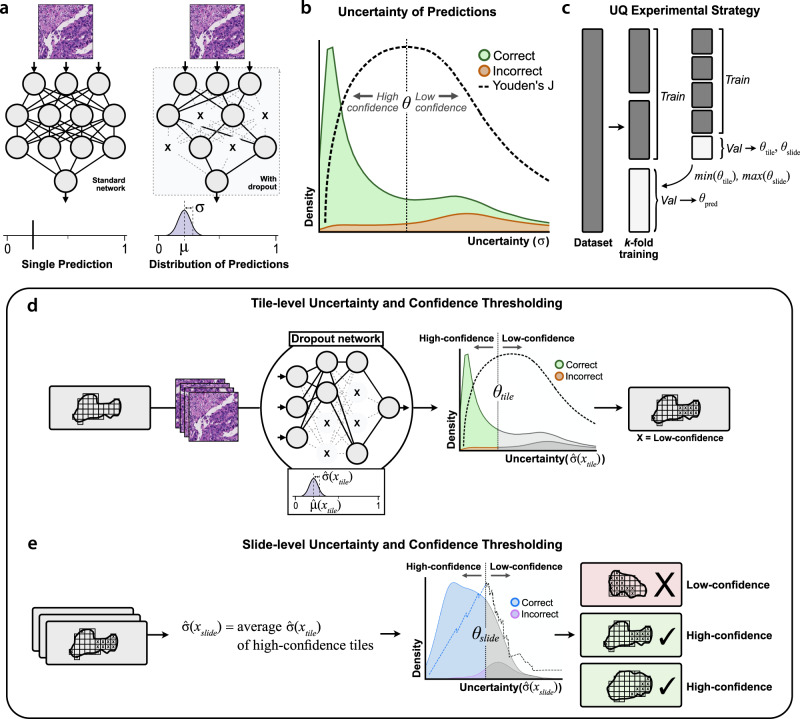
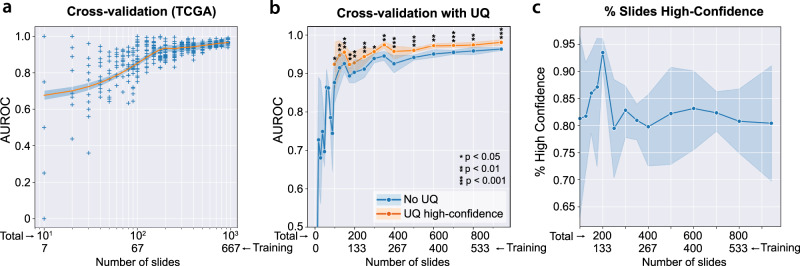
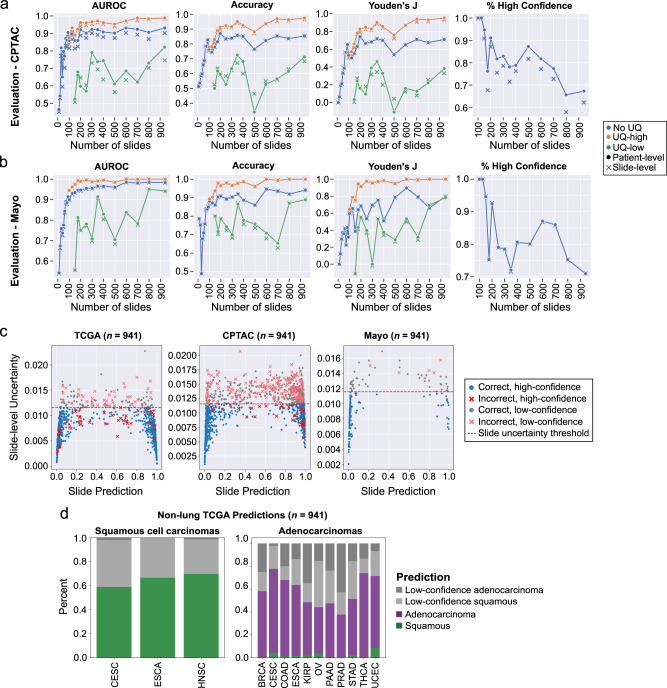
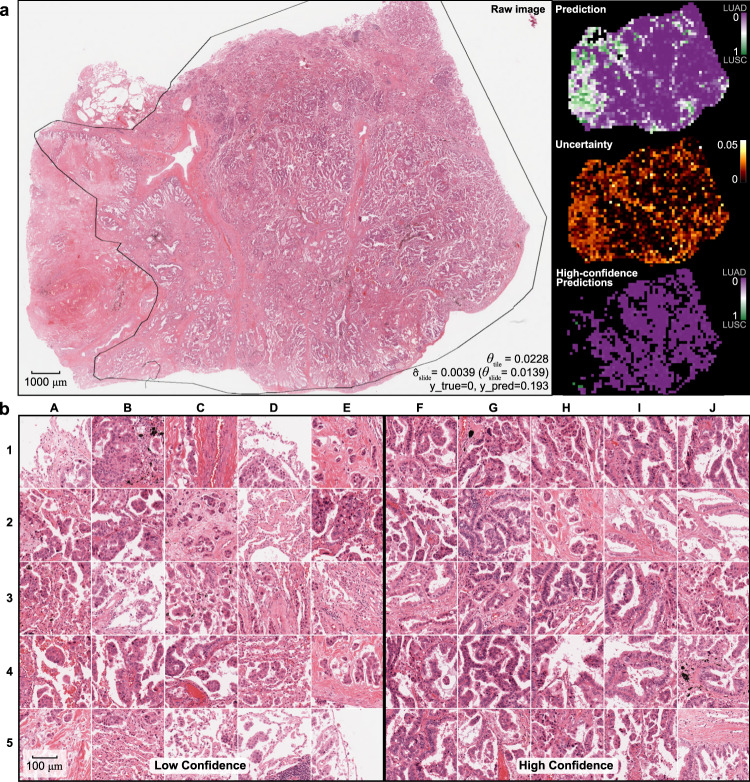
A model’s ability to express its own predictive uncertainty is an essential attribute for maintaining clinical user confidence as computational biomarkers are deployed into real-world medical settings. In the domain of cancer digital histopathology, we describe a clinically-oriented approach to uncertainty quantification for whole-slide images, estimating uncertainty using dropout and calculating thresholds on training data to establish cutoffs for low- and high-confidence predictions. We train models to identify lung adenocarcinoma vs. squamous cell carcinoma and show that high-confidence predictions outperform predictions without uncertainty, in both cross-validation and testing on two large external datasets spanning multiple institutions. Our testing strategy closely approximates real-world application, with predictions generated on unsupervised, unannotated slides using predetermined thresholds. Furthermore, we show that uncertainty thresholding remains reliable in the setting of domain shift, with accurate high-confidence predictions of adenocarcinoma vs. squamous cell carcinoma for out-of-distribution, non-lung cancer cohorts.
Overview
The claims and statistics of this paper haven’t been checked yet.
Free: it reads the open-access text and checks the first 5 claims that cite a source we can check. Create a free account to check every claim.
Integrity signals
Registry
Cites
Statistics
Figures
Verification
Claims the paper makes
The claims and statistics of this paper haven’t been checked yet.
Free: it reads the open-access text and checks the first 5 claims that cite a source we can check. Create a free account to check every claim.
Claims other papers make about this one
Each is checked against this paper’s own text: does it say what the citing paper says it does?
The source backs part of the claim, not all of it — or backs it for a different population, condition or comparison.
In the citing paper
“Current methods rely on attention-based multiple instance learning (MIL) and transformers, saliency-inference techniques for small lesions, and uncertainty-aware heatmaps that flag areas requiring human verification [33,34].”
From Artificial Intelligence in Dermatopathology: An Update and Review of the Current Literature (2026) · cites this paper as [34]
Experimental — accuracy not yet measuredThe cited source says what the claim attributes to it.
In the citing paper
“Confidence and uncertainty estimation are also recognized as critical components of AI systems, allowing algorithms to detect cases that may require expert review [34,74].”
From Artificial Intelligence in Dermatopathology: An Update and Review of the Current Literature (2026) · cites this paper as [34]
In the citing paper
“While anonymization provides reasonable protection, advanced reidentification techniques have emerged, highlighting the need for a more robust data management system based on data decentralization and federated learning.103”
From Artificial intelligence and endo-histo-omics: new dimensions of precision endoscopy and histology in inflammatory bowel disease (2024) · cites this paper as [103]
Self-check
Percentages, sums and reported differences re-computed from the paper’s own numbers.
The self-check needs the paper’s full text.
Citations
Cites
A Threshold Selection Method from Gray-Level Histograms
Otsu, N. (1979) · IEEE Transactions on Systems, Man, and Cybernetics · doi:10.1109/tsmc.1979.4310076 · Cited by 43,398
UMAP: Uniform Manifold Approximation and Projection
McInnes, L., Healy, J., Saul, N., & Großberger, L. (2018) · Journal of Open Source Software · doi:10.21105/joss.00861 · Cited by 9,826
The cancer genome atlas pan-cancer analysis project
The Cancer Genome Atlas Research Network, Weinstein, J. N., Collisson, E. A., Mills, G. B., Shaw, K. R. M., Ozenberger, B. A., Ellrott, K., Shmulevich, I., Sander, C., & Stuart, J. M. (2013) · Nature Genetics · doi:10.1038/ng.2764 · Cited by 9,092
Analyzing and Improving the Image Quality of StyleGAN
Karras, T., Laine, S., Aittala, M., Hellsten, J., Lehtinen, J., & Aila, T. (2020) · 2020 IEEE/CVF Conference on Computer Vision and Pattern Recognition (CVPR) · doi:10.1109/cvpr42600.2020.00813 · Cited by 6,332
Analyzing and Improving the Image Quality of StyleGAN
Karras, T., Laine, S., Aittala, M., Hellsten, J., Lehtinen, J., & Aila, T. (2019) · arXiv · doi:10.48550/arxiv.1912.04958 · Cited by 6,332
Reinhard, E., Adhikhmin, M., Gooch, B., & Shirley, P. (2001) · IEEE Computer Graphics and Applications · doi:10.1109/38.946629 · Cited by 2,937
Coudray, N., Ocampo, P. S., Sakellaropoulos, T., Narula, N., Snuderl, M., Fenyö, D., Moreira, A. L., Razavian, N., & Tsirigos, A. (2018) · Nature Medicine · doi:10.1038/s41591-018-0177-5 · Cited by 2,930 · cited 1×
“Despite the ambiguity that may exist in some cases, however, Coudray et al demonstrated feasibility of deep learning for classification of this outcome from standard H&E slides 7 .”
BackgroundData-efficient and weakly supervised computational pathology on whole-slide images
Lu, M. Y., Williamson, D. F. K., Chen, T. Y., Chen, R. J., Barbieri, M., & Mahmood, F. (2021) · Nature Biomedical Engineering · doi:10.1038/s41551-020-00682-w · Cited by 2,282
Deep learning in histopathology: the path to the clinic
van der Laak, J., Litjens, G., & Ciompi, F. (2021) · Nature Medicine · doi:10.1038/s41591-021-01343-4 · Cited by 902 · cited 1×
“Over the past several years, there has been a growing awareness of the need for better estimates of confidence and uncertainty within medical applications of AI 24-26 .”
BackgroundLuo, Y., Zheng, L., Guan, T., Yu, J., & Yang, Y. (2019) · 2019 IEEE/CVF Conference on Computer Vision and Pattern Recognition (CVPR) · doi:10.1109/cvpr.2019.00261 · Cited by 798 · cited 1×
“However, consistent with previous observations in the broader ML literature 39, 22, 23, 40 , uncertainty estimates were susceptible to domain shift when applied to external datasets 35, 36 , raising concerns about generalizability.”
ResultBulten, W., Pinckaers, H., van Boven, H., Vink, R., de Bel, T., van Ginneken, B., van der Laak, J., Hulsbergen-van de Kaa, C., & Litjens, G. (2020) · The Lancet Oncology · doi:10.1016/s1470-2045(19)30739-9 · Cited by 705
Wang, G., Li, W., Aertsen, M., Deprest, J., Ourselin, S., & Vercauteren, T. (2019) · Neurocomputing · doi:10.1016/j.neucom.2019.01.103 · Cited by 659
Multi-omic machine learning predictor of breast cancer therapy response
Sammut, S.-J., Crispin-Ortuzar, M., Chin, S.-F., Provenzano, E., Bardwell, H. A., Ma, W., Cope, W., Dariush, A., Dawson, S.-J., Abraham, J. E., et al. (2022) · Nature · doi:10.1038/s41586-021-04278-5 · Cited by 654
Ranjbarzadeh, R., Bagherian Kasgari, A., Jafarzadeh Ghoushchi, S., Anari, S., Naseri, M., & Bendechache, M. (2021) · Scientific Reports · doi:10.1038/s41598-021-90428-8 · Cited by 634
The need for uncertainty quantification in machine-assisted medical decision making
Begoli, E., Bhattacharya, T., & Kusnezov, D. (2019) · Nature Machine Intelligence · doi:10.1038/s42256-018-0004-1 · Cited by 597 · cited 1×
“Over the past several years, there has been a growing awareness of the need for better estimates of confidence and uncertainty within medical applications of AI 24-26 .”
BackgroundThe CPTAC Data Portal: A Resource for Cancer Proteomics Research
Edwards, N. J., Oberti, M., Thangudu, R. R., Cai, S., McGarvey, P. B., Jacob, S., Madhavan, S., & Ketchum, K. A. (2015) · Journal of Proteome Research · doi:10.1021/pr501254j · Cited by 558
Second opinion needed: Communicating uncertainty in medical machine learning
Kompa, B., Snoek, J., & Beam, A. L. (2021) · npj Digital Medicine · doi:10.1038/s41746-020-00367-3 · Cited by 514
Leveraging uncertainty information from deep neural networks for disease detection
Leibig, C., Allken, V., Ayhan, M. S., Berens, P., & Wahl, S. (2017) · Scientific Reports · doi:10.1038/s41598-017-17876-z · Cited by 510
Attacks Which Do Not Kill Training Make Adversarial Learning StrongerPreprint
Zhang, J., Xu, X., Han, B., Niu, G., Cui, L., Sugiyama, M., & Kankanhalli, M. (2020) · arXiv (Cornell University) · doi:10.48550/arxiv.2002.11242 · Cited by 449 · cited 1×
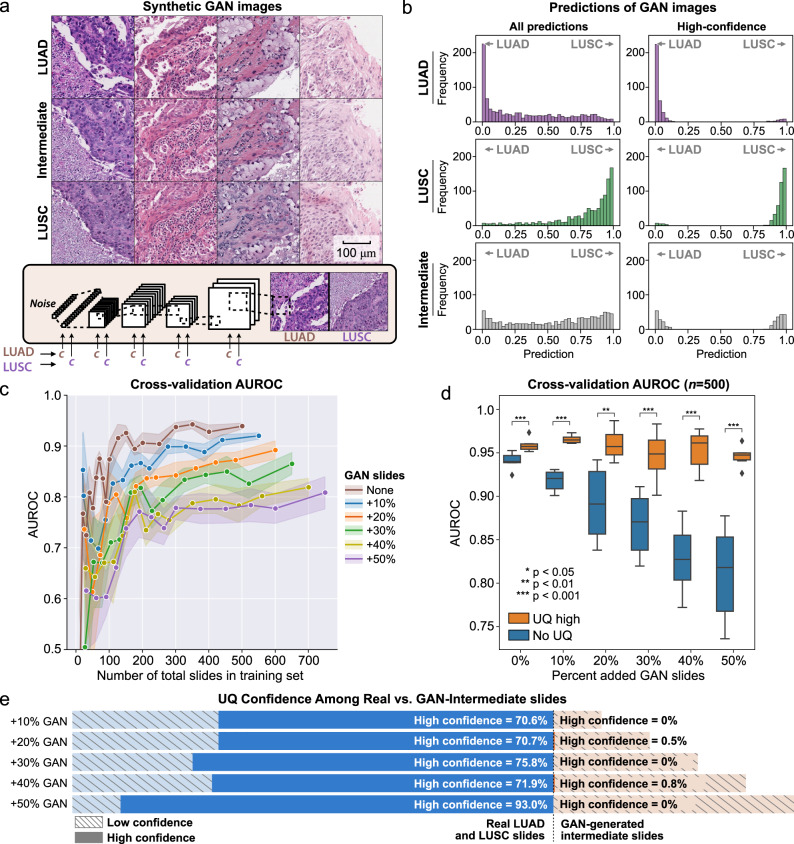
“…non-adenocarcinoma, non-squamous OOD slides as low-confidence, new and emerging methods to improve robustness against OOD data, such as adversarial training 43 , multi-head CNNs 44 , and hyper-deep-ensembles 30 , may help decrease the number of OOD slides erroneously reported with high-confidence.”
BackgroundA probabilistic u-net for segmentation of ambiguous images
Kohl, S. A. A., Romera-Paredes, B., Meyer, C., De Fauw, J., Ledsam, J. R., Maier-Hein, K. H., Eslami, S. M. A., Rezende, D. J., & Ronneberger, O. (2018) · arXiv · doi:10.48550/arxiv.1806.05034 · Cited by 439 · cited 1×
“31 The utility of these UQ methods has been explored for various applications in digital histopathology, including segmentation 2, 3, 32, 4, 5 , classification 32-38 , and dataset curation 32, 33 .”
MethodXu, Y., Jia, Z., Wang, L.-B., Ai, Y., Zhang, F., Lai, M., & Chang, E. I.-C. (2017) · BMC Bioinformatics · doi:10.1186/s12859-017-1685-x · Cited by 416 · cited 1×
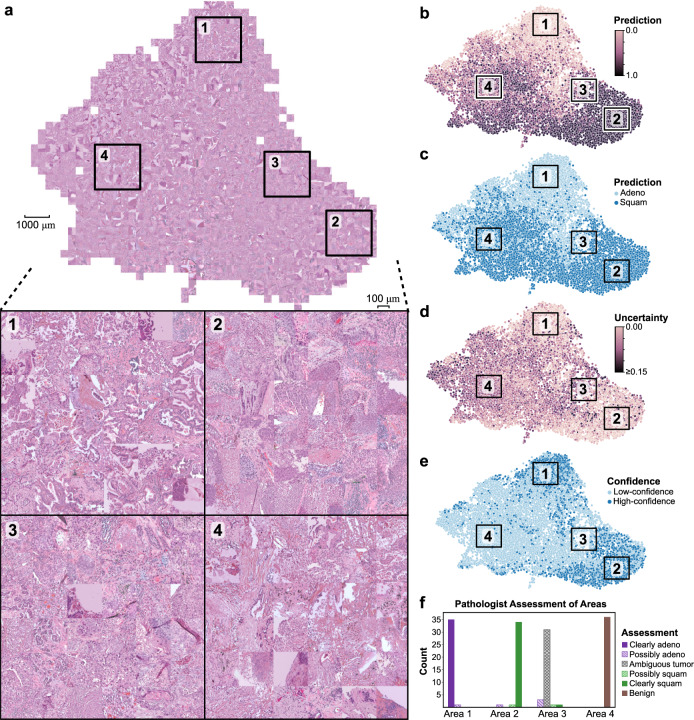
“interest are highlighted formagnified display, each with a total of 36 image tiles: (1)”
BackgroundBest Practices Recommendations for Diagnostic Immunohistochemistry in Lung Cancer
Yatabe, Y., Dacic, S., Borczuk, A. C., Warth, A., Russell, P. A., Lantuejoul, S., Beasley, M. B., Thunnissen, E., Pelosi, G., Rekhtman, N., et al. (2019) · Journal of Thoracic Oncology · doi:10.1016/j.jtho.2018.12.005 · Cited by 365 · cited 1×
“…for the Study of Lung Cancer Pathology Committee (IASCLC) guidelines acknowledge the inherent histologic ambiguity that may exist in some tumors by recommending immunohistochemical (IHC) staining with p40 and TTF1 to differentiate between adenocarcinomas and squamous cell carcinomas 41 .”
BackgroundGraham, S., Chen, H., Gamper, J., Dou, Q., Heng, P.-A., Snead, D., Tsang, Y. W., & Rajpoot, N. (2019) · Medical Image Analysis · doi:10.1016/j.media.2018.12.001 · Cited by 338 · cited 1×
“31 The utility of these UQ methods has been explored for various applications in digital histopathology, including segmentation 2, 3, 32, 4, 5 , classification 32-38 , and dataset curation 32, 33 .”
MethodMeasuring Domain Shift for Deep Learning in Histopathology
Stacke, K., Eilertsen, G., Unger, J., & Lundstrom, C. (2021) · IEEE Journal of Biomedical and Health Informatics · doi:10.1109/jbhi.2020.3032060 · Cited by 318 · cited 1×
“However, consistent with previous observations in the broader ML literature 39, 22, 23, 40 , uncertainty estimates were susceptible to domain shift when applied to external datasets 35, 36 , raising concerns about generalizability.”
ResultYang, J., Ju, J., Guo, L., Ji, B., Shi, S., Yang, Z., Gao, S., Yuan, X., Tian, G., Liang, Y., et al. (2022) · Computational and Structural Biotechnology Journal · doi:10.1016/j.csbj.2021.12.028 · Cited by 233
Improved breast cancer histological grading using deep learning
Wang, Y., Acs, B., Robertson, S., Liu, B., Solorzano, L., Wählby, C., Hartman, J., & Rantalainen, M. (2022) · Annals of Oncology · doi:10.1016/j.annonc.2021.09.007 · Cited by 211
Ravi, A., Hellmann, M. D., Arniella, M. B., Holton, M., Freeman, S. S., Naranbhai, V., Stewart, C., Leshchiner, I., Kim, J., Akiyama, Y., et al. (2023) · Nature Genetics · doi:10.1038/s41588-023-01355-5 · Cited by 188
Rączkowski, Ł., Możejko, M., Zambonelli, J., & Szczurek, E. (2019) · doi:10.1101/658138 · Cited by 124
Rączkowska, A., Możejko, M., Zambonelli, J., & Szczurek, E. (2019) · Scientific Reports · doi:10.1038/s41598-019-50587-1 · Cited by 123 · cited 3×
“31 The utility of these UQ methods has been explored for various applications in digital histopathology, including segmentation 2, 3, 32, 4, 5 , classification 32-38 , and dataset curation 32, 33 .”
BackgroundMethodHyperparameter ensembles for robustness and uncertainty quantification
Wenzel, F., Snoek, J., Tran, D., & Jenatton, R. (2020) · arXiv · doi:10.48550/arxiv.2006.13570 · Cited by 122
Accurate diagnosis of lymphoma on whole-slide histopathology images using deep learning
Syrykh, C., Abreu, A., Amara, N., Siegfried, A., Maisongrosse, V., Frenois, F. X., Martin, L., Rossi, C., Laurent, C., & Brousset, P. (2020) · npj Digital Medicine · doi:10.1038/s41746-020-0272-0 · Cited by 115 · cited 2×
“Several groups explored UQ thresholds to enable high-confidence predictions on low-uncertainty data, abstaining from predictions for high-uncertainty data 34, 36-38 .”
BackgroundMethodLi, F., Yang, Y., Wei, Y., He, P., Chen, J., Zheng, Z., & Bu, H. (2021) · Journal of Translational Medicine · doi:10.1186/s12967-021-03020-z · Cited by 113
Singhal, N., Soni, S. M., Bonthu, S., Chattopadhyay, N., Samanta, P., Joshi, U., Jojera, A., Chharchhodawala, T., Agarwal, A., Desai, M., et al. (2022) · Scientific Reports · doi:10.1038/s41598-022-07217-0 · Cited by 113
Senousy, Z., Abdelsamea, M. M., Gaber, M. M., Abdar, M., Acharya, U. R., Khosravi, A., & Nahavandi, S. (2021) · IEEE Transactions on Biomedical Engineering · doi:10.1109/tbme.2021.3107446 · Cited by 98 · cited 3×
“Several groups explored UQ thresholds to enable high-confidence predictions on low-uncertainty data, abstaining from predictions for high-uncertainty data 34, 36-38 .”
BackgroundMethodZhu, M., Ren, B., Richards, R., Suriawinata, M., Tomita, N., & Hassanpour, S. (2021) · Scientific Reports · doi:10.1038/s41598-021-86540-4 · Cited by 79
Hu, J., Cui, C., Yang, W., Huang, L., Yu, R., Liu, S., & Kong, Y. (2021) · Translational Oncology · doi:10.1016/j.tranon.2020.100921 · Cited by 75
Fraz, M. M., Khurram, S. A., Graham, S., Shaban, M., Hassan, M., Loya, A., & Rajpoot, N. (2019) · Neural Computing and Applications · doi:10.1007/s00521-019-04516-y · Cited by 74 · cited 1×
“31 The utility of these UQ methods has been explored for various applications in digital histopathology, including segmentation 2, 3, 32, 4, 5 , classification 32-38 , and dataset curation 32, 33 .”
MethodBayesian deep learning for reliable oral cancer image classification
Song, B., Sunny, S. P., Li, S., Gurushanth, K., Mendonca, P., Mukhia, N., Patrick, S., Gurudath, S., Raghavan, S., Imchen, T., et al. (2021) · Biomedical Optics Express · doi:10.1364/boe.432365 · Cited by 71
Dolezal, J. M., Trzcinska, A., Liao, C., Kochanny, S. E., Blair, E. A., Agrawal, N., Keutgen, X. M., Angelos, P., Cipriani, N. A., & Pearson, A. T. (2020) · Modern Pathology · doi:10.1038/s41379-020-00724-3 · Cited by 66
Self-citationYet Another Automated Gleason Grading System (YAAGGS) by weakly supervised deep learning
Mun, Y., Paik, I., Shin, S.-J., Kwak, T.-Y., & Chang, H. (2021) · npj Digital Medicine · doi:10.1038/s41746-021-00469-6 · Cited by 65
Quantitative Comparison of Monte-Carlo Dropout Uncertainty Measures for Multi-class Segmentation
Camarasa, R., Bos, D., Hendrikse, J., Nederkoorn, P. J., Kooi, M. E., van der Lugt, A., & de Bruijne, M. (2020) · Lecture notes in computer science · doi:10.1007/978-3-030-60365-6_4 · Cited by 63 · cited 1×
“While the principles of uncertainty estimation extend to multi-class models and regression 29, 42 , further confirmatory testing of our thresholding strategy is needed for these applications.”
BackgroundWu, Z., Wang, L., Li, C., Cai, Y., Liang, Y., Mo, X., Lu, Q., Dong, L., & Liu, Y. (2020) · Frontiers in Genetics · doi:10.3389/fgene.2020.00768 · Cited by 53
Can You Trust Predictive Uncertainty Under Real Dataset Shifts in Digital Pathology?
Thagaard, J., Hauberg, S., van der Vegt, B., Ebstrup, T., Hansen, J. D., & Dahl, A. B. (2020) · Lecture notes in computer science · doi:10.1007/978-3-030-59710-8_80 · Cited by 53
Generalisation effects of predictive uncertainty estimation in deep learning for digital pathology
Pocevičiūtė, M., Eilertsen, G., Jarkman, S., & Lundström, C. F. (2022) · Scientific Reports · doi:10.1038/s41598-022-11826-0 · Cited by 40
Senousy, Z., Abdelsamea, M. M., Mohamed, M. M., & Gaber, M. M. (2021) · Entropy · doi:10.3390/e23050620 · Cited by 34
Phan, N. N., Hsu, C., Huang, C., Tseng, L., & Chuang, E. Y.-Y. (2021) · Frontiers in Oncology · doi:10.3389/fonc.2021.734015 · Cited by 18
Exploiting “Uncertain” Deep Networks for Data Cleaning in Digital Pathology
Ponzio, F., Deodato, G., Macii, E., Cataldo, S. D., & Ficarra, E. (2020) · IEEE International Symposium on Biomedical Imaging (ISBI) · doi:10.1109/isbi45749.2020.9098605 · Cited by 15 · cited 1×
“31 The utility of these UQ methods has been explored for various applications in digital histopathology, including segmentation 2, 3, 32, 4, 5 , classification 32-38 , and dataset curation 32, 33 .”
MethodSlideflow: A Unified Deep Learning Pipeline for Digital Histology
Dolezal, J. M., Kochanny, S. E., & Howard, F. (2021) · Zenodo (CERN European Organization for Nuclear Research) · doi:10.5281/zenodo.5703792 · Cited by 7
Self-citationIntegrative Analysis of Checkpoint Blockade Response in Advanced Non-Small Cell Lung CancerPreprint
Ravi, A., Gainor, J. F., Arniella, M. B., Holton, M., Freeman, S. S., Stewart, C., Leshchiner, I., Kim, J., Akiyama, Y., Griffin, A. T., et al. (2022) · bioRxiv (Cold Spring Harbor Laboratory) · doi:10.1101/2022.03.21.485199 · Cited by 1
Bayesian Inference of Slide-level Confidence via Uncertainty Index Thresholding (BISCUIT)
Dolezal, J. M. (2022) · Zenodo (CERN European Organization for Nuclear Research) · doi:10.5281/zenodo.7117682 · Cited by 1
Self-citation
Research works printed but not linked: 7
- Ghosal, S., Xie, A. & Shah, P. Uncertainty quantified deep learning for predicting dice coefficient of digital histopathology image segmentation. Preprint at https://arxiv.org/abs/2109.00115 (2021). · arXiv
- Gal, Y. & Ghahramani, Z. Dropout as a Bayesian approximation: Representing model uncertainty in deep learning. Proc. 33rd Int. Conf. Mach. Learn. 48, 1050-1059 (2016).
- Sida, W. & Christopher, M. Fast dropout training. Proc. 30th Int. Conf. Mach. Learn. 28, 118-126 (2013).
- Lakshminarayanan, B., Pritzel, A. & Blundell, C. Simple and scalable predictive uncertainty estimation using deep ensembles. Adv. Neural Inf. Process. Syst. 30, 6405-6416 (2017).
- Bickel, S., Brückner, M. & Scheffer, T. Discriminative learning under covariate shift. J. Mach. Learn. Res. 10, 2137-2155 (2009).
- Tripuraneni, N., Adlam, B. & Pennington, J. Overparameterization improves robustness to covariate shift in high dimensions. Adv. Neural Inf. Process. Syst. 34, 13883-13897 (2021).
- Linmans, J., Laak, J. V. D. & Litjens, G. Efficient out-of-distribution detection in digital pathology using multi-head convolutional neural networks. Proc. Third Conf. Med. Imaging Deep Learn. 121, 465-478 (2020).
Cited by
Artificial intelligence for digital and computational pathology
Song, A. H., Jaume, G., Williamson, D. F. K., Lu, M. Y., Vaidya, A., Miller, T. R., & Mahmood, F. (2023) · Nature Reviews Bioengineering · doi:10.1038/s44222-023-00096-8 · Cited by 356
“Only through the concerted effort of multi-institutional data collection initiatives, open-source software packages and continued technical inspiration from advancements in computer vision and AI research can the said goals be reached.”
BackgroundLambert, B., Forbes, F., Doyle, S., Dehaene, H., & Dojat, M. (2024) · Artificial Intelligence in Medicine · doi:10.1016/j.artmed.2024.102830 · Cited by 269
Deep semi-supervised learning for medical image segmentation: A review
Han, K., Sheng, V. S., Song, Y., Liu, Y., Qiu, C., Ma, S., & Liu, Z. (2024) · Expert Systems with Applications · doi:10.1016/j.eswa.2023.123052 · Cited by 247
Seoni, S., Jahmunah, V., Salvi, M., Barua, P. D., Molinari, F., & Acharya, U. R. (2023) · Computers in Biology and Medicine · doi:10.1016/j.compbiomed.2023.107441 · Cited by 239
A review of uncertainty estimation and its application in medical imaging
Zou, K., Chen, Z., Yuan, X., Shen, X., Wang, M., & Fu, H. (2023) · Meta-Radiology · doi:10.1016/j.metrad.2023.100003 · Cited by 158
Metadata
- Authors
- Dolezal, J. M., Srisuwananukorn, A., Karpeyev, D., Ramesh, S., Kochanny, S., Cody, B., Mansfield, A. S., Rakshit, S., Bansal, R., Bois, M. C., Bungum, A. O., Schulte, J. J., Vokes, E. E., Garassino, M. C., Husain, A. N., & Pearson, A. T.
- Affiliations
- University of Chicago Medical Center (US)
- Tisch Cancer Institute (US)
- University of Chicago (US)
- Mayo Clinic (US)
- University of Wisconsin–Madison (US)
- Corresponding author
- Pearson, Alexander T.
- ORCID
- Venue
- Nature Communications
- Published
- 2022-11-02
- Volume
- 13
- Issue
- 1
- Pages
- 6572-6572
- ISSN
- 2041-1723 (ISSN-L)
- PMC
- PMC9630455
- OpenAlex
- W4308149258
- Cited by
- 147
- References
- 47
- Citations by year
- 2026: 42 · 2025: 40 · 2024: 41 · 2023: 23 · 2022: 1
- FWCI
- 8.64
- Type
- journal article
- Language
- en
- Open access
- gold
- doi.org
- Licence
- cc-by
- creativecommons.org/licenses/by/4.0 (tdm)
- creativecommons.org/licenses/by/4.0 (vor)
- Locations
- Nature Communications (publishedVersion, cc-by)
- PubMed Central (publishedVersion, cc-by)
- PubMed (publishedVersion)
- arXiv (Cornell University) (submittedVersion)
- RePEc: Research Papers in Economics (submittedVersion)
- DOAJ (DOAJ: Directory of Open Access Journals) (submittedVersion, cc-by-sa)
- arXiv (Cornell University)
- Funders
- U.S. Department of Health & Human Services | NIH | National Cancer Institute (U01-CA243075)
- U.S. Department of Health & Human Services | NIH | National Institute of Dental and Craniofacial Research (R56-DE030958)
- Cancer Research Foundation
- EIF | Stand Up To Cancer
- EC | Horizon 2020 Framework Programme (2021-SC1-BHC I3LUNG)
- Topics
- Physical Sciences › Computer Science › Artificial Intelligence › AI in cancer detection
- Health Sciences › Medicine › Radiology, Nuclear Medicine and Imaging › Radiomics and Machine Learning in Medical Imaging
- Health Sciences › Medicine › Health Informatics › Artificial Intelligence in Healthcare and Education
- Keywords
- uncertainty quantification, confidence threshold, digital histopathology, whole slide images, lung adenocarcinoma, squamous cell carcinoma, cancer classification, domain shift, out-of-distribution prediction
- MeSH terms
- Deep Learning, Adenocarcinoma, Carcinoma, Squamous Cell, Humans, Uncertainty
About these checks
Registry, retraction, Cites and statistics results are computed, not judged, with one exception: a printed reference that no index lists is read once by a model before it counts as a citation error. Claims are extracted by a model and kept only when their quote appears verbatim in the text; each cited source is then checked, with a model’s help, for whether it says what the claim relies on. Those verdicts can be wrong — read the claim’s quote and the cited source before relying on one.
Statistics and arithmetic are recomputed, not judged.
Confidence bands are shown only for fields calibrated on our annotated test set. None is calibrated yet, so no band is shown.
What counts as a claim ›How we measure confidence ›How we check this ›
Are you an author, or do you see a problem with this page? Request a review
Data sources
Bibliographic data: Semantic Scholar, OpenAlex, Crossref.
Contains information from the Semantic Scholar Academic Graph Datasets, made available under the ODC Attribution License (ODC-BY 1.0).
Semantic Scholar’s data is described in: Kinney, R., et al. (2023). The Semantic Scholar Open Data Platform. arXiv:2301.10140.
