

The DOI matches its Crossref record; 75 of the 78 references it cites were found in a registry or an index.
Discovering highly potent antimicrobial peptides with deep generative model HydrAMP
Open accessPublished version of a preprint
Abstract
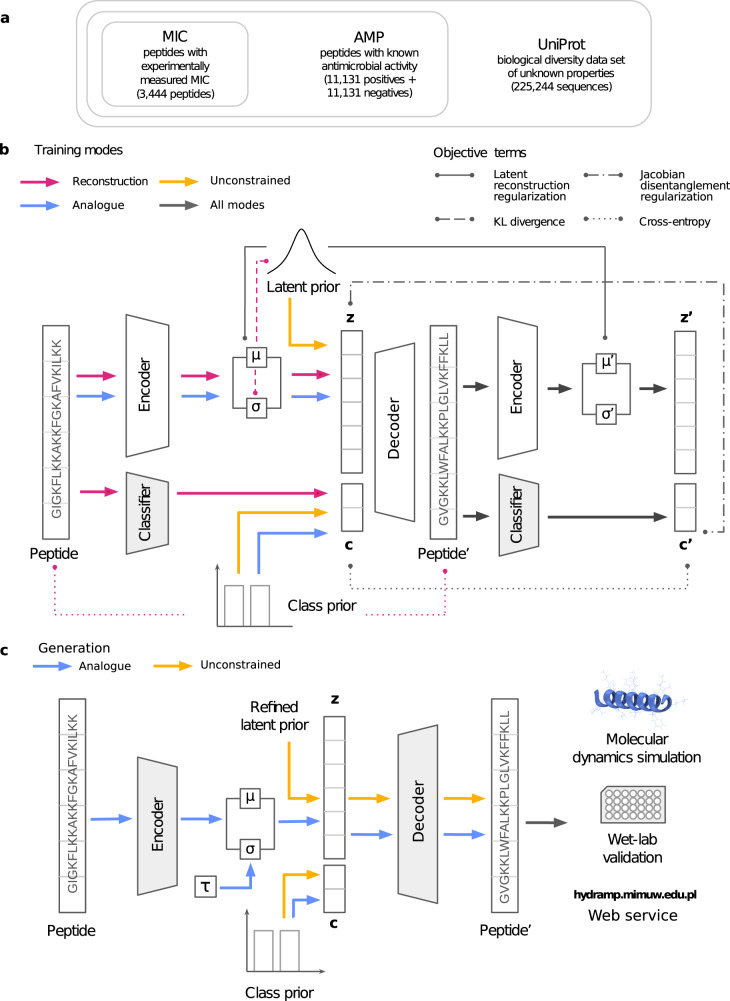
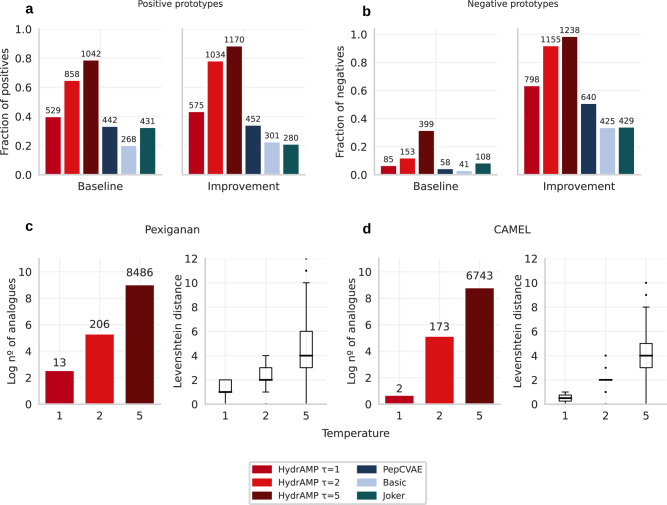
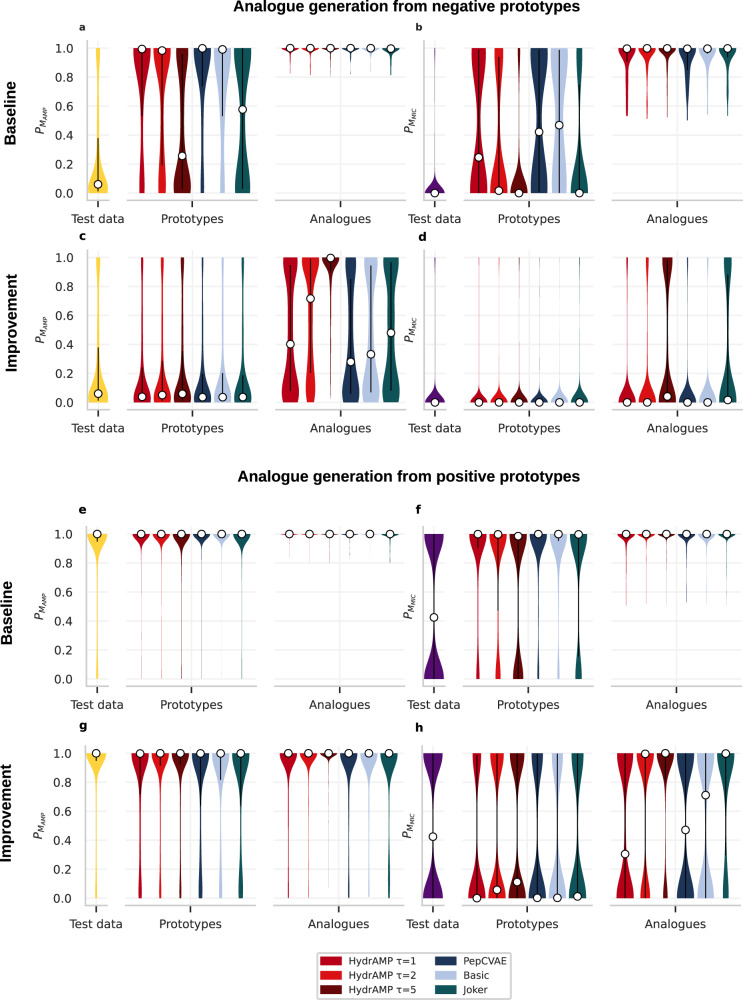
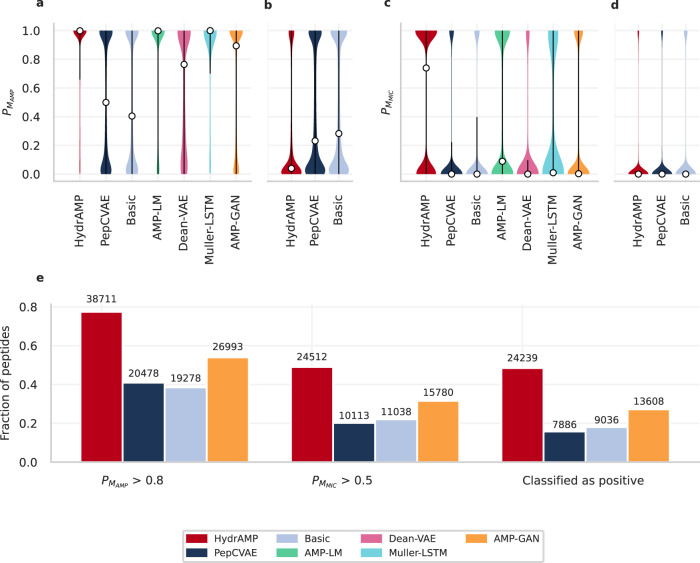
Antimicrobial peptides emerge as compounds that can alleviate the global health hazard of antimicrobial resistance, prompting a need for novel computational approaches to peptide generation. Here, we propose HydrAMP, a conditional variational autoencoder that learns lower-dimensional, continuous representation of peptides and captures their antimicrobial properties. The model disentangles the learnt representation of a peptide from its antimicrobial conditions and leverages parameter-controlled creativity. HydrAMP is the first model that is directly optimized for diverse tasks, including unconstrained and analogue generation and outperforms other approaches in these tasks. An additional preselection procedure based on ranking of generated peptides and molecular dynamics simulations increases experimental validation rate. Wet-lab experiments on five bacterial strains confirm high activity of nine peptides generated as analogues of clinically relevant prototypes, as well as six analogues of an inactive peptide. HydrAMP enables generation of diverse and potent peptides, making a step towards resolving the antimicrobial resistance crisis.
Overview
The claims and statistics of this paper haven’t been checked yet.
Run the check — free, no account needed. It reads the open-access text and checks the sources it cites.
Integrity signals
Registry
Cites
Statistics
Figures
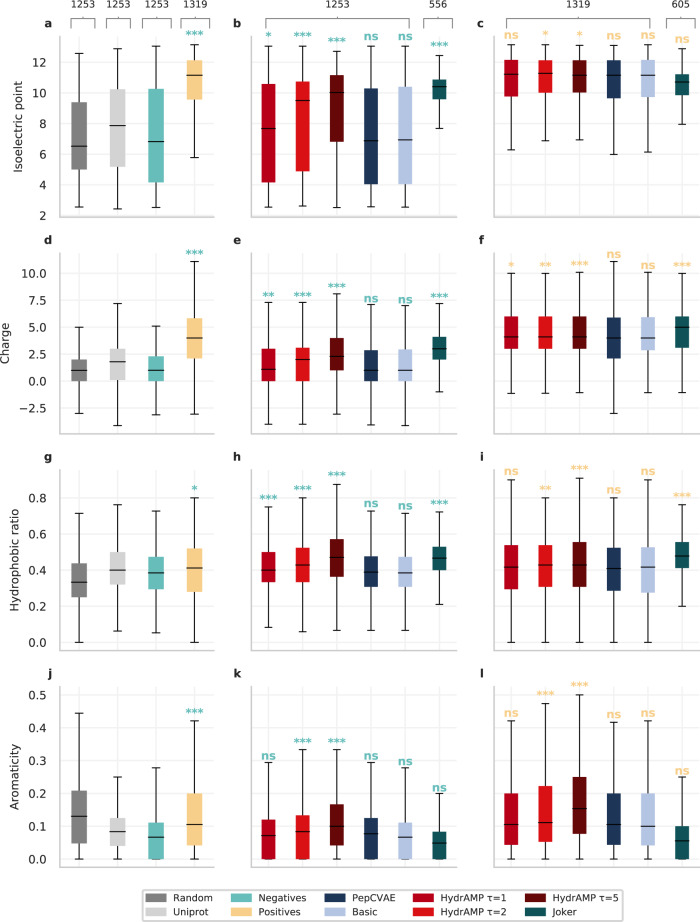
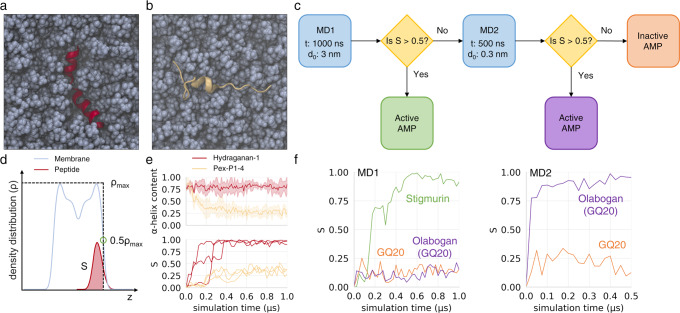
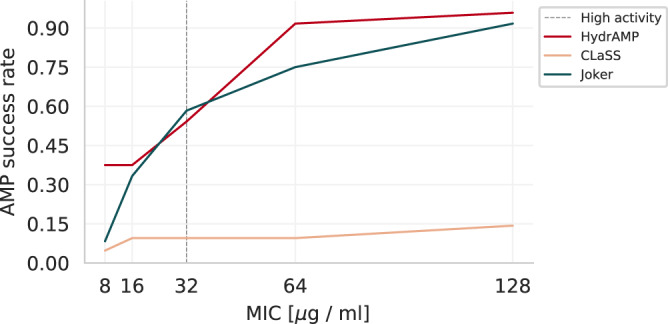
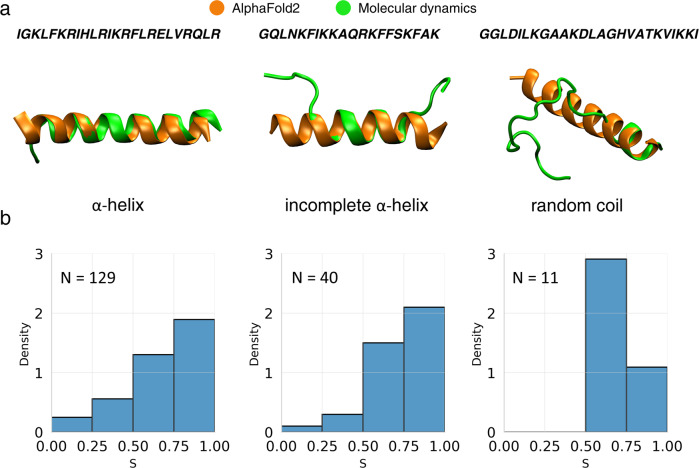
Verification
Claims the paper makes
The claims and statistics of this paper haven’t been checked yet.
Run the check — free, no account needed. It reads the open-access text and checks the sources it cites.
Self-check
Percentages, sums and reported differences re-computed from the paper’s own numbers.
The self-check needs the paper’s full text.
Citations
Cites
Hochreiter, S., & Schmidhuber, J. (1997) · Neural Computation · doi:10.1162/neco.1997.9.8.1735 · Cited by 102,318
Highly accurate protein structure prediction with AlphaFold
Jumper, J., Evans, R., Pritzel, A., Green, T., Figurnov, M., Ronneberger, O., Tunyasuvunakool, K., Bates, R., Žídek, A., Potapenko, A., et al. (2021) · Nature · doi:10.1038/s41586-021-03819-2 · Cited by 43,764
Comparison of simple potential functions for simulating liquid water
Jorgensen, W. L., Chandrasekhar, J., Madura, J., Impey, R., & Klein, M. (1983) · The Journal of Chemical Physics · doi:10.1063/1.445869 · Cited by 38,397
Abraham, M. J., Murtola, T., Schulz, R., Páll, S., Smith, J. C., Hess, B., & Lindahl, E. (2015) · SoftwareX · doi:10.1016/j.softx.2015.06.001 · Cited by 27,190
A simple method for displaying the hydropathic character of a protein
Kyte, J., & Doolittle, R. F. (1982) · Journal of Molecular Biology · doi:10.1016/0022-2836(82)90515-0 · Cited by 22,927
Advances in neural information processing systems 7
Cios, K. J., & Shields, M. E. (1997) · Neurocomputing · doi:10.1016/s0925-2312(97)90018-7 · Cited by 22,093
Kabsch, W., & Sander, C. (1983) · Biopolymers · doi:10.1002/bip.360221211 · Cited by 15,320
LIII. On lines and planes of closest fit to systems of points in space
Pearson, K. (1901) · The London Edinburgh and Dublin Philosophical Magazine and Journal of Science · doi:10.1080/14786440109462720 · Cited by 12,864
Cd-hit: Accelerated for clustering the next-generation sequencing data
Fu, L., Niu, B., Zhu, Z., Wu, S., & Li, W. (2012) · Bioinformatics · doi:10.1093/bioinformatics/bts565 · Cited by 11,175
CHARMM‐GUI: A web‐based graphical user interface for CHARMM
Jo, S., Kim, T., Iyer, V. G., & Im, W. (2008) · Journal of Computational Chemistry · doi:10.1002/jcc.20945 · Cited by 9,284
Research works printed but not linked: 17
- O’Neill, J. Tackling drug-resistant infections globally: final report and recommendations. The Review on Antimicrobial Resistance, Government of the United Kingdom (2016).
- Lee, E., Fulan, B., Wong, G. & Ferguson, A. Mapping membrane activity in undiscovered peptide sequence space using machine learning. Proc. Natl. Acad. Sci. USA. 113, 13588–13593 (2016). · DOI
- Das, P.et al. PepCVAE: Semi-supervised targeted design of antimicrobial peptide sequences. arXiv preprint arXiv:1810.07743 (2018). · arXiv
- Tucs, A. et al. Generating ampicillin-level antimicrobial peptides with activity-aware generative adversarial networks. ACS Omega 5, 22847–22851 (2020). · DOI
- Kingma, D. P., Mohamed, S., Jimenez Rezende, D. & Welling, M. Semi-supervised learning with deep generative models. Adv. Neur. Inform. Process. Syst. 27, arXiv:1406.5298v2 (2014). · arXiv
- Witten, J. & Witten, Z.Deep learning regression model for antimicrobial peptide design. Accessed 01.02.2023 from https://github.com/zswitten/Antimicrobial-Peptides. (2019). · DOI
- Jang, E., Gu, S. & Poole, B. Categorical Reparameterization with Gumbel-Softmax. arXiv preprint arXiv:1611.01144 (2017). · arXiv
- Vaswani, A. et al. Attention Is All You Need. arXiv preprint arXiv:1706.03762 (2017). · arXiv
- Detlefsen, N. S., Hauberg, S. & Boomsma, W. What is a meaningful representation of protein sequences? arXiv preprint arXiv:2012.02679 (2012). · arXiv
- Theis, L., Oord, A. V. D. & Bethge, M. A note on the evaluation of generative models. arXiv preprint arXiv:1511.01844 (2015). · arXiv
- Hu, Z., Yang, Z., Liang, X., Salakhutdinov, R. & Xing, E. P. Toward controlled generation of text. arXiv preprint arXiv:1703.00955 (2017). · arXiv
- Higgins, I.et al. beta-VAE: Learning Basic Visual Concepts with a Constrained Variational Framework.International conference on learning representations (2017).
- Kingma, D. P. & Welling, M. Auto-encoding variational bayes. arXiv preprint arXiv:1312.6114 (2013). · arXiv
- Kingma, D. P. & Ba, J. Adam: A method for stochastic optimization. arXiv preprint arXiv:1412.6980 (2014). · arXiv
- Ghosh, P., Sajjadi, M. S. M., Vergari, A., Black, M. & Scholkopf, B. From Variational to Deterministic Autoencoders. arXiv preprint arXiv:1903.12436 (2019). · arXiv
- Tomczak, J. & Welling, M. VAE with a VampPrior in Proceedings of the Twenty-First International Conference on Artificial Intelligence and Statistics (eds Storkey, A. & Perez-Cruz, F.) 84 1214–1223 (PMLR, 2018).
- Clinical & (CLSI), L. S. I. Methods for Dilution Antimicrobial Susceptibility Tests for Bacteria That Grow Aerobically; Approved Standard-Ninth Edition; Document M07-A8 (2012).
Cited by
Sorted by citations
Items 101–200 of 239
Qayyum, N., Seo, H., Khan, N., Manan, A., Ramachandran, R., Haseeb, M., Kim, E., & Choi, S. (2025) · International Journal of Biological Macromolecules · doi:10.1016/j.ijbiomac.2025.144652 · Cited by 6
Accelerating functional protein discovery with GPT models: Antimicrobials and enzymes
Zeng, Z., Xu, R.-F., Guo, J., Jin, J., He, H., & Luo, X. (2025) · The Innovation Life · doi:10.59717/j.xinn-life.2025.100133 · Cited by 7
Antimicrobial Peptide Sequence Generation Based on Conditional Diffusion Model
Ying, Q., Jiang, X., Jiang, Y., Yang, Y. Z., Zhang, Q., & Tian, Y. (2024) · International Conference on Bioinformatics and Biomedical Technology (ICBBT) · doi:10.1145/3674658.3674676 · Cited by 5
AMPGP: Discovering Highly Effective Antimicrobial Peptides via Deep Learning
Wang, J., Wu, R., Zhang, X., Jiang, C., Zhao, S., Li, Q., & Zhang, N. (2025) · Journal of Chemical Information and Modeling · doi:10.1021/acs.jcim.5c00647 · Cited by 6
Zhao, W., Hou, K., Tang, C., Shen, Y., Liu, J., & Hu, X. (2025) · PLoS Computational Biology · doi:10.1371/journal.pcbi.1013833 · Cited by 5
Contemporary data-driven innovations in peptide-based therapeutic design
Priyadarsinee, L., Kungurtsev, V., Kumar, V., Chatterjee, B., Sastry, G. N., & Murugan, N. A. (2026) · Briefings in Bioinformatics · doi:10.1093/bib/bbag220 · Cited by 5
Fung-AI: An AI/ML-driven pipeline for antifungal peptide discovery
Berman, D., Lewis, E. A., Curtis, T. D., Tiburzi, O. N., Smith, D. F. Q., Casadevall, A., & Dunphy, L. J. (2026) · PLoS Computational Biology · doi:10.1371/journal.pcbi.1014105 · Cited by 5
He, M., Jiang, Y., Yang, Y. T., Gong, K., Jiang, X., & Tian, Y. (2025) · The Journal of Physical Chemistry B · doi:10.1021/acs.jpcb.4c07752 · Cited by 5
ABPDB: A Database of Antibacterial Peptides
Zhou, X., Liu, G., Han, C., & Lv, J. Z. (2025) · IEEE Transactions on Computational Biology and Bioinformatics · doi:10.1109/tcbbio.2025.3582844 · Cited by 5
Wang, Y.-K., Li, M., Huang, F., Qiu, M.-Y., & Zhang, W. (2025) · Advancement of science · doi:10.1002/advs.202507457 · Cited by 6
Deka, H., Pawar, A. P., Battula, M. S., Ghfar, A. A., Assal, M. E., & Chikhale, R. V. (2024) · The Protein Journal · doi:10.1007/s10930-024-10218-9 · Cited by 5
Chen, Q., Zhang, Y., Gao, J., & Zhang, J. (2025) · Journal of Chemical Information and Modeling · doi:10.1021/acs.jcim.5c00199 · Cited by 4
GPepT: A Foundation Language Model for Peptidomimetics Incorporating Noncanonical Amino Acids
Oikawa, Y., Uzawa, T., Berenger, F., Minagawa, N., Yumoto, A., Takaku, H., Tamura, R., Ito, Y., & Tsuda, K. (2025) · ACS Medicinal Chemistry Letters · doi:10.1021/acsmedchemlett.5c00375 · Cited by 4
Identifying 14-3-3 interactome binding sites with deep learning
van Weesep, L., Özçelik, R., Pennings, M. A. M., Criscuolo, E., Ottmann, C., Brunsveld, L., & Grisoni, F. (2025) · Digital Discovery · doi:10.1039/d5dd00132c · Cited by 4
Rationally designed peptide induces apoptosis and cell cycle modulation in resistant melanoma
Rocha, L. S., Jacobowski, A. C., Thiburcio, E., Pereira, R. A., Almeida, C. V., Gutierrez, C. D. O., Rodrigues, T. D. A. F., Oliveira, R. J., Taveira, G. B., Hiane, P. A., et al. (2025) · Biochimica et Biophysica Acta (BBA) - General Subjects · doi:10.1016/j.bbagen.2025.130877 · Cited by 4
Reinforcement learning with low-rank adaptation for targeted antimicrobial peptide design
Park, J., Bae, D., Bae, B., & Nam, H. (2025) · Briefings in Bioinformatics · doi:10.1093/bib/bbaf641 · Cited by 4
A comprehensive survey on artificial intelligence for biomolecule design
Yang, G., Li, J., Wang, Q., Wu, L., Chen, Z., Zhao, P.-C., Wang, H., Wang, Q., Wen, B., Song, C., et al. (2026) · The Innovation Life · doi:10.59717/j.xinn-life.2026.100196 · Cited by 5
Medina-Ortiz, D., Escobedo, S., Murillo-Acevedo, N., Soto-García, N., Villegas, D. F., Sandoval, D., & Sanchez–Daza, A. (2026) · IntechOpen eBooks · doi:10.5772/intechopen.1013230 · Cited by 4
Salimi, A., & Lee, J. Y. (2026) · Expert Systems with Applications · doi:10.1016/j.eswa.2026.131999 · Cited by 4
Biochemical-knowledge-driven machine learning pipeline for generating potent antimicrobial peptides
Yang, D., Li, Y., Li, C., Zhang, Q., HUANG, J., Li, X., & Gao, P. (2026) · Briefings in Bioinformatics · doi:10.1093/bib/bbag115 · Cited by 4
Lv, J., Liu, G., Zhou, X., & Chen, Y. (2026) · Probiotics and Antimicrobial Proteins · doi:10.1007/s12602-026-11013-x · Cited by 4
AI for bioactive materials: From material design to biological applications
Shi, J., Liang, T., Heljak, M. K., Qiu, Z., Chen, S., Li, J., Kazakidi, A., Święszkowski, W., Li, B., & Shu, W. (2026) · Bioactive Materials · doi:10.1016/j.bioactmat.2026.04.028 · Cited by 4
Canales, C. S. C., dos Santos, M. D., Negri, A. C. C., Gois, L. R., Vishwakarma, S. K., Roque‐Borda, C. A., & Pavan, F. R. (2026) · Future Pharmacology · doi:10.3390/futurepharmacol6020032 · Cited by 5
Controllable Protein Design by Prefix-Tuning Protein Language Models
Luo, J., Li, J., Liu, X., Zhang, Y., Chen, Q., & Chen, J. (2026) · Journal of Chemical Information and Modeling · doi:10.1021/acs.jcim.5c03186 · Cited by 5
Ali, W., Chen, Y., Wang, Z., Sun, M., Song, Y., Guo, X., Wang, X., He, Y., & Qi, J. (2025) · Fish & Shellfish Immunology · doi:10.1016/j.fsi.2025.110310 · Cited by 3
Research Advance in the Development of Antimicrobial Peptides Using Deep Learning
Hu, Y., Zhou, J., Gao, Y., Chen, B., Su, J., Li, H., & Wu, W. (2025) · Journal of Computational Chemistry · doi:10.1002/jcc.70203 · Cited by 3
Sabri, M., Handi, K. E., Calvano, C. D., Bianco, M., Stradis, A. D., & Elbeaino, T. (2025) · International Journal of Molecular Sciences · doi:10.3390/ijms26199355 · Cited by 3
Li, J., Li, Y., & Xie, T. (2026) · Journal of Pharmaceutical Analysis · doi:10.1016/j.jpha.2026.101630 · Cited by 3
Bin, Y., Li, J., Cao, R., Wei, P., & Zheng, C. (2026) · Briefings in Bioinformatics · doi:10.1093/bib/bbag170 · Cited by 3
AlphaFold-based peptide structure prediction: Opportunities, limitations, and future directions
Zhang, B., Zhu, J., Chen, H.-F., & Liu, L. (2026) · Biotechnology Advances · doi:10.1016/j.biotechadv.2026.108977 · Cited by 4
Rajagopal, S., Bharathi Mohan, G., & Doss, S. (2024) · International Conference on Circuit, Power and Computing Technologies · doi:10.1109/iccpct61902.2024.10673066 · Cited by 3
Predicting Peptide Bioactivity Using the Unified Model Architecture UniDL4BioPep
Du, Z., Kumar, N., & Li, Y. (2025) · Methods in molecular biology · doi:10.1007/978-1-0716-4623-6_17 · Cited by 3
Guan, C., Wan, F., Torres, M. D. T., & de la Fuente‐Núñez, C. (2025) · bioRxiv (Cold Spring Harbor Laboratory) · doi:10.1101/2025.01.07.631724 · Cited by 3
AIPAMPDS: an AI platform for antimicrobial peptide design and screeningPreprint
Li, Y., Gao, L., Wenqian, Z., Wang, Z., Xu, X., Ji, J., Zhang, Y., Liu, Y., Zhang, L., Yang, Y., et al. (2025) · bioRxiv (Cold Spring Harbor Laboratory) · doi:10.1101/2025.03.24.644774 · Cited by 3
Zhong, R., Xu, L., Wu, J., He, M., Wu, S., Luo, Z., Han, N., Yao, Y., Zhou, J., Ruan, Z., et al. (2025) · European Journal of Medicinal Chemistry · doi:10.1016/j.ejmech.2025.118290 · Cited by 2
Generative models for antimicrobial peptide design: auto-encoders and beyond
Beierle, L., Hahnfeld, J. M., Goesmann, A., Mostolizadeh, R., & Cemič, F. (2026) · BioData Mining · doi:10.1186/s13040-026-00558-w · Cited by 2
Ruben, O. M., Amrevuawho, O. F., Alfa, P. E., Sadiq, H. O., Alabi, A. E., & Abdulsalami, S. A. (2025) · NIPES Journal of Science and Technology Research · doi:10.37933/nipes/7.4.2025.si234 · Cited by 2
Le, D.-H., Zhu, Y., Zhang, T., Li, W., Hung, A., Houshyar, S., & Le, T. C. (2026) · ACS Applied Materials & Interfaces · doi:10.1021/acsami.6c00110 · Cited by 2
Hybrid and conjugated antimicrobial peptides: new tactics to counter bacterial resistance
Zhang, Y., Bao, C., Feng, J., Hong, X., Gao, N., & Feng, G. Z. (2026) · Frontiers in Microbiology · doi:10.3389/fmicb.2026.1670569 · Cited by 2
Xiao, L., Li, J., Chen, Y., Qiu, C., Wang, Q., Liao, X., & Chen, J. (2026) · Artificial Intelligence Chemistry · doi:10.1016/j.aichem.2026.100119 · Cited by 2
Artificial intelligence in antimicrobial drug discovery: predictive and generative strategies
Duan, X., Liu, N., Liu, L. L., Geng, W., Tan, D., Liu, L. L., Lou, H., & Li, X. (2026) · Expert Opinion on Drug Discovery · doi:10.1080/17460441.2026.2674968 · Cited by 2
Artificial intelligence catalyzes antimicrobial peptide design
Liu, Y., Hu, J., Zhang, N., Bai, Y., Yao, Y., & Chen, G. (2026) · Synthetic and Systems Biotechnology · doi:10.1016/j.synbio.2026.05.019 · Cited by 2
Nie, Z., Li, D., Liu, Y., Xu, F., Zhang, H., Huang, X., Liu, X., Wang, Z., Ma, Y., Ye, Y., et al. (2025) · Journal of Chemical Information and Modeling · doi:10.1021/acs.jcim.5c00623 · Cited by 3
Morphology-Aware Peptide Discovery via Masked Conditional Generative Modeling
Costa, N., & Zavadlav, J. (2026) · ACS Nano · doi:10.1021/acsnano.6c02811 · Cited by 2
Hu, K., Xiao, Y., Liu, X., & Ma, S. (2025) · bioRxiv (Cold Spring Harbor Laboratory) · doi:10.1101/2025.03.07.642021 · Cited by 2
Building multiscale Markov state models by systematic mapping of temporal communities
Nitskansky, N., Clein, K., & Raveh, B. (2025) · Bioinform. · doi:10.1093/bioinformatics/btaf585 · Cited by 2
Yan, M., Abuduhebaier, A., Zhou, H., & Wang, J. (2025) · Advanced Intelligent Discovery · doi:10.1002/aidi.202500163 · Cited by 1
Luo, X.-W., Yang, Y.-Y., He, F.-J., Xie, S.-Y., Feng, S.-L., & Wang, X. (2025) · Chemical Engineering Journal · doi:10.1016/j.cej.2025.172394 · Cited by 1
Wang, L., Qiu, C., Xiao, L., & Chen, J. (2025) · IEEE International Conference on Bioinformatics and Biomedicine (BIBM) · doi:10.1109/bibm66473.2025.11356223 · Cited by 1
Richardson, J. D., Rotello, V. M., & Lehn, R. C. V. (2026) · Soft Matter · doi:10.1039/d6sm00170j · Cited by 1
Pep2MARS: Automated Cyclic Peptide Parameterization for Molecular Dynamics and Compound Design
Li, J., & Qian, Y. H. (2026) · Journal of Chemical Information and Modeling · doi:10.1021/acs.jcim.6c00340 · Cited by 1
Human organ-on-a-chip technology as a catalyst for drug discovery
Posey, R. R., Özkan, A., & Ingber, D. E. (2026) · Advanced Drug Delivery Reviews · doi:10.1016/j.addr.2026.115920 · Cited by 1
Ke, S., Zhang, Q., Cen, C., Wang, W., Shentu, X., Huang, G., Jiang, B., & Yu, X. (2026) · Food Control · doi:10.1016/j.foodcont.2026.112414 · Cited by 1
Engineering short-sequence elements for condensate-like assemblies by de novo design
Zhang, D., Zhang, B., Cheng, Z., Sun, W., Niu, H., Zhu, C., Chen, Y., Liu, D. K., & Ying, H. (2026) · Synthetic and Systems Biotechnology · doi:10.1016/j.synbio.2026.06.007 · Cited by 1
PepGate: A Dual-Path Diffusion Framework for ACE Inhibitory Peptide De Novo Design
Sun, W., Yang, X., Huang, X., Xiong, N., Feng, H., & Pan, Y. (2026) · Journal of Medicinal Chemistry · doi:10.1021/acs.jmedchem.6c01875 · Cited by 1
Zhang, W., Wang, Y., Zhai, Y., Zhang, P., Ding, Y., & Zou, Q. (2026) · PLoS Computational Biology · doi:10.1371/journal.pcbi.1014771 · Cited by 1
Ma, K., Ran, W., Chu, X.-L., Zhang, J., Fu, L., Gao, P., Li, X.-R., Zhi, F.-J., Yang, Y., Yang, Y., et al. (2025) · European Journal of Medicinal Chemistry · doi:10.1016/j.ejmech.2025.117786 · Cited by 1
Deep‐Learning Driven Identification of Novel Antimicrobial Peptides
Arino, S., Sgueglia, G., Leone, L., Oliva, R., Vecchio, P. D., Larrouy-Maumus, G. J., Lombardi, A., Simone, A. D., & Nastri, F. (2025) · Chemistry - A European Journal · doi:10.1002/chem.202501918 · Cited by 1
Krebs, M., & Risselada, H. J. (2026) · Advanced Science · doi:10.1002/advs.76899 · Cited by 1
Chen, J., Jiang, Y., Gong, K., & Yang, Y. (2026) · Journal of Molecular Graphics and Modelling · doi:10.1016/j.jmgm.2026.109401 · Cited by 1
AI-driven discovery of antimicrobial peptides and derivatives: database and tools
Zhou, Y., Wang, Z., & Zheng, H. (2026) · Exploration of Drug Science · doi:10.37349/eds.2026.1008161 · Cited by 1
Liu, H., Shi, Y., Guo, F., Wang, J., Li, J., Wang, G., Zhan, D.-C., Hao, H., & Yu, G. (2026) · Briefings in Bioinformatics · doi:10.1093/bib/bbag318 · Cited by 1
Oyama, L. B. (2026) · Essays in Biochemistry · doi:10.1042/ebc20250036 · Cited by 1
He, T., Zhang, S., Chen, J., Zheng, X., Zhao, J., Li, H., Mao, J., Luo, J., Zheng, J., Ma, D., et al. (2026) · iMetaOmics. · doi:10.1002/imo2.70133 · Cited by 1
Kumar, A., & Singh, D. (2025) · Expert Systems with Applications · doi:10.1016/j.eswa.2025.128093 · Cited by 1
Dong, R., Liu, R., Liu, Z., Liu, Y., Zhao, G., Li, H., Hou, S., Ma, X., Kang, H., Liu, J., et al. (2024) · eLife · doi:10.7554/elife.97330.1 · Cited by 1
Dong, R., Liu, R., Liu, Z., Liu, Y., Zhao, G., Li, H., Hou, S., Ma, X., Kang, H., Liu, J., et al. (2025) · eLife · doi:10.7554/elife.97330.2 · Cited by 1
PepGlider: Property Regularized VAE for interpretable and controllable peptide designPreprint
Gwiazda, A., Szymczak, P., & Szczurek, E. (2025) · bioRxiv (Cold Spring Harbor Laboratory) · doi:10.1101/2025.10.13.682099 · Cited by 1
Self-citationKong, Z., Zhu, Y., Xu, Y., Yin, M., Hou, T., Wu, J., Xu, H., & Hsieh, C. (2026) · bioRxiv (Cold Spring Harbor Laboratory) · doi:10.64898/2026.02.14.705870 · Cited by 1
Integrative Multi-Scale Sequence–Structure Modeling for Antimicrobial Peptide Prediction and DesignPreprint
Li, J., Shao, Y., Li, Y., & Yu, Q. (2026) · bioRxiv (Cold Spring Harbor Laboratory) · doi:10.64898/2026.02.24.707610 · Cited by 1
Generating antimicrobial peptides via genomic transfer learningPreprint
Polloni, L., Gonteri, I., Bieniasz, K. D., & Frost, J. M. (2026) · bioRxiv (Cold Spring Harbor Laboratory) · doi:10.64898/2026.06.16.732639 · Cited by 1
Dong, R., Liu, R., Liu, Z., Liu, Y., Zhao, G., Li, H., Hou, S., Ma, X., Kang, H., Liu, J., et al. (2024) · eLife · doi:10.7554/elife.97330.1.sa4
Insights into the identification of antimicrobial peptides: A multidisciplinary observation
Chen, S., & Su, Q. (2024) · iMetaOmics. · doi:10.1002/imo2.41
Прогнозирование токсичности и биодоступности нового пищевого антимикробного биопептида
Тихонов, С. Л., & Тихонова, Н. В. (2024) · АПК России · doi:10.55934/2587-8824-2024-31-3-428-432
How Does Sampling Affect the AI Prediction Accuracy of Peptides’ Physicochemical Properties?Preprint
Yan, M., Abuduhebaier, A., Zhou, H., & Wang, J. (2025) · bioRxiv (Cold Spring Harbor Laboratory) · doi:10.1101/2025.01.29.635451
Zhao, G., Ge, C., Han, W., Yu, R., & Liu, H. (2025) · Toxins · doi:10.3390/toxins17020093
Dong, R., Liu, R., Liu, Z., Liu, Y., Zhao, G., Li, H., Hou, S., Ma, X., Kang, H., Liu, J., et al. (2025) · eLife · doi:10.7554/elife.97330.3.sa4
Deep Learning Accelerates the Development of Antimicrobial Peptides Comprising 15 Amino Acids
Hu, Y., Zhou, J., Gao, Y., Chen, B., Su, J., & Li, H. (2025) · Assay and Drug Development Technologies · doi:10.1089/adt.2025.011
Li, M., Wang, J., Shu, P., Chen, X., Yan, Y., Zhong, J., Zhao, N., Liang, L., & Liu, Z. (2025) · ACS Omega · doi:10.1021/acsomega.4c11664
Lu, X., Sun, Y., Wang, Z., Jin, X., Zhang, J., Lu, F., Yang, W., & Liu, F. (2025) · Protein Expression and Purification · doi:10.1016/j.pep.2025.106839
Artificial Intelligence in Peptide Drug Discovery
Fu, Y., & Bai, Q. (2026) · Springer eBooks · doi:10.1007/978-3-031-98022-0_7
Yadav, S., Nema, P., Kori, S., & Kashaw, S. K. (2026) · Proceedings of the Indian National Science Academy · doi:10.1007/s43538-026-00687-0
Li, F., Shi, X., Gan, M., Fu, H., & Hu, S. (2025) · IEEE International Conference on Bioinformatics and Biomedicine (BIBM) · doi:10.1109/bibm66473.2025.11356023
SyAGram: Dual-Component Framework for Anti-Gram-Negative AMP Classification and Generation
Wang, X., Li, X., Guan, Y., Chen, F., Chen, P., Yang, F., & Chen, J. (2025) · IEEE International Conference on Bioinformatics and Biomedicine (BIBM) · doi:10.1109/bibm66473.2025.11357153
Multi-Task Prompt-Aware Therapeutic Peptide Generation by Protein Language Model
Li, J., Zou, H. X., Wang, Z., & Peng, S. (2025) · IEEE International Conference on Bioinformatics and Biomedicine (BIBM) · doi:10.1109/bibm66473.2025.11356592
A PLUM Job: Peptide modeLs for Understanding and engineering antiMicrobial therapeuticsPreprint
Banerjee, P., Friedberg, I., Rued, B. E., & Eulenstein, O. (2026) · bioRxiv (Cold Spring Harbor Laboratory) · doi:10.64898/2026.02.21.707214
Xu, J., Torres, M. D. T., Li, C., Li, J., Li, F., Song, J., & de la Fuente‐Núñez, C. (2026) · bioRxiv (Cold Spring Harbor Laboratory) · doi:10.64898/2026.04.09.717597
Borgards, L., Voß, H., Tautges, S., Siebels, B., Pylaeva, E., Spangenberg, P., Siemes, D., Krisp, C., Schmitz, J., Cinkul, L., et al. (2026) · bioRxiv (Cold Spring Harbor Laboratory) · doi:10.64898/2026.04.10.717476
Self-citationMacroalgal Bloom Biomass as a Source of Bioactive Compounds and Antimicrobial Peptides
Rosic, N. N., Skrlin, I., & Thornber, C. (2026) · Marine Drugs · doi:10.3390/md24040136
Banerjee, R., Dwivedi, A., & Toppo, A. J. (2026) · International Journal of Novel Research and Development · doi:10.56975/ijnrd.v11i4.323776
Yu, J., Sun, D., Wei, Q., Zhang, Y., Tang, J., & Pu, H. (2026) · Advanced Science · doi:10.1002/advs.75928
Bin, Y., Li, Z., Wang, K., & Su, Y. (2026) · Journal of Membrane Computing · doi:10.1007/s41965-026-00222-6
Ma, Z., Tian, S., Sheng, M., Cheng, H., Zhu, J., Yang, C., Xu, L., Xiao, M., Li, J., Li, Y., et al. (2026) · Journal of Chemical Information and Modeling · doi:10.1021/acs.jcim.6c02664
An Antimicrobial Peptide Generation Model Based on Multimodal Contrastive Diffusion
祁, 志. (2026) · Hans Journal of Computational Biology · doi:10.12677/hjcb.2026.162007
Fan, Y., Yang, Q., Zheng, J., Yang, S., Yang, J., & Jia, C. (2026) · Cognitive Computation · doi:10.1007/s12559-026-10622-6
Pathogen context reshapes antimicrobial peptide generationPreprint
You, S., Zhang, C. H. I., Han, Y., Jiang, Q., Guo, X. S., Li, M., Su, Y., Dong, X., Yang, M., & Lu, H. (2026) · bioRxiv (Cold Spring Harbor Laboratory) · doi:10.64898/2026.07.01.735178
Metadata
- Authors
- Szymczak, P., Możejko, M., Grzegorzek, T., Jurczak, R., Bauer, M., Neubauer, D., Sikora, K., Michalski, M., Sroka, J., Setny, P., Kamysz, W., & Szczurek, E.
- Affiliations
- University of Warsaw (PL)
- Nvidia (United States) (US)
- Gdańsk Medical University (PL)
- Corresponding author
- Szczurek, Ewa
- ORCID
- Venue
- Nature Communications
- Published
- 2023-03-15
- Volume
- 14
- Issue
- 1
- Pages
- 1453-1453
- ISSN
- 2041-1723 (ISSN-L)
- PMC
- PMC10017685
- OpenAlex
- W4324344300
- Cited by
- 231
- References
- 78
- Citations by year
- 2026: 85 · 2025: 88 · 2024: 49 · 2023: 9
- FWCI
- 42.06
- Type
- journal article
- Language
- en
- Update notices
- correction (2023-08-23)
- Open access
- gold
- doi.org
- Locations
- Nature Communications (publishedVersion, cc-by)
- bioRxiv (Cold Spring Harbor Laboratory) (acceptedVersion, cc-by-nc-nd)
- PubMed Central (publishedVersion, cc-by)
- PubMed (publishedVersion)
- ReIn UW (University of Warsaw) (submittedVersion, cc-by-nc-nd)
- RePEc: Research Papers in Economics (submittedVersion)
- DOAJ (DOAJ: Directory of Open Access Journals) (submittedVersion, cc-by-sa)
- Funders
- Nvidia
- Narodowym Centrum Nauki
- Uniwersytet Warszawski
- Interdyscyplinarne Centrum Modelowania Matematycznego i Komputerowego UW
- Topics
- Life Sciences › Immunology and Microbiology › Microbiology › Antimicrobial Peptides and Activities
- Life Sciences › Pharmacology, Toxicology and Pharmaceutics › Drug Discovery › Computational Drug Discovery Methods
- Physical Sciences › Chemistry › Organic Chemistry › Chemical Synthesis and Analysis
- Keywords
- antimicrobial peptides, conditional variational autoencoder, deep generative models, peptide production, antimicrobial resistance, peptide analogues, disentangled representations, molecular dynamics simulation
- MeSH terms
- Antimicrobial Peptides, Anti-Infective Agents, Bacteria, Antimicrobial Cationic Peptides
About these checks
Registry, retraction, Cites and statistics results are computed, not judged, with one exception: a printed reference that no index lists is read once by a model before it counts as a citation error. Claims are extracted by a model and kept only when their quote appears verbatim in the text; each cited source is then checked, with a model’s help, for whether it says what the claim relies on. Those verdicts can be wrong — read the claim’s quote and the cited source before relying on one.
Statistics and arithmetic are recomputed, not judged.
Confidence bands are shown only for fields calibrated on our annotated test set. None is calibrated yet, so no band is shown.
What counts as a claim ›How we measure confidence ›How we check this ›
Are you an author, or do you see a problem with this page? Request a review
