

The DOI matches its Crossref record; 75 of the 78 references it cites were found in a registry or an index.
Discovering highly potent antimicrobial peptides with deep generative model HydrAMP
Open accessPublished version of a preprint
Abstract
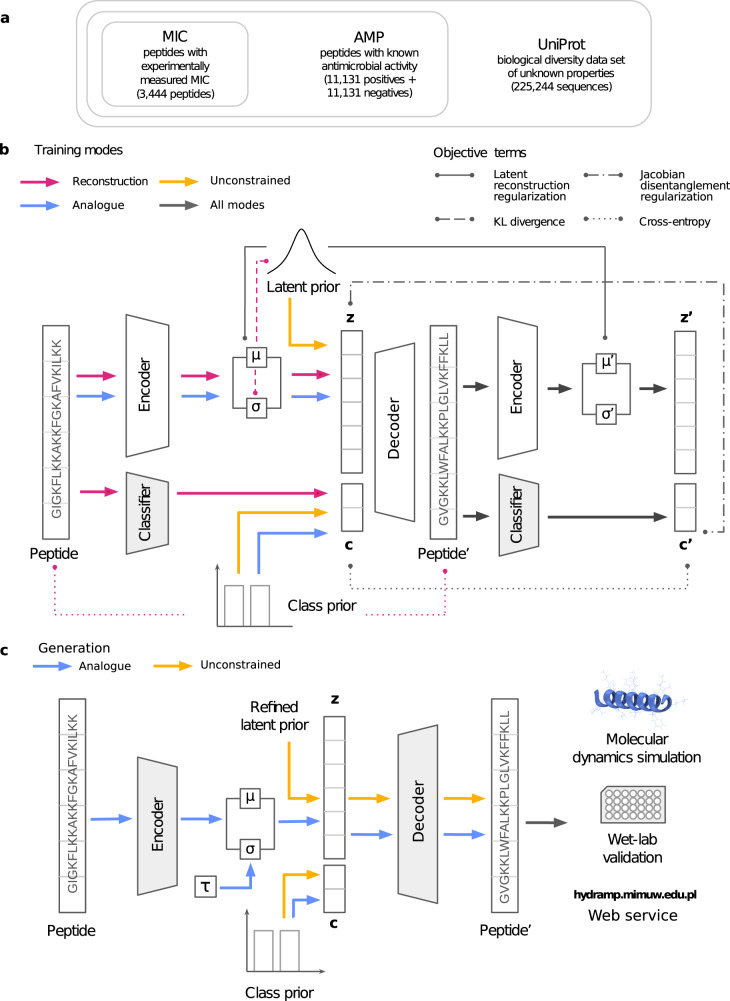
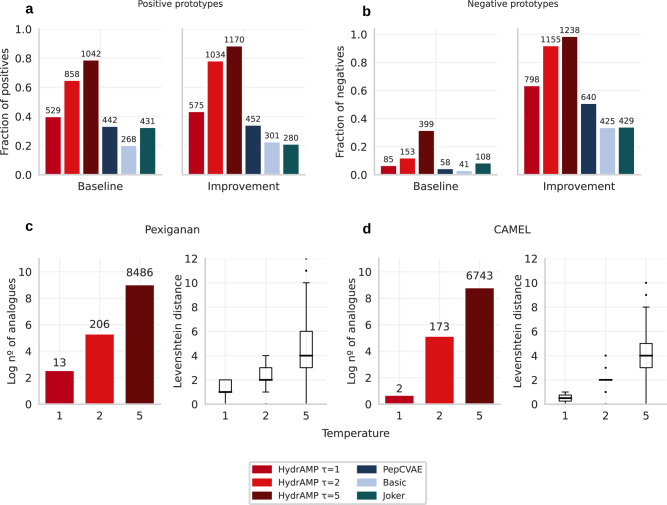
Antimicrobial peptides emerge as compounds that can alleviate the global health hazard of antimicrobial resistance, prompting a need for novel computational approaches to peptide generation. Here, we propose HydrAMP, a conditional variational autoencoder that learns lower-dimensional, continuous representation of peptides and captures their antimicrobial properties. The model disentangles the learnt representation of a peptide from its antimicrobial conditions and leverages parameter-controlled creativity. HydrAMP is the first model that is directly optimized for diverse tasks, including unconstrained and analogue generation and outperforms other approaches in these tasks. An additional preselection procedure based on ranking of generated peptides and molecular dynamics simulations increases experimental validation rate. Wet-lab experiments on five bacterial strains confirm high activity of nine peptides generated as analogues of clinically relevant prototypes, as well as six analogues of an inactive peptide. HydrAMP enables generation of diverse and potent peptides, making a step towards resolving the antimicrobial resistance crisis.
Overview
The claims and statistics of this paper haven’t been checked yet.
Run the check — free, no account needed. It reads the open-access text and checks the sources it cites.
Integrity signals
Registry
Cites
Statistics
Figures
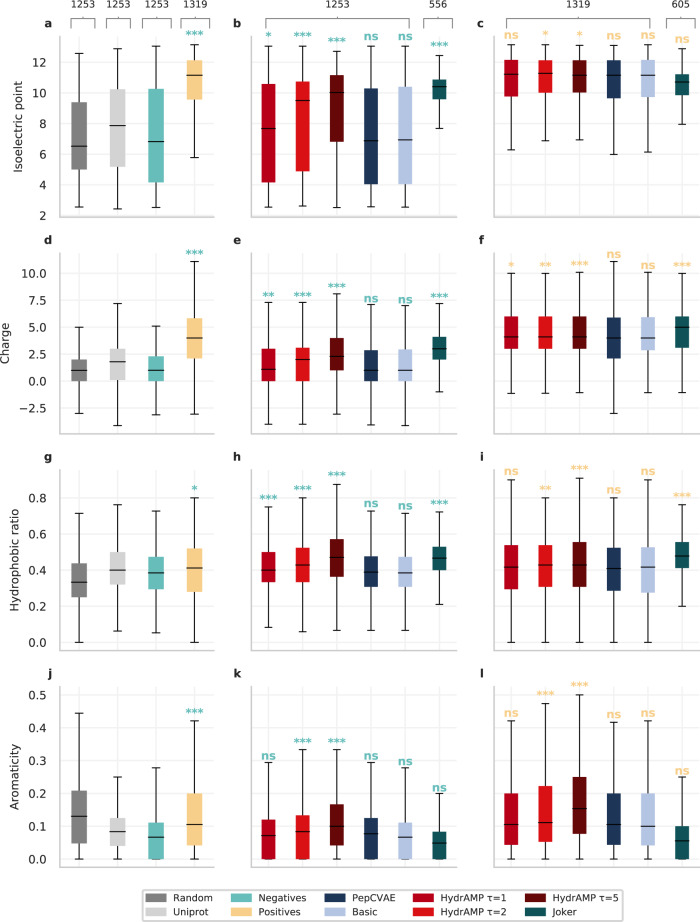
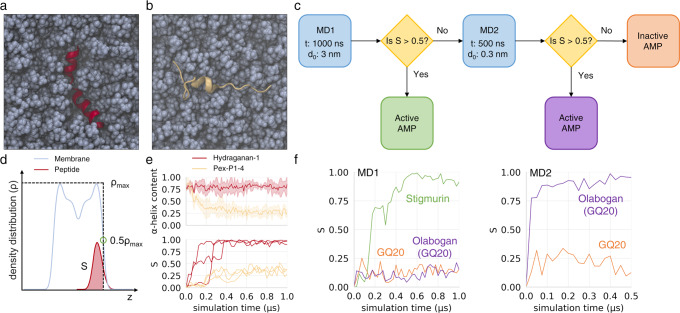
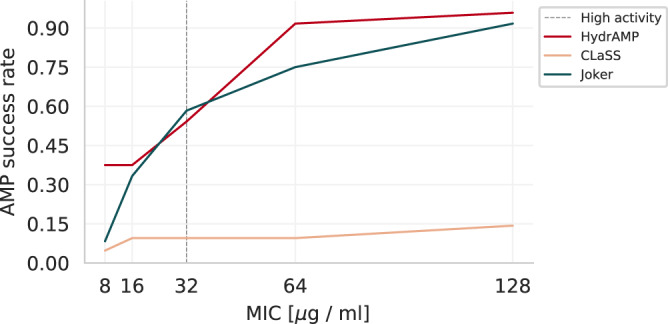
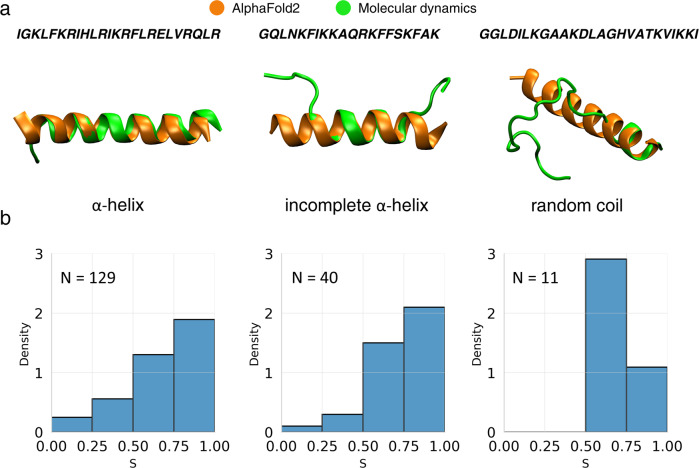
Verification
Claims the paper makes
The claims and statistics of this paper haven’t been checked yet.
Run the check — free, no account needed. It reads the open-access text and checks the sources it cites.
Self-check
Percentages, sums and reported differences re-computed from the paper’s own numbers.
The self-check needs the paper’s full text.
Citations
Cites
Hochreiter, S., & Schmidhuber, J. (1997) · Neural Computation · doi:10.1162/neco.1997.9.8.1735 · Cited by 102,318
Highly accurate protein structure prediction with AlphaFold
Jumper, J., Evans, R., Pritzel, A., Green, T., Figurnov, M., Ronneberger, O., Tunyasuvunakool, K., Bates, R., Žídek, A., Potapenko, A., et al. (2021) · Nature · doi:10.1038/s41586-021-03819-2 · Cited by 43,764
Comparison of simple potential functions for simulating liquid water
Jorgensen, W. L., Chandrasekhar, J., Madura, J., Impey, R., & Klein, M. (1983) · The Journal of Chemical Physics · doi:10.1063/1.445869 · Cited by 38,397
Abraham, M. J., Murtola, T., Schulz, R., Páll, S., Smith, J. C., Hess, B., & Lindahl, E. (2015) · SoftwareX · doi:10.1016/j.softx.2015.06.001 · Cited by 27,190
A simple method for displaying the hydropathic character of a protein
Kyte, J., & Doolittle, R. F. (1982) · Journal of Molecular Biology · doi:10.1016/0022-2836(82)90515-0 · Cited by 22,927
Advances in neural information processing systems 7
Cios, K. J., & Shields, M. E. (1997) · Neurocomputing · doi:10.1016/s0925-2312(97)90018-7 · Cited by 22,093
Kabsch, W., & Sander, C. (1983) · Biopolymers · doi:10.1002/bip.360221211 · Cited by 15,320
LIII. On lines and planes of closest fit to systems of points in space
Pearson, K. (1901) · The London Edinburgh and Dublin Philosophical Magazine and Journal of Science · doi:10.1080/14786440109462720 · Cited by 12,864
Cd-hit: Accelerated for clustering the next-generation sequencing data
Fu, L., Niu, B., Zhu, Z., Wu, S., & Li, W. (2012) · Bioinformatics · doi:10.1093/bioinformatics/bts565 · Cited by 11,175
CHARMM‐GUI: A web‐based graphical user interface for CHARMM
Jo, S., Kim, T., Iyer, V. G., & Im, W. (2008) · Journal of Computational Chemistry · doi:10.1002/jcc.20945 · Cited by 9,284
Weininger, D. (1988) · Journal of Chemical Information and Computer Sciences · doi:10.1021/ci00057a005 · Cited by 7,436
UniProt: the universal protein knowledgebase in 2021
The UniProt Consortium, Bateman, A., Martin, M.-J., Orchard, S., Magrane, M., Agivetova, R., Ahmad, S., Alpi, E., Bowler-Barnett, E. H., Britto, R., et al. (2021) · Nucleic Acids Research · doi:10.1093/nar/gkaa1100 · Cited by 6,372
Update of the CHARMM all-atom additive force field for lipids: Validation on six lipid types
Klauda, J. B., Venable, R., Freites, J. A., O'Connor, J. W., Tobias, D., Mondragon-Ramirez, C., Vorobyov, I., MacKerell, A. D., & Pastor, R. (2010) · Journal of Physical Chemistry B · doi:10.1021/jp101759q · Cited by 4,369
Lee, J.-M., Cheng, X., Swails, J. M., Yeom, M. S., Eastman, P., Lemkul, J. A., Wei, S., Buckner, J., Jeong, J. C., Qi, Y., et al. (2015) · Journal of Chemical Theory and Computation · doi:10.1021/acs.jctc.5b00935 · Cited by 4,252
Determination of minimum inhibitory concentrations
Andrews, J. M. (2001) · Journal of Antimicrobial Chemotherapy · doi:10.1093/jac/48.suppl_1.5 · Cited by 4,129
Jenssen, H., Hamill, P., & Hancock, R. E. W. (2006) · Clinical Microbiology Reviews · doi:10.1128/cmr.00056-05 · Cited by 2,605
Analysis of membrane and surface protein sequences with the hydrophobic moment plot.
Eisenberg, D., Schwarz, E. M., Komaromy, M., & Wall, R. (1984) · Journal of Molecular Biology · doi:10.1016/0022-2836(84)90309-7 · Cited by 2,145
Generating Focused Molecule Libraries for Drug Discovery with Recurrent Neural Networks
Segler, M. H. S., Kogej, T., Tyrchan, C., & Waller, M. P. (2018) · ACS Central Science · doi:10.1021/acscentsci.7b00512 · Cited by 1,537
Sikweyiya, Y. M., & Jewkes, R. K. (2012) · PLoS ONE · doi:10.1371/journal.pone.0035495 · Cited by 1,320
The value of antimicrobial peptides in the age of resistance
Magana, M., Muthuirulan, P., Santos, A. L., Leanse, L. G., Fernández, M., Ioannidis, A., Giulianotti, M. A., Apidianakis, Y., Bradfute, S. B., Ferguson, A. L., et al. (2020) · The Lancet Infectious Diseases · doi:10.1016/s1473-3099(20)30327-3 · Cited by 1,193
Alternatives to antibiotics—a pipeline portfolio review
Czaplewski, L. G., Bax, R. P., Clokie, M. R. J., Dawson, M., Fairhead, H., Fischetti, V. A., Foster, S. J., Gilmore, B., Hancock, R. E. W., Harper, D. J., et al. (2016) · The Lancet Infectious Diseases · doi:10.1016/s1473-3099(15)00466-1 · Cited by 880
Pirtskhalava, M., Amstrong, A. A., Grigolava, M., Chubinidze, M., Alimbarashvili, E., Vishnepolsky, B., Gabrielian, A. E., Rosenthal, A., Hurt, D. E., & Tartakovsky, M. (2020) · Nucleic Acids Research · doi:10.1093/nar/gkaa991 · Cited by 725
CAMP R3 : a database on sequences, structures and signatures of antimicrobial peptides: Table 1.
Waghu, F. H., Barai, R. S., Gurung, P., & Idicula-Thomas, S. (2016) · Nucleic Acids Research · doi:10.1093/nar/gkv1051 · Cited by 715
Deep learning improves antimicrobial peptide recognition
Veltri, D., Kamath, U., & Shehu, A. (2018) · Bioinformatics · doi:10.1093/bioinformatics/bty179 · Cited by 626
Alpha-helical cationic antimicrobial peptides: relationships of structure and function
Yi, H., Huang, J., & Chen, Y. (2010) · Protein & Cell · doi:10.1007/s13238-010-0004-3 · Cited by 575
Tolerating some redundancy significantly speeds up clustering of large protein databases
Li, W.-Z., Jaroszewski, L., & Godzik, A. (2002) · Bioinform. · doi:10.1093/bioinformatics/18.1.77 · Cited by 517
Identification of antimicrobial peptides from the human gut microbiome using deep learning
Ma, Y., Guo, Z., Xia, B., Zhang, Y., Liu, X., Yu, Y., Tang, N., Tong, X., Wang, M., Ye, X., et al. (2022) · Nature Biotechnology · doi:10.1038/s41587-022-01226-0 · Cited by 512
Accelerated antimicrobial discovery via deep generative models and molecular dynamics simulations
Das, P., Sercu, T., Wadhawan, K., Padhi, I., Gehrmann, S., Cipcigan, F. S., Chenthamarakshan, V., Strobelt, H., dos Santos, C., Chen, P.-Y., et al. (2021) · Nature Biomedical Engineering · doi:10.1038/s41551-021-00689-x · Cited by 506
Greco, I., Molchanova, N., Holmedal, E., Jenssen, H., Hummel, B. D., Watts, J. L., Håkansson, J., Hansen, P. B., & Svenson, J. (2020) · Scientific Reports · doi:10.1038/s41598-020-69995-9 · Cited by 452
DRAMP 2.0, an updated data repository of antimicrobial peptides
Kang, X., Dong, F., Shi, C., Liu, S., Sun, J., Chen, J., Li, H., Xu, H., Lao, X., & Zheng, H. (2019) · Scientific Data · doi:10.1038/s41597-019-0154-y · Cited by 395
Expanding functional protein sequence spaces using generative adversarial networks
Repecka, D., Jauniskis, V., Karpus, L., Rembeza, E., Rokaitis, I., Zrimec, J., Poviloniene, S., Laurynenas, A., Viknander, S., Abuajwa, W., et al. (2021) · Nature Machine Intelligence · doi:10.1038/s42256-021-00310-5 · Cited by 388
Kim, D., Hwang, H., Ji, E. S., Kim, J. Y., Yoo, J. S., & Kwon, H. J. (2021) · Communications Biology · doi:10.1038/s42003-020-01566-0 · Cited by 333
Porto, W. F., Irazazabal, L. N., Alves, E. S. F., Ribeiro, S. M., Matos, C. O., Pires, Á. S., Fensterseifer, I. C. M., Miranda, V. D. J., Haney, E. F., Humblot, V., et al. (2018) · Nature Communications · doi:10.1038/s41467-018-03746-3 · Cited by 290
Recurrent Neural Network Model for Constructive Peptide Design
Müller, A. T., Hiss, J. A., & Schneider, G. (2018) · Journal of Chemical Information and Modeling · doi:10.1021/acs.jcim.7b00414 · Cited by 270
Computer-Aided Design of Antimicrobial Peptides: Are We Generating Effective Drug Candidates?
Cardoso, M. H. E. S., Orozco, R. M. Q., de Rezende, S. B., Rodrigues, G. R., Oshiro, K. G. N., Cândido, E. D. S., & Franco, O. L. (2020) · Frontiers in Microbiology · doi:10.3389/fmicb.2019.03097 · Cited by 246
Li, C., Sutherland, D., Hammond, S. A., Yang, C., Taho, F., Bergman, L. C., Houston, S., Warren, R. L., Wong, T., Hoang, L., et al. (2022) · BMC Genomics · doi:10.1186/s12864-022-08310-4 · Cited by 245
Feedback GAN for DNA optimizes protein functions
Gupta, A., & Zou, J. (2019) · Nature Machine Intelligence · doi:10.1038/s42256-019-0017-4 · Cited by 203
AMPGAN v2: Machine Learning-Guided Design of Antimicrobial Peptides
Oort, C. M. V., Ferrell, J. B., Remington, J. M., Wshah, S., & Li, J. (2021) · Journal of Chemical Information and Modeling · doi:10.1021/acs.jcim.0c01441 · Cited by 183
Mapping membrane activity in undiscovered peptide sequence space using machine learning
Lee, E. Y., Fulan, B. M., Wong, G. C. L., & Ferguson, A. L. (2016) · Proceedings of the National Academy of Sciences · doi:10.1073/pnas.1609893113 · Cited by 181
Jhong, J.-H., Chi, Y.-H., Li, W.-C., Lin, T.-H., Huang, K., & Lee, T.-Y. (2018) · Nucleic Acids Research · doi:10.1093/nar/gky1030 · Cited by 180
Machine learning designs non-hemolytic antimicrobial peptides
Capecchi, A., Cai, X., Personne, H., Köhler, T., van Delden, C., & Reymond, J. (2021) · Chemical Science · doi:10.1039/d1sc01713f · Cited by 176
Nell, M. J., Tjabringa, G. S., Wafelman, A. R., Verrijk, R., Hiemstra, P. S., Drijfhout, J. W., & Grote, J. J. (2005) · Peptides · doi:10.1016/j.peptides.2005.09.016 · Cited by 174
Learning meaningful representations of protein sequences
Detlefsen, N. S., Hauberg, S., & Boomsma, W. (2022) · Nature Communications · doi:10.1038/s41467-022-29443-w · Cited by 171
Avrahami, D., & Shai, Y. (2004) · Journal of Biological Chemistry · doi:10.1074/jbc.m312260200 · Cited by 168
Yoshida, M., Hinkley, T., Tsuda, S., Abul‐Haija, Y. M., McBurney, R. T., Kulikov, V., Mathieson, J. S., Reyes, S. G., de Castro, M. D. L., & Cronin, L. (2018) · Chem · doi:10.1016/j.chempr.2018.01.005 · Cited by 168
Nagarajan, D., Nagarajan, T., Roy, N., Kulkarni, O., Ravichandran, S., Mishra, M., Chakravortty, D., & Chandra, N. R. (2017) · Journal of Biological Chemistry · doi:10.1074/jbc.m117.805499 · Cited by 162
Tučs, A., Tran, D. P., Yumoto, A., Ito, Y., Uzawa, T., & Tsuda, K. (2020) · ACS Omega · doi:10.1021/acsomega.0c02088 · Cited by 155
Timmons, P. B., & Hewage, C. M. (2020) · Scientific Reports · doi:10.1038/s41598-020-67701-3 · Cited by 153
Machine learning-guided discovery and design of non-hemolytic peptides
Plisson, F., Ramírez‐Sánchez, O., & Martínez-Hernández, C. (2020) · Scientific Reports · doi:10.1038/s41598-020-73644-6 · Cited by 153
Conjugation of Cell-Penetrating Peptides to Antimicrobial Peptides Enhances Antibacterial Activity
Lee, H., Lim, S. I., Shin, S., Lim, Y., Koh, J. W., & Yang, S. (2019) · ACS Omega · doi:10.1021/acsomega.9b02278 · Cited by 133
Dean, S. N., Alvarez, J. A. E., Zabetakis, D., Walper, S. A., & Malanoski, A. P. (2021) · Frontiers in Microbiology · doi:10.3389/fmicb.2021.725727 · Cited by 132
Proteomic Screening for Prediction and Design of Antimicrobial Peptides with AmpGram
Burdukiewicz, M., Sidorczuk, K., Rafacz, D., Pietluch, F., Chilimoniuk, J., Rödiger, S., & Gagat, P. (2020) · International Journal of Molecular Sciences · doi:10.3390/ijms21124310 · Cited by 125
Genomic architecture of phenotypic extremes in a wild cervid
Anderson, S. J., Côté, S. D., Richard, J. H., & Shafer, A. B. A. (2022) · BMC Genomics · doi:10.1186/s12864-022-08333-x · Cited by 124
Variational Autoencoder for Generation of Antimicrobial Peptides
Dean, S. N., & Walper, S. A. (2020) · ACS Omega · doi:10.1021/acsomega.0c00442 · Cited by 119
Deep Learning for Novel Antimicrobial Peptide Design
Wang, C. E., Garlick, S., & Zloh, M. (2021) · Biomolecules · doi:10.3390/biom11030471 · Cited by 117
Synthetic antimicrobial peptides: From choice of the best sequences to action mechanisms
Souza, P. F. N., Marques, L. S. M., Oliveira, J. T. A., Lima, P. G., Dias, L. P., Neto, N. A. S., Lopes, F. E. S., de Sousa, J. S., Silva, A. F. B., Caneiro, R. F., et al. (2020) · Biochimie · doi:10.1016/j.biochi.2020.05.016 · Cited by 110
Efficient generative modeling of protein sequences using simple autoregressive models
Trinquier, J., Uguzzoni, G., Pagnani, A., Zamponi, F., & Weigt, M. (2021) · Nature Communications · doi:10.1038/s41467-021-25756-4 · Cited by 106
Deep learning regression model for antimicrobial peptide designPreprint
Witten, J. J., & Witten, Z. (2019) · bioRxiv (Cold Spring Harbor Laboratory) · doi:10.1101/692681 · Cited by 101
The lexicon of antimicrobial peptides: a complete set of arginine and tryptophan sequences
Clark, S., Jowitt, T. A., Harris, L. K., Cg, K., & Dobson, C. B. (2021) · Communications Biology · doi:10.1038/s42003-021-02137-7 · Cited by 100
Boone, K., Wisdom, C., Camarda, K. V., Spencer, P., & Tamerler, C. (2021) · BMC Bioinformatics · doi:10.1186/s12859-021-04156-x · Cited by 89
Crowdsourced MRI quality metrics and expert quality annotations for training of humans and machines
Estéban, O., Blair, R. W., Nielson, D. M., Varada, J. C., Marrett, S., Thomas, A. G., Poldrack, R. A., & Gorgolewski, K. J. (2019) · Scientific Data · doi:10.1038/s41597-019-0035-4 · Cited by 86
Joker: An algorithm to insert patterns into sequences for designing antimicrobial peptides
Porto, W. F., Fensterseifer, I. C. M., Ribeiro, S. M., & Franco, O. L. (2018) · Biochimica et Biophysica Acta (BBA) - General Subjects · doi:10.1016/j.bbagen.2018.06.011 · Cited by 85
Starr, C. G., Ghimire, J., Guha, S., Hoffmann, J. P., Wang, Y., Sun, L., Landreneau, B. N., Kolansky, Z., Kilanowski‐Doroh, I., Sammarco, M. C., et al. (2020) · Proceedings of the National Academy of Sciences · doi:10.1073/pnas.1918427117 · Cited by 74
Bi, X., Wang, C., Dong, W., Zhu, W., & Shang, D. (2014) · The Journal of Antibiotics · doi:10.1038/ja.2014.4 · Cited by 74
Predictive Model of Linear Antimicrobial Peptides Active against Gram-Negative Bacteria
Vishnepolsky, B., Gabrielian, A., Rosenthal, A., Hurt, D. E., Tartakovsky, M., Managadze, G., Grigolava, M., Makhatadze, G. I., & Pirtskhalava, M. (2018) · Journal of Chemical Information and Modeling · doi:10.1021/acs.jcim.8b00118 · Cited by 74
Probing Protein Sequences as Sources for Encrypted Antimicrobial Peptides
Brand, G. D., de Magalhães, M. T. Q., Tinoco, M. L. P., Aragão, F. J. L., Nicoli, J. R., Kelly, S. M., Cooper, A., & Bloch, C. (2012) · PLoS ONE · doi:10.1371/journal.pone.0045848 · Cited by 65
Neubauer, D., Jaśkiewicz, M., Migoń, D., Bauer, M., Sikora, K., Sikorska, E., Kamysz, E., & Kamysz, W. (2017) · Amino Acids · doi:10.1007/s00726-017-2473-7 · Cited by 45
Self-citationLysine-Enriched Cecropin-Mellitin Antimicrobial Peptides with Enhanced Selectivity
Satō, H., & Feix, J. B. (2008) · Antimicrobial Agents and Chemotherapy · doi:10.1128/aac.00810-08 · Cited by 37
Sense the moment: A highly sensitive antimicrobial activity predictor based on hydrophobic moment
Porto, W. F., Ferreira, K. C. D. V., Ribeiro, S. M., & Franco, O. L. (2021) · Biochimica et Biophysica Acta (BBA) - General Subjects · doi:10.1016/j.bbagen.2021.130070 · Cited by 28
Efficient generative modeling of protein sequences using simple autoregressive modelsPreprint
Trinquier, J., Uguzzoni, G., Pagnani, A., Zamponi, F., & Weigt, M. (2021) · bioRxiv (Cold Spring Harbor Laboratory) · doi:10.1101/2021.03.04.433959 · Cited by 22
Amirkhanov, N. V., Bardasheva, A. V., Викторовна, Т. Н., & Pyshnyi, D. V. (2021) · Russian Journal of Bioorganic Chemistry · doi:10.1134/s106816202103002x · Cited by 21
Yu, Q., Dong, Z., Fan, X., Zong, L., & Li, Y. (2021) · bioRxiv (Cold Spring Harbor Laboratory) · doi:10.1101/2021.11.10.468157 · Cited by 17
Worker ants promote outbreeding by transporting young queens to alien nests
Vidal, M., Königseder, F., Giehr, J., Schrempf, A., Lucas, C., & Heınze, J. (2021) · Communications Biology · doi:10.1038/s42003-021-02016-1 · Cited by 17
Linking sequence patterns and functionality of alpha-helical antimicrobial peptides
Eliseev, I. E., Terterov, I., Yudenko, A., & Валерьевна, Ш. О. (2018) · Bioinformatics · doi:10.1093/bioinformatics/bty1048 · Cited by 11
Insulin — the new battleground for drug pricing
(2022) · Nature Biotechnology · doi:10.1038/s41587-021-01203-z · Cited by 10
Research works printed but not linked: 17
- O’Neill, J. Tackling drug-resistant infections globally: final report and recommendations. The Review on Antimicrobial Resistance, Government of the United Kingdom (2016).
- Lee, E., Fulan, B., Wong, G. & Ferguson, A. Mapping membrane activity in undiscovered peptide sequence space using machine learning. Proc. Natl. Acad. Sci. USA. 113, 13588–13593 (2016). · DOI
- Das, P.et al. PepCVAE: Semi-supervised targeted design of antimicrobial peptide sequences. arXiv preprint arXiv:1810.07743 (2018). · arXiv
- Tucs, A. et al. Generating ampicillin-level antimicrobial peptides with activity-aware generative adversarial networks. ACS Omega 5, 22847–22851 (2020). · DOI
- Kingma, D. P., Mohamed, S., Jimenez Rezende, D. & Welling, M. Semi-supervised learning with deep generative models. Adv. Neur. Inform. Process. Syst. 27, arXiv:1406.5298v2 (2014). · arXiv
- Witten, J. & Witten, Z.Deep learning regression model for antimicrobial peptide design. Accessed 01.02.2023 from https://github.com/zswitten/Antimicrobial-Peptides. (2019). · DOI
- Jang, E., Gu, S. & Poole, B. Categorical Reparameterization with Gumbel-Softmax. arXiv preprint arXiv:1611.01144 (2017). · arXiv
- Vaswani, A. et al. Attention Is All You Need. arXiv preprint arXiv:1706.03762 (2017). · arXiv
- Detlefsen, N. S., Hauberg, S. & Boomsma, W. What is a meaningful representation of protein sequences? arXiv preprint arXiv:2012.02679 (2012). · arXiv
- Theis, L., Oord, A. V. D. & Bethge, M. A note on the evaluation of generative models. arXiv preprint arXiv:1511.01844 (2015). · arXiv
- Hu, Z., Yang, Z., Liang, X., Salakhutdinov, R. & Xing, E. P. Toward controlled generation of text. arXiv preprint arXiv:1703.00955 (2017). · arXiv
- Higgins, I.et al. beta-VAE: Learning Basic Visual Concepts with a Constrained Variational Framework.International conference on learning representations (2017).
- Kingma, D. P. & Welling, M. Auto-encoding variational bayes. arXiv preprint arXiv:1312.6114 (2013). · arXiv
- Kingma, D. P. & Ba, J. Adam: A method for stochastic optimization. arXiv preprint arXiv:1412.6980 (2014). · arXiv
- Ghosh, P., Sajjadi, M. S. M., Vergari, A., Black, M. & Scholkopf, B. From Variational to Deterministic Autoencoders. arXiv preprint arXiv:1903.12436 (2019). · arXiv
- Tomczak, J. & Welling, M. VAE with a VampPrior in Proceedings of the Twenty-First International Conference on Artificial Intelligence and Statistics (eds Storkey, A. & Perez-Cruz, F.) 84 1214–1223 (PMLR, 2018).
- Clinical & (CLSI), L. S. I. Methods for Dilution Antimicrobial Susceptibility Tests for Bacteria That Grow Aerobically; Approved Standard-Ninth Edition; Document M07-A8 (2012).
Cited by
Sorted by citations
Artificial intelligence in drug development
Zhang, K., Yang, X., Wang, Y., Yu, Y., Huang, N., Li, G. L., Li, X., Wu, J. C., & Yang, S. (2025) · Nature Medicine · doi:10.1038/s41591-024-03434-4 · Cited by 585
Advance in peptide-based drug development: delivery platforms, therapeutics and vaccines
Xiao, W., Jiang, W., Chen, Z., Huang, Y., Mao, J., Zheng, W., Hu, Y., & Shi, J. (2025) · Signal Transduction and Targeted Therapy · doi:10.1038/s41392-024-02107-5 · Cited by 449
Global marine microbial diversity and its potential in bioprospecting
Chen, J., Jia, Y., Sun, Y., Liu, K., Zhou, C., Liu, C., Li, D., Liu, G., Zhang, C., Yang, T., et al. (2024) · Nature · doi:10.1038/s41586-024-07891-2 · Cited by 205
Goles, M., Sanchez–Daza, A., Cabas-Mora, G., Varón, L. S., Sepúlveda-Yáñez, J., Anvari-Kazemabad, H., Davari, M. D., Uribe-Paredes, R., Olivera‐Nappa, Á., Navarrete, M. A., et al. (2024) · Briefings in Bioinformatics · doi:10.1093/bib/bbae275 · Cited by 188
Pandi, A., Adam, D., Zare, A., Trinh, V. T., Schaefer, S. L., Burt, M., Klabunde, B., Bobkova, E., Kushwaha, M., Foroughijabbari, Y., et al. (2023) · Nature Communications · doi:10.1038/s41467-023-42434-9 · Cited by 173
Metadata
- Authors
- Szymczak, P., Możejko, M., Grzegorzek, T., Jurczak, R., Bauer, M., Neubauer, D., Sikora, K., Michalski, M., Sroka, J., Setny, P., Kamysz, W., & Szczurek, E.
- Affiliations
- University of Warsaw (PL)
- Nvidia (United States) (US)
- Gdańsk Medical University (PL)
- Corresponding author
- Szczurek, Ewa
- ORCID
- Venue
- Nature Communications
- Published
- 2023-03-15
- Volume
- 14
- Issue
- 1
- Pages
- 1453-1453
- ISSN
- 2041-1723 (ISSN-L)
- PMC
- PMC10017685
- OpenAlex
- W4324344300
- Cited by
- 231
- References
- 78
- Citations by year
- 2026: 85 · 2025: 88 · 2024: 49 · 2023: 9
- FWCI
- 42.06
- Type
- journal article
- Language
- en
- Update notices
- correction (2023-08-23)
- Open access
- gold
- doi.org
- Locations
- Nature Communications (publishedVersion, cc-by)
- bioRxiv (Cold Spring Harbor Laboratory) (acceptedVersion, cc-by-nc-nd)
- PubMed Central (publishedVersion, cc-by)
- PubMed (publishedVersion)
- ReIn UW (University of Warsaw) (submittedVersion, cc-by-nc-nd)
- RePEc: Research Papers in Economics (submittedVersion)
- DOAJ (DOAJ: Directory of Open Access Journals) (submittedVersion, cc-by-sa)
- Funders
- Nvidia
- Narodowym Centrum Nauki
- Uniwersytet Warszawski
- Interdyscyplinarne Centrum Modelowania Matematycznego i Komputerowego UW
- Topics
- Life Sciences › Immunology and Microbiology › Microbiology › Antimicrobial Peptides and Activities
- Life Sciences › Pharmacology, Toxicology and Pharmaceutics › Drug Discovery › Computational Drug Discovery Methods
- Physical Sciences › Chemistry › Organic Chemistry › Chemical Synthesis and Analysis
- Keywords
- antimicrobial peptides, conditional variational autoencoder, deep generative models, peptide production, antimicrobial resistance, peptide analogues, disentangled representations, molecular dynamics simulation
- MeSH terms
- Antimicrobial Peptides, Anti-Infective Agents, Bacteria, Antimicrobial Cationic Peptides
About these checks
Registry, retraction, Cites and statistics results are computed, not judged, with one exception: a printed reference that no index lists is read once by a model before it counts as a citation error. Claims are extracted by a model and kept only when their quote appears verbatim in the text; each cited source is then checked, with a model’s help, for whether it says what the claim relies on. Those verdicts can be wrong — read the claim’s quote and the cited source before relying on one.
Statistics and arithmetic are recomputed, not judged.
Confidence bands are shown only for fields calibrated on our annotated test set. None is calibrated yet, so no band is shown.
What counts as a claim ›How we measure confidence ›How we check this ›
Are you an author, or do you see a problem with this page? Request a review
