

Lateral septum adenosine A2A receptors control stress-induced depressive-like behaviors via signaling to the hypothalamus and habenula
Open accessThe DOI matches its Crossref record; 72 of the 73 references it cites were found in a registry or an index.
Abstract
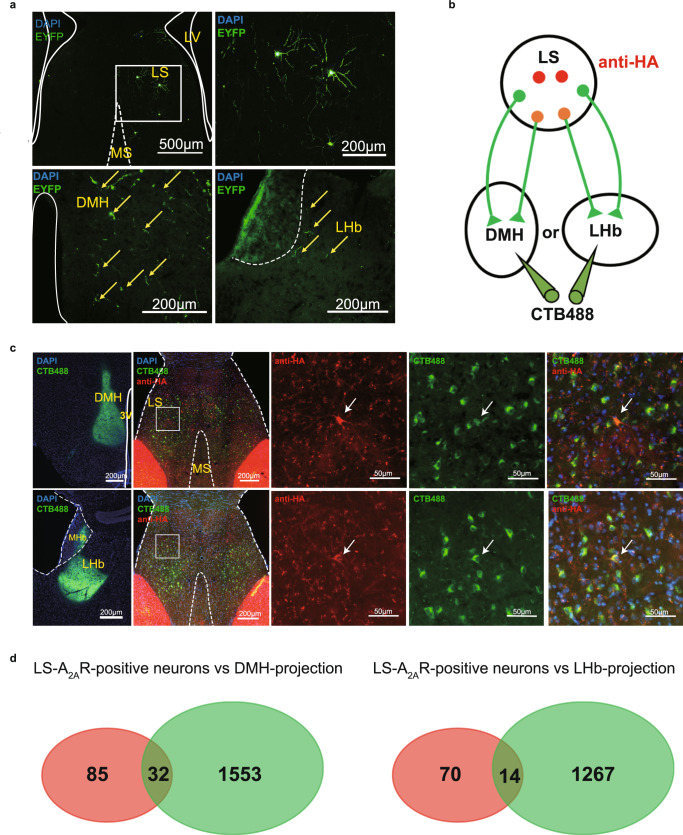
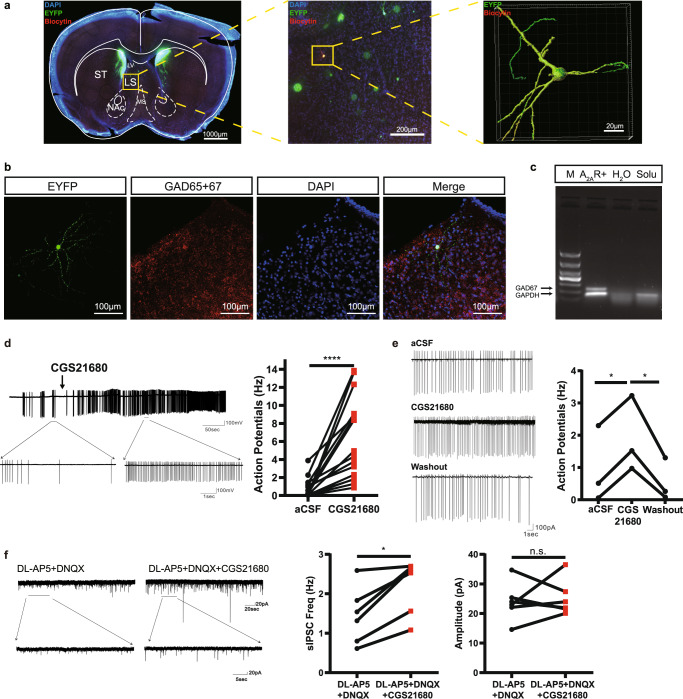
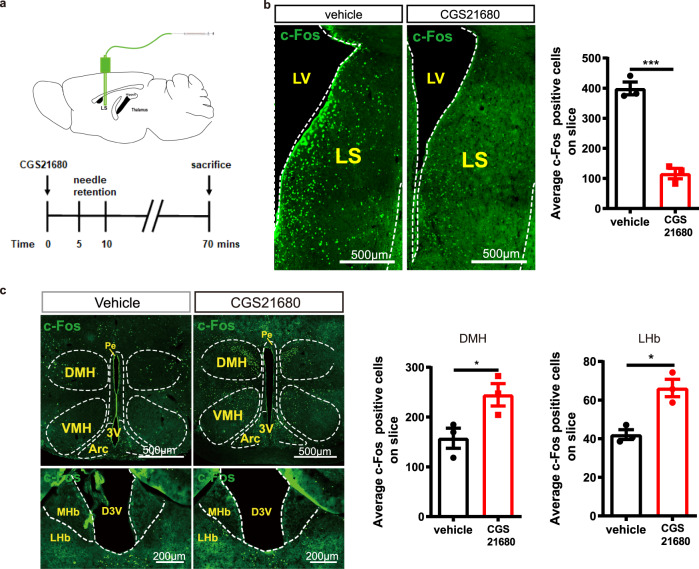
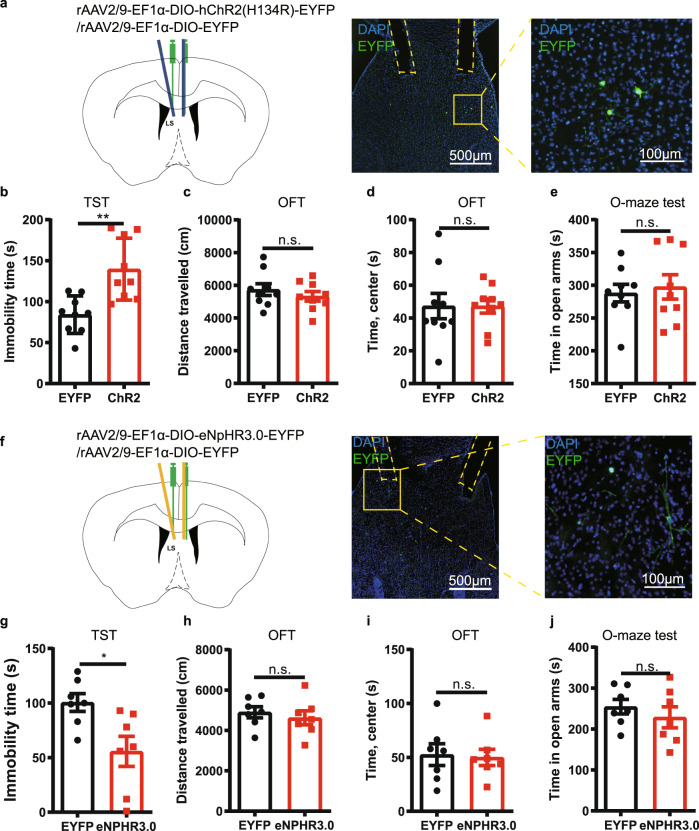
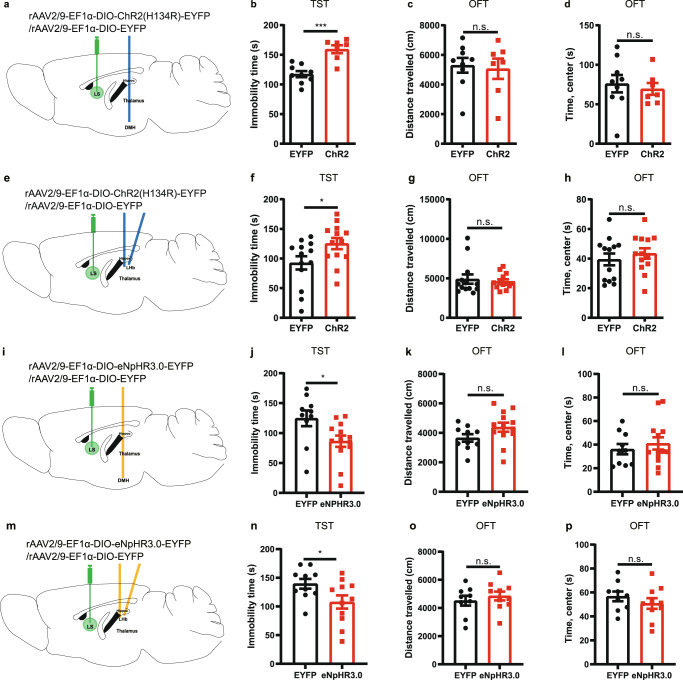
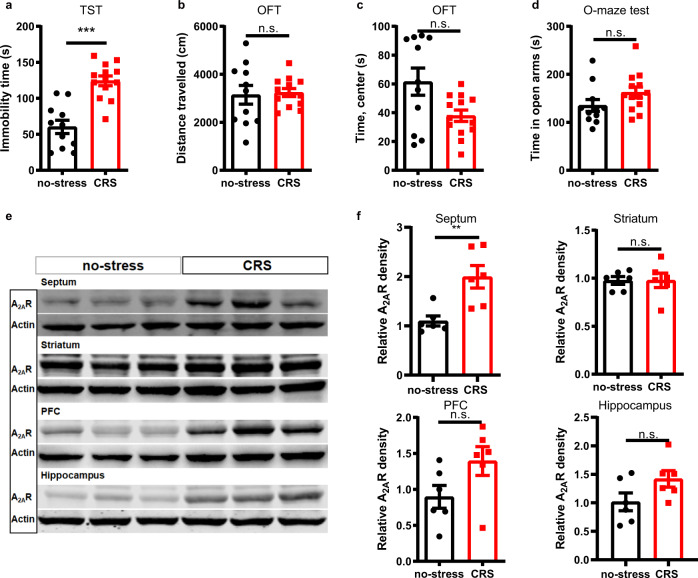
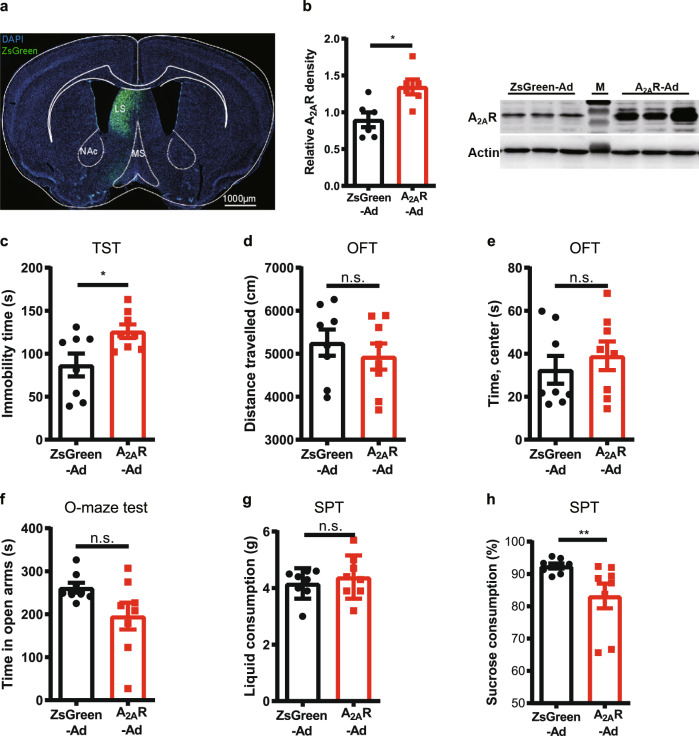
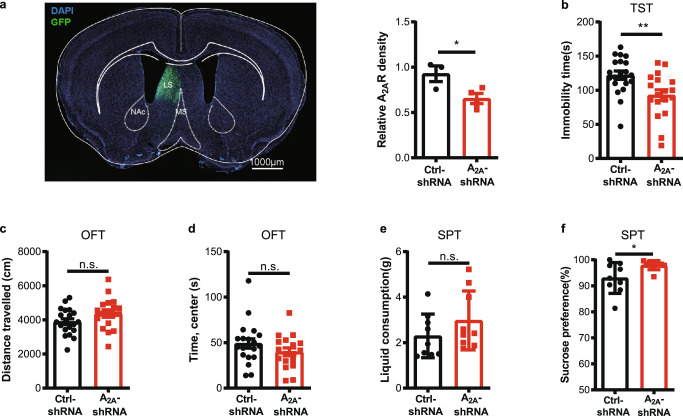
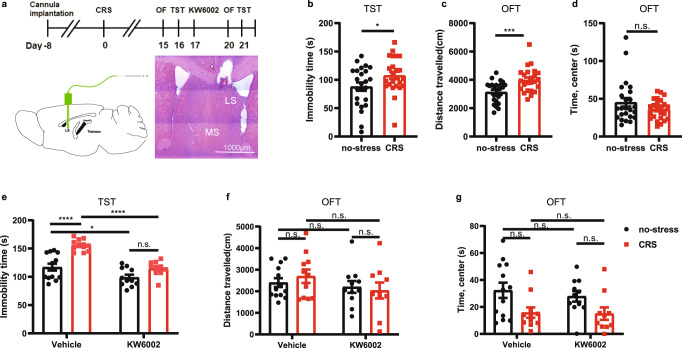
Major depressive disorder ranks as a major burden of disease worldwide, yet the current antidepressant medications are limited by frequent non-responsiveness and significant side effects. The lateral septum (LS) is thought to control of depression, however, the cellular and circuit substrates are largely unknown. Here, we identified a subpopulation of LS GABAergic adenosine A 2A receptors (A 2A R)-positive neurons mediating depressive symptoms via direct projects to the lateral habenula (LHb) and the dorsomedial hypothalamus (DMH). Activation of A 2A R in the LS augmented the spiking frequency of A 2A R-positive neurons leading to a decreased activation of surrounding neurons and the bi-directional manipulation of LS-A 2A R activity demonstrated that LS-A 2A Rs are necessary and sufficient to trigger depressive phenotypes. Thus, the optogenetic modulation (stimulation or inhibition) of LS-A 2A R-positive neuronal activity or LS-A 2A R-positive neurons projection terminals to the LHb or DMH, phenocopied depressive behaviors. Moreover, A 2A R are upregulated in the LS in two male mouse models of repeated stress-induced depression. This identification that aberrantly increased A 2A R signaling in the LS is a critical upstream regulator of repeated stress-induced depressive-like behaviors provides a neurophysiological and circuit-based justification of the antidepressant potential of A 2A R antagonists, prompting their clinical translation.
Overview
The claims and statistics of this paper haven’t been checked yet.
Free: it reads the open-access text and checks the first 5 claims that cite a source we can check. Create a free account to check every claim.
Integrity signals
Registry
Cites
Statistics
Figures
Verification
Claims the paper makes
The claims and statistics of this paper haven’t been checked yet.
Free: it reads the open-access text and checks the first 5 claims that cite a source we can check. Create a free account to check every claim.
Claims other papers make about this one
Each is checked against this paper’s own text: does it say what the citing paper says it does?
The cited source says what the claim attributes to it.
In the citing paper
“In another study, the abnormally increased A 2A R in the lateral septum(LS) is a key factor in recurrent stress for leading to depressive-like behaviors. This function is mainly achieved by the increased activity of A 2A R-positive neurons and the inhibited activity of ambient neurons, associating with the neural circuits of dorsomedial hypothalamus(DMH) and lateral habenular(LHb). 98”
From Major depressive disorder: hypothesis, mechanism, prevention and treatment (2024) · cites this paper as [98]
Self-check
Percentages, sums and reported differences re-computed from the paper’s own numbers.
The self-check needs the paper’s full text.
Citations
Cites
Malhi, G. S., & Mann, J. J. (2018) · The Lancet · doi:10.1016/s0140-6736(18)31948-2 · Cited by 4,099
Fredholm, B. B., Bättig, K., Holmén, J., Nehlig, A., & Zvartau, E. E. (1999) · Pharmacological Reviews · doi:10.1016/s0031-6997(24)01396-6 · Cited by 2,624
Synaptic Dysfunction in Depression: Potential Therapeutic Targets
Duman, R. S., & Aghajanian, G. K. (2012) · Science · doi:10.1126/science.1222939 · Cited by 1,651
Ketamine blocks bursting in the lateral habenula to rapidly relieve depression
Yang, Y., Cui, Y., Sang, K., Dong, Y., Ni, Z., Ma, S., & Hu, H. (2018) · Nature · doi:10.1038/nature25509 · Cited by 1,036
Adenosine receptors as drug targets — what are the challenges?
Chen, J.-F., Eltzschig, H. K., & Fredholm, B. B. (2013) · Nature Reviews Drug Discovery · doi:10.1038/nrd3955 · Cited by 895
Self-citationPharmacology of Adenosine Receptors: The State of the Art
Borea, P. A., Gessi, S., Merighi, S., Vincenzi, F., & Varani, K. (2018) · Physiological Reviews · doi:10.1152/physrev.00049.2017 · Cited by 783
Zingg, B., Chou, X.-L., Zhang, Z.-G., Mesik, L., Liang, F., Tao, H. W., & Zhang, L. I. (2017) · Neuron · doi:10.1016/j.neuron.2016.11.045 · Cited by 752
Sartorius, A., Kiening, K. L., Kirsch, P., von Gall, C. C., Haberkorn, U., Unterberg, A. W., Henn, F. A., & Meyer-Lindenberg, A. (2010) · Biological Psychiatry · doi:10.1016/j.biopsych.2009.08.027 · Cited by 611
Astroglial Kir4.1 in the lateral habenula drives neuronal bursts in depression
Cui, Y., Yang, Y., Ni, Z., Dong, Y., Cai, G., Foncelle, A., Ma, S., Sang, K., Tang, S., Li, Y., et al. (2018) · Nature · doi:10.1038/nature25752 · Cited by 597
Distribution, biochemistry and function of striatal adenosine A2A receptors
Svenningsson, P. (1999) · Progress in Neurobiology · doi:10.1016/s0301-0082(99)00011-8 · Cited by 516
Research works printed but not linked: 2
- Wang M Genetic tagging of the adenosine A2A receptor reveals its heterogeneous expression in brain regions Front Neuroanat. 2022 16 978641 10.3389/fnana.2022.978641 36059431 PMC9434489 · DOI
- Sheehan TP Chambers RA Russell DS Regulation of affect by the lateral septum: implications for neuropsychiatry Brain Res. Rev. 2004 46 71 117 10.1016/j.brainresrev.2004.04.009 15297155 · DOI · Paper page
Cited by
Major depressive disorder: hypothesis, mechanism, prevention and treatment
Cui, L., Li, S., Wang, S., Wu, X., Liu, Y., Yu, W., Wang, Y., Tang, Y., Xia, M., & Li, B. (2024) · Signal Transduction and Targeted Therapy · doi:10.1038/s41392-024-01738-y · Cited by 1,244
“98 Caffeine is an adenosine receptor antagonist, and epidemiological studies have shown that the intake of caffeine is closely related to the occurrence of suicide 99 and depression.”
BackgroundPharmacology of Adenosine Receptors: Recent Advancements
Vincenzi, F., Pasquini, S., Contri, C., Cappello, M., Nigro, M., Travagli, A., Merighi, S., Gessi, S., Borea, P. A., & Varani, K. (2023) · Biomolecules · doi:10.3390/biom13091387 · Cited by 73
“Additionally, A2AAR expression was found to be upregulated in the lateral septum in two male mouse models of repeated stress-induced depression, suggesting that A2AAR antagonists could have antidepressant potential [82].”
BackgroundBehavioral Animal Models and Neural-Circuit Framework of Depressive Disorder
Tian, X., Russo, S. J., & Li, L. (2024) · Neuroscience Bulletin · doi:10.1007/s12264-024-01270-7 · Cited by 56
Purinergic receptors in cognitive disturbances
Illés, P., Ulrich, H., Chen, J., & Tang, Y. (2023) · Neurobiology of Disease · doi:10.1016/j.nbd.2023.106229 · Cited by 39
“Recently, GABAergic A2AR-containing neurons localized in the lateral septum (LS) region of the brain have been found to induce depressive-like behavior in mice via projections sent to the dorsomedial hypothalamus (DMH) and lateral habenula (LHb) (Wang et al., 2023).”
BackgroundSelf-citationAdenosine signalling drives antidepressant actions of ketamine and ECT
Yue, C., Wang, N., Zhai, H., Yuan, Z., Cui, Y., Jing, Q., Zhou, Y., Fan, X., Wang, H., Wu, Z., et al. (2025) · Nature · doi:10.1038/s41586-025-09755-9 · Cited by 55
Guo, S.-S., Gong, Y., Zhang, T., Su, X.-Y., Wu, Y., Yan, Y.-X., Cao, Y., Song, X.-L., Xie, J.-C., Wu, D., et al. (2024) · Science Advances · doi:10.1126/sciadv.adn6272 · Cited by 39
Self-citationDorsolateral septum GLP-1R neurons regulate feeding via lateral hypothalamic projections
Lu, Y., Wang, L., Luo, F., Savani, R. H., Rossi, M. A., & Pang, Z. P. (2024) · Molecular Metabolism · doi:10.1016/j.molmet.2024.101960 · Cited by 28
“In support of this, a previous study showed that activation of LS adenosine A 2A receptor-expressing GABAergic neurons suppressed the activity of surrounding LS cells, as concluded by decreased c-Fos-immunoreactivity [47].”
Feedforward inhibition of stress by brainstem neuropeptide Y neurons
Zhang, Y., Shen, J., Xie, F., Liu, Z., Yin, F., Cheng, M., Wang, L., Cai, M., Herzog, H., Wu, P., et al. (2024) · Nature Communications · doi:10.1038/s41467-024-51956-9 · Cited by 27
The neurobiological mechanisms and therapeutic prospect of extracellular ATP in depression
Wang, K., Huang, S., Fu, D., Yang, X., Ma, L., Zhang, T., Zhao, W., Deng, D., Ding, Y., Zhang, Y., et al. (2024) · CNS Neuroscience & Therapeutics · doi:10.1111/cns.14536 · Cited by 22
The PrLGlu→avBNSTGABA circuit rapidly modulates depression-like behaviors in male mice
Chen, J.-Y., Wu, K., Guo, M., Song, W., Huang, S.-T., & Zhang, Y.-M. (2023) · iScience · doi:10.1016/j.isci.2023.107878 · Cited by 19
Self-citationIllés, P., Rubini, P., Ulrich, H., Yin, H., & Tang, Y. C. (2025) · MedComm · doi:10.1002/mco2.70177 · Cited by 21
“The possibilities summarized under the paragraphs (2–4) are hypothetical but represent subjects for future research. containing neurons localized in the lateral septum region of the brain, via projections sent to the dorsomedial hypothalamus and the lateral habenula [215].”
Astrocytic inhibition of lateral septal neurons promotes diverse stress responses
Seo, K., Won, S., Lee, H., Sin, Y., Lee, S.-H., Park, H., Kim, Y. G., Yang, S. Y., Kim, D., Suk, K., et al. (2024) · Nature Communications · doi:10.1038/s41467-024-54376-x · Cited by 18
“In addition, the activation of speci fi c neuronal subsets, such as adenosine A 2A receptor + , oxytocin receptor + , or vasopressin receptor 1A + neurons, leads to an overall reduction in neural activity or an increase in tonic inhibitory transmission within the LS 50,51 .”
InfluentialImpact of Coffee Intake on Measures of Wellbeing in Mice
Machado, N. J., Ardais, A. P., Nunes, A., Szabó, E. C., Silveirinha, V., Silva, H. B. L., Kaster, M. P., & Cunha, R. A. (2024) · Nutrients · doi:10.3390/nu16172920 · Cited by 17
“Accordingly, previous studies showed that the regular intake of caffeine prevents emotional dysfunction associated with repeated stress in mice [33,66–69] involving the antagonism of adenosine A 2A receptors [33,70] and the control of neuronal activity in stress-related areas [70,71].”
BackgroundSelf-citationÜnsal, S., & Şanlıer, N. (2025) · Current Nutrition Reports · doi:10.1007/s13668-025-00616-5 · Cited by 29
Prasad, K., de Vries, E. F. J., van der Meiden, E., Moraga‐Amaro, R., Vazquez-Matias, D. A., Barazzuol, L., Dierckx, R., & van Waarde, A. (2024) · Neuropharmacology · doi:10.1016/j.neuropharm.2024.109862 · Cited by 13
Cheung, H., Yu, T.-Z., Yi, X., Wu, Y., Wang, Q., Gu, X., Xu, M., Cai, M., Wen, W., Li, X.-N., et al. (2024) · Communications Biology · doi:10.1038/s42003-024-06417-w · Cited by 14
Self-citationLaunay, A., Carvalho, K., Génin, A., Gauvrit, T., Nobili, P., Gómez‐Murcia, V., Augustin, E., Burgard, A., Gambi, J., Fourmy, D., et al. (2025) · Molecular Psychiatry · doi:10.1038/s41380-025-03115-9 · Cited by 16
“…expression of ARs, especially the A 2A R subtype, is upregulated in several neurological conditions [15], and particularly in the brain of patients with cognitive pathologies such as Alzheimer ’ s disease, other tauopathies, depression or seizures as well as related experimental models [16 – 23].”
The Neuroanatomy of the Habenular Complex and Its Role in the Regulation of Affective Behaviors
Piper, J. A., Musumeci, G., & Castorina, A. (2024) · Journal of Functional Morphology and Kinesiology · doi:10.3390/jfmk9010014 · Cited by 15
“…work, where it was found that potentiating GABAergic adenosine A 2A receptors (A 2A R)-positive neurons in the lateral septum or its connections to the dorsomedial hypothalamus (and not the LH) and the LHb is sufficient to phenocopy a depressive-like status in chronically stressed rodents [66].”
BackgroundVolonté, C., Hu, G., Shaw, C. A., Claudio, V. J., dos Santos, J. A., Vaz, S. H., Sebastião, A. M., Balcar, V. J., Mozley, P. D., Verde, F., et al. (2026) · Exploration of Neuroprotective Therapy · doi:10.37349/ent.2026.1004136 · Cited by 14
Meng, L., Zheng, X., Xie, K., Li, Y., Liu, D., Xu, Y., Zhang, J., Wu, F., & Guo, G. (2024) · Neurobiology of Stress · doi:10.1016/j.ynstr.2024.100654 · Cited by 11
Zhao, J., Sun, Y., Feng, Y., & Rong, J. (2024) · Advanced Science · doi:10.1002/advs.202404188 · Cited by 11
Neural circuits mediating chronic stress: Implications for major depressive disorder
Guo, H., Ali, T., & Li, S. (2025) · Progress in Neuro-Psychopharmacology and Biological Psychiatry · doi:10.1016/j.pnpbp.2025.111280 · Cited by 12
Ren, X.-Y., Rubini, P., Engel, T., Tang, Y., & Illés, P. (2025) · Pharmacological Research · doi:10.1016/j.phrs.2025.107989 · Cited by 11
Lateral septum as a possible regulatory center of maternal behaviors
Puska, G., Szendi, V., & Dobolyi, Á. (2024) · Neuroscience & Biobehavioral Reviews · doi:10.1016/j.neubiorev.2024.105683 · Cited by 11
5-HT1A receptors within the intermediate lateral septum modulate stress vulnerability in male mice
Zhou, J., Wu, J.-W., Song, B.-L., Jiang, Y., Niu, Q., Li, L., & Liu, Y.-J. (2024) · Progress in Neuro-Psychopharmacology and Biological Psychiatry · doi:10.1016/j.pnpbp.2024.110966 · Cited by 10
Self-citationKubota, H., Zhou, X., Zhang, X., Watanabe, H., & Nagai, T. (2024) · International Journal of Molecular Sciences · doi:10.3390/ijms25168849 · Cited by 9
“Considering that the HIP-LS circuit is known to modulate social and depressive behaviors [35–37], we hypothesize that activation of the LS may be responsible for mechanisms other than decision-making, such as the antidepressant effects of PPX [38,39], and this should be further examined in future…”
BackgroundSelf-citationInput-output specific orchestration of aversive valence in lateral habenula during stress dynamics
Huang, T., Guo, X., Huang, X., Yi, C., Cui, Y., & Dong, Y. (2024) · Journal of Zhejiang University SCIENCE B · doi:10.1631/jzus.b2300933 · Cited by 7
“…Zhang GW et al., 2018; Cerniauskas et al., 2019; Lazaridis et al., 2019; Li et al., 2019b; Szőnyi et al ., 2019; Trusel et al., 2019; Zhou et al., 2019; Mathis et al., 2021; Lin et al., 2022; Zheng et al., 2022; Calvigioni et al., 2023; Ip et al., 2023; Wang MR et al., 2023; Wang XY et al., 2023).”
Adenosine A2A signaling in mood disorders: How far have we come?
Bevilacqua, L. M., Neto, F. D. S., & Kaster, M. P. (2024) · IBRO Neuroscience Reports · doi:10.1016/j.ibneur.2024.08.006 · Cited by 8
Huang, D., Lv, J., Gong, W., Tian, J., Gao, X., Qin, X., Du, G., & Zhou, Y. (2025) · ACS Chemical Neuroscience · doi:10.1021/acschemneuro.4c00804 · Cited by 6
Shi, Z., Luan, J., Zhang, Y., Wang, G., Mei, C., Chen, L., Zhou, W., Xiong, C., Huang, T., Zhan, J., et al. (2025) · Nutrients · doi:10.3390/nu17193037 · Cited by 14
“…adenosine neuromodulatory system are initially an adaptive response to homeostasis, but under chronic stress conditions, persistent changes in the adenosine neuromodulatory system can lead to synaptic dysfunction, which is considered to be the root cause of depressive-like behavior [109,119,120].”
Genetically encoded sensors for in vivo detection of neurochemicals relevant to depression
Zhao, Y., Wan, J., & Li, Y. (2024) · Journal of Neurochemistry · doi:10.1111/jnc.16046 · Cited by 7
Chen, S.-H., Lan, B., Zhang, Y., Li, G.-H., Qian, Y.-L., Hu, M., Tian, Y., Zang, W.-D., Cao, J., Wang, G., et al. (2025) · World Journal of Psychiatry · doi:10.5498/wjp.v15.i2.101807 · Cited by 7
Chang, L., Niu, F., & Li, B. (2024) · Progress in Neuro-Psychopharmacology and Biological Psychiatry · doi:10.1016/j.pnpbp.2024.110953 · Cited by 7
Zhai, J., Zhang, X., Wang, X., Xu, Z., Yao, X., Zhang, Y., Fan, L., Wu, L., & Wang, J. (2025) · Communications Biology · doi:10.1038/s42003-025-08417-w · Cited by 4
Cui, J., Qian, J., Wang, J., & Shi, L. (2025) · Neurobiology of Disease · doi:10.1016/j.nbd.2025.107049 · Cited by 6
Tian, Z., Li, H., Jiang, Y., Wei, H., Lu, Y., Yao, S., Pang, M., Shuai, X., Liu, B. Q., & Rong, L. (2026) · Cell Death and Disease · doi:10.1038/s41419-026-08596-2 · Cited by 5
Liu, Y.-J., Wang, Y., Wu, J.-W., Zhou, J., Song, B.-L., Jiang, Y., & Li, L. (2024) · Frontiers in Neuroscience · doi:10.3389/fnins.2024.1337207 · Cited by 7
Self-citationSun, Q., Jiang, N., Yao, R., Song, Y., Li, Z., Wang, W., Chen, J., & Guo, W. M. (2024) · British Journal of Pharmacology · doi:10.1111/bph.16468 · Cited by 4
“Considering the roles of adenosine and adenosine receptors in physiological and pathological processes such as depression (Wang et al., 2023) and cancer (Vijayan et al., 2017), the interaction between A 2A R and YAP signalling is an interesting question for further investigation.”
Self-citationLi, J., Wang, S., He, Y., & Song, Y. (2024) · Biochemical and Biophysical Research Communications · doi:10.1016/j.bbrc.2024.150679 · Cited by 3
Self-citationGuo, W., Chen, J., & Cunha, R. A. (2026) · 中国科学通报:英文版 · doi:10.1016/j.scib.2026.02.025 · Cited by 3
Self-citationAdenosine surges: A step forward in understanding antidepressant actions of ketamine
Dautan, D., Camargo, A., & Svenningsson, P. (2026) · Molecular Psychiatry · doi:10.1038/s41380-026-03594-4 · Cited by 3
“However, the data of Yue and colleagues are not consistent with the reports that pharmacological or genetic antagonism of A 2A Rs globally [12] or locally in the lateral septum [13] cause antidepressant actions.”
Zhao, Y., & Illés, P. (2023) · Purinergic Signalling · doi:10.1007/s11302-023-09946-x · Cited by 4
Dopamine modulation of aggression
Dai, B., & Lin, D. (2025) · Psychopharmacology · doi:10.1007/s00213-025-06893-w · Cited by 4
“Local infusion of CGS21680, an A2A receptor agonist, in the LS enhances this inhibition and significantly reduces c-Fos expression (Wang et al. 2023).”
Wang, W., Zhao, L., He, Z., Zhao, Y., Jiang, G., Gong, C., Zhang, Y., Yu, J., Liang, T., & Guo, L. (2025) · International Journal of Molecular Sciences · doi:10.3390/ijms26072872 · Cited by 3
“Up-regulation of ADORA2A (A2AR), a receptor for adenosine, has been linked to the onset of depressive symptoms, and ADORA2A antagonists are considered potential antidepressants [106].”
Li, W.-G., Li, L., Song, R., Wang, X., Jia, S.-Y., Ma, X.-Y., Zhang, J., Yin, G., Li, W., & Zhang, L. (2025) · Neuroscience Bulletin · doi:10.1007/s12264-025-01404-5 · Cited by 2
“…the involvement of astrocytes in the cognitive impairment of mice following HSR. Previous studies have shown that the lateral septum (LS) is involved in sleep, memory, mood, cognition, and other processes [15, 16], affecting the activity of γ oscillations (25 Hz−100 Hz) in the brain [17].”
InfluentialXu, M., Li, N., Lv, Y., Yang, W., Yu, Z., Zhang, Y., Guo, Y., & Chen, X. (2025) · Advanced Science · doi:10.1002/advs.202506032 · Cited by 4
Extracellular adenosine in acute stress-induced depressive-like behavior: Where does it come from?
Chen, C.-Y., Yang, X.-R., Wang, M., Zhang, Y., Hou, S., Khan, M. T., Wei, D., Wu, J., & Zhao, Y.-F. (2025) · Neuropharmacology · doi:10.1016/j.neuropharm.2025.110731 · Cited by 3
Self-citationAdenosine detection technologies: recent advances and applications in the central nervous system
Liao, Y., Jing, J., Jin, W., Tian, X., Peng, T., Zhang, L., & Yuan, Q. (2026) · Sensors & Diagnostics · doi:10.1039/d5sd00170f · Cited by 2
He, X.-M., Zhang, Y., Chen, C.-Y., Tang, Y.-L. H., & Li, X. (2026) · Purinergic Signalling · doi:10.1007/s11302-026-10150-w · Cited by 3
Huang, L., Sun, Y., Luo, C., Wang, W., Shi, S., Sun, G., Ju, P., & Chen, J. (2024) · Frontiers in Pharmacology · doi:10.3389/fphar.2024.1419098 · Cited by 3
Self-citationKhan, I., Ullah, S., Ullah, S., Ali, N., Huma, Z., Yaşar, S., Khan, S., Haq, R. U., Khan, A. A., & Khan, I. (2024) · Neuroscience Letters · doi:10.1016/j.neulet.2024.138059 · Cited by 2
Dietary texture-driven masticatory activity and its impact on stress tolerance
Kamate, M., Teranishi, H., Umeda, R., Shikano, K., Kitaoka, S., Hanada, T., Hikida, T., Kawano, K., & Hanada, R. (2025) · Journal of Oral Biosciences · doi:10.1016/j.job.2025.100628 · Cited by 3
Connexin 43 hemichannel-mediated ATP release in depression: recent advances and mechanistic insights
Wang, Y.-C., Chen, N., & Wang, Z. (2025) · Life Sciences · doi:10.1016/j.lfs.2025.124047 · Cited by 1
Wang, S., Liu, H., Tang, Q., Liao, N., Liu, T., Yang, Z., Wei, Y., & Fu, R. (2026) · Frontiers in Endocrinology · doi:10.3389/fendo.2025.1674213 · Cited by 1
“Therefore, A2AR antagonists may provide a scheme for antidepressants (153).”
Parthenolide inhibits methamphetamine-induced depressive-like behavior by targeting ADORA2A
Hui, R., Feng, T., Hou, C., Xu, J., Zhang, R., Ji, M., Zhou, M., Xie, B., Ma, S., Cong, B., et al. (2026) · Phytomedicine · doi:10.1016/j.phymed.2026.158030 · Cited by 1
Emerging Roles of Adenosine Metabolism in Astrocytes During Brain Injury
Zhu, S., Zhong, S., Lin, X. P., Zhao, C., & Li, Y. (2026) · CNS Neuroscience & Therapeutics · doi:10.1002/cns.70889 · Cited by 1
Excitatory synapses onto axonic spines jump-start action potentials and route information flow
Yang, H., Wang, K., Chen, Y., Wei, K., Li, L., Tai, Y., Wang, S., Kong, Y., Wang, X., Zhang, W., et al. (2026) · Nature Neuroscience · doi:10.1038/s41593-026-02282-4 · Cited by 1
Tomé, Â. R., Real, J. I., Rial, D., Silva, A. C., Gonçalves, F. Q., Lemos, C., Simões, A. P., Silva, H. B. L., Serchov, T., Biber, K., et al. (2026) · Neuropharmacology · doi:10.1016/j.neuropharm.2026.111056 · Cited by 1
Self-citationAdenosine signaling: a potential therapeutic target for psychogenic erectile dysfunction
Xue, K., Yan, M., Zhou, Z., & Cui, J. (2024) · American Journal of Translational Research · doi:10.62347/yzdz1428 · Cited by 1
Instituto de pesquisa café e saúde: Prevenção de doenças e melhora da qualidade de vida
Cunha, R. A., Rohden, F., & Souza, D. O. (2024) · Research Society and Development · doi:10.33448/rsd-v13i5.45666
Self-citationLiu, J., Zhang, W., Bai, Y., Fu, R., Lin, M., Li, J., Nie, L., Dang, X., Wang, Q., Zhu, Y., et al. (2025) · Neuroendocrinology · doi:10.1159/000544839 · Cited by 1
“The GABAergic neurons in the LSD were involved in regulation of anxiety and depression [49, 50], to elucidate the effects of 14wk and 20wk CSI on GABAergic neurons in the LSD, IF was conducted, and results revealed that the number of GABAergic neurons was signi fi cantly reduced by 14wk CSI in the…”
Prolactin-Releasing Peptide System as a Potential Mechanism of Stress Coping: Studies in Male Rats
Szabó, E., Kormos, V., Tóth, Z., Zelena, D., & Kovács, A. (2025) · International Journal of Molecular Sciences · doi:10.3390/ijms26094155 · Cited by 1
“In mice, a GABA-ergic (inhibitory) signal from the lateral septum increased immobility in the tail suspension test through a parallel influence on HAB and DMN [63].”
Zorbaz, T., Bennett, E. R., Vaknine, S., Madrer, N., Zeira, A., Greenberg, D., Paldor, I., & Soreq, H. (2025) · SSRN Electronic Journal · doi:10.2139/ssrn.5248537
Olmos-Vázquez, O. J., Rovirosa-Hernández, M. D. J., Germán-Ponciano, L. J., Puga-Olguín, A., Guillén-Ruiz, G., Cueto‐Escobedo, J., Herrera-Huerta, E. V., & Rodríguez‐Landa, J. F. (2025) · Behavioural Brain Research · doi:10.1016/j.bbr.2025.115726
Chen, L., Fu, B., Liu, J., Wang, C., Huang, W., Yuan, D., Qing, C., Zhang, Y., & Hong, H. (2025) · CNS Neuroscience & Therapeutics · doi:10.1111/cns.70647
Li, J., Xiao, Y., Lyu, S., Wang, K., Zhang, H., Zheng, Y., Zhang, X., Yang, H., & Shu, Y. (2026) · Molecular Psychiatry · doi:10.1038/s41380-026-03453-2
“Previous studies revealed important roles of LSNs expressing Sst , Crfr1 or Crhr2 , Drd3 , Glp1r , Nts , Adora2a , Oxtr , Avpr1a , Ntrk2 in regulating emotional, feeding, and social behaviors [7, 11, 13 – 18 , 29 ].”
InfluentialLiu, F., Xue, X., Li, H., He, Z., Wang, R., Guo, Y., & Wang, Y. (2026) · Brain Behavior and Immunity · doi:10.1016/j.bbi.2026.106768 · Cited by 2
Purinergic signaling: a novel therapeutic target in depression
Cui, Q., Li, Y., Gao, S., Zhou, H., & Peng, Y. (2026) · International Journal of Neuroscience · doi:10.1080/00207454.2026.2666245
“…occurs through the modulation of lS activity and signaling via the lS-A2AR+ → dorsomedial hypothalamus and lS-A2AR+ → lateral habenula pathways [62]. these findings underscore the dynamic role of adenosine receptors in influencing depression through the regulation of synaptic plasticity. the…”
Tomé, Â. R., Machado, N. J., Ardais, A. P., Nunes, A., da Silva, H. B., Kaster, M. P., Agostinho, P. M., & Cunha, R. A. (2026) · Neurobiology of Stress · doi:10.1016/j.ynstr.2026.100838
Self-citationHuang, T., Wan, L., Du, R., Zeng, L., Li, W., Yuan, F., & Lü, H. (2026) · Journal of Neuroinflammation · doi:10.1186/s12974-026-03977-y
Li, X., Chen, C., Li, H., He, Y., Tang, K., Lai, G., Yang, Z., Chen, W., & Yang, H. (2026) · Frontiers in Genetics · doi:10.3389/fgene.2026.1855173
“The gene has extensive links to mood regulation (Wang et al., 2023; Yue et al., 2026; Bevilacqua et al., 2025; Pasquini et al., 2022) and peripheral metabolism (Verma et al., 2025; Kim et al., 2022), while its overactivation can lead to HPA axis dysfunction (Batalha et al., 2016).”
Self-citation周喜丹, Li, S., Guo, C., Wu, S., Wu, X., Wu, M., Wu, C., Li, K., Cui, Y., & Zhou, T. (2026) · Molecular Psychiatry · doi:10.1038/s41380-026-03840-9
Santos, N. D. S., Fabro, I. F., dos Santos, B. C., Pereira, D. M. R., & Aguiar, A. S. (2026) · ACS Pharmacology & Translational Science · doi:10.1021/acsptsci.6c00417
Metadata
- Authors
- Wang, M., Li, P., Li, Z., da Silva, B. S., Zheng, W., Xiang, Z., He, Y., Xu, T., Cordeiro, C., Deng, L., Dai, Y., Ye, M., Lin, Z., Zhou, J., Zhou, X., Ye, F., Cunha, R. A., Chen, J., & Guo, W.
- Affiliations
- Wenzhou Medical University (CN)
- Second Military Medical University (CN)
- National Legal Medicine Institute (PT)
- Centro de Neurociências e Biologia Celular (PT)
- Corresponding author
- Guo, Wei
- ORCID
- Venue
- Nature Communications
- Published
- 2023-04-05
- Volume
- 14
- Issue
- 1
- Pages
- 1880-1880
- ISSN
- 2041-1723 (ISSN-L)
- PMC
- PMC10076302
- OpenAlex
- W4362640093
- Semantic Scholar
- 6905918490d2a8db8c7b0f58b2c2c6eff06461d4
- Cited by
- 73
- References
- 73
- Citations by year
- 2026: 18 · 2025: 24 · 2024: 27 · 2023: 4
- FWCI
- 8.83
- Type
- journal article
- Language
- en
- Open access
- gold
- doi.org
- Licence
- cc-by
- creativecommons.org/licenses/by/4.0 (tdm)
- creativecommons.org/licenses/by/4.0 (vor)
- Locations
- Nature Communications (publishedVersion, cc-by)
- Research Square (acceptedVersion, cc-by)
- PubMed Central (publishedVersion, cc-by-nc-sa)
- PubMed (publishedVersion)
- Portuguese National Funding Agency for Science, Research and Technology (RCAAP Project by FCT) (submittedVersion, cc-by)
- RePEc: Research Papers in Economics (submittedVersion)
- DOAJ (DOAJ: Directory of Open Access Journals) (submittedVersion, cc-by-sa)
- Funders
- National Natural Science Foundation of China (No. 31970948, No. 81871035, No.82071378, No.80222014)
- Topics
- Life Sciences › Neuroscience › Cellular and Molecular Neuroscience › Neurotransmitter Receptor Influence on Behavior
- Health Sciences › Medicine › Pharmacology (medical) › Treatment of Major Depression
- Life Sciences › Neuroscience › Cellular and Molecular Neuroscience › Neuroscience and Neuropharmacology Research
- Keywords
- lateral septum, adenosine A2A receptor, major depressive disorder, stress-induced depression, lateral habenula, dorsomedial hypothalamus, GABAergic neurons, neural circuits, optogenetic manipulation, antidepressant targets, adenosine A2A receptor antagonists
- MeSH terms
- Adenosine, Animals, Major Depressive Disorder, Hypothalamus, Male, Neurons, Habenula, Receptor, Adenosine A2A, Mice
About these checks
Registry, retraction, Cites and statistics results are computed, not judged, with one exception: a printed reference that no index lists is read once by a model before it counts as a citation error. Claims are extracted by a model and kept only when their quote appears verbatim in the text; each cited source is then checked, with a model’s help, for whether it says what the claim relies on. Those verdicts can be wrong — read the claim’s quote and the cited source before relying on one.
Statistics and arithmetic are recomputed, not judged.
Confidence bands are shown only for fields calibrated on our annotated test set. None is calibrated yet, so no band is shown.
What counts as a claim ›How we measure confidence ›How we check this ›
Are you an author, or do you see a problem with this page? Request a review
Data sources
Bibliographic data: Semantic Scholar, OpenAlex, Crossref.
Contains information from the Semantic Scholar Academic Graph Datasets, made available under the ODC Attribution License (ODC-BY 1.0).
Semantic Scholar’s data is described in: Kinney, R., et al. (2023). The Semantic Scholar Open Data Platform. arXiv:2301.10140.
