

Lateral septum adenosine A2A receptors control stress-induced depressive-like behaviors via signaling to the hypothalamus and habenula
Open accessThe DOI matches its Crossref record; 72 of the 73 references it cites were found in a registry or an index.
Abstract
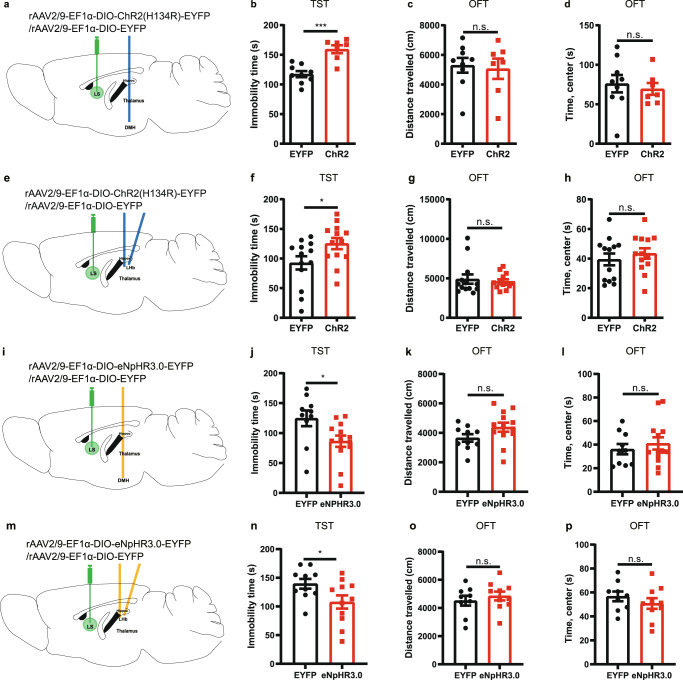
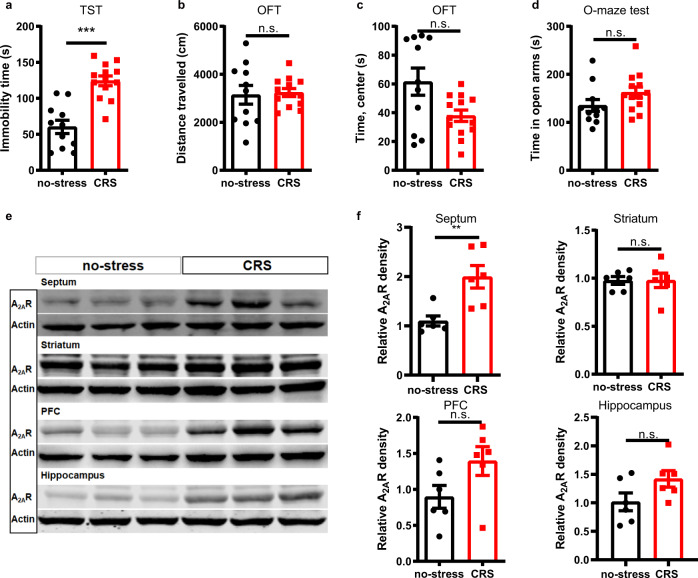
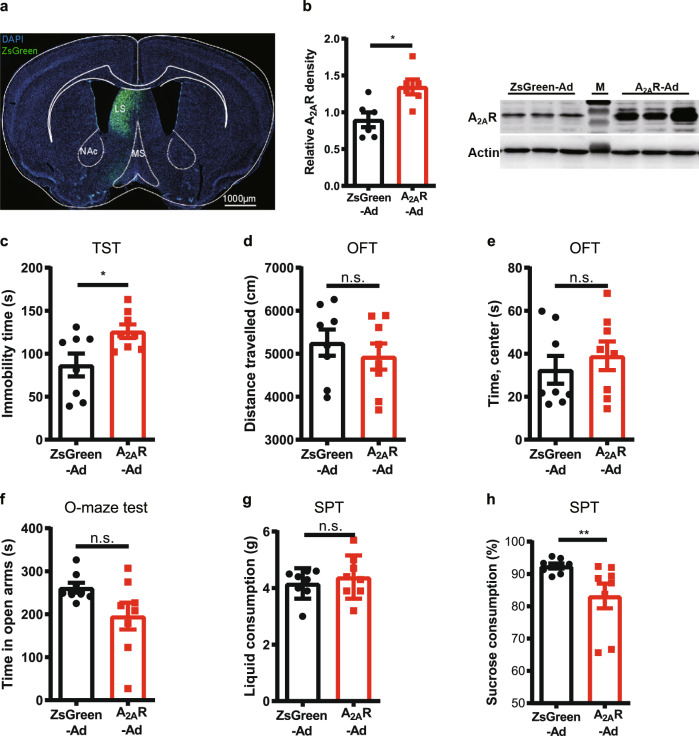
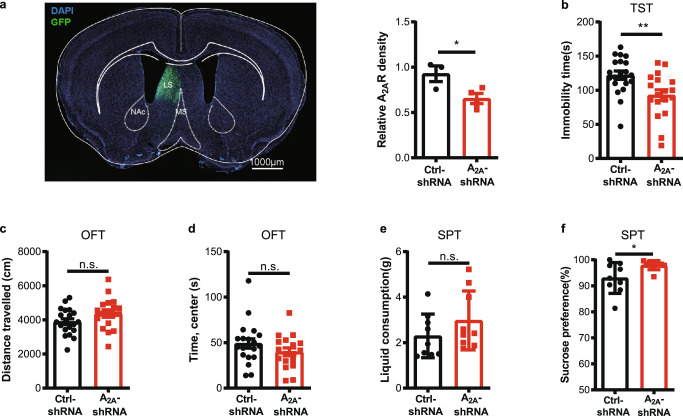
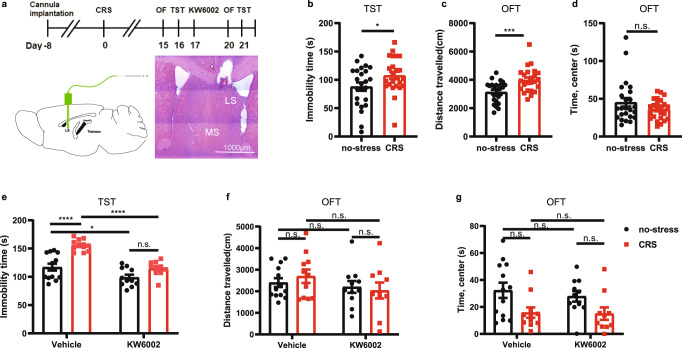
Major depressive disorder ranks as a major burden of disease worldwide, yet the current antidepressant medications are limited by frequent non-responsiveness and significant side effects. The lateral septum (LS) is thought to control of depression, however, the cellular and circuit substrates are largely unknown. Here, we identified a subpopulation of LS GABAergic adenosine A 2A receptors (A 2A R)-positive neurons mediating depressive symptoms via direct projects to the lateral habenula (LHb) and the dorsomedial hypothalamus (DMH). Activation of A 2A R in the LS augmented the spiking frequency of A 2A R-positive neurons leading to a decreased activation of surrounding neurons and the bi-directional manipulation of LS-A 2A R activity demonstrated that LS-A 2A Rs are necessary and sufficient to trigger depressive phenotypes. Thus, the optogenetic modulation (stimulation or inhibition) of LS-A 2A R-positive neuronal activity or LS-A 2A R-positive neurons projection terminals to the LHb or DMH, phenocopied depressive behaviors. Moreover, A 2A R are upregulated in the LS in two male mouse models of repeated stress-induced depression. This identification that aberrantly increased A 2A R signaling in the LS is a critical upstream regulator of repeated stress-induced depressive-like behaviors provides a neurophysiological and circuit-based justification of the antidepressant potential of A 2A R antagonists, prompting their clinical translation.
Overview
The claims and statistics of this paper haven’t been checked yet.
Free: it reads the open-access text and checks the first 5 claims that cite a source we can check. Create a free account to check every claim.
Integrity signals
Registry
Cites
Statistics
Figures
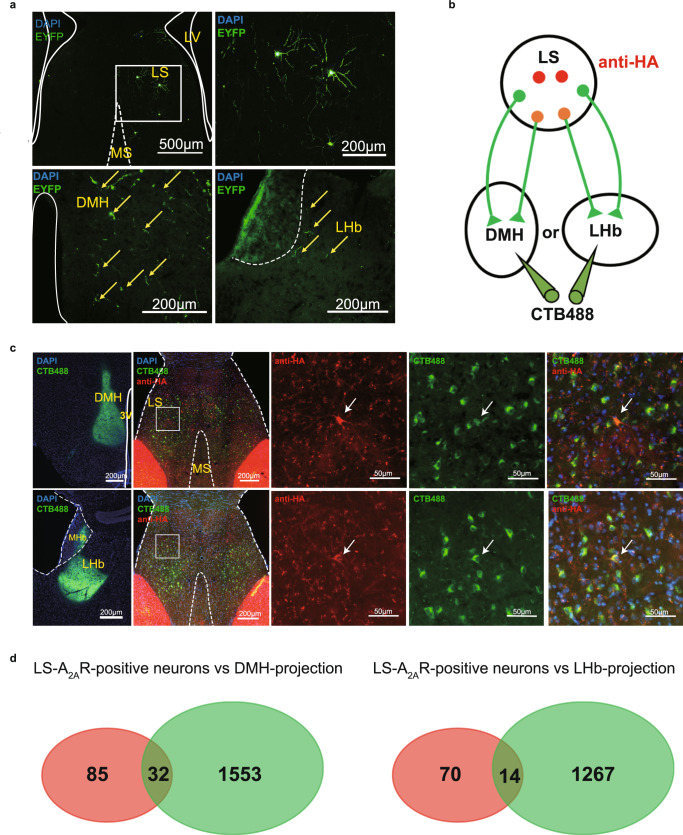
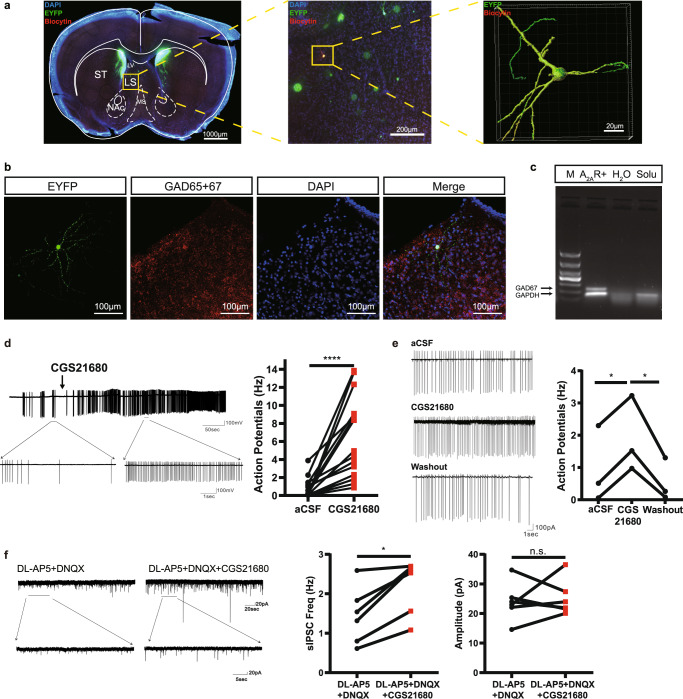
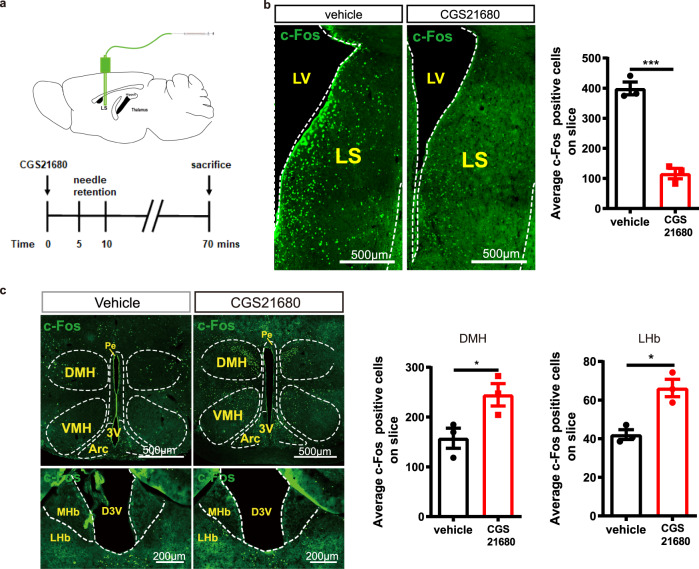
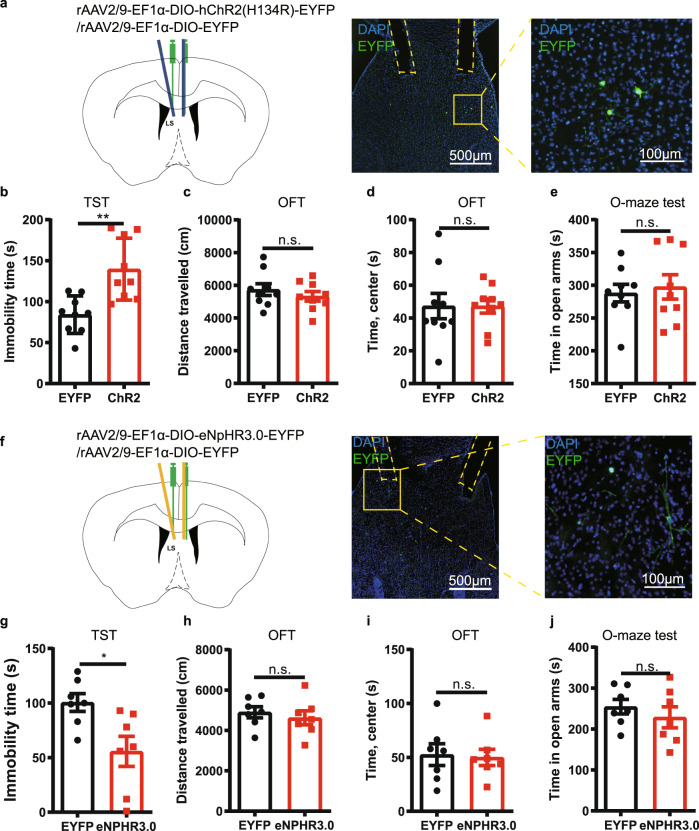
Verification
Claims the paper makes
The claims and statistics of this paper haven’t been checked yet.
Free: it reads the open-access text and checks the first 5 claims that cite a source we can check. Create a free account to check every claim.
Claims other papers make about this one
Each is checked against this paper’s own text: does it say what the citing paper says it does?
The cited source says what the claim attributes to it.
In the citing paper
“In another study, the abnormally increased A 2A R in the lateral septum(LS) is a key factor in recurrent stress for leading to depressive-like behaviors. This function is mainly achieved by the increased activity of A 2A R-positive neurons and the inhibited activity of ambient neurons, associating with the neural circuits of dorsomedial hypothalamus(DMH) and lateral habenular(LHb). 98”
From Major depressive disorder: hypothesis, mechanism, prevention and treatment (2024) · cites this paper as [98]
Self-check
Percentages, sums and reported differences re-computed from the paper’s own numbers.
The self-check needs the paper’s full text.
Citations
Cites
Malhi, G. S., & Mann, J. J. (2018) · The Lancet · doi:10.1016/s0140-6736(18)31948-2 · Cited by 4,099
Fredholm, B. B., Bättig, K., Holmén, J., Nehlig, A., & Zvartau, E. E. (1999) · Pharmacological Reviews · doi:10.1016/s0031-6997(24)01396-6 · Cited by 2,624
Synaptic Dysfunction in Depression: Potential Therapeutic Targets
Duman, R. S., & Aghajanian, G. K. (2012) · Science · doi:10.1126/science.1222939 · Cited by 1,651
Ketamine blocks bursting in the lateral habenula to rapidly relieve depression
Yang, Y., Cui, Y., Sang, K., Dong, Y., Ni, Z., Ma, S., & Hu, H. (2018) · Nature · doi:10.1038/nature25509 · Cited by 1,036
Adenosine receptors as drug targets — what are the challenges?
Chen, J.-F., Eltzschig, H. K., & Fredholm, B. B. (2013) · Nature Reviews Drug Discovery · doi:10.1038/nrd3955 · Cited by 895
Self-citationPharmacology of Adenosine Receptors: The State of the Art
Borea, P. A., Gessi, S., Merighi, S., Vincenzi, F., & Varani, K. (2018) · Physiological Reviews · doi:10.1152/physrev.00049.2017 · Cited by 783
Zingg, B., Chou, X.-L., Zhang, Z.-G., Mesik, L., Liang, F., Tao, H. W., & Zhang, L. I. (2017) · Neuron · doi:10.1016/j.neuron.2016.11.045 · Cited by 752
Sartorius, A., Kiening, K. L., Kirsch, P., von Gall, C. C., Haberkorn, U., Unterberg, A. W., Henn, F. A., & Meyer-Lindenberg, A. (2010) · Biological Psychiatry · doi:10.1016/j.biopsych.2009.08.027 · Cited by 611
Astroglial Kir4.1 in the lateral habenula drives neuronal bursts in depression
Cui, Y., Yang, Y., Ni, Z., Dong, Y., Cai, G., Foncelle, A., Ma, S., Sang, K., Tang, S., Li, Y., et al. (2018) · Nature · doi:10.1038/nature25752 · Cited by 597
Distribution, biochemistry and function of striatal adenosine A2A receptors
Svenningsson, P. (1999) · Progress in Neurobiology · doi:10.1016/s0301-0082(99)00011-8 · Cited by 516
Regulation of affect by the lateral septum: implications for neuropsychiatry
Sheehan, T. P., Chambers, R. A., & Russell, D. S. (2004) · Brain Research Reviews · doi:10.1016/j.brainresrev.2004.04.009 · Cited by 514
Circuits and functions of the lateral habenula in health and in disease
Hu, H., Cui, Y., & Yang, Y. (2020) · Nature Reviews Neuroscience · doi:10.1038/s41583-020-0292-4 · Cited by 476
Reward processing by the lateral habenula in normal and depressive behaviors
Proulx, C. D., Hikosaka, O., & Malinow, R. (2014) · Nature Neuroscience · doi:10.1038/nn.3779 · Cited by 461
How does adenosine control neuronal dysfunction and neurodegeneration?
Cunha, R. A. (2016) · Journal of Neurochemistry · doi:10.1111/jnc.13724 · Cited by 441
Self-citationβCaMKII in Lateral Habenula Mediates Core Symptoms of Depression
Li, K., Zhou, T., Liao, L., Yang, Z., Wong, C., Henn, F., Malinow, R., Yates, J. R., & Hu, H. (2013) · Science · doi:10.1126/science.1240729 · Cited by 411
Immunohistochemical localization of adenosine A2A receptors in the rat central nervous system
Rosin, D. L., Robeva, A., Woodard, R. L., Guyenet, P. G., & Linden, J. (1998) · The Journal of Comparative Neurology · doi:10.1002/(sici)1096-9861(19981116)401:2<163::aid-cne2>3.0.co;2-d · Cited by 389
Synapse-specific astrocyte gating of amygdala-related behavior
Martin-Fernandez, M., Jamison, S., Robin, L. M., Zhao, Z., Martin, E. D., Aguilar, J., Benneyworth, M. A., Marsicano, G., & Araque, A. (2017) · Nature Neuroscience · doi:10.1038/nn.4649 · Cited by 345
Kaster, M. P., Machado, N. J., Silva, H. B., Nunes, A., Ardais, A. P., Santana, M., Baqi, Y., Müller, C. E., Rodrigues, A. L. S., Porciúncula, L. O., et al. (2015) · Proceedings of the National Academy of Sciences · doi:10.1073/pnas.1423088112 · Cited by 312
Self-citationAge-related declines in nigral neuronal function correlate with motor impairments in rhesus monkeys
Emborg, M. E., Ma, S. Y., Mufson, E. J., Levey, A. I., Taylor, M. D., Brown, W. D., Holden, J. E., & Kordower, J. H. (1998) · The Journal of Comparative Neurology · doi:10.1002/(sici)1096-9861(19981116)401:2<266::aid-cne8>3.0.co;2-k · Cited by 303
Viana da Silva, S., Haberl, M. G., Zhang, P., Bethge, P., Lemos, C., Gonçalves, N., Gorlewicz, A., Malezieux, M., Gonçalves, F. Q., Grosjean, N., et al. (2016) · Nature Communications · doi:10.1038/ncomms11915 · Cited by 242
Self-citationGrosso, G., Micek, A., Castellano, S., Pajak, A., & Galvano, F. (2016) · Molecular Nutrition & Food Research · doi:10.1002/mnfr.201500620 · Cited by 232
Svenningsson, P., Hall, H., Sedvall, G., & Fredholm, B. B. (1997) · Synapse · doi:10.1002/(sici)1098-2396(199712)27:4<322::aid-syn6>3.0.co;2-e · Cited by 230
Chen, J.-F., & Cunha, R. A. (2020) · Purinergic Signalling · doi:10.1007/s11302-020-09694-2 · Cited by 225
Self-citationThe human hypothalamus in mood disorders: The HPA axis in the center
Bao, A.-M., & Swaab, D. F. (2019) · IBRO Reports · doi:10.1016/j.ibror.2018.11.008 · Cited by 212
Serchov, T., Clement, H.-W., Schwarz, M. K., Iasevoli, F., Tosh, D. K., Idzko, M., Jacobson, K. A., de Bartolomeis, A., Normann, C., Biber, K., et al. (2015) · Neuron · doi:10.1016/j.neuron.2015.07.010 · Cited by 210
Ding, M., Satija, A., Bhupathiraju, S. N., Hu, Y., Sun, Q., Han, J., Lopez-Garcia, E., Willett, W., van Dam, R. M., & Hu, F. B. (2015) · Circulation · doi:10.1161/circulationaha.115.017341 · Cited by 202
Yacoubi, M. E., Ledent, C., Parmentier, M., Bertorelli, R., Ongini, E., Costentin, J., & Vaugeois, J. (2001) · British Journal of Pharmacology · doi:10.1038/sj.bjp.0704240 · Cited by 199
Putting Together Pieces of the Lateral Septum: Multifaceted Functions and Its Neural Pathways
Rizzi-Wise, C. A., & Wang, D. V. (2021) · eNeuro · doi:10.1523/eneuro.0315-21.2021 · Cited by 177
Ince, E., Ciliax, B. J., & Levey, A. I. (1997) · Synapse · doi:10.1002/(sici)1098-2396(199712)27:4<357::aid-syn9>3.0.co;2-b · Cited by 175
Orexin signaling in GABAergic lateral habenula neurons modulates aggressive behavior in male mice
Flanigan, M. E., Aleyasin, H., Li, L., Burnett, C. J., Chan, K. L., LeClair, K. B., Lucas, E. K., Matikainen-Ankney, B., Durand-de Cuttoli, R., Takahashi, A., et al. (2020) · Nature Neuroscience · doi:10.1038/s41593-020-0617-7 · Cited by 143
Lateral septum as a nexus for mood, motivation, and movement
Wirtshafter, H. S., & Wilson, M. A. (2021) · Neuroscience & Biobehavioral Reviews · doi:10.1016/j.neubiorev.2021.03.029 · Cited by 142
Hypothalamus-habenula potentiation encodes chronic stress experience and drives depression onset
Zheng, Z., Guo, C., Li, M., Yang, L., Liu, P., Zhang, X., Liu, Y., Guo, X., Cao, S., Dong, Y., et al. (2022) · Neuron · doi:10.1016/j.neuron.2022.01.011 · Cited by 142
Hockemeyer, J., Burbiel, J. C., & Müller, C. E. (2004) · The Journal of Organic Chemistry · doi:10.1021/jo0358574 · Cited by 141
Chen, Y.-H., Wu, J., Hu, N.-Y., Zhuang, J.-P., Li, W., Zhang, S.-R., Li, X.-W., Yang, J., & Gao, T. (2021) · Journal of Clinical Investigation · doi:10.1172/jci145692 · Cited by 141
Batalha, V. L., Pego, J. M., Fontinha, B. M., Costenla, A. R., Valadas, J. S., Baqi, Y., Radjainia, H., Müller, C. E., Sebastião, A. M., & Lopes, L. V. (2013) · Molecular Psychiatry · doi:10.1038/mp.2012.8 · Cited by 136
Lopes, J. P., Pliássova, A., & Cunha, R. A. (2019) · Biochemical Pharmacology · doi:10.1016/j.bcp.2019.06.008 · Cited by 127
Self-citationZhang, L., Hernández, V. S., Swinny, J. D., Verma, A. K., Giesecke, T., Emery, A. C., Mutig, K., Garcia-Segura, L. M., & Eiden, L. E. (2018) · Translational Psychiatry · doi:10.1038/s41398-018-0099-5 · Cited by 121
Hong, Z., Huang, Z., Qu, W., Eguchi, N., Urade, Y., & Hayaishi, O. (2005) · Journal of Neurochemistry · doi:10.1111/j.1471-4159.2004.02991.x · Cited by 120
Drd3 Signaling in the Lateral Septum Mediates Early Life Stress-Induced Social Dysfunction
Shin, S., Pribiag, H., Lilascharoen, V., Knowland, D., Wang, X.-Y., & Lim, B. K. (2018) · Neuron · doi:10.1016/j.neuron.2017.11.040 · Cited by 120
Top-down regulation of motivated behaviors via lateral septum sub-circuits
Besnard, A., & Leroy, F. (2022) · Molecular Psychiatry · doi:10.1038/s41380-022-01599-3 · Cited by 119
Cunha, G. M. A., Canas, P. M., Oliveira, C. R., & Cunha, R. A. (2006) · Neuroscience · doi:10.1016/j.neuroscience.2006.05.024 · Cited by 108
Self-citationMuir, J., Lopez, J., & Bagot, R. C. (2018) · Neuropsychopharmacology · doi:10.1038/s41386-018-0291-6 · Cited by 106
Rebola, N., Porciúncula, L. O., Lopes, L. V., Oliveira, C. R., Soares‐da‐Silva, P., & Cunha, R. A. (2005) · Epilepsia · doi:10.1111/j.1528-1167.2005.01026.x · Cited by 96
Self-citationBesnard, A., Gao, Y., TaeWoo Kim, M., Twarkowski, H., Reed, A. K., Langberg, T., Feng, W., Xu, X., Saur, D., Zweifel, L. S., et al. (2019) · Nature Neuroscience · doi:10.1038/s41593-018-0330-y · Cited by 94
Convergence of adenosine and GABA signaling for synapse stabilization during development
Castro, F. G., Zappettini, S., Pressey, J. C., Silva, C. G., Russeau, M., Gervasi, N., Figueiredo, M., Montmasson, C., Renner, M. L., Canas, P. M., et al. (2021) · Science · doi:10.1126/science.abk2055 · Cited by 89
Self-citationMirrione, M. M., Schulz, D., Lapidus, K. A. B., Zhang, S., Goodman, W., & Henn, F. A. (2014) · Frontiers in Human Neuroscience · doi:10.3389/fnhum.2014.00029 · Cited by 86
Shindou, T., Nonaka, H., Richardson, P. J., Mori, A., Kase, H., & Ichimura, M. (2002) · British Journal of Pharmacology · doi:10.1038/sj.bjp.0704702 · Cited by 86
Role of the Lateral Habenula in Pain-Associated Depression
Li, Y., Wang, Y., Xuan, C., Li, Y., Piao, L., Li, J., & Zhao, H. (2017) · Frontiers in Behavioral Neuroscience · doi:10.3389/fnbeh.2017.00031 · Cited by 85
Wang, H., Tan, Y.-Z., Mu, R.-H., Tang, S., Liu, X., Xing, S.-Y., Long, Y., Yuan, D.-H., & Hong, H. (2020) · Biological Psychiatry · doi:10.1016/j.biopsych.2020.11.018 · Cited by 83
Yamada, K., Kobayashi, M., Shiozaki, S., Ohta, T., Mori, A., Jenner, P. G., & Kanda, T. (2014) · Psychopharmacology · doi:10.1007/s00213-014-3454-0 · Cited by 77
Kaster, M. P., Santos, A. R. S., & Rodrigues, A. L. S. (2005) · Brain Research Bulletin · doi:10.1016/j.brainresbull.2005.05.025 · Cited by 75
Synaptic mechanisms of adenosine A2A receptor‐mediated hyperexcitability in the hippocampus
Rombo, D. M., Newton, K., Nissen, W., Badurek, S., Horn, J. M., Minichiello, L., Jefferys, J. G. R., Sebastião, A. M., & Lamsa, K. P. (2014) · Hippocampus · doi:10.1002/hipo.22392 · Cited by 73
Batalha, V. L., Ferreira, D. G., Coelho, J. E., Valadas, J. S., Gomes, R., Temido-Ferreira, M., Shmidt, T., Baqi, Y., Buée, L., Müller, C. E., et al. (2016) · Scientific Reports · doi:10.1038/srep31493 · Cited by 66
Zhang, C., Zhang, Y., Luo, H., Xu, X., Yuan, T.-F., Li, D., Cai, Y.-Y., Gong, H., Peng, D.-H., Fang, Y.-R., et al. (2022) · Translational Psychiatry · doi:10.1038/s41398-022-01818-z · Cited by 63
Crema, L. M., Pettenuzzo, L. F., Schlabitz, M. K., Diehl, L. A., Hoppe, J. B., Mestriner, R. G., Laureano, D. P., Salbego, C. G., Dalmaz, C., & Vendite, D. (2012) · Physiology & Behavior · doi:10.1016/j.physbeh.2012.11.001 · Cited by 60
Łukasiewicz, S., Błasiak, E., Faron‐Górecka, A., Polit, A., Tworzydło, M., Górecki, A., Wasylewski, Z., & Dziedzicka‐Wasylewska, M. (2007) · PubMed · Cited by 58
Oliveira, S. M., Ardais, A. P., Bastos, C. R., Gazal, M., Jansen, K., Souza, L. D. D. M., da Silva, R. A., Kaster, M. P., Lara, D. R., & Ghisleni, G. (2018) · Purinergic Signalling · doi:10.1007/s11302-018-9635-2 · Cited by 56
Kerkhofs, A., Canas, P. M., Timmerman, A., Heistek, T. S., Real, J. I., Xavier, A. C., Cunha, R. A., Mansvelder, H. D., & Ferreira, S. G. (2018) · Frontiers in Pharmacology · doi:10.3389/fphar.2018.00133 · Cited by 46
Self-citationPadilla, K., Quintanar‐Stephano, A., López-Vallejo, F., Berumen, L. C., Miledi, R., & García‐Alcocer, G. (2018) · Brain and Behavior · doi:10.1002/brb3.952 · Cited by 43
Disentangling neuronal inhibition and inhibitory pathways in the lateral habenula
Webster, J. F., Vroman, R., Balueva, K., Wulff, P., Sakata, S., & Wozny, C. (2020) · Scientific Reports · doi:10.1038/s41598-020-65349-7 · Cited by 42
Wang, D., Wang, W., Jiang, S., Ma, H., Lian, H., Meng, F., Liu, J., Cui, M., You, J., Liu, C., et al. (2021) · Journal of Psychiatric Research · doi:10.1016/j.jpsychires.2021.02.043 · Cited by 41
Adenosine A2A Receptors as Biomarkers of Brain Diseases
Moreira-de-Sá, A., Lourenço, V. S., Canas, P. M., & Cunha, R. A. (2021) · Frontiers in Neuroscience · doi:10.3389/fnins.2021.702581 · Cited by 37
Self-citationExcitatory transmission from ventral pallidum to lateral habenula mediates depression
Liu, B., Cao, Y.-R., Wang, J., & Dong, J. (2020) · The World Journal of Biological Psychiatry · doi:10.1080/15622975.2020.1725117 · Cited by 35
Troyano‐Rodriguez, E., Wirsig‐Wiechmann, C. R., & Ahmad, M. (2019) · Biological Psychiatry · doi:10.1016/j.biopsych.2019.01.022 · Cited by 32
Caffeine alleviates progressive motor deficits in a transgenic mouse model of spinocerebellar ataxia
Gonçalves, N., Simões, A., Prediger, R., Hirai, H., Cunha, R., & de Almeida, L. P. (2017) · Annals of Neurology · doi:10.1002/ana.24867 · Cited by 31
Self-citationCrespo, M., León, D., & Martín, M. (2018) · Epilepsy & Behavior · doi:10.1016/j.yebeh.2018.06.048 · Cited by 29
Gonçalves, F. Q., MATHEUS, F. C., Silva, H. B. L., Real, J. I., Rial, D., Rodrigues, R. J., Oses, J. P., Silva, A. C., Gonçalves, N., Prediger, R. D., et al. (2022) · Molecular Neurobiology · doi:10.1007/s12035-022-03162-1 · Cited by 29
Self-citationHe, X., Chen, F., Zhang, Y., Gao, Q., Guan, Y., Wang, J., Zhou, J., Zhai, F., Boison, D., Luan, G., et al. (2019) · Brain Pathology · doi:10.1111/bpa.12770 · Cited by 23
Self-citationRodrigues, M. S., Ferreira, S. G., Quiroz, C., Earley, C. J., García-Borreguero, D., Cunha, R. A., Ciruela, F., Köfalvi, A., & Ferré, S. (2022) · Molecules · doi:10.3390/molecules27051489 · Cited by 20
Self-citationWang, Y., Jiang, Y., Song, B.-L., Zou, H.-W., Li, Z.-L., Li, L., & Liu, Y.-J. (2022) · Brain Research · doi:10.1016/j.brainres.2022.147783 · Cited by 15
Self-citationGenetic tagging of the adenosine A2A receptor reveals its heterogeneous expression in brain regions
Wang, M., Li, Z., Song, Y., Sun, Q., Deng, L., Lin, Z., Zeng, Y., Qiu, C., Lin, J., Guo, H., et al. (2022) · Frontiers in Neuroanatomy · doi:10.3389/fnana.2022.978641 · Cited by 14
Self-citationMinić, Ž., O’Leary, D. S., Goshgarian, H. G., & Scislo, T. J. (2018) · Physiological Reports · doi:10.14814/phy2.13913 · Cited by 6
Research works printed but not linked: 2
- Wang M Genetic tagging of the adenosine A2A receptor reveals its heterogeneous expression in brain regions Front Neuroanat. 2022 16 978641 10.3389/fnana.2022.978641 36059431 PMC9434489 · DOI
- Sheehan TP Chambers RA Russell DS Regulation of affect by the lateral septum: implications for neuropsychiatry Brain Res. Rev. 2004 46 71 117 10.1016/j.brainresrev.2004.04.009 15297155 · DOI · Paper page
Cited by
Major depressive disorder: hypothesis, mechanism, prevention and treatment
Cui, L., Li, S., Wang, S., Wu, X., Liu, Y., Yu, W., Wang, Y., Tang, Y., Xia, M., & Li, B. (2024) · Signal Transduction and Targeted Therapy · doi:10.1038/s41392-024-01738-y · Cited by 1,244
“98 Caffeine is an adenosine receptor antagonist, and epidemiological studies have shown that the intake of caffeine is closely related to the occurrence of suicide 99 and depression.”
BackgroundPharmacology of Adenosine Receptors: Recent Advancements
Vincenzi, F., Pasquini, S., Contri, C., Cappello, M., Nigro, M., Travagli, A., Merighi, S., Gessi, S., Borea, P. A., & Varani, K. (2023) · Biomolecules · doi:10.3390/biom13091387 · Cited by 73
“Additionally, A2AAR expression was found to be upregulated in the lateral septum in two male mouse models of repeated stress-induced depression, suggesting that A2AAR antagonists could have antidepressant potential [82].”
BackgroundBehavioral Animal Models and Neural-Circuit Framework of Depressive Disorder
Tian, X., Russo, S. J., & Li, L. (2024) · Neuroscience Bulletin · doi:10.1007/s12264-024-01270-7 · Cited by 56
Purinergic receptors in cognitive disturbances
Illés, P., Ulrich, H., Chen, J., & Tang, Y. (2023) · Neurobiology of Disease · doi:10.1016/j.nbd.2023.106229 · Cited by 39
“Recently, GABAergic A2AR-containing neurons localized in the lateral septum (LS) region of the brain have been found to induce depressive-like behavior in mice via projections sent to the dorsomedial hypothalamus (DMH) and lateral habenula (LHb) (Wang et al., 2023).”
BackgroundSelf-citationAdenosine signalling drives antidepressant actions of ketamine and ECT
Yue, C., Wang, N., Zhai, H., Yuan, Z., Cui, Y., Jing, Q., Zhou, Y., Fan, X., Wang, H., Wu, Z., et al. (2025) · Nature · doi:10.1038/s41586-025-09755-9 · Cited by 55
Metadata
- Authors
- Wang, M., Li, P., Li, Z., da Silva, B. S., Zheng, W., Xiang, Z., He, Y., Xu, T., Cordeiro, C., Deng, L., Dai, Y., Ye, M., Lin, Z., Zhou, J., Zhou, X., Ye, F., Cunha, R. A., Chen, J., & Guo, W.
- Affiliations
- Wenzhou Medical University (CN)
- Second Military Medical University (CN)
- National Legal Medicine Institute (PT)
- Centro de Neurociências e Biologia Celular (PT)
- Corresponding author
- Guo, Wei
- ORCID
- Venue
- Nature Communications
- Published
- 2023-04-05
- Volume
- 14
- Issue
- 1
- Pages
- 1880-1880
- ISSN
- 2041-1723 (ISSN-L)
- PMC
- PMC10076302
- OpenAlex
- W4362640093
- Cited by
- 73
- References
- 73
- Citations by year
- 2026: 18 · 2025: 24 · 2024: 27 · 2023: 4
- FWCI
- 8.83
- Type
- journal article
- Language
- en
- Open access
- gold
- doi.org
- Licence
- cc-by
- creativecommons.org/licenses/by/4.0 (tdm)
- creativecommons.org/licenses/by/4.0 (vor)
- Locations
- Nature Communications (publishedVersion, cc-by)
- Research Square (acceptedVersion, cc-by)
- PubMed Central (publishedVersion, cc-by-nc-sa)
- PubMed (publishedVersion)
- Portuguese National Funding Agency for Science, Research and Technology (RCAAP Project by FCT) (submittedVersion, cc-by)
- RePEc: Research Papers in Economics (submittedVersion)
- DOAJ (DOAJ: Directory of Open Access Journals) (submittedVersion, cc-by-sa)
- Funders
- National Natural Science Foundation of China (No. 31970948, No. 81871035, No.82071378, No.80222014)
- Topics
- Life Sciences › Neuroscience › Cellular and Molecular Neuroscience › Neurotransmitter Receptor Influence on Behavior
- Health Sciences › Medicine › Pharmacology (medical) › Treatment of Major Depression
- Life Sciences › Neuroscience › Cellular and Molecular Neuroscience › Neuroscience and Neuropharmacology Research
- Keywords
- lateral septum, adenosine A2A receptor, major depressive disorder, stress-induced depression, lateral habenula, dorsomedial hypothalamus, GABAergic neurons, neural circuits, optogenetic manipulation, antidepressant targets, adenosine A2A receptor antagonists
- MeSH terms
- Adenosine, Animals, Major Depressive Disorder, Hypothalamus, Male, Neurons, Habenula, Receptor, Adenosine A2A, Mice
About these checks
Registry, retraction, Cites and statistics results are computed, not judged, with one exception: a printed reference that no index lists is read once by a model before it counts as a citation error. Claims are extracted by a model and kept only when their quote appears verbatim in the text; each cited source is then checked, with a model’s help, for whether it says what the claim relies on. Those verdicts can be wrong — read the claim’s quote and the cited source before relying on one.
Statistics and arithmetic are recomputed, not judged.
Confidence bands are shown only for fields calibrated on our annotated test set. None is calibrated yet, so no band is shown.
What counts as a claim ›How we measure confidence ›How we check this ›
Are you an author, or do you see a problem with this page? Request a review
Data sources
Bibliographic data: Semantic Scholar, OpenAlex, Crossref.
Contains information from the Semantic Scholar Academic Graph Datasets, made available under the ODC Attribution License (ODC-BY 1.0).
Semantic Scholar’s data is described in: Kinney, R., et al. (2023). The Semantic Scholar Open Data Platform. arXiv:2301.10140.
