

Hydrogel-in-hydrogel live bioprinting for guidance and control of organoids and organotypic cultures
Open accessThe DOI matches its Crossref record; 39 of the 39 references it cites were found in a registry or an index.
Abstract
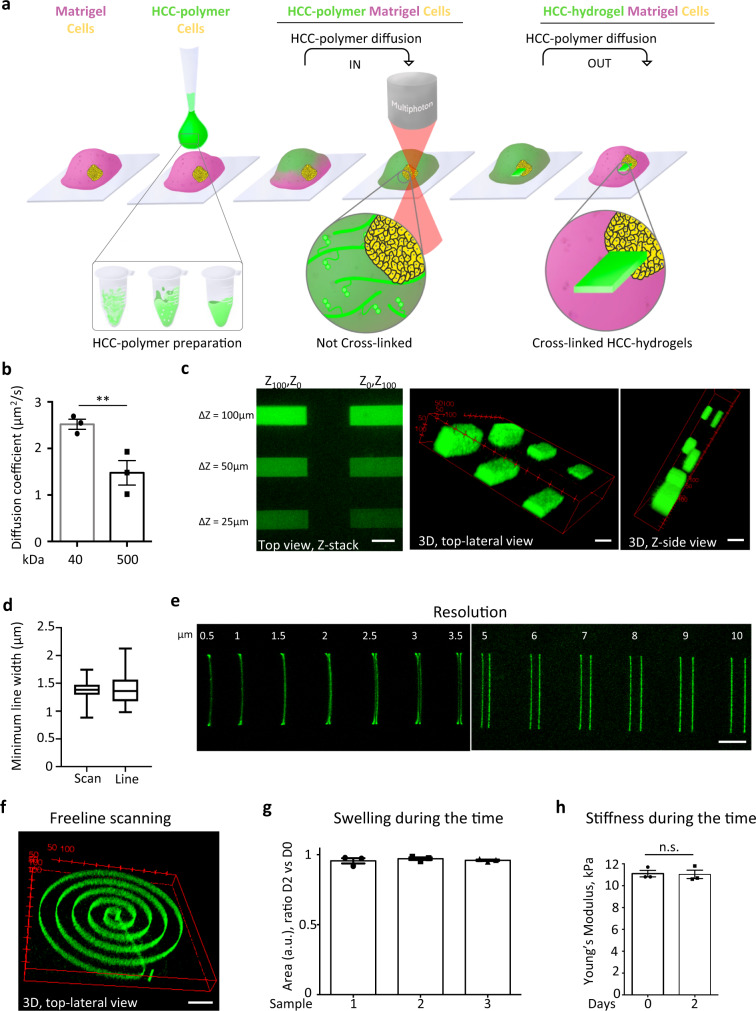
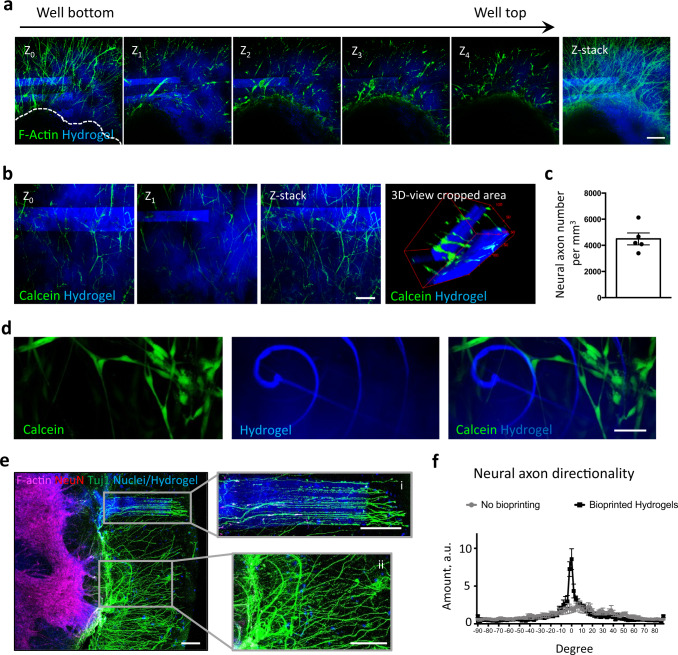
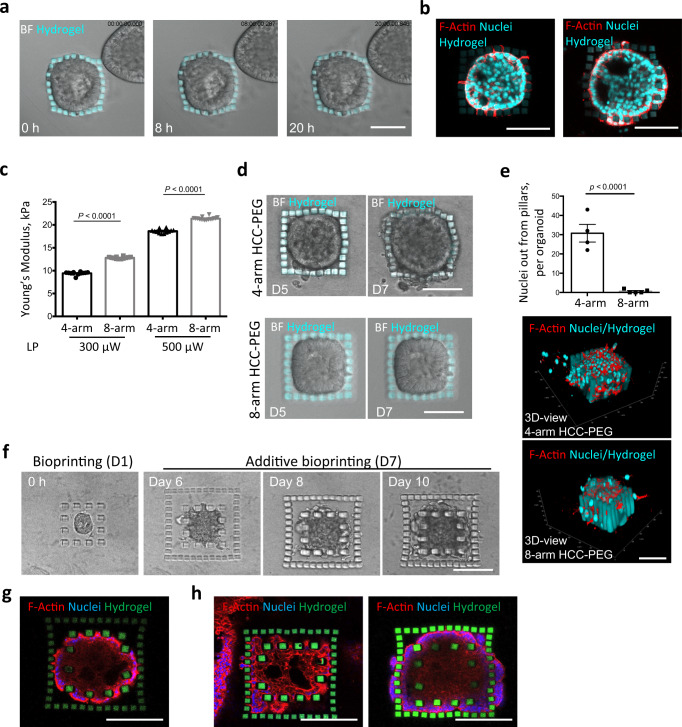
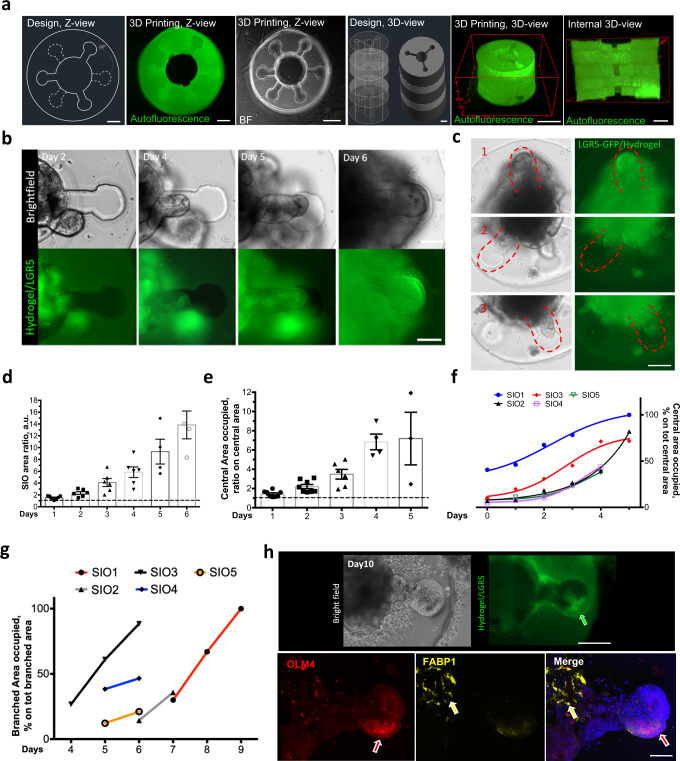
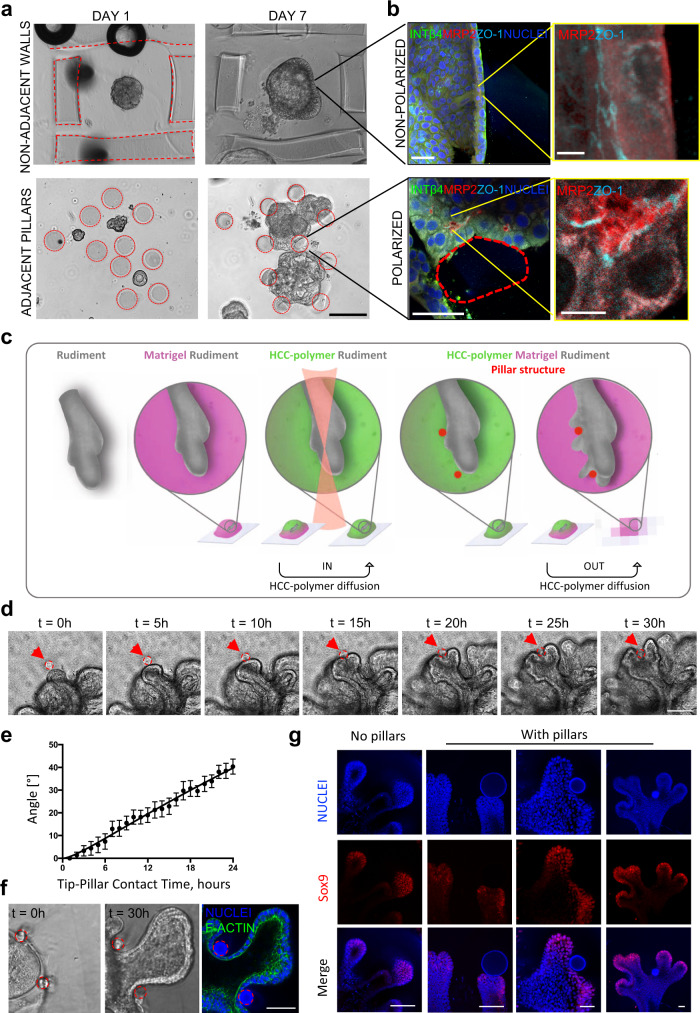
Three-dimensional hydrogel-based organ-like cultures can be applied to study development, regeneration, and disease in vitro. However, the control of engineered hydrogel composition, mechanical properties and geometrical constraints tends to be restricted to the initial time of fabrication. Modulation of hydrogel characteristics over time and according to culture evolution is often not possible. Here, we overcome these limitations by developing a hydrogel-in-hydrogel live bioprinting approach that enables the dynamic fabrication of instructive hydrogel elements within pre-existing hydrogel-based organ-like cultures. This can be achieved by crosslinking photosensitive hydrogels via two-photon absorption at any time during culture. We show that instructive hydrogels guide neural axon directionality in growing organotypic spinal cords, and that hydrogel geometry and mechanical properties control differential cell migration in developing cancer organoids. Finally, we show that hydrogel constraints promote cell polarity in liver organoids, guide small intestinal organoid morphogenesis and control lung tip bifurcation according to the hydrogel composition and shape.
Overview
The claims and statistics of this paper haven’t been checked yet.
Free: it reads the open-access text and checks the first 5 claims that cite a source we can check. Create a free account to check every claim.
Integrity signals
Registry
Cites
Statistics
Figures
Verification
Claims the paper makes
The claims and statistics of this paper haven’t been checked yet.
Free: it reads the open-access text and checks the first 5 claims that cite a source we can check. Create a free account to check every claim.
Claims other papers make about this one
Each is checked against this paper’s own text: does it say what the citing paper says it does?
The check wasn’t confident either way, so it gives no verdict — never disputed.
In the citing paper
“Another study found that structured microtissues were more stable than unstructured ones when implanted subcutaneously (Fig. 8B-D) [145].”
From Constructing biomimetic microenvironments for liver regeneration (2025) · doi:10.1186/s12951-025-03729-9 · cites this paper as [145]
Experimental — accuracy not yet measured
Self-check
Percentages, sums and reported differences re-computed from the paper’s own numbers.
The self-check needs the paper’s full text.
Citations
Cites
Single Lgr5 stem cells build crypt-villus structures in vitro without a mesenchymal niche
Sato, T., Vries, R. G., Snippert, H. J., van de Wetering, M., Barker, N., Stange, D. E., van Es, J. H., Abo, A., Kujala, P., Peters, P. J., et al. (2009) · Nature · doi:10.1038/nature07935 · Cited by 7,204
Self-citationDrost, J., & Clevers, H. (2018) · Nature Reviews Cancer · doi:10.1038/s41568-018-0007-6 · Cited by 1,790
Self-citationA reserve stem cell population in small intestine renders Lgr5-positive cells dispensable
Tian, H., Biehs, B., Warming, S., Leong, K. G., Rangell, L., Klein, O. D., & de Sauvage, F. J. (2011) · Nature · doi:10.1038/nature10408 · Cited by 1,204
Progress and potential in organoid research
Rossi, G., Manfrin, A., & Lutolf, M. P. (2018) · Nature Reviews Genetics · doi:10.1038/s41576-018-0051-9 · Cited by 1,182
Long-Term Expansion of Functional Mouse and Human Hepatocytes as 3D Organoids
Hu, H., Gehart, H., Artegiani, B., LÖpez-Iglesias, C., Dekkers, F., Basak, O., van Es, J., Chuva de Sousa Lopes, S. M., Begthel, H., Korving, J., et al. (2018) · Cell · doi:10.1016/j.cell.2018.11.013 · Cited by 837
Self-citationThe branching programme of mouse lung development
Metzger, R. J., Klein, O. D., Martin, G. R., & Krasnow, M. A. (2008) · Nature · doi:10.1038/nature07005 · Cited by 784
Homeostatic mini-intestines through scaffold-guided organoid morphogenesis
Nikolaev, M., Mitrofanova, O., Broguiere, N., Geraldo, S., Dutta, D., Tabata, Y., Elci, B., Brandenberg, N., Kolotuev, I., Gjorevski, N., et al. (2020) · Nature · doi:10.1038/s41586-020-2724-8 · Cited by 755
Self-citationThree-dimensional organotypic culture: experimental models of mammalian biology and disease
Shamir, E. R., & Ewald, A. J. (2014) · Nature Reviews Molecular Cell Biology · doi:10.1038/nrm3873 · Cited by 719
Villification: How the Gut Gets Its Villi
Shyer, A. E., Tallinen, T., Nerurkar, N. L., Wei, Z., Gil, E. S., Kaplan, D. L., Tabin, C. J., & Mahadevan, L. (2013) · Science · doi:10.1126/science.1238842 · Cited by 562
Giobbe, G. G., Crowley, C., Luni, C., Campinoti, S., Khedr, M., Kretzschmar, K., De Santis, M. M., Zambaiti, E., Michielin, F., Meran, L., et al. (2019) · Nature Communications · doi:10.1038/s41467-019-13605-4 · Cited by 500
Self-citation
Cited by
Recent Advances in 3D Printing of Smart Scaffolds for Bone Tissue Engineering and Regeneration
Yuan, X., Zhu, W., Yang, Z., He, N., Chen, F., Han, X., & Zhou, K. (2024) · Advanced Materials · doi:10.1002/adma.202403641 · Cited by 339
Clinical applications of human organoids
Verstegen, M. M. A., Coppes, R. P., Beghin, A., De Coppi, P., Gerli, M. F. M., de Graeff, N., Pan, Q., Saito, Y., Shi, S., Zadpoor, A. A., et al. (2025) · Nature Medicine · doi:10.1038/s41591-024-03489-3 · Cited by 206
Boosting cartilage repair with silk fibroin-DNA hydrogel-based cartilage organoid precursor
Shen, C., Wang, J., Li, G., Hao, S., Wu, Y., Song, P., Han, Y., Li, M., Wang, G., Xu, K., et al. (2024) · Bioactive Materials · doi:10.1016/j.bioactmat.2024.02.016 · Cited by 229
Targeted mechanical stimulation via magnetic nanoparticles guides in vitro tissue development
Fattah, A. R. A., Kolaitis, N., Daele, K. V., Daza, B., Rustandi, G., & Ranga, A. (2023) · Nature Communications · doi:10.1038/s41467-023-41037-8 · Cited by 93
From 2D to 3D and beyond: the evolution and impact of in vitro tumor models in cancer research
Rauner, G., Gupta, P. B., & Kuperwasser, C. (2025) · Nature Methods · doi:10.1038/s41592-025-02769-1 · Cited by 87
“Achieving this level of precision would not otherwise be possible with rBM or collagen 140 .”
Recent Advances in Multi‐Photon 3D Laser Printing: Active Materials and Applications
Mainik, P., Spiegel, C. A., & Blasco, E. (2023) · Advanced Materials · doi:10.1002/adma.202310100 · Cited by 77
Light-based fabrication and 4D customization of hydrogel biomaterials
Kopyeva, I., Brady, R., & DeForest, C. A. (2024) · Nature Reviews Bioengineering · doi:10.1038/s44222-024-00234-w · Cited by 75
Strategies to overcome the limitations of current organoid technology - engineered organoids
Fan, X., Hou, K., Liu, G., Shi, R., Wang, W., & Liang, G. (2025) · Journal of Tissue Engineering · doi:10.1177/20417314251319475 · Cited by 79
“Surprisingly, Urciuolo’s team 106 developed a hydrogel-based method for the dynamic fabrication of hydrogels in organoids that can be personalized according to specific culture environments and incubation times, matching the conditions required for organoids at different stages.”
Recent advances on thermosensitive hydrogels-mediated precision therapy
Chen, H., Xu, J., Sun, J., Jiang, Y., Wang, Z., Hu, W. H., & Qian, H. (2024) · Asian Journal of Pharmaceutical Sciences · doi:10.1016/j.ajps.2024.100911 · Cited by 102
“Due to its reversible sol-gel phase transition and degradation properties, the thermosensitive hydrogel is an attractive sustained-release drug delivery system that can potentiate the benefits afforded for local and abscopal effects of cancer immunotherapy [47] .”
BackgroundGuida, L., Cavallaro, M., & Levi, M. (2024) · Bioprinting · doi:10.1016/j.bprint.2024.e00376 · Cited by 53
Hu, Y., Zhu, T., Cui, H., & Cui, H. (2024) · Advanced Healthcare Materials · doi:10.1002/adhm.202403762 · Cited by 58
Engineering the 3D structure of organoids
Moss, S. P., Bakırcı, E., & Feinberg, A. W. (2024) · Stem Cell Reports · doi:10.1016/j.stemcr.2024.11.009 · Cited by 53
Bone and Joint‐on‐Chip Platforms: Construction Strategies and Applications
Du, C., Liu, J., Liu, S., Xiao, P., Chen, Z., Chen, H., Huang, W., & Lei, Y. (2024) · Small Methods · doi:10.1002/smtd.202400436 · Cited by 53
Engineered biomimetic hydrogels for organoids
Li, Y., Saiding, Q., Wang, Z., & Cui, W. (2023) · Progress in Materials Science · doi:10.1016/j.pmatsci.2023.101216 · Cited by 48
Measuring and manipulating mechanical forces during development
Villeneuve, C., McCreery, K. P., & Wickström, S. A. (2025) · Nature Cell Biology · doi:10.1038/s41556-025-01632-x · Cited by 56
Organoid bioinks: construction and application
Wang, F., Song, P., Wang, J., Wang, S., Liu, Y., Bai, L., & Su, J. (2024) · Biofabrication · doi:10.1088/1758-5090/ad467c · Cited by 45
“The hydrogel’s 3D geometric constraints promote apical-basal polarization of cells within the liver organoids [98] In a pioneering study on volumetric bioprinting for liver organoid construction, researchers utilized a organoid bioink composed of 5% gelMA and 0.1% w/v lithium…”
MethodInfluentialAdvanced Nanomaterials in Medical 3D Printing
Liu, H., He, L., Kuzmanović, M., Huang, Y., Zhang, L., Zhang, Y., Zhu, Q., Ren, Y., Dong, Y., Cardon, L., et al. (2023) · Small Methods · doi:10.1002/smtd.202301121 · Cited by 42
Self-citationDesigner cellular spheroids with DNA origami for drug screening
Wei, J., Sun, Y., Wang, H., Zhu, T., Li, L., Zhou, Y., Liu, Q., Dai, Z., Li, W., Yang, T., et al. (2024) · Science Advances · doi:10.1126/sciadv.ado9880 · Cited by 45
Organoid‐Guided Precision Medicine: From Bench to Bedside
Tao, B., Li, X., Hao, M., Tian, T., Li, Y., Li, X., Yang, C., Li, Q., Feng, Q., Zhou, H., et al. (2025) · MedComm · doi:10.1002/mco2.70195 · Cited by 44
“By manipulating the hydrogel in 3D bioprinting, hydrogel constraints can enhance cell polarity in liver organoids, direct the morphogenesis of small intestinal organoids, and regulate lung tip bifurcation based on the hydrogel’s composition and shape [77].”
Bogadi, S., Uddin, M. E., Rahman, M. H., Karri, V. V. S. R., Begum, R., & Udeabor, S. E. (2025) · Journal of Drug Delivery Science and Technology · doi:10.1016/j.jddst.2025.107058 · Cited by 47
Diffusion‐Based 3D Bioprinting Strategies
Cai, B., Kilian, D., Mejia, D. R., Rios, R. J., Ali, A., & Heilshorn, S. C. (2023) · Advanced Science · doi:10.1002/advs.202306470 · Cited by 40
Polymer hydrogels: Classification and recent advances
Dhara, M. (2024) · Journal of Macromolecular Science Part A · doi:10.1080/10601325.2024.2328733 · Cited by 39
“[221] Photosensitive hydrogels were fabricated having defined stiffness and temporal con-trol around hydrogel-encapsulated live cells and organoids, that actually enabled the regulation of cell size, shape, identity, migration and morphogenesis.”
BackgroundWu, D., Pang, S., Berg, J., Mei, Y., Ali, A. S. M., Röhrs, V., Tolksdorf, B., Hagenbuchner, J., Ausserlechner, M. J., Deubzer, H. E., et al. (2024) · Advanced Functional Materials · doi:10.1002/adfm.202314171 · Cited by 37
Top-down approach making anisotropic, stable and flexible wood-based ionogels for wearable sensors
Liu, X., Hu, Y. H., Wang, Q., Lu, J., Bai, T., Pei, F., Chen, Y., Cheng, W., Wang, D., & Han, G. (2024) · Chemical Engineering Journal · doi:10.1016/j.cej.2024.150472 · Cited by 30
Application of supramolecular hydrogel in supercapacitors: Opportunities and challenges
Xu, W., & Chen, A. (2024) · Aggregate · doi:10.1002/agt2.581 · Cited by 26
Tumor organoids in immunotherapy: from disease modeling to translational research
Si, Q., Tao, S., Wu, J., Ma, J., Li, Z. Y., Feng, X., Song, J., Kong, T., & Zhou, Z. (2025) · Journal for ImmunoTherapy of Cancer · doi:10.1136/jitc-2025-011733 · Cited by 32
“21 22 Recent studies highlight the potential of synthetic hydrogels to enhance organoid growth and differentiation.”
Ren, H., Huang, D., Qiu, M., Xue, L., Zhu, S., Gan, J., Chen, C., Chen, D., & Wang, J. (2024) · Smart Medicine · doi:10.1002/smmd.20240056 · Cited by 26
Strategies for the vascular patterning of engineered tissues for organ repair
Janson, K. D., Parkhideh, S., Swain, J. W. R., Weaver, J. D., Hartgerink, J. D., & Veiseh, O. (2025) · Nature Biomedical Engineering · doi:10.1038/s41551-025-01420-w · Cited by 34
“To address the resolution–viability gap, one can fabricate mid-sized vessels and introduce pro-angiogenic factors to supplement the engineered vasculature 195 , or use multiple 3D patterning techniques in tandem 196 .”
Recent progress of antibacterial hydrogel materials for biomedical applications
Wang, Q., Feng, X., Hong, X., Guo, G., Li, Y., & Zhang, Q. (2023) · Journal of Materials Chemistry C · doi:10.1039/d3tc02166a · Cited by 24
A review of 3D bioprinting for organoids
Li, Z., Chen, L., Wu, J., Chen, Y., Zhu, Y. Z., Li, G., Xie, G., Tang, G., & Xie, M. (2025) · Medical Review · doi:10.1515/mr-2024-0089 · Cited by 37
Human Organoids and Their Application in Tumor Models, Disease Modeling, and Tissue Engineering
Song, S., Liu, Z., Wang, Y., & Gong, B. (2025) · Medicine Bulletin · doi:10.1002/mdb2.70001 · Cited by 33
Developing 3D bioprinting for organs-on-chips
Wu, Z., Liu, R., Shao, N., & Zhao, Y. (2025) · Lab on a Chip · doi:10.1039/d4lc00769g · Cited by 24
Genetically modified organoids for tissue engineering and regenerative medicine
Zhang, Q., Jin, H., Zhu, D., Chen, Y., Fu, M., Lu, S., Qiu, Y., Zhou, G., Yang, G., & Jiang, Z. (2024) · Advances in Colloid and Interface Science · doi:10.1016/j.cis.2024.103337 · Cited by 26
Unconventional bioprinting modalities for advanced tissue biofabrication
Derman, İ. D., Kim, M. H., Sarikaya, M. D., Yilmaz, Y. O., Aliftiras, E. G., Stepanyants, V., Rivera, T., & Ozbolat, I. T. (2025) · Biomaterials · doi:10.1016/j.biomaterials.2025.123704 · Cited by 29
Engineered epithelial curvature controls Paneth cell localization in intestinal organoids
Yavitt, F. M., Khang, A., Bera, K., McNally, D. L., Blatchley, M. R., Gallagher, A. P., Klein, O. D., Castillo‐Azofeifa, D., Dempsey, P. J., & Anseth, K. S. (2025) · Cell Biomaterials · doi:10.1016/j.celbio.2025.100046 · Cited by 22
Han, C., Jiao, J., Gong, C., Li, J., Zhao, M., & Lu, X. (2025) · Frontiers in Bioengineering and Biotechnology · doi:10.3389/fbioe.2025.1576524 · Cited by 25
Rational design matrix materials for organoid development and application in biomedicine
Huang, Y. F., Zhang, X., Zhang, W., Tang, J., & Liu, J. (2025) · Regenerative Biomaterials · doi:10.1093/rb/rbaf038 · Cited by 23
“In this model, engineered hydrogel confinement not only promotes cell polarity in hepatocarcinoma but also directs enteroid carcinoma morphogenesis, demonstrating critical capacity for enhancing tumor organoid maturation [183].”
Bone organoid construction and evolution
Hong, Y., Li, R., Sheng, S., Zhou, F., Bai, L., & Su, J. (2025) · Journal of Orthopaedic Translation · doi:10.1016/j.jot.2025.06.011 · Cited by 26
Organoid-driven nanomedicine platform development
Wang, J., Wang, F., Jiang, Y., Bai, L., Chen, X. S., & Su, J. (2025) · Biomaterials · doi:10.1016/j.biomaterials.2025.123611 · Cited by 28
Stress-relaxing granular bioprinting materials enable complex and uniform organoid self-organization
Graham, A. J., Khoo, M. W. L., Srivastava, V., Viragova, S., Kim, H., Parekh, K., Hennick, K. M., Bird, M., Goldhammer, N., Zeng, J., et al. (2026) · Nature Materials · doi:10.1038/s41563-026-02519-4 · Cited by 34
“Together, MAGIC matrix bioprinting led to nearly 100% organoid formation efficiency, dramatic improvements in interorganoid homogeneity, orders-of-magnitude improvement in the statistical power of phenotypic assays, and enabled patterning of perfusable 3D microphysiological systems.”
Cho, Y., You, J., & Lee, J. H. (2025) · Polymers · doi:10.3390/polym17152109 · Cited by 22
“…controlling the composition, geometry, and stiffness of the hydrogel in situ, the system directs morphogenetic processes such as cell polarity, axon guidance, and branching morphogenesis, highlighting the critical role of scaffold dynamics in organoid differentiation and tissue architecture [149].”
Progress in the Application of Organoids-On-A-Chip in Diseases
Geng, Q., Xu, Y., Hu, Y., Wang, L., Wang, Y., Fan, Z., & Kong, D. (2024) · Organogenesis · doi:10.1080/15476278.2024.2386727 · Cited by 19
“42,43 Recently, Cherne et al. 44 developed a gut organoid flow chip and constructed a complex microbial immune cell epithelial cell co culture model for studying the interactions between dendritic cells (DCs) and epithelial cells in the human stomach.”
BackgroundBioprinted Organoids: An Innovative Engine in Biomedicine
Li, Z., Li, K., Zhang, C., Zhao, Y., Guo, Y., He, J., Chang, S., Fang, X., Liu, K., Zhu, P., et al. (2025) · Advanced Science · doi:10.1002/advs.202507317 · Cited by 35
Human bone marrow organoids: emerging progress but persisting challenges
Bourgine, P. E. (2025) · Trends in biotechnology · doi:10.1016/j.tibtech.2025.05.028 · Cited by 21
Modified Polysaccharides: Potential Biomaterials for Bioprinting
Jiang, T., Yang, Y. K., Lin, Z., Yang, H., & Luo, Z. (2025) · Journal of Functional Biomaterials · doi:10.3390/jfb16090338 · Cited by 18
Ye, L., Yan, Y., & Yan, J. (2025) · Carbohydrate Polymers · doi:10.1016/j.carbpol.2025.123301 · Cited by 15
Nanocomposite Hydrogels and Micro/Nanostructures for Printing Organoids
Xie, D., Chen, B., Wang, W., Guo, W., Sun, Z., Wang, L., Shi, B., Song, Y., & Su, M. (2025) · ACS Nano · doi:10.1021/acsnano.4c17587 · Cited by 12
Li, Y., Cui, H., & Cui, H. (2025) · Advanced Functional Materials · doi:10.1002/adfm.202503391 · Cited by 19
Constructing biomimetic microenvironments for liver regeneration
(2025) · doi:10.1186/s12951-025-03729-9 · Cited by 11
Organoids in respiratory virus research: advances and perspectives
Li, X., Xiao, H., Zhou, M., Yang, C., Yang, X., Cheng, T., Yuan, L., & Xia, N. (2025) · Molecular Biomedicine · doi:10.1186/s43556-025-00343-x · Cited by 11
“According to the heterogeneity and composition, the matrices can be cat-egorised into matrixgel and hydrogels, with the latter further subdivided into natural and synthetic types [57–59].”
Xie, D., Chen, B., Xue, Y., Sun, Z., Ning, B., Zhang, Z., Chi, J., Su, M., & Song, Y. (2024) · Science China Materials · doi:10.1007/s40843-024-2933-8 · Cited by 12
Latest Advanced Techniques for Improving Intestinal Organoids Limitations
Tonini, L., & Ahn, C. (2025) · Stem Cell Reviews and Reports · doi:10.1007/s12015-025-10894-9 · Cited by 11
Gao, H., Pol, M., Makara, C. A., Song, J., Zhang, H., Zou, X., Benson, J. M., Burris, D. L., Fox, J. M., & Jia, X. (2024) · Nature Protocols · doi:10.1038/s41596-024-01066-z · Cited by 12
Loukogeorgakis, S., Michielin, F., Al‐Juffali, N., Jiménez, J., Shibuya, S., Allen-Hyttinen, J., Eastwood, M. P., Alhendi, A. S. N., Davidson, J., Naldi, E., et al. (2025) · American Journal of Respiratory and Critical Care Medicine · doi:10.1164/rccm.202401-0161oc · Cited by 12
Self-citationCorredera, I. G., Amato, G., Moya‐Rull, D., Garreta, E., & Montserrat, N. (2025) · Kidney International · doi:10.1016/j.kint.2025.01.043 · Cited by 10
Rodríguez, C. F., Quezada, V., Guzmán-Sastoque, P., Orozco, J. C., Reyes, L. H., Osma, J. F., Muñoz-Camargo, C., & Cruz, J. C. (2025) · Scientific Reports · doi:10.1038/s41598-025-04495-2 · Cited by 11
Wan, W., Wang, X., Zhang, R., Li, Y., Wu, H., Liu, Y., Zhang, F., Liu, J., Liu, G., Zhou, L., et al. (2025) · Journal of Tissue Engineering · doi:10.1177/20417314251328128 · Cited by 15
Self-citationSantis, R. D., Jutras-Dubé, L., Bourdrel, S., Rice, E., Piccolo, F. M., & Brivanlou, A. H. (2025) · Cell stem cell · doi:10.1016/j.stem.2025.09.006 · Cited by 13
Gum Arabic-based three-dimensional printed hydrogel for customizable sensors
Wang, T., Yu, Z., Si, J., Liu, L., Ren, X., & Gao, G. (2023) · International Journal of Biological Macromolecules · doi:10.1016/j.ijbiomac.2023.128072 · Cited by 11
Almeida, A. M., Mazeda, J., Pinho, A. R., Gomes, M. C., & Mano, J. F. (2025) · Advanced Materials Technologies · doi:10.1002/admt.202500210 · Cited by 8
White, M. J., Singh, T., Wang, E., Smith, Q., & Kutys, M. L. (2023) · Journal of Cell Science · doi:10.1242/jcs.261130 · Cited by 8
Engineering Cell Instructive Microenvironments for In Vitro Replication of Functional Barrier Organs
Urciuolo, F., Imparato, G., & Netti, P. A. (2024) · Advanced Healthcare Materials · doi:10.1002/adhm.202400357 · Cited by 7
Promoting the Photoresponse Rate with Micelles in Hydrogels
Gao, J., Tang, F., Li, Y., Zhang, L. L., Hu, A., Li, S., & Li, L. (2025) · Advanced Optical Materials · doi:10.1002/adom.202403352 · Cited by 7
Tissue regenerative medicine: Clinical advances, challenges, and opportunities
Badawy, S., Gopinath, V., Espinosa, A. M. D., Suthiwanich, K., Kelmser, E. C., Duke, V. R., Kamaraju, V., Nakayama, K. H., Manna, M. K., Liu, J. J.-Y., et al. (2025) · APL Bioengineering · doi:10.1063/5.0296897 · Cited by 11
Shao, Z., Coppi, P. D., & Michielin, F. (2023) · Frontiers in Chemical Engineering · doi:10.3389/fceng.2023.1255783 · Cited by 8
Self-citationMinimal‐Invasive 3D Laser Printing of Microimplants in Organismo
Afting, C., Mainik, P., Vazquez‐Martel, C., Abele, T., Kaul, V., Kale, G., Göpfrich, K., Lemke, S., Blasco, E., & Wittbrodt, J. (2024) · Advanced Science · doi:10.1002/advs.202401110 · Cited by 7
D'Angelo, E., Marangio, A., Sensi, F., Zanrè, E., Steffan, A., Repetto, O., Rampado, R., Giomo, M., Fassan, M., Spolverato, G., et al. (2025) · Biomaterials Advances · doi:10.1016/j.bioadv.2025.214438 · Cited by 7
Self-citationLiu, J., Jia, M., Yang, J., Wang, W., Bai, L., Chen, H., Wei, K., & Yang, L. (2026) · Colloids and Surfaces A Physicochemical and Engineering Aspects · doi:10.1016/j.colsurfa.2026.139578 · Cited by 6
Transformative potential of three-dimensional bioprinting technology for advanced organoid research
Yoon, J., Yoon, G., & Jang, J. (2024) · Organoid · doi:10.51335/organoid.2024.4.e8 · Cited by 9
“Table 2 presents the use of 3D bioprinting technology, which has substantially advanced the biological accuracy and functional capacity of organoids, leading to more realistic in vitro models that reflect the complex microenvironments of living human tissues [41,47–50].”
BackgroundEnhancing 3D Printing of Gelatin/Siloxane-Based Cellular Scaffolds Using a Computational Model
Valenzuela-Reyes, M. B., Zúñiga-Aguilar, E., González, C. C., Castro, J. S., Méndez‐González, L. C., Álvarez-López, R., Monreal-Romero, H. A., & Perez, C. A. (2025) · Polymers · doi:10.3390/polym17131838 · Cited by 5
“Examples of hybrid bio-inks include hydrogel–ceramic composites for bone tissue engineering [6–8], hydrogel–microcarrier for organ printing [9], hydrogel–polymer for soft tissues, and hydrogel–bioactive material to enhance cell adhesion, proliferation, and differentiation [10–12].”
Respiratory microphysiological system in respiratory research: recent advances and future prospects
Yin, J., Bi, Z., Dai, T., Zhu, X. A., Xu, T., & Liu, H. (2025) · Respiratory Research · doi:10.1186/s12931-025-03327-1 · Cited by 7
“1F) [44].”
Shen, Y., Liu, R., Wu, X., Lu, Y., Kong, B., & Zhao, Y. (2024) · Chemical Engineering Journal · doi:10.1016/j.cej.2024.157140 · Cited by 5
In situ tailored confining microenvironment for lung cancer spheroids
Dong, Y., Qian, S., Wang, X., Zhang, W., Lu, W., Qu, J., Cui, M., Chen, L., Zhao, Y., Gao, Y., et al. (2025) · Materials Today Bio · doi:10.1016/j.mtbio.2025.101602 · Cited by 5
Self-citationDahlan, N. A., Chiok, K. L., Tabil, X. L., Duan, X., Banerjee, A., Dhar, N., & Chen, D. (2025) · Biomaterials Advances · doi:10.1016/j.bioadv.2025.214428 · Cited by 6
Su, J., Yan, Z., Tang, X., Wu, T., Ling, J., & Qian, Y. (2025) · Engineering · doi:10.1016/j.eng.2025.05.011 · Cited by 6
Ling, Z., Niego, B., Li, Q., Bhattaram, D., Villa, V. S., Hu, M. Y., Gong, Z., Smith, L. M., Frey, B. L., & Ren, X. (2025) · Advanced Materials · doi:10.1002/adma.202505445 · Cited by 4
Zhang, C., Liu, C., Liaw, A., Ivanovski, S., & Han, P. (2025) · Extracellular Vesicles and Circulating Nucleic Acids · doi:10.20517/evcna.2025.107 · Cited by 7
Precise Design of Hydrogels by Machine Learning-Assisted Solvent Exchange Strategy
Ma, L., Li, W., Li, Z., Qian, J., Zhao, C., Wu, Y. F., He, H., Jin, G., Zhu, J., Pan, X., et al. (2026) · Macromolecules · doi:10.1021/acs.macromol.5c02582 · Cited by 4
Ni, D., Xing, J., Niu, G., Qiu, J., Wei, G., Chen, G., Zhou, Q., & Yin, X. (2026) · Frontiers in Cell and Developmental Biology · doi:10.3389/fcell.2026.1757516 · Cited by 5
“…approaches enable dynamic quantification of cellular responses to biomechanical and metabolic cues within 3D microenvironments, enhancing physiological relevance and predictive capacity for cancer research (Neal et al., 2018; Rauner et al., 2025; Urciuolo et al., 2023; Nishiguchi et al., 2018).”
Li, X., Wang, Z., Liu, Y., Zhang, J., Zhang, L., Li, Y., An, X., Yang, Y., Yu, R., Zhao, M., et al. (2025) · Genes & Diseases · doi:10.1016/j.gendis.2025.101680 · Cited by 7
“73 The potential of organoids in studying drug response mechanisms, drug screening, and treatment optimization Tumor cells can evade immune surveillance through various mechanisms, with their distinctive metabolic pathways and the heightened expression of ion pumps on the cell membrane potentially…”
Wang, W., Jiang, J., Yu, H., & Sun, Y. (2025) · Chemical Engineering Journal · doi:10.1016/j.cej.2025.167273 · Cited by 12
Krajewska, U., Chechlińska, M., & Kurzyk, A. (2026) · Biofabrication · doi:10.1088/1758-5090/ae2f02 · Cited by 14
“Common natural biomaterials used in bioprinting include collagen [92–94], gelatin and gelatin methacrylate (GelMA) [95–97], fibrin [98], matrigel [99– 101], decellularised ECM (dECM) [102–104], and alginate [105–107].”
Wu, K. Y., Kearn, N., Truong, D., Choulakian, M. Y., & Tran, S. D. (2025) · Advances in experimental medicine and biology · doi:10.1007/5584_2025_855 · Cited by 7
Human gastro-intestinal organoid engineering: a state of the art
Benedetti, G., Berodia, B. F., Coppi, P. D., & Giobbe, G. G. (2023) · Frontiers in Chemical Engineering · doi:10.3389/fceng.2023.1256334 · Cited by 4
Self-citationHu, Z., Xu, Y.-E., Li, J. M., Wang, Y., Song, H. Y., & Ao, D.-S. (2025) · Journal of Materials Chemistry B · doi:10.1039/d5tb00290g · Cited by 3
Li, Y., Wang, J., & Liang, L. (2025) · Talanta · doi:10.1016/j.talanta.2025.129012 · Cited by 7
Gerçel, G., & Durakbaşa, Ç. U. (2024) · European Journal of Pediatric Surgery · doi:10.1055/a-2447-8720 · Cited by 3
Xu, L., Wang, H., Yang, Y., Zhang, H., Fang, S., Zhao, Y., Zhang, T., Zhang, X., Zhao, J., & Zhang, L. (2025) · Nanoscale · doi:10.1039/d4nr04501g · Cited by 4
Special Issue: Bioceramics, Bioglasses, and Gels for Tissue Engineering
Dasan, A., & Chandrasekar, A. (2023) · Gels · doi:10.3390/gels9070586 · Cited by 3
A diffusion-based 3D printing strategy to fabricate self-supporting, perfusable networks
Mejia, D. R., Cai, B., Iranzo, S. C., Perez, A., Tan, Y. L., Lee, S., & Heilshorn, S. C. (2026) · BMC Methods · doi:10.1186/s44330-026-00059-6 · Cited by 2
Advanced 3D cancer models for analyzing tumor-immune cell interaction and therapeutic response
Jeevanandan, S. P., Reidy, E., Clegg, J., Curvello, R., Ryan, A. E., & Loessner, D. (2026) · Molecular Cancer · doi:10.1186/s12943-026-02681-y · Cited by 2
Contribution of the ELRs to the development of advanced in vitro models
Puertas‐Bartolomé, M., Venegas‐Bustos, D., Acosta, S., & Rodríguez‐Cabello, J. C. (2024) · Frontiers in Bioengineering and Biotechnology · doi:10.3389/fbioe.2024.1363865 · Cited by 3
“…but also create a conducive environment for cell survival, growth, and differentiation, as well as speci fi c cues to meet (Ashammakhi et al., 2019; Urciuolo et al., 2023) (Ihalainen et al., n. d.) the unique needs of different cell types, fostering a more accurate representation of the native…”
BackgroundThe Assembly of Miniaturized Droplets toward Functional Architectures
Xu, Y., & Shen, Y. (2024) · Small · doi:10.1002/smll.202404366 · Cited by 2
Understanding and manipulating morphogenetic processes to generate in vitro models of airways
Raasch, K., Henrot, P., Hadchouel, A., Zysman, M., & Dupin, I. (2025) · American Journal of Physiology-Lung Cellular and Molecular Physiology · doi:10.1152/ajplung.00015.2025 · Cited by 4
Wang, X., Yang, M., Ni, P., Tang, L., Liu, Y., Liu, Z., Jiang, Z., Zhou, L., & Yang, B. (2025) · Mechanics of Advanced Materials and Structures · doi:10.1080/15376494.2025.2532765 · Cited by 1
Self-citationCurrent advances and prospects in biomaterials-guided tools for liver organoids research
Ahmed, S. G., Alshehri, E., Nazneen, S., Attia, F., Obeid, D. A., Almuzaini, H., Alzahrani, A., Salma, J., Fujitsuka, I., Assiri, A. M., et al. (2025) · Engineered Regeneration · doi:10.1016/j.engreg.2025.07.004 · Cited by 4
Machado, R. L., Loureiro, E. C., Silva, S. G., Oliveira, I. S., Gomes, A. C., & Marques, E. F. (2026) · Materials Today Chemistry · doi:10.1016/j.mtchem.2026.103362 · Cited by 2
3D-printed functional engineered intestinal models
Xue, J., Jiao, Q., Pei, R., Huang, J., & Liu, X. (2026) · Journal of Materials Chemistry B · doi:10.1039/d6tb00574h · Cited by 1
Machine learning–enabled intelligent hydrogels: applications and future perspectives
Zhang, N., Meng, Q., Xiao, M., Zhou, L., Leng, H., Bao, C., Feng, X., & Wang, Y. (2026) · Materials & Design · doi:10.1016/j.matdes.2026.116088 · Cited by 6
Tiwary, P., Oswal, K., Gorantala, S., Kurlekar, M., Dube, R., Varghese, R., Sharma, R., & Gupta, P. K. (2026) · RSC Mechanochemistry · doi:10.1039/d6mr00058d · Cited by 1
Metadata
- Authors
- Urciuolo, A., Giobbe, G. G., Dong, Y., Michielin, F., Brandolino, L., Magnussen, M., Gagliano, O., Selmin, G., Scattolini, V., Raffa, P., Caccin, P., Shibuya, S., Scaglioni, D., Wang, X., Qu, J., Nikolic, M., Montagner, M., Galea, G. L., Clevers, H., Giomo, M., De Coppi, P., & Elvassore, N.
- Affiliations
- University of Padua (IT)
- University College London (GB)
- ShanghaiTech University (CN)
- Città della Speranza Foundation (IT)
- F. Hoffmann-La Roche AG (CH)
- Corresponding author
- Urciuolo, Anna
- Elvassore, Nicola
- ORCID
- Urciuolo, Anna
- Giobbe, Giovanni Giuseppe
- Dong, Yixiao
- Michielin, Federica
- Magnussen, Michael
- Gagliano, Onelia
- Selmin, Giulia
- Scattolini, Valentina
- Raffa, Paolo
- Caccin, Paola
- Shibuya, Soichi
- Scaglioni, Dominic
- Wang, Xuechun
- Nikolic, Marko
- Montagner, Marco
- Galea, Gabriel L.
- Clevers, Hans
- Giomo, Monica
- De Coppi, Paolo
- Elvassore, Nicola
- Venue
- Nature Communications
- Published
- 2023-05-30
- Volume
- 14
- Issue
- 1
- Pages
- 3128-3128
- ISSN
- 2041-1723 (ISSN-L)
- PMC
- PMC10229611
- OpenAlex
- W4378783036
- Semantic Scholar
- 164566658355f04cc1022b9ebeb6e2e5c7cbdd31
- Cited by
- 121
- References
- 39
- Citations by year
- 2026: 24 · 2025: 56 · 2024: 28 · 2023: 13
- FWCI
- 9.56
- Type
- journal article
- Language
- en
- Open access
- gold
- doi.org
- Licence
- cc-by
- creativecommons.org/licenses/by/4.0 (tdm)
- creativecommons.org/licenses/by/4.0 (vor)
- Locations
- Nature Communications (publishedVersion, cc-by)
- PubMed Central (publishedVersion, cc-by)
- PubMed (publishedVersion)
- KNAW research portal (Royal Academy of Art and Sciences (KNAW)) (publishedVersion, other-oa)
- UCL Discovery (University College London) (submittedVersion, cc-by)
- Lirias (submittedVersion, cc-by)
- Padua Research Archive (University of Padova) (submittedVersion, cc-by)
- RePEc: Research Papers in Economics (submittedVersion)
- Cineca Institutional Research Information System (Tor Vergata University) (submittedVersion, other-oa)
- DOAJ (DOAJ: Directory of Open Access Journals) (submittedVersion, cc-by-sa)
- Utrecht University Repository (Utrecht University) (submittedVersion, other-oa)
- Funders
- Wellcome Trust (211112/Z/18/Z, 211112/Z/18/Z and 211112/Z/18/A, 211112, 211112/Z/18/A)
- National Institute for Health and Care Research (RP_2014-04-046)
- University College London
- Rosetrees Trust (Seedcorn2020 100052)
- Science and Technology Commission of Shanghai Municipality (21140901500)
- Università degli Studi di Padova (LS3-19613)
- Associazione Italiana per la Ricerca sul Cancro (MFAG 2021)
- Regione del Veneto
- Medical Research Council (MR/W00111X/1, MR/R015635/1, MR/S005579/1)
- Japan Society for the Promotion of Science (211112)
- NIHR Great Ormond Street Hospital Biomedical Research Centre
- HORIZON EUROPE European Research Council (101055300)
- Topics
- Physical Sciences › Engineering › Biomedical Engineering › 3D Printing in Biomedical Research
- Physical Sciences › Materials Science › Biomaterials › Hydrogels: synthesis, properties, applications
- Life Sciences › Biochemistry, Genetics and Molecular Biology › Cell Biology › Cellular Mechanics and Interactions
- Keywords
- organotypic culture, organoids, photosensitive hydrogel, axon guidance, spinal cord organoids, tumor organoids, cell migration, liver organoids, cell polarity, small intestinal organoids, hydrogel mechanical properties
- MeSH terms
- Lung, Organoids, Cell Polarity, Hydrogels, Tissue Engineering, Bioprinting
About these checks
Registry, retraction, Cites and statistics results are computed, not judged, with one exception: a printed reference that no index lists is read once by a model before it counts as a citation error. Claims are extracted by a model and kept only when their quote appears verbatim in the text; each cited source is then checked, with a model’s help, for whether it says what the claim relies on. Those verdicts can be wrong — read the claim’s quote and the cited source before relying on one.
Statistics and arithmetic are recomputed, not judged.
Confidence bands are shown only for fields calibrated on our annotated test set. None is calibrated yet, so no band is shown.
What counts as a claim ›How we measure confidence ›How we check this ›
Are you an author, or do you see a problem with this page? Request a review
Data sources
Bibliographic data: Semantic Scholar, OpenAlex, Crossref.
Contains information from the Semantic Scholar Academic Graph Datasets, made available under the ODC Attribution License (ODC-BY 1.0).
Semantic Scholar’s data is described in: Kinney, R., et al. (2023). The Semantic Scholar Open Data Platform. arXiv:2301.10140.
