

Epidemiological drivers of transmissibility and severity of SARS-CoV-2 in England
Open accessPublished version of a preprint
The DOI matches its Crossref record; 38 of the 40 references it cites were found in a registry or an index.
Abstract
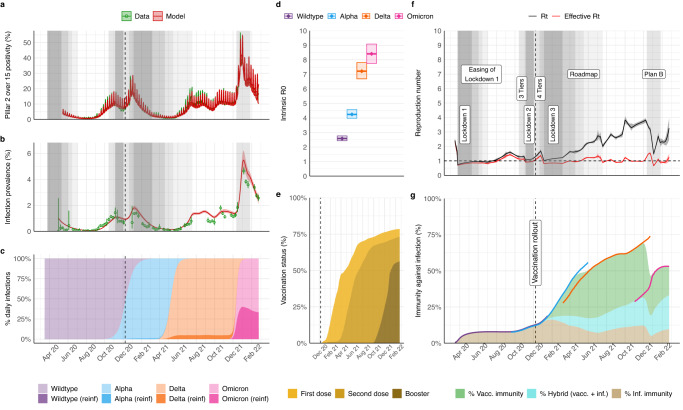
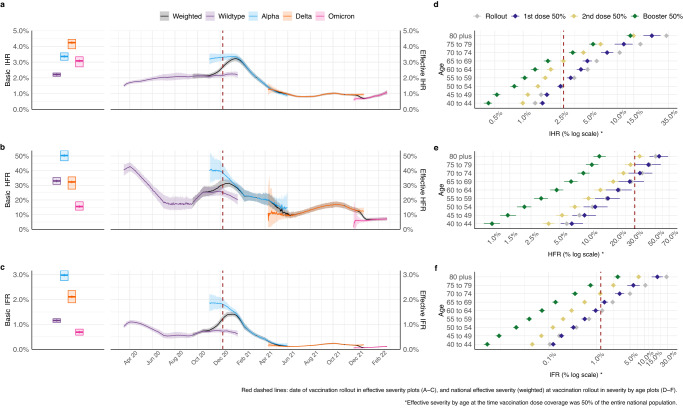
As the SARS-CoV-2 pandemic progressed, distinct variants emerged and dominated in England. These variants, Wildtype, Alpha, Delta, and Omicron were characterized by variations in transmissibility and severity. We used a robust mathematical model and Bayesian inference framework to analyse epidemiological surveillance data from England. We quantified the impact of non-pharmaceutical interventions (NPIs), therapeutics, and vaccination on virus transmission and severity. Each successive variant had a higher intrinsic transmissibility. Omicron (BA.1) had the highest basic reproduction number at 8.4 (95% credible interval (CrI) 7.8-9.1). Varying levels of NPIs were crucial in controlling virus transmission until population immunity accumulated. Immune escape properties of Omicron decreased effective levels of immunity in the population by a third. Furthermore, in contrast to previous studies, we found Alpha had the highest basic infection fatality ratio (3.0%, 95% CrI 2.8-3.2), followed by Delta (2.1%, 95% CrI 1.9–2.4), Wildtype (1.2%, 95% CrI 1.1–1.2), and Omicron (0.7%, 95% CrI 0.6-0.8). Our findings highlight the importance of continued surveillance. Long-term strategies for monitoring and maintaining effective immunity against SARS-CoV-2 are critical to inform the role of NPIs to effectively manage future variants with potentially higher intrinsic transmissibility and severe outcomes.
Overview
The claims and statistics of this paper haven’t been checked yet.
Free: it reads the open-access text and checks the first 5 claims that cite a source we can check. Create a free account to check every claim.
Integrity signals
Registry
Cites
Statistics
Figures
Verification
Claims the paper makes
The claims and statistics of this paper haven’t been checked yet.
Free: it reads the open-access text and checks the first 5 claims that cite a source we can check. Create a free account to check every claim.
Claims other papers make about this one
Each is checked against this paper’s own text: does it say what the citing paper says it does?
The source backs part of the claim, not all of it — or backs it for a different population, condition or comparison.
In the citing paper
“Published estimates of CFR suggest high severity, with more than 10% of cases being fatal, which is one order of magnitude higher than that estimated for SARS-CoV-2 (CFR up to approximately 2% for the most severe variants 112,119 ) or pandemic influenza virus (CFR up to approximately 1-3% for the 1918 influenza pandemic 120 ).”
From Severe acute respiratory syndrome (SARS) mathematical models and disease parameters: a systematic review (2025) · cites this paper as [112]
Experimental — accuracy not yet measured
Self-check
Percentages, sums and reported differences re-computed from the paper’s own numbers.
The self-check needs the paper’s full text.
Citations
Cites
Dexamethasone in Hospitalized Patients with Covid-19
The RECOVERY Collaborative Group (2021) · New England Journal of Medicine · doi:10.1056/nejmoa2021436 · Cited by 11,477
Remdesivir for the Treatment of Covid-19 — Final Report
Beigel, J. H., Tomashek, K. M., Dodd, L. E., Mehta, A. K., Zingman, B. S., Kalil, A. C., Hohmann, E., Chu, H. Y., Luetkemeyer, A., Kline, S., et al. (2020) · New England Journal of Medicine · doi:10.1056/nejmoa2007764 · Cited by 7,267
Estimating the effects of non-pharmaceutical interventions on COVID-19 in Europe
Flaxman, S., Mishra, S., Gandy, A., Unwin, H. J. T., Mellan, T. A., Coupland, H., Whittaker, C., Zhu, H., Berah, T., Eaton, J. W., et al. (2020) · Nature · doi:10.1038/s41586-020-2405-7 · Cited by 3,350
Self-citationSocial Contacts and Mixing Patterns Relevant to the Spread of Infectious Diseases
Mossong, J., Hens, N., Jit, M., Beutels, P., Auranen, K., Mikolajczyk, R., Massari, M., Salmaso, S., Tomba, G. S., Wallinga, J., et al. (2008) · PLoS Medicine · doi:10.1371/journal.pmed.0050074 · Cited by 2,900 · cited 1×
“To model heterogenous contact rates among age groups, we use the POLYMOD contact matrix for England 48 .”
Assessing transmissibility of SARS-CoV-2 lineage B.1.1.7 in England
The COVID-19 Genomics UK (COG-UK) consortium, Volz, E., Mishra, S., Chand, M., Barrett, J. C., Johnson, R., Geidelberg, L., Hinsley, W. R., Laydon, D. J., Dabrera, G., et al. (2021) · Nature · doi:10.1038/s41586-021-03470-x · Cited by 1,611 · cited 1×
“Epidemiological studies have assessed changes in the transmissibility and severity of SARS-Received CoV-2 and the overall effectiveness of interventions over these sequential waves of infections 8 – 13 .”
BackgroundSelf-citationA New Framework and Software to Estimate Time-Varying Reproduction Numbers During Epidemics
Cori, A., Ferguson, N. M., Fraser, C., & Cauchemez, S. (2013) · American Journal of Epidemiology · doi:10.1093/aje/kwt133 · Cited by 1,530 · cited 2×
“Rt eff is determined by the inherent transmission potential of a variant and by 68 contact patterns and immunity levels in the host population.(14) We estimated both Rt eff and the time-varying reproduction 69”
BackgroundSelf-citationNyberg, T., Ferguson, N. M., Nash, S. G., Webster, H. H., Flaxman, S., Andrews, N., Hinsley, W., Bernal, J. L., Kall, M., Bhatt, S., et al. (2022) · The Lancet · doi:10.1016/s0140-6736(22)00462-7 · Cited by 1,221 · cited 1×
“Waning vaccine-and infection-induced immunity against Omicron subvariants is well established 4,12,41 , and recent studies suggest that hybrid immunity (from prior infection and vaccination) may be more effective than repeated boosting through vaccination 42 .”
BackgroundSelf-citationNyberg, T., Ferguson, N. M., Nash, S., Webster, H. H., Flaxman, S. R., Andrews, N. J., Hinsley, W. R., Bernal, J. L., Kall, M. M., Bhatt, S., et al. (2022) · Northumbria Research Link (Northumbria University) · doi:10.17863/cam.81883 · Cited by 1,129
Self-citationThe Lancet Commission on lessons for the future from the COVID-19 pandemic
Sachs, J. D., Karim, S. S. A., Aknin, L., Allen, J., Brosbøl, K., Colombo, F., Barron, G. C., Espinosa, M. F., Gaspar, V., Gaviria, A., et al. (2022) · The Lancet · doi:10.1016/s0140-6736(22)01585-9 · Cited by 842 · cited 2×
“Main 40 The COVID-19 pandemic has driven unprecedented surges in excess mortality,(1) and caused severe disruptions to 41 healthcare systems and economies globally.(2,3) The Omicron sub-variants are more transmissible and thus more difficult 42 to control than ancestral lineages;(4,5) and their severity levels, althou…”
Twohig, K. A., Nyberg, T., Zaidi, A., Thelwall, S., Sinnathamby, M. A., Aliabadi, S., Seaman, S. R., Harris, R. J., Hope, R., Lopez-Bernal, J., et al. (2022) · The Lancet Infectious Diseases · doi:10.1016/s1473-3099(21)00475-8 · Cited by 803
Self-citation
Cited by
SARS-CoV-2: The Interplay Between Evolution and Host Immunity
Case, J. B., Jain, S., Suthar, M. S., & Diamond, M. (2024) · Annual Review of Immunology · doi:10.1146/annurev-immunol-083122-043054 · Cited by 29
“Between 2020 and 2022, at least six distinct SARS-CoV-2 variants emerged with successively higher R 0 values (D614G, Alpha, Beta, Gamma, Delta, and Omicron) (143–145).”
Pisanic, N., Antar, A. A. R., Hetrich, M. K., Demko, Z. O., Zhang, X., Spicer, K., Kruczynski, K. L., Detrick, B., Clarke, W. A., Knoll, M. D., et al. (2024) · The Journal of Infectious Diseases · doi:10.1093/infdis/jiae447 · Cited by 25
Inference of epidemic dynamics in the COVID-19 era and beyond
Cori, A., & Kucharski, A. J. (2024) · Epidemics · doi:10.1016/j.epidem.2024.100784 · Cited by 21
Self-citationAssessing the role of children in the COVID-19 pandemic in Belgium using perturbation analysis
Angeli, L., Caetano, C., Franco, N., Coletti, P., Faes, C., Molenberghs, G., Beutels, P., Abrams, S., Willem, L., & Hens, N. (2025) · Nature Communications · doi:10.1038/s41467-025-57087-z · Cited by 23
“The spread of more transmissible variants, such as Alpha 33 – 38 , Delta 39 – 43 , and Omicron 33,44,45 further increased the prevalence and transmission risk within the paediatric population globally 32,46 .”
Nunes, M. C., Thommes, E. W., Fröhlich, H., Flahault, A., Arino, J., Baguelin, M., Biggerstaff, M., Bizel-Bizellot, G., Borchering, R. K., Cacciapaglia, G., et al. (2024) · Infectious Disease Modelling · doi:10.1016/j.idm.2024.02.008 · Cited by 25
Self-citationFaherty, L. J., de Lima, P. N., Lim, J. Z., Roberts, D. M., Karr, S., Lawson, E., & Willis, H. H. (2024) · Frontiers in Public Health · doi:10.3389/fpubh.2024.1426992 · Cited by 20
Real-time modelling of the SARS-CoV-2 pandemic in England 2020–2023: a challenging data integration
Birrell, P., Blake, J., Kandiah, J., Alexopoulos, A., van Leeuwen, E., Pouwels, K. B., Ghosh, S., Starr, C., Walker, A. S., House, T., et al. (2025) · Journal of the Royal Statistical Society Series A (Statistics in Society) · doi:10.1093/jrsssa/qnaf030 · Cited by 18
Grant, R., de Kraker, M. E. A., Buetti, N., Jackson, H., Abbas, M., Sobel, J., Sommerstein, R., Eder, M., Balmelli, C., Troillet, N., et al. (2024) · Clinical Infectious Diseases · doi:10.1093/cid/ciae558 · Cited by 9
Counterfactual analysis of the 2023 Omicron XBB wave in China
Liu, H., Xu, X., Deng, X., Hu, Z., Sun, R., Zou, J., Dong, J., Wu, Q., Chen, X., Yi, L., et al. (2024) · Infectious Disease Modelling · doi:10.1016/j.idm.2023.12.006 · Cited by 8
Morgenstern, C., Rawson, T., Routledge, I., Kont, M., Imai-Eaton, N., Skarp, J., Doohan, P., McCain, K., Johnson, R., Unwin, H. J. T., et al. (2025) · The Lancet Microbe · doi:10.1016/j.lanmic.2025.101144 · Cited by 6
Self-citationNaidoo, T. M., Morgenstern, C., Doohan, P., Earl, R., Rawson, T., Sheppard, R. J., Hicks, J. T., Radhakrishnan, S., Johnson, R., Hartner, A.-M., et al. (2026) · The Lancet Infectious Diseases · doi:10.1016/s1473-3099(26)00239-2 · Cited by 7
Self-citationMendes, D., Krishnan, S. M., O’Brien, E., Padgett, T., Harrison, C., Strain, W. D., Manca, A., Ustianowski, A., Butfield, R., Hamson, E., et al. (2024) · Infectious Diseases and Therapy · doi:10.1007/s40121-024-00965-8 · Cited by 7
“A growing body of evidence strongly suggests that hybrid population immunity profiles, acquired from both prior infection and vaccination, are potentially more protective against surges in COVID-19 infections and healthcare demand [38–41].”
BackgroundSocial contacts in Switzerland during the COVID-19 pandemic: Insights from the CoMix study
Reichmuth, M. L., Heron, L., Beutels, P., Hens, N., Low, N. N., & Althaus, C. L. (2024) · Epidemics · doi:10.1016/j.epidem.2024.100771 · Cited by 6
Tsang, T. K., Sullivan, S. G., Meng, Y., Lai, F. T. T., Fan, M., Huang, X., Lin, Y., Peng, L., Zhang, C., Yang, B., et al. (2024) · BMC Medicine · doi:10.1186/s12916-024-03597-4 · Cited by 5
“We assumed that each individual could only be infected once during the fifth wave between January and April 2022 [20, 21].”
BackgroundEales, O. D., Windecker, S. M., McCaw, J. M., & Shearer, F. M. (2025) · American Journal of Epidemiology · doi:10.1093/aje/kwaf119 · Cited by 5
“22,23 Additionally, disentangling each pathogen’s dynamics can be important for assessing the effectiveness of past interventions—pharmaceutical (eg, antivirals, vaccines) and non-pharmaceutical (eg, school closures)—against each individual pathogen so that their effectiveness at later times (when…”
Human judgement forecasting of COVID-19 in the UK
Bosse, N. I., Abbott, S., Bracher, J., van Leeuwen, E., Cori, A., & Funk, S. (2023) · Wellcome Open Research · doi:10.12688/wellcomeopenres.19380.2 · Cited by 6
“This increase in the case and death numbers coincides with the rise of the Delta variant in the UK at the beginning of May 27,28 as well as the European Football Championship 29 .”
InfluentialSelf-citationda Conceição, O. D. S., de Souza, U. J. B., Cardoso, F. D. P., Gabev, E. E., Ribeiro, B. M., dos Santos, G. R., Filho, R. N. D. A., da Silva, M. G., Spilki, F. R., & Campos, F. S. (2025) · Viruses · doi:10.3390/v17111521 · Cited by 4
Chapman, A., Berenbaum, F., Curigliano, G., Pliakas, T., Sheikh, A., & Abdul-Jawad, S. (2025) · Clinical Therapeutics · doi:10.1016/j.clinthera.2025.07.006 · Cited by 5
SARS-CoV-2: An Update on the Biological Interplay with the Human Host
Lippi, G., Sanchis‐Gomar, F., Mattiuzzi, C., & Henry, B. M. (2023) · COVID · doi:10.3390/covid3100108 · Cited by 4
Impact of vaccinations, boosters and lockdowns on COVID-19 waves in French Polynesia
Chapman, L. A. C., Aubry, M., Maset, N., Russell, T., Knock, E., Lees, J. A., Mallet, H., Cao‐Lormeau, V., & Kucharski, A. J. (2023) · Nature Communications · doi:10.1038/s41467-023-43002-x · Cited by 3
Self-citationPerez‐Guzman, P. N., Chanda, S. L., Schaap, A., Shanaube, K., Baguelin, M., Nyangu, S., Kanyanga, M. K., Walker, P. G. T., Ayles, H., Chilengi, R., et al. (2024) · International Journal of Infectious Diseases · doi:10.1016/j.ijid.2024.107182 · Cited by 3
Self-citationKendre, A. G., Dey, A., Maganti, R., Srivastava, S., Jachak, S. M., & Bharatam, P. V. (2025) · Journal of Ayurveda and Integrative Medicine · doi:10.1016/j.jaim.2025.101161 · Cited by 2
Sim, J. K., Lee, H. S., Yang, J., Gwack, J., Kim, B. I., Cha, J.-O., Min, K. H., Lee, Y. S., & on behalf of the Severe Acute Respiratory Infection (SARI) Investigators (2024) · Journal of Korean Medical Science · doi:10.3346/jkms.2024.39.e128 · Cited by 3
“10 Consequently, the mortality rates have significantly decreased recently.”
BackgroundThe impact of health inequity on spatial variation of COVID-19 transmission in England
Rawson, T., Hinsley, W. R., Sonabend, R., Semenova, E., Cori, A., & Ferguson, N. M. (2024) · PLoS Computational Biology · doi:10.1371/journal.pcbi.1012141 · Cited by 2
Self-citationOver time analysis of the codon usage of SARS-CoV-2 and its variants
Davidson, A., Parr, M., Totzeck, F., Churkin, A., Barash, D., Frishman, D., & Tuller, T. (2025) · Computational and Structural Biotechnology Journal · doi:10.1016/j.csbj.2025.05.021 · Cited by 2
“Furthermore, both the S gene and ORF1ab show a significant increase in CUB scores starting around December 2021, coinciding with the onset of the Omicron SARS-CoV-2 variant [59,60].”
Morgenstern, C., Rawson, T., Hinsley, W. R., Perez‐Guzman, P. N., Bhatt, S., & Ferguson, N. M. (2025) · Science Advances · doi:10.1126/sciadv.adu8678 · Cited by 2
Self-citationWang, C., Yuan, H., Lau, E. H. Y., Cowling, B. J., Ip, D., & Tsang, T. K. (2025) · The Journal of Infectious Diseases · doi:10.1093/infdis/jiaf287 · Cited by 2
“…of population who are im - munized and protected against infection of a specific subvar-iant at time t ) was computed by 3 types of immune status [14], including (1) vaccination-induced immunity, (2) infection-induced immunity, and (3) hybrid immunity (both vaccination-and infection-induced…”
The effectiveness of the COVID-19 vaccination campaign in 2021: inconsistency in key studiesPreprint
AVILOV, K., WEN, L., Zhao, Y., Wang, W., Stone, L., & He, D. (2024) · SSRN Electronic Journal · doi:10.2139/ssrn.4751241 · Cited by 2
Inference of epidemic dynamics in the COVID-19 era and beyondPreprint
Cori, A., & Kucharski, A. J. (2024) · OSF Preprints (OSF Preprints) · doi:10.31219/osf.io/mg497 · Cited by 3
Self-citationGuo, Z., Chen, Y., Liu, H., Xiao, G., Yu, D., Zhang, Z., Yang, Y., Yin, Z., & Zhang, H. (2025) · Frontiers in Public Health · doi:10.3389/fpubh.2025.1542759 · Cited by 1
Maïdadi‐Foudi, M., Amougou, M. A., Godwe, C., Guichet, E., Boutgam, N. L., Metomo, G. R. A., Hamadama, O. G., Gilles-Fils, W., Ngoume, Y. F., Djomsi, D. M., et al. (2025) · Journal of Public Health in Africa · doi:10.4102/jphia.v16i1.1282 · Cited by 1
“21,22,23 Therefore, assessing the kit’s performance against Delta and Omicron ensures continued accurate and rapid diagnosis amidst the evolving genetic landscape of SARS-CoV-2.”
Econometric modelling of public health and the economy: COVID-19 in Norway
Kordt, A. H., Nymoen, R., Sali, B., & Bårdsen, G. (2025) · Economic Analysis and Policy · doi:10.1016/j.eap.2025.10.037 · Cited by 1
Projecting the potential impact of an Omicron XBB.1.5 wave in Shanghai, ChinaPreprint
Liu, H., Xu, X., Deng, X., Hu, Z., Sun, R., Zou, J., Dong, J., Wu, Q., Chen, X., Yi, L., et al. (2023) · medRxiv · doi:10.1101/2023.05.10.23289761 · Cited by 1
Li, X., Li, J., Liu, H., Mínguez‐Alarcón, L., Gao, L., van Loosdrecht, M. C. M., & Wang, Q. (2024) · Research Square · doi:10.21203/rs.3.rs-3938577/v1
감염병 팬데믹 대응을 위한 초기 사례 조사 및 역학 지표 소개
김, 희., 이, 상., 김, 영., 유, 미., 이, 진., 전, 진., & 권, 동. (2024) · Public Health Weekly Report · doi:10.56786/phwr.2024.17.27.1
Espinosa, O., White, L. J., Bejarano, V., Aguas, R. J., Rincón, D., Mora, L., Ramos, J., Sanabria, C., Rodríguez, J., Barrera, N., et al. (2024) · Heliyon · doi:10.1016/j.heliyon.2024.e39725
“At the geographical level, models have been implemented for countries with diverse characteristics, including England [34,35], United States [36], Germany [37], China [38,39], Australia [40], and India [41].”
Kong, K. L., Shearer, F. M., & Eales, O. D. (2025) · medRxiv · doi:10.1101/2025.10.05.25337392
“The Omicron BA.1 variant was more transmissible than previous variants(34,35) and imported into the UK at a time when social restrictions had been relaxed with high levels of human mobility(9).”
Multi-state modelling to estimate infectious disease burden
Kirwan, P. (2024) · Apollo (University of Cambridge) · doi:10.17863/cam.112581
Tsang, T. K., Sullivan, S. G., Meng, Y., Lai, F. T. T., Fan, M., Huang, X., Lin, Y., Peng, L., Zhang, C., Yang, B., et al. (2024) · Figshare · doi:10.6084/m9.figshare.27012277
Wardoyo, E. H., Nuriastuti, R., Dhevi, N. M. S. G., Putri, D. A., Pambudi, N. A. D. P., Widiastuti, I. A. E., Affarah, W. S., Dirja, B. T., Sari, P. S., Susani, Y. P., et al. (2026) · Liaquat National Journal of Primary Care · doi:10.37184/lnjpc.2707-3521.8.28
SARS-CoV-2 spike protein expression drives post-acute coagulopathy
Tien, C.-F., Lin, E.-J., Tsai, W.-H., Tsai, W.-T., Chen, M.-Y., Su, Y.-Y., Wu, H., Chiu, Y.-T., Tung, W.-J., Kuo, Y.-P., et al. (2026) · Journal of Virology · doi:10.1128/jvi.01255-25 · Cited by 1
Zhu, W., Liang, X., Wang, X., Zhou, W., Ge, Q., Yang, M., Zheng, B., Wen, Z., Liu, Z., Yao, Y., et al. (2026) · Infectious Disease Modelling · doi:10.1016/j.idm.2026.02.001
Bal, A., Sauvage, V., Bouscambert‐Duchamp, M., Lina, B., Gaymard, A., & Manuguerra, J. (2026) · Eurosurveillance · doi:10.2807/1560-7917.es.2026.31.22.2600428
“The SARS-CoV-2 Omicron variant, detected in late 2021 and characterised by high receptor-binding-domain evolution, had R 0 estimates of around 8 † days and a short doubling time of ca 2 days, highlighting the rapid spread of this variant [22-24].”
Köhler, C., Tzvetkova, A., Pohlmann, A., Lehmann, K., Sasse, T., Balau, V., Beer, M., Kaderali, L., Goller, K. V., Hübner, N., et al. (2026) · Research Square · doi:10.21203/rs.3.rs-10510603/v1
Owusu‐Boaitey, N., Meyer, M. J., Herrera, D., Böttcher, L., Lukz, M., Cook, S., Stoto, M. A., & Kraemer, J. D. (2026) · Epidemiology and Infection · doi:10.1017/s0950268826102325
“This assumption may not strongly bias inferred time when infections are concentrated in a narrow peak of deaths, or during time periods before factors such as vaccination and substantial transmission of variants impacted IFR [49, 50].”
Estimating SARS-CoV-2 reinfection frequency and infection incidence: A modeling study
Qiao, J., Okada, Y., & Nishiura, H. (2026) · Epidemics · doi:10.1016/j.epidem.2026.100956
Metadata
- Authors
- Perez-Guzman, P. N., Knock, E., Imai, N., Rawson, T., Santoni, C. N., Alcada, J., Whittles, L. K., Thekke Kanapram, D., Sonabend, R., Gaythorpe, K. A. M., Hinsley, W., FitzJohn, R. G., Volz, E., Verity, R., Ferguson, N. M., Cori, A., & Baguelin, M.
- Affiliations
- Imperial College London (GB)
- National Institute for Health and Care Research (GB)
- Corresponding author
- Baguelin, Marc
- ORCID
- Venue
- Nature Communications
- Published
- 2023-07-17
- Volume
- 14
- Issue
- 1
- Pages
- 4279-4279
- ISSN
- 2041-1723 (ISSN-L)
- PMC
- PMC10352350
- OpenAlex
- W4384499096
- Semantic Scholar
- 51ae4111d53c5b9324a5ebd0bfd6aaf54ef3b400
- Cited by
- 42
- References
- 40
- Citations by year
- 2026: 6 · 2025: 12 · 2024: 21 · 2023: 3
- FWCI
- 8.84
- Type
- journal article
- Language
- en
- Update notices
- correction (2023-12-07)
- Open access
- gold
- doi.org
- Licence
- cc-by
- creativecommons.org/licenses/by/4.0 (tdm)
- creativecommons.org/licenses/by/4.0 (vor)
- Locations
- Nature Communications (publishedVersion, cc-by)
- medRxiv (acceptedVersion, cc-by)
- PubMed Central (publishedVersion, cc-by)
- PubMed (publishedVersion)
- LSHTM Research Online (London School of Hygiene and Tropical Medicine) (acceptedVersion)
- Apollo (University of Cambridge) (submittedVersion, cc-by)
- RePEc: Research Papers in Economics (submittedVersion)
- DOAJ (DOAJ: Directory of Open Access Journals) (submittedVersion, cc-by-sa)
- Spiral (Imperial College London) (submittedVersion, cc-by)
- CINECA IRIS Institutial Research Information System (University of Genoa) (submittedVersion, other-oa)
- Funders
- DH | National Institute for Health Research (NIHR200908)
- Wellcome Trust (218669/Z/19/Z)
- Department for International Development (DFID; 221350)
- Topics
- Physical Sciences › Mathematics › Modeling and Simulation › COVID-19 epidemiological studies
- Health Sciences › Medicine › Infectious Diseases › SARS-CoV-2 and COVID-19 Research
- Physical Sciences › Mathematics › Applied Mathematics › Mathematical and Theoretical Epidemiology and Ecology Models
- Keywords
- SARS-CoV-2, SARS-CoV-2 variants, Omicron variant, Alpha variant, Delta variant, basic reproduction number, infection fatality rate, non-pharmaceutical interventions, vaccination, therapeutics, immune evasion, herd immunity, transmission dynamics, England
- MeSH terms
- COVID-19, SARS-CoV-2, Bayes Theorem, England, Humans
About these checks
Registry, retraction, Cites and statistics results are computed, not judged, with one exception: a printed reference that no index lists is read once by a model before it counts as a citation error. Claims are extracted by a model and kept only when their quote appears verbatim in the text; each cited source is then checked, with a model’s help, for whether it says what the claim relies on. Those verdicts can be wrong — read the claim’s quote and the cited source before relying on one.
Statistics and arithmetic are recomputed, not judged.
Confidence bands are shown only for fields calibrated on our annotated test set. None is calibrated yet, so no band is shown.
What counts as a claim ›How we measure confidence ›How we check this ›
Are you an author, or do you see a problem with this page? Request a review
Data sources
Bibliographic data: Semantic Scholar, OpenAlex, Crossref.
Contains information from the Semantic Scholar Academic Graph Datasets, made available under the ODC Attribution License (ODC-BY 1.0).
Semantic Scholar’s data is described in: Kinney, R., et al. (2023). The Semantic Scholar Open Data Platform. arXiv:2301.10140.
