

Detection of senescence using machine learning algorithms based on nuclear features
Open accessThe DOI matches its Crossref record; 49 of the 50 references it cites were found in a registry or an index.
Abstract
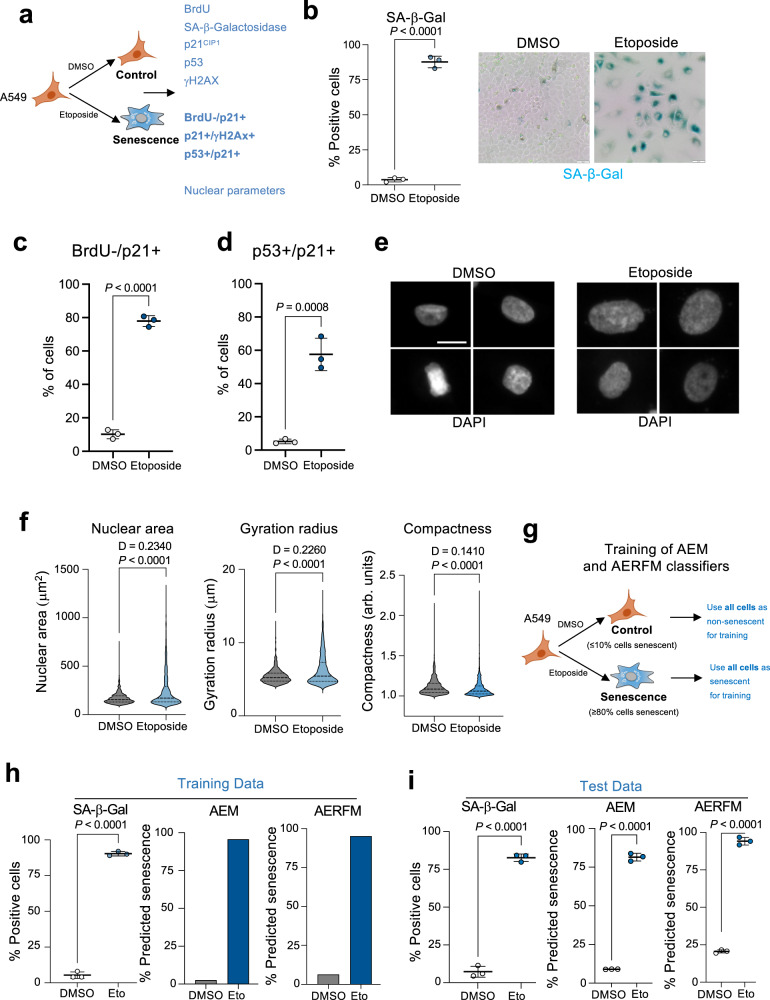
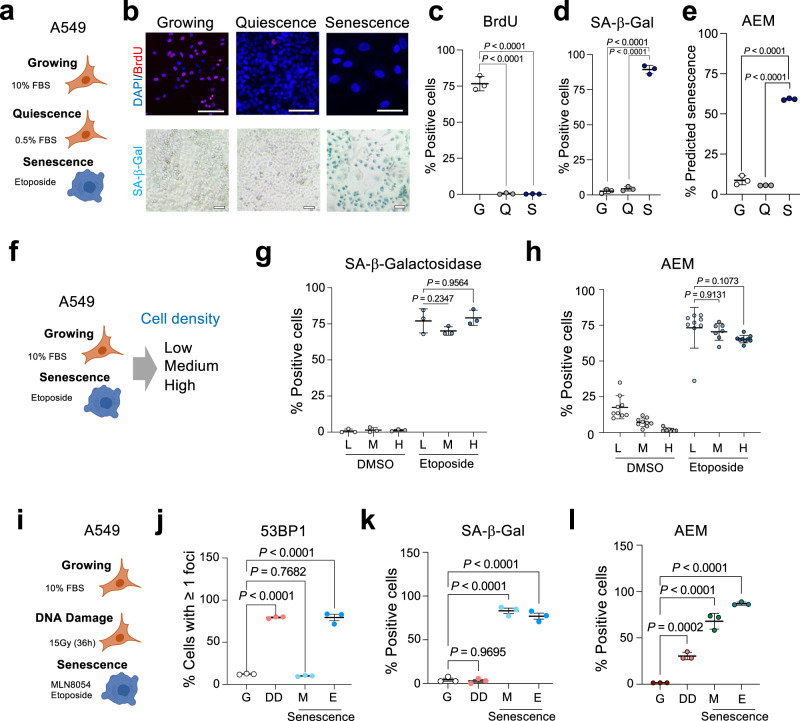
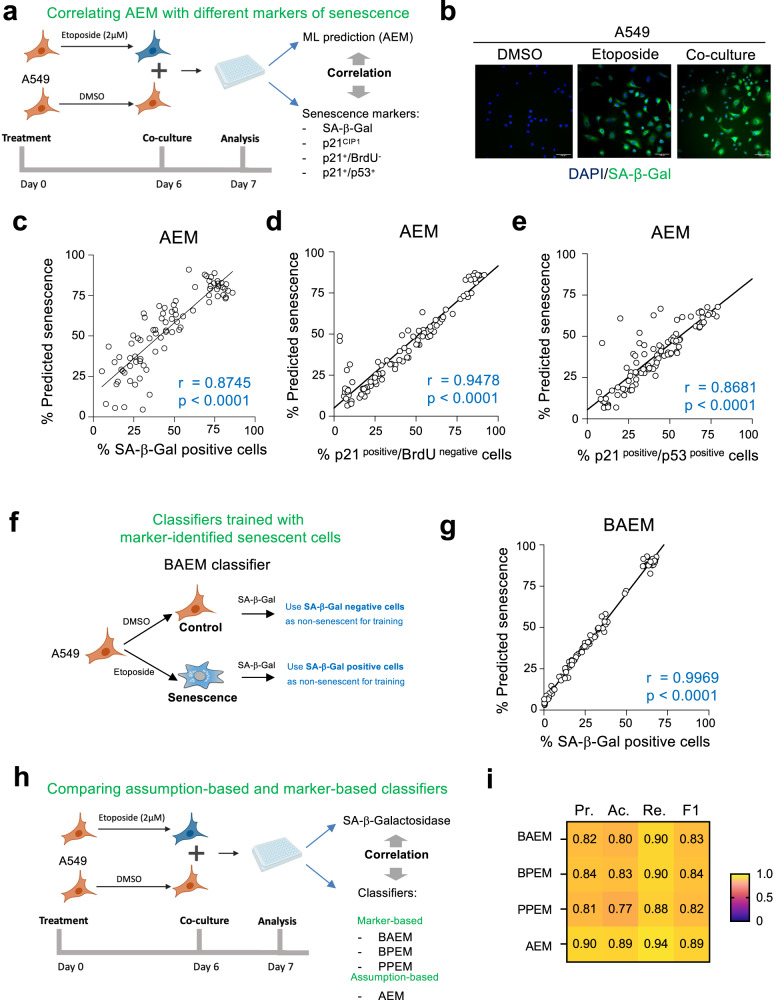
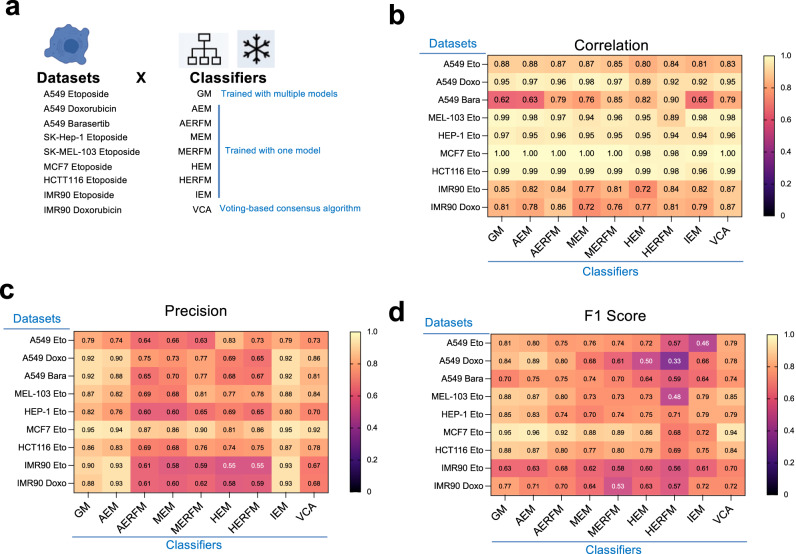
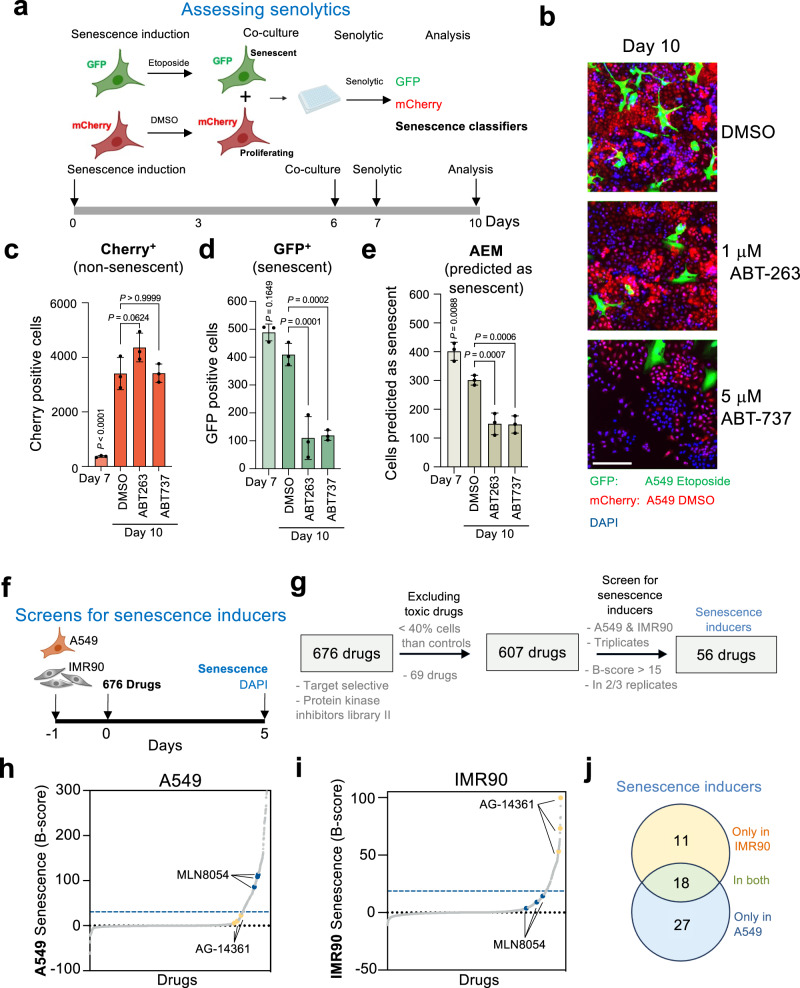
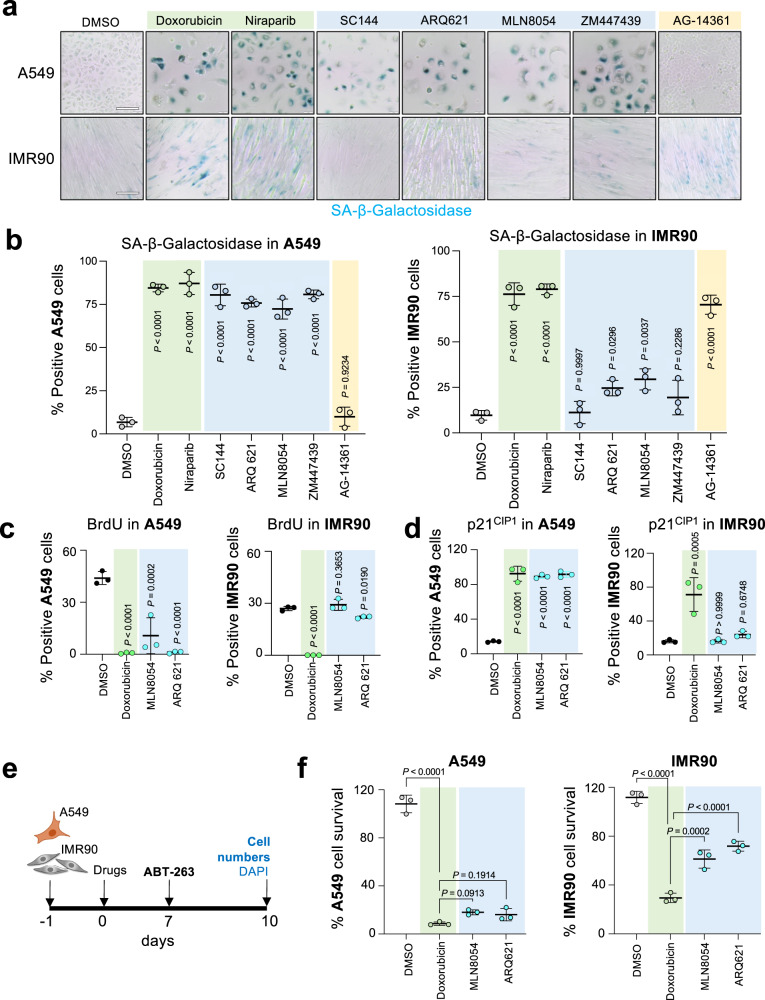
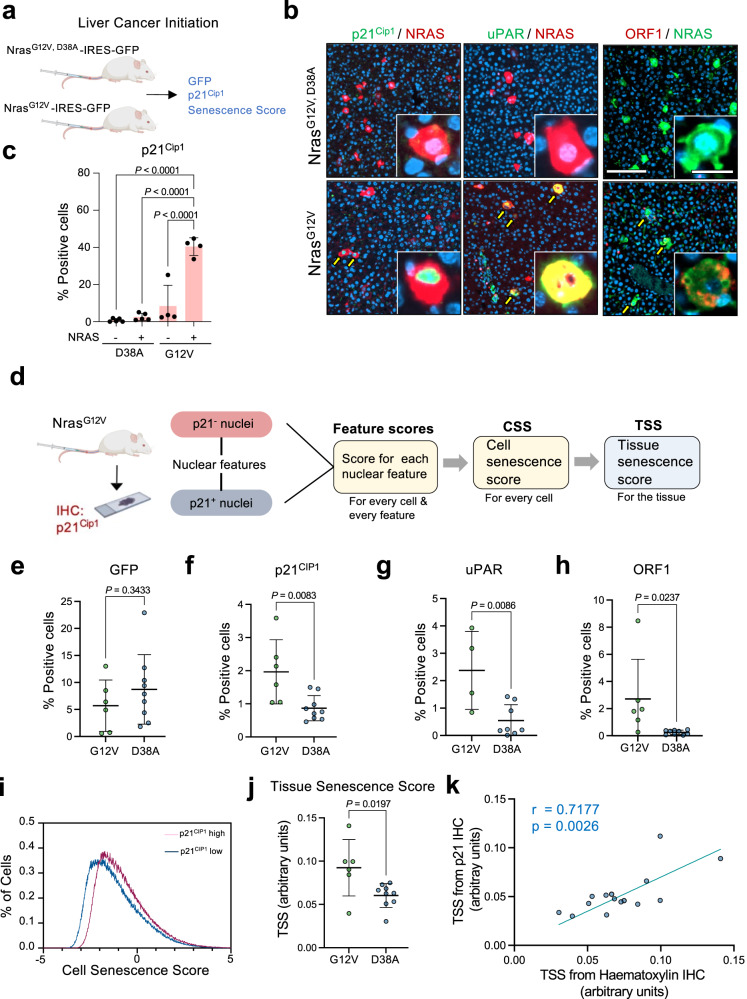
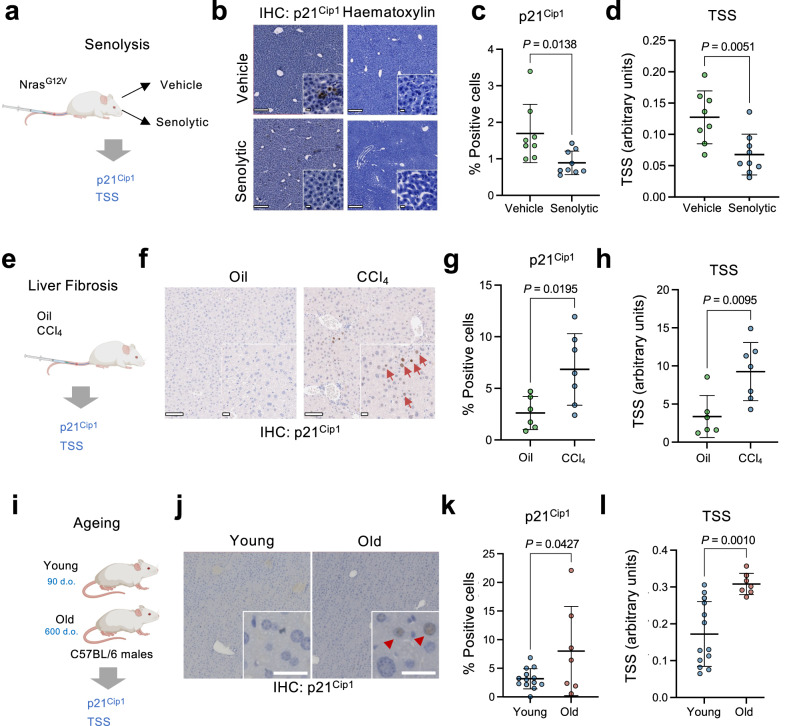
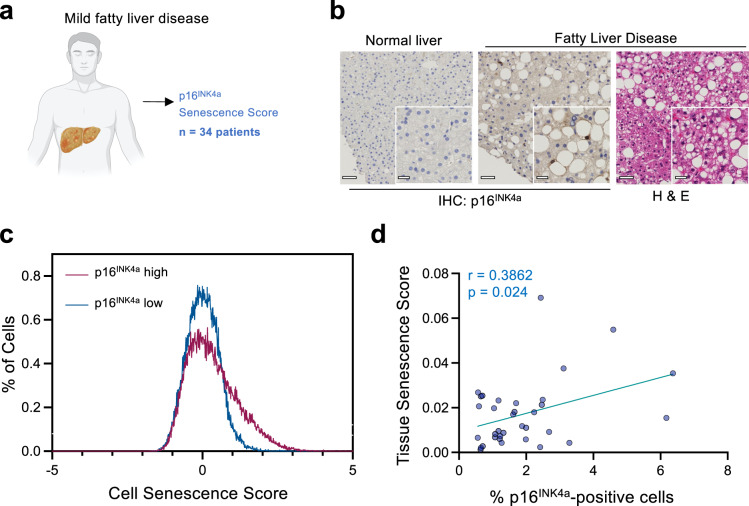
Cellular senescence is a stress response with broad pathophysiological implications. Senotherapies can induce senescence to treat cancer or eliminate senescent cells to ameliorate ageing and age-related pathologies. However, the success of senotherapies is limited by the lack of reliable ways to identify senescence. Here, we use nuclear morphology features of senescent cells to devise machine-learning classifiers that accurately predict senescence induced by diverse stressors in different cell types and tissues. As a proof-of-principle, we use these senescence classifiers to characterise senolytics and to screen for drugs that selectively induce senescence in cancer cells but not normal cells. Moreover, a tissue senescence score served to assess the efficacy of senolytic drugs and identified senescence in mouse models of liver cancer initiation, ageing, and fibrosis, and in patients with fatty liver disease. Thus, senescence classifiers can help to detect pathophysiological senescence and to discover and validate potential senotherapies.
Overview
The claims and statistics of this paper haven’t been checked yet.
Free: it reads the open-access text and checks the first 5 claims that cite a source we can check. Create a free account to check every claim.
Integrity signals
Registry
Cites
Statistics
Figures
Verification
Claims the paper makes
The claims and statistics of this paper haven’t been checked yet.
Free: it reads the open-access text and checks the first 5 claims that cite a source we can check. Create a free account to check every claim.
Claims other papers make about this one
Each is checked against this paper’s own text: does it say what the citing paper says it does?
In the citing paper
“These new senescence classifiers can detect senescence in vivo in aging, fibrosis, preclinical models of cancer140,141, and a range of clinical samples141,142.”
From Guidelines for minimal information on cellular senescence experimentation in vivo (2024) · cites this paper as [141]
In the citing paper
“Advances in high-throughput imaging, computational tools, and machine learning have fostered the use of multiparameter morphological analysis as a robust, unbiased, and quantifiable marker of senescence.”
From Guidelines for minimal information on cellular senescence experimentation in vivo (2024) · cites this paper as [141]
Self-check
Percentages, sums and reported differences re-computed from the paper’s own numbers.
The self-check needs the paper’s full text.
Citations
Cites
Scikit-learn: Machine Learning in Python
Pedregosa, F., Varoquaux, G., Gramfort, A., Michel, V., Thirion, B., Grisel, O., Blondel, M., Müller, A., Nothman, J., Louppe, G., et al. (2012) · arXiv · doi:10.48550/arxiv.1201.0490 · Cited by 71,016 · cited 1×
“The following packages were also utilized: scikit-learn and derived packages; 47 , pandas, numpy, matplotlib. pyplot, seaborn, and csv. Area, Form Factor, Elongation, Compactness, Chord Ratio, Gyration, and Displacement were used as nuclear features.”
QuPath: Open source software for digital pathology image analysis
Bankhead, P., Loughrey, M. B., Fernández, J. A., Dombrowski, Y., McArt, D. G., Dunne, P. D., McQuaid, S., Gray, R. T., Murray, L. J., Coleman, H. G., et al. (2017) · Scientific Reports · doi:10.1038/s41598-017-17204-5 · Cited by 8,908 · cited 2×
“Moreover, open-source software such as CellPro fi ler 21 and Qupath 44 can be used to extract the Fig.7|Tissuesenescencescorepredictssenescenceinducedduringlivercancer initiation. a Experimental design for analysis of senescence in the liver cancer initiation model. b Representative images of liver sections obtained of…”
Cellular Senescence: Defining a Path Forward
Gorgoulis, V., Adams, P. D., Alimonti, A., Bennett, D. C., Bischof, O., Bishop, C., Campisi, J., Collado, M., Evangelou, K., Ferbeyre, G., et al. (2019) · Cell · doi:10.1016/j.cell.2019.10.005 · Cited by 3,225
Self-citationNaturally occurring p16Ink4a-positive cells shorten healthy lifespan
Baker, D. J., Childs, B. G., Durik, M., Wijers, M. E., Sieben, C. J., Zhong, J., A. Saltness, R., Jeganathan, K. B., Verzosa, G. C., Pezeshki, A., et al. (2016) · Nature · doi:10.1038/nature16932 · Cited by 2,876 · cited 1×
“Research in the last decade has shown that beyond these associations, lingering senescent cells contribute to aging and disease progression 11 .”
Cellular senescence: from physiology to pathology
Muñoz-Espín, D., & Serrano, M. (2014) · Nature Reviews Molecular Cell Biology · doi:10.1038/nrm3823 · Cited by 2,818 · cited 4×
“Senescent cells accumulate with age, are associated with multiple diseases,andarepresent incancerousand fi broticlesions 10 .”
InfluentialRb-mediated heterochromatin formation and silencing of E2F target genes during cellular senescence
Narita, M., Nuñez, S., Heard, E., Narita, M., Lin, A. W., Hearn, S. A., Spector, D. L., Hannon, G. J., & Lowe, S. W. (2003) · Cell · doi:10.1016/s0092-8674(03)00401-x · Cited by 2,278 · cited 2×
“Our approach starts from the pre-existing knowledge that senescent cells undergo chromatin rearrangement and changes in nuclear morphology 4,8,9 to devise machine-learning classi fi ers based on nuclear features.”
A complex secretory program orchestrated by the inflammasome controls paracrine senescence
Acosta, J. C., Banito, A., Wuestefeld, T., Georgilis, A., Janich, P., Morton, J. P., Athineos, D., Kang, T.-W., Lasitschka, F., Andrulis, M., et al. (2013) · Nature Cell Biology · doi:10.1038/ncb2784 · Cited by 2,278
Self-citationCellProfiler 4: improvements in speed, utility and usability
Stirling, D. R., Swain-Bowden, M. J., Lucas, A. M., Carpenter, A. E., Cimini, B. A., & Goodman, A. (2021) · BMC Bioinformatics · doi:10.1186/s12859-021-04344-9 · Cited by 2,070
Senescence of Activated Stellate Cells Limits Liver Fibrosis
Krizhanovsky, V., Yon, M., Dickins, R. A., Hearn, S., Simon, J., Miething, C., Yee, H., Zender, L., & Lowe, S. W. (2008) · Cell · doi:10.1016/j.cell.2008.09.015 · Cited by 2,027
Clearance of senescent cells by ABT263 rejuvenates aged hematopoietic stem cells in mice
Chang, J., Wang, Y., Shao, L., Laberge, R.-M., Demaria, M., Campisi, J., Janakiraman, K., Sharpless, N. E., Ding, S., Feng, W., et al. (2016) · Nature Medicine · doi:10.1038/nm.4010 · Cited by 1,819 · cited 1×
“Drugs such as the BCL-2 family inhibitors ABT-263 and ABT-737 selectively kill senescent cells and have the potential to treat a wide range of diseases in which senescent cells accumulate 25 – 27 .”
Research works printed but not linked: 1
- Duran, I. et al. Detection of senescence using machine learning algorithms based on nuclear features. Zenodo10.5281/zenodo.10499895 (2024). PMC10838307 38310113 · doi:10.5281/zenodo.10499895
Cited by
Artificial intelligence in drug development
Zhang, K., Yang, X., Wang, Y., Yu, Y., Huang, N., Li, G., Li, X., Wu, J. C., & Yang, S. (2025) · Nature Medicine · doi:10.1038/s41591-024-03434-4 · Cited by 498
“A recent study used nuclear morphology and machine learning to identify compounds inducing senescence in cancer cells 73 ; similar strategies are also promising for antibiotic discovery 68 .”
Guidelines for minimal information on cellular senescence experimentation in vivo
Ogrodnik, M., Carlos Acosta, J., Adams, P. D., d’Adda di Fagagna, F., Baker, D. J., Bishop, C. L., Chandra, T., Collado, M., Gil, J., Gorgoulis, V., et al. (2024) · Cell · doi:10.1016/j.cell.2024.05.059 · Cited by 376
Self-citationSenescence as a therapeutic target in cancer and age-related diseases
McHugh, D., Durán, I., & Gil, J. (2025) · Nature Reviews Drug Discovery · doi:10.1038/s41573-024-01074-4 · Cited by 197
Self-citationEmerging insights in senescence: pathways from preclinical models to therapeutic innovations
Mansfield, L., Ramponi, V., Gupta, K., Stevenson, T., Mathew, A. B., Barinda, A. J., Herbstein, F., & Morsli, S. (2024) · npj Aging · doi:10.1038/s41514-024-00181-1 · Cited by 88
The paradox of senescent-marker positive cancer cells: challenges and opportunities
O’Sullivan, E. A., Wallis, R., Mossa, F., & Bishop, C. L. (2024) · npj Aging · doi:10.1038/s41514-024-00168-y · Cited by 62
“The assay itself is also notorious for requiring careful optimisation and is sensitive to considerations of cell con fl uency 105,107 .”
Method
Metadata
- Authors
- Duran, I., Pombo, J., Sun, B., Gallage, S., Kudo, H., McHugh, D., Bousset, L., Barragan Avila, J. E., Forlano, R., Manousou, P., Heikenwalder, M., Withers, D. J., Vernia, S., Goldin, R. D., & Gil, J.
- Affiliations
- MRC London Institute of Medical Sciences (GB)
- German Cancer Research Center (DE)
- Imperial College London (GB)
- Corresponding author
- Gil, Jesús
- ORCID
- Venue
- Nature Communications
- Published
- 2024-02-03
- Volume
- 15
- Issue
- 1
- Pages
- 1041-1041
- ISSN
- 2041-1723 (ISSN-L)
- PMC
- PMC10838307
- OpenAlex
- W4391515326
- Cited by
- 85
- References
- 50
- Citations by year
- 2026: 31 · 2025: 32 · 2024: 22
- FWCI
- 24.19
- Type
- journal article
- Language
- en
- Open access
- gold
- doi.org
- Licence
- cc-by
- creativecommons.org/licenses/by/4.0 (tdm)
- creativecommons.org/licenses/by/4.0 (vor)
- Locations
- Nature Communications (publishedVersion, cc-by)
- PubMed Central (publishedVersion, cc-by)
- PubMed (publishedVersion)
- RePEc: Research Papers in Economics (submittedVersion)
- DOAJ (DOAJ: Directory of Open Access Journals) (submittedVersion)
- Spiral (Imperial College London) (submittedVersion, cc-by-nc)
- Imperial College Research Computing Service Data Repository
- Funders
- Wellcome Trust (098565/Z/12/Z)
- Cancer Research UK (C15075/A28647, 28647)
- National Institute for Health and Care Research
- Imperial College London
- University of Oxford
- Fonds Wetenschappelijk Onderzoek (30826052)
- Vlaamse regering
- Medical Research Council (MC-A654-5QB40, MC-U120085810)
- NIHR Imperial Biomedical Research Centre
- Topics
- Life Sciences › Biochemistry, Genetics and Molecular Biology › Cell Biology › Telomeres, Telomerase, and Senescence
- Life Sciences › Biochemistry, Genetics and Molecular Biology › Aging › Genetics, Aging, and Longevity in Model Organisms
- Life Sciences › Biochemistry, Genetics and Molecular Biology › Biophysics › Cell Image Analysis Techniques
- Keywords
- cellular senescence, senolytics, senotherapy, liver cancer, aging, liver fibrosis, hepatic steatosis
- MeSH terms
- Aging, Animals, Fibrosis, Humans, Cellular Senescence, Mice
About these checks
Registry, retraction, Cites and statistics results are computed, not judged, with one exception: a printed reference that no index lists is read once by a model before it counts as a citation error. Claims are extracted by a model and kept only when their quote appears verbatim in the text; each cited source is then checked, with a model’s help, for whether it says what the claim relies on. Those verdicts can be wrong — read the claim’s quote and the cited source before relying on one.
Statistics and arithmetic are recomputed, not judged.
Confidence bands are shown only for fields calibrated on our annotated test set. None is calibrated yet, so no band is shown.
What counts as a claim ›How we measure confidence ›How we check this ›
Are you an author, or do you see a problem with this page? Request a review
Data sources
Bibliographic data: Semantic Scholar, OpenAlex, Crossref.
Contains information from the Semantic Scholar Academic Graph Datasets, made available under the ODC Attribution License (ODC-BY 1.0).
Semantic Scholar’s data is described in: Kinney, R., et al. (2023). The Semantic Scholar Open Data Platform. arXiv:2301.10140.
