

A microfluidic platform integrating functional vascularized organoids-on-chip
Open accessPublished version of a preprint
The DOI matches its Crossref record; 65 of the 65 references it cites were found in a registry or an index.
Abstract
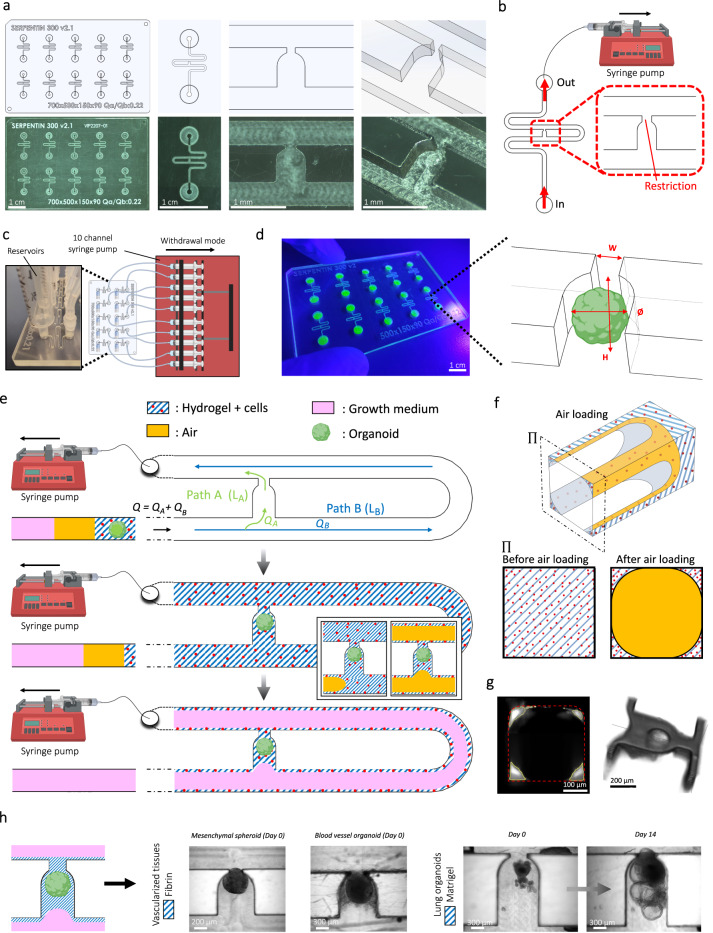
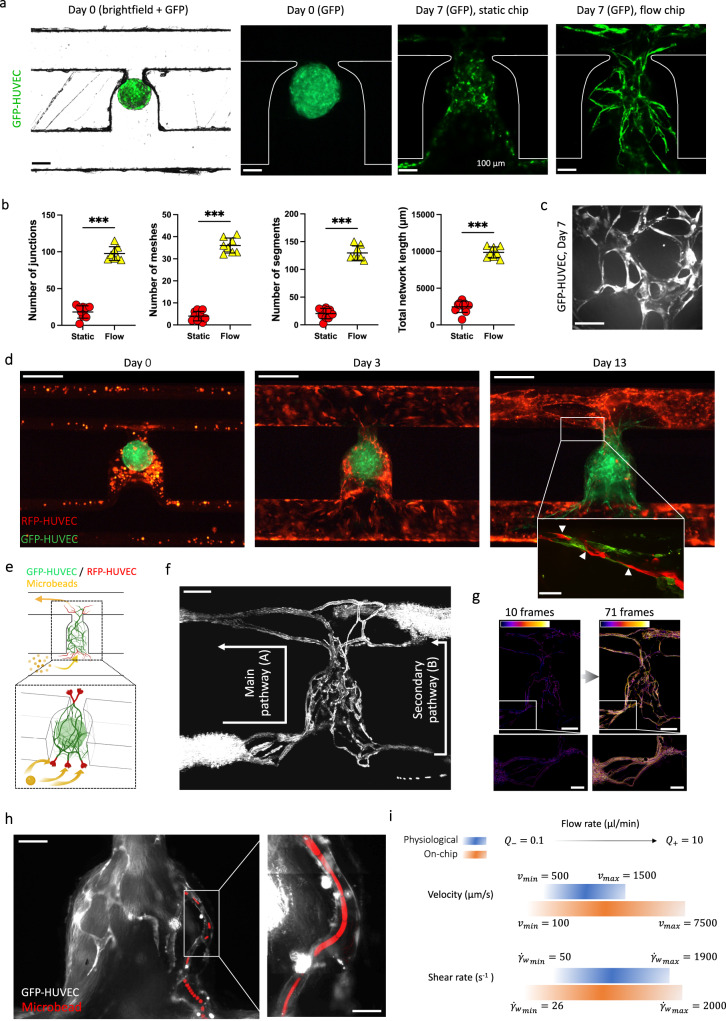
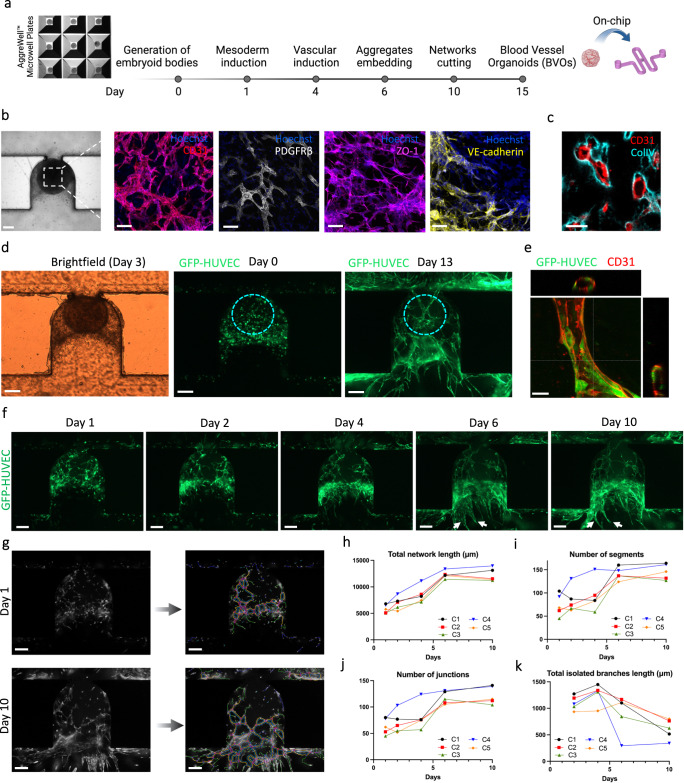
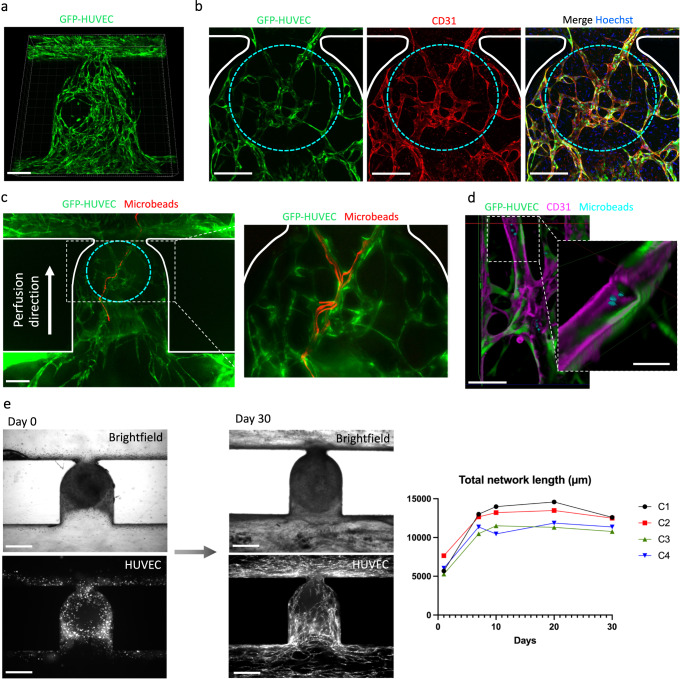
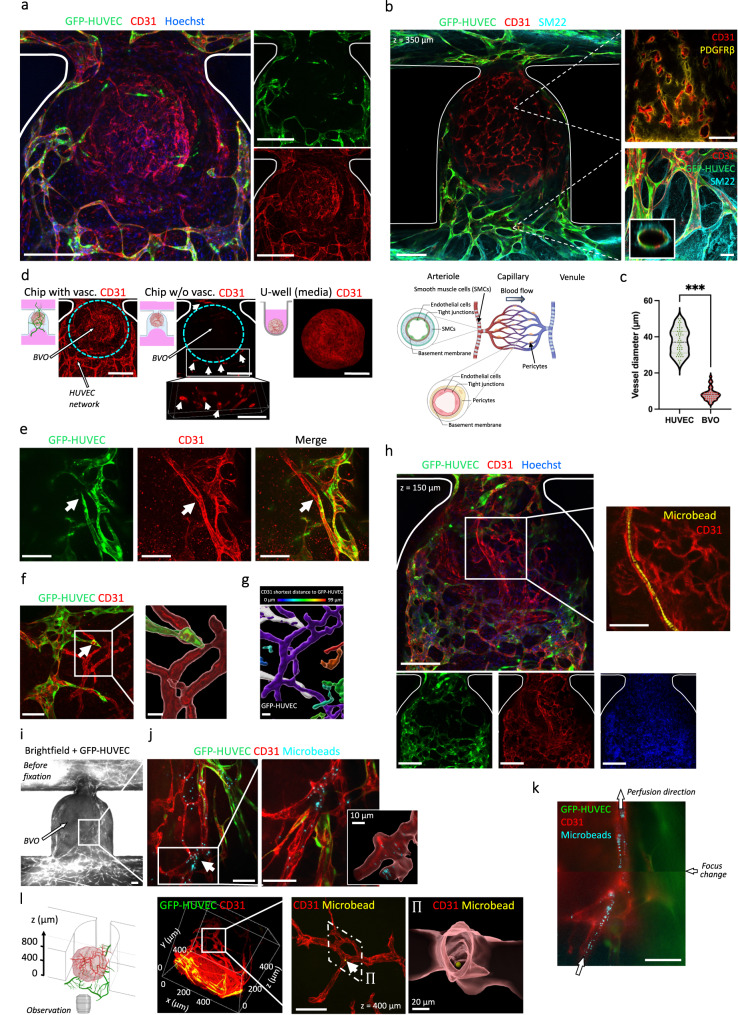
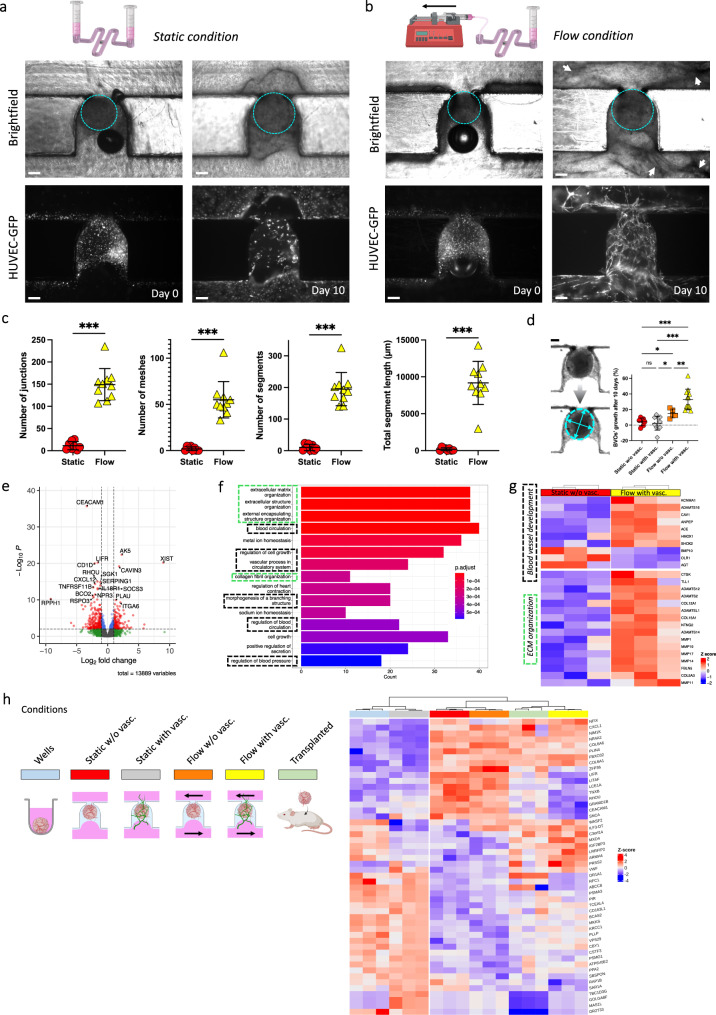
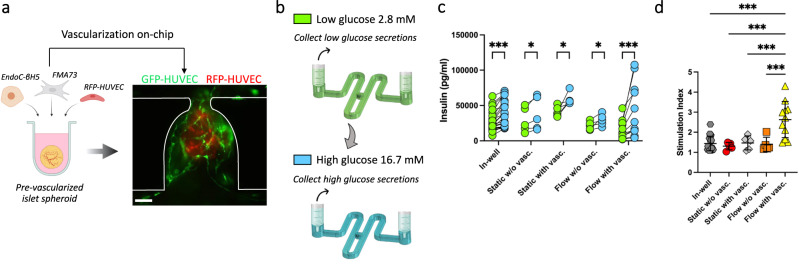
The development of vascular networks in microfluidic chips is crucial for the long-term culture of three-dimensional cell aggregates such as spheroids, organoids, tumoroids, or tissue explants. Despite rapid advancement in microvascular network systems and organoid technologies, vascularizing organoids-on-chips remains a challenge in tissue engineering. Most existing microfluidic devices poorly reflect the complexity of in vivo flows and require complex technical set-ups. Considering these constraints, we develop a platform to establish and monitor the formation of endothelial networks around mesenchymal and pancreatic islet spheroids, as well as blood vessel organoids generated from pluripotent stem cells, cultured for up to 30 days on-chip. We show that these networks establish functional connections with the endothelium-rich spheroids and vascular organoids, as they successfully provide intravascular perfusion to these structures. We find that organoid growth, maturation, and function are enhanced when cultured on-chip using our vascularization method. This microphysiological system represents a viable organ-on-chip model to vascularize diverse biological 3D tissues and sets the stage to establish organoid perfusions using advanced microfluidics.
Overview
The claims and statistics of this paper haven’t been checked yet.
Free: it reads the open-access text and checks the first 5 claims that cite a source we can check. Create a free account to check every claim.
Integrity signals
Registry
Cites
Statistics
Figures
Verification
Claims the paper makes
The claims and statistics of this paper haven’t been checked yet.
Free: it reads the open-access text and checks the first 5 claims that cite a source we can check. Create a free account to check every claim.
Self-check
Percentages, sums and reported differences re-computed from the paper’s own numbers.
The self-check needs the paper’s full text.
Citations
Cites
Ultrastructural Characterization of the Lower Motor System in a Mouse Model of Krabbe Disease
Cappello, V., Marchetti, L., Parlanti, P., Landi, S., Tonazzini, I., Cecchini, M., Piazza, V., & Gemmi, M. (2016) · Scientific Reports · doi:10.1038/s41598-016-0001-8 · Cited by 13,097
Limb proportions show developmental plasticity in response to embryo movement
Pollard, A. S., Charlton, B. G., Hutchinson, J. R., Gustafsson, T., McGonnell, I. M., Timmons, J. A., & Pitsillides, A. A. (2017) · Scientific Reports · doi:10.1038/srep41926 · Cited by 2,364
An in vivo model of functional and vascularized human brain organoids
Mansour, A. A., Gonçalves, J. T., Bloyd, C. W., Li, H., Fernandes, S., Quang, D., Johnston, S., Parylak, S. L., Jin, X., & Gage, F. H. (2018) · Nature Biotechnology · doi:10.1038/nbt.4127 · Cited by 1,211
Extracellular matrix remodelling: the role of matrix metalloproteinases
Stamenkovic, I. (2003) · The Journal of Pathology · doi:10.1002/path.1400 · Cited by 1,140 · cited 1×
“Moreover, genes of the metalloproteinase family, involved in ECM remodeling 35 , were found to be upregulated under fl ow conditions (Fig.”
Advances in organ-on-a-chip engineering
Zhang, B., Korolj, A., Lai, B. F. L., & Radisic, M. (2018) · Nature Reviews Materials · doi:10.1038/s41578-018-0034-7 · Cited by 1,017
Aminopeptidase N is a receptor for tumor-homing peptides and a target for inhibiting angiogenesis.
Pasqualini, R., Koivunen, E., Kain, R., Lahdenranta, J., Sakamoto, M., Stryhn, A., Ashmun, R., Shapiro, L., Arap, W., & Ruoslahti, E. I. (2000) · PubMed · Cited by 970
Engineering of human brain organoids with a functional vascular-like system
Cakir, B., Xiang, Y., Tanaka, Y., Kural, M. H., Parent, M., Kang, Y.-J., Chapeton, K., Patterson, B., Yuan, Y., He, C.-S., et al. (2019) · Nature Methods · doi:10.1038/s41592-019-0586-5 · Cited by 942
Flow-enhanced vascularization and maturation of kidney organoids in vitro
Homan, K. A., Gupta, N., Kroll, K. T., Kolesky, D. B., Skylar-Scott, M., Miyoshi, T., Mau, D., Valerius, M. T., Ferrante, T., Bonventre, J. V., et al. (2019) · Nature Methods · doi:10.1038/s41592-019-0325-y · Cited by 939
Engineering of functional, perfusable 3D microvascular networks on a chip
Kim, S., Lee, H., Chung, M., & Jeon, N. L. (2013) · Lab on a Chip · doi:10.1039/c3lc41320a · Cited by 872
Human blood vessel organoids as a model of diabetic vasculopathy
Wimmer, R. A., Leopoldi, A., Aichinger, M., Wick, N., Hantusch, B., Novatchkova, M., Taubenschmid, J., Hämmerle, M., Esk, C., Bagley, J. A., et al. (2019) · Nature · doi:10.1038/s41586-018-0858-8 · Cited by 803 · cited 3×
“We have previously reported the generation of such organoids 17 and demon-stratedtheirphysiologicalrelevancethroughthemodellingofdiabetic vasculopathybothinvitroandinvivo 3 .”
Self-citation
Research works printed but not linked: 1
- Carpentier, G., Martinelli, M., Courty, J. & Gascone, I. Angiogenesis analyzer for ImageJ. 4th ImageJ User and Developer Conference proceedings. (pp. 198-201). https://imagej.nih.gov/ij/macros/toolsets/Angiogenesis%20Analyzer.txt (2012).
Cited by
Items 201–300 of 409
赵瑞力, Cheng, H., Mei, S., Li, H., Zhang, L., & Ya, L. (2026) · Letters in Drug Design & Discovery · doi:10.1016/j.lddd.2026.100424 · Cited by 2
Recent advances and expanding applications of organoid models in unveiling drug ADME profiles
Zhang, G. L., Zhang, R., 舒子航, Zhao, J., Yin, L., Shi, M., & Han, Y. (2026) · Journal of Pharmaceutical Analysis · doi:10.1016/j.jpha.2026.101676 · Cited by 2
“Current constraints include incomplete functional maturation relative to adult human tissues [10], batch-to-batch variability [11], a lack of uniform culture protocols [12], and the frequent absence of functional vascularization [13] and immune components [14].”
Caruso, A., Delvecchio, A., Memeo, R., Lanzino, M., & Martinotti, S. (2026) · Frontiers in Endocrinology · doi:10.3389/fendo.2026.1872361 · Cited by 4
“In 2024, Quintard and colleagues reported a micro fl uidic platform capable of integrating functional vascularized organoids-on-chip, showing intravascular perfusion and improved growth, maturation, and tissue function in multiple organoid contexts (171).”
Tian, J., Li, Q., Li, N., Song, D., Li, Z., Shi, X., Sun, H., Duan, S., & Zhang, L. (2026) · Journal of Nanobiotechnology · doi:10.1186/s12951-026-04831-2 · Cited by 2
“Vascularized organoids, vascularized organ-on-chip models, and vascularized organoid-on-chip systems allow EV formulations to be tested under perfusion, endothelial interaction, and tissue-specific uptake conditions [175–178].”
Wei, M., Wu, T., Lin, B., Zhou, Q., & Gao, B. (2025) · Sensors and Actuators A Physical · doi:10.1016/j.sna.2025.116496 · Cited by 3
Gynecological malignancy organoids: A game changer for personalized medicine
Ding, Z., Chang, X., Qu, X., Hua, K., & Qiu, J. (2025) · Biochimica et Biophysica Acta (BBA) - Reviews on Cancer · doi:10.1016/j.bbcan.2025.189405 · Cited by 3
Organoids in host pathology: Unveiling microbial-induced therapeutic responses
Sun, L., Duan, Y., Lan, Q., Wang, Y., Wong, A. S. T., Ni, Y., & Liu, D. (2025) · Microbiological Research · doi:10.1016/j.micres.2025.128313 · Cited by 2
Netala, V. R., Hou, T., & Zhang, Z. (2025) · Journal of Drug Delivery Science and Technology · doi:10.1016/j.jddst.2025.107171 · Cited by 4
Pancreatic islet organoids and organoids on-chip for type 1 diabetes
Mehanović, M., Lopes, M., Coffy, S., Pitaval, A., Freida, D., Gidrol, X., & Tubbs, E. (2025) · La Presse Médicale · doi:10.1016/j.lpm.2025.104302 · Cited by 2
Self-citationDissecting infant leukemia developmental origins with a hemogenic gastruloid modelPreprint
Ragusa, D., Suen, C.-W. W., Torregrosa-Cortés, G., Pastorino, F., Johns, A., Cicirò, Y., Dijkhuis, L., van den Brink, S., Cilli, M., Byrne, C., et al. (2025) · eLife · doi:10.7554/elife.102324.1 · Cited by 3
Cell-cultured PDMS vascular model to allow placement of implant devices
Okuno, T., Ito, K., Funamoto, K., & Yoshino, D. (2026) · BMC Methods · doi:10.1186/s44330-026-00072-9 · Cited by 1
“However, these models primarily focus on microvascular networks that deliver nutrients and oxygen to tissues or organoids [15–17], and there are few models with vessel diameters large enough to allow stent placement.”
Adrenocortical organoids: A promising tool for modelling human physiology and translational research
Tedesco, M., Schedl, A., & Neirijnck, Y. (2025) · La Presse Médicale · doi:10.1016/j.lpm.2025.104300 · Cited by 1
The endothelium at the crossroads of multi-organ pathology: Insights from organ-on-chip models
Ghosh, S., Shukla, P. C., & Das, S. (2025) · Vascular Pharmacology · doi:10.1016/j.vph.2025.107551 · Cited by 3
Targeting Tumor‐Immune Microenvironment with Organoid and Organ‐on‐a‐Chip: An Updated Review
Madani, S., Holman, J. B., Rajput, M. U., Ali, S. W., Shi, Z., Qiu, B., Zhang, A., Li, C., & Ding, W. (2025) · Advanced Materials Technologies · doi:10.1002/admt.202501704 · Cited by 1
The Application of Microfluidics in Traditional Chinese Medicine Research
Zhu, S., Ke, X., Li, Y., Shu, Z., Zheng, J., Xue, Z., Qi, W., & Xu, B. (2025) · Biosensors · doi:10.3390/bios15120770 · Cited by 1
“In recent years, platforms have emerged, including single-cell [58] and two-dimensional cell microfluidic chips [59], three-dimensional cell-culture systems [60], organoid models [61], and organ-on-a-chip technologies [62].”
Gao, T., Hao, J., Mak, H. K., Peng, Z., Wu, J., Li, Q., & Chan, Y. K. (2025) · Micromachines · doi:10.3390/mi16121368 · Cited by 1
“The integrated platforms equip the organoids with dynamic flows for oxygen supply and nutrient/waste exchange, or even physiological micro-vascularization [85–87].”
Mechanisms of parasite‐mediated disruption of brain vessels
Loira, L., Arroz‐Madeira, S., Franco, C. A., & Pereira, S. S. (2025) · FEBS Letters · doi:10.1002/1873-3468.70255 · Cited by 1
An open-source slicer for 3D mSLA printing of microfluidic chips
Emmerich, M., Liertz, B., & Wille, R. (2025) · Scientific Reports · doi:10.1038/s41598-025-32448-2 · Cited by 1
“…open channel design that includes a channel loop and a fluidic trap to trap spheroids (cell aggregates) on-chip for biological experiments, from 22,24 , in the following referred to as spheroid-trap , • an open channel chip for a so-called ELISA assay, a biological analysis method, from 21 ,…”
Vascularized Homeostasis: The Key to Orofacial Tissue-Engineered Organoid Construction
Zhang, X., Li, Z., Mou, Q., He, L., Jiao, L., Ma, Z., & Liu, X. (2025) · Tissue Engineering Part B Reviews · doi:10.1177/19373368251373103 · Cited by 1
Zhang, J., Ren, C., Liu, L., Li, Z., Zhao, H., & Jin, H. (2025) · Optics & Laser Technology · doi:10.1016/j.optlastec.2025.114589 · Cited by 1
Li, Y.-J., Zhong, Y.-Y., Wang, W., Yu, C.-S., Zhang, Y., & Zhao, Q. (2026) · Nano Research · doi:10.26599/nr.2026.94908549 · Cited by 1
García‐Giménez, J. L., Seco-Cervera, M., Cánovas‐Cervera, I., Agúndez, A. B., Dolz-Andrés, E., Mondaray-Muñoz, G., Calpe-Fortea, R., Nácher-Sendra, E., Osca-Verdegal, R., Aparicio-Collado, J. L., et al. (2026) · Materials Today Bio · doi:10.1016/j.mtbio.2026.103194 · Cited by 1
“They also support the analysis of septic inflammation on endothelial integrity and neutrophil-endothelial interactions, as shown by Kiani et al. [100], and to assess vascular perfusion and organoid maturation in iPSC-derived vascular organoid-on-chip systems, as reported by Gridol et al. [98].”
The Tumor Microenvironment: Translating Intravital Insights into Microphysiological Systems
Imparato, G., Mazio, C., Nevola, P., & Netti, P. A. (2026) · Cellular and Molecular Bioengineering · doi:10.1007/s12195-026-00910-4 · Cited by 2
A Microfluidic Framework for Neuroprotective Compound Triage Across Ischemia and Neurodegeneration
Anchimowicz, J., & Jakieła, S. (2026) · Molecules · doi:10.3390/molecules31101622 · Cited by 2
“That keeps mitochondrial biology in the workflow as a genuine decision tool rather than as a source of mechanistic ornamentation [60,65,73,97].”
InfluentialThe synergistic applications of organoids and exosomes in disease modeling and disease treatment
Feng, Q., Wang, Y., Wang, M., Yin, X., Zhao, Y., & Yang, J. (2026) · Molecular Biology Reports · doi:10.1007/s11033-026-11926-4 · Cited by 2
Kalshetti, D., Amin, M., Varsani, R., Narayanan, A., Ciurca, S., Grijalva, I., Lickfeld, A., Lukan, J. K., Schwaitzberg, S. D., & Arany, P. (2026) · Advances in Wound Care · doi:10.1177/21621918261450363 · Cited by 1
Yang, Z., Lin, L., Jiang, J., Wang, Y., Li, F., Li, X., Fang, J., Xu, L., Li, H., Du, L., et al. (2026) · Bioactive Materials · doi:10.1016/j.bioactmat.2026.05.033 · Cited by 2
Li, J., & Wang, Y. (2026) · PLoS ONE · doi:10.1371/journal.pone.0351313 · Cited by 1
“Microfluidic chip technology can integrate multiple experimental steps—including sample pretreatment, antigen-antibody reaction, signal separation, and detection—onto a single chip, significantly shortening the detection cycle and reducing human error [20].”
Enabling Technologies in Vascular Biology: Microphysiological Systems, Organoids, and Beyond
Gholizadeh, H., & Benam, K. H. (2026) · Arteriosclerosis Thrombosis and Vascular Biology · doi:10.1161/atvbaha.126.323054 · Cited by 1
Recent advances and current limitations of vascular organoids
Yoon, N., Kim, S., & Park, J. (2026) · Organoid · doi:10.51335/organoid.2026.6.e6 · Cited by 1
Advances in microfluidic endothelium-on-chip for assessing endothelial function
Tesfamariam, B., & Miller, N. J. (2026) · Journal of Pharmacological and Toxicological Methods · doi:10.1016/j.vascn.2026.108562 · Cited by 1
Kong, S.-Y., & Kim, D. (2026) · Biofabrication · doi:10.1088/1758-5090/ae94b5 · Cited by 2
“Quintard et al developed a microfluidic platform in which iPSC-BVOs were embedded in hydrogel within a chip, surrounded by HUVEC-based networks that established perfusable anastomoses [58].”
Emerging Regenerative Medicine for Spinal Cord Injury: Spinal Cord Organoids-on-a-Chip
Khan, M., Choi, H., Ahmad, S., Lee, S., Park, J., & Han, I. (2026) · International Journal of Molecular Sciences · doi:10.3390/ijms27157060 · Cited by 1
“This study provides a compelling proof of concept for functional on-chip vascularization that may be adaptable to future SCO-OoaC platforms [173].”
Kidney-On-Chip and Organoid Models: Harnessing Mechanical Forces for Translational Kidney Biology
Daily, A., Anandakrishnan, N., Haydak, J. C., Himmelfarb, J., & Azeloglu, E. U. (2026) · Journal of the American Society of Nephrology · doi:10.1681/asn.0000001272 · Cited by 1
Towards advanced regenerative therapeutics to tackle cardio-cerebrovascular diseases
Chen, X., Lin, W., & Tortorella, M. D. (2025) · American Heart Journal Plus Cardiology Research and Practice · doi:10.1016/j.ahjo.2025.100520 · Cited by 1
“Recent breakthroughs have successfully established and monitored formation of endothelial networks around mesenchymal and pancreatic islet spheroids, as well as blood vessel organoids generated from pluripotent stem cells on-chip using advanced microfluidics [76].”
Navigating Drug Dynamics: Unleashing On-Chip Pharmacokinetics and Pharmacodynamics
Das, A. K., Mutukuri, R., Chowdhury, N., Paul, D., & Nanjappan, S. K. (2025) · Drug Metabolism and Bioanalysis Letters · doi:10.2174/0118723128377867250225073257 · Cited by 1
Sun, L., Wang, P. J., Lin, X., & Qiu, Y. (2025) · Chinese Journal of Plastic and Reconstructive Surgery · doi:10.1016/j.cjprs.2025.11.003 · Cited by 1
Engineered Needlepatch for the treatment of acute kidney injury
Zhao, X., Li, X., He, L., Gong, X., Wang, Y., Chen, L., Tian, H., Wang, Y., Xu, X., Sheng, T., et al. (2025) · Biomaterials · doi:10.1016/j.biomaterials.2025.123936 · Cited by 1
Re-Thinking Pharmacokinetics in Ovarian Cancer: What Do Organoids Add?
de Lima, A. E. C., Nunes, M., Xavier, C. P. R., & Ricardo, S. A. V. (2026) · International Journal of Molecular Sciences · doi:10.3390/ijms27083423 · Cited by 1
“PDO metrics (e.g., metabolic clearance per protein) must be scaled to whole-organ clearance using established conversion factors, with corrections for plasma protein binding, perfusion, and tissue distribution kinetics [28,62].”
Jabri, A., Alsharif, M., Taftafa, B., Abbad, T., Sibai, D., Mhannayeh, A., Elsalti, A., Saadeldin, I. M., Salma, J., Mir, T. A., et al. (2026) · Bioengineering · doi:10.3390/bioengineering13040478 · Cited by 2
“This enhanced organoid growth and metabolic function [41].”
Harnessing Tumor Organoids to Revolutionize Immunotherapy Research
Wang, Z., Yin, P., Cui, S., Liu, H., Li, D., Yang, Y., Cao, B., & Liu, X. (2026) · Cancer Medicine · doi:10.1002/cam4.71776 · Cited by 1
“With the advent of microfluidic technology, Quintard et al. [52] developed a microfluidic chip in which organoids were surrounded by a mixture of HUVECs and fibroblasts and perfused via hydrogel propulsion and air injection, improving or-ganoid growth, maturation, and functionality.”
InfluentialPinos, R., Pauri, M., Barbaglio, F., Barozzi, D., Gravina, G. M. D., Scarfò, L., Ghia, P., Conti, M., & Scielzo, C. (2026) · Biophysics Reviews · doi:10.1063/5.0308556 · Cited by 2
Organoids glimpse: the nexus for diverse tumor heterogeneity
Xu, J., Feng, Q., Xia, Y., Liao, L., Dai, Z., Cai, Z., & Xie, S. M. (2026) · Frontiers in Cell and Developmental Biology · doi:10.3389/fcell.2026.1817560 · Cited by 2
“Quintard et al. developed a microfluidic, multichannel vascularized organoid on chip system that stably maintains a perfused microvascular network around organoids, providing a high temporal resolution tool to study vessel guided migration (Quintard et al., 2024).”
Renal Cell Carcinoma: Histopathology, Molecular Features, and the Emerging Role of Organoid Models
Coppola, A. K., Shahini, A., Mehrjoo, Z., Tarikere, S., Tanguay, S., & Riazalhosseini, Y. (2026) · Gene · doi:10.1016/j.gene.2026.150216 · Cited by 1
Exosomes in Ovarian Cancer: Promoters, Biomarkers, and Therapeutic Targets
Wang, F., Dong, H., Song, Y., & Zhang, Y. (2026) · International Journal of Nanomedicine · doi:10.2147/ijn.s606735 · Cited by 1
“52 Studies by Zhao et al have shown that a microfluidic chip composed of a Y-shaped injector, a serpentine fluid mixer, and a microcavity with a replaceable magnet can enrich tumor-derived circulating exosomes from plasma and perform in-situ multi-label detection.”
Dai, Z., Fu, G., Du, Y., Xie, Y., ZHU, J., Tao, X., Luo, Q., Chu, X., & Lei, Z. (2026) · Cell Reports Medicine · doi:10.1016/j.xcrm.2026.102873 · Cited by 4
Organ-on-a-chip as a next-generation tool in drug development: A bibliometric and patent analysis
Du, Y., Yang, X., Tang, P., & Meng, G. (2026) · Cell Transplantation · doi:10.1177/09636897261462781 · Cited by 2
Xu, J., Kang, Y. Y., Kedong, S., Fan, J., & Liu, Y. (2026) · Journal of Nanobiotechnology · doi:10.1186/s12951-026-04655-0 · Cited by 1
“For example, endothelial cells may be embedded during printing, seeded after channel formation, or introduced under perfusion conditions, and each approach has different implications for lumen stability, barrier function, and compatibility with tumor and stromal compartments [236].”
He, Z.-B., & Duan, X. (2026) · Animals and zoonoses. · doi:10.1016/j.azn.2026.06.007 · Cited by 1
Agudelo, C. G., Karchalla, L. M., Chandler, Z. D., & McNutt, P. M. (2026) · Journal of Functional Biomaterials · doi:10.3390/jfb17080374 · Cited by 1
“…human induced-pluripotent-stem-cell-derived vascular organoids have been integrated into skin models to generate complex vascular structures, and microfluidic studies have demonstrated that vascular organoids can functionally connect with external endothelial networks and support perfusion [76,77].”
3D Printing of Vascular Grafts: From Technology Development to Performance Optimization
Yang, J., Shi, X., Lin, J., Guo, X., Hou, S., Lv, Q., & Shi, J. (2026) · ACS Biomaterials Science & Engineering · doi:10.1021/acsbiomaterials.5c02117 · Cited by 1
Wang, J., Pélissier, A., Lin, J. S. H., Quintard, C., TAMAKHINA, A., Wang, J., Jiao, J., Werschler, N., An, M., Kozieradzki, I., et al. (2026) · Cell stem cell · doi:10.1016/j.stem.2026.09.011 · Cited by 1
Self-citationSeparation of fine particles and liquid using a physical trapping method via a stepped structure
Horade, M., Misu, K., Usagawa, T., Yamawaki, T., Yashima, M., Murakami, S., & Saiki, T. (2024) · Microsystem Technologies · doi:10.1007/s00542-024-05621-2 · Cited by 1
Baek, I.-H., Helms, V., & Kim, Y. J. (2024) · Journal of Functional Biomaterials · doi:10.3390/jfb15110314 · Cited by 1
Xiao, K., Hao, J., Wang, N., Shen, N., Jiang, B., Li, L., Zhang, X., Wang, W., He, H., Wang, Z., et al. (2025) · Free Radical Biology and Medicine · doi:10.1016/j.freeradbiomed.2025.09.040 · Cited by 1
Yang, Y., Zhao, L., Tao, H., Zhang, Y., Wang, H., Xu, H., Ma, N., Shao, N., & Zhang, J. Z. (2026) · bioRxiv (Cold Spring Harbor Laboratory) · doi:10.64898/2026.04.14.718448 · Cited by 1
Kim, M.-J., Lee, S., & Kang, K.-S. (2026) · Experimental & Molecular Medicine · doi:10.1038/s12276-026-01840-x
Stem Cell Derived RPE for Studying Disease
Barabino, A., Herzog, H., Reichert, D., Sharma, R., & Bharti, K. (2024) · Elsevier eBooks · doi:10.1016/b978-0-443-13820-1.00183-3
Organoid-on-a-Chip: A Synergistic Approach to In Vitro Modeling
Li, C., O’Brien, S. M., & Moraes, C. (2024) · Elsevier eBooks · doi:10.1016/b978-0-323-95478-5.00025-x
Skowronek, D., Pilz, R. A., Saenko, V. V., Mellinger, L., Singer, D., Ribback, S., Weise, A., Claaßen, K., Büttner, C., Brockmann, E. M., et al. (2024) · bioRxiv (Cold Spring Harbor Laboratory) · doi:10.1101/2024.12.04.626588
Dissecting infant leukemia developmental origins with a hemogenic gastruloid modelPreprint
Ragusa, D., Suen, C.-W. W., Torregrosa-Cortés, G., Pastorino, F., Johns, A., Cicirò, Y., Dijkhuis, L., van den Brink, S., Cilli, M., Byrne, C., et al. (2025) · eLife · doi:10.7554/elife.102324 · Cited by 7
hiPSC-Driven Organoid Construction and Application Prospects
Liu, B., Mu, Y., & Wang, D. (2025) · Regenerative medicine and dentistry. · doi:10.53941/rmd.2025.100005 · Cited by 4
OPTICAL AND MICROFLUIDIC PLATFORM FOR BIOSENSORS BINDING PERFORMANCE OPTIMIZATION
Jousset, H., Mermet, X., Durand, H., Fontelaye, C., Benessalah, M., Alessio, M., Boizot, F., Caplet, S., Jamois, C., Laurenceau, E., et al. (2024) · doi:10.70477/xfhh2842
Congjin, L. I. U., Haoxiang, Z. H. O. U., Dongping, W. E. I., Sun, L., Fan, Y., & Yang, X. J. (2025) · Chinese Journal of Space Science · doi:10.11728/cjss2025.02.2024-0144
Research progress of organoid technology applied to nonhuman primates
He, S., Sun, X., Long, E., Lu, Z., & Zhou, L. (2025) · Scientia Sinica Vitae · doi:10.1360/ssv-2024-0263
Charelli, L. E., Ferreira, J. P. D., Sousa-Batista, A. J., & Balbino, T. A. (2025) · Elsevier eBooks · doi:10.1016/b978-0-443-13403-6.00014-3
Organoids in motion: biohybrid robotics futures
Bai, L., Wu, Y., Li, J., Song, P., Zhou, D., & Su, J. (2025) · MedMat. · doi:10.1097/mm9.0000000000000018
Chen, L., Li, Z., Su, Z., Luo, Y., Hu, X., & Zhang, Y. (2025) · ACS Biomaterials Science & Engineering · doi:10.1021/acsbiomaterials.5c00802
3D Bioprinting of the Tumor Microenvironment
Davern, J. W. (2025) · QUT ePrints (Queensland University of Technology) · doi:10.5204/thesis.eprints.258761 · Cited by 1
Dissecting infant leukemia developmental origins with a hemogenic gastruloid modelPreprint
Ragusa, D., Suen, C.-W. W., Torregrosa-Cortés, G., Pastorino, F., Johns, A., Cicirò, Y., Dijkhuis, L., van den Brink, S., Cilli, M., Byrne, C., et al. (2025) · eLife · doi:10.7554/elife.102324.2 · Cited by 1
Wang, J., Wang, Y., Wang, Y., Qu, Y., Lin, B., Zhang, X., & Luo, Y. (2025) · Engineering · doi:10.1016/j.eng.2025.08.026
Self-citationHarati, J., & Wang, P. (2025) · Stem cell biology and regenerative medicine · doi:10.1007/978-3-031-94101-6_4
Xu, W., Shi, H., Bao, S., Zhou, Z., Cheng, Z., Huang, C., Wang, X., & Qu, S. (2025) · Microchimica Acta · doi:10.1007/s00604-025-07676-y · Cited by 1
3D light-sheet tilted image reconstruction pipeline based on image formation analysis
Hervé, L., Mailland, A.-F., Mermet, X., Guillaud, B., Tubbs, E., Paviolo, C., Camille, L., & Blandin, P. (2025) · European Conferences on Biomedical Optics (ECBO) · doi:10.1364/ecbo.2025.w3a.41
Self-citationZhang, T., Zhu, M., & Xu, T. (2025) · doi:10.3390/proceedings2025132002
3D light-sheet tilted image reconstruction pipeline based on image formation analysis
Hervé, L., Mailland, A.-F., Mermet, X., Guillaud, B., Tubbs, E., Paviolo, C., Camille, L., & Blandin, P. (2025) · Advances in Microscopic Imaging · doi:10.1117/12.3098080
Self-citationUsing vascularized organoids-on-chip for assessing systemic drug delivery
Tubbs, E., Navarro, F. P., Fouillet, Y., & Gidrol, X. (2025) · Methods in cell biology · doi:10.1016/bs.mcb.2025.09.010
Self-citationWang, D., Luo, Z., & Yang, L. (2025) · Spine Research · doi:10.1097/br9.0000000000000014
Kim, S., Rahaman, K. A., Lee, J. H., Han, H., Jeon, H., & Kim, Y. (2025) · Biomedical Engineering Letters · doi:10.1007/s13534-025-00541-0 · Cited by 1
Kidney repair and regeneration
Tian, T., Liu, X., Yang, W., He, Z., & Liu, C. (2026) · Elsevier eBooks · doi:10.1016/b978-0-443-40423-8.00004-x
Stem cells and vascular organoids
Wang, K., Wang, X., Hong, Y., & Wang, W. (2026) · Elsevier eBooks · doi:10.1016/b978-0-443-40423-8.00011-7
Overcoming diffusion limits to advance brain organoids
Qian, X. (2026) · Neural Regeneration Research · doi:10.4103/nrr.nrr-d-25-01296
“An engineering path forward will focus on vascularization with microfluidics, inspired by platforms that already achieve functional intraluminal flow in non-neural systems (Quintard et al., 2024).”
Zhao, R., Ni, S., Tao, X., Liu, Y., Yang, N., Cheng, C., Zhu, Y., & mei, Y. (2026) · Materials Today Bio · doi:10.1016/j.mtbio.2026.102915
“The application of microfluidic devices in microvascular networks (MVNs) provides a reliable, flexible, and versatile method for microvascular formation under simulated physiological conditions [35 – 37].”
Primer: Drug discovery and patient-derived organoids
Boonekamp, K. E., & Boutros, M. (2026) · Current Opinion in Systems Biology · doi:10.1016/j.coisb.2026.100579 · Cited by 1
Advances in esophageal organoids: from construction to applications
An, J., Wen, W., Li, H., Wang, P., Liu, Y., & Liang, G. (2026) · Journal of Tissue Engineering · doi:10.1177/20417314261429669
“153 In parallel, the combination of indirect three-dimensional bioprinting with microfluidic perfusion offers a versatile strategy for constructing vascularized organoids that integrate epithelial, stromal, and vascular components.”
Bisht, S., Varshney, P., & Gupta, A. (2026) · Targets · doi:10.3390/targets4020012 · Cited by 1
“The integration of organoid platforms with emerging technologies—including single-cell and spatial multi-omics, CRISPR-based functional genomics, organoid-on-chip systems, advanced live imaging, and computational modeling—has further expanded their analytical power [164].”
Organoids as Next-Generation Models of Tumor Drug Resistance
Wang, L., Tang, Q., Zhong, L., He, M., Zhu, X., Zheng, Q., Long, L., Wang, Y., Jiang, Q., Wang, H., et al. (2026) · Cancer Biome and Targeted Therapy · doi:10.66505/cbtt.v1i1.9
Advances in microfluidic devices and materials for atherosclerosis research
Zhu, M., Bai, N., Yang, Z., & Wang, Y. (2026) · Smart Materials in Medicine · doi:10.1016/j.smaim.2026.03.003 · Cited by 1
LncRNA CACF promotes autophagy and cardiac recovery after myocardial infarction by targeting ATG7
Yang, J., Bai, G., Liao, W., Zhao, Q., Li, N., Zhou, X., He, Y., Zhou, J., Quan, H., Lin, C., et al. (2026) · iScience · doi:10.1016/j.isci.2026.115889
Microfluidic pulp platform with vascular integration to evaluate biofunctional material
Lee, M.-Y., Mangal, U., Yoon, H.-W., Im, H., Choi, S.-H., Kwon, J., & Shin, S.-J. (2026) · Biomaterials · doi:10.1016/j.biomaterials.2026.124221 · Cited by 2
Xu, Y., Wubuli, N., & Zhang, J. (2026) · Stem Cell Reviews and Reports · doi:10.1007/s12015-026-11145-1
“Currently, studies have completed endovascular perfusion of BVOs, generating perfused hierarchical networks from small arteries to small veins and capillaries of varying sizes, improving the maturation of BVOs [59].”
Organoid bioprinting for vascularized tumor assembloids
Zhou, Z., Pang, Y., Liao, Z., Zhou, C., Fu, M., Liu, C., Guo, Y., Yang, K., He, J., Gao, B., et al. (2026) · Trends in biotechnology · doi:10.1016/j.tibtech.2026.04.009 · Cited by 1
Vasculature of the kidney cortex and medulla
Long, D. A., Malik, S. N., & Jafree, D. J. (2026) · Elsevier eBooks · doi:10.1016/b978-0-12-815389-5.00019-8 · Cited by 1
Self-citationKim, D., Lee, S., Kim, S., Noh, Y., Yeom, E., & Ahn, S. I. (2026) · Lab on a Chip · doi:10.1039/d5lc01180a
Shaik, A. K. B. (2026) · Discover Neuroscience · doi:10.1186/s13064-026-00264-7
Zhou, C., Wang, F., Xu, J., Wang, A., Song, H., Wei, L., Fu, G., & Wang, X. (2026) · Lab on a Chip · doi:10.1039/d6lc00096g
Wang, Y., Nozhat, Z., Duan, T., Chen, S., Ni, Y., Wang, Y., Shen, C., & You, M. (2026) · Cancer Biome and Targeted Therapy · doi:10.66505/cbtt.v1i2.37
Rajkumari, N., Willems, M., Fresquet, J., Douillard, E., Devic, M., Tangy, F., Perdrieau, H., Fradin, D., Fonteneau, J., Boisgerault, N., et al. (2026) · Research Square · doi:10.21203/rs.3.rs-11276689/v1
From Function to Single Cells: Analytical Innovations in Islet Biology and Diabetes Research
Roper, M. G., Edwards, J. L., & Wang, Y. J. (2026) · Annual Review of Analytical Chemistry · doi:10.1146/annurev-anchem-082024-121650
Metadata
- Authors
- Quintard, C., Tubbs, E., Jonsson, G., Jiao, J., Wang, J., Werschler, N., Laporte, C., Pitaval, A., Bah, T.-S., Pomeranz, G., Bissardon, C., Kaal, J., Leopoldi, A., Long, D. A., Blandin, P., Achard, J.-L., Battail, C., Hagelkruys, A., Navarro, F., Fouillet, Y., Penninger, J. M., & Gidrol, X.
- Affiliations
- University of British Columbia (CA)
- Commissariat à l'Énergie Atomique et aux Énergies Alternatives (FR)
- Institute of Molecular Biotechnology (AT)
- University College London (GB)
- Institut polytechnique de Grenoble (FR)
- Corresponding author
- Penninger, Josef M.
- Gidrol, Xavier
- ORCID
- Venue
- Nature Communications
- Published
- 2024-02-16
- Volume
- 15
- Issue
- 1
- Pages
- 1452-1452
- ISSN
- 2041-1723 (ISSN-L)
- PMC
- PMC10873332
- OpenAlex
- W4391010423
- Cited by
- 387
- References
- 63
- Citations by year
- 2026: 188 · 2025: 155 · 2024: 42
- FWCI
- 42.28
- Type
- journal article
- Language
- en
- Open access
- gold
- doi.org
- Licence
- cc-by
- creativecommons.org/licenses/by/4.0 (tdm)
- creativecommons.org/licenses/by/4.0 (vor)
- Locations
- Nature Communications (publishedVersion, cc-by)
- bioRxiv (Cold Spring Harbor Laboratory) (acceptedVersion, cc-by)
- PubMed Central (publishedVersion, cc-by)
- PubMed (publishedVersion)
- HAL (submittedVersion, cc-by)
- UCL Discovery (University College London) (submittedVersion, cc-by)
- HAL (submittedVersion, other-oa)
- RePEc: Research Papers in Economics (submittedVersion)
- DOAJ (DOAJ: Directory of Open Access Journals) (submittedVersion)
- Funders
- Faculty of Medicine, University of British Columbia
- Medizinische Universität Wien
- Vienna Science and Technology Fund
- Österreichischen Akademie der Wissenschaften
- Gouvernement du Canada | Canadian Institutes of Health Research
- Topics
- Physical Sciences › Engineering › Biomedical Engineering › 3D Printing in Biomedical Research
- Physical Sciences › Engineering › Biomedical Engineering › Microfluidic and Capillary Electrophoresis Applications
- Health Sciences › Medicine › Surgery › Tissue Engineering and Regenerative Medicine
- Keywords
- vascularization, microfluidic perfusion, blood vessel organoids, pluripotent stem cells, organ-on-a-chip, microvascular networks, 3D cell culture
- MeSH terms
- Endothelium, Islets of Langerhans, Organoids, Tissue Engineering, Microfluidics
About these checks
Registry, retraction, Cites and statistics results are computed, not judged, with one exception: a printed reference that no index lists is read once by a model before it counts as a citation error. Claims are extracted by a model and kept only when their quote appears verbatim in the text; each cited source is then checked, with a model’s help, for whether it says what the claim relies on. Those verdicts can be wrong — read the claim’s quote and the cited source before relying on one.
Statistics and arithmetic are recomputed, not judged.
Confidence bands are shown only for fields calibrated on our annotated test set. None is calibrated yet, so no band is shown.
What counts as a claim ›How we measure confidence ›How we check this ›
Are you an author, or do you see a problem with this page? Request a review
Data sources
Bibliographic data: Semantic Scholar, OpenAlex, Crossref.
Contains information from the Semantic Scholar Academic Graph Datasets, made available under the ODC Attribution License (ODC-BY 1.0).
Semantic Scholar’s data is described in: Kinney, R., et al. (2023). The Semantic Scholar Open Data Platform. arXiv:2301.10140.
