

A microfluidic platform integrating functional vascularized organoids-on-chip
Open accessPublished version of a preprint
The DOI matches its Crossref record; 65 of the 65 references it cites were found in a registry or an index.
Abstract
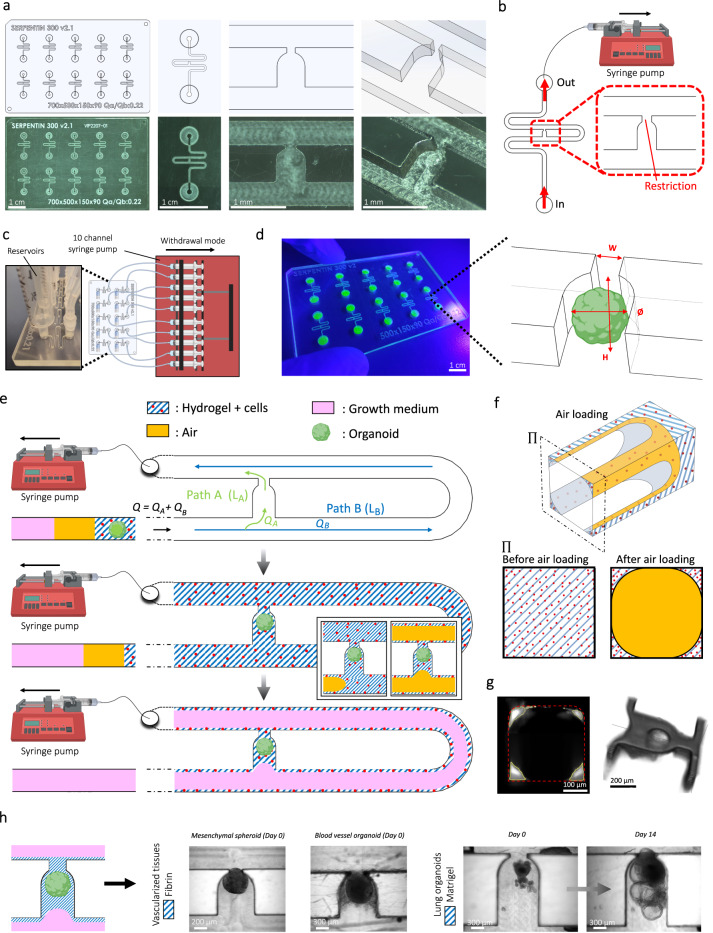
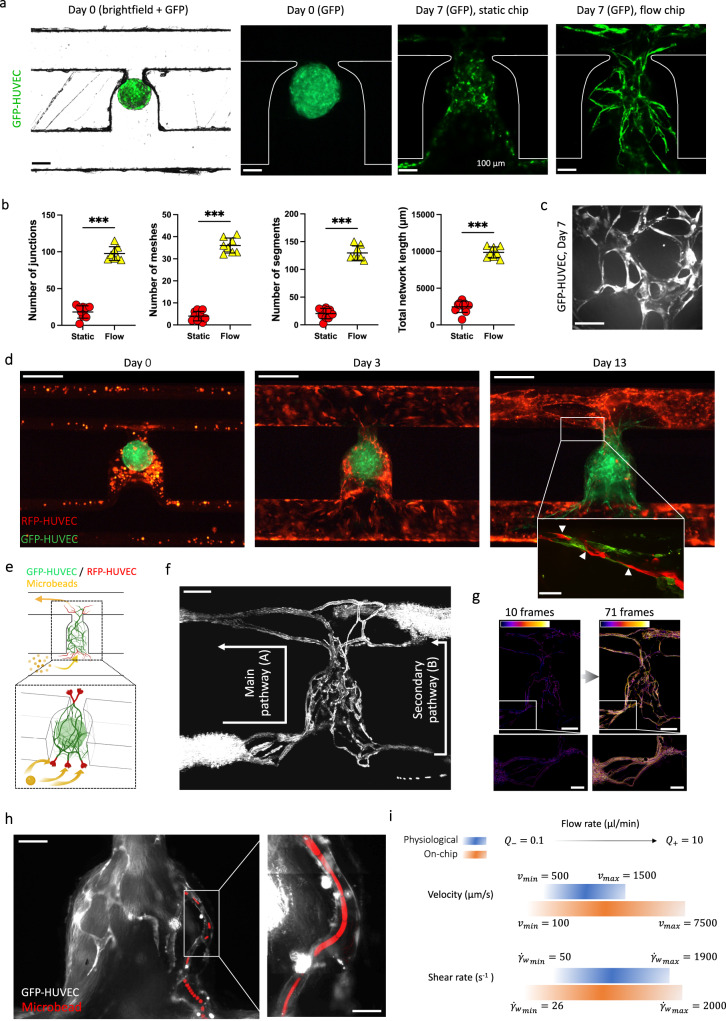
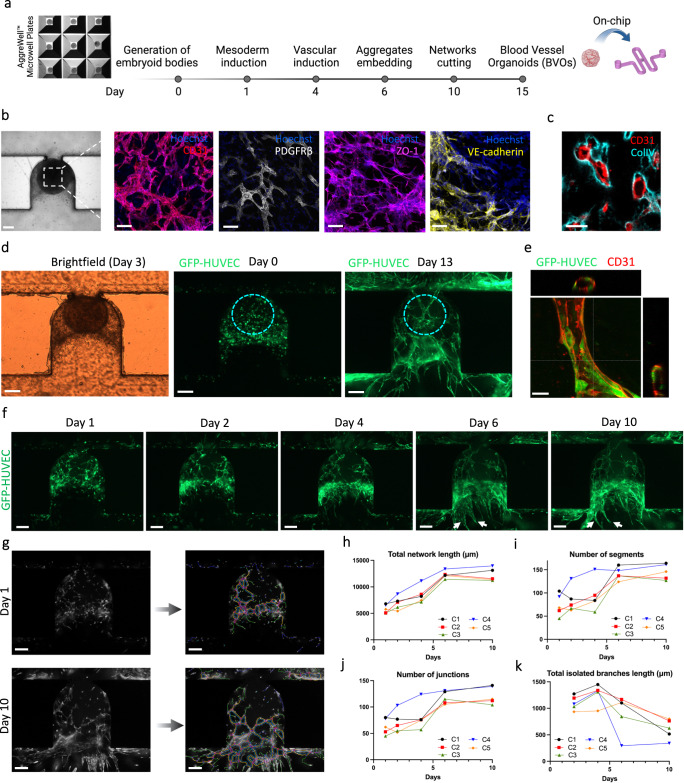
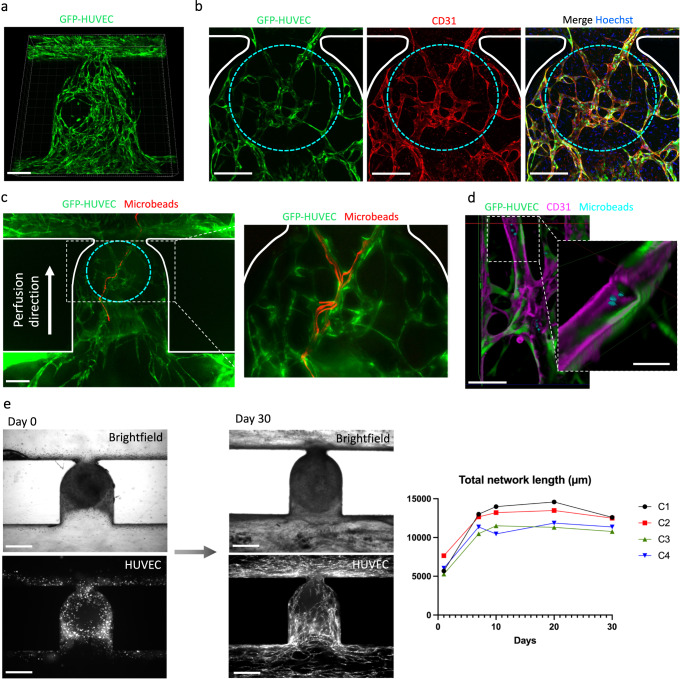
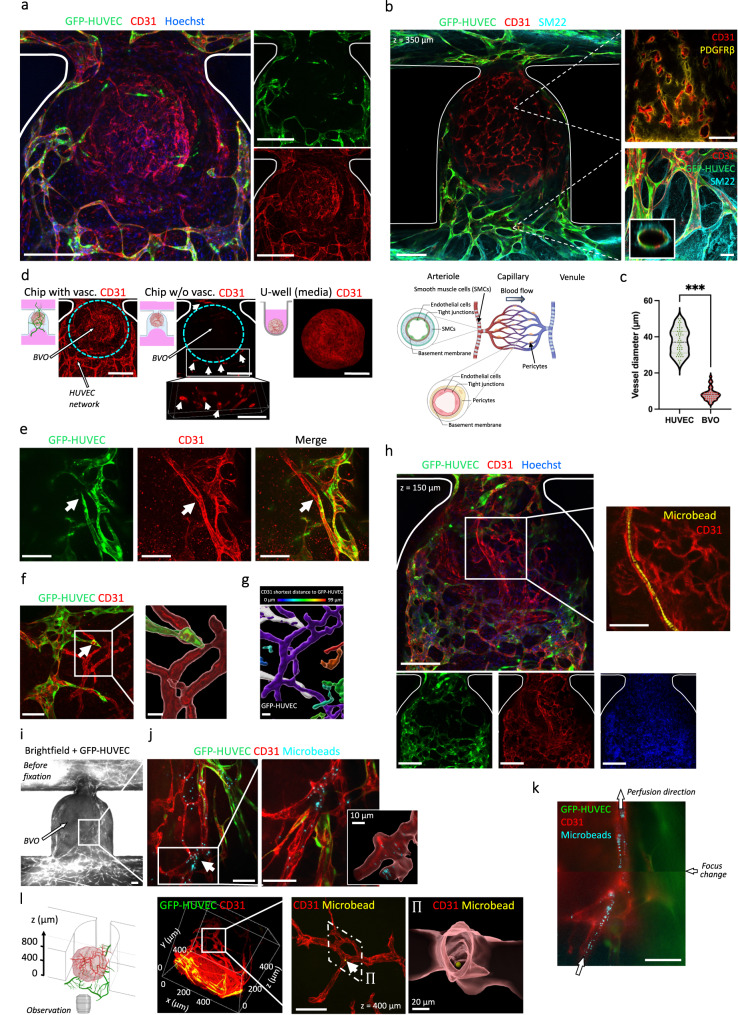
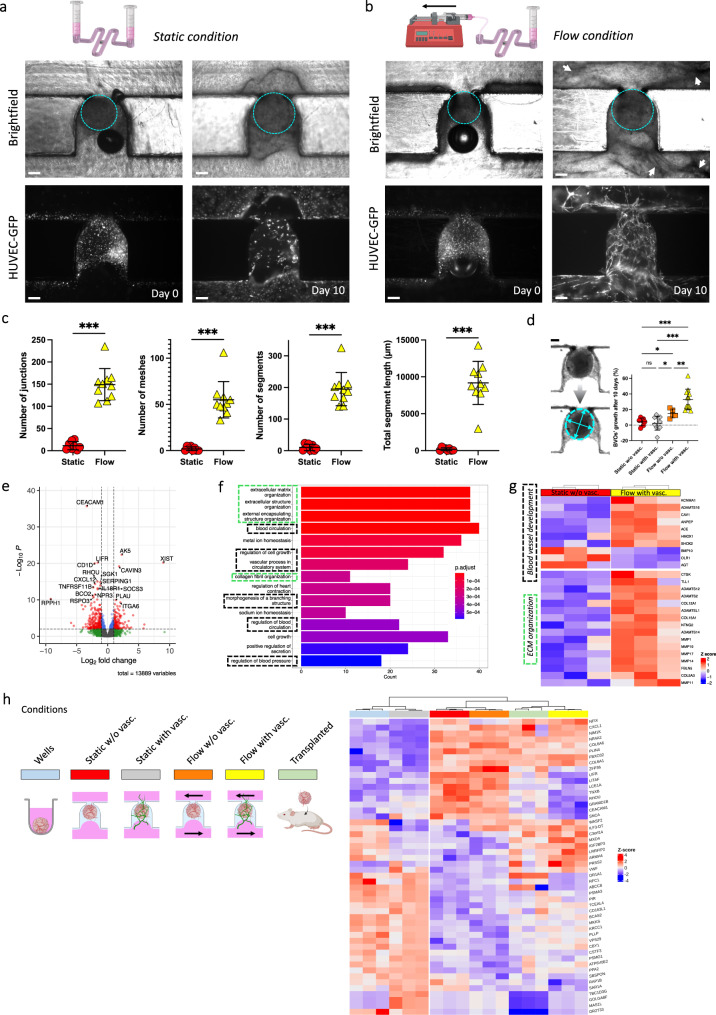
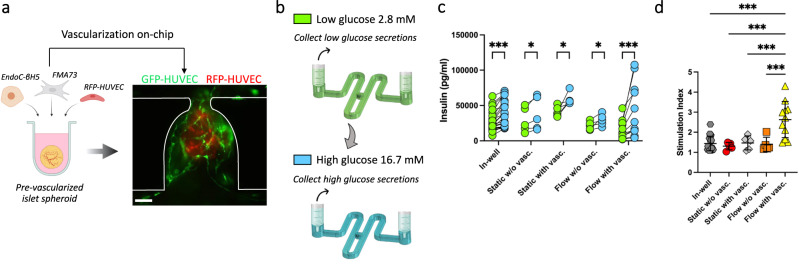
The development of vascular networks in microfluidic chips is crucial for the long-term culture of three-dimensional cell aggregates such as spheroids, organoids, tumoroids, or tissue explants. Despite rapid advancement in microvascular network systems and organoid technologies, vascularizing organoids-on-chips remains a challenge in tissue engineering. Most existing microfluidic devices poorly reflect the complexity of in vivo flows and require complex technical set-ups. Considering these constraints, we develop a platform to establish and monitor the formation of endothelial networks around mesenchymal and pancreatic islet spheroids, as well as blood vessel organoids generated from pluripotent stem cells, cultured for up to 30 days on-chip. We show that these networks establish functional connections with the endothelium-rich spheroids and vascular organoids, as they successfully provide intravascular perfusion to these structures. We find that organoid growth, maturation, and function are enhanced when cultured on-chip using our vascularization method. This microphysiological system represents a viable organ-on-chip model to vascularize diverse biological 3D tissues and sets the stage to establish organoid perfusions using advanced microfluidics.
Overview
The claims and statistics of this paper haven’t been checked yet.
Free: it reads the open-access text and checks the first 5 claims that cite a source we can check. Create a free account to check every claim.
Integrity signals
Registry
Cites
Statistics
Figures
Verification
Claims the paper makes
The claims and statistics of this paper haven’t been checked yet.
Free: it reads the open-access text and checks the first 5 claims that cite a source we can check. Create a free account to check every claim.
Self-check
Percentages, sums and reported differences re-computed from the paper’s own numbers.
The self-check needs the paper’s full text.
Citations
Cites
Ultrastructural Characterization of the Lower Motor System in a Mouse Model of Krabbe Disease
Cappello, V., Marchetti, L., Parlanti, P., Landi, S., Tonazzini, I., Cecchini, M., Piazza, V., & Gemmi, M. (2016) · Scientific Reports · doi:10.1038/s41598-016-0001-8 · Cited by 13,097
Limb proportions show developmental plasticity in response to embryo movement
Pollard, A. S., Charlton, B. G., Hutchinson, J. R., Gustafsson, T., McGonnell, I. M., Timmons, J. A., & Pitsillides, A. A. (2017) · Scientific Reports · doi:10.1038/srep41926 · Cited by 2,364
An in vivo model of functional and vascularized human brain organoids
Mansour, A. A., Gonçalves, J. T., Bloyd, C. W., Li, H., Fernandes, S., Quang, D., Johnston, S., Parylak, S. L., Jin, X., & Gage, F. H. (2018) · Nature Biotechnology · doi:10.1038/nbt.4127 · Cited by 1,211
Extracellular matrix remodelling: the role of matrix metalloproteinases
Stamenkovic, I. (2003) · The Journal of Pathology · doi:10.1002/path.1400 · Cited by 1,140 · cited 1×
“Moreover, genes of the metalloproteinase family, involved in ECM remodeling 35 , were found to be upregulated under fl ow conditions (Fig.”
Advances in organ-on-a-chip engineering
Zhang, B., Korolj, A., Lai, B. F. L., & Radisic, M. (2018) · Nature Reviews Materials · doi:10.1038/s41578-018-0034-7 · Cited by 1,017
Aminopeptidase N is a receptor for tumor-homing peptides and a target for inhibiting angiogenesis.
Pasqualini, R., Koivunen, E., Kain, R., Lahdenranta, J., Sakamoto, M., Stryhn, A., Ashmun, R., Shapiro, L., Arap, W., & Ruoslahti, E. I. (2000) · PubMed · Cited by 970
Engineering of human brain organoids with a functional vascular-like system
Cakir, B., Xiang, Y., Tanaka, Y., Kural, M. H., Parent, M., Kang, Y.-J., Chapeton, K., Patterson, B., Yuan, Y., He, C.-S., et al. (2019) · Nature Methods · doi:10.1038/s41592-019-0586-5 · Cited by 942
Flow-enhanced vascularization and maturation of kidney organoids in vitro
Homan, K. A., Gupta, N., Kroll, K. T., Kolesky, D. B., Skylar-Scott, M., Miyoshi, T., Mau, D., Valerius, M. T., Ferrante, T., Bonventre, J. V., et al. (2019) · Nature Methods · doi:10.1038/s41592-019-0325-y · Cited by 939
Engineering of functional, perfusable 3D microvascular networks on a chip
Kim, S., Lee, H., Chung, M., & Jeon, N. L. (2013) · Lab on a Chip · doi:10.1039/c3lc41320a · Cited by 872
Human blood vessel organoids as a model of diabetic vasculopathy
Wimmer, R. A., Leopoldi, A., Aichinger, M., Wick, N., Hantusch, B., Novatchkova, M., Taubenschmid, J., Hämmerle, M., Esk, C., Bagley, J. A., et al. (2019) · Nature · doi:10.1038/s41586-018-0858-8 · Cited by 803 · cited 3×
“We have previously reported the generation of such organoids 17 and demon-stratedtheirphysiologicalrelevancethroughthemodellingofdiabetic vasculopathybothinvitroandinvivo 3 .”
Self-citation
Research works printed but not linked: 1
- Carpentier, G., Martinelli, M., Courty, J. & Gascone, I. Angiogenesis analyzer for ImageJ. 4th ImageJ User and Developer Conference proceedings. (pp. 198-201). https://imagej.nih.gov/ij/macros/toolsets/Angiogenesis%20Analyzer.txt (2012).
Cited by
Items 301–400 of 409
Sun, Y., Zhao, Z., Qiao, Q., Yu, W.-J., & Bai, Y. (2026) · BMC Oral Health · doi:10.1186/s12903-026-08609-8
Chong, Z., Tang, H., Zhang, Y., Ouyang, J., Zhu, J., Chen, Z., Liu, X., & Gu, Z. (2026) · Biomedical Materials · doi:10.1088/1748-605x/ae722d
Takov, K., Depuydt, M. A. C., Stevens, C. A. T., Fogacci, F., Vico, T. A., Dalt, L. D., Mußbacher, M., Oleksiak, A., Hendrikx, T., Cutruzzolà, A., et al. (2026) · Atherosclerosis · doi:10.1016/j.atherosclerosis.2026.120787
Gu, X., Jin, K., Ge, T., Chen, K., Deng, M., Xu, L., & Xu, X. (2026) · Journal of Material Science and Technology · doi:10.1016/j.jmst.2026.05.034
Engineering stem cell morphology and tissue architecture through nano-engineered materials
Hamad, R. S., Saber, S., Elmorsy, E. A., Farrag, A. A., Eissa, H., Nashar, E. M. E., Al-Zahrani, N. S., Alshehri, A. M., ALI, M. A. M., Amer, M. M., et al. (2026) · Tissue and Cell · doi:10.1016/j.tice.2026.103648
Hydrogel-based bionic sensors for food flavor detection: Recent advances and future trends
Luo, Y., Liu, J., Wang, G., Qin, M., Shi, Q., Feng, X., Hong, F., Luo, X., Zhu, Y., & Liu, Y. (2026) · Trends in Food Science & Technology · doi:10.1016/j.tifs.2026.105852
Xu, X., Zhang, J., Zhao, D., Qin, S., Yang, R., & Chen, J. (2026) · The Canadian Journal of Chemical Engineering · doi:10.1002/cjce.70465
Animal Models and New Approach Methodologies in Retinal Disease Research: A Comprehensive Review
Zynkowska, A., Kuźmiuk, D., Kiełbus, M., Skrzyniarz, A. M., Ręjdak, R., Baj, J., Forma, A., & Dolar-Szczasny, J. (2026) · Applied Sciences · doi:10.3390/app16115576
“Although rods and cones share common phototransduction mechanisms, the expression levels and activity of individual cascade proteins differ significantly between photoreceptor types [240].”
Microglial polarization in retinal neovascularization: Friend or foe?
Xu, W., Wei, Q., Zhou, S., Peng, A., & Ding, C. (2026) · PubMed Central · doi:10.11817/j.issn.1672-7347.2026.250627
“…(iPSC)-derived retinal organoids accurately replicate human retinal development [58-59] , whereas microfluidic retinal chips address static culture limitations by simulating dynamic BRB microenvironments [60-61] , though further improvements in vascular network maturation remain necessary [62] .”
Photothermal Ablation Blotting for Capillary‐Scale Microvasculature Engineering
Feng, K., Liu, S., Zhao, R., Kang, X., Zhou, M., Zhao, Q., Cai, L., Ye, X., & Wang, J. (2026) · Advanced Materials · doi:10.1002/adma.202520108
“Therefore, despite advances in microfab-rication manufacturing, there is a pressing need for platform technologies that can reliably produce ultrasmall, perfusable, and mechanically robust microvasculature capable of sustaining long-term flow and promoting functional tissue integration [22].”
Self-citationHuman stem cell models in cerebral cavernous malformations
Wang, Q., Sun, J., Zhu, X., Yu, T., & Xiao, X. (2026) · Stem Cell Research & Therapy · doi:10.1186/s13287-026-05081-7
“…addresses key challenges in organoid growth and maturation while bolstering the potential of organ-oids for studying CCM and other diseases [73]. hBBB Organoids: Dao et al. assembled human brain organoids with vascular organoids to create functional 3D hBBB organoids, introducing…”
Advances in vascularized organoids
Shen, L., Ma, J. F., Wei, X., Shi, G., & Deng, H. (2026) · Chinese Medical Journal · doi:10.1097/cm9.0000000000004136 · Cited by 1
“[55] 58] Transplant adaptability Show reliance on host vascularization post-transplantation and present challenges in sustaining long-term survival.”
Gong, S., Liu, Y., Luo, X., Hu, Y., Yan, Q., Yang, Z., Zheng, S., Guo, M., & Mohsin, A. (2026) · Nano Research · doi:10.26599/nr.2026.94908921
Deng, B., Ma, Y., Huang, W. Y., Xian, X., Ding, Y., Lu, Y., Yang, Y., Guo, W., Mao, L., Wang, X., et al. (2026) · Science Advances · doi:10.1126/sciadv.aed7050
“Microfluidic chips partially mimic blood flow but force cancer cell migration through rigid polydimethylsiloxane (PDMS) channels, which diverges markedly from the behavior seen in compliant vasculature ( 9 , 10 ).”
Microfluidics in wound repair from material design to personalized therapeutic applications
Feng, J., Ye, Y., Sun, C., Lin, X., Xie, B., Pan, X., Shao, Y., Jin, A., Lei, L., Zou, Z., et al. (2026) · Materials Today Advances · doi:10.1016/j.mtadv.2026.100863
Engineering organoids toward implantable living therapeutics
Shi, Z., Yang, Q., You, X., Wang, H., Wang, H., & Zhao, G. (2026) · hLife · doi:10.1016/j.hlife.2026.06.002
Song, Y., Li, Y., Mai Nhu, Y., Liu, H., Hong, A., Jain, E., Yang, H., Wang, X. W., & Ma, Z. (2026) · ACS Applied Bio Materials · doi:10.1021/acsabm.6c00364
Yeadon, S., Salazar‐Villacorta, A., Kurian, M. A., & Barral, S. (2026) · Frontiers in Neurology · doi:10.3389/fneur.2026.1810863
“Endothelial cells embedded in a 3D hydrogel form microvessels that anastomose with the organoid’s intrinsic vasculature, creating a continuous, perfusable network through which oxygen, nutrients, and soluble factors are able to diffuse into the adjacent tissue (284).”
Pancreatic organoids and organoid-on-a-chip platforms: from disease modeling to precision therapy
Lin, M., Ma, W., Ma, T., He, Y., Shi, H., Ge, N., Guo, J., Xie, Y., Sun, S., & Yang, F. (2026) · Journal of Translational Medicine · doi:10.1186/s12967-026-08489-0
“This platform promotes improved GSIS in pancreatic islet spheroids [82].”
Jalise, S. Z., Habibi, S., Alizadeh, F., Heidari, F., & Fath‐Bayati, L. (2026) · Journal of Clinical and Experimental Hepatology · doi:10.1016/j.jceh.2026.103599
A pump-free microfluidic device for integrated multi-functional testing of tumor spheroids
Steinberg, E., Azulay, G., de Villa, A. R., Schwob, O., & Benny, O. (2026) · APL Bioengineering · doi:10.1063/5.0329306
Lefranc, R., Waeckel, T., Riffet, M., Florent, R., Desmartin, G., Lecouflet, L., Divoux, J., Poulain, L., Tillou, X., Weiswald, L., et al. (2026) · Translational Oncology · doi:10.1016/j.tranon.2026.102885 · Cited by 1
“Potential solutions include integrating microfluidic systems for optimized gas exchange or co-culturing with endothelial cells [6,39].”
Zhao, W., & Zheng, T. (2026) · Chinese Chemical Letters · doi:10.1016/j.cclet.2026.113148
Chen, S., Chen, H., Yan, X., Li, Y., Tong, W., Wang, J., Yan, Z., Sun, L., Jiang, H., Chen, Q., et al. (2026) · Lab on a Chip · doi:10.1039/d5lc01178g
Self-citationSun, C., Wu, G., Wu, D., Du, Q., Lu, Q. W., Hu, W., Wang, J., xie, A., Yao, Z., Xia, M., et al. (2026) · Bioactive Materials · doi:10.1016/j.bioactmat.2026.06.041 · Cited by 2
Self-citationFan, D., Versteeg, H. H., & Rondon, A. M. R. (2026) · Research and Practice in Thrombosis and Haemostasis · doi:10.1016/j.rpth.2026.106835
“For example, in studies of cancer-associated venous thrombosis, chip models incorporating venous valve structures could be designed [105] or systems capable of spontaneously forming vascular networks could be used [106].”
Nemati, A., Sadeghzadeh, F., Izadi, N., Hosseinzadeh, S., Kiani, S., Aghamohammadi, A., & Bohlouli, M. (2026) · Reproductive Sciences · doi:10.1007/s43032-026-02153-0
“By incorporating microscale channels and controlled fluid dynamics, these systems can recapitulate key features of the in vivo microenvironment and support the development of organ-on-a-chip models [35].”
Chu, J., Liu, Z., He, Z., & Liu, S. (2026) · International Journal of Bioprinting · doi:10.36922/ijb026230240
Park, C. H., & Hong, I. (2026) · Interdisciplinary medicine · doi:10.1002/inmd.70157
Microtechnologies for biological research: From cell culture to drug screening
Fernandes, T., Fernandes, P., & Marques, M. P. C. (2026) · Elsevier eBooks · doi:10.1016/b978-0-443-36330-6.00005-9
Intestinal Organoids as Models to Study Viruses: Current Application and Future Perspective
Ruting, W., Liang, J., Hongxi, W., Zhenjin, H., Zhang, R. Y., Yuanbo, S., Rongxin, Z., Hongzhen, T., & Feng, J. (2026) · Journal of Microbiology and Biotechnology · doi:10.4014/jmb.2603.03016
Non-animal models in undergraduate education: opportunities, applications, and future directions
Teakel, S. L., Connolly, J. H., Vanniasinkam, T., & Costabile, M. (2026) · ImmunoHorizons · doi:10.1093/immhor/vlag032
“44 These developments look promising and may help advance non-animal model technologies into the future.”
Aggregates-on-chip: a microfluidic device for crowding plant cells in culture
Hessin, A. F., Orozaliev, A., Mohammed, M. A., Van, A. D., Guillotin, B., Song, Y., & Birnbaum, K. D. (2026) · Frontiers in Plant Science · doi:10.3389/fpls.2026.1879302
“In addition, trap- and-fl ux designs have been used to enhance human organoid growth, maturation and function (Quintard et al., 2024).”
Nawara, T. J., Meier, K., Kuom, J., Hollfinger, I., Kraxner, J., Koch, K., Hastermann, M., Jablonicka, L., Barancourt, L. V., Schwarzkopf, J. B., et al. (2026) · bioRxiv (Cold Spring Harbor Laboratory) · doi:10.64898/2026.07.21.739741
Fate, toxicology and Organ-on-a-chip methodology of nanoplastics in human body
Wang, Y., Lü, F., Fang, J., Li, G., Zhang, H., & He, P. (2026) · Toxicology · doi:10.1016/j.tox.2026.154550
From Cell Assembly to Niche-Preserving Engineering: A Shortcut for Organoid Construction
Liu, B., Abudousu, A., Liu, H., Chen, J., & Cui, W. (2026) · Engineering · doi:10.1016/j.eng.2026.07.015
Jiang, C., Cui, P., & Gong, L. (2026) · Vascular Pharmacology · doi:10.1016/j.vph.2026.107683 · Cited by 1
Caruso, A., Hamrouni, Y., Delvecchio, A., Memeo, R., & Martinotti, S. (2026) · International Journal of Molecular Sciences · doi:10.3390/ijms27156949
“Similarly, organoid-derived monolayers, air–liquid interface cultures, and organoid-on-chip systems provide direct access to the luminal compartment and enable more physiologically relevant modeling of microbial exposure and environmental stimuli [26,27].”
Organoids in endometrial diseases: from bench to bedside
Yang, D., Zhang, J., Lv, F., Ma, S., Cui, J., & Liu, D. (2026) · Biofabrication · doi:10.1088/1758-5090/ae93ff
“Quintard et al [74] developed a high-throughput microfluidic platform based on cycloolefin copolymer, utilizing hydrodynamic principles to enable automated organoid capture and positioning.”
Kang, B., Jung, Y. H., Kim, J. H., Choi, D., Kim, J., Park, K., Kim, M., Kang, S.-H., Na, K., Kim, H. C., et al. (2026) · ACS Applied Materials & Interfaces · doi:10.1021/acsami.6c07941
A Compact, Standalone & Battery-Powered 3D Organoid-on-Chip System with Programmable Flow ControlPreprint
Thakur, R., Murthy, V., Olsen, S., Wolcott, E. A., Budkina, D. S., Anderson, F., Zheng, T., Wright, A. P., Copperman, J., Bertassoni, L. E., et al. (2026) · bioRxiv (Cold Spring Harbor Laboratory) · doi:10.64898/2026.08.02.742326
Koo, J. S., & Zhang, H. (2026) · Stem Cells International · doi:10.1155/sci/1717710
“Building upon conventional organoids, organoid-on-a-chip platforms integrate micro fl uidic engineering with 3D neural cultures to enhance nutrient delivery, introduce vascular-like features, and provide greater experimental control and reproducibility [170].”
Zhang, W., Shi, M., Zhang, Y., Shuang, W., & Pang, L. (2026) · Discover Nano · doi:10.1186/s11671-026-04857-3
“This system would enable dynamic monitoring and precise regulation of the tissue repair process [30].”
Nishimura, Y. (2026) · Stem Cells · doi:10.1093/stmcls/sxag044
Maduna, T., Pancho, A., Ilgaz, Y., Hakani, M., Guedan-Duran, A., Morin, A., Sepulveda-Diaz, J. E., Virtuoso, A., Luca, C. D., Cirillo, G., et al. (2026) · Lab on a Chip · doi:10.1039/d6lc00266h
Cui, F., Liu, T., Gao, X., Wang, Y., Li, Y., Zhang, G., Yao, H., Ma, Y., Li, H., & Zhou, Q. (2026) · Lab on a Chip · doi:10.1039/d6lc00380j
Organization from cell to tissue derived delivery systems for immunotherapy
Tan, X., Li, M., Luo, D., & Li, H. (2026) · Materials Today Bio · doi:10.1016/j.mtbio.2026.103570
“Organoids derived from iPSCs that are generated from 3D culture systems, are limited in their size, due to the insufficient transport of nutrients and oxygen, and the inefficient clearance of cellular metabolic substances [176].”
Zhao, Y., Zhang, Q., Gaira, S., Wang, R., Lai, J., Li, X., Zhang, C., Li, M., & Tang, S. (2026) · npj Soft Matter · doi:10.1038/s44431-026-00037-6
“They leverage integrated concentration gradient generators or multi-inlet switching valves to achieve sequential reagent addition and concentration control 35,52 .”
Biomaterials in organoid research: current state and future directions
Klasen, L., Nasehi, R., Selzener, L., & Laporte, L. D. (2026) · Frontiers in Bioengineering and Biotechnology · doi:10.3389/fbioe.2026.1895558 · Cited by 1
“Furthermore, the prospect of perfusable vascularized organoids would be beneficial for long-term cultivation, allowing for advanced functionality and maturity, as well as developmental studies (Wang et al., 2023; Zhang et al., 2021; Li Z. et al., 2024; De L et al., 2024; Quintard et al., 2024).”
Li, Y., Yang, Y., Zhao, L., Bian, Z., & Zhang, Z. (2026) · Bioengineering · doi:10.3390/bioengineering13080947
“…can alter compound recovery and osmolality [29–33]; fabrication route and vascular geometry can alter channel dimensions, interface area, network connectivity, and transport behavior [34–38]; and fluidic initialization can introduce bubble-related shear, leakage, or loss of patency [39,40].”
InfluentialAhn, M., Park, G. T., Lee, D., Yoon, S., Oh, S., Kim, J. H., & Kim, B. S. (2026) · Advanced Healthcare Materials · doi:10.1002/adhm.71616
Wu, X., Du, B., Chen, Q., Hang, R., Cui, C., & Li, M. (2026) · Frontiers in Immunology · doi:10.3389/fimmu.2026.1931370
Cellular assemblies as living therapeutics
Gaspar, V. M., Almeida-Pinto, J., Moura, B. S., Cunha, A. F., Oliveira, M. B., Monteiro, M. V., & Mano, J. F. (2026) · Nature Reviews Bioengineering · doi:10.1038/s44222-026-00470-2
“…scales, cell-dense structures face diffusion-limited transport of oxygen and nutrients, making the need for vascularization a persistent bottleneck, which may be addressed by strategies such as endothelial co-culture 44 , microfluidic patterning 45 and bioprinting of perfusable channels 46 .”
A multi-scale framework to advance experimental models of skin aging
Li, C., Guan, T., Qi, X., & Kong, J. (2026) · Experimental Gerontology · doi:10.1016/j.exger.2026.113300
Qi, H., Li, Z., Yang, Y., Zhang, S., Li, Q., Chen, X., & Wang, Y. (2026) · Biosensors and Bioelectronics · doi:10.1016/j.bios.2026.119162
Gadelkarim, M., Elsayed, A., Abaza, T., Bahr, A. R., Elsayed, Y. A.-E., & Iqbal, O. (2026) · Clinical Cancer Bulletin · doi:10.1007/s44272-026-00067-1
Chen, Q., Jin, J., Kantawong, F., Li, G., & Li, J. (2026) · Vessel Plus · doi:10.20517/2574-1209.2026.69
Makkar, S. K., Bhatia, S., Nguyen, N., & Wei, G. (2026) · Frontiers in Pharmacology · doi:10.3389/fphar.2026.1927806
“Vascularized organoid-on-chip systems can establish perfusable endothelial networks around three-dimensional tissues, improving nutrient delivery, maturation, and access for circulating cells (Quintard et al., 2024).”
Advances in organoids for drug development: From discovery to delivery
Liang, J., Yao, H., Feng, Y., Shu, X., Zheng, Y., Gao, X., & Zhou, W. (2026) · Journal of Drug Delivery Science and Technology · doi:10.1016/j.jddst.2026.108876
Chen, Y., Ma, Y., Liu, X., Chen, Y., Du, L., & Wu, C. (2026) · IEEE International Symposium on Olfaction and Electronic Nose (ISOEN) · doi:10.1109/isoen68725.2026.11665414
“This creates a dynamic growth environment close to the in-vivo condition for taste organoids[10], significantly improving the culture quality and functional stability of organoids.”
Vascular cognitive impairment and dementia: current understanding and future directions
Garg, S., & McCullough, L. D. (2026) · npj Dementia · doi:10.1038/s44400-026-00135-2
Gidiya, Y., Chaudhary, J., Biswas, A., Liao, M., Ramaroson, M., & Kamei, K. (2026) · ACS Omega · doi:10.1021/acsomega.6c01161
Zhao, M., Liang, P., Zhang, J., Li, Y., Tian, W., Liu, M., Zheng, Y., & Chen, Z. (2026) · International Journal of Nanomedicine · doi:10.2147/ijn.s605766
“29,30 Through the incorporation of microengineered channels, organ-on-a-chip devices can establish perfusable vascular structures that support the formation of functional endothelial lumens while preserving the spatial organization between the vascular compartment and the intestinal epithelium.”
Liu, Y., Wang, Y., Huang, X., Li, Y., zhu, A., Wang, M., Yao, H., & Liang, L. (2026) · Pharmacological Research · doi:10.1016/j.phrs.2026.108438
Building physiologically relevant multi-organ-on-chip systems
Quintard, C., Ren, J., & Penninger, J. M. (2026) · Nature Reviews Bioengineering · doi:10.1038/s44222-026-00496-6 · Cited by 1
Self-citationBone-on-a-chip microphysiological system: Biomaterials, design, fabrication and applications
Li, L., Yang, H., Dai, L., Ake, B., Gui, X., Yang, H., Xu, X., Liu, H., Wei, W., Zhou, C., et al. (2026) · Materials Today Communications · doi:10.1016/j.mtcomm.2026.116100
Approaches for recapitulating the extracellular matrix in organs-on-chip
Singletary, M. W., Stack, R. N., Garcia, M., Schmoyer, S., Elayaperumal, S., & Polacheck, W. J. (2026) · Cell Biomaterials · doi:10.1016/j.celbio.2026.100577
Gu, L., Du, M., Zhang, K., Wu, Y., Zheng, T., Zheng, Q., & Li, B. (2026) · Frontiers in Bioengineering and Biotechnology · doi:10.3389/fbioe.2026.1881504
“Most tissues thicker than 400 µm require a functional vascular system to ensure an adequate supply of nutrients and oxygen, but current inner ear organoids lack this critical component (Quintard et al., 2024).”
Zhu, Y., Jiao, Y., Xue, J., Lv, X., & Qin, S. (2026) · Cancer Medicine · doi:10.1002/cam4.72251
“…organoid systems, including ALI cultures that preserve endogenous immune contexts for checkpoint studies [23], autologous T cell–organoid co-cultures for functional cytotoxicity profiling [22], and micro-fluidic systems [104] that introduce perfusion and immune trafficking capabilities.”
Current Translational 3D In Vitro Models of Human Placental Tissue
Raman, A. S., Mills, N. E. P., Cole, L., Richards, C., & McClements, L. (2026) · Stem Cell Reviews and Reports · doi:10.1007/s12015-026-11231-4
“This approach is crucial for long-term culture and has allowed for up to 30 days monitoring on-a-chip [91].”
Finding a place for new approach methodologies (NAMs) in biomedical research
Schaffert, A., Ahluwalia, A. D., Bajramovic, J. J., Franco, N. H., Neuhaus, W., Olsson, I. A. S., & Sandvig, I. (2026) · Lab Animal · doi:10.1038/s41684-026-01806-6
Kim, S., Lee, J., & Kim, G.-D. (2026) · Stem Cell Reviews and Reports · doi:10.1007/s12015-026-11235-0
Wang, J.-H., Wang, Y., Yin, H.-Z., Yang, H., Zhang, J., Chen, S.-W., He, T.-B., Gan, Y.-J., Liu, N., & Yue, T. (2026) · Advances in Manufacturing · doi:10.1007/s40436-026-00625-9
Self-citationXian, C., Wu, Y., Xie, B., & Xie, H. (2026) · Frontiers in Bioengineering and Biotechnology · doi:10.3389/fbioe.2026.1957038
“…in vascularised organoid chips, barrier models, cardiac and neural systems, and multi organ platforms further suggest that responsiveness is becoming a design principle, although its value must be judged by measurable improvements in chip level function (Quintard et al., 2024; Yang et al., 2026).”
Dulundu, I., & Ayan, B. (2026) · Magnetochemistry · doi:10.3390/magnetochemistry12090102
Wang, M., Jiang, J., Wei, X., Wang, S., Wang, R., Sun, J., & Liu, H. (2026) · Cellular and Molecular Bioengineering · doi:10.1007/s12195-026-00939-5
Cheam, M. S., Raffi, S. B. M., Ong, H. T., Ghayad, S. E., Grand, M. L., Pasquier, E., Dunbabin, P., Poole, K., Chin, J. F. L., Jun, L., et al. (2026) · bioRxiv (Cold Spring Harbor Laboratory) · doi:10.64898/2026.09.10.750786
El‐Sehrawy, A. A. M. A., Khaleel, Z. T., Refatovich, G. R., Koka, N. A., Baig, M. R., Srivastav, S. K., abdullah, S. S., Jabir, M. S., Bainsal, N., & Smerat, A. (2026) · Artificial Organs · doi:10.1111/aor.70242
Generation of Vascular Organoids from Human iPSCs to Study Neurodegenerative Processes
Lifanov, D. A., Perepelitsa, E. S., Kopylova, A. A., Blagova, A. V., Salina, K. O., Satish, A., Stanislav, Y., Salmina, A. B., & Illarioshkin, S. N. (2026) · Bulletin of Experimental Biology and Medicine · doi:10.1007/s10517-026-06736-4
“Vascular organoids generated according to this protocol can be employed in microphysiological systems, which typically impose strict dimensional tolerances on organoid loading [27].”
Advances in integrated diagnostics: Innovation and translation of laboratory diagnostic technologies
Bernardini, S., & Zhang, J. (2026) · Integrated Diagnostics · doi:10.1016/j.intdia.2026.100005
Zheng, Y., Liu, D., Hou, J., Ding, H., & He, Y. (2026) · Frontiers in Genetics · doi:10.3389/fgene.2026.1975296
“…strategies may improve editing efficiency, including defined synthetic hydrogels (Giri and Rajesh, 2026), optimized electroporation (Abubakar et al., 2026), microfluidic perfusion (Quintard et al., 2024; Moshksayan et al., 2025), and more rigorous quality control (Torres-Montoya et al., 2026).”
Steger-Polt, M.-H., Thomas, Y. R. J., Pham, P., & Mailley, P. (2026) · Biosensors and Bioelectronics · doi:10.1016/j.bios.2026.119274
Human colon tumor-on-a-chip based on magnetic microcontainers encapsulated cancer spheroids
Li, H., Lin, X., Zhao, J., Shang, L., Zhao, Y., & Sun, W. (2026) · Biosensors and Bioelectronics · doi:10.1016/j.bios.2026.119287
Xiu, L., Zhang, J., Bong, W., Jeong, S., Yue, T., Hann, S.-Y., Wang, Y., Cui, H., & Zhang, L. G. (2026) · Small · doi:10.1002/smll.76030
Naffaa, M. M. (2026) · Organoids · doi:10.3390/organoids5040034
“…vascularized assembloids, microfluidic perfusion, organ-on-chip platforms, and transplantation-based maturation may reduce diffusion-limited hypoxia and improve modeling of vascular signaling, metabolic exchange, inflammatory interfaces, and vascular-associated niches [36,69,171,179,180].”
Current Perspective on Three-Dimensional In Vitro Models for Bone-Related Diseases
Choi, S. Y. (2026) · IntechOpen eBooks · doi:10.5772/intechopen.1017186
Li, J., Gamboa, S. M., Chao, J. T., Heilshorn, S. C., & Wu, J. C. (2026) · Nature Biomedical Engineering · doi:10.1038/s41551-026-01806-4 · Cited by 1
“For example, parallel-milled thermoplastic chips with organoid capture structures enable syringe pump perfusion through vascular-like networks at physiologically relevant shear rates 80 .”
Zhu, H., Xie, Y., Li, J., Li, L., Wang, Z., Li, J., Hua, X., Hao, Y., Zhu, Z., Song, Z., et al. (2026) · ACS Nano · doi:10.1021/acsnano.6c12492
Advanced engineering strategies in human organoids for tissue repair and regeneration
Zhang, H., Yang, N., Wu, Y., Chen, S., Wen, Y., Zhu, Y., & Chen, X. (2026) · Burns & Trauma · doi:10.1093/burnst/tkag065
Tsikandelova, R., Schettler, R., Teasdale, M. D., Kelk, J., Boczonadi, V., Dorgau, B., Hussain, R., Coxhead, J., Medina, R. J., White, S., et al. (2026) · bioRxiv (Cold Spring Harbor Laboratory) · doi:10.64898/2026.10.01.755879
Silicate Biomaterials‐Stimulated Vascularized Callus Organoids for Bone Tissue Regeneration
Cao, S., Huang, J., Ma, W., Zhu, Y., Lu, H., Zhu, Y., Ma, H., & Wu, C. (2026) · Advanced Materials · doi:10.1002/adma.75339
Varinská, L., & Koolwijk, P. (2026) · Pharmacological Reports · doi:10.1007/s43440-026-00912-z
Network Biology: Current Status, Applications, Challenges, and Future Prospects
Li, X., Zhang, L., Ding, Y., Li, K., Chang, S., Pei, L., Li, Z., & Chen, Z. (2026) · MedComm · doi:10.1002/mco2.71065 · Cited by 2
“Future experimental platforms should integrate perfusable vascular networks, tissue-resident immune compartments, organ-specif ic perturbation, high-f idelity genome editing, and continuous physiological monitoring to improve model fidelity and reproducibility [ 136 ].”
Tsikandelova, R., Schettler, R., Teasdale, M. D., Kelk, J., Boczonadi, V., Dorgau, B., Hussain, R., Coxhead, J., Medina, R., White, S., et al. (2026) · Research Square · doi:10.21203/rs.3.rs-11057287/v1
Liu, X., Wu, J., Gao, J., Tee, Z. X., Lei, L., Wei, Y., Ma, R., 刁金美, Su, Y., Xu, X., et al. (2026) · Acta Pharmaceutica Sinica B · doi:10.1016/j.apsb.2026.10.006
Zhang, H., Cheng, X., Yuan, Z., Han, X., Shen, Z., Li, S., Zheng, Y., Gu, S., Bai, X., Han, M., et al. (2026) · Small · doi:10.1002/smll.202512229
Moya, M. O. C., Cabrera, L. H., Ramírez, L. M., González, M. A. G., Pazos, A. A., Feitó, L. B. F., & Pernas, G. G. (2026) · SAP Biomedical & Chemical Engineering Innovation · doi:10.62486/evk2026405
“(10) Finally, the first devices relied on endpoint analysis, which limited the understanding of dynamic processes.”
Frascogna, C., Panzetta, V., & Ventre, M. (2026) · Frontiers in Biophysics · doi:10.3389/frbis.2026.1943541
Induced pluripotent stem cells: from discovery to current advances and future directions
Lagarkova, M. A., & Tomilin, A. N. (2026) · Регенерация органов и тканей. · doi:10.60043/2949-5938-2026-3-19-39
Metadata
- Authors
- Quintard, C., Tubbs, E., Jonsson, G., Jiao, J., Wang, J., Werschler, N., Laporte, C., Pitaval, A., Bah, T.-S., Pomeranz, G., Bissardon, C., Kaal, J., Leopoldi, A., Long, D. A., Blandin, P., Achard, J.-L., Battail, C., Hagelkruys, A., Navarro, F., Fouillet, Y., Penninger, J. M., & Gidrol, X.
- Affiliations
- University of British Columbia (CA)
- Commissariat à l'Énergie Atomique et aux Énergies Alternatives (FR)
- Institute of Molecular Biotechnology (AT)
- University College London (GB)
- Institut polytechnique de Grenoble (FR)
- Corresponding author
- Penninger, Josef M.
- Gidrol, Xavier
- ORCID
- Venue
- Nature Communications
- Published
- 2024-02-16
- Volume
- 15
- Issue
- 1
- Pages
- 1452-1452
- ISSN
- 2041-1723 (ISSN-L)
- PMC
- PMC10873332
- OpenAlex
- W4391010423
- Cited by
- 387
- References
- 63
- Citations by year
- 2026: 188 · 2025: 155 · 2024: 42
- FWCI
- 42.28
- Type
- journal article
- Language
- en
- Open access
- gold
- doi.org
- Licence
- cc-by
- creativecommons.org/licenses/by/4.0 (tdm)
- creativecommons.org/licenses/by/4.0 (vor)
- Locations
- Nature Communications (publishedVersion, cc-by)
- bioRxiv (Cold Spring Harbor Laboratory) (acceptedVersion, cc-by)
- PubMed Central (publishedVersion, cc-by)
- PubMed (publishedVersion)
- HAL (submittedVersion, cc-by)
- UCL Discovery (University College London) (submittedVersion, cc-by)
- HAL (submittedVersion, other-oa)
- RePEc: Research Papers in Economics (submittedVersion)
- DOAJ (DOAJ: Directory of Open Access Journals) (submittedVersion)
- Funders
- Faculty of Medicine, University of British Columbia
- Medizinische Universität Wien
- Vienna Science and Technology Fund
- Österreichischen Akademie der Wissenschaften
- Gouvernement du Canada | Canadian Institutes of Health Research
- Topics
- Physical Sciences › Engineering › Biomedical Engineering › 3D Printing in Biomedical Research
- Physical Sciences › Engineering › Biomedical Engineering › Microfluidic and Capillary Electrophoresis Applications
- Health Sciences › Medicine › Surgery › Tissue Engineering and Regenerative Medicine
- Keywords
- vascularization, microfluidic perfusion, blood vessel organoids, pluripotent stem cells, organ-on-a-chip, microvascular networks, 3D cell culture
- MeSH terms
- Endothelium, Islets of Langerhans, Organoids, Tissue Engineering, Microfluidics
About these checks
Registry, retraction, Cites and statistics results are computed, not judged, with one exception: a printed reference that no index lists is read once by a model before it counts as a citation error. Claims are extracted by a model and kept only when their quote appears verbatim in the text; each cited source is then checked, with a model’s help, for whether it says what the claim relies on. Those verdicts can be wrong — read the claim’s quote and the cited source before relying on one.
Statistics and arithmetic are recomputed, not judged.
Confidence bands are shown only for fields calibrated on our annotated test set. None is calibrated yet, so no band is shown.
What counts as a claim ›How we measure confidence ›How we check this ›
Are you an author, or do you see a problem with this page? Request a review
Data sources
Bibliographic data: Semantic Scholar, OpenAlex, Crossref.
Contains information from the Semantic Scholar Academic Graph Datasets, made available under the ODC Attribution License (ODC-BY 1.0).
Semantic Scholar’s data is described in: Kinney, R., et al. (2023). The Semantic Scholar Open Data Platform. arXiv:2301.10140.
