

The DOI matches its Crossref record; 52 of the 52 references it cites were found in a registry or an index.
High-throughput prediction of protein conformational distributions with subsampled AlphaFold2
Open accessAbstract
This paper presents an innovative approach for predicting the relative populations of protein conformations using AlphaFold 2, an AI-powered method that has revolutionized biology by enabling the accurate prediction of protein structures. While AlphaFold 2 has shown exceptional accuracy and speed, it is designed to predict proteins’ ground state conformations and is limited in its ability to predict conformational landscapes. Here, we demonstrate how AlphaFold 2 can directly predict the relative populations of different protein conformations by subsampling multiple sequence alignments. We tested our method against nuclear magnetic resonance experiments on two proteins with drastically different amounts of available sequence data, Abl1 kinase and the granulocyte-macrophage colony-stimulating factor, and predicted changes in their relative state populations with more than 80% accuracy. Our subsampling approach worked best when used to qualitatively predict the effects of mutations or evolution on the conformational landscape and well-populated states of proteins. It thus offers a fast and cost-effective way to predict the relative populations of protein conformations at even single-point mutation resolution, making it a useful tool for pharmacology, analysis of experimental results, and predicting evolution.
Overview
The claims and statistics of this paper haven’t been checked yet.
Run the check — free, no account needed. It reads the open-access text and checks the sources it cites.
Integrity signals
Registry
Cites
Statistics
Figures
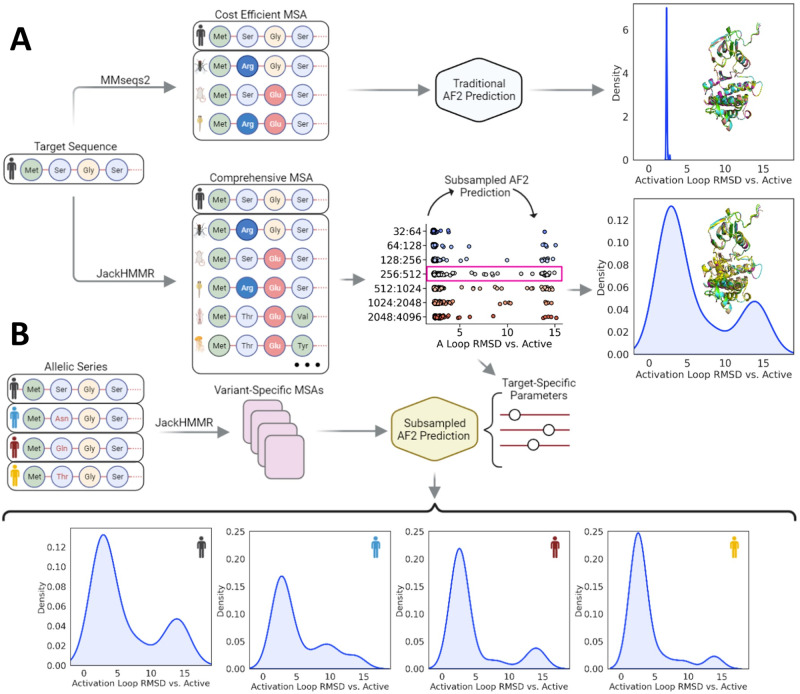
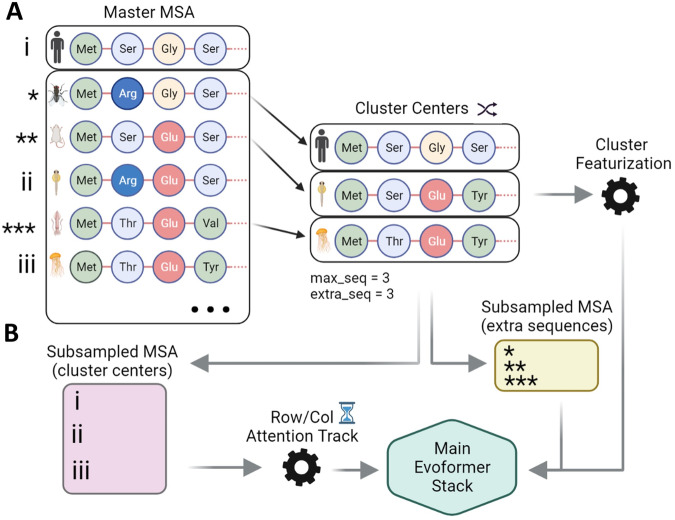
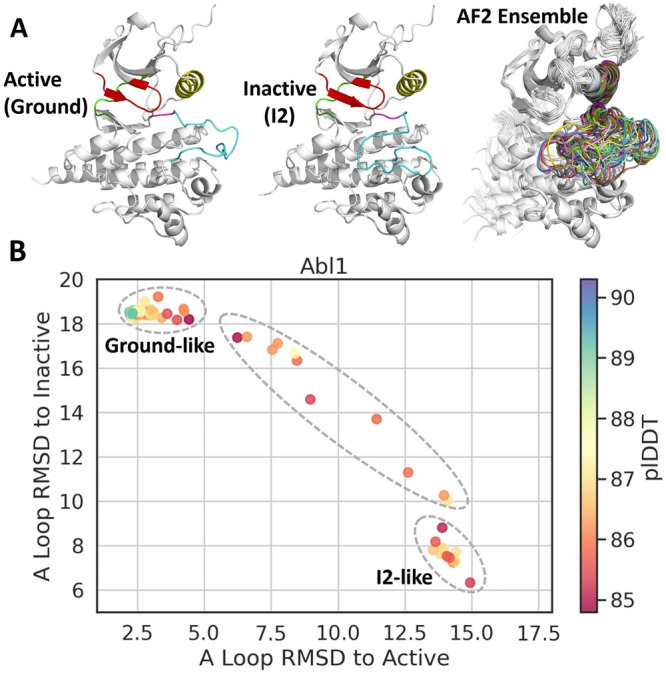
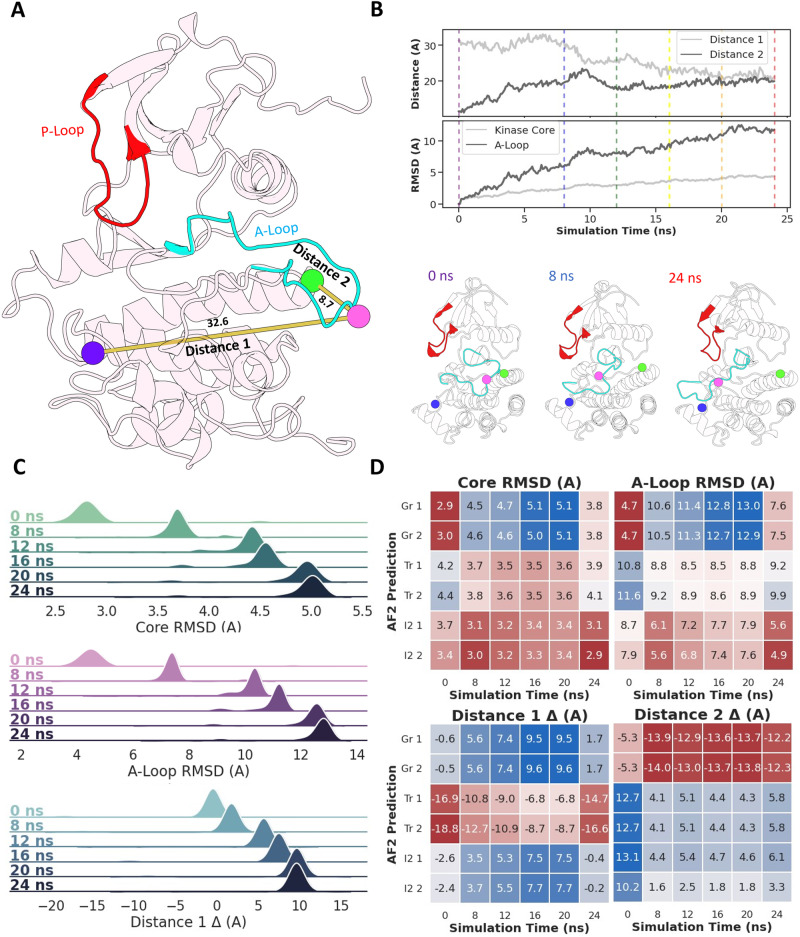
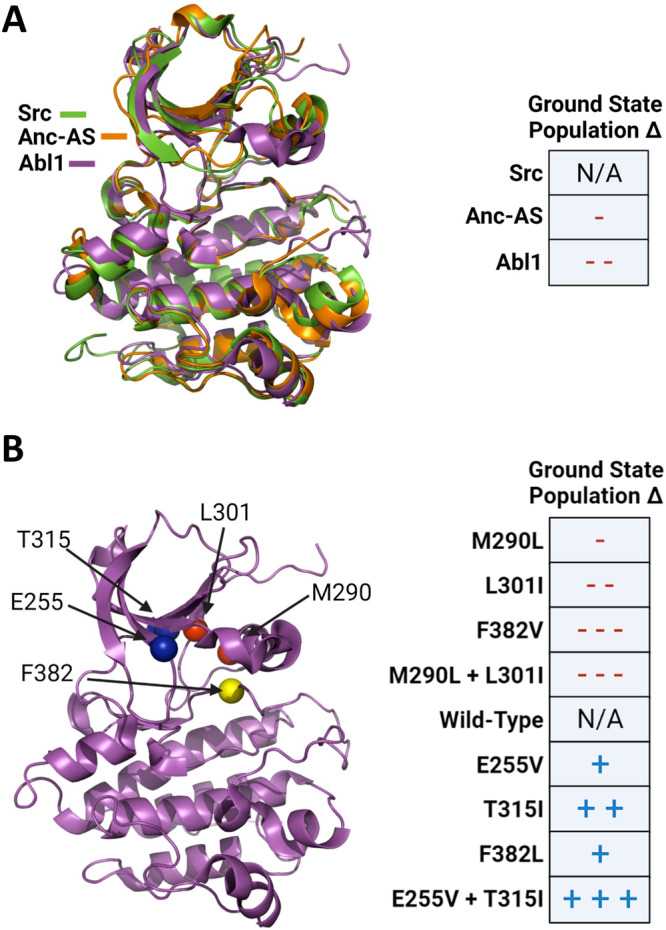
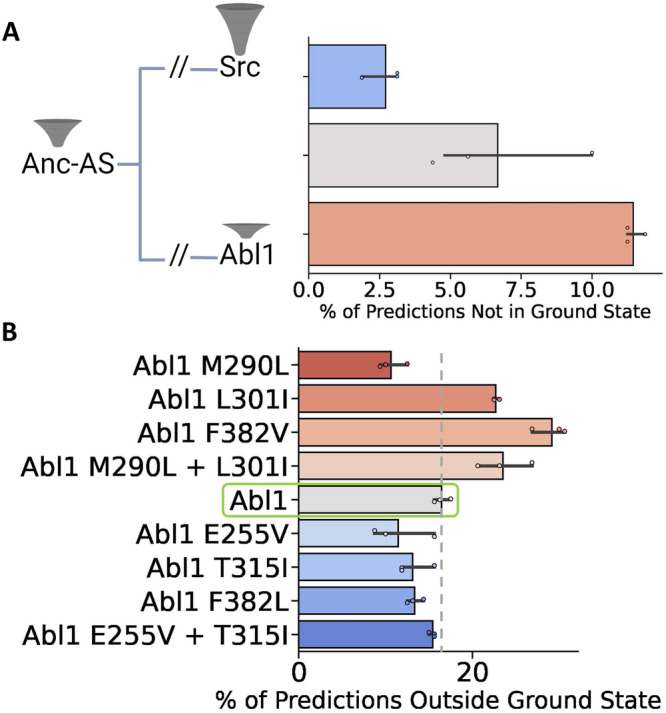
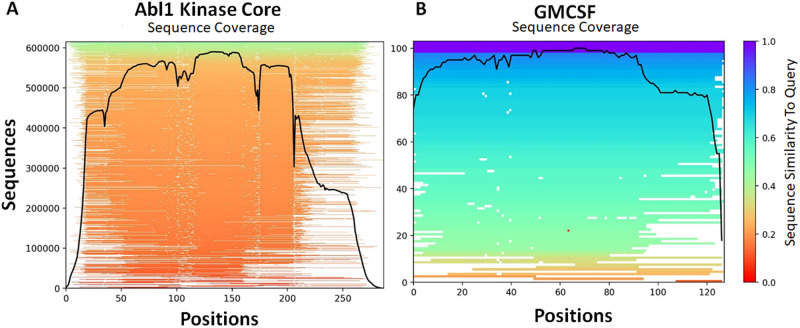
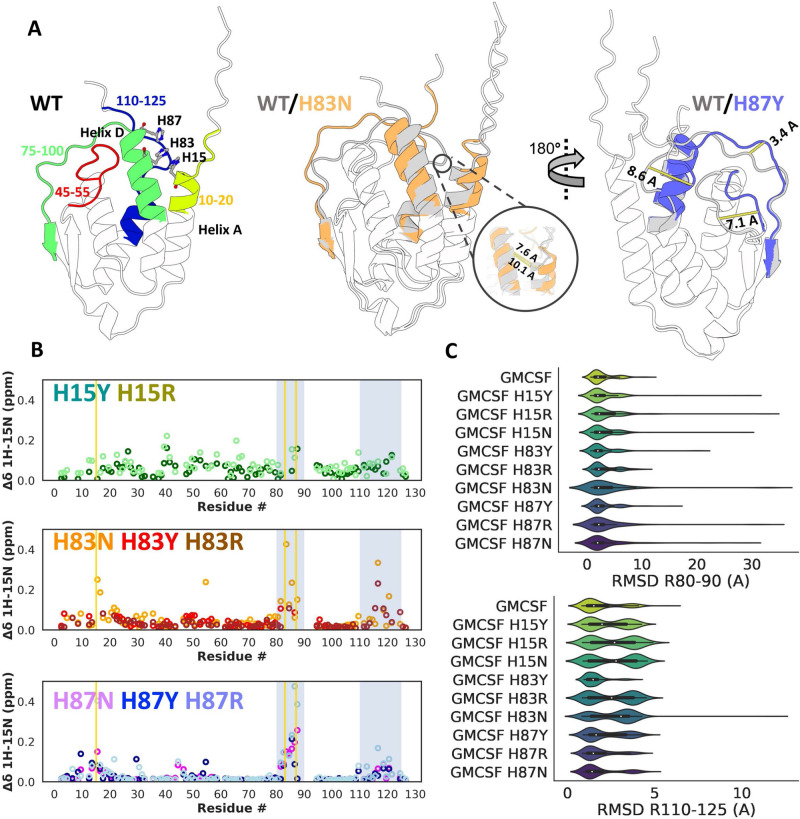
Verification
Claims the paper makes
The claims and statistics of this paper haven’t been checked yet.
Run the check — free, no account needed. It reads the open-access text and checks the sources it cites.
Claims other papers make about this one
Each is checked against this paper’s own text: does it say what the citing paper says it does?
In the citing paper
“Sequences were clustered by similarity [21], and one representative per cluster was randomly chosen to ensure diversity and reduce redundancy.”
From Reshaping biomolecular structure prediction through strategic conformational exploration with HelixFold-S1 (2026) · cites this paper as [21]
Self-check
Percentages, sums and reported differences re-computed from the paper’s own numbers.
The self-check needs the paper’s full text.
Citations
Cites
Highly accurate protein structure prediction with AlphaFold
Jumper, J., Evans, R., Pritzel, A., Green, T., Figurnov, M., Ronneberger, O., Tunyasuvunakool, K., Bates, R., Žídek, A., Potapenko, A., et al. (2021) · Nature · doi:10.1038/s41586-021-03819-2 · Cited by 43,764
NMRPipe: A multidimensional spectral processing system based on UNIX pipes
Delaglio, F., Grzesiek, S., Vuister, G. W., Zhu, G., Pfeifer, J., & Bax, A. (1995) · Journal of Biomolecular NMR · doi:10.1007/bf00197809 · Cited by 15,961
ColabFold - Making protein folding accessible to all
Mirdita, M., Schütze, K., Moriwaki, Y., Heo, L., Ovchinnikov, S., & Steinegger, M. (2021) · doi:10.1101/2021.08.15.456425 · Cited by 9,391
Evolutionary-scale prediction of atomic level protein structure with a language model
Lin, Z., Akin, H., Rao, R., Hie, B., Zhu, Z., Lu, W., Smetanin, N., Verkuil, R., Kabeli, O., Shmueli, Y., et al. (2022) · doi:10.1101/2022.07.20.500902 · Cited by 5,990
HMMER web server: interactive sequence similarity searching
Finn, R. D., Clements, J., & Eddy, S. R. (2011) · Nucleic Acids Research · doi:10.1093/nar/gkr367 · Cited by 5,952
Evans, D. J., & Holian, B. L. (1985) · The Journal of Chemical Physics · doi:10.1063/1.449071 · Cited by 3,644
Highly accurate protein structure prediction for the human proteome
Tunyasuvunakool, K., Adler, J., Wu, Z., Green, T., Zielinski, M., Žídek, A., Bridgland, A., Cowie, A., Meyer, C., Laydon, A., et al. (2021) · Nature · doi:10.1038/s41586-021-03828-1 · Cited by 3,025 · cited 1×
“11 and 12) have shown that point mutations in the aforementioned histidine triad lead tosigni fi cant chemicalshift perturbations,similartothosecaused byreductionsinpH 40 ,hintingatincreasedoccupancyoftheopenstate or other unknown conformations.”
OpenMM 7: Rapid development of high performance algorithms for molecular dynamics
Eastman, P., Swails, J., Chodera, J. D., McGibbon, R. T., Zhao, Y., Beauchamp, K. A., Wang, L.-P., Simmonett, A. C., Harrigan, M. P., Stern, C. D., et al. (2017) · PLOS Computational Biology · doi:10.1371/journal.pcbi.1005659 · Cited by 2,748
Kay, L. E., Keifer, P. A., & Saarinen, T. (1992) · Journal of the American Chemical Society · doi:10.1021/ja00052a088 · Cited by 2,261
NMRFAM-SPARKY: enhanced software for biomolecular NMR spectroscopy
Lee, W., Tonelli, M., & Markley, J. L. (2014) · Bioinformatics · doi:10.1093/bioinformatics/btu830 · Cited by 2,076
UniRef clusters: a comprehensive and scalable alternative for improving sequence similarity searches
Suzek, B. E., Wang, Y., Huang, H., McGarvey, P. B., Wu, C. H., & the UniProt Consortium (2015) · Bioinformatics · doi:10.1093/bioinformatics/btu739 · Cited by 1,928
How cryo-EM is revolutionizing structural biology
Bai, X., McMullan, G., & Scheres, S. H. W. (2014) · Trends in Biochemical Sciences · doi:10.1016/j.tibs.2014.10.005 · Cited by 967
Grzesiek, S., & Bax, A. (1993) · Journal of the American Chemical Society · doi:10.1021/ja00079a052 · Cited by 892
Clustering huge protein sequence sets in linear time
Steinegger, M., & Söding, J. (2018) · Nature Communications · doi:10.1038/s41467-018-04964-5 · Cited by 875
A general enhancement scheme in heteronuclear multidimensional NMR employing pulsed field gradients
Schleucher, J., Schwendinger, M. G., Sattler, M., Schmidt, P. M., Schedletzky, O., Glaser, S. J., S�rensen, O., & Griesinger, C. (1994) · Journal of Biomolecular NMR · doi:10.1007/bf00175254 · Cited by 808
Protein Structure and the Energetics of Protein Stability
Robertson, A. D., & Murphy, K. P. (1997) · Chemical Reviews · doi:10.1021/cr960383c · Cited by 683
Predicting multiple conformations via sequence clustering and AlphaFold2
Wayment-Steele, H. K., Ojoawo, A., Otten, R., Apitz, J. M., Pitsawong, W., Hömberger, M., Ovchinnikov, S., Colwell, L., & Kern, D. (2024) · Nature · doi:10.1038/s41586-023-06832-9 · Cited by 545 · cited 6×
“Optimizing MSA subsampling to predict kinase core conformational ensembles In recent years, multiple groups have observed that AF2 with different parameters and MSA depths is capable of predicting conformational changes based on sequence data alone 27,28 .”
InfluentialSampling alternative conformational states of transporters and receptors with AlphaFold2
del Alamo, D., Sala, D., Mchaourab, H. S., & Meiler, J. (2022) · eLife · doi:10.7554/elife.75751 · Cited by 511
MGnify: the microbiome sequence data analysis resource in 2023
Richardson, L., Allen, B., Baldi, G., Beracochea, M., Bileschi, M. L., Burdett, T., Burgin, J., Caballero-Pérez, J., Cochrane, G., Colwell, L. J., et al. (2022) · Nucleic Acids Research · doi:10.1093/nar/gkac1080 · Cited by 501
Imatinib: A Breakthrough of Targeted Therapy in Cancer
Iqbal, N., & Iqbal, N. (2014) · Chemotherapy Research and Practice · doi:10.1155/2014/357027 · Cited by 481
Protein structure determination in solution by NMR spectroscopy.
Wüthrich, K. (1990) · Journal of Biological Chemistry · doi:10.1016/s0021-9258(18)45665-7 · Cited by 395
Accurate prediction of protein–nucleic acid complexes using RoseTTAFoldNA
Baek, M., McHugh, R., Anishchenko, I., Jiang, H., Baker, D., & DiMaio, F. (2024) · Nature Methods · doi:10.1038/s41592-023-02086-5 · Cited by 372
Using AlphaFold to predict the impact of single mutations on protein stability and function
Pak, M. A., Markhieva, K. A., Novikova, M. S., Petrov, D. S., Vorobyev, I. S., Maksimova, E. S., Kondrashov, F. A., & Ivankov, D. N. (2023) · PLOS One · doi:10.1371/journal.pone.0282689 · Cited by 322
Deep learning methods in protein structure prediction
Torrisi, M., Pollastri, G., & Le, Q. (2020) · Computational and Structural Biotechnology Journal · doi:10.1016/j.csbj.2019.12.011 · Cited by 297
State-of-the-Art Estimation of Protein Model Accuracy Using AlphaFold
Roney, J. P., & Ovchinnikov, S. (2022) · Physical Review Letters · doi:10.1103/physrevlett.129.238101 · Cited by 281
Conformational states dynamically populated by a kinase determine its function
Xie, T., Saleh, T., Rossi, P., & Kalodimos, C. G. (2020) · Science · doi:10.1126/science.abc2754 · Cited by 266
Machine learning in protein structure prediction
AlQuraishi, M. (2021) · Current Opinion in Chemical Biology · doi:10.1016/j.cbpa.2021.04.005 · Cited by 263
SPEACH_AF: Sampling protein ensembles and conformational heterogeneity with Alphafold2
Stein, R. A., & Mchaourab, H. S. (2022) · PLOS Computational Biology · doi:10.1371/journal.pcbi.1010483 · Cited by 258
Extant fold-switching proteins are widespread
Porter, L. L., & Looger, L. L. (2018) · Proceedings of the National Academy of Sciences · doi:10.1073/pnas.1800168115 · Cited by 199
AlphaFold2 fails to predict protein fold switching
Chakravarty, D., & Porter, L. L. (2022) · Protein Science · doi:10.1002/pro.4353 · Cited by 193
Bryan, P. N., & Orban, J. P. (2010) · Current Opinion in Structural Biology · doi:10.1016/j.sbi.2010.06.002 · Cited by 192
AFsample: improving multimer prediction with AlphaFold using massive sampling
Wallner, B. (2023) · Bioinformatics · doi:10.1093/bioinformatics/btad573 · Cited by 164
The challenge of protein structure determination—lessons from structural genomics
Slabinski, L., Jaroszewski, L., Rodrigues, A. P. C., Rychlewski, L., Wilson, I. A., Lesley, S. A., & Godzik, A. (2007) · Protein Science · doi:10.1110/ps.073037907 · Cited by 161
GM-CSF: A Promising Target in Inflammation and Autoimmunity
Lee, M.-C., Achuthan, A. A., & Hamilton, J. A. (2020) · ImmunoTargets and Therapy · doi:10.2147/itt.s262566 · Cited by 157
Using ancient protein kinases to unravel a modern cancer drug’s mechanism
Wilson, C., Agafonov, R. V., Hoemberger, M., Kutter, S., Zorba, A., Halpin, J. C., Buosi, V., Otten, R., Waterman, D. P., Theobald, D. L., et al. (2015) · Science · doi:10.1126/science.aaa1823 · Cited by 154
What's next for AlphaFold and the AI protein-folding revolution
Callaway, E. (2022) · Nature · doi:10.1038/d41586-022-00997-5 · Cited by 152
Ołdziej, S., Czaplewski, C. R., Liwo, A., Chinchio, M., Nanias, M., Vila, J. A., Khalili, M., Arnautova, Y. A., Jagielska, A., Makowski, M., et al. (2005) · Proceedings of the National Academy of Sciences · doi:10.1073/pnas.0502655102 · Cited by 149
AlphaFold2 protein structure prediction: Implications for drug discovery
Borkakoti, N., & Thornton, J. M. (2023) · Current Opinion in Structural Biology · doi:10.1016/j.sbi.2022.102526 · Cited by 140
Three-dimensional structure of recombinant human granulocyte-macrophage colony-stimulating factor
Walter, M. R., Cook, W. J., Ealick, S. E., Nagabhushan, T. L., Trotta, P. P., & Bugg, C. E. (1992) · Journal of Molecular Biology · doi:10.1016/0022-2836(92)90470-5 · Cited by 138
Accelerating Cryptic Pocket Discovery Using AlphaFold
Meller, A., Bhakat, S., Solieva, S. O., & Bowman, G. R. (2023) · Journal of Chemical Theory and Computation · doi:10.1021/acs.jctc.2c01189 · Cited by 136
Kincore: a web resource for structural classification of protein kinases and their inhibitors
Modi, V., & Dunbrack, R. L. (2022) · Nucleic Acids Research · doi:10.1093/nar/gkab920 · Cited by 133
AlphaFold2-RAVE: From Sequence to Boltzmann Ranking
Vani, B. P., Aranganathan, A., Wang, D., & Tiwary, P. (2023) · Journal of Chemical Theory and Computation · doi:10.1021/acs.jctc.3c00290 · Cited by 127
Functional and Regulatory Roles of Fold-Switching Proteins
Kim, A. K., & Porter, L. L. (2020) · Structure · doi:10.1016/j.str.2020.10.006 · Cited by 83
Cumulative mechanism of several major imatinib-resistant mutations in Abl kinase
Hoemberger, M., Pitsawong, W., & Kern, D. (2020) · Proceedings of the National Academy of Sciences · doi:10.1073/pnas.1919221117 · Cited by 50
Protein crystallography from the perspective of technology developments
Su, X., Zhang, H., Terwilliger, T. C., Liljas, A., Xiao, J., & Dong, Y. (2014) · Crystallography Reviews · doi:10.1080/0889311x.2014.973868 · Cited by 45
Principles, Challenges and Advances in ab initio Protein Structure Prediction
Jothi, A. (2012) · Protein and Peptide Letters · doi:10.2174/092986612803217015 · Cited by 25
Binding Affinities Controlled by Shifting Conformational Equilibria: Opportunities and Limitations
Michielssens, S., de Groot, B. L., & Grubmüller, H. (2015) · Biophysical Journal · doi:10.1016/j.bpj.2015.04.012 · Cited by 14
A Suite of Tutorials for the WESTPA 2.0 Rare-Events Sampling Software [Article v2.0]
Bogetti, A. T., Leung, J. M. G., Russo, J. D., Zhang, S., Thompson, J. P., Saglam, A. S., Ray, D., Mostofian, B., Pratt, A. J., Abraham, R. C., et al. (2023) · Living Journal of Computational Molecular Science · doi:10.33011/livecoms.5.1.1655 · Cited by 14
Petascale Homology Search for Structure PredictionPreprint
Lee, S., Kim, G., Karin, E. L., Mirdita, M., Park, S., Chikhi, R., Babaian, A., Kryshtafovych, A., & Steinegger, M. (2023) · bioRxiv (Cold Spring Harbor Laboratory) · doi:10.1101/2023.07.10.548308 · Cited by 14
Cui, J. Y., Zhang, F., Nierzwicki, Ł., Palermo, G., Linhardt, R. J., & Lisi, G. P. (2020) · Biochemistry · doi:10.1021/acs.biochem.0c00538 · Cited by 6
Self-citationProtein Structure Prediction and Homology Modeling
Leach, A. R., & Thomas, P. J. (2017) · Elsevier eBooks · doi:10.1016/b978-0-12-409547-2.12350-9 · Cited by 4
GMdSilva/gms_natcomms_1705932980_data: added zenodo link
GMdSilva (2024) · Zenodo (CERN European Organization for Nuclear Research) · doi:10.5281/zenodo.10621195 · Cited by 1
Research works printed but not linked: 1
- Palmer, A. G., Cavanagh, J., Wright, P. E. & Rance, M. Sensitivity improvement in proton-detected two-dimensional heteronuclear correlation nmr spectroscopy. J. Magn. Resonance 93, 151–170 (1991).
Cited by
Sorted by citations
Easy and accurate protein structure prediction using ColabFold
Kim, G., Lee, S., Karin, E. L., Kim, H., Moriwaki, Y., Ovchinnikov, S., Steinegger, M., & Mirdita, M. (2024) · Nature Protocols · doi:10.1038/s41596-024-01060-5 · Cited by 170
AlphaFold predictions of fold-switched conformations are driven by structure memorization
Chakravarty, D., Schafer, J. W., Chen, E. A., Thole, J. F., Ronish, L. A., Lee, M., & Porter, L. L. (2024) · Nature Communications · doi:10.1038/s41467-024-51801-z · Cited by 159
Molecular principles underlying aggressive cancers
Nussinov, R., Yavuz, B. R., & Jang, H. (2025) · Signal Transduction and Targeted Therapy · doi:10.1038/s41392-025-02129-7 · Cited by 91
Proteins with alternative folds reveal blind spots in AlphaFold-based protein structure prediction
Chakravarty, D., Lee, M., & Porter, L. L. (2025) · Current Opinion in Structural Biology · doi:10.1016/j.sbi.2024.102973 · Cited by 76
Beyond static structures: protein dynamic conformations modeling in the post-AlphaFold era
Cui, X., Ge, L., Chen, X., Lv, Z., Wang, S., Zhou, X., & Zhang, G. (2025) · Briefings in Bioinformatics · doi:10.1093/bib/bbaf340 · Cited by 70
Metadata
- Authors
- Monteiro da Silva, G., Cui, J. Y., Dalgarno, D. C., Lisi, G. P., & Rubenstein, B. M.
- Affiliations
- Brown University (US)
- Brooke (GB)
- Corresponding author
- Rubenstein, Brenda M.
- ORCID
- Venue
- Nature Communications
- Published
- 2024-03-27
- Volume
- 15
- Issue
- 1
- Pages
- 2464-2464
- ISSN
- 2041-1723 (ISSN-L)
- PMC
- PMC10973385
- OpenAlex
- W4393233076
- Cited by
- 196
- References
- 52
- Citations by year
- 2026: 60 · 2025: 85 · 2024: 51
- FWCI
- 26.40
- Type
- journal article
- Language
- en
- Update notices
- correction (2024-04-10)
- Open access
- gold
- doi.org
- Locations
- Nature Communications (publishedVersion, cc-by)
- PubMed Central (publishedVersion, cc-by)
- PubMed (publishedVersion)
- RePEc: Research Papers in Economics (submittedVersion)
- DOAJ (DOAJ: Directory of Open Access Journals) (submittedVersion)
- Funders
- National Science Foundation (2027108)
- U.S. Department of Health & Human Services | NIH | National Cancer Institute (R01GM144451)
- Blavatnik Family Foundation
- Topics
- Life Sciences › Biochemistry, Genetics and Molecular Biology › Molecular Biology › Protein Structure and Dynamics
- Life Sciences › Biochemistry, Genetics and Molecular Biology › Molecular Biology › Receptor Mechanisms and Signaling
- Life Sciences › Biochemistry, Genetics and Molecular Biology › Molecular Biology › Machine Learning in Bioinformatics
- Keywords
- protein conformational landscape, AlphaFold2, protein structure prediction, ABL1 kinase, GM-CSF, point mutations, protein evolution
- MeSH terms
- Mutation, Protein Conformation, Sequence Alignment, Point Mutation
About these checks
Registry, retraction, Cites and statistics results are computed, not judged, with one exception: a printed reference that no index lists is read once by a model before it counts as a citation error. Claims are extracted by a model and kept only when their quote appears verbatim in the text; each cited source is then checked, with a model’s help, for whether it says what the claim relies on. Those verdicts can be wrong — read the claim’s quote and the cited source before relying on one.
Statistics and arithmetic are recomputed, not judged.
Confidence bands are shown only for fields calibrated on our annotated test set. None is calibrated yet, so no band is shown.
What counts as a claim ›How we measure confidence ›How we check this ›
Are you an author, or do you see a problem with this page? Request a review
