

An estrogen receptor α-derived peptide improves glucose homeostasis during obesity
Open accessThe DOI matches its Crossref record; 47 of the 47 references it cites were found in a registry or an index.
Abstract
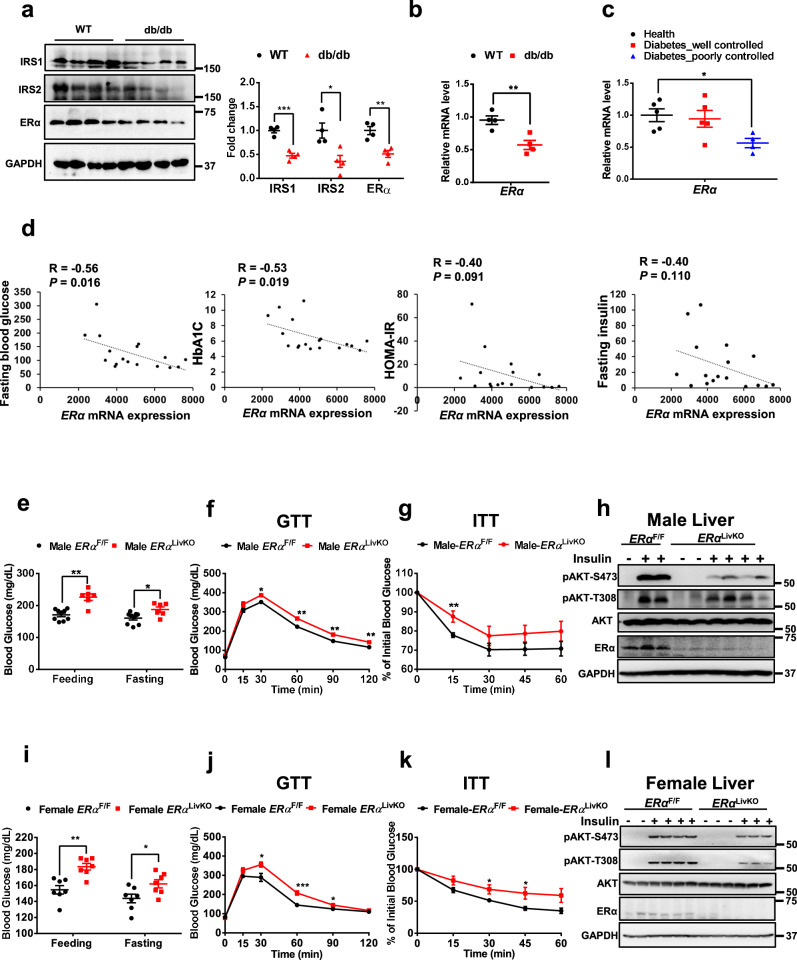
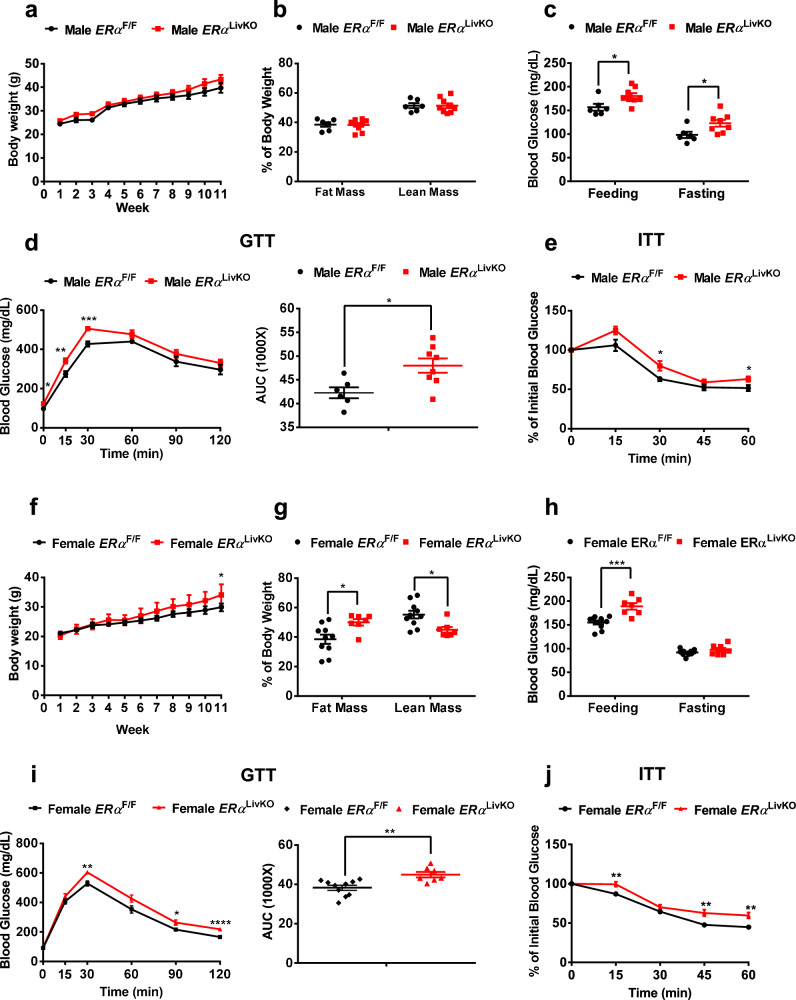
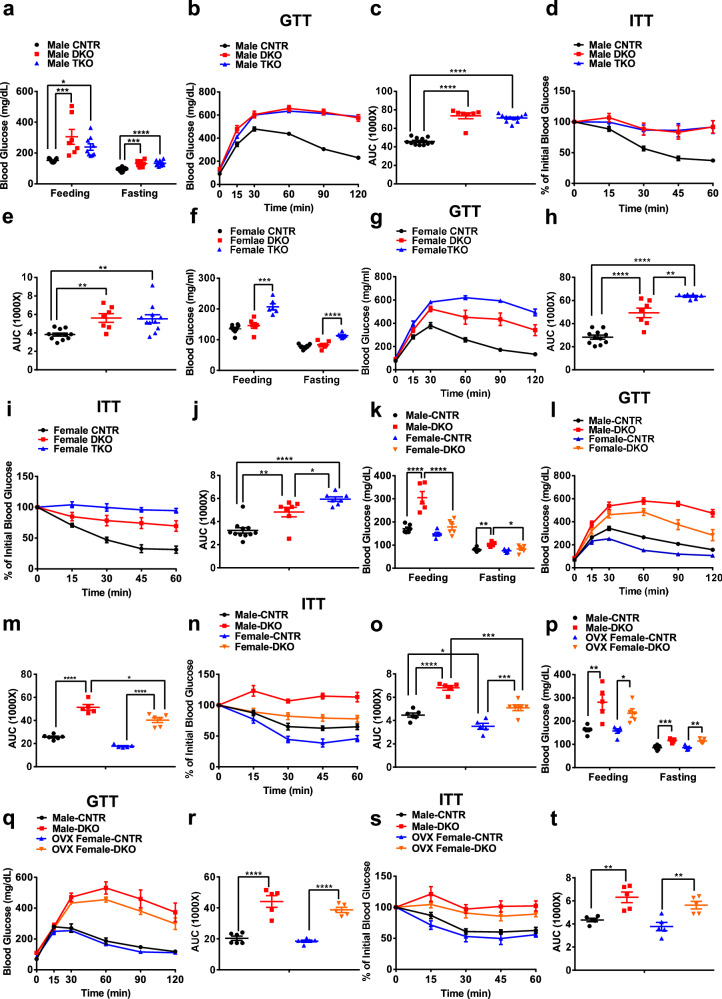
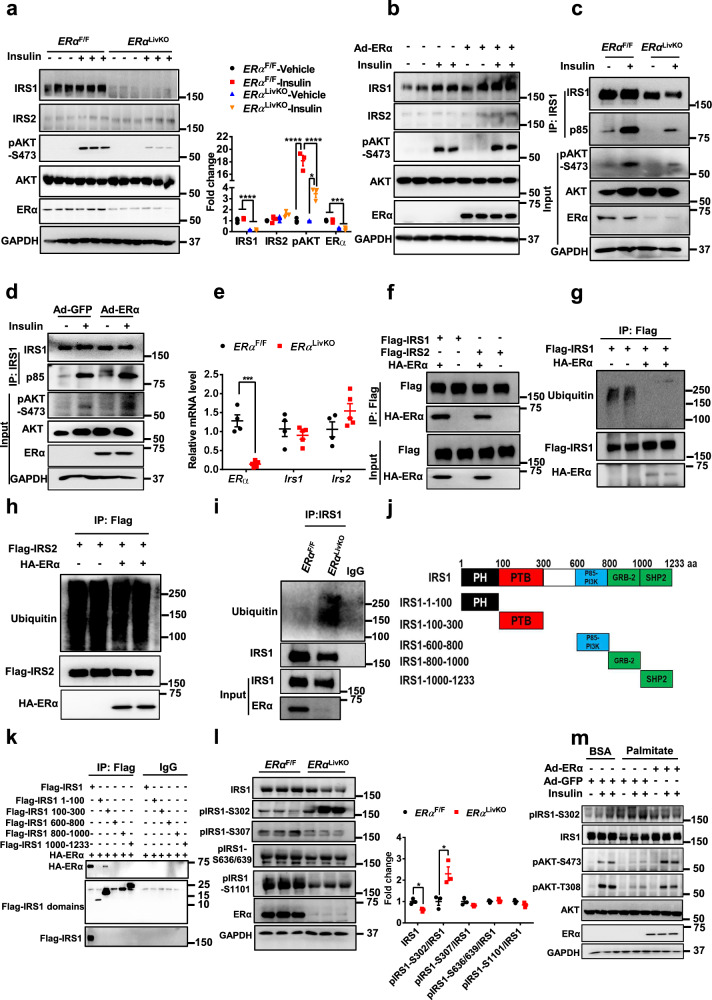
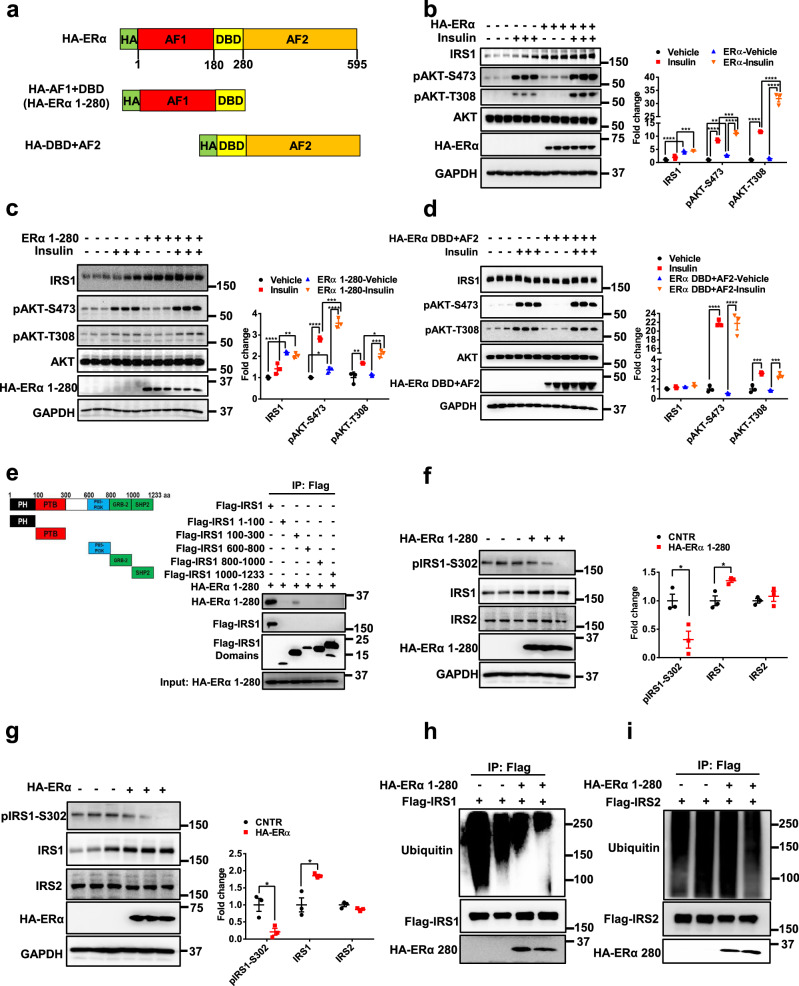
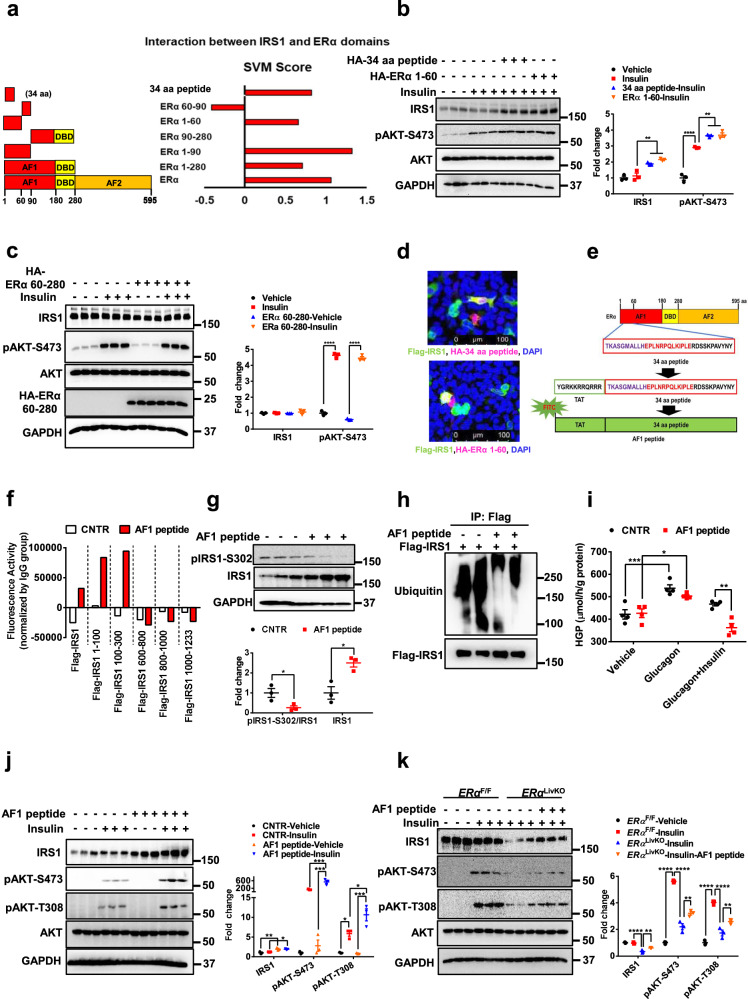
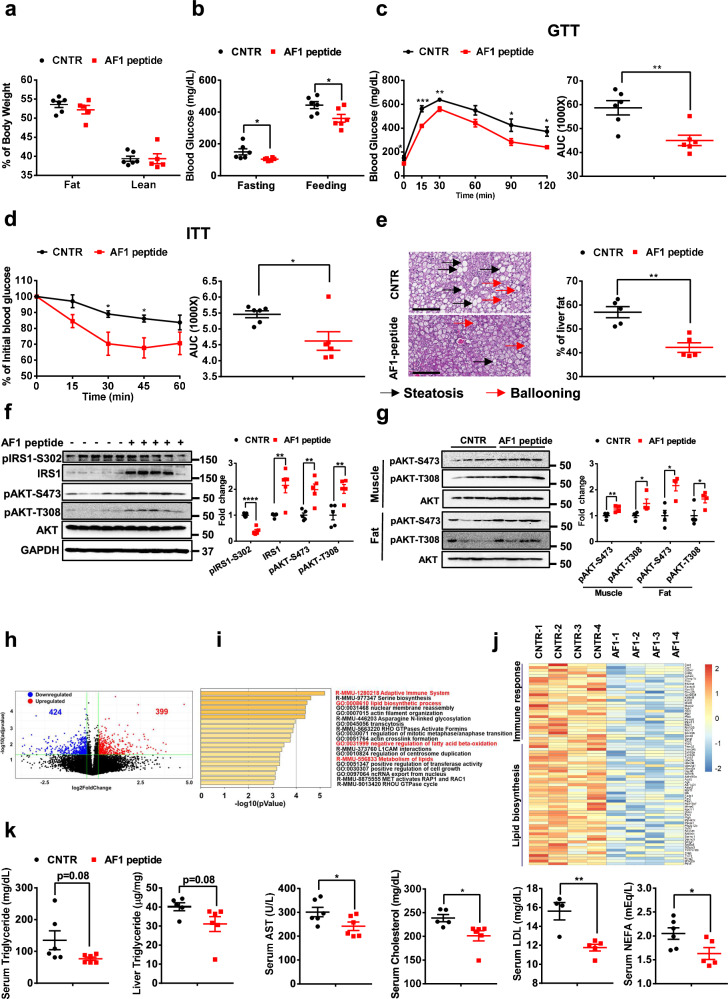
Estrogen receptor α (ERα) plays a crucial role in regulating glucose and energy homeostasis during type 2 diabetes mellitus (T2DM). However, the underlying mechanisms remain incompletely understood. Here we find a ligand-independent effect of ERα on the regulation of glucose homeostasis. Deficiency of ERα in the liver impairs glucose homeostasis in male, female, and ovariectomized (OVX) female mice. Mechanistic studies reveal that ERα promotes hepatic insulin sensitivity by suppressing ubiquitination-induced IRS1 degradation. The ERα 1-280 domain mediates the ligand-independent effect of ERα on insulin sensitivity. Furthermore, we identify a peptide based on ERα 1-280 domain and find that ERα-derived peptide increases IRS1 stability and enhances insulin sensitivity. Importantly, administration of ERα-derived peptide into obese mice significantly improves glucose homeostasis and serum lipid profiles. These findings pave the way for the therapeutic intervention of T2DM by targeting the ligand-independent effect of ERα and indicate that ERα-derived peptide is a potential insulin sensitizer for the treatment of T2DM.
Overview
The claims and statistics of this paper haven’t been checked yet.
Free: it reads the open-access text and checks the first 5 claims that cite a source we can check. Create a free account to check every claim.
Integrity signals
Registry
Cites
Statistics
Figures
Verification
Claims the paper makes
The claims and statistics of this paper haven’t been checked yet.
Free: it reads the open-access text and checks the first 5 claims that cite a source we can check. Create a free account to check every claim.
Claims other papers make about this one
Each is checked against this paper’s own text: does it say what the citing paper says it does?
The source backs part of the claim, not all of it — or backs it for a different population, condition or comparison.
In the citing paper
“ERα knockout (KO) mice in both males and females have worse metabolic profiles including developing obesity and worsened glucose homeostasis (90, 143–145).”
From Metabolic impact of endogenously produced estrogens by adipose tissue in females and males across the lifespan (2025) · cites this paper as [145]
Experimental — accuracy not yet measuredThe cited source says what the claim attributes to it.
In the citing paper
“in humans, individuals with T2D and poorly managed glucose control showed a significant decrease in ERα mRNA expression (145).”
From Metabolic impact of endogenously produced estrogens by adipose tissue in females and males across the lifespan (2025) · cites this paper as [145]
Self-check
Percentages, sums and reported differences re-computed from the paper’s own numbers.
The self-check needs the paper’s full text.
Citations
Cites
Zhou, B., Lu, Y., Hajifathalian, K., Bentham, J., Di Cesare, M., Danaei, G., Bixby, H., Cowan, M., Ali, M., Taddei, C., et al. (2016) · The Lancet · doi:10.1016/s0140-6736(16)00618-8 · Cited by 4,311 · cited 1×
“The incidence of diabetes in men is much higher than that in women 5,18 .”
Danaei, G., Finucane, M. M., Lu, Y., Singh, G. M., Cowan, M. J., Paciorek, C. J., Lin, J. K., Farzadfar, F., Khang, Y.-H., Stevens, G. A., et al. (2011) · The Lancet · doi:10.1016/s0140-6736(11)60679-x · Cited by 3,568 · cited 1×
“The incidence of diabetes in men is much higher than that in women 5,18 .”
Peptide therapeutics: current status and future directions
Fosgerau, K., & Hoffmann, T. (2015) · Drug Discovery Today · doi:10.1016/j.drudis.2014.10.003 · Cited by 3,030 · cited 1×
“Peptides have gained an increased interest in pharmaceutical researchduetotheirhighspeci fi city,ef fi ciency,andsafety 37 .”
DeFronzo, R. A., Ferrannini, E., Groop, L., Henry, R. R., Herman, W. H., Holst, J. J., Hu, F. B., Kahn, C. R., Raz, I., Shulman, G. I., et al. (2015) · Nature Reviews Disease Primers · doi:10.1038/nrdp.2015.19 · Cited by 2,611
Chatterjee, S., Khunti, K., & Davies, M. J. (2017) · The Lancet · doi:10.1016/s0140-6736(17)30058-2 · Cited by 2,577
Interaction of oestrogen receptor with the regulatory subunit of phosphatidylinositol-3-OH kinase
Simoncini, T., Hafezi-Moghadam, A., Brazil, D. P., Ley, K., Chin, W. W., & Liao, J. K. (2000) · Nature · doi:10.1038/35035131 · Cited by 1,436 · cited 2×
“E 2 -ER α signaling stimulates PI3K activity, thereby increasing insulin sensitivity and suppressing HGP 12,13 .”
The role of estrogens in control of energy balance and glucose homeostasis
Mauvais-Jarvis, F., Clegg, D. J., & Hevener, A. L. (2013) · Endocrine Reviews · doi:10.1210/er.2012-1055 · Cited by 1,329
Michael, M. D., Kulkarni, R. N., Postic, C., Previs, S. F., Shulman, G. I., Magnuson, M. A., & Kahn, C. R. (2000) · Molecular Cell · doi:10.1016/s1097-2765(05)00015-8 · Cited by 1,296 · cited 1×
“IRS1 and IRS2 are required for insulin-induced carbohydrate and lipid metabolism 15,22 .”
Increased adipose tissue in male and female estrogen receptor-α knockout mice
Heine, P. A., Taylor, J. A., Iwamoto, G. A., Lubahn, D. B., & Cooke, P. S. (2000) · Proceedings of the National Academy of Sciences · doi:10.1073/pnas.97.23.12729 · Cited by 1,282 · cited 1×
“Previous studies showed that ER α regulated glucose homeostasis and insulin sensitivity in skeletal muscle and adipose tissue 8,9,43,44 .”
Tat-mediated delivery of heterologous proteins into cells.
Fawell, S., Seery, J., Daikh, Y., Moore, C., Chen, L. L., Pepinsky, B., & Barsoum, J. (1994) · Proceedings of the National Academy of Sciences · doi:10.1073/pnas.91.2.664 · Cited by 1,225 · cited 1×
“HIV TAT-derived peptide, a small basic peptide, can deliver target proteins into living cells 41,42 .”
Cited by
Berbudi, A., Khairani, S., & Tjahjadi, A. I. (2025) · ImmunoTargets and Therapy · doi:10.2147/itt.s499605 · Cited by 211
Hypoglycemic effects of edible fungus polysaccharides: A mini review
Cui, Y.-L., & Лі, Б. (2024) · Food & medicine homology. · doi:10.26599/fmh.2025.9420046 · Cited by 59
MASLD: Prevalence, Mechanisms, and Sex-Based Therapies in Postmenopausal Women
Milani, I., Chinucci, M., Leonetti, F., & Capoccia, D. (2025) · Biomedicines · doi:10.3390/biomedicines13040855 · Cited by 38
“In the latter group, estrogen deficiency leads to dysglycemia and reduced hepatic insulin clearance [177,194].”
InfluentialLee, A. A., & Den Hartigh, L. J. (2025) · Frontiers in Endocrinology · doi:10.3389/fendo.2025.1682231 · Cited by 32
Viana, D. P. D. C., Câmara, L. C., & Palau, R. B. (2025) · International Journal of Molecular Sciences · doi:10.3390/ijms26157074 · Cited by 24
“The imbalance between ER α ( ↓ ) and ER β ( ↑ )—described in both menopause and lipedema—amplifies anti-lipolytic, pro-inflammatory, and pro-fibrotic effects in subcutaneous adipose tissue [28,29].”
Sex-dependent effects of chronic jet lag on circadian rhythm and metabolism in mice
Ma, T., Matsuo, R., Kurogi, K., Miyamoto, S., Morita, T., Shinozuka, M., Taniguchi, F., Ikegami, K., & Yasuo, S. (2024) · Biology of Sex Differences · doi:10.1186/s13293-024-00679-z · Cited by 23
Metabolic Messengers: oestradiol
Hevener, A. L., & Correa, S. M. (2025) · Nature Metabolism · doi:10.1038/s42255-025-01317-7 · Cited by 21
“%) in the liver of humans with poorly controlled diabetes, as well as db/db mice compared with controls 84 .”
Testosterone and Obesity in an Aging Society
Tsutsumi, T., & Tsuchiya, K. (2025) · Biomolecules · doi:10.3390/biom15111521 · Cited by 21
He, Y., Yang, X., He, X., Wang, G., Li, C., Yuan, P., & Li, C. (2025) · Frontiers in Endocrinology · doi:10.3389/fendo.2025.1589695 · Cited by 16
Myosteatosis: Epidemiological Insights, Functional Decline, and Diagnostic Advances
Zhang, Y., Jo, Y., Wei, S., Kim, Y., Park, W., Jeong, S.-J., Xue, Y., Lee, S. H., Kim, B., Oh, C., et al. (2025) · Current Obesity Reports · doi:10.1007/s13679-025-00676-2 · Cited by 16
“A plausible hypothesis is that estrogen enhances insulin sensitivity by activating FoxO1 and suppressing PKC, potentially modulating lipid metabolism and attenuating myosteatosis process [17].”
Ching, M. E. A., Hoyeck, M. P., Basu, L., Merhi, R. C., Poleo-Giordani, E., Vanzyl, E. J., Crawley, A. M., & Bruin, J. E. (2025) · American Journal of Physiology-Endocrinology and Metabolism · doi:10.1152/ajpendo.00284.2024 · Cited by 11
Hinton, A. O., Jr., Neikirk, K., Le, H., Harris, C., Oliver, A. F., Martin, P., & Gaye, A. (2024) · Aging advances. · doi:10.4103/agingadv.agingadv-d-24-00012 · Cited by 11
“39 Given these plentiful roles of E2 in general metabolism, the distinct roles of ERs in facets of mitochondrial function are of great relevance.”
The interplay between metabolic health factors and stroke incidence in aging populations
Zhang, C., Xiong, T., Ren, K., Wu, H., Cai, S., & Wang, L. (2025) · Frontiers in Endocrinology · doi:10.3389/fendo.2025.1646643 · Cited by 7
“Conversely, the protective effects of estrogen on glucose homeostasis may contribute to the relatively lower diabetes prevalence observed in our female cohort, though this protection diminishes post-menopause (24, 25).”
Studies of Foxo1 over the Past 25 Years: Mechanisms of Insulin Resistance and Glucose Dysregulation
Yang, W., Guo, J. Z., Song, J., & Guo, S. (2026) · Cells · doi:10.3390/cells15020109 · Cited by 6
“Additionally, estrogen stimulates mouse Foxo1-S253 phosphorylation through the ER α → PI3K → Akt pathway, thereby suppressing hepatic glucose production and improving cardiac function, which is independent of IRS1 and IRS2 [18,64,68,69].”
Self-citationResearch progress on bariatric surgery for hyperuricemia
Song, K., Kong, X., Yu, Z., Xiao, H., & Ren, Y. (2024) · BMC Surgery · doi:10.1186/s12893-024-02525-w · Cited by 6
“This line of inquiry is particularly compelling given the known role of ESR1 in various physiological processes, including those related to metabolism and inflammation [70, 71], which could indirectly influence uric acid handling by the body.”
BackgroundUnveiling estrogen’s role: a comprehensive review of its impact on skin health and disease
Yi, L., Deng, N., Luo, X., Tan, Y., Huang, Z., Liu, Y., Xing, J., Zeng, Y., & Yi, J. (2026) · APOPTOSIS · doi:10.1007/s10495-025-02244-4 · Cited by 5
Suswidiantoro, V., Tang, K. S., Rahman, K., Puteri, M. U., Wahyuni, T., Ariestanti, D. M., James, R. J., Yan, C. C., Kato, M., & Saputri, F. C. (2026) · Frontiers in Neuroendocrinology · doi:10.1016/j.yfrne.2026.101248 · Cited by 5
Paules, E. M., VerHague, M., Lulla, A., Meyer, K. A., Coleman, M. F., Albright, J., Bennett, B. J., North, K. E., Howard, A.-G., Gordon‐Larsen, P., et al. (2025) · American Journal of Physiology-Regulatory, Integrative and Comparative Physiology · doi:10.1152/ajpregu.00220.2024 · Cited by 5
Kuznetsova, E. A., Fedorov, N. S., Zakyrjanova, G. F., Malomouzh, A. I., & Petrov, A. M. (2025) · Histochemistry and Cell Biology · doi:10.1007/s00418-025-02370-9 · Cited by 5
“The main role of membrane-bound ERα was attributed to regulation of metabolic processes and insulin-induced signaling in skeletal muscle (Fabre et al. 2023; Ueda et al. 2018; Yang et al. 2024; Bar-ros and Gustafsson 2011).”
Jia, X., Cao, X., Wang, Y., Yang, S., & Ji, L. (2025) · Nutrients · doi:10.3390/nu17132128 · Cited by 4
“Recent studies have revealed that ER α can also promote the insulin sensitivity by inhibiting the ubiquitation-induced degradation of IRS-1 [23].”
Sathiaseelan, R., Isola, J. V. V., Santín-Márquez, R., Adekunbi, D. A., Fornalik, M., Salmon, A. B., & Stout, M. B. (2024) · GeroScience · doi:10.1007/s11357-024-01311-z · Cited by 3
“Activation of ERα has been associated with reduced HbA1C levels in male mice [59].”
Arumugam, S., & Lakshmanan, K. (2025) · Food Bioscience · doi:10.1016/j.fbio.2025.106165 · Cited by 2
Wang, Y., Zhou, S., Wang, M., Zhang, H., Yang, H., Liu, Y., & Guo, L. (2025) · Journal of The Electrochemical Society · doi:10.1149/1945-7111/ade56f · Cited by 2
Wang, X., Song, S., Lin, W., Huang, J., Zhong, W., Li, D., Huo, C., Wang, Y., Chen, D., Zhang, Z., et al. (2025) · American Journal of Cancer Research · doi:10.62347/oxpe5390 · Cited by 1
Novel role of NR1D1 and SLC7A5 in gestational diabetes mellitus: regulation of polyamine metabolism
Wang, Z., Fang, G., Yao, Y., & Wang, J. (2025) · Journal of Diabetes & Metabolic Disorders · doi:10.1007/s40200-025-01691-9 · Cited by 1
Nuclear receptors as therapeutic targets in metabolic and cardiovascular disorders
Li, F., Chen, Q., Dai, Y., & Lu, L. (2025) · iScience · doi:10.1016/j.isci.2025.114042 · Cited by 1
Ouyang, B., Zhuo, H., Han, H., Lei, Y., Li, K., & Li, Z. (2026) · PLoS ONE · doi:10.1371/journal.pone.0342644 · Cited by 1
Ai, W., Pan, Q., Shen, Z., Yang, W., JIANG, W., Song, J., & Guo, S. (2026) · Metabolism · doi:10.1016/j.metabol.2026.156654 · Cited by 1
Self-citationImpact of Menopause and Menopausal Hormone Therapy on Liver–Kidney–Metabolic Health
Jamalinia, M., Lonardo, A., & Weiskirchen, R. (2026) · Advances in Therapy · doi:10.1007/s12325-026-03758-2 · Cited by 1
Sex-specific AKI risk in acute myocardial infarction patients with type 2 diabetes mellitus
Huang, X., Wang, H., & Yuan, W. (2025) · Frontiers in Endocrinology · doi:10.3389/fendo.2025.1654587 · Cited by 1
Liu, T., Wang, X., Liu, J., Yang, S., Li, Q., Zhang, J., & Wu, X. (2025) · Current Pharmaceutical Design · doi:10.2174/0113816128402177250911093207
Ma, H.-K., Meng, L., Shen, L., & Ji, H.-F. (2026) · Foods · doi:10.3390/foods15030453
“ESR1 (encoding ER α ) not only activates insulin signaling independently of IRS1 and IRS2 via the E2-ER α pathway but also upregulates endogenous IRS1 expression in breast cancer cells, thereby modulating glucose homeostasis and insulin sensitivity [17].”
Yan, H., Zhu, S., Yu, J., Xu, X., Fu, D., Chen, Y., Daud, N. M., Xin, D., Zhao, Y., Ye, J., et al. (2026) · Food & Function · doi:10.1039/d5fo05348j
Self-citationLow-dose tamoxifen ameliorates ovariectomy-induced metabolic and immune dysfunction
McClurg, H. E., Ferraro, A., Pham, G., Morales-Hernández, I., Valencia-Rincón, E., Pham, K. D., Freeman, W. M., Gorman, J. A., & Castillo‐Castrejón, M. (2026) · GeroScience · doi:10.1007/s11357-025-02086-7
“Further mechanistic insight revealed that hepatic estrogen signaling plays a central role in regulating glucose metabolism, as deletion of hepatic ERα impaired glucose tolerance and insulin sensitivity in both male and female mice [80].”
Palikhe, S., Qiao, L., Kutz, C., Liang, X., Dhorajiya, P., Koestler, D. C., Bhardwaj, P., McCoin, C. S., Barnwal, A., Peterson, O. J., et al. (2026) · Metabolism · doi:10.1016/j.metabol.2026.156758
jing, Y., Yao, Y., Xiong, Q., Yuan, J., Zhang, H., & Hu, T. (2026) · Phytomedicine · doi:10.1016/j.phymed.2026.158434
Sexual dimorphism in the liver
Jain, A., & Monga, S. P. (2026) · Nature Reviews Gastroenterology & Hepatology · doi:10.1038/s41575-026-01244-2
Tian, T., Xue, Y., Sun, C., Yang, L., Wang, J., Jin-Smith, B., Barkin, J., Nzegwu, M., Jia, L., Zhou, H., et al. (2026) · Nature Communications · doi:10.1038/s41467-026-77089-9
“Area Under the Curve, which is reported to quantify insulin resistance 50 , was calculated using the trapezoidal rule.”
Chandran, R., Tsutsumi, T., Ng, C. H., Yoneda, M., & Mehta, A. (2026) · Current Cardiovascular Risk Reports · doi:10.1007/s12170-026-00793-0
“In addition, ERα exerts anti-inflammatory effects through the inhibi - tion of NF-κB signaling and further enhances insulin sig - naling via the IRS-1/Akt pathway [ 33, 36].”
Metabolic homeostasis and women’s reproductive health
Liu, X., 杨利丽, Jiang, J., Chang, H., & Mu, L. (2026) · Nature Metabolism · doi:10.1038/s42255-026-01646-1 · Cited by 1
TTPdb: a comprehensive database of targeted therapeutic peptides
Zhang, Y., Li, X., Lu, W., Mou, M., 袁平凡, Yang, N., Li, X., zhang, Z., Wang, Y., Zhou, Z., et al. (2026) · Nucleic Acids Research · doi:10.1093/nar/gkag1020
Qiu, X., & Wang, J. (2026) · Frontiers in Plant Science · doi:10.3389/fpls.2026.1982108
Metadata
- Authors
- Yang, W., Jiang, W., Liao, W., Yan, H., Ai, W., Pan, Q., Brashear, W. A., Xu, Y., He, L., & Guo, S.
- Affiliations
- Texas A&M University (US)
- Baylor College of Medicine (US)
- Johns Hopkins University (US)
- Corresponding author
- Guo, Shaodong
- ORCID
- Venue
- Nature Communications
- Published
- 2024-04-22
- Volume
- 15
- Issue
- 1
- Pages
- 3410-3410
- ISSN
- 2041-1723 (ISSN-L)
- PMC
- PMC11035554
- OpenAlex
- W4394993772
- Cited by
- 38
- References
- 47
- Citations by year
- 2026: 15 · 2025: 18 · 2024: 5
- FWCI
- 10.05
- Type
- journal article
- Language
- en
- Open access
- gold
- doi.org
- Licence
- cc-by
- creativecommons.org/licenses/by/4.0 (tdm)
- creativecommons.org/licenses/by/4.0 (vor)
- Locations
- Nature Communications (publishedVersion, cc-by)
- PubMed Central (publishedVersion, cc-by)
- PubMed (publishedVersion)
- Digital Commons-TMC (Texas Medical Center) (submittedVersion)
- RePEc: Research Papers in Economics (submittedVersion)
- DOAJ (DOAJ: Directory of Open Access Journals) (submittedVersion)
- Funders
- Foundation for the National Institutes of Health (R01 DK124588, R01 DK120968, R01 DK095118)
- American Diabetes Association (1-15-CD-09)
- Topics
- Life Sciences › Biochemistry, Genetics and Molecular Biology › Endocrinology › Estrogen and related hormone effects
- Life Sciences › Biochemistry, Genetics and Molecular Biology › Molecular Biology › Metabolism, Diabetes, and Cancer
- Health Sciences › Medicine › Endocrinology, Diabetes and Metabolism › Adipokines, Inflammation, and Metabolic Diseases
- Keywords
- estrogen receptor alpha, glucose homeostasis, type 2 diabetes, obesity, hepatic insulin sensitivity, ubiquitination, insulin sensitizers, lipid profile, ovariectomy
- MeSH terms
- Animals, Diabetes Mellitus, Type 2, Female, Glucose, Homeostasis, Humans, Insulin Resistance, Liver, Male, Mice, Inbred C57BL, Obesity, Ovariectomy, Peptides, Mice, Knockout, Estrogen Receptor alpha, Mice, Ubiquitination, Insulin Receptor Substrate Proteins
About these checks
Registry, retraction, Cites and statistics results are computed, not judged, with one exception: a printed reference that no index lists is read once by a model before it counts as a citation error. Claims are extracted by a model and kept only when their quote appears verbatim in the text; each cited source is then checked, with a model’s help, for whether it says what the claim relies on. Those verdicts can be wrong — read the claim’s quote and the cited source before relying on one.
Statistics and arithmetic are recomputed, not judged.
Confidence bands are shown only for fields calibrated on our annotated test set. None is calibrated yet, so no band is shown.
What counts as a claim ›How we measure confidence ›How we check this ›
Are you an author, or do you see a problem with this page? Request a review
Data sources
Bibliographic data: Semantic Scholar, OpenAlex, Crossref.
Contains information from the Semantic Scholar Academic Graph Datasets, made available under the ODC Attribution License (ODC-BY 1.0).
Semantic Scholar’s data is described in: Kinney, R., et al. (2023). The Semantic Scholar Open Data Platform. arXiv:2301.10140.
