

An estrogen receptor α-derived peptide improves glucose homeostasis during obesity
Open accessThe DOI matches its Crossref record; 47 of the 47 references it cites were found in a registry or an index.
Abstract
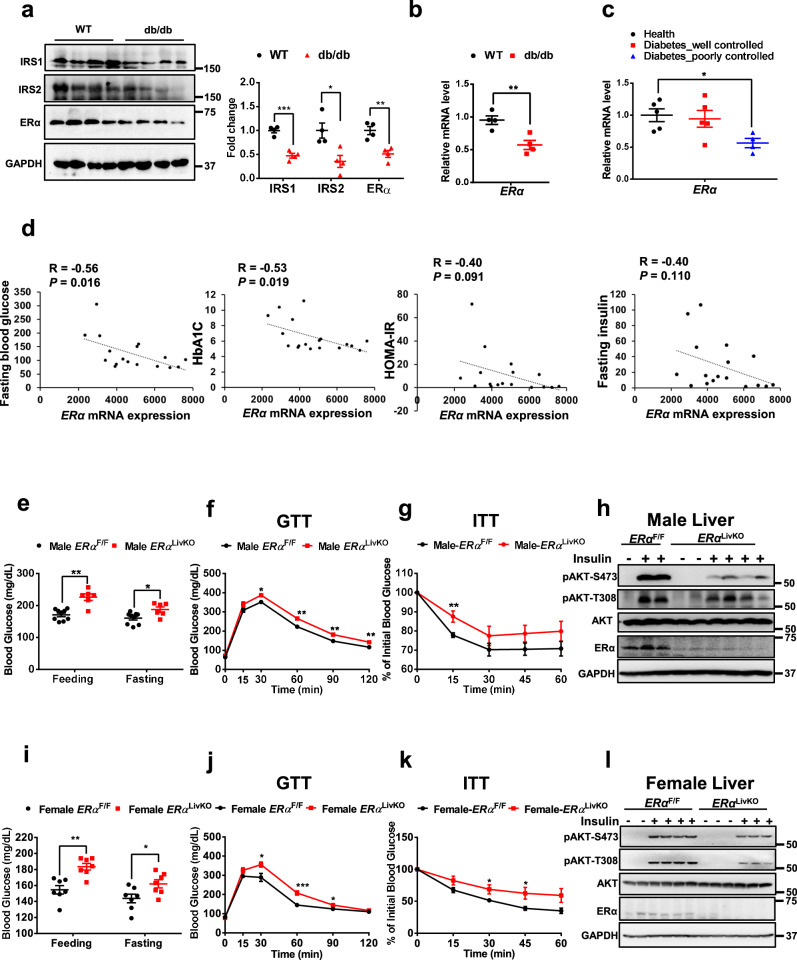
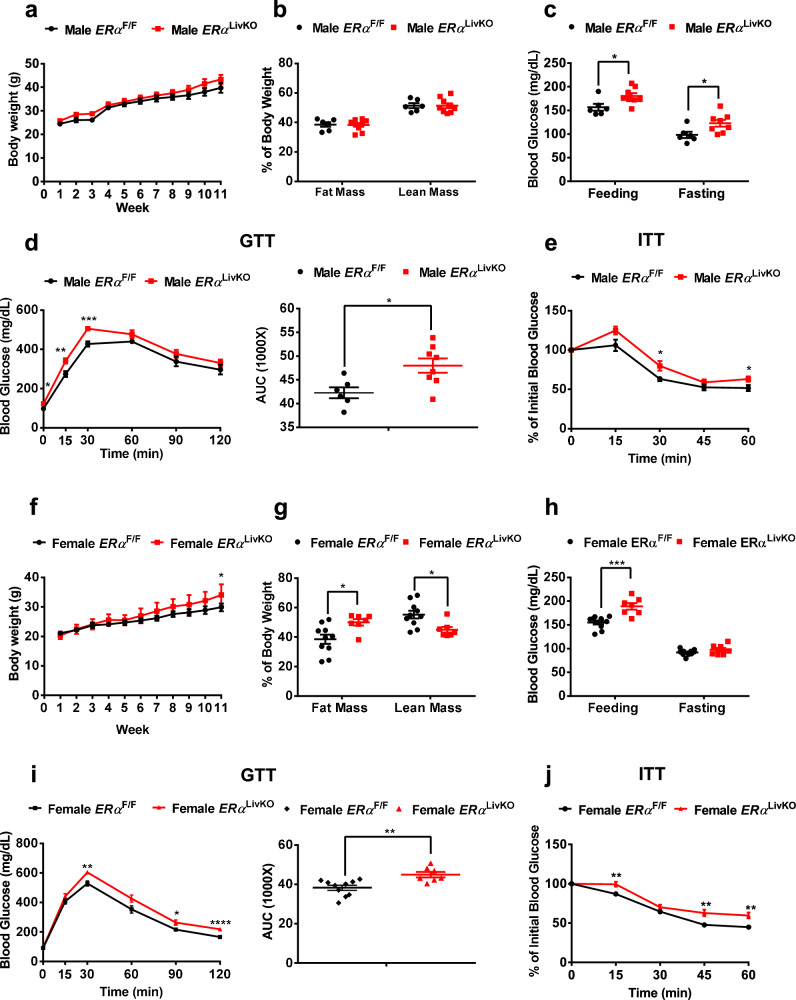
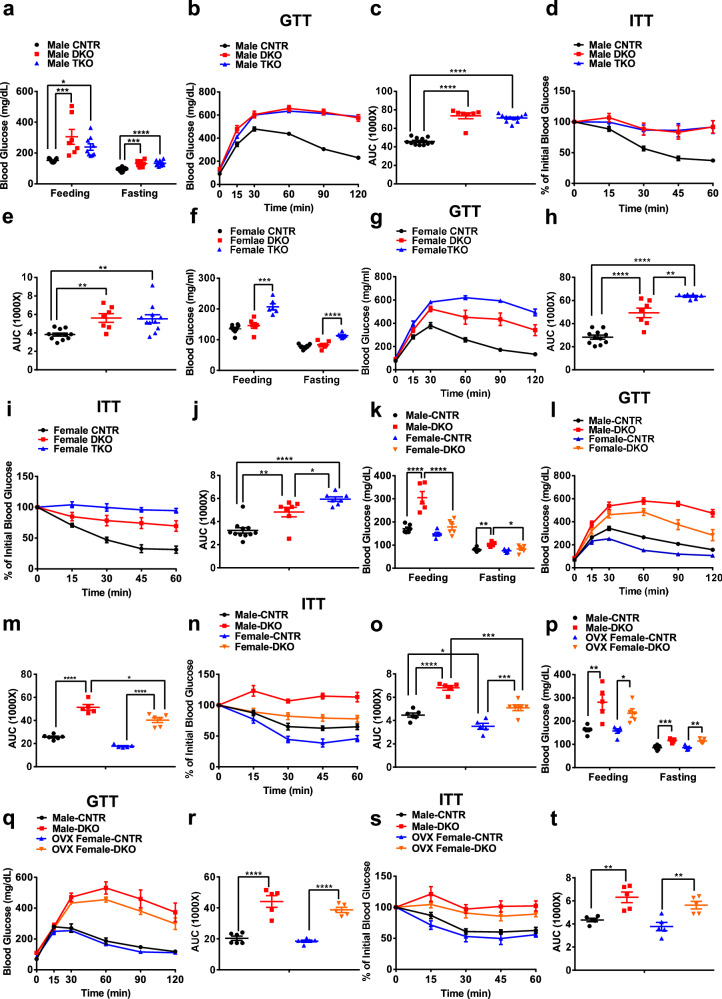
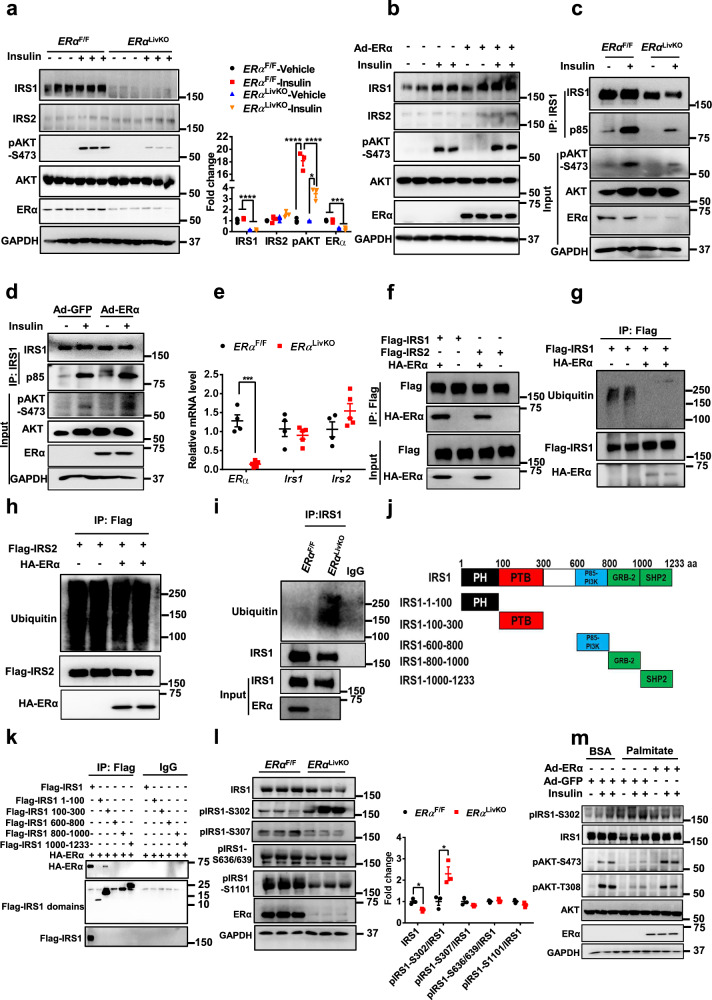
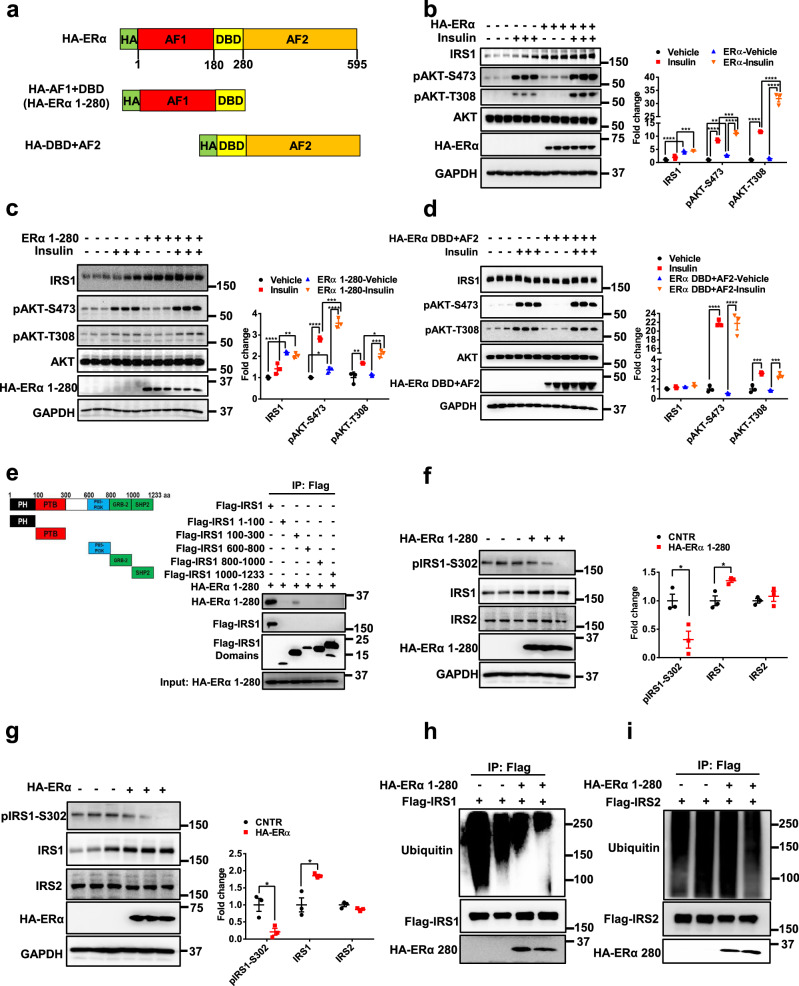
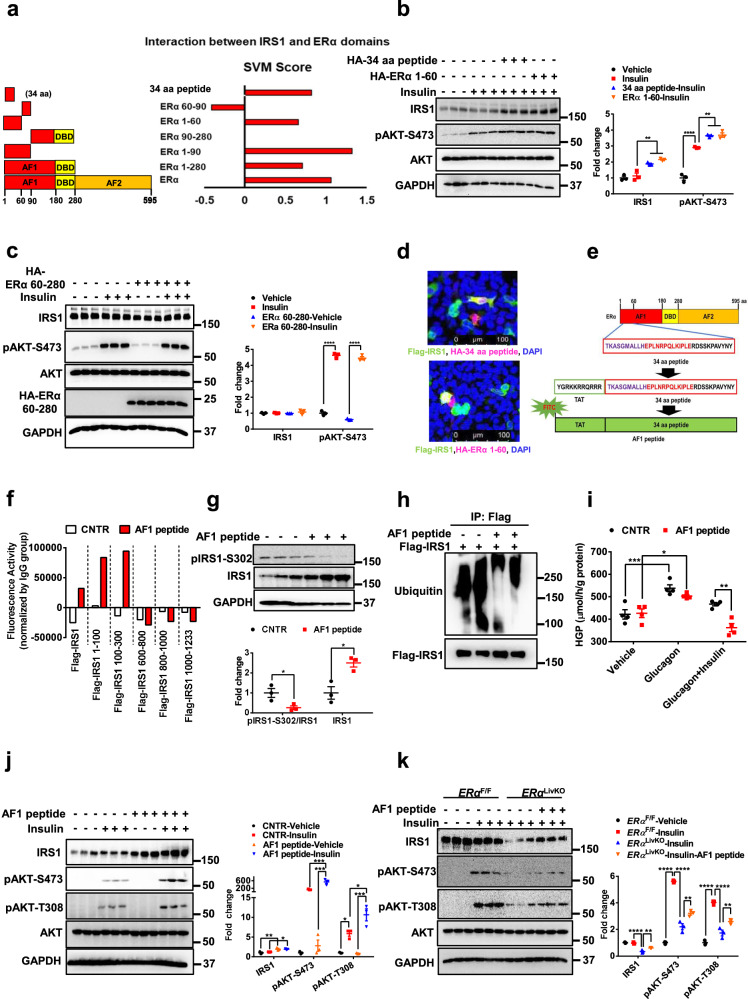
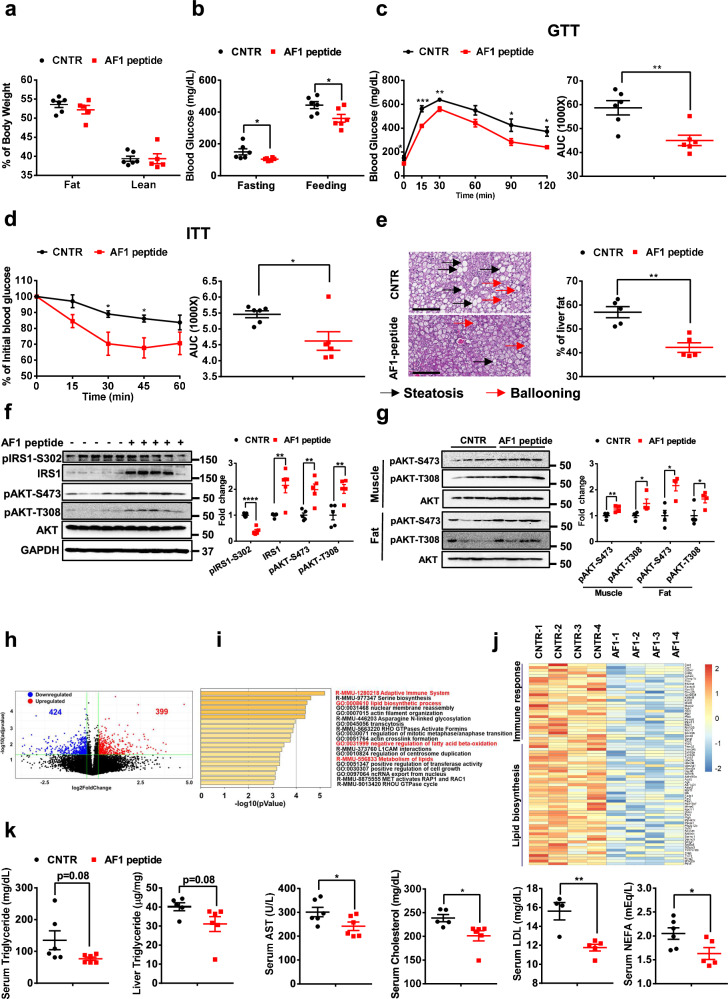
Estrogen receptor α (ERα) plays a crucial role in regulating glucose and energy homeostasis during type 2 diabetes mellitus (T2DM). However, the underlying mechanisms remain incompletely understood. Here we find a ligand-independent effect of ERα on the regulation of glucose homeostasis. Deficiency of ERα in the liver impairs glucose homeostasis in male, female, and ovariectomized (OVX) female mice. Mechanistic studies reveal that ERα promotes hepatic insulin sensitivity by suppressing ubiquitination-induced IRS1 degradation. The ERα 1-280 domain mediates the ligand-independent effect of ERα on insulin sensitivity. Furthermore, we identify a peptide based on ERα 1-280 domain and find that ERα-derived peptide increases IRS1 stability and enhances insulin sensitivity. Importantly, administration of ERα-derived peptide into obese mice significantly improves glucose homeostasis and serum lipid profiles. These findings pave the way for the therapeutic intervention of T2DM by targeting the ligand-independent effect of ERα and indicate that ERα-derived peptide is a potential insulin sensitizer for the treatment of T2DM.
Overview
The claims and statistics of this paper haven’t been checked yet.
Free: it reads the open-access text and checks the first 5 claims that cite a source we can check. Create a free account to check every claim.
Integrity signals
Registry
Cites
Statistics
Figures
Verification
Claims the paper makes
The claims and statistics of this paper haven’t been checked yet.
Free: it reads the open-access text and checks the first 5 claims that cite a source we can check. Create a free account to check every claim.
Claims other papers make about this one
Each is checked against this paper’s own text: does it say what the citing paper says it does?
The source backs part of the claim, not all of it — or backs it for a different population, condition or comparison.
In the citing paper
“ERα knockout (KO) mice in both males and females have worse metabolic profiles including developing obesity and worsened glucose homeostasis (90, 143–145).”
From Metabolic impact of endogenously produced estrogens by adipose tissue in females and males across the lifespan (2025) · cites this paper as [145]
Experimental — accuracy not yet measuredThe cited source says what the claim attributes to it.
In the citing paper
“in humans, individuals with T2D and poorly managed glucose control showed a significant decrease in ERα mRNA expression (145).”
From Metabolic impact of endogenously produced estrogens by adipose tissue in females and males across the lifespan (2025) · cites this paper as [145]
Self-check
Percentages, sums and reported differences re-computed from the paper’s own numbers.
The self-check needs the paper’s full text.
Citations
Cites
Zhou, B., Lu, Y., Hajifathalian, K., Bentham, J., Di Cesare, M., Danaei, G., Bixby, H., Cowan, M., Ali, M., Taddei, C., et al. (2016) · The Lancet · doi:10.1016/s0140-6736(16)00618-8 · Cited by 4,311 · cited 1×
“The incidence of diabetes in men is much higher than that in women 5,18 .”
Danaei, G., Finucane, M. M., Lu, Y., Singh, G. M., Cowan, M. J., Paciorek, C. J., Lin, J. K., Farzadfar, F., Khang, Y.-H., Stevens, G. A., et al. (2011) · The Lancet · doi:10.1016/s0140-6736(11)60679-x · Cited by 3,568 · cited 1×
“The incidence of diabetes in men is much higher than that in women 5,18 .”
Peptide therapeutics: current status and future directions
Fosgerau, K., & Hoffmann, T. (2015) · Drug Discovery Today · doi:10.1016/j.drudis.2014.10.003 · Cited by 3,030 · cited 1×
“Peptides have gained an increased interest in pharmaceutical researchduetotheirhighspeci fi city,ef fi ciency,andsafety 37 .”
DeFronzo, R. A., Ferrannini, E., Groop, L., Henry, R. R., Herman, W. H., Holst, J. J., Hu, F. B., Kahn, C. R., Raz, I., Shulman, G. I., et al. (2015) · Nature Reviews Disease Primers · doi:10.1038/nrdp.2015.19 · Cited by 2,611
Chatterjee, S., Khunti, K., & Davies, M. J. (2017) · The Lancet · doi:10.1016/s0140-6736(17)30058-2 · Cited by 2,577
Interaction of oestrogen receptor with the regulatory subunit of phosphatidylinositol-3-OH kinase
Simoncini, T., Hafezi-Moghadam, A., Brazil, D. P., Ley, K., Chin, W. W., & Liao, J. K. (2000) · Nature · doi:10.1038/35035131 · Cited by 1,436 · cited 2×
“E 2 -ER α signaling stimulates PI3K activity, thereby increasing insulin sensitivity and suppressing HGP 12,13 .”
The role of estrogens in control of energy balance and glucose homeostasis
Mauvais-Jarvis, F., Clegg, D. J., & Hevener, A. L. (2013) · Endocrine Reviews · doi:10.1210/er.2012-1055 · Cited by 1,329
Michael, M. D., Kulkarni, R. N., Postic, C., Previs, S. F., Shulman, G. I., Magnuson, M. A., & Kahn, C. R. (2000) · Molecular Cell · doi:10.1016/s1097-2765(05)00015-8 · Cited by 1,296 · cited 1×
“IRS1 and IRS2 are required for insulin-induced carbohydrate and lipid metabolism 15,22 .”
Increased adipose tissue in male and female estrogen receptor-α knockout mice
Heine, P. A., Taylor, J. A., Iwamoto, G. A., Lubahn, D. B., & Cooke, P. S. (2000) · Proceedings of the National Academy of Sciences · doi:10.1073/pnas.97.23.12729 · Cited by 1,282 · cited 1×
“Previous studies showed that ER α regulated glucose homeostasis and insulin sensitivity in skeletal muscle and adipose tissue 8,9,43,44 .”
Tat-mediated delivery of heterologous proteins into cells.
Fawell, S., Seery, J., Daikh, Y., Moore, C., Chen, L. L., Pepinsky, B., & Barsoum, J. (1994) · Proceedings of the National Academy of Sciences · doi:10.1073/pnas.91.2.664 · Cited by 1,225 · cited 1×
“HIV TAT-derived peptide, a small basic peptide, can deliver target proteins into living cells 41,42 .”
Molecular and metabolic mechanisms of insulin resistance and β-cell failure in type 2 diabetes
Muoio, D. M., & Newgard, C. B. (2008) · Nature Reviews Molecular Cell Biology · doi:10.1038/nrm2327 · Cited by 1,177 · cited 1×
“ER α playsadominantroleinmediatingtheeffectofE 2 on the regulation of energy balance and glucose homeostasis 8 .”
The TSC1-2 tumor suppressor controls insulin–PI3K signaling via regulation of IRS proteins
Harrington, L. S., Findlay, G. M., Gray, A., Tolkacheva, T., Wigfield, S., Rebholz, H., Barnett, J., Leslie, N. R., Cheng, S., Shepherd, P. R., et al. (2004) · The Journal of Cell Biology · doi:10.1083/jcb.200403069 · Cited by 1,123 · cited 1×
“IRS1-S302 phosphorylation, mainly stimulated by mTOR/S6K pathway, impaired its binding to insulin receptor and disrupted insulin signaling 28 .”
Copps, K. D., & White, M. F. (2012) · Diabetologia · doi:10.1007/s00125-012-2644-8 · Cited by 1,017 · cited 3×
“IRS1 andIRS2 contain ahighlysimilaramino-terminal pleskstrin homology (PH) and phosphostyrosin-binding domain (PTB), whereas the tail region of IRS1 and IRS2 are poorly conserved 14 .”
Coregulator Function: A Key to Understanding Tissue Specificity of Selective Receptor Modulators
Smith, C. L., & O’Malley, B. W. (2004) · Endocrine Reviews · doi:10.1210/er.2003-0023 · Cited by 931 · cited 1×
“Both the AF1 and AF2 domains contribute to the transcriptional activity of target genes 32 .”
Bordicchia, M., Liu, D., Amri, E.-Z., Ailhaud, G., Dessì-Fulgheri, P., Zhang, C., Takahashi, N., Sarzani, R., & Collins, S. (2012) · Journal of Clinical Investigation · doi:10.1172/jci59701 · Cited by 872
Tat peptide-mediated cellular delivery: back to basics
BROOKS, H., LEBLEU, B., & VIVES, E. (2005) · Advanced Drug Delivery Reviews · doi:10.1016/j.addr.2004.12.001 · Cited by 667 · cited 1×
“HIV TAT-derived peptide, a small basic peptide, can deliver target proteins into living cells 41,42 .”
Salpeter, S. R., Walsh, J. M. E., Ormiston, T. M., Greyber, E., Buckley, N. S., & Salpeter, E. E. (2006) · Diabetes, Obesity and Metabolism · doi:10.1111/j.1463-1326.2005.00545.x · Cited by 640
Structure–function relationship of estrogen receptor α and β: Impact on human health
Ascenzi, P., Bocedi, A., & Marino, M. (2006) · Molecular Aspects of Medicine · doi:10.1016/j.mam.2006.07.001 · Cited by 499
Dong, X. C., Copps, K. D., Guo, S., Li, Y., Kollipara, R., DePinho, R. A., & White, M. F. (2008) · Cell Metabolism · doi:10.1016/j.cmet.2008.06.006 · Cited by 463 · cited 2×
“Hepatic ablation of IRS1 and IRS2 leads to insulin resistance and hyperglycemia in mice 15 .”
Self-citationPeters, S. A. E., Muntner, P., & Woodward, M. (2019) · Circulation · doi:10.1161/circulationaha.118.035550 · Cited by 434
Bryzgalova, G., Gao, H., Ahren, B., Zierath, J. R., Galuska, D., Steiler, T. L., Dahlman-Wright, K., Nilsson, S., Gustafsson, J.-Å., Efendic, S., et al. (2006) · Diabetologia · doi:10.1007/s00125-005-0105-3 · Cited by 384 · cited 4×
“ER α playsadominantroleinmediatingtheeffectofE 2 on the regulation of energy balance and glucose homeostasis 8 .”
InfluentialNon-genomic actions of sex steroid hormones
Simoncini, T., & Genazzani, A. (2003) · European Journal of Endocrinology · doi:10.1530/eje.0.1480281 · Cited by 368 · cited 1×
“E 2 -ER α signaling exerts its function through both genomic and non-genomic mechanisms 10 .”
Protein Kinase C θ Inhibits Insulin Signaling by Phosphorylating IRS1 at Ser1101
Li, Y., Soos, T. J., Li, X., Wu, J., DeGennaro, M., Sun, X., Littman, D. R., Birnbaum, M. J., & Polakiewicz, R. D. (2004) · Journal of Biological Chemistry · doi:10.1074/jbc.c400186200 · Cited by 358 · cited 1×
“Multiple serine phosphorylation sites of IRS1 have been indicated to be correlated to insulin resistance, including S302, S307, S636/639, andS1101 14,26 – 29 .”
Yan, H., Yang, W., Zhou, F., Li, X., Pan, Q., Shen, Z., Han, G., Newell-Fugate, A., Tian, Y., Majeti, R., et al. (2019) · Diabetes · doi:10.2337/db18-0638 · Cited by 338 · cited 8×
“E 2 -ER α signaling stimulates PI3K activity, thereby increasing insulin sensitivity and suppressing HGP 12,13 .”
InfluentialSelf-citationCentral role of E3 ubiquitin ligase MG53 in insulin resistance and metabolic disorders
Song, R., Peng, W., Zhang, Y., Lv, F., Wu, H.-K., Guo, J., Cao, Y., Pi, Y., Zhang, X., Jin, L., et al. (2013) · Nature · doi:10.1038/nature11834 · Cited by 303 · cited 1×
“A previous study showed that E3 ubiquitin ligase MG53 promoted IRS1 ubiquitination and degradation but had no effect on IRS2 23 .”
Antidiabetic actions of estrogen: Insight from human and genetic mouse models
Louet, J.-F., LeMay, C., & Mauvais-Jarvis, F. (2004) · Current Atherosclerosis Reports · doi:10.1007/s11883-004-0030-9 · Cited by 284 · cited 1×
“After menopause, women gradually develop obesity and insulin resistance and are at high risk of type 2 diabetes, but hormone replacement therapy improves insulin sensitivity and glycemic control 19 – 21 .”
Davis, K. E., D. Neinast, M., Sun, K., M. Skiles, W., D. Bills, J., A. Zehr, J., Zeve, D., D. Hahner, L., W. Cox, D., M. Gent, L., et al. (2013) · Molecular Metabolism · doi:10.1016/j.molmet.2013.05.006 · Cited by 278 · cited 2×
“Glucose tolerance and insulin sensitivity were largely impaired in the adipose tissue knockout male mice 44 .”
Self-citationInsulin Resistance Due to Phosphorylation of Insulin Receptor Substrate-1 at Serine 302
Werner, E. D., Lee, J., Hansen, L., Yuan, M., & Shoelson, S. E. (2004) · Journal of Biological Chemistry · doi:10.1074/jbc.m405203200 · Cited by 252 · cited 1×
“In diabetic mouse liver, IRS1-S302 phosphorylation was signi fi cantly increased and suppression of IRS1-302 phosphorylation blocked JNK1-induced insulin resistance 27 .”
Effect of Postmenopausal Hormone Therapy on Glucose and Insulin Concentrations
Espeland, M. A., Hogan, P. E., Fineberg, S. E., Howard, G., Schrott, H., Waclawiw, M. A., Bush, T. L., & The Pepi Investigators (1998) · Diabetes Care · doi:10.2337/diacare.21.10.1589 · Cited by 239
Kumar, R., & Thompson, E. B. (2003) · Molecular Endocrinology · doi:10.1210/me.2002-0258 · Cited by 210 · cited 1×
“Recombinant AF1 domains can be made to fold by conjunction with the DBD domain, thereby affecting AF1 domain function and promoting its interaction with other factors in a ligand-independent manner 31,36 .”
Hepatic Suppression of Foxo1 and Foxo3 Causes Hypoglycemia and Hyperlipidemia in Mice
Zhang, K., Li, L., Qi, Y., Zhu, X., Gan, B., DePinho, R. A., Averitt, T., & Guo, S. (2012) · Endocrinology · doi:10.1210/en.2011-1527 · Cited by 179 · cited 1×
“Primary hepatocytes were isolated, as previously described 46 .”
Self-citationThyroid hormone-related regulation of gene expression in human fatty liver.
Pihlajamäki, J., Boes, T., Kim, E.-Y., Dearie, F., Kim, B. W., Schroeder, J., Mun, E., Nasser, I., Park, P. J., Bianco, A. C., et al. (2009) · The Journal of Clinical Endocrinology & Metabolism · doi:10.1210/jc.2009-0212 · Cited by 164 · cited 3×
“We further analyzed themRNAexpression levelsof hepatic ER α indiabetic patients 17 .”
InfluentialGenetic rescue of nonclassical ERα signaling normalizes energy balance in obese Erα-null mutant mice
Park, C. J., Zhao, Z., Glidewell-Kenney, C., Lazic, M., Chambon, P., Krust, A., Weiss, J., Clegg, D. J., Dunaif, A., Jameson, J. L., et al. (2011) · Journal of Clinical Investigation · doi:10.1172/jci41702 · Cited by 162 · cited 3×
“A previous study showed that recovery of ER α non-genomic function rescues ER α de fi ciency-induced dysregulation of energy metabolism and glucose homeostasis 11 , suggesting that ER α non-genomic pathway mainly mediates its role in metabolic regulation.”
GLP-1 receptor agonist promotes brown remodelling in mouse white adipose tissue through SIRT1
Xu, F., Lin, B., Zheng, X., Chen, Z., Cao, H., Xu, H., Liang, H., & Weng, J. (2016) · Diabetologia · doi:10.1007/s00125-016-3896-5 · Cited by 157
Estrogen signaling prevents diet-induced hepatic insulin resistance in male mice with obesity
Zhu, L., Martinez, M. N., Emfinger, C. H., Palmisano, B. T., & Stafford, J. M. (2014) · American Journal of Physiology-Endocrinology and Metabolism · doi:10.1152/ajpendo.00579.2013 · Cited by 130
Morino, K., Neschen, S., Bilz, S., Sono, S., Tsirigotis, D., Reznick, R. M., Moore, I., Nagai, Y., Samuel, V., Sebastian, D., et al. (2008) · Diabetes · doi:10.2337/db06-0454 · Cited by 125 · cited 2×
“Multiple serine phosphorylation sites of IRS1 have been indicated to be correlated to insulin resistance, including S302, S307, S636/639, andS1101 14,26 – 29 .”
Handgraaf, S., Riant, E., Fabre, A., Waget, A., Burcelin, R., Lière, P., Krust, A., Chambon, P., Arnal, J.-F., & Gourdy, P. (2013) · Diabetes · doi:10.2337/db13-0282 · Cited by 118 · cited 1×
“The AF2 domain, but not AF1 domain, is required by estrogen-mediated prevention of obesity and insulin resistance 33 .”
Li, Z., Zhang, B., Wang, N., Zuo, Z., Hong Kui, W. E. I., & Zhao, F. (2022) · Gut · doi:10.1136/gutjnl-2022-328035 · Cited by 87 · cited 1×
“Anumber of peptides have been designed to prevent the development of obesity, including glucagon-like peptide-1 (GLP-1), natriureticpeptide, and defensin-derived peptide 38 – 40 .”
di Prisco, M., Santini, F., Baffa, R., Liu, M., Drakas, R. A., Wu, A., & Baserga, R. (2002) · Journal of Biological Chemistry · doi:10.1074/jbc.m204658200 · Cited by 81 · cited 1×
“Considering E 2 stimulates ER α nuclear translocation and IRS1 exists in both cytosol and nucleus 24 , it is possible that ER α interacts with IRS1 in both cytosol and nucleus.”
Galluzzo, P., Rastelli, C., Bulzomi, P., Acconcia, F., Pallottini, V., & Marino, M. (2009) · American Journal of Physiology-Cell Physiology · doi:10.1152/ajpcell.00188.2009 · Cited by 77
Morelli, C., Garofalo, C., Bartucci, M., & Surmacz, E. (2003) · Oncogene · doi:10.1038/sj.onc.1206436 · Cited by 74 · cited 2×
“A previous study reported that ER α regulated endogenous IRS1 and IRS2 degradation in breast cancer cells 16 , sug-gestingthatIRSproteinsmaybethetargetofER α inregulatingglucose homeostasisandinsulin sensitivity inmice.”
Allard, C., Morford, J. J., Xu, B., SALWEN, B. D., Xu, W., Desmoulins, L. D., Zsombok, A., Kim, J. K., Levin, E. R., & Mauvais‐Jarvis, F. (2018) · Diabetes · doi:10.2337/db18-0293 · Cited by 61 · cited 1×
“A previous study showed that nuclear ER α but not membrane ER α gain-of-function rescued ER α de fi ciency-induced glucose intolerance and insulin resistance 25 .”
Guillaume, M., Handgraaf, S., Fabre, A., Raymond‐Letron, I., Riant, É., Montagner, A., Vinel, A., Buscato, M., Smirnova, N. F., Fontaine, C., et al. (2017) · American Journal Of Pathology · doi:10.1016/j.ajpath.2017.02.013 · Cited by 43 · cited 1×
“Selective activation of the AF1 domain by tamoxifen protects mice from diet-induced obesity, steatosis, and insulin resistance 34 ; this result suggests that AF1 domain plays animportant role in the regulation of metabolic homeostasisin a ligand-dependent manner.”
Copps, K. D., Hançer, N. J., Qiu, W., & White, M. F. (2016) · Journal of Biological Chemistry · doi:10.1074/jbc.m116.714915 · Cited by 41 · cited 1×
“However, a previous study showed that IRS1-S302A knock-in mice had normal glucose homeostasis and muscle insulin sensitivity under physiological condition 30 .”
Yan, H., Yang, W., Zhou, F., Pan, Q., Allred, K. F., Allred, C. D., Sun, Y., Threadgill, D. W., Dostal, D. E., Tong, C. W.-C., et al. (2022) · Circulation Heart Failure · doi:10.1161/circheartfailure.121.008758 · Cited by 38 · cited 1×
“Placebo or 17 β - estradiol (E 2 ) pellet (0.05mg/pellet, 60-day release; Innovative Research of America, Sarasota, FL) was subcutaneously implanted into ovariectomized female mice 45 .”
Self-citationYang, W., Liao, W., Li, X., Ai, W., Pan, Q., Shen, Z., Jiang, W. G., & Guo, S. (2023) · Diabetologia · doi:10.1007/s00125-023-05916-5 · Cited by 28
Self-citationYang, W., Guo, J. Z., & Guo, S. (2023) · Springer eBooks · doi:10.1007/978-3-319-12125-3_28-3 · Cited by 1
Self-citation
Cited by
Berbudi, A., Khairani, S., & Tjahjadi, A. I. (2025) · ImmunoTargets and Therapy · doi:10.2147/itt.s499605 · Cited by 211
Hypoglycemic effects of edible fungus polysaccharides: A mini review
Cui, Y.-L., & Лі, Б. (2024) · Food & medicine homology. · doi:10.26599/fmh.2025.9420046 · Cited by 59
MASLD: Prevalence, Mechanisms, and Sex-Based Therapies in Postmenopausal Women
Milani, I., Chinucci, M., Leonetti, F., & Capoccia, D. (2025) · Biomedicines · doi:10.3390/biomedicines13040855 · Cited by 38
“In the latter group, estrogen deficiency leads to dysglycemia and reduced hepatic insulin clearance [177,194].”
InfluentialLee, A. A., & Den Hartigh, L. J. (2025) · Frontiers in Endocrinology · doi:10.3389/fendo.2025.1682231 · Cited by 32
Viana, D. P. D. C., Câmara, L. C., & Palau, R. B. (2025) · International Journal of Molecular Sciences · doi:10.3390/ijms26157074 · Cited by 24
“The imbalance between ER α ( ↓ ) and ER β ( ↑ )—described in both menopause and lipedema—amplifies anti-lipolytic, pro-inflammatory, and pro-fibrotic effects in subcutaneous adipose tissue [28,29].”
Metadata
- Authors
- Yang, W., Jiang, W., Liao, W., Yan, H., Ai, W., Pan, Q., Brashear, W. A., Xu, Y., He, L., & Guo, S.
- Affiliations
- Texas A&M University (US)
- Baylor College of Medicine (US)
- Johns Hopkins University (US)
- Corresponding author
- Guo, Shaodong
- ORCID
- Venue
- Nature Communications
- Published
- 2024-04-22
- Volume
- 15
- Issue
- 1
- Pages
- 3410-3410
- ISSN
- 2041-1723 (ISSN-L)
- PMC
- PMC11035554
- OpenAlex
- W4394993772
- Cited by
- 38
- References
- 47
- Citations by year
- 2026: 15 · 2025: 18 · 2024: 5
- FWCI
- 10.05
- Type
- journal article
- Language
- en
- Open access
- gold
- doi.org
- Licence
- cc-by
- creativecommons.org/licenses/by/4.0 (tdm)
- creativecommons.org/licenses/by/4.0 (vor)
- Locations
- Nature Communications (publishedVersion, cc-by)
- PubMed Central (publishedVersion, cc-by)
- PubMed (publishedVersion)
- Digital Commons-TMC (Texas Medical Center) (submittedVersion)
- RePEc: Research Papers in Economics (submittedVersion)
- DOAJ (DOAJ: Directory of Open Access Journals) (submittedVersion)
- Funders
- Foundation for the National Institutes of Health (R01 DK124588, R01 DK120968, R01 DK095118)
- American Diabetes Association (1-15-CD-09)
- Topics
- Life Sciences › Biochemistry, Genetics and Molecular Biology › Endocrinology › Estrogen and related hormone effects
- Life Sciences › Biochemistry, Genetics and Molecular Biology › Molecular Biology › Metabolism, Diabetes, and Cancer
- Health Sciences › Medicine › Endocrinology, Diabetes and Metabolism › Adipokines, Inflammation, and Metabolic Diseases
- Keywords
- estrogen receptor alpha, glucose homeostasis, type 2 diabetes, obesity, hepatic insulin sensitivity, ubiquitination, insulin sensitizers, lipid profile, ovariectomy
- MeSH terms
- Animals, Diabetes Mellitus, Type 2, Female, Glucose, Homeostasis, Humans, Insulin Resistance, Liver, Male, Mice, Inbred C57BL, Obesity, Ovariectomy, Peptides, Mice, Knockout, Estrogen Receptor alpha, Mice, Ubiquitination, Insulin Receptor Substrate Proteins
About these checks
Registry, retraction, Cites and statistics results are computed, not judged, with one exception: a printed reference that no index lists is read once by a model before it counts as a citation error. Claims are extracted by a model and kept only when their quote appears verbatim in the text; each cited source is then checked, with a model’s help, for whether it says what the claim relies on. Those verdicts can be wrong — read the claim’s quote and the cited source before relying on one.
Statistics and arithmetic are recomputed, not judged.
Confidence bands are shown only for fields calibrated on our annotated test set. None is calibrated yet, so no band is shown.
What counts as a claim ›How we measure confidence ›How we check this ›
Are you an author, or do you see a problem with this page? Request a review
Data sources
Bibliographic data: Semantic Scholar, OpenAlex, Crossref.
Contains information from the Semantic Scholar Academic Graph Datasets, made available under the ODC Attribution License (ODC-BY 1.0).
Semantic Scholar’s data is described in: Kinney, R., et al. (2023). The Semantic Scholar Open Data Platform. arXiv:2301.10140.
