

Diagnostic utility of DNA methylation analysis in genetically unsolved pediatric epilepsies and CHD2 episignature refinement
Open accessPublished version of a preprint
The DOI matches its Crossref record; 96 of the 96 references it cites were found in a registry or an index.
Abstract
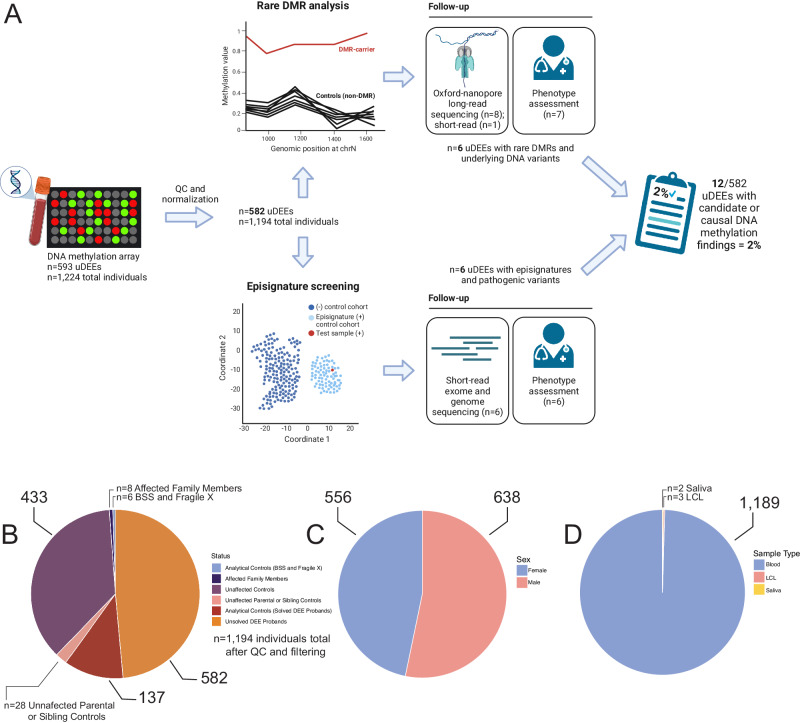
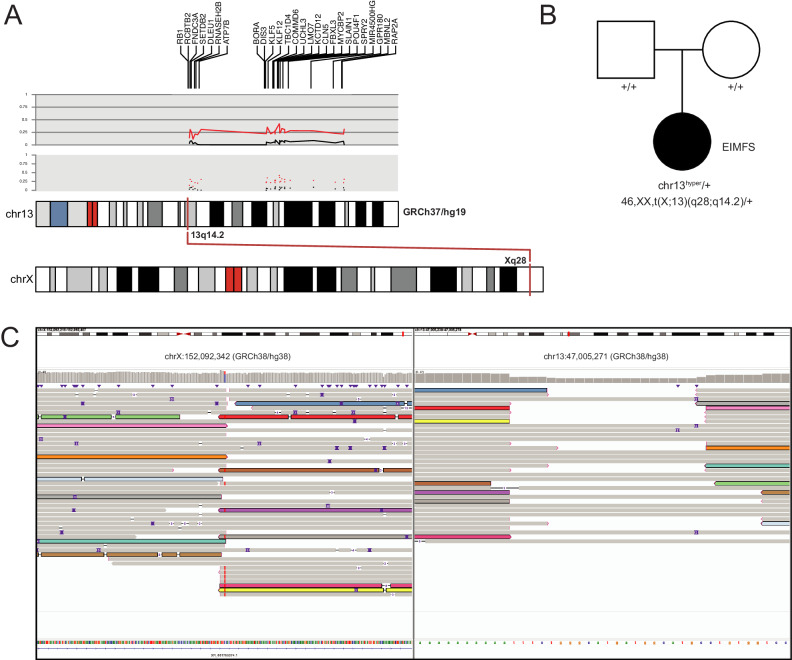
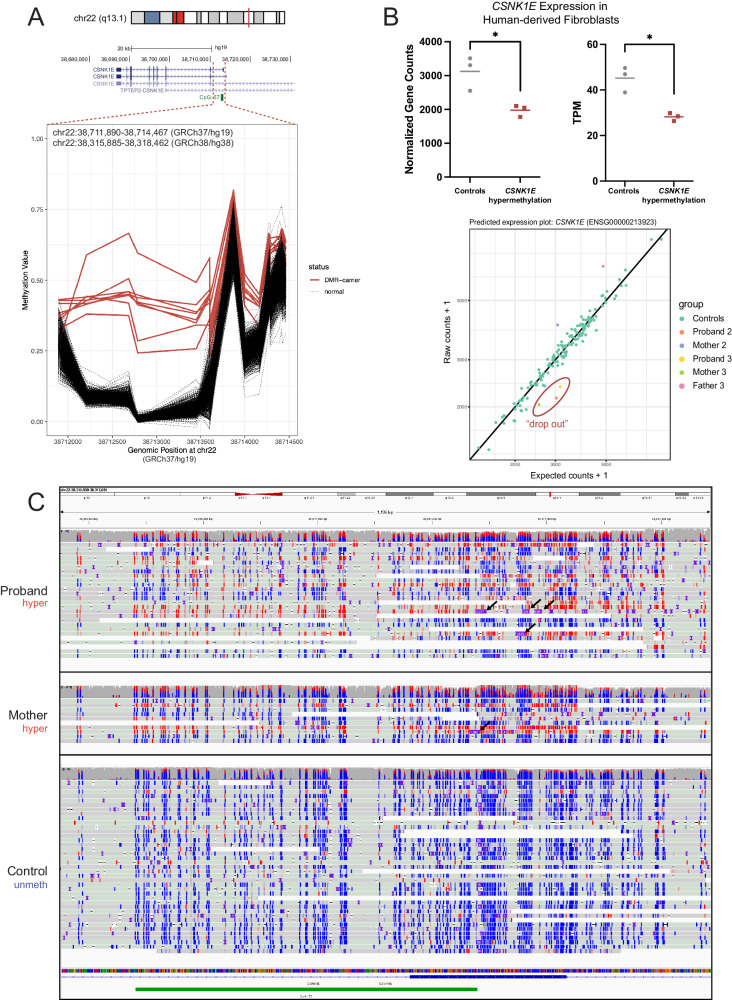
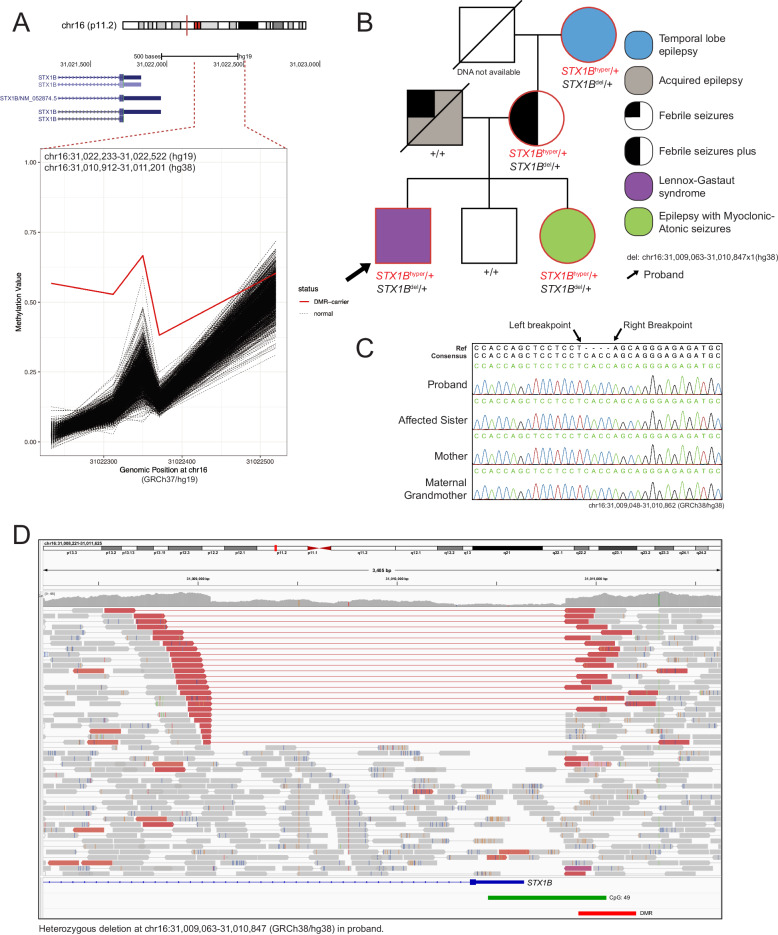
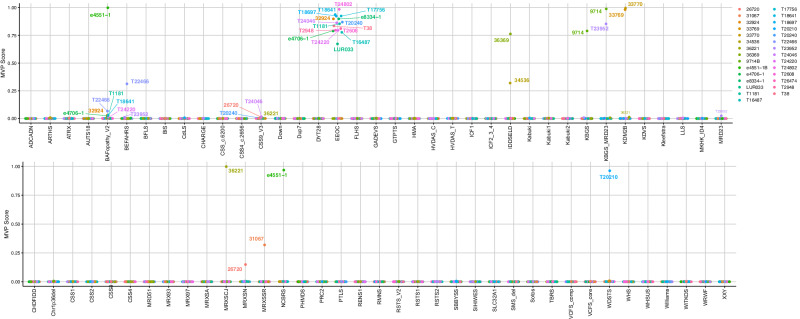
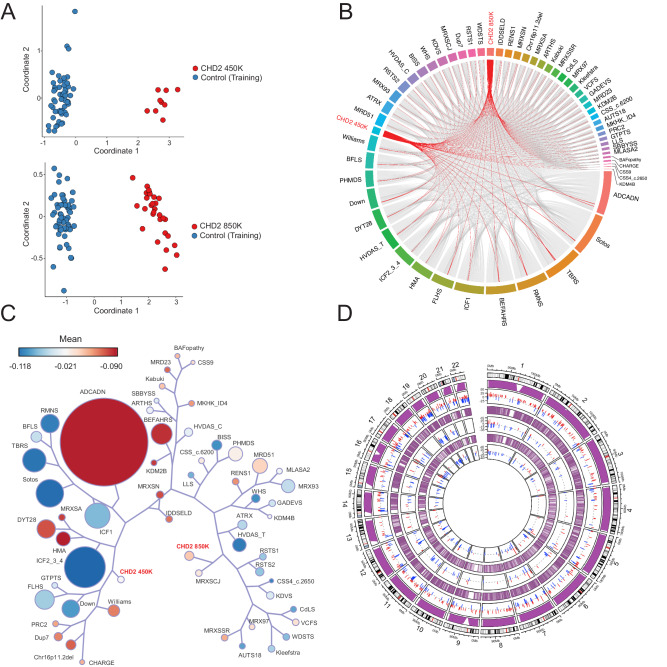
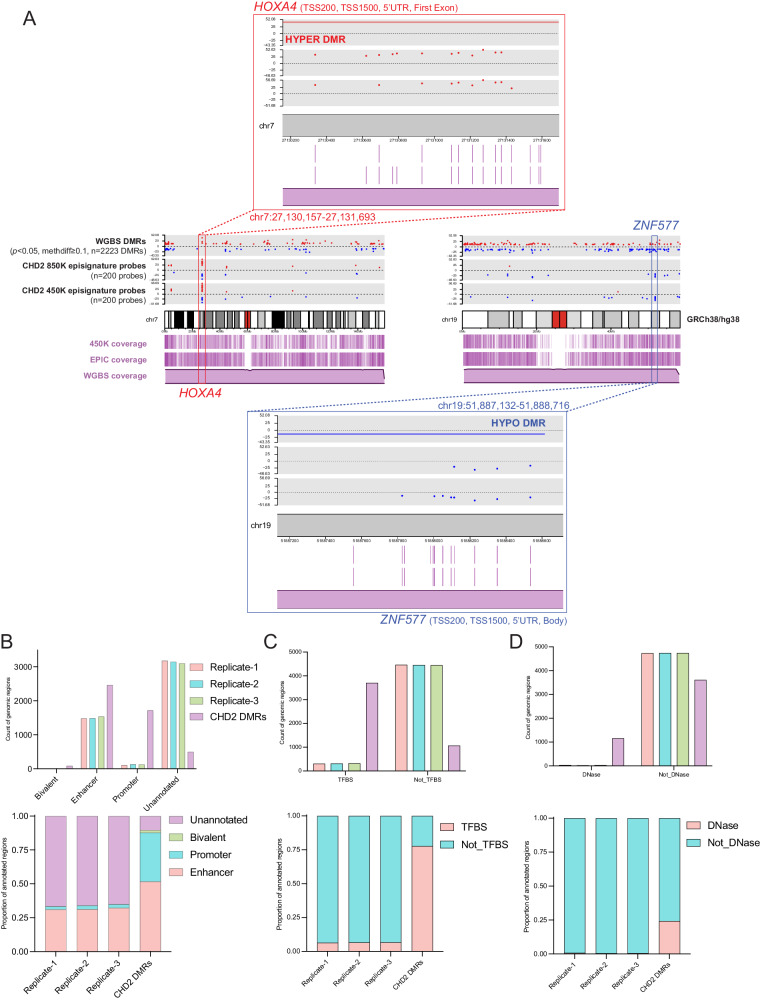
Sequence-based genetic testing identifies causative variants in ~ 50% of individuals with developmental and epileptic encephalopathies (DEEs). Aberrant changes in DNA methylation are implicated in various neurodevelopmental disorders but remain unstudied in DEEs. We interrogate the diagnostic utility of genome-wide DNA methylation array analysis on peripheral blood samples from 582 individuals with genetically unsolved DEEs. We identify rare differentially methylated regions (DMRs) and explanatory episignatures to uncover causative and candidate genetic etiologies in 12 individuals. Using long-read sequencing, we identify DNA variants underlying rare DMRs, including one balanced translocation, three CG-rich repeat expansions, and four copy number variants. We also identify pathogenic variants associated with episignatures. Finally, we refine the CHD2 episignature using an 850 K methylation array and bisulfite sequencing to investigate potential insights into CHD2 pathophysiology. Our study demonstrates the diagnostic yield of genome-wide DNA methylation analysis to identify causal and candidate variants as 2% (12/582) for unsolved DEE cases.
Overview
The claims and statistics of this paper haven’t been checked yet.
Free: it reads the open-access text and checks the first 5 claims that cite a source we can check. Create a free account to check every claim.
Integrity signals
Registry
Cites
Statistics
Figures
Verification
Claims the paper makes
The claims and statistics of this paper haven’t been checked yet.
Free: it reads the open-access text and checks the first 5 claims that cite a source we can check. Create a free account to check every claim.
Claims other papers make about this one
Each is checked against this paper’s own text: does it say what the citing paper says it does?
The source backs part of the claim, not all of it — or backs it for a different population, condition or comparison.
In the citing paper
“As genomic DEE episignatures are identified, testing may clarify the pathogenicity of variants of unknown significance and identify other pathogenic variants with imprinting and repeat expansion disorders 142, 179 .”
From Developmental and epileptic encephalopathies (2024) · cites this paper as [142]
Experimental — accuracy not yet measuredThe cited source says what the claim attributes to it.
In the citing paper
“A recent study of methylation profiles in 582 patients identified the etiology in 2% of individuals 142 (a similar yield to that observed when performing genome sequencing after exome sequencing).”
From Developmental and epileptic encephalopathies (2024) · cites this paper as [142]
Self-check
Percentages, sums and reported differences re-computed from the paper’s own numbers.
The self-check needs the paper’s full text.
Citations
Cites
STAR: ultrafast universal RNA-seq aligner
Dobin, A., Davis, C. A., Schlesinger, F., Drenkow, J., Zaleski, C., Jha, S., Batut, P., Chaisson, M., & Gingeras, T. R. (2013) · Bioinformatics · doi:10.1093/bioinformatics/bts635 · Cited by 51,709
limma powers differential expression analyses for RNA-sequencing and microarray studies
Ritchie, M. E., Phipson, B., Wu, D., Hu, Y., Law, C. W., Shi, W., & Smyth, G. K. (2015) · Nucleic Acids Research · doi:10.1093/nar/gkv007 · Cited by 40,458
Robinson, J. T., Thorvaldsdóttir, H., Winckler, W., Guttman, M., Lander, E. S., Getz, G., & Mesirov, J. P. (2011) · Nature Biotechnology · doi:10.1038/nbt.1754 · Cited by 15,390
Minimap2: Pairwise alignment for nucleotide sequences
Li, H. (2018) · Bioinformatics · doi:10.1093/bioinformatics/bty191 · Cited by 14,807
Heinz, S., Benner, C., Spann, N., Bertolino, E., Lin, Y. C., Laslo, P., Cheng, J. X., Murre, C., Singh, H., & Glass, C. K. (2010) · Molecular Cell · doi:10.1016/j.molcel.2010.05.004 · Cited by 13,382
Salmon provides fast and bias-aware quantification of transcript expression
Patro, R., Duggal, G., Love, M. I., Irizarry, R. A., & Kingsford, C. (2017) · Nature Methods · doi:10.1038/nmeth.4197 · Cited by 12,700
Adjusting batch effects in microarray expression data using empirical Bayes methods
Johnson, W. E., Li, C., & Rabinovic, A. (2007) · Biostatistics · doi:10.1093/biostatistics/kxj037 · Cited by 8,658 · cited 1×
“1, Supplementary Data 1B) 71 .”
Probabilistic Outputs for Support vector Machines and Comparisons to Regularized Likelihood Methods
Platt, J. C. (1999) · Cited by 6,472
Leek, J. T., Johnson, W. E., Parker, H. S., Jaffe, A. E., & Storey, J. D. (2012) · Bioinformatics · doi:10.1093/bioinformatics/bts034 · Cited by 6,231 · cited 1×
“We used the R package SVA 70 for batch correction using the ComBat method and con fi rmed the elimination of the batch effect (Supplementary Fig.”
Scheffer, I. E., Berkovic, S., Capovilla, G., Connolly, M. B., French, J., Guilhoto, L., Hirsch, E., Jain, S., Mathern, G. W., Moshé, S. L., et al. (2017) · Epilepsia · doi:10.1111/epi.13709 · Cited by 5,054
Self-citation
Cited by
Developmental and epileptic encephalopathies
Scheffer, I. E., Zuberi, S., Mefford, H. C., Guerrini, R., & McTague, A. (2024) · Nature Reviews Disease Primers · doi:10.1038/s41572-024-00546-6 · Cited by 158
“A recent study of methylation profiles in 582 unsolved patients identified the aetiology in 2% of individuals 142 (a similar yield to that observed when performing genome sequencing after exome sequencing).”
Self-citationCRISPR/Cas12a-Based Biosensing: Advances in Mechanisms and Applications for Nucleic Acid Detection
Du, K., Zeng, Q., Jiang, M., Hu, Z., Zhou, M., & Xia, K. (2025) · Biosensors · doi:10.3390/bios15060360 · Cited by 47
“Aberrant DNA methylation [110–112] is associated with many diseases.”
GREGoR: accelerating genomics for rare diseases
Dawood, M., Heavner, B., Wheeler, M. M., Ungar, R. A., LoTempio, J. E., Wiel, L., Berger, S., Bernstein, J. A., Chong, J. X., Délot, E. C., et al. (2025) · Nature · doi:10.1038/s41586-025-09613-8 · Cited by 45
Self-citationSamanta, D. (2025) · Children · doi:10.3390/children12040481 · Cited by 29
“In both of these emerging approaches, DNA methylation patterns could serve as a strong biomarker, given the distinctive methylation signature associated with CHD2 haploinsufficiency [110].”
Evolution of genome-wide methylation profiling technologies
Montaño, C., & Timp, W. (2025) · Genome Research · doi:10.1101/gr.278407.123 · Cited by 12
“Despite their diagnostic value in enhancing the genetic testing yield for undiagnosed cases (Louis et al. 2021; LaFlamme et al. 2024), these arrays are not yet routinely used in constitutional molecular diagnostics due to additional costs and labor (Sadikovic et al. 2020).”
Methylation profiling in neuropathological tumors diagnosis: a comprehensive review
Sharie, S. A., Sawaftah, K. A., Qasim, H., & Al-Hussaini, M. A. (2025) · Frontiers in Oncology · doi:10.3389/fonc.2025.1720458 · Cited by 12
Kouri, C., de la Piscina, I. M., Elzenaty, R. N., Sommer, G., Sauter, K., Flück, C. E., Abalı, S., Abalı, Z. Y., Ahmed, S. F., Akın, L., et al. (2025) · EBioMedicine · doi:10.1016/j.ebiom.2025.105624 · Cited by 12
Smits, D. J., Debuy, C., Brooks, A. S., Schot, R., Ferraro, F., Rots, D., Bouman, A., Verhoeven, V. J. M., Kaat, L. D., Kant, S. G., et al. (2025) · European Journal of Human Genetics · doi:10.1038/s41431-025-01919-5 · Cited by 14
Synthetic epigenomes for open cross-platform episignature classifiersPreprint
Ferraro, F., Bārdiņa, L., Drost, M., van der Linde, H. C., de Groot, M., Peymani, F., Santini, A., Rasche, H., Hildonen, M., Souche, E. L., et al. (2025) · medRxiv · doi:10.1101/2025.03.28.25324859 · Cited by 6
Xiong, Z., Zhang, J., Deng, Q., Wang, M., & Li, T. (2025) · CNS Neuroscience & Therapeutics · doi:10.1111/cns.70484 · Cited by 6
A roadmap to cure CHD2-related disorders
Prince, S., Bonkowski, E. S., McGraw, C. M., SanInocencio, C., Mefford, H. C., Carvill, G. L., & Broadbent, B. (2024) · Therapeutic Advances in Rare Disease · doi:10.1177/26330040241283749 · Cited by 7
Self-citationMortazavi, M., Guevara, J., Diaz, J., Tran, S. S., Jam, H. Z., Reeves, C., Batalov, S., Jepsen, K., Bainbridge, M., Besterman, A. D., et al. (2026) · Cell Genomics · doi:10.1016/j.xgen.2026.101186 · Cited by 13
Paediatric DNA methylation profile scores: a systematic review and open-source atlas
Schuurmans, I. K., Defina, S., Hermans, A. P. C., Neumann, A., Suderman, M. J., Yousefi, P., Felix, J. F., & Cecil, C. A. M. (2026) · EBioMedicine · doi:10.1016/j.ebiom.2026.106300 · Cited by 5
“57 Newer arrays typically include more CpGs that are detected with higher quality, which can improve MPS performance (e.g., for CHD2 syndrome 58 ).”
SCN1A pathogenic variants do not have a distinctive blood‐derived DNA methylation signature
LaFlamme, C. W., Karimi, K., Rastin, C., Fuerte, E. P. A., Allan, T. J., Russ-Hall, S. J., Schneider, A., Stobo, D., Lesca, G., Symonds, J. D., et al. (2025) · Epilepsia · doi:10.1111/epi.18315 · Cited by 4
“8 Therefore, mapping episignatures for more genes is a priority to augment their utility across a broader spectrum of disorders, especially the epilepsies.”
Self-citationCuillerier, A., Goodman, A. S., Lawrence, C. J., Villeneuve‐Cloutier, N., Armour, C. M., Bhola, P. T., Bourque, D. K., Carter, M. T., Lazier, J., Sawyer, S. L., et al. (2025) · Clinical Genetics · doi:10.1111/cge.70008 · Cited by 2
Akçimen, F., Jerez, P. Á., Guliyeva, U., Lee, J., Malik, L., Baker, B., Salayev, K., Guliyeva, S., Billingsley, K. J., Houlden, H., et al. (2025) · Movement Disorders · doi:10.1002/mds.30326 · Cited by 1
“41 Notably, a recent multi-ancestry population-based study demonstrated that the frequency of disease-associated pathogenic repeats is higher than previously estimated in clinical studies, reinforcing the incomplete penetrance of certain repeat expansions.”
InfluentialGenome sequencing boosts diagnostic yield for the developmental and epileptic encephalopathiesPreprint
Munro, J. E., Thiyagarajah, H., Bennett, M. F., Chiu, A. T. G., Schneider, A., Bennett, C. A., Lieffering, N., Allan, T. J., Witkowski, T., Harris, R. V., et al. (2026) · medRxiv · doi:10.64898/2026.04.24.26351703 · Cited by 2
Self-citationStevens, A. J., Kennedy, M. A., Doudney, K., Kidd, A., & Rucklidge, J. J. (2025) · Psychiatry Research Case Reports · doi:10.1016/j.psycr.2025.100254
Balci, T. B., Schenkel, L. C., Rastin, C., Jones, K., Lomax, L. B., Turowec, J. P., Kerkhof, J., Bhai, P. S., Jarinova, O., Hewson, S., et al. (2025) · Canadian Journal of Neurological Sciences / Journal Canadien des Sciences Neurologiques · doi:10.1017/cjn.2025.69
“…DNA methylation analysis in patients with genetically unsolved pediatric epilepsies, even after extensive genomic profiling including WES and WGS. 35 The OEGTP now has the infrastructure and experience to utilize a programmatic approach to adapt to rapidly changing landscapes and implement the…”
Self-citationGenetic Epilepsies: Clinical pearls for early career epileptologists
Andrade, D. M., Lira, V. S. T., Qaiser, F., Ali, Q. Z., Valente, K. D. R., & Lomax, L. B. (2025) · Epilepsy & Behavior · doi:10.1016/j.yebeh.2025.110575
“Finally, identification of differentially methylated regions through DNA methylation analysis, can further increase the diagnostic yield, specifically in cases where GS was negative, by 2% [28].”
Alegret-García, A., Cáceres, A., Porras, M. S., Jurado, L. A. P., & González, J. R. (2025) · Biomedicines · doi:10.3390/biomedicines13123043
Cheawsamoot, C., Thangpong, R., Chetruengchai, W., Kanlayaprasit, S., Kamolvisit, W., Kor‐anantakul, P., Assawapitaksakul, A., Boonsimma, P., Poonmaksatit, S., Chomtho, K., et al. (2026) · Journal of Medical Genetics · doi:10.1136/jmg-2026-111514
Gibson, S. B., Damaraju, N., Gustafson, J. (., Balton, E. V., Chanprasert, S., Glass, I. A., Horike-Pyne, M. J., Kumar, R. D., Leppig, K. A., Lundberg, C., et al. (2026) · medRxiv · doi:10.64898/2026.04.30.26352103 · Cited by 3
“…of the unaffected parents revealed that the mother also carried a shorter expanded allele (~504 repeats), approximately 380 repeat units shorter than observed in the proband (Figure 6D) , demonstrating intergenerational repeat instability similar to that observed at other CGG-repeat loci 58,70 .”
Self-citationExperimental and Computational Approaches to Identify Noncoding Pathogenic Variation in Rare Disease
Covill, L., Romo, L., & O’Donnell‐Luria, A. (2026) · Annual Review of Genomics and Human Genetics · doi:10.1146/annurev-genom-111124-024627 · Cited by 1
Diagnostic yield of long-read sequencing for rare diseases: a systematic review
Ibrahim, A. A., Fakhro, K. A., & Abdallah, A. M. (2026) · Frontiers in Genetics · doi:10.3389/fgene.2026.1809097
Population-scale detection of methylation outliers from long-read genome sequencingPreprint
Jensen, T. D., Kaur, R., Bonner, D. E., Nguyen, J., Reuter, C. M., Ashley, E. A., Bernstein, J. A., Wheeler, M. T., & Montgomery, S. B. (2026) · medRxiv · doi:10.64898/2026.06.09.26355279
Alberca, C. D., Park, K., Papale, L. A., Madrid, A., Bergmann, P. E., Keleş, S., & Alisch, R. S. (2026) · Molecular Psychiatry · doi:10.1038/s41380-026-03772-4
“This > 5% differential in methylation level cutoff was selected based on previous epigenomic literature [16 – 18].”
Self-citationThompson, J. M., Gao, Y., Iwasawa, E., Das, D., Rath, E., Troup, M., Humphreys, D. T., Heydarian, H. C., Anixt, J. S., Kasparian, N. A., et al. (2026) · Human Mutation · doi:10.1155/humu/7869246
Cai, M.-S., Li, H.-R., Liao, P., Hu, Z., & Chen, Y.-J. (2026) · Frontiers in Genetics · doi:10.3389/fgene.2026.1902275
“…current genetic landscape remains incomplete: the roles of noncoding variants, complex structural variants, somatic mosaicism, and epigenetic regulation in epilepsy have yet to be systematically characterized (LaFlamme et al., 2024; Chang et al., 2025; Henry et al., 2025; Baldassari et al., 2025).”
Clinical Epigenomics in Rare Diseases: Interpreting DNA Methylation Episignatures
Goel, H., Goh, S., & Stuart, L. (2026) · Molecular Genetics & Genomic Medicine · doi:10.1002/mgg3.70319
Scheffer, I. E., Auvin, S., Bisulli, F., Demarest, S., Gardella, E., Kakooza‐Mwesige, A., Nabbout, R., Othman, A. S., Vinayan, K. P., Whitney, R., et al. (2026) · Epilepsia · doi:10.1002/epi.70507
Self-citation
Metadata
- Authors
- LaFlamme, C. W., Rastin, C., Sengupta, S., Pennington, H. E., Russ-Hall, S. J., Schneider, A. L., Bonkowski, E. S., Almanza Fuerte, E. P., Allan, T. J., Zalusky, M. P.-G., Goffena, J., Gibson, S. B., Nyaga, D. M., Lieffering, N., Hebbar, M., Walker, E. V., Darnell, D., Olsen, S. R., Kolekar, P., Djekidel, M. N., Rosikiewicz, W., McConkey, H., Kerkhof, J., Levy, M. A., Relator, R., Lev, D., Lerman-Sagie, T., Park, K. L., Alders, M., Cappuccio, G., Chatron, N., Demain, L., Genevieve, D., Lesca, G., Roscioli, T., Sanlaville, D., Tedder, M. L., Gupta, S., Jones, E. A., Weisz-Hubshman, M., Ketkar, S., Dai, H., Worley, K. C., Rosenfeld, J. A., Chao, H.-T., Undiagnosed Diseases Network, Neale, G., Carvill, G. L., University of Washington Center for Rare Disease Research, Wang, Z., Berkovic, S. F., Sadleir, L. G., Miller, D. E., Scheffer, I. E., Sadikovic, B., & Mefford, H. C.
- Affiliations
- St. Jude Children's Research Hospital (US)
- Western University (CA)
- Rhodes College (US)
- The University of Melbourne (AU)
- Seattle Children's Hospital (US)
- University of Otago (NZ)
- London Health Sciences Centre (CA)
- Wolfson Medical Center (IL)
- University of Colorado Anschutz (US)
- Amsterdam University Medical Centers (NL)
- Telethon Institute Of Genetics And Medicine (IT)
- Lyon 1 Université (FR)
- St Mary's Hospital (GB)
- UNSW Sydney (AU)
- Greenwood Genetic Center (US)
- Children's Hospital at Westmead (AU)
- University of Manchester (GB)
- Baylor College of Medicine (US)
- Northwestern University (US)
- Corresponding author
- Mefford, Heather C.
- ORCID
- LaFlamme, Christy W.
- Rastin, Cassandra
- Sengupta, Soham
- Pennington, Helen E.
- Russ-Hall, Sophie J.
- Schneider, Amy L.
- Bonkowski, Emily S.
- Allan, Talia J.
- Zalusky, Miranda Perez-Galey
- Goffena, Joy
- Gibson, Sophia B.
- Nyaga, Denis M.
- Lieffering, Nico
- Hebbar, Malavika
- Walker, Emily V.
- Darnell, Daniel
- Olsen, Scott R.
- Kolekar, Pandurang
- Djekidel, Mohamed Nadhir
- Rosikiewicz, Wojciech
- Kerkhof, Jennifer
- Levy, Michael A.
- Relator, Raissa
- Lev, Dorit
- Park, Kristen L.
- Alders, Marielle
- Cappuccio, Gerarda
- Chatron, Nicolas
- Demain, Leigh
- Genevieve, David
- Lesca, Gaetan
- Roscioli, Tony
- Sanlaville, Damien
- Tedder, Matthew L.
- Gupta, Sachin
- Jones, Elizabeth A.
- Ketkar, Shamika
- Dai, Hongzheng
- Worley, Kim C.
- Rosenfeld, Jill A.
- Chao, Hsiao-Tuan
- Neale, Geoffrey
- Carvill, Gemma L.
- Wang, Zhaoming
- Berkovic, Samuel F.
- Sadleir, Lynette G.
- Miller, Danny E.
- Scheffer, Ingrid E.
- Sadikovic, Bekim
- Mefford, Heather C.
- Venue
- Nature Communications
- Published
- 2024-08-06
- Volume
- 15
- Issue
- 1
- Pages
- 6524-6524
- ISSN
- 2041-1723 (ISSN-L)
- PMC
- PMC11303402
- OpenAlex
- W4401368338
- Cited by
- 31
- References
- 95
- Citations by year
- 2026: 13 · 2025: 16 · 2024: 2
- FWCI
- 9.07
- Type
- journal article
- Language
- en
- Open access
- gold
- doi.org
- Licence
- cc-by
- creativecommons.org/licenses/by/4.0 (tdm)
- creativecommons.org/licenses/by/4.0 (vor)
- Locations
- Nature Communications (publishedVersion, cc-by)
- medRxiv (acceptedVersion)
- PubMed Central (publishedVersion, cc-by-nc-nd)
- PubMed (publishedVersion)
- PubMed Central (submittedVersion)
- Digital Commons-TMC (Texas Medical Center) (submittedVersion)
- RePEc: Research Papers in Economics (submittedVersion)
- DOAJ (DOAJ: Directory of Open Access Journals) (submittedVersion, cc-by-sa)
- Minerva Access (University of Melbourne) (submittedVersion)
- Minerva Access (University of Melbourne) (submittedVersion, cc-by)
- Funders
- Citizens United for Research in Epilepsy
- Topics
- Health Sciences › Medicine › Clinical Neurology › Epilepsy research and treatment
- Life Sciences › Biochemistry, Genetics and Molecular Biology › Molecular Biology › Epigenetics and DNA Methylation
- Life Sciences › Biochemistry, Genetics and Molecular Biology › Genetics › Genomics and Rare Diseases
- Keywords
- DNA methylation, developmental and epileptic encephalopathy, pediatric epilepsy, CHD2, differentially methylated regions, genetic diagnosis, copy number variation, balanced translocation, pathogenic variants, methylation array, bisulfite sequencing, long-read sequencing
About these checks
Registry, retraction, Cites and statistics results are computed, not judged, with one exception: a printed reference that no index lists is read once by a model before it counts as a citation error. Claims are extracted by a model and kept only when their quote appears verbatim in the text; each cited source is then checked, with a model’s help, for whether it says what the claim relies on. Those verdicts can be wrong — read the claim’s quote and the cited source before relying on one.
Statistics and arithmetic are recomputed, not judged.
Confidence bands are shown only for fields calibrated on our annotated test set. None is calibrated yet, so no band is shown.
What counts as a claim ›How we measure confidence ›How we check this ›
Are you an author, or do you see a problem with this page? Request a review
Data sources
Bibliographic data: Semantic Scholar, OpenAlex, Crossref.
Contains information from the Semantic Scholar Academic Graph Datasets, made available under the ODC Attribution License (ODC-BY 1.0).
Semantic Scholar’s data is described in: Kinney, R., et al. (2023). The Semantic Scholar Open Data Platform. arXiv:2301.10140.
