

Diagnostic utility of DNA methylation analysis in genetically unsolved pediatric epilepsies and CHD2 episignature refinement
Open accessPublished version of a preprint
The DOI matches its Crossref record; 96 of the 96 references it cites were found in a registry or an index.
Abstract
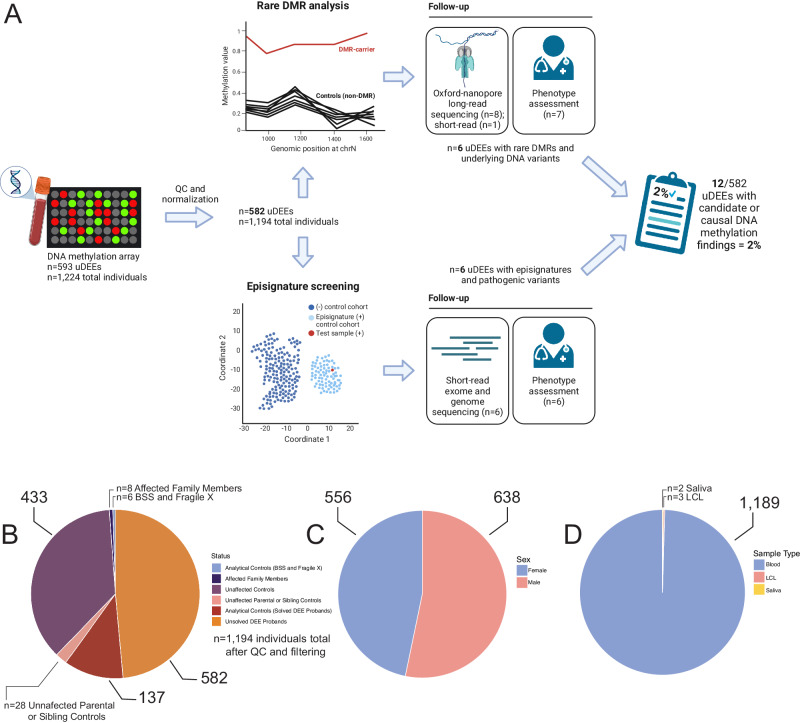
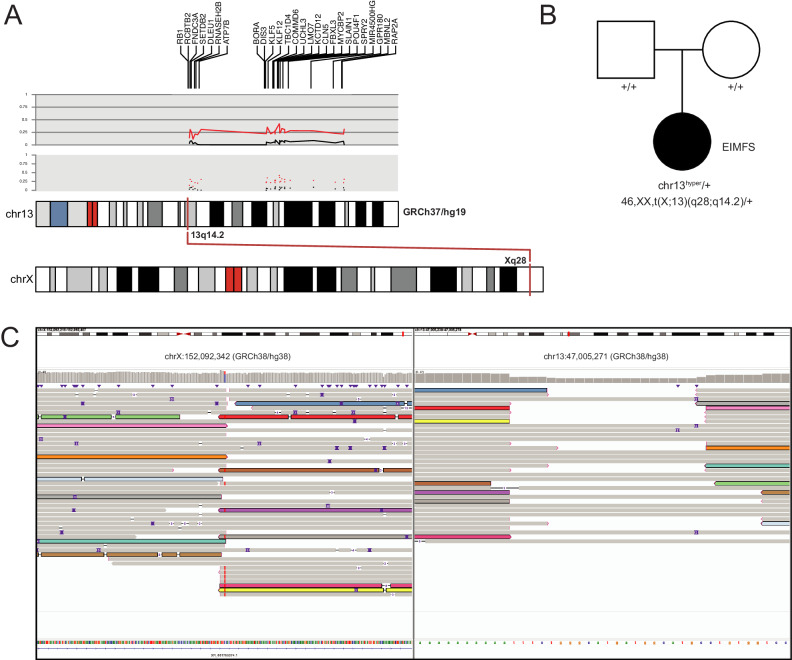
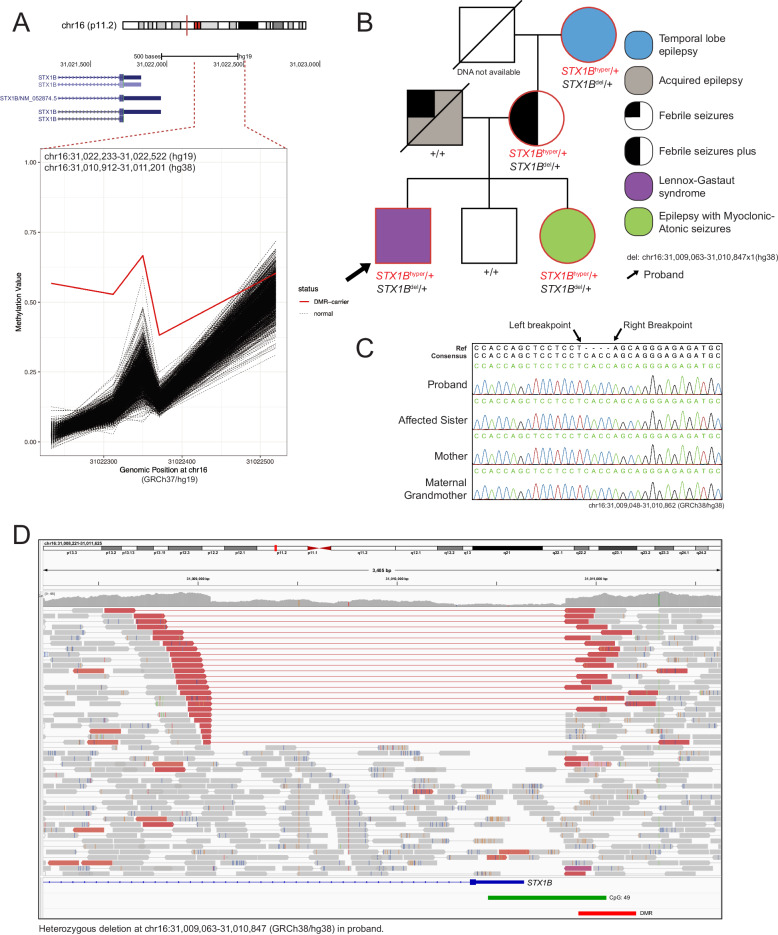
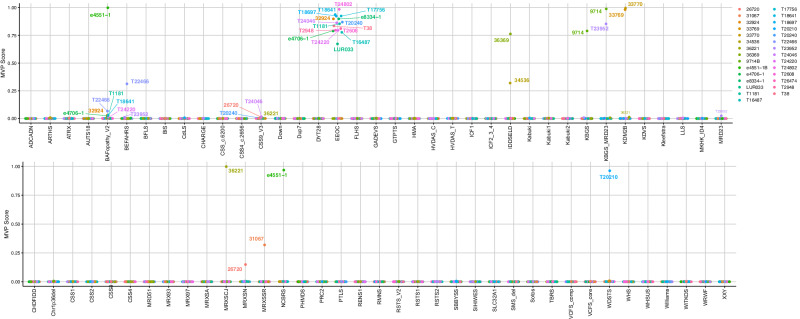
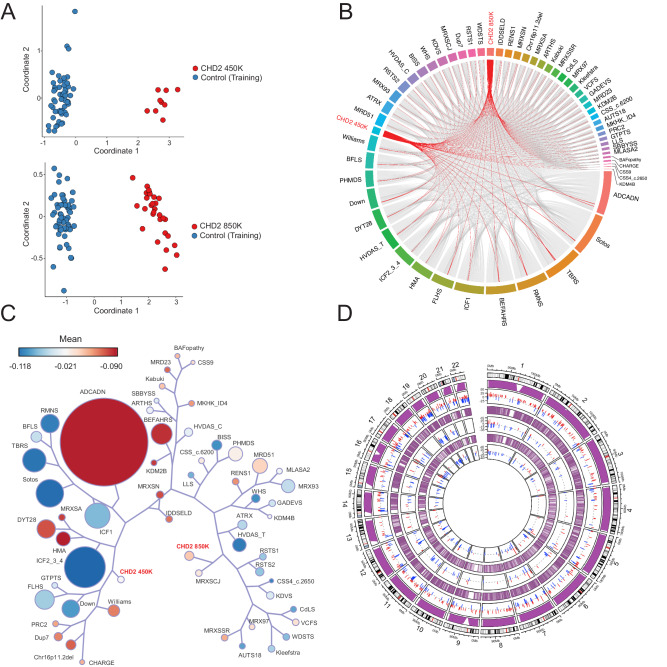
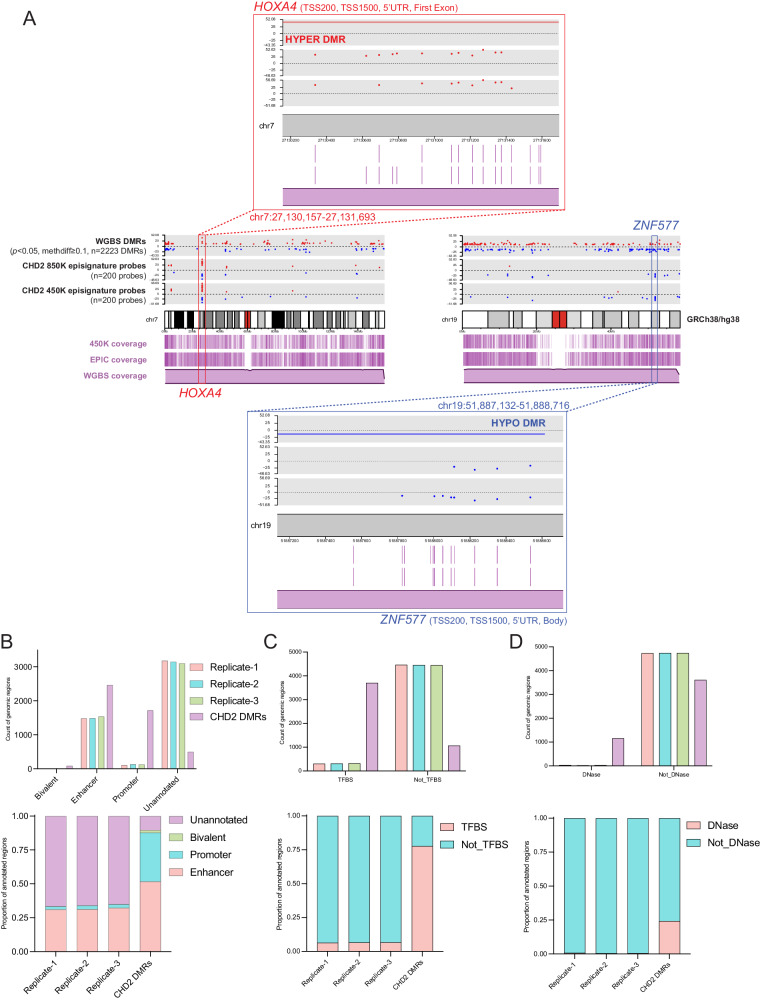
Sequence-based genetic testing identifies causative variants in ~ 50% of individuals with developmental and epileptic encephalopathies (DEEs). Aberrant changes in DNA methylation are implicated in various neurodevelopmental disorders but remain unstudied in DEEs. We interrogate the diagnostic utility of genome-wide DNA methylation array analysis on peripheral blood samples from 582 individuals with genetically unsolved DEEs. We identify rare differentially methylated regions (DMRs) and explanatory episignatures to uncover causative and candidate genetic etiologies in 12 individuals. Using long-read sequencing, we identify DNA variants underlying rare DMRs, including one balanced translocation, three CG-rich repeat expansions, and four copy number variants. We also identify pathogenic variants associated with episignatures. Finally, we refine the CHD2 episignature using an 850 K methylation array and bisulfite sequencing to investigate potential insights into CHD2 pathophysiology. Our study demonstrates the diagnostic yield of genome-wide DNA methylation analysis to identify causal and candidate variants as 2% (12/582) for unsolved DEE cases.
Overview
The claims and statistics of this paper haven’t been checked yet.
Free: it reads the open-access text and checks the first 5 claims that cite a source we can check. Create a free account to check every claim.
Integrity signals
Registry
Cites
Statistics
Figures
Verification
Claims the paper makes
The claims and statistics of this paper haven’t been checked yet.
Free: it reads the open-access text and checks the first 5 claims that cite a source we can check. Create a free account to check every claim.
Claims other papers make about this one
Each is checked against this paper’s own text: does it say what the citing paper says it does?
The source backs part of the claim, not all of it — or backs it for a different population, condition or comparison.
In the citing paper
“As genomic DEE episignatures are identified, testing may clarify the pathogenicity of variants of unknown significance and identify other pathogenic variants with imprinting and repeat expansion disorders 142, 179 .”
From Developmental and epileptic encephalopathies (2024) · cites this paper as [142]
Experimental — accuracy not yet measuredThe cited source says what the claim attributes to it.
In the citing paper
“A recent study of methylation profiles in 582 patients identified the etiology in 2% of individuals 142 (a similar yield to that observed when performing genome sequencing after exome sequencing).”
From Developmental and epileptic encephalopathies (2024) · cites this paper as [142]
Self-check
Percentages, sums and reported differences re-computed from the paper’s own numbers.
The self-check needs the paper’s full text.
Citations
Cites
STAR: ultrafast universal RNA-seq aligner
Dobin, A., Davis, C. A., Schlesinger, F., Drenkow, J., Zaleski, C., Jha, S., Batut, P., Chaisson, M., & Gingeras, T. R. (2013) · Bioinformatics · doi:10.1093/bioinformatics/bts635 · Cited by 51,709
limma powers differential expression analyses for RNA-sequencing and microarray studies
Ritchie, M. E., Phipson, B., Wu, D., Hu, Y., Law, C. W., Shi, W., & Smyth, G. K. (2015) · Nucleic Acids Research · doi:10.1093/nar/gkv007 · Cited by 40,458
Robinson, J. T., Thorvaldsdóttir, H., Winckler, W., Guttman, M., Lander, E. S., Getz, G., & Mesirov, J. P. (2011) · Nature Biotechnology · doi:10.1038/nbt.1754 · Cited by 15,390
Minimap2: Pairwise alignment for nucleotide sequences
Li, H. (2018) · Bioinformatics · doi:10.1093/bioinformatics/bty191 · Cited by 14,807
Heinz, S., Benner, C., Spann, N., Bertolino, E., Lin, Y. C., Laslo, P., Cheng, J. X., Murre, C., Singh, H., & Glass, C. K. (2010) · Molecular Cell · doi:10.1016/j.molcel.2010.05.004 · Cited by 13,382
Salmon provides fast and bias-aware quantification of transcript expression
Patro, R., Duggal, G., Love, M. I., Irizarry, R. A., & Kingsford, C. (2017) · Nature Methods · doi:10.1038/nmeth.4197 · Cited by 12,700
Adjusting batch effects in microarray expression data using empirical Bayes methods
Johnson, W. E., Li, C., & Rabinovic, A. (2007) · Biostatistics · doi:10.1093/biostatistics/kxj037 · Cited by 8,658 · cited 1×
“1, Supplementary Data 1B) 71 .”
Probabilistic Outputs for Support vector Machines and Comparisons to Regularized Likelihood Methods
Platt, J. C. (1999) · Cited by 6,472
Leek, J. T., Johnson, W. E., Parker, H. S., Jaffe, A. E., & Storey, J. D. (2012) · Bioinformatics · doi:10.1093/bioinformatics/bts034 · Cited by 6,231 · cited 1×
“We used the R package SVA 70 for batch correction using the ComBat method and con fi rmed the elimination of the batch effect (Supplementary Fig.”
Scheffer, I. E., Berkovic, S., Capovilla, G., Connolly, M. B., French, J., Guilhoto, L., Hirsch, E., Jain, S., Mathern, G. W., Moshé, S. L., et al. (2017) · Epilepsia · doi:10.1111/epi.13709 · Cited by 5,054
Self-citationDNA methylation and its basic function
Moore, L. D., Le, T., & Fan, G. (2013) · Neuropsychopharmacology · doi:10.1038/npp.2012.112 · Cited by 4,906
Aryee, M. J., Jaffe, A. E., Corrada-Bravo, H., Ladd-Acosta, C., Feinberg, A. P., Hansen, K. D., & Irizarry, R. A. (2014) · Bioinformatics · doi:10.1093/bioinformatics/btu049 · Cited by 4,397
circlize implements and enhances circular visualization in R
Gu, Z., Gu, L., Eils, R., Schlesner, M., & Brors, B. (2014) · Bioinformatics · doi:10.1093/bioinformatics/btu393 · Cited by 4,246
Matching as Nonparametric Preprocessing for Reducing Model Dependence in Parametric Causal Inference
Ho, D. E., Imai, K., King, G., & Stuart, E. A. (2007) · Political Analysis · doi:10.1093/pan/mpl013 · Cited by 4,205
Online Mendelian Inheritance in Man (OMIM), a knowledgebase of human genes and genetic disorders
Hamosh, A. (2004) · Nucleic Acids Research · doi:10.1093/nar/gki033 · Cited by 3,420
DNA methylation arrays as surrogate measures of cell mixture distribution
Houseman, E. A., Accomando, W. P., Koestler, D. C., Christensen, B. C., Marsit, C. J., Nelson, H. H., Wiencke, J. K., & Kelsey, K. T. (2012) · BMC Bioinformatics · doi:10.1186/1471-2105-13-86 · Cited by 3,175 · cited 1×
“The analysis was also adjusted for blood cell-type compositions, using the Housemanalgorithm 94 .”
The complete sequence of a human genome
Nurk, S., Koren, S., Rhie, A., Rautiainen, M., Bzikadze, A. V., Mikheenko, A., Vollger, M. R., Altemose, N., Uralsky, L., Gershman, A., et al. (2022) · Science · doi:10.1126/science.abj6987 · Cited by 3,136
Self-citationDNA methylation-based classification of central nervous system tumours
Capper, D., Jones, D. T. W., Sill, M., Hovestadt, V., Schrimpf, D., Sturm, D., Koelsche, C., Sahm, F., Chavez, L., Reuss, D. E., et al. (2018) · Nature · doi:10.1038/nature26000 · Cited by 3,033
Landon, M., Saam, J., Brown, K. L., Moyes, K., Evans, B., & Wenstrup, R. (2015) · Oncology · doi:10.1159/000430097 · Cited by 1,939
The Parkinson Progression Marker Initiative (PPMI)
Marek, K., Jennings, D., Lasch, S., Siderowf, A., Tanner, C., Simuni, T., Coffey, C., Kieburtz, K., Flagg, E., Chowdhury, S., et al. (2011) · Progress in Neurobiology · doi:10.1016/j.pneurobio.2011.09.005 · Cited by 1,892
Accurate detection of complex structural variations using single-molecule sequencing
Sedlazeck, F. J., Rescheneder, P., Smolka, M., Fang, H., Nattestad, M., von Haeseler, A., & Schatz, M. C. (2018) · Nature Methods · doi:10.1038/s41592-018-0001-7 · Cited by 1,654
Chen, Y.-A., Lemire, M., Choufani, S., Butcher, D. T., Grafodatskaya, D., Zanke, B. W., Gallinger, S., Hudson, T. J., & Weksberg, R. (2013) · Epigenetics · doi:10.4161/epi.23470 · Cited by 1,552
GeneMatcher: a matching tool for connecting investigators with an interest in the same gene.
Sobreira, N., Schiettecatte, F., Valle, D., & Hamosh, A. (2015) · Human Mutation · doi:10.1002/humu.22844 · Cited by 1,529 · cited 2×
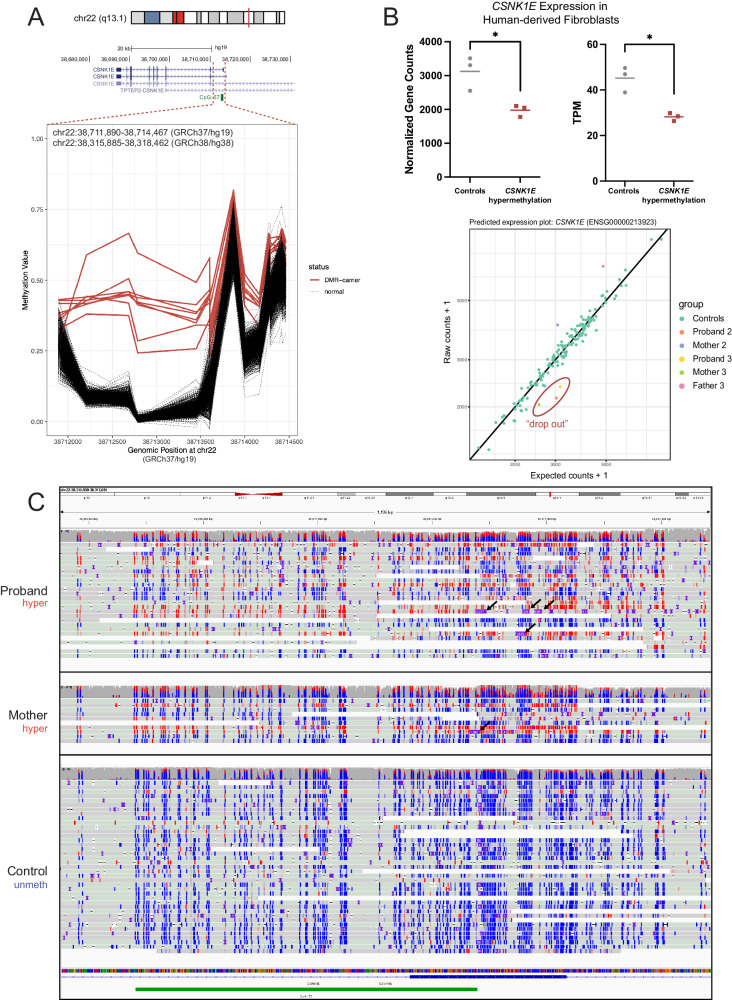
“Through GeneMatcher 35 , we iden-ti fi ed Family 3 consisting of a proband with the same CSNK1E hyper-methylated DMR and CGG repeat expansion (genome, ~1300 – 2100bp) inherited from his mother (genome, ~270 – 3500bp), who is mildly affected by learning, speech, and sleep dif fi culties (Supplementary Phenotype data).”
Pidsley, R., Zotenko, E., Peters, T. J., Lawrence, M. G., Risbridger, G. P., Molloy, P., Van Djik, S., Muhlhausler, B., Stirzaker, C., & Clark, S. J. (2016) · Genome biology · doi:10.1186/s13059-016-1066-1 · Cited by 1,480 · cited 4×
“1A. Importantly, probes with a detection p -value >0.01, probes located on the X and Y chromosomes, probes that contained SNPs at the CpG interrogation or single-nucleotide extension sites, and probes that are known to cross-react withothergenomiclocationswereremoved 67,69 .”
InfluentialAn h Per2 Phosphorylation Site Mutation in Familial Advanced Sleep Phase Syndrome
Toh, K. L., Jones, C. R., He, Y., Eide, E. J., Hinz, W. A., Virshup, D. M., Ptáček, L. J., & Fu, Y.-H. (2001) · Science · doi:10.1126/science.1057499 · Cited by 1,460
Accounting for cellular heterogeneity is critical in epigenome-wide association studies
Jaffe, A. E., & Irizarry, R. A. (2014) · Genome Biology · doi:10.1186/gb-2014-15-2-r31 · Cited by 1,067 · cited 1×
“We estimated blood cell type composition for six cell types (CD8T, CD4T, NK, B-cell, monocytes, and granulocytes) from β values foreach sample 72 .”
De novo identification of differentially methylated regions in the human genome
Peters, T. J., Buckley, M. J., Statham, A. L., Pidsley, R., Samaras, K., V Lord, R., Clark, S. J., & Molloy, P. L. (2015) · Epigenetics & Chromatin · doi:10.1186/1756-8935-8-6 · Cited by 969
Functional normalization of 450k methylation array data improves replication in large cancer studies
Fortin, J.-P., Labbe, A., Lemire, M., Zanke, B. W., Hudson, T. J., Fertig, E. J., Greenwood, C. M., & Hansen, K. D. (2014) · Genome Biology · doi:10.1186/s13059-014-0503-2 · Cited by 892
Ligtenberg, M. J. L., Kuiper, R. P., Chan, T. L., Goossens, M., Hebeda, K. M., Voorendt, M., Lee, T. Y. H., Bodmer, D., Hoenselaar, E., Hendriks-Cornelissen, S. J. B., et al. (2009) · Nature Genetics · doi:10.1038/ng.283 · Cited by 818 · cited 2×
“Rare epivariants, de fi ned as rare alterations in DNA methylation with or without identi fi ed underlying DNAsequencealterations,contributetohumangeneticvariation 17 ,but have also been shownto disrupt normalmethylation and transcription to cause disease 18,19 .”
karyoploteR: an R/Bioconductor package to plot customizable genomes displaying arbitrary data
Gel, B., & Serra, E. (2017) · Bioinformatics · doi:10.1093/bioinformatics/btx346 · Cited by 772
Zhou, W., Laird, P. W., & Shen, H. (2016) · Nucleic Acids Research · doi:10.1093/nar/gkw967 · Cited by 760
Bump hunting to identify differentially methylated regions in epigenetic epidemiology studies
Jaffe, A. E., Murakami, P., Lee, H., Leek, J. T., Fallin, M. D., Feinberg, A. P., & Irizarry, R. A. (2012) · International Journal of Epidemiology · doi:10.1093/ije/dyr238 · Cited by 708
Targeted resequencing in epileptic encephalopathies identifies de novo mutations in CHD2 and SYNGAP1
Carvill, G. L., Heavin, S. B., Yendle, S. C., McMahon, J. M., O'Roak, B. J., Cook, J., Khan, A., Dorschner, M. O., Weaver, M., Calvert, S., et al. (2013) · Nature Genetics · doi:10.1038/ng.2646 · Cited by 687 · cited 1×
“Individuals with DEEs were recruited from investigators ’ research and clinical programs 64,65 .”
Self-citationThe genetic landscape of the epileptic encephalopathies of infancy and childhood
McTague, A., Howell, K. B., Cross, J. H., Kurian, M. A., & Scheffer, I. E. (2016) · The Lancet Neurology · doi:10.1016/s1474-4422(15)00250-1 · Cited by 604
Self-citationEnzymatic methyl sequencing detects DNA methylation at single-base resolution from picograms of DNA
Vaisvila, R., Ponnaluri, V. K. C., Sun, Z., Langhorst, B. W., Saleh, L., Guan, S., Dai, N., Campbell, M. A., Sexton, B. S., Marks, K., et al. (2021) · Genome Research · doi:10.1101/gr.266551.120 · Cited by 520
annotatr: genomic regions in context
Cavalcante, R. G., & Sartor, M. A. (2017) · Bioinformatics · doi:10.1093/bioinformatics/btx183 · Cited by 502
Long-read-based human genomic structural variation detection with cuteSV
Jiang, T., Liu, Y., Jiang, Y., Li, J., Gao, Y., Cui, Z., Liu, Y., Liu, B., & Wang, Y. (2020) · Genome Biology · doi:10.1186/s13059-020-02107-y · Cited by 422
Symphonizing pileup and full-alignment for deep learning-based long-read variant calling
Zheng, Z., Li, S., Su, J., Leung, A. W.-S., Lam, T.-W., & Luo, R. (2022) · Nature Computational Science · doi:10.1038/s43588-022-00387-x · Cited by 405
SVIM: structural variant identification using mapped long reads
Heller, D., & Vingron, M. (2019) · Bioinformatics · doi:10.1093/bioinformatics/btz041 · Cited by 372
Court, F., Tayama, C., Romanelli, V., Martin-Trujillo, A., Iglesias-Platas, I., Okamura, K., Sugahara, N., Simón, C., Moore, H., Harness, J. V., et al. (2014) · Genome Research · doi:10.1101/gr.164913.113 · Cited by 359
Wu, H., Xu, T., Feng, H., Chen, L., Li, B., Yao, B., Qin, Z., Jin, P., & Conneely, K. N. (2015) · Nucleic Acids Research · doi:10.1093/nar/gkv715 · Cited by 347
Aref-Eshghi, E., Kerkhof, J., Pedro, V. P., Barat-Houari, M., Ruiz-Pallares, N., Andrau, J.-C., Lacombe, D., Van-Gils, J., Fergelot, P., Dubourg, C., et al. (2020) · The American Journal of Human Genetics · doi:10.1016/j.ajhg.2020.01.019 · Cited by 329
Self-citationFragile X syndrome: causes, diagnosis, mechanisms, and therapeutics
Bagni, C., Tassone, F., Neri, G., & Hagerman, R. (2012) · Journal of Clinical Investigation · doi:10.1172/jci63141 · Cited by 321 · cited 1×
“One example is the methylation of CGG repeats in the 5 ’ untranslated region (5 ’ UTR) of FMR1 (MIM:309550) that represses gene expression and causes Fragile X syndrome (MIM:300624) 20 .”
Nuclear Entry of the Circadian Regulator mPER1 Is Controlled by Mammalian Casein Kinase I ɛ
Vielhaber, E., Eide, E., Rivers, A., Gao, Z.-H., & Virshup, D. M. (2000) · Molecular and Cellular Biology · doi:10.1128/mcb.20.13.4888-4899.2000 · Cited by 305
Reanalysis of Clinical Exome Sequencing Data
Liu, P., Meng, L., Normand, E. A., Xia, F., Song, X., Ghazi, A., Rosenfeld, J., Magoulas, P. L., Braxton, A., Ward, P., et al. (2019) · New England Journal of Medicine · doi:10.1056/nejmc1812033 · Cited by 292
Self-citationRare copy number variants are an important cause of epileptic encephalopathies
Mefford, H. C., Yendle, S. C., Hsu, C., Cook, J., Geraghty, E., McMahon, J. M., Eeg‐Olofsson, O., Sadleir, L. G., Gill, D., Ben‐Zeev, B., et al. (2011) · Annals of Neurology · doi:10.1002/ana.22645 · Cited by 247
Self-citationTargeted long-read sequencing identifies missing disease-causing variation
Miller, D. E., Sulovari, A., Wang, T., Loucks, H., Hoekzema, K., Munson, K. M., Lewis, A. P., Fuerte, E. P. A., Paschal, C. R., Walsh, T., et al. (2021) · The American Journal of Human Genetics · doi:10.1016/j.ajhg.2021.06.006 · Cited by 223
Self-citationOUTRIDER: A Statistical Method for Detecting Aberrantly Expressed Genes in RNA Sequencing Data
Brechtmann, F., Mertes, C., Matusevičiūtė, A., Yépez, V. A., Avsec, Ž., Herzog, M., Bader, D. M., Prokisch, H., & Gagneur, J. (2018) · The American Journal of Human Genetics · doi:10.1016/j.ajhg.2018.10.025 · Cited by 220
Clinical epigenomics: genome-wide DNA methylation analysis for the diagnosis of Mendelian disorders
Sadikovic, B., Levy, M. A., Kerkhof, J., Aref-Eshghi, E., Schenkel, L., Stuart, A., McConkey, H., Henneman, P., Venema, A., Schwartz, C. E., et al. (2021) · Genetics in Medicine · doi:10.1038/s41436-020-01096-4 · Cited by 205
Self-citationA roadmap for precision medicine in the epilepsies
(2015) · The Lancet Neurology · doi:10.1016/s1474-4422(15)00199-4 · Cited by 204
Aref-Eshghi, E., Bend, E. G., Colaiacovo, S., Caudle, M., Chakrabarti, R., Napier, M., Brick, L., Brady, L., Carere, D. A., Levy, M. A., et al. (2019) · The American Journal of Human Genetics · doi:10.1016/j.ajhg.2019.03.008 · Cited by 201 · cited 2×
“Details of the methylation data analysis and episignature re fi nement are as previously described 25,52,60,91 .”
Self-citationPersonal utility in genomic testing: a systematic literature review
Kohler, J. N., Turbitt, E., & Biesecker, B. B. (2017) · European Journal of Human Genetics · doi:10.1038/ejhg.2017.10 · Cited by 180
Aref-Eshghi, E., Rodenhiser, D. I., Schenkel, L. C., Lin, H., Skinner, C., Ainsworth, P., Paré, G., Hood, R. L., Bulman, D. E., Kernohan, K. D., et al. (2018) · The American Journal of Human Genetics · doi:10.1016/j.ajhg.2017.12.008 · Cited by 179
Alfares, A., Aloraini, T., subaie, L. A., Alissa, A., Qudsi, A. A., Alahmad, A., Mutairi, F. A., Alswaid, A., Alothaim, A., Eyaid, W., et al. (2018) · Genetics in Medicine · doi:10.1038/gim.2018.41 · Cited by 175
Genes4Epilepsy: An epilepsy gene resource
Oliver, K. L., Scheffer, I. E., Bennett, M. F., Grinton, B. E., Bahlo, M., & Berkovic, S. F. (2023) · Epilepsia · doi:10.1111/epi.17547 · Cited by 172
Self-citationDiagnostic yield of genetic tests in epilepsy: A meta-analysis and cost-effectiveness study
Fernández, I. S., Loddenkemper, T., Gaínza‐Lein, M., Sheidley, B. R., & Poduri, A. (2019) · Neurology · doi:10.1212/wnl.0000000000006850 · Cited by 167
Direct Association between Mouse PERIOD and CKIε Is Critical for a Functioning Circadian Clock
Lee, C., Weaver, D. R., & Reppert, S. M. (2004) · Molecular and Cellular Biology · doi:10.1128/mcb.24.2.584-594.2004 · Cited by 159
Levy, M. A., McConkey, H., Kerkhof, J., Barat-Houari, M., Bargiacchi, S., Biamino, E., Bralo, M. P., Cappuccio, G., Ciolfi, A., Clarke, A., et al. (2022) · Human Genetics and Genomics Advances · doi:10.1016/j.xhgg.2021.100075 · Cited by 153
Self-citationGenetic testing for the epilepsies: A systematic review
Sheidley, B. R., Malinowski, J., Bergner, A. L., Bier, L., Gloss, D. S., Mu, W., Mulhern, M. M., Partack, E. J., & Poduri, A. (2022) · Epilepsia · doi:10.1111/epi.17141 · Cited by 152
Epilepsy and developmental disorders: Next generation sequencing in the clinic
Symonds, J. D., & McTague, A. (2020) · European Journal of Paediatric Neurology · doi:10.1016/j.ejpn.2019.12.008 · Cited by 151
Chd2 interacts with H3.3 to determine myogenic cell fate
Harada, A., Okada, S., Konno, D., Odawara, J., Yoshimi, T., Yoshimura, S., Kumamaru, H., Saiwai, H., Tsubota, T., Kurumizaka, H., et al. (2012) · The EMBO Journal · doi:10.1038/emboj.2012.136 · Cited by 144
Calling differentially methylated regions from whole genome bisulphite sequencing with DMRcate
Peters, T. J., Buckley, M. J., Chen, Y., Smyth, G. K., Goodnow, C. C., & Clark, S. J. (2021) · Nucleic Acids Research · doi:10.1093/nar/gkab637 · Cited by 139
Gene-set analysis is severely biased when applied to genome-wide methylation data
Geeleher, P., Hartnett, L., Egan, L. J., Golden, A., Raja Ali, R. A., & Seoighe, C. (2013) · Bioinformatics · doi:10.1093/bioinformatics/btt311 · Cited by 130
Aref-Eshghi, E., Bend, E. G., Hood, R. L., Schenkel, L. C., Carere, D. A., Chakrabarti, R., Nagamani, S. C. S., Cheung, S. W., Campeau, P. M., Prasad, C., et al. (2018) · Nature Communications · doi:10.1038/s41467-018-07193-y · Cited by 128
Winnepenninckx, B., Debacker, K., Ramsay, J., Smeets, D., Smits, A., FitzPatrick, D. R., & Kooy, R. F. (2007) · The American Journal of Human Genetics · doi:10.1086/510800 · Cited by 119
Palmer, E. E., Schofield, D., Shrestha, R., Kandula, T., Macintosh, R., Lawson, J. A., Andrews, I., Sampaio, H., Johnson, A. M., Farrar, M. A., et al. (2018) · Molecular Genetics & Genomic Medicine · doi:10.1002/mgg3.355 · Cited by 113 · cited 19×
“We used both targeted and whole-genome LRS on the ONT platform to validate rare DMRs and identify candidate disease-causing variants at or near the site of interest (Supplementary Data 2A).”
InfluentialSelf-citationLaCroix, A. J., Stabley, D., Sahraoui, R., Adam, M. P., Mehaffey, M., Kernan, K., Myers, C. T., Fagerstrom, C., Anadiotis, G., Akkari, Y. M., et al. (2019) · The American Journal of Human Genetics · doi:10.1016/j.ajhg.2018.11.005 · Cited by 111
Self-citationIdentification of rare de novo epigenetic variations in congenital disorders
Barbosa, M., Joshi, R. S., Garg, P., Martin-Trujillo, A., Patel, N., Jadhav, B., Watson, C. T., Gibson, W., Chetnik, K., Tessereau, C., et al. (2018) · Nature Communications · doi:10.1038/s41467-018-04540-x · Cited by 101
LongPhase: an ultra-fast chromosome-scale phasing algorithm for small and large variants
Lin, J.-H., Chen, L.-C., Shu-chi, Y., & Huang, Y. (2022) · Bioinformatics · doi:10.1093/bioinformatics/btac058 · Cited by 100
Epilepsy Syndromes in the First Year of Life and Usefulness of Genetic Testing for Precision Therapy
Bayat, A., Bayat, M., Rubboli, G., & Møller, R. S. (2021) · Genes · doi:10.3390/genes12071051 · Cited by 98
Poke, G., Stanley, J., Scheffer, I. E., & Sadleir, L. G. (2023) · Neurology · doi:10.1212/wnl.0000000000206758 · Cited by 96 · cited 1×
“While eachgeneticetiologyisrare,withmorethan825genesimplicated 2 ,the cumulative incidence of DEEsoverallis1 in 590children 3 .”
Self-citationEvans, D. G. R., van Veen, E. M., Byers, H. J., Wallace, A. J., Ellingford, J. M., Beaman, G., Santoyo-Lopez, J., Aitman, T. J., Eccles, D. M., Lalloo, F. I., et al. (2018) · The American Journal of Human Genetics · doi:10.1016/j.ajhg.2018.07.002 · Cited by 95
Palmer, E. E., Sachdev, R., Macintosh, R., Melo, U. S., Mundlos, S., Righetti, S., Kandula, T., Minoche, A. E., Puttick, C., Gayevskiy, V., et al. (2021) · Neurology · doi:10.1212/wnl.0000000000011655 · Cited by 93
Self-citationKerkhof, J., Rastin, C., Levy, M. A., Relator, R., McConkey, H., Demain, L. A. M., Domínguez‐Garrido, E., Kaat, L. D., Douzgou, S., DuPont, B. R., et al. (2024) · Genetics in Medicine · doi:10.1016/j.gim.2024.101075 · Cited by 91
Self-citationD'Gama, A. M., Mulhern, S., Sheidley, B. R., Boodhoo, F., Buts, S., Chandler, N. J., Cobb, J., Curtis, M., Higginbotham, E. J., Holland, J., et al. (2023) · The Lancet Neurology · doi:10.1016/s1474-4422(23)00246-6 · Cited by 80 · cited 1×
“11) inherited from his mother, who had a smaller expansion ( ~1700 – 1900 bp).”
Self-citationLevy, M. A., Relator, R., McConkey, H., Pranckeviciene, E., Kerkhof, J., Barat‐Houari, M., Bargiacchi, S., Biamino, E., Palomares Bralo, M., Cappuccio, G., et al. (2022) · Human Mutation · doi:10.1002/humu.24446 · Cited by 76 · cited 2×
“Furthermore, how these clinically relevant episignatures might be harnessed to inform underlying disease biology and give insights into potential distinct and overlapping pathogenic mechanisms among disorders is just beginning to be explored 31 .”
Self-citationGarg, P., Jadhav, B., Rodriguez, O. L., Patel, N., Martin-Trujillo, A., Jain, M., Metsu, S., Olsen, H. E., Paten, B., Ritz, B. R., et al. (2020) · The American Journal of Human Genetics · doi:10.1016/j.ajhg.2020.08.019 · Cited by 74
Chromatin Remodeling Proteins in Epilepsy: Lessons From CHD2-Associated Epilepsy
Lamar, K.-M. J., & Carvill, G. L. (2018) · Frontiers in Molecular Neuroscience · doi:10.3389/fnmol.2018.00208 · Cited by 65
Self-citationCappuccio, G., Sayou, C., Tanno, P. L., Tisserant, É., Bruel, A., Kennani, S. E., Sá, J., Low, K. J., Dias, C., Havlovičová, M., et al. (2020) · Genetics in Medicine · doi:10.1038/s41436-020-0898-y · Cited by 56
Self-citationSadiković, B., Levy, M. A., & Aref‐Eshghi, E. (2020) · Human Molecular Genetics · doi:10.1093/hmg/ddaa144 · Cited by 47
Self-citationLeitão, E., Schröder, C., Parenti, I., Dalle, C., Rastetter, A., Kühnel, T., Kuechler, A., Kaya, S., Gérard, B., Schaefer, E., et al. (2022) · Nature Communications · doi:10.1038/s41467-022-34264-y · Cited by 47 · cited 1×
“While BCLAF3 has been previously predicted to be a potential disorder-associated gene on chrX 58 , little isknown about its function or disease associations.”
Developmental and epileptic encephalopathy: Personal utility of a genetic diagnosis for families
Jeffrey, J. S., LEATHEM, J. M., King, C., Mefford, H. C., Ross, K. J., & Sadleir, L. G. (2021) · Epilepsia Open · doi:10.1002/epi4.12458 · Cited by 39
Self-citationPlatzer, K., Sticht, H., Bupp, C. P., Ganapathi, M., Pereira, E. M., Guyader, G. L., Bilan, F., Henderson, L. B., Lemke, J. R., Taschenberger, H., et al. (2022) · Annals of Neurology · doi:10.1002/ana.26485 · Cited by 35
Giacopuzzi, E., Popitsch, N. P., & Taylor, J. C. (2022) · Nucleic Acids Research · doi:10.1093/nar/gkac130 · Cited by 34
van Jaarsveld, R. H., Reilly, J., Cornips, M. C. A., Hadders, M. A., Agolini, E., Ahimaz, P. R., Anyane‐Yeboa, K., Audebert‐Bellanger, S., van Binsbergen, E., van den Boogaard, M. H., et al. (2022) · Genetics in Medicine · doi:10.1016/j.gim.2022.09.006 · Cited by 34
Self-citationDeficiency of TET3 leads to a genome-wide DNA hypermethylation episignature in human whole blood
Levy, M. A., Beck, D. B., Metcalfe, K., Douzgou, S., Sithambaram, S., Cottrell, T., Ansar, M., Kerkhof, J., Mignot, C., Nouguès, M., et al. (2021) · npj Genomic Medicine · doi:10.1038/s41525-021-00256-y · Cited by 33
Self-citationExome sequencing for patients with developmental and epileptic encephalopathies in clinical practice
Scheffer, I. E., Bennett, C. A., Gill, D., de Silva, M. G., Boggs, K., Marum, J., Baker, N., Flagship, A. G. D., Palmer, E. E., & Howell, K. B. (2023) · Developmental Medicine & Child Neurology · doi:10.1111/dmcn.15308 · Cited by 31
Self-citationZhou, L., Bryant, C. D., Loudon, A. S. I., Palmer, A. A., Vitaterna, M. H., & Turek, F. W. (2014) · SLEEP · doi:10.5665/sleep.3590 · Cited by 29
Clinical Utility of a Unique Genome-Wide DNA Methylation Signature for KMT2A-Related Syndrome
Foroutan, A., Haghshenas, S., Bhai, P. S., Levy, M. A., Kerkhof, J., McConkey, H., Niceta, M., Ciolfi, A., Pedace, L., Miele, E., et al. (2022) · International Journal of Molecular Sciences · doi:10.3390/ijms23031815 · Cited by 25
Self-citationRooney, K., van der Laan, L., Trajkova, S., Haghshenas, S., Relator, R., Lauffer, P., Vos, N., Levy, M. A., Brunetti‐Pierri, N., Terrone, G., et al. (2023) · Genetics in Medicine · doi:10.1016/j.gim.2023.100871 · Cited by 23
Self-citationDNA Methylation Assay for X-Chromosome Inactivation in Female Human iPS Cells
Kiedrowski, L. A., Raca, G., Laffin, J. J. S., Nisler, B. S., Leonhard, K., McIntire, E. M., & Montgomery, K. D. (2011) · Stem Cell Reviews and Reports · doi:10.1007/s12015-011-9238-6 · Cited by 22
Chen, X., Jin, J., Wang, Q., Xue, H., Zhang, N., Du, Y., Zhang, T., Zhang, B., Wu, J., & Liu, Z. (2018) · Human Mutation · doi:10.1002/humu.23690 · Cited by 12
Tsutsumi, M., Hattori, H., Akita, N., Maeda, N., Kubota, T., Horibe, K., Fujita, N., Kawai, M., Shinkai, Y., Kato, M., et al. (2019) · BMC Medical Genomics · doi:10.1186/s12920-019-0640-2 · Cited by 8
Early genetic testing in pediatric epilepsy: Diagnostic and cost implications
Swartwood, S. M., Morales, A., Hatchell, K. E., Moretz, C., McKnight, D., Demmer, L., Chagnon, S. L., Aradhya, S., Esplin, E. D., & Bonkowsky, J. L. (2023) · Epilepsia Open · doi:10.1002/epi4.12878 · Cited by 6
Gene expression counts from fibroblast, strand-specific, BCM UDN
Yépez, V. A., Murdock, D. R., & Lee, B. (2020) · Zenodo (CERN European Organization for Nuclear Research) · doi:10.5281/zenodo.3963474 · Cited by 2
Gene expression counts from fibroblast, strand-specific, BCM UDN
Yépez, V. A., Murdock, D. R., & Lee, B. (2020) · Zenodo (CERN European Organization for Nuclear Research) · doi:10.5281/zenodo.3963473 · Cited by 1
Cited by
Developmental and epileptic encephalopathies
Scheffer, I. E., Zuberi, S., Mefford, H. C., Guerrini, R., & McTague, A. (2024) · Nature Reviews Disease Primers · doi:10.1038/s41572-024-00546-6 · Cited by 158
“A recent study of methylation profiles in 582 unsolved patients identified the aetiology in 2% of individuals 142 (a similar yield to that observed when performing genome sequencing after exome sequencing).”
Self-citationCRISPR/Cas12a-Based Biosensing: Advances in Mechanisms and Applications for Nucleic Acid Detection
Du, K., Zeng, Q., Jiang, M., Hu, Z., Zhou, M., & Xia, K. (2025) · Biosensors · doi:10.3390/bios15060360 · Cited by 47
“Aberrant DNA methylation [110–112] is associated with many diseases.”
GREGoR: accelerating genomics for rare diseases
Dawood, M., Heavner, B., Wheeler, M. M., Ungar, R. A., LoTempio, J. E., Wiel, L., Berger, S., Bernstein, J. A., Chong, J. X., Délot, E. C., et al. (2025) · Nature · doi:10.1038/s41586-025-09613-8 · Cited by 45
Self-citationSamanta, D. (2025) · Children · doi:10.3390/children12040481 · Cited by 29
“In both of these emerging approaches, DNA methylation patterns could serve as a strong biomarker, given the distinctive methylation signature associated with CHD2 haploinsufficiency [110].”
Evolution of genome-wide methylation profiling technologies
Montaño, C., & Timp, W. (2025) · Genome Research · doi:10.1101/gr.278407.123 · Cited by 13
“Despite their diagnostic value in enhancing the genetic testing yield for undiagnosed cases (Louis et al. 2021; LaFlamme et al. 2024), these arrays are not yet routinely used in constitutional molecular diagnostics due to additional costs and labor (Sadikovic et al. 2020).”
Metadata
- Authors
- LaFlamme, C. W., Rastin, C., Sengupta, S., Pennington, H. E., Russ-Hall, S. J., Schneider, A. L., Bonkowski, E. S., Almanza Fuerte, E. P., Allan, T. J., Zalusky, M. P.-G., Goffena, J., Gibson, S. B., Nyaga, D. M., Lieffering, N., Hebbar, M., Walker, E. V., Darnell, D., Olsen, S. R., Kolekar, P., Djekidel, M. N., Rosikiewicz, W., McConkey, H., Kerkhof, J., Levy, M. A., Relator, R., Lev, D., Lerman-Sagie, T., Park, K. L., Alders, M., Cappuccio, G., Chatron, N., Demain, L., Genevieve, D., Lesca, G., Roscioli, T., Sanlaville, D., Tedder, M. L., Gupta, S., Jones, E. A., Weisz-Hubshman, M., Ketkar, S., Dai, H., Worley, K. C., Rosenfeld, J. A., Chao, H.-T., Undiagnosed Diseases Network, Neale, G., Carvill, G. L., University of Washington Center for Rare Disease Research, Wang, Z., Berkovic, S. F., Sadleir, L. G., Miller, D. E., Scheffer, I. E., Sadikovic, B., & Mefford, H. C.
- Affiliations
- St. Jude Children's Research Hospital (US)
- Western University (CA)
- Rhodes College (US)
- The University of Melbourne (AU)
- Seattle Children's Hospital (US)
- University of Otago (NZ)
- London Health Sciences Centre (CA)
- Wolfson Medical Center (IL)
- University of Colorado Anschutz (US)
- Amsterdam University Medical Centers (NL)
- Telethon Institute Of Genetics And Medicine (IT)
- Lyon 1 Université (FR)
- St Mary's Hospital (GB)
- UNSW Sydney (AU)
- Greenwood Genetic Center (US)
- Children's Hospital at Westmead (AU)
- University of Manchester (GB)
- Baylor College of Medicine (US)
- Northwestern University (US)
- Corresponding author
- Mefford, Heather C.
- ORCID
- LaFlamme, Christy W.
- Rastin, Cassandra
- Sengupta, Soham
- Pennington, Helen E.
- Russ-Hall, Sophie J.
- Schneider, Amy L.
- Bonkowski, Emily S.
- Allan, Talia J.
- Zalusky, Miranda Perez-Galey
- Goffena, Joy
- Gibson, Sophia B.
- Nyaga, Denis M.
- Lieffering, Nico
- Hebbar, Malavika
- Walker, Emily V.
- Darnell, Daniel
- Olsen, Scott R.
- Kolekar, Pandurang
- Djekidel, Mohamed Nadhir
- Rosikiewicz, Wojciech
- Kerkhof, Jennifer
- Levy, Michael A.
- Relator, Raissa
- Lev, Dorit
- Park, Kristen L.
- Alders, Marielle
- Cappuccio, Gerarda
- Chatron, Nicolas
- Demain, Leigh
- Genevieve, David
- Lesca, Gaetan
- Roscioli, Tony
- Sanlaville, Damien
- Tedder, Matthew L.
- Gupta, Sachin
- Jones, Elizabeth A.
- Ketkar, Shamika
- Dai, Hongzheng
- Worley, Kim C.
- Rosenfeld, Jill A.
- Chao, Hsiao-Tuan
- Neale, Geoffrey
- Carvill, Gemma L.
- Wang, Zhaoming
- Berkovic, Samuel F.
- Sadleir, Lynette G.
- Miller, Danny E.
- Scheffer, Ingrid E.
- Sadikovic, Bekim
- Mefford, Heather C.
- Venue
- Nature Communications
- Published
- 2024-08-06
- Volume
- 15
- Issue
- 1
- Pages
- 6524-6524
- ISSN
- 2041-1723 (ISSN-L)
- PMC
- PMC11303402
- OpenAlex
- W4401368338
- Cited by
- 31
- References
- 95
- Citations by year
- 2026: 13 · 2025: 16 · 2024: 2
- FWCI
- 9.07
- Type
- journal article
- Language
- en
- Open access
- gold
- doi.org
- Licence
- cc-by
- creativecommons.org/licenses/by/4.0 (tdm)
- creativecommons.org/licenses/by/4.0 (vor)
- Locations
- Nature Communications (publishedVersion, cc-by)
- medRxiv (acceptedVersion)
- PubMed Central (publishedVersion, cc-by-nc-nd)
- PubMed (publishedVersion)
- PubMed Central (submittedVersion)
- Digital Commons-TMC (Texas Medical Center) (submittedVersion)
- RePEc: Research Papers in Economics (submittedVersion)
- DOAJ (DOAJ: Directory of Open Access Journals) (submittedVersion, cc-by-sa)
- Minerva Access (University of Melbourne) (submittedVersion)
- Minerva Access (University of Melbourne) (submittedVersion, cc-by)
- Funders
- Citizens United for Research in Epilepsy
- Topics
- Health Sciences › Medicine › Clinical Neurology › Epilepsy research and treatment
- Life Sciences › Biochemistry, Genetics and Molecular Biology › Molecular Biology › Epigenetics and DNA Methylation
- Life Sciences › Biochemistry, Genetics and Molecular Biology › Genetics › Genomics and Rare Diseases
- Keywords
- DNA methylation, developmental and epileptic encephalopathy, pediatric epilepsy, CHD2, differentially methylated regions, genetic diagnosis, copy number variation, balanced translocation, pathogenic variants, methylation array, bisulfite sequencing, long-read sequencing
About these checks
Registry, retraction, Cites and statistics results are computed, not judged, with one exception: a printed reference that no index lists is read once by a model before it counts as a citation error. Claims are extracted by a model and kept only when their quote appears verbatim in the text; each cited source is then checked, with a model’s help, for whether it says what the claim relies on. Those verdicts can be wrong — read the claim’s quote and the cited source before relying on one.
Statistics and arithmetic are recomputed, not judged.
Confidence bands are shown only for fields calibrated on our annotated test set. None is calibrated yet, so no band is shown.
What counts as a claim ›How we measure confidence ›How we check this ›
Are you an author, or do you see a problem with this page? Request a review
Data sources
Bibliographic data: Semantic Scholar, OpenAlex, Crossref.
Contains information from the Semantic Scholar Academic Graph Datasets, made available under the ODC Attribution License (ODC-BY 1.0).
Semantic Scholar’s data is described in: Kinney, R., et al. (2023). The Semantic Scholar Open Data Platform. arXiv:2301.10140.
