

The lipooligosaccharide of the gut symbiont Akkermansia muciniphila exhibits a remarkable structure and TLR signaling capacity
Open accessThe DOI matches its Crossref record; 28 of the 28 references it cites were found in a registry or an index.
Abstract
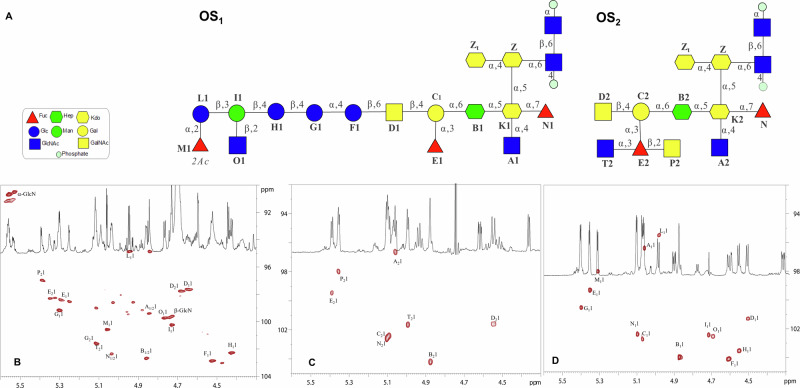
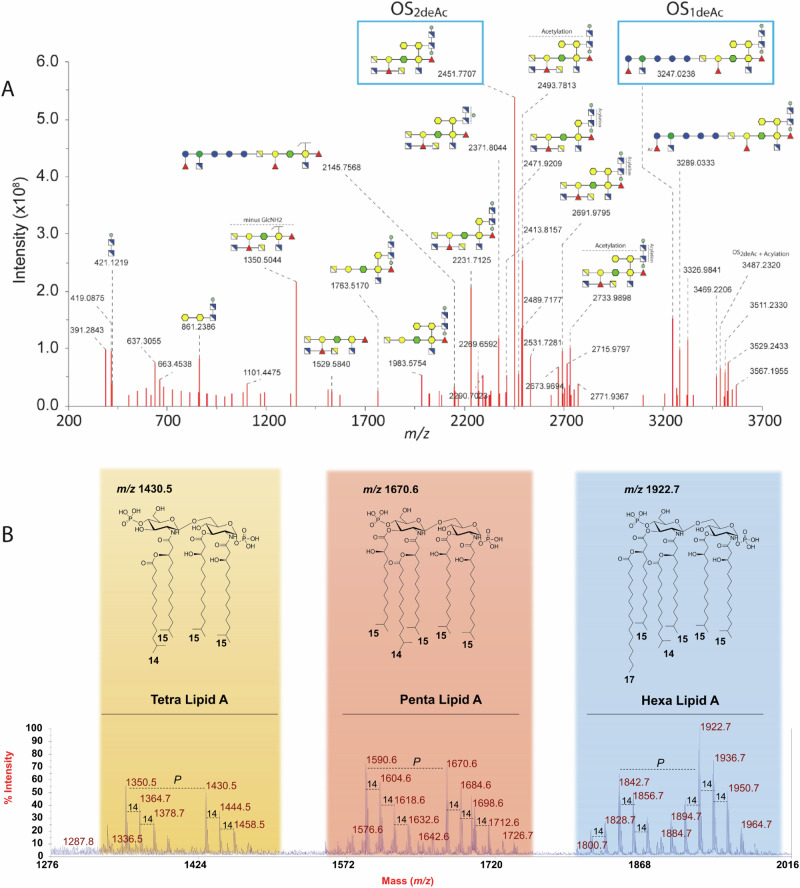
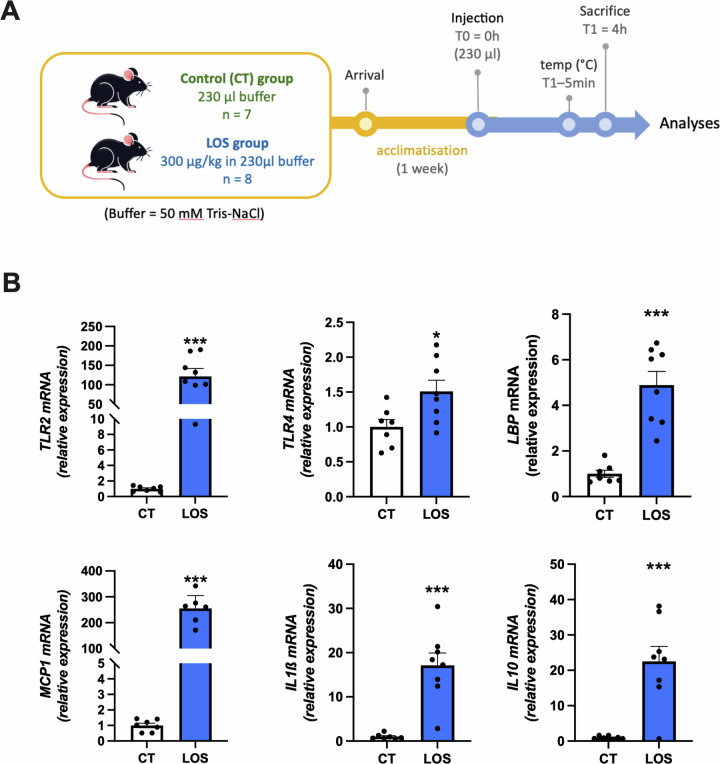
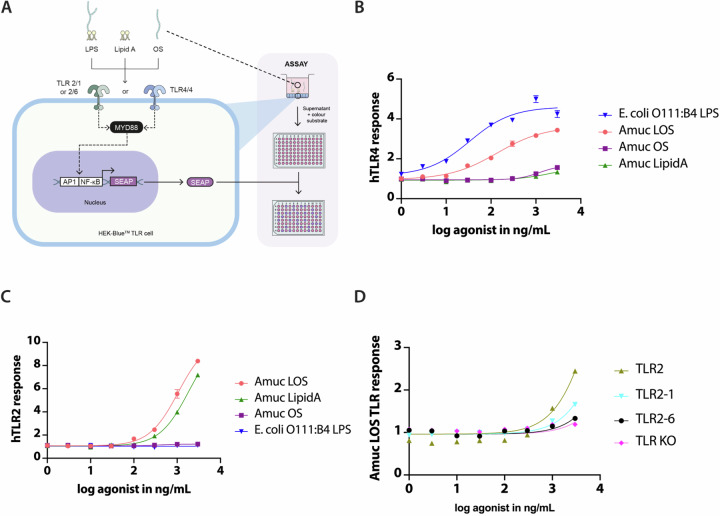
The cell-envelope of Gram-negative bacteria contains endotoxic lipopolysaccharides (LPS) that are recognized by the innate immune system via Toll-Like Receptors (TLRs). The intestinal mucosal symbiont Akkermansia muciniphila is known to confer beneficial effects on the host and has a Gram-negative architecture. Here we show that A. muciniphila LPS lacks the O-polysaccharide repeating unit, with the resulting lipooligosaccharide (LOS) having unprecedented structural and signaling properties. The LOS consists of a complex glycan chain bearing two distinct undeca- and hexadecasaccharide units each containing three 2-keto-3-deoxy-D-manno-octulosonic acid (Kdo) residues. The lipid A moiety appears as a mixture of differently phosphorylated and acylated species and carries either linear or branched acyl moieties. Peritoneal injection of the LOS in mice increased higher gene expression of liver TLR2 than TLR4 (100-fold) and induced high IL-10 gene expression. A. muciniphila LOS was found to signal both through TLR4 and TLR2, whereas lipid A only induced TLR2 in a human cell line. We propose that the unique structure of the A. muciniphila LOS allows interaction with TLR2, thus generating an anti-inflammatory response as to compensate for the canonical inflammatory signaling associated with LOS and TLR4, rationalizing its beneficial host interaction.
Overview
The claims and statistics of this paper haven’t been checked yet.
Free: it reads the open-access text and checks the first 5 claims that cite a source we can check. Create a free account to check every claim.
Integrity signals
Registry
Cites
Statistics
Figures
Verification
Claims the paper makes
The claims and statistics of this paper haven’t been checked yet.
Free: it reads the open-access text and checks the first 5 claims that cite a source we can check. Create a free account to check every claim.
Claims other papers make about this one
Each is checked against this paper’s own text: does it say what the citing paper says it does?
In the citing paper
“LPS of A. muciniphila also lacks the O-antigen (the most variable and accessible portion of LPS134), which results in the induction of IL-10 expression and consequent anti-inflammatory effects.137”
From Gut dysbiosis in oncology: a risk factor for immunoresistance (2026) · doi:10.1038/s41422-025-01212-6 · cites this paper as [137]
Self-check
Percentages, sums and reported differences re-computed from the paper’s own numbers.
The self-check needs the paper’s full text.
Citations
Cites
Metabolic Endotoxemia Initiates Obesity and Insulin Resistance
Cani, P. D., Amar, J., Iglesias, M. A., Poggi, M., Knauf, C., Bastelica, D., Neyrinck, A. M., Fava, F., Tuohy, K. M., Chabo, C., et al. (2007) · Diabetes · doi:10.2337/db06-1491 · Cited by 6,638
Self-citationCani, P. D., Bibiloni, R., Knauf, C., Waget, A., Neyrinck, A. M., Delzenne, N. M., & Burcelin, R. (2008) · Diabetes · doi:10.2337/db07-1403 · Cited by 4,819
Self-citationCross-talk between Akkermansia muciniphila and intestinal epithelium controls diet-induced obesity
Everard, A., Belzer, C., Geurts, L., Ouwerkerk, J. P., Druart, C., Bindels, L. B., Guiot, Y., Derrien, M., Muccioli, G. G., Delzenne, N. M., et al. (2013) · Proceedings of the National Academy of Sciences · doi:10.1073/pnas.1219451110 · Cited by 4,511
Self-citationRaetz, C. R. H., & Whitfield, C. (2002) · Annual Review of Biochemistry · doi:10.1146/annurev.biochem.71.110601.135414 · Cited by 4,404 · cited 1×
“Strikingly, the A. muciniphila LOS contains both core oligosaccharide and lipid moieties of a unique chemical architecture and structure with no chemical or biosynthetic correlation/analogy with any other LOS/LPS 1,2 .”
Depommier, C., Everard, A., Druart, C., Plovier, H., Van Hul, M., Vieira-Silva, S., Falony, G., Raes, J., Maiter, D., Delzenne, N. M., et al. (2019) · Nature Medicine · doi:10.1038/s41591-019-0495-2 · Cited by 2,357
Self-citationPlovier, H., Everard, A., Druart, C., Depommier, C., Van Hul, M., Geurts, L., Chilloux, J., Ottman, N., Duparc, T., Lichtenstein, L., et al. (2017) · Nature Medicine · doi:10.1038/nm.4236 · Cited by 2,204
Self-citationAkkermansia muciniphila gen. nov., sp. nov., a human intestinal mucin-degrading bacterium
Derrien, M., Vaughan, E. E., Plugge, C. M., & de Vos, W. M. (2004) · International Journal of Systematic and Evolutionary Microbiology · doi:10.1099/ijs.0.02873-0 · Cited by 2,094
Shin, N.-R., Lee, J.-C., Lee, H.-Y., Kim, M.-S., Whon, T. W., Lee, M.-S., & Bae, J.-W. (2014) · Gut · doi:10.1136/gutjnl-2012-303839 · Cited by 1,550
Variation in Microbiome LPS Immunogenicity Contributes to Autoimmunity in Humans
Vatanen, T., Kostic, A. D., d’Hennezel, E., Siljander, H., Franzosa, E. A., Yassour, M., Kolde, R., Vlamakis, H., Arthur, T. D., Hämäläinen, A.-M., et al. (2016) · Cell · doi:10.1016/j.cell.2016.04.007 · Cited by 1,289 · cited 2×
“The lipid A was dissolved in CHCl 3 / MeOH (1:1, v/v), as previously described 16 .”
Akkermansia muciniphila: paradigm for next-generation beneficial microorganisms
Cani, P. D., Depommier, C., Derrien, M., Everard, A., & de Vos, W. M. (2022) · Nature Reviews Gastroenterology & Hepatology · doi:10.1038/s41575-022-00631-9 · Cited by 1,192
Self-citation
Cited by
Inflammatory signaling pathways in pancreatic β-cell: New insights into type 2 diabetes pathogenesis
Chen, J., Fei, S., Chan, L., Gan, X., Shao, B., Jiang, H., Li, S., Kuang, P., Liu, X., & Yang, S. (2025) · Pharmacological Research · doi:10.1016/j.phrs.2025.107776 · Cited by 65
Gut microbiota: a promising new target in immune tolerance
Almansour, N., Al‐Rashed, F., Choudhry, K., Alqaderi, H. E., Sindhu, S. T. A. K., Al‐Mulla, F., & Ahmad, R. (2025) · Frontiers in Immunology · doi:10.3389/fimmu.2025.1607388 · Cited by 59
From microbiome to metabolism: Bridging a two-decade translational gap
Hul, M. V., & Cani, P. D. (2025) · Cell Metabolism · doi:10.1016/j.cmet.2025.10.011 · Cited by 57
Self-citationGarling, A., Auvray, F., Epardaud, M., Oswald, É., & Branchu, P. (2025) · Journal of Extracellular Vesicles · doi:10.1002/jev2.70150 · Cited by 52
Navigating the duality of Akkermansia muciniphila
Grant, E. T., Monzel, E., & Desai, M. S. (2026) · Nature Microbiology · doi:10.1038/s41564-025-02222-1 · Cited by 41
“…muciniphila consists of a lipooligosac-charide that signals through Toll-like receptor 2 (TLR2) and TLR4, inducing substantial expression of the anti-inflammatory cytokine interleukin-10 (IL-10) and a 100-fold increase in liver TLR2 gene expression following intraperitoneal injection in mice 25 .”
The multifaceted roles of Akkermansia muciniphila in neurological disorders
Ma, X., Liu, Q., & Yang, G. (2025) · Trends in Neurosciences · doi:10.1016/j.tins.2025.04.004 · Cited by 38
Gut dysbiosis in oncology: a risk factor for immunoresistance
(2026) · doi:10.1038/s41422-025-01212-6 · Cited by 24
“137 The O-antigen of Salmonella shields the lipid A moiety, delaying or reducing TLR4 recognition and consequently weakening host antibacterial responses.”
Tume, R., Sherbiny, S. E., Bono, R., Gautier, T., de Barros, J.-P. P., & Meroño, T. (2025) · Frontiers in Immunology · doi:10.3389/fimmu.2025.1588129 · Cited by 29
Chiara, S. D., Carone, L. D. S., Cirella, R., Andretta, E., Silipo, A., Molinaro, A., Mercogliano, M., & Lorenzo, F. D. (2025) · ChemMedChem · doi:10.1002/cmdc.202400780 · Cited by 22
Self-citationZeng, J., He, Z., Wang, G., Ma, Y., & Zhang, F. (2025) · MedComm · doi:10.1002/mco2.70265 · Cited by 34
Paone, P., Petitfils, C., Puel, A., Latousakis, D., de Vos, W. M., Delzenne, N. M., Juge, N., Hul, M. V., & Cani, P. D. (2026) · Gut Microbes · doi:10.1080/19490976.2025.2612580 · Cited by 25
“46 Therefore, further functional assays will be required to confirm whether A. muciniphila Muc T influences mucosal barrier integrity beyond the transcriptional and glycomic levels observed in this study.”
Self-citationLi, Y., Liu, Y., Wei, X., Wang, C. Z., Khan, M. Z., & Ma, Q. (2026) · Gut Microbes · doi:10.1080/19490976.2026.2614115 · Cited by 27
“84,85 Alistipes timonensis vesicles carry sulfonolipids suppressing pro-inflammatory cytokines in macrophages, 128 while sphingolipids from Bacteroides thetaiotaomicron OMVs trigger IL-10 production via the mevalonate pathway.”
Insights into the gut-liver axis: mechanisms and emerging therapies in hepatocellular carcinoma
Hu, Y., Gao, M., Chenghuang, J., & Bao, R. (2025) · Frontiers in Pharmacology · doi:10.3389/fphar.2025.1595853 · Cited by 24
Wang, X., Li, A., Jing, H., Zhang, X., Dong, X., Song, Z., Wu, N., & Zheng, S. (2025) · Frontiers in Immunology · doi:10.3389/fimmu.2025.1653472 · Cited by 18
Sun, L., Zhang, Y., Dong, W., Sun, J., Wang, T., Shao, F., Dai, H., Han, J., Wang, W., Wang, S., et al. (2025) · iMeta · doi:10.1002/imt2.70066 · Cited by 15
Next-generation probiotics: an outlook into current applications and future developments
Kern, L., Tofield, A., Frame, J., & Elinav, E. (2026) · Nature Reviews Microbiology · doi:10.1038/s41579-026-01311-0 · Cited by 31
“…structured, O-antigen-lacking lipooligosaccharide of A. muciniphila predominantly activates Toll-like receptor 2 (TLR2), inducing a strong anti-inflammatory interleukin-10 (IL-10) response and, thereby, explaining its beneficial interaction with the host, making it a potential therapeutic 93 .”
Ayala, V., Fontdevila, L., Rico-Rios, S., Povedano, M., Andrés‐Benito, P., Torres, P., Serrano, J. C. E., Pamplona, R., & Portero‐Otín, M. (2025) · Sclerosis · doi:10.3390/sclerosis3010008 · Cited by 17
“…bacterial systems exhibit similar behaviors during stress, with ribosome-associated protein granules forming to protect cellular components— a process that may provide insights into how gut microbiota respond to and influence host stress responses, potentially affecting neurodegenerative outcomes.”
Hughes, E. R., Panzetta, M. E., Sharma, A., & Valdivia, R. H. (2025) · Annual Review of Microbiology · doi:10.1146/annurev-micro-051524-032131 · Cited by 21
Jiang, T., Yang, X., Wu, B., Tao, R., Chen, R., Jin, L., Sun, D., & Weng, H. (2025) · Frontiers in Microbiology · doi:10.3389/fmicb.2025.1661211 · Cited by 19
Carone, L. D. S., Barra, G., Cirella, R., Ziaco, M., Mercogliano, M., Olmeo, F., Andretta, E., Mazziotti, V., Fusco, C., d’Ippolito, G., et al. (2025) · Angewandte Chemie International Edition · doi:10.1002/anie.202512947 · Cited by 18
Self-citationRodríguez-Daza, M.-C., Boeren, S. A., Tytgat, H. L. P., Desjardins, Y., & de Vos, W. M. (2025) · Nature Communications · doi:10.1038/s41467-025-64477-w · Cited by 14
“capable of regulating the host ’ s metabolism and immune system 6 – 8 .”
Self-citationSelmi, H., Walker, A., Balas, L., Lucio, M., Klotz, M., Jeridi, A., Burrichter, A. G., Conti, D. E., Chaffringeon, L., Beinsteiner, B., et al. (2025) · Gut Microbes · doi:10.1080/19490976.2025.2601376 · Cited by 11
“24 In the present study, we investigate lipid alterations associated with gut inflammation by employing a gnotobiotic mouse model stably colonized with the Oligo-Mouse-Microbiota (OMM 12 ) synthetic community and infected with C. rodentium.”
Fertitta, V., Varano, B., Cornò, M. D., Fortini, P., Aureli, A., & Conti, L. (2024) · Biomolecules · doi:10.3390/biom14121571 · Cited by 9
Mercogliano, M., Mazziotti, V., Silipo, A., Molinaro, A., & Lorenzo, F. D. (2026) · Chemical Science · doi:10.1039/d5sc09900e · Cited by 9
Self-citationThe microbiome regulates host metabolic health and diseases through microbial enzymes
Ding, Y., Zhang, Z., Wang, K., & Jiang, C. (2026) · Nature Reviews Gastroenterology & Hepatology · doi:10.1038/s41575-026-01195-8 · Cited by 16
“143).”
InfluentialSang, Y., Nahashon, S. N., & Webby, R. J. (2025) · Vaccines · doi:10.3390/vaccines13080837 · Cited by 9
Wan, L., Zeng, H., Peng, L., Yang, X., Bai, Q., Liu, L., Huang, J., & Liu, Z. (2025) · Journal of Agricultural and Food Chemistry · doi:10.1021/acs.jafc.4c12501 · Cited by 8
Nieto‐Fabregat, F., Mercogliano, M., Cangiano, A., Vitiello, G., Andretta, E., Clifton, L. A., Vanacore, A., Buono, L., Campanero‐Rhodes, M. A., Solís, D., et al. (2025) · JACS Au · doi:10.1021/jacsau.5c00441 · Cited by 6
Self-citationWoźniak, A., Dorotkiewicz‐Jach, A., & Brzychczy‐Włoch, M. (2025) · Postępy Mikrobiologii - Advancements of Microbiology · doi:10.2478/am-2025-0013 · Cited by 12
Sharma, M., Desjardins, Y., & Williams, A. R. (2025) · Microbiome Research Reports · doi:10.20517/mrr.2025.81 · Cited by 7
Lee, S., Lee, Y. S., Lee, H., Yu, J., Kim, K. O., Kim, T.-Y., Lee, S.-H., Qiao, Y., KIM, S., & Kweon, M. (2026) · Gut Microbes · doi:10.1080/19490976.2025.2611603 · Cited by 8
“56,57 Our results extend this paradigm by showing that Bifi-94 promotes IL-10 production in B cells through TLR2-dependent MAPK activation.”
Lin, Z., Tang, H., Che, L., Chen, M., Ye, Z., Yang, X., Sun, L., Mayo, K. H., Tai, G., Cui, L., et al. (2025) · Carbohydrate Polymers · doi:10.1016/j.carbpol.2025.124566 · Cited by 5
Cangiano, A., Gallucci, N., Carluccio, C. D., Clifton, L. A., Nicolas, M., Vagias, A., Silipo, A., Paduano, L., & Vitiello, G. (2025) · Journal of Colloid and Interface Science · doi:10.1016/j.jcis.2025.139292 · Cited by 5
Self-citationPterostilbene-mediated microbiota shifts: Implications and opportunities
Koh, Y., & Pan, M. (2025) · Journal of Traditional and Complementary Medicine · doi:10.1016/j.jtcme.2025.11.002 · Cited by 3
“52 Therefore, to reconcile the contradictory observations of Akkermansia muciniphila abundance in animal models versus human IBD, both strain-level differences and host context must be considered.”
Dual-coated Akkermansia muciniphila for the treatment of inflammatory bowel disease
Zhao, P., Zhang, G., Wang, H., Luo, X., Qin, M., Teng, M., Ye, G., Zhao, L., & Fu, Q. (2025) · Chemical Engineering Journal · doi:10.1016/j.cej.2025.171187 · Cited by 3
Obesity is the culprit behind fatty acid-induced inflammation
Guo, Y., Luan, H., & Lin, J. (2026) · Nutrition & Metabolism · doi:10.1186/s12986-026-01076-6 · Cited by 5
From Microbial Ecology to Functional Components in Microbe–Host Interactions
Wang, T., Wang, Z., Yang, X., & Zhang, L. (2026) · Biology · doi:10.3390/biology15080635 · Cited by 3
“…A (PSA), which has been shown to induce Foxp3 + regulatory T cell (Treg) differentiation and to promote regulatory cytokine production involving IL-10 and, in some settings, TGF-β via TLR2-dependent signaling, thereby contributing to the maintenance of intestinal immune tolerance [150,156].”
Tao, M., LIU, Y. F., Guo, H., Gao, S., Wang, Y., Yan, X., & Zhu, Y. (2026) · Communications Biology · doi:10.1038/s42003-026-10263-3 · Cited by 7
“A. muciniphila can strengthen intestinal barrier function and modulate host immune signaling through de fi ned microbial surface molecules 104 .”
Microbial reprogramming of the gut-liver nexus in MASLD: Lessons from Akkermansia muciniphila
Liu, Y., Targher, G., Byrne, C. D., Jiang, C., Tan, Z., Tilg, H., Yu, J., He, Z., Yin, Y., Zheng, M., et al. (2026) · Cell Press Blue · doi:10.1016/j.cpblue.2026.100031 · Cited by 3
Advancements in the Pathogenesis, Diagnosis, and Therapeutic Implications of Intestinal Bacteria
Lu, D., Ma, X., Tao, K., & Lei, H. (2025) · Current Issues in Molecular Biology · doi:10.3390/cimb47020106 · Cited by 3
Liu, C., Yin, Z., Liu, X., Wang, X., Luo, J., Zhang, Z., & Zhou, Y. (2025) · Microbial Pathogenesis · doi:10.1016/j.micpath.2025.107817 · Cited by 4
When glycobiology meets inflammasome activation: Insights and implications
Zhang, H., Jin, T., Xue, M., Wu, S., & Zheng, C. (2025) · Journal of Advanced Research · doi:10.1016/j.jare.2025.03.054 · Cited by 2
“LPS from A. muciniphila lacking the O-antigen portion induces both TLR4 and TLR2 expression after injection in mice [43].”
Wong, G. C., Jung, Y., Lee, K., Fourie, C., Handley, K. M., Montgomery, J. M., & Taylor, M. W. (2025) · Frontiers in Microbiology · doi:10.3389/fmicb.2025.1607045 · Cited by 4
Shehata, F., Dwyer, K. M., Axtens, M. J., McGee, S. L., & Rivera, L. R. (2025) · Metabolites · doi:10.3390/metabo15110692 · Cited by 3
Arioli, S., Smit, B., Severi, F., Segers, A., Dress, M., Rymenans, L., Martinović, A., Termine, V., Mora, D., & de Vos, W. M. (2025) · Food Bioscience · doi:10.1016/j.fbio.2025.107737 · Cited by 1
Chen, N., Pang, D., & Shang, H. (2025) · Microbiological Research · doi:10.1016/j.micres.2025.128436 · Cited by 4
Long, Z., Li, J., Zhu, F., Liu, X., Zhou, J., Li, J., & Xu, W. (2026) · International Journal of Biological Macromolecules · doi:10.1016/j.ijbiomac.2026.151199 · Cited by 2
Jia, P., Li, Y., Yang, H.-Y., Ding, Y., Guo, F.-Y., Wu, M.-F., Jia, J.-Q., & Pei, D. (2026) · The ISME Journal · doi:10.1093/ismejo/wrag074 · Cited by 1
“Akkermansia muciniphila , a mucin-degrading bacterium first isolated in 2004, has been recognized as a “next-generation probiotic” [30].”
Ali, S., Amin, A., Khalil, A. A. K., Akhtar, M. S., & Zaman, W. (2026) · Journal of Drug Delivery Science and Technology · doi:10.1016/j.jddst.2026.108428 · Cited by 2
Zhang, H., Zhang, S., & Zhu, J. (2026) · Expert Opinion on Therapeutic Targets · doi:10.1080/14728222.2026.2671689 · Cited by 2
“A. muciniphila produces a structurally unique lipooligosac-charide (LOS) that lacks the O-antigen polysaccharide and instead contains an unusually large, non-repetitive core oligosaccharide together with a heterogeneous lipid A moiety [76].”
InfluentialMechanism and application of Akkermansia muciniphila in inflammatory diseases
Xie, L., Lu, J., Han, H., Liu, Z., Dong, C., Wu, H., & Qiao, J. (2026) · Frontiers in Cellular and Infection Microbiology · doi:10.3389/fcimb.2026.1819005 · Cited by 1
Song, H.-J., Eom, J.-E., Lim, E. Y., Kim, S., Lee, S.-Y., Shin, H. S., Jeong, D. Y., Kang, C.-H., & Kim, G.-D. (2026) · Biomedicine & Pharmacotherapy · doi:10.1016/j.biopha.2026.119577 · Cited by 1
Gracia, L., Hughes, E. R., Middleton, D. R., Mueller, K. D., Portillo, J., Sharma, A., Davey, L., Panzetta, M. E., Chanin, R. B., Bhatt, A. S., et al. (2026) · mBio · doi:10.1128/mbio.01048-26 · Cited by 2
Lakey, B. D., Wozniak, K. J., Britton, R. A., & Tabor, J. J. (2026) · Gut Microbes · doi:10.1080/19490976.2026.2691334 · Cited by 1
“44 LPS glycans are essential, providing barrier function, rigidity, and stability to the OM.”
Toh, J. Y. L., Tay, S. C., LIN, Z., Loo, E. X. L., Xu, J., Eriksson, J. G., Gluckman, P. D., Chong, Y. S., Meaney, M. E., Yap, F. S. D., et al. (2026) · Gut Microbes · doi:10.1080/19490976.2026.2694805 · Cited by 1
Bacterial lipid structural diversity mediates commensalism and pathogenesis
Heaver, S. L., & Ley, R. E. (2026) · Nature Reviews Microbiology · doi:10.1038/s41579-026-01351-6 · Cited by 1
“102).”
Akkermansia muciniphila in the Gut–Bone Axis: Current Insights and Translational Implications
Yang, S., Zhou, B., Li, T., Ouchi, T., Yi, J., & Li, B. (2026) · Comprehensive physiology · doi:10.1002/cph4.70253 · Cited by 1
Substrate specificity of lipid A 4′-phosphatase in Bacteroides thetaiotaomicron
Liu, G., Huang, D., He, F., Zhao, G., Wang, Y., Li, Z., Chen, L., & Wang, X. (2025) · Food Bioscience · doi:10.1016/j.fbio.2025.106302 · Cited by 2
Liu, G., Zhao, G., Liu, H., Zhang, D., Tang, Y., Li, Z., & Wang, X. (2025) · Systems Microbiology and Biomanufacturing · doi:10.1007/s43393-025-00394-9
Carone, L. D. S., Barra, G., Cirella, R., Ziaco, M., Mercogliano, M., Olmeo, F., Andretta, E., Mazziotti, V., Fusco, C., d’Ippolito, G., et al. (2025) · Angewandte Chemie · doi:10.1002/ange.202512947
Self-citationSharma, A., Panzetta, M. E., Overly, M., Yang, H., Ernst, R. K., & Valdivia, R. H. (2025) · bioRxiv (Cold Spring Harbor Laboratory) · doi:10.64898/2025.12.30.696933
Time-resolved growth of diverse human-associated Akkermansia on human milk oligosaccharides
Fricker, A. D., Barnes, A. L., Henzi, A., Durán, L. E., & Flores, G. E. (2026) · Microbiology Spectrum · doi:10.1128/spectrum.02071-25
Zhang, Q., Li, H., Yu, F., Gao, M., Wang, Y., Xin, S., Yang, J., Wang, Z., Xiang, L., Ru, Q., et al. (2026) · Chinese Medicine · doi:10.1186/s13020-026-01395-z
“This is because the unique structure of A. mucin-iphila can interact with TLR-4 to produce an anti-inflammatory response, whereas LPS-induced TLR-4-mediated inflammatory signaling is crucial for promoting liver fibrosis and HCC development [281].”
Gut microbial metabolites as key mediators in inflammatory bowel disease
Sall, T. S., Litvinova, E., Arzhanova, E. L., Sitkin, S. I., & Vakhitov, T. (2026) · World Journal of Gastroenterology · doi:10.3748/wjg.121041
Gut Microbiota Modulation Attenuates Myocardial Ischemia–Reperfusion Injury in Diabetic Mice
Takahashi, K., Yoshikawa, Y., Chaki, T., & Yamakage, M. (2026) · Shock · doi:10.1097/shk.0000000000002882
Phosphoethanolamine modification of lipid A found in five distinct Akkermansia species
Crenna, S. P., Lagoudakis, A., Jackson, A., Weke, K., Tiegs, G., Goodlett, D. R., Davey, L. E., & Pětrošová, H. (2026) · Microbiology Spectrum · doi:10.1128/spectrum.00682-26
Zhang, Y., Yin, R., Dong, W., Sun, L., Wang, T., Sun, J., Dai, H., Bi, Y., Wang, L., & Liu, H. (2026) · Journal of Advanced Research · doi:10.1016/j.jare.2026.07.010 · Cited by 1
Rani, R., Adhikari, A., & Kumar, S. (2026) · Advanced Gut & Microbiome Research · doi:10.1155/agm3/9526059
Carone, L. D. S., Chiara, S. D., Mercogliano, M., Olmeo, F., Mazziotti, V., Silipo, A., Farquharson, F. M., Louis, P., Molinaro, A., & Lorenzo, F. D. (2026) · JACS Au · doi:10.1021/jacsau.6c00878
Self-citationDecoding Akkermansia muciniphila Effector Biology: From Microbial Molecules to Host Outcomes
Ghahari, A., Sadykova, A., Davlatov, S., Xusanova, M., Indiaminova, G., Sobirov, F., Шадманов, М. А., Maxamatov, U., Nishonov, P., & Siadat, S. D. (2026) · MicrobiologyOpen · doi:10.1002/mbo3.70369
Toll-like Receptor 2 Recognition of Microbiota Lipoproteins and Lipids in Immunity and Therapy
Zhang, X., Dudkina, N., Turner, A. M., & Hang, H. C. (2026) · ACS Chemical Biology · doi:10.1021/acschembio.6c00498 · Cited by 1
Liu, Y., Xu, Z., Kim, D.-S., Xu, H., & Wu, H. (2026) · Frontiers in Pharmacology · doi:10.3389/fphar.2026.1956062 · Cited by 1
Harvey, D. J. (2026) · Mass Spectrometry Reviews · doi:10.1002/mas.70029
Zhu, Q., Liu, Y., & Song, Y. (2026) · Frontiers in Immunology · doi:10.3389/fimmu.2026.1942618
Metadata
- Authors
- Garcia-Vello, P., Tytgat, H. L. P., Elzinga, J., Van Hul, M., Plovier, H., Tiemblo-Martin, M., Cani, P. D., Nicolardi, S., Fragai, M., De Castro, C., Di Lorenzo, F., Silipo, A., Molinaro, A., & de Vos, W. M.
- Affiliations
- Nestlé (Switzerland) (CH)
- Wageningen University & Research (NL)
- Walloon Excellence in Lifesciences and Biotechnology (BE)
- Leiden University Medical Center (NL)
- Consorzio Interuniversitario Risonanze Magnetiche di Metallo Proteine (IT)
- University of Naples Federico II (IT)
- Corresponding author
- Molinaro, Antonio
- ORCID
- Venue
- Nature Communications
- Published
- 2024-09-27
- Volume
- 15
- Issue
- 1
- Pages
- 8411-8411
- ISSN
- 2041-1723 (ISSN-L)
- PMC
- PMC11436972
- OpenAlex
- W4402906567
- Cited by
- 74
- References
- 28
- Citations by year
- 2026: 36 · 2025: 37 · 2024: 1
- FWCI
- 12.30
- Type
- journal article
- Language
- en
- Open access
- gold
- doi.org
- Licence
- cc-by-nc-nd
- creativecommons.org/licenses/by-nc-nd/4.0 (tdm)
- creativecommons.org/licenses/by-nc-nd/4.0 (vor)
- Locations
- Nature Communications (publishedVersion, cc-by-nc-nd)
- PubMed Central (publishedVersion, cc-by-nc-nd)
- PubMed (publishedVersion)
- Socio-Environmental Systems Modeling (submittedVersion, cc-by-nc-nd)
- RePEc: Research Papers in Economics (submittedVersion)
- Digital Access to Libraries (submittedVersion, other-oa)
- DOAJ (DOAJ: Directory of Open Access Journals) (submittedVersion)
- Florence Research (University of Florence) (submittedVersion, cc-by-nc-nd)
- Työväentutkimus Vuosikirja (submittedVersion)
- Funders
- European Commission (CN 00000022, PE00000003, H2020-MSCA-ITN, P E00000007, CUP D93C22000890001, MSCA‐ITN‐2020, H2020, H2020-MSCA-ITN-2020, 956758, H2020-MSCA, 721484)
- Fonds De La Recherche Scientifique - FNRS (40007505)
- Ministero della Salute (PE00000003, PE00000007)
- Ministero dell’Istruzione, dell’Università e della Ricerca (2023-2025, P202293ZMC, 2022SHW3KY, PNRR 2022, H2020, PE00000007, CUP D 93C22000890001, CN00000022, PRIN MUR 2022, PE00000003)
- Ministero degli Affari Esteri e della Cooperazione Internazionale
- Walloon excellence in life sciences and biotechnology
- Horizon 2020 Framework Programme (H2020-MSCA, H2020-MSCA-ITN, 721484)
- HORIZON EUROPE Framework Programme
- HORIZON EUROPE European Research Council (101039841)
- Topics
- Life Sciences › Immunology and Microbiology › Immunology › Immune Response and Inflammation
- Life Sciences › Biochemistry, Genetics and Molecular Biology › Molecular Biology › Gut microbiota and health
- Life Sciences › Agricultural and Biological Sciences › Plant Science › Plant-Microbe Interactions and Immunity
- Keywords
- Akkermansia muciniphila, lipooligosaccharide, lipopolysaccharide, TLR2, TLR4, lipid A, gut symbionts, innate immune signaling, IL-10, anti-inflammatory response, host-microbe interactions
- MeSH terms
- Gastrointestinal Microbiome, Akkermansia, Animals, Female, Humans, Lipid A, Lipopolysaccharides, Liver, Mice, Inbred C57BL, Symbiosis, Signal Transduction, Interleukin-10, Toll-Like Receptor 2, Toll-Like Receptor 4, Mice
About these checks
Registry, retraction, Cites and statistics results are computed, not judged, with one exception: a printed reference that no index lists is read once by a model before it counts as a citation error. Claims are extracted by a model and kept only when their quote appears verbatim in the text; each cited source is then checked, with a model’s help, for whether it says what the claim relies on. Those verdicts can be wrong — read the claim’s quote and the cited source before relying on one.
Statistics and arithmetic are recomputed, not judged.
Confidence bands are shown only for fields calibrated on our annotated test set. None is calibrated yet, so no band is shown.
What counts as a claim ›How we measure confidence ›How we check this ›
Are you an author, or do you see a problem with this page? Request a review
Data sources
Bibliographic data: Semantic Scholar, OpenAlex, Crossref.
Contains information from the Semantic Scholar Academic Graph Datasets, made available under the ODC Attribution License (ODC-BY 1.0).
Semantic Scholar’s data is described in: Kinney, R., et al. (2023). The Semantic Scholar Open Data Platform. arXiv:2301.10140.
