

The lipooligosaccharide of the gut symbiont Akkermansia muciniphila exhibits a remarkable structure and TLR signaling capacity
Open accessThe DOI matches its Crossref record; 28 of the 28 references it cites were found in a registry or an index.
Abstract
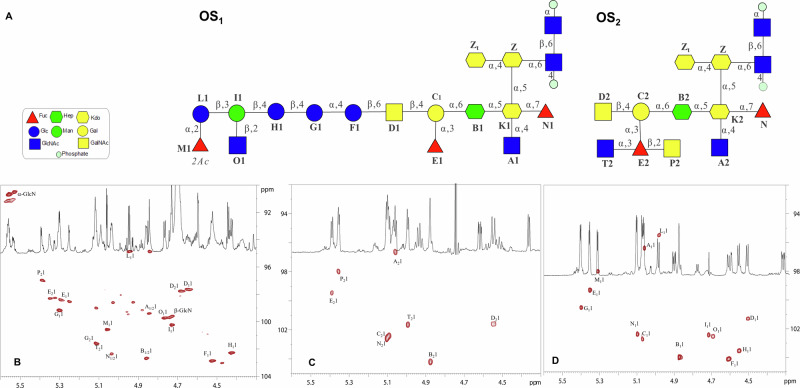
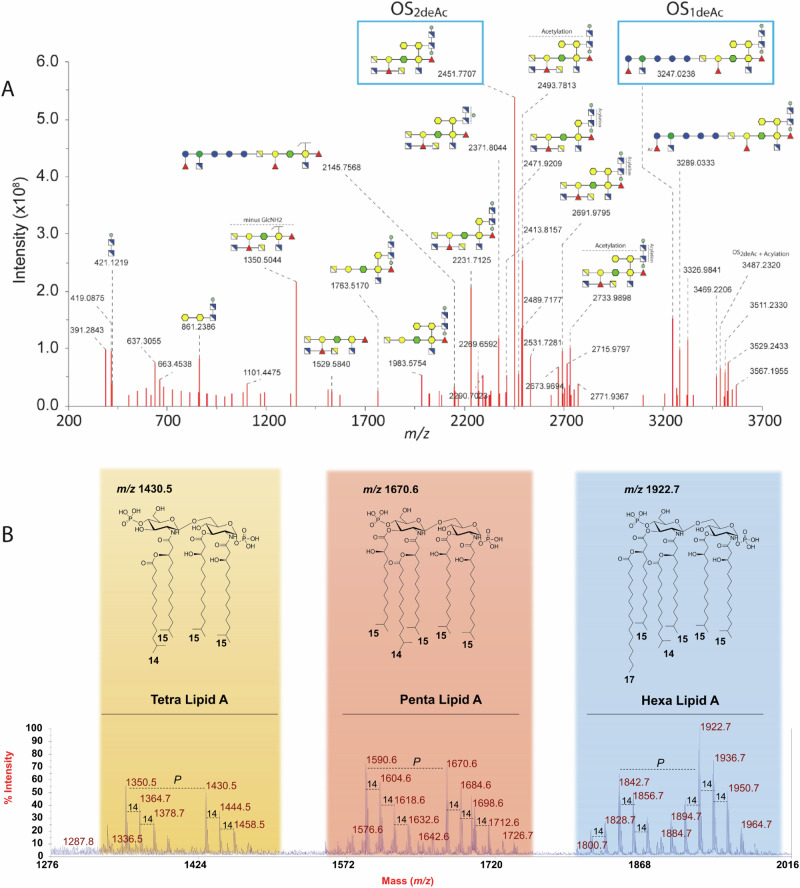
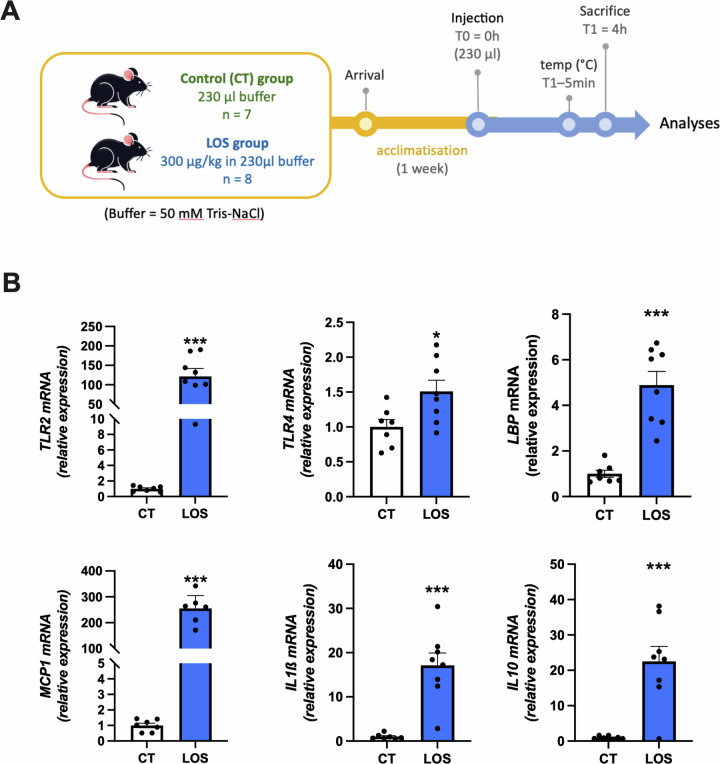
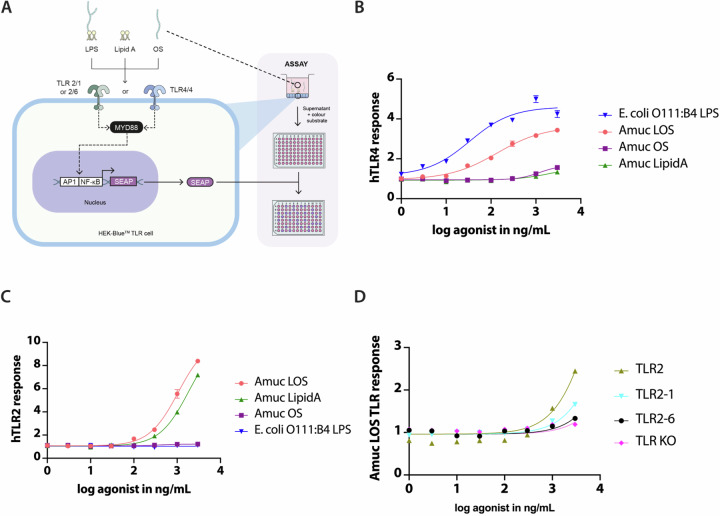
The cell-envelope of Gram-negative bacteria contains endotoxic lipopolysaccharides (LPS) that are recognized by the innate immune system via Toll-Like Receptors (TLRs). The intestinal mucosal symbiont Akkermansia muciniphila is known to confer beneficial effects on the host and has a Gram-negative architecture. Here we show that A. muciniphila LPS lacks the O-polysaccharide repeating unit, with the resulting lipooligosaccharide (LOS) having unprecedented structural and signaling properties. The LOS consists of a complex glycan chain bearing two distinct undeca- and hexadecasaccharide units each containing three 2-keto-3-deoxy-D-manno-octulosonic acid (Kdo) residues. The lipid A moiety appears as a mixture of differently phosphorylated and acylated species and carries either linear or branched acyl moieties. Peritoneal injection of the LOS in mice increased higher gene expression of liver TLR2 than TLR4 (100-fold) and induced high IL-10 gene expression. A. muciniphila LOS was found to signal both through TLR4 and TLR2, whereas lipid A only induced TLR2 in a human cell line. We propose that the unique structure of the A. muciniphila LOS allows interaction with TLR2, thus generating an anti-inflammatory response as to compensate for the canonical inflammatory signaling associated with LOS and TLR4, rationalizing its beneficial host interaction.
Overview
The claims and statistics of this paper haven’t been checked yet.
Free: it reads the open-access text and checks the first 5 claims that cite a source we can check. Create a free account to check every claim.
Integrity signals
Registry
Cites
Statistics
Figures
Verification
Claims the paper makes
The claims and statistics of this paper haven’t been checked yet.
Free: it reads the open-access text and checks the first 5 claims that cite a source we can check. Create a free account to check every claim.
Claims other papers make about this one
Each is checked against this paper’s own text: does it say what the citing paper says it does?
In the citing paper
“LPS of A. muciniphila also lacks the O-antigen (the most variable and accessible portion of LPS134), which results in the induction of IL-10 expression and consequent anti-inflammatory effects.137”
From Gut dysbiosis in oncology: a risk factor for immunoresistance (2026) · doi:10.1038/s41422-025-01212-6 · cites this paper as [137]
Self-check
Percentages, sums and reported differences re-computed from the paper’s own numbers.
The self-check needs the paper’s full text.
Citations
Cites
Metabolic Endotoxemia Initiates Obesity and Insulin Resistance
Cani, P. D., Amar, J., Iglesias, M. A., Poggi, M., Knauf, C., Bastelica, D., Neyrinck, A. M., Fava, F., Tuohy, K. M., Chabo, C., et al. (2007) · Diabetes · doi:10.2337/db06-1491 · Cited by 6,638
Self-citationCani, P. D., Bibiloni, R., Knauf, C., Waget, A., Neyrinck, A. M., Delzenne, N. M., & Burcelin, R. (2008) · Diabetes · doi:10.2337/db07-1403 · Cited by 4,819
Self-citationCross-talk between Akkermansia muciniphila and intestinal epithelium controls diet-induced obesity
Everard, A., Belzer, C., Geurts, L., Ouwerkerk, J. P., Druart, C., Bindels, L. B., Guiot, Y., Derrien, M., Muccioli, G. G., Delzenne, N. M., et al. (2013) · Proceedings of the National Academy of Sciences · doi:10.1073/pnas.1219451110 · Cited by 4,511
Self-citationRaetz, C. R. H., & Whitfield, C. (2002) · Annual Review of Biochemistry · doi:10.1146/annurev.biochem.71.110601.135414 · Cited by 4,404 · cited 1×
“Strikingly, the A. muciniphila LOS contains both core oligosaccharide and lipid moieties of a unique chemical architecture and structure with no chemical or biosynthetic correlation/analogy with any other LOS/LPS 1,2 .”
Depommier, C., Everard, A., Druart, C., Plovier, H., Van Hul, M., Vieira-Silva, S., Falony, G., Raes, J., Maiter, D., Delzenne, N. M., et al. (2019) · Nature Medicine · doi:10.1038/s41591-019-0495-2 · Cited by 2,357
Self-citationPlovier, H., Everard, A., Druart, C., Depommier, C., Van Hul, M., Geurts, L., Chilloux, J., Ottman, N., Duparc, T., Lichtenstein, L., et al. (2017) · Nature Medicine · doi:10.1038/nm.4236 · Cited by 2,204
Self-citationAkkermansia muciniphila gen. nov., sp. nov., a human intestinal mucin-degrading bacterium
Derrien, M., Vaughan, E. E., Plugge, C. M., & de Vos, W. M. (2004) · International Journal of Systematic and Evolutionary Microbiology · doi:10.1099/ijs.0.02873-0 · Cited by 2,094
Shin, N.-R., Lee, J.-C., Lee, H.-Y., Kim, M.-S., Whon, T. W., Lee, M.-S., & Bae, J.-W. (2014) · Gut · doi:10.1136/gutjnl-2012-303839 · Cited by 1,550
Variation in Microbiome LPS Immunogenicity Contributes to Autoimmunity in Humans
Vatanen, T., Kostic, A. D., d’Hennezel, E., Siljander, H., Franzosa, E. A., Yassour, M., Kolde, R., Vlamakis, H., Arthur, T. D., Hämäläinen, A.-M., et al. (2016) · Cell · doi:10.1016/j.cell.2016.04.007 · Cited by 1,289 · cited 2×
“The lipid A was dissolved in CHCl 3 / MeOH (1:1, v/v), as previously described 16 .”
Akkermansia muciniphila: paradigm for next-generation beneficial microorganisms
Cani, P. D., Depommier, C., Derrien, M., Everard, A., & de Vos, W. M. (2022) · Nature Reviews Gastroenterology & Hepatology · doi:10.1038/s41575-022-00631-9 · Cited by 1,192
Self-citationWang, L., Tang, L., Feng, Y., Zhao, S., Han, M., Zhang, C., Yuan, G., Zhu, J., Cao, S., Wu, Q., et al. (2020) · Gut · doi:10.1136/gutjnl-2019-320105 · Cited by 630
Ottman, N., Reunanen, J., Meijerink, M., Pietilä, T. E., Kainulainen, V., Klievink, J., Huuskonen, L., Aalvink, S., Skurnik, M., Boeren, S., et al. (2017) · PLOS ONE · doi:10.1371/journal.pone.0173004 · Cited by 520 · cited 2×
“HSQC was performed using sensitivity improvement and the phase-sensitive mode using echo/antiecho gradient selection, with multiplicity editing during the selection step 14 .”
A Journey from Structure to Function of Bacterial Lipopolysaccharides
Di Lorenzo, F., Duda, K. A., Lanzetta, R., Silipo, A., De Castro, C., & Molinaro, A. (2022) · Chemical Reviews · doi:10.1021/acs.chemrev.0c01321 · Cited by 322 · cited 3×
“Strikingly, the A. muciniphila LOS contains both core oligosaccharide and lipid moieties of a unique chemical architecture and structure with no chemical or biosynthetic correlation/analogy with any other LOS/LPS 1,2 .”
Self-citationChemistry of Lipid A: At the Heart of Innate Immunity
Molinaro, A., Holst, O., Di Lorenzo, F., Callaghan, M., Nurisso, A., D'Errico, G., Zamyatina, A., Peri, F., Berisio, R., Jerala, R., et al. (2015) · Chemistry – A European Journal · doi:10.1002/chem.201403923 · Cited by 235
Self-citationLiu, S., Rezende, R. M., Moreira, T. G., Tankou, S. K., Cox, L. M., Wu, M., Song, A., Dhang, F. H., Wei, Z., Costamagna, G., et al. (2019) · Cell Host & Microbe · doi:10.1016/j.chom.2019.10.008 · Cited by 198 · cited 3×
“For this purpose, the LOS (0.5 mg) was treated with HCl/MeOH (1.25 M, 80 °C, 16h) followed by an acetylation step with acetic anhydride in pyridine (80°C, 30min).”
Influentialde Vos, W. M. (2017) · Microbiology · doi:10.1099/mic.0.000444 · Cited by 157
Enteric nervous system: the bridge between the gut microbiota and neurological disorders
Geng, Z.-H., Zhu, Y., Li, Q.-L., Zhao, C., & Zhou, P.-H. (2022) · Frontiers in Aging Neuroscience · doi:10.3389/fnagi.2022.810483 · Cited by 144 · cited 1×
“It has been well established that the TLR2 and TLR4 signaling pathways shape the development and function of the gut and enteric nervous system, providing a link between the gut-brain axis 22 .”
Di Lorenzo, F., Pither, M. D., Martufi, M., Scarinci, I., Guzmán-Caldentey, J., Łakomiec, E., Jachymek, W., Bruijns, S. C. M., Santamaría, S. M., Frick, J.-S., et al. (2020) · ACS Central Science · doi:10.1021/acscentsci.0c00791 · Cited by 101 · cited 3×
“Detailed analysis showed that the LOS signal transduction pathway to TLR2 signaling can be mainly ascribed to the TLR2 activation by its lipid A moiety that consists of branched fatty acids with 15 – 17 carbon atoms.”
Self-citationThe Biosynthesis of Lipooligosaccharide from Bacteroides thetaiotaomicron
Jacobson, A. N., Choudhury, B. P., & Fischbach, M. A. (2018) · mBio · doi:10.1128/mbio.02289-17 · Cited by 87
Shimoyama, A., Lorenzo, F. D., Yamaura, H., Mizote, K., Palmigiano, A., Pither, M. D., Speciale, I., Uto, T., Masui, S., Sturiale, L., et al. (2021) · Angewandte Chemie International Edition · doi:10.1002/anie.202012374 · Cited by 65
Self-citationLynch, A., Tammireddy, S. R., Doherty, M. K., Whitfield, P. D., & Clarke, D. J. (2018) · Applied and Environmental Microbiology · doi:10.1128/aem.02157-18 · Cited by 50
Deciphering the crosstalk among IL-1 and IL-10 family cytokines in intestinal immunity
Manzanillo, P. S., Eidenschenk, C., & Ouyang, W. (2015) · Trends in Immunology · doi:10.1016/j.it.2015.06.003 · Cited by 48 · cited 4×
“The expression of several genes involved in the attenuation of in fl ammation was increased, including LPS binding protein (LBP), the MCP1 complement regulatory protein and interleukins IL1ß (mediator of in fl ammatory response) and IL10 (anti-in fl ammatory cytokine).”
InfluentialZhang, Q., Linke, V., Overmyer, K. A., Traeger, L. L., Kasahara, K., Miller, I. J., Manson, D. E., Polaske, T. J., Kerby, R. L., Kemis, J. H., et al. (2023) · Nature Microbiology · doi:10.1038/s41564-023-01326-w · Cited by 43
Pither, M. D., Illiano, A., Pagliuca, C., Jacobson, A. N., Mantova, G., Stornaiuolo, A., Colicchio, R., Vitiello, M., Pinto, G., Silipo, A., et al. (2022) · Carbohydrate Polymers · doi:10.1016/j.carbpol.2022.120040 · Cited by 42
Self-citationGlycine Lipids of Porphyromonas gingivalis Are Agonists for Toll-Like Receptor 2
Nichols, F. C., Clark, R. B., Liu, Y., Provatas, A. A., Dietz, C. J., Zhu, Q., Wang, Y., & Smith, M. B. (2020) · Infection and Immunity · doi:10.1128/iai.00877-19 · Cited by 31 · cited 1×
“The latter are made up of the same or very similar acyl components that in Por-yphyromonas gingivalis were found to activate TLR2 18 – 20 .”
Abot, A., Brochot, A., Pomié, N., Astre, G., Druart, C., de Vos, W. M., Knauf, C., & Cani, P. D. (2023) · Heliyon · doi:10.1016/j.heliyon.2023.e18196 · Cited by 31 · cited 1×
“Signaling between intestine and hypothalamus was recently demonstrated to take place in a mouse model by the action of pasteurized A. muciniphila 23 .”
Self-citationZhang, Q., Linke, V., Overmyer, K. A., Traeger, L. L., Kasahara, K., Miller, I. J., Manson, D. E., Polaske, T. J., Kerby, R. L., Kemis, J. H., et al. (2023) · Nature Microbiology · doi:10.1038/s41564-023-01366-2 · Cited by 20
Akkermansia muciniphila induces slow extramedullary hematopoiesis via cooperative IL‐1R/TLR signals
Wang, Y., Morishima, T., Sezaki, M., Sato, R., Nakato, G., Fukuda, S., Kobiyama, K., Ishii, K. J., Li, Y., & Takizawa, H. (2023) · EMBO Reports · doi:10.15252/embr.202357485 · Cited by 15
Cited by
Inflammatory signaling pathways in pancreatic β-cell: New insights into type 2 diabetes pathogenesis
Chen, J., Fei, S., Chan, L., Gan, X., Shao, B., Jiang, H., Li, S., Kuang, P., Liu, X., & Yang, S. (2025) · Pharmacological Research · doi:10.1016/j.phrs.2025.107776 · Cited by 65
Gut microbiota: a promising new target in immune tolerance
Almansour, N., Al‐Rashed, F., Choudhry, K., Alqaderi, H. E., Sindhu, S. T. A. K., Al‐Mulla, F., & Ahmad, R. (2025) · Frontiers in Immunology · doi:10.3389/fimmu.2025.1607388 · Cited by 59
From microbiome to metabolism: Bridging a two-decade translational gap
Hul, M. V., & Cani, P. D. (2025) · Cell Metabolism · doi:10.1016/j.cmet.2025.10.011 · Cited by 57
Self-citationGarling, A., Auvray, F., Epardaud, M., Oswald, É., & Branchu, P. (2025) · Journal of Extracellular Vesicles · doi:10.1002/jev2.70150 · Cited by 52
Navigating the duality of Akkermansia muciniphila
Grant, E. T., Monzel, E., & Desai, M. S. (2026) · Nature Microbiology · doi:10.1038/s41564-025-02222-1 · Cited by 41
“…muciniphila consists of a lipooligosac-charide that signals through Toll-like receptor 2 (TLR2) and TLR4, inducing substantial expression of the anti-inflammatory cytokine interleukin-10 (IL-10) and a 100-fold increase in liver TLR2 gene expression following intraperitoneal injection in mice 25 .”
Metadata
- Authors
- Garcia-Vello, P., Tytgat, H. L. P., Elzinga, J., Van Hul, M., Plovier, H., Tiemblo-Martin, M., Cani, P. D., Nicolardi, S., Fragai, M., De Castro, C., Di Lorenzo, F., Silipo, A., Molinaro, A., & de Vos, W. M.
- Affiliations
- Nestlé (Switzerland) (CH)
- Wageningen University & Research (NL)
- Walloon Excellence in Lifesciences and Biotechnology (BE)
- Leiden University Medical Center (NL)
- Consorzio Interuniversitario Risonanze Magnetiche di Metallo Proteine (IT)
- University of Naples Federico II (IT)
- Corresponding author
- Molinaro, Antonio
- ORCID
- Venue
- Nature Communications
- Published
- 2024-09-27
- Volume
- 15
- Issue
- 1
- Pages
- 8411-8411
- ISSN
- 2041-1723 (ISSN-L)
- PMC
- PMC11436972
- OpenAlex
- W4402906567
- Cited by
- 74
- References
- 28
- Citations by year
- 2026: 36 · 2025: 37 · 2024: 1
- FWCI
- 12.30
- Type
- journal article
- Language
- en
- Open access
- gold
- doi.org
- Licence
- cc-by-nc-nd
- creativecommons.org/licenses/by-nc-nd/4.0 (tdm)
- creativecommons.org/licenses/by-nc-nd/4.0 (vor)
- Locations
- Nature Communications (publishedVersion, cc-by-nc-nd)
- PubMed Central (publishedVersion, cc-by-nc-nd)
- PubMed (publishedVersion)
- Socio-Environmental Systems Modeling (submittedVersion, cc-by-nc-nd)
- RePEc: Research Papers in Economics (submittedVersion)
- Digital Access to Libraries (submittedVersion, other-oa)
- DOAJ (DOAJ: Directory of Open Access Journals) (submittedVersion)
- Florence Research (University of Florence) (submittedVersion, cc-by-nc-nd)
- Työväentutkimus Vuosikirja (submittedVersion)
- Funders
- European Commission (CN 00000022, PE00000003, H2020-MSCA-ITN, P E00000007, CUP D93C22000890001, MSCA‐ITN‐2020, H2020, H2020-MSCA-ITN-2020, 956758, H2020-MSCA, 721484)
- Fonds De La Recherche Scientifique - FNRS (40007505)
- Ministero della Salute (PE00000003, PE00000007)
- Ministero dell’Istruzione, dell’Università e della Ricerca (2023-2025, P202293ZMC, 2022SHW3KY, PNRR 2022, H2020, PE00000007, CUP D 93C22000890001, CN00000022, PRIN MUR 2022, PE00000003)
- Ministero degli Affari Esteri e della Cooperazione Internazionale
- Walloon excellence in life sciences and biotechnology
- Horizon 2020 Framework Programme (H2020-MSCA, H2020-MSCA-ITN, 721484)
- HORIZON EUROPE Framework Programme
- HORIZON EUROPE European Research Council (101039841)
- Topics
- Life Sciences › Immunology and Microbiology › Immunology › Immune Response and Inflammation
- Life Sciences › Biochemistry, Genetics and Molecular Biology › Molecular Biology › Gut microbiota and health
- Life Sciences › Agricultural and Biological Sciences › Plant Science › Plant-Microbe Interactions and Immunity
- Keywords
- Akkermansia muciniphila, lipooligosaccharide, lipopolysaccharide, TLR2, TLR4, lipid A, gut symbionts, innate immune signaling, IL-10, anti-inflammatory response, host-microbe interactions
- MeSH terms
- Gastrointestinal Microbiome, Akkermansia, Animals, Female, Humans, Lipid A, Lipopolysaccharides, Liver, Mice, Inbred C57BL, Symbiosis, Signal Transduction, Interleukin-10, Toll-Like Receptor 2, Toll-Like Receptor 4, Mice
About these checks
Registry, retraction, Cites and statistics results are computed, not judged, with one exception: a printed reference that no index lists is read once by a model before it counts as a citation error. Claims are extracted by a model and kept only when their quote appears verbatim in the text; each cited source is then checked, with a model’s help, for whether it says what the claim relies on. Those verdicts can be wrong — read the claim’s quote and the cited source before relying on one.
Statistics and arithmetic are recomputed, not judged.
Confidence bands are shown only for fields calibrated on our annotated test set. None is calibrated yet, so no band is shown.
What counts as a claim ›How we measure confidence ›How we check this ›
Are you an author, or do you see a problem with this page? Request a review
Data sources
Bibliographic data: Semantic Scholar, OpenAlex, Crossref.
Contains information from the Semantic Scholar Academic Graph Datasets, made available under the ODC Attribution License (ODC-BY 1.0).
Semantic Scholar’s data is described in: Kinney, R., et al. (2023). The Semantic Scholar Open Data Platform. arXiv:2301.10140.
