

The DOI matches its Crossref record; 68 of the 68 references it cites were found in a registry or an index.
Harnessing protein language model for structure-based discovery of highly efficient and robust PET hydrolases
Open accessPublished version of a preprint
Abstract
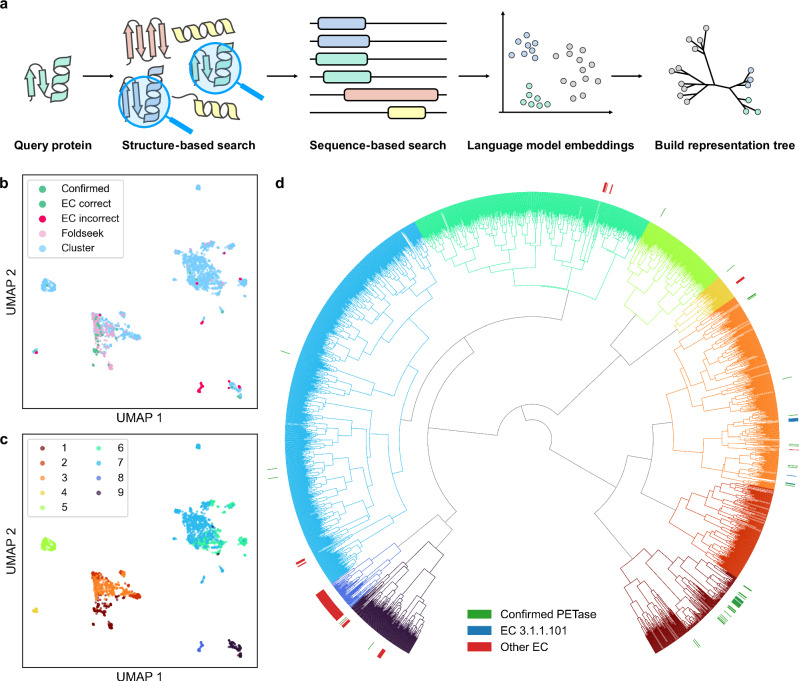
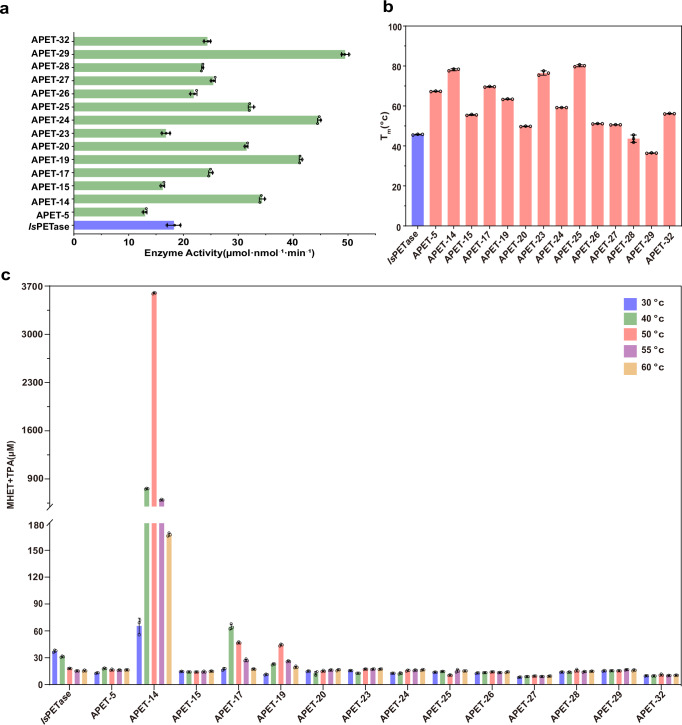
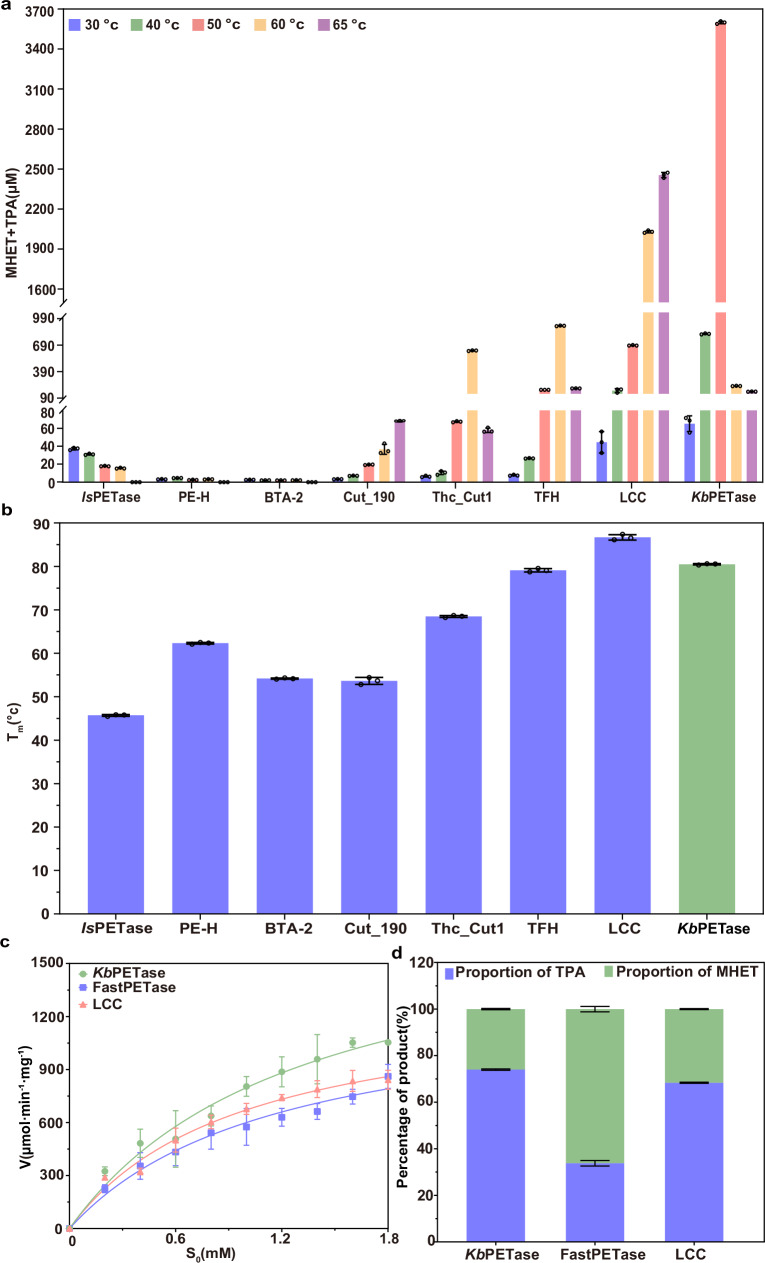
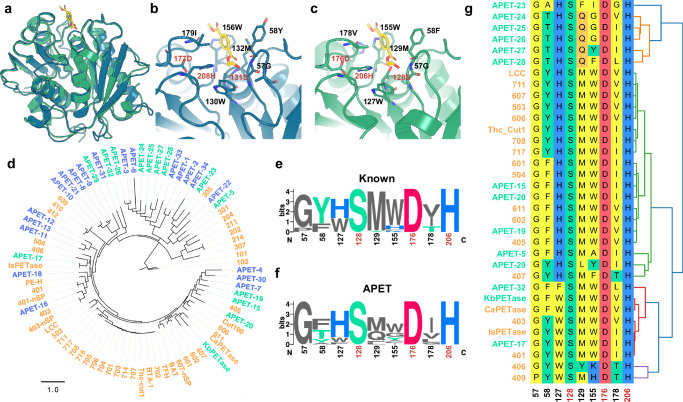
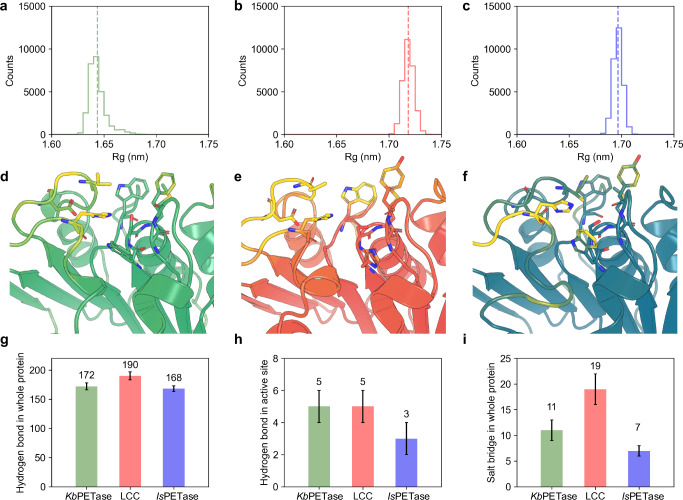
Plastic waste, particularly polyethylene terephthalate (PET), presents significant environmental challenges, driving extensive research into enzymatic biodegradation. However, existing PET hydrolases (PETases) are limited by narrow sequence diversity and suboptimal performance. This study introduces VenusMine, a protein discovery pipeline that integrates protein language models (PLMs) with a representation tree to identify PETases based on structural similarity using sequence information. Using the crystal structure of Is PETase as a template, VenusMine identifies and clusters target proteins. Candidates are further screened using PLM-based assessments of solubility and thermostability, leading to the selection of 34 proteins for biochemical validation. Results reveal that 14 candidates exhibit PET degradation activity across 30–60 °C. Notably, a PET hydrolase from Kibdelosporangium banguiense ( Kb PETase) demonstrates a melting temperature (T m ) 32 °C higher than Is PETase and exhibits the highest PET degradation activity within 30 – 65 °C among wild-type PETases. Kb PETase also surpasses FastPETase and LCC in catalytic efficiency. X-ray crystallography and molecular dynamics simulations show that Kb PETase possesses a conserved catalytic domain and enhanced intramolecular interactions, underpinning its improved functionality and thermostability. This work demonstrates a novel deep learning approach for discovering natural PETases with enhanced properties.
Overview
The claims and statistics of this paper haven’t been checked yet.
Run the check — free, no account needed. It reads the open-access text and checks the sources it cites.
Integrity signals
Registry
Cites
Statistics
Figures
Verification
Claims the paper makes
The claims and statistics of this paper haven’t been checked yet.
Run the check — free, no account needed. It reads the open-access text and checks the sources it cites.
Self-check
Percentages, sums and reported differences re-computed from the paper’s own numbers.
The self-check needs the paper’s full text.
Citations
Cites
Highly accurate protein structure prediction with AlphaFold
Jumper, J., Evans, R., Pritzel, A., Green, T., Figurnov, M., Ronneberger, O., Tunyasuvunakool, K., Bates, R., Žídek, A., Potapenko, A., et al. (2021) · Nature · doi:10.1038/s41586-021-03819-2 · Cited by 43,764
Production, use, and fate of all plastics ever made
Geyer, R., Jambeck, J. R., & Law, K. L. (2017) · Science Advances · doi:10.1126/sciadv.1700782 · Cited by 18,606
Plastic waste inputs from land into the ocean
Jambeck, J. R., Geyer, R., Wilcox, C., Siegler, T. R., Perryman, M., Andrady, A., Narayan, R., & Law, K. L. (2015) · Science · doi:10.1126/science.1260352 · Cited by 13,163
Varadi, M., Anyango, S., Deshpande, M., Nair, S., Natassia, C., Yordanova, G., Yuan, D., Stroe, O., Wood, G., Laydon, A., et al. (2022) · Nucleic Acids Research · doi:10.1093/nar/gkab1061 · Cited by 7,850
Evolutionary-scale prediction of atomic level protein structure with a language model
Lin, Z., Akin, H., Rao, R., Hie, B., Zhu, Z., Lu, W., Smetanin, N., Verkuil, R., Kabeli, O., Shmueli, Y., et al. (2022) · doi:10.1101/2022.07.20.500902 · Cited by 5,990
Eriksen, M., Lebreton, L. C. M., Carson, H. S., Thiel, M., Moore, C. J., Borerro, J. C., Galgani, F., Ryan, P. G., & Reisser, J. (2014) · PLoS ONE · doi:10.1371/journal.pone.0111913 · Cited by 4,710
SignalP 5.0 improves signal peptide predictions using deep neural networks
Armenteros, J. J. A., Tsirigos, K. D., Sønderby, C. K., Petersen, T. N., Winther, O., Brunak, S., von HEIJNE, G., & Nielsen, H. (2019) · Nature Biotechnology · doi:10.1038/s41587-019-0036-z · Cited by 4,315
Improved protein structure prediction using potentials from deep learning
Senior, A. W., Evans, R., Jumper, J., Kirkpatrick, J., Sifre, L., Green, T., Qin, C., Žídek, A., Nelson, A. W. R., Bridgland, A., et al. (2020) · Nature · doi:10.1038/s41586-019-1923-7 · Cited by 3,378
A bacterium that degrades and assimilates poly(ethylene terephthalate)
Yoshida, S., Hiraga, K., Takehana, T., Taniguchi, I., Yamaji, H., Maeda, Y., Toyohara, K., Miyamoto, K., Kimura, Y., & Oda, K. (2016) · Science · doi:10.1126/science.aad6359 · Cited by 3,367
Predicted growth in plastic waste exceeds efforts to mitigate plastic pollution
Borrelle, S. B., Ringma, J., Law, K. L., Monnahan, C. C., Lebreton, L., McGivern, A., Murphy, E., Jambeck, J., Leonard, G. H., Hilleary, M. A., et al. (2020) · Science · doi:10.1126/science.aba3656 · Cited by 3,219
Plastics Recycling: Challenges and Opportunities
Hopewell, J., Dvorak, R., & Kosior, E. (2009) · Philosophical Transactions of the Royal Society B: Biological Sciences · doi:10.1098/rstb.2008.0311 · Cited by 3,201 · cited 1×
“The increasing environmental impact of plastic waste, particularly PET, underscores the urgent need for innovative and effective biodegradation strategies 5,8,11,28 .”
The global threat from plastic pollution
MacLeod, M., Arp, H. P. H., Tekman, M. B., & Jahnke, A. (2021) · Science · doi:10.1126/science.abg5433 · Cited by 2,951
Fast and accurate protein structure search with Foldseek
van Kempen, M., Kim, S. S., Tumescheit, C., Mirdita, M., Lee, J., Gilchrist, C. L. M., Söding, J., & Steinegger, M. (2022) · doi:10.1101/2022.02.07.479398 · Cited by 2,598
Fast and accurate protein structure search with Foldseek
van Kempen, M., Kim, S. S., Tumescheit, C., Mirdita, M., Lee, J., Gilchrist, C. L. M., Söding, J., & Steinegger, M. (2024) · Nature Biotechnology · doi:10.1038/s41587-023-01773-0 · Cited by 2,596
Evolutionary classification of CRISPR–Cas systems: a burst of class 2 and derived variants
Makarova, K. S., Wolf, Y. I., Iranzo, J., Shmakov, S. A., Alkhnbashi, O. S., Brouns, S. J. J., Charpentier, E., Cheng, D., Haft, D. H., Horvath, P., et al. (2020) · Nature Reviews Microbiology · doi:10.1038/s41579-019-0299-x · Cited by 2,445
An engineered PET depolymerase to break down and recycle plastic bottles
Tournier, V., Topham, C. M., Gilles, A., David, B., Folgoas, C., Moya-Leclair, E., Kamionka, E., Desrousseaux, M.-L., Texier, H., Gavalda, S., et al. (2020) · Nature · doi:10.1038/s41586-020-2149-4 · Cited by 2,176
Chemical recycling of waste plastics for new materials production
Rahimi, A., & Garcı́a, J. M. (2017) · Nature Reviews Chemistry · doi:10.1038/s41570-017-0046 · Cited by 2,148
Plastics of the Future? The Impact of Biodegradable Polymers on the Environment and on Society
Haider, T. P., Völker, C., Kramm, J., Landfester, K., & Wurm, F. R. (2018) · Angewandte Chemie International Edition · doi:10.1002/anie.201805766 · Cited by 1,658
Chemical and biological catalysis for plastics recycling and upcycling
Ellis, L. D., Rorrer, N. A., Sullivan, K. P., Otto, M., McGeehan, J. E., Román‐Leshkov, Y., Wierckx, N. J. P., & Beckham, G. T. (2021) · Nature Catalysis · doi:10.1038/s41929-021-00648-4 · Cited by 1,245
Machine learning-aided engineering of hydrolases for PET depolymerization
Lu, H., Diaz, D. J., Czarnecki, N. J., Zhu, C., Kim, W., Shroff, R., Acosta, D. J., Alexander, B., Cole, H. O., Zhang, Y., et al. (2022) · Nature · doi:10.1038/s41586-022-04599-z · Cited by 1,241
Protein Data Bank: the single global archive for 3D macromolecular structure data
wwPDB consortium, Burley, S. K., Berman, H. M., Bhikadiya, C., Bi, C., Chen, L., Costanzo, L. D., Christie, C., Duarte, J. M., Dutta, S., et al. (2019) · Nucleic Acids Research · doi:10.1093/nar/gky949 · Cited by 1,163
Characterization and engineering of a plastic-degrading aromatic polyesterase
Austin, H. P., Allen, M. D., Donohoe, B. S., Rorrer, N. A., Kearns, F. L., Silveira, R. L., Pollard, B. C., Dominick, G., Duman, R., Omari, K. E., et al. (2018) · Proceedings of the National Academy of Sciences · doi:10.1073/pnas.1718804115 · Cited by 1,124
Webb, H. K., Arnott, J., Crawford, R. J., & Ivanova, E. P. (2012) · Polymers · doi:10.3390/polym5010001 · Cited by 964
From nature to industry: Harnessing enzymes for biocatalysis
Buller, R., Lutz, S., Kazlauskas, R. J., Šnajdrová, R., Moore, J. C., & Bornscheuer, U. T. (2023) · Science · doi:10.1126/science.adh8615 · Cited by 759
Sulaiman, S., Yamato, S., Kanaya, E. N., Kim, J.-J., Koga, Y., Takano, K., & Kanaya, S. (2011) · Applied and Environmental Microbiology · doi:10.1128/aem.06725-11 · Cited by 716
Müller, R., Schrader, H., Profe, J., Dresler, K., & Deckwer, W. (2005) · Macromolecular Rapid Communications · doi:10.1002/marc.200500410 · Cited by 671
Biodegradation of PET: Current Status and Application Aspects
Taniguchi, I., Yoshida, S., Hiraga, K., Miyamoto, K., Kimura, Y., & Oda, K. (2019) · ACS Catalysis · doi:10.1021/acscatal.8b05171 · Cited by 662
Enzymes’ Power for Plastics Degradation
Tournier, V., Duquesne, S., Guillamot, F., Cramail, H., Taton, D., Marty, A., & André, I. (2023) · Chemical Reviews · doi:10.1021/acs.chemrev.2c00644 · Cited by 623
A structural classification of substrate‐binding proteins
Berntsson, R. P. ‐., Smits, S. H. J., Schmitt, L., Slotboom, D.-J., & Poolman, B. (2010) · FEBS Letters · doi:10.1016/j.febslet.2010.04.043 · Cited by 565
Structural insight into catalytic mechanism of PET hydrolase
Han, X., Liu, W., Huang, J., Ma, J., Zheng, Y., Ko, T., LiMin, X., Cheng, Y., Chen, C., & Guo, R. (2017) · Nature Communications · doi:10.1038/s41467-017-02255-z · Cited by 562
Directed evolution of an efficient and thermostable PET depolymerase
Bell, E. L., Smithson, R., Kilbride, S., Foster, J., Hardy, F. J., Ramachandran, S., Tedstone, A. A., Haigh, S. J., Garforth, A. A., Day, P. J., et al. (2022) · Nature Catalysis · doi:10.1038/s41929-022-00821-3 · Cited by 481
Singh, A., Rorrer, N. A., Nicholson, S. R., Erickson, E., DesVeaux, J. S., Avelino, A. F. T., Lamers, P., Bhatt, A. H., Zhang, Y., Avery, G., et al. (2021) · Joule · doi:10.1016/j.joule.2021.06.015 · Cited by 464
MGnify: the microbiome sequence data analysis resource in 2023
Richardson, L., Allen, B., Baldi, G., Beracochea, M., Bileschi, M. L., Burdett, T., Burgin, J., Caballero-Pérez, J., Cochrane, G., Colwell, L. J., et al. (2022) · Nucleic Acids Research · doi:10.1093/nar/gkac1080 · Cited by 464
Danso, D., Schmeisser, C., Chow, J., Zimmermann, W., Wei, R., Leggewie, C., Li, X., Hazen, T. C., & Streit, W. R. (2018) · Applied and Environmental Microbiology · doi:10.1128/aem.02773-17 · Cited by 450
Possibilities and limitations of biotechnological plastic degradation and recycling
Wei, R., Tiso, T., Bertling, J., O’Connor, K. E., Blank, L. M., & Bornscheuer, U. T. (2020) · Nature Catalysis · doi:10.1038/s41929-020-00521-w · Cited by 433
Acero, E. H., Ribitsch, D., Steinkellner, G., Gruber, K. F., Greimel, K. J., Eiteljörg, I., Trotscha, E., Wei, R., Zimmermann, W., Zinn, M., et al. (2011) · Macromolecules · doi:10.1021/ma200949p · Cited by 420
AlphaFold2 and the future of structural biology
Cramer, P. (2021) · Nature Structural & Molecular Biology · doi:10.1038/s41594-021-00650-1 · Cited by 369
Kawai, F., Oda, M., Tamashiro, T., Waku, T., Tanaka, N., Yamamoto, M., Mizushima, H., Miyakawa, T., & Tanokura, M. (2014) · Applied Microbiology and Biotechnology · doi:10.1007/s00253-014-5860-y · Cited by 359
Challenges of unculturable bacteria: environmental perspectives
Bodor, A., Bounedjoum, N., Vincze, G. E., Kis, Á. E., Laczi, K., Bende, G., Szilágyi, Á., Kovács, T., Perei, K., & Rákhely, G. (2020) · Reviews in Environmental Science and Bio/Technology · doi:10.1007/s11157-020-09522-4 · Cited by 352
Towards bio-upcycling of polyethylene terephthalate
Tiso, T., Narančić, T., Wei, R., Pollet, É., Beagan, N., Schröder, K., Honak, A., Jiang, M., Kenny, S. T., Wierckx, N. J. P., et al. (2021) · Metabolic Engineering · doi:10.1016/j.ymben.2021.03.011 · Cited by 345
Bollinger, A., Thies, S., Knieps‐Grünhagen, E., Gertzen, C. G. W., Kobus, S., Hoeppner, A., Ferrer, M., Gohlke, H., Smits, S. H. J., & Jaeger, K. (2020) · Frontiers in Microbiology · doi:10.3389/fmicb.2020.00114 · Cited by 326
Bilingual language model for protein sequence and structure
Heinzinger, M., Weissenow, K., Sanchez, J. G., Henkel, A., Mirdita, M., Steinegger, M., & Rost, B. (2024) · NAR Genomics and Bioinformatics · doi:10.1093/nargab/lqae150 · Cited by 311
Assessment of Four Engineered PET Degrading Enzymes Considering Large-Scale Industrial Applications
Arnal, G., Anglade, J., Gavalda, S., Tournier, V., Chabot, N., Bornscheuer, U. T., Weber, G., & Marty, A. (2023) · ACS Catalysis · doi:10.1021/acscatal.3c02922 · Cited by 272
Kawai, F., Kawabata, T., & Oda, M. (2020) · ACS Sustainable Chemistry & Engineering · doi:10.1021/acssuschemeng.0c01638 · Cited by 266
Furukawa, M., Kawakami, N., Tomizawa, A., & Miyamoto, K. (2019) · Scientific Reports · doi:10.1038/s41598-019-52379-z · Cited by 245
Cui, Y., Chen, Y., Sun, J., Zhu, T., Pang, H., Li, C., Geng, W.-C., & Wu, B. (2024) · Nature Communications · doi:10.1038/s41467-024-45662-9 · Cited by 221
Self-citationKleeberg, I., Hetz, C., Kroppenstedt, R. M., Müller, R., & Deckwer, W. (1998) · Applied and Environmental Microbiology · doi:10.1128/aem.64.5.1731-1735.1998 · Cited by 213
Low Carbon Footprint Recycling of Post‐Consumer PET Plastic with a Metagenomic Polyester Hydrolase
Sonnendecker, C., Oeser, J., Richter, P. K., Hille, P., Zhao, Z., Fischer, C., Lippold, H., Blázquez‐Sánchez, P., Engelberger, F., Ramírez‐Sarmiento, C. A., et al. (2021) · ChemSusChem · doi:10.1002/cssc.202101062 · Cited by 208
Sourcing thermotolerant poly(ethylene terephthalate) hydrolase scaffolds from natural diversity
Erickson, E., Gado, J. E., Avilán, L., Bratti, F., Brizendine, R. K., Cox, P. A., Gill, R. S., Graham, R., Kim, D.-J., König, G., et al. (2022) · Nature Communications · doi:10.1038/s41467-022-35237-x · Cited by 192
Thomsen, T. B., Hunt, C. J., & Meyer, A. S. (2022) · New Biotechnology · doi:10.1016/j.nbt.2022.02.006 · Cited by 191
Multiple Substrate Binding Mode-Guided Engineering of a Thermophilic PET Hydrolase
Pfaff, L., Gao, J., Li, Z., Jäckering, A., Weber, G., Mičan, J., Chen, Y., Dong, W., Han, X., Feiler, C., et al. (2022) · ACS Catalysis · doi:10.1021/acscatal.2c02275 · Cited by 185
Chandonia, J., Guan, L., Lin, S., Yu, C., Fox, N. K., & Brenner, S. E. (2021) · Nucleic Acids Research · doi:10.1093/nar/gkab1054 · Cited by 182
Then, J., Wei, R., Oeser, T., Barth, M., Belisário‐Ferrari, M. R., Schmidt, J., & Zimmermann, W. (2014) · Biotechnology Journal · doi:10.1002/biot.201400620 · Cited by 181
Xi, X., Ni, K., Hao, H., Shang, Y., Zhao, B. Y., & Qian, Z. (2020) · Enzyme and Microbial Technology · doi:10.1016/j.enzmictec.2020.109715 · Cited by 147
Kushwaha, A., Goswami, L., Singhvi, M. S., & Kim, B. S. (2022) · Chemical Engineering Journal · doi:10.1016/j.cej.2022.141230 · Cited by 126
Comparative Biochemistry of Four Polyester (PET) Hydrolases**
Bååth, J. A., Borch, K., Jensen, K., Brask, J., & Westh, P. (2020) · ChemBioChem · doi:10.1002/cbic.202000793 · Cited by 113
Eiamthong, B., Meesawat, P., Wongsatit, T., Jitdee, J., Sangsri, R., Patchsung, M., Aphicho, K., Suraritdechachai, S., Huguenin‐Dezot, N., Tang, S., et al. (2022) · Angewandte Chemie International Edition · doi:10.1002/anie.202203061 · Cited by 86
Production of a recombinant polyester-cleaving hydrolase from Thermobifida fusca in Escherichia coli
Dresler, K., van den Heuvel, J., Müller, R., & Deckwer, W. (2006) · Bioprocess and Biosystems Engineering · doi:10.1007/s00449-006-0069-9 · Cited by 53
Learning deep representations of enzyme thermal adaptation
Li, G., Buric, F., Zrimec, J., Viknander, S., Nielsen, J., Zelezniak, A., & Engqvist, M. K. M. (2022) · Protein Science · doi:10.1002/pro.4480 · Cited by 44
Identification and classification of reverse transcriptases in bacterial genomes and metagenomes
Sharifi, F., & Ye, Y. (2021) · Nucleic Acids Research · doi:10.1093/nar/gkab1207 · Cited by 42
Dong, Q., Yuan, S., Wu, L., Su, L., Zhao, Q., Wu, J., Huang, W., & Zhou, J. (2020) · Bioresources and Bioprocessing · doi:10.1186/s40643-020-00324-8 · Cited by 38
From Bulk to Binding: Decoding the Entry of PET into Hydrolase Binding Pockets
Jäckering, A., Göttsch, F., Schäffler, M., Doerr, M., Bornscheuer, U. T., Wei, R., & Strodel, B. (2024) · JACS Au · doi:10.1021/jacsau.4c00718 · Cited by 34
PROTSOLM: Protein Solubility Prediction with Multi-modal Features
Tan, Y., Zheng, J., Liang, H., & Zhong, B. (2024) · IEEE International Conference on Bioinformatics and Biomedicine (BIBM) · doi:10.1109/bibm62325.2024.10822310 · Cited by 27
Self-citationDeterminants for an Efficient Enzymatic Catalysis in Poly(Ethylene Terephthalate) Degradation
Castro-Rodríguez, J. A., Rodríguez‐Sotres, R., & Farrés, A. (2023) · Catalysts · doi:10.3390/catal13030591 · Cited by 25
Pascual, J., González, I., Estévez, M. M. C., Benito, P., Trujillo, M. E., & Genilloud, O. (2016) · Antonie van Leeuwenhoek · doi:10.1007/s10482-016-0669-6 · Cited by 13
Zheng, L., & Hong, L. (2019) · Chinese Journal of Polymer Science · doi:10.1007/s10118-019-2312-2 · Cited by 9
Self-citationUniversal dynamical onset in water at distinct material interfaces
Zheng, L., Liu, Z., Zhang, Q., Li, S.-B., Huang, J., Zhang, L., Zan, B., Tyagi, M., Cheng, H., Zuo, T.-S., et al. (2022) · Chemical Science · doi:10.1039/d1sc04650k · Cited by 6
Self-citationDecoupling of the onset of anharmonicity between a protein and its surface water around 200 K
Zheng, L., Zhong, B., Wu, B., Tan, Y., Huang, J., Tyagi, M., Sakai, V. G., Yamada, T., O’Neill, H., Zhang, Q., et al. (2024) · eLife · doi:10.7554/elife.95665 · Cited by 6
Self-citation
Cited by
Sorted by citations
Jahanshahi, D. A., Barzani, M. R. R., Bahram, M., Ariaeenejad, S., & Kavousi, K. (2025) · Ecotoxicology and Environmental Safety · doi:10.1016/j.ecoenv.2024.117640 · Cited by 41
Machine Learning-Guided Identification of PET Hydrolases from Natural Diversity
Norton‐Baker, B., Komp, E., Gado, J. E., Denton, M. C. R., Mathews, I. I., Murphy, N. P., Erickson, E., Storment, O. O., Sarangi, R., Gauthier, N. P., et al. (2025) · ACS Catalysis · doi:10.1021/acscatal.5c03460 · Cited by 36
The diversity of PET degrading enzymes: A systematic review of sequence, structure, and function
Ahituv, N., Freund, D., Mireles, R., & Noda‐García, L. (2025) · Protein Science · doi:10.1002/pro.70282 · Cited by 21
State-of-the-art advances in biotechnology for polyethylene terephthalate bio-depolymerization
Liu, Y., Zhou, J., Li, Y., Yan, X., Xu, A., Zhou, X., Liu, W., Xu, Y., Su, T., Wang, S., et al. (2025) · Green Carbon · doi:10.1016/j.greenca.2025.02.003 · Cited by 18
Lu, X., Cao, M., Ma, M., Wu, Y., Qu, M., Du, F., Ji, R., Duan, M., Dong, L., Liu, K., et al. (2025) · Food Bioengineering · doi:10.1002/fbe2.70029 · Cited by 12
Metadata
- Authors
- Wu, B., Zhong, B., Zheng, L., Huang, R., Jiang, S., Li, M., Hong, L., & Tan, P.
- Affiliations
- Shanghai Jiao Tong University (CN)
- Corresponding author
- Zheng, Lirong
- Hong, Liang
- Tan, Pan
- Venue
- Nature Communications
- Published
- 2025-07-05
- Volume
- 16
- Issue
- 1
- Pages
- 6211-6211
- ISSN
- 2041-1723 (ISSN-L)
- PMC
- PMC12228687
- OpenAlex
- W4412048048
- Cited by
- 50
- References
- 67
- Citations by year
- 2026: 39 · 2025: 11
- FWCI
- 14.93
- Type
- journal article
- Language
- en
- Open access
- gold
- doi.org
- Locations
- Nature Communications (publishedVersion, cc-by)
- bioRxiv (Cold Spring Harbor Laboratory) (acceptedVersion)
- Research Square (acceptedVersion, cc-by)
- Europe PMC (PubMed Central) (publishedVersion, cc-by)
- PubMed Central (publishedVersion, cc-by)
- PubMed (publishedVersion)
- DOAJ (DOAJ: Directory of Open Access Journals) (submittedVersion, cc-by-sa)
- Funders
- National Natural Science Foundation of China (12104295)
- Shanghai Municipal Education Commission
- Science and Technology Commission of Shanghai Municipality
- Shanghai Jiao Tong University (21X010200843)
- Centre Scientifique et Technique du Bâtiment
- National Key Research and Development Program of China
- Topics
- Life Sciences › Biochemistry, Genetics and Molecular Biology › Molecular Biology › Enzyme Catalysis and Immobilization
- Life Sciences › Biochemistry, Genetics and Molecular Biology › Biotechnology › Enzyme Production and Characterization
- Life Sciences › Biochemistry, Genetics and Molecular Biology › Molecular Biology › Protein Structure and Dynamics
- Keywords
- PET hydrolase, polyethylene terephthalate degradation, plastic waste biodegradation, protein language models, thermal stability, catalytic efficiency, protein solubility prediction
- MeSH terms
- Hydrolases, Polyethylene Terephthalates, Protein Conformation, Crystallography, X-Ray, Molecular Dynamics Simulation
About these checks
Registry, retraction, Cites and statistics results are computed, not judged, with one exception: a printed reference that no index lists is read once by a model before it counts as a citation error. Claims are extracted by a model and kept only when their quote appears verbatim in the text; each cited source is then checked, with a model’s help, for whether it says what the claim relies on. Those verdicts can be wrong — read the claim’s quote and the cited source before relying on one.
Statistics and arithmetic are recomputed, not judged.
Confidence bands are shown only for fields calibrated on our annotated test set. None is calibrated yet, so no band is shown.
What counts as a claim ›How we measure confidence ›How we check this ›
Are you an author, or do you see a problem with this page? Request a review
