

TYK2 mediates neuroinflammation in Alzheimer’s disease brains with TDP-43 pathology
Open accessThe DOI matches its Crossref record; 132 of the 132 references it cites were found in a registry or an index; none of the 126 sources its claims cite is checked for support yet.
Abstract
Neuroinflammation is a pathological feature of neurodegenerative diseases like Alzheimer’s disease and ALS. Cytoplasmic dsRNA (cdsRNA) triggers a type-I interferon response in human neural cells, leading to their death, and is found in neurons of C9ORF72 -ALS patients. Here, we report the spatial coincidence of cdsRNA and pTDP-43 inclusions in human postmortem tissue with Alzheimer’s disease pathology, and upregulated interferon response genes in affected regions. CdsRNA also accumulates in a human TDP-43 G298S iPSC cortical neuronal model. We use cryptic exon detection as a proxy for TDP-43 mislocalization and demonstrate that FDA-approved JAK inhibitors baricitinib and ruxolitinib, which block interferon signaling, show protective effects only in brains with elevated cryptic exon expression. A CRISPR screen reveals TYK2 as a top hit, and TYK2 knockdown and the selective TYK2 inhibitor deucravacitinib rescue cdsRNA-induced toxicity. We find parallel neuroinflammatory mechanisms, dependent on TYK2 - a potential disease-modifying target - for TDP-43-associated Alzheimer’s disease and C9ORF72 -ALS.
Overview
CoChat Summary
TL;DR
The paper reports that cytoplasmic dsRNA (cdsRNA) is spatially coincident with pTDP-43 inclusions in Alzheimer’s disease brains and that TYK2 mediates cdsRNA-induced neuroinflammatory toxicity. Selective TYK2 inhibition rescues cdsRNA-induced neural cell death, and CXCL10 is nominated as a candidate biomarker for this pathology.
Key findings
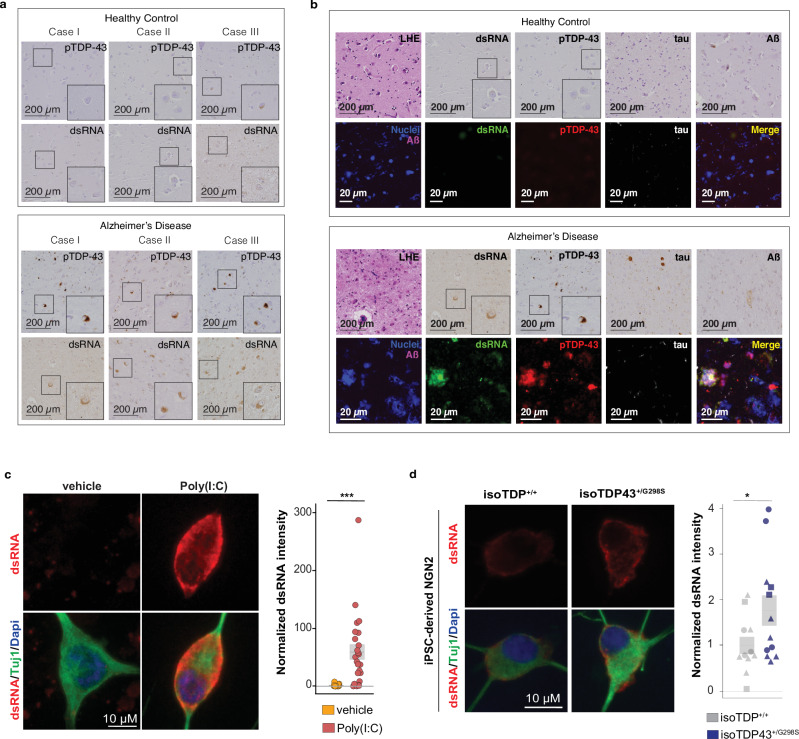
- In postmortem amygdala from 9 healthy controls and 10 AD patients, cdsRNA was detected in all individuals with severe pTDP-43 pathology and in 33% of mild pTDP-43 cases; cdsRNA and pTDP-43 were spatially coincident (enriched two-fold in AD cases), while NFTs and Aβ plaques did not overlap with either. Phosphorylated PKR was observed only in cdsRNA-positive AD brains, with close to 66% coincident with cdsRNA.
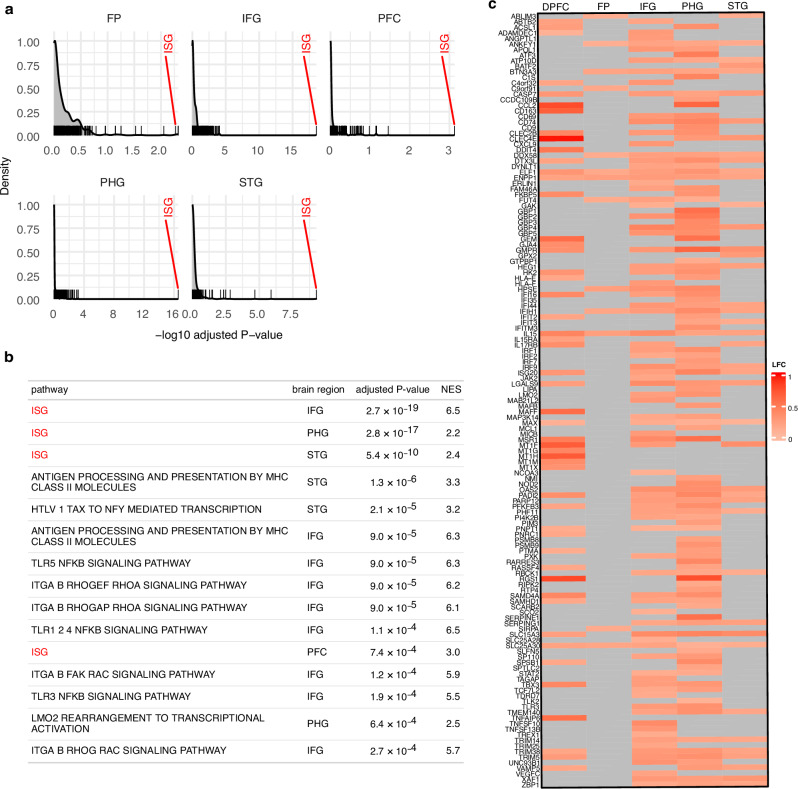
- RNA-sequencing from ROSMAP/MSBB showed an interferon-stimulated gene (ISG) signature among the top 3 most enriched gene sets across brain regions, with 139 unique ISGs significantly upregulated and 51 significantly downregulated (adjusted P < 0.05) in AD versus controls; the parahippocampal gyrus had the greatest number of upregulated ISGs.
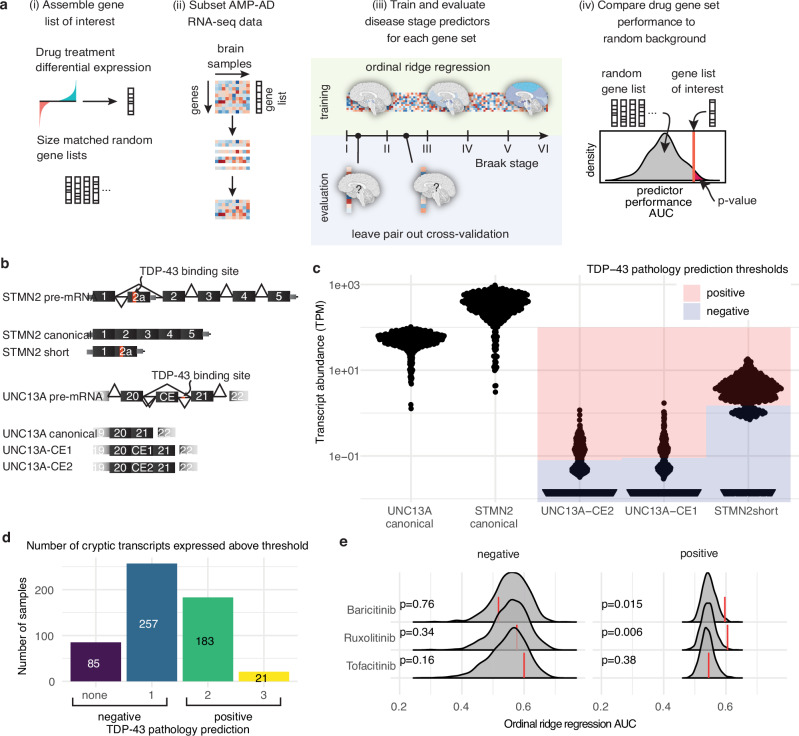
- DRIAD-SP, updated with cryptic exon (CE) expression as a proxy for TDP-43 pathology, identified baricitinib and ruxolitinib—but not tofacitinib—as significant hits only in AD patients with two or more CEs; none of the three drugs were significant in no/low-CE patients (baricitinib P = 0.76, ruxolitinib P = 0.34, tofacitinib P = 0.16). 37% of cases were classified TDP-43-positive.
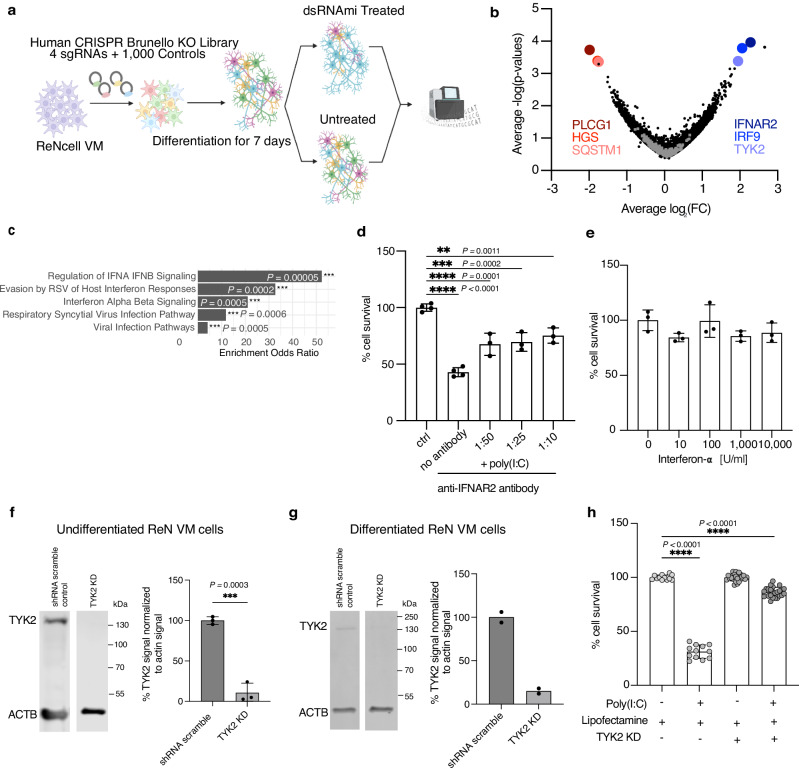
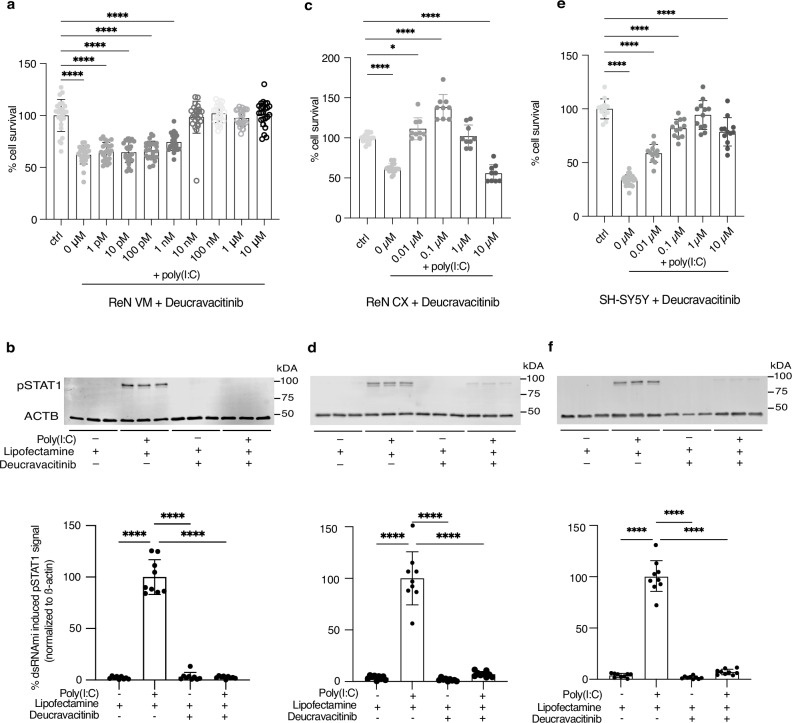
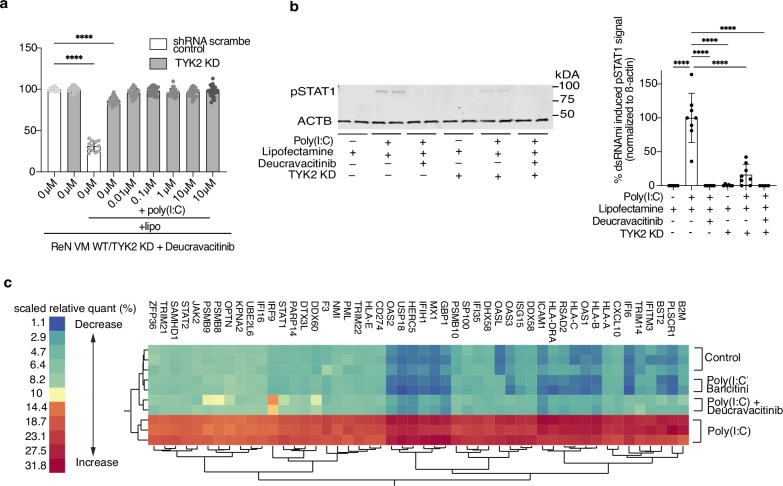
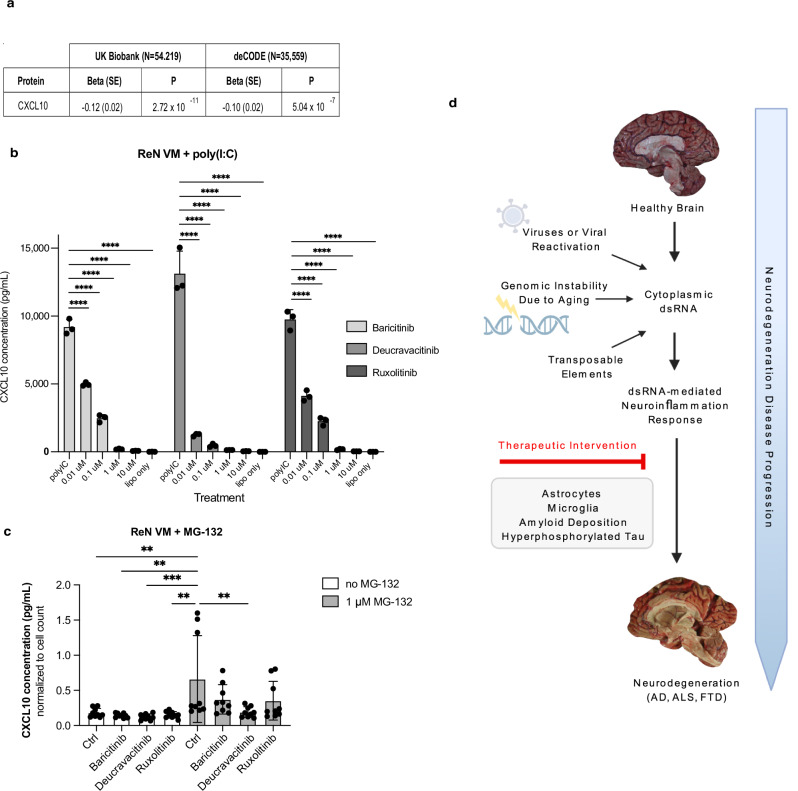
- A genome-wide CRISPR screen found IFNAR2 (LFC = 2.23825, P = 0.0001), IRF9 (LFC = 2.0625, P = 0.0002), and TYK2 (LFC = 1.95, P = 0.0004) as top rescue hits; TYK2 knockdown rescued poly(I:C)-induced toxicity up to 86% (P < 0.0001), and deucravacitinib fully rescued toxicity at 0.01–10 µM with EC50 = 1.483 nM in ReN VM cells. The TYK2 loss-of-function SNP rs34536443 was associated with lower plasma CXCL10 in UK Biobank (effect = −0.12, SE = 0.02, P = 2.72 × 10⁻¹¹) and DeCODE (effect = −0.10, SE = 0.02, P = 5.04 × 10⁻¹¹).
Methods
- Human postmortem FFPE amygdala sections from 9 controls and 10 AD patients were analyzed by immunohistochemistry and cyclic immunofluorescence for cdsRNA, pTDP-43, tau, Aβ, and pPKR; iPSC-derived NGN2 cortical-like neurons with TDP-43 G298S and ReN VM/CX and SH-SY5Y neural cell models were used with poly(I:C), MG-132, JAK/TYK2 inhibitors, and TYK2 knockdown.
- Computational analyses included differential gene expression and ISG enrichment from ROSMAP/MSBB AMP-AD RNA-sequencing, DRIAD-SP ordinal ridge regression predicting Braak stage with CE-based TDP-43 stratification, a Brunello genome-wide CRISPR screen, TMT mass spectrometry, and GWAS of plasma CXCL10 using UK Biobank and DeCODE data.
- Statistical tests included unpaired two-tailed t-tests, ordinary one-way ANOVA with Dunnett’s correction, Benjamini-Hochberg correction, and empirical P values from size-matched random gene sets; CXCL10 was measured by electrochemiluminescence immunoassay.
Limitations
- The paper states that only a few brain regions were examined in both histologic and computational analyses, and future studies should analyze more brain regions, more diverse patients, and different disease stages; this may explain why cdsRNA foci and NFTs were not observed to be spatially coincident.
- The paper states that the source of cdsRNA in AD and other drivers besides TDP-43 remain to be determined, and that there are no suitable mouse models for AD or similar neurodegenerative processes including pTDP-43 pathology, other than the Nd1 and Nd2 mice. It also notes that deucravacitinib is unlikely to cross the blood-brain barrier based on its polar molecular structure, making brain-penetrant TYK2-selective inhibitors necessary.
- Evident from the text: the ReN VM and CX cell models lack STING and microglia, so the findings are independent of cGAS-STING signaling and do not capture microglial contributions; the histologic analysis used small samples (9 controls, 10 AD patients), and sex was not directly considered in study design or data analysis.
Model-written summary. Check it against the paper before relying on it.
Integrity signals
Registry
Cites
Statistics
Figures
Verification
Claims the paper makes
0 Valid · 0 Not valid · 49 Not checked · 110 Own results and interpretations
A result the paper reports from its own data — it cites no other source for it, so there is none to check. The quote shows it is in the paper.
In the paper
“the selective TYK2 inhibitor deucravacitinib rescue cdsRNA-induced toxicity”
- Also stated in: § Validation with deucravacitinib, a specific TYK2 inhibitor · boosted
“exposure to deucravacitinib rescues dsRNA toxicity fully at all previously tested concentrations from 0.01 µM to 10 µM”
§ TYK2 mediates neuroinflammation in Alzheimer’s disease brains with TDP-43 pathology > Abstract
boostedstates a cause- Asserted: passes — The authors put it forward as true.
- Checkable: passes — It can be checked against evidence.
- Load-bearing: passes — The paper’s conclusions depend on it.
- Based: passes — The paper gives a reason why it holds.
- Also stated in: § Validation with deucravacitinib, a specific TYK2 inhibitor · boosted
None of the sources cited for this claim have been checked yet.
In the paper
“The parahippocampal gyrus (PHG), a brain region that shows atrophy early on in disease progression37,38, had the greatest number of upregulated ISGs, followed by the dorsolateral prefrontal cortex (DPFC) and the inferior frontal gyrus (IFG)”
§ TYK2 mediates neuroinflammation in Alzheimer’s disease brains with TDP-43 pathology > Results > Increased interferon signaling in AD
What the sources say
- Not checked yetcites [37] Echávarri, C. et al. Atrophy in the parahippocampal gyrus as an early biomarker of Alzheimer’s disease. Brain Struct. Funct. 215, 265 (2011). 20957494 PMC3041901 source
- Not checked yetcites [38] Braak, H. & Braak, E. Neurofibrillary changes confined to the entorhinal region and an abundance of cortical amyloid in cases of presenile and senile dementia. Acta Neuropathol. 80, 479–486 (1990). 2251904 source
plain- Asserted: passes — The authors put it forward as true.
- Checkable: passes — It can be checked against evidence.
- Load-bearing: unclear — It is unclear whether the paper’s conclusions depend on it.
- Based: passes — The paper gives a reason why it holds.
A result the paper reports from its own data — it cites no other source for it, so there is none to check. The quote shows it is in the paper.
In the paper
“we lipofected control iPSC-derived NGN2 cortical-like neurons with poly(I:C), a dsRNA mimetic consisting of polyinosinic-polycytidylic acid, and were able to detect an increase in cdsRNA signal”
§ TYK2 mediates neuroinflammation in Alzheimer’s disease brains with TDP-43 pathology > Results > Presence and immunogenicity of cdsRNA in AD
plainstates a cause- Asserted: passes — The authors put it forward as true.
- Checkable: passes — It can be checked against evidence.
- Load-bearing: unclear — It is unclear whether the paper’s conclusions depend on it.
- Based: passes — The paper gives a reason why it holds.
A result the paper reports from its own data — it cites no other source for it, so there is none to check. The quote shows it is in the paper.
In the paper
“FDA-approved JAK inhibitors baricitinib and ruxolitinib, which block interferon signaling, show protective effects only in brains with elevated cryptic exon expression”
- Also stated in: § DRIAD-SP predicts efficacy of blocking interferon signaling · plain
“Both baricitinib and ruxolitinib, but not tofacitinib, were significant hits in the predictor trained on RNA-sequencing data from AD patients with two or more CEs”
§ TYK2 mediates neuroinflammation in Alzheimer’s disease brains with TDP-43 pathology > Abstract
plainstates a cause- Asserted: passes — The authors put it forward as true.
- Checkable: passes — It can be checked against evidence.
- Load-bearing: passes — The paper’s conclusions depend on it.
- Based: passes — The paper gives a reason why it holds.
- Also stated in: § DRIAD-SP predicts efficacy of blocking interferon signaling · plain
A result the paper reports from its own data — it cites no other source for it, so there is none to check. The quote shows it is in the paper.
In the paper
“Hence, 37% of cases were classified “TDP-43-positive”-AD patients”
§ TYK2 mediates neuroinflammation in Alzheimer’s disease brains with TDP-43 pathology > Results > DRIAD-SP predicts efficacy of blocking interferon signaling
plainn = 546- Asserted: passes — The authors put it forward as true.
- Checkable: passes — It can be checked against evidence.
- Load-bearing: passes — The paper’s conclusions depend on it.
- Based: passes — The paper gives a reason why it holds.
72 more claims
Create a free account to see all 159 claims and to verify the 126 references still open.
- It may state two separate claims as one. 46
- Probably not a substantial claim. 51
- The quote only partly states this claim. 1
Self-check
Percentages, sums and reported differences re-computed from the paper’s own numbers.
Each contradiction between two passages listed here was confirmed by an independent check.
Rated major: it would touch a result — a value a result rests on, reported and recomputed p-values on opposite sides of the significance level, two passages that conflict with no sign which is right, or a cited work retracted before this paper was published.
In the paper
§ TYK2 mediates neuroinflammation in Alzheimer’s disease brains with TDP-43 pathology > Results > CRISPR screen and validation of TYK2
“These post-differentiation cells were treated for 48 hours with poly(I:C) or mock lipofectamine transfection”
§ TYK2 mediates neuroinflammation in Alzheimer’s disease brains with TDP-43 pathology > Methods > CRISPR screen
“After 3 days of treatment, genomic DNA was isolated from each group of cells.”
Rated minor: it would not touch a result — a value no result rests on, a p-value that stays on the same side of the significance level, or a conflict that is clerical, resolved elsewhere in the paper, or outside its own findings.
In the paper
§ TYK2 mediates neuroinflammation in Alzheimer’s disease brains with TDP-43 pathology > Results > CRISPR screen and validation of TYK2
“After 48 hours, there was no decrease in cell viability at any dose tested (Fig. 4e).”
§ TYK2 mediates neuroinflammation in Alzheimer’s disease brains with TDP-43 pathology > Methods > ReN VM, CX and SH-SY5Y cell treatments
“Cell viability was assessed 72 hours (VM, SH-SY5Y) and 7 days (CX) post-treatment using the CellTiter-Glo Assay”
Rated minor: it would not touch a result — a value no result rests on, a p-value that stays on the same side of the significance level, or a conflict that is clerical, resolved elsewhere in the paper, or outside its own findings.
In the paper
§ TYK2 mediates neuroinflammation in Alzheimer’s disease brains with TDP-43 pathology > Results > Presence and immunogenicity of cdsRNA in AD
“Center line, median; box limits, upper and lower quartiles.”
§ TYK2 mediates neuroinflammation in Alzheimer’s disease brains with TDP-43 pathology > Methods > Statistics & reproducibility
“Boxplots and bars represent the mean and standard error of the mean, respectively.”
Rated minor: it would not touch a result — a value no result rests on, a p-value that stays on the same side of the significance level, or a conflict that is clerical, resolved elsewhere in the paper, or outside its own findings.
In the paper
§ TYK2 mediates neuroinflammation in Alzheimer’s disease brains with TDP-43 pathology > Results > Presence and immunogenicity of cdsRNA in AD
“Each dot is a field of view (40x magnification, one well analyzed per condition).”
§ TYK2 mediates neuroinflammation in Alzheimer’s disease brains with TDP-43 pathology > Methods > Statistics & reproducibility
“Sample sizes were chosen in a way that ensures at least three (except for Fig. 4g which is a proof-of-concept and does not require statistics) and up to 24 biological replicates per condition”
Citations
Cites
NIH Image to ImageJ: 25 years of image analysis
Schneider, C. A., Rasband, W. S., & Eliceiri, K. W. (2012) · Nature Methods · doi:10.1038/nmeth.2089 · Cited by 64,638
Neuropathological stageing of Alzheimer-related changes.
Braak, H., & Braak, E. (1991) · Acta Neuropathologica · doi:10.1007/bf00308809 · Cited by 16,123
Salmon provides fast and bias-aware quantification of transcript expression
Patro, R., Duggal, G., Love, M. I., Irizarry, R. A., & Kingsford, C. (2017) · Nature Methods · doi:10.1038/nmeth.4197 · Cited by 12,700
Enrichr: a comprehensive gene set enrichment analysis web server 2016 update
Kuleshov, M. V., Jones, M. R., Rouillard, A. D., Fernandez, N. F., Duan, Q., Wang, Z., Koplev, S., Jenkins, S. L., Jagodnik, K. M., Lachmann, A., et al. (2016) · Nucleic Acids Research · doi:10.1093/nar/gkw377 · Cited by 10,799
Enrichr: interactive and collaborative HTML5 gene list enrichment analysis tool
Chen, E. Y., Tan, C. M., Kou, Y., Duan, Q., Wang, Z., Meirelles, G. V., Clark, N. R., & Ma’ayan, A. (2013) · BMC Bioinformatics · doi:10.1186/1471-2105-14-128 · Cited by 7,814
Ubiquitinated TDP-43 in Frontotemporal Lobar Degeneration and Amyotrophic Lateral Sclerosis
Neumann, M., Sampathu, D. M., Kwong, L. K., Truax, A. C., Micsenyi, M. C., Chou, T. T., Bruce, J., Schuck, T., Grossman, M., Clark, C. M., et al. (2006) · Science · doi:10.1126/science.1134108 · Cited by 6,576
The PRIDE database resources in 2022: a hub for mass spectrometry-based proteomics evidences
Perez-Riverol, Y., Bai, J., Bandla, C., García-Seisdedos, D., Hewapathirana, S., Kamatchinathan, S., Kundu, D. J., Prakash, A., Frericks-Zipper, A., Eisenacher, M., et al. (2022) · Nucleic Acids Research · doi:10.1093/nar/gkab1038 · Cited by 6,125
Optimized sgRNA design to maximize activity and minimize off-target effects of CRISPR-Cas9
Doench, J. G., Fusi, N., Sullender, M., Hegde, M., Vaimberg, E. W., Donovan, K. F., Smith, I., Tothova, Z., Wilen, C., Orchard, R., et al. (2016) · Nature Biotechnology · doi:10.1038/nbt.3437 · Cited by 4,637
Self-citationDifferential analyses for RNA-seq: transcript-level estimates improve gene-level inferences
Soneson, C., Love, M. I., & Robinson, M. D. (2015) · F1000Research · doi:10.12688/f1000research.7563.1 · Cited by 3,929
Fast gene set enrichment analysis
Korotkevich, G., Sukhov, V., Budin, N., Shpak, B., Artyomov, M. N., & Sergushichev, A. (2016) · bioRxiv (Cold Spring Harbor Laboratory) · doi:10.1101/060012 · Cited by 3,454
Cited by
TYK2 regulates tau levels, phosphorylation and aggregation in a tauopathy mouse model
Kim, J., Tadros, B., Liang, Y. H., Kim, Y., Lasagna-Reeves, C., Sonn, J. Y., Chung, D.-E. C., Hyman, B., Holtzman, D. M., & Zoghbi, H. Y. (2024) · Nature Neuroscience · doi:10.1038/s41593-024-01777-2 · Cited by 32
Pharmacological targeting of the JAK–STAT pathway: new concepts and emerging indications
Haikarainen, T., Virtanen, A. T., Cravatt, B. F., & Silvennoinen, O. (2026) · Nature Reviews Drug Discovery · doi:10.1038/s41573-025-01336-9 · Cited by 23
TDP-43 in Alzheimer's disease: Pathophysiology and therapeutic strategies
Zhou, X., Lin, X., He, Y., Huang, N., & Luo, Y. (2025) · Pharmacological Research · doi:10.1016/j.phrs.2025.107977 · Cited by 12
Review of Promising Off-Label Use of Deucravacitinib
Mima, Y., Yamamoto, M., & Iozumi, K. (2025) · International Journal of Molecular Sciences · doi:10.3390/ijms26199447 · Cited by 7
Doser, R. L., & LaRocca, T. J. (2026) · Aging Cell · doi:10.1111/acel.70616 · Cited by 5
Neuropsychiatric systemic lupus erythematosus – current and novel treatments
Gupta, R., Agapoff, M., & Diamond, B. (2025) · Current Opinion in Rheumatology · doi:10.1097/bor.0000000000001141 · Cited by 3
Luo, Z., Manavis, J., Yu, W., & 孙宝飞 (2026) · Human Brain · doi:10.15302/hb.2026.0009
Probing Allosteric Kinase Modulators as Next Game-Changers in Fighting Neurodegeneration
Roggiolani, E., Rosini, M., Minarini, A., & Basagni, F. (2026) · Journal of Medicinal Chemistry · doi:10.1021/acs.jmedchem.5c03783
Chen, J.-H., & Tsai, T. (2026) · Dermatology and Therapy · doi:10.1007/s13555-026-01761-7
Metadata
- Authors
- König, L. E., Rodriguez, S., Hug, C., Daneshvari, S., Chung, A., Appleman, M., Tsai, M., Bradshaw, G. A., Sahin, A., Song, Y., Zhou, G., Eisert, R. J., Piccioni, F., Marques, C., Powley, S., Yarmolinsky, J., Wainger, B. J., Das, S., Kalocsay, M., Dehghan, A., Tzoulaki, I., Sokolov, A., Sorger, P., Root, D. E., & Albers, M. W.
- Affiliations
- Harvard University (US)
- Massachusetts General Hospital (US)
- Broad Institute (US)
- Imperial College London (GB)
- The University of Texas MD Anderson Cancer Center (US)
- Academy of Athens (GR)
- Corresponding author
- Albers, Mark W.
- ORCID
- König, Laura E.
- Hug, Clemens
- Chung, Alexander
- Appleman, Mark
- Bradshaw, Gary A.
- Song, Yuyu
- Zhou, George
- Eisert, Robyn J.
- Piccioni, Federica
- Marques, Christine
- Powley, Sharon
- Yarmolinsky, James
- Wainger, Brian J.
- Das, Sudeshna
- Kalocsay, Marian
- Dehghan, Abbas
- Tzoulaki, Ioanna
- Sokolov, Artem
- Sorger, Peter
- Root, David E.
- Albers, Mark W.
- Venue
- Nature Communications
- Published
- 2026-03-14
- Volume
- 17
- Issue
- 1
- Pages
- 3967
- ISSN
- 2041-1723 (ISSN-L)
- PMC
- PMC13133158
- OpenAlex
- W7135390020
- Semantic Scholar
- dd94ee3388592b9e47eec2c3c7b5bb5468d26641
- Cited by
- 9
- References
- 128
- Citations by year
- 2026: 5
- FWCI
- 12.20
- Type
- journal article
- Language
- en
- Open access
- gold
- doi.org
- Licence
- cc-by
- creativecommons.org/licenses/by/4.0 (tdm)
- creativecommons.org/licenses/by/4.0 (vor, 48 d)
- Locations
- Nature Communications (publishedVersion, cc-by)
- bioRxiv (Cold Spring Harbor Laboratory) (submittedVersion, cc-by-nc-nd)
- PubMed Central (publishedVersion, cc-by)
- PubMed (publishedVersion)
- PubMed Central (submittedVersion, cc-by-nc-nd)
- PubMed (submittedVersion)
- DOAJ (DOAJ: Directory of Open Access Journals) (submittedVersion)
- Funders
- U.S. Department of Health & Human Services | National Institutes of Health (R01 AG058063, R01 AG078297)
- Coins for Alzheimer's Research Trust
- Target ALS
- Topics
- Health Sciences › Medicine › Clinical Neurology › Amyotrophic Lateral Sclerosis Research
- Life Sciences › Neuroscience › Cellular and Molecular Neuroscience › Alzheimer's disease research and treatments
- Life Sciences › Neuroscience › Neurology › Neuroinflammation and Neurodegeneration Mechanisms
- Keywords
- TYK2, neuroinflammation, Alzheimer's disease, TDP-43 pathology, type I interferon response, cryptic exons, JAK inhibitors, baricitinib, ruxolitinib, deucravacitinib, iPSC-derived cortical neurons, CRISPR screen
- MeSH terms
- Neuroinflammatory Diseases, Alzheimer Disease, Animals, Brain, DNA-Binding Proteins, Female, Humans, Male, Neurons, Pyrazoles, Pyrimidines, TYK2 Kinase
About these checks
Registry, retraction, Cites and statistics results are computed, not judged, with one exception: a printed reference that no index lists is read once by a model before it counts as a citation error. Claims are extracted by a model and kept only when their quote appears verbatim in the text; each cited source is then checked, with a model’s help, for whether it says what the claim relies on. Those verdicts can be wrong — read the claim’s quote and the cited source before relying on one.
A language model drew the claims from the paper on 2026-11-26, under version 3 of the claim definition (model deepseek-v4.1-flash, prompt extract-v3).
A second model labelled each claim on 2026-11-26 (model jev-1.13-20260917, definition revision gold-guideline-v0.2).
Statistics and arithmetic are recomputed, not judged.
Confidence bands are shown only for fields calibrated on our annotated test set. None is calibrated yet, so no band is shown.
What counts as a claim ›How we measure confidence ›How we check this ›
Are you an author, or do you see a problem with this page? Request a review
Data sources
Bibliographic data: Semantic Scholar, OpenAlex, Crossref.
Contains information from the Semantic Scholar Academic Graph Datasets, made available under the ODC Attribution License (ODC-BY 1.0).
Semantic Scholar’s data is described in: Kinney, R., et al. (2023). The Semantic Scholar Open Data Platform. arXiv:2301.10140.
