

The DOI matches its Crossref record; 18 of the 18 references it cites were found in a registry or an index.
Senolytics: from pharmacological inhibitors to immunotherapies, a promising future for patients’ treatment
Abstract
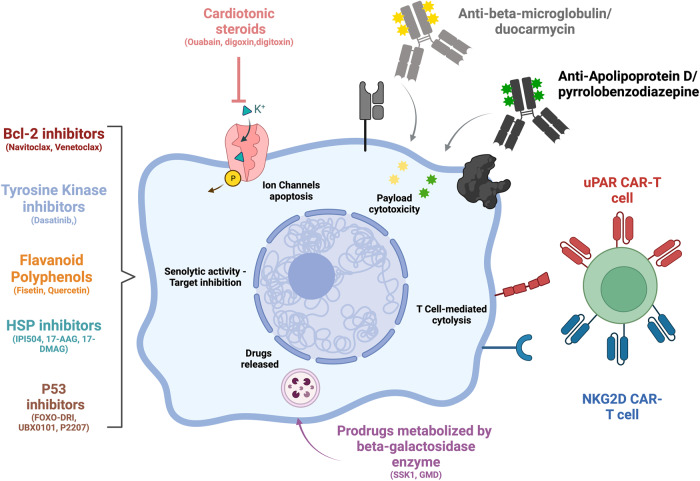
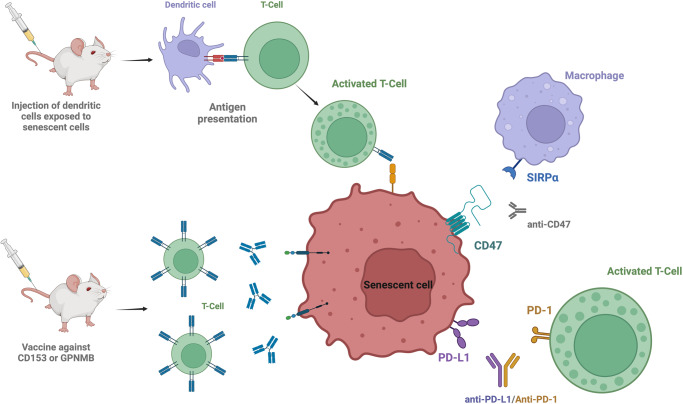
The involvement of cellular senescence in the initiation and propagation of diseases is clearly characterized, making the elimination of senescent cells essential to treat age-related diseases. The development of senolytic drugs demonstrated that targeting these cells limits the deterioration of patients’ condition, by inducing apoptosis. Nevertheless, the first generations of senolytics which has been developed displayed their activities through specific mechanisms and demonstrated several limitations during clinical development. However, the rational to eliminate senescent cells remains evident, with the necessity to develop specific therapies in a context of diseases and tissues. The evolutions in the field of drug discovery open the way to a new generation of senolytic therapies, such as immunological approaches (CAR-T cells, Antibody-Drug Conjugated or vaccines), which require preliminary steps of research to identify markers specifically expressed on senescent cells, demonstrating promising specific effects. Currently, the preclinical development of these strategies appears more challenging to avoid strong side effects, but the expected results are commensurate with patients’ hopes for treatments. In this review, we highlight the fact that the classical senolytic approach based on drug repurposing display limited efficacy and probably reached its limits in term of clinical development. The recent development of more complex therapies and the extension of interest in the domain of senescence in different fields of research allow to extend the possibility to discover powerful therapies. The future of age-related diseases treatment is linked to the development of new approaches based on cell therapy or immunotherapy to offer the best treatment for patients.
Overview
The claims and statistics of this paper haven’t been checked yet.
Run the check — free, no account needed. It reads the open-access text and checks the sources it cites.
Integrity signals
Registry
Cites
Statistics
Figures
Verification
Claims the paper makes
The claims and statistics of this paper haven’t been checked yet.
Run the check — free, no account needed. It reads the open-access text and checks the sources it cites.
Claims other papers make about this one
Each is checked against this paper’s own text: does it say what the citing paper says it does?
The source backs part of the claim, not all of it — or backs it for a different population, condition or comparison.
In the citing paper
“However, the efficacy of D + Q and other senolytics has shown variability across models and contexts, with inconsistent effects on senescence markers and limited evidence of lifespan extension in more rigorous or genetically diverse preclinical settings38”
From Emerging strategies in senotherapeutics: from broad-spectrum senolysis to precision reprogramming (2026) · cites this paper as [38]
Experimental — accuracy not yet measuredIn the citing paper
“these agents exhibited notable drawbacks, such as dose-dependent thrombocytopenia, variable therapeutic efficacy, and the emergence of resistance mechanisms.”
From Emerging strategies in senotherapeutics: from broad-spectrum senolysis to precision reprogramming (2026) · cites this paper as [38]
Self-check
Percentages, sums and reported differences re-computed from the paper’s own numbers.
The self-check needs the paper’s full text.
Citations
Cites
Cellular senescence mediates fibrotic pulmonary disease
Schafer, M. J., White, T. A., Iijima, K., Haak, A. J., Ligresti, G., Atkinson, E. J., Oberg, A. L., Birch, J., Salmonowicz, H., Zhu, Y., et al. (2017) · Nature Communications · doi:10.1038/ncomms14532 · Cited by 1,613
Body Fat Distribution and Risk of Cardiovascular Disease: An Update
Després, J.-P. (2012) · Circulation · doi:10.1161/circulationaha.111.067264 · Cited by 1,481 · cited 1×
“For example, senescent T-cells are accumulated in visceral adipose tissues in obesity 67 and produce proin fl ammatory cytokines, leading to chronic in fl ammation, metabolic disorders, and cardiovascular diseases 68,69 .”
BackgroundHickson, L. J., Langhi Prata, L. G. P., Bobart, S. A., Evans, T. K., Giorgadze, N., Hashmi, S. K., Herrmann, S. M., Jensen, M. D., Jia, Q., Jordan, K. L., et al. (2019) · EBioMedicine · doi:10.1016/j.ebiom.2019.08.069 · Cited by 1,383 · cited 1×
“…more effective and allows to target more senescent cell types (compared to the use of each drug alone), by inhibiting the pro-survival pathways induced in senescent cells, notably in idiopathic pulmonary fi brosis (IPF) 10 – 12 , diabetes and chronic kidney disease 13 or Alzheimer ’ s disease 14 .”
BackgroundClearance of senescent glial cells prevents tau-dependent pathology and cognitive decline
Bussian, T. J., Aziz, A., Meyer, C. F., Swenson, B. L., van Deursen, J. M., & Baker, D. J. (2018) · Nature · doi:10.1038/s41586-018-0543-y · Cited by 1,289
Senolytics in idiopathic pulmonary fibrosis: Results from a first-in-human, open-label, pilot study
Justice, J. N., Nambiar, A. M., Tchkonia, T., LeBrasseur, N. K., Pascual, R., Hashmi, S. K., Prata, L., Masternak, M. M., Kritchevsky, S. B., Musi, N., et al. (2019) · EBioMedicine · doi:10.1016/j.ebiom.2018.12.052 · Cited by 1,261
Cellular senescence and senolytics: the path to the clinic
Chaib, S., Tchkonia, T., & Kirkland, J. L. (2022) · Nature Medicine · doi:10.1038/s41591-022-01923-y · Cited by 1,134 · cited 1×
“Different senolytics have been developed in the antibody or small drug fi elds but nothing regarding senescent cells due to the lack of identi fi cation of speci fi c surface targets on these cells 51 .”
BackgroundSenolytic CAR T cells reverse senescence-associated pathologies
Amor, C., Feucht, J., Leibold, J., Ho, Y.-J., Zhu, C., Alonso-Curbelo, D., Mansilla-Soto, J., Boyer, J. A., Li, X., Giavridis, T., et al. (2020) · Nature · doi:10.1038/s41586-020-2403-9 · Cited by 1,098
Zhang, P., Kishimoto, Y., Grammatikakis, I., Gottimukkala, K., Cutler, R. G., Zhang, S., Abdelmohsen, K., Bohr, V. A., Misra Sen, J., Gorospe, M., et al. (2019) · Nature Neuroscience · doi:10.1038/s41593-019-0372-9 · Cited by 977
Cellular senescence: a key therapeutic target in aging and diseases
Zhang, L., Pitcher, L. E., Yousefzadeh, M. J., Niedernhofer, L. J., Robbins, P. D., & Zhu, Y. (2022) · Journal of Clinical Investigation · doi:10.1172/jci158450 · Cited by 631
Senescent cells evade immune clearance via HLA-E-mediated NK and CD8+ T cell inhibition
Pereira, B. I., Devine, O. P., Vukmanovic-Stejic, M., Chambers, E. S., Subramanian, P., Patel, N., Virasami, A., Sebire, N. J., Kinsler, V., Valdovinos, A., et al. (2019) · Nature Communications · doi:10.1038/s41467-019-10335-5 · Cited by 556
Research works printed but not linked: 56
- Hernandez-Segura, A., Nehme, J. & Demaria, M. Hallmarks of Cellular Senescence. Trends Cell Biol. 28, 436–453 (2018). · DOI · Paper page
- McHugh, D. & Gil, J. Senescence and aging: Causes, consequences, and therapeutic avenues. J. Cell Biol. 217, 65–77 (2018). · DOI · Paper page
- Prasanna, P. G. et al. Therapy-Induced Senescence: Opportunities to Improve Anticancer Therapy. J. Natl. Cancer Inst. 113, 1285–1298 (2021). · DOI
- Calcinotto, A. et al. Cellular Senescence: Aging, Cancer, and Injury. Physiol. Rev. 99, 1047–1078 (2019). · DOI · Paper page
- Raffaele, M. & Vinciguerra, M. The costs and benefits of senotherapeutics for human health. Lancet Healthy Longevity 3, 67–77 (2022). · DOI · Paper page
- Hu, L. et al. Why Senescent Cells Are Resistant to Apoptosis: An Insight for Senolytic Development. Front. Cell Develop Biol. 10, 822816 (2022). · DOI
- Kirkland, J. L. & Tchkonia, T. Cellular Senescence: A Translational Perspective. EBioMed. 21, 21–28 (2017). · DOI · Paper page
- Soto-Gamez, A., Quax, W. J. & Demaria, M. Regulation of Survival Networks in Senescent Cells: From Mechanisms to Interventions. J. Mol. Biol. 431, 2629–2643 (2019). · DOI · Paper page
- Yang, H. et al. Navitoclax (ABT263) reduces inflammation and promotes chondrogenic phenotype by clearing senescent osteoarthritic chondrocytes in osteoarthritis. Aging 12, 12750–12770 (2020). · DOI
- Gil, T.-H. et al. Senolytic drugs relieve pain by reducing peripheral nociceptive signaling without modifying joint tissue damage in spontaneous osteoarthritis. Aging 14, 6006–6027 (2022). · DOI
- Zhu, Y. et al. Identification of a novel senolytic agent, navitoclax, targeting the Bcl-2 family of anti-apoptotic factors. Aging Cell 15, 428–435 (2016). · DOI · Paper page
- Yousefzadeh, M. J. et al. Fisetin is a senotherapeutic that extends health and lifespan. EBioMed. 36, 18–28 (2018). · DOI · Paper page
- Ijima, S. et al. Fisetin reduces the senescent tubular epithelial cell burden and also inhibits proliferative fibroblasts in murine lupus nephritis. Front. Immunol. 13, 960601 (2022). · DOI
- Liu, L. et al. Senolytic elimination of senescent macrophages restores muscle stem cell function in severely dystrophic muscle. Aging 14, 7650–7661 (2022). · DOI
- Camell, C. D. et al. Senolytics reduce coronavirus-related mortality in old mice. Science (1979) 373, eabe4832 (2021).
- Marinova, M., Solopov, P., Dimitropoulou, C., Colunga Biancatelli, R. M. L. & Catravas, J. D. Acute exposure of mice to hydrochloric acid leads to the development of chronic lung injury and pulmonary fibrosis. Inhal. Toxicol. 31, 147–160 (2019). · DOI
- Sibinska, Z. et al. Amplified canonical transforming growth factor-β signalling via heat shock protein 90 in pulmonary fibrosis. Eur. Resp. J. 49, 1501941 (2017). · DOI
- Sontake, V. et al. Hsp90 regulation of fibroblast activation in pulmonary fibrosis. JCI Insight 2, e91454 (2017). · DOI
- Chen, D. D. et al. HSP90 acts as a senomorphic target in senescent retinal pigmental epithelial cells. Aging 13, 21547–21570 (2021). · DOI · Paper page
- Han, X. et al. FOXO4 peptide targets myofibroblast ameliorates bleomycin-induced pulmonary fibrosis in mice through ECM-receptor interaction pathway. J. Cell Mol. Med. https://doi.org/10.1111/jcmm.17333. (2022). · DOI
- Chin, A. F. et al. Senolytic treatment reduces oxidative protein stress in an aging male murine model of post-traumatic osteoarthritis. Aging Cell https://doi.org/10.1111/acel.13979. (2023). · DOI
- Hsu, B. et al. Safety, tolerability, pharmacokinetics, and clinical outcomes following treatment of painful knee osteoarthritis with senolytic molecule UBX0101. Osteoarthritis Cartilage 28, S479–S480 (2020). · DOI
- He, Y. et al. Inhibition of USP7 activity selectively eliminates senescent cells in part via restoration of p53 activity. Aging Cell 19, e13117 (2020). · DOI
- Zhao, X.-B. et al. P22077 inhibits LPS-induced inflammatory response by promoting K48-linked ubiquitination and degradation of TRAF6. Aging 12, 10969–10982 (2020). · DOI
- Lin, Y. C. et al. USP7 promotes the osteoclast differentiation of CD14+ human peripheral blood monocytes in osteoporosis via HMGB1 deubiquitination. J. Orthop. Translat. 40, 80–91 (2023). · DOI
- Guerrero, A. et al. Galactose-modified duocarmycin prodrugs as senolytics. Aging Cell 19, e13133 (2020). · DOI · Paper page
- Wang, K. et al. KDM4C-mediated senescence defense is a targetable vulnerability in gastric cancer harboring TP53 mutations. Clin Epigenetics 15, 163 (2023). · DOI
- Meiners, F., Secci, R., Sueto, S., Fuellen, G. & Barrantes, I. Computational identification of natural senotherapeutic compounds that mimic dasatinib based on gene expression data. https://doi.org/10.1101/2022.05.26.492763 (2022). · DOI
- Pramotton, F. M. et al. DYRK1B inhibition exerts senolytic effects on endothelial cells and rescues endothelial dysfunctions. Mech. Ageing Dev. 213, 111836 (2023). · DOI
- Lee, K-A., Flores, RR., Jang, IH., Saathoff, A. & Robbins, PD. Immune Senescence, Immunosenescence and Aging. Front. Aging. 3, 900028 (2022). · DOI · Paper page
- Giannoula, Y., Kroemer, G. & Pietrocola, F. Cellular senescence and the host immune system in aging and age-related disorders. Biomed. J. 46, 100581 (2023). · DOI
- Kurioka, A. & Klenerman, P. Aging unconventionally: γδ T cells, iNKT cells, and MAIT cells in aging. Seminars Immunol. 69, 101816 (2023). · DOI
- Naigeon, M. et al. Human virome profiling identified CMV as the major viral driver of a high accumulation of senescent CD8 + T cells in patients with advanced NSCLC. Sci. Adv. 9, eadh0708 (2023). · DOI
- Wang, T. W. et al. Blocking PD-L1–PD-1 improves senescence surveillance and ageing phenotypes. Nature 611, 358–364 (2022). · DOI · Paper page
- Shapiro, M. R. et al. Human immune phenotyping reveals accelerated aging in type 1 diabetes. JCI Insight 8, e170767 (2023). · DOI
- Schloesser, D. et al. Senescent cells suppress macrophage-mediated corpse removal via upregulation of the CD47-QPCT/L axis. J. Cell Biol. 222, e202207097 (2023). · DOI
- Jatal, R. et al. Sphingomyelin nanosystems decorated with TSP-1 derived peptide targeting senescent cells. Int. J. Pharm. 617, 121618 (2022). · DOI
- Poblocka, M. et al. Targeted clearance of senescent cells using an antibody-drug conjugate against a specific membrane marker. Sci. Rep. 11, 20358 (2021). · DOI · Paper page
- Takaya, K., Asou, T. & Kishi, K. New Senolysis approach via antibody-drug conjugate targeting of the senescent cell marker Apolipoprotein D for Skin Rejuvenation. Int. J. Mol. Sci. 24, 5857 (2023). · DOI
- Amor, C. et al. Prophylactic and long-lasting efficacy of senolytic CAR T cells against age-related metabolic dysfunction. Nat. Aging https://doi.org/10.1038/s43587-023-00560-5 (2024). · DOI · Paper page
- Yang, D. et al. NKG2D-CAR T cells eliminate senescent cells in aged mice and nonhuman primates. Sci. Transl. Med. 15, eadd1951 (2023). · DOI · Paper page
- Cappell, K. M. & Kochenderfer, J. N. Long-term outcomes following CAR T cell therapy: what we know so far. Nat Rev Clin Oncol. 20, 359–371 (2023). · DOI
- Gajra, A. et al. Barriers to Chimeric Antigen Receptor T-Cell (CAR-T) Therapies in Clinical Practice. Pharmaceut. Med. 36, 163–171 (2022).
- Noll, J. H., Levine, B. L., June, C. H. & Fraietta, J. A. Beyond youth: Understanding CAR T cell fitness in the context of immunological aging. Semin. Immunol. 70, 101840 (2023). · DOI
- Zheng, Z. et al. Fine-Tuning through Generations: Advances in Structure and Production of CAR-T Therapy. Cancers 15, 3476 (2023). · DOI
- Lear, T. B. & Finkel, T. Senolytic vaccination: a new mandate for cardiovascular health? J. Cardiovasc. Aging 2, 17 (2022).
- Jiang, S. S. et al. Gene expression profiling suggests a pathological role of human bone marrow-derived mesenchymal stem cells in aging-related skeletal diseases. Aging 3, 672–684 (2011). · DOI
- Mendelsohn, A. R. & Larrick, J. W. Antiaging Vaccines Targeting Senescent Cells. Rejuvenation Res. 25, 39–45 (2022). · DOI
- Chung, J.-S., Bonkobara, M., Tomihari, M., Cruz, P. D. & Ariizumi, K. The DC-HIL/syndecan-4 pathway inhibits human allogeneic T-cell responses. Eur. J. Immunol. 39, 965–974 (2009). · DOI
- Tomihari, M., Chung, J.-S., Akiyoshi, H., Cruz, P. D. & Ariizumi, K. DC-HIL/glycoprotein Nmb promotes growth of melanoma in mice by inhibiting the activation of tumor-reactive T cells. Cancer Res. 70, 5778–5787 (2010). · DOI
- Després, J.-P. Is visceral obesity the cause of the metabolic syndrome? Ann. Med. 38, 52–63 (2006). · DOI
- Yoshida, S. et al. The CD153 vaccine is a senotherapeutic option for preventing the accumulation of senescent T cells in mice. Nat. Commun. 11, 2482 (2020). · DOI · Paper page
- Wang, B., Kohli, J. & Demaria, M. Senescent Cells in Cancer Therapy: Friends or Foes?. Trends Cancer 6, 838–857 (2020). · DOI · Paper page
- Liu, Y. et al. Senescent cancer cell vaccines induce cytotoxic T cell responses targeting primary tumors and disseminated tumor cells. J. Immunother. Cancer 11, e005862 (2023). · DOI
- Hong, J. et al. Senescent cancer cell-derived nanovesicle as a personalized therapeutic cancer vaccine. Exp. Mol. Med. 55, 541–554 (2023). · DOI
- Marin, I. et al. Cellular Senescence Is Immunogenic and Promotes Antitumor Immunity. Cancer Discov. 13, 410–431 (2023). · DOI
Cited by
Sorted by citations
The Impact of Immune System Aging on Infectious Diseases
Quiros-Roldan, E., Sottini, A., Natali, P. G., & Imberti, L. (2024) · Microorganisms · doi:10.3390/microorganisms12040775 · Cited by 133
“…demonstrated moderate efficacy when used in clinical trials, next-generation senolytics (CAR-T cells, antibody drug conjugates or vaccines) targeting specific proteins selectively expressed during senescence and, based on new technical developments, can pave the way for preclinical research [263].”
Emerging strategies in senotherapeutics: from broad-spectrum senolysis to precision reprogramming
Zhang, W., Song, S., Zhang, Y., Pan, Y., Hu, D., & Wang, Y. (2026) · npj Aging · doi:10.1038/s41514-026-00355-z · Cited by 6
Metadata
- Authors
- Lelarge, V., Capelle, R., Oger, F., Mathieu, T., & Le Calvé, B.
- Venue
- npj Aging
- Published
- 2024-02-06
- Volume
- 10
- Issue
- 1
- ISSN
- 2731-6068
- PMC
- PMC10847408
- Cited by
- 140
- References
- 18
- Language
- en
About these checks
Registry, retraction, Cites and statistics results are computed, not judged, with one exception: a printed reference that no index lists is read once by a model before it counts as a citation error. Claims are extracted by a model and kept only when their quote appears verbatim in the text; each cited source is then checked, with a model’s help, for whether it says what the claim relies on. Those verdicts can be wrong — read the claim’s quote and the cited source before relying on one.
Statistics and arithmetic are recomputed, not judged.
Confidence bands are shown only for fields calibrated on our annotated test set. None is calibrated yet, so no band is shown.
What counts as a claim ›How we measure confidence ›How we check this ›
Are you an author, or do you see a problem with this page? Request a review
