

Strain-level variation among vaginal Lactobacillus crispatus and Lactobacillus iners as identified by comparative metagenomics
Open accessPublished version of a preprint
The DOI matches its Crossref record; 79 of the 79 references it cites were found in a registry or an index.
Abstract
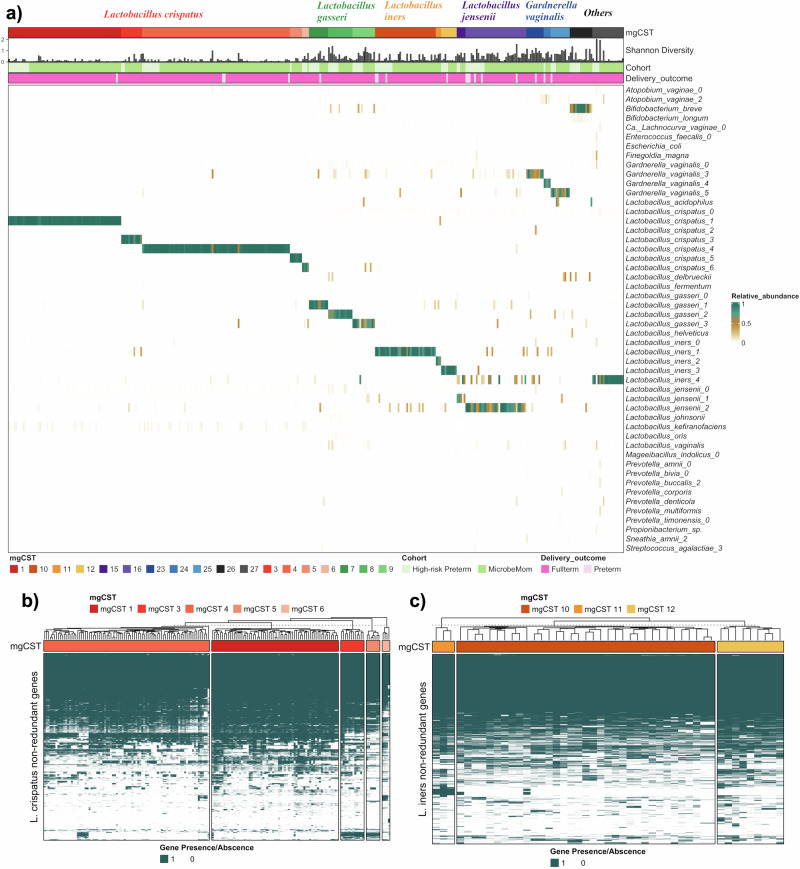
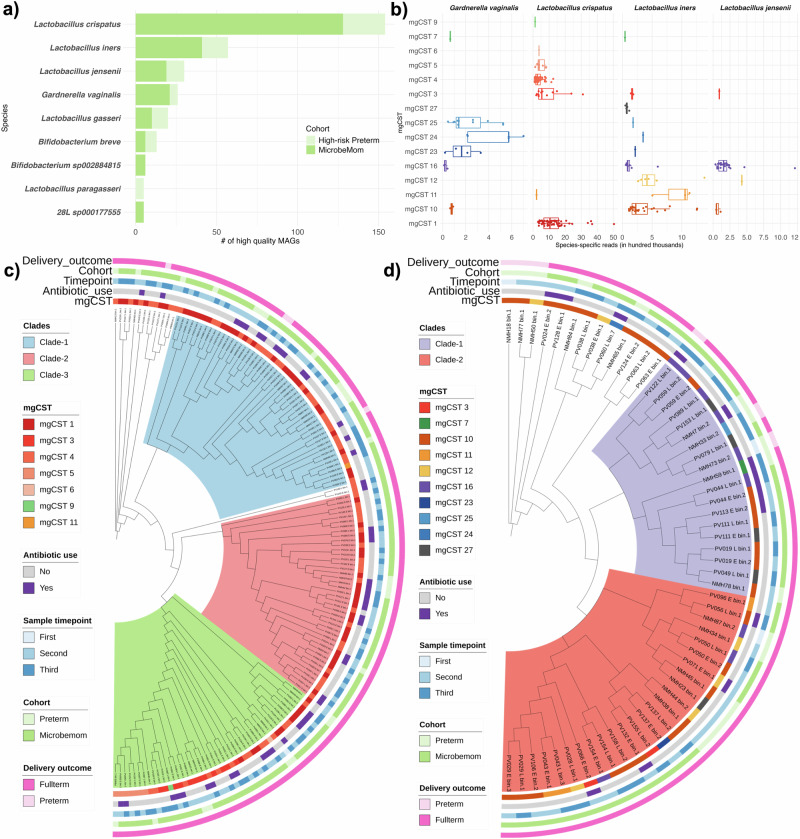
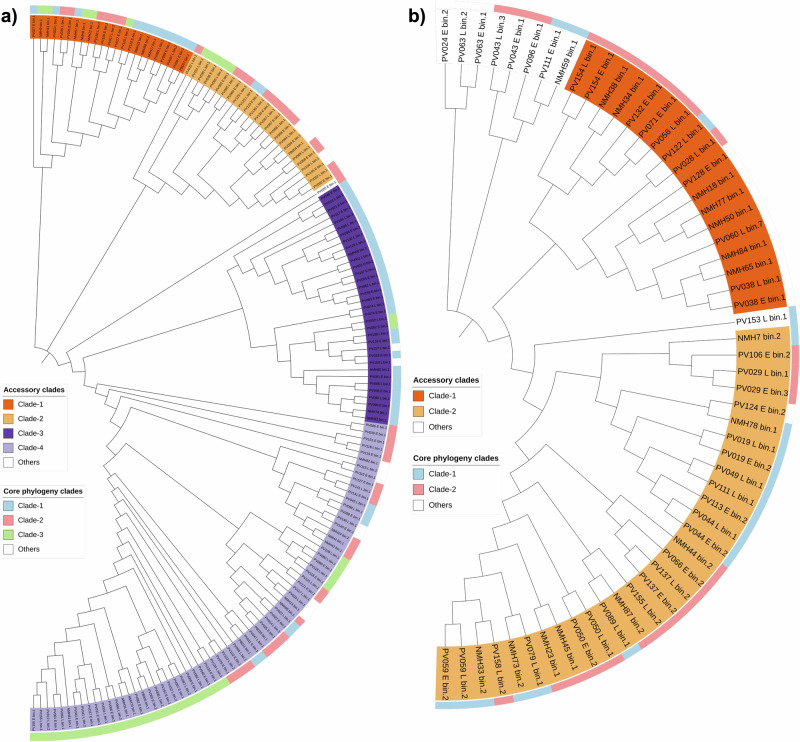
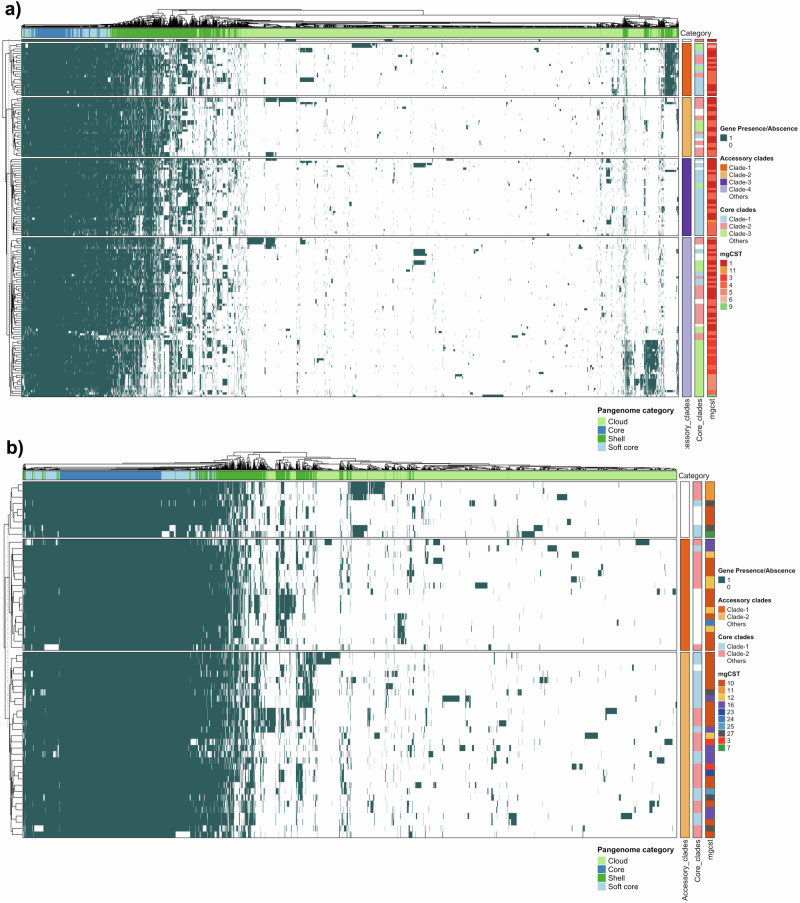
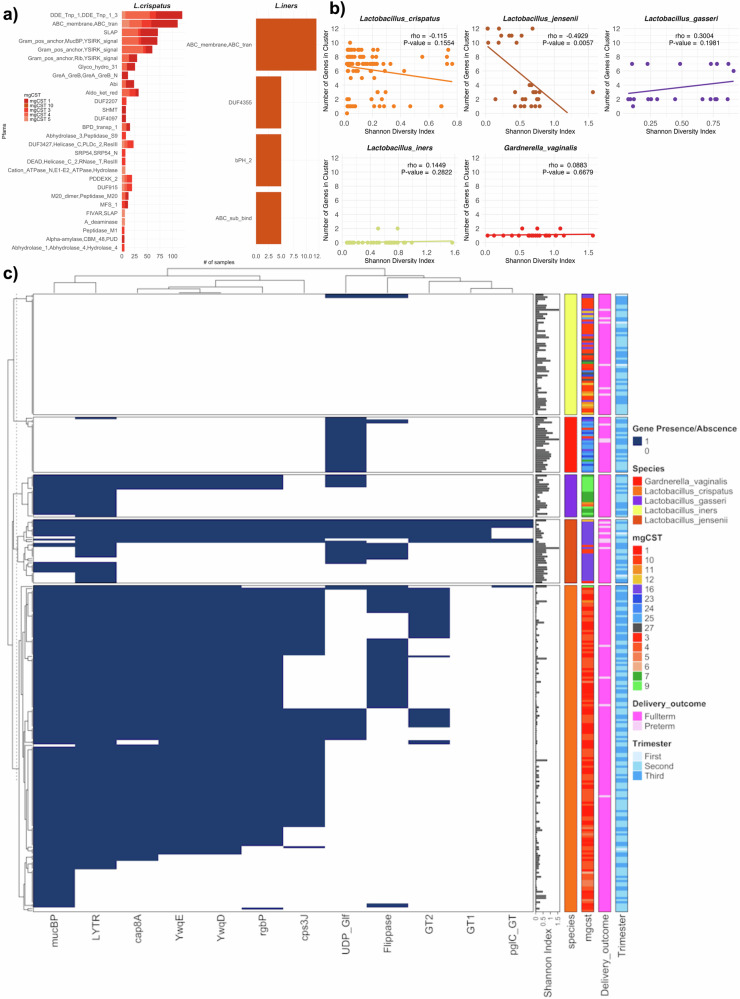
The vaginal microbiome, a relatively simple, low diversity ecosystem crucial for female health, is often dominated by Lactobacillus spp. Detailed strain-level data, facilitated by shotgun sequencing, can provide a greater understanding of the mechanisms of colonization and host-microbe interactions. We analysed 354 vaginal metagenomes from pregnant women in Ireland to investigate metagenomic community state types and strain-level variation, focusing on cell surface interfaces. Our analysis revealed multiple subspecies, with Lactobacillus crispatus and Lactobacillus iners being the most dominant. We found genes, including putative mucin-binding genes, distinct to L. crispatus subspecies. Using 337 metagenome-assembled genomes, we observed a higher number of strain-specific genes in L. crispatus related to cell wall biogenesis, carbohydrate and amino acid metabolism, many under positive selection. A cell surface glycan gene cluster was predominantly found in L. crispatus but absent in L. iners and Gardnerella vaginalis. These findings highlight strain-specific factors associated with colonisation and host-microbe interactions.
Overview
The claims and statistics of this paper haven’t been checked yet.
Free: it reads the open-access text and checks the first 5 claims that cite a source we can check. Create a free account to check every claim.
Integrity signals
Registry
Cites
Statistics
Figures
Verification
Claims the paper makes
The claims and statistics of this paper haven’t been checked yet.
Free: it reads the open-access text and checks the first 5 claims that cite a source we can check. Create a free account to check every claim.
Claims other papers make about this one
Each is checked against this paper’s own text: does it say what the citing paper says it does?
The cited source says what the claim attributes to it.
In the citing paper
“we observed 3 different genome clusters within L. crispatusspecies, suggesting the presence of putative different sub-species, as previously reported [37].”
From Women's health is a team effort: probiogenomics supports the development of a multi-species vaginal probiotic (2026) · cites this paper as [37]
Self-check
Percentages, sums and reported differences re-computed from the paper’s own numbers.
The self-check needs the paper’s full text.
Citations
Cites
Basic local alignment search tool
Altschul, S. F., Gish, W., Miller, W., Myers, E. W., & Lipman, D. J. (1990) · Journal of Molecular Biology · doi:10.1006/jmbi.1990.9999 · Cited by 98,669 · cited 1×
“8.1)database 52,76 .”
InfluentialFast gapped-read alignment with Bowtie 2
Langmead, B., & Salzberg, S. L. (2012) · Nature Methods · doi:10.1038/nmeth.1923 · Cited by 56,400 · cited 1×
“The high-quality MAGs were dereplicated at 98% identity using dRep (v 3.2.0) and representative MAGs database was built using bowtie2 (v 2.4.4) 73,74 .”
InfluentialMAFFT Multiple Sequence Alignment Software Version 7: Improvements in Performance and Usability
Katoh, K., & Standley, D. M. (2013) · Molecular Biology and Evolution · doi:10.1093/molbev/mst010 · Cited by 46,209 · cited 1×
“The concatenated core genome sequences from Roary output were aligned with MAFFT (v 7.475) 66 .”
InfluentialProkka: rapid prokaryotic genome annotation
Seemann, T. (2014) · Bioinformatics · doi:10.1093/bioinformatics/btu153 · Cited by 18,818
IQ-TREE 2: New Models and Efficient Methods for Phylogenetic Inference in the Genomic Era
Minh, B. Q., Schmidt, H. A., Chernomor, O., Schrempf, D., Woodhams, M. D., von Haeseler, A., & Lanfear, R. (2020) · Molecular Biology and Evolution · doi:10.1093/molbev/msaa015 · Cited by 16,873
Prodigal: prokaryotic gene recognition and translation initiation site identification
Hyatt, D., Chen, G.-L., LoCascio, P. F., Land, M. L., Larimer, F. W., & Hauser, L. J. (2010) · BMC Bioinformatics · doi:10.1186/1471-2105-11-119 · Cited by 12,587
Parks, D. H., Imelfort, M., Skennerton, C. T., Hugenholtz, P., & Tyson, G. W. (2015) · Genome Research · doi:10.1101/gr.186072.114 · Cited by 12,496
Interactive Tree Of Life (iTOL) v5: an online tool for phylogenetic tree display and annotation
Letunic, I., & Bork, P. (2021) · Nucleic Acids Research · doi:10.1093/nar/gkab301 · Cited by 11,124
Improved metagenomic analysis with Kraken 2
Wood, D. E., Lu, J., & Langmead, B. (2019) · Genome Biology · doi:10.1186/s13059-019-1891-0 · Cited by 7,061 · cited 1×
“The number of reads per species needed for MAG recovery was determined based on the number of reads assigned to that species in Kraken2 (v 2.1.1) and Bracken (v 2.2) outputs 62,63 .”
InfluentialRoary: rapid large-scale prokaryote pan genome analysis
Page, A. J., Cummins, C. A., Hunt, M., Wong, V. K., Reuter, S., Holden, M. T. G., Fookes, M., Falush, D., Keane, J. A., & Parkhill, J. (2015) · Bioinformatics · doi:10.1093/bioinformatics/btv421 · Cited by 5,736 · cited 1×
“12) with ‘ -e – n --mafft ’ options with PROKKA (v 1.14) annotation as input 64,65 .”
Influential
Cited by
Cheng, Q., Lv, S., Yin, N., & Wang, J. (2025) · npj Biofilms and Microbiomes · doi:10.1038/s41522-025-00839-y · Cited by 37
Host-independent synergism between Lactobacillus crispatus and other vaginal lactobacilli
Donck, L. V., Victor, M., Beeck, W. V., Rillaer, T. V., Dillen, J., Ahannach, S., Wittouck, S., Allonsius, C. N., & Lebeer, S. (2025) · Cell Reports · doi:10.1016/j.celrep.2025.116171 · Cited by 18
Mucin-degrading gut bacteria: context-dependent roles in intestinal homeostasis and disease
Tiffany, E., Kim, K. S., Sittipo, P., Lee, D.-W., & Lee, Y. K. (2026) · Gut Microbes · doi:10.1080/19490976.2026.2614054 · Cited by 17
Lactobacillus iners dominates the vaginal microbiota of healthy Italian women of reproductive age
Vinerbi, E., Chillotti, F., Maschio, A., Lenarduzzi, S., Camarda, S., Crobu, F., Zhernakova, D. V., Faro, V. L., Vriz, G. B., Incollu, S., et al. (2025) · mSystems · doi:10.1128/msystems.00983-25 · Cited by 16
Sekyere, J. O., Trama, J. P., Adelson, M. E., Trikannad, C., DiBlasi, D., Schuster, R., Yang, J., & Mordechai, E. (2025) · iScience · doi:10.1016/j.isci.2025.113473 · Cited by 14
From dysbiosis to mechanisms: Why cervicovaginal microbiome-HPV studies must catch up with biology
Molina, M. A. (2025) · PLoS Pathogens · doi:10.1371/journal.ppat.1013830 · Cited by 12
Kart, U., Smagulova, D., Khairetdinova, D., Raimbekova, A., & Hortelano, G. (2026) · Frontiers in Cellular and Infection Microbiology · doi:10.3389/fcimb.2026.1738291 · Cited by 11
Host, microbial, and environmental drivers of vaginal microbiota composition
Young, R. B., Correia, G. D. S., & MacIntyre, D. A. (2026) · Fertility and Sterility · doi:10.1016/j.fertnstert.2026.01.020 · Cited by 9
Qi, C., Zhang, Y., Wei, Q., Chen, R., Zhou, Z., Liu, Y., Chen, E., Chen, W., Zhou, H., & Chen, M. (2025) · iMeta · doi:10.1002/imt2.70088 · Cited by 5
Female reproductive microbiome in fertility care
Dash, S., Zhao, D., Schuppe‐Koistinen, I., & Du, J. (2026) · Fertility and Sterility · doi:10.1016/j.fertnstert.2026.02.015 · Cited by 5
Calvanese, C. M., Valentino, V., De Prisco, A., Allesina, S., Amoruso, A., Deidda, F., Visciglia, A., Ercolini, D., Pane, M., & De Filippis, F. (2026) · Cellular and Molecular Life Sciences · doi:10.1007/s00018-026-06107-2 · Cited by 2
Liu, Y., Liao, X., Chen, Q., Wang, H., & Dai, H. (2026) · Frontiers in Immunology · doi:10.3389/fimmu.2026.1749584 · Cited by 2
Microbiome‐urothelium crosstalk in bladder cancer: From dysbiosis to clinical translation
Xu, H., Li, Z., Yang, L., Zheng, J., Li, W., Liao, R., Huang, W., Sun, B., Li, Z., Ma, C., et al. (2026) · iMetaOmics. · doi:10.1002/imo2.70081 · Cited by 1
Zaatar, M. T., Othman, R., Abushawish, M., Akl, M., Alachkar, M. T., Almatboona, G., Alriyami, F., Alshaibani, A., Ashkanani, D., Basharova, M., et al. (2026) · International Journal of Molecular Sciences · doi:10.3390/ijms27062521 · Cited by 1
“These approaches have demonstrated that microbial metabolites and enzymatic activity, rather than taxonomic composition alone, often provide stronger predictive value for health outcomes, challenging traditional assumptions regarding microbial “benefit” or “pathogenicity” [7–9].”
Kozhakhmetov, S., Kushugulova, A., Vinogradova, E. B., Рахманкулова, А., Terzić, M., Bapayeva, G., Aimagambetova, G. N., Kamzayeva, N., Kim, Y., Primbetov, B., et al. (2026) · International Journal of Molecular Sciences · doi:10.3390/ijms27115052 · Cited by 1
“The species has a markedly reduced genome with exclusive L-lactate production and no D-lactate [16] and features documented across multiple strains [17,37,38].”
Rethinking Vaginal Microbiome Resilience: A Conceptual Multi-Omic Framework
Cagle-White, B., Carpenter, R. E., Vincent, A., Kominek, E., & Krouse, A. R. (2026) · Microorganisms · doi:10.3390/microorganisms14071536 · Cited by 1
“Its pangenome encodes enzymes for fermenting multiple glycogen-derived sugars and consistently carries both D-and L-lactate dehydrogenase genes, supporting its strong acid-producing phenotype and fitness in low-pH, glycogen-rich niches [29,45].”
InfluentialHow the social lives of bacteria affect their pangenome
Whelan, F. (2026) · Essays in Biochemistry · doi:10.1042/ebc20250039 · Cited by 1
de Kreek, F., Hertzberger, R. Y., van Eeden, F., Illidge, S., Teunis, E.-J., Hanemaaijer, M., Lievens, E., Rienstra, F., Wiedhaup, D. E., Lisotto, P., et al. (2026) · Journal of Applied Microbiology · doi:10.1093/jambio/lxag218 · Cited by 1
Nuñez-Arroba, S. D. P., Chacha-Ulloa, H. D., Malán-Chimbolema, M. Á., & Toscano-Arcos, M. P. (2025) · Sanitas. Revista arbitrada de ciencias de la salud. · doi:10.62574/5dyzjk42
Dubin, C. A., Zhao, C., Pollard, K. S., Oskotsky, T., Golob, J. L., & Sirota, M. (2026) · mSystems · doi:10.1128/msystems.01498-25
Montecillo, J. A. V., Yoo, H. J., Lee, Y.-Y., Park, C. M., Cho, A., Lee, H., Yoon, H. Y., Kim, J. M., Lee, N. Y., Park, S.-H., et al. (2025) · Microbiology Spectrum · doi:10.1128/spectrum.02011-25
Radiolabelling bacteria with 89Zr-DBN for PET/MRI: comparing [89Zr]Zr oxalate and [89Zr]Zr phosphate
Diksha, D., Donnelly, S. C., Suchý, M., Cockburn, N., Prato, F. S., Kovacs, M. S., & Goldhawk, D. E. (2025) · Nuclear Medicine and Biology · doi:10.1016/j.nucmedbio.2025.109577
Abordaje de candidiasis vulvovaginal recurrente mediante restablecimiento de la microbiota vaginal
Hidalgo-Pajuelo, C., Ramos-Pérez, M., & Taype-Rondán, Á. (2026) · Revista Peruana de Ginecología y Obstetricia · doi:10.31403/rpgo.v71i2807
Ma, H., Hu, K., & Wang, Y. (2026) · African Journal of Reproductive Health · doi:10.29063/ajrh2026/v30i4.5
Teh, T. R. D., Jimenez, N. R., & Herbst‐Kralovetz, M. M. (2026) · Microbiology Resource Announcements · doi:10.1128/mra.01477-25
Anyanwu, C. N., Okechukwu, P. C. U., Terkimbi, S. D., Okon, M. B., Mujinya, R., Thembo, M., & Anyanwu, E. G. (2026) · Middle East Fertility Society Journal · doi:10.1186/s43043-026-00342-0
“In line with these clinical findings, Nori et al. [16] revealed that vaginal L. crispatus and L. iners showed significant strain and subspecies level genomic heterogeneity, which included variations in those genes associated with host interaction and colonization capabilities.”
Burkova, A. A., Galyavieva, R. I., Idrisova, L. V., Meryasova, G. F., Petrosyan, M. A., Rakhmatullina, D. I., Fatkhelislamova, E. I., Khaziev, I. R., Chernyavsky, M. A., Shaydullina, D. I., et al. (2026) · Obstetrics Gynecology and Reproduction · doi:10.17749/2313-7347/ob.gyn.rep.2026.773
Xia, H., Xie, J., Wang, X., & Wang, Y. (2026) · Critical Reviews in Oncology/Hematology · doi:10.1016/j.critrevonc.2026.105531
Talbert, J. A., Kalmer, T. L., Walker, A. S., Gaddy, J. A., & Townsend, S. D. (2026) · ACS Infectious Diseases · doi:10.1021/acsinfecdis.6c00250
The role of the vaginal microbiota in women’s health
Gaál, M. (2026) · Bőrgyógyászati és Venerológiai Szemle · doi:10.7188/bvsz.2026.102.1.1
A Mobile Glycosylation Locus Modulates Cell Wall Architecture in Lactobacillus crispatus
Achterberg, P., Lekkerkerker, M., Koelemeijer, L., Illidge, S., Vroom, J., Hertzberger, R. Y., Vreede, J., van Loosdrecht, M. C. M., & Kort, R. (2026) · Molecular Microbiology · doi:10.1111/mmi.70112
NUO SUDĖTIES IKI FUNKCIJOS: MULTIOMIKOS INTEGRAVIMAS Į MAKŠTIES MIKROBIOMO TYRIMUS
Gardzijauskaitė, G., & Žukienė, G. (2026) · Sveikatos mokslai · doi:10.35988/sm-hs.2026.269
No strain, no gain: within-host bacterial microdiversity and human health
Wojtkowiak, A., Shinfuku, M. S., & Lewin, G. R. (2026) · Infection and Immunity · doi:10.1128/iai.00062-26
“In addition, researchers consider differences in gene content across bacteria (9), which often scale with ANI differences (10), but not always (11, 12).”
Shabana, H., Guðnadóttir, U., Hugerth, L. W., Rodriguez‐Wallberg, K. A., & Brusselaers, N. (2026) · Human Reproduction Update · doi:10.1093/humupd/dmag033
Cervical Microbiota Dysbiosis as a Driver of Cervical Incompetence
Wang, T., Shi, J., Wei, Y., Tang, J., Lu, J., & Zhang, H. (2026) · Microorganisms · doi:10.3390/microorganisms14102388
“Specifically, the reproductive tract microbiota of healthy women is predominantly composed of lactic acid-producing bacteria [3–5] that lower the local pH to around 4.0, thereby suppressing the proliferation of potential pathogens [6].”
InfluentialDavis, A., Callanan, S., Corbett, G. A., Feehily, C., Nori, S. R. C., Douglass, A., O’Brien, E. C., van Sinderen, D., Cotter, P. D., & McAuliffe, F. M. (2026) · Journal of Functional Foods · doi:10.1016/j.jff.2026.107561
Self-citation
Metadata
- Authors
- Nori, S. R. C., Walsh, C. J., McAuliffe, F. M., Moore, R. L., Van Sinderen, D., Feehily, C., & Cotter, P. D.
- Affiliations
- Teagasc - The Irish Agriculture and Food Development Authority (IE)
- The University of Melbourne (AU)
- University College Dublin (IE)
- University of Glasgow (GB)
- Corresponding author
- Feehily, Conor
- Cotter, Paul D.
- ORCID
- Venue
- npj Biofilms and Microbiomes
- Published
- 2025-03-23
- Volume
- 11
- Issue
- 1
- Pages
- 49-49
- ISSN
- 2055-5008 (ISSN-L)
- PMC
- PMC11930926
- OpenAlex
- W4408742600
- Cited by
- 29
- References
- 76
- Citations by year
- 2026: 21 · 2025: 8
- FWCI
- 15.88
- Type
- journal article
- Language
- en
- Open access
- gold
- doi.org
- Licence
- cc-by-nc-nd
- creativecommons.org/licenses/by-nc-nd/4.0 (tdm)
- creativecommons.org/licenses/by-nc-nd/4.0 (vor)
- Locations
- npj Biofilms and Microbiomes (publishedVersion, cc-by-nc-nd)
- Research Square (acceptedVersion, cc-by)
- PubMed Central (publishedVersion, cc-by-nc-nd)
- PubMed (publishedVersion)
- ENLIGHTEN (Jurnal Bimbingan dan Konseling Islam) (acceptedVersion, cc-by-sa)
- Cork Open Research Archive (University College Cork, Ireland) (submittedVersion, cc-by-nc-nd)
- DOAJ (DOAJ: Directory of Open Access Journals) (submittedVersion, cc-by-sa)
- Minerva Access (University of Melbourne) (submittedVersion, cc-by-nc-nd)
- Funders
- European Commission (945385)
- Science Foundation Ireland (18/CRT/6214)
- Topics
- Life Sciences › Immunology and Microbiology › Microbiology › Reproductive tract infections research
- Life Sciences › Biochemistry, Genetics and Molecular Biology › Molecular Biology › Gut microbiota and health
- Life Sciences › Agricultural and Biological Sciences › Food Science › Probiotics and Fermented Foods
- Keywords
- vaginal microbiota, Lactobacillus crispatus, Lactobacillus iners, strain-level diversity, metagenome-assembled genomes, cell wall biosynthesis, Gardnerella vaginalis, host-microbe interactions, pregnancy, positive selection
- MeSH terms
- Lactobacillus crispatus, Host Microbial Interactions, Female, Gardnerella vaginalis, Humans, Ireland, Lactobacillus, Phylogeny, Pregnancy, Vagina, Genetic Variation, Genome, Bacterial, Metagenome, Metagenomics, Microbiota
About these checks
Registry, retraction, Cites and statistics results are computed, not judged, with one exception: a printed reference that no index lists is read once by a model before it counts as a citation error. Claims are extracted by a model and kept only when their quote appears verbatim in the text; each cited source is then checked, with a model’s help, for whether it says what the claim relies on. Those verdicts can be wrong — read the claim’s quote and the cited source before relying on one.
Statistics and arithmetic are recomputed, not judged.
Confidence bands are shown only for fields calibrated on our annotated test set. None is calibrated yet, so no band is shown.
What counts as a claim ›How we measure confidence ›How we check this ›
Are you an author, or do you see a problem with this page? Request a review
Data sources
Bibliographic data: Semantic Scholar, OpenAlex, Crossref.
Contains information from the Semantic Scholar Academic Graph Datasets, made available under the ODC Attribution License (ODC-BY 1.0).
Semantic Scholar’s data is described in: Kinney, R., et al. (2023). The Semantic Scholar Open Data Platform. arXiv:2301.10140.
