

Strain-level variation among vaginal Lactobacillus crispatus and Lactobacillus iners as identified by comparative metagenomics
Open accessPublished version of a preprint
The DOI matches its Crossref record; 79 of the 79 references it cites were found in a registry or an index.
Abstract
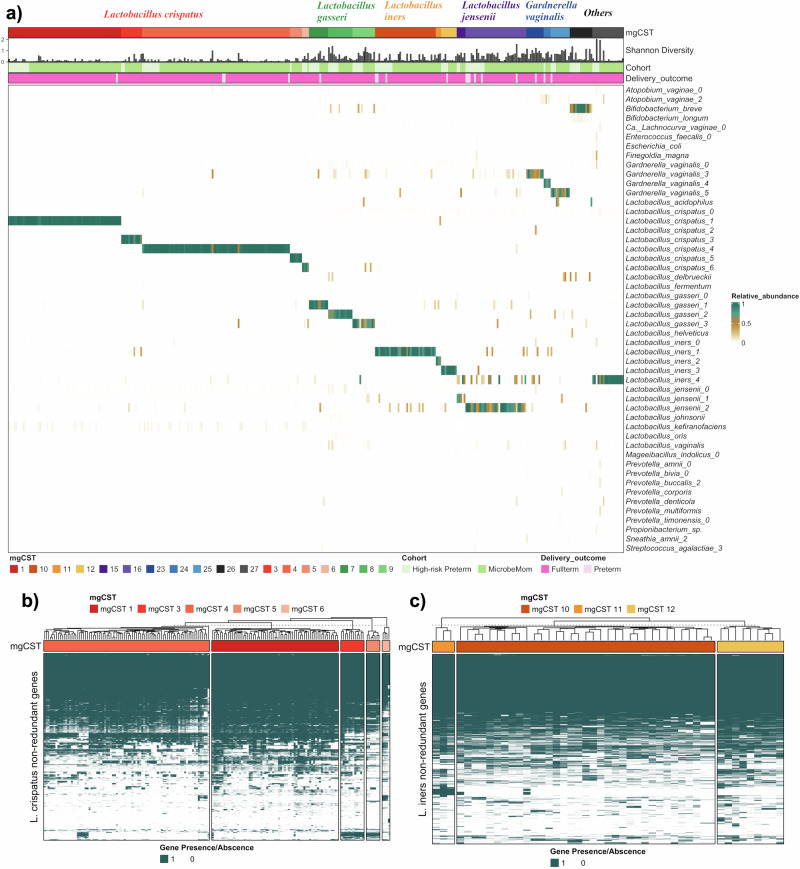
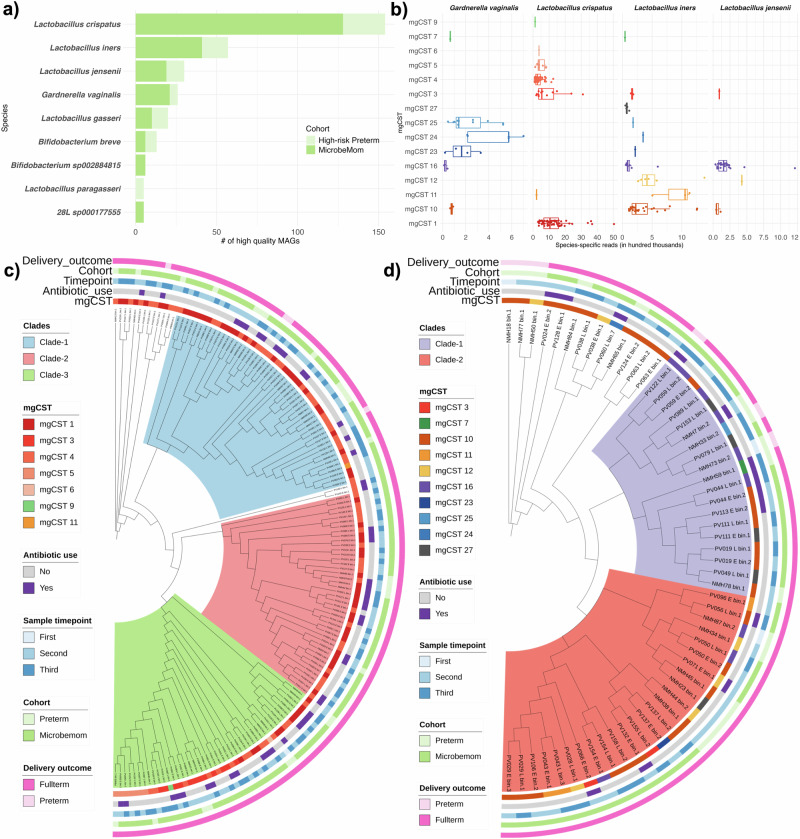
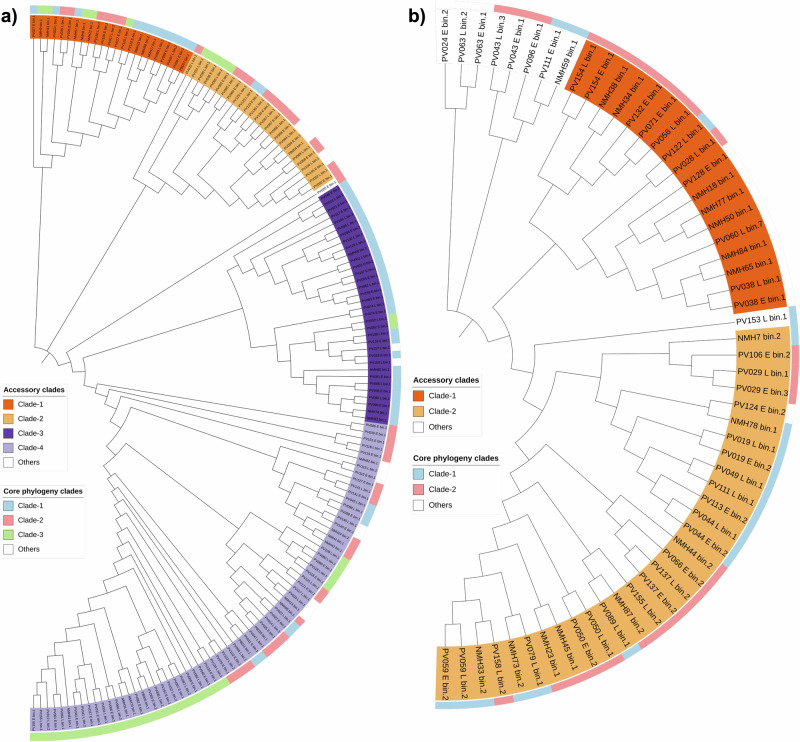
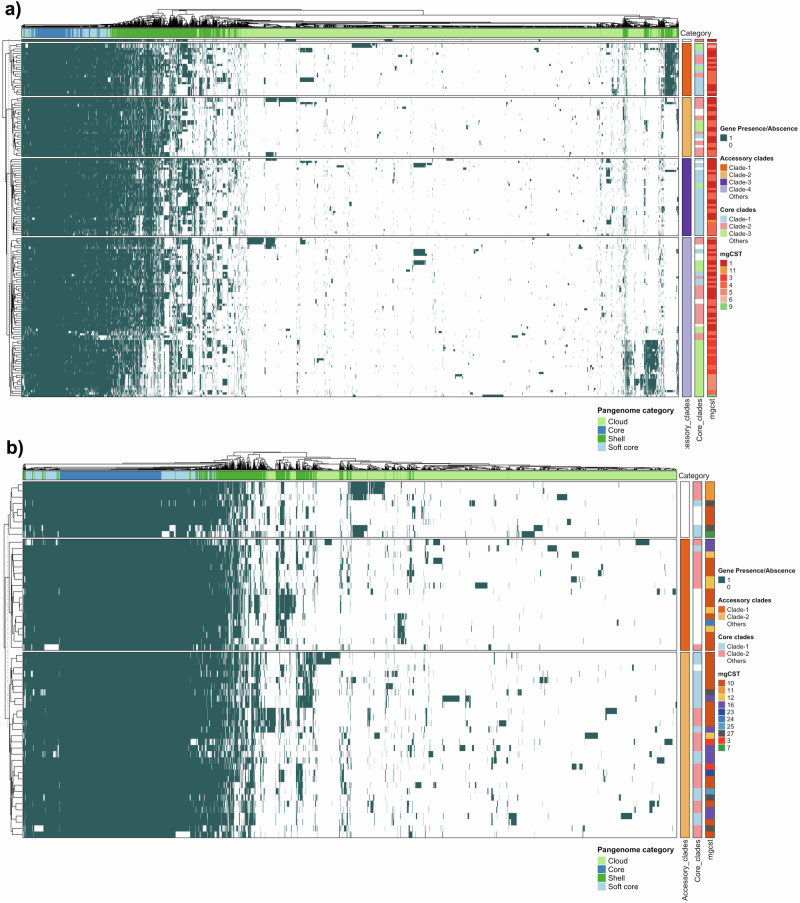
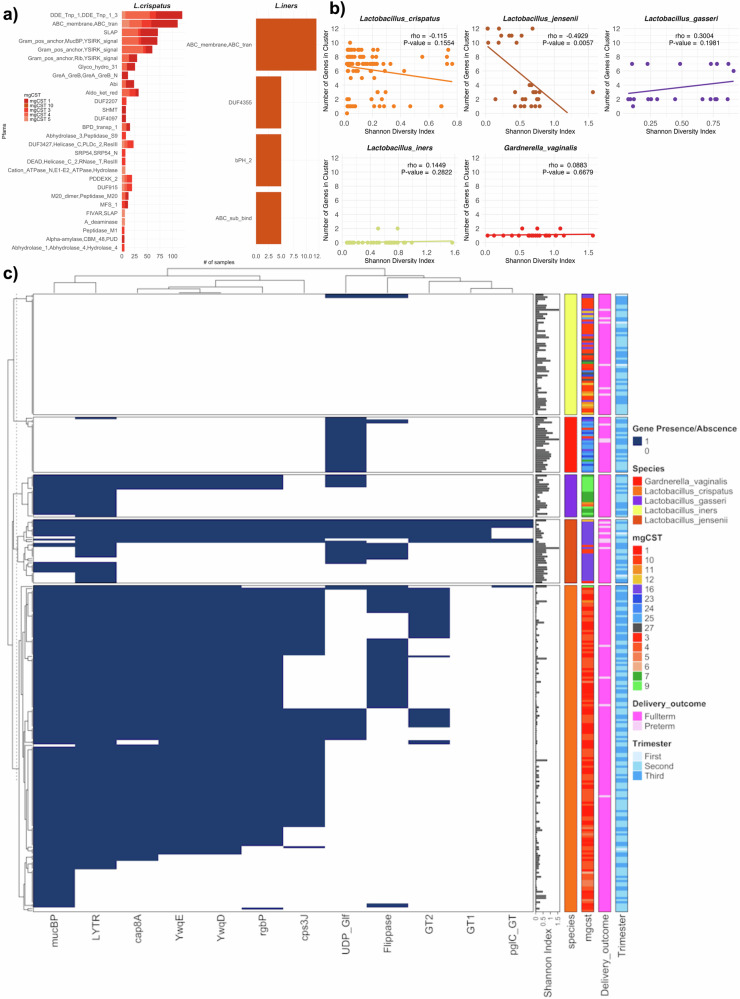
The vaginal microbiome, a relatively simple, low diversity ecosystem crucial for female health, is often dominated by Lactobacillus spp. Detailed strain-level data, facilitated by shotgun sequencing, can provide a greater understanding of the mechanisms of colonization and host-microbe interactions. We analysed 354 vaginal metagenomes from pregnant women in Ireland to investigate metagenomic community state types and strain-level variation, focusing on cell surface interfaces. Our analysis revealed multiple subspecies, with Lactobacillus crispatus and Lactobacillus iners being the most dominant. We found genes, including putative mucin-binding genes, distinct to L. crispatus subspecies. Using 337 metagenome-assembled genomes, we observed a higher number of strain-specific genes in L. crispatus related to cell wall biogenesis, carbohydrate and amino acid metabolism, many under positive selection. A cell surface glycan gene cluster was predominantly found in L. crispatus but absent in L. iners and Gardnerella vaginalis. These findings highlight strain-specific factors associated with colonisation and host-microbe interactions.
Overview
The claims and statistics of this paper haven’t been checked yet.
Free: it reads the open-access text and checks the first 5 claims that cite a source we can check. Create a free account to check every claim.
Integrity signals
Registry
Cites
Statistics
Figures
Verification
Claims the paper makes
The claims and statistics of this paper haven’t been checked yet.
Free: it reads the open-access text and checks the first 5 claims that cite a source we can check. Create a free account to check every claim.
Claims other papers make about this one
Each is checked against this paper’s own text: does it say what the citing paper says it does?
The cited source says what the claim attributes to it.
In the citing paper
“we observed 3 different genome clusters within L. crispatusspecies, suggesting the presence of putative different sub-species, as previously reported [37].”
From Women's health is a team effort: probiogenomics supports the development of a multi-species vaginal probiotic (2026) · cites this paper as [37]
Self-check
Percentages, sums and reported differences re-computed from the paper’s own numbers.
The self-check needs the paper’s full text.
Citations
Cites
Basic local alignment search tool
Altschul, S. F., Gish, W., Miller, W., Myers, E. W., & Lipman, D. J. (1990) · Journal of Molecular Biology · doi:10.1006/jmbi.1990.9999 · Cited by 98,669 · cited 1×
“8.1)database 52,76 .”
InfluentialFast gapped-read alignment with Bowtie 2
Langmead, B., & Salzberg, S. L. (2012) · Nature Methods · doi:10.1038/nmeth.1923 · Cited by 56,400 · cited 1×
“The high-quality MAGs were dereplicated at 98% identity using dRep (v 3.2.0) and representative MAGs database was built using bowtie2 (v 2.4.4) 73,74 .”
InfluentialMAFFT Multiple Sequence Alignment Software Version 7: Improvements in Performance and Usability
Katoh, K., & Standley, D. M. (2013) · Molecular Biology and Evolution · doi:10.1093/molbev/mst010 · Cited by 46,209 · cited 1×
“The concatenated core genome sequences from Roary output were aligned with MAFFT (v 7.475) 66 .”
InfluentialProkka: rapid prokaryotic genome annotation
Seemann, T. (2014) · Bioinformatics · doi:10.1093/bioinformatics/btu153 · Cited by 18,818
IQ-TREE 2: New Models and Efficient Methods for Phylogenetic Inference in the Genomic Era
Minh, B. Q., Schmidt, H. A., Chernomor, O., Schrempf, D., Woodhams, M. D., von Haeseler, A., & Lanfear, R. (2020) · Molecular Biology and Evolution · doi:10.1093/molbev/msaa015 · Cited by 16,873
Prodigal: prokaryotic gene recognition and translation initiation site identification
Hyatt, D., Chen, G.-L., LoCascio, P. F., Land, M. L., Larimer, F. W., & Hauser, L. J. (2010) · BMC Bioinformatics · doi:10.1186/1471-2105-11-119 · Cited by 12,587
Parks, D. H., Imelfort, M., Skennerton, C. T., Hugenholtz, P., & Tyson, G. W. (2015) · Genome Research · doi:10.1101/gr.186072.114 · Cited by 12,496
Interactive Tree Of Life (iTOL) v5: an online tool for phylogenetic tree display and annotation
Letunic, I., & Bork, P. (2021) · Nucleic Acids Research · doi:10.1093/nar/gkab301 · Cited by 11,124
Improved metagenomic analysis with Kraken 2
Wood, D. E., Lu, J., & Langmead, B. (2019) · Genome Biology · doi:10.1186/s13059-019-1891-0 · Cited by 7,061 · cited 1×
“The number of reads per species needed for MAG recovery was determined based on the number of reads assigned to that species in Kraken2 (v 2.1.1) and Bracken (v 2.2) outputs 62,63 .”
InfluentialRoary: rapid large-scale prokaryote pan genome analysis
Page, A. J., Cummins, C. A., Hunt, M., Wong, V. K., Reuter, S., Holden, M. T. G., Fookes, M., Falush, D., Keane, J. A., & Parkhill, J. (2015) · Bioinformatics · doi:10.1093/bioinformatics/btv421 · Cited by 5,736 · cited 1×
“12) with ‘ -e – n --mafft ’ options with PROKKA (v 1.14) annotation as input 64,65 .”
Influential(2021) · doi:10.1093/molbev/msab293 · Cited by 5,335 · cited 1×
“The COG functional categories for gene families in the pangenomes of L. crispatus and L. iners were assigned using eggNOG-mapper (v 2.1.7) 71 .”
InfluentialGTDB-Tk: a toolkit to classify genomes with the Genome Taxonomy Database
Chaumeil, P.-A., Mussig, A. J., Hugenholtz, P., & Parks, D. H. (2020) · Bioinformatics · doi:10.1093/bioinformatics/btz848 · Cited by 5,259 · cited 1×
“The taxonomy of the bins was assigned using GTDB-Tk (v 1.5.0) 61 .”
InfluentialVaginal microbiome of reproductive-age women
Ravel, J., Gajer, P., Abdo, Z., Schneider, G. M., Koenig, S. S. K., McCulle, S. L., Karlebach, S., Gorle, R., Russell, J., Tacket, C. O., et al. (2011) · Proceedings of the National Academy of Sciences · doi:10.1073/pnas.1002611107 · Cited by 4,254 · cited 3×
“The vaginal microbiome in collective datasets has previously been categorised into community state types (CSTs) 10 primarily based on the dominant bacteria present, such as Lactobacillus crispatus (CST-I), Lacto-bacillus gasseri (CST-II), Lactobacillus iners (CST-III), and Lactobacillus jensenii (CST-V), with a furthe…”
phangorn: phylogenetic analysis in R
Schliep, K. P. (2011) · Bioinformatics · doi:10.1093/bioinformatics/btq706 · Cited by 3,747
Olm, M. R., Brown, C. T., Brooks, B., & Banfield, J. F. (2017) · The ISME Journal · doi:10.1038/ismej.2017.126 · Cited by 3,031
Comparison of phylogenetic trees
Robinson, D. F., & Foulds, L. R. (1981) · Mathematical Biosciences · doi:10.1016/0025-5564(81)90043-2 · Cited by 2,701 · cited 1×
“The distance between core genome phylogeny and accessory phylogeny was computed using Robinson-Foulds (RF) distance with Phangorn R package 69,70 .”
MetaWRAP—a flexible pipeline for genome-resolved metagenomic data analysis
Uritskiy, G. V., DiRuggiero, J., & Taylor, J. (2018) · Microbiome · doi:10.1186/s40168-018-0541-1 · Cited by 2,642
Bracken: estimating species abundance in metagenomics data
(2016) · doi:10.7717/peerj-cs.104 · Cited by 2,333
Blanco-Míguez, A., Beghini, F., Cumbo, F., McIver, L. J., Thompson, K. N., Zolfo, M., Manghi, P., Dubois, L., Huang, K. D., Thomas, A. M., et al. (2023) · Nature Biotechnology · doi:10.1038/s41587-023-01688-w · Cited by 1,442
The vaginal microbiome and preterm birth
Fettweis, J. M., Serrano, M. G., Brooks, J. P., Edwards, D. J., Girerd, P. H., Parikh, H. I., Huang, B., Arodz, T. J., Edupuganti, L., Glascock, A. L., et al. (2019) · Nature Medicine · doi:10.1038/s41591-019-0450-2 · Cited by 983 · cited 2×
“Multiple factors including microbial interactions, antibiotic treatment, nutrient availability, hormonal changes, and pregnancy can alter the composition of the vaginal microbiome by acting as selective pressures that further affect microdiversity 16 – 22 .”
Probiotic species in the modulation of gut microbiota: An overview
Azad, M. A. K., Sarker, M., Li, T., & Yin, J. (2018) · BioMed Research International · doi:10.1155/2018/9478630 · Cited by 803
Role of Lactobacillus reuteri in Human Health and Diseases
Mu, Q., Tavella, V. J., & Luo, X. M. (2018) · Frontiers in Microbiology · doi:10.3389/fmicb.2018.00757 · Cited by 744 · cited 1×
“In particular, for putatively bene fi cial bacteria like lactobacilli, there is a requirement to differentiate speci fi c strains that have greater therapeutic potential from those that do not 30 – 34 .”
New insights from uncultivated genomes of the global human gut microbiome
Nayfach, S., Shi, Z. J., Seshadri, R., Pollard, K. S., & Kyrpides, N. C. (2019) · Nature · doi:10.1038/s41586-019-1058-x · Cited by 737 · cited 1×
“Within other niches, analysis of metagenome assembled genomes (MAGs) has been shown to be a powerful approach with respect to describing community function 23,24 .”
Cantalapiedra, C. P., Hernández-Plaza, A., Letunić, I., et al. (2021) · bioRxiv (Cold Spring Harbor Laboratory) · doi:10.1101/2021.06.03.446934 · Cited by 732
The role of lactic acid production by probiotic Lactobacillus species in vaginal health
Tachedjian, G., Aldunate, M., Bradshaw, C. S., & Cone, R. A. (2017) · Research in Microbiology · doi:10.1016/j.resmic.2017.04.001 · Cited by 557
Vaginal pH and Microbicidal Lactic Acid When Lactobacilli Dominate the Microbiota
O’Hanlon, D. E., Moench, T. R., & Cone, R. A. (2013) · PLoS ONE · doi:10.1371/journal.pone.0080074 · Cited by 547 · cited 1×
“Production of lactic acid by these bacteria is an important trait that results in a lowering of the vaginal pH, preventing colonisation by unfavourable bacteria like those associated with bacterial vaginosis (BV) 1 – 3 .”
Olm, M. R., Crits-Christoph, A., Bouma-Gregson, K., Firek, B. A., Morowitz, M. J., & Banfield, J. F. (2021) · Nature Biotechnology · doi:10.1038/s41587-020-00797-0 · Cited by 537
FelixKrueger/TrimGalore: Version 0.6.8
Krueger, F., James, F., Ewels, P., Afyounian, E., Weinstein, M., Schuster-Boeckler, B., Hulselmans, G., & Sclamons (2021) · doi:10.5281/zenodo.5127898 · Cited by 529
France, M. T., Ma, B., Gajer, P., Brown, S., Humphrys, M. S., Holm, J. B., Waetjen, L. E., Brotman, R. M., & Ravel, J. (2020) · Microbiome · doi:10.1186/s40168-020-00934-6 · Cited by 441
Defense factors of vaginal lactobacilli
Aroutcheva, A., Gariti, D., Simon, M., Shott, S., Faro, J., Simoes, J. A., Gurguis, A., & Faro, S. (2001) · American Journal of Obstetrics and Gynecology · doi:10.1067/mob.2001.115867 · Cited by 424 · cited 1×
“Additionally, production of hydrogen peroxide 4 and antimicrobial peptides can provide a competitive advantage to certain lac-tobacilliwithinthisniche 5,6 .”
Lactobacilli Dominance and Vaginal pH: Why Is the Human Vaginal Microbiome Unique?
Miller, E. A., Beasley, D. E., Dunn, R. R., & Archie, E. A. (2016) · Frontiers in Microbiology · doi:10.3389/fmicb.2016.01936 · Cited by 401 · cited 2×
“Thedominanceoflactobacilliwithinthevaginal microbiome is distinct to humans, not being observed in other non-human mammals 7 .”
Witkin, S. S., Mendes-Soares, H., Linhares, I. M., Jayaram, A., Ledger, W. J., & Forney, L. J. (2013) · mBio · doi:10.1128/mbio.00460-13 · Cited by 384
Randomized Trial of Lactin-V to Prevent Recurrence of Bacterial Vaginosis
Cohen, C. R., Wierzbicki, M. R., French, A. L., Morris, S., Newmann, S., Reno, H., Green, L., Miller, S., Powell, J., Parks, T., et al. (2020) · New England Journal of Medicine · doi:10.1056/nejmoa1915254 · Cited by 377
PATRIC: the Comprehensive Bacterial Bioinformatics Resource with a Focus on Human Pathogenic Species
Gillespie, J. J., Wattam, A. R., Cammer, S. A., Gabbard, J. L., Shukla, M. P., Dalay, O., Driscoll, T., Hix, D., Mane, S. P., Mao, C., et al. (2011) · Infection and Immunity · doi:10.1128/iai.00207-11 · Cited by 345
Lactobacillus Adhesion to Mucus
Van Tassell, M. L., & Miller, M. J. (2011) · Nutrients · doi:10.3390/nu3050613 · Cited by 334
Role of Intestinal Mucins in Innate Host Defense Mechanisms against Pathogens
Dharmani, P., Srivastava, V., Kissoon-Singh, V., & Chadee, K. (2009) · Journal of Innate Immunity · doi:10.1159/000163037 · Cited by 328
Racioethnic diversity in the dynamics of the vaginal microbiome during pregnancy
Serrano, M. G., Parikh, H. I., Brooks, J. P., Edwards, D. J., Arodz, T. J., Edupuganti, L., Huang, B., Girerd, P. H., Bokhari, Y. A., Bradley, S. P., et al. (2019) · Nature Medicine · doi:10.1038/s41591-019-0465-8 · Cited by 300
The Human Vaginal Bacterial Biota and Bacterial Vaginosis
Srinivasan, S., & Fredricks, D. N. (2008) · Interdisciplinary Perspectives on Infectious Diseases · doi:10.1155/2008/750479 · Cited by 268 · cited 2×
“…crispatus (CST-I), Lacto-bacillus gasseri (CST-II), Lactobacillus iners (CST-III), and Lactobacillus jensenii (CST-V), with a further Lactobacillus-reduced community of obligate and facultative anaerobes such as Gardnerella vaginalis and Fan-nyhessea vaginae classi fi ed as CST-IV 10,11 .”
Host immunoglobulin G selectively identifies pathobionts in pediatric inflammatory bowel diseases
Armstrong, H., Alipour, M., Valcheva, R., Bording-Jorgensen, M., Jovel, J., Zaidi, D., Shah, P., Lou, Y., Ebeling, C., Mason, A. L., et al. (2019) · Microbiome · doi:10.1186/s40168-018-0604-3 · Cited by 228
Saheb Kashaf, S., Proctor, D. M., Deming, C., Saary, P., Hölzer, M., Program, N. C. S., Mullikin, J., Thomas, J., Young, A., Bouffard, G., et al. (2021) · Nature Microbiology · doi:10.1038/s41564-021-01011-w · Cited by 202
The vaginal microbiome and the risk of preterm birth: a systematic review and network meta-analysis
Guðnadóttir, U., Debelius, J. W., Du, J., Hugerth, L. W., Danielsson, H., Schuppe‐Koistinen, I., Fransson, E., & Brusselaers, N. (2022) · Scientific Reports · doi:10.1038/s41598-022-12007-9 · Cited by 195 · cited 1×
“Within the vaginal tract, it has been widely reported that L. crispatus is distinctly associated with better health outcomes 35 – 38 .”
A citizen-science-enabled catalogue of the vaginal microbiome and associated factors
Lebeer, S., Ahannach, S., Gehrmann, T., Wittouck, S., Eilers, T., Oerlemans, E., Condori, S., Dillen, J., Spacova, I., Vander Donck, L., et al. (2023) · Nature Microbiology · doi:10.1038/s41564-023-01500-0 · Cited by 181 · cited 1×
“Approaches to study the vaginal micro-biome have more often relied on a metataxonomic approach, which does not provide the resolution required to understand functional differences at strain level 39 – 41 .”
Lactobacilli Inactivate Chlamydia trachomatis through Lactic Acid but Not H2O2
Gong, Z., Luna, Y., Yu, P., & Fan, H. (2014) · PLoS ONE · doi:10.1371/journal.pone.0107758 · Cited by 180
Ma, B., France, M. T., Crabtree, J., Holm, J. B., Humphrys, M. S., Brotman, R. M., & Ravel, J. (2020) · Nature Communications · doi:10.1038/s41467-020-14677-3 · Cited by 172 · cited 4×
“Recently, Holm and colleagues described metagenomic community statetypes(mgCSTs)based onboth taxonomicand functionalcomposition of the vaginal microbiomes from North American women using the non-redundant gene database, VIRGO 14,15 .”
InfluentialStrain-level epidemiology of microbial communities and the human microbiome
Yan, Y., Nguyen, L. H., Franzosa, E. A., & Huttenhower, C. (2020) · Genome Medicine · doi:10.1186/s13073-020-00765-y · Cited by 166 · cited 1×
“Understanding the genetic diversity among strains in a microbial community is often very important 29 .”
Krog, M. C., Hugerth, L. W., Fransson, E., Bashir, Z., Andersen, A. N., Edfeldt, G., Engstrand, L. G., Schuppe‐Koistinen, I., & Nielsen, H. S. (2022) · Human Reproduction · doi:10.1093/humrep/deac094 · Cited by 166
France, M. T., Mendes-Soares, H., & Forney, L. J. (2016) · Applied and Environmental Microbiology · doi:10.1128/aem.02385-16 · Cited by 162 · cited 1×
“The presence of D-and L-lactate dehydrogenase-encoding genes in all L. cris-patus mgCSTs, but the absence of D-lactate dehydrogenase gene in L. iners , is in line with previous literature 46 .”
van der Veer, C., Hertzberger, R. Y., Bruisten, S. M., Tytgat, H. L. P., Swanenburg, J., de Kat Angelino-Bart, A., Schuren, F., Molenaar, D., Reid, G., de Vries, H., et al. (2019) · Microbiome · doi:10.1186/s40168-019-0667-9 · Cited by 148
Feehily, C., Crosby, D. A., Walsh, C. J., Lawton, E. M., Higgins, S., McAuliffe, F. M., & Cotter, P. D. (2020) · npj Biofilms and Microbiomes · doi:10.1038/s41522-020-00162-8 · Cited by 125
Self-citationArmstrong, E., Hemmerling, A., Miller, S. A., Burke, K., Newmann, S. J., Morris, S., Reno, H., Huibner, S., Kulikova, M., Nagelkerke, N. J. D., et al. (2022) · The Lancet Microbe · doi:10.1016/s2666-5247(22)00043-x · Cited by 100
Mändar, R., Sõerunurk, G., Štšepetova, J., Smidt, I., Rööp, T., Kõljalg, S., Saare, M., Ausmees, K., Le, D. D., Jaagura, M., et al. (2023) · Beneficial Microbes · doi:10.3920/bm2022.0091 · Cited by 95
α-Amylase in Vaginal Fluid: Association With Conditions Favorable to Dominance of Lactobacillus
Nasioudis, D., Beghini, J., Bongiovanni, A. M., Giraldo, P. C., Linhares, I. M., & Witkin, S. S. (2015) · Reproductive Sciences · doi:10.1177/1933719115581000 · Cited by 93
Feehily, C., O’Neill, I. J., Walsh, C. J., Moore, R., Killeen, S. L., Geraghty, A. A., Lawton, E. M., Byrne, D. F., Sánchez-Gallardo, R., Nori, S. R. C., et al. (2023) · Nature Communications · doi:10.1038/s41467-023-38694-0 · Cited by 87
Self-citationHolm, J. B., France, M., Gajer, P., Ma, B., Brotman, R. M., Shardell, M. D., Forney, L. J., & Ravel, J. (2023) · Microbiome · doi:10.1186/s40168-023-01692-x · Cited by 83 · cited 3×
“Recently, Holm and colleagues described metagenomic community statetypes(mgCSTs)based onboth taxonomicand functionalcomposition of the vaginal microbiomes from North American women using the non-redundant gene database, VIRGO 14,15 .”
Hostile: accurate decontamination of microbial host sequences
Constantinides, B., Hunt, M., & Crook, D. W. (2023) · Bioinformatics · doi:10.1093/bioinformatics/btad728 · Cited by 80
The Role of Hydrogen-Peroxide (H2O2) Produced by Vaginal Microbiota in Female Reproductive Health
Mikó, É., & Barakonyi, A. (2023) · Antioxidants · doi:10.3390/antiox12051055 · Cited by 79 · cited 1×
“Additionally, production of hydrogen peroxide 4 and antimicrobial peptides can provide a competitive advantage to certain lac-tobacilliwithinthisniche 5,6 .”
Microdiversity of the vaginal microbiome is associated with preterm birth
Liao, J., Shenhav, L., Urban, J. A., Serrano, M. G., Zhu, B., Buck, G. A., & Korem, T. (2023) · Nature Communications · doi:10.1038/s41467-023-40719-7 · Cited by 75
Comparative analysis of vaginal microbiota sampling using 16S rRNA gene analysis
Virtanen, S., Kalliala, I. E. J., Nieminen, P., & Salonen, A. (2017) · PLoS ONE · doi:10.1371/journal.pone.0181477 · Cited by 72 · cited 1×
“Approaches to study the vaginal micro-biome have more often relied on a metataxonomic approach, which does not provide the resolution required to understand functional differences at strain level 39 – 41 .”
Bene, K., Kavanaugh, D. W., Leclaire, C., Gunning, A. P., MacKenzie, D. A., Wittmann, A., Young, I. D., Kawasaki, N., Rajnavölgyi, É., & Juge, N. (2017) · Frontiers in Microbiology · doi:10.3389/fmicb.2017.00321 · Cited by 66
Ansari, J. M., Colasacco, C., Emmanouil, E., Kohlhepp, S., & Harriott, O. T. (2019) · PLoS ONE · doi:10.1371/journal.pone.0213841 · Cited by 63
Bacterial amylases enable glycogen degradation by the vaginal microbiome
Jenkins, D. J., Woolston, B. M., Hood-Pishchany, M. I., Pelayo, P., Konopaski, A. N., Quinn Peters, M., France, M. T., Ravel, J., Mitchell, C. M., Rakoff-Nahoum, S., et al. (2023) · Nature Microbiology · doi:10.1038/s41564-023-01447-2 · Cited by 63 · cited 3×
“Indeed, the high concentration of glycogen within the vaginal lumen, as well as an abundance of mucin, may be important as Lactobacillus species have the capacitytousetheformerglycanasacarbonsource,whilemucinisbelieved toprovideadistinctinterfaceforinteractionbetweenvaginalmicrobesand thehost 9 .”
Abramov, V. M., Khlebnikov, V. S., Kosarev, I. V., Bayramova, G. R., Vasilenko, R. N., Сузина, Н. Е., Валериевич, М. А., Sakulin, V. K., Kulikova, N., Vasilenko, N., et al. (2014) · Probiotics and Antimicrobial Proteins · doi:10.1007/s12602-014-9164-4 · Cited by 62
Fuochi, V., Cardile, V., Petronio Petronio, G., & Furneri, P. M. (2019) · Journal of Applied Microbiology · doi:10.1111/jam.14164 · Cited by 61
Argentini, C., Fontana, F., Alessandri, G., Lugli, G. A., Mancabelli, L., Ossiprandi, M. C., van Sinderen, D., Ventura, M., Milani, C., & Turroni, F. (2022) · Microbiology Spectrum · doi:10.1128/spectrum.02733-21 · Cited by 58 · cited 1×
“…differences with respect to mucin binding genes and vaginal cell adhesion have been reported between strains of L. gasseri 27 , while Argentini et al. have demonstrated that even closely related strains of L. crispatus can vary greatly in terms of antimicrobial and competitive abilities 28 .”
Singh, K. S., Kumar, S., Mohanty, A. K., Grover, S., & Kaushik, J. K. (2018) · Scientific Reports · doi:10.1038/s41598-018-32417-y · Cited by 52
Comparative Genomics and Specific Functional Characteristics Analysis of Lactobacillus acidophilus
Huang, Z., Zhou, X., Stanton, C., Ross, R. P., Zhao, J., Zhang, H., Yang, B., & Chen, W. (2021) · Microorganisms · doi:10.3390/microorganisms9091992 · Cited by 47
Ahrens, P., Andersen, L. O., Lilje, B., Johannesen, T. B., Dahl, E. G., Baig, S., Jensen, J. S., & Falk, L. (2020) · PLOS ONE · doi:10.1371/journal.pone.0236036 · Cited by 44
Wei, X. L., Tsai, M.-S., Liang, L., Jiang, L., Hung, C.-J., Jelliffe‐Pawlowski, L. L., Rand, L., Snyder, M. P., & Jiang, C. (2024) · Cell Reports · doi:10.1016/j.celrep.2024.114078 · Cited by 42
Maternal and infant factors that shape neonatal gut colonization by bacteria
O’Neill, I. J., Sánchez-Gallardo, R., Saldova, R., Murphy, E. F., Cotter, P. D., McAuliffe, F. M., & van Sinderen, D. (2020) · Expert Review of Gastroenterology & Hepatology · doi:10.1080/17474124.2020.1784725 · Cited by 41 · cited 1×
“Multiple factors including microbial interactions, antibiotic treatment, nutrient availability, hormonal changes, and pregnancy can alter the composition of the vaginal microbiome by acting as selective pressures that further affect microdiversity 16 – 22 .”
Self-citationPutative Adhesion Factors in Vaginal Lactobacillus gasseri DSM 14869: Functional Characterization
Zeng, Z., Zuo, F., & Marcotte, H. (2019) · Applied and Environmental Microbiology · doi:10.1128/aem.00800-19 · Cited by 35 · cited 2×
“Notably in this regard, differences with respect to mucin binding genes and vaginal cell adhesion have been reported between strains of L. gasseri 27 , while Argentini et al. have demonstrated that even closely related strains of L. crispatus can vary greatly in terms of antimicrobial and…”
Vaginal microbiome analysis of healthy women during different periods of gestation
Li, D., Chi, X.-Z., Zhang, L., Chen, R., Cao, J., Sun, X., Yang, H.-Q., & Liao, Q. (2020) · Bioscience Reports · doi:10.1042/bsr20201766 · Cited by 35
Genetic Elements Orchestrating Lactobacillus crispatus Glycogen Metabolism in the Vagina
Hertzberger, R. Y., May, A., Kramer, G., van Vondelen, I., Molenaar, D., & Kort, R. (2022) · International Journal of Molecular Sciences · doi:10.3390/ijms23105590 · Cited by 35
Moore, R., Feehily, C., Killeen, S. L., Yelverton, C. A., Geraghty, A. A., Walsh, C. J., O’Neill, I. J., Nielsan, I. B., Lawton, E. M., Sánchez-Gallardo, R., et al. (2023) · American Journal of Obstetrics & Gynecology MFM · doi:10.1016/j.ajogmf.2023.100994 · Cited by 30
Self-citationDevi, S. M., & Halami, P. M. (2017) · Systematic and Applied Microbiology · doi:10.1016/j.syapm.2017.03.005 · Cited by 26 · cited 1×
“Mucin-binding and cell surface genes are of critical importance as they directly interact with the host epithelial cells and immunity systems 49 – 51 .”
Commentary: Lactobacilli Dominance and Vaginal pH: Why Is the Human Vaginal Microbiome Unique?
Fuochi, V., Volti, G. L., & Furneri, P. M. (2017) · Frontiers in Microbiology · doi:10.3389/fmicb.2017.01815 · Cited by 23 · cited 1×
“The evolutionary pressure driving this phenomenon is unclear, however both dietary and hormonal cycling have been suggested 7,8 .”
Bhattacharya, A., Das, S., Bhattacharjee, M. J., Mukherjee, A. K., & Khan, M. R. (2023) · BMC Genomics · doi:10.1186/s12864-023-09665-y · Cited by 16
Nori, S. R. C., McGuire, T. K., Lawton, E. M., McAuliffe, F. M., van Sinderen, D., Walsh, C. J., Cotter, P. D., & Feehily, C. (2023) · Microbial Genomics · doi:10.1099/mgen.0.001137 · Cited by 13
Self-citationLeveraging 16S rRNA data to uncover vaginal microbial signatures in women with cervical cancer
Wu, M., Yu, H., Gao, Y., Li, H., Wang, C., Li, H., Ma, X., Dong, M., Li, B., Bai, J., et al. (2023) · Frontiers in Cellular and Infection Microbiology · doi:10.3389/fcimb.2023.1024723 · Cited by 6
Randomized Trial of Lactin-V to Prevent Recurrence of Bacterial Vaginosis
Cohen, C. R., Wierzbicki, M. R., French, A. L., Morris, S., Newmann, S. J., Reno, H., Green, L., Miller, S. A., Powell, J., Parks, T., et al. (2020) · Obstetrical & Gynecological Survey · doi:10.1097/ogx.0000000000000845 · Cited by 5
Cited by
Cheng, Q., Lv, S., Yin, N., & Wang, J. (2025) · npj Biofilms and Microbiomes · doi:10.1038/s41522-025-00839-y · Cited by 37
Host-independent synergism between Lactobacillus crispatus and other vaginal lactobacilli
Donck, L. V., Victor, M., Beeck, W. V., Rillaer, T. V., Dillen, J., Ahannach, S., Wittouck, S., Allonsius, C. N., & Lebeer, S. (2025) · Cell Reports · doi:10.1016/j.celrep.2025.116171 · Cited by 18
Mucin-degrading gut bacteria: context-dependent roles in intestinal homeostasis and disease
Tiffany, E., Kim, K. S., Sittipo, P., Lee, D.-W., & Lee, Y. K. (2026) · Gut Microbes · doi:10.1080/19490976.2026.2614054 · Cited by 17
Lactobacillus iners dominates the vaginal microbiota of healthy Italian women of reproductive age
Vinerbi, E., Chillotti, F., Maschio, A., Lenarduzzi, S., Camarda, S., Crobu, F., Zhernakova, D. V., Faro, V. L., Vriz, G. B., Incollu, S., et al. (2025) · mSystems · doi:10.1128/msystems.00983-25 · Cited by 16
Sekyere, J. O., Trama, J. P., Adelson, M. E., Trikannad, C., DiBlasi, D., Schuster, R., Yang, J., & Mordechai, E. (2025) · iScience · doi:10.1016/j.isci.2025.113473 · Cited by 14
Metadata
- Authors
- Nori, S. R. C., Walsh, C. J., McAuliffe, F. M., Moore, R. L., Van Sinderen, D., Feehily, C., & Cotter, P. D.
- Affiliations
- Teagasc - The Irish Agriculture and Food Development Authority (IE)
- The University of Melbourne (AU)
- University College Dublin (IE)
- University of Glasgow (GB)
- Corresponding author
- Feehily, Conor
- Cotter, Paul D.
- ORCID
- Venue
- npj Biofilms and Microbiomes
- Published
- 2025-03-23
- Volume
- 11
- Issue
- 1
- Pages
- 49-49
- ISSN
- 2055-5008 (ISSN-L)
- PMC
- PMC11930926
- OpenAlex
- W4408742600
- Cited by
- 29
- References
- 76
- Citations by year
- 2026: 21 · 2025: 8
- FWCI
- 15.88
- Type
- journal article
- Language
- en
- Open access
- gold
- doi.org
- Licence
- cc-by-nc-nd
- creativecommons.org/licenses/by-nc-nd/4.0 (tdm)
- creativecommons.org/licenses/by-nc-nd/4.0 (vor)
- Locations
- npj Biofilms and Microbiomes (publishedVersion, cc-by-nc-nd)
- Research Square (acceptedVersion, cc-by)
- PubMed Central (publishedVersion, cc-by-nc-nd)
- PubMed (publishedVersion)
- ENLIGHTEN (Jurnal Bimbingan dan Konseling Islam) (acceptedVersion, cc-by-sa)
- Cork Open Research Archive (University College Cork, Ireland) (submittedVersion, cc-by-nc-nd)
- DOAJ (DOAJ: Directory of Open Access Journals) (submittedVersion, cc-by-sa)
- Minerva Access (University of Melbourne) (submittedVersion, cc-by-nc-nd)
- Funders
- European Commission (945385)
- Science Foundation Ireland (18/CRT/6214)
- Topics
- Life Sciences › Immunology and Microbiology › Microbiology › Reproductive tract infections research
- Life Sciences › Biochemistry, Genetics and Molecular Biology › Molecular Biology › Gut microbiota and health
- Life Sciences › Agricultural and Biological Sciences › Food Science › Probiotics and Fermented Foods
- Keywords
- vaginal microbiota, Lactobacillus crispatus, Lactobacillus iners, strain-level diversity, metagenome-assembled genomes, cell wall biosynthesis, Gardnerella vaginalis, host-microbe interactions, pregnancy, positive selection
- MeSH terms
- Lactobacillus crispatus, Host Microbial Interactions, Female, Gardnerella vaginalis, Humans, Ireland, Lactobacillus, Phylogeny, Pregnancy, Vagina, Genetic Variation, Genome, Bacterial, Metagenome, Metagenomics, Microbiota
About these checks
Registry, retraction, Cites and statistics results are computed, not judged, with one exception: a printed reference that no index lists is read once by a model before it counts as a citation error. Claims are extracted by a model and kept only when their quote appears verbatim in the text; each cited source is then checked, with a model’s help, for whether it says what the claim relies on. Those verdicts can be wrong — read the claim’s quote and the cited source before relying on one.
Statistics and arithmetic are recomputed, not judged.
Confidence bands are shown only for fields calibrated on our annotated test set. None is calibrated yet, so no band is shown.
What counts as a claim ›How we measure confidence ›How we check this ›
Are you an author, or do you see a problem with this page? Request a review
Data sources
Bibliographic data: Semantic Scholar, OpenAlex, Crossref.
Contains information from the Semantic Scholar Academic Graph Datasets, made available under the ODC Attribution License (ODC-BY 1.0).
Semantic Scholar’s data is described in: Kinney, R., et al. (2023). The Semantic Scholar Open Data Platform. arXiv:2301.10140.
