

Machine learning in concrete science: applications, challenges, and best practices
Open accessThe DOI matches its Crossref record; 190 of the 191 references it cites were found in a registry or an index; 13 of the 44 sources its claims cite were checked for support.
Abstract
Concrete, as the most widely used construction material, is inextricably connected with human development. Despite conceptual and methodological progress in concrete science, concrete formulation for target properties remains a challenging task due to the ever-increasing complexity of cementitious systems. With the ability to tackle complex tasks autonomously, machine learning (ML) has demonstrated its transformative potential in concrete research. Given the rapid adoption of ML for concrete mixture design, there is a need to understand methodological limitations and formulate best practices in this emerging computational field. Here, we review the areas in which ML has positively impacted concrete science, followed by a comprehensive discussion of the implementation, application, and interpretation of ML algorithms. We conclude by outlining future directions for the concrete community to fully exploit the capabilities of ML models.
Overview
CoChat Summary
TL;DR
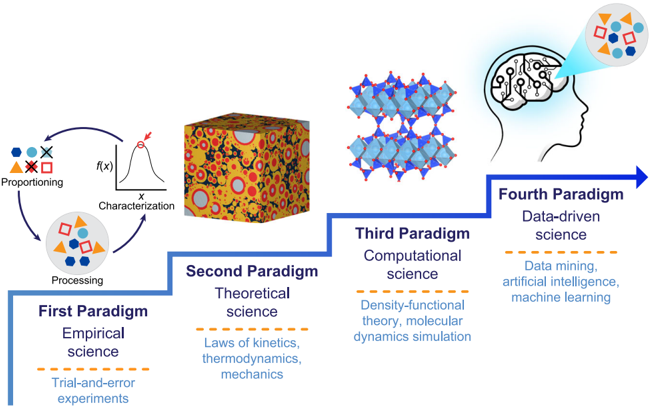
This review surveys machine learning in concrete science, summarizing 389 peer-reviewed publications and arguing that ML has transformative potential for property prediction, characterization, and simulation but is limited by data sparsity, biased or unrepresentative data, weak validation, and poor interpretability. It proposes best practices around data/tool sharing, linking laboratory and field data, starting with simple models, and knowing when to trust a model.
Key findings
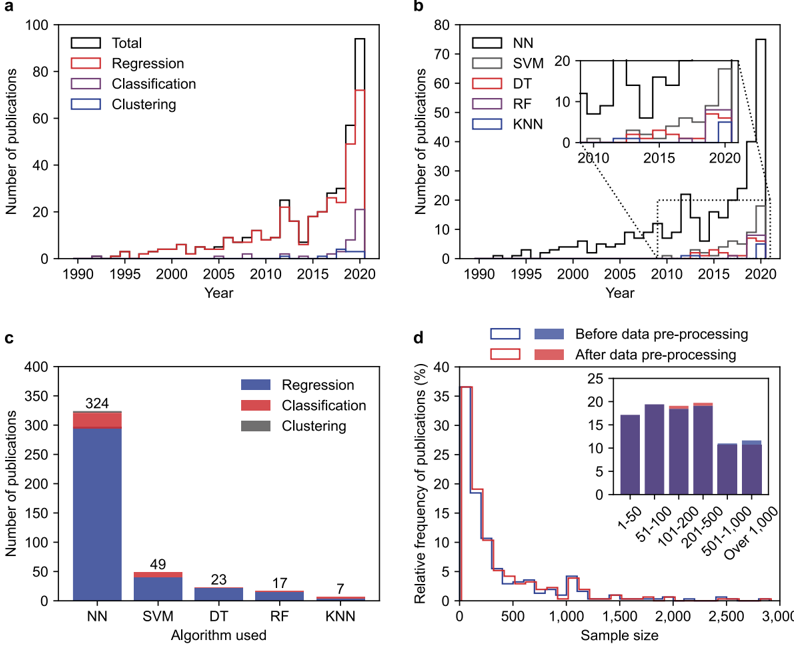
- The literature survey covered 389 peer-reviewed publications; the earliest concrete-and-ML article identified was from 1992, with publication numbers not reaching double digits until 2009. Most studies addressed regression tasks (88.2%), while classification accounted for 10.5%; neural networks were the most commonly applied algorithms.
- Regression datasets were small and skewed: sample sizes ranged from 5 to 262,569, with a median of 174 before preprocessing and 169 after; over 55% of studies had fewer than 200 samples, and only about 11% had more than 1,000 samples. Most regression studies used empirical experimental data (93.6%), with fewer using computational simulation data (7.3%); among experimental studies, 93.8% used laboratory tests and 8.4% used field tests.
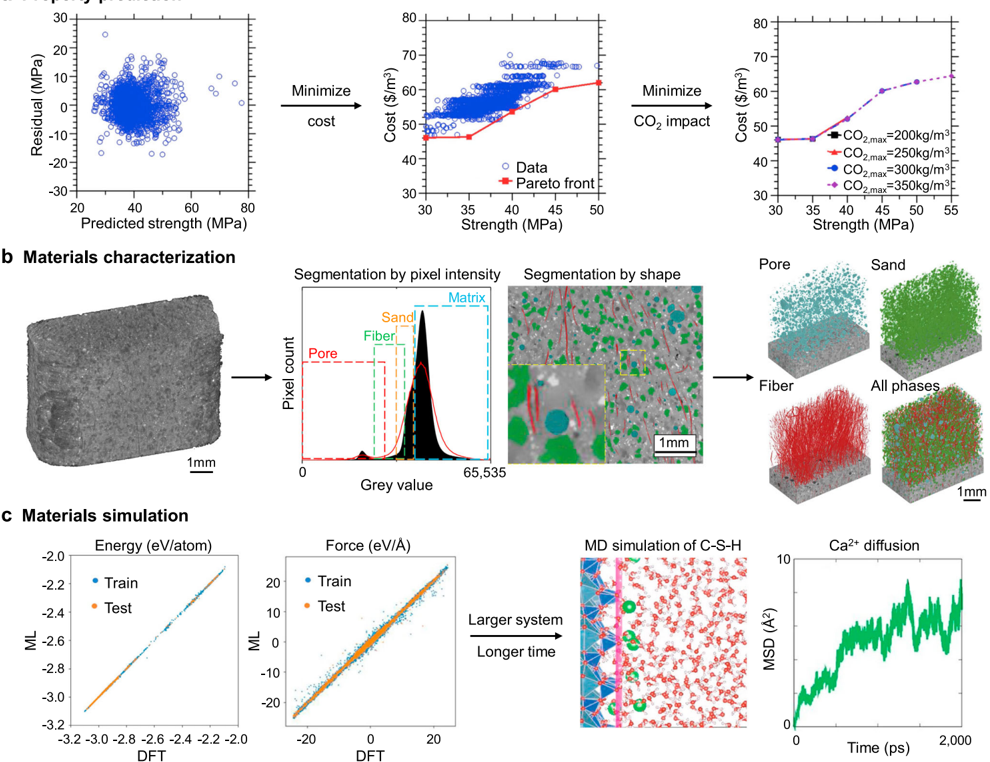
- Major application areas include property prediction (e.g., compressive, flexural, tensile, shear strength, elastic modulus, flowability, durability), materials characterization (e.g., nondestructive testing, image segmentation from X-ray computed tomography, crack detection), and materials simulation (e.g., ML potentials for large-scale molecular dynamics of C-S-H with 3,084 atoms for 2 ns).
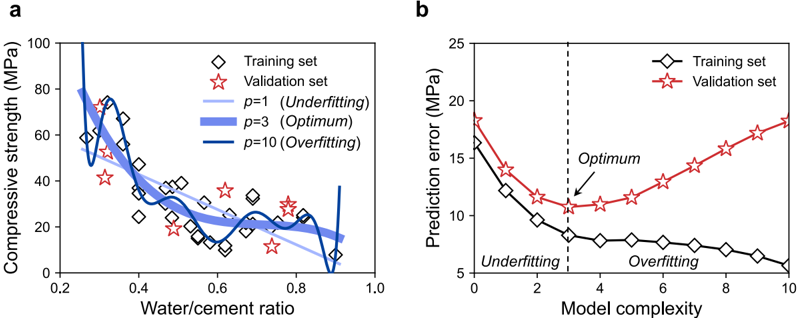
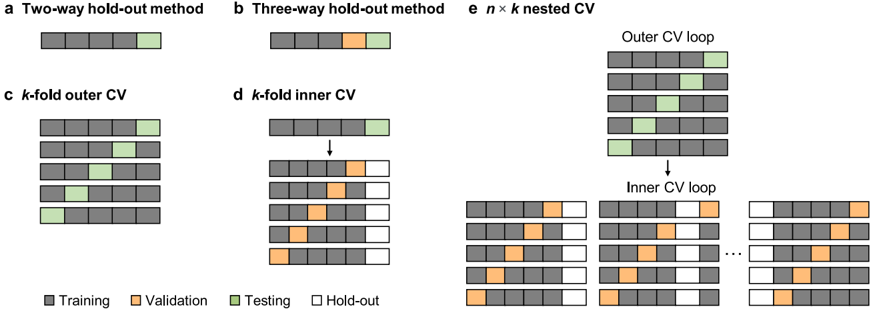
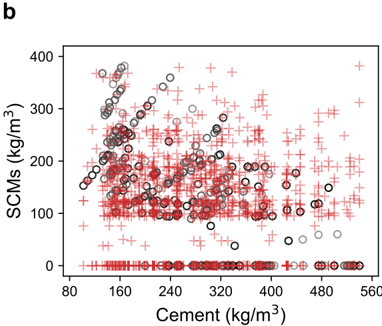
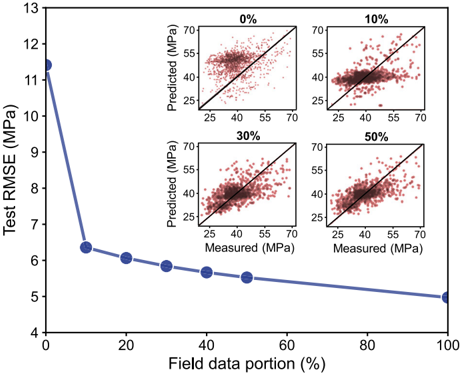
- The paper highlights data challenges (sparsity, high dimensionality, representation/measurement/temporal/deployment bias), validation challenges (hold-out and cross-validation pitfalls, especially with small datasets), and interpretability challenges (permutation-based diagnostics can generate unrealistic concrete mixtures; ML models identify association, not causation). It also reports that replacing 10% of laboratory training data with field data reduced root mean square error by 43% compared with using only laboratory data in one cited study.
Methods
- This is a review and bibliographic analysis, not a primary experimental study. The authors conducted a literature survey of 389 peer-reviewed publications on ML applications in concrete science, with survey criteria in Supplementary Note 1 and compiled data in Supplementary Dataset.
- Bibliographic data came from Web of Science for the period 1990–2020. The paper also provides a high-level summary of applications, publicly accessible datasets, and current research directions, and discusses challenges and best practices.
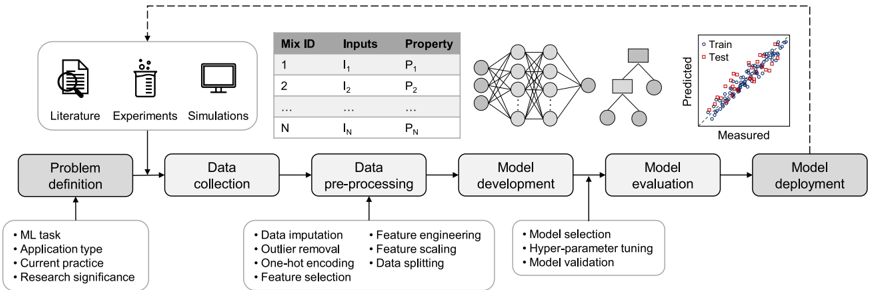
- The review synthesizes examples across property prediction, materials characterization, and materials simulation, and discusses validation approaches including two-way and three-way hold-out, k-fold cross-validation, and n × k nested cross-validation.
Limitations
- The paper states that its arguments are “not exhaustive” and aims to initiate constructive discussion rather than provide a complete treatment.
- The bibliographic analysis is limited to the surveyed publications and Web of Science period 1990–2020; detailed survey criteria and compiled data are placed in supplementary materials rather than fully in the main text.
- The review repeatedly notes limitations in the underlying ML literature: small datasets, data bias, inconsistent reporting, validation methods that may be ill-suited to small concrete datasets, and models that are not designed to establish causality.
Model-written summary. Check it against the paper before relying on it.
Integrity signals
Registry
Cites
Statistics
Figures
Verification
Claims the paper makes
11 Valid · 5 Not valid · 19 Not checked · 52 Own results and interpretations
Every source the paper cites for this claim was checked and supports it.
In the paper
“Failure to assemble a sufficiently large dataset raises the risk of overfitting 82 (Fig. 5).”
§ Machine learning in concrete science: applications, challenges, and best practices > Data sparsity.
What the sources say
- Supportedcites [82] Kassraian-Fard, P., Matthis, C., Balsters, J. H., Maathuis, M. H. & Wenderoth, N. Promises, pitfalls, and basic guidelines for applying machine learning classifiers to psychiatric imaging data, with autism as an example. Front. Psychiatry 7, 177 (2016). source
The 'small sample size' section states directly that when features strongly exceed the number of data samples, 'a first problem is the high risk of overfitting,' and that a small but possibly complex data set can evoke an idiosyncratic fit with poor generalizability. The 'Feature Calculation' section reinforces this, noting that having many predictors relative to data samples causes classifiers to adapt to peculiarities of a specific dataset ('overfitting'), and that dimensionality reduction to alleviate overfitting is crucial 'especially in settings where restricted amount of data are available.' The Summary/Concluding Remarks likewise tie the high-dimensionality of a relatively small data set to easy overfitting. (LLM, conf=0.90)
plainstates a cause- Asserted: passes — The authors put it forward as true.
- Checkable: passes — It can be checked against evidence.
- Load-bearing: passes — The paper’s conclusions depend on it.
- Based: passes — The paper gives a reason why it holds.
- Supported
The cited sources support only part of this claim — read each source’s verdict below.
In the paper
“If the sample size is relatively small (as is generally the case in practical scenarios), the input variables of a dataset can lose their discriminating ability, as all samples in the dataset seem very distinct from each other with high dimensionality 85 .”
§ Machine learning in concrete science: applications, challenges, and best practices > High dimensionality.
What the sources say
- Partly supportedcites [85] Pestov, V. An axiomatic approach to intrinsic dimension of a dataset. Neural Netw. 21, 204-213 (2008). sourceExperimental — accuracy not yet measured
Pestov (2008) does support the substance of the paraphrase: Sect. 2.2 (p. 2) defines the curse of dimensionality as the situation where 'important features of a dataset sharply concentrate near their median (or mean) values and thus become non-discriminating', explicitly bundling in 'sparseness of points (the distance to the nearest neighbour is comparable to the average distance between two points)', i.e. samples looking mutually distinct in high dimension; Sect. 2.4 (p. 4) adds that large-margin classification with 1-Lipschitz features becomes impossible. The part the source does not support is the small-sample-size condition as the driver: in Sect. 6 (p. 8) realistic/'manageable' sample sizes are tied to the collapse and instability of the separation dimension of a noise-corrupted sample (Example 14), and the proof of Proposition 13 (p. 8) states the opposite of feature non-discrimination for such small samples — a typical high-dimensional sample forms a discrete metric space of diameter ~sqrt(2) whose Lip_1(X) 'will contain numerous 1-Lipschitz functions that are highly non-constant'. The paper's non-discrimination result is asserted for mm-spaces/domains of high intrinsic dimension (Corollary 9, p. 7, requires n >= n0 training points), not for datasets because their sample size is small. (LLM, conf=0.72)
plainstates a cause- Asserted: passes — The authors put it forward as true.
- Checkable: passes — It can be checked against evidence.
- Load-bearing: unclear — It is unclear whether the paper’s conclusions depend on it.
- Based: passes — The paper gives a reason why it holds.
- Partly supported
The cited sources support only part of this claim — read each source’s verdict below.
In the paper
“Hence, trust in ML models is strongly related to their interpretability, which has thus become a focus of active research in the ML community 116,132 .”
§ Machine learning in concrete science: applications, challenges, and best practices > Starting with simple models
What the sources say
- Partly supportedcites [116] Lipton, Z. C. The mythos of model interpretability: In machine learning, the concept of interpretability is both important and slippery. Queue 16, 1–28 (2018). sourceExperimental — accuracy not yet measured
The Introduction (p. 1) says many papers propose interpretability as a means to engender trust, and §2.1 (p. 3) says some suggest it is a prerequisite. Lipton questions what trust means and does not establish a strong relationship between trust and interpretability; the claim states that relationship more definitively than the source does. (LLM, conf=0.84)
- Not checked yetcites [132] Schmidt, P. & Biessmann, F. Quantifying interpretability and trust in machine learning systems. Preprint at http://arxiv.org/abs/1901.08558 (2019).
boostedstates an association- Asserted: passes — The authors put it forward as true.
- Checkable: passes — It can be checked against evidence.
- Load-bearing: passes — The paper’s conclusions depend on it.
- Based: passes — The paper gives a reason why it holds.
- Partly supported
The cited sources support only part of this claim — read each source’s verdict below.
In the paper
“In this regard, the knowledge shared in interdependent properties of the same material or in the same property of similar concrete types can be transferred to accelerate the training process and improve the accuracy performance of ML models, even with relatively small amounts of available data 143,144 .”
§ Machine learning in concrete science: applications, challenges, and best practices > CONCLUSIONS AND OUTLOOK
What the sources say
- Partly supportedcites [143] Song, P. S., Wu, J. C., Hwang, S. & Sheu, B. C. Assessment of statistical variations in impact resistance of high-strength concrete and high-strength steel fiber- reinforced concrete. Cem. Concr. Res. 35, 393-399 (2005). 128. Nuzzo, R. Scientific method: statistical errors. Nature 506, 150-152 (2014). 129. Leek, J. et al. Five ways to fix statistics. Nature 551, 557-559 (2017). 130. Halilaj, E. et al. Machine learning in human movement biomechanics: Best practices, common pitfalls, and new opportunities. J. Biomech. 81, 1-11 (2018). 131. Yin, M., Vaughan, J. W. & Wallach, H. Understanding the sourceExperimental — accuracy not yet measured
Split into 2 atoms — 1 confirmed, 1 partially supported, 0 disputed, 0 misattributed, 0 unverifiable. Expand the claim to see per-atom verdicts.
- Not checked yetcites [144] Ravinder et al. Artificial intelligence and machine learning in glass science and technology: 21 challenges for the 21st century. Int. J App Glass Sci. 12, 277–292 (2021). source
plainstates a cause- Asserted: passes — The authors put it forward as true.
- Checkable: passes — It can be checked against evidence.
- Load-bearing: passes — The paper’s conclusions depend on it.
- Based: passes — The paper gives a reason why it holds.
- Rests on an assumption not shown here.
- Partly supported
Every source the paper cites for this claim was checked and supports it.
In the paper
“However, it is important to note that ML models are not designed to identify causal relationships but rather association relationships 116 .”
§ Machine learning in concrete science: applications, challenges, and best practices > Causality.
What the sources say
- Supportedcites [116] Lipton, Z. C. The mythos of model interpretability: In machine learning, the concept of interpretability is both important and slippery. Queue 16, 1–28 (2018). source
Section 2.2 'Causality' (p. 3) states directly that supervised learning models are 'only optimized directly to make associations' and that 'the associations learned by supervised learning algorithms are not guaranteed to reflect causal relationships' because unobserved common causes may exist. That covers both halves of the paraphrase (association, not causal identification). Lipton adds the caveat that researchers nonetheless use such models to generate hypotheses later tested experimentally, but this does not contradict the claim about what the models are built/optimized to do. (LLM, conf=0.85)
plain- Asserted: passes — The authors put it forward as true.
- Checkable: passes — It can be checked against evidence.
- Load-bearing: passes — The paper’s conclusions depend on it.
- Based: passes — The paper gives a reason why it holds.
- Supported
44 more claims · 3 with their cited sources checked
Create a free account to see all 87 claims and to verify the 31 references still open.
- It may state two separate claims as one. 27
- Probably not a substantial claim. 12
- The quote only partly states this claim. 2
Citations
Cites
Breiman, L. (2001) · Machine Learning · doi:10.1023/a:1010933404324 · Cited by 133,538
Pan, S. J., & Yang, Q. (2010) · IEEE Transactions on Knowledge and Data Engineering · doi:10.1109/tkde.2009.191 · Cited by 23,387
Commentary: The Materials Project: A materials genome approach to accelerating materials innovation
Jain, A., Ong, S. P., Hautier, G., Chen, W., Richards, W. D., Dacek, S., Cholia, S., Gunter, D., Skinner, D., Ceder, G., et al. (2013) · APL Materials · doi:10.1063/1.4812323 · Cited by 13,094
Physics-informed machine learning
Karniadakis, G. E., Kevrekidis, I. G., Lu, L., Perdikaris, P., Wang, S., & Yang, L. (2021) · Nature Reviews Physics · doi:10.1038/s42254-021-00314-5 · Cited by 8,718
A Survey on Bias and Fairness in Machine Learning
Mehrabi, N., Morstatter, F., Saxena, N., Lerman, K., & Galstyan, A. (2022) · ACM Computing Surveys · doi:10.1145/3457607 · Cited by 5,812
A Survey on Bias and Fairness in Machine Learning
Mehrabi, N., Morstatter, F., Saxena, N., Lerman, K., & Galstyan, A. (2019) · arXiv · doi:10.48550/arxiv.1908.09635 · Cited by 5,812
Lipton, Z. C. (2018) · Queue · doi:10.1145/3236386.3241340 · Cited by 5,427
Adaptive Control Processes: A Guided Tour
Bellman, R. E. (1961) · doi:10.1515/9781400874668 · Cited by 2,802
Recent advances and applications of machine learning in solid-state materials science
Schmidt, J., Marques, M. R. G., Botti, S., & Marques, M. A. L. (2019) · npj Computational Materials · doi:10.1038/s41524-019-0221-0 · Cited by 2,607
Bias in error estimation when using cross-validation for model selection
Varma, S., & Simon, R. (2006) · BMC Bioinformatics · doi:10.1186/1471-2105-7-91 · Cited by 2,485
Research works printed but not linked: 30
- Mehta, P. K. & Monteiro, P. J. M. Concrete: microstructure, properties, and materials (McGraw-Hill Education, 2014).
- Garboczi, E. J., Bentz, D. P. & Frohnsdorff, G. J. The past, present, and future of the computational materials science of concrete. In J. Francis Young Symposium (Materials Science of Concrete Workshop, 2000).
- El-Chabib, H. & Nehdi, M. Effect of mixture design parameters on segregation of self-consolidating concrete. ACI Mater. J. 103, 374-383 (2006).
- Gunasekera, C. et al. Design of Alkali-Activated Slag-Fly Ash Concrete Mixtures Using Machine Learning. ACI Mater. J. 117, 263-278 (2020).
- Pratt, D. & Sansalone, M. Impact-echo signal interpretation using artificial intelligence. ACI Mater. J. 89, 178-187 (1992).
- Li, Z. & Radlińska, A. Artificial intelligence in concrete materials: A scientometric view. In Naser, M. Z. (ed.) Leveraging Artificial Intelligence in Engineering, Management, and Safety of Infrastructure (CRC Press, 2022).
- Rafiei, M. H., Khushefati, W. H., Demirboga, R. & Adeli, H. Neural network, machine learning, and evolutionary approaches for concrete material char- acterization. ACI Mater. J. 113, 781-789 (2016).
- Rafiei, M. H., Khushefati, W. H., Demirboga, R. & Adeli, H. Novel approach for concrete mixture design using neural dynamics model and virtual lab concept. ACI Mater. J. 114, 117-127 (2017).
- Park, K. B., Jee, N. Y., Yoon, I. S. & Lee, H. S. Prediction of temperature distribution in high-strength concrete using hydration model. ACI Mater. J. 105, 180-186 (2008).
- Kutner, M. H. et al. Applied linear statistical models (McGraw-Hill Irwin, 2005).
- Zheng, A. & Casari, A. Feature engineering for machine learning: principles and techniques for data scientists (O'Reilly Media, 2018).
- Müller, A. C. & Guido, S. Introduction to machine learning with Python: a guide for data scientists (O'Reilly Media, 2016).
- Bažant, Z. R. & Li, G. H. Unbiased statistical comparison of creep and shrinkage prediction models. ACI Mater. J. 105, 610-621 (2008).
- Hubler, M. H., Wendner, R. & Bažant, Z. P. Comprehensive database for concrete creep and shrinkage: Analysis and recommendations for testing and recording. ACI Mater. J. 112, 547-558 (2015).
- Fisher, A., Rudin, C. & Dominici, F. All models are wrong, but many are useful: Learning a variable’s importance by studying an entire class of prediction models simultaneously. J. Mach. Learn. Res. 20, 1–81 (2019).
- Lundberg, S. M. & Lee, S.-I. A Unified Approach to Interpreting Model Predictions. In Guyon, I. et al. (eds.) Advances in Neural Information Processing Systems, vol. 30 (Curran Associates, Inc., 2017).
- El-Chabib, H., Nehdi, M. & Sonebi, M. Artificial intelligence model for flowable concrete mixtures used in underwater construction and repair. ACI Mater. J. 100, 165–173 (2003).
- Basma, A. A., Barakat, S. A. & Al-Oraimi, S. Prediction of cement degree of hydration using artificial neural networks. ACI Mater. J. 96, 167–172 (1999).
- Xi, X., Yang, S., Hu, X. & Li, C. Q. Computational determination of interface fracture properties for concrete by inverse analysis. ACI Mater. J. 117, 43-53 (2020). 163.
- Nehdi, M. L. & Soliman, A. M. Artificial intelligence model for early-age autogenous shrinkage of concrete. ACI Mater. J. 109, 353–362 (2012).
- Aizawa, T. & Yokoshita, T. Applications of neural network technology to the operation and control of cement plants. ZKG Int. 48, 532–538 (1995).
- Schmidt, D. & Schmidt, D. Online prediction of the free lime content in the sintering zone and the use of neural networks for process optimization. ZKG Int. 54, 471–479 (2001).
- Oh, J. W., Lee, I. W., Kim, J. T. & Lee, G. W. Application of neural networks for proportioning of concrete mixes. ACI Mater. J. 96, 61–67 (1999).
- Ji, T., Yang, Y., Fu, M. Y., Chen, B. C. & Wu, H. C. Optimum design of reactive powder concrete mixture proportion based on artificial neural and harmony search algorithm. ACI Mater. J. 114, 41–47 (2017).
- Haj-Ali, R. M., Kurtis, K. E. & Sthapit, A. R. Neural network modeling of concrete expansion during long-term sulfate exposure. ACI Mater. J. 98, 36–43 (2001).
- Chang, C. H. & Yang, C. C. Artificial neural networks in prediction of concrete strength reduction due to high temperature. ACI Mater. J. 103, 68–69 (2006).
- Özbay, E. & Lachemi, M. Relative compressive strength of concretes under elevated temperatures. ACI Mater. J. 109, 165–175 (2012).
- Ünlü, R. An assessment of machine learning models for slump flow and examining redundant features. Comput. Concr. 25, 565–574 (2020).
- Naser, M. Z. & Salehi, H. Machine learning-driven assessment of fire-induced concrete spalling of columns. ACI Mater. J. 117, 7–16 (2020).
- Knaack, A. M., Kurama, Y. C. & Kirkner, D. J. Compressive Strength Relationships for Concrete under Elevated Temperatures. ACI Mater. J. 108, 270–280 (2011).
Cited by
Items 101–200 of 402
Yoon, J., Kim, H., Ju, S., Li, Z., & Pyo, S. (2023) · Construction and Building Materials · doi:10.1016/j.conbuildmat.2023.132647 · Cited by 19
Self-citationAl-Naghi, A. A. A., Ahmad, A., Amin, M. N., Algassem, O., & Alnawmasi, N. (2025) · Case Studies in Construction Materials · doi:10.1016/j.cscm.2025.e04900 · Cited by 32
Migallón, V., Penadés, H., Penadés, J., & Tenza-Abril, A. J. (2023) · Applied Sciences · doi:10.3390/app13031953 · Cited by 20
Kalabarige, L. R., Sridhar, J., Subbaram, S., Prasath, P., & Ravindran, G. (2024) · Advances in Civil Engineering · doi:10.1155/2024/7844854 · Cited by 22
Armistead, S. J., & Babaahmadi, A. (2024) · Waste Management & Research The Journal for a Sustainable Circular Economy · doi:10.1177/0734242x241270973 · Cited by 18
“…that a future where performance-based standards, in combination with the digitalization of large datasets of cementitious mineral phases and their characteristics (rheology, strength, durability, toxicity), will facilitate a new wave of cement innovation (John et al., 2019; Li et al., 2022).”
Sinkhonde, D., Bezabih, T., Mirindi, D., Mashava, D., & Mirindi, F. (2025) · Cleaner Waste Systems · doi:10.1016/j.clwas.2025.100236 · Cited by 26
A Novel Machine and Deep Learning–Based Ensemble Techniques for Automatic Lung Cancer Detection
Ansari, M. M., Kumar, S., Chola, C., Heyat, M. B. B., Akhtar, F., Hayat, M. A. B., Sayeed, E., Parveen, S., Abbasi, R., & Pomary, D. (2025) · BioMed Research International · doi:10.1155/bmri/6666688 · Cited by 23
“The parameter choices were guided by previous best practices in similar research and by extensive experimental validation, ensuring the fi nal models achieved optimal performance while maintaining generalizability and computational e ffi ciency [81].”
Albostami, A. S., Al‐Hamd, R. K. S., & Alzabeebee, S. (2023) · Innovative Infrastructure Solutions · doi:10.1007/s41062-023-01182-x · Cited by 17
Sun, Y. (2024) · Mechanics of Advanced Materials and Structures · doi:10.1080/15376494.2023.2298232 · Cited by 18
“In recent years, the rapid progress in computing power, the availability of large-scale datasets, and the development of sophisticated algorithms have significantly propelled the field of machine learning (ML) in civil engineering [21–25].”
Stöcker, J. P., Heinzig, S., Khedkar, A. A., & Kaliske, M. (2024) · Archive of Applied Mechanics · doi:10.1007/s00419-024-02664-9 · Cited by 17
“Especially in the case of decoupled homogenization approaches, data-driven methods are advantageous due to complex macroscopic material behavior caused by mesoscopic heterogeneities [12,13].”
A machine learning approach to predicting pervious concrete properties: a review
Sathiparan, N., Jeyananthan, P., & Subramaniam, D. N. (2025) · Innovative Infrastructure Solutions · doi:10.1007/s41062-024-01829-3 · Cited by 18
Baqer, B. T., & Mohammed, A. S. (2025) · Innovative Infrastructure Solutions · doi:10.1007/s41062-025-01973-4 · Cited by 18
“Machine learning algorithms are recent tools to predict the mechanical properties of concrete [26].”
Pan, P., Yang, W., Zhang, Y., & Li, P. (2023) · Structures · doi:10.1016/j.istruc.2023.01.068 · Cited by 19
Li, Y., del Rio‐Chanona, E. A., Wong, H. S., & Myers, R. J. (2025) · Journal of Cleaner Production · doi:10.1016/j.jclepro.2025.145727 · Cited by 19
Industrial-scale prediction of cement clinker phases using machine learning
Fayaz, S. J., Montiel-Bohórquez, N. D., Bishnoi, S., Romano, M. C., Gatti, M., & Krishnan, N. M. A. (2025) · Communications Engineering · doi:10.1038/s44172-025-00432-3 · Cited by 16
“Alternatively, recent advances in machine learning (ML) 26 demonstrate promising capabilities in predicting cement and concrete properties 26 – 29 .”
Hossain, M. A. S., Uddin, M. N., & Hossain, M. M. (2023) · Materials Today Proceedings · doi:10.1016/j.matpr.2023.02.458 · Cited by 16
Data-driven approaches for strength prediction of alkali-activated composites
Abuhussain, M. A., Ahmad, A., Amin, M. N., Althoey, F., Gamil, Y., & Najeh, T. (2024) · Case Studies in Construction Materials · doi:10.1016/j.cscm.2024.e02920 · Cited by 25
“In addition, by combining ML with experimental data, researchers can enhance their understanding of AACs behaviour and stimulate innovation in the field [76].”
Khadijeh, M., Kasbergen, C., Erkens, S. M. J. G., & Varveri, A. (2024) · Computer Methods in Applied Mechanics and Engineering · doi:10.1016/j.cma.2024.117462 · Cited by 19
Mobasheri, F., Hosseinpoor, M., Yahia, A., & Pourkamali‐Anaraki, F. (2025) · Archives of Computational Methods in Engineering · doi:10.1007/s11831-025-10284-x · Cited by 17
“Random search (RS) overcomes the high-cost issue by trying out random significantly, particularly for small and high-dimensional datasets, resulting in false optimism and inaccurate conclusions [ 242 ].”
Rahjoo, M., Caggiano, A., Berardi, U., Prabhu, A., & Dolado, J. S. (2025) · Materials and Structures · doi:10.1617/s11527-024-02548-y · Cited by 18
“…possess suitable thermal properties, be chemically compatible with the concrete to prevent Increasingly used for predicting thermal properties such as conductivity, specific heat capacity, and density [85–89] corrosion or degradation and have a low viscosity to ensure efficient heat exchange.”
Unbiased rheological properties determined by adversarial training with Bingham equation
Kang, I. K., Shin, T. Y., & Kim, J. H. (2025) · Cement and Concrete Composites · doi:10.1016/j.cemconcomp.2025.105943 · Cited by 16
Yu, J., Pu, H., & Sun, D. (2025) · Food Control · doi:10.1016/j.foodcont.2025.111290 · Cited by 16
Adsul, N., Choi, Y., & Kang, S.-T. (2025) · Materials · doi:10.3390/ma18153718 · Cited by 19
“ML, a subset of AI, uses algorithms that learn from data to perform intelligent tasks, while DL—a more advanced form of ML—employs multi-layered neural networks to model intricate patterns and relationships [11,42,43].”
Obianyo, I. I., Auta, J. T., Sciacca, D., Mahamat, A. A., Kelechi, S. E., & Onwualu, A. P. (2024) · Discover Civil Engineering · doi:10.1007/s44290-024-00052-4 · Cited by 16
“However, extensive experimental data is required to learn trends and relationships to be able to generalize the patterns to a larger population [7].”
Jiang, Y., Zuo, W., Yuan, C., Xu, G., Wei, X., Zhang, J., & She, W. (2023) · Journal of Building Engineering · doi:10.1016/j.jobe.2023.106816 · Cited by 14
Estimating the initial fracture energy of concrete using various machine learning techniques
Albaijan, I., Mahmoodzadeh, A., Mohammed, A. H., Mohammadi, M., Gutub, S. A., Alsalami, O. M., Ibrahim, H. H., & Alashker, Y. (2023) · Engineering Fracture Mechanics · doi:10.1016/j.engfracmech.2023.109776 · Cited by 14
Sun, Y. (2024) · Journal of Sustainable Metallurgy · doi:10.1007/s40831-024-00790-w · Cited by 17
“Given the abundance of experimental data in existing literature, machine learning (ML) emerges as a promising alternative methodology for accurate predictions on concrete performance [25, 26].”
Poli, E., Cutini, M., Nosir, M. A., Chehaimi, O., & Righi, M. C. (2024) · Applied Surface Science · doi:10.1016/j.apsusc.2024.160177 · Cited by 14
Chen, Q., Hu, G., & Wu, J. H. (2024) · Buildings · doi:10.3390/buildings14092894 · Cited by 15
Chai, M., He, Y., Wang, J., Wu, Z., & Lei, B. (2024) · International Journal of Pressure Vessels and Piping · doi:10.1016/j.ijpvp.2024.105349 · Cited by 14
Kim, J. (2025) · Applied Soft Computing · doi:10.1016/j.asoc.2025.113110 · Cited by 13
Owusu, S. Y. (2025) · RSC Sustainability · doi:10.1039/d5su00360a · Cited by 15
Khan, K., Amin, M. N., Sahar, U. U., Ahmad, W., Shah, K., & Mohamed, A. (2022) · Frontiers in Materials · doi:10.3389/fmats.2022.1098304 · Cited by 13
Chihi, H., & Larbi, I. B. C. (2023) · Hydrogeology Journal · doi:10.1007/s10040-023-02686-7 · Cited by 13
“Simple models are highly suitable to achieve all these objectives (Li et al. 2022).”
BackgroundHan, T., Aylas‐Paredes, B. K., Huang, J., Goel, A., Neithalath, N., & Kumar, A. (2023) · Minerals · doi:10.3390/min13101261 · Cited by 15
Kim, J., Lee, D., & Ubysz, A. (2024) · Case Studies in Construction Materials · doi:10.1016/j.cscm.2024.e03557 · Cited by 14
Sathiparan, N., Jeyananthan, P., & Subramaniam, D. N. (2024) · Sustainable Chemistry and Pharmacy · doi:10.1016/j.scp.2024.101818 · Cited by 13
Predicting creep failure life in adhesive-bonded single-lap joints using machine learning
Jan, F., Kujawa, M., Paczos, P., & Eremeyev, V. A. (2025) · Scientific Reports · doi:10.1038/s41598-025-91832-0 · Cited by 16
Application of Machine Learning to Predict the Engineering Characteristics of Construction Material
Bang, J., & Yang, B. (2023) · Multiscale Science and Engineering · doi:10.1007/s42493-023-00092-5 · Cited by 13
“This is due to the relative difficulty and inefficiency of theoretically analyzing the complex chemistry of most construction materials, which undergo extensive hydration over the course of roughly twenty-eight days from initial curing, followed by degradation and damage [7].”
BackgroundРуденко, О. В., Anop, D., Sadenova, M. A., Beisekenov, N., Kulisz, M., & Begentayev, M. M. (2024) · Frontiers in Materials · doi:10.3389/fmats.2024.1481871 · Cited by 12
Interpretable Surrogate Learning for Electronic Material Generation
Wang, Z., Liu, S., Tao, K., Chen, A., Duan, H., Han, Y., You, F., Liu, G., & Li, J. (2024) · ACS Nano · doi:10.1021/acsnano.4c12166 · Cited by 13
Exploring cement Production's role in GDP using explainable AI and sustainability analysis in Nepal
Poudyal, R., Paneru, B., Paneru, B., Giri, T., Paneru, B. P., Reynolds, T., Poudyal, K. N., & Dangi, M. B. (2025) · Case Studies in Chemical and Environmental Engineering · doi:10.1016/j.cscee.2025.101128 · Cited by 12
Gonzalez, P. L. L., Novais, R. M., Labrincha, J. A., Blanpain, B., & Pontikes, Y. (2023) · Cement and Concrete Composites · doi:10.1016/j.cemconcomp.2023.105038 · Cited by 14
Deep Learning Projections for High-Performance Concrete Strength Forecasting
Tipu, R. K., Shah, O. A., Vats, S., & Arora, S. (2024) · International Conference on Innovative Practices in Technology and Management (ICIPTM) · doi:10.1109/iciptm59628.2024.10563896 · Cited by 11
“The integration of Machine Learning (ML) with concrete engineering practices opens an interesting opportunity that could possibly change the current paradigm [4], [5].”
BackgroundJiang, Y., Zhang, J., Zuo, W., Xu, G., Yuan, C., Wang, L., Du, Z., Lu, Y., & She, W. (2024) · Case Studies in Construction Materials · doi:10.1016/j.cscm.2024.e03629 · Cited by 15
Machine learning and sustainable geopolymer materials: A systematic review
Nguyen, H. A. T., Pham, D. H., Ahn, Y., Oo, B. L., & Lim, B. T. (2025) · Materials Today Sustainability · doi:10.1016/j.mtsust.2025.101095 · Cited by 24
Getachew, E. M., Taffese, W. Z., Espinosa-Leal, L., & Yehualaw, M. D. (2025) · Sustainability · doi:10.3390/su17188453 · Cited by 16
Losi, G., Chehaimi, O., & Righi, M. C. (2023) · Journal of Chemical Theory and Computation · doi:10.1021/acs.jctc.3c00459 · Cited by 11
Sarcheshmeh, A. H., Etemadfard, H., Najmoddin, A., & Ghalehnovi, M. (2024) · Innovative Infrastructure Solutions · doi:10.1007/s41062-024-01471-z · Cited by 14
“As a supplement to traditional methods, Artificial Intelligence (AI) and Machine Learning (ML) techniques can offer novel viewpoints and practical solutions to expedite advancements in concrete design and production [29, 64].”
Lyu, X., Chu, D., Lu, X., Mu, J., Zhang, Z., & Yun, D. (2024) · Applied Sciences · doi:10.3390/app14031119 · Cited by 14
Data-guided for discovering high-strength, cost-effective, and low-carbon rice husk ash concrete
Li, Z., Gao, Y., Zhu, Z., & Tian, W. (2024) · Journal of CO2 Utilization · doi:10.1016/j.jcou.2024.102786 · Cited by 12
Self-citationEstimating the Workability of Concrete with a Stereovision Camera during Mixing
Ojala, T., & Punkki, J. (2024) · Sensors · doi:10.3390/s24144472 · Cited by 11
“Various machine learning (ML) methods have been used to characterize concrete, optimize mix designs, estimate fresh and hardened concrete properties, and investigate concrete durability and cracks, as summarized exhaustively in [15,16].”
MethodSathiparan, N., Wijekoon, S. H. B., Ravi, R., Jeyananthan, P., & Subramaniam, D. N. (2024) · Road Materials and Pavement Design · doi:10.1080/14680629.2024.2374885 · Cited by 10
Scala, A. L., Rizzo, F., Carnimeo, L., Ivorra, S., & Foti, D. (2024) · IEEE Canada International Humanitarian Technology Conference · doi:10.1109/ihtc61819.2024.10855151 · Cited by 10
Rezzoug, A., AlAteah, A. H., Alinsaif, S., & Mostafa, S. A. (2025) · Case Studies in Construction Materials · doi:10.1016/j.cscm.2025.e04787 · Cited by 17
An, T., Park, S., Yoon, S. M., Lee, Y., Ra, H. W., Lee, S., & Seo, M. W. (2025) · Journal of environmental chemical engineering · doi:10.1016/j.jece.2025.117526 · Cited by 14
AI in food sciences and technology – beyond the algorithms
Hoffman, L. C., & Cozzolino, D. (2025) · Critical Reviews in Food Science and Nutrition · doi:10.1080/10408398.2025.2520397 · Cited by 14
Comparative Study on Hyperparameter Tuning for Predicting Concrete Compressive Strength
Kim, J., & Lee, D. (2025) · Buildings · doi:10.3390/buildings15132173 · Cited by 12
Muñoz-Ordóñez, J. F., Cobos, C., Vidal-Rojas, J.-C., & Herrera, F. (2025) · International Journal of Intelligent Systems · doi:10.1155/int/4934696 · Cited by 15
Nwetlawung, Z. E., & Lin, Y.-H. (2025) · Buildings · doi:10.3390/buildings15162809 · Cited by 11
Kim, I., Kim, Y., & Chin, S. (2023) · Applied Sciences · doi:10.3390/app13084789 · Cited by 10
Barua, N. K., Lee, S., Oliynyk, A. O., & Kleinke, H. (2025) · Journal of Physics Energy · doi:10.1088/2515-7655/adba87 · Cited by 15
Zhang, R., Wang, W. Y., Fan, Y., Zhang, Y., Jia, D., Wang, J., Tang, Y. J., & Li, J. (2024) · Journal of Materials Science · doi:10.1007/s10853-024-10519-5 · Cited by 9
Self-citationLi, S., Fang, Z., Xu, H., & Sakai, Y. (2025) · Construction and Building Materials · doi:10.1016/j.conbuildmat.2025.140597 · Cited by 9
Artificial Intelligence in the Discovery of Deep Eutectic Solvents with Lubricant Applications
Santos, J. P., Sosa, F. H. B., Abranches, D. O., & Coutinho, J. A. P. (2025) · ACS Omega · doi:10.1021/acsomega.5c05944 · Cited by 9
Flah, M., Marani, A., Suleiman, A. R., & Nehdi, M. L. (2026) · Renewable and Sustainable Energy Reviews · doi:10.1016/j.rser.2026.116730 · Cited by 12
Perko, J., Laloy, E., Zarzuela, R., Couckuyt, I., García, R., & Mosquera, M. J. (2022) · Cement and Concrete Composites · doi:10.1016/j.cemconcomp.2022.104903 · Cited by 9
Braimah, J. I., Ajagbe, W. O., & Olonade, K. A. (2024) · AI in Civil Engineering · doi:10.1007/s43503-024-00033-7 · Cited by 9
“Zhanzhao et al. emphasized the importance of selecting relevant features to enhance model performance (Zhanzhao et al., 2022).”
Raju, V. B., Puttaswamaiah, S. G., & Singh, A. K. (2025) · Smart and Sustainable Built Environment · doi:10.1108/sasbe-09-2024-0401 · Cited by 8
Lin, M.-Y., Severson, K., Grandgeorge, P., & Roumeli, E. (2025) · Matter · doi:10.1016/j.matt.2025.102267 · Cited by 12
Analysis of bond strength of CFRP cables with concrete using random forest model
Kim, T.-K., Hwang, Y. H., Kim, J., Jung, W.-T., & Yoon, J. (2024) · Journal of Building Engineering · doi:10.1016/j.jobe.2024.110658 · Cited by 11
Self-citationUltrasonic detection and deep learning for high-precision concrete strength prediction
Gan, X., Wang, W., Jiang, C., Ye, L., Chen, F., Zhou, T., & Zhao, Y. (2025) · Journal of Building Engineering · doi:10.1016/j.jobe.2025.112372 · Cited by 16
Morandé, S. (2023) · SSRN Electronic Journal · doi:10.2139/ssrn.4571867 · Cited by 12
A review on design and performance regulation of ultra-high performance concrete (UHPC)
Mao, Y., Hu, X., Yang, L., & Shi, C. (2024) · Journal of Sustainable Cement-Based Materials · doi:10.1080/21650373.2024.2401932 · Cited by 22
“With 200 study samples in most studies and only about 11% of studies with more than 1000 samples, limited data increases the risk of overfitting [131].”
Tariq, J., Hu, K., Gillani, S. T. A., Chang, H., Ashraf, M. W., & Khan, A. M. (2024) · Asian Journal of Civil Engineering · doi:10.1007/s42107-024-01192-9 · Cited by 9
“AI techniques have been applied to assess the effects of concrete mix composition on its properties (Li et al., 2022).”
Ishaq, M. B., & Mohammed, A. S. (2025) · REVIEWS ON ADVANCED MATERIALS SCIENCE · doi:10.1515/rams-2025-0095 · Cited by 7
Machine learning-accelerated discovery of green cement recipes
Boiger, R., Xi, B., Miron, G. D., Bonvin, M., Provis, J. L., Churakov, S. V., & Prasianakis, N. I. (2025) · Materials and Structures · doi:10.1617/s11527-025-02684-z · Cited by 10
Rath, P., Zhu, J., & Befus, K. M. (2025) · Journal of Hydroinformatics · doi:10.2166/hydro.2025.046 · Cited by 7
Bayesian machine learning for inverse design of ultra-high-performance concrete
Childs, C. M., Miller, A., Neiswanger, W., Póczos, B., Stewart, L. K., Kurtis, K. E., & Washburn, N. R. (2025) · Philosophical Transactions of the Royal Society A Mathematical Physical and Engineering Sciences · doi:10.1098/rsta.2024.0041 · Cited by 7
Xie, C., Wang, J., Wu, Z., Nie, S., Hu, Y., & Huang, S. (2023) · Journal of Intelligent & Fuzzy Systems · doi:10.3233/jifs-231021 · Cited by 7
“With the rise of artificial intelligence, many scholars have utilized machine learning (ML) to predict the mechanical properties of concrete [11, 13], which has been widely applied in civil engineering [21, 23, 25, 34, 35, 37, 41].”
Yalçın, N., Kaşıkçı, M., Çakır, B. K., Demirkan, K., Allegaert, K., Halil, M. G., Doğanay, M., & Abbasoğlu, O. (2025) · Nutrients · doi:10.3390/nu17162716 · Cited by 7
“The hold-out method used in this study is referred to as three-way hold-out [20,21].”
Prins, J., & Mann, Z. Á. (2024) · Internet of things · doi:10.1007/978-3-031-58388-9_9 · Cited by 7
Barbhuiya, S., & Das, B. B. (2025) · Springer tracts in civil engineering · doi:10.1007/978-981-97-8975-7_2 · Cited by 12
Explainable machine learning driven predictive modeling of biochar-based cementitious composite
Hussain, F., & Soliman, N. (2025) · Journal of Building Engineering · doi:10.1016/j.jobe.2025.113942 · Cited by 9
Data-driven inverse mix design for sustainable alkali-activated materials
Kong, Y. K., Kurumisawa, K., Tokoro, C., Li, Z., & Chu, S. H. (2024) · Journal of Sustainable Cement-Based Materials · doi:10.1080/21650373.2024.2416962 · Cited by 7
“By leveraging existing datasets, machine learning can automatically identify patterns and extract valuable insights, making it ideal for optimizing concrete mixtures and properties [16].”
Self-citationPrediction of fresh and hardened concrete properties using machine learning algorithms
Chechani, P. V., Kumar, S. B., Chakraborty, S., Anand, V., Pal, M. K., & Ramaswamy, A. (2024) · Innovative Infrastructure Solutions · doi:10.1007/s41062-024-01752-7 · Cited by 6
“AI places a strong emphasis on the creation of prediction algorithms as different patterns can be objectively identified across vast datasets without being arranged explicitly for a specified job [35].”
Barbhuiya, S., & Sharif, M. S. (2024) · International Conference on Innovation and Intelligence for Informatics, Computing, and Technologies (3ICT) · doi:10.1109/3ict64318.2024.10824562 · Cited by 11
Zhang, J., Wang, M., & Sun, J. (2025) · Journal of Materials Research and Technology · doi:10.1016/j.jmrt.2025.04.237 · Cited by 6
Dataset on carbonation and chloride-induced steel corrosion in cementitious mortars
Ji, H., & Ye, H. (2024) · Data in Brief · doi:10.1016/j.dib.2024.110595 · Cited by 6
“The application of ML in civil engineering has become increasingly widespread, and its scope encompasses the prediction of concrete properties, optimization of concrete mixture, and characterization of concrete microstructure [ 1 ].”
BackgroundAbbas, M. M., & Bărbulescu, A. (2026) · SoftwareX · doi:10.1016/j.softx.2026.102729 · Cited by 6
Çakmak, T., & Ustabaş, İ. (2025) · Asian Journal of Civil Engineering · doi:10.1007/s42107-025-01336-5 · Cited by 5
“In this case, although it offers significant advantages, it causes significant disadvantages such as raw material waste and loss of time (Li et al., 2022).”
Liu, D., Shi, J., Ni, Y., Li, D., Cui, C., Wang, L., Zhang, Y., Xu, J., Chen, W., Lu, K., et al. (2025) · Research · doi:10.34133/research.0776 · Cited by 8
“ML, a proven technique for estimating, classifying, and predicting materials’ strength based on varying material properties [ 49 ], was used to analyze the measured data.”
Optimizing Rheological Properties of 3D Printed Cementitious Materials via Ensemble Machine Learning
Zafar, M. S., Javadnejad, F., & Hojati, M. (2025) · Additive Manufacturing · doi:10.1016/j.addma.2025.104889 · Cited by 11
Abbas, Y. M., & Alharbi, Y. R. (2025) · Structures · doi:10.1016/j.istruc.2025.109955 · Cited by 5
Yang, H., Hu, G., Liu, L., Li, Y., Deng, Y., & Wu, J. H. (2025) · Case Studies in Construction Materials · doi:10.1016/j.cscm.2025.e05280 · Cited by 14
Li, J., Wang, X., Lin, X., Xu, X., Sun, D., Yao, Y., Li, J., Mao, Y., & Wang, W. (2025) · ACS Sustainable Chemistry & Engineering · doi:10.1021/acssuschemeng.5c04902 · Cited by 5
Artificial intelligence-guided design of manufactured sand concrete with targeted performance
Chen, Y., Liu, Q., Xiong, Q. X., Tan, K., Zhu, W., & Shen, W. (2025) · Engineering Applications of Artificial Intelligence · doi:10.1016/j.engappai.2025.113424 · Cited by 5
Khan, A. Q., Muhammad, S. G., Raza, A., & Pimanmas, A. (2026) · Journal of Road Engineering · doi:10.1016/j.jreng.2025.07.002 · Cited by 6
Multi-target machine learning-assisted design of sustainable steel fibre-reinforced concrete
Shamsabadi, E. A., Chianeh, S. M., Zandifaez, P., & Dias‐da‐Costa, D. (2024) · Structures · doi:10.1016/j.istruc.2024.108036 · Cited by 5
Lee, K., Lee, Y.-H., Vetharatnam, G., Lim, E.-H., Phua, Y., Lim, S. K., Cheng, E. M., & You, K. Y. (2025) · Journal of Testing and Evaluation · doi:10.1520/jte20240412 · Cited by 5
Metadata
- Authors
- Li, Z., Yoon, J., Zhang, R., Rajabipour, F., Srubar III, W. V., Dabo, I., & Radlińska, A.
- Affiliations
- Pennsylvania State University (US)
- Corresponding author
- Li, Zhanzhao
- Venue
- npj Computational Materials
- Published
- 2022-06-06
- Volume
- 8
- Issue
- 1
- ISSN
- 2057-3960 (ISSN-L)
- OpenAlex
- W4281859794
- Semantic Scholar
- 0ee7b5420699e299a1c55968d6fd67021fc50753
- Cited by
- 388
- References
- 184
- Citations by year
- 2026: 106 · 2025: 113 · 2024: 92 · 2023: 68 · 2022: 9
- FWCI
- 19.80
- Type
- journal article
- Language
- en
- Open access
- gold
- doi.org
- Licence
- cc-by
- creativecommons.org/licenses/by/4.0 (tdm)
- creativecommons.org/licenses/by/4.0 (vor)
- Locations
- npj Computational Materials (publishedVersion, cc-by)
- DOAJ (DOAJ: Directory of Open Access Journals) (submittedVersion, cc-by-sa)
- Funders
- Massachusetts Institute of Technology
- Topics
- Physical Sciences › Materials Science › Materials Chemistry › Machine Learning in Materials Science
- Physical Sciences › Engineering › Civil and Structural Engineering › Concrete and Cement Materials Research
- Physical Sciences › Engineering › Civil and Structural Engineering › Innovative concrete reinforcement materials
- Keywords
- machine learning, concrete science, concrete mix design, cementitious systems, concrete formulation, best practices
About these checks
Registry, retraction, Cites and statistics results are computed, not judged, with one exception: a printed reference that no index lists is read once by a model before it counts as a citation error. Claims are extracted by a model and kept only when their quote appears verbatim in the text; each cited source is then checked, with a model’s help, for whether it says what the claim relies on. Those verdicts can be wrong — read the claim’s quote and the cited source before relying on one.
The claim verdicts this report counts are experimental: their accuracy is not yet measured.
A language model drew the claims from the paper on 2026-10-04, under version 3 of the claim definition (model deepseek-v4.1-flash, prompt extract-v3).
A second model labelled each claim on 2026-10-04 (model jev-1.13-20260917, definition revision gold-guideline-v0.2).
Cited sources are checked with a language model’s help (qwen3.8-omni-flash and gpt-6-sol).
Statistics and arithmetic are recomputed, not judged.
Confidence bands are shown only for fields calibrated on our annotated test set. None is calibrated yet, so no band is shown.
What counts as a claim ›How we measure confidence ›How we check this ›
Are you an author, or do you see a problem with this page? Request a review
Data sources
Bibliographic data: Semantic Scholar, OpenAlex, Crossref.
Contains information from the Semantic Scholar Academic Graph Datasets, made available under the ODC Attribution License (ODC-BY 1.0).
Semantic Scholar’s data is described in: Kinney, R., et al. (2023). The Semantic Scholar Open Data Platform. arXiv:2301.10140.
