

Machine learning in concrete science: applications, challenges, and best practices
Open accessThe DOI matches its Crossref record; 190 of the 191 references it cites were found in a registry or an index; 13 of the 44 sources its claims cite were checked for support.
Abstract
Concrete, as the most widely used construction material, is inextricably connected with human development. Despite conceptual and methodological progress in concrete science, concrete formulation for target properties remains a challenging task due to the ever-increasing complexity of cementitious systems. With the ability to tackle complex tasks autonomously, machine learning (ML) has demonstrated its transformative potential in concrete research. Given the rapid adoption of ML for concrete mixture design, there is a need to understand methodological limitations and formulate best practices in this emerging computational field. Here, we review the areas in which ML has positively impacted concrete science, followed by a comprehensive discussion of the implementation, application, and interpretation of ML algorithms. We conclude by outlining future directions for the concrete community to fully exploit the capabilities of ML models.
Overview
CoChat Summary
TL;DR
This review surveys machine learning in concrete science, summarizing 389 peer-reviewed publications and arguing that ML has transformative potential for property prediction, characterization, and simulation but is limited by data sparsity, biased or unrepresentative data, weak validation, and poor interpretability. It proposes best practices around data/tool sharing, linking laboratory and field data, starting with simple models, and knowing when to trust a model.
Key findings
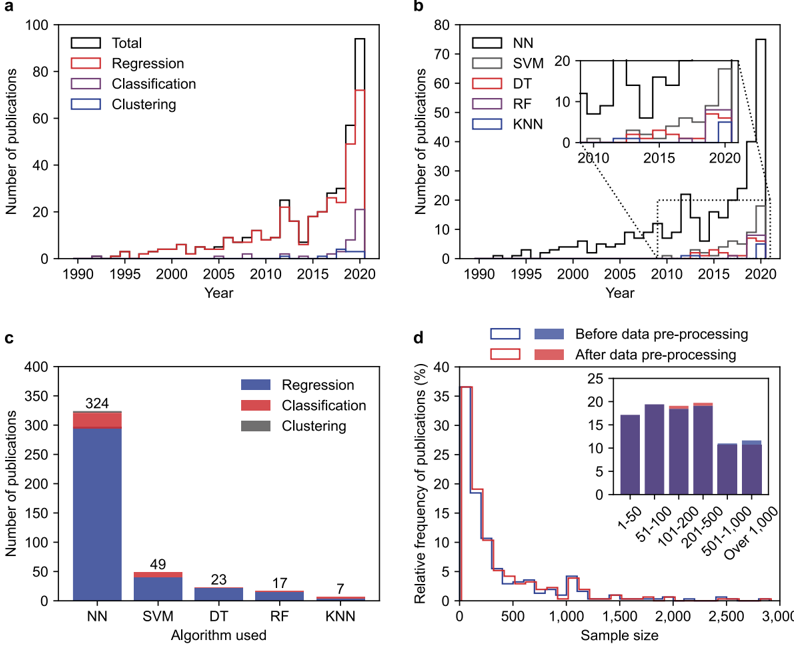
- The literature survey covered 389 peer-reviewed publications; the earliest concrete-and-ML article identified was from 1992, with publication numbers not reaching double digits until 2009. Most studies addressed regression tasks (88.2%), while classification accounted for 10.5%; neural networks were the most commonly applied algorithms.
- Regression datasets were small and skewed: sample sizes ranged from 5 to 262,569, with a median of 174 before preprocessing and 169 after; over 55% of studies had fewer than 200 samples, and only about 11% had more than 1,000 samples. Most regression studies used empirical experimental data (93.6%), with fewer using computational simulation data (7.3%); among experimental studies, 93.8% used laboratory tests and 8.4% used field tests.
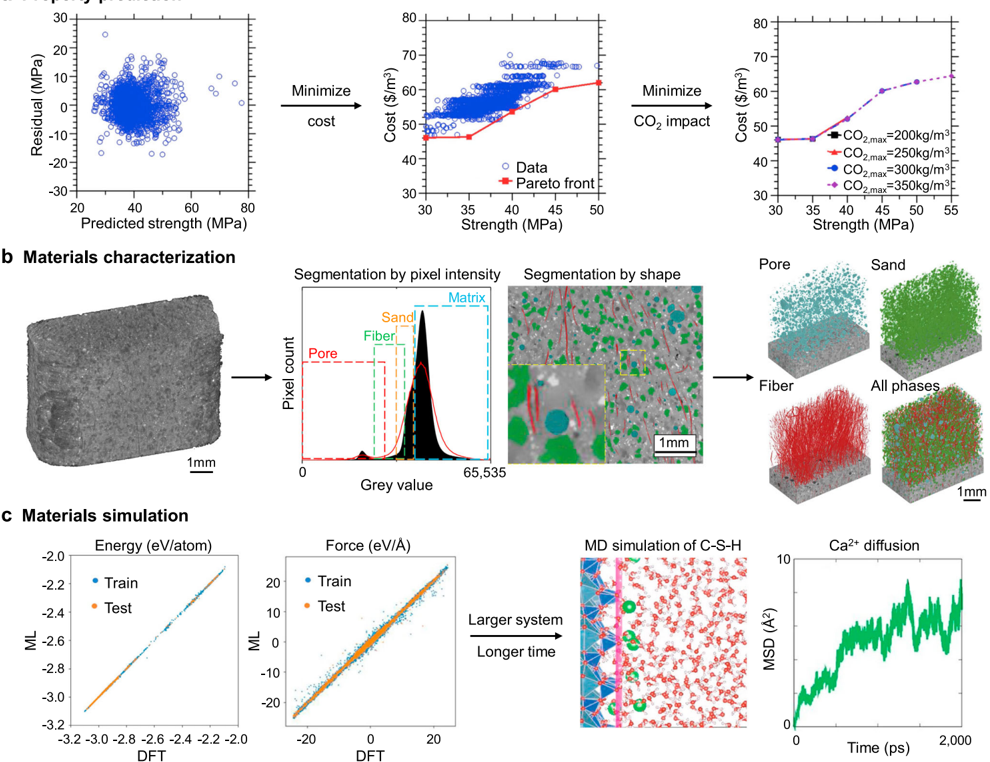
- Major application areas include property prediction (e.g., compressive, flexural, tensile, shear strength, elastic modulus, flowability, durability), materials characterization (e.g., nondestructive testing, image segmentation from X-ray computed tomography, crack detection), and materials simulation (e.g., ML potentials for large-scale molecular dynamics of C-S-H with 3,084 atoms for 2 ns).
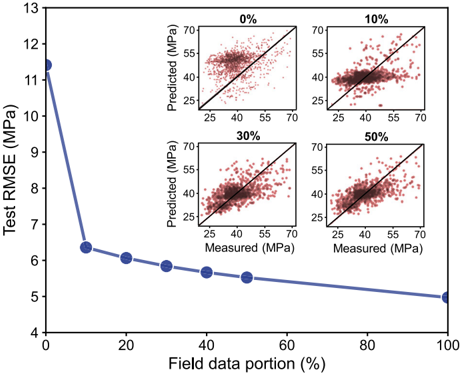
- The paper highlights data challenges (sparsity, high dimensionality, representation/measurement/temporal/deployment bias), validation challenges (hold-out and cross-validation pitfalls, especially with small datasets), and interpretability challenges (permutation-based diagnostics can generate unrealistic concrete mixtures; ML models identify association, not causation). It also reports that replacing 10% of laboratory training data with field data reduced root mean square error by 43% compared with using only laboratory data in one cited study.
Methods
- This is a review and bibliographic analysis, not a primary experimental study. The authors conducted a literature survey of 389 peer-reviewed publications on ML applications in concrete science, with survey criteria in Supplementary Note 1 and compiled data in Supplementary Dataset.
- Bibliographic data came from Web of Science for the period 1990–2020. The paper also provides a high-level summary of applications, publicly accessible datasets, and current research directions, and discusses challenges and best practices.
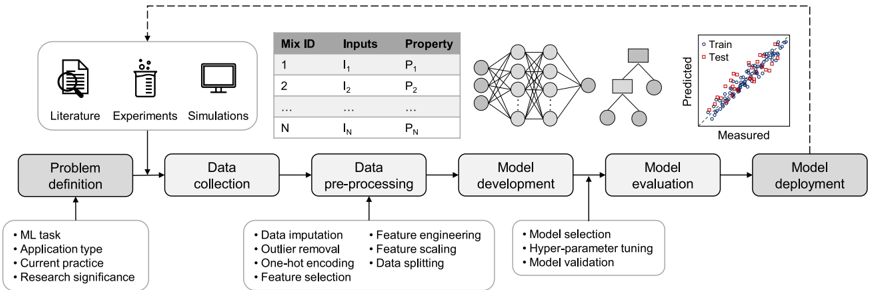
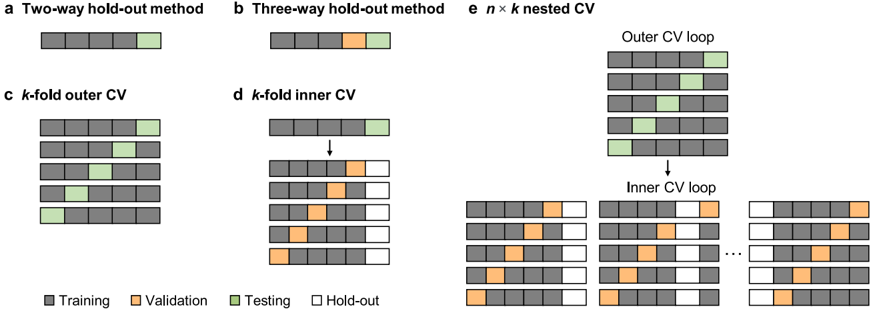
- The review synthesizes examples across property prediction, materials characterization, and materials simulation, and discusses validation approaches including two-way and three-way hold-out, k-fold cross-validation, and n × k nested cross-validation.
Limitations
- The paper states that its arguments are “not exhaustive” and aims to initiate constructive discussion rather than provide a complete treatment.
- The bibliographic analysis is limited to the surveyed publications and Web of Science period 1990–2020; detailed survey criteria and compiled data are placed in supplementary materials rather than fully in the main text.
- The review repeatedly notes limitations in the underlying ML literature: small datasets, data bias, inconsistent reporting, validation methods that may be ill-suited to small concrete datasets, and models that are not designed to establish causality.
Model-written summary. Check it against the paper before relying on it.
Integrity signals
Registry
Cites
Statistics
Figures
Verification
Claims the paper makes
11 Valid · 5 Not valid · 19 Not checked · 52 Own results and interpretations
Every source the paper cites for this claim was checked and supports it.
In the paper
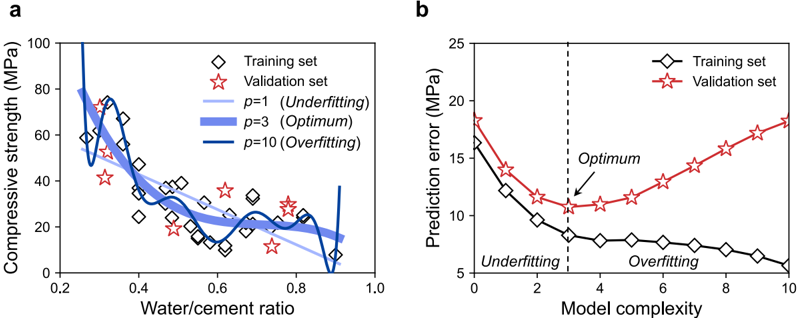
“Failure to assemble a sufficiently large dataset raises the risk of overfitting 82 (Fig. 5).”
§ Machine learning in concrete science: applications, challenges, and best practices > Data sparsity.
What the sources say
- Supportedcites [82] Kassraian-Fard, P., Matthis, C., Balsters, J. H., Maathuis, M. H. & Wenderoth, N. Promises, pitfalls, and basic guidelines for applying machine learning classifiers to psychiatric imaging data, with autism as an example. Front. Psychiatry 7, 177 (2016). source
The 'small sample size' section states directly that when features strongly exceed the number of data samples, 'a first problem is the high risk of overfitting,' and that a small but possibly complex data set can evoke an idiosyncratic fit with poor generalizability. The 'Feature Calculation' section reinforces this, noting that having many predictors relative to data samples causes classifiers to adapt to peculiarities of a specific dataset ('overfitting'), and that dimensionality reduction to alleviate overfitting is crucial 'especially in settings where restricted amount of data are available.' The Summary/Concluding Remarks likewise tie the high-dimensionality of a relatively small data set to easy overfitting. (LLM, conf=0.90)
plainstates a cause- Asserted: passes — The authors put it forward as true.
- Checkable: passes — It can be checked against evidence.
- Load-bearing: passes — The paper’s conclusions depend on it.
- Based: passes — The paper gives a reason why it holds.
- Supported
The cited sources support only part of this claim — read each source’s verdict below.
In the paper
“If the sample size is relatively small (as is generally the case in practical scenarios), the input variables of a dataset can lose their discriminating ability, as all samples in the dataset seem very distinct from each other with high dimensionality 85 .”
§ Machine learning in concrete science: applications, challenges, and best practices > High dimensionality.
What the sources say
- Partly supportedcites [85] Pestov, V. An axiomatic approach to intrinsic dimension of a dataset. Neural Netw. 21, 204-213 (2008). sourceExperimental — accuracy not yet measured
Pestov (2008) does support the substance of the paraphrase: Sect. 2.2 (p. 2) defines the curse of dimensionality as the situation where 'important features of a dataset sharply concentrate near their median (or mean) values and thus become non-discriminating', explicitly bundling in 'sparseness of points (the distance to the nearest neighbour is comparable to the average distance between two points)', i.e. samples looking mutually distinct in high dimension; Sect. 2.4 (p. 4) adds that large-margin classification with 1-Lipschitz features becomes impossible. The part the source does not support is the small-sample-size condition as the driver: in Sect. 6 (p. 8) realistic/'manageable' sample sizes are tied to the collapse and instability of the separation dimension of a noise-corrupted sample (Example 14), and the proof of Proposition 13 (p. 8) states the opposite of feature non-discrimination for such small samples — a typical high-dimensional sample forms a discrete metric space of diameter ~sqrt(2) whose Lip_1(X) 'will contain numerous 1-Lipschitz functions that are highly non-constant'. The paper's non-discrimination result is asserted for mm-spaces/domains of high intrinsic dimension (Corollary 9, p. 7, requires n >= n0 training points), not for datasets because their sample size is small. (LLM, conf=0.72)
plainstates a cause- Asserted: passes — The authors put it forward as true.
- Checkable: passes — It can be checked against evidence.
- Load-bearing: unclear — It is unclear whether the paper’s conclusions depend on it.
- Based: passes — The paper gives a reason why it holds.
- Partly supported
The cited sources support only part of this claim — read each source’s verdict below.
In the paper
“Hence, trust in ML models is strongly related to their interpretability, which has thus become a focus of active research in the ML community 116,132 .”
§ Machine learning in concrete science: applications, challenges, and best practices > Starting with simple models
What the sources say
- Partly supportedcites [116] Lipton, Z. C. The mythos of model interpretability: In machine learning, the concept of interpretability is both important and slippery. Queue 16, 1–28 (2018). sourceExperimental — accuracy not yet measured
The Introduction (p. 1) says many papers propose interpretability as a means to engender trust, and §2.1 (p. 3) says some suggest it is a prerequisite. Lipton questions what trust means and does not establish a strong relationship between trust and interpretability; the claim states that relationship more definitively than the source does. (LLM, conf=0.84)
- Not checked yetcites [132] Schmidt, P. & Biessmann, F. Quantifying interpretability and trust in machine learning systems. Preprint at http://arxiv.org/abs/1901.08558 (2019).
boostedstates an association- Asserted: passes — The authors put it forward as true.
- Checkable: passes — It can be checked against evidence.
- Load-bearing: passes — The paper’s conclusions depend on it.
- Based: passes — The paper gives a reason why it holds.
- Partly supported
The cited sources support only part of this claim — read each source’s verdict below.
In the paper
“In this regard, the knowledge shared in interdependent properties of the same material or in the same property of similar concrete types can be transferred to accelerate the training process and improve the accuracy performance of ML models, even with relatively small amounts of available data 143,144 .”
§ Machine learning in concrete science: applications, challenges, and best practices > CONCLUSIONS AND OUTLOOK
What the sources say
- Partly supportedcites [143] Song, P. S., Wu, J. C., Hwang, S. & Sheu, B. C. Assessment of statistical variations in impact resistance of high-strength concrete and high-strength steel fiber- reinforced concrete. Cem. Concr. Res. 35, 393-399 (2005). 128. Nuzzo, R. Scientific method: statistical errors. Nature 506, 150-152 (2014). 129. Leek, J. et al. Five ways to fix statistics. Nature 551, 557-559 (2017). 130. Halilaj, E. et al. Machine learning in human movement biomechanics: Best practices, common pitfalls, and new opportunities. J. Biomech. 81, 1-11 (2018). 131. Yin, M., Vaughan, J. W. & Wallach, H. Understanding the sourceExperimental — accuracy not yet measured
Split into 2 atoms — 1 confirmed, 1 partially supported, 0 disputed, 0 misattributed, 0 unverifiable. Expand the claim to see per-atom verdicts.
- Not checked yetcites [144] Ravinder et al. Artificial intelligence and machine learning in glass science and technology: 21 challenges for the 21st century. Int. J App Glass Sci. 12, 277–292 (2021). source
plainstates a cause- Asserted: passes — The authors put it forward as true.
- Checkable: passes — It can be checked against evidence.
- Load-bearing: passes — The paper’s conclusions depend on it.
- Based: passes — The paper gives a reason why it holds.
- Rests on an assumption not shown here.
- Partly supported
Every source the paper cites for this claim was checked and supports it.
In the paper
“However, it is important to note that ML models are not designed to identify causal relationships but rather association relationships 116 .”
§ Machine learning in concrete science: applications, challenges, and best practices > Causality.
What the sources say
- Supportedcites [116] Lipton, Z. C. The mythos of model interpretability: In machine learning, the concept of interpretability is both important and slippery. Queue 16, 1–28 (2018). source
Section 2.2 'Causality' (p. 3) states directly that supervised learning models are 'only optimized directly to make associations' and that 'the associations learned by supervised learning algorithms are not guaranteed to reflect causal relationships' because unobserved common causes may exist. That covers both halves of the paraphrase (association, not causal identification). Lipton adds the caveat that researchers nonetheless use such models to generate hypotheses later tested experimentally, but this does not contradict the claim about what the models are built/optimized to do. (LLM, conf=0.85)
plain- Asserted: passes — The authors put it forward as true.
- Checkable: passes — It can be checked against evidence.
- Load-bearing: passes — The paper’s conclusions depend on it.
- Based: passes — The paper gives a reason why it holds.
- Supported
44 more claims · 3 with their cited sources checked
Create a free account to see all 87 claims and to verify the 31 references still open.
- It may state two separate claims as one. 27
- Probably not a substantial claim. 12
- The quote only partly states this claim. 2
Citations
Cites
Breiman, L. (2001) · Machine Learning · doi:10.1023/a:1010933404324 · Cited by 133,538
Pan, S. J., & Yang, Q. (2010) · IEEE Transactions on Knowledge and Data Engineering · doi:10.1109/tkde.2009.191 · Cited by 23,387
Commentary: The Materials Project: A materials genome approach to accelerating materials innovation
Jain, A., Ong, S. P., Hautier, G., Chen, W., Richards, W. D., Dacek, S., Cholia, S., Gunter, D., Skinner, D., Ceder, G., et al. (2013) · APL Materials · doi:10.1063/1.4812323 · Cited by 13,094
Physics-informed machine learning
Karniadakis, G. E., Kevrekidis, I. G., Lu, L., Perdikaris, P., Wang, S., & Yang, L. (2021) · Nature Reviews Physics · doi:10.1038/s42254-021-00314-5 · Cited by 8,718
A Survey on Bias and Fairness in Machine Learning
Mehrabi, N., Morstatter, F., Saxena, N., Lerman, K., & Galstyan, A. (2022) · ACM Computing Surveys · doi:10.1145/3457607 · Cited by 5,812
A Survey on Bias and Fairness in Machine Learning
Mehrabi, N., Morstatter, F., Saxena, N., Lerman, K., & Galstyan, A. (2019) · arXiv · doi:10.48550/arxiv.1908.09635 · Cited by 5,812
Lipton, Z. C. (2018) · Queue · doi:10.1145/3236386.3241340 · Cited by 5,427
Adaptive Control Processes: A Guided Tour
Bellman, R. E. (1961) · doi:10.1515/9781400874668 · Cited by 2,802
Recent advances and applications of machine learning in solid-state materials science
Schmidt, J., Marques, M. R. G., Botti, S., & Marques, M. A. L. (2019) · npj Computational Materials · doi:10.1038/s41524-019-0221-0 · Cited by 2,607
Bias in error estimation when using cross-validation for model selection
Varma, S., & Simon, R. (2006) · BMC Bioinformatics · doi:10.1186/1471-2105-7-91 · Cited by 2,485
Research works printed but not linked: 30
- Mehta, P. K. & Monteiro, P. J. M. Concrete: microstructure, properties, and materials (McGraw-Hill Education, 2014).
- Garboczi, E. J., Bentz, D. P. & Frohnsdorff, G. J. The past, present, and future of the computational materials science of concrete. In J. Francis Young Symposium (Materials Science of Concrete Workshop, 2000).
- El-Chabib, H. & Nehdi, M. Effect of mixture design parameters on segregation of self-consolidating concrete. ACI Mater. J. 103, 374-383 (2006).
- Gunasekera, C. et al. Design of Alkali-Activated Slag-Fly Ash Concrete Mixtures Using Machine Learning. ACI Mater. J. 117, 263-278 (2020).
- Pratt, D. & Sansalone, M. Impact-echo signal interpretation using artificial intelligence. ACI Mater. J. 89, 178-187 (1992).
- Li, Z. & Radlińska, A. Artificial intelligence in concrete materials: A scientometric view. In Naser, M. Z. (ed.) Leveraging Artificial Intelligence in Engineering, Management, and Safety of Infrastructure (CRC Press, 2022).
- Rafiei, M. H., Khushefati, W. H., Demirboga, R. & Adeli, H. Neural network, machine learning, and evolutionary approaches for concrete material char- acterization. ACI Mater. J. 113, 781-789 (2016).
- Rafiei, M. H., Khushefati, W. H., Demirboga, R. & Adeli, H. Novel approach for concrete mixture design using neural dynamics model and virtual lab concept. ACI Mater. J. 114, 117-127 (2017).
- Park, K. B., Jee, N. Y., Yoon, I. S. & Lee, H. S. Prediction of temperature distribution in high-strength concrete using hydration model. ACI Mater. J. 105, 180-186 (2008).
- Kutner, M. H. et al. Applied linear statistical models (McGraw-Hill Irwin, 2005).
- Zheng, A. & Casari, A. Feature engineering for machine learning: principles and techniques for data scientists (O'Reilly Media, 2018).
- Müller, A. C. & Guido, S. Introduction to machine learning with Python: a guide for data scientists (O'Reilly Media, 2016).
- Bažant, Z. R. & Li, G. H. Unbiased statistical comparison of creep and shrinkage prediction models. ACI Mater. J. 105, 610-621 (2008).
- Hubler, M. H., Wendner, R. & Bažant, Z. P. Comprehensive database for concrete creep and shrinkage: Analysis and recommendations for testing and recording. ACI Mater. J. 112, 547-558 (2015).
- Fisher, A., Rudin, C. & Dominici, F. All models are wrong, but many are useful: Learning a variable’s importance by studying an entire class of prediction models simultaneously. J. Mach. Learn. Res. 20, 1–81 (2019).
- Lundberg, S. M. & Lee, S.-I. A Unified Approach to Interpreting Model Predictions. In Guyon, I. et al. (eds.) Advances in Neural Information Processing Systems, vol. 30 (Curran Associates, Inc., 2017).
- El-Chabib, H., Nehdi, M. & Sonebi, M. Artificial intelligence model for flowable concrete mixtures used in underwater construction and repair. ACI Mater. J. 100, 165–173 (2003).
- Basma, A. A., Barakat, S. A. & Al-Oraimi, S. Prediction of cement degree of hydration using artificial neural networks. ACI Mater. J. 96, 167–172 (1999).
- Xi, X., Yang, S., Hu, X. & Li, C. Q. Computational determination of interface fracture properties for concrete by inverse analysis. ACI Mater. J. 117, 43-53 (2020). 163.
- Nehdi, M. L. & Soliman, A. M. Artificial intelligence model for early-age autogenous shrinkage of concrete. ACI Mater. J. 109, 353–362 (2012).
- Aizawa, T. & Yokoshita, T. Applications of neural network technology to the operation and control of cement plants. ZKG Int. 48, 532–538 (1995).
- Schmidt, D. & Schmidt, D. Online prediction of the free lime content in the sintering zone and the use of neural networks for process optimization. ZKG Int. 54, 471–479 (2001).
- Oh, J. W., Lee, I. W., Kim, J. T. & Lee, G. W. Application of neural networks for proportioning of concrete mixes. ACI Mater. J. 96, 61–67 (1999).
- Ji, T., Yang, Y., Fu, M. Y., Chen, B. C. & Wu, H. C. Optimum design of reactive powder concrete mixture proportion based on artificial neural and harmony search algorithm. ACI Mater. J. 114, 41–47 (2017).
- Haj-Ali, R. M., Kurtis, K. E. & Sthapit, A. R. Neural network modeling of concrete expansion during long-term sulfate exposure. ACI Mater. J. 98, 36–43 (2001).
- Chang, C. H. & Yang, C. C. Artificial neural networks in prediction of concrete strength reduction due to high temperature. ACI Mater. J. 103, 68–69 (2006).
- Özbay, E. & Lachemi, M. Relative compressive strength of concretes under elevated temperatures. ACI Mater. J. 109, 165–175 (2012).
- Ünlü, R. An assessment of machine learning models for slump flow and examining redundant features. Comput. Concr. 25, 565–574 (2020).
- Naser, M. Z. & Salehi, H. Machine learning-driven assessment of fire-induced concrete spalling of columns. ACI Mater. J. 117, 7–16 (2020).
- Knaack, A. M., Kurama, Y. C. & Kirkner, D. J. Compressive Strength Relationships for Concrete under Elevated Temperatures. ACI Mater. J. 108, 270–280 (2011).
Cited by
Items 301–400 of 402
Transparently Predicting Therapy Compliance of Young Adults Following Ischemic Stroke
Martinez, H. B., Cisek, K. K., García‐Rudolph, A., Kelleher, J. D., & Hines, A. (2024) · Communications in computer and information science · doi:10.1007/978-3-031-63803-9_2
Alkozay, A., Faqiri, A., Moheb, N., Ahmadi, K. A., Sadat, S. N., Saddeqi, M. Y., Jamshidi, A. F., sayedi, M. M. R., & Mohammadi, S. (2024) · Scientific Reports · doi:10.1038/s41598-024-71508-x
Paneru, B., Paneru, B., Poudyal, R., Paneru, B., & Reynolds, T. (2024) · SSRN Electronic Journal · doi:10.2139/ssrn.4999153
Gupta, A., Sarda, P., Wani, F. M., & Vemuri, J. (2024) · Springer eBooks · doi:10.1007/978-3-031-73820-3_12
Jaradat, M., MASSOUD, M., Manasrah, A. A., & Jaradat, Y. M. (2024) · The Eurasia Proceedings of Science Technology Engineering and Mathematics · doi:10.55549/epstem.1602030
Machine Learning in Fly Ash Concrete Compressive Strength Prediction
Nori.S.A.Ateig, Milad, A. M. L., Almezhghwi, K., & Asbeiai, A. (2024) · Lecture notes in networks and systems · doi:10.1007/978-3-031-81564-5_7
Data Augmentation Techniques in the Prediction of Peel Strength of Pressure Sensitive Adhesives
郭, 威. (2025) · Computer Science and Application · doi:10.12677/csa.2025.158204
Ensemble Learning for Predicting Concrete Compressive StrengthPreprint
Al-Taie, H., & Mukhtar, H. (2025) · Research Square · doi:10.21203/rs.3.rs-7288832/v1 · Cited by 2
Cover Thickness Prediction for Steel Inside Concrete by Sub-Terahertz Wave Using Deep Learning
Koyama, K., Nishiwaki, T., & Hashimoto, K. (2025) · doi:10.3390/proceedings2025129040
Nirbita, B. N., Haryana, M. R. A., Norviana, S., & Jannah, L. (2025) · Communications in computer and information science · doi:10.1007/978-981-95-2011-4_32
"Reasonable Safety" of Existing Structures, Part 4: A New Hope
Tepke, D. G., Jiang, L., Kesner, K. E., & Szoke, S. S. (2024) · ACI Concrete International · doi:10.14359/51740468
Smart concrete technologies for next-generation roadways
Challa, K., Akella, N. S. B., Sastri, M. V. S. S., Navaneetha, V., Dhanasure, P., & Ghankota, S. (2025) · AIP conference proceedings · doi:10.1063/5.0305675
Zhou, Y., & Xu, L. (2025) · Journal of the Chinese Institute of Engineers · doi:10.1080/02533839.2025.2557229
“Li et al. (2022) explored concrete, an essential building material, significantly contributes to human progress.”
Chen, H., Xinbao, L., Zhu, L., Fan, P., Chen, J., Xie, Y., & Yue, L. L. (2025) · Materials Today Communications · doi:10.1016/j.mtcomm.2025.113801
Schrage, T., Schuderer, P., Barth, M., & Titel, J. F. (2025) · ASIM-Fachtagung Simulation in Produktion und Logistik · doi:10.25368/2025.288
Ding, B., Ke, X., & McCullen, N. (2026) · Rilem bookseries · doi:10.1007/978-3-032-14170-5_24
Structural materials in Frontiers in Materials, 10 years on
Provis, J. L. (2026) · Frontiers in Materials · doi:10.3389/fmats.2025.1713993
“…although with increasing recognition that “physics-informed” models potentially offer significant advances in insight and predictive capabilities beyond solely conducting numerical interpolation in a black-box type model (Wagner and Rondinelli, 2016; Stoll and Benner, 2021; Li et al., 2022).”
Liu, X., & Alqurashi, M. (2026) · REVIEWS ON ADVANCED MATERIALS SCIENCE · doi:10.1515/rams-2025-0203
Islam, M. R., Shahjalal, M., Islam, M. R., Islam, K. M. A., Ahmad, S. I., Noman, A. A., & Ahmed, T. (2026) · Journal of Material Cycles and Waste Management · doi:10.1007/s10163-026-02513-7
Min, H., Guo, F., Sun, T., Liu, M., & Oswald, F. L. (2026) · Advances in Methods and Practices in Psychological Science · doi:10.1177/25152459261419816 · Cited by 1
Migallón, V., Penadés, H., & Penadés, J. (2026) · International Electronic Conference on Applied Sciences (ASEC) · doi:10.3390/engproc2026124077
Moubayed, H. A., Halawani, H., Altayabrrafei, B., & Chendeb, N. (2025) · International Conference on Computer and Applications (ICCA) · doi:10.1109/icca66035.2025.11430988
“Unlike deterministic approaches, regression and ML models can exploit large and heterogeneous datasets to uncover complex nonlinear relationships between environmental parameters and mechanical performance [6].”
Optimization of sustainable mix design for alkali-activated materials using machine learning methods
Kong, Y. (2024) · Institutional Repositories DataBase (IRDB) · doi:10.14943/doctoral.k16047
Interpretable modelling of chloride ingress behaviour in seawater-exposed concrete
Al-Naghi, A. A. A., Nassar, R., Amin, M. N., Bhatti, A. Q., Alsharari, F., Qadir, M. T., & Ahmad, A. (2026) · Case Studies in Construction Materials · doi:10.1016/j.cscm.2026.e06105
Machine Learning-Based Study on Concrete with Plastic Granules Replacing Part of Fine Aggregates
Li, D., & Ai, J. (2026) · Lecture notes in mechanical engineering · doi:10.1007/978-3-032-20645-9_6
Zhang, Y., Liu, J., & Jia, F. (2026) · Construction and Building Materials · doi:10.1016/j.conbuildmat.2026.146774
Use of Machine Learning to Predict the Performance of Tile Adhesive Mortars
Biancardi, C. B., & de Carvalho, A. S. (2026) · Applied Sciences · doi:10.3390/app16115357
Chan, C. L., & Zhang, M. (2026) · Developments in the Built Environment · doi:10.1016/j.dibe.2026.100971 · Cited by 2
Gupta, N., & Arora, B. (2025) · International Conference on Emerging Engineering Technologies and Applications (IC-EETA) · doi:10.1109/ic-eeta66496.2025.11548492
Copper Slag-Based Low-CO2 Blended Cement Mortars: A Numerical Multi-objective Optimization Approach
Som, D., Hertel, T., Beersaerts, G., Schuurmans, M., Patrinos, P., & Pontikes, Y. (2026) · Journal of Sustainable Metallurgy · doi:10.1007/s40831-026-01538-4
“However, as pointed out by Li et al. [29], two of the most significant challenges in the application of ML models to data in the field of concrete science stem from the scarcity of data itself and problems with a large number of independent variables [29].”
Yılmaz, Y., Nayır, S., Nas, M., & Baki, V. A. (2026) · Neural Computing and Applications · doi:10.1007/s00521-026-12252-3
Beig, M. M., Mehmood, S., Sarfraz, M., Subhan, A., Farooq, H. M. A., & Muneer, F. (2026) · Elsevier eBooks · doi:10.1016/b978-0-443-40362-0.00015-0
Ibrahim, S. J., Al-Ozeer, A. Z. A., & Alahmady, K. (2026) · Iraqi National Journal of Earth Science (INJES) · doi:10.33899/injes.v26i3.60958
Alturki, R. (2026) · REVIEWS ON ADVANCED MATERIALS SCIENCE · doi:10.1515/rams-2025-0250
“This reliable performance can be attributed to the diversity of the dataset, which encompasses a wide range of mixture compositions and environmental exposure conditions, as well as the use of hybrid and ensemble learning strategies that enhance model adaptability [89].”
TÜRKAY, Y., Alpsalaz, F., ЗАЙЦЕВ, Є. О., & Kuchanskyy, V. V. (2026) · NDT · doi:10.3390/ndt4030019
“Since most traditional techniques are slow or intrusive, the use of acoustic approaches has recently emerged as a highly significant alternative [57].”
Prediction of Thermal Stress in Hardening Mass Concrete Structures Using Temperature Monitoring Data
Turina, V., Сергеевич, Ч. А., & Yazyev, B. M. (2026) · Structural Mechanics of Engineering Constructions and Buildings · doi:10.22363/1815-5235-2026-22-2-93-104
Zhao, Z., Wei, Y., Yi, J., Chen, J., Ding, Y., Huang, L., & Lin, Y. F. (2026) · Thin-Walled Structures · doi:10.1016/j.tws.2026.115384
Advancing Concrete Integrity Using Phased Array Ultrasonic Testing
Nainggolan, C. R., & Suzuki, K. (2026) · Evergreen · doi:10.5109/7434188
Cao, X., Cao, L., & Cui, H. (2026) · Journal of Building Engineering · doi:10.1016/j.jobe.2026.116891
A physics-guided graph neural network for interpretable multiscale modelling of concrete propertiesPreprint
Li, Y., & Wang, F. (2026) · Research Square · doi:10.21203/rs.3.rs-10361693/v1 · Cited by 1
Abazarsa, M., & Yu, T. (2026) · Multiscale Science and Engineering · doi:10.1007/s42493-026-00153-5
“[ 17– 27 ].”
Zhang, C., Cheng, S., Tao, S., & Wang, Z. (2026) · Structural Safety · doi:10.1016/j.strusafe.2026.102749
Ye, F., Demartino, C., Contiguglia, C. P., Albanesi, T., Wang, X., & Xiao, Y. (2026) · Construction and Building Materials · doi:10.1016/j.conbuildmat.2026.147552
Khan, A. Q., Raza, A., & Pimanmas, A. (2026) · Next Materials · doi:10.1016/j.nxmate.2026.103079
Jathar, N. N., & Vanarote, V. (2026) · Lecture notes in networks and systems · doi:10.1007/978-3-032-25483-2_32
Gupta, N., & Arora, B. (2025) · International Conference on Emerging Engineering Technologies and Applications (IC-EETA) · doi:10.1109/ic-eeta66496.2025.11548359
Islam, S., Kubra, M. K., Abedin, M. Z., Ashraf, M. A., & Hossain, M. B. (2026) · Discover Civil Engineering · doi:10.1007/s44290-026-00583-y
“These effects are attributed to workability reduction, fiber clustering, and increased matrix heterogeneity at higher fiber volumes [29, 83, 84].”
Arachchilage, C. B., Zhao, J. L., Feng, Z., Dushyantha, N., & Liu, W. V. (2026) · Construction and Building Materials · doi:10.1016/j.conbuildmat.2026.147686
Performance Evaluation of ANN and Multi-linear Regression Models in Predicting Concrete Slump
Mouawad, F., Homsi, F., Geara, F., & Mina, R. (2026) · Lecture notes in civil engineering · doi:10.1007/978-981-92-2743-3_35
Nguyen, H. A. T., 정민구, Yuk, S., Ahn, Y., Lee, H., & Pham, D. H. (2026) · Construction and Building Materials · doi:10.1016/j.conbuildmat.2026.147654
Zhang, C., Liu, Y., Wang, L., Zhang, Y., & Wang, Z. (2026) · Case Studies in Construction Materials · doi:10.1016/j.cscm.2026.e06435
A data-driven machine learning model for predicting forces required for lunar regolith excavations
Srinivasan, S. D., Arachchilage, C. B., Westover, L., & Liu, W. V. (2026) · Acta Astronautica · doi:10.1016/j.actaastro.2026.08.051
Kumar, N., Bharti, A., & Kumar, S. (2026) · Asian Journal of Civil Engineering · doi:10.1007/s42107-026-01770-z
“While reviewing the broader use of ML in concrete science, Li et al. ( 2022 ) found that there are still some challenges that need to be addressed: there are not enough data to use, explanations are lacking for complicated model predictions, and standardized datasets are needed for fair comparisons…”
Gao, Y., Tian, B., Zhu, J., Liu, Y., Li, Y., Li, W., & Cheng, Z. (2026) · Sustainable materials and technologies · doi:10.1016/j.susmat.2026.e02213
Dai, J., Lu, F., Maddalena, R., Dong, X., & Qi, Y. (2026) · Research Square · doi:10.21203/rs.3.rs-10684072/v1
Bas, Y. J., Kakrasul, J. I., Ismail, K. S., & Hamad, S. M. (2026) · Engineering Research Express · doi:10.1088/2631-8695/ae9f1e
Ким, Л. В. (2026) · Цемент и его применение · doi:10.61907/cia.2026.50.42.001
Pacheco-Torgal, F., & Iqbal, S. (2026) · Construction Materials · doi:10.3390/constrmater6050056
“This mirrors best-practice recommendations emerging in concrete ML more broadly [10] and in recent assessments of the geopolymer field [6], which identify dataset heterogeneity as a primary obstacle to transferable models.”
InfluentialBawab, J., El-Hassan, H., Kamra, M. M., & El‐Mir, A. (2026) · Materials Today Communications · doi:10.1016/j.mtcomm.2026.116010
Arafat, M. Y., & Hossain, A. (2026) · Research Square · doi:10.21203/rs.3.rs-10745630/v1
de Souza, F. B., Giam, A., Chen, Y., Chen, Z., Duan, W., Poh, L. H., & Pang, S. D. (2026) · npj Materials Sustainability · doi:10.1038/s44296-026-00122-x
“While a few reviews have been published on the ML and CNN applications in concrete research 12,14,23 – 26 , a systematic review focusing on TL-based models remains lacking 15 , despite TL being identi fi ed as a major research direction in concrete science 14 .”
Zhao, Y., Li, Y., He, S., Gu, Y., & Li, P. (2026) · Sustainable materials and technologies · doi:10.1016/j.susmat.2026.e02231
Admixtures for low-carbon cements
Dengler, J. E., Gädt, T., Moghul, S., & Flatt, R. J. (2026) · Cement and Concrete Research · doi:10.1016/j.cemconres.2026.108335
He, Y., Liu, Z., Zhu, L., Zheng, P., Liu, Y., Chen, W., & Wang, B. (2026) · Buildings · doi:10.3390/buildings16173537
Althoey, F. (2026) · Scientific Reports · doi:10.1038/s41598-026-72886-0
Li, Y., Liu, X. D., Xiao, Y., Zhu, Y., Jiang, M., Lu, L., Li, X., Guan, J. S. M., Wang, J., Xu, Q., et al. (2026) · Composites Communications · doi:10.1016/j.coco.2026.102932
Asokan, H., Subbiah, G., & Karthiyaini, S. (2026) · Frontiers in Built Environment · doi:10.3389/fbuil.2026.1904075
Geng, Y., Chen, C., Antwi‐Afari, M. F., Yang, J., Liang, R., & Li, Y. (2026) · Journal of Infrastructure Intelligence and Resilience · doi:10.1016/j.iintel.2026.100246
Barah, O. O., Otaru, A. J., Bori, I., & Khalil (2026) · International Journal of Material Forming · doi:10.1007/s12289-026-02081-z
Algorithmic Consensus vs Scientific Consensus in Materials Prediction
Kulkarni, S., Joshi, M., & Patil, R. (2024) · Journal of Computational and Data-Driven Materials Engineering · doi:10.68159/m150771654
Prediction without Transferability: Domain Shift in Cross-Material AI Inference
Gonzalez, M., Ruiz, J., & Torres, L. (2022) · Journal of Computational and Data-Driven Materials Engineering · doi:10.68159/a908576617
Gonzalez, M., Ruiz, J., & Torres, L. (2023) · Journal of Computational and Data-Driven Materials Engineering · doi:10.68159/z391696789
Algorithmic Screening Frontiers: How Model Priors Reshape Searchable Materials Space
Huy, N. T., Minh, P. Q., & Bich, L. T. (2022) · Journal of Computational and Data-Driven Materials Engineering · doi:10.68159/a503846256
Nakamura, H., & Kato, Y. (2023) · Journal of Computational and Data-Driven Materials Engineering · doi:10.68159/i417074992
Algorithmic Novelty vs Chemical Novelty: Rethinking Innovation Metrics
Andrade, L., & Lopes, M. (2023) · Journal of Computational and Data-Driven Materials Engineering · doi:10.68159/j756092814
Šovljanski, O., Pezo, L. L., Milović, T., Mejić, L., Cvetković, D., Kardoš, A. Š., & Tomić, A. (2026) · Technologies · doi:10.3390/technologies14090575
Saeed, N. M., & Hassan, H. Z. (2026) · Architecture Structures and Construction · doi:10.1007/s44150-026-00222-1
“The rapid adoption of machine learning in concrete mixture design requires comprehension of methodological constraints and the formulation of best practices in this advancing computational domain [225].”
Quantum machine learning enhanced civil engineering industry 5.0
Sharma, C., Sood, K., & Sood, S. K. (2026) · The Journal of Supercomputing · doi:10.1007/s11227-026-08878-8
Kim, J., Lee, D., & Bajāre, D. (2026) · International Journal of Concrete Structures and Materials · doi:10.1186/s40069-026-00965-7
“Li et al. (2022) reported that over 55% of ML studies on concrete compressive strength prediction used fewer than 200 samples, with only 11% utilizing more than 1,000 data points.”
Bhatti, A. Q., Amin, M. N., Ahmad, A., Qadir, M. T., Tanoli, W. A., & Faraz, M. I. (2026) · Results in Engineering · doi:10.1016/j.rineng.2026.113184
Brown, G., Taylor, M., Wilson, S., & Harris, O. (2025) · Journal of Computational and Data-Driven Materials Engineering · doi:10.68159/z532465700
Wu, S., Zhang, W., Gu, J., Zhu, J., Dai, Y., & Yang, Z. (2026) · Engineering Applications of Artificial Intelligence · doi:10.1016/j.engappai.2026.116332 · Cited by 1
Validation of 5-minute UR2 on a dataset of 140+ calcined clays via low-cost colorimetry
Iqbal, M. F., Min, Y., Baten, B., Rafiuzzaman, S., Dhekane, O., & Garg, N. (2026) · Cement and Concrete Research · doi:10.1016/j.cemconres.2026.108414
Patil, S., & Kushwah, R. P. S. (2026) · International Research Journal on Advanced Science Hub · doi:10.47392/irjash.2026.034
“Several reviews now map the field (Ben Chaabene et al., 2020; Nunez et al., 2021; Li et al., 2022; Moein et al., 2023; Tipu and Paruthi, 2026), and test R² above 0.90 is routine on laboratory databases (Feng et al., 2020; Islam et al., 2024; Abioye et al., 2025; Nikoopayan Tak et al., 2025).”
InfluentialIntelligent Concrete: AI-Driven Design and Optimization of Reinforced Concrete Structures
Islam, M. M., & Sharif, A. (2026) · IntechOpen eBooks · doi:10.5772/intechopen.1014050
Vignesh, M., prince, S. S. A., Elangbam, C., & K, V. M. R. (2026) · Case Studies in Construction Materials · doi:10.1016/j.cscm.2026.e06595
Teichmann, A., & Haist, M. (2026) · Journal of Building Engineering · doi:10.1016/j.jobe.2026.117542
Ahirrao, M. D., Patel, R., & Mishra, C. (2026) · Journal of the Civil Engineering Forum · doi:10.22146/jcef.28456
“At the same time, the concrete industry has seen a surge in the adoption of machine learning techniques, which help customers understand the complex relationships between mix components and mechanical properties (Li et al., 2022; Zi-olkowski, 2025).”
Anand, P., Pratap, S., Singh, S. D., Ateş, B., & Bhowmik, P. N. (2026) · Construction and Building Materials · doi:10.1016/j.conbuildmat.2026.148609
Gao, X., He, B., Tang, Y., Zhu, B., Peng, J., 孙仁发, Liu, Y., Li, X., & Jiang, Z. (2026) · Magazine of Concrete Research · doi:10.1680/jmacr.26.00037
Chen, L., & Pan, J. (2026) · Research Square · doi:10.21203/rs.3.rs-11193544/v1
Projektowanie belki wspornikowej z wykorzystaniem sztucznej inteligencji
Lacki, P., & Derlatka, A. (2026) · Inżynier Budownictwa · doi:10.68502/ib.2026.05.15
“Dostępność algorytmów ML umoż-liwiła wprowadzenie wielu innowacji m.in. w zakresie betonu, obejmujących opracowywanie składu, przewidywanie jego właściwości [3–5] lub analizę nośno-ści konstrukcji żelbetowej [6].”
Rimondotto, N., Rossi, A., Pavese, M., & Lavagna, L. (2026) · Nanomaterials · doi:10.3390/nano16211371
Ghorayeb, M., Rößler, C., Ludwig, H., Herrmann, L., & Kollmannsberger, S. (2026) · ce/papers · doi:10.1002/cepa.70866
ÖZTEBER, S., Mardani, N., Kobya, V., Göç, G. T., Çavdur, F., & Mardani, A. (2026) · Engineering Science and Technology an International Journal · doi:10.1016/j.jestch.2026.102582
Wang, Z., Zhang, C., Du, S., Guo, X., & Hou, X. (2026) · Buildings · doi:10.3390/buildings16214348
Gao, Q., Qin, L. U., & Wu, X. (2026) · Ceramics International · doi:10.1016/j.ceramint.2026.10.457
Surendran, H., Wani, S. R., Alsharedah, Y. A., & Panghal, H. (2026) · Advances in Engineering Software · doi:10.1016/j.advengsoft.2026.104341
Patil, M., & Ahirwar, A. K. (2026) · Journal of the Civil Engineering Forum · doi:10.22146/jcef.28206
Xu, Z., Sheng, C., Liu, Z., & Wang, F. (2026) · ACS Sustainable Chemistry & Engineering · doi:10.1021/acssuschemeng.6c06529
Metadata
- Authors
- Li, Z., Yoon, J., Zhang, R., Rajabipour, F., Srubar III, W. V., Dabo, I., & Radlińska, A.
- Affiliations
- Pennsylvania State University (US)
- Corresponding author
- Li, Zhanzhao
- Venue
- npj Computational Materials
- Published
- 2022-06-06
- Volume
- 8
- Issue
- 1
- ISSN
- 2057-3960 (ISSN-L)
- OpenAlex
- W4281859794
- Semantic Scholar
- 0ee7b5420699e299a1c55968d6fd67021fc50753
- Cited by
- 388
- References
- 184
- Citations by year
- 2026: 106 · 2025: 113 · 2024: 92 · 2023: 68 · 2022: 9
- FWCI
- 19.80
- Type
- journal article
- Language
- en
- Open access
- gold
- doi.org
- Licence
- cc-by
- creativecommons.org/licenses/by/4.0 (tdm)
- creativecommons.org/licenses/by/4.0 (vor)
- Locations
- npj Computational Materials (publishedVersion, cc-by)
- DOAJ (DOAJ: Directory of Open Access Journals) (submittedVersion, cc-by-sa)
- Funders
- Massachusetts Institute of Technology
- Topics
- Physical Sciences › Materials Science › Materials Chemistry › Machine Learning in Materials Science
- Physical Sciences › Engineering › Civil and Structural Engineering › Concrete and Cement Materials Research
- Physical Sciences › Engineering › Civil and Structural Engineering › Innovative concrete reinforcement materials
- Keywords
- machine learning, concrete science, concrete mix design, cementitious systems, concrete formulation, best practices
About these checks
Registry, retraction, Cites and statistics results are computed, not judged, with one exception: a printed reference that no index lists is read once by a model before it counts as a citation error. Claims are extracted by a model and kept only when their quote appears verbatim in the text; each cited source is then checked, with a model’s help, for whether it says what the claim relies on. Those verdicts can be wrong — read the claim’s quote and the cited source before relying on one.
The claim verdicts this report counts are experimental: their accuracy is not yet measured.
A language model drew the claims from the paper on 2026-10-04, under version 3 of the claim definition (model deepseek-v4.1-flash, prompt extract-v3).
A second model labelled each claim on 2026-10-04 (model jev-1.13-20260917, definition revision gold-guideline-v0.2).
Cited sources are checked with a language model’s help (qwen3.8-omni-flash and gpt-6-sol).
Statistics and arithmetic are recomputed, not judged.
Confidence bands are shown only for fields calibrated on our annotated test set. None is calibrated yet, so no band is shown.
What counts as a claim ›How we measure confidence ›How we check this ›
Are you an author, or do you see a problem with this page? Request a review
Data sources
Bibliographic data: Semantic Scholar, OpenAlex, Crossref.
Contains information from the Semantic Scholar Academic Graph Datasets, made available under the ODC Attribution License (ODC-BY 1.0).
Semantic Scholar’s data is described in: Kinney, R., et al. (2023). The Semantic Scholar Open Data Platform. arXiv:2301.10140.
