

Overview of lunar dust toxicity risk
Open accessThe DOI matches its Crossref record; 69 of the 70 references it cites were found in a registry or an index; 27 of the 75 sources its claims cite were checked for support.
Abstract
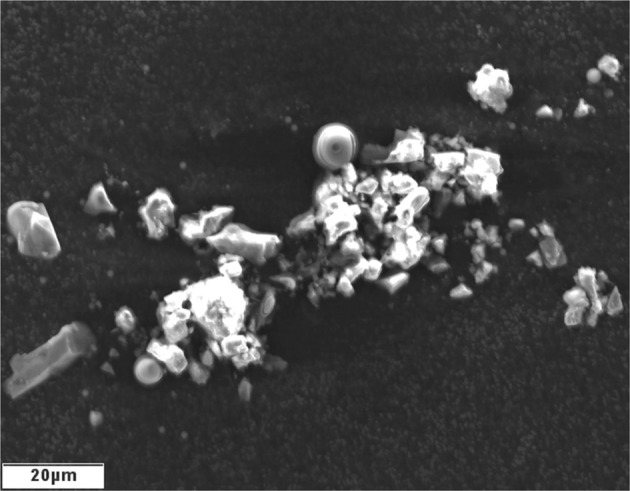
Lunar dust (LD), the component of lunar regolith with particle sizes less than 20 μm, covers the surface of the Moon. Due to its fineness, jagged edges, and electrostatic charge, LD adheres to and coats almost any surface it contacts. As a result, LD poses known risks to the proper functioning of electronic and mechanical equipment on the lunar surface. However, its mechanical irritancy and chemical reactivity may also pose serious health risks to humans by a number of mechanisms. While Apollo astronauts reported mild short-lived respiratory symptoms, the spectrum of health effects associated with high-dose acute exposure or chronic low-dose exposure are not yet well-understood. This paper explores known and potential human risks of exposure to LD which are thought to be important in planning upcoming lunar missions and planetary surface work.
Overview
CoChat Summary
TL;DR
This review summarizes known and potential human health risks from lunar dust (LD) exposure and the NASA LADTAG preliminary permissible exposure limit (PEL) of 0.3 mg/m³ for a 6-month lunar mission. It concludes that LD pulmonary toxicity appears less severe than quartz but that acute/chronic, ocular, dermal, immunologic, and other end-organ effects remain incompletely characterized.
Key findings
- LADTAG recommended a preliminary LD PEL of 0.3 mg/m³ for a 6-month mission with 8 h exposure 5 days/week, based on studies yielding safe exposure estimates from 0.2 to 0.7 mg/m³; NASA adopted it as a design standard. This is similar to crystalline quartz (PEL 0.1 mg/m³) and much lower than titanium dioxide (PEL 5 mg/m³).
- In rat studies, James et al. found ball-milled, jet-milled, and native unground LD toxicologically similar, with milling not increasing reactivity, and estimated safe exposure levels of 0.3–0.5 mg/m³. Lam et al. found no adverse effects at 6.8 mg/m³ (slight neutrophil increase considered adaptive) and only mild adverse effects at 20.8 mg/m³ (neutrophilic inflammation, lymphoid hyperplasia, granulomas, no fibrosis at 3 months), extrapolating to a 0.3 mg/m³ SEE. Scully et al. benchmark dose modeling gave SEEs of 0.7 and 0.2 mg/m³.
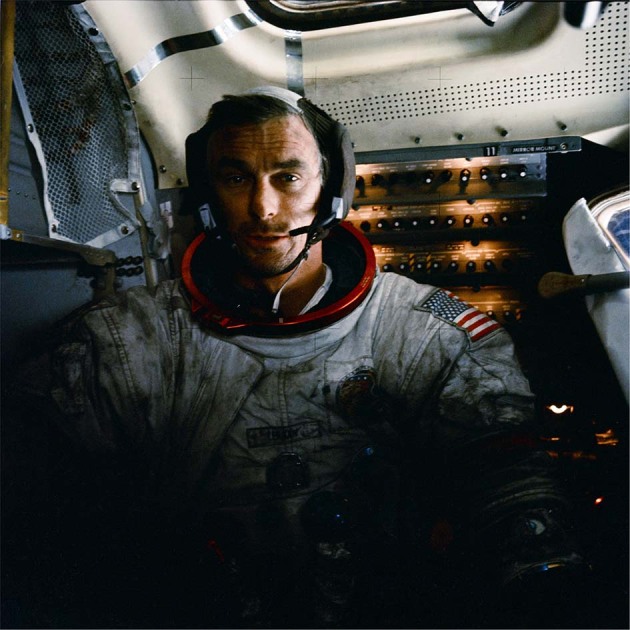
- Apollo astronauts reported transient ocular and respiratory symptoms after EVA that improved within 24 h; follow-up pulmonary function testing showed no long-term adverse respiratory effects, but cabin LD concentrations were never measured. Rabbit Draize testing with native LD showed minimal chemical/mechanical irritancy; 70 mg caused slight conjunctival erythema and edema resolving within 24 h, with no corneal abrasions.
- Other concerns include dermal abrasion (JSC-1A simulant had abrasive properties akin to commercial sandpaper), immune dysregulation and latent virus reactivation, and possible cardiovascular, gastrointestinal, neurological, renal, and reproductive/developmental toxicities, though many are not confirmed with native LD.
Methods
- Narrative review; references were collected from PubMed and Scopus using the keywords “lunar dust,” “lunar dust toxicity,” and “silicosis,” plus references previously known to the authors.
- Synthesizes Apollo mission medical reports, the NASA LADTAG final report and associated in vitro/in vivo studies, and subsequent literature on dust toxicity, monitoring, and countermeasures.
- No new primary data, systematic review protocol, or meta-analysis is reported.
Limitations
- The paper states that the spectrum of health effects from high-dose acute or chronic low-dose LD exposure is not well-understood; Apollo spacecraft LD concentrations after EVA were never measured; no comprehensive LD toxicity assessment was performed in the decades after Apollo; and sufficient native LD was unavailable for subsequent inhalational trials.
- The paper states that LD surface reactivity in situ is difficult to assess after sample return, whether ground lunar material represents actual lunar surface LD is unknown, and whether chemical reactivity translates to toxicity is unknown; applicability of LADTAG data to lunar regions with geology/conditions dissimilar to the Apollo 14 site is also unknown.
- Evident from the text: as a narrative overview, it relies on existing literature and does not present new experimental data; many proposed end-organ toxicities are hypotheses or extrapolated from terrestrial particulate matter or simulant studies rather than confirmed with native LD.
Model-written summary. Check it against the paper before relying on it.
Integrity signals
Registry
Cites
Statistics
Figures
Verification
Claims the paper makes
23 Valid · 1 Not valid · 35 Not checked · 25 Own results and interpretations
Every source the paper cites for this claim was checked and supports it.
In the paper
“Furthermore, reactivation of latent viruses, including herpesvirus, with associated viral shedding has been observed in astronauts during and after both shuttle and ISS missions.”
§ Overview of lunar dust toxicity risk > Topic review > Immunologic considerations
What the sources say
- Supportedcites [47] Rooney BV Crucian BE Pierson DL Laudenslager ML Mehta SK Herpes virus reactivation in astronauts during spaceflight and its application on earth Front. Microbiol. 2019 10 16 10.3389/fmicb.2019.00016 30792698 PMC6374706 source
The Introduction’s “Viral Reactivation” section reports reactivation and shedding of latent herpes viruses during shuttle and ISS missions, and says VZV and CMV shedding persisted after long-duration flights. The Abstract also reports post-flight shedding after both shuttle and ISS missions. (LLM, conf=0.95)
plainstates an association- Asserted: passes — The authors put it forward as true.
- Checkable: passes — It can be checked against evidence.
- Load-bearing: unclear — It is unclear whether the paper’s conclusions depend on it.
- Based: passes — The paper gives a reason why it holds.
- Supported
The cited sources support only part of this claim — read each source’s verdict below.
In the paper
“In vitro assay testing suggested LD possesses minimal chemical irritancy and reactivity.”
§ Overview of lunar dust toxicity risk > Topic review > Ocular toxicity
What the sources say
- Partly supportedcites [41] Meyers VE Garca HD Monds K Cooper BL James JT Ocular toxicity of authentic lunar dust BMC Ophthalmol. 2012 12 26 10.1186/1471-2415-12-26 22817808 PMC3484112 sourceExperimental — accuracy not yet measured
The Results and Discussion section (Chemical Irritancy of Lunar Dust; page unavailable) reports an in vitro ET-50 greater than 60 minutes and lists lunar dust’s irritancy as minimal. It does not conclude that the dust has minimal chemical reactivity: the Methods (Test Material; page unavailable) describe grinding it to increase surface reactivity before testing. (LLM, conf=0.84)
hedged- Asserted: passes — The authors put it forward as true.
- Checkable: passes — It can be checked against evidence.
- Load-bearing: passes — The paper’s conclusions depend on it.
- Based: passes — The paper gives a reason why it holds.
- Partly supported
The cited sources support only part of this claim — read each source’s verdict below.
In the paper
“Their large surface area and exposure to galactic and solar radiation likely increase the surface reactivity of the particles by creating large numbers of dangling chemical bonds and unsatisfied electron valences5.”
§ Overview of lunar dust toxicity risk > Introduction to lunar dust
What the sources say
- Partly supportedcites [5] Linnarsson D Toxicity of lunar dust Planet. Space Sci. 2012 74 57 71 10.1016/j.pss.2012.05.023 sourceExperimental — accuracy not yet measured
Section 3.1 (pp. 14–15) says lunar dust may have a very high surface area, that smaller particles may be more reactive, and that radiation and solar wind enrich particles in reactive sites. But it attributes dangling bonds and unsatisfied valencies specifically to mechanical impacts and abrasion, not to large surface area or radiation creating them. (LLM, conf=0.83)
hedgedstates a possible cause- Asserted: passes — The authors put it forward as true.
- Checkable: passes — It can be checked against evidence.
- Load-bearing: unclear — It is unclear whether the paper’s conclusions depend on it.
- Based: passes — The paper gives a reason why it holds.
- Partly supported
The cited sources support only part of this claim — read each source’s verdict below.
In the paper
“In all cases, these symptoms were transient and improved within 24 h of onset.”
§ Overview of lunar dust toxicity risk > Topic review > Historical exposures
What the sources say
- Partly supportedcites [14] Scheuring RA The Apollo Medical Operations Project: recommendations to improve crew health and performance for future exploration missions and lunar surface operations Acta Astronaut. 2008 63 980 987 10.1016/j.actaastro.2007.12.065 sourceExperimental — accuracy not yet measured
Section 37 reports that lunar-dust-related nasal and eye symptoms gradually subsided for most crewmembers during short lunar stays. It does not establish improvement within 24 hours in all cases: the Post-Summit Questionnaire Responses describe a reaction that worsened with repeated exposures. (LLM, conf=0.86)
plain- Asserted: passes — The authors put it forward as true.
- Checkable: passes — It can be checked against evidence.
- Load-bearing: unclear — It is unclear whether the paper’s conclusions depend on it.
- Based: passes — The paper gives a reason why it holds.
- Partly supported
The cited sources support only part of this claim — read each source’s verdict below.
In the paper
“In addition, iron in the Fe0 valence state (often referred to as nanophase iron) present in the particles may contribute to the formation of reactive oxygen species when in contact with human tissue, though the likelihood and severity of this possibility are unknown5–8.”
§ Overview of lunar dust toxicity risk > Introduction to lunar dust
What the sources say
- Partly supportedcites [5] Linnarsson D Toxicity of lunar dust Planet. Space Sci. 2012 74 57 71 10.1016/j.pss.2012.05.023 sourceExperimental — accuracy not yet measured
Section 3.1 (pp. 12, 16–17) identifies nanophase iron in lunar dust, says its surface might contact cells and tissues, and proposes that iron-containing material could produce reactive free radicals through a Fenton-like reaction. It also says direct contact with the body is uncertain. The copy describes the iron as being in a low oxidation state but does not establish the claim’s specific Fe0 valence state. (LLM, conf=0.82)
- Not checked — no full text of the sourcecites [6] Wallace WT Phillips CJ Jeevarajan AS Chen B Taylor LA Nanophase iron-enhanced chemical reactivity of ground lunar soil Earth Planet. Sci. Lett. 2010 295 571 577 10.1016/j.epsl.2010.04.042 source
- Not checked — no full text of the sourcecites [7] Pauluhn J Wiemann M Siderite (FeCO3) and magnetite (Fe3O4) overload-dependent pulmonary toxicity is determined by the poorly soluble particle not the iron content Inhal. Toxicol. 2011 23 763 783 10.3109/08958378.2011.606431 22035119 source
- Partly supportedcites [8] Vallyathan, V. In Environmental Health Perspectives Vol. 102, 111–115 (Public Health Services, US Dept of Health and Human Services, 1994). sourceExperimental — accuracy not yet measured
The Discussion (p. 4) reports that surface iron in occupational mineral dusts is related to their ability to generate hydroxyl radicals from hydrogen peroxide. It does not examine Fe0 or nanophase iron, lunar dust, or radical formation when those particles contact human tissue; the stated uncertainty about likelihood and severity is not assessed. (LLM, conf=0.86)
hedgedstates a possible cause- Asserted: passes — The authors put it forward as true.
- Checkable: passes — It can be checked against evidence.
- Load-bearing: unclear — It is unclear whether the paper’s conclusions depend on it.
- Based: passes — The paper gives a reason why it holds.
- Partly supported
36 more claims · 4 with their cited sources checked
Create a free account to see all 84 claims and to verify the 4 references still open.
- It may state two separate claims as one. 37
- Probably not a substantial claim. 10
Citations
Cites
Nanotoxicology: An Emerging Discipline Evolving from Studies of Ultrafine Particles
Oberdörster, G., Oberdörster, E., & Oberdörster, J. (2005) · Environmental Health Perspectives · doi:10.1289/ehp.7339 · Cited by 7,891
Brook, R. D., Rajagopalan, S., Pope, C. A., Brook, J. R., Bhatnagar, A., Diez-Roux, A. V., Holguin, F., Hong, Y., Luepker, R. V., Mittleman, M. A., et al. (2010) · Circulation · doi:10.1161/cir.0b013e3181dbece1 · Cited by 6,548
Nanomaterials and nanoparticles: Sources and toxicity
Buzea, C., Pacheco, I. I., & Robbie, K. (2007) · Biointerphases · doi:10.1116/1.2815690 · Cited by 3,789
Leung, C. C., Yu, I. T. S., & Chen, W. (2012) · The Lancet · doi:10.1016/s0140-6736(12)60235-9 · Cited by 1,193
The NASA Twins Study: A multidimensional analysis of a year-long human spaceflight
Garrett-Bakelman, F. E., Darshi, M., Green, S. J., Gur, R. C., Lin, L., Macias, B. R., McKenna, M. J., Meydan, C., Mishra, T., Nasrini, J., et al. (2019) · Science · doi:10.1126/science.aau8650 · Cited by 1,128
Fubini, B., & Hubbard, A. (2003) · Free Radical Biology and Medicine · doi:10.1016/s0891-5849(03)00149-7 · Cited by 935
The respiratory health hazards of volcanic ash: a review for volcanic risk mitigation
Horwell, C. J., & Baxter, P. J. (2006) · Bulletin of Volcanology · doi:10.1007/s00445-006-0052-y · Cited by 587
Du, Y., Xu, X., Chu, M., Guo, Y., & Wang, J. (2016) · PubMed · doi:10.3978/j.issn.2072-1439.2015.11.37 · Cited by 525
Crucian, B. E., Choukèr, A., Simpson, R. J., Mehta, S., Marshall, G., Smith, S. M., Zwart, S. R., Heer, M., Ponomarev, S., Whitmire, A., et al. (2018) · Frontiers in Immunology · doi:10.3389/fimmu.2018.01437 · Cited by 421
Nanoparticle toxicity by the gastrointestinal route: evidence and knowledge gaps
Bergin, I. L., & Witzmann, F. A. (2013) · International Journal of Biomedical Nanoscience and Nanotechnology · doi:10.1504/ijbnn.2013.054515 · Cited by 412
Research works printed but not linked: 3
- Harrington, A. D. et al. Pulmonary inflammatory responses to acute meteorite dust exposures-implications for human space exploration. In Lunar and Planetary Science Conference (2017).
- Mohebbi I Abadi NA Booshehri B Zubeyri T Ghavam F Rapidly progressive silicosis Tanaffos 2007 6 73 76
- Park JS Liu Y Kihm KD Taylor LA Micro-morphology and toxicological effects of lunar dust Lunar Planet. Sci. XXXVII 2006 2193 13 15
Cited by
Biomonitoring and precision health in deep space supported by artificial intelligence
Scott, R. T., Sanders, L., Antonsen, E., Hastings, J. J. A., Park, S.-M., Mackintosh, G., Reynolds, R. J., Hoarfrost, A., Sawyer, A., Greene, C. S., et al. (2023) · Nature Machine Intelligence · doi:10.1038/s42256-023-00617-5 · Cited by 74
“Astronauts face unique hazards from spaceflight, including ionizing radiation, altered gravitational fields, altered day–night cycles, confined isolation, hostile closed environments, distance-duration from Earth 1 , planetary dust-regolith 2,3 and extreme temperatures and atmospheres 4,5 .”
BackgroundSelf-citationBiological research and self-driving labs in deep space supported by artificial intelligence
Sanders, L. M., Scott, R. T., Yang, J. H., Qutub, A. A., Garcia Martin, H., Berrios, D. C., Hastings, J. J. A., Rask, J., Mackintosh, G., Hoarfrost, A. L., et al. (2023) · Nature Machine Intelligence · doi:10.1038/s42256-023-00618-4 · Cited by 49
“Many types of scientific equipment have already been cleared for spaceflight and are currently in use on the ISS(165), but anticipated future challenges include but are not limited to: (1) known difficulties in microfluidic processing in microgravity(83), (2) enabling processes beyond LEO in higher radiation exposure…”
BackgroundMethodSelf-citationMiranda, S., Marchal, S., Cumps, L., Dierckx, J., Krüger, M., Grimm, D. G., Baatout, S., Tabury, K., & Baselet, B. (2023) · Biomedicines · doi:10.3390/biomedicines11071921 · Cited by 35
Dry eye disease in astronauts: a narrative review
Ax, T., Ganse, B., Fries, F. N., Szentmáry, N., de Paiva, C. S., de Ribot, F. M., Jensen, S. O., Seitz, B., & Millar, T. J. (2023) · Frontiers in Physiology · doi:10.3389/fphys.2023.1281327 · Cited by 30
“Lunar dust tends to be especially jagged due to the absence of weathering (James and Kahn-Mayberry, 2011; Pohlen et al., 2022; Mirandaetal., 2023).”
BackgroundRapid Fabrication of Antilunar Dust Aluminum Surface by Nanosecond Laser Etching
Wang, X., Shao, H., Zhang, G., Zhang, H., Yan, J., Zhu, Y., Zhang, J., Wang, W., Yang, Z. Y., & Tang, C. (2024) · ACS Applied Materials & Interfaces · doi:10.1021/acsami.4c08100 · Cited by 15
Wang, J. L., Rosenbaum, J. J., Prasad, A. N., Raad, R. J., Putman, E. J., Harrington, A. D., Aintablian, H., & Hynek, B. M. (2025) · GeoHealth · doi:10.1029/2024gh001213 · Cited by 18
“Lunar dust and its risk to astronaut health has been extensively studied, and Pohlen et al. (2022) provided a review of this subject.”
InfluentialProperties of Lunar Dust and Their Migration on the Moon
Jin, H., Li, X., Wei, G., Zhang, X., Xie, L., Gan, H., Zhang, A., Zhang, X., Li, L., He, Z., et al. (2024) · Space Science & Technology · doi:10.34133/space.0142 · Cited by 23
Sensing technologies for the challenging Lunar environment
Chatzitheodoridis, E., Georgiou, C. D., Ferus, M., Kalaitzopoulou, E., Stavrakakis, H.-A., Markopoulos, I., & Hołyńska, M. (2024) · Advances in Space Research · doi:10.1016/j.asr.2024.06.033 · Cited by 11
Yan, Z., Nakashima, K., Takano, C., & Kawasaki, S. (2024) · Biogeotechnics · doi:10.1016/j.bgtech.2024.100156 · Cited by 12
Lam, C., Castranova, V., Driscoll, K. E., Warheit, D. B., Ryder, V., Zhang, Y., Zeidler-Erdely, P. C., Hunter, R. L., Scully, R. R., Wallace, W. T., et al. (2023) · Critical Reviews in Toxicology · doi:10.1080/10408444.2023.2258925 · Cited by 14
“A recent article (Pohlen et al. 2022) titled Overview of Lunar Dust Toxicity Risk by a group of researchers outside NASA stated that, “ … exposure to galactic and solar radiation likely increase the surface reactivity of the [LD] particles by creating large numbers of dangling chemical bonds and…”
BackgroundChang, J. H.-M., Xue, Z., Bauer, J., Wehle, B., Hendrix, D. A., Catalano, T., Hurowitz, J. A., Nekvasil, H., & Demple, B. (2024) · GeoHealth · doi:10.1029/2023gh000840 · Cited by 10
“…become finer, more jagged, and more reactive as a result of this weathering; indeed, lunar dust adhered strongly to spacesuits, thus bringing the material into the living areas and causing respiratory and other irritations (Colwell et al., 2007; Linnarsson et al., 2012; Pohlen et al., 2022).”
BackgroundMethodInfluentialKing, S. A., Kutz, C. J., & Chough, N. G. (2024) · Emergency Medicine Clinics of North America · doi:10.1016/j.emc.2024.02.023 · Cited by 9
Underground landscapes: volcanism, lava tubes, and man
Romio, F. A. P., & Lobosco, G. (2025) · Tunnelling and Underground Space Technology · doi:10.1016/j.tust.2025.106618 · Cited by 11
Shah, J., Ong, J., Lee, R. S., Suh, A., Waisberg, E., Gibson, C. R., Berdahl, J. P., & Mader, T. H. (2025) · Life · doi:10.3390/life15040602 · Cited by 12
“Prolonged exposure during long-duration missions could exacerbate these effects, leading to chronic damage to the cornea and other ocular structures [21,46,47].”
Liu, W., Salmond, J., Allen, K., & Tadaki, M. (2024) · Environmental Science & Policy · doi:10.1016/j.envsci.2024.103715 · Cited by 11
Ciofani, G., Bandiera, T., Corsini, A., Crescenzi, M., Vittorio, M. D., Marí, S. M., Martinelli, E., Monici, M., Piccirillo, S., Narici, M. V., et al. (2025) · Communications Medicine · doi:10.1038/s43856-025-01128-7 · Cited by 10
“In planning upcoming Lunar and Mars planetary missions, the potential human risks of exposure to dust, together with the impact on the functioning of equipment, should also be taken into consideration 6 .”
Suh, A., Ditelberg, S., Szeto, J. J., Kumar, D., Ong, J., Gibson, C. R., Mader, T. H., Waisberg, E., & Lee, A. G. (2024) · Survey of Ophthalmology · doi:10.1016/j.survophthal.2024.08.005 · Cited by 12
Pavan, C., Bianco, P., Tammaro, O., Castellino, M., Marocco, A., Petriglieri, J. R., Tomatis, M., Pansini, M., Esposito, S., & Turci, F. (2025) · Journal of Hazardous Materials · doi:10.1016/j.jhazmat.2025.138096 · Cited by 8
Li, L., Gao, D., Chen, H., Chen, Y., & Yan, J. (2025) · Vacuum · doi:10.1016/j.vacuum.2025.114488 · Cited by 6
Jiang, L., Liu, Z., Jing, H., Xue, Y., Wu, B., Li, Y., Ma, H., He, X., Wang, J., & Cui, X. (2025) · Building and Environment · doi:10.1016/j.buildenv.2025.113286 · Cited by 7
Evaluation of the high-robustness nuclear power cycle against lunar surface environmental threat
Sun, Z., Zhang, H., Sun, Q., et al. (2024) · Applied Thermal Engineering · doi:10.1016/j.applthermaleng.2024.123776 · Cited by 6
Lewandowski, B. E., Schkurko, C. M., Miller, R. S., Valentine, R. W., Calaway, K. M., Yang, J. D., Ebert, D. J., Sargsyan, A. E., Byrne, V. E., Walton, M., et al. (2024) · Frontiers in Space Technologies · doi:10.3389/frspt.2024.1384457 · Cited by 8
Scifoni, L., Pacelli, F. I., Schaible, M. J., Ryan, E. A., Sip, Y. Y. L., Zhai, L., Linsey, J., Shofner, M. L., Orlando, T. M., & Romero-Calvo, Á. (2025) · Acta Astronautica · doi:10.1016/j.actaastro.2025.08.057 · Cited by 5
Romio, F. A. P., Lobosco, G., Sauro, F., Pozzobon, R., & Marraffa, A. (2025) · Icarus · doi:10.1016/j.icarus.2025.116904 · Cited by 8
Assessment of toxicity changes induced by exposure of human cells to lunar dust simulant
Wang, J., Lei, M., Xue, Y., Tan, Q., He, X., Guan, J., Song, W. D., Ma, H., Wu, B., & Cui, X. (2024) · Scientific Reports · doi:10.1038/s41598-024-69259-w · Cited by 8
Pohlen, M. (2024) · Wilderness and Environmental Medicine · doi:10.1177/10806032241283380 · Cited by 5
“57,58 Although hypothetical, suf fi cient exposure may result in the development of pneumoconiosis.”
Self-citationTribological behavior of typical space solid lubricant films in the presence of lunar dust simulants
Hao-yu, W. A. N. G., Guo-Zheng, M., Qing-Wei, H., Shao-Song, L., Xin-Yi, Y., Chen, S. Y., & Zhi-Ying, R. (2025) · Acta Astronautica · doi:10.1016/j.actaastro.2025.12.028 · Cited by 5
The cornea during spaceflight: a frontier in space medicine ophthalmology
Ong, J., Soares, B., Osteicoechea, D., Kadipasaoglu, C. M., Waisberg, E., Suh, A., Sampige, R. R., Nguyen, T. N., Masalkhi, M., Sarker, P., et al. (2024) · Eye · doi:10.1038/s41433-024-03267-y · Cited by 3
Lunar dust: Formation, microphysics, and transport
Turyshev, S. G. (2026) · Physical Review Research · doi:10.1103/hn1p-nx25 · Cited by 4
A biological and ethical assessment of whether humans could or should reproduce in space
Cole, V. M., Savulescu, J., Illanes, S. E., Bátiz, F., Benny, P.-B. A. T., Huang, Z., Carter, S. W. D., Choolani, M. A., & Kemp, M. W. (2025) · npj Microgravity · doi:10.1038/s41526-025-00535-3 · Cited by 4
“%) amounts of iron 34 – 36 .”
Advances in active dust mitigation technologies for spacesuits
Li, L., Qin, X., Guo, P., Tang, R., Gao, D., Chen, Y., Khant, Z. M., Gao, H., Liu, R., Deng, Z., et al. (2025) · Journal of Space Safety Engineering · doi:10.1016/j.jsse.2025.11.002 · Cited by 4
Yao, R., Huan, H., Cheng, G., et al. (2025) · Advanced Powder Technology · doi:10.1016/j.apt.2025.105155 · Cited by 2
Dynamic Cone Penetration Test in Lunar Highlands Regolith Simulant
Šļumba, K., Scott, B. T., & Jaksa, M. B. (2026) · Acta Astronautica · doi:10.1016/j.actaastro.2026.01.055 · Cited by 2
Dananjaya, V., Holmes, S., Simons, R., Kingshott, P., & Salim, N. V. (2026) · Advanced Composites and Hybrid Materials · doi:10.1007/s42114-026-01725-7 · Cited by 3
Electrostatic Power from Negatively Charged Lunar Regolith
Choi Sang, H., Jung, K. H., & Moses Robert, W. (2023) · Journal of Aerospace Engineering and Mechanics · doi:10.36959/422/468 · Cited by 2
Morphological and Spectral Characterization of Lunar Regolith Breakdown due to Water Ice
Shackelford, A., Hanna, K. L. D., Horton, M., & Noce, D. (2024) · The Planetary Science Journal · doi:10.3847/psj/ad0041 · Cited by 6
“…et al. 2022; Olthoff et al. 2023; Slumba 2023 ) , dust mitigation and interactions ( e.g., Cao et al. 2023; Hirabayashi et al. 2023; Wells et al. 2023 ) , rover and tool development ( e.g., Budzyn et al. 2023; Long-Fox et al. 2023 ) , and astronaut health and safety ( e.g., Pohlen et al. 2022 ) .”
BackgroundPulmonary nitric oxide in astronauts before and during long-term spaceflight
Karlsson, L. L., Gustafsson, L. E., & Linnarsson, D. (2024) · Frontiers in Physiology · doi:10.3389/fphys.2024.1298863 · Cited by 3
The Dust Proof in Magnetic Fluid Seal
Li, L., Li, D., & Guo, Y. (2025) · IEEE Transactions on Magnetics · doi:10.1109/tmag.2025.3607698 · Cited by 2
“Studies have shown that lunar dust can be detrimental to spacecraft and astronauts, particularly due to its corrosive effects on moving joints [30], [31], [32].”
SAKATA, I., Chen, Y., & Wajima, T. (2024) · GEOINFORMATICS · doi:10.6010/geoinformatics.35.2_41 · Cited by 3
A comprehensive contamination assessment methodology for lunar regolith on spacecraft
Bölke, D., Jaworski, A., Kilitoglu, B., Vogt, J., & Maurelli, F. (2025) · Aerospace Science and Technology · doi:10.1016/j.ast.2025.111166 · Cited by 1
Lunar Dust Protection Technology and Evaluation: A Review
Zhang, H., Wang, X., Qi, X., Chen, S., Zhao, Z., Huang, Z., Wang, F., Chang, S., Dai, S., Zhan, Y., et al. (2026) · Aerospace · doi:10.3390/aerospace13020153 · Cited by 3
“The Apollo missions offer a pertinent illustration of the challenges posed by dust particles with diameters smaller than 20 µ m [18,19].”
Scheinkman, R., Janmohamed, S. R., Ginsburg, S., Houk, G., & Gwillim, E. C. (2024) · Archives of Dermatological Research · doi:10.1007/s00403-024-03639-0 · Cited by 2
“The weathering effects of meteorite bombardment and the irradiation of the surface from solar particles and galactic rays give the dust particles jagged, irregular geometry with electrical charge [3, 4].”
InfluentialLunar dust induces minimal pulmonary toxicity compared to Earth dust
Smith, M. B., Chou, J., Xenaki, D., Bai, X., Chen, H., & Oliver, B. G. G. (2025) · Life Sciences in Space Research · doi:10.1016/j.lssr.2025.02.005 · Cited by 1
Гавришин, А. И., & Ivanov, I. V. (2023) · Russian Journal of Occupational Health and Industrial Ecology · doi:10.31089/1026-9428-2023-63-2-78-87
Multiphysics Simulation and Analysis of Multi-ring Bias Lunar Dust Detector
Quan, R., Zhang, H., Zhang, C., Fang, M., & Zheng, Y. (2023) · International Journal of Aeronautical and Space Sciences · doi:10.1007/s42405-023-00604-5
Imaging-based measurement of lunar dust velocity and particle size
Dai, Y., Xue, B., Zhao, Y., et al. (2024) · Applied Optics · doi:10.1364/ao.516801
Research Trends in Lunar Dust Characteristics and Control Technologies for Lunar Surface Exploration
Eom, Y. S., Park, S. H., Chung, J., Kim, H., & Ryu, B.-H. (2024) · Journal of Space Technology and Applications · doi:10.52912/jsta.2024.4.4.279
Lobanov, A. V., Makeeva, E., Meshkov, D., et al. (2025) · Information and Innovations · doi:10.31432/1994-2443-2024-19-3-5-18
Underground Landscapes: Volcanism, Lava Tubes, and ManPreprint
Romio, F. A. P., & Lobosco, G. (2025) · SSRN Electronic Journal · doi:10.2139/ssrn.5123636
Sandhur, B. S., Ong, J., Sampige, R. R., Lee, R. S., Memon, H., Panzo, N., Kadipasaoglu, C. M., Guo, Y., Soares, B., Osteicoechea, D., et al. (2025) · Life Sciences in Space Research · doi:10.1016/j.lssr.2025.04.001 · Cited by 1
Mann, V., & Sundaresan, A. (2025) · Space Education & Strategic Applications · doi:10.18278/sesa.5.2.18
Emerging respiratory challenges in space and long-duration missions
Péquignot, B., Thierry, S., Prisk, G. K., & Lescroart, M. (2025) · Respiratory Medicine and Research · doi:10.1016/j.resmer.2025.101188
Self-citationCelestial hazards: immunological and pulmonary effects of lunar and Martian regolith simulants
Ferraro, C. C., Tirado, D., & Ferraro, M. J. (2025) · Life Sciences in Space Research · doi:10.1016/j.lssr.2025.07.003 · Cited by 1
New Presentation Series: Lunar Engineering 101
Bobea, M., Stockstill‐Cahill, K. R., Greenhagen, B. T., Porter, J. A., Núñez, J. I., Cahill, J. T. S., Stickle, A. M., Donegan, M. M., Berdis, J. R., Hibbitts, K., et al. (2025) · IEEE Aerospace Conference (AERO) · doi:10.1109/aero63441.2025.11068738
“The health risks from dust exposure can be very serious, especially in the case of dust inhalation [98 - 100].”
Merritt, E. L., Nguyen, T., Peay, O., Janka, I., & Ronia, M. (2025) · Waste-management Education Research Conference (WERC) · doi:10.1109/werc66199.2025.11143796
“Extended periods on the lunar surface increase exposure to lunar dust, which poses a threat to space crews and their equipment for a variety of reasons [1].”
Microbiology and Infectious Diseases
Russo, R. G. (2025) · Springer eBooks · doi:10.1007/978-3-032-03620-9_12
Ocular surface, anterior segment, and lens in spaceflight
Lee, R. S., Ong, J., Waisberg, E., Berdahl, J. P., & Lee, A. G. (2025) · Elsevier eBooks · doi:10.1016/b978-0-443-32904-3.00026-1
Investigation of Space Biocementation under Microgravity via Enzyme-Induced Carbonate Precipitation
Yan, Z., & Kawasaki, S. (2026) · Biogeotechnics · doi:10.1016/j.bgtech.2026.100226
Modeling Safety-Zone Interactions and Resource Access in Lunar South-Pole PSRs
Paulson, L. V., & Roberts, T. G. (2026) · AIAA SciTech Forum · doi:10.2514/6.2026-0170
Sarkheil, H., Salahjou, T., & Falahatgar, F. (2026) · Advances in Space Research · doi:10.1016/j.asr.2026.04.044
Liu, F., Han, Z., Jiang, L., et al. (2026) · Journal of Electrostatics · doi:10.1016/j.elstat.2026.104305
A bioartificial 3D bronchial epithelial airway model to study lunar hay fever on Earth
Marchal, S., Hellwig, P., Schmidt, C., Kopp, S., Grimm, D. G., Walles, H., Walles, T., Wiese-Rischke, C., & Krüger, M. (2026) · Trends in biotechnology · doi:10.1016/j.tibtech.2026.04.011
Low-Voltage, Repairable EDS Coating for Lunar Dust Mitigation on EVA Spacesuit Textiles
Srinivasan, K., Przybylski, S., Sahu, R. P., et al. (2026) · Proceedings - IEEE Aerospace Conference · doi:10.1109/aero66936.2026.11519831
“Given lunar dust’s high silicon dioxide content and its ability to embed deeply in lung tissue, inhalation of lunar dust poses a significant risk for silicosis or similar diseases [6].”
Zhu, Y., Yue, J., Jin, Z., Zhang, H., Lang, H., Wang, W., (19312), X. W., Qin, X., Bai, N., Ragab, T., et al. (2026) · Progress in Organic Coatings · doi:10.1016/j.porgcoat.2026.110306
A scenario-driven review of multi-agent cooperation for lunar surface missions
Jiaxiang, E., Bao, R., Fan, J., Dai, Z., Cui, E., (155066), N. L., & Wang, K. (2026) · Acta Astronautica · doi:10.1016/j.actaastro.2026.05.046 · Cited by 1
Exploration spatiale : les défis des atmosphères artificielles
Thierry, S., André-Boyet, L., Péquignot, B., et al. (2026) · Pour la Science · doi:10.3917/pls.584.0036
Dynamic transport of charged lunar dust under lander plume impingement
Chen, S. F., Kong, L., Ren, J., et al. (2026) · Aerospace Science and Technology · doi:10.1016/j.ast.2026.113137
Ghiaccio, Acqua e Fuoco. I lava tubes come paesaggi sulla Terra e nello Spazio
Romio, F. A. P. (2026) · Ri-Vista Research for landscape architecture · doi:10.36253/rv-18676
General considerations of the space environment
Heft, N., & Christiansen, R. (2026) · Elsevier eBooks · doi:10.1016/b978-0-443-27552-4.00002-6
Salaria, L., Pearce-Menzies, I., Mishra, A., Khan, S., Saravanan, P., Bhavsar, P. K., & Russomano, T. (2026) · Acta Astronautica · doi:10.1016/j.actaastro.2026.08.017
Li, F., Zhang, W., Lyu, Y., & Zhang, X. (2026) · Extreme Materials · doi:10.1016/j.exm.2026.100048
Hamid, W., & Ahmad, R. (2026) · Acta Astronautica · doi:10.1016/j.actaastro.2026.08.079
Metadata
- Authors
- Pohlen, M., Carroll, D., Prisk, G. K., & Sawyer, A. J.
- Affiliations
- Stanford University (US)
- Eastern Virginia Medical School (US)
- University of California San Diego (US)
- University of California, San Francisco (US)
- Corresponding author
- Sawyer, Aenor J.
- Venue
- npj Microgravity
- Published
- 2022-12-02
- Volume
- 8
- Issue
- 1
- Pages
- 55-55
- ISSN
- 2373-8065 (ISSN-L)
- PMC
- PMC9718825
- OpenAlex
- W4311191676
- Cited by
- 72
- References
- 70
- Citations by year
- 2026: 20 · 2025: 25 · 2024: 19 · 2023: 8
- FWCI
- 1.04
- Type
- journal article
- Language
- en
- Open access
- gold
- doi.org
- Licence
- cc-by
- creativecommons.org/licenses/by/4.0 (tdm)
- creativecommons.org/licenses/by/4.0 (vor)
- Locations
- npj Microgravity (publishedVersion, cc-by)
- PubMed Central (publishedVersion, cc-by)
- PubMed (publishedVersion)
- DOAJ (DOAJ: Directory of Open Access Journals) (submittedVersion, cc-by-sa)
- eScholarship (California Digital Library) (submittedVersion, cc-by)
- Funders
- National Aeronautics and Space Administration (NNX16AO69A)
- University of California, San Francisco
- Topics
- Physical Sciences › Engineering › Aerospace Engineering › Space Exploration and Technology
- Health Sciences › Medicine › Physiology (medical) › Spaceflight effects on biology
- Physical Sciences › Environmental Science › Health, Toxicology and Mutagenesis › Air Quality and Health Impacts
- Keywords
- lunar dust, lunar regolith, health risks, respiratory toxicity, chemical reactivity, Apollo astronauts, chronic low-dose exposure, acute exposure, lunar missions, equipment contamination
About these checks
Registry, retraction, Cites and statistics results are computed, not judged, with one exception: a printed reference that no index lists is read once by a model before it counts as a citation error. Claims are extracted by a model and kept only when their quote appears verbatim in the text; each cited source is then checked, with a model’s help, for whether it says what the claim relies on. Those verdicts can be wrong — read the claim’s quote and the cited source before relying on one.
The claim verdicts this report counts are experimental: their accuracy is not yet measured.
A language model drew the claims from the paper on 2026-10-10, under version 3 of the claim definition (model deepseek-v4.1-flash, prompt extract-v3).
A second model labelled each claim on 2026-10-10 (model jev-1.13-20260917, definition revision gold-guideline-v0.2).
Cited sources are checked with a language model’s help (gpt-6-sol).
Statistics and arithmetic are recomputed, not judged.
Confidence bands are shown only for fields calibrated on our annotated test set. None is calibrated yet, so no band is shown.
What counts as a claim ›How we measure confidence ›How we check this ›
Are you an author, or do you see a problem with this page? Request a review
Data sources
Bibliographic data: Semantic Scholar, OpenAlex, Crossref.
Contains information from the Semantic Scholar Academic Graph Datasets, made available under the ODC Attribution License (ODC-BY 1.0).
Semantic Scholar’s data is described in: Kinney, R., et al. (2023). The Semantic Scholar Open Data Platform. arXiv:2301.10140.
