

Ingestion of subthreshold doses of environmental toxins induces ascending Parkinsonism in the rat
Open accessThe DOI matches its Crossref record; 62 of the 62 references it cites were found in a registry or an index.
Abstract
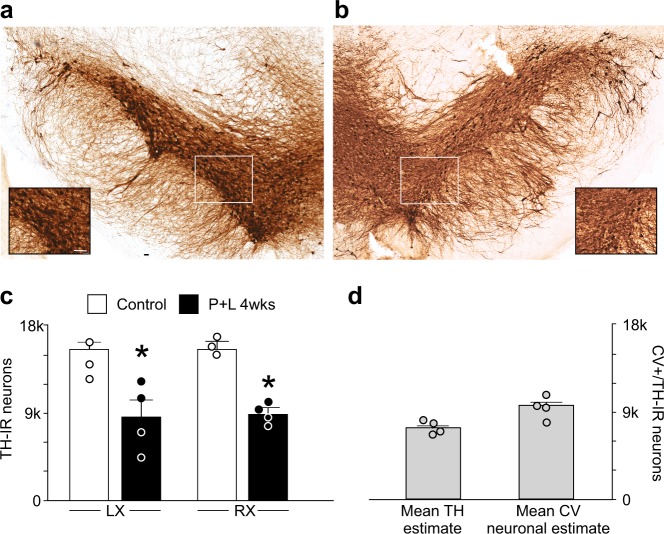
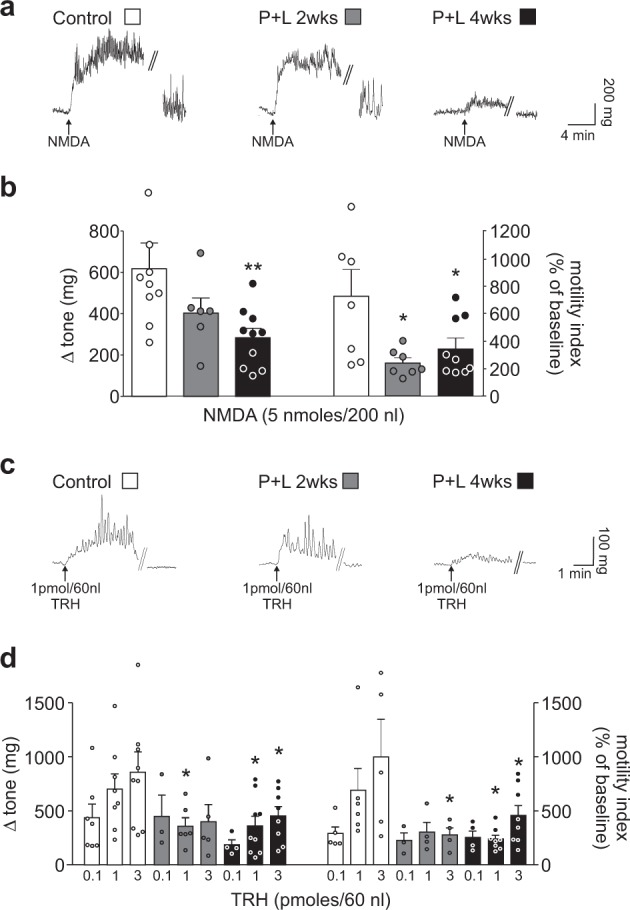
Increasing evidence suggests that environmental neurotoxicants or misfolded α-synuclein generated by such neurotoxicants are transported from the gastrointestinal tract to the central nervous system via the vagus nerve, triggering degeneration of dopaminergic neurons in the substantia nigra pars compacta (SNpc) and causing Parkinson’s disease (PD). We tested the hypothesis that gastric co-administration of subthreshold doses of lectins and paraquat can recreate the pathology and behavioral manifestations of PD in rats. A solution containing paraquat + lectin was administered daily for 7 days via gastric gavage, followed by testing for Parkinsonian behavior and gastric dysmotility. At the end of the experiment, brainstem and midbrain tissues were analyzed for the presence of misfolded α-synuclein and neuronal loss in the SNpc and in the dorsal motor nucleus of the vagus (DMV). Misfolded α-synuclein was found in DMV and SNpc neurons. A significant decrease in tyrosine hydroxylase positive dopaminergic neurons was noted in the SNpc, conversely there was no apparent loss of cholinergic neurons of the DMV. Nigrovagally-evoked gastric motility was impaired in treated rats prior to the onset of parkinsonism, the motor deficits of which were improved by l-dopa treatment. Vagotomy prevented the development of parkinsonian symptoms and constrained the appearance of misfolded α-synuclein to myenteric neurons. These data demonstrate that co-administration of subthreshold doses of paraquat and lectin induces progressive, l-dopa-responsive parkinsonism that is preceded by gastric dysmotility. This novel preclinical model of environmentally triggered PD provides functional support for Braak’s staging hypothesis of idiopathic PD.
Overview
The claims and statistics of this paper haven’t been checked yet.
Free: it reads the open-access text and checks the first 5 claims that cite a source we can check. Create a free account to check every claim.
Integrity signals
Registry
Cites
Statistics
Figures
Verification
Claims the paper makes
The claims and statistics of this paper haven’t been checked yet.
Free: it reads the open-access text and checks the first 5 claims that cite a source we can check. Create a free account to check every claim.
Claims other papers make about this one
Each is checked against this paper’s own text: does it say what the citing paper says it does?
In the citing paper
“After gastric coadministration of paraquat (another pesticide, 1 mg/kg for 7 days) with lectin impaired nigrovagally-evoked gastric motility, reduction in tyrosine hydroxylase positive dopaminergic neurons, and misfolded α-synuclein in the myenteric plexus, dorsal motor nucleus of the vagus, and the substantia nigra pars compacta neurons were found in rats [407].”
From The Role of Microbiota-Gut-Brain Axis in Neuropsychiatric and Neurological Disorders (2021) · cites this paper as [407]
Self-check
Percentages, sums and reported differences re-computed from the paper’s own numbers.
The self-check needs the paper’s full text.
Citations
Cites
The efficiency of systematic sampling in stereology and its prediction*
Gundersen, H. J. G., & Jensen, E. B. (1987) · Journal of Microscopy · doi:10.1111/j.1365-2818.1987.tb02837.x · Cited by 3,520
Goedert, M., Spillantini, M. G., Del Tredici, K., & Braak, H. (2013) · Nature Reviews Neurology · doi:10.1038/nrneurol.2012.242 · Cited by 1,190
Gastrointestinal Dysfunction in Parkinson’s Disease
Fasano, A., Visanji, N. P., Liu, L. W. C., Lang, A. E., & Pfeiffer, R. F. (2015) · The Lancet Neurology · doi:10.1016/s1474-4422(15)00007-1 · Cited by 1,016
Gastrointestinal dysfunction in Parkinson's disease
Pfeiffer, R. F. (2003) · The Lancet Neurology · doi:10.1016/s1474-4422(03)00307-7 · Cited by 925
McCormack, A. L., Thiruchelvam, M., Manning-Bog, A. B., Thiffault, C., Langston, J. W., Cory-Slechta, D. A., & Di Monte, D. A. (2002) · Neurobiology of Disease · doi:10.1006/nbdi.2002.0507 · Cited by 838
West, M. J. (1999) · Trends in Neurosciences · doi:10.1016/s0166-2236(98)01362-9 · Cited by 827
Vagotomy and subsequent risk of Parkinson's disease
Svensson, E., Horváth‐Puhó, E., Thomsen, R. W., Djurhuus, J. C., Pedersen, L., Borghammer, P., & Sørensen, H. T. (2015) · Annals of Neurology · doi:10.1002/ana.24448 · Cited by 806 · cited 12×
“20), paraquat administration (up to 100mg/kg p.o. or i.p., either alone or in combination with the fungicide, maleb), once or twice a week for three–six consecutive weeks is used commonly to induce experimental idiopathic PD.10 In this model, parkinsonian symptoms are observed typically after at least 4 weeks.10,21 Ot…”
ResultInfluentialThe Herbicide Paraquat Causes Up-regulation and Aggregation of α-Synuclein in Mice
Manning-Bog, A. B., McCormack, A. L., Li, J., Uversky, V. N., Fink, A. L., & Di Monte, D. A. (2002) · Journal of Biological Chemistry · doi:10.1074/jbc.c100560200 · Cited by 684
The risk of Parkinson's disease with exposure to pesticides, farming, well water, and rural living
Gorell, J. M., Johnson, C. C., Rybicki, B. A., Peterson, E. L., & Richardson, R. J. (1998) · Neurology · doi:10.1212/wnl.50.5.1346 · Cited by 639
The bowel and beyond: The enteric nervous system in neurological disorders
Rao, M., & Gershon, M. D. (2016) · Nature Reviews Gastroenterology & Hepatology · doi:10.1038/nrgastro.2016.107 · Cited by 629
Cited by
The Role of Microbiota-Gut-Brain Axis in Neuropsychiatric and Neurological Disorders
Socała, K., Doboszewska, U., Szopa, A., Serefko, A., Włodarczyk, M., Zielińska, A., Poleszak, E., Fichna, J., & Wlaź, P. (2021) · Pharmacological Research · doi:10.1016/j.phrs.2021.105840 · Cited by 857
Neuroinflammation as a common feature of neurodegenerative disorders
Guzman-Martinez, L., Maccioni, R. B., Andrade, V., Navarrete, L. P., Pastor, M. G., & Ramos-Escobar, N. (2019) · Frontiers in Pharmacology · doi:10.3389/fphar.2019.01008 · Cited by 702
The role of gut dysbiosis in Parkinson’s disease: mechanistic insights and therapeutic options
Wang, Q., Luo, Y., Ray Chaudhuri, K., Reynolds, R., Tan, E.-K., & Pettersson, S. (2021) · Brain · doi:10.1093/brain/awab156 · Cited by 281
Parkinson disease and the gut: new insights into pathogenesis and clinical relevance
Travagli, R. A., Browning, K. N., & Camilleri, M. (2020) · Nature Reviews Gastroenterology & Hepatology · doi:10.1038/s41575-020-0339-z · Cited by 181
Self-citationThe Gut and Parkinson's Disease—A Bidirectional Pathway
Santos, S. F., de Oliveira, H. L., Yamada, E. S., Neves, B. C., & Pereira, A. (2019) · Frontiers in Neurology · doi:10.3389/fneur.2019.00574 · Cited by 140
Air Pollution and the Risk of Parkinson's Disease: A Review
Murata, H., Barnhill, L. M., & Bronstein, J. M. (2022) · Movement Disorders · doi:10.1002/mds.28922 · Cited by 141
Behavioral Tests in Neurotoxin-Induced Animal Models of Parkinson’s Disease
Prasad, E. M., & Hung, S. (2020) · Antioxidants · doi:10.3390/antiox9101007 · Cited by 140
Neurodegenerative disorders and gut-brain interactions
Singh, A., Dawson, T. M., & Kulkarni, S. (2021) · Journal of Clinical Investigation · doi:10.1172/jci143775 · Cited by 109
Dissecting the Role of Subtypes of Gastrointestinal Vagal Afferents
Wang, Y. B., de Lartigue, G., & Page, A. J. (2020) · Frontiers in Physiology · doi:10.3389/fphys.2020.00643 · Cited by 104
Review of microbiota gut brain axis and innate immunity in inflammatory and infective diseases
Yuan, C., He, Y., Xie, K., Feng, L., Gao, S., & Cai, L. (2023) · Frontiers in Cellular and Infection Microbiology · doi:10.3389/fcimb.2023.1282431 · Cited by 96
Chen, S., & Lin, C. (2022) · Journal of Biomedical Science · doi:10.1186/s12929-022-00839-6 · Cited by 93
The gut in Parkinson’s disease: Bottom‐up, top‐down, or neither?
Leclair‐Visonneau, L., Neunlist, M., Derkinderen, P., & Lebouvier, T. (2020) · Neurogastroenterology & Motility · doi:10.1111/nmo.13777 · Cited by 62
Gut Microbiota Approach—A New Strategy to Treat Parkinson’s Disease
Liu, J., Xu, F., Nie, Z., & Shao, L. (2020) · Frontiers in Cellular and Infection Microbiology · doi:10.3389/fcimb.2020.570658 · Cited by 55
Autonomic dysfunction in Parkinson disease and animal models
Metzger, J. M., & Emborg, M. E. (2019) · Clinical Autonomic Research · doi:10.1007/s10286-018-00584-7 · Cited by 48
Environmental triggers of Parkinson's disease – Implications of the Braak and dual-hit hypotheses
Chen, H., Wang, K., Scheperjans, F., & Killinger, B. A. (2021) · Neurobiology of Disease · doi:10.1016/j.nbd.2021.105601 · Cited by 48
Muddapu, V. R., Mandali, A., Chakravarthy, S. V., & Ramaswamy, S. (2019) · Frontiers in Neural Circuits · doi:10.3389/fncir.2019.00011 · Cited by 49
Traffic-related air pollution and Parkinson's disease in central California
Kwon, D., Paul, K. C., Yu, Y., Zhang, K., Folle, A. D., Wu, J. Y., Bronstein, J. M., & Ritz, B. R. (2023) · Environmental Research · doi:10.1016/j.envres.2023.117434 · Cited by 41
α‐Synuclein in Parkinson's Disease: From Bench to Bedside
Bellini, G., D’Antongiovanni, V., Palermo, G., Antonioli, L., Fornai, M., Ceravolo, R., Bernardini, N., Derkinderen, P., & Pellegrini, C. (2024) · Medicinal Research Reviews · doi:10.1002/med.22091 · Cited by 43
Relationship among Parkinson’s disease, constipation, microbes, and microbiological therapy
Yuan, X.-Y., Chen, Y., & Liu, Z. (2024) · World Journal of Gastroenterology · doi:10.3748/wjg.v30.i3.225 · Cited by 36
Neurophysiology of the brain stem in Parkinson’s disease
Bove, C., & Travagli, R. A. (2019) · Journal of Neurophysiology · doi:10.1152/jn.00056.2019 · Cited by 36
Self-citationIzco, M., Vettorazzi, A., Forcén, R., Blesa, J., de Toro, M., Alvarez-Herrera, N., Cooper, J. A. D., González‐Peñas, E., de Ceráin, A. L., & Alvarez‐Erviti, L. (2021) · Food and Chemical Toxicology · doi:10.1016/j.fct.2021.112164 · Cited by 39
Parkinson's Disease and the Gut: Models of an Emerging Relationship
Bindas, A. J., Kulkarni, S., Koppes, R. A., & Koppes, A. N. (2020) · Acta Biomaterialia · doi:10.1016/j.actbio.2021.03.071 · Cited by 28
Fluoroquinolones-Associated Disability: It Is Not All in Your Head
Freeman, M. Z., Cannizzaro, D. N., Naughton, L. F., & Bove, C. (2021) · NeuroSci · doi:10.3390/neurosci2030017 · Cited by 29
Self-citationNutrition and gut health: the impact of specific dietary components – it's not just five-a-day
Rhodes, J. M. (2020) · Proceedings of The Nutrition Society · doi:10.1017/s0029665120000026 · Cited by 34
Vojdani, A., Lerner, A., & Vojdani, E. (2021) · Cells · doi:10.3390/cells10051111 · Cited by 32
Towards improved screening of toxins for Parkinson’s risk
Shan, L., Heusinkveld, H. J., Paul, K. C., Hughes, S., Darweesh, S. K. L., Bloem, B. R., & Homberg, J. R. (2023) · npj Parkinson s Disease · doi:10.1038/s41531-023-00615-9 · Cited by 33
Riegelman, E., Xue, K. S., Wang, J.-S., & Tang, L. (2024) · Nutrients · doi:10.3390/nu16132041 · Cited by 36
Parkinson’s Disease and the Gut: Future Perspectives for Early Diagnosis
Harsányiová, J., Buday, T., & Trancikova, A. K. (2020) · Frontiers in Neuroscience · doi:10.3389/fnins.2020.00626 · Cited by 31
Altered gastric tone and motility response to brain-stem dopamine in a rat model of parkinsonism
Bove, C., Anselmi, L., & Travagli, R. A. (2019) · American Journal of Physiology-Gastrointestinal and Liver Physiology · doi:10.1152/ajpgi.00076.2019 · Cited by 31
Self-citationDrobny, A., Ngo, P. A., Neurath, M. F., Zunke, F., & López-Posadas, R. (2021) · Frontiers in Medicine · doi:10.3389/fmed.2021.655123 · Cited by 24
“Last but not least, paraquat injection into rats also demonstrated the relevance of the gut-brain axis, since it evokes reduced gastric motility tone and increased aSyn immunoreactivity in the DMV, which is blocked upon vagotomy (328, 329).”
BackgroundHuang, Y., Ma, Y., Gao, P., Cui, X.-H., Hou, J., Chi, H., Fu, Y., Wang, Z., Feng, J., Cheng, W., et al. (2024) · npj Parkinson s Disease · doi:10.1038/s41531-024-00633-1 · Cited by 28
Park, S. J., Kim, K. W., & Lee, E. J. (2024) · Neural Regeneration Research · doi:10.4103/nrr.nrr-d-24-00994 · Cited by 28
Sheikhpour, E., Mard, S. A., Farbood, Y., Bavarsad, K., & Sarkaki, A. (2023) · Life Sciences · doi:10.1016/j.lfs.2022.121356 · Cited by 21
Role of OCT3 and DRP1 in the Transport of Paraquat in Astrocytes: A Mouse Study
Han, S., Feng, Y., Guo, M. A., Hao, Y., Sun, J., Zhao, Y., Dong, Q., Zhao, Y., & Cui, M. (2022) · Environmental Health Perspectives · doi:10.1289/ehp9505 · Cited by 14
The cross-hemispheric nigrostriatal pathway prevents the expression of levodopa-induced dyskinesias
Iyer, V., Venkiteswaran, K., Savaliya, S., Lieu, C. A., Handly, E., Gilmour, T. P., Kunselman, A. R., & Subramanian, T. (2021) · Neurobiology of Disease · doi:10.1016/j.nbd.2021.105491 · Cited by 15
Self-citationMoreno, L. O., Bagüés, A., Martínez, V., & Abalo, R. (2023) · Nutrients · doi:10.3390/nu15122775 · Cited by 11
Gastrointestinal Dysfunction in Neurological and Neurodegenerative Disorders
Raber, J., & Sharpton, T. J. (2023) · Seminars in Neurology · doi:10.1055/s-0043-1771459 · Cited by 16
Николаевна, В. М., Yen, L. Y., Khmyz, M. I., Sobolevsky, A. I., & Yelshanskaya, M. V. (2023) · Frontiers in Cell and Developmental Biology · doi:10.3389/fcell.2023.1252953 · Cited by 9
Даниленко, В. Н., Stavrovskaya, A. V., Voronkov, D. N., Gushchina, A. S., Марсова, М. В., Yamshchikova, N. G., Olshansky, А. S., Ivanov, M. V., & Illarioshkin, S. N. (2020) · Annals of Clinical and Experimental Neurology · doi:10.25692/acen.2020.1.7 · Cited by 12
Food Contamination: An Unexplored Possible Link between Dietary Habits and Parkinson’s Disease
Caioni, G., Cimini, A., & Benedetti, E. (2022) · Nutrients · doi:10.3390/nu14071467 · Cited by 9
Xing, T., Nanni, G., Burkholder, C. R., Browning, K. N., & Travagli, R. A. (2023) · The Journal of Physiology · doi:10.1113/jp284238 · Cited by 10
Self-citationGastrointestinal dysmotility in rodent models of Parkinson’s disease
Pellegrini, C., & Travagli, R. A. (2024) · American Journal of Physiology-Gastrointestinal and Liver Physiology · doi:10.1152/ajpgi.00225.2023 · Cited by 8
Self-citationThe vagus connection: exploring the neurobiology of brain-gut communication
Xing, T., Ozkaya, K. S., Nasrallah, Z., & Travagli, R. A. (2025) · Journal of Neurophysiology · doi:10.1152/jn.00516.2024 · Cited by 13
Self-citationChaklai, A., O’Neil, A., Goel, S., Margolies, N., Krenik, D., Perez, R., Kessler, K., Staltontall, E., Yoon, H. K. (., Pantoja, M., et al. (2024) · Genes · doi:10.3390/genes15030282 · Cited by 9
Experimental models of gut‐first Parkinson's disease: A systematic review
Videlock, E. J., Xing, T., Yehya, A. H. S., & Travagli, R. A. (2023) · Neurogastroenterology & Motility · doi:10.1111/nmo.14604 · Cited by 10
Self-citationBove, C., Coleman, F. H., & Travagli, R. A. (2019) · Neuroscience · doi:10.1016/j.neuroscience.2019.08.048 · Cited by 8
Self-citationDeepLabCut to Automate Behavioral Analysis of Parkinsonism
Rangoonwala, N., Le, K., Peshattiwar, V., Swain, C. C., Pokharel, D., White, T., Subramanian, T., & Venkiteswaran, K. (2025) · AI in neuroscience. · doi:10.1089/ains.2024.0008 · Cited by 7
Self-citationMuronets, V. I., Kudryavtseva, S. S., Kurochkina, L. P., Leisi, E. V., Stroylova, Y. Y., & Schmalhausen, E. V. (2025) · Biochemistry (Moscow) · doi:10.1134/s0006297924604003 · Cited by 5
Diet, gut microbiome, and cognition in neurodegeneration: a review and methodological framework
Raber, J., & Sharpton, T. J. (2026) · Frontiers in Aging Neuroscience · doi:10.3389/fnagi.2026.1771904 · Cited by 5
Coletto, E., Tough, I. R., Pritchard, S., Hikima, A., Jackson, M. J., Jenner, P. G., Chaudhuri, К. R., Cox, H. M., Iravani, M. M., & Rose, S. (2021) · npj Parkinson s Disease · doi:10.1038/s41531-020-00150-x · Cited by 7
Swain, C. C., Prevoznik, S., Kalbus, J. A., Pokharel, D., Beligala, D. H., Jain, P., Reddy, M. V. S. R. R., Popovich, C., Russell, J. A., & Subramanian, T. (2026) · NeuroToxicology · doi:10.1016/j.neuro.2026.103433 · Cited by 7
Self-citationChen, Y.-R., Wong, C.-C., Chen, Y.-N., Yang, B.-H., Lee, P.-H., Shiau, C., Wang, K., & Li, C.-H. (2024) · Journal of Dental Sciences · doi:10.1016/j.jds.2024.06.004 · Cited by 3
Castegna, A., Laera, L., Moda, P., Miglietta, S., D’Agostino, M., Ruggiero, M., Cianciulli, A., Filannino, F. M., Porro, C., Butterfield, D. A., et al. (2026) · Journal of Translational Medicine · doi:10.1186/s12967-026-08102-4 · Cited by 3
Parkinson’s disease – the role of the digestive tract in pathogenesis
IKlinika Neurologiczna, I. P. I. N., Bucior, E., Konopko, M., IKlinika Neurologiczna, I. P. I. N., Sienkiewicz‐Jarosz, H., & IKlinika Neurologiczna, I. P. I. N. (2019) · Aktualności Neurologiczne · doi:10.15557/an.2019.0009
Toxic trail from the gut to the brain
Berghe, P. V. (2022) · Gut · doi:10.1136/gutjnl-2021-326456 · Cited by 2
Symbiotic Relationship with Gut Microbiomes and Parkinson Disease
Adeloye, O. O., David, O. B., & Olawuwo, S. (2020) · Asian Journal of Basic Science & Research · doi:10.38177/ajbsr.2020.2108
Faculty Opinions recommendation of The Gut and Parkinson's Disease-A Bidirectional Pathway.
Manto, M. U. (2019) · Faculty Opinions – Post-Publication Peer Review of the Biomedical Literature · doi:10.3410/f.736018211.793562032
Swain, C. C., Peshattiwar, V., Le, K., Nester, I., Venkiteswaran, K., & Subramanian, T. (2024) · Translation The University of Toledo Journal of Medical Sciences · doi:10.46570/utjms-2024-1161
Self-citationSqualamine as a Potential Neuroprotective Agent in Parkinson's Disease Related Cognitive Decline
Pokharel, D., White, T., Peshattiwar, V., Swain, C. C., Le, K., & Subramanian, T. (2024) · Translation The University of Toledo Journal of Medical Sciences · doi:10.46570/utjms-2024-1167
Self-citationHuman Nervous System and Behavioral Toxicology
Fiedler, N. L., & Wiersielis, K. (2025) · Elsevier eBooks · doi:10.1016/b978-0-323-95488-4.00231-x
Saravanan, S., Malligarjunan, N., & Subramanian, G. (2025) · Journal of Natural Remedies · doi:10.18311/jnr/2025/50499
Pokharel, D., Swain, C. C., Beligala, D. H., Reddy, M. V. S. R. R., & Subramanian, T. (2026) · bioRxiv (Cold Spring Harbor Laboratory) · doi:10.64898/2026.02.08.704684
Self-citationSwain, C. C., Pokharel, D., Peshattiwar, V., Le, K., Kennedy, I., Venkiteswaran, K., & Subramanian, T. (2026) · Neuroscience Letters · doi:10.1016/j.neulet.2026.138596 · Cited by 2
Self-citation
Metadata
- Authors
- Anselmi, L., Bove, C., Coleman, F. H., Le, K., Subramanian, M. P., Venkiteswaran, K., Subramanian, T., & Travagli, R. A.
- Affiliations
- Pennsylvania State University (US)
- Corresponding author
- Travagli, R. A.
- Venue
- npj Parkinson's Disease
- Published
- 2018-09-27
- Volume
- 4
- Issue
- 1
- Pages
- 30-30
- ISSN
- 2373-8057 (ISSN-L)
- PMC
- PMC6160447
- OpenAlex
- W2892234634
- Semantic Scholar
- 216fb48324a15e4caca39eb58a9fdae5883314cf
- Cited by
- 63
- References
- 62
- Citations by year
- 2026: 5 · 2025: 5 · 2024: 10 · 2023: 9 · 2022: 5 · 2021: 10 · 2020: 9 · 2019: 10
- FWCI
- 4.91
- Type
- journal article
- Language
- en
- Open access
- gold
- doi.org
- Licence
- cc-by
- creativecommons.org/licenses/by/4.0 (tdm)
- creativecommons.org/licenses/by/4.0 (vor)
- Locations
- npj Parkinson s Disease (publishedVersion, cc-by)
- Europe PMC (PubMed Central) (publishedVersion, other-oa)
- PubMed Central (publishedVersion, cc-by)
- PubMed (publishedVersion)
- DOAJ (DOAJ: Directory of Open Access Journals) (submittedVersion)
- Funders
- University of Pennsylvania
- Pennsylvania State University
- National Institutes of Health (DIBTH0632)
- National Institute of Diabetes and Digestive and Kidney Diseases (R01DK055530)
- National Institute of Neurological Disorders and Stroke (R01NS042402)
- National Center for Complementary and Integrative Health (R21AT001607)
- Topics
- Health Sciences › Medicine › Clinical Neurology › Parkinson's Disease Mechanisms and Treatments
- Life Sciences › Biochemistry, Genetics and Molecular Biology › Molecular Biology › Nuclear Receptors and Signaling
- Life Sciences › Neuroscience › Neurology › Neuroinflammation and Neurodegeneration Mechanisms
- Keywords
- Parkinson's disease, environmental neurotoxicity, paraquat, lectins, vagus nerve, dorsal motor nucleus of the vagus, substantia nigra pars compacta, dopaminergic neuron loss, gastric dysmotility, L-DOPA, vagotomy, myenteric neurons, rat model
About these checks
Registry, retraction, Cites and statistics results are computed, not judged, with one exception: a printed reference that no index lists is read once by a model before it counts as a citation error. Claims are extracted by a model and kept only when their quote appears verbatim in the text; each cited source is then checked, with a model’s help, for whether it says what the claim relies on. Those verdicts can be wrong — read the claim’s quote and the cited source before relying on one.
Statistics and arithmetic are recomputed, not judged.
Confidence bands are shown only for fields calibrated on our annotated test set. None is calibrated yet, so no band is shown.
What counts as a claim ›How we measure confidence ›How we check this ›
Are you an author, or do you see a problem with this page? Request a review
Data sources
Bibliographic data: Semantic Scholar, OpenAlex, Crossref.
Contains information from the Semantic Scholar Academic Graph Datasets, made available under the ODC Attribution License (ODC-BY 1.0).
Semantic Scholar’s data is described in: Kinney, R., et al. (2023). The Semantic Scholar Open Data Platform. arXiv:2301.10140.
