

Ingestion of subthreshold doses of environmental toxins induces ascending Parkinsonism in the rat
Open accessThe DOI matches its Crossref record; 62 of the 62 references it cites were found in a registry or an index.
Abstract
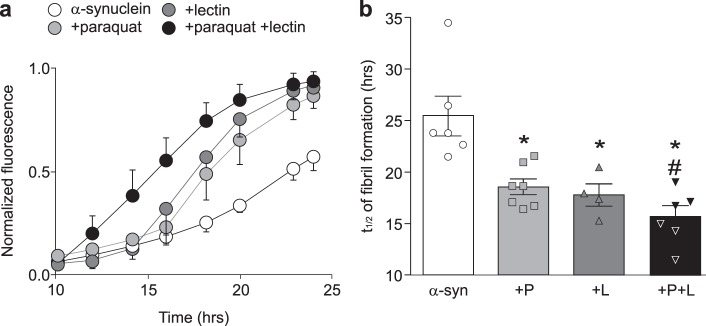
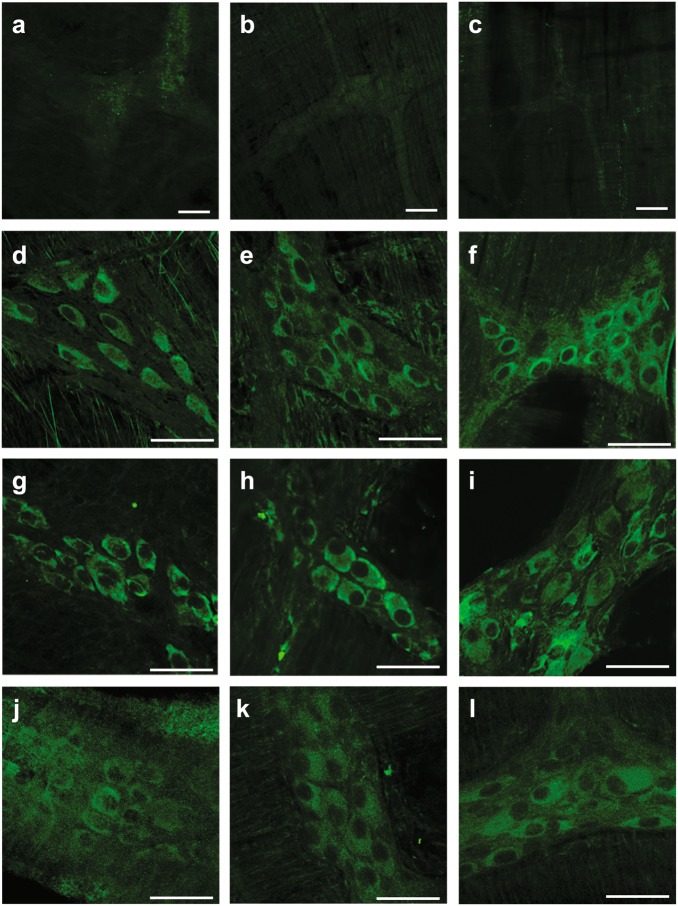
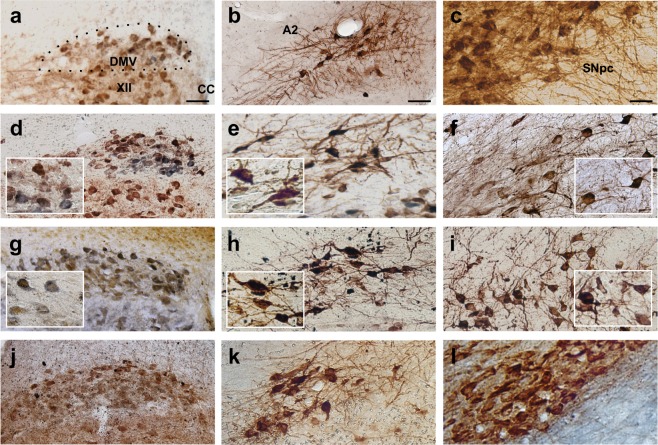
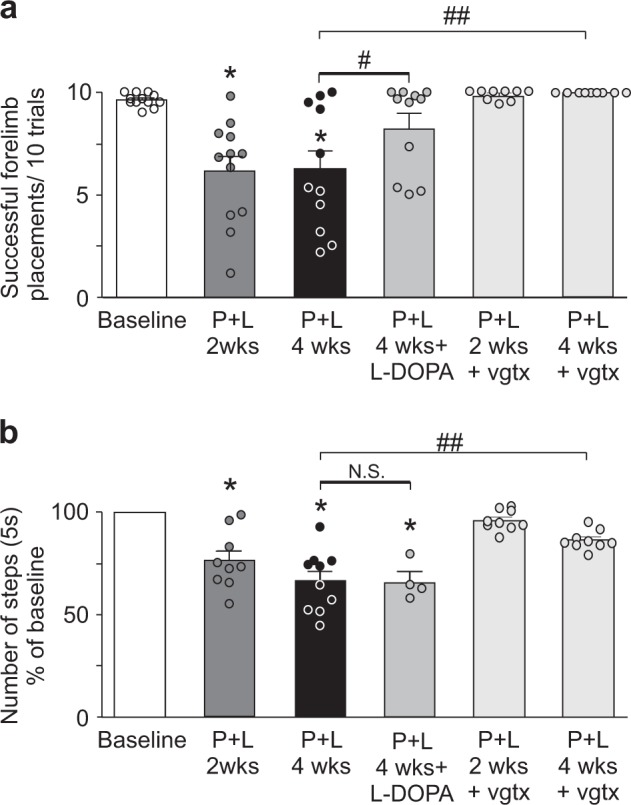
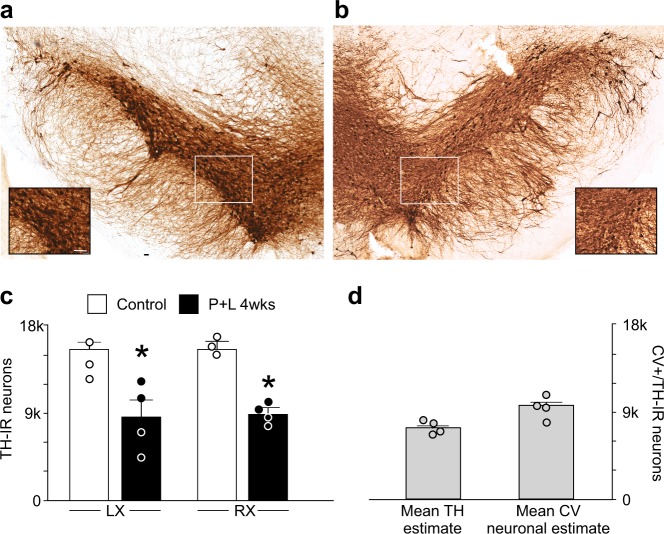
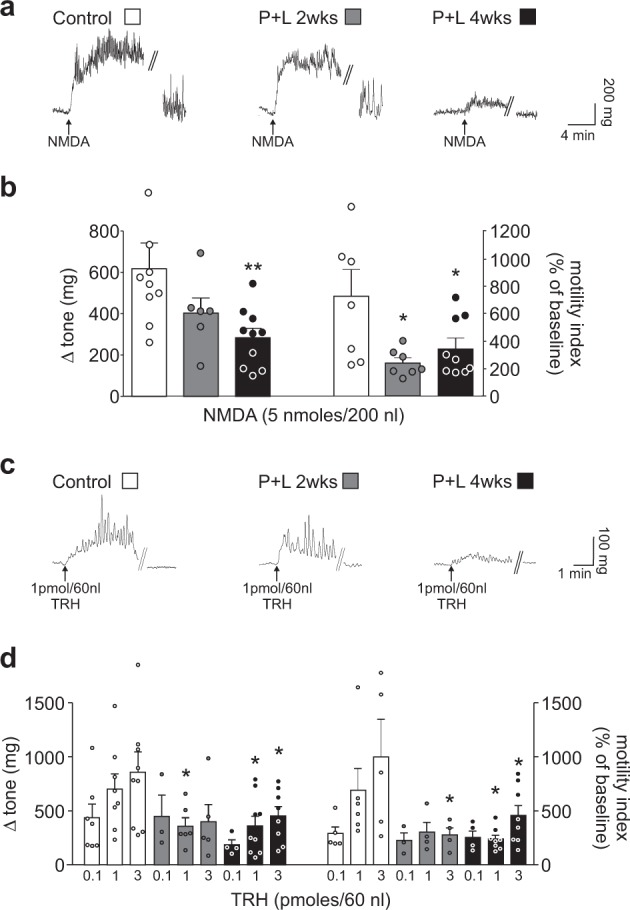
Increasing evidence suggests that environmental neurotoxicants or misfolded α-synuclein generated by such neurotoxicants are transported from the gastrointestinal tract to the central nervous system via the vagus nerve, triggering degeneration of dopaminergic neurons in the substantia nigra pars compacta (SNpc) and causing Parkinson’s disease (PD). We tested the hypothesis that gastric co-administration of subthreshold doses of lectins and paraquat can recreate the pathology and behavioral manifestations of PD in rats. A solution containing paraquat + lectin was administered daily for 7 days via gastric gavage, followed by testing for Parkinsonian behavior and gastric dysmotility. At the end of the experiment, brainstem and midbrain tissues were analyzed for the presence of misfolded α-synuclein and neuronal loss in the SNpc and in the dorsal motor nucleus of the vagus (DMV). Misfolded α-synuclein was found in DMV and SNpc neurons. A significant decrease in tyrosine hydroxylase positive dopaminergic neurons was noted in the SNpc, conversely there was no apparent loss of cholinergic neurons of the DMV. Nigrovagally-evoked gastric motility was impaired in treated rats prior to the onset of parkinsonism, the motor deficits of which were improved by l-dopa treatment. Vagotomy prevented the development of parkinsonian symptoms and constrained the appearance of misfolded α-synuclein to myenteric neurons. These data demonstrate that co-administration of subthreshold doses of paraquat and lectin induces progressive, l-dopa-responsive parkinsonism that is preceded by gastric dysmotility. This novel preclinical model of environmentally triggered PD provides functional support for Braak’s staging hypothesis of idiopathic PD.
Overview
The claims and statistics of this paper haven’t been checked yet.
Free: it reads the open-access text and checks the first 5 claims that cite a source we can check. Create a free account to check every claim.
Integrity signals
Registry
Cites
Statistics
Figures
Verification
Claims the paper makes
The claims and statistics of this paper haven’t been checked yet.
Free: it reads the open-access text and checks the first 5 claims that cite a source we can check. Create a free account to check every claim.
Claims other papers make about this one
Each is checked against this paper’s own text: does it say what the citing paper says it does?
In the citing paper
“After gastric coadministration of paraquat (another pesticide, 1 mg/kg for 7 days) with lectin impaired nigrovagally-evoked gastric motility, reduction in tyrosine hydroxylase positive dopaminergic neurons, and misfolded α-synuclein in the myenteric plexus, dorsal motor nucleus of the vagus, and the substantia nigra pars compacta neurons were found in rats [407].”
From The Role of Microbiota-Gut-Brain Axis in Neuropsychiatric and Neurological Disorders (2021) · cites this paper as [407]
Self-check
Percentages, sums and reported differences re-computed from the paper’s own numbers.
The self-check needs the paper’s full text.
Citations
Cites
The efficiency of systematic sampling in stereology and its prediction*
Gundersen, H. J. G., & Jensen, E. B. (1987) · Journal of Microscopy · doi:10.1111/j.1365-2818.1987.tb02837.x · Cited by 3,520
Goedert, M., Spillantini, M. G., Del Tredici, K., & Braak, H. (2013) · Nature Reviews Neurology · doi:10.1038/nrneurol.2012.242 · Cited by 1,190
Gastrointestinal Dysfunction in Parkinson’s Disease
Fasano, A., Visanji, N. P., Liu, L. W. C., Lang, A. E., & Pfeiffer, R. F. (2015) · The Lancet Neurology · doi:10.1016/s1474-4422(15)00007-1 · Cited by 1,016
Gastrointestinal dysfunction in Parkinson's disease
Pfeiffer, R. F. (2003) · The Lancet Neurology · doi:10.1016/s1474-4422(03)00307-7 · Cited by 925
McCormack, A. L., Thiruchelvam, M., Manning-Bog, A. B., Thiffault, C., Langston, J. W., Cory-Slechta, D. A., & Di Monte, D. A. (2002) · Neurobiology of Disease · doi:10.1006/nbdi.2002.0507 · Cited by 838
West, M. J. (1999) · Trends in Neurosciences · doi:10.1016/s0166-2236(98)01362-9 · Cited by 827
Vagotomy and subsequent risk of Parkinson's disease
Svensson, E., Horváth‐Puhó, E., Thomsen, R. W., Djurhuus, J. C., Pedersen, L., Borghammer, P., & Sørensen, H. T. (2015) · Annals of Neurology · doi:10.1002/ana.24448 · Cited by 806 · cited 12×
“20), paraquat administration (up to 100mg/kg p.o. or i.p., either alone or in combination with the fungicide, maleb), once or twice a week for three–six consecutive weeks is used commonly to induce experimental idiopathic PD.10 In this model, parkinsonian symptoms are observed typically after at least 4 weeks.10,21 Ot…”
ResultInfluentialThe Herbicide Paraquat Causes Up-regulation and Aggregation of α-Synuclein in Mice
Manning-Bog, A. B., McCormack, A. L., Li, J., Uversky, V. N., Fink, A. L., & Di Monte, D. A. (2002) · Journal of Biological Chemistry · doi:10.1074/jbc.c100560200 · Cited by 684
The risk of Parkinson's disease with exposure to pesticides, farming, well water, and rural living
Gorell, J. M., Johnson, C. C., Rybicki, B. A., Peterson, E. L., & Richardson, R. J. (1998) · Neurology · doi:10.1212/wnl.50.5.1346 · Cited by 639
The bowel and beyond: The enteric nervous system in neurological disorders
Rao, M., & Gershon, M. D. (2016) · Nature Reviews Gastroenterology & Hepatology · doi:10.1038/nrgastro.2016.107 · Cited by 629
Olsson, M., Nikkhah, G., Bentlage, C., & Bjorklund, A. (1995) · The Journal of Neuroscience · doi:10.1523/jneurosci.15-05-03863.1995 · Cited by 625
Environmental risk factors and Parkinson's disease: A case‐control study in Taiwan
Liou, H. H., Tsai, M. C., Chen, C. J., Jeng, J. S., Chang, Y. C., Chen, S. Y., & Chen, R. C. (1997) · Neurology · doi:10.1212/wnl.48.6.1583 · Cited by 616
A timeline for Parkinson's disease
Hawkes, C. H., Del Tredici, K., & Braak, H. (2010) · Parkinsonism & Related Disorders · doi:10.1016/j.parkreldis.2009.08.007 · Cited by 594
A Guide to Neurotoxic Animal Models of Parkinson's Disease
Tieu, K. (2011) · Cold Spring Harbor Perspectives in Medicine · doi:10.1101/cshperspect.a009316 · Cited by 483 · cited 1×
“Other toxin models that have stable behavioral outcomes, such as the 6-OHDA induced model in rats, require intracranial administration of the toxin, while systemically administered toxins like rotenone, MPTP, and paraquat do not replicate the route of entry of environmental toxins.(10,49) Moreover, these models induce…”
BackgroundThe Role of Environmental Exposures in Neurodegeneration and Neurodegenerative Diseases
Cannon, J. R., & Greenamyre, J. T. (2011) · Toxicological Sciences · doi:10.1093/toxsci/kfr239 · Cited by 459
Braak, H., & Del Tredici, K. (2017) · Journal of Parkinson’s Disease · doi:10.3233/jpd-179001 · Cited by 372
Forced Limb-Use Effects on the Behavioral and Neurochemical Effects of 6-Hydroxydopamine
Tillerson, J. L., Cohen, A. D., Philhower, J., Miller, G. W., Zigmond, M. J., & Schallert, T. (2001) · The Journal of Neuroscience · doi:10.1523/jneurosci.21-12-04427.2001 · Cited by 357
The two-century journey of Parkinson disease research
Przedborski, S. (2017) · Nature Reviews Neuroscience · doi:10.1038/nrn.2017.25 · Cited by 345
Vagal neurocircuitry and its influence on gastric motility
Travagli, R. A., & Anselmi, L. (2016) · Nature Reviews Gastroenterology & Hepatology · doi:10.1038/nrgastro.2016.76 · Cited by 323
Self-citationParkinson's disease and pesticides: a toxicological perspective
HATCHER, J., PENNELL, K., & MILLER, G. (2008) · Trends in Pharmacological Sciences · doi:10.1016/j.tips.2008.03.007 · Cited by 319
Professional exposure to pesticides and Parkinson disease
Elbaz, A., Clavel, J., Rathouz, P. J., Moisan, F., Galanaud, J., Delemotte, B., Alpérovitch, A., & Tzourio, C. (2009) · Annals of Neurology · doi:10.1002/ana.21717 · Cited by 317
Cicchetti, F., Drouin-Ouellet, J., & Gross, R. E. (2009) · Trends in Pharmacological Sciences · doi:10.1016/j.tips.2009.06.005 · Cited by 311
Carrier-mediated processes in blood–brain barrier penetration and neural uptake of paraquat
Shimizu, K., Ohtaki, K., Matsubara, K., Aoyama, K., Uezono, T., Saito, O., Suno, M., Ogawa, K., Hayase, N., Kimura, K., et al. (2001) · Brain Research · doi:10.1016/s0006-8993(01)02577-x · Cited by 263
Takada, A., Fujioka, K., Tsuiji, M., Morikawa, A., Higashi, N., Ebihara, H., Kobasa, D., Feldmann, H., Irimura, T., & Kawaoka, Y. (2004) · Journal of Virology · doi:10.1128/jvi.78.6.2943-2947.2004 · Cited by 251
Environmental Factors in Parkinson’s Disease
Di Monte, D. A., Lavasani, M., & Manning-Bog, A. B. (2002) · NeuroToxicology · doi:10.1016/s0161-813x(02)00099-2 · Cited by 240
α-Synuclein in gut endocrine cells and its implications for Parkinson’s disease
Chandra, R., Hiniker, A., Kuo, Y.-M., Nussbaum, R. L., & Liddle, R. A. (2017) · JCI Insight · doi:10.1172/jci.insight.92295 · Cited by 236
Thakur, P., Breger, L. S., Lundblad, M., Wan, O. W., Mattsson, B., Luk, K. C., Lee, V. M. Y., Trojanowski, J. Q., & Björklund, A. (2017) · Proceedings of the National Academy of Sciences · doi:10.1073/pnas.1710442114 · Cited by 233
Environmental Exposures and Parkinson’s Disease
Nandipati, S., & Litvan, I. (2016) · International Journal of Environmental Research and Public Health · doi:10.3390/ijerph13090881 · Cited by 218
Developmental Exposure to the Pesticides Paraquat and Maneb and the Parkinson’s Disease Phenotype
Thiruchelvam, M., Richfield, E. K., Goodman, B. M., Baggs, R. B., & Cory-Slechta, D. A. (2002) · NeuroToxicology · doi:10.1016/s0161-813x(02)00092-x · Cited by 214
Neurotoxic in vivo models of Parkinson’s disease
Cannon, J. R., & Greenamyre, J. T. (2010) · Progress in Brain Research · doi:10.1016/s0079-6123(10)84002-6 · Cited by 191
Phillips, R. J., Walter, G. C., Wilder, S. L., Baronowsky, E. A., & Powley, T. L. (2008) · Neuroscience · doi:10.1016/j.neuroscience.2008.02.074 · Cited by 188
Parkinson's Disease Is Not Simply a Prion Disorder
Surmeier, D. J., Obeso, J. A., & Halliday, G. M. (2017) · The Journal of Neuroscience · doi:10.1523/jneurosci.1787-16.2017 · Cited by 188
Epidemiologic study of Parkinson's disease in Hong Kong
Ho, S. C., Woo, J., & Lee, C. M. (1989) · Neurology · doi:10.1212/wnl.39.10.1314 · Cited by 172
Lessons from the rotenone model of Parkinson's disease
Greenamyre, J. T., Cannon, J. R., Drolet, R., & Mastroberardino, P.-G. (2010) · Trends in Pharmacological Sciences · doi:10.1016/j.tips.2009.12.006 · Cited by 166
Nachbar, M. S., & Oppenheim, J. D. (1980) · American Journal of Clinical Nutrition · doi:10.1093/ajcn/33.11.2338 · Cited by 166
Genetic mouse models of Parkinson’s disease
Magen, I., & Chesselet, M. (2010) · Progress in brain research · doi:10.1016/s0079-6123(10)84004-x · Cited by 160
Animal models of the non-motor features of Parkinson's disease
McDowell, K., & Chesselet, M.-F. (2012) · Neurobiology of Disease · doi:10.1016/j.nbd.2011.12.040 · Cited by 156
Wan, X. S. T., Trojanowski, J. Q., & Gonatas, J. O. (1982) · Brain Research · doi:10.1016/0006-8993(82)90244-x · Cited by 155
Zhang, X., Thompson, M., & Xu, Y.-H. (2016) · Laboratory Investigation · doi:10.1038/labinvest.2015.161 · Cited by 127
Parkinson’s disease: experimental models and reality
Jiang, P., & Dickson, D. W. (2018) · Acta Neuropathologica · doi:10.1007/s00401-017-1788-5 · Cited by 111
Dietary Factors in the Etiology of Parkinson’s Disease
Agim, Z. S., & Cannon, J. R. (2015) · BioMed Research International · doi:10.1155/2015/672838 · Cited by 107
Lieu, C. A., Kunselman, A. R., Manyam, B. V., Venkiteswaran, K., & Subramanian, T. (2010) · Parkinsonism & Related Disorders · doi:10.1016/j.parkreldis.2010.04.015 · Cited by 106
Self-citationA Nigro−Vagal Pathway Controls Gastric Motility and Is Affected in a Rat Model of Parkinsonism
Anselmi, L., Toti, L., Bove, C., Hampton, J., & Travagli, R. A. (2017) · Gastroenterology · doi:10.1053/j.gastro.2017.08.069 · Cited by 103
Self-citationParaquat: The Red Herring of Parkinson's Disease Research
Miller, G. W. (2007) · Toxicological Sciences · doi:10.1093/toxsci/kfm223 · Cited by 103
Smeyne, R. J., Breckenridge, C. B., Beck, M., Jiao, Y., Butt, M. T., Wolf, J. C., Zadory, D., Minnema, D. J., Sturgess, N. C., Travis, K. Z., et al. (2016) · PLOS ONE · doi:10.1371/journal.pone.0164094 · Cited by 98
Chaperones in Neurodegeneration
Lindberg, I., Shorter, J., Wiseman, R. L., Chiti, F., Dickey, C. A., & McLean, P. J. (2015) · The Journal of Neuroscience · doi:10.1523/jneurosci.2600-15.2015 · Cited by 93
Gastric motor dysfunctions in Parkinson's disease: Current pre-clinical evidence
Pellegrini, C., Antonioli, L., Colucci, R., Ballabeni, V., Barocelli, E., Bernardini, N., Blandizzi, C., & Fornai, M. (2015) · Parkinsonism & Related Disorders · doi:10.1016/j.parkreldis.2015.10.011 · Cited by 80
Central Nervous System Action of TRH to Influence Gastrointestinal Function and Ulceration
Taché, Y., Stephens, R. L., & Ishikawa, T. (1989) · Annals of the New York Academy of Sciences · doi:10.1111/j.1749-6632.1989.tb46649.x · Cited by 78
Trojanowski, J. Q., Gonatas, J. O., & Gonatas, N. K. (1981) · Journal of Neurocytology · doi:10.1007/bf01262415 · Cited by 54
Genetic factors involved in the pathogenesis of Parkinson's disease
Lee, F. J. S., & Liu, F. (2008) · Brain Research Reviews · doi:10.1016/j.brainresrev.2008.02.001 · Cited by 51
Toti, L., & Travagli, R. A. (2014) · American Journal of Physiology-Gastrointestinal and Liver Physiology · doi:10.1152/ajpgi.00258.2014 · Cited by 50
Self-citationOxytocin‐immunoreactive innervation of identified neurons in the rat dorsal vagal complex
Llewellyn‐Smith, I. J., Kellett, D. O., Jordan, D., Browning, K. N., & Alberto Travagli, R. (2012) · Neurogastroenterology & Motility · doi:10.1111/j.1365-2982.2011.01851.x · Cited by 49
Self-citationJiao, Y., Lu, L., Williams, R. W., & Smeyne, R. J. (2012) · PLoS ONE · doi:10.1371/journal.pone.0029447 · Cited by 45
Soykan, İ., Lin, Z., Bennett, J. P., & McCallum, R. W. (1999) · Digestive Diseases and Sciences · doi:10.1023/a:1026648311646 · Cited by 40
Lectin functionalized nanocarriers for gene delivery
Gajbhiye, V., & Gong, S. (2013) · Biotechnology Advances · doi:10.1016/j.biotechadv.2013.01.005 · Cited by 39
Agrochemicals, α-Synuclein, and Parkinson’s Disease
Silva, B. A., Breydo, L., Fink, A. L., & Uversky, V. N. (2012) · Molecular Neurobiology · doi:10.1007/s12035-012-8333-2 · Cited by 31
Hind, A. J., Migliori, M., Thacker, M., Staikopoulos, V., Nurgali, K., Chiocchetti, R., & Furness, J. B. (2005) · Cell and Tissue Research · doi:10.1007/s00441-005-1129-1 · Cited by 30
Vagally mediated effects of brain stem dopamine on gastric tone and phasic contractions of the rat
Anselmi, L., Toti, L., Bove, C., & Travagli, R. A. (2017) · American Journal of Physiology-Gastrointestinal and Liver Physiology · doi:10.1152/ajpgi.00180.2017 · Cited by 28
Self-citationGastrointestinal dysfunction in Parkinson's disease detected by electrogastroenterography
Kaneoke, Y., Koike, Y., Sakurai, N., Washimi, Y., Hirayama, M., Hoshiyama, M., & Takahashi, A. (1995) · Journal of the Autonomic Nervous System · doi:10.1016/0165-1838(94)00098-5 · Cited by 27
The “White Kidney Bean Incident” in Japan
Ogawa, H. K., & Date, K. (2014) · Methods in molecular biology · doi:10.1007/978-1-4939-1292-6_3 · Cited by 25
Binding of FITC-labelled lectins to the gastrointestinal epithelium of the rat
Baintner, K., Jakab, G., Gyôri, Z., & Kiss, P. (2000) · Pathology & Oncology Research · doi:10.1007/bf03032370 · Cited by 22
Neurotoxicity of paraquat and paraquat-induced mechanisms of developing Parkinson's disease
Cook, A. R., Botham, P. A., Breckenridge, C. B., Minnema, D. J., Sturgess, N. C., & Travis, K. Z. (2016) · Laboratory Investigation · doi:10.1038/labinvest.2016.80 · Cited by 7
Cited by
The Role of Microbiota-Gut-Brain Axis in Neuropsychiatric and Neurological Disorders
Socała, K., Doboszewska, U., Szopa, A., Serefko, A., Włodarczyk, M., Zielińska, A., Poleszak, E., Fichna, J., & Wlaź, P. (2021) · Pharmacological Research · doi:10.1016/j.phrs.2021.105840 · Cited by 857
Neuroinflammation as a common feature of neurodegenerative disorders
Guzman-Martinez, L., Maccioni, R. B., Andrade, V., Navarrete, L. P., Pastor, M. G., & Ramos-Escobar, N. (2019) · Frontiers in Pharmacology · doi:10.3389/fphar.2019.01008 · Cited by 702
The role of gut dysbiosis in Parkinson’s disease: mechanistic insights and therapeutic options
Wang, Q., Luo, Y., Ray Chaudhuri, K., Reynolds, R., Tan, E.-K., & Pettersson, S. (2021) · Brain · doi:10.1093/brain/awab156 · Cited by 281
Parkinson disease and the gut: new insights into pathogenesis and clinical relevance
Travagli, R. A., Browning, K. N., & Camilleri, M. (2020) · Nature Reviews Gastroenterology & Hepatology · doi:10.1038/s41575-020-0339-z · Cited by 181
Self-citationThe Gut and Parkinson's Disease—A Bidirectional Pathway
Santos, S. F., de Oliveira, H. L., Yamada, E. S., Neves, B. C., & Pereira, A. (2019) · Frontiers in Neurology · doi:10.3389/fneur.2019.00574 · Cited by 140
Metadata
- Authors
- Anselmi, L., Bove, C., Coleman, F. H., Le, K., Subramanian, M. P., Venkiteswaran, K., Subramanian, T., & Travagli, R. A.
- Affiliations
- Pennsylvania State University (US)
- Corresponding author
- Travagli, R. A.
- Venue
- npj Parkinson's Disease
- Published
- 2018-09-27
- Volume
- 4
- Issue
- 1
- Pages
- 30-30
- ISSN
- 2373-8057 (ISSN-L)
- PMC
- PMC6160447
- OpenAlex
- W2892234634
- Semantic Scholar
- 216fb48324a15e4caca39eb58a9fdae5883314cf
- Cited by
- 63
- References
- 62
- Citations by year
- 2026: 5 · 2025: 5 · 2024: 10 · 2023: 9 · 2022: 5 · 2021: 10 · 2020: 9 · 2019: 10
- FWCI
- 4.91
- Type
- journal article
- Language
- en
- Open access
- gold
- doi.org
- Licence
- cc-by
- creativecommons.org/licenses/by/4.0 (tdm)
- creativecommons.org/licenses/by/4.0 (vor)
- Locations
- npj Parkinson s Disease (publishedVersion, cc-by)
- Europe PMC (PubMed Central) (publishedVersion, other-oa)
- PubMed Central (publishedVersion, cc-by)
- PubMed (publishedVersion)
- DOAJ (DOAJ: Directory of Open Access Journals) (submittedVersion)
- Funders
- University of Pennsylvania
- Pennsylvania State University
- National Institutes of Health (DIBTH0632)
- National Institute of Diabetes and Digestive and Kidney Diseases (R01DK055530)
- National Institute of Neurological Disorders and Stroke (R01NS042402)
- National Center for Complementary and Integrative Health (R21AT001607)
- Topics
- Health Sciences › Medicine › Clinical Neurology › Parkinson's Disease Mechanisms and Treatments
- Life Sciences › Biochemistry, Genetics and Molecular Biology › Molecular Biology › Nuclear Receptors and Signaling
- Life Sciences › Neuroscience › Neurology › Neuroinflammation and Neurodegeneration Mechanisms
- Keywords
- Parkinson's disease, environmental neurotoxicity, paraquat, lectins, vagus nerve, dorsal motor nucleus of the vagus, substantia nigra pars compacta, dopaminergic neuron loss, gastric dysmotility, L-DOPA, vagotomy, myenteric neurons, rat model
About these checks
Registry, retraction, Cites and statistics results are computed, not judged, with one exception: a printed reference that no index lists is read once by a model before it counts as a citation error. Claims are extracted by a model and kept only when their quote appears verbatim in the text; each cited source is then checked, with a model’s help, for whether it says what the claim relies on. Those verdicts can be wrong — read the claim’s quote and the cited source before relying on one.
Statistics and arithmetic are recomputed, not judged.
Confidence bands are shown only for fields calibrated on our annotated test set. None is calibrated yet, so no band is shown.
What counts as a claim ›How we measure confidence ›How we check this ›
Are you an author, or do you see a problem with this page? Request a review
Data sources
Bibliographic data: Semantic Scholar, OpenAlex, Crossref.
Contains information from the Semantic Scholar Academic Graph Datasets, made available under the ODC Attribution License (ODC-BY 1.0).
Semantic Scholar’s data is described in: Kinney, R., et al. (2023). The Semantic Scholar Open Data Platform. arXiv:2301.10140.
