

Exploring human-genome gut-microbiome interaction in Parkinson’s disease
Open accessThe DOI matches its Crossref record; 57 of the 57 references it cites were found in a registry or an index.
Abstract
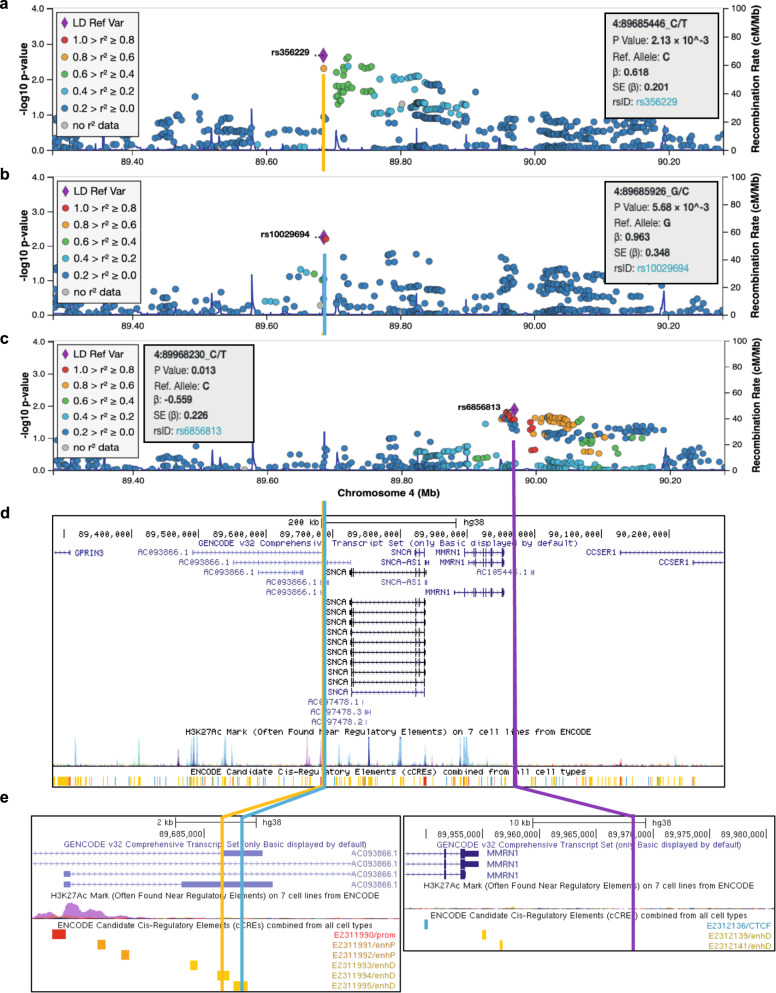
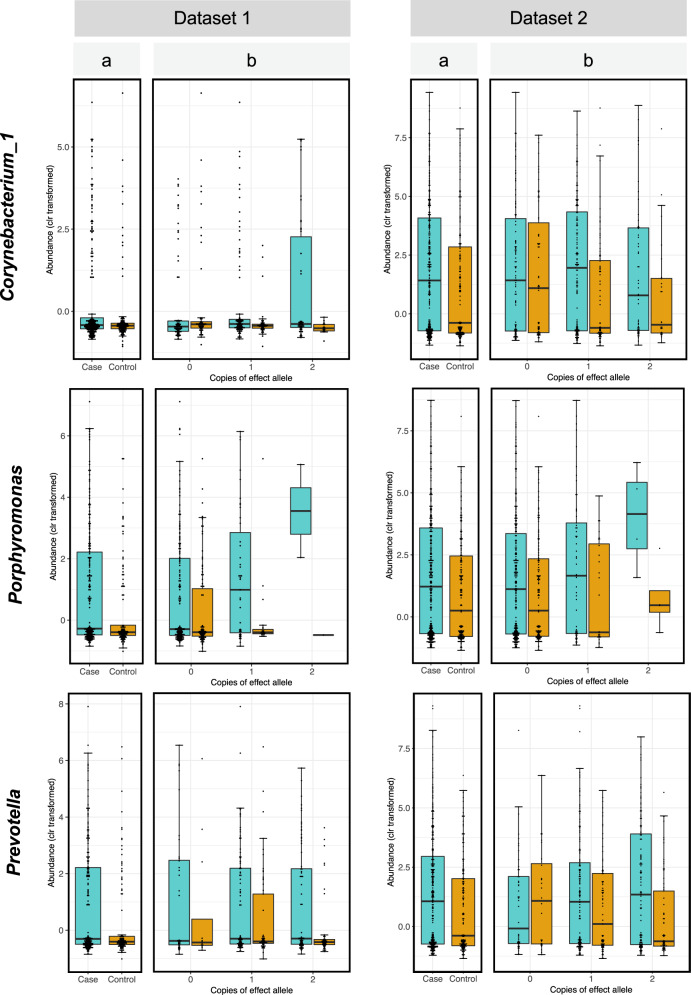
The causes of complex diseases remain an enigma despite decades of epidemiologic research on environmental risks and genome-wide studies that have uncovered tens or hundreds of susceptibility loci for each disease. We hypothesize that the microbiome is the missing link. Genetic studies have shown that overexpression of alpha-synuclein, a key pathological protein in Parkinson's disease (PD), can cause familial PD and variants at alpha-synuclein locus confer risk of idiopathic PD. Recently, dysbiosis of gut microbiome in PD was identified: altered abundances of three microbial clusters were found, one of which was composed of opportunistic pathogens. Using two large datasets, we found evidence that the overabundance of opportunistic pathogens in PD gut is influenced by the host genotype at the alpha-synuclein locus, and that the variants responsible modulate alpha-synuclein expression. Results put forth testable hypotheses on the role of gut microbiome in the pathogenesis of PD, the incomplete penetrance of PD susceptibility genes, and potential triggers of pathology in the gut.
Overview
The claims and statistics of this paper haven’t been checked yet.
Free: it reads the open-access text and checks the first 5 claims that cite a source we can check. Create a free account to check every claim.
Integrity signals
Registry
Cites
Statistics
Figures
Verification
Claims the paper makes
The claims and statistics of this paper haven’t been checked yet.
Free: it reads the open-access text and checks the first 5 claims that cite a source we can check. Create a free account to check every claim.
Claims other papers make about this one
Each is checked against this paper’s own text: does it say what the citing paper says it does?
The source backs part of the claim, not all of it — or backs it for a different population, condition or comparison.
In the citing paper
“meta-analysis and systematic reviews report that PD patients are characterized by an overgrowth of the genera Bifidobacterium, Lactobacillus, Akkermansia and of the opportunistic pathogens Porphyromonas and Corynebacterium, together with a decreased abundance of the SCFAs producers Prevotellaceae, Lachnospiraceae and Faecalibacterium [52,53,54,55,56]”
From The Interplay between Gut Microbiota and Parkinson’s Disease: Implications on Diagnosis and Treatment (2022) · cites this paper as [55]
Experimental — accuracy not yet measured
Self-check
Percentages, sums and reported differences re-computed from the paper’s own numbers.
The self-check needs the paper’s full text.
Citations
Cites
DADA2: High–resolution sample inference from Illumina amplicon data
Callahan, B. J., McMurdie, P. J., Rosen, M. J., Han, A. W., Johnson, A. J. A., & Holmes, S. P. (2016) · Nature Methods · doi:10.1038/nmeth.3869 · Cited by 35,698
Reproducible, interactive, scalable and extensible microbiome data science using QIIME 2
Bolyen, E., Rideout, J. R., Dillon, M. R., Bokulich, N. A., Abnet, C. C., Al-Ghalith, G. A., Alexander, H., Alm, E. J., Arumugam, M., Asnicar, F., et al. (2019) · Nature Biotechnology · doi:10.1038/s41587-019-0209-9 · Cited by 23,742
Second-generation PLINK: rising to the challenge of larger and richer datasets
Chang, C. C., Chow, C. C., Tellier, L. C., Vattikuti, S., Purcell, S. M., & Lee, J. J. (2015) · Gigascience · doi:10.1186/s13742-015-0047-8 · Cited by 12,709
Staging of brain pathology related to sporadic Parkinson’s disease
Braak, H., Tredici, K. D., Rüb, U., de Vos, R. A. I., Jansen Steur, E. N. H., & Braak, E. (2003) · Neurobiology of Aging · doi:10.1016/s0197-4580(02)00065-9 · Cited by 10,777
Landscape of transcription in human cells
Djebali, S., Davis, C. A., Merkel, A., Dobin, A., Lassmann, T., Mortazavi, A., Tanzer, A., Lagarde, J., Lin, W., Schlesinger, F., et al. (2012) · Nature · doi:10.1038/nature11233 · Cited by 5,187
The Genotype-Tissue Expression (GTEx) pilot analysis: Multitissue gene regulation in humans
The GTEx Consortium, Ardlie, K. G., Deluca, D. S., Segrè, A. V., Sullivan, T. J., Young, T. R., Gelfand, E. T., Trowbridge, C. A., Maller, J. B., Tukiainen, T., et al. (2015) · Science · doi:10.1126/science.1262110 · Cited by 5,062
Gene regulation by long non-coding RNAs and its biological functions
Statello, L., Guo, C.-J., Chen, L.-L., & Huarte, M. (2021) · Nature Reviews Molecular Cell Biology · doi:10.1038/s41580-020-00315-9 · Cited by 4,991
Gut microbiota in human metabolic health and disease
Fan, Y., & Pedersen, O. (2021) · Nature Reviews Microbiology · doi:10.1038/s41579-020-0433-9 · Cited by 4,724
Next-generation genotype imputation service and methods
Das, S., Forer, L., Schönherr, S., Sidore, C., Locke, A. E., Kwong, A., Vrieze, S. I., Chew, E. Y., Levy, S., McGue, M., et al. (2016) · Nature Genetics · doi:10.1038/ng.3656 · Cited by 3,808
Dorsey, E. R., Elbaz, A., Nichols, E., Abbasi, N., Abd-Allah, F., Abdelalim, A., Adsuar, J. C., Ansha, M. G., Brayne, C., Choi, J.-Y. J., et al. (2018) · The Lancet Neurology · doi:10.1016/s1474-4422(18)30295-3 · Cited by 2,816
Cited by
The microbiome–gut–brain axis in Parkinson disease — from basic research to the clinic
Tan, A. H., Lim, S. Y., & Lang, A. E. (2022) · Nature Reviews Neurology · doi:10.1038/s41582-022-00681-2 · Cited by 392
Varesi, A., Campagnoli, L. I. M., Fahmideh, F., Pierella, E., Romeo, M., Ricevuti, G., Nicoletta, M., Chirumbolo, S., & Pascale, A. (2022) · International Journal of Molecular Sciences · doi:10.3390/ijms232012289 · Cited by 88
A prebiotic diet modulates microglial states and motor deficits in α-synuclein overexpressing mice
Abdel-Haq, R., Schlachetzki, J. C., Boktor, J. C., Cantu-Jungles, T. M., Thron, T., Zhang, M., Bostick, J. W., Khazaei, T., Chilakala, S., Morais, L. H., et al. (2022) · eLife · doi:10.7554/elife.81453 · Cited by 82
Chen, S., & Lin, C. (2022) · Journal of Biomedical Science · doi:10.1186/s12929-022-00839-6 · Cited by 93
“Intriguingly, SNCA also regulates the microbiota–gut–brain axis and SNCA polymorphisms are associated with alterations in opportunistic pathogens in PD [196].”
BackgroundHuang, Z., Liu, K., Ma, W., Li, D., Mo, T., & Liu, Q. (2022) · Frontiers in Microbiology · doi:10.3389/fmicb.2022.1018594 · Cited by 75
“, 2021), Parkinson’s disease (Wallen et al., 2021) and cancer (Gopalakrishnan et al.”
BackgroundYang, K., Zeng, L., Zeng, J., Deng, Y., Wang, S., Xu, H., He, Q., Yuan, M., Luo, Y., Ge, A., et al. (2023) · Ageing Research Reviews · doi:10.1016/j.arr.2023.102063 · Cited by 50
Digesting recent findings: gut alpha-synuclein, microbiome changes in Parkinson’s disease
Anis, E., Xie, A., Brundin, L., & Brundin, P. (2021) · Trends in Endocrinology and Metabolism · doi:10.1016/j.tem.2021.11.005 · Cited by 41
The Body, the Brain, the Environment, and Parkinson’s Disease
Dorsey, E. R., Miranda, B. R. D., Horsager, J., & Borghammer, P. (2024) · Journal of Parkinson s Disease · doi:10.3233/jpd-240019 · Cited by 61
“For example, elevated levels of opportunistic pathogens found in the PD gut microbiome correlated with SNCA genotype, suggesting that alpha-synuclein could have a bi-directional effect on microbiome dysbiosis [175].”
BackgroundTherapeutic Prospect of New Probiotics in Neurodegenerative Diseases
Bi, M., Liu, C., Wang, Y., & Liu, S. (2023) · Microorganisms · doi:10.3390/microorganisms11061527 · Cited by 38
Gut microbiota and Parkinson’s disease
Wang, L., Cui, Y., Han, B., Du, Y., Salewala, K. S., Wang, S., Zhao, W., Zhang, H., Wang, S., Xu, X., et al. (2024) · Chinese Medical Journal · doi:10.1097/cm9.0000000000003318 · Cited by 39
Ilieva, N. M., Wallen, Z. D., & De Miranda, B. R. (2022) · Toxicology and Applied Pharmacology · doi:10.1016/j.taap.2022.116176 · Cited by 31
Self-citationExploring the multifactorial aspects of Gut Microbiome in Parkinson’s Disease
Pavan, S., Prabhu, A., Gorthi, S. P., Das, B., Mutreja, A., Shetty, V., Ramamurthy, T., & Ballal, M. (2022) · Folia Microbiologica · doi:10.1007/s12223-022-00977-2 · Cited by 25
Park, S. J., Kim, K. W., & Lee, E. J. (2024) · Neural Regeneration Research · doi:10.4103/nrr.nrr-d-24-00994 · Cited by 28
“SNCA polymorphisms have been linked to changes in the levels of opportunistic pathogens in PD patients (Wallen et al., 2021).”
Parkinson's disease: Are gut microbes involved?
Omotosho, A. O., Tajudeen, Y. A., Oladipo, H. J., Yusuff, S. I., Abdulkadir, M., Muili, A. O., Egbewande, O. M., Yusuf, R. O., Faniran, Z. O., Afolabi, A. O., et al. (2023) · Brain and Behavior · doi:10.1002/brb3.3130 · Cited by 24
“In addition to the limitationsmentioned above, studies investigating interactions between specific genetic variants in the synuclein alpha (SNCA) region, and the gut microbiota PD require larger sample sizes to achieve sufficient statistical interpretations (Wallen et al., 2021).”
Modulation of Neuroinflammation by the Gut Microbiota in Prion and Prion-Like Diseases
Trichka, J., & Zou, W. (2021) · Pathogens · doi:10.3390/pathogens10070887 · Cited by 18
Vivacqua, G., Mancinelli, R., Leone, S., Vaccaro, R., Garro, L., Carotti, S., Ceci, L., Onori, P., Pannarale, L., Franchitto, A., et al. (2024) · Neurogastroenterology & Motility · doi:10.1111/nmo.14780 · Cited by 14
“161 In addition, dysbiosis can increase the production of bacterial amyloid fibers (Curli fibers), which can further act as seeding competent amyloid species for the aggregation of neurodegenerative proteins that, in turn, spread from the gut to the brain 162,163 (Figure 5).”
BackgroundDysbiosis and Neurodegeneration in ALS: Unraveling the Gut–Brain Axis
Sharma, V. (2025) · NeuroMolecular Medicine · doi:10.1007/s12017-025-08870-0 · Cited by 17
From pathogenesis to treatment: the emerging role of ferroptosis in Parkinson’s disease
Tu, R., Han, Z., Zhang, H., Jia, X., Sun, T., Liu, H., Li, J., Tang, M., & Wang, S. (2025) · Frontiers in Immunology · doi:10.3389/fimmu.2025.1709561 · Cited by 17
“PD pathophysiology is signi fi cantly in fl uenced by genetic predisposition, with numerous gene loci linked to its development (133).”
Peters, M., Hegelmaier, T., Wegner, F., Höllerhage, M., Ye, L., Niesmann, C., Schneidereit, I. V., Haghikia, A., & Klietz, M. (2025) · Journal of Neurology · doi:10.1007/s00415-025-13545-8 · Cited by 16
“A link between SNCA expression and the presence of opportunistic pathogens needs to be further investigated [18].”
InfluentialGut microbiota and inflammation in Parkinson’s disease: Pathogenetic and therapeutic insights
Guo, T., & Chen, L. (2022) · European Journal of Inflammation · doi:10.1177/1721727x221083763 · Cited by 14
Yang, J., Song, X., Yan, S., Li, Q., & Yang, W. (2026) · Frontiers in Immunology · doi:10.3389/fimmu.2025.1739329 · Cited by 15
“These pathological forms can potentially propagate to the CNS via the vagus nerve, leading to Lewy body formation and PD-related neurodegeneration (86, 87).”
Overview of the Gut Microbiome
Blackmer‐Raynolds, L., & Sampson, T. R. (2023) · Seminars in Neurology · doi:10.1055/s-0043-1771463 · Cited by 12
Jin, X., Wei, J., Min, X., Fan, Y., Yuan, Z., Du, Z., Su, Z., Xun, T., Du, Q., Liang, T., et al. (2025) · iScience · doi:10.1016/j.isci.2025.114185 · Cited by 18
“13,235 Despite clinical evidence suggesting that increased Akkermansia muciniphila in patients with PD may impair intestinal barrier integrity, 13,174,236 such findings highlight the importance of maintaining microbial homeostasis.”
Yi, Z., Mao, Y., He, C., Zhang, Y., Zhou, J., & Feng, X. L. (2024) · BMC Public Health · doi:10.1186/s12889-024-18431-y · Cited by 11
“Wallen et al. [33] proposed hypotheses regarding the role of the gut microbiome in PD pathogenesis, including the incomplete penetrance of PD susceptibility genes and potential triggers of pathology related to gut penetrance [33].”
Small, S. L. (2024) · Ageing Research Reviews · doi:10.1016/j.arr.2024.102632 · Cited by 13
“…studied brain-gut interactions have been in the context of neurodegenerative disease (Tremlett et al., 2017), particularly PD (Pavan et al., 2022; Wallen et al., 2021) and AD (Jiang et al., 2017; Seo and Holtzman, 2020), but also in multiple sclerosis (Bhargava and Mowry, 2014; Mirza et al.,…”
Capsaicin as a Microbiome Modulator: Metabolic Interactions and Implications for Host Health
Guerrero, I. A. C., Martínez-Medina, A. E., Alvarado-Mata, L. Y., Chávez, A. C. F., Muñoz-García, R., Luévanos‐Escareño, M. P., Sosa-Martínez, J. D., Castro-Alonso, M. J., Nimmakayala, P., Reddy, U. K., et al. (2025) · Metabolites · doi:10.3390/metabo15060372 · Cited by 12
“Another brain-affecting disease is Parkinson’s disease (PD), a neurodegenerative disorder impacting both the central and peripheral nervous systems, leading to cognitive and motor decline [73].”
Targeting α-Synuclein in Parkinson's Disease by Induced Pluripotent Stem Cell Models
Spathopoulou, A., Edenhofer, F., & Fellner, L. (2022) · Frontiers in Neurology · doi:10.3389/fneur.2021.786835 · Cited by 12
Basgaran, A., Lymberopoulos, E., Burchill, E., Reis-Dehabadi, M., & Sharma, N. (2025) · Brain Communications · doi:10.1093/braincomms/fcaf059 · Cited by 8
Hisamatsu, D., Masuoka, H., Takeshige‐Amano, H., Kurokawa, R., Ogata, Y., Suda, W., Hatano, T., Asaoka, D., Mabuchi, Y., Naraoka, Y., et al. (2025) · iScience · doi:10.1016/j.isci.2025.112593 · Cited by 6
“The accuracy of AD prediction in patients with proteinopathy was compared be-tween salivary and fecal samples, indicating that the salivary microbiome may be more appropriate than the gut microbiome for distinguishing between AD and PD.”
InfluentialThe many genomes of Parkinson's disease
Payami, H. (2022) · International review of neurobiology · doi:10.1016/bs.irn.2022.07.007 · Cited by 5
Research progress on natural products in regulating the gut microbiota in Parkinson’s disease
Jia, Y., Zhang, Y., Tai, X., Zhao, T., Zhang, H., & Zhou, H. (2025) · Frontiers in Pharmacology · doi:10.3389/fphar.2025.1667694 · Cited by 5
C9orf72 in myeloid cells prevents an inflammatory response to microbial glycogen
McCourt, B. T., Lemr, K., Chakrabarti, S., Woidke, E., Ramaiah, S., Singh, V., Sangwan, N., Brown, J. M., Cominelli, F., Rodriguez‐Palacios, A., et al. (2026) · Cell Reports · doi:10.1016/j.celrep.2025.116906 · Cited by 6
Beisembayeva, M., Shayakhmetova, Y., Сабитовна, М. Ш., Li, I., Yakupov, E. Z., Kaiyrzhanov, R. B., & Grigolashvili, M. A. (2025) · International Journal of Clinical Practice · doi:10.1155/ijcp/5511146 · Cited by 2
“…from the analysis due to the focus on the efect of antiparkinsonian medications on the microbiota in patients with PD. Te study by Whalen et al. [16] was also excluded as it did not meet the criteria for inclusion, as it sought to investigate the association between dysbiosis in the intestinal…”
Yang, J. C., Situ, J., Troutman, R., Zhu, R., Black, M., Buri, H., Gutta, A., Tian, F., Kang, A., Aja, E., et al. (2026) · Human Molecular Genetics · doi:10.1093/hmg/ddag024 · Cited by 2
“…et al. identified fifteen differentially abundant genera between PD patients and their healthy controls, a follow-up study by Wallen et al. incorporating genomic data with microbiome data found that some microbes only distinguished PD from HC in patients carrying certain geneticriskvariants[13,14].”
Molecular Changes and Gut-Related Biomarkers in Parkinson’s Disease for Early Detection
Hashish, S. A., & Abdelhameed, A. M. (2024) · Springer eBooks · doi:10.1007/978-981-19-3949-5_7-1
Molecular Changes and Gut-Related Biomarkers in Parkinson’s Disease for Early Detection
Hashish, S. A., & Abdelhameed, A. M. (2024) · Springer eBooks · doi:10.1007/978-981-99-7557-0_7
Mind Matters: Possible Links Between Gut–Microbiota with Psychiatric and Neurodegerative Disorders
Kammar, M. R., Muktamath, V. U., & Shubha, S. (2024) · British journal of Psychology Research · doi:10.37745/bjpr.2013/vol12n34354
易湛苗, Mao, Y., He, C., Zhang, Y., Zhou, J., & Feng, X. L. (2024) · Figshare · doi:10.6084/m9.figshare.25727851
Sharma, S. A., & Patri, M. (2026) · Metabolic Brain Disease · doi:10.1007/s11011-026-01924-7
“Microbiome-gene interactions have been underscored by variations in SNCA that have been associated with an increase in oppor - tunistic pathogens in PD patients (Wallen et al. 2021).”
Pakkhesal, S., Leilabadi, S. P., Hamzehzadeh, S., Zare, F., Gholipour-khalili, E., Malekinejad, F., Fakhkhari, S., Talebi, M., & Naseri, A. (2026) · Parkinson s Disease · doi:10.1155/padi/6914112
Pereira, M. A. V., Sakamoto, T., & Moioli, R. C. (2026) · BioMedInformatics · doi:10.3390/biomedinformatics6050091
Metadata
- Authors
- Wallen, Z. D., Stone, W. J., Factor, S. A., Molho, E., Zabetian, C. P., Standaert, D. G., & Payami, H.
- Affiliations
- University of Alabama at Birmingham (US)
- Emory University (US)
- Albany Medical College (US)
- University of Washington (US)
- Corresponding author
- Payami, Haydeh
- ORCID
- Venue
- npj Parkinson s Disease
- Published
- 2021-08-18
- Volume
- 7
- Issue
- 1
- Pages
- 74-74
- ISSN
- 2373-8057 (ISSN-L)
- PMC
- PMC8373869
- OpenAlex
- W3194972182
- Cited by
- 41
- References
- 57
- Citations by year
- 2026: 6 · 2025: 9 · 2024: 10 · 2023: 4 · 2022: 10 · 2021: 2
- FWCI
- 3.10
- Type
- journal article
- Language
- en
- Open access
- gold
- doi.org
- Licence
- cc-by
- creativecommons.org/licenses/by/4.0 (tdm)
- creativecommons.org/licenses/by/4.0 (vor)
- Locations
- npj Parkinson s Disease (publishedVersion, cc-by)
- PubMed Central (publishedVersion, cc-by)
- PubMed (publishedVersion)
- DOAJ (DOAJ: Directory of Open Access Journals) (submittedVersion, cc-by-sa)
- Funders
- United States Department of Defense | United States Army | Army Medical Command | Medical Research and Materiel Command (W81XWH1810508)
- U.S. Department of Health & Human Services | NIH | National Institute of Neurological Disorders and Stroke (R01 NS036960)
- U.S. Department of Health & Human Services | National Institutes of Health (T32 NS095775, T32 GM008361, P50 NS062684, P50 NS108675)
- Topics
- Health Sciences › Medicine › Clinical Neurology › Parkinson's Disease Mechanisms and Treatments
- Life Sciences › Biochemistry, Genetics and Molecular Biology › Molecular Biology › Gut microbiota and health
- Life Sciences › Biochemistry, Genetics and Molecular Biology › Genetics › Genetic Associations and Epidemiology
- Keywords
- Parkinson's disease, gut microbiota, alpha-synuclein, opportunistic pathogens, dysbiosis, host-microbe interactions, susceptibility genes, incomplete penetrance, pathogenesis
About these checks
Registry, retraction, Cites and statistics results are computed, not judged, with one exception: a printed reference that no index lists is read once by a model before it counts as a citation error. Claims are extracted by a model and kept only when their quote appears verbatim in the text; each cited source is then checked, with a model’s help, for whether it says what the claim relies on. Those verdicts can be wrong — read the claim’s quote and the cited source before relying on one.
Statistics and arithmetic are recomputed, not judged.
Confidence bands are shown only for fields calibrated on our annotated test set. None is calibrated yet, so no band is shown.
What counts as a claim ›How we measure confidence ›How we check this ›
Are you an author, or do you see a problem with this page? Request a review
Data sources
Bibliographic data: Semantic Scholar, OpenAlex, Crossref.
Contains information from the Semantic Scholar Academic Graph Datasets, made available under the ODC Attribution License (ODC-BY 1.0).
Semantic Scholar’s data is described in: Kinney, R., et al. (2023). The Semantic Scholar Open Data Platform. arXiv:2301.10140.
