

Exploring human-genome gut-microbiome interaction in Parkinson’s disease
Open accessThe DOI matches its Crossref record; 57 of the 57 references it cites were found in a registry or an index.
Abstract
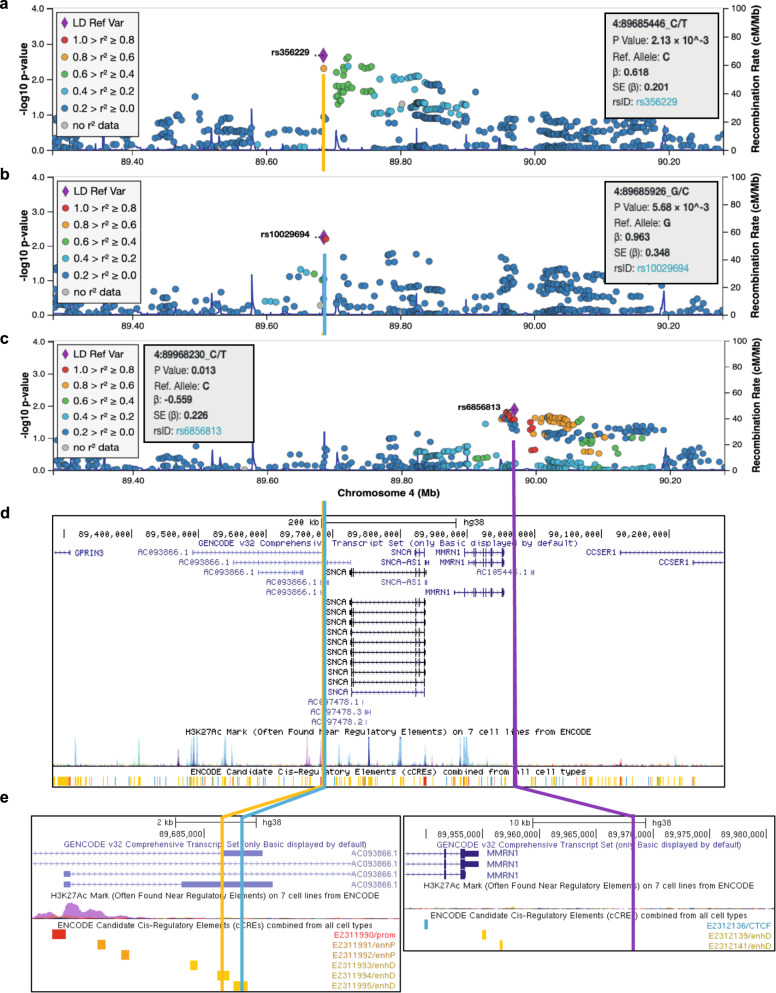
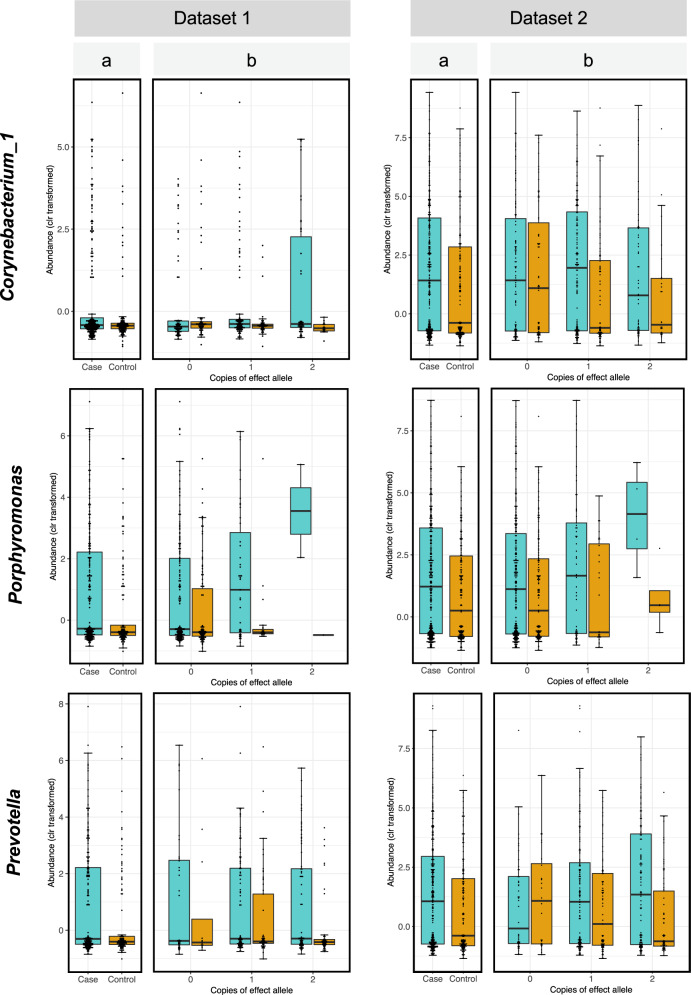
The causes of complex diseases remain an enigma despite decades of epidemiologic research on environmental risks and genome-wide studies that have uncovered tens or hundreds of susceptibility loci for each disease. We hypothesize that the microbiome is the missing link. Genetic studies have shown that overexpression of alpha-synuclein, a key pathological protein in Parkinson's disease (PD), can cause familial PD and variants at alpha-synuclein locus confer risk of idiopathic PD. Recently, dysbiosis of gut microbiome in PD was identified: altered abundances of three microbial clusters were found, one of which was composed of opportunistic pathogens. Using two large datasets, we found evidence that the overabundance of opportunistic pathogens in PD gut is influenced by the host genotype at the alpha-synuclein locus, and that the variants responsible modulate alpha-synuclein expression. Results put forth testable hypotheses on the role of gut microbiome in the pathogenesis of PD, the incomplete penetrance of PD susceptibility genes, and potential triggers of pathology in the gut.
Overview
The claims and statistics of this paper haven’t been checked yet.
Free: it reads the open-access text and checks the first 5 claims that cite a source we can check. Create a free account to check every claim.
Integrity signals
Registry
Cites
Statistics
Figures
Verification
Claims the paper makes
The claims and statistics of this paper haven’t been checked yet.
Free: it reads the open-access text and checks the first 5 claims that cite a source we can check. Create a free account to check every claim.
Claims other papers make about this one
Each is checked against this paper’s own text: does it say what the citing paper says it does?
The source backs part of the claim, not all of it — or backs it for a different population, condition or comparison.
In the citing paper
“meta-analysis and systematic reviews report that PD patients are characterized by an overgrowth of the genera Bifidobacterium, Lactobacillus, Akkermansia and of the opportunistic pathogens Porphyromonas and Corynebacterium, together with a decreased abundance of the SCFAs producers Prevotellaceae, Lachnospiraceae and Faecalibacterium [52,53,54,55,56]”
From The Interplay between Gut Microbiota and Parkinson’s Disease: Implications on Diagnosis and Treatment (2022) · cites this paper as [55]
Experimental — accuracy not yet measured
Self-check
Percentages, sums and reported differences re-computed from the paper’s own numbers.
The self-check needs the paper’s full text.
Citations
Cites
DADA2: High–resolution sample inference from Illumina amplicon data
Callahan, B. J., McMurdie, P. J., Rosen, M. J., Han, A. W., Johnson, A. J. A., & Holmes, S. P. (2016) · Nature Methods · doi:10.1038/nmeth.3869 · Cited by 35,698
Reproducible, interactive, scalable and extensible microbiome data science using QIIME 2
Bolyen, E., Rideout, J. R., Dillon, M. R., Bokulich, N. A., Abnet, C. C., Al-Ghalith, G. A., Alexander, H., Alm, E. J., Arumugam, M., Asnicar, F., et al. (2019) · Nature Biotechnology · doi:10.1038/s41587-019-0209-9 · Cited by 23,742
Second-generation PLINK: rising to the challenge of larger and richer datasets
Chang, C. C., Chow, C. C., Tellier, L. C., Vattikuti, S., Purcell, S. M., & Lee, J. J. (2015) · Gigascience · doi:10.1186/s13742-015-0047-8 · Cited by 12,709
Staging of brain pathology related to sporadic Parkinson’s disease
Braak, H., Tredici, K. D., Rüb, U., de Vos, R. A. I., Jansen Steur, E. N. H., & Braak, E. (2003) · Neurobiology of Aging · doi:10.1016/s0197-4580(02)00065-9 · Cited by 10,777
Landscape of transcription in human cells
Djebali, S., Davis, C. A., Merkel, A., Dobin, A., Lassmann, T., Mortazavi, A., Tanzer, A., Lagarde, J., Lin, W., Schlesinger, F., et al. (2012) · Nature · doi:10.1038/nature11233 · Cited by 5,187
The Genotype-Tissue Expression (GTEx) pilot analysis: Multitissue gene regulation in humans
The GTEx Consortium, Ardlie, K. G., Deluca, D. S., Segrè, A. V., Sullivan, T. J., Young, T. R., Gelfand, E. T., Trowbridge, C. A., Maller, J. B., Tukiainen, T., et al. (2015) · Science · doi:10.1126/science.1262110 · Cited by 5,062
Gene regulation by long non-coding RNAs and its biological functions
Statello, L., Guo, C.-J., Chen, L.-L., & Huarte, M. (2021) · Nature Reviews Molecular Cell Biology · doi:10.1038/s41580-020-00315-9 · Cited by 4,991
Gut microbiota in human metabolic health and disease
Fan, Y., & Pedersen, O. (2021) · Nature Reviews Microbiology · doi:10.1038/s41579-020-0433-9 · Cited by 4,724
Next-generation genotype imputation service and methods
Das, S., Forer, L., Schönherr, S., Sidore, C., Locke, A. E., Kwong, A., Vrieze, S. I., Chew, E. Y., Levy, S., McGue, M., et al. (2016) · Nature Genetics · doi:10.1038/ng.3656 · Cited by 3,808
Dorsey, E. R., Elbaz, A., Nichols, E., Abbasi, N., Abd-Allah, F., Abdelalim, A., Adsuar, J. C., Ansha, M. G., Brayne, C., Choi, J.-Y. J., et al. (2018) · The Lancet Neurology · doi:10.1016/s1474-4422(18)30295-3 · Cited by 2,816
LocusZoom: regional visualization of genome-wide association scan results
Pruim, R. J., Welch, R. P., Sanna, S., Teslovich, T. M., Chines, P. S., Gliedt, T. P., Boehnke, M., Abecasis, G. R., & Willer, C. J. (2010) · Bioinformatics · doi:10.1093/bioinformatics/btq419 · Cited by 2,707
Nalls, M. A., Blauwendraat, C., Vallerga, C. L., Heilbron, K., Bandres-Ciga, S., Chang, D., Tan, M., Kia, D. A., Noyce, A. J., Xue, A., et al. (2019) · The Lancet Neurology · doi:10.1016/s1474-4422(19)30320-5 · Cited by 2,454
Sequencing of 53,831 diverse genomes from the NHLBI TOPMed Program
Taliun, D., Harris, D. N., Kessler, M. D., Carlson, J., Szpiech, Z. A., Torres, R., Taliun, S. A. G., Corvelo, A., Gogarten, S. M., Kang, H. M., et al. (2021) · Nature · doi:10.1038/s41586-021-03205-y · Cited by 2,213
The gut microbiota–brain axis in behaviour and brain disorders
Morais, L. H., Schreiber, H. L., & Mazmanian, S. K. (2021) · Nature Reviews Microbiology · doi:10.1038/s41579-020-00460-0 · Cited by 2,149
Systemic LPS causes chronic neuroinflammation and progressive neurodegeneration
Qin, L., Wu, X., Block, M. L., Liu, Y., Breese, G. R., Hong, J., Knapp, D. J., & Crews, F. T. (2007) · Glia · doi:10.1002/glia.20467 · Cited by 2,144
Machiela, M. J., & Chanock, S. J. (2015) · Bioinformatics · doi:10.1093/bioinformatics/btv402 · Cited by 2,069
α-synuclein locus duplication as a cause of familial Parkinson's disease
Chartier-Harlin, M.-C., Kachergus, J., Roumier, C., Mouroux, V., Douay, X., Lincoln, S., Levecque, C., Larvor, L., Andrieux, J., Hulihan, M., et al. (2004) · The Lancet · doi:10.1016/s0140-6736(04)17103-1 · Cited by 2,029
International Parkinson's Disease Genomics Consortium (IPDGC), Nalls, M. A., Parkinson's Study Group (PSG) Parkinson's Research: The Organized GENetics Initiative (PROGENI), 23andMe, GenePD, NeuroGenetics Research Consortium (NGRC), Hussman Institute of Human Genomics (HIHG), Investigator, T. A. J. D., (CHARGE), C. F. H. A. A. R. I. G. E., North American Brain Expression Consortium (NABEC), et al. (2014) · Nature Genetics · doi:10.1038/ng.3043 · Cited by 1,895
Self-citationBraak, H., R�b, U., Gai, W. P., & Del Tredici, K. (2003) · Journal of Neural Transmission · doi:10.1007/s00702-002-0808-2 · Cited by 1,683
Kim, S., Kwon, S.-H., Kam, T.-I., Panicker, N., Karuppagounder, S. S., Lee, S., Lee, J. H., Kim, W. R., Kook, M., Foss, C. A., et al. (2019) · Neuron · doi:10.1016/j.neuron.2019.05.035 · Cited by 1,397
A meta-analysis of genome-wide association studies identifies 17 new Parkinson's disease risk loci
Chang, D., Nalls, M. A., Hallgrímsdóttir, I. B., Hunkapiller, J., van der Brug, M., Cai, F., International Parkinson's Disease Genomics Consortium, 23andMe Research Team, Kerchner, G. A., Ayalon, G., et al. (2017) · Nature Genetics · doi:10.1038/ng.3955 · Cited by 1,112 · cited 2×
“Taxon SNP x case=control ð Þ þ SNPþ case=controlþ sexþ age 1⁄2 (2)”
Hill‐Burns, E. M., Debelius, J. W., Morton, J. T., Wissemann, W. T., Lewis, M. R., Wallen, Z. D., Peddada, S. D., Factor, S. A., Molho, E., Zabetian, C. P., et al. (2017) · Movement Disorders · doi:10.1002/mds.26942 · Cited by 874
T cells from patients with Parkinson’s disease recognize α-synuclein peptides
Sulzer, D., Alcalay, R. N., Garretti, F., Cote, L., Kanter, E., Agin-Liebes, J., Liong, C., McMurtrey, C., Hildebrand, W. H., Mao, X., et al. (2017) · Nature · doi:10.1038/nature22815 · Cited by 866
The Human Gut Microbiome: From Association to Modulation
Schmidt, T. S. B., Raes, J., & Bork, P. (2018) · Cell · doi:10.1016/j.cell.2018.02.044 · Cited by 845
Vagotomy and subsequent risk of Parkinson's disease
Svensson, E., Horváth‐Puhó, E., Thomsen, R. W., Djurhuus, J. C., Pedersen, L., Borghammer, P., & Sørensen, H. T. (2015) · Annals of Neurology · doi:10.1002/ana.24448 · Cited by 806
Hamza, T. H., Zabetian, C. P., Tenesa, A., Laederach, A., Montimurro, J., Yearout, D., Kay, D. M., Doheny, K. F., Paschall, J., Pugh, E., et al. (2010) · Nature Genetics · doi:10.1038/ng.642 · Cited by 784
Brain-first versus body-first Parkinson’s disease: a multimodal imaging case-control study
Horsager, J., Andersen, K. B., Knudsen, K., Skjærbæk, C., Fedorova, T. D., Okkels, N., Schaeffer, E., Bonkat, S. K., Geday, J., Otto, M., et al. (2020) · Brain · doi:10.1093/brain/awaa238 · Cited by 782
Han, B., & Eskin, E. (2011) · The American Journal of Human Genetics · doi:10.1016/j.ajhg.2011.04.014 · Cited by 680
Intestinal infection triggers Parkinson's disease-like symptoms in Pink1(-/-) mice
Matheoud, D., Cannon, T., Voisin, A., Penttinen, A.-M., Ramet, L., Fahmy, A. M., Ducrot, C., Laplante, A., Bourque, M.-J., Zhu, L., et al. (2019) · Nature · doi:10.1038/s41586-019-1405-y · Cited by 496
Alpha-synuclein in colonic submucosa in early untreated Parkinson’s disease
Shannon, K. M., Keshavarzian, A., Mutlu, E., Dodiya, H. B., Daian, D., Jaglin, J. A., & Kordower, J. H. (2012) · Movement Disorders · doi:10.1002/mds.23838 · Cited by 469
Vagotomy and Parkinson disease: A Swedish register–based matched-cohort study
Liu, B., Fang, F., Pedersen, N. L., Tillander, A., Ludvigsson, J. F., Ekbom, A., Svenningsson, P., Chen, H., & Wirdefeldt, K. (2017) · Neurology · doi:10.1212/wnl.0000000000003961 · Cited by 447
A comparison of clinical and pathological features of young‐ and old‐onset Parkinson's disease
Gibb, W. R. G., & Lees, A. J. (1988) · Neurology · doi:10.1212/wnl.38.9.1402 · Cited by 369
Knudsen, K., Fedorova, T. D., Hansen, A. K., Sommerauer, M., Otto, M., Svendsen, K. B., Nahimi, A., Stokholm, M. G., Pavese, N., Beier, C. P., et al. (2018) · The Lancet Neurology · doi:10.1016/s1474-4422(18)30162-5 · Cited by 309
Neighboring Gene Regulation by Antisense Long Non-Coding RNAs
Villegas, V., & Zaphiropoulos, P. (2015) · International Journal of Molecular Sciences · doi:10.3390/ijms16023251 · Cited by 308
Kelly, L. P., Carvey, P. M., Keshavarzian, A., Shannon, K. M., Shaikh, M., Bakay, R. A. E., & Kordower, J. H. (2014) · Movement Disorders · doi:10.1002/mds.25736 · Cited by 308
Changes of colonic bacterial composition in Parkinson's disease and other neurodegenerative diseases
Gerhardt, S., & Mohajeri, M. H. (2018) · Nutrients · doi:10.3390/nu10060708 · Cited by 298
A Role for Neuronal Alpha-Synuclein in Gastrointestinal Immunity
Stolzenberg, E., Berry, D., Yang, D., Lee, E. Y., Kroemer, A., Kaufman, S., Wong, G. C. L., Oppenheim, J. J., Sen, S., Fishbein, T., et al. (2017) · Journal of Innate Immunity · doi:10.1159/000477990 · Cited by 284
Wallen, Z. D., Appah, M., Dean, M. N., Sesler, C. L., Factor, S. A., Molho, E., Zabetian, C. P., Standaert, D. G., & Payami, H. (2020) · npj Parkinson s Disease · doi:10.1038/s41531-020-0112-6 · Cited by 252
Self-citationHamza, T. H., Chen, H., Hill-Burns, E. M., Rhodes, S. L., Montimurro, J., Kay, D. M., Tenesa, A., Kusel, V. I., Sheehan, P., Eaaswarkhanth, M., et al. (2011) · PLoS Genetics · doi:10.1371/journal.pgen.1002237 · Cited by 218
Self-citationGut–brain axis and the spread of α‐synuclein pathology: Vagal highway or dead end?
Breen, D. P., Halliday, G. M., & Lang, A. E. (2019) · Movement Disorders · doi:10.1002/mds.27556 · Cited by 193
Cannon, J. R., & Greenamyre, J. T. (2013) · Neurobiology of Disease · doi:10.1016/j.nbd.2012.06.025 · Cited by 189
Parkinson disease and the gut: new insights into pathogenesis and clinical relevance
Travagli, R. A., Browning, K. N., & Camilleri, M. (2020) · Nature Reviews Gastroenterology & Hepatology · doi:10.1038/s41575-020-0339-z · Cited by 181
SNCA Variant Associated With Parkinson Disease and Plasma α-Synuclein Level
Mata, I. F., Shi, M., Agarwal, P., Chung, K. A., Edwards, K. L., Factor, S. A., Galasko, D. R., Ginghina, C., Griffith, A., Higgins, D. S., et al. (2010) · Archives of Neurology · doi:10.1001/archneurol.2010.279 · Cited by 177
Boertien, J. M., Pereira, P. A. B., Aho, V. T. E., & Scheperjans, F. (2019) · Journal of Parkinson’s Disease · doi:10.3233/jpd-191711 · Cited by 170
Genotype harmonizer: automatic strand alignment and format conversion for genotype data integration
Deelen, P., Bonder, M., van der Velde, K., Westra, H.-J., Winder, E., Hendriksen, D., Franke, L., & Swertz, M. A. (2014) · BMC Research Notes · doi:10.1186/1756-0500-7-901 · Cited by 161
Starke Belege: Parkinson könnte im Verdauungstrakt beginnen
(2017) · Fortschritte der Neurologie · Psychiatrie · doi:10.1055/s-0043-113319 · Cited by 161
Innate and adaptive immune responses in Parkinson's disease
(2020) · Progress in Brain Research · doi:10.1016/bs.pbr.2019.10.006 · Cited by 116
Chen, Y., Lian, Y., Ma, Y., Wu, C., Zheng, Y., & Xie, N. (2017) · NeuroToxicology · doi:10.1016/j.neuro.2017.12.001 · Cited by 107
Elkouris, M., Kouroupi, G., Vourvoukelis, A., Papagiannakis, N., Kaltezioti, V., Matsas, R., Stefanis, L., Xilouri, M., & Politis, P. K. (2019) · Frontiers in Cellular Neuroscience · doi:10.3389/fncel.2019.00058 · Cited by 98
Advances in environmental epidemiology
Tanner, C. M. (2010) · Movement Disorders · doi:10.1002/mds.22721 · Cited by 91
Long noncoding RNAs in neurodevelopment and Parkinson’s disease
Lyu, Y., Bai, L., & Qin, C. (2019) · Animal Models and Experimental Medicine · doi:10.1002/ame2.12093 · Cited by 73
A genetic basis for the variable effect of smoking/nicotine on Parkinson’s disease
Hill-Burns, E. M., Singh, N., Ganguly, P., Hamza, T. H., Montimurro, J., Kay, D. M., Yearout, D., Sheehan, P., Frodey, K., Mclear, J. A., et al. (2013) · The Pharmacogenomics Journal · doi:10.1038/tpj.2012.38 · Cited by 69
Luna, E., & Luk, K. C. (2015) · FEBS Letters · doi:10.1016/j.febslet.2015.10.023 · Cited by 67
Tomlinson, J. J., Shutinoski, B., Dong, L., Meng, F., Elleithy, D., Lengacher, N. A., Nguyen, A. P., Cron, G. O., Jiang, Q., Roberson, E. D., et al. (2017) · Journal of Neural Transmission · doi:10.1007/s00702-017-1726-7 · Cited by 63
Biernacka, J. M., Chung, S. J., Armasu, S. M., Anderson, K. S., Lill, C. M., Bertram, L., Ahlskog, J. E., Brighina, L., Frigerio, R., & Maraganore, D. M. (2016) · Parkinsonism & Related Disorders · doi:10.1016/j.parkreldis.2016.08.002 · Cited by 40
YY1 binds to α-synuclein 3′-flanking region SNP and stimulates antisense noncoding RNA expression
Mizuta, I., Takafuji, K., Ando, Y., Satake, W., Kanagawa, M., Kobayashi, K., Nagamori, S., Shinohara, T., Ito, C., Yamamoto, M., et al. (2013) · Journal of Human Genetics · doi:10.1038/jhg.2013.90 · Cited by 28
SNCA variants and alpha-synuclein level in CD45+ blood cells in Parkinson’s disease
Emelyanov, A., Kulabukhova, D. G., Garaeva, L. A., Senkevich, K. A., Verbitskaya, E. V., Nikolaev, M. A., Andoskin, P. A., Kopytova, A. E., Milyukhina, I. V., Yakimovskii, А. F., et al. (2018) · Journal of the Neurological Sciences · doi:10.1016/j.jns.2018.10.002 · Cited by 24
Cited by
The microbiome–gut–brain axis in Parkinson disease — from basic research to the clinic
Tan, A. H., Lim, S. Y., & Lang, A. E. (2022) · Nature Reviews Neurology · doi:10.1038/s41582-022-00681-2 · Cited by 392
Varesi, A., Campagnoli, L. I. M., Fahmideh, F., Pierella, E., Romeo, M., Ricevuti, G., Nicoletta, M., Chirumbolo, S., & Pascale, A. (2022) · International Journal of Molecular Sciences · doi:10.3390/ijms232012289 · Cited by 88
A prebiotic diet modulates microglial states and motor deficits in α-synuclein overexpressing mice
Abdel-Haq, R., Schlachetzki, J. C., Boktor, J. C., Cantu-Jungles, T. M., Thron, T., Zhang, M., Bostick, J. W., Khazaei, T., Chilakala, S., Morais, L. H., et al. (2022) · eLife · doi:10.7554/elife.81453 · Cited by 82
Chen, S., & Lin, C. (2022) · Journal of Biomedical Science · doi:10.1186/s12929-022-00839-6 · Cited by 93
“Intriguingly, SNCA also regulates the microbiota–gut–brain axis and SNCA polymorphisms are associated with alterations in opportunistic pathogens in PD [196].”
BackgroundHuang, Z., Liu, K., Ma, W., Li, D., Mo, T., & Liu, Q. (2022) · Frontiers in Microbiology · doi:10.3389/fmicb.2022.1018594 · Cited by 75
“, 2021), Parkinson’s disease (Wallen et al., 2021) and cancer (Gopalakrishnan et al.”
Background
Metadata
- Authors
- Wallen, Z. D., Stone, W. J., Factor, S. A., Molho, E., Zabetian, C. P., Standaert, D. G., & Payami, H.
- Affiliations
- University of Alabama at Birmingham (US)
- Emory University (US)
- Albany Medical College (US)
- University of Washington (US)
- Corresponding author
- Payami, Haydeh
- ORCID
- Venue
- npj Parkinson s Disease
- Published
- 2021-08-18
- Volume
- 7
- Issue
- 1
- Pages
- 74-74
- ISSN
- 2373-8057 (ISSN-L)
- PMC
- PMC8373869
- OpenAlex
- W3194972182
- Cited by
- 41
- References
- 57
- Citations by year
- 2026: 6 · 2025: 9 · 2024: 10 · 2023: 4 · 2022: 10 · 2021: 2
- FWCI
- 3.10
- Type
- journal article
- Language
- en
- Open access
- gold
- doi.org
- Licence
- cc-by
- creativecommons.org/licenses/by/4.0 (tdm)
- creativecommons.org/licenses/by/4.0 (vor)
- Locations
- npj Parkinson s Disease (publishedVersion, cc-by)
- PubMed Central (publishedVersion, cc-by)
- PubMed (publishedVersion)
- DOAJ (DOAJ: Directory of Open Access Journals) (submittedVersion, cc-by-sa)
- Funders
- United States Department of Defense | United States Army | Army Medical Command | Medical Research and Materiel Command (W81XWH1810508)
- U.S. Department of Health & Human Services | NIH | National Institute of Neurological Disorders and Stroke (R01 NS036960)
- U.S. Department of Health & Human Services | National Institutes of Health (T32 NS095775, T32 GM008361, P50 NS062684, P50 NS108675)
- Topics
- Health Sciences › Medicine › Clinical Neurology › Parkinson's Disease Mechanisms and Treatments
- Life Sciences › Biochemistry, Genetics and Molecular Biology › Molecular Biology › Gut microbiota and health
- Life Sciences › Biochemistry, Genetics and Molecular Biology › Genetics › Genetic Associations and Epidemiology
- Keywords
- Parkinson's disease, gut microbiota, alpha-synuclein, opportunistic pathogens, dysbiosis, host-microbe interactions, susceptibility genes, incomplete penetrance, pathogenesis
About these checks
Registry, retraction, Cites and statistics results are computed, not judged, with one exception: a printed reference that no index lists is read once by a model before it counts as a citation error. Claims are extracted by a model and kept only when their quote appears verbatim in the text; each cited source is then checked, with a model’s help, for whether it says what the claim relies on. Those verdicts can be wrong — read the claim’s quote and the cited source before relying on one.
Statistics and arithmetic are recomputed, not judged.
Confidence bands are shown only for fields calibrated on our annotated test set. None is calibrated yet, so no band is shown.
What counts as a claim ›How we measure confidence ›How we check this ›
Are you an author, or do you see a problem with this page? Request a review
Data sources
Bibliographic data: Semantic Scholar, OpenAlex, Crossref.
Contains information from the Semantic Scholar Academic Graph Datasets, made available under the ODC Attribution License (ODC-BY 1.0).
Semantic Scholar’s data is described in: Kinney, R., et al. (2023). The Semantic Scholar Open Data Platform. arXiv:2301.10140.
