

Building dementia knowledge globally through the Understanding Dementia Massive Open Online Course (MOOC)
Open accessThe DOI matches its Crossref record; 39 of the 39 references it cites were found in a registry or an index.
Abstract
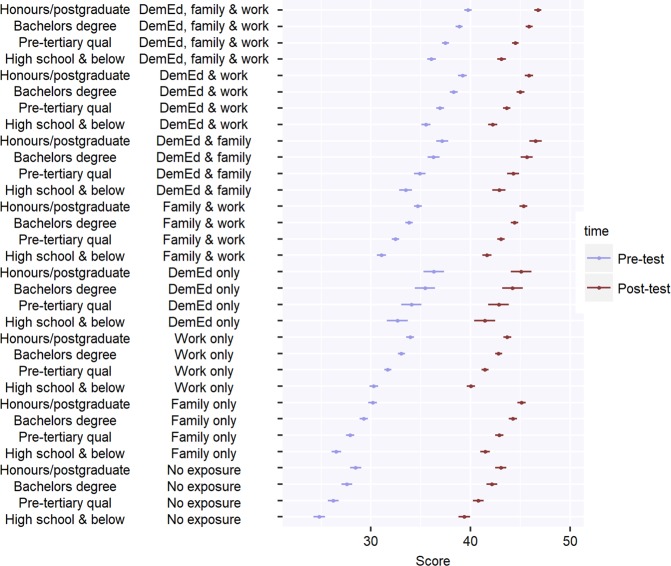
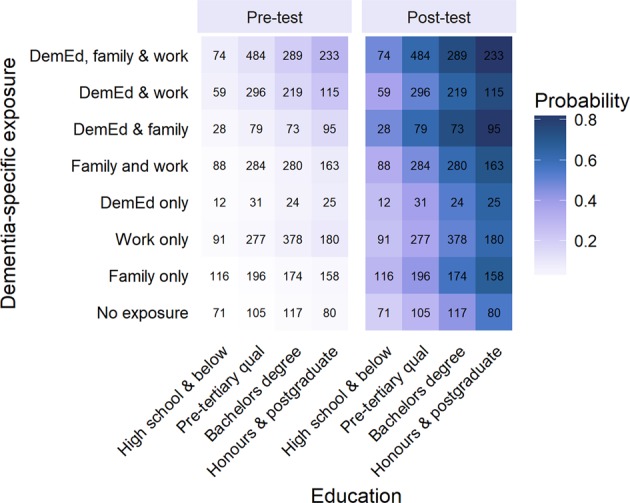
The prevalence of dementia is escalating world-wide and knowledge deficits remain a barrier to community inclusiveness and quality care. The need for quality, comprehensive education has been identified as a key priority for global action plans on dementia. The Understanding Dementia Massive Open Online Course (UDMOOC) offers the potential to improve dementia knowledge globally. Completion rates for the UDMOOC (2016-2017) were on average 42% of enrolments, and 69% of participants care or have cared for people with dementia. The current study shows baseline dementia knowledge was positively related to previous learning about dementia from various types of exposure to the condition including having family members and/or working with people with the condition, and having undertaken dementia education. However, knowledge of all participant groups showed substantial improvements after completion of the UDMOOC. This was shown regardless of educational background and previous experience of dementia, and group differences after completing the UDMOOC were minimised. The UDMOOC is therefore an effective knowledge translation strategy to improve dementia knowledge for a diverse, international learner group.
Overview
The claims and statistics of this paper haven’t been checked yet.
Free: it reads the open-access text and checks the first 5 claims that cite a source we can check. Create a free account to check every claim.
Integrity signals
Registry
Cites
Statistics
Figures
Verification
Claims the paper makes
The claims and statistics of this paper haven’t been checked yet.
Free: it reads the open-access text and checks the first 5 claims that cite a source we can check. Create a free account to check every claim.
Claims other papers make about this one
Each is checked against this paper’s own text: does it say what the citing paper says it does?
The source backs part of the claim, not all of it — or backs it for a different population, condition or comparison.
In the citing paper
“All studies revealed that these programs improved healthcare workers' attitudes about caring for patients with dementia, as well as their overall knowledge.”
From Awareness of dementia risk factors among healthcare professionals at Hamad Medical Corporation, Qatar: a cross-sectional survey (2024) · cites this paper as [17]
Experimental — accuracy not yet measured
Self-check
Percentages, sums and reported differences re-computed from the paper’s own numbers.
The self-check needs the paper’s full text.
Citations
Cites
Fitting Linear Mixed-Effects Models Using lme4
Bates, D., Mächler, M., Bolker, B., & Walker, S. (2015) · Journal of Statistical Software · doi:10.18637/jss.v067.i01 · Cited by 86,835
Dementia prevention, intervention, and care
Livingston, G., Sommerlad, A., Orgeta, V., Costafreda, S. G., Huntley, J., Ames, D., Ballard, C., Banerjee, S., Burns, A., Cohen-Mansfield, J., et al. (2017) · The Lancet · doi:10.1016/s0140-6736(17)31363-6 · Cited by 6,072
Informal learning in the workplace
Eraut *, M. (2004) · Studies in Continuing Education · doi:10.1080/158037042000225245 · Cited by 2,611
Caregiver Burden: A Clinical Review
Adelman, R. D., Tmanova, L. L., Delgado, D., Dion, S., & Lachs, M. S. (2014) · JAMA · doi:10.1001/jama.2014.304 · Cited by 2,002
Halekoh, U., & Højsgaard, S. (2014) · Journal of Statistical Software · doi:10.18637/jss.v059.i09 · Cited by 1,324
The worldwide economic impact of dementia 2010
Wimo, A., Jönsson, L., Bond, J., Prince, M., Winblad, B., & International, A. D. (2013) · Alzheimer's & Dementia · doi:10.1016/j.jalz.2012.11.006 · Cited by 1,141
Experiential learning: Transforming theory into practice
Yardley, S., Teunissen, P. W., & Dornan, T. (2012) · Medical Teacher · doi:10.3109/0142159x.2012.643264 · Cited by 589
Learning in MOOCs: Motivations and self-regulated learning in MOOCs
Littlejohn, A., Hood, N., Milligan, C., & Mustain, P. (2016) · The Internet and Higher Education · doi:10.1016/j.iheduc.2015.12.003 · Cited by 578 · cited 1×
“Few MOOCs, include objective measures of knowledge acquisition,(30) instead choosing primary outcome measures such as engagement, retention and completion as evidence of success.(31) However, not only was the UDMOOC designed to build dementia knowledge in a broad learner cohort,(21) but validated and robust measures o…”
BackgroundDall, T. M., Gallo, P. D., Chakrabarti, R., West, T., Semilla, A. P., & Storm, M. V. (2013) · Health Affairs · doi:10.1377/hlthaff.2013.0714 · Cited by 529 · cited 1×
“The knowledge of caregivers, health professionals and the general public about dementia is consistently reported as inadequate.(4,7,10,11) The critical need to address such lack of awareness and understanding about dementia is identified by international public health advocates, including to meet the aims of the Globa…”
BackgroundAmjad, H., Roth, D. L., Sheehan, O. C., Lyketsos, C. G., Wolff, J. L., & Samus, Q. M. (2018) · Journal of General Internal Medicine · doi:10.1007/s11606-018-4377-y · Cited by 501
Research works printed but not linked: 2
- Laurillard D Rethinking University Teaching: A Conversational Framework for the Effective Use of Learning Technologies 2002 London Routledge
- World Health Organisation. Global Action Plan on the Public Health Response to Dementia 2017–2025 2017 Geneva World Health Organisation
Cited by
Wei, X., Saab, N., & Admiraal, W. (2021) · Computers & Education · doi:10.1016/j.compedu.2020.104097 · Cited by 232
Bartlett, L., Buscot, M., Bindoff, A. D., Chambers, R., & Hassed, C. S. (2021) · Frontiers in Psychology · doi:10.3389/fpsyg.2021.724126 · Cited by 85
“Emerging evidence supports the effectiveness of the MOOC format for delivering health-related behavioral and educational interventions (Eccleston et al., 2019).”
BackgroundSelf-citationNieder, J., Schwerdtle, P. N., Sauerborn, R., & Barteit, S. (2022) · Frontiers in Public Health · doi:10.3389/fpubh.2022.891987 · Cited by 58
“5%) focused on infectious diseases and were predominantly developed as part of an epidemic response (18, 38, 50, 65), eight (20%) focused on the treatment and prevention of non-communicable diseases, including diabetes (68), chronic pain (49), undernutrition (51), dentistry (58), and dementia (46, 72), and two (5%) on…”
BackgroundDementia education and training for the general public: A scoping review
Matsumoto, H., Maeda, A., Igarashi, A., Weller, C. D., & Yamamoto‐Mitani, N. (2021) · Gerontology & Geriatrics Education · doi:10.1080/02701960.2021.1999938 · Cited by 53
“Four dementia-friendly studies (Eccleston et al., 2019; Mahoney, 2002; Peisah et al., 2016; Robertshaw & Kotera, 2019), an early diagnosis study (Anstey et al., 2015), and two prevention studies (Isaacson et al., 2014) adopted e-learning for intervention.”
BackgroundMethodInfluentialPacifico, D., Fiordelli, M., Fadda, M., Serena, S., Piumatti, G., Carlevaro, F., Magno, F., Franscella, G., & Albanese, E. (2022) · BMC Public Health · doi:10.1186/s12889-022-14578-8 · Cited by 42
“Our findings are based on the DKAS, which has been used to assess the acquisition of dementia knowledge through educational online courses [35] and interventions [36, 37].”
MethodTan, G. T. H., Yuan, Q., Devi, F., Wang, P., Ng, L. L., Goveas, R. R., Chong, S. A., & Subramaniam, M. (2021) · BMC Geriatrics · doi:10.1186/s12877-020-01951-8 · Cited by 45
“An alternative for caregivers to improve their knowledge of dementia would be to utilize online learning resources, such as the “Understanding Dementia Massive Open Online Course”, which had demonstrated efficacy in improving knowledge of dementia for a diverse international learner group, regardless of educational ba…”
BackgroundVirtual reality program to develop dementia‐friendly communities in Japan
Sari, D. W., Igarashi, A., Takaoka, M., Yamahana, R., Noguchi‐Watanabe, M., Teramoto, C., & Yamamoto‐Mitani, N. (2020) · Australian Journal on Ageing · doi:10.1111/ajag.12797 · Cited by 40
Dementia knowledge and its demographic correlates amongst informal dementia caregivers in Singapore
Tan, G. T. H., Yuan, Q., Devi, F., Wang, P., Ng, L. L., Goveas, R. R., Chong, S. A., & Subramaniam, M. (2020) · Aging & Mental Health · doi:10.1080/13607863.2020.1740914 · Cited by 35
“…taxing and time-consuming caregiving can be, another suitable way for caregivers to improve their knowledge is to undertake online dementia course that have been documented to be effective at elevating understanding towards dementia (Annear et al., 2015; Eccleston et al., 2019; King et al., 2014).”
BackgroundWang, Y., Liu, Y., Tian, J., Jing, M., & Zhang, K. (2020) · International Journal of Nursing Sciences · doi:10.1016/j.ijnss.2020.03.003 · Cited by 35
“Moreover, in view of unreasonable training time, less understanding about dementia patients, single training method and other problems, the long-term care institutions should refine the curriculum and time, allow caregivers to choose training courses purposefully according to their knowledge deficiencies, provide onli…”
BackgroundCrawley, S., Moore, K. J., Vickerstaff, V., Fisher, E., Cooper, C., & Sampson, E. L. (2022) · Dementia · doi:10.1177/14713012221074219 · Cited by 28
“(Annear, Toye, et al., 2017b; Eccleston et al., 2019).”
BackgroundInfluentialEglseer, D. (2023) · Nurse Education Today · doi:10.1016/j.nedt.2023.105741 · Cited by 35
Development and psychometric evaluation of the Dementia Public Stigma Scale
Kim, S., Eccleston, C. E. A., Klekociuk, S. Z., Cook, P., & Doherty, K. (2022) · International Journal of Geriatric Psychiatry · doi:10.1002/gps.5672 · Cited by 48
“In each offering, the course typically attracts over 20,000 participants of broad demographic status, education and experience of dementia.(38) Those who had not previously enrolled in the UDMOOC or the companion course, Preventing Dementia MOOC (PDMOOC), were invited to take part in this research.”
BackgroundSelf-citationRoom for improvement: An online survey of allied health professionals’ dementia knowledge
Lawler, K., Kitsos, A., Bindoff, A. D., Callisaya, M. L., Eccleston, C. E. A., & Doherty, K. (2020) · Australian Journal on Ageing · doi:10.1111/ajag.12886 · Cited by 22
Self-citationCommunication in dementia care: Experiences and needs of carers
Nguyen, H., Eccleston, C. E. A., Doherty, K., Jang, S., & McInerney, F. (2022) · Dementia · doi:10.1177/14713012221080003 · Cited by 27
“Dementia knowledge is higher with higher levels of general education (Eccleston et al., 2019; Van Patten & Tremont, 2020), and therefore, the cohort may well have higher knowledge about communicating with people living with dementia than is typical of either informal or formal carers.”
BackgroundSelf-citationThe Right to Rehabilitation for People With Dementia: A Codesign Approach to Barriers and Solutions
Layton, N. A., Devanny, C., Hill, K., Swaffer, K., Russell, G. M., Low, L., Lee, D. A., Cations, M., Skouteris, H., O’Connor, C. M. C., et al. (2024) · Health Expectations · doi:10.1111/hex.70036 · Cited by 23
“Online general dementia education courses have been successful in changing knowledge on a national and worldwide scale [32], but practical or experience ‐ based learning is likely to be needed to improve practical skills.”
BackgroundPoole, M., Davis, N., & Robinson, L. A. (2019) · Age and Ageing · doi:10.1093/ageing/afz150 · Cited by 17
de Krom, F. J. W., Sivananthan, S., Alkhotany, F., Celen, M., Hol, I. E., Houben, K. J. G., Sivananthan, P., Koekebakker, H., & Deckers, K. (2021) · Journal of Public Health Research · doi:10.4081/jphr.2021.1961 · Cited by 16
Claflin, S. B., Campbell, J. A., Doherty, K., Farrow, M., Bessing, B., & Taylor, B. V. (2021) · Journal of Medical Internet Research · doi:10.2196/21681 · Cited by 17
“Health and medicine MOOCs may encounter an additional challenge because they are often developed for use by people living with a health condition and their caregivers to address information asymmetry between the medical profession (as the suppliers) and people with health conditions and their caregivers (as consumers)…”
BackgroundSelf-citationDoherty, K., Nguyen, H., Eccleston, C. E. A., Tierney, L., Mason, R. L., Bindoff, A. D., Robinson, A., Vickers, J. C., & McInerney, F. (2020) · BMC Geriatrics · doi:10.1186/s12877-020-01891-3 · Cited by 15
Self-citationPredictors of dementia knowledge in a rural general public sample
Eccleston, C. E., Courtney‐Pratt, H., McInerney, F., Johnstone, A., & Doherty, K. (2021) · Australian Journal of Rural Health · doi:10.1111/ajr.12777 · Cited by 11
Self-citationTsatali, M. S., Angelidou, I. A., Tsolaki, M., & Teichmann, B. (2023) · Journal of Alzheimer s Disease Reports · doi:10.3233/adr-230161 · Cited by 12
Smith, G., & Rodham, K. (2021) · Health & Social Care in the Community · doi:10.1111/hsc.13373 · Cited by 15
Salehinejad, S., Jannati, N., Azami, M., Mirzaee, M., & Bahaadinbeigy, K. (2022) · Journal of Information Science · doi:10.1177/01655515221081353 · Cited by 11
“In the case of dementia, the importance of demonstrating the improvement of knowledge of a broad group of participants through free and wide-spread online courses is evident [34].”
BackgroundBartlett, R. L., Jøranson, N., & Breievne, G. (2020) · Journal of Clinical Nursing · doi:10.1111/jocn.15600 · Cited by 9
Public Knowledge about Dementia in Poland—A Survey Study
Skowronek, A., Bojkowska-Otrębska, K., & Labuz-Roszak, B. M. (2023) · Journal of Clinical Medicine · doi:10.3390/jcm12247675 · Cited by 12
“The analysis of the findings showed a significant increase in the level of knowledge after completing the course, regardless of the initial level of knowledge [38].”
BackgroundGoodenough, B., Watts, J. N., & Bartlett, S. (2020) · Brain Impairment · doi:10.1017/brimp.2020.19 · Cited by 10
“Even the popular Understanding Dementia MOOC developed in Australia has a completion rate of around 42% (Eccleston et al., 2019).”
BackgroundPike, K. E., Moller, C. I., Bryant, C., Farrow, M., Dao, D. P., & Ellis, K. A. (2021) · Journal of Alzheimer s Disease Reports · doi:10.3233/adr-200251 · Cited by 12
“Both courses have exceptionally high completion rates and high levels of participant satisfaction [31, 33].”
Borchard, J., Bindoff, A. D., Farrow, M., Kim, S., McInerney, F., & Doherty, K. (2022) · Aging & Mental Health · doi:10.1080/13607863.2022.2042188 · Cited by 6
Self-citationDevelopment of an online course for caregivers of older stroke patients
do Canto, D. F., da Costa, F. M., Woiciechoski, L. R., Cogo, A. L. P., & Paskulin, L. M. G. (2023) · Revista gaúcha de enfermagem · doi:10.1590/1983-1447.2023.20230040.en · Cited by 6
Dementia knowledge of family caregivers in Indonesia: A cross-sectional survey study
Andrews, S., Mulyani, S., Saifullah, A. D., Maitimoe, M. D. R., Sani, T. P., Sudiyono, N., Dinh, T. T. H., Suharya, D., Effendy, C., Kadar, K., et al. (2024) · Belitung Nursing Journal · doi:10.33546/bnj.3457 · Cited by 10
“…research has identified that experience related to caring for a person with dementia is associated with higher dementia knowledge, as caregivers likely engage in more experiential learning and more opportunities to seek and access information from lay or formal sources (Eccleston et al., 2019).”
BackgroundMethodAl Hamad, H., & Sathian, B. (2024) · Frontiers in Public Health · doi:10.3389/fpubh.2024.1443525 · Cited by 5
Beard, C., Tjokrowijoto, P., Stange, D., D'Cunha, N. M., Moylan, N., Cations, M., Withall, A., Cartwright, J., & Loi, S. M. (2025) · Dementia · doi:10.1177/14713012251360600 · Cited by 6
“Additionally, greater uptake of resources such as the Massive Open Online Course (MOOC), which has been shown to improve dementia knowledge in both professional and family caregiver settings, should be encouraged (Eccleston et al., 2019).”
Lea, E. J., Robinson, A., & Doherty, K. (2023) · Ageing International · doi:10.1007/s12126-023-09523-y · Cited by 8
“Consistent with previous research, we found links between demographic variables (gender, formal education, age, years of experience working with people with demen - tia) and dementia knowledge (Di Napoli et al., 2013 ; Eccleston et al., 2019; Van Pat-ten & Tremont, 2018 ).”
InfluentialSelf-citationHu, R., Zhang, F., Zhang, Y., Lai, B., Ma, W., Xu, X., Ye, H., Lv, Z., Chan, C., & Tao, Q. (2022) · Clinical Gerontologist · doi:10.1080/07317115.2022.2111290 · Cited by 6
“Abovementioned measures have been validated (Annear et al., 2015; Carpenter et al., 2009; Spector, Orrell, Schepers, & Shanahan, 2012) and adopted in various education programs for dementia (Annear et al., 2016; Eccleston et al., 2019).”
BackgroundMorgan, J., Bindoff, A., Doherty, K., Vickers, J., & Alty, J. (2022) · Journal of Clinical Neuroscience · doi:10.1016/j.jocn.2021.11.005 · Cited by 4
Self-citationDementia awareness raising forum: Improving attitudes towards people living with dementia
Read, S. T., Saunders, R., Albrecht, M. A., & Duggan, R. (2024) · Dementia · doi:10.1177/14713012241272852 · Cited by 4
“E-Learning E-Learning web-based education modules that customise the information presented based on learner pre-existing knowledge, may prove to be an effective alternative (Eccleston et al., 2019; Peisah et al., 2016) to face-to-face offerings.”
Lea, E. J., Robinson, A., & Doherty, K. (2023) · Australian journal of advanced nursing · doi:10.37464/2023.404.875 · Cited by 5
Self-citationWho is seeking information about traumatic brain injury? Characterizing online course participants
Fair, H. L., Doust, Y. V., Bye, N., Vickers, J. C., Padgett, C. R., & Ziebell, J. M. (2024) · Health Promotion International · doi:10.1093/heapro/daae077 · Cited by 5
“While initially there was much anticipation that MOOCs would provide equitable education through free online courses as reported in the media (Lewin, 2012), they have largely failed to live up to this expectation (Hansen and Reich, 2015; Reich and Ruip é rez-Valiente, 2019), like other forms of distance and online edu…”
InfluentialSelf-citationBender, A. A., Urbanski, M. A., Morgan, J. C., Hoge, C. E., Joseph, J., Damron, K. C., Douglas-Ajayi, C., Rickenbach, F. W., Jaar, B. G., Sheshadri, A., et al. (2024) · Kidney Medicine · doi:10.1016/j.xkme.2024.100884 · Cited by 5
“29 Consequently, the identification and care for people living with dementia, especially those who are living with additional chronic conditions and who have complex care needs, such as patients receiving dialysis, can be impacted.”
Kim, S., Bindoff, A. D., Farrow, M., McInerney, F., Borchard, J., & Doherty, K. (2021) · The International Review of Research in Open and Distributed Learning · doi:10.19173/irrodl.v22i3.5380 · Cited by 4
“This is in line with previous research where education through the UDMOOC was significantly associated with post-UDMOOC DKAS scores regardless of previous experience of dementia (Eccleston et al., 2019).”
ResultSelf-citationBushell, D., Jones, C., & Moro, C. (2023) · Frontiers in Dementia · doi:10.3389/frdem.2023.1156863 · Cited by 6
“Alternatively, the DKAS contains sections on causes and characteristics, which includes an area surrounding brain changes (Annear et al., 2017).”
BackgroundMethodInfluentialYun, J. E., & Choi, S. (2025) · Journal of Korean Biological Nursing Science · doi:10.7586/jkbns.25.008 · Cited by 3
“Dementia knowledge refers to the extent of an individual’s understanding of various aspects related to dementia, including its causes, symptoms, treatment, and prevention [11].”
InfluentialOpen Online Courses for Informal Carers: Systematic Integrative Review
Aung, K. W., Kibia, A., & Onwumere, J. (2025) · Journal of Medical Internet Research · doi:10.2196/72808 · Cited by 4
“Lumini et al [58] obtained a “moderate” rating while 4 papers [54,56,57,61] received “weak” ratings.”
InfluentialDementia Care in Indonesia: Care Networks, Awareness & Perception
van der Ploeg, E. S., Handajani, Y. S., & Schröder‐Butterfill, E. (2025) · Journal of Cross-Cultural Gerontology · doi:10.1007/s10823-025-09544-x · Cited by 5
“…initiatives are not currently available, there are free online resources, for example those developed by The Wick-ing Dementia Research and Education Centre, Australia, for “people in the early stages of the disease, their families and carers” (Eccleston et al., 2019 ; Farrow et al., 2022 ).”
Sociodemographic factors associated with public knowledge of dementia in a Cuban population
Fernández-Fleites, Z., Broche‐Pérez, Y., Eccleston, C. E. A., Jiménez-Puig, E., & Castillo, E. F. (2021) · Dementia & Neuropsychologia · doi:10.1590/1980-57642021dn15-040008 · Cited by 4
Self-citationGoldberg, L. R., Jang, S. H., Nguyen, H., Bindoff, A. D., & Canty, A. J. (2023) · Australian Journal on Ageing · doi:10.1111/ajag.13212 · Cited by 2
Self-citationdo Canto, D. F., da Costa, F. M., Woiciechoski, L. R., Cogo, A. L. P., & Paskulin, L. M. G. (2023) · Revista gaúcha de enfermagem · doi:10.1590/1983-1447.2023.20230040.pt · Cited by 2
Workforce Dementia Training Needs and Preferences for Residential Aged Care
Gulline, H., Bruce, L. J., Woolford, M., Horsman, P., Morawaka, N., Alberti, S., & Ayton, D. (2025) · Journal of the American Medical Directors Association · doi:10.1016/j.jamda.2025.105495 · Cited by 2
Fair, H. L., Pavković, S., Roccati, E., Alty, J., King, A. E., & Collins, J. M. (2025) · Alzheimer s & Dementia Behavior & Socioeconomics of Aging · doi:10.1002/bsa3.70022 · Cited by 4
Srikasem, S., Seephom, S., Viriyopase, A., Phutrakool, P., Khowinthaseth, S., Narajeenron, K., & ER-VIPE Study Group (2025) · JMIR Medical Education · doi:10.2196/70726 · Cited by 11
“In health care education, MOOCs serve various roles—from promoting health literacy among the public (eg, dementia education [104]) to supporting just-in-time training during health crises [105] and enhancing HCWs’ well-being and resilience against stress and burnout [106].”
Bryant, J., Freund, M., McGhie, A., Walsh, J., Rumbel, J., Davis, R. E., Leigh, L., & Leask, S. (2024) · Australian Journal on Ageing · doi:10.1111/ajag.13394 · Cited by 1
Levinson, A. J., Ayers, S., Clark, S., Gerantonis, P., Schneeberg, A., & Sztramko, R. (2025) · JMIR Aging · doi:10.2196/67889 · Cited by 2
“Eccleston et al [23] evaluated the efficacy of the 9-week-long Understanding Dementia Massive Open Online Course (UDMOOC) for people with varying professional and educational backgrounds.”
Islam, M. N., Musarrat, P., Konradsen, H., Tyrrell, M., Roy, A., Anik, A. I., & Kabir, Z. N. (2025) · PLoS ONE · doi:10.1371/journal.pone.0326207 · Cited by 1
Bosman, S. J. E., Abbink, M., Lovink, M. H., & Persoon, A. (2025) · Nursing Open · doi:10.1002/nop2.70263 · Cited by 2
Mugil, T., Sharma, S., Shahar, S., Ali, M. F., Singh, D. K. A., & Subramaniam, P. (2025) · Dementia · doi:10.1177/14713012251364956 · Cited by 1
“…(Goldberg et al., 2015; Kim et al., 2021) three utilized quasi-experimental designs with pre-post intervention assessments (Annear et al., 2016; Eccleston et al., 2019; Van Asbroeck et al., 2025) two implemented mixed-methods observational cohort designs (Borchard et al., 2023; Farrow et al.,…”
InfluentialExploring perceptions of eating with dementia: Findings from a massive open online course
Goodwin, I., Lea, E. J., Bindoff, A. D., & Doherty, K. (2022) · Appetite · doi:10.1016/j.appet.2022.106126 · Cited by 3
Self-citationMcNeil, S., Gronseth, S. L., Woodard, L., Rollins, A., Obanua, F., & Carpousis-Bowers, A. (2024) · doi:10.59668/723.13042 · Cited by 3
Creten, S., & Heynderickx, P. C. (2024) · Open Journal of Social Sciences · doi:10.4236/jss.2024.122006 · Cited by 3
“Eccleston et al. (2019) also used the DKAS to verify dementia knowledge of 4894 international respondents before (and after) completing a dementia-related online course.”
BackgroundMethodElliott, K.-E., Stirling, C., Johnstone, A., Tierney, L., Sanderson, K. A., Robinson, A. L., Scott, J. L., & Martin, A. J. (2022) · Australian Journal on Ageing · doi:10.1111/ajag.13134 · Cited by 1
Self-citationExploring the Relationship between Online Learning Activities and Learning Performance in MOOC
Zhang, X., Zheng, X., Chen, R., & Zhang, J. (2019) · International Joint Conference on Information, Media and Engineering (IJCIME) · doi:10.1109/ijcime49369.2019.00035
“They were purported to bring free, online content, in an accessible format on a wide range of topics, to large communities of learners[1].”
BackgroundLevinson, A. J., Ayers, S., Clark, S., Gerantonis, P., Schneeberg, A., & Sztramko, R. (2024) · doi:10.2196/preprints.67889
Open Online Courses for Informal Carers: Systematic Review (Preprint)Preprint
Aung, K. W., Kibia, A., & Onwumere, J. (2025) · doi:10.2196/preprints.72808
Enhancing Dementia Care Training: The Value of Mixed Methods Research in Educational Interventions
Hernández, M. M., & Albarrán-Pérez, D. F. (2025) · Journal of the American Medical Directors Association · doi:10.1016/j.jamda.2025.105906
Zhi, S., Li, R., Li, J., Fang, S., Zhong, Q., Wu, Y., Lang, J., Zhang, H., Li, M., Chang, C., et al. (2025) · International Journal of Nursing Studies · doi:10.1016/j.ijnurstu.2025.105288
Completion of massive open online course improved knowledge about traumatic brain injury globally
Doust, Y. V., Fair, H. L., Eccleston, C. E. A., Padgett, C. R., Doherty, K., Cook, P., & Ziebell, J. M. (2026) · Brain Injury · doi:10.1080/02699052.2026.2621945
“It has been demonstrated that, following MOOC completion, participants gain improved knowledge, health literacy and self-efficacy, as well as promoting positive behavior and lifestyle changes (12–15).”
InfluentialSelf-citationWang, Y., Webster, E., Crolla, M., & Macaden, L. (2026) · Cogent Education · doi:10.1080/2331186x.2026.2641870 · Cited by 1
Ng, C., Doherty, K., Bryan, M., Carlton, J., Luckett, T., Mulhern, B. J., Norman, R., Wills, K., & Roydhouse, J. K. (2026) · Quality of Life Research · doi:10.1007/s11136-026-04230-y · Cited by 3
“…experience as paid or unpaid carers were recruited using convenience sampling through a webpage linked to the Understanding Dementia Massive Open Online Course (UDMOOC), which is run by the University of Tas-mania and has had previous enrolments of > 20,000, most of whom live in Australia [40].”
Self-citationSaha, S., Faruque, S., Vaitheswaran, S., Varghese, M., LAWLOR, B. A., Suhrawardy, R., Deivasigamani, R. K., & Leroi, I. (2026) · HRB Open Research · doi:10.12688/hrbopenres.14457.1
Metadata
- Authors
- Eccleston, C., Doherty, K., Bindoff, A., Robinson, A., Vickers, J., & McInerney, F.
- Affiliations
- University of Tasmania (AU)
- Corresponding author
- Vickers, James
- Venue
- npj Science of Learning
- Published
- 2019-04-10
- Volume
- 4
- Issue
- 1
- Pages
- 3-3
- ISSN
- 2056-7936 (ISSN-L)
- PMC
- PMC6458180
- OpenAlex
- W2935756927
- Cited by
- 68
- References
- 39
- Citations by year
- 2026: 4 · 2025: 14 · 2024: 10 · 2023: 9 · 2022: 9 · 2021: 12 · 2020: 8 · 2019: 2
- FWCI
- 8.40
- Type
- journal article
- Language
- en
- Open access
- gold
- doi.org
- Licence
- cc-by
- creativecommons.org/licenses/by/4.0 (tdm)
- creativecommons.org/licenses/by/4.0 (vor)
- Locations
- npj Science of Learning (publishedVersion, cc-by)
- PubMed Central (publishedVersion, cc-by)
- PubMed (publishedVersion)
- UTAS Research Repository (acceptedVersion)
- DOAJ (DOAJ: Directory of Open Access Journals) (submittedVersion)
- Figshare (submittedVersion, cc-by)
- Funders
- J.O. and J.R. Wicking Trust (Equity Trustees) - no grant reference number.
- Topics
- Physical Sciences › Computer Science › Computer Science Applications › Online Learning and Analytics
- Social Sciences › Education › Innovations in Medical Education
- Health Sciences › Medicine › Psychiatry and Mental health › Dementia and Cognitive Impairment Research
- Keywords
- dementia, dementia knowledge, massive open online courses, knowledge translation, dementia education, caregiver experiences, family caregivers, online learning, knowledge improvement
About these checks
Registry, retraction, Cites and statistics results are computed, not judged, with one exception: a printed reference that no index lists is read once by a model before it counts as a citation error. Claims are extracted by a model and kept only when their quote appears verbatim in the text; each cited source is then checked, with a model’s help, for whether it says what the claim relies on. Those verdicts can be wrong — read the claim’s quote and the cited source before relying on one.
Statistics and arithmetic are recomputed, not judged.
Confidence bands are shown only for fields calibrated on our annotated test set. None is calibrated yet, so no band is shown.
What counts as a claim ›How we measure confidence ›How we check this ›
Are you an author, or do you see a problem with this page? Request a review
Data sources
Bibliographic data: Semantic Scholar, OpenAlex, Crossref.
Contains information from the Semantic Scholar Academic Graph Datasets, made available under the ODC Attribution License (ODC-BY 1.0).
Semantic Scholar’s data is described in: Kinney, R., et al. (2023). The Semantic Scholar Open Data Platform. arXiv:2301.10140.
