

From expression footprints to causal pathways: contextualizing large signaling networks with CARNIVAL
Open accessPublished version of a preprint
The DOI matches its Crossref record; 52 of the 52 references it cites were found in a registry or an index.
Abstract
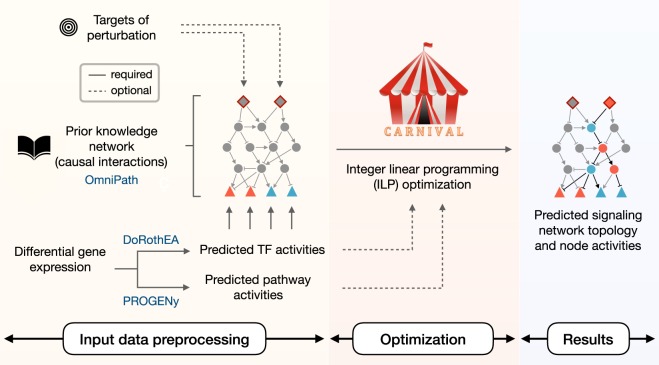
While gene expression profiling is commonly used to gain an overview of cellular processes, the identification of upstream processes that drive expression changes remains a challenge. To address this issue, we introduce CARNIVAL, a causal network contextualization tool which derives network architectures from gene expression footprints. CARNIVAL (CAusal Reasoning pipeline for Network identification using Integer VALue programming) integrates different sources of prior knowledge including signed and directed protein–protein interactions, transcription factor targets, and pathway signatures. The use of prior knowledge in CARNIVAL enables capturing a broad set of upstream cellular processes and regulators, leading to a higher accuracy when benchmarked against related tools. Implementation as an integer linear programming (ILP) problem guarantees efficient computation. As a case study, we applied CARNIVAL to contextualize signaling networks from gene expression data in IgA nephropathy (IgAN), a condition that can lead to chronic kidney disease. CARNIVAL identified specific signaling pathways and associated mediators dysregulated in IgAN including Wnt and TGF-β, which we subsequently validated experimentally. These results demonstrated how CARNIVAL generates hypotheses on potential upstream alterations that propagate through signaling networks, providing insights into diseases.
Overview
The claims and statistics of this paper haven’t been checked yet.
Free: it reads the open-access text and checks the first 5 claims that cite a source we can check. Create a free account to check every claim.
Integrity signals
Registry
Cites
Statistics
Figures
Verification
Claims the paper makes
The claims and statistics of this paper haven’t been checked yet.
Free: it reads the open-access text and checks the first 5 claims that cite a source we can check. Create a free account to check every claim.
Claims other papers make about this one
Each is checked against this paper’s own text: does it say what the citing paper says it does?
The source backs part of the claim, not all of it — or backs it for a different population, condition or comparison.
In the citing paper
“To infer signaling processes, the CARNIVAL algorithm combines upstream perturbation information (i.e., drug targets) with downstream measurements (i.e., transcription factor (TF) activities) and a causal prior knowledge network (PKN) (Liu et al, 2019).”
From Network integration of thermal proteome profiling with multi-omics data decodes PARP inhibition (2024) · cites this paper as Liu et al, 2019
Experimental — accuracy not yet measured
Self-check
Percentages, sums and reported differences re-computed from the paper’s own numbers.
The self-check needs the paper’s full text.
Citations
Cites
Subramanian, A., Tamayo, P., Mootha, V. K., Mukherjee, S., Ebert, B. L., Gillette, M. A., Paulovich, A., Pomeroy, S. L., Golub, T. R., Lander, E. S., et al. (2005) · Proceedings of the National Academy of Sciences · doi:10.1073/pnas.0506580102 · Cited by 53,625
Cytoscape: A software Environment for integrated models of biomolecular interaction networks
Shannon, P., Markiel, A., Ozier, O., Baliga, N. S., Wang, J. T., Ramage, D., Amin, N., Schwikowski, B., & Ideker, T. (2003) · Genome Research · doi:10.1101/gr.1239303 · Cited by 51,888
limma powers differential expression analyses for RNA-sequencing and microarray studies
Ritchie, M. E., Phipson, B., Wu, D., Hu, Y., Law, C. W., Shi, W., & Smyth, G. K. (2015) · Nucleic Acids Research · doi:10.1093/nar/gkv007 · Cited by 40,458
KEGG: new perspectives on genomes, pathways, diseases and drugs
Kanehisa, M., Furumichi, M., Tanabe, M., Sato, Y., & Morishima, K. (2017) · Nucleic Acids Research · doi:10.1093/nar/gkw1092 · Cited by 8,865 · cited 1×
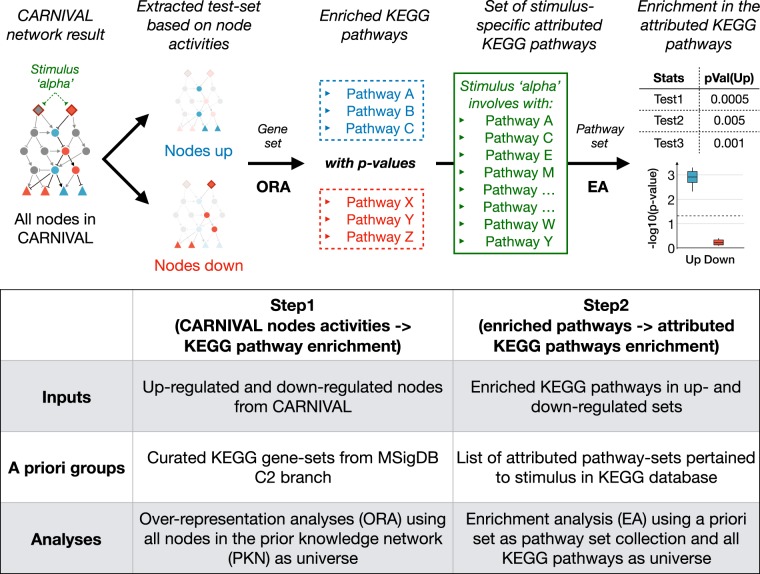
“We first determined which pathways are known to be linked to the perturbations by different molecules according to the KEGG database (30); referred to perturbation-attributed pathways henceforth.”
BackgroundLeek, J. T., Johnson, W. E., Parker, H. S., Jaffe, A. E., & Storey, J. D. (2012) · Bioinformatics · doi:10.1093/bioinformatics/bts034 · Cited by 6,231 · cited 1×
“Batch effects were removed using the combat function of the sva R-package.(39) Differential gene expression compared to vehicle control in the same dataset was then computed with the limma R package.”
MethodInsights into the regulation of protein abundance from proteomic and transcriptomic analyses
Vogel, C., & Marcotte, E. M. (2012) · Nature Reviews Genetics · doi:10.1038/nrg3185 · Cited by 4,195 · cited 1×
“Such methods can provide valuable insight, but are limited by the fact that the abundance and activities of signaling proteins only partially correlate with gene expression (Vogel and Marcotte, 2012).”
BackgroundPhosphoSitePlus, 2014: mutations, PTMs and recalibrations
Hornbeck, P. V., Zhang, B., Murray, B., Kornhauser, J. M., Latham, V., & Skrzypek, E. (2015) · Nucleic Acids Research · doi:10.1093/nar/gku1267 · Cited by 3,411 · cited 1×
“The measurements with 19 phosphoprotein-binding antibodies were mapped to 14 differential protein activities using the curated regulatory sites in the PhosphositePlus knowledgebase (21).”
MethodOncogenic pathway signatures in human cancers as a guide to targeted therapies
Bild, A. H., Yao, G., Chang, J. T., Wang, Q., Potti, A., Chasse, D., Joshi, M.-B., Harpole, D., Lancaster, J. M., Berchuck, A., et al. (2006) · Nature · doi:10.1038/nature04296 · Cited by 2,032
Wyatt, R. J., & Julian, B. A. (2013) · New England Journal of Medicine · doi:10.1056/nejmra1206793 · Cited by 1,222
Benchmark and integration of resources for the estimation of human transcription factor activities
Garcia-Alonso, L., Holland, C. H., Ibrahim, M. M., Turei, D., & Saez-Rodriguez, J. (2019) · Genome Research · doi:10.1101/gr.240663.118 · Cited by 1,122 · cited 1×
“Another one is to predict transcription factor (TF) activities based on their regulons.(10,11) However, these approaches do not provide information on the topology of signaling pathways.”
BackgroundPerturbation-response genes reveal signaling footprints in cancer gene expression
(2017) · doi:10.1038/s41467-017-02391-6 · Cited by 1,108 · cited 1×
“To predict pathway activity, we applied PROGENy, which calculates pathways scores of 14 major signaling pathways based on pathway footprint genes derived from perturbation-based experiments.(7,38) The 14 PROGENy pathway signatures were obtained from differential expression tvalues using the limma package.”
MethodTargeting the Wnt/beta-catenin pathway in cancer: Update on effectors and inhibitors
Krishnamurthy, N., & Kurzrock, R. (2018) · Cancer Treatment Reviews · doi:10.1016/j.ctrv.2017.11.002 · Cited by 1,026 · cited 1×
“β-catenin and Wnt signalling are studied as drug targets for different cancers (44).”
BackgroundAlvarez, M. J., Shen, Y., Giorgi, F. M., Lachmann, A., Ding, B. B., Ye, B. H., & Califano, A. (2016) · Nature Genetics · doi:10.1038/ng.3593 · Cited by 966
Väremo, L., Nielsen, J., & Nookaew, I. (2013) · Nucleic Acids Research · doi:10.1093/nar/gkt111 · Cited by 697 · cited 5×
“Batch effects were removed using the combat function of the sva R-package (Leek et al., 2012).”
MethodInfluentialOmniPath: guidelines and gateway for literature-curated signaling pathway resources
Türei, D., Korcsmáros, T., & Saez-Rodriguez, J. (2016) · Nature Methods · doi:10.1038/nmeth.4077 · Cited by 687
Transcriptome Analysis of Human Diabetic Kidney Disease
Woroniecka, K. I., Park, A. S. D., Mohtat, D., Thomas, D. B., Pullman, J. M., & Susztak, K. (2011) · Diabetes · doi:10.2337/db10-1181 · Cited by 642
The next generation of therapeutics for chronic kidney disease
Breyer, M. D., & Susztak, K. (2016) · Nature Reviews Drug Discovery · doi:10.1038/nrd.2016.67 · Cited by 272 · cited 1×
“They have been proposed as a potential target for chronic kidney.(34) There are multiple Wnt signaling smallmolecule drugs that bind β-catenin.”
BackgroundBerthier, C. C., Bethunaickan, R., Gonzalez-Rivera, T., Nair, V., Ramanujam, M., Zhang, W., Bottinger, E. P., Segerer, S., Lindenmeyer, M., Cohen, C. D., et al. (2012) · The Journal of Immunology · doi:10.4049/jimmunol.1103031 · Cited by 237
Inferring causal molecular networks: empirical assessment through a community-based effort
The HPN-DREAM Consortium, Hill, S. M., Heiser, L. M., Cokelaer, T., Unger, M., Nesser, N. K., Carlin, D. E., Zhang, Y., Sokolov, A., Paull, E. O., et al. (2016) · Nature Methods · doi:10.1038/nmeth.3773 · Cited by 231 · cited 1×
“This inference can be performed based on phosphoproteomics data that directly measure key signaling players such as receptors and kinases (1, 2), preferably in combination with prior knowledge (3).”
BackgroundWnt/β-catenin signalling and podocyte dysfunction in proteinuric kidney disease
Zhou, L., & Liu, Y. (2015) · Nature Reviews Nephrology · doi:10.1038/nrneph.2015.88 · Cited by 196 · cited 1×
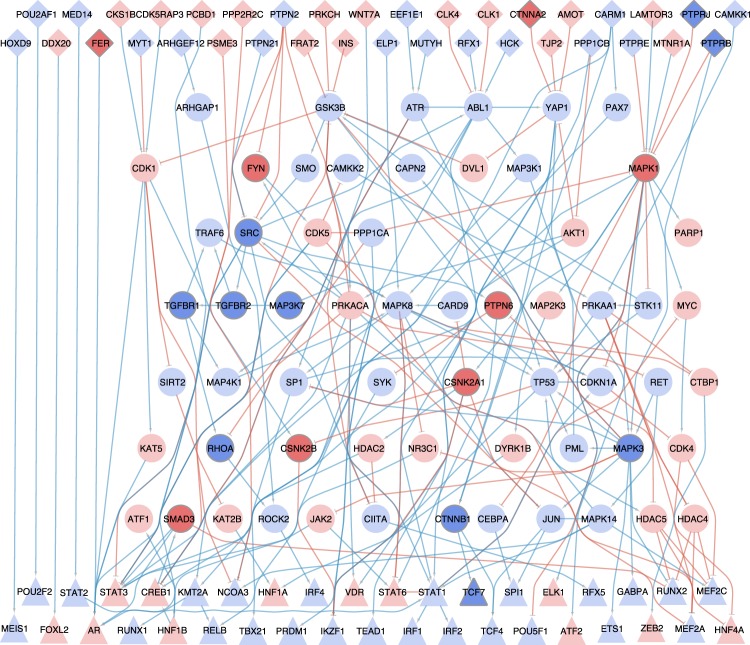
“Wnt signaling was reported as a dysregulated process in CARNIVAL and is known to be involved in podocyte injury and renal fibrosis.(22) The IgAN network included representative mediators of the classical Wnt signaling pathway from the messenger WNT7A to the TFs TCF4 and TCF7, although it should be noted that not all o…”
BackgroundExpression2Kinases: mRNA profiling linked to multiple upstream regulatory layers
Chen, E. Y., Xu, H., Gordonov, S., Lim, M. P., Perkins, M. H., & Ma'ayan, A. (2012) · Bioinformatics · doi:10.1093/bioinformatics/btr625 · Cited by 180
Chen, B., Fan, W., Liu, J., & Wu, F.-X. (2014) · Briefings in Bioinformatics · doi:10.1093/bib/bbt039 · Cited by 179 · cited 1×
“Many of these methods assume gene expression levels as a proxy for signaling protein activities and use them to construct networks.(4) For instance, Huang and Fraenkel mapped transcriptomics data onto signaling pathways and then applied a Steiner’s tree algorithm for network contextualization.”
MethodHuang, S.-S. C., & Fraenkel, E. (2009) · Science Signaling · doi:10.1126/scisignal.2000350 · Cited by 177 · cited 1×
“For instance, Huang and Fraenkel mapped transcriptomics data onto signaling pathways and then applied a Steiner’s tree algorithm for network contextualization.(5) Such methods can provide valuable insight, but are limited by the fact that the abundance and activities of signaling proteins only partially correlate with…”
MethodIs β-Catenin a Druggable Target for Cancer Therapy?
Cui, C., Zhou, X., Zhang, W., Qu, Y., & Ke, X. (2018) · Trends in Biochemical Sciences · doi:10.1016/j.tibs.2018.06.003 · Cited by 168 · cited 1×
“There are multiple Wnt signaling smallmolecule drugs that bind β-catenin.(35) Such drugs have not been tested in IgAN thus far.”
BackgroundNew insights into the pathogenesis of IgA nephropathy
Yeo, S. C., Cheung, C. K., & Barratt, J. (2018) · Pediatric Nephrology · doi:10.1007/s00467-017-3699-z · Cited by 165
Self-citationTransfer of regulatory knowledge from human to mouse for functional genomics analysis
Holland, C. H., Szalai, B., & Sáez-Rodríguez, J. (2019) · Biochimica et Biophysica Acta (BBA) - Gene Regulatory Mechanisms · doi:10.1016/j.bbagrm.2019.194431 · Cited by 165
Causal reasoning on biological networks: interpreting transcriptional changes
Chindelevitch, L., Ziemek, D., Enayetallah, A., Randhawa, R., Sidders, B., Brockel, C., & Huang, E. S. (2012) · Bioinformatics · doi:10.1093/bioinformatics/bts090 · Cited by 129
The role of focal adhesion complexes in fibroblast mechanotransduction during scar formation
Rustad, K. C., Wong, V., & Gurtner, G. C. (2013) · Differentiation · doi:10.1016/j.diff.2013.02.003 · Cited by 117
Transforming growth factor‐β signalling in renal fibrosis: from Smads to non‐coding RNAs
Tang, P. M., Zhang, Y., Mak, T. S., Tang, P. C., Huang, X., & Lan, H. (2018) · The Journal of Physiology · doi:10.1113/jp274492 · Cited by 117 · cited 1×
“TGF-β signaling is a main driver of fibrosis (33).”
Tamouza, H., Chemouny, J., Kafkova, L. R., Berthelot, L., Flamant, M., Demion, M., Mesnard, L., Paubelle, É., Walker, F., Julian, B. A., et al. (2012) · Kidney International · doi:10.1038/ki.2012.192 · Cited by 115 · cited 1×
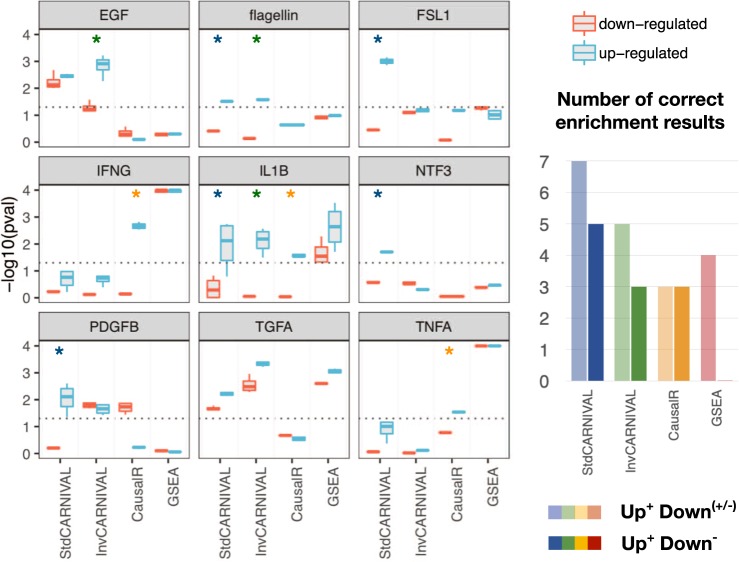
“The first two pathways had already been well studied and validated.(26,30) In our study, we chose the latter two which have less literature support and have inconsistent results to GSEA for experimental validation.”
ResultNested effects models for high-dimensional phenotyping screens
Markowetz, F., Kostka, D., Troyanskaya, O. G., & Spang, R. (2007) · Bioinformatics · doi:10.1093/bioinformatics/btm178 · Cited by 105 · cited 2×
“Since CARNIVAL can not propose de novo connections between signaling molecules, it could be combined with pure data-driven network inference approaches such as nested effect models (NEM) (47) in the future.”
BackgroundLiu, P., Lassén, E., Nair, V., Berthier, C. C., Suguro, M., Sihlbom, C., Kretzler, M., Betsholtz, C., Haraldsson, B. S., Ju, W., et al. (2017) · Journal of the American Society of Nephrology · doi:10.1681/asn.2016101103 · Cited by 99
Bellur, S. S., Lepeytre, F., Vorobyeva, O. A., Troyanov, S., Cook, H. T., Roberts, I. S. D., Alpers, C. E., Amore, A., Barratt, J., Berthoux, F. C., et al. (2016) · Kidney International · doi:10.1016/j.kint.2016.09.029 · Cited by 90
Self-citationAltered modulation of WNT–β-catenin and PI3K/Akt pathways in IgA nephropathy
Cox, S. N., Sallustio, F., Serino, G., Pontrelli, P., Verrienti, R., Pesce, F., Torres, D. D., Ancona, N., Stifanelli, P. F., Zaza, G., et al. (2010) · Kidney International · doi:10.1038/ki.2010.138 · Cited by 87
Rayego‐Mateos, S., Morgado‐Pascual, J. L., Rodrigues-Díez, R. R., Rodrigues‐Díez, R., Falke, L. L., Mezzano, S. A., Ortíz, A., Egido, J., Goldschmeding, R., & Ruiz‐Ortega, M. (2017) · The Journal of Pathology · doi:10.1002/path.5007 · Cited by 82
Discovering causal signaling pathways through gene-expression patterns
Parikh, J. R., Klinger, B., Xia, Y., Marto, J. A., & Bl�thgen, N. (2010) · Nucleic Acids Research · doi:10.1093/nar/gkq424 · Cited by 69
Poussin, C., Mathis, C., Alexopoulos, L. G., Messinis, D. E., Dulize, R., Belcastro, V., Melas, I. N., Sakellaropoulos, T., Rhrissorrakrai, K., Bilal, E., et al. (2014) · Scientific Data · doi:10.1038/sdata.2014.9 · Cited by 65
Synthesis of TNF- by mesangial cells cultured with polymeric anionic IgA role of MAPK and NF- B
Leung, J. C. K., Tang, S. C. W., Chan, L. Y. Y., Chan, W. L., & Lai, K. N. (2007) · Nephrology Dialysis Transplantation · doi:10.1093/ndt/gfm581 · Cited by 64
Proteomics and phosphoproteomics in precision medicine: applications and challenges
Giudice, G., & Petsalaki, E. (2017) · Briefings in Bioinformatics · doi:10.1093/bib/bbx141 · Cited by 61 · cited 1×
“This inference can be performed based on phosphoproteomics data that directly measure key signaling players such as receptors and kinases (1, 2), preferably in combination with prior knowledge (3).”
BackgroundCausal Reasoning on Biological Networks: Interpreting Transcriptional Changes
Chindelevitch, L., Ziemek, D., EnayetAllah, A. E., Randhawa, R., Sidders, B. S., Brockel, C., & Huang, E. S. (2011) · Lecture notes in computer science · doi:10.1007/978-3-642-20036-6_4 · Cited by 54
Melas, I. N., Sakellaropoulos, T., Iorio, F., Alexopoulos, L. G., Loh, W.-Y., Lauffenburger, D. A., Saez-Rodriguez, J., & Bai, J. P. F. (2015) · Integrative Biology · doi:10.1039/c4ib00294f · Cited by 47 · cited 1×
“CARNIVAL expands an integer linear programming (ILP) implementation for causal reasoning (12) to integrate information from TF and signaling pathway activity scoring.”
BackgroundCausalR: extracting mechanistic sense from genome scale data
Bradley, G., & Barrett, S. J. (2017) · Bioinformatics · doi:10.1093/bioinformatics/btx425 · Cited by 46 · cited 5×
“The CausalR package identifies dysregulated nodes and networks by scanning for nodes with sign-consistent shortest paths to the observations (Bradley and Barrett, 2017).”
MethodResultInfluentialFast randomization of large genomic datasets while preserving alteration counts
Gobbi, A., Iorio, F., Dawson, K. J., Wedge, D. C., Tamborero, D., Alexandrov, L. B., López-Bigas, N., Garnett, M. J., Jurman, G., & Sáez-Rodríguez, J. (2014) · Bioinformatics · doi:10.1093/bioinformatics/btu474 · Cited by 40 · cited 1×
“The R-package BiRewire (29) was applied to generate 100 randomized networks with preserved distributions of node degrees as well as interaction signs.”
MethodBenchmark and integration of resources for the estimation of human transcription factor activitiesPreprint
García‐Alonso, L., Ibrahim, M. M., Türei, D., et al. (2018) · bioRxiv (Cold Spring Harbor Laboratory) · doi:10.1101/337915 · Cited by 39
Reconstructing phosphorylation signalling networks from quantitative phosphoproteomic data
Invergo, B., & Beltrão, P. (2018) · Essays in Biochemistry · doi:10.1042/ebc20180019 · Cited by 38 · cited 1×
“This inference can be performed based on phosphoproteomics data that directly measure key signaling players such as receptors and kinases (1, 2), preferably in combination with prior knowledge (3).”
BackgroundHodgin, J. B., Berthier, C. C., John, R., Gröne, E., Porubský, Š., Gröne, H., Herzenberg, A. M., Scholey, J. W., Hladunewich, M., Cattran, D. C., et al. (2014) · PLoS ONE · doi:10.1371/journal.pone.0103413 · Cited by 35
Ebefors, K., Liu, P., Lassén, E., Elvin, J., Candemark, E., Levan, K., Haraldsson, B. S., & Nystrom, J. C. (2016) · BMC Nephrology · doi:10.1186/s12882-016-0251-5 · Cited by 29
Cox, S. N., Pesce, F., Moustafa, J. S. E.-S., Sallustio, F., Serino, G., Kkoufou, C., Giampetruzzi, A., Ancona, N., Falchi, M., & Schena, F. (2016) · Journal of Internal Medicine · doi:10.1111/joim.12565 · Cited by 25
Hahn, W.-H., Suh, J., & Cho, B.-S. (2010) · Pediatric Research · doi:10.1203/pdr.0b013e31820b9365 · Cited by 23
Kidney Expression of RhoA, TGF-β1, and Fibronectin in Human IgA Nephropathy
Mattii, L., Segnani, C., Cupisti, A., D’Alessandro, D., Moscato, S., Meola, M., Barsotti, G., Marinò, M., Bianchi, F. P., Dolfi, A., et al. (2005) · Nephron Experimental Nephrology · doi:10.1159/000086035 · Cited by 12
Transfer of regulatory knowledge from human to mouse for functional genomic analysisPreprint
Holland, C. H., Szalai, B., & Sáez-Rodríguez, J. (2019) · bioRxiv (Cold Spring Harbor Laboratory) · doi:10.1101/532739 · Cited by 8 · cited 1×
“To calculate predicted pathway activity, the 14 PROGENy pathway signatures were obtained from (7, 19) and applied to differential expression t-values from limma (18).”
Method(2006) · Medical Entomology and Zoology
Cited by
Bernardes, J. P., Mishra, N., Tran, F., Bahmer, T., Best, L., Blase, J. I., Bordoni, D., Franzenburg, J., Geisen, U., Josephs-Spaulding, J., et al. (2020) · Immunity · doi:10.1016/j.immuni.2020.11.017 · Cited by 369
“Using upstream network topology of gene expression changes by using signed and directed protein-protein interactions (Liu et al., 2019), we could show that MAPK3 (also known as ERK1) and MAPK1 (also known as ERK2) had the highest centralities across all pseudotimes (Figure S3D).”
Integrated intra‐ and intercellular signaling knowledge for multicellular omics analysis
Türei, D., Valdeolivas, A., Gul, L., Palacio‐Escat, N., Klein, M., Ivanova, O., Ölbei, M., Gábor, A., Theis, F., Módos, D., et al. (2021) · Molecular Systems Biology · doi:10.15252/msb.20209923 · Cited by 369
Transcription factors: Bridge between cell signaling and gene regulation
Weidemüller, P., Kholmatov, M., Petsalaki, E., & Zaugg, J. B. (2021) · PROTEOMICS · doi:10.1002/pmic.202000034 · Cited by 285
“CARNIVAL [126], in particular, explicitly estimates TF- and pathway-activities [128, 13] from the gene expression data using prior knowledge, which improves the performance of the method compared to other causal reasoning approaches.”
MethodLIANA+ Provides an All-in-One Framework for Cell–Cell Communication Inference
Dimitrov, D., Schäfer, P. S. L., Farr, E., Rodriguez-Mier, P., Lobentanzer, S., Badia-i-Mompel, P., Dugourd, A., Tanevski, J., Ramirez Flores, R. O., & Saez-Rodriguez, J. (2024) · Nature Cell Biology · doi:10.1038/s41556-024-01469-w · Cited by 263
“…pathways, disease or location ( c ). d , Similarly, it uses this prior knowledge to infer putative causal (sign-coherent) signalling networks 49,79 , emanating from ligand–receptor interactions down to active TFs. e , The TF activities can be estimated by making use of generalistic regulon…”
A guide to multi-omics data collection and integration for translational medicine
Athieniti, E., & Spyrou, G. M. (2023) · Computational and Structural Biotechnology Journal · doi:10.1016/j.csbj.2022.11.050 · Cited by 174
“To find the smallest sign-coherent subnetwork connecting the deregulated molecules, it uses the implementation from the tool Carnival [74].”
Method
Metadata
- Authors
- Liu, A., Trairatphisan, P., Gjerga, E., Didangelos, A., Barratt, J., & Saez-Rodriguez, J.
- Affiliations
- Heidelberg University (DE)
- University of Leicester (GB)
- ORCID
- Venue
- npj Systems Biology and Applications
- Published
- 2019-11-11
- Volume
- 5
- Issue
- 1
- Pages
- 40-40
- ISSN
- 2056-7189 (ISSN-L)
- PMC
- PMC6848167
- OpenAlex
- W2986455832
- Cited by
- 151
- References
- 50
- Citations by year
- 2026: 16 · 2025: 24 · 2024: 21 · 2023: 20 · 2022: 32 · 2021: 25 · 2020: 11 · 2019: 2
- FWCI
- 5.87
- Type
- journal article
- Language
- en
- Open access
- gold
- doi.org
- Licence
- cc-by
- creativecommons.org/licenses/by/4.0 (tdm)
- creativecommons.org/licenses/by/4.0 (vor)
- Locations
- npj Systems Biology and Applications (publishedVersion, cc-by)
- PubMed Central (publishedVersion, cc-by)
- PubMed (publishedVersion)
- DOAJ (DOAJ: Directory of Open Access Journals) (submittedVersion)
- Funders
- Innovative Medicines Initiative 2 Joint Undertaking "TransQST"
- European Union's Horizon 2020 program "Marie-Curie ITN"
- Topics
- Life Sciences › Biochemistry, Genetics and Molecular Biology › Molecular Biology › Bioinformatics and Genomic Networks
- Life Sciences › Biochemistry, Genetics and Molecular Biology › Molecular Biology › Gene Regulatory Network Analysis
- Health Sciences › Medicine › Health Informatics › Biomedical Text Mining and Ontologies
- Keywords
- carnival, causal network inference, signaling networks, integer linear programming, prior knowledge incorporation, protein-protein interaction, transcription factor targets, pathway signatures, IgA nephropathy, Wnt signaling, TGF-beta signaling, upstream regulators, chronic kidney disease
- MeSH terms
- Algorithms, Gene Expression Regulation, Humans, Programming, Linear, Software, Transcription Factors, Signal Transduction, Computational Biology, Gene Expression Profiling, Microarray Analysis, Gene Regulatory Networks
About these checks
Registry, retraction, Cites and statistics results are computed, not judged, with one exception: a printed reference that no index lists is read once by a model before it counts as a citation error. Claims are extracted by a model and kept only when their quote appears verbatim in the text; each cited source is then checked, with a model’s help, for whether it says what the claim relies on. Those verdicts can be wrong — read the claim’s quote and the cited source before relying on one.
Statistics and arithmetic are recomputed, not judged.
Confidence bands are shown only for fields calibrated on our annotated test set. None is calibrated yet, so no band is shown.
What counts as a claim ›How we measure confidence ›How we check this ›
Are you an author, or do you see a problem with this page? Request a review
Data sources
Bibliographic data: Semantic Scholar, OpenAlex, Crossref.
Contains information from the Semantic Scholar Academic Graph Datasets, made available under the ODC Attribution License (ODC-BY 1.0).
Semantic Scholar’s data is described in: Kinney, R., et al. (2023). The Semantic Scholar Open Data Platform. arXiv:2301.10140.
