

From expression footprints to causal pathways: contextualizing large signaling networks with CARNIVAL
Open accessPublished version of a preprint
The DOI matches its Crossref record; 52 of the 52 references it cites were found in a registry or an index.
Abstract
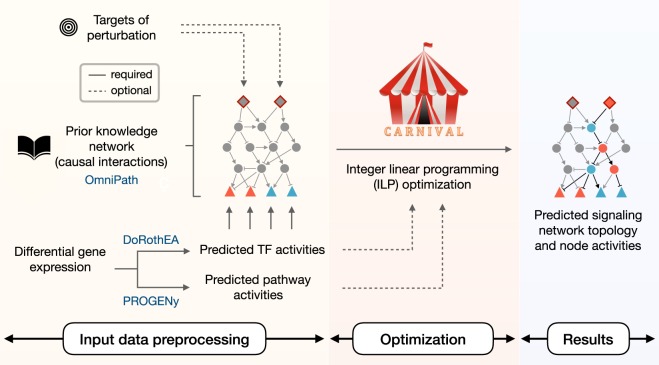
While gene expression profiling is commonly used to gain an overview of cellular processes, the identification of upstream processes that drive expression changes remains a challenge. To address this issue, we introduce CARNIVAL, a causal network contextualization tool which derives network architectures from gene expression footprints. CARNIVAL (CAusal Reasoning pipeline for Network identification using Integer VALue programming) integrates different sources of prior knowledge including signed and directed protein–protein interactions, transcription factor targets, and pathway signatures. The use of prior knowledge in CARNIVAL enables capturing a broad set of upstream cellular processes and regulators, leading to a higher accuracy when benchmarked against related tools. Implementation as an integer linear programming (ILP) problem guarantees efficient computation. As a case study, we applied CARNIVAL to contextualize signaling networks from gene expression data in IgA nephropathy (IgAN), a condition that can lead to chronic kidney disease. CARNIVAL identified specific signaling pathways and associated mediators dysregulated in IgAN including Wnt and TGF-β, which we subsequently validated experimentally. These results demonstrated how CARNIVAL generates hypotheses on potential upstream alterations that propagate through signaling networks, providing insights into diseases.
Overview
The claims and statistics of this paper haven’t been checked yet.
Free: it reads the open-access text and checks the first 5 claims that cite a source we can check. Create a free account to check every claim.
Integrity signals
Registry
Cites
Statistics
Figures
Verification
Claims the paper makes
The claims and statistics of this paper haven’t been checked yet.
Free: it reads the open-access text and checks the first 5 claims that cite a source we can check. Create a free account to check every claim.
Claims other papers make about this one
Each is checked against this paper’s own text: does it say what the citing paper says it does?
The source backs part of the claim, not all of it — or backs it for a different population, condition or comparison.
In the citing paper
“To infer signaling processes, the CARNIVAL algorithm combines upstream perturbation information (i.e., drug targets) with downstream measurements (i.e., transcription factor (TF) activities) and a causal prior knowledge network (PKN) (Liu et al, 2019).”
From Network integration of thermal proteome profiling with multi-omics data decodes PARP inhibition (2024) · cites this paper as Liu et al, 2019
Experimental — accuracy not yet measured
Self-check
Percentages, sums and reported differences re-computed from the paper’s own numbers.
The self-check needs the paper’s full text.
Citations
Cites
Subramanian, A., Tamayo, P., Mootha, V. K., Mukherjee, S., Ebert, B. L., Gillette, M. A., Paulovich, A., Pomeroy, S. L., Golub, T. R., Lander, E. S., et al. (2005) · Proceedings of the National Academy of Sciences · doi:10.1073/pnas.0506580102 · Cited by 53,625
Cytoscape: A software Environment for integrated models of biomolecular interaction networks
Shannon, P., Markiel, A., Ozier, O., Baliga, N. S., Wang, J. T., Ramage, D., Amin, N., Schwikowski, B., & Ideker, T. (2003) · Genome Research · doi:10.1101/gr.1239303 · Cited by 51,888
limma powers differential expression analyses for RNA-sequencing and microarray studies
Ritchie, M. E., Phipson, B., Wu, D., Hu, Y., Law, C. W., Shi, W., & Smyth, G. K. (2015) · Nucleic Acids Research · doi:10.1093/nar/gkv007 · Cited by 40,458
KEGG: new perspectives on genomes, pathways, diseases and drugs
Kanehisa, M., Furumichi, M., Tanabe, M., Sato, Y., & Morishima, K. (2017) · Nucleic Acids Research · doi:10.1093/nar/gkw1092 · Cited by 8,865 · cited 1×
“We first determined which pathways are known to be linked to the perturbations by different molecules according to the KEGG database (30); referred to perturbation-attributed pathways henceforth.”
BackgroundLeek, J. T., Johnson, W. E., Parker, H. S., Jaffe, A. E., & Storey, J. D. (2012) · Bioinformatics · doi:10.1093/bioinformatics/bts034 · Cited by 6,231 · cited 1×
“Batch effects were removed using the combat function of the sva R-package.(39) Differential gene expression compared to vehicle control in the same dataset was then computed with the limma R package.”
MethodInsights into the regulation of protein abundance from proteomic and transcriptomic analyses
Vogel, C., & Marcotte, E. M. (2012) · Nature Reviews Genetics · doi:10.1038/nrg3185 · Cited by 4,195 · cited 1×
“Such methods can provide valuable insight, but are limited by the fact that the abundance and activities of signaling proteins only partially correlate with gene expression (Vogel and Marcotte, 2012).”
BackgroundPhosphoSitePlus, 2014: mutations, PTMs and recalibrations
Hornbeck, P. V., Zhang, B., Murray, B., Kornhauser, J. M., Latham, V., & Skrzypek, E. (2015) · Nucleic Acids Research · doi:10.1093/nar/gku1267 · Cited by 3,411 · cited 1×
“The measurements with 19 phosphoprotein-binding antibodies were mapped to 14 differential protein activities using the curated regulatory sites in the PhosphositePlus knowledgebase (21).”
MethodOncogenic pathway signatures in human cancers as a guide to targeted therapies
Bild, A. H., Yao, G., Chang, J. T., Wang, Q., Potti, A., Chasse, D., Joshi, M.-B., Harpole, D., Lancaster, J. M., Berchuck, A., et al. (2006) · Nature · doi:10.1038/nature04296 · Cited by 2,032
Wyatt, R. J., & Julian, B. A. (2013) · New England Journal of Medicine · doi:10.1056/nejmra1206793 · Cited by 1,222
Benchmark and integration of resources for the estimation of human transcription factor activities
Garcia-Alonso, L., Holland, C. H., Ibrahim, M. M., Turei, D., & Saez-Rodriguez, J. (2019) · Genome Research · doi:10.1101/gr.240663.118 · Cited by 1,122 · cited 1×
“Another one is to predict transcription factor (TF) activities based on their regulons.(10,11) However, these approaches do not provide information on the topology of signaling pathways.”
Background
Cited by
Bernardes, J. P., Mishra, N., Tran, F., Bahmer, T., Best, L., Blase, J. I., Bordoni, D., Franzenburg, J., Geisen, U., Josephs-Spaulding, J., et al. (2020) · Immunity · doi:10.1016/j.immuni.2020.11.017 · Cited by 369
“Using upstream network topology of gene expression changes by using signed and directed protein-protein interactions (Liu et al., 2019), we could show that MAPK3 (also known as ERK1) and MAPK1 (also known as ERK2) had the highest centralities across all pseudotimes (Figure S3D).”
Integrated intra‐ and intercellular signaling knowledge for multicellular omics analysis
Türei, D., Valdeolivas, A., Gul, L., Palacio‐Escat, N., Klein, M., Ivanova, O., Ölbei, M., Gábor, A., Theis, F., Módos, D., et al. (2021) · Molecular Systems Biology · doi:10.15252/msb.20209923 · Cited by 369
Transcription factors: Bridge between cell signaling and gene regulation
Weidemüller, P., Kholmatov, M., Petsalaki, E., & Zaugg, J. B. (2021) · PROTEOMICS · doi:10.1002/pmic.202000034 · Cited by 285
“CARNIVAL [126], in particular, explicitly estimates TF- and pathway-activities [128, 13] from the gene expression data using prior knowledge, which improves the performance of the method compared to other causal reasoning approaches.”
MethodLIANA+ Provides an All-in-One Framework for Cell–Cell Communication Inference
Dimitrov, D., Schäfer, P. S. L., Farr, E., Rodriguez-Mier, P., Lobentanzer, S., Badia-i-Mompel, P., Dugourd, A., Tanevski, J., Ramirez Flores, R. O., & Saez-Rodriguez, J. (2024) · Nature Cell Biology · doi:10.1038/s41556-024-01469-w · Cited by 263
“…pathways, disease or location ( c ). d , Similarly, it uses this prior knowledge to infer putative causal (sign-coherent) signalling networks 49,79 , emanating from ligand–receptor interactions down to active TFs. e , The TF activities can be estimated by making use of generalistic regulon…”
A guide to multi-omics data collection and integration for translational medicine
Athieniti, E., & Spyrou, G. M. (2023) · Computational and Structural Biotechnology Journal · doi:10.1016/j.csbj.2022.11.050 · Cited by 174
“To find the smallest sign-coherent subnetwork connecting the deregulated molecules, it uses the implementation from the tool Carnival [74].”
MethodCausal integration of multi‐omics data with prior knowledge to generate mechanistic hypotheses
Dugourd, A., Kuppe, C., Sciacovelli, M., Gjerga, E., Gabor, A., Emdal, K. B., Vieira, V., Bekker‐Jensen, D. B., Kranz, J., Bindels, E. M. J., et al. (2021) · Molecular Systems Biology · doi:10.15252/msb.20209730 · Cited by 149
Self-citationFortelny, N., & Bock, C. (2020) · Genome Biology · doi:10.1186/s13059-020-02100-5 · Cited by 135
“More generally, KPNNs provide a deep learning-based framework that complements existing bio-informatic methods for identifying key transcription factors [104 – 106] and other regulatory proteins [107 – 109] from single-cell gene expression data [110, 111].”
MethodKnowledge graphs and their applications in drug discovery
MacLean, F. (2021) · Expert Opinion on Drug Discovery · doi:10.1080/17460441.2021.1910673 · Cited by 105
“There have been a handful of notable network-based causal reasoning approaches that have been successfully applied to drug discovery [106–114].”
BackgroundCOVID19 Disease Map, a computational knowledge repository of virus–host interaction mechanisms
Ostaszewski, M., Niarakis, A., Mazein, A., Kuperstein, I., Phair, R. D., Resendiz, A. O., Singh, V., Aghamiri, S. S., Acencio, M. L., Glaab, E., et al. (2021) · Molecular Systems Biology · doi:10.15252/msb.202110387 · Cited by 125
“CaSQ was adapted to produce SIF files necessary for HiPATHIA (Hidalgo et al , 2017) and CARNIVAL (Liu et al , 2019) pipelines.”
MethodDysregulated mesenchymal PDGFR‐β drives kidney fibrosis
Buhl, E. M., Djudjaj, S., Klinkhammer, B. M., Ermert, K., Puelles, V. G., Lindenmeyer, M. T., Cohen, C. D., He, C., Borkham‐Kamphorst, E., Weiskirchen, R., et al. (2020) · EMBO Molecular Medicine · doi:10.15252/emmm.201911021 · Cited by 95
“We next generated regulatory causal networks from both murine and human data sets with the tool CARNIVAL (Liu et al, 2019).”
Self-citationIntegrating multi-omics to unravel host-microbiome interactions in inflammatory bowel disease
Zhang, Y., Thomas, J. P., Korcsmáros, T., & Gul, L. (2024) · Cell Reports Medicine · doi:10.1016/j.xcrm.2024.101738 · Cited by 106
Computational analyses of mechanism of action (MoA): data, methods and integration
Trapotsi, M.-A., Hosseini-Gerami, L., & Bender, A. (2022) · RSC Chemical Biology · doi:10.1039/d1cb00069a · Cited by 71
Integrating knowledge and omics to decipher mechanisms via large‐scale models of signaling networks
Garrido‐Rodriguez, M., Zirngibl, K., Ivanova, O., Lobentanzer, S., & Saez‐Rodriguez, J. (2022) · Molecular Systems Biology · doi:10.15252/msb.202211036 · Cited by 70
“CARNIVAL uses a PKN containing protein-level signaling events derived from OmniPath.”
InfluentialIntegrated multi-omics reveals anaplerotic rewiring in methylmalonyl-CoA mutase deficiency
Forny, P., Bonilla, X., Lamparter, D., Shao, W., Plessl, T., Frei, C., Bingisser, A., Götze, S., van Drogen, A., Harshman, K., et al. (2023) · Nature Metabolism · doi:10.1038/s42255-022-00720-8 · Cited by 70
Tubular β-catenin alleviates mitochondrial dysfunction and cell death in acute kidney injury
Li, H., Leung, J. C. K., Yiu, W. H., Chan, L. Y. Y., Ли, Б., Lok, S. W. Y., Xue, R., Zou, Y., Lai, K. N., & Tang, S. C. W. (2022) · Cell Death and Disease · doi:10.1038/s41419-022-05395-3 · Cited by 62
Rodrigues, D., de Souza, T. M., Coyle, L., Piazza, M., Herpers, B., Ferreira, S., Zhang, M., Vappiani, J., Sévin, D. C., Gábor, A., et al. (2021) · Archives of Toxicology · doi:10.1007/s00204-021-03092-2 · Cited by 61
“In this optimization step, the algorithm finds a subset of the PKN that contains the maximum number of inputs (transcription factors) and outputs (measured metabolites) and it connects these nodes using the minimum number of edges (further details in (Liu et al. 2019)).”
MethodArtificial neural networks enable genome-scale simulations of intracellular signaling
Nilsson, A., Peters, J. M., Meimetis, N., Bryson, B. D., & Lauffenburger, D. A. (2022) · Nature Communications · doi:10.1038/s41467-022-30684-y · Cited by 66
Machine Learning for Causal Inference in Biological Networks: Perspectives of This Challenge
Lecca, P. (2021) · Frontiers in Bioinformatics · doi:10.3389/fbinf.2021.746712 · Cited by 46
“Critical reviews and comparative analyses of the various methods that have been proposed over the years can be found in various reviews and research papers over the last 10 years, some of which in these references (Veiga et al., 2010; Dongarra et al., 2011; Oates and Mukherjee, 2012; Omony, 2014; Chang et al., 2015; Z…”
BackgroundFootprint-based functional analysis of multiomic data
Dugourd, A., & Saez-Rodriguez, J. (2019) · Current Opinion in Systems Biology · doi:10.1016/j.coisb.2019.04.002 · Cited by 53
Using chemical and biological data to predict drug toxicity
Liu, A., Seal, S., Yang, H., & Bender, A. (2023) · SLAS Discovery · doi:10.1016/j.slasd.2022.12.003 · Cited by 54
Self-citationMontagud, A., Ponce-de-León, M., & Valencia, A. (2021) · Current Opinion in Systems Biology · doi:10.1016/j.coisb.2021.100385 · Cited by 54
A comprehensive database for integrated analysis of omics data in autoimmune diseases
Martorell‐Marugán, J., López-Domínguez, R., García-Moreno, A., Toro‐Domínguez, D., Villatoro-García, J. A., Barturen, G., Martín-Gómez, A., Troulé, K., Goméz-López, G., Al‐Shahrour, F., et al. (2021) · BMC Bioinformatics · doi:10.1186/s12859-021-04268-4 · Cited by 51
The use of machine learning to discover regulatory networks controlling biological systems
Erbe, R., Gore, J., Gemmill, K., Gaykalova, D. A., & Fertig, E. J. (2022) · Molecular Cell · doi:10.1016/j.molcel.2021.12.011 · Cited by 51
Hosseini, S., & Zhou, X. (2022) · Briefings in Bioinformatics · doi:10.1093/bib/bbac588 · Cited by 49
Gouda, M., Lv, J., Huang, Z., Chen, J., He, Y., & Li, X. (2024) · Biosensors and Bioelectronics · doi:10.1016/j.bios.2024.116504 · Cited by 38
Unlocking immune-mediated disease mechanisms with transcriptomics
de Jong, E., & Bosco, A. (2021) · Biochemical Society Transactions · doi:10.1042/bst20200652 · Cited by 45
CTpathway: a CrossTalk-based pathway enrichment analysis method for cancer research
Liu, H., Yuan, M., Mitra, R., Zhou, X., Min, L., Lei, W., Zhou, S., Huang, Y. L., Hou, F., Eischen, C. M., et al. (2022) · Genome Medicine · doi:10.1186/s13073-022-01119-6 · Cited by 36
“Recently, several other resources of TF-gene regulation have been provided [103, 104].”
BackgroundWhy do pathway methods work better than they should?
Szalai, B., & Saez‐Rodriguez, J. (2020) · FEBS Letters · doi:10.1002/1873-3468.14011 · Cited by 34
Niarakis, A., Kuiper, M. T. R., Ostaszewski, M., Malik‐Sheriff, R. S., Casals‐Casas, C., Thieffry, D., Freeman, T. C., Thomas, P. D., Touré, V., Noël, V., et al. (2020) · Briefings in Bioinformatics · doi:10.1093/bib/bbaa046 · Cited by 34
“The general pipeline involves obtaining existing prior knowledge on pathways from available public resources using OmniPath [52], building a logic model from this prior knowledge and training it to data with tools such as CellNOpt (for targeted readouts [53]), PHONEMeS (for untargeted mass spectrometry [54]) and CARNI…”
MethodUnifying multi-sample network inference from prior knowledge and omics data with CORNETO
Rodríguez-Mier, P., Garrido‐Rodríguez, M., Gábor, A., & Sáez-Rodríguez, J. (2025) · Nature Machine Intelligence · doi:10.1038/s42256-025-01069-9 · Cited by 34
“…balance analysis (FBA), sparse FBA (sFBA), iMAT (Integrative Metabolic Analysis Tool) for metabolic networks 27 , CAR-NIVAL (CAusal Reasoning for Network identification using Integer VALue programming) for signalling 28 or prize-collecting Steiner trees (PCSTs) for protein–protein interactions 29 .”
InfluentialPHONEMeS: Efficient Modeling of Signaling Networks Derived from Large-Scale Mass Spectrometry Data
Gjerga, E., Dugourd, A. J. F., Tobalina, L., Sousa, A., & Sáez-Rodríguez, J. (2021) · Journal of Proteome Research · doi:10.1021/acs.jproteome.0c00958 · Cited by 33
Self-citationThe active kinome: The modern view of how active protein kinase networks fit in biological research
Alganem, K., Hamoud, A.-R. A., Creeden, J. F., Henkel, N., Imami, A. S., Joyce, A. W., Ryan, W. G., Rethman, J., Shukla, R., O'Donovan, S. M., et al. (2021) · Current Opinion in Pharmacology · doi:10.1016/j.coph.2021.11.007 · Cited by 32
Niarakis, A., Ostaszewski, M., Mazein, A., Kuperstein, I., Kutmon, M., Gillespie, M. E., Funahashi, A., Acencio, M. L., Hemedan, A. A., Aichem, M., et al. (2024) · Frontiers in Immunology · doi:10.3389/fimmu.2023.1282859 · Cited by 33
Can we assume the gene expression profile as a proxy for signaling network activity?
Piran, M., Karbalaei, R., Piran, M., Aldahdooh, J., Mirzaie, M., Ansari-Pour, N., Tang, J., & Jafari, M. (2020) · Biomolecules · doi:10.3390/biom10060850 · Cited by 11
“In network biology, defining causal relationships among nodes is crucial for static and dynamic analysis [1,2].”
BackgroundAdvancing predictive toxicology: overcoming hurdles and shaping the future
Masarone, S., Beckwith, K. V., Wilkinson, M. R., Tuli, S., Lane, A., Windsor, S., Lane, J. S., & Hosseini-Gerami, L. (2025) · Digital Discovery · doi:10.1039/d4dd00257a · Cited by 31
“For example, Trairatphisan et al. 75 used a causal reasoning approach, CARNIVAL, 76 to uncover aberrant cell signalling in DILI, leveraging Open TG-GATEs repeat-dosing transcriptional and in vivo histopathological data to identify a regulatory pathway among liver brosis-inducing compounds.”
Touré, V., Flobak, Å., Niarakis, A., Vercruysse, S., & Kuiper, M. T. R. (2020) · Briefings in Bioinformatics · doi:10.1093/bib/bbaa390 · Cited by 28
“The CAusal Reasoning for Network identification using Integer VALue programming (CARNIVAL [79]) is a pipeline that integrates gene expression data to identify upstream regulatory signaling pathways.”
Zucker, J., Paneri, K., Mohammad-Taheri, S., Bhargava, S., Kolambkar, P., Bakker, C., Teuton, J., Hoyt, C. T., Oxford, K. L., Ness, R. O., et al. (2021) · IEEE Transactions on Big Data · doi:10.1109/tbdata.2021.3050680 · Cited by 29
“Future work will focus on leveraging molecular signature databases to infer the activity of variables in the model, and on learning and/or evaluating the models using experimental data [57].”
BackgroundSousa, A., Dugourd, A. J. F., Memon, D., Pétursson, B., Petsalaki, E., Sáez-Rodríguez, J., & Beltrão, P. (2023) · Molecular Systems Biology · doi:10.15252/msb.202110631 · Cited by 24
Szalai, B., & Veres, D. V. (2023) · Frontiers in Systems Biology · doi:10.3389/fsysb.2023.1126044 · Cited by 27
“, 2019), integer linear programming (Liu et al., 2019) or neural network architectures (Yuan et al.”
BackgroundMethodDickkopf1 fuels inflammatory cytokine responses
Jaschke, N., Pählig, S., Sinha, A. N., Adolph, T. E., Ledesma-Colunga, M. G., Hofmann, M., Wang, A., Thiele, S., Schwärzler, J., Kleymann, A., et al. (2022) · Communications Biology · doi:10.1038/s42003-022-04368-8 · Cited by 22
Massacci, G., Venafra, V., Latini, S., Bica, V., Pugliese, G. M., Graziosi, S., Klingelhuber, F., Krahmer, N., Fischer, T., Mougiakakos, D., et al. (2022) · Leukemia · doi:10.1038/s41375-022-01785-w · Cited by 24
“CARNIVAL was used to search in the naïve network causal circuits coherent with protein activity.”
MethodInfluentialNavigating Transcriptomic Connectivity Mapping Workflows to Link Chemicals with Bioactivities
Shah, I., Bundy, J., Chambers, B., Everett, L. J., Haggard, D., Harrill, J., Judson, R. S., Nyffeler, J., & Patlewicz, G. (2022) · Chemical Research in Toxicology · doi:10.1021/acs.chemrestox.2c00245 · Cited by 19
SignalingProfiler 2.0 a network-based approach to bridge multi-omics data to phenotypic hallmarks
Venafra, V., Sacco, F., & Perfetto, L. (2024) · npj Systems Biology and Applications · doi:10.1038/s41540-024-00417-6 · Cited by 19
“To tackle this issue, most of the methodsuse the manual exploration of themodelguided by the functional enrichment analysis 19,23 ; as an alternative, other tools, such as HiPathia 21 , decompose pathways into functional circuits ending on phenotypes.”
InfluentialRian, K., Hidalgo, M. R., Çubuk, C., Falco, M. M., Loucera, C., Esteban‐Medina, M., Álamo-Álvarez, I., Peña-Chilet, M., & Dopazo, J. (2021) · Computational and Structural Biotechnology Journal · doi:10.1016/j.csbj.2021.05.022 · Cited by 19
“ferent types of relationships among proteins, as in the case of CARNIVAL, which focused on regulatory relationships [74].”
BackgroundDomingo‐Fernándéz, D., Gadiya, Y., Patel, A., Mubeen, S., Rivas-Barragan, D., Diana, C. W., Misra, B. B., Healey, D., Rokicki, J., & Colluru, V. (2022) · PLoS Computational Biology · doi:10.1371/journal.pcbi.1009909 · Cited by 18
NeKo: A tool for automatic network construction from prior knowledge
Ruscone, M., Tsirvouli, E., Checcoli, A., Türei, D., Barillot, E., Sáez-Rodríguez, J., Martignetti, L., Flobak, Å., & Calzone, L. (2025) · PLoS Computational Biology · doi:10.1371/journal.pcbi.1013300 · Cited by 18
“To achieve such a combination, several tools and strategies have been developed to integrate omics data and prior knowledge, including SignalingProfiler [8], CARNIVAL [9] and Augusta [10].”
Hosseini-Gerami, L., Higgins, I. A., Collier, D. A., Laing, E., Evans, D. A. P., Broughton, H. B., & Bender, A. (2023) · BMC Bioinformatics · doi:10.1186/s12859-023-05277-1 · Cited by 18
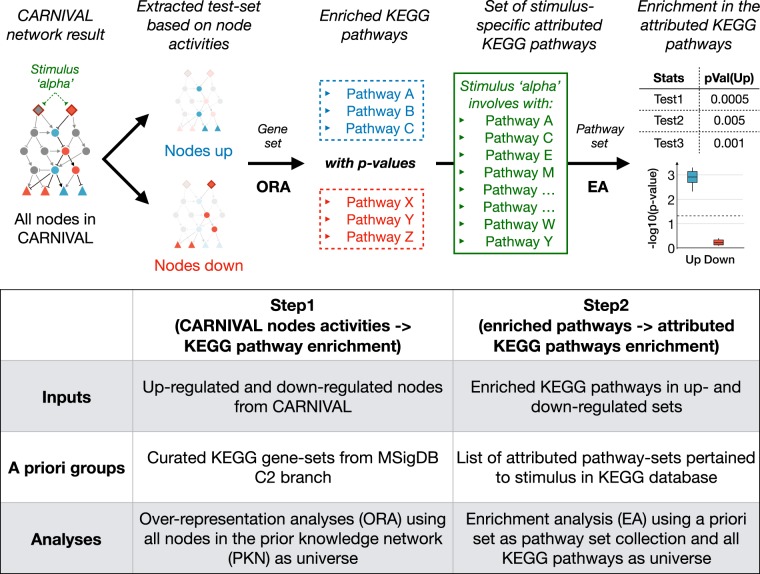
“To quantify the performance of the algorithms, we assessed the ability of each algorithm, in combination with different networks and parameter settings, to recover known targets directly, as well as compound-associated pathways (those annotated with the known targets) using a two-step enrichment approached described i…”
BackgroundMethodInfluentialAn integrated in silico-in vitro approach for identifying therapeutic targets against osteoarthritis
Lesage, R., Blanco, M. N. F., Narcisi, R., Welting, T. J. M., van Osch, G. J. V. M., & Geris, L. (2022) · BMC Biology · doi:10.1186/s12915-022-01451-8 · Cited by 18
“This data-driven approach allowed us to take advantage of automatic network reconstruction technologies, which are becoming more and more the standard in the state of the art [54, 55].”
Erickson, E. C., You, I., Perry, G. E., Dugourd, A. J. F., Donovan, K. A., Crafter, C., Johannes, J. W., Williamson, S. C., Moss, J. I., R�os, S., et al. (2024) · Science Signaling · doi:10.1126/scisignal.adf2670 · Cited by 16
“…transcriptional regulation, and metabolic reactions, in combination with an integer linear programming (ILP) optimization strategy to identify the smallest coherent subnet-work causally connecting as many deregulated transcription factors and metabolites in the input data as possible ( 29 , 30 ).”
BackgroundIdentification of phenotype-specific networks from paired gene expression–cell shape imaging data
Barker, C. G., Petsalaki, E., Giudice, G., Sero, J., Ekpenyong, E. N., Bakal, C., & Petsalaki, E. (2022) · Genome Research · doi:10.1101/gr.276059.121 · Cited by 16
Barsi, S., Papp, H., Valdeolivas, A., Tóth, D. J., Kuczmog, A., Madai, M., Hunyady, L., Várnai, P., Sáez-Rodríguez, J., Jakab, F., et al. (2022) · PLoS Computational Biology · doi:10.1371/journal.pcbi.1010021 · Cited by 14
“In addition, we used PROGENy pathway activity scores to weight the prior knowledge network and assist CARNIVAL in the discovery of optimal networks connecting the upstream perturbation (RIG-I like receptors) to the downstream targets (TFs).”
MethodInfluentialMultimodal diagnostic models and subtype analysis for neoadjuvant therapy in breast cancer
Ye, Z., Yuan, J., Hong, D., Xu, P., & Liu, W. (2025) · Frontiers in Immunology · doi:10.3389/fimmu.2025.1559200 · Cited by 20
“Progeny (54) was utilized to infer differential activity across 13 major signaling pathways.”
Omics are Getting Us Closer to Understanding IgA Nephropathy
Mucha, K., Pac, M., & Pączek, L. (2023) · Archivum Immunologiae et Therapiae Experimentalis · doi:10.1007/s00005-023-00677-w · Cited by 14
“Different expression of WNT and PI3K/Akt were also observed in other small-sample size studies of PBMCs and urine of IgAN patients (Liu et al. 2019; Luan et al. 2021; Wang et al. 2020).”
ResultReview: Cancer and neurodevelopmental disorders: multi-scale reasoning and computational guide
Nussinov, R., Yavuz, B. R., Demirel, H. C., Arici, M. K., Jang, H., & Tunçbağ, N. (2024) · Frontiers in Cell and Developmental Biology · doi:10.3389/fcell.2024.1376639 · Cited by 13
Towards an interpretable deep learning model of cancer
Nilsson, A., Meimetis, N., & Lauffenburger, D. A. (2025) · npj Precision Oncology · doi:10.1038/s41698-025-00822-y · Cited by 14
Systems biology reveals anatabine to be an NRF2 activator
Messinis, D. E., Poussin, C., Latino, D. A. R. S., Eb-Levadoux, Y., Dulize, R., Peric, D., Guedj, E., Titz, B., Ivanov, N. V., Peitsch, M. C., et al. (2022) · Frontiers in Pharmacology · doi:10.3389/fphar.2022.1011184 · Cited by 11
“, 2019), and the CARNIVAL optimization algorithm (Liu et al., 2019).”
BackgroundMethodTreveil, A., Bohár, B., Sudhakar, P., Gul, L., Csabai, L., Olbei, M. L., Poletti, M., Madgwick, M., Andrighetti, T., Hautefort, I., et al. (2021) · PLoS Computational Biology · doi:10.1371/journal.pcbi.1008685 · Cited by 13
“Alternatively, a different method, such as an integer linear programming approach which identifies paths based on an optimisation problem (as implemented in CARNIVAL), could be used for network reconstruction (Liu et al. 2019).”
MethodIdentifying cancer pathway dysregulations using differential causal effects
Jablonski, K. P., Pirkl, M., Ćevid, D., Bühlmann, P., & Beerenwinkel, N. (2021) · Bioinformatics · doi:10.1093/bioinformatics/btab847 · Cited by 12
“…as the Kyoto Encyclopedia of Genes and Genomes (KEGG) (Ogata et al. , 1999) can then be incorporated as prior knowledge to guide the enrichment analysis using topological information of gene connectivity (Liu et al. , 2019; Dutta et al. , 2012; Tarca et al. , 2009; Saez-Rodriguez et al. , 2009).”
MethodCharacterizing alternative splicing effects on protein interaction networks with LINDA
Gjerga, E., Vries, I. S. N., & Dieterich, C. (2023) · Bioinformatics · doi:10.1093/bioinformatics/btad224 · Cited by 10
Self-citationDeep Learning and Computational Chemistry
James, T., & Hristozov, D. (2021) · Methods in molecular biology · doi:10.1007/978-1-0716-1787-8_5 · Cited by 10
A machine learning and directed network optimization approach to uncover TP53 regulatory patterns
Triantafyllidis, C. P., Barberis, A., Hartley, F., Cuervo, A. M., Gjerga, E., Charlton, P., van Bijsterveldt, L., Rodriguez, J. S., & Buffa, F. M. (2023) · iScience · doi:10.1016/j.isci.2023.108291 · Cited by 10
Self-citationPatón, V., Türei, D., Ivanova, O., Müller‐Dott, S., Rodríguez-Mier, P., Venafra, V., Perfetto, L., Garrido‐Rodríguez, M., & Sáez-Rodríguez, J. (2025) · Bioinformatics · doi:10.1093/bioinformatics/btaf048 · Cited by 10
“For example, the causal reasoning method CARNIVAL (Liu et al. 2019), as implemented in CORNETO, is made available in NetworkCommons by a minimal wrapper (Supplementary Data SII.6).”
Pélissier, A., Laragione, T., Harris, C. L., Martínez, M. R., & Gulko, P. S. (2024) · Life Science Alliance · doi:10.26508/lsa.202402808 · Cited by 10
Modeling in systems biology: Causal understanding before prediction?
Barsi, S., & Szalai, B. (2021) · Patterns · doi:10.1016/j.patter.2021.100280 · Cited by 11
Transcriptomic Evidence Reveals the Dysfunctional Mechanism of Synaptic Plasticity Control in ASD
Kong, C., Bing, Z., Yang, L., Huang, Z., Wang, W.-X., & Grebogi, C. (2024) · Genes · doi:10.3390/genes16010011 · Cited by 8
“The multiple α -to- β ratios are recommended for a value between 0.03 and 0.5 [70].”
InfluentialZhang, C., Tan, L., Zheng, K., Xu, Y., Wan, J., Wu, J., Wang, C., Pin, G., & Feng, Y. (2025) · Frontiers in Immunology · doi:10.3389/fimmu.2025.1699134 · Cited by 8
Prioritizing drug targets by perturbing biological network response functions
Perrone, M. C., Lerner, M. G., Dunworth, M., Ewald, A. J., & Bader, J. S. (2024) · PLoS Computational Biology · doi:10.1371/journal.pcbi.1012195 · Cited by 9
Gleitz, H. F. E., Fuchs, S. N. R., Snoeren, I., Boys, C., Nagai, J. S., Mora, H. T., Klöker, V., Pritchard, J. E., Bakker, I. A. J. M., Garasa, M. G., et al. (2025) · HemaSphere · doi:10.1002/hem3.70179 · Cited by 8
“Based on the altered transcription factor (TF) activity we observed based on DoRothEA analysis, 10,11 we next used CARNI-VAL 12 with a prior knowledge network from OmniPath 13 to infer a signaling network between an inhibited S100a8/a9 ‐ Tlr4 interaction and the downstream estimated changes in TF activity (Figure 2H).”
Mapping the epithelial–immune cell interactome upon infection in the gut and the upper airways
Poletti, M., Treveil, A., Csabai, L., Gul, L., Módos, D., Madgwick, M., Olbei, M. L., Bohár, B., Valdeolivas, A., Türei, D., et al. (2022) · npj Systems Biology and Applications · doi:10.1038/s41540-022-00224-x · Cited by 8
“Ultimately, this framework may help to fi nd key intercellular in fl ammatory pathways involved in these crosstalks that could pave the way for potential successful strategies against the cytokine release syndrome associated-symptoms observed in severe cases of COVID-19.”
BackgroundMethodInfluentialDe novo identification of maximally deregulated subnetworks based on multi-omics data with DeRegNet
Winkler, S., Winkler, I., Figaschewski, M., Tiede, T., Nordheim, A., & Kohlbacher, O. (2022) · BMC Bioinformatics · doi:10.1186/s12859-022-04670-6 · Cited by 10
“While methods which work natively with directed networks are rarer [39–44], it is instrumental to be able to capture the effects of directed biomolecular interactions in the process of discovering deregulated networks.”
BackgroundUsing empirical biological knowledge to infer regulatory networks from multi-omics data
Pačínková, A., & Popovici, V. C. (2022) · BMC Bioinformatics · doi:10.1186/s12859-022-04891-9 · Cited by 8
“The prior knowledge from differential analysis is then used to systematically search causal paths between the deregulated TFs, kinases/phosphatases, and metabolites using a CARNIVAL and its integer linear programming optimisation approach [20].”
MethodArici, M. K., & Tunçbağ, N. (2024) · Briefings in Bioinformatics · doi:10.1093/bib/bbae399 · Cited by 8
Modeling causal signal propagation in multi-omic factor space with COSMOSPreprint
Dugourd, A. J. F., Lafrenz, P., Mañanes, D., Patón, V., Fallegger, R., Kroger, A.-C., Türei, D., Bai, Y., Li, Y., Trogdon, M., et al. (2024) · bioRxiv (Cold Spring Harbor Laboratory) · doi:10.1101/2024.07.15.603538 · Cited by 11
Network integration of thermal proteome profiling with multi-omics data decodes PARP inhibition
Burtscher, M. L., Gade, S., Garrido-Rodriguez, M., Rutkowska, A., Werner, T., Eberl, H. C., Petretich, M., Knopf, N., Zirngibl, K., Grandi, P., et al. (2024) · Molecular Systems Biology · doi:10.1038/s44320-024-00025-w · Cited by 7
“Having a set of input nodes of interest (TF, kinases, TPP proteins) and a preprocessed prior knowledge network, a network optimization was run using CARNIVAL (Liu et al, 2019).”
MethodInfluentialLogic-based machine learning predicts how escitalopram attenuates cardiomyocyte hypertrophy
Eggertsen, T. G., Travers, J. G., Hardy, E. J., Wolf, M. J., McKinsey, T. A., & Saucerman, J. J. (2025) · Proceedings of the National Academy of Sciences · doi:10.1073/pnas.2420499122 · Cited by 8
“Notably, CARNIVAL combines gene expression with protein interaction data to predict upstream signaling pathways that drive changes gene expression changes ( 60 ).”
ElHarouni, D., Hernansaiz-Ballesteros, R. D., Peterziel, H., Balasubramanian, G. P., Previti, C., Schramm, K., Blattner-Johnson, M., Kabbe, R., Jones, B. C., Oppermann, S., et al. (2025) · Cancer Research · doi:10.1158/0008-5472.can-24-1938 · Cited by 7
“We used the CARNIVAL pipeline (46) to construct patient-specific signaling networks using functional somatic SNVs and InDels, gene expression, gene fusions, TFs, and pathway activities.”
Bernardi, F., Torrejon-Diaz, J., Basili, I., Ommeren, R. V., Marsaud, V., Yu, H., Talbot, J., Souphron, J., Indersie, É., Forget, A., et al. (2026) · Cancer Cell · doi:10.1016/j.ccell.2025.12.012 · Cited by 11
de Graaf, M. W. V., Eggertsen, T. G., Zeigler, A. C., Tan, P. M., & Saucerman, J. J. (2023) · The Journal of Physiology · doi:10.1113/jp284616 · Cited by 7
“Others have utilized protein interactions, transcription factor targets and pathway signatures to identify upstream cellular processes in a causal network tool called CARNIVAL that was successfully benchmarked against a cellular perturbation dataset (Liu et al., 2019).”
Mora, A., Schmidt, C., Balderson, B., Frezza, C., & Bodén, M. (2024) · Genome Medicine · doi:10.1186/s13073-024-01415-3 · Cited by 7
“An alternative approach to including biological knowledge is by incorporating network structure into the analyses [19–21].”
Liu, A., Han, N., Munoz-Muriedas, J., & Bender, A. (2022) · PLoS Computational Biology · doi:10.1371/journal.pcbi.1010148 · Cited by 8
“One explanation for the lower observed frequencies is that these pathways are predominantly and initially mediated through post-transcriptional alterations instead of gene expression changes [36,37], making the expression of pathway members a weak proxy for pathway activation in early pathogenesis and explaining the o…”
Self-citationCausal network analysis of omics data using prior knowledge databases
Svinin, G. Е., & Glaab, E. (2025) · Briefings in Bioinformatics · doi:10.1093/bib/bbaf654 · Cited by 8
“CARNIVAL was originally validated in a study of IgA nephropathy [42].”
A Parameter Control Strategy for Parallel Island‐Based Metaheuristics
Prado‐Rodríguez, R., González, P., & Banga, J. R. (2025) · Expert Systems · doi:10.1111/exsy.70061 · Cited by 7
Predicting mechanism of action of cellular perturbations with pathway activity signatures
Ren, Y., Sivaganesan, S., Clark, N. A., Zhang, L., Biesiada, J., Niu, W., Plas, D. R., & Medvedovic, M. (2020) · Bioinformatics · doi:10.1093/bioinformatics/btaa590 · Cited by 6
Hosseini-Gerami, L., Ficulle, E., Humphryes-Kirilov, N., Airey, D. C., Scherschel, J., Kananathan, S., Eastwood, B. J., Bose, S., Collier, D. A., Laing, E., et al. (2023) · Alzheimer s Research & Therapy · doi:10.1186/s13195-023-01182-0 · Cited by 6
Fuchs, S. N. R., Stalmann, U., Snoeren, I., Bindels, E. M., Schmitz, S., Banjanin, B., Hoogenboezem, R. M., van Herk, S., Saad, M., Walter, W., et al. (2024) · Blood Advances · doi:10.1182/bloodadvances.2022008926 · Cited by 7
“Network contextualization with prior knowledge interactomes was applied using the bioinformatic tool CARNIVAL 32 to make a prediction about the collaborating effect of Csnk1a1 hap-loinsuf fi ciency and p53 dysfunction in leukemic blasts.”
MethodCausalCCC: a web server to explore intracellular causal pathways enabling cell–cell communication
Dupuis, L., Debeaupuis, O., Simon, F., & Isambert, H. (2025) · Nucleic Acids Research · doi:10.1093/nar/gkaf404 · Cited by 7
“Most alternative graph-reconstructing CCC methods offer intercellular (rather than intracellular) networks [ 7 , 14 , 42 , 43 ], while CCC methods returning intracellular networks are knowledge-based [ 10 , 21 , 44 , 45 ] or do not offer a web server [ 16 ].”
DeepSIBA: chemical structure-based inference of biological alterations using deep learning
Fotis, C., Meimetis, N., Sardis, A., & Alexopoulos, L. G. (2020) · Molecular Omics · doi:10.1039/d0mo00129e · Cited by 7
Triantafyllidis, C. P., & Aguas, R. J. (2025) · npj Systems Biology and Applications · doi:10.1038/s41540-025-00567-1 · Cited by 5
“The CARNIVAL [82] pipeline was used to reconstruct the networks via the normalized enrichment score and the deleterious function of mutation as a perturbing event on TP53 being the master node in all networks.”
PatientProfiler: building patient-specific signaling models from proteogenomic data
Lombardi, V., Rocco, L. D., Meo, E., Venafra, V., Nisio, E. D., Perticaroli, V., Nicolaeasa, M. L., Cencioni, C., Spallotta, F., Negri, R., et al. (2025) · Molecular Systems Biology · doi:10.1038/s44320-025-00160-y · Cited by 5
“…fi ed at the user level as a list within the “ carnival_options ” parameter): (cid:129) solver, which solver can be used between cplex, gurobi, lpSolve, cbc (Liu et al, 2019) (default = cplex); (cid:129) carnival_type, which CARNIVAL type can be used between inverse (which optimizes the network…”
InfluentialArriojas, A., Patalano, S. C., Macoska, J. A., & Zarringhalam, K. (2023) · NAR Genomics and Bioinformatics · doi:10.1093/nargab/lqad106 · Cited by 6
“SI Table 2 lists a few representative methods for inference of TF activity and reconstruction of gene regulatory networks and their corresponding descriptions ( 12 , 14 , 15 , 25 , 30–34 ).”
MethodAier, I., & Varadwaj, P. K. (2019) · Current Genomics · doi:10.2174/1389202920666191025102726 · Cited by 5
Systems pharmacology investigation of mechanism of action of nutraceuticals
Messinis, D. E., Latino, D. A. R. S., Pospíšil, P., Poussin, C., Peitsch, M. C., & Hoeng, J. (2021) · Elsevier eBooks · doi:10.1016/b978-0-12-821038-3.00024-0 · Cited by 6
Magnetique: an interactive web application to explore transcriptome signatures of heart failure
Britto‐Borges, T., Ludt, A., Boileau, E., Gjerga, E., Marini, F., & Dieterich, C. (2022) · Journal of Translational Medicine · doi:10.1186/s12967-022-03694-z · Cited by 5
“We applied CARNIVAL [23] to identify the regulatory processes upstream of TF. CARNIVAL uses Integer Linear Programming to refine protein-protein interaction changes that may drive the activation of different gene programs.”
MethodSelf-citationA ligand-receptor interactome of the bone tumor microenvironment in multiple myeloma bone pain
Barakat, A., Doncheva, N. T., Prado, J., Moll, L., Jensen, J. L., Diaz‐delCastillo, M., Novak, I., Eijkelkamp, N., Jensen, L. J., & Heegaard, A. (2025) · Pain · doi:10.1097/j.pain.0000000000003746 · Cited by 4
Hosseini-Gerami, L., Hernansaiz-Ballesteros, R. D., Liu, A., Broughton, H. B., Collier, D. A., & Bender, A. (2023) · BMC Bioinformatics · doi:10.1186/s12859-023-05416-8 · Cited by 4
Self-citationA network-based approach to overcome BCR::ABL1-independent resistance in chronic myeloid leukemia
Bica, V., Venafra, V., Massacci, G., Graziosi, S., Gualdi, S., Minnella, G., Sorà, F., Chiusolo, P., Brunetti, M. E., Napolitano, G., et al. (2025) · Cell Communication and Signaling · doi:10.1186/s12964-025-02185-0 · Cited by 4
“Then, to keep in the naïve network only the interactions coherent with the proteins’ activity, we applied the SignalingPro-filer 2.0 two-step multi-shot version of vanillaCARNI-VAL optimization [16] with default parameters.”
InfluentialTrairatphisan, P., de Souza, T. M., Kleinjans, J. C. S., Jennen, D. G. J., & Sáez-Rodríguez, J. (2021) · Toxicology Letters · doi:10.1016/j.toxlet.2021.06.020 · Cited by 4
Self-citationFUNKI: interactive functional footprint-based analysis of omics data
Hernansaiz-Ballesteros, R. D., Holland, C. H., Dugourd, A. J. F., & Sáez-Rodríguez, J. (2022) · Bioinformatics · doi:10.1093/bioinformatics/btac055 · Cited by 4
Vaparanta, K., Merilahti, J. A. M., Ojala, V. K., & Elenius, K. (2024) · Molecular & Cellular Proteomics · doi:10.1016/j.mcpro.2024.100780 · Cited by 3
Causal Inference and Annotation of Phosphoproteomics Data in Multiomics Cancer Studies
Dong, Q., Tan, M., Zhou, Y., Zhang, Y., & Li, J. (2025) · Molecular & Cellular Proteomics · doi:10.1016/j.mcpro.2025.100905 · Cited by 3
“There are several studies currently investigating causal relationships among molecules, such as CausalPath (10) and CARNIVAL (11), which infer causal associations based on known pathways and changes in gene or protein expression pro fi les.”
Metadata
- Authors
- Liu, A., Trairatphisan, P., Gjerga, E., Didangelos, A., Barratt, J., & Saez-Rodriguez, J.
- Affiliations
- Heidelberg University (DE)
- University of Leicester (GB)
- ORCID
- Venue
- npj Systems Biology and Applications
- Published
- 2019-11-11
- Volume
- 5
- Issue
- 1
- Pages
- 40-40
- ISSN
- 2056-7189 (ISSN-L)
- PMC
- PMC6848167
- OpenAlex
- W2986455832
- Semantic Scholar
- 15981d0dee2ac5ee45460005078efb647b0b2fe5
- Cited by
- 151
- References
- 50
- Citations by year
- 2026: 16 · 2025: 24 · 2024: 21 · 2023: 20 · 2022: 32 · 2021: 25 · 2020: 11 · 2019: 2
- FWCI
- 5.87
- Type
- journal article
- Language
- en
- Open access
- gold
- doi.org
- Licence
- cc-by
- creativecommons.org/licenses/by/4.0 (tdm)
- creativecommons.org/licenses/by/4.0 (vor)
- Locations
- npj Systems Biology and Applications (publishedVersion, cc-by)
- PubMed Central (publishedVersion, cc-by)
- PubMed (publishedVersion)
- DOAJ (DOAJ: Directory of Open Access Journals) (submittedVersion)
- Funders
- Innovative Medicines Initiative 2 Joint Undertaking "TransQST"
- European Union's Horizon 2020 program "Marie-Curie ITN"
- Topics
- Life Sciences › Biochemistry, Genetics and Molecular Biology › Molecular Biology › Bioinformatics and Genomic Networks
- Life Sciences › Biochemistry, Genetics and Molecular Biology › Molecular Biology › Gene Regulatory Network Analysis
- Health Sciences › Medicine › Health Informatics › Biomedical Text Mining and Ontologies
- Keywords
- carnival, causal network inference, signaling networks, integer linear programming, prior knowledge incorporation, protein-protein interaction, transcription factor targets, pathway signatures, IgA nephropathy, Wnt signaling, TGF-beta signaling, upstream regulators, chronic kidney disease
- MeSH terms
- Algorithms, Gene Expression Regulation, Humans, Programming, Linear, Software, Transcription Factors, Signal Transduction, Computational Biology, Gene Expression Profiling, Microarray Analysis, Gene Regulatory Networks
About these checks
Registry, retraction, Cites and statistics results are computed, not judged, with one exception: a printed reference that no index lists is read once by a model before it counts as a citation error. Claims are extracted by a model and kept only when their quote appears verbatim in the text; each cited source is then checked, with a model’s help, for whether it says what the claim relies on. Those verdicts can be wrong — read the claim’s quote and the cited source before relying on one.
Statistics and arithmetic are recomputed, not judged.
Confidence bands are shown only for fields calibrated on our annotated test set. None is calibrated yet, so no band is shown.
What counts as a claim ›How we measure confidence ›How we check this ›
Are you an author, or do you see a problem with this page? Request a review
Data sources
Bibliographic data: Semantic Scholar, OpenAlex, Crossref.
Contains information from the Semantic Scholar Academic Graph Datasets, made available under the ODC Attribution License (ODC-BY 1.0).
Semantic Scholar’s data is described in: Kinney, R., et al. (2023). The Semantic Scholar Open Data Platform. arXiv:2301.10140.
