

The DOI matches its Crossref record; 2 of the 2 references it cites were found in a registry or an index.
Toxoplasmosis vaccines: what we have and where to go?
Open accessAbstract
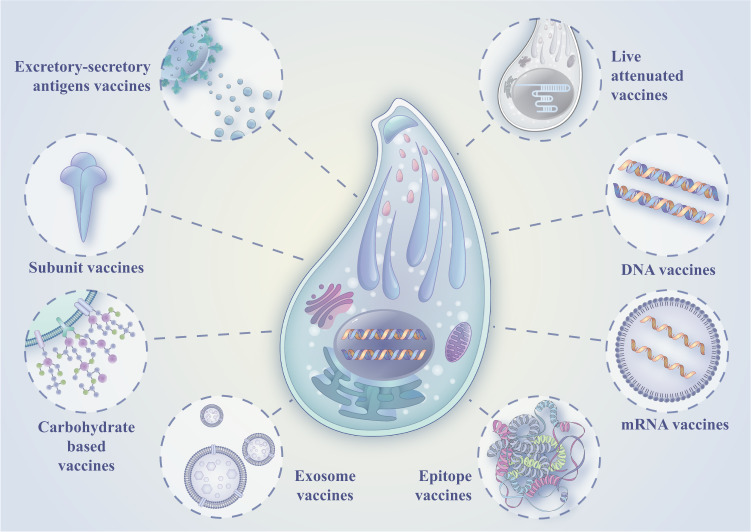
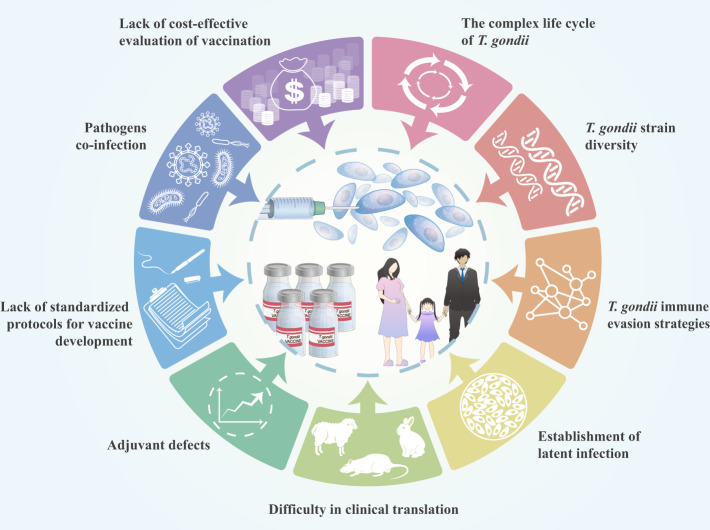
Despite recent major advances in developing effective vaccines against toxoplasmosis, finding new protective vaccination strategies remains a challenging and elusive goal as it is critical to prevent the disease. Over the past few years, various experimental approaches have shown that developing an effective vaccine against T. gondii is achievable. However, more remains unknown due to its complicated life cycle, difficulties in clinical translation, and lack of a standardized platform. This minireview summarizes the recent advances in the development of T. gondii vaccines and the main obstacles to developing a safe, effective and durable T. gondii vaccine. The successes and failures in developing and testing vaccine candidates for the T. gondii vaccine are also discussed, which may facilitate the future development of T. gondii vaccines.
Overview
The claims and statistics of this paper haven’t been checked yet.
Run the check — free, no account needed. It reads the open-access text and checks the sources it cites.
Integrity signals
Registry
Cites
Statistics
Figures
Verification
Claims the paper makes
The claims and statistics of this paper haven’t been checked yet.
Run the check — free, no account needed. It reads the open-access text and checks the sources it cites.
Claims other papers make about this one
Each is checked against this paper’s own text: does it say what the citing paper says it does?
The source backs part of the claim, not all of it — or backs it for a different population, condition or comparison.
In the citing paper
“However, the efficacy of different vaccine candidates cannot be compared because they were administered via different routes, animal types, vaccination doses, and vaccine production processes, all of which affect immunization efficacy (Zhang et al., 2022).”
From A novel Toxoplasma gondii TGGT1_316290 mRNA-LNP vaccine elicits protective immune response against toxoplasmosis in mice (2023) · cites this paper as Zhang et al., 2022
Experimental — accuracy not yet measured
Self-check
Percentages, sums and reported differences re-computed from the paper’s own numbers.
The self-check needs the paper’s full text.
Citations
Cites
DNA vaccines: ready for prime time?
Kutzler, M. A., & Weiner, D. B. (2008) · Nature Reviews Genetics · doi:10.1038/nrg2432 · Cited by 1,077
Advances in Toxoplasma gondii vaccines: current strategies and challenges for vaccine development
Chu, K.-B., & Quan, F.-S. (2021) · Vaccines · doi:10.3390/vaccines9050413 · Cited by 92
Research works printed but not linked: 88
- Dunay, I. R., Gajurel, K., Dhakal, R., Liesenfeld, O. & Montoya, J. G. Treatment of toxoplasmosis: historical perspective, animal models, and current clinical practice. Clin. Microbiol. Rev. https://doi.org/10.1128/cmr.00057-17 (2018). · DOI
- Rémy, V., Zöllner, Y. & Heckmann, U. Vaccination: the cornerstone of an efficient healthcare system. J. Mark. Access. Health Policy https://doi.org/10.3402/jmahp.v3.27041 (2015). · DOI
- Costa-Silva, T. A., Borges, M. M., Galhardo, C. S. & Pereira-Chioccola, V. L. Immunization with excreted/secreted proteins in AS/n mice activating cellular and humoral response against Toxoplasma gondii infection. Acta Trop. 124, 203–209 (2012). · DOI
- Wang, Y., Zhang, D., Wang, G., Yin, H. & Wang, M. Immunization with excreted-secreted antigens reduces tissue cyst formation in pigs. Parasitol. Res. 112, 3835–3842 (2013). · DOI
- Meshkini, E., Aminpour, A., Hazrati Tappeh, K., Seyyedi, S. & Shokri, M. Evaluation of adjuvant effectiveness of alum-propranolol mixture on the immunogenicity of excreted/secreted antigens of Toxoplasma gondii RH strain. Adv. Pharm. Bull. 11, 570–577 (2021). · DOI
- Dubey, J. P. Toxoplasmosis in sheep-the last 20 years. Vet. Parasitol. 163, 1–14 (2009). · DOI
- Freyre, A., Choromanski, L., Fishback, J. L. & Popiel, I. Immunization of cats with tissue cysts, bradyzoites, and tachyzoites of the T-263 strain of Toxoplasma gondii. J. Parasitol. 79, 716–719 (1993). · DOI
- Loh, F. K., Nathan, S., Chow, S. C. & Fang, C. M. Vaccination challenges and strategies against long-lived Toxoplasma gondii. Vaccine 37, 3989–4000 (2019). · DOI
- Ramakrishnan, C. et al. An experimental genetically attenuated live vaccine to prevent transmission of Toxoplasma gondii by cats. Sci. Rep. 9, 1474 (2019). · DOI
- Wang, J. L. et al. Live attenuated Pru:Δcdpk2 strain of toxoplasma gondii protects against acute, chronic, and congenital toxoplasmosis. J. Infect. Dis. 218, 768–777 (2018). · DOI
- Wang, L., Tang, D., Yang, C., Yang, J. & Fang, R. Toxoplasma gondii ADSL knockout provides excellent immune protection against a variety of strains. Vaccines (Basel) https://doi.org/10.3390/vaccines8010016 (2020). · DOI
- Czarnewski, P., Araújo, E. C. B., Oliveira, M. C., Mineo, T. W. P. & Silva, N. M. Recombinant TgHSP70 immunization protects against Toxoplasma gondii brain cyst formation by enhancing inducible nitric oxide expression. Front. Cell Infect. Microbiol. 7, 142 (2017). · DOI
- Onile, O. S., Ojo, G. J., Oyeyemi, B. F., Agbowuro, G. O. & Fadahunsi, A. I. Development of multiepitope subunit protein vaccines against Toxoplasma gondii using an immunoinformatics approach. NAR Genom. Bioinform. 2, lqaa048 (2020). · DOI
- Foroutan, M. & Ghaffarifar, F. Calcium-dependent protein kinases are potential targets for Toxoplasma gondii vaccine. Clin. Exp. Vaccin. Res. 7, 24–36 (2018). · DOI
- Majidiani, H. et al. In-depth computational analysis of calcium-dependent protein kinase 3 of Toxoplasma gondii provides promising targets for vaccination. Clin. Exp. Vaccin. Res. 9, 146–158 (2020). · DOI
- Dodangeh, S. et al. Protective efficacy by a novel multi-epitope vaccine, including MIC3, ROP8, and SAG1, against acute Toxoplasma gondii infection in BALB/c mice. Micro. Pathog. 153, 104764 (2021). · DOI
- Warner, R. C., Chapman, R. C., Davis, B. N. & Davis, P. H. Review of dna vaccine approaches against the parasite Toxoplasma gondii. J. Parasitol. 107, 882–903 (2021). · DOI
- Hiszczyńska-Sawicka, E. et al. Modulation of immune response to Toxoplasma gondii in sheep by immunization with a DNA vaccine encoding ROP1 antigen as a fusion protein with ovine CD154. Vet. Parasitol. 183, 72–78 (2011). · DOI
- Parthasarathy, S., Fong, M. Y., Ramaswamy, K. & Lau, Y. L. Protective immune response in BALB/c mice induced by DNA vaccine of the ROP8 gene of Toxoplasma gondii. Am. J. Trop. Med. Hyg. 88, 883–887 (2013). · DOI
- Alizadeh, P. et al. IL-17 and IL-22 elicited by a DNA vaccine encoding ROP13 associated with protection against Toxoplasma gondii in BALB/c mice. J. Cell Physiol. 234, 10782–10788 (2019). · DOI
- Yuan, Z. G. et al. Protective immunity induced by Toxoplasma gondii rhoptry protein 16 against toxoplasmosis in mice. Clin. Vaccin. immunol. 18, 119–124 (2011). · DOI
- Yuan, Z. G. et al. Protective effect against toxoplasmosis in mice induced by DNA immunization with gene encoding Toxoplasma gondii ROP18. Vaccine 29, 6614–6619 (2011). · DOI
- Yang, W. B. et al. Vaccination with a DNA vaccine encoding Toxoplasma gondii ROP54 induces protective immunity against toxoplasmosis in mice. Acta Trop. 176, 427–432 (2017). · DOI
- Ching, X. T., Fong, M. Y. & Lau, Y. L. Evaluation of the protective effect of deoxyribonucleic acid vaccines encoding granule antigen 2 and 5 against acute toxoplasmosis in BALB/c mice. Am. J. Trop. Med. Hyg. 96, 1441–1447 (2017). · DOI
- Zheng, B. et al. GRA24-based DNA vaccine prolongs survival in mice challenged with a virulent Toxoplasma gondii strain. Front. Immunol. 10, 418 (2019). · DOI · Paper page
- Rezaei, F. et al. A systematic review on the role of GRA proteins of Toxoplasma gondii in host immunization. J. Microbiol. Methods 165, 105696 (2019). · DOI
- Li, Z. Y. et al. Synergy of mIL-21 and mIL-15 in enhancing DNA vaccine efficacy against acute and chronic Toxoplasma gondii infection in mice. Vaccine 32, 3058–3065 (2014). · DOI
- Foroutan, M., Zaki, L. & Ghaffarifar, F. Recent progress in microneme-based vaccines development against Toxoplasma gondii. Clin. Exp. Vaccin. Res. 7, 93–103 (2018). · DOI
- Pagheh, A. S. et al. Toxoplasma gondii surface antigen 1 (SAG1) as a potential candidate to develop vaccine against toxoplasmosis: A systematic review. Comp. Immunol. Microbiol. Infect. Dis. 69, 101414 (2020). · DOI · Paper page
- Myhr, A. I. DNA vaccines: regulatory considerations and safety aspects. Curr. Issues Mol. Biol. 22, 79–88 (2017). · DOI
- El Bissati, K. et al. Engineering and characterization of a novel Self Assembling Protein for Toxoplasma peptide vaccine in HLA-A*11:01, HLA-A*02:01 and HLA-B*07:02 transgenic mice. Sci. Rep. 10, 16984 (2020). · DOI
- El Bissati, K. et al. Adjuvanted multi-epitope vaccines protect HLA-A*11:01 transgenic mice against Toxoplasma gondii. JCI Insight 1, e85955 (2016). · DOI
- El Bissati, K. et al. Effectiveness of a novel immunogenic nanoparticle platform for Toxoplasma peptide vaccine in HLA transgenic mice. Vaccine 32, 3243–3248 (2014). · DOI
- El Bissati, K. et al. Protein nanovaccine confers robust immunity against Toxoplasma. npj Vaccines 2, 24 (2017). · DOI
- Li, Y. & Zhou, H. Moving towards improved vaccines for Toxoplasma gondii. Expert. Opin. Biol. Ther. 18, 273–280 (2018). · DOI
- Roozbehani, M. et al. Characterization of a multi-epitope peptide with selective MHC-binding capabilities encapsulated in PLGA nanoparticles as a novel vaccine candidate against Toxoplasma gondii infection. Vaccine 36, 6124–6132 (2018). · DOI · Paper page
- Luo, F. et al. Induction of protective immunity against toxoplasma gondii in mice by nucleoside triphosphate hydrolase-II (NTPase-II) self-amplifying RNA vaccine encapsulated in lipid nanoparticle. Front. Microbiol. 8, 605 (2017). · DOI
- Sharma, O., Sultan, A. A., Ding, H. & Triggle, C. R. A review of the progress and challenges of developing a vaccine for COVID-19. Front. Immunol. 11, 585354 (2020). · DOI
- Pilkington, E. H. et al. From influenza to COVID-19: lipid nanoparticle mRNA vaccines at the frontiers of infectious diseases. Acta Biomater. 131, 16–40 (2021). · DOI
- Pardi, N., Hogan, M. J. & Weissman, D. Recent advances in mRNA vaccine technology. Curr. Opin. Immunol. 65, 14–20 (2020). · DOI · Paper page
- Maeda, Y. & Kinoshita, T. Structural remodeling, trafficking and functions of glycosylphosphatidylinositol-anchored proteins. Prog. Lipid Res. 50, 411–424 (2011). · DOI
- Debierre-Grockiego, F. et al. Activation of TLR2 and TLR4 by glycosylphosphatidylinositols derived from Toxoplasma gondii. J. Immunol. 179, 1129–1137 (2007). · DOI
- Astronomo, R. D. & Burton, D. R. Carbohydrate vaccines: developing sweet solutions to sticky situations. Nat. Rev. Drug Discov. 9, 308–324 (2010). · DOI · Paper page
- van Niel, G. et al. Intestinal epithelial cells secrete exosome-like vesicles. Gastroenterology 121, 337–349 (2001). · DOI
- Théry, C. et al. Indirect activation of naïve CD4+ T cells by dendritic cell-derived exosomes. Nat. Immunol. 3, 1156–1162 (2002). · DOI
- Li, Y. et al. Characterization of exosomes derived from Toxoplasma gondii and their functions in modulating immune responses. Int. J. Nanomed. 13, 467–477 (2018). · DOI
- Aline, F., Bout, D., Amigorena, S., Roingeard, P. & Dimier-Poisson, I. Toxoplasma gondii antigen-pulsed-dendritic cell-derived exosomes induce a protective immune response against T. gondii infection. Infect. Immun. 72, 4127–4137 (2004). · DOI
- Santos, P. & Almeida, F. Exosome-based vaccines: history, current state, and clinical trials. Front. Immunol. 12, 711565 (2021). · DOI
- Yektaeian, N., Malekpour, A., Atapour, A., Davoodi, T. & Hatam, G. Genetic immunization against toxoplasmosis: a review article. Micro. Pathog. 155, 104888 (2021). · DOI
- Attias, M. et al. The life-cycle of Toxoplasma gondii reviewed using animations. Parasit. Vectors 13, 588 (2020). · DOI
- Cong, H. et al. Human immunome, bioinformatic analyses using HLA supermotifs and the parasite genome, binding assays, studies of human T cell responses, and immunization of HLA-A*1101 transgenic mice including novel adjuvants provide a foundation for HLA-A03 restricted CD8+ T cell epitope based, adjuvanted vaccine protective against Toxoplasma gondii. Immunome Res. 6, 12 (2010). · DOI
- Howe, D. K. & Sibley, L. D. Toxoplasma gondii comprises three clonal lineages: correlation of parasite genotype with human disease. J. Infect. Dis. 172, 1561–1566 (1995). · DOI
- Saeij, J. P., Boyle, J. P. & Boothroyd, J. C. Differences among the three major strains of Toxoplasma gondii and their specific interactions with the infected host. Trends Parasitol. 21, 476–481 (2005). · DOI
- Khan, A. et al. Genetic analyses of atypical Toxoplasma gondii strains reveal a fourth clonal lineage in North America. Int. J. Parasitol. 41, 645–655 (2011). · DOI
- Su, C. et al. Globally diverse Toxoplasma gondii isolates comprise six major clades originating from a small number of distinct ancestral lineages. Proc. Natl Acad. Sci. USA 109, 5844–5849 (2012). · DOI
- Jensen, K. D. et al. Toxoplasma gondii superinfection and virulence during secondary infection correlate with the exact ROP5/ROP18 allelic combination. mBio 6, e02280 (2015). · DOI
- Dao, A., Fortier, B., Soete, M., Plenat, F. & Dubremetz, J. F. Successful reinfection of chronically infected mice by a different Toxoplasma gondii genotype. Int. J. Parasitol. 31, 63–65 (2001). · DOI
- Feng, G. et al. Human immunization with a polymorphic malaria vaccine candidate induced antibodies to conserved epitopes that promote functional antibodies to multiple parasite strains. J. Infect. Dis. 218, 35–43 (2018). · DOI
- Terheggen, U. et al. Limited antigenic diversity of Plasmodium falciparum apical membrane antigen 1 supports the development of effective multi-allele vaccines. BMC Med. 12, 183 (2014). · DOI
- Padrão Jda, C., Cabral, G. R., da Silva Mde, F., Seabra, S. H. & DaMatta, R. A. Toxoplasma gondii infection of activated J774-A1 macrophages causes inducible nitric oxide synthase degradation by the proteasome pathway. Parasitol. Int. 63, 659–663 (2014). · DOI
- Matta, S. K., Rinkenberger, N., Dunay, I. R. & Sibley, L. D. Toxoplasma gondii infection and its implications within the central nervous system. Nat. Rev. Microbiol. 19, 467–480 (2021). · DOI
- Olias, P., Etheridge, R. D., Zhang, Y., Holtzman, M. J. & Sibley, L. D. Toxoplasma effector recruits the Mi-2/NuRD complex to repress STAT1 transcription and block IFN-γ-dependent gene expression. Cell Host Microbe 20, 72–82 (2016). · DOI
- Chen, L. et al. The Toxoplasma gondii virulence factor ROP16 acts in cis and trans, and suppresses T cell responses. J. Exp. Med. https://doi.org/10.1084/jem.20181757 (2020). · DOI
- Etheridge, R. D. et al. The Toxoplasma pseudokinase ROP5 forms complexes with ROP18 and ROP17 kinases that synergize to control acute virulence in mice. Cell Host Microbe 15, 537–550 (2014). · DOI
- Nadipuram, S. M. et al. In vivo biotinylation of the toxoplasma parasitophorous vacuole reveals novel dense granule proteins important for parasite growth and pathogenesis. mBio https://doi.org/10.1128/mBio.00808-16 (2016). · DOI
- Gold, D. A. et al. The toxoplasma dense granule proteins GRA17 and GRA23 mediate the movement of small molecules between the host and the parasitophorous vacuole. Cell Host Microbe 17, 642–652 (2015). · DOI
- Li, T. T. et al. Effect of deletion of gra17 and gra23 genes on the growth, virulence, and immunogenicity of type II Toxoplasma gondii. Parasitol. Res. 119, 2907–2916 (2020). · DOI
- Yao, L. et al. Toxoplasma gondii type-I ROP18 targeting human E3 ligase TRIM21 for immune escape. Front. Cell Dev. Biol. 9, 685913 (2021). · DOI
- Braun, L. et al. The Toxoplasma effector TEEGR promotes parasite persistence by modulating NF-κB signalling via EZH2. Nat. Microbiol. 4, 1208–1220 (2019). · DOI
- Bernhagen, Jr & Bucala R. Mif Family Cytokines in Innate Immunity and Homeostasis. (Springer International Publishing: Imprint: Springer, 2017).
- Ghosh, S., Jiang, N., Farr, L., Ngobeni, R. & Moonah, S. Parasite-produced MIF cytokine: role in immune evasion, invasion, and pathogenesis. Front. Immunol. 10, 1995 (2019). · DOI · Paper page
- Tu, V. et al. Enrichment and proteomic characterization of the cyst wall from in vitro Toxoplasma gondii cysts. mBio https://doi.org/10.1128/mBio.00469-19 (2019). · DOI
- Waldman, B. S. et al. Identification of a master regulator of differentiation in toxoplasma. Cell 180, 359–372.e316 (2020). · DOI
- Sasai, M. & Yamamoto, M. Innate, adaptive, and cell-autonomous immunity against Toxoplasma gondii infection. Exp. Mol. Med. 51, 1–10 (2019). · DOI
- Howard, J. C., Hunn, J. P. & Steinfeldt, T. The IRG protein-based resistance mechanism in mice and its relation to virulence in Toxoplasma gondii. Curr. Opin. Microbiol. 14, 414–421 (2011). · DOI
- Zhao, X. Y. & Ewald, S. E. The molecular biology and immune control of chronic Toxoplasma gondii infection. J. Clin. Invest. 130, 3370–3380 (2020). · DOI
- Subauste, C. S. & Wessendarp, M. Human dendritic cells discriminate between viable and killed Toxoplasma gondii tachyzoites: dendritic cell activation after infection with viable parasites results in CD28 and CD40 ligand signaling that controls IL-12-dependent and -independent T cell production of IFN-gamma. J. Immunol. 165, 1498–1505 (2000). · DOI
- Garcia, J. L. et al. Partial protection against tissue cysts formation in pigs vaccinated with crude rhoptry proteins of Toxoplasma gondii. Vet. Parasitol. 129, 209–217 (2005). · DOI
- Guerrero Manriquez, G. G. & Tuero, I. Adjuvants: friends in vaccine formulations against infectious diseases. Hum. Vaccines Immunother. 17, 3539–3550 (2021). · DOI
- Inclan-Rico, J. M. & Siracusa, M. C. First responders: innate immunity to helminths. Trends Parasitol. 34, 861–880 (2018). · DOI
- Buxton, D. Toxoplasmosis: the first commercial vaccine. Parasitol. Today 9, 335–337 (1993). · DOI
- Sander, V., Angel, S. O. & Clemente, M. In Prospects of Plant-Based Vaccines in Veterinary Medicine (ed. MacDonald, J.), 89–120. (Springer International Publishing, 2018). · DOI
- Sacks D. L., Peters N. C., Bethony J. M. In The Vaccine Book, 2nd edn. (eds. Bloom, B. R. & Lambert, P.-H.), Ch. 17, 331–360. (Academic Press, 2016). · DOI
- Sander, V. A. et al. Use of veterinary vaccines for livestock as a strategy to control foodborne parasitic diseases. Front. Cell Infect. Microbiol. 10, 288 (2020). · DOI
- Kim, S. Y. & Goldie, S. J. Cost-effectiveness analyses of vaccination programmes: a focused review of modelling approaches. PharmacoEconomics 26, 191–215 (2008). · DOI
- Sykes, D. & Rychtář, J. A game-theoretic approach to valuating toxoplasmosis vaccination strategies. Theor. Popul. Biol. 105, 33–38 (2015). · DOI
- Bonačić Marinović, A. A. et al. Prospects of toxoplasmosis control by cat vaccination. Epidemics 30, 100380 (2019). · DOI
- Innes, E. A., Hamilton, C., Garcia, J. L., Chryssafidis, A. & Smith, D. A one health approach to vaccines against Toxoplasma gondii. Food Waterborne Parasitol. 15, e00053 (2019). · DOI
Cited by
Sorted by citations
Li, D., Zhang, Y., Li, S., & Zheng, B. (2023) · Frontiers in Microbiology · doi:10.3389/fmicb.2023.1145114 · Cited by 22
Self-citation
Metadata
- Authors
- Zhang, Y., Li, D., Lu, S., & Zheng, B.
- Affiliations
- Hangzhou Medical College (CN)
- Corresponding author
- Lu, Shaohong
- Zheng, Bin
- Venue
- npj Vaccines
- Published
- 2022-10-31
- Volume
- 7
- Issue
- 1
- Pages
- 131-131
- ISSN
- 2059-0105 (ISSN-L)
- PMC
- PMC9618413
- OpenAlex
- W4307896339
- Cited by
- 77
- References
- 2
- Citations by year
- 2026: 24 · 2025: 24 · 2024: 18 · 2023: 10 · 2022: 1
- FWCI
- 2.56
- Type
- journal article
- Language
- en
- Open access
- gold
- doi.org
- Locations
- npj Vaccines (publishedVersion, cc-by)
- PubMed Central (publishedVersion, cc-by)
- PubMed (publishedVersion)
- DOAJ (DOAJ: Directory of Open Access Journals) (submittedVersion, cc-by-sa)
- Funders
- National Natural Science Foundation of China (81871684, 32000293)
- Department of Education of Zhejiang Province
- Topics
- Life Sciences › Immunology and Microbiology › Parasitology › Toxoplasma gondii Research Studies
- Life Sciences › Agricultural and Biological Sciences › Animal Science and Zoology › Coccidia and coccidiosis research
- Life Sciences › Immunology and Microbiology › Parasitology › Parasitic Infections and Diagnostics
- Keywords
- toxoplasmosis, Toxoplasma gondii, vaccine development, vaccine candidate, vaccine safety, vaccine efficacy, vaccine durability, clinical translation, parasite life cycle
About these checks
Registry, retraction, Cites and statistics results are computed, not judged, with one exception: a printed reference that no index lists is read once by a model before it counts as a citation error. Claims are extracted by a model and kept only when their quote appears verbatim in the text; each cited source is then checked, with a model’s help, for whether it says what the claim relies on. Those verdicts can be wrong — read the claim’s quote and the cited source before relying on one.
Statistics and arithmetic are recomputed, not judged.
Confidence bands are shown only for fields calibrated on our annotated test set. None is calibrated yet, so no band is shown.
What counts as a claim ›How we measure confidence ›How we check this ›
Are you an author, or do you see a problem with this page? Request a review
