

Removal of heavy metal ions from wastewater: a comprehensive and critical review
Open accessThe DOI matches its Crossref record; 136 of the 136 references it cites were found in a registry or an index; 5 of the 119 sources its claims cite were checked for support.
Abstract
Abstract Removal of heavy metal ions from wastewater is of prime importance for a clean environment and human health. Different reported methods were devoted to heavy metal ions removal from various wastewater sources. These methods could be classified into adsorption-, membrane-, chemical-, electric-, and photocatalytic-based treatments. This paper comprehensively and critically reviews and discusses these methods in terms of used agents/adsorbents, removal efficiency, operating conditions, and the pros and cons of each method. Besides, the key findings of the previous studies reported in the literature are summarized. Generally, it is noticed that most of the recent studies have focused on adsorption techniques.
Overview
CoChat Summary
TL;DR
This review comprehensively classifies heavy-metal removal from wastewater into adsorption-, membrane-, chemical-, electric-, and photocatalytic-based treatments and compares their efficiencies, operating conditions, and pros/cons. It concludes that adsorption is the most widely studied recent method, while chemical and membrane methods are practical but face sludge, fouling, and post-treatment challenges.
Key findings
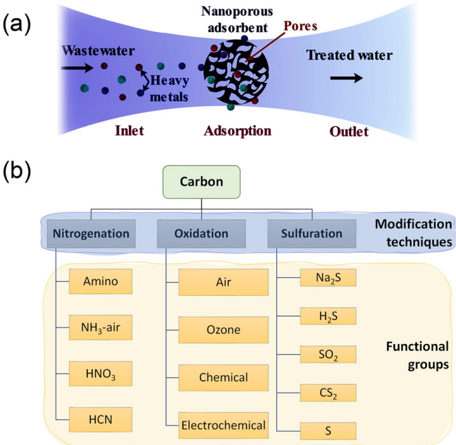
- Adsorption is the most considered method in recent years, with advantages of easy operation, low cost, and high sorption capacity; carbon-based nanoporous adsorbents have surface areas of 500–1500 m²/g.
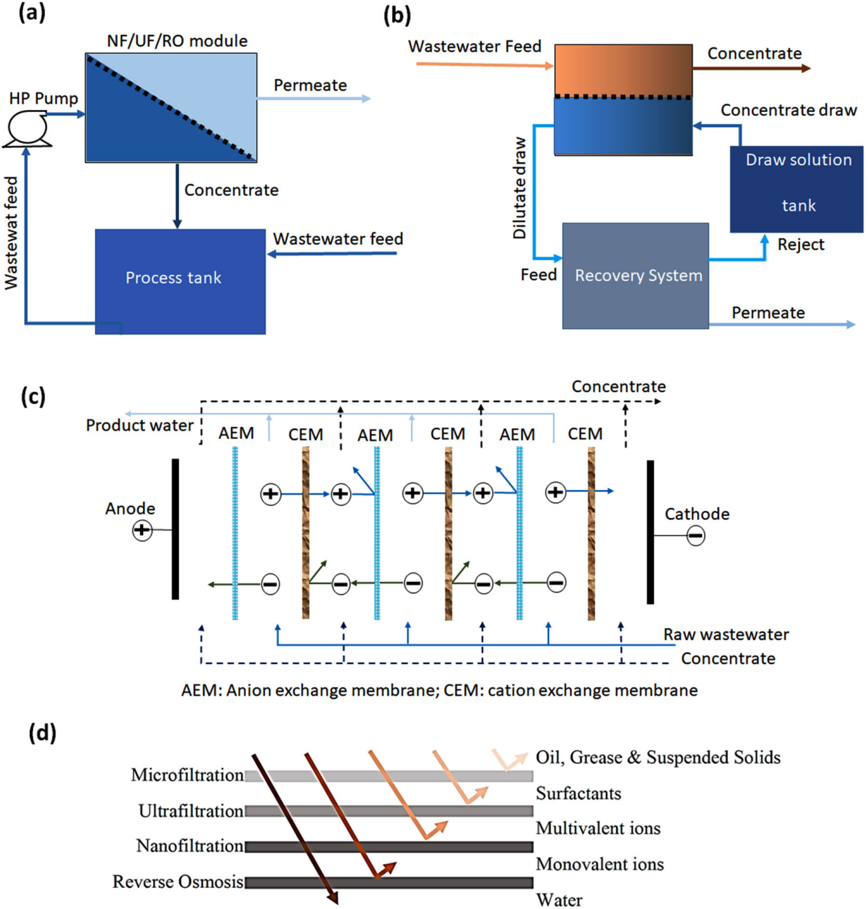
- Reported removal efficiencies vary by method: nanofiltration reached 94–98% extraction for Fe³⁺, Al³⁺, Co²⁺, Cd²⁺, Cu²⁺, and humic acid; electrodialysis attained 96.9%, 99.9%, and 99.9% for Ni²⁺, Pb²⁺, and K⁺; reverse osmosis removed >98.75% of Ni²⁺, Cr⁶⁺, and Cu²⁺ from electroplating wastewater; membrane distillation achieved >96% removal of Ca²⁺, Mg²⁺, Fe³⁺, and Fe²⁺ and >99% for As³⁺ and As⁵⁺.
- Table 2 lists highest adsorption capacities including Pb²⁺ on polyrhodanine/MWCNTs at 8118.0 mg/g, Cu²⁺ on polyvinylpyrrolidone-reduced GO at 1689.0 mg/g, and Cr⁶⁺ on GSC at 2859.0 mg/g.
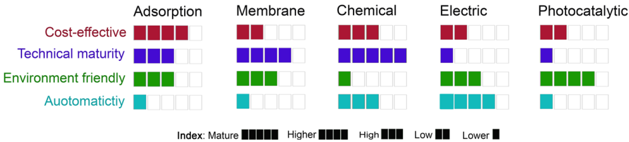
- Major obstacles include adsorption’s ability to remove different ion types concurrently, high retention time, and cycling stability; chemical methods’ large-volume sludge and post-treatment needs; membrane fouling/scaling and cleaning costs; and electric- and photocatalytic-based methods being less mature.
Methods
- Design: comprehensive and critical review of reported heavy-metal removal methods from wastewater, classified into adsorption-, membrane-, chemical-, electric-, and photocatalytic-based treatments.
- Data: literature studies selected based on availability of operating and performance parameters for each method; details are listed in supplementary tables.
- Analysis: qualitative comparison of used agents/adsorbents, removal efficiency, operating conditions, and pros and cons, with summary tables and figures.
Limitations
- The paper states a clear knowledge gap because most studies used synthetic wastewater with one or few metal types; it recommends more research using real wastewater, pilot-scale processes, and cost-effective sustainable materials.
- The paper notes that disposal of adsorbents after adsorption is a big challenge, MOFs often have low stability in water, and electric/photocatalytic methods remain less mature or laboratory-scale.
- Evident from the text: as a review, it reports findings from cited studies rather than generating new experimental data, and several performance details depend on supplementary tables not fully reproduced in the main text.
Model-written summary. Check it against the paper before relying on it.
Integrity signals
Registry
Cites
Statistics
Figures
Verification
Claims the paper makes
5 Valid · 9 Not valid · 107 Not checked · 47 Own results and interpretations
The cited sources support only part of this claim — read each source’s verdict below.
In the paper
“Carbon-based nanoporous adsorbents, especially activated carbons (ACs), carbon nanotubes (CNTs), and graphene (GN), are extensively used in the applications of heavy metal removal owing to their tremendous surface area (500-1500 m 2 /g) 8 .”
§ Removal of heavy metal ions from wastewater: a comprehensive and critical review > Carbon-based adsorbents
What the sources say
- Partly supportedcites [8] 8. Karnib, M., Kabbani, A., Holail, H. & Olama, Z. Heavy metals removal using activated carbon, silica and silica activated carbon composite. Energy Procedia 50, 113-120 (2014). sourceExperimental — accuracy not yet measured
The Introduction (page unavailable) says activated carbon is widely used in wastewater treatment because of its 500–1500 m²/g surface area, and identifies graphene as an adsorbent used in water purification. It does not mention carbon nanotubes or assign that surface-area range and rationale to graphene or carbon nanotubes. (LLM, conf=0.88)
plainstates a cause- Asserted: passes — The authors put it forward as true.
- Checkable: passes — It can be checked against evidence.
- Load-bearing: unclear — It is unclear whether the paper’s conclusions depend on it.
- Based: passes — The paper gives a reason why it holds.
- Partly supported
Every source the paper cites for this claim was checked and supports it.
In the paper
“| Sb 3+ | Chitosan functionalized iron | 138.8 | 50 |”
- Also stated in: § Selection of the most appropriate technique for heavy ions · plain
“| | nanosheet | | |”
§ Removal of heavy metal ions from wastewater: a comprehensive and critical review > Selection of the most appropriate technique for heavy ions
What the sources say
- Supportedcites [50] 50. Zeng, J. et al. Chitosan functionalized iron nanosheet for enhanced removal of As (III) and Sb (III): Synergistic effect and mechanism. Chem. Eng. J. 122999 (2019). source
Section 3.4 (Adsorption isotherms) reports a maximum adsorption capacity of 138.8 mg/g for Sb(III) on the chitosan-functionalized iron nanosheet, calculated by non-linear fitting of the Langmuir model. This supports the table entry; the value is a model-derived maximum. (LLM, conf=0.94)
plain- Asserted: passes — The authors put it forward as true.
- Checkable: passes — It can be checked against evidence.
- Load-bearing: unclear — It is unclear whether the paper’s conclusions depend on it.
- Based: passes — The paper gives a reason why it holds.
- Also stated in: § Selection of the most appropriate technique for heavy ions · plain
The cited sources support only part of this claim — read each source’s verdict below.
In the paper
“A fabricated CS/silver bio-nano-composites (CS/PVDC/Ag) was utilized in photocatalytic oxidation process for 97% Cu 2+ , 88% Pb 2+ , 89% Cd 2+ and 77% dye removal 130 .”
§ Removal of heavy metal ions from wastewater: a comprehensive and critical review > Electrooxidation
What the sources say
- Partly supportedcites [130] Al-Sherbini, A. S. A., Ghannam, H. E. A., El-Ghanam, G. M. A., El-Ella, A. A. & Youssef, A. M. Utilization of chitosan/Ag bionanocomposites as eco-friendly photocatalytic reactor for Bactericidal effect and heavy metals removal. Heliyon 5, e01980 (2019). sourceExperimental — accuracy not yet measured
The Results and discussion sections report 97% Cu(II), 88% Pb(II), and 89% Cd(II) removal at the 0.64% chitosan ratio, and 77% sodium fluorescein dye photodegradation with aeration. But the heavy-metal removal was measured by adsorption, not photocatalytic oxidation; the Conclusions distinguish adsorption of metals from photodegradation of dye. Page numbers are not available in our copy. (LLM, conf=0.91)
plainstates a cause- Asserted: passes — The authors put it forward as true.
- Checkable: passes — It can be checked against evidence.
- Load-bearing: unclear — It is unclear whether the paper’s conclusions depend on it.
- Based: passes — The paper gives a reason why it holds.
- Partly supported
A result the paper reports from its own data — it cites no other source for it, so there is none to check. The quote shows it is in the paper.
In the paper
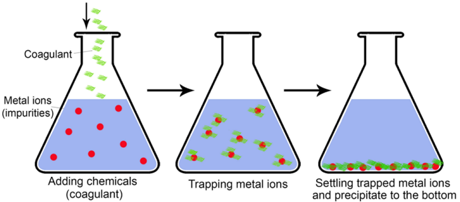
“It can be seen that the majority of metals removed by this method are Zn 2+ , Cu 2+ , Ni 2+ , Pb 2+ , and Cr 3+ .”
§ Removal of heavy metal ions from wastewater: a comprehensive and critical review > Chemical precipitation (the so-called coagulation precipitation)
plain- Asserted: passes — The authors put it forward as true.
- Checkable: passes — It can be checked against evidence.
- Load-bearing: unclear — It is unclear whether the paper’s conclusions depend on it.
- Based: passes — The paper gives a reason why it holds.
In the paper
“It can be concluded that Ti-based anodes were widely used in the EF process 107 .”
§ Removal of heavy metal ions from wastewater: a comprehensive and critical review > Electrochemical treatment
What the sources say
- Not checked — no full text of the sourcecites [107] Chen, X., Chen, G. & Yue, P. L. Novel electrode system for electroflotation of wastewater. Environ. Sci. Technol. 36, 778–783 (2002). source
boosted- Asserted: passes — The authors put it forward as true.
- Checkable: passes — It can be checked against evidence.
- Load-bearing: unclear — It is unclear whether the paper’s conclusions depend on it.
- Based: passes — The paper gives a reason why it holds.
70 more claims
Create a free account to see all 168 claims and to verify the 1 reference still open.
- It may state two separate claims as one. 72
- Probably not a substantial claim. 36
Claims other papers make about this one
Each is checked against this paper’s own text: does it say what the citing paper says it does?
The cited source says what the claim attributes to it.
In the citing paper
“Treatment to reduce or eliminate heavy metals in drinking water to permissible levels is critical for human health (Flora et al., 2008;Kumar and Puri, 2012;Qasem et al., 2021).”
From Adsorption of heavy metals on natural zeolites: A review (2023) · cites this paper as Qasem et al., 2021
Self-check
Percentages, sums and reported differences re-computed from the paper’s own numbers.
Each contradiction between two passages listed here was confirmed by an independent check.
Rated minor: it would not touch a result — a value no result rests on, a p-value that stays on the same side of the significance level, or a conflict that is clerical, resolved elsewhere in the paper, or outside its own findings.
In the paper
§ Removal of heavy metal ions from wastewater: a comprehensive and critical review > Electrochemical treatment
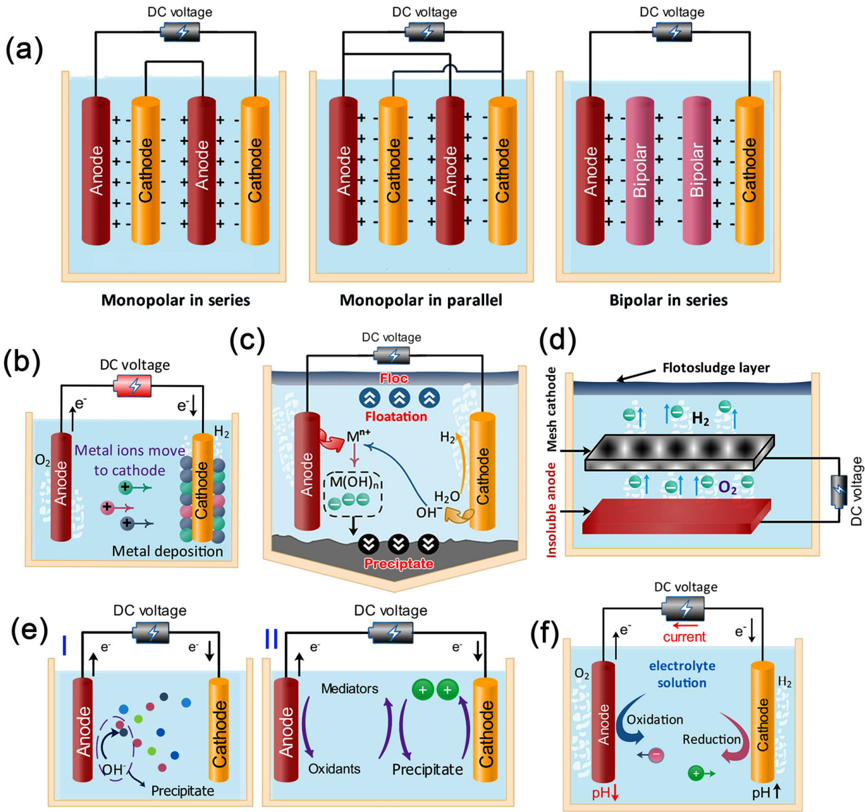
“d basic electroflotation methods-anions are released from anode to combine with cations (metal ions) and then floating over the water”
§ Removal of heavy metal ions from wastewater: a comprehensive and critical review > Electrochemical treatment
“and d electro-Fenton process in which OH -is released at anode and reacts with metal ions, and hence wastewater is purified due to precipitation.”
Rated minor: it would not touch a result — a value no result rests on, a p-value that stays on the same side of the significance level, or a conflict that is clerical, resolved elsewhere in the paper, or outside its own findings.
In the paper
§ Removal of heavy metal ions from wastewater: a comprehensive and critical review > Selection of the most appropriate technique for heavy ions
“The electric-and chemical-based methods are represented here for chemical precipitation and electrochemical processes, respectively 133 .”
§ Removal of heavy metal ions from wastewater: a comprehensive and critical review > Selection of the most appropriate technique for heavy ions
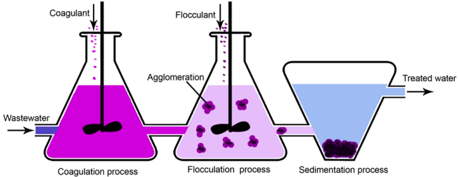
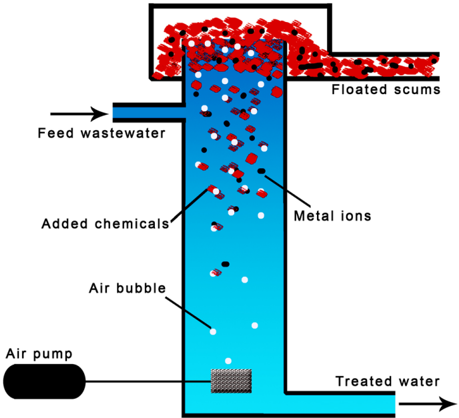
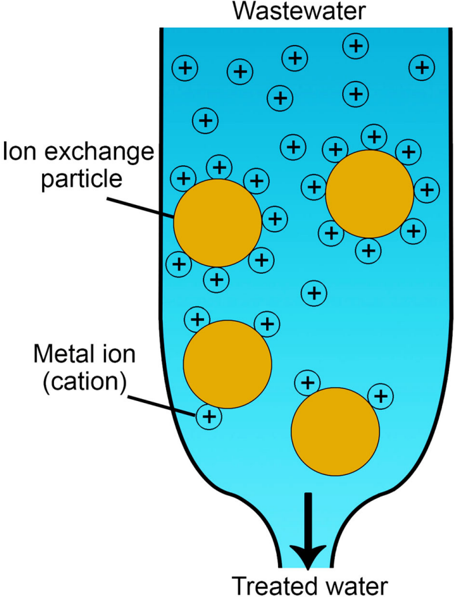
“chemical treatments (i.e., chemical precipitation, coagulation-flocculation, and flotation), electric treatments (i.e., electrochemical (reduction, EC, EF, and advanced oxidation) and ion exchange)”
Rated minor: it would not touch a result — a value no result rests on, a p-value that stays on the same side of the significance level, or a conflict that is clerical, resolved elsewhere in the paper, or outside its own findings.
In the paper
§ Removal of heavy metal ions from wastewater: a comprehensive and critical review > Electrochemical treatment
“Pt, Au, Mn, boron-doped diamond (PbO 2 ), and mixed metal oxide (MMO) (such as SnO 2 , PbO 2 , Ti/TiO 2 , IrO 2 , Sb 2 O 5 , RuO 2 ) are widely used as anodes 112 .”
§ Removal of heavy metal ions from wastewater: a comprehensive and critical review > Anode material Advantages Disadvantages
“PbO 2 -Relatively inexpensive. -Suitable for mineralizing organics -Toxic Pb could be formed. -Low efficiency in industry applications MMO -Relatively inexpensive. -High stability. -Good conductivity properties. -Toxic Sb could be formed. -Uneven coating.BDD -High potential for mineralizing organics.”
Cited works that were retracted
Works this paper cites that were later retracted, from the retraction notices publishers deposit. Major when the notice came out before this paper was published.
Rated major: it would touch a result — a value a result rests on, reported and recomputed p-values on opposite sides of the significance level, two passages that conflict with no sign which is right, or a cited work retracted before this paper was published.
In the paper
“Jamshidifard, S. et al. Incorporation of UiO-66-NH2 MOF into the PAN/chitosan nanofibers for adsorption and membrane filtration of Pb(II), Cd(II) and Cr(VI) ions from aqueous solutions. J. Hazard. Mater. 368, 10–20 (2019).”
Cited work 10.1016/j.jhazmat.2019.01.024 · retracted 2019-04-15 · notice 10.1016/j.jhazmat.2019.01.024 · this paper published 2021-07-08
Citations
Cites
1 retracted
Jamshidifard, S., Koushkbaghi, S., Hosseini, S., Rezaei, S., Karamipour, A., Jafari rad, A., & Irani, M. (2019) · Journal of Hazardous Materials · doi:10.1016/j.jhazmat.2019.01.024 · Cited by 540
RetractedRemoval of heavy metal ions from wastewaters: A review
Fu, F., & Wang, Q. (2011) · Journal of Environmental Management · doi:10.1016/j.jenvman.2010.11.011 · Cited by 8,703
New trends in removing heavy metals from industrial wastewater
Barakat, M. A. (2011) · Arabian Journal of Chemistry · doi:10.1016/j.arabjc.2010.07.019 · Cited by 3,094
Advantages and disadvantages of techniques used for wastewater treatment
Crini, G., & Lichtfouse, E. (2019) · Environmental Chemistry Letters · doi:10.1007/s10311-018-0785-9 · Cited by 2,971
Heavy metal removal from water/wastewater by nanosized metal oxides: A review
Hua, M., Zhang, S., Pan, B., Zhang, W., Lv, L., & Zhang, Q. (2012) · Journal of Hazardous Materials · doi:10.1016/j.jhazmat.2011.10.016 · Cited by 2,193
Physico–chemical treatment techniques for wastewater laden with heavy metals
Kurniawan, T. A., Chan, G. Y. S., Lo, W.-H., & Babel, S. (2006) · Chemical Engineering Journal · doi:10.1016/j.cej.2006.01.015 · Cited by 2,072
Martínez-Huitle, C. A., & Ferro, S. (2006) · Chem. Soc. Rev. · doi:10.1039/b517632h · Cited by 1,840
Da̧browski, A., Hubicki, Z., Podkościelny, P., & Robens, E. (2004) · Chemosphere · doi:10.1016/j.chemosphere.2004.03.006 · Cited by 1,717
Burakov, A. E., Galunin, E. V., Burakova, I. V., Kucherova, A. E., Agarwal, S., Tkachev, A. G., & Gupta, V. K. (2018) · Ecotoxicology and Environmental Safety · doi:10.1016/j.ecoenv.2017.11.034 · Cited by 1,612
Yang, X., Wan, Y., Zheng, Y., He, F., Yu, Z., Huang, J., Wang, H., Ok, Y. S., Jiang, Y., & Gao, B. (2019) · Chemical Engineering Journal · doi:10.1016/j.cej.2019.02.119 · Cited by 1,527
Research works printed but not linked: 3
- 80. Al-Hemaidi, W. K. Approach in choosing suitable technology for industrial wastewater. J. Civil & Envir. Eng. 2, 1000123 (2012).
- 98. Pretorius, W. A., Johannes, W. G. & Lempert, G. G. Electrolytic iron flocculant production with a bipolar electrode in series arrangement. Water SA 17, 133-138 (1991).
- WHO. Guidelines for drinking-water quality: Fourthedition incorporating the first addendum. Guidelines for Drinking-Water Quality: Fourth Edition Incorporating the First Addendum (2014).
Cited by
Items 1,901–2,000 of 2,197
Hakimi, M. I., Farid, M. A. A., Norrrahim, M. N. F., Zakaria, M. R., Shirai, Y., Hassan, M. A., & Yusoff, M. Z. M. (2025) · Biomass and Bioenergy · doi:10.1016/j.biombioe.2025.108027
Rosin, K. G., Jangra, S., Lal, K., et al. (2025) · International Journal of Phytoremediation · doi:10.1080/15226514.2025.2512987
Strategic Incorporation of Nano Adsorbent Materials With Biosorbent Carriers
Katibi, K. K., Azis, R. S., Shitu, I. G., Iwar, R. T., Ogbeh, G. O., Amusa, A. A., Aliyu, M. J., & Umar, A. M. (2025) · Elsevier eBooks · doi:10.1016/b978-0-323-95486-0.00143-5
France, H. E., Strong, O., & Vreugdenhil, A. J. (2025) · Carbon Trends · doi:10.1016/j.cartre.2025.100536
Nanocomposites for Magnetic Assisted Water Treatment Adsorption Technologies
Daniel‐da‐Silva, A. L., Soares, S. F., Lopes, C. B., & Trindade, T. (2025) · Royal Society of Chemistry eBooks · doi:10.1039/9781837676149-00280
Strategic Incorporation of Nano Adsorbent Materials With Biosorbent Carriers
Katibi, K. K., Azis, R. S., Shitu, I. G., Iwar, R. T., Ogbeh, G. O., Amusa, A. A., Aliyu, M. J., & Umar, A. M. (2025) · Elsevier eBooks · doi:10.1016/b978-0-323-95486-0.00141-1
Membrane-Based Treatment Technologies for Soil Remediation Effluents
Jung, J. H., Kang, D., Khirul, M. A., Jee, H., Yang, E., & Lee, J. (2025) · Membrane Journal · doi:10.14579/membrane_journal.2025.35.2.123
Ameh, P. O. (2025) · Research Square · doi:10.21203/rs.3.rs-6892197/v1
Microbial metabolism and its potential in wastewater treatment
Renu, R., & Sithole, T. (2025) · Elsevier eBooks · doi:10.1016/b978-0-443-23607-5.00010-6
Kim, H. J., Jeon, H. Y., Kim, J. H., et al. (2025) · MATERIALS TRANSACTIONS · doi:10.2320/matertrans.mt-mb2024006
Yadav, K., & Kumar, J. (2025) · Springer eBooks · doi:10.1007/978-981-96-3908-3_16
Bio-Inspired Polymers for Removal of Heavy Metal Ions
Nakahata, M. (2025) · Kobunshi · doi:10.1295/kobunshi.74.7_367
Graphene-Based Adsorption Strategies for Heavy Metal Removal
Mahajan, P., & Khanna, V. (2025) · Environmental science and engineering · doi:10.1007/978-3-031-96708-5_2
Cesium removal by foam separation involving anionic polymer and surfactant
Matsuoka, K., Saito, K., & Nakamura, A. (2025) · Journal of Molecular Liquids · doi:10.1016/j.molliq.2025.128081
The Chemistry of the Environment: Processes, Pollutants, and Protection
Sultani, H. K. H. A., Yousif, M. A. H., Kashash, M. F. K., & Zahra, E. H. A. (2025) · Bright Sky Publications eBooks · doi:10.62906/bs.book.398
Eco-Friendly Synthesis of Mcm-41 @ Mil-101(Fe) from Waste Materials for Heavy Metal AdsorptionPreprint
Sharkawy, H. M. E., Sayed, M. S., & Mohamed, R. S. (2025) · SSRN Electronic Journal · doi:10.2139/ssrn.5339180
Ameh, P. O., Ameh, J. B., Mahmoud, A. S., Shuaib, A. R., Oyibo, A. A., Olusola, F. S., Imeh, I. B., Thankgod, E. H., Lilian, A. D., & Nehemiah, B. (2025) · Advances in Environmental and Engineering Research · doi:10.21926/aeer.2503026
Lizoul, B., Hafidi, E. M. E., Matine, A., et al. (2025) · Journal of the Indian Chemical Society · doi:10.1016/j.jics.2025.101970
Application of Hydroxyapatite (HAp) to Remove Copper (II) from Water
Sen, A. (2025) · International Journal for Research in Applied Science and Engineering Technology · doi:10.22214/ijraset.2025.72800
3d Hydrogel Filters as Colorimetric Indicators of Mercury and Simultaneous Wastewater RemediationPreprint
Norouzi, F., Dziza, K., Athanassiou, A., et al. (2025) · SSRN Electronic Journal · doi:10.2139/ssrn.5379016
Sekaringgalih, R., Ahmad, A., Nizar, M., Rahmawati, I., Palupi, B., Muharja, M., Rizkiana, M. F., & Khotimah, H. (2025) · Engineering headway · doi:10.4028/p-th12zp
Philip, R. S., & Mathew, M. (2025) · Separation and Purification Technology · doi:10.1016/j.seppur.2025.134601
Enrichment of silk sericin and its carbonized derivatives for wastewater treatment
Zhang, X., & Huang, C. (2025) · Elsevier eBooks · doi:10.1016/b978-0-443-21736-4.00018-0
Guo, L., Zheng, X., Pan, X., et al. (2025) · SSRN Electronic Journal · doi:10.2139/ssrn.5393599
Mkhize, I. G., & Igberase, E. (2025) · Engineering chemistry · doi:10.4028/p-qwz5u3
Mohamed, N. B., & Gürünlü, B. (2025) · Research Square · doi:10.21203/rs.3.rs-7471129/v1
101Chapter 4 Smart alloys in corrosion prevention and wastewater treatment applications
Prabakar, P. C. J., Chakraborty, S., Muruganandam, L., et al. (2025) · De Gruyter eBooks · doi:10.1515/9783111630205-004
Phogole, R. R., Mpungose, P. P., Nyaba, L., Mnguni, M., & Nomngongo, P. N. (2025) · Journal of Hazardous Materials Advances · doi:10.1016/j.hazadv.2025.100876
Sustainable remediation of mixed heavy metals using hydrothermal and in-situ synthesis of Mg/Al-LDHs
Macrohon, J. K. E., Zhang, J., Kholif, M. A., & Chao, H. (2025) · Journal of the Indian Chemical Society · doi:10.1016/j.jics.2025.102088 · Cited by 4
Alotaibi, S., Elgamouz, A., Kawde, A.-N. M., et al. (2025) · Journal of Hazardous Materials Advances · doi:10.1016/j.hazadv.2025.100878
Buddin, M. M. H. S., Jimmy, A., Abidin, S. K. Z., Ahmad, A. L., & Khalil, A. T. A. (2025) · Asia-Pacific Journal of Chemical Engineering · doi:10.1002/apj.70100 · Cited by 1
Pleurotus Ostreatus Mycoremediation of Legacy Mine Water Drainage
Minnich, E., Smith, A., Thackery, M., et al. (2025) · doi:10.1109/werc66199.2025.11143795
Adsorbcijos metodo taikymo chromo jonams šalinti iš užteršto vandens eksperimentiniai tyrimai
Liudvinavičiūtė, E., & Paliulis, D. (2025) · doi:10.3846/da.2025.003
Cherni, Y., Elleuch, R., Botta, C., et al. (2025) · Recent Progress in Materials · doi:10.21926/rpm.2503014
Ferreira, R. R., Maia, L. S., Pereira, P., Menezes, R. R., Mulinari, D. R., & Rosa, D. D. S. (2025) · ChemistrySelect · doi:10.1002/slct.202501916
SUNFLOWER SEED HUSK BIOCHAR: SYNTHESIS AND TOXICITY RISK ASSESSMENT
Terebilenko, A. V. (2025) · Biotechnologia Acta · doi:10.15407/biotech18.04.028 · Cited by 1
Deo, L., Osborne, J. W., & Benjamin, L. K. (2025) · Frontiers in Environmental Science · doi:10.3389/fenvs.2025.1633959
Chitosan and its composites for remediation purposes
Pettignano, A., Crea, F., Lando, G., Cigala, R. M., Muratore, N., & Cataldo, S. (2025) · Elsevier eBooks · doi:10.1016/b978-0-443-22151-4.00017-4
Rodrigues, F. A. P., Ribas, T. C. F., Mesquita, R. B. R., et al. (2025) · Talanta Open · doi:10.1016/j.talo.2025.100574
Biosorption Dynamics in Bimetal Solutions by Bacterial Strains Isolated from an Urban Watershed
Opara, S., Coutinho, O., Pagnucco, G., Shuler, C., Saab, R., Rubley, E., Kassem, A., & Tiquia-Arashiro, S. M. (2025) · Springer eBooks · doi:10.1007/978-3-032-05809-6_20 · Cited by 1
Proboningrat, A., Nikmah, A. K., Achmad, A. B., Samsudin, R. R., & Khairullah, A. R. (2025) · Research Journal of Pharmacy and Technology · doi:10.52711/0974-360x.2025.00710
Zabanoot, A. A. M. M., Amri, F. M. S. I. A., Hamir, H. N. B. A., Hadhri, L. M. A. A., Al‐Hadhrami, M. Y. A. A., & Sivamani, S. (2025) · International Journal of Chemical Kinetics · doi:10.1002/kin.70017 · Cited by 1
Enhancing Safety in Aquaculture with Nanostructures: Hazard Detection and Elimination
Zhang, Q., Wang, X., Wong, L. L., Liu, S., Li, M., & Wang, G. (2025) · Engineering · doi:10.1016/j.eng.2025.07.044
伍, 长. (2025) · Advances in Environmental Protection · doi:10.12677/aep.2025.1510157
Crystal structure of potassium 1H,1H,2H,2H-perfluorooctanesulfonate, C 8 H 4 O 3 F 13 SK
Huang, Z., & Ji, L. (2025) · Zeitschrift für Kristallographie - New Crystal Structures · doi:10.1515/ncrs-2025-0361
Fibroin/chitosan blend membranes for perstractive removal of Hg(II) from aqueous solutions
Fei, Z., Malczewska, B., Hazarika, S., et al. (2025) · Journal of Membrane Science · doi:10.1016/j.memsci.2025.124857
Mebarka, K., Aidi, A., Al-Hazeef, M. S. F., Rehali, H., Hameurlaine, S., Djezzar, Z., Hamida, K., & Ziad, S. (2025) · Desalination and Water Treatment · doi:10.1016/j.dwt.2025.101522
Trends, Challenges, Limitations, Way Forward, and Future Prospects of Bio-nanohybrids
Liaquat, R., Anwer, H., Ahmad, I. S., & Shujah, A. (2025) · Smart nanomaterials technology · doi:10.1007/978-981-96-6421-4_14
Mondal, N. K., & Aktar, J. (2025) · Indian Science Cruiser · doi:10.24906/isc/2024/v38/i3/48922
Guo, Y., Sun, X., Zhao, X., Wang, X., Han, M., & Dong, Z. (2025) · Molecules · doi:10.3390/molecules30214276
Shanmugan, S., & Awad, M. M. (2025) · Elsevier eBooks · doi:10.1016/b978-0-323-95486-0.00156-3
Harnessing the heavy metal detoxification potential of microalgae: an environmental sentinel
Sharma, N., Sharma, S. G., Kocher, G. S., Dhir, A., & Mamane, H. (2025) · Environmental Science and Pollution Research · doi:10.1007/s11356-025-37146-0
Magnetically controllable sponges for crude oil, mercury, and arsenic removal
Bika, P., Todorova, N., Gatou, Μ.-A., et al. (2025) · Environmental Science Nano · doi:10.1039/d5en00549c
Raja, H. T. P. A., & Datta, K. K. R. (2025) · ChemNanoMat · doi:10.1002/cnma.202500503
Sarkodie, B., Saty, M. Y. H., Asinyo, B. K., & Howard, E. K. (2025) · Journal of Alloys and Compounds Communications · doi:10.1016/j.jacomc.2025.100142 · Cited by 3
Understanding the toxicity, exposure pathways, and health risks of emerging contaminants
Jadhav, S., Bamb, A. L., Gosavi, A., Sirdeshmukh, V. V., & Tagad, C. K. (2025) · Elsevier eBooks · doi:10.1016/b978-0-443-34270-7.00022-5 · Cited by 1
Water stable metal organic frameworks
Jaiswal, S. (2025) · Elsevier eBooks · doi:10.1016/b978-0-443-29256-9.00008-0
Amankwaa, S., Prokofiev, J., Belikov, J., Srivastava, V., Ivask, A., Nefedova, A., Zhou, B., Liu, M., & Polivtseva, S. (2026) · Environmental Science Water Research & Technology · doi:10.1039/d6ew00223d · Cited by 1
Luo, L.-H., Amano, Y., & Machida, M. (2025) · Journal of Environmental Science and Health Part A · doi:10.1080/10934529.2025.2598690
Cheerarot, O., Sombatdee, S., & Saikrasun, S. (2025) · Materials Today Communications · doi:10.1016/j.mtcomm.2025.114510 · Cited by 2
Jeong, Y., Lee, J.-I., & Park, S.-J. (2025) · Desalination and Water Treatment · doi:10.1016/j.dwt.2025.101449
Thi, Q. A. N., Nguyen, N. H., Le, T. T., et al. (2025) · Journal of Solution Chemistry · doi:10.1007/s10953-025-01493-w
Comparative performance of functional adsorbent materials for sustainable metal ion recovery
Andrade, M. A., Śmiałek, Z., Ossonon, B. D., Pohan, L. A. G., Crosnier, O., & Brousse, T. (2025) · Desalination and Water Treatment · doi:10.1016/j.dwt.2025.101588 · Cited by 1
Microalgae-based Remediation of Heavy Metals Polluted Environment
Singh, A. D., Dhiman, S., Kour, J., Bhardwaj, T., Tikoria, R., Ali, M., Parkirti, Sharma, R., Khanna, K., Ohri, P., et al. (2025) · BENTHAM SCIENCE PUBLISHERS eBooks · doi:10.2174/9798898811174125010011
Nnaji, N. D., Anyanwu, C. U., Miri, T., et al. (2025) · bioRxiv (Cold Spring Harbor Laboratory) · doi:10.64898/2025.12.06.692726
Decontamination of toxic heavy metal ions by chitosan-based biosorbent: rational designs
Supriyanto, G., Darmokoesoemo, H., Firda, P. B. D., & Yusaerah, N. (2025) · Polymer Bulletin · doi:10.1007/s00289-025-06058-x · Cited by 2
Kennedy, L. C., Madeira, C. L., Valenzuela, M., et al. (2025) · Environmental Science Water Research & Technology · doi:10.1039/d5ew00886g
Liu, R., Jiang, Y., Chen, Y., Zhang, L., & Ye, W. (2025) · Journal of Materials Science · doi:10.1007/s10853-025-11975-3
Kaczmarzyk, I., Szopińska, M., Sobaszek, M., Dec, B., Czerwinska, N., Giosué, C., Corinaldesi, V., Čurda, P., Straňák, V., Gazda, M., et al. (2025) · Journal of environmental chemical engineering · doi:10.1016/j.jece.2025.120992
Castro-Riquelme, C. L., Jara‐Cortés, J., Terán, A. O., et al. (2025) · Journal of Molecular Structure · doi:10.1016/j.molstruc.2025.145205
Adsorption of Heavy Metals Cr6+, Pb2+, Zn2+, and Ni2+ from Aqueous Solution by Peanut Shell Biomass
Ram, V., Chauhan, A., Kumari, S., et al. (2026) · Lecture notes in civil engineering · doi:10.1007/978-981-95-0736-8_23
Nanomaterials for Environmental Monitoring in Animal Production
Pothuganti, J., Babu, A. G., & Akthar, N. (2026) · Smart nanomaterials technology · doi:10.1007/978-981-95-4542-1_17
Rashmi, H. R., Vinod, B. R., Manjunath, R., Shruthi, R., Joshi, S. S., & Kothuri, M. (2026) · Lecture notes in civil engineering · doi:10.1007/978-981-95-3775-4_1
Mariappan, A. S., Karthick, K. A., Tamilselvi, A., et al. (2026) · New Journal of Chemistry · doi:10.1039/d5nj03985a
Tailored Conducting Polymers for Adsorption of Dyes and Heavy Metals
Singh, G., Singh, P., Husain, S., & Jadoun, S. (2026) · Springer series on polymer and composite materials · doi:10.1007/978-3-032-00461-1_6 · Cited by 1
Adsorption of Ni 2+ ions by phosphate and carbonate adsorbents
Shashkova, I. L., Kitikova, N. V., Ivanets, A. I., et al. (2026) · Doklady of the National Academy of Sciences of Belarus · doi:10.29235/1561-8323-2025-69-6-477-487
Mehlawat, B., Srivastava, A., Jangid, N. K., & Srivastava, M. C. (2026) · Water Air & Soil Pollution · doi:10.1007/s11270-025-09052-1
Bioactive living building materials for heavy metal remediation via microbial co-culture
Lee, H., Son, Y., Kim, W., Park, Y., & Park, W. J. (2026) · Cell Reports Physical Science · doi:10.1016/j.xcrp.2025.103055 · Cited by 2
Moharram, M., Salem, M. A., Yılmaz, M., Hassaan, M. A., El-Nemr, M. A., & Nemr, A. E. (2026) · Scientific Reports · doi:10.1038/s41598-025-33675-3
Felemban, S. A., & Baryyan, A. O. (2026) · Materials Advances · doi:10.1039/d5ma01050k
Optimizing Clayey Soil Stabilization with Multiple Stabilizing Agents
Guleria, T., Poddar, A., & Kumar, A. (2026) · Lecture notes in civil engineering · doi:10.1007/978-981-95-2588-1_19
Sanusi, A., Rasheed, H. A., Adewumi, C. N., Danmallam, U. N., & Adeleke, A. A. (2026) · Elsevier eBooks · doi:10.1016/b978-0-443-40447-4.00011-6 · Cited by 1
He, J., Yu, H., Hao, M., et al. (2026) · Nano Letters · doi:10.1021/acs.nanolett.5c05580
Preparation of soluble lignin and its application mechanism in aerogel
Guo, Q., Wan, H.-F., Zhao, X., et al. (2026) · European Polymer Journal · doi:10.1016/j.eurpolymj.2026.114524
Ahmad, F., Baig, K. S., Mahdzir, S. B., et al. (2026) · Research Square · doi:10.21203/rs.3.rs-8629685/v1
Advanced wastewater treatment technologies and the spectrum of recovered value-added products
Singla, V., Rana, S., Jain, A., Sharma, G., & Chandel, H. (2026) · Elsevier eBooks · doi:10.1016/b978-0-443-36552-2.00016-0
Suriya, S., Jinesh Babu, K. S., Praburajan, B., et al. (2026) · Separation Science and Technology · doi:10.1080/01496395.2026.2618612
Maia, L. S., Ferreira, R. R., da Silva, B. A. R., Pereira, P., Pinhati, F. R., Mulinari, D. R., & Rosa, D. S. (2026) · Iranian Polymer Journal · doi:10.1007/s13726-025-01593-w · Cited by 2
Role of Nanotechnology in Treating Wastewater from Pulp and Paper Industries
Husain, A., Khanam, A., Husain, G., Khan, H., Husain, A., Lateef, M., & Hasan, Z. (2026) · Smart nanomaterials technology · doi:10.1007/978-981-95-3473-9_17
Zhu, G.-Y., Su, H., Luo, Y.-H., et al. (2026) · Journal of Photochemistry and Photobiology A Chemistry · doi:10.1016/j.jphotochem.2026.117078
Straw ash-derived black carbon particles: Insights into potassium release and transport mechanisms
Su, L., Peng, Y., Tan, Y., Chen, Y., Xiang, B., Xie, K., Zhang, F., & Zhou, N. (2026) · Waste Management · doi:10.1016/j.wasman.2026.115375
Sadjadi, S., Allahyari, S. A., Yadollahi, A., et al. (2026) · Journal of Radioanalytical and Nuclear Chemistry · doi:10.1007/s10967-026-10719-0
CHELOUAOU, S., & Sadi, F. (2025) · Cellulose Chemistry and Technology · doi:10.35812/cellulosechemtechnol.2025.59.42
Zhang, L., Tao, H., Su, J., & Wang, B. (2026) · Environment Development and Sustainability · doi:10.1007/s10668-026-07321-5
Grumbles, W. M., Bradley, A. D., & Choong, L. T. (2026) · The minerals, metals & materials series · doi:10.1007/978-3-032-13596-4_4
Kadiri, C., & Bouzerara, F. (2026) · Journal of Water Chemistry and Technology · doi:10.3103/s1063455x26010030
Microbial exopolysaccharides in environmental remediation: production, mechanisms, and challenges
Singh, A., Sharma, A., & Sundaram, S. (2026) · Folia Microbiologica · doi:10.1007/s12223-026-01439-9 · Cited by 2
Younes, M., Younas, M., Kiani, S. S., Farooq, A., Ashraf, S., Shoukat, R. S. R., Waseem, Z., & Zayed, M. (2026) · Journal of Water Chemistry and Technology · doi:10.3103/s1063455x26010078 · Cited by 1
Separation of Organic Carbon and Nutrients from Liquid Waste by Using Membrane Technologies
Ndayishimiye, S., Bunani, S., Nkurunziza, E., et al. (2026) · Membranes · doi:10.3390/membranes16020071
Ağaoğlu, G. H. (2026) · Mining Metallurgy & Exploration · doi:10.1007/s42461-025-01456-1
Metadata
- Authors
- Qasem, N. A. A., Mohammed, R. H., & Lawal, D. U.
- Affiliations
- King Fahd University of Petroleum and Minerals (SA)
- Zagazig University (EG)
- Corresponding author
- Qasem, Naef A. A.
- Venue
- npj Clean Water
- Published
- 2021-07-08
- Volume
- 4
- Issue
- 1
- ISSN
- 2059-7037 (ISSN-L)
- OpenAlex
- W3180677679
- Semantic Scholar
- e09dc879e764aecba0a92434e646e3d8569a1eb5
- Cited by
- 2,225
- References
- 136
- Citations by year
- 2026: 372 · 2025: 566 · 2024: 611 · 2023: 410 · 2022: 235 · 2021: 30
- FWCI
- 95.69
- Type
- journal article
- Language
- en
- Update notices
- correction (2021-12-07)
- Open access
- gold
- doi.org
- Licence
- cc-by
- creativecommons.org/licenses/by/4.0 (tdm)
- creativecommons.org/licenses/by/4.0 (vor)
- Locations
- npj Clean Water (publishedVersion, cc-by)
- DOAJ (DOAJ: Directory of Open Access Journals) (submittedVersion, cc-by-sa)
- Greater South Information System
- Funders
- King Fahd University of Petroleum and Minerals
- Topics
- Physical Sciences › Environmental Science › Water Science and Technology › Adsorption and biosorption for pollutant removal
- Physical Sciences › Environmental Science › Water Science and Technology › Heavy Metal Pollution Remediation
- Physical Sciences › Environmental Science › Environmental Engineering › Environmental remediation with nanomaterials
- Keywords
- heavy metal removal, wastewater treatment, adsorption, membrane separation, electrochemical treatment, photocatalysis, chemical precipitation, membrane fouling, sludge production
About these checks
Registry, retraction, Cites and statistics results are computed, not judged, with one exception: a printed reference that no index lists is read once by a model before it counts as a citation error. Claims are extracted by a model and kept only when their quote appears verbatim in the text; each cited source is then checked, with a model’s help, for whether it says what the claim relies on. Those verdicts can be wrong — read the claim’s quote and the cited source before relying on one.
The claim verdicts this report counts are experimental: their accuracy is not yet measured.
A language model drew the claims from the paper on 2026-10-10, under version 3 of the claim definition (model deepseek-v4.1-flash, prompt extract-v3).
A second model labelled each claim on 2026-10-10 (model jev-1.13-20260917, definition revision gold-guideline-v0.2).
Cited sources are checked with a language model’s help (gpt-6-sol).
Statistics and arithmetic are recomputed, not judged.
Confidence bands are shown only for fields calibrated on our annotated test set. None is calibrated yet, so no band is shown.
What counts as a claim ›How we measure confidence ›How we check this ›
Are you an author, or do you see a problem with this page? Request a review
Data sources
Bibliographic data: Semantic Scholar, OpenAlex, Crossref.
Contains information from the Semantic Scholar Academic Graph Datasets, made available under the ODC Attribution License (ODC-BY 1.0).
Semantic Scholar’s data is described in: Kinney, R., et al. (2023). The Semantic Scholar Open Data Platform. arXiv:2301.10140.
