

Removal of heavy metal ions from wastewater: a comprehensive and critical review
Open accessThe DOI matches its Crossref record; 136 of the 136 references it cites were found in a registry or an index; 5 of the 119 sources its claims cite were checked for support.
Abstract
Abstract Removal of heavy metal ions from wastewater is of prime importance for a clean environment and human health. Different reported methods were devoted to heavy metal ions removal from various wastewater sources. These methods could be classified into adsorption-, membrane-, chemical-, electric-, and photocatalytic-based treatments. This paper comprehensively and critically reviews and discusses these methods in terms of used agents/adsorbents, removal efficiency, operating conditions, and the pros and cons of each method. Besides, the key findings of the previous studies reported in the literature are summarized. Generally, it is noticed that most of the recent studies have focused on adsorption techniques.
Overview
CoChat Summary
TL;DR
This review comprehensively classifies heavy-metal removal from wastewater into adsorption-, membrane-, chemical-, electric-, and photocatalytic-based treatments and compares their efficiencies, operating conditions, and pros/cons. It concludes that adsorption is the most widely studied recent method, while chemical and membrane methods are practical but face sludge, fouling, and post-treatment challenges.
Key findings
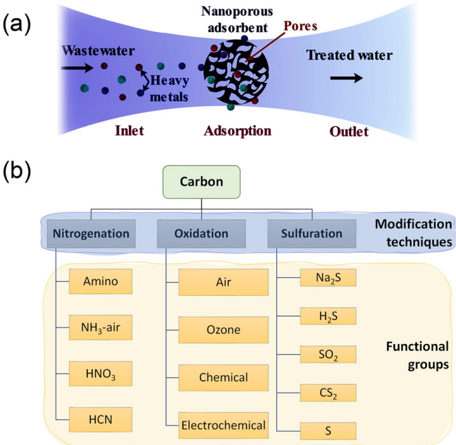
- Adsorption is the most considered method in recent years, with advantages of easy operation, low cost, and high sorption capacity; carbon-based nanoporous adsorbents have surface areas of 500–1500 m²/g.
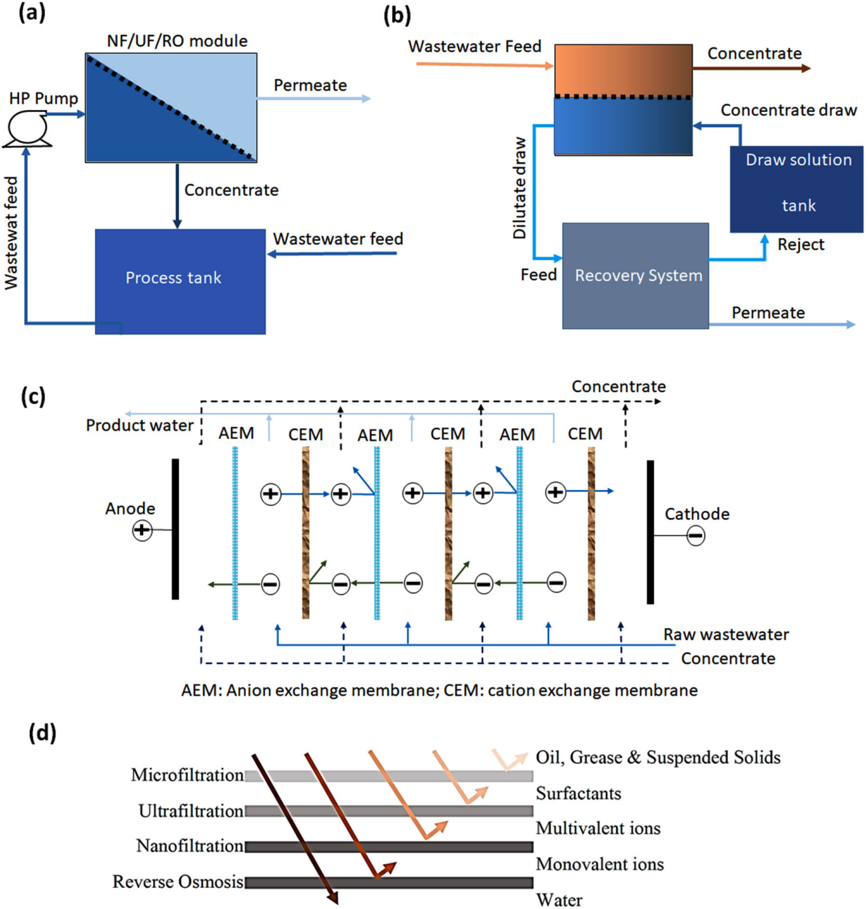
- Reported removal efficiencies vary by method: nanofiltration reached 94–98% extraction for Fe³⁺, Al³⁺, Co²⁺, Cd²⁺, Cu²⁺, and humic acid; electrodialysis attained 96.9%, 99.9%, and 99.9% for Ni²⁺, Pb²⁺, and K⁺; reverse osmosis removed >98.75% of Ni²⁺, Cr⁶⁺, and Cu²⁺ from electroplating wastewater; membrane distillation achieved >96% removal of Ca²⁺, Mg²⁺, Fe³⁺, and Fe²⁺ and >99% for As³⁺ and As⁵⁺.
- Table 2 lists highest adsorption capacities including Pb²⁺ on polyrhodanine/MWCNTs at 8118.0 mg/g, Cu²⁺ on polyvinylpyrrolidone-reduced GO at 1689.0 mg/g, and Cr⁶⁺ on GSC at 2859.0 mg/g.
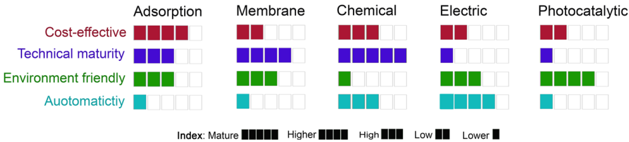
- Major obstacles include adsorption’s ability to remove different ion types concurrently, high retention time, and cycling stability; chemical methods’ large-volume sludge and post-treatment needs; membrane fouling/scaling and cleaning costs; and electric- and photocatalytic-based methods being less mature.
Methods
- Design: comprehensive and critical review of reported heavy-metal removal methods from wastewater, classified into adsorption-, membrane-, chemical-, electric-, and photocatalytic-based treatments.
- Data: literature studies selected based on availability of operating and performance parameters for each method; details are listed in supplementary tables.
- Analysis: qualitative comparison of used agents/adsorbents, removal efficiency, operating conditions, and pros and cons, with summary tables and figures.
Limitations
- The paper states a clear knowledge gap because most studies used synthetic wastewater with one or few metal types; it recommends more research using real wastewater, pilot-scale processes, and cost-effective sustainable materials.
- The paper notes that disposal of adsorbents after adsorption is a big challenge, MOFs often have low stability in water, and electric/photocatalytic methods remain less mature or laboratory-scale.
- Evident from the text: as a review, it reports findings from cited studies rather than generating new experimental data, and several performance details depend on supplementary tables not fully reproduced in the main text.
Model-written summary. Check it against the paper before relying on it.
Integrity signals
Registry
Cites
Statistics
Figures
Verification
Claims the paper makes
5 Valid · 9 Not valid · 107 Not checked · 47 Own results and interpretations
The cited sources support only part of this claim — read each source’s verdict below.
In the paper
“Carbon-based nanoporous adsorbents, especially activated carbons (ACs), carbon nanotubes (CNTs), and graphene (GN), are extensively used in the applications of heavy metal removal owing to their tremendous surface area (500-1500 m 2 /g) 8 .”
§ Removal of heavy metal ions from wastewater: a comprehensive and critical review > Carbon-based adsorbents
What the sources say
- Partly supportedcites [8] 8. Karnib, M., Kabbani, A., Holail, H. & Olama, Z. Heavy metals removal using activated carbon, silica and silica activated carbon composite. Energy Procedia 50, 113-120 (2014). sourceExperimental — accuracy not yet measured
The Introduction (page unavailable) says activated carbon is widely used in wastewater treatment because of its 500–1500 m²/g surface area, and identifies graphene as an adsorbent used in water purification. It does not mention carbon nanotubes or assign that surface-area range and rationale to graphene or carbon nanotubes. (LLM, conf=0.88)
plainstates a cause- Asserted: passes — The authors put it forward as true.
- Checkable: passes — It can be checked against evidence.
- Load-bearing: unclear — It is unclear whether the paper’s conclusions depend on it.
- Based: passes — The paper gives a reason why it holds.
- Partly supported
Every source the paper cites for this claim was checked and supports it.
In the paper
“| Sb 3+ | Chitosan functionalized iron | 138.8 | 50 |”
- Also stated in: § Selection of the most appropriate technique for heavy ions · plain
“| | nanosheet | | |”
§ Removal of heavy metal ions from wastewater: a comprehensive and critical review > Selection of the most appropriate technique for heavy ions
What the sources say
- Supportedcites [50] 50. Zeng, J. et al. Chitosan functionalized iron nanosheet for enhanced removal of As (III) and Sb (III): Synergistic effect and mechanism. Chem. Eng. J. 122999 (2019). source
Section 3.4 (Adsorption isotherms) reports a maximum adsorption capacity of 138.8 mg/g for Sb(III) on the chitosan-functionalized iron nanosheet, calculated by non-linear fitting of the Langmuir model. This supports the table entry; the value is a model-derived maximum. (LLM, conf=0.94)
plain- Asserted: passes — The authors put it forward as true.
- Checkable: passes — It can be checked against evidence.
- Load-bearing: unclear — It is unclear whether the paper’s conclusions depend on it.
- Based: passes — The paper gives a reason why it holds.
- Also stated in: § Selection of the most appropriate technique for heavy ions · plain
The cited sources support only part of this claim — read each source’s verdict below.
In the paper
“A fabricated CS/silver bio-nano-composites (CS/PVDC/Ag) was utilized in photocatalytic oxidation process for 97% Cu 2+ , 88% Pb 2+ , 89% Cd 2+ and 77% dye removal 130 .”
§ Removal of heavy metal ions from wastewater: a comprehensive and critical review > Electrooxidation
What the sources say
- Partly supportedcites [130] Al-Sherbini, A. S. A., Ghannam, H. E. A., El-Ghanam, G. M. A., El-Ella, A. A. & Youssef, A. M. Utilization of chitosan/Ag bionanocomposites as eco-friendly photocatalytic reactor for Bactericidal effect and heavy metals removal. Heliyon 5, e01980 (2019). sourceExperimental — accuracy not yet measured
The Results and discussion sections report 97% Cu(II), 88% Pb(II), and 89% Cd(II) removal at the 0.64% chitosan ratio, and 77% sodium fluorescein dye photodegradation with aeration. But the heavy-metal removal was measured by adsorption, not photocatalytic oxidation; the Conclusions distinguish adsorption of metals from photodegradation of dye. Page numbers are not available in our copy. (LLM, conf=0.91)
plainstates a cause- Asserted: passes — The authors put it forward as true.
- Checkable: passes — It can be checked against evidence.
- Load-bearing: unclear — It is unclear whether the paper’s conclusions depend on it.
- Based: passes — The paper gives a reason why it holds.
- Partly supported
A result the paper reports from its own data — it cites no other source for it, so there is none to check. The quote shows it is in the paper.
In the paper
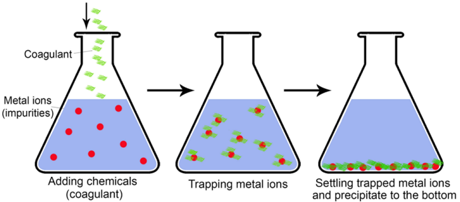
“It can be seen that the majority of metals removed by this method are Zn 2+ , Cu 2+ , Ni 2+ , Pb 2+ , and Cr 3+ .”
§ Removal of heavy metal ions from wastewater: a comprehensive and critical review > Chemical precipitation (the so-called coagulation precipitation)
plain- Asserted: passes — The authors put it forward as true.
- Checkable: passes — It can be checked against evidence.
- Load-bearing: unclear — It is unclear whether the paper’s conclusions depend on it.
- Based: passes — The paper gives a reason why it holds.
In the paper
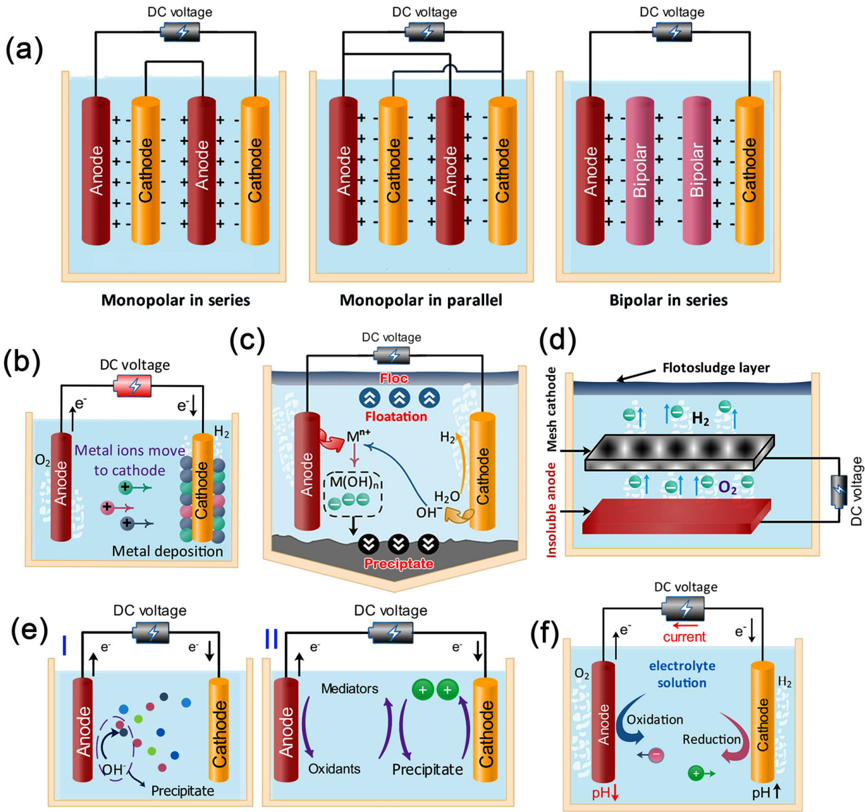
“It can be concluded that Ti-based anodes were widely used in the EF process 107 .”
§ Removal of heavy metal ions from wastewater: a comprehensive and critical review > Electrochemical treatment
What the sources say
- Not checked — no full text of the sourcecites [107] Chen, X., Chen, G. & Yue, P. L. Novel electrode system for electroflotation of wastewater. Environ. Sci. Technol. 36, 778–783 (2002). source
boosted- Asserted: passes — The authors put it forward as true.
- Checkable: passes — It can be checked against evidence.
- Load-bearing: unclear — It is unclear whether the paper’s conclusions depend on it.
- Based: passes — The paper gives a reason why it holds.
70 more claims
Create a free account to see all 168 claims and to verify the 1 reference still open.
- It may state two separate claims as one. 72
- Probably not a substantial claim. 36
Claims other papers make about this one
Each is checked against this paper’s own text: does it say what the citing paper says it does?
The cited source says what the claim attributes to it.
In the citing paper
“Treatment to reduce or eliminate heavy metals in drinking water to permissible levels is critical for human health (Flora et al., 2008;Kumar and Puri, 2012;Qasem et al., 2021).”
From Adsorption of heavy metals on natural zeolites: A review (2023) · cites this paper as Qasem et al., 2021
Self-check
Percentages, sums and reported differences re-computed from the paper’s own numbers.
Each contradiction between two passages listed here was confirmed by an independent check.
Rated minor: it would not touch a result — a value no result rests on, a p-value that stays on the same side of the significance level, or a conflict that is clerical, resolved elsewhere in the paper, or outside its own findings.
In the paper
§ Removal of heavy metal ions from wastewater: a comprehensive and critical review > Electrochemical treatment
“d basic electroflotation methods-anions are released from anode to combine with cations (metal ions) and then floating over the water”
§ Removal of heavy metal ions from wastewater: a comprehensive and critical review > Electrochemical treatment
“and d electro-Fenton process in which OH -is released at anode and reacts with metal ions, and hence wastewater is purified due to precipitation.”
Rated minor: it would not touch a result — a value no result rests on, a p-value that stays on the same side of the significance level, or a conflict that is clerical, resolved elsewhere in the paper, or outside its own findings.
In the paper
§ Removal of heavy metal ions from wastewater: a comprehensive and critical review > Selection of the most appropriate technique for heavy ions
“The electric-and chemical-based methods are represented here for chemical precipitation and electrochemical processes, respectively 133 .”
§ Removal of heavy metal ions from wastewater: a comprehensive and critical review > Selection of the most appropriate technique for heavy ions
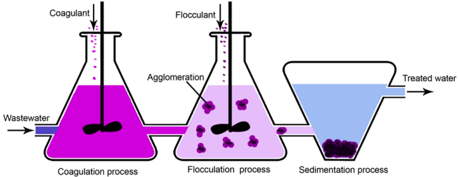
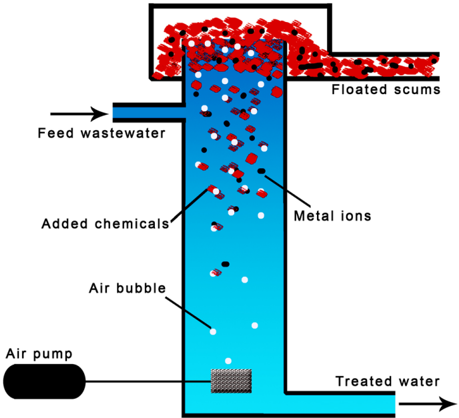
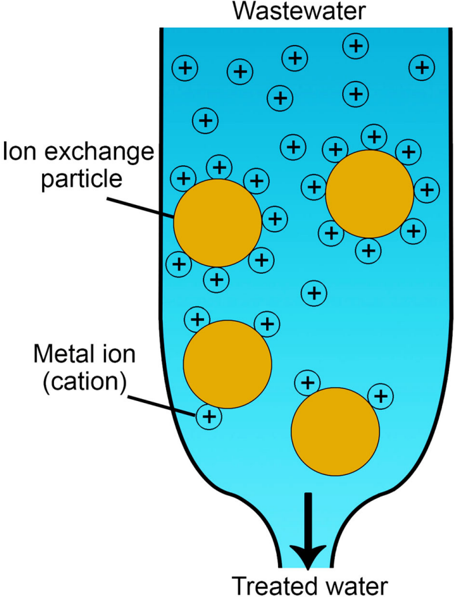
“chemical treatments (i.e., chemical precipitation, coagulation-flocculation, and flotation), electric treatments (i.e., electrochemical (reduction, EC, EF, and advanced oxidation) and ion exchange)”
Rated minor: it would not touch a result — a value no result rests on, a p-value that stays on the same side of the significance level, or a conflict that is clerical, resolved elsewhere in the paper, or outside its own findings.
In the paper
§ Removal of heavy metal ions from wastewater: a comprehensive and critical review > Electrochemical treatment
“Pt, Au, Mn, boron-doped diamond (PbO 2 ), and mixed metal oxide (MMO) (such as SnO 2 , PbO 2 , Ti/TiO 2 , IrO 2 , Sb 2 O 5 , RuO 2 ) are widely used as anodes 112 .”
§ Removal of heavy metal ions from wastewater: a comprehensive and critical review > Anode material Advantages Disadvantages
“PbO 2 -Relatively inexpensive. -Suitable for mineralizing organics -Toxic Pb could be formed. -Low efficiency in industry applications MMO -Relatively inexpensive. -High stability. -Good conductivity properties. -Toxic Sb could be formed. -Uneven coating.BDD -High potential for mineralizing organics.”
Cited works that were retracted
Works this paper cites that were later retracted, from the retraction notices publishers deposit. Major when the notice came out before this paper was published.
Rated major: it would touch a result — a value a result rests on, reported and recomputed p-values on opposite sides of the significance level, two passages that conflict with no sign which is right, or a cited work retracted before this paper was published.
In the paper
“Jamshidifard, S. et al. Incorporation of UiO-66-NH2 MOF into the PAN/chitosan nanofibers for adsorption and membrane filtration of Pb(II), Cd(II) and Cr(VI) ions from aqueous solutions. J. Hazard. Mater. 368, 10–20 (2019).”
Cited work 10.1016/j.jhazmat.2019.01.024 · retracted 2019-04-15 · notice 10.1016/j.jhazmat.2019.01.024 · this paper published 2021-07-08
Citations
Cites
1 retracted
Jamshidifard, S., Koushkbaghi, S., Hosseini, S., Rezaei, S., Karamipour, A., Jafari rad, A., & Irani, M. (2019) · Journal of Hazardous Materials · doi:10.1016/j.jhazmat.2019.01.024 · Cited by 540
RetractedRemoval of heavy metal ions from wastewaters: A review
Fu, F., & Wang, Q. (2011) · Journal of Environmental Management · doi:10.1016/j.jenvman.2010.11.011 · Cited by 8,703
New trends in removing heavy metals from industrial wastewater
Barakat, M. A. (2011) · Arabian Journal of Chemistry · doi:10.1016/j.arabjc.2010.07.019 · Cited by 3,094
Advantages and disadvantages of techniques used for wastewater treatment
Crini, G., & Lichtfouse, E. (2019) · Environmental Chemistry Letters · doi:10.1007/s10311-018-0785-9 · Cited by 2,971
Heavy metal removal from water/wastewater by nanosized metal oxides: A review
Hua, M., Zhang, S., Pan, B., Zhang, W., Lv, L., & Zhang, Q. (2012) · Journal of Hazardous Materials · doi:10.1016/j.jhazmat.2011.10.016 · Cited by 2,193
Physico–chemical treatment techniques for wastewater laden with heavy metals
Kurniawan, T. A., Chan, G. Y. S., Lo, W.-H., & Babel, S. (2006) · Chemical Engineering Journal · doi:10.1016/j.cej.2006.01.015 · Cited by 2,072
Martínez-Huitle, C. A., & Ferro, S. (2006) · Chem. Soc. Rev. · doi:10.1039/b517632h · Cited by 1,840
Da̧browski, A., Hubicki, Z., Podkościelny, P., & Robens, E. (2004) · Chemosphere · doi:10.1016/j.chemosphere.2004.03.006 · Cited by 1,717
Burakov, A. E., Galunin, E. V., Burakova, I. V., Kucherova, A. E., Agarwal, S., Tkachev, A. G., & Gupta, V. K. (2018) · Ecotoxicology and Environmental Safety · doi:10.1016/j.ecoenv.2017.11.034 · Cited by 1,612
Yang, X., Wan, Y., Zheng, Y., He, F., Yu, Z., Huang, J., Wang, H., Ok, Y. S., Jiang, Y., & Gao, B. (2019) · Chemical Engineering Journal · doi:10.1016/j.cej.2019.02.119 · Cited by 1,527
Research works printed but not linked: 3
- 80. Al-Hemaidi, W. K. Approach in choosing suitable technology for industrial wastewater. J. Civil & Envir. Eng. 2, 1000123 (2012).
- 98. Pretorius, W. A., Johannes, W. G. & Lempert, G. G. Electrolytic iron flocculant production with a bipolar electrode in series arrangement. Water SA 17, 133-138 (1991).
- WHO. Guidelines for drinking-water quality: Fourthedition incorporating the first addendum. Guidelines for Drinking-Water Quality: Fourth Edition Incorporating the First Addendum (2014).
Cited by
Items 2,101–2,197 of 2,197
Oudchaira, S., Rhoujjati, A., Hanich, L., et al. (2026) · Euro-Mediterranean Journal for Environmental Integration · doi:10.1007/s41207-026-01209-6
Kurnaz, E., Kanmaz, N. Z., & Buğdaycı, M. (2026) · Journal of the Australian Ceramic Society · doi:10.1007/s41779-026-01414-0
Gong, J., Liu, Y., Hu, L., Jiang, Z., Li, Y., & Zhao, H. (2026) · Journal of environmental chemical engineering · doi:10.1016/j.jece.2026.124091 · Cited by 1
Hamidallah, K., Zourif, A., Azizi, A. E., et al. (2026) · Colloids and Surfaces A Physicochemical and Engineering Aspects · doi:10.1016/j.colsurfa.2026.141324
Mapping the Landscape of Wastewater-Borne Antimicrobial Resistance Over 47 Years
Bassey, I. U., Ali, M. Z., Akpanke, J., John, G. E., Edet, A., Archibong, C. P., Joseph, A., Ambrose, I. S., Okoroiwu, H. U., Edet, U. O., et al. (2026) · Water Air & Soil Pollution · doi:10.1007/s11270-026-09739-z
Hussain, J., Mdlovu, N. V., François, M., & Lin, K.-S. (2026) · Sustainable textiles · doi:10.1007/978-3-032-29974-1_2
Vu, T. N., Quaglio, M., Bongiovanni, R. M., et al. (2026) · Chemical Engineering Journal Advances · doi:10.1016/j.ceja.2026.101383
Jumadilov, T., Kabulova, M., Khimersen, K., & Haponiuk, J. T. (2026) · Polymers · doi:10.3390/polym18141780
Toxic Element Sorption Rates by Waste Biomass of Vegetable Tubers in vitro
Korkmaz, A., Özcan, M. M., Dursun, N., Yılmaz, F. G., & Özcan, M. M. (2026) · Journal of Agroalimentary Process and Technologies. · doi:10.59463/japt2026.1.8
Aslikhah, N., Boontham, W., Suksawat, M., & Naruetharadhol, P. (2026) · International Journal of Sustainable Engineering · doi:10.1080/19397038.2026.2697087
Gao, Y., Zhou, Y., Wang, S., et al. (2026) · Journal of Membrane Science · doi:10.1016/j.memsci.2026.125954
Prismantoro, D., Mulyaningsih, L., Hamzah, F. F., Satria, I., Jefferson, T. A., Rossiana, N., Miranti, M., Mispan, M. S., Mboyerwa, P. A., & Doni, F. (2026) · Environmental Pollutants and Bioavailability · doi:10.1080/26395940.2026.2709192
Yu, G., Sun, D., Ni, F., Chang, M., Song, X., Liang, Y., Zhu, Z., Zhao, R., & Wang, K. (2026) · ACS Applied Nano Materials · doi:10.1021/acsanm.6c02473
Mussa, N.-S., Азат, С., Berndtsson, R., & Toshtay, K. (2026) · Chemical Engineering Journal Advances · doi:10.1016/j.ceja.2026.101396 · Cited by 3
Hu, K., Zhao, Y., Han, Y., Han, Z., Meng, R., Gao, X., Li, J., & Guo, N. (2026) · Journal of Hazardous Materials · doi:10.1016/j.jhazmat.2026.143168
Highly dispersed Cu on TiO₂ for photoreduction of hexavalent chromium in the presence of glycerol
Srishti, Kumari, S., Pathak, S. K., et al. (2026) · Journal of environmental chemical engineering · doi:10.1016/j.jece.2026.124404
Fu, W., Fang, J., Yue, Y., Fu, X., Peng, C., Chen, D., Chen, Y., & Yue, T. (2026) · Journal of environmental chemical engineering · doi:10.1016/j.jece.2026.124422
Editorial, E. (2026) · Journal of the Serbian Chemical Society · doi:10.2298/jsc260801042m
Microbial Interactions with Trace Elements and Heavy Metals: Implications for Bioremediation
Ahmed, M. J., Hossain, M. I., Alam, K. E., Chalise, R., Ahammed, M. S., Islam, S. M. S., Basore, R., Bhandari, P., Ali, M. M., & Hossain, D. (2026) · Springer eBooks · doi:10.1007/978-3-032-26858-7_13
Škalamera, Đ., Petrović, J., Pan, X., & Cvjetinović, Đ. (2026) · Results in Chemistry · doi:10.1016/j.rechem.2026.103726
Advanced Membrane Technologies for Heavy Metal Separation and Removal from Environmental Matrices
Mohlala, R. L., Shaku, B., & Mogashane, T. M. (2026) · IntechOpen eBooks · doi:10.5772/intechopen.1016993
Application of computational methodologies in 2D nanomaterials
Bali, İ., Baysal, T., Doğancı, M., Sarıkaya, M., Temel, M., TOPAÇLI, H., Yazkan, E., & Velioğlu, S. (2026) · Elsevier eBooks · doi:10.1016/b978-0-443-44530-9.00007-9
Al-Saidi, S. S. (2026) · Environmental Research and Technology · doi:10.35208/ert.1599378 · Cited by 1
Chen, Y., Hu, S., Li, Z., et al. (2026) · ACS ES&T Water · doi:10.1021/acsestwater.6c00303
Chen, S., Zheng, J., Li, Z., Wu, Y., Zhuo, L., Liu, W., Luo, J., & Liu, X. (2026) · Journal of environmental chemical engineering · doi:10.1016/j.jece.2026.124544 · Cited by 1
Mostafa, A., Al-Otaify, A., mashary, F. A., Alhassan, S. S., & Younis, A. M. (2026) · The European Physical Journal Plus · doi:10.1140/epjp/s13360-026-08159-6
Rabadanova, D. I., Свешникова, Д. А., Гафуров, М. М., Ataev, M. B., Rabadanov, K. S., Амиров, А. М., & Zeynalov, R. Z. (2026) · Journal of the Indian Chemical Society · doi:10.1016/j.jics.2026.102998 · Cited by 1
Unlocking the chemical potential of orange peel biomass for environmental remediation and sensing
Kathuria, D., Bhattu, M., Verma, K., & Kathuria, A. (2026) · Inorganic Chemistry Communications · doi:10.1016/j.inoche.2026.117370
Innovative Approaches to Wastewater Treatment
Hamiche, A. M., Benmessaoud, M. T., Stambouli, A. B., & Kitamura, Y. (2026) · Springer eBooks · doi:10.1007/978-3-032-26119-9_12
Macanda, S., Shoyiga, H., Ogunlaja, A. S., et al. (2026) · Analytica—A Journal of Analytical Chemistry and Chemical Analysis · doi:10.3390/analytica7030055
Mohammed, M. F. A., & Idris, S. (2026) · Microporous and Mesoporous Materials · doi:10.1016/j.micromeso.2026.114360
Heavy Metal Removal from Electroplating Wastewater Using Polymer Ligand Composed of Bamboo CellulosePreprint
Rahman, M. L., Senor, H. H., Sarjadi, M. S., et al. (2026) · Research Square · doi:10.21203/rs.3.rs-10231109/v1
Pei, P., Gao, G., Jia, M., et al. (2026) · Colloids and Surfaces A Physicochemical and Engineering Aspects · doi:10.1016/j.colsurfa.2026.141542
Sahoo, T. P., Chanchpara, A., Chormare, R., Kumar, M. A., & Saravaia, H. T. (2026) · Journal of Environmental Science and Health Part B · doi:10.1080/03601234.2026.2714707
Cellulose-Based Bioadsorbents for Lithium
Repina, N. D., Vinokurov, V. A., Repin, D. V., et al. (2026) · Chemistry and Technology of Fuels and Oils · doi:10.1007/s10553-026-02100-4
Pala, J., Mahmoodi, S. N., & Esfahani, M. R. (2026) · ACS ES&T Water · doi:10.1021/acsestwater.6c00858
Prabu, D., Shalini, K., Jayasurya, R., et al. (2026) · Physics and Chemistry of the Earth Parts A/B/C · doi:10.1016/j.pce.2026.104754
Mashentseva, A. A., Zhumabayev, A. M., Seitzhapar, N., Abuova, F. U., Barsbay, M., Nurpeisova, D. T., Сулейменовна, Т. К., & Zheltov, D. A. (2026) · Results in Surfaces and Interfaces · doi:10.1016/j.rsurfi.2026.100946
Zhao, M., Zuo, D., Tong, Y., et al. (2026) · Environmental Research · doi:10.1016/j.envres.2026.125517
Azad, M. J., Bonyadi, M., & Karimi, H. (2026) · Desalination and Water Treatment · doi:10.1016/j.dwt.2026.101905
Monir, M. S. I., Rahman, A., Saha, P., Zaman, S. M. S., Rahman, I. M. M., & Mahiuddin, M. (2026) · ChemistrySelect · doi:10.1002/slct.74214
Ismail, W. N. W., Mokhtar, K. M., Omar, N. A. M., Thalji, M. R., & Bakar, N. H. A. (2026) · Next Materials · doi:10.1016/j.nxmate.2026.103238
Salem, A. M., Basta, A. H., Lotfy, V. F., et al. (2026) · Waste and Biomass Valorization · doi:10.1007/s12649-026-03774-x
Arat, R. (2026) · Journal of nanoparticle research · doi:10.1007/s11051-026-06755-2
Dharsandia, I., Kumar, N., Tiwari, A., Tiwari, B. S., Nagar, M. R., & Mishra, S. K. (2026) · Discover Nano · doi:10.1186/s11671-026-04781-6 · Cited by 6
Kafas, İ., Çaylak, O., Belyurt, E., et al. (2026) · Chemical Papers · doi:10.1007/s11696-026-05404-1
Selective heavy-metal sequestration and rare-earth element recovery using metal–organic frameworks
Menon, D., Bhadane, P., Mahato, P., Goyal, P., Lynch, I., Chakraborty, S., & Misra, S. K. (2026) · Nature Protocols · doi:10.1038/s41596-026-01425-y · Cited by 2
Ameh, P. O. (2026) · Research Square · doi:10.21203/rs.3.rs-10829722/v1
Sehgal, M., Jain, M., Bansal, A., & Bajpai, S. (2026) · Journal of the Indian Chemical Society · doi:10.1016/j.jics.2026.103049
Dai, C., Wu, Y., Liu, H., & Ji, Z. (2026) · Journal of environmental chemical engineering · doi:10.1016/j.jece.2026.124832
Edhbaiah, M. K., Foster, A. B., Alshurafa, M., & Budd, P. M. (2026) · Polymer · doi:10.1016/j.polymer.2026.130743
Water purification by green nanomaterials
Mathew, M. S., Sen, A., & Simon, S. M. (2026) · Elsevier eBooks · doi:10.1016/b978-0-443-33164-0.00015-3
Abukhadra, M. R., Rudayni, H. A., Allam, A. A., & Amin, B. E. M. (2026) · Environmental Earth Sciences · doi:10.1007/s12665-026-13069-y
dos Santos, A. L., Costa, T. S., Moura, T. L. M., Libanio, M. F. R., Silva, L. C., Moreira, A. J., Paris, E. C., & Giraldi, T. R. (2026) · International Journal of Environmental Science and Technology · doi:10.1007/s13762-026-07390-z
Elsherif, K. M., Ewlad-Ahmed, A. M., & Saad, R. A. (2026) · Aksaray University Journal of Science and Engineering · doi:10.29002/asujse.1961193
Habiba, U., Fattah, I. M. R., Al-Humairi, S. T., Veza, I., Wang, J., Mahlia, T. M. I., & Kalam, M. A. (2026) · ACS ES&T Water · doi:10.1021/acsestwater.6c00805
Nickel Nanoclusters Fluorescent Probes for Cu2+ Sensing
Tang, Y., Zhang, J., Liang, J., Xiao, R., Wu, Q., Liu, C., Yang, G., & Lei, H. (2026) · ACS Applied Nano Materials · doi:10.1021/acsanm.6c03979
Vuong, N. M., Dat, H. X., Chuc, H. T., et al. (2026) · Journal of Physics Conference Series · doi:10.1088/1742-6596/3284/1/012050
Babassa, N., Anouar, M., Msaad, A., Belcaid, A., Kadmi, Y., & Anouar, A. (2026) · South African Journal of Chemical Engineering · doi:10.1016/j.sajce.2026.100989
Integrated hydrochar-bacteria strategy for heavy metal removal
Karishma, P. S., & Sambasivam, K. M. (2026) · Frontiers in Microbiology · doi:10.3389/fmicb.2026.1919518
Droplet-driven self-powered Pb2 + extraction from industrial wastewater
Jin, X., Xú, W., Shao, L., Tang, Q., Xing, L., & Xue, X. (2026) · Journal of Hazardous Materials · doi:10.1016/j.jhazmat.2026.143513
Nguyen, T.-N.-T., Nguyen, D.-G.-C., & Nguyen, T.-Q.-T. (2026) · Chemical Data Collections · doi:10.1016/j.cdc.2026.101263
Uçkun, A. A., Akkurt, Ş., Solmaz, M. K., & Uçkun, M. (2026) · Biodegradation · doi:10.1007/s10532-026-10371-1
Abdulsalam, A. A., Maroulas, K. N., Zhandauletova, R., et al. (2026) · Environmental Technology & Innovation · doi:10.1016/j.eti.2026.105207
High efficiency Pb(II) removal from water using STPP-crosslinked chitosan-muscovite composite
Hayatullah, Rahman, M. A., Mostafa, M. G., et al. (2026) · Discover Composites · doi:10.1007/s44578-026-00002-1
Adsorption-Based Interpretation of QCM Responses for Divalent Metal Ion Sensing by MoS₂ Nanoflowers
Şahin, A. N., & Özdemir, Z. G. (2026) · Journal of Cluster Science · doi:10.1007/s10876-026-03105-z
Chehrazi, Z., Kiasat, A. R., Jamalpour, S., & Sabaeian, M. (2026) · Polymer · doi:10.1016/j.polymer.2026.130818
Kaveti, M. V., Kurapati, S. K., & Vinnakota, S. (2026) · Journal of Inorganic and Organometallic Polymers and Materials · doi:10.1007/s10904-026-04533-0
Feng, H., Huang, Y., Guo, Y., Gan, J.-Q., Ou, Y., Xu, L., Tian, J., Wang, Z., Shu, K., & Luo, Y. (2026) · Journal of Environmental Sciences · doi:10.1016/j.jes.2026.105764
Ismail, H. K., Sdiq, A. F. H., Sohal, H. S., Abdullah, A. J., Sultan, H. K. I., Kaur, N., Muhammed, S. S., Rostam, H. A., Khorsheed, K. M., & Kaur, M. (2026) · Separation Science and Technology · doi:10.1080/01496395.2026.2731191
Sharma, M., Kumar, D., & Sharma, R. (2026) · International Journal of Phytoremediation · doi:10.1080/15226514.2026.2729107
Camacho, B. A. Á., Rangel-Vázquez, N. A., Márquez, E., & Landín-Sandoval, V. J. (2026) · Polymers · doi:10.3390/polym18182247
Yang, C.-J., Lee, C., Lee, H. J., Lee, J. S., & Yu, B. (2026) · Separation and Purification Technology · doi:10.1016/j.seppur.2026.140196
Zhao, K., Wu, J., Guo, J., Wu, Z., Lu, B., Huang, B., Lin, G., & Lv, J. (2026) · ACS Omega · doi:10.1021/acsomega.6c05761
Mohan, B., Sonkar, R., Bharali, S., & Chowdhury, D. (2026) · ACS Applied Engineering Materials · doi:10.1021/acsaenm.6c00917
Chen, T., Zhao, X., Liu, X.-Q., et al. (2026) · Journal of environmental chemical engineering · doi:10.1016/j.jece.2026.125148
Treepet, S., Srisawat, K., & Sombatmankhong, K. (2026) · Electrochimica Acta · doi:10.1016/j.electacta.2026.150035
Ďuricová, A., Schmidtová, J., Biroň, A., et al. (2026) · Materials · doi:10.3390/ma19183997
Chaitanya, N. K., Gandhimathi, R., Lavanya, A., & Ramesh, S. T. (2026) · Water Air & Soil Pollution · doi:10.1007/s11270-026-09976-2
Column Studies on Biosorption of Metal Ions in Contaminated Surface Water and LeachatePreprint
Bakyayita, G. K., Innocent, M. T., Kulabako, R. N., Ivan, G., & Daniel, A. (2026) · Research Square · doi:10.21203/rs.3.rs-10908841/v1
Kumari, D. D., Negi, D., Daverey, A., & Dutta, K. (2026) · Water Practice & Technology · doi:10.2166/wpt.2026.437
Investigation into Adsorption Performance and Mechanism for Copper on Red Mud Modified Biochar
Pei, J., Chang, S., Liu, X., & Liu, X. (2026) · Water · doi:10.3390/w18192380
Heavy metals in fish: bioaccumulation, toxicity, and human health risk
Chauhan, V., Dondiyal, P., & Kumari, K. (2026) · Environmental Monitoring and Assessment · doi:10.1007/s10661-026-15958-y
Moradi, N., Mäki‐Arvela, P., Johan, W., Sánchez‐Velandia, J. E., Vajglová, Z., Echeverría‐Arrondo, C., Peuronen, A., Lastusaari, M., Tirri, T., Eränen, K., et al. (2026) · Chemical Engineering Journal Advances · doi:10.1016/j.ceja.2026.101477
Ma, G., Zhang, W., Tao, F., et al. (2026) · Water Air & Soil Pollution · doi:10.1007/s11270-026-09987-z
Elgohary, A. M. F., Alhunayhin, S. M., Al‐Ghamdi, Y. O., Alhalafi, Z. H., Fahim, A. M., & Rizk, S. A. (2026) · Journal of Inorganic and Organometallic Polymers and Materials · doi:10.1007/s10904-026-04503-6 · Cited by 1
Unveiling the Potential of Biogenic Nanoparticles for Wastewater Remediation: A Systematic Review
Rath, S. C., Bhagawati, U., Kumar, R., & Goel, A. (2026) · Water Air & Soil Pollution · doi:10.1007/s11270-026-09978-0
Pandey, N., & Thakur, C. (2026) · Clean Technologies and Environmental Policy · doi:10.1007/s10098-026-03612-7 · Cited by 1
Ivanets, A. I., Kitikova, N., Shashkova, I., et al. (2026) · Water Air & Soil Pollution · doi:10.1007/s11270-026-09969-1
Uranium Removal from Water Using Moringa oleifera and Chitosan: A Comparative Biosorption Study
Al-Shomali, Z., Dinis, M. D. L., Pereira, A., et al. (2026) · Water · doi:10.3390/w18192425
Li, X., Li, X., Yue, W., Zhang, X., Yan, X., & Zhang, W. (2026) · International Journal of Chemical Kinetics · doi:10.1002/kin.70144
Copper bionanocomposite mitigates arsenic toxicity in Oreochromis niloticus
Habotta, O. A., Rawan, A. F., Abdelmoneim, D., Adly, M. S., Ateya, A., Ibrahim, I., Amer, S., Azab, R. E., Habak, S., Morsi, R., et al. (2026) · Discover Nano · doi:10.1186/s11671-026-04944-5
Hu, Y., Lu, J., Li, M., et al. (2026) · Langmuir · doi:10.1021/acs.langmuir.6c04339
Rahman, M. L., Chu, N. A. B., Sarjadi, M. S., Majid, H., Sarkar, S. M., Kumar, S., & Yuvaraj, A. R. (2026) · Sustainable Chemistry One World · doi:10.1016/j.scowo.2026.100318
Role of cellulose like materials in heavy metals coordination
Moniem, S. M. A., Ibrahim, A., Elhaes, H., et al. (2026) · Scientific Reports · doi:10.1038/s41598-026-71797-4
El–Zahhar, A. A., & Alghamdi, M. M. (2026) · RSC Advances · doi:10.1039/d6ra08271h
Kyshkarova, V., Protsak, I., Václavíková, M., et al. (2026) · JCIS Open · doi:10.1016/j.jciso.2026.100208
Metadata
- Authors
- Qasem, N. A. A., Mohammed, R. H., & Lawal, D. U.
- Affiliations
- King Fahd University of Petroleum and Minerals (SA)
- Zagazig University (EG)
- Corresponding author
- Qasem, Naef A. A.
- Venue
- npj Clean Water
- Published
- 2021-07-08
- Volume
- 4
- Issue
- 1
- ISSN
- 2059-7037 (ISSN-L)
- OpenAlex
- W3180677679
- Semantic Scholar
- e09dc879e764aecba0a92434e646e3d8569a1eb5
- Cited by
- 2,225
- References
- 136
- Citations by year
- 2026: 372 · 2025: 566 · 2024: 611 · 2023: 410 · 2022: 235 · 2021: 30
- FWCI
- 95.69
- Type
- journal article
- Language
- en
- Update notices
- correction (2021-12-07)
- Open access
- gold
- doi.org
- Licence
- cc-by
- creativecommons.org/licenses/by/4.0 (tdm)
- creativecommons.org/licenses/by/4.0 (vor)
- Locations
- npj Clean Water (publishedVersion, cc-by)
- DOAJ (DOAJ: Directory of Open Access Journals) (submittedVersion, cc-by-sa)
- Greater South Information System
- Funders
- King Fahd University of Petroleum and Minerals
- Topics
- Physical Sciences › Environmental Science › Water Science and Technology › Adsorption and biosorption for pollutant removal
- Physical Sciences › Environmental Science › Water Science and Technology › Heavy Metal Pollution Remediation
- Physical Sciences › Environmental Science › Environmental Engineering › Environmental remediation with nanomaterials
- Keywords
- heavy metal removal, wastewater treatment, adsorption, membrane separation, electrochemical treatment, photocatalysis, chemical precipitation, membrane fouling, sludge production
About these checks
Registry, retraction, Cites and statistics results are computed, not judged, with one exception: a printed reference that no index lists is read once by a model before it counts as a citation error. Claims are extracted by a model and kept only when their quote appears verbatim in the text; each cited source is then checked, with a model’s help, for whether it says what the claim relies on. Those verdicts can be wrong — read the claim’s quote and the cited source before relying on one.
The claim verdicts this report counts are experimental: their accuracy is not yet measured.
A language model drew the claims from the paper on 2026-10-10, under version 3 of the claim definition (model deepseek-v4.1-flash, prompt extract-v3).
A second model labelled each claim on 2026-10-10 (model jev-1.13-20260917, definition revision gold-guideline-v0.2).
Cited sources are checked with a language model’s help (gpt-6-sol).
Statistics and arithmetic are recomputed, not judged.
Confidence bands are shown only for fields calibrated on our annotated test set. None is calibrated yet, so no band is shown.
What counts as a claim ›How we measure confidence ›How we check this ›
Are you an author, or do you see a problem with this page? Request a review
Data sources
Bibliographic data: Semantic Scholar, OpenAlex, Crossref.
Contains information from the Semantic Scholar Academic Graph Datasets, made available under the ODC Attribution License (ODC-BY 1.0).
Semantic Scholar’s data is described in: Kinney, R., et al. (2023). The Semantic Scholar Open Data Platform. arXiv:2301.10140.
