

Removal of heavy metal ions from wastewater: a comprehensive and critical review
Open accessThe DOI matches its Crossref record; 136 of the 136 references it cites were found in a registry or an index; 5 of the 119 sources its claims cite were checked for support.
Abstract
Abstract Removal of heavy metal ions from wastewater is of prime importance for a clean environment and human health. Different reported methods were devoted to heavy metal ions removal from various wastewater sources. These methods could be classified into adsorption-, membrane-, chemical-, electric-, and photocatalytic-based treatments. This paper comprehensively and critically reviews and discusses these methods in terms of used agents/adsorbents, removal efficiency, operating conditions, and the pros and cons of each method. Besides, the key findings of the previous studies reported in the literature are summarized. Generally, it is noticed that most of the recent studies have focused on adsorption techniques.
Overview
CoChat Summary
TL;DR
This review comprehensively classifies heavy-metal removal from wastewater into adsorption-, membrane-, chemical-, electric-, and photocatalytic-based treatments and compares their efficiencies, operating conditions, and pros/cons. It concludes that adsorption is the most widely studied recent method, while chemical and membrane methods are practical but face sludge, fouling, and post-treatment challenges.
Key findings
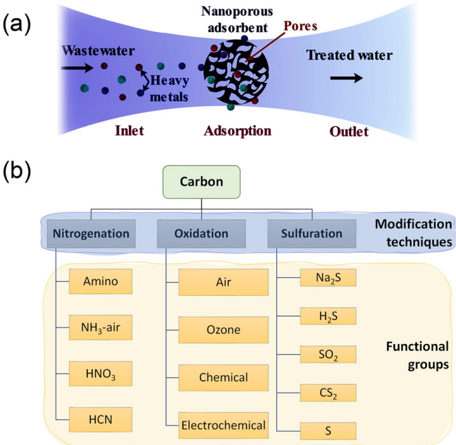
- Adsorption is the most considered method in recent years, with advantages of easy operation, low cost, and high sorption capacity; carbon-based nanoporous adsorbents have surface areas of 500–1500 m²/g.
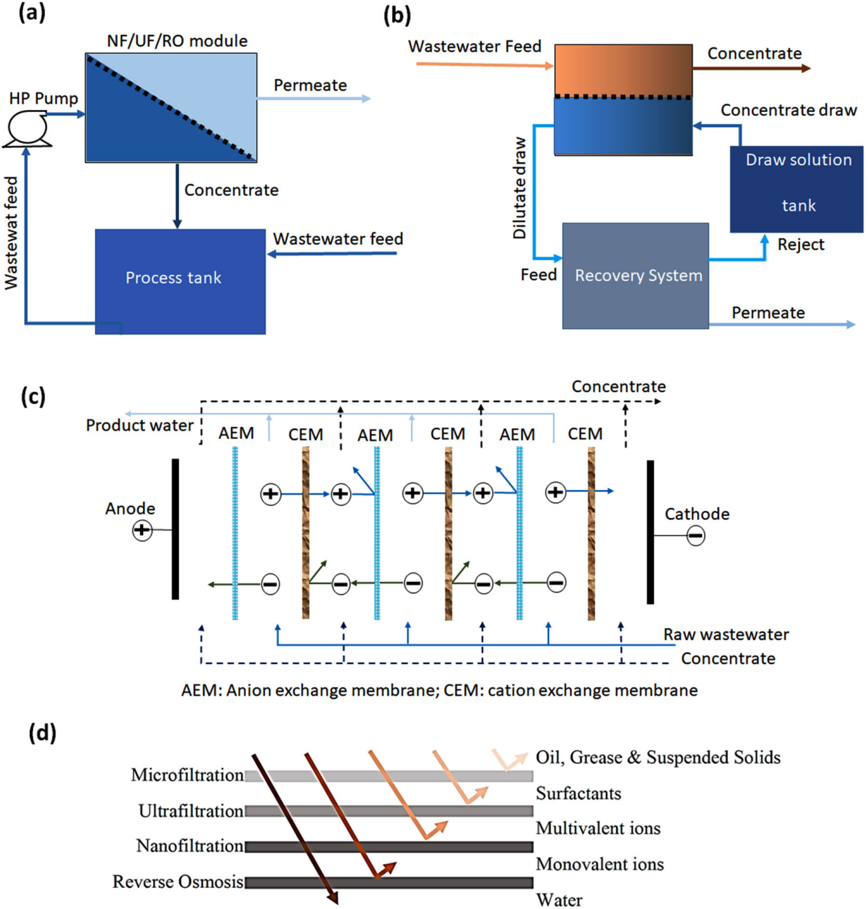
- Reported removal efficiencies vary by method: nanofiltration reached 94–98% extraction for Fe³⁺, Al³⁺, Co²⁺, Cd²⁺, Cu²⁺, and humic acid; electrodialysis attained 96.9%, 99.9%, and 99.9% for Ni²⁺, Pb²⁺, and K⁺; reverse osmosis removed >98.75% of Ni²⁺, Cr⁶⁺, and Cu²⁺ from electroplating wastewater; membrane distillation achieved >96% removal of Ca²⁺, Mg²⁺, Fe³⁺, and Fe²⁺ and >99% for As³⁺ and As⁵⁺.
- Table 2 lists highest adsorption capacities including Pb²⁺ on polyrhodanine/MWCNTs at 8118.0 mg/g, Cu²⁺ on polyvinylpyrrolidone-reduced GO at 1689.0 mg/g, and Cr⁶⁺ on GSC at 2859.0 mg/g.
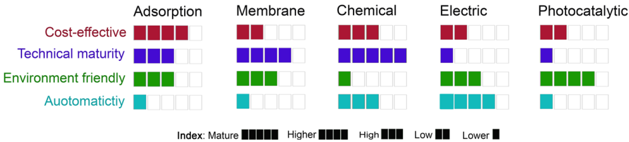
- Major obstacles include adsorption’s ability to remove different ion types concurrently, high retention time, and cycling stability; chemical methods’ large-volume sludge and post-treatment needs; membrane fouling/scaling and cleaning costs; and electric- and photocatalytic-based methods being less mature.
Methods
- Design: comprehensive and critical review of reported heavy-metal removal methods from wastewater, classified into adsorption-, membrane-, chemical-, electric-, and photocatalytic-based treatments.
- Data: literature studies selected based on availability of operating and performance parameters for each method; details are listed in supplementary tables.
- Analysis: qualitative comparison of used agents/adsorbents, removal efficiency, operating conditions, and pros and cons, with summary tables and figures.
Limitations
- The paper states a clear knowledge gap because most studies used synthetic wastewater with one or few metal types; it recommends more research using real wastewater, pilot-scale processes, and cost-effective sustainable materials.
- The paper notes that disposal of adsorbents after adsorption is a big challenge, MOFs often have low stability in water, and electric/photocatalytic methods remain less mature or laboratory-scale.
- Evident from the text: as a review, it reports findings from cited studies rather than generating new experimental data, and several performance details depend on supplementary tables not fully reproduced in the main text.
Model-written summary. Check it against the paper before relying on it.
Integrity signals
Registry
Cites
Statistics
Figures
Verification
Claims the paper makes
5 Valid · 9 Not valid · 107 Not checked · 47 Own results and interpretations
The cited sources support only part of this claim — read each source’s verdict below.
In the paper
“Carbon-based nanoporous adsorbents, especially activated carbons (ACs), carbon nanotubes (CNTs), and graphene (GN), are extensively used in the applications of heavy metal removal owing to their tremendous surface area (500-1500 m 2 /g) 8 .”
§ Removal of heavy metal ions from wastewater: a comprehensive and critical review > Carbon-based adsorbents
What the sources say
- Partly supportedcites [8] 8. Karnib, M., Kabbani, A., Holail, H. & Olama, Z. Heavy metals removal using activated carbon, silica and silica activated carbon composite. Energy Procedia 50, 113-120 (2014). sourceExperimental — accuracy not yet measured
The Introduction (page unavailable) says activated carbon is widely used in wastewater treatment because of its 500–1500 m²/g surface area, and identifies graphene as an adsorbent used in water purification. It does not mention carbon nanotubes or assign that surface-area range and rationale to graphene or carbon nanotubes. (LLM, conf=0.88)
plainstates a cause- Asserted: passes — The authors put it forward as true.
- Checkable: passes — It can be checked against evidence.
- Load-bearing: unclear — It is unclear whether the paper’s conclusions depend on it.
- Based: passes — The paper gives a reason why it holds.
- Partly supported
Every source the paper cites for this claim was checked and supports it.
In the paper
“| Sb 3+ | Chitosan functionalized iron | 138.8 | 50 |”
- Also stated in: § Selection of the most appropriate technique for heavy ions · plain
“| | nanosheet | | |”
§ Removal of heavy metal ions from wastewater: a comprehensive and critical review > Selection of the most appropriate technique for heavy ions
What the sources say
- Supportedcites [50] 50. Zeng, J. et al. Chitosan functionalized iron nanosheet for enhanced removal of As (III) and Sb (III): Synergistic effect and mechanism. Chem. Eng. J. 122999 (2019). source
Section 3.4 (Adsorption isotherms) reports a maximum adsorption capacity of 138.8 mg/g for Sb(III) on the chitosan-functionalized iron nanosheet, calculated by non-linear fitting of the Langmuir model. This supports the table entry; the value is a model-derived maximum. (LLM, conf=0.94)
plain- Asserted: passes — The authors put it forward as true.
- Checkable: passes — It can be checked against evidence.
- Load-bearing: unclear — It is unclear whether the paper’s conclusions depend on it.
- Based: passes — The paper gives a reason why it holds.
- Also stated in: § Selection of the most appropriate technique for heavy ions · plain
The cited sources support only part of this claim — read each source’s verdict below.
In the paper
“A fabricated CS/silver bio-nano-composites (CS/PVDC/Ag) was utilized in photocatalytic oxidation process for 97% Cu 2+ , 88% Pb 2+ , 89% Cd 2+ and 77% dye removal 130 .”
§ Removal of heavy metal ions from wastewater: a comprehensive and critical review > Electrooxidation
What the sources say
- Partly supportedcites [130] Al-Sherbini, A. S. A., Ghannam, H. E. A., El-Ghanam, G. M. A., El-Ella, A. A. & Youssef, A. M. Utilization of chitosan/Ag bionanocomposites as eco-friendly photocatalytic reactor for Bactericidal effect and heavy metals removal. Heliyon 5, e01980 (2019). sourceExperimental — accuracy not yet measured
The Results and discussion sections report 97% Cu(II), 88% Pb(II), and 89% Cd(II) removal at the 0.64% chitosan ratio, and 77% sodium fluorescein dye photodegradation with aeration. But the heavy-metal removal was measured by adsorption, not photocatalytic oxidation; the Conclusions distinguish adsorption of metals from photodegradation of dye. Page numbers are not available in our copy. (LLM, conf=0.91)
plainstates a cause- Asserted: passes — The authors put it forward as true.
- Checkable: passes — It can be checked against evidence.
- Load-bearing: unclear — It is unclear whether the paper’s conclusions depend on it.
- Based: passes — The paper gives a reason why it holds.
- Partly supported
A result the paper reports from its own data — it cites no other source for it, so there is none to check. The quote shows it is in the paper.
In the paper
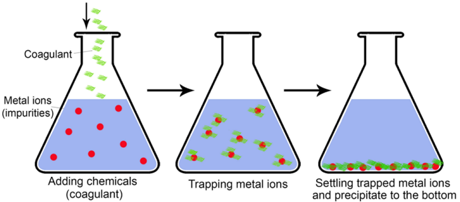
“It can be seen that the majority of metals removed by this method are Zn 2+ , Cu 2+ , Ni 2+ , Pb 2+ , and Cr 3+ .”
§ Removal of heavy metal ions from wastewater: a comprehensive and critical review > Chemical precipitation (the so-called coagulation precipitation)
plain- Asserted: passes — The authors put it forward as true.
- Checkable: passes — It can be checked against evidence.
- Load-bearing: unclear — It is unclear whether the paper’s conclusions depend on it.
- Based: passes — The paper gives a reason why it holds.
In the paper
“It can be concluded that Ti-based anodes were widely used in the EF process 107 .”
§ Removal of heavy metal ions from wastewater: a comprehensive and critical review > Electrochemical treatment
What the sources say
- Not checked — no full text of the sourcecites [107] Chen, X., Chen, G. & Yue, P. L. Novel electrode system for electroflotation of wastewater. Environ. Sci. Technol. 36, 778–783 (2002). source
boosted- Asserted: passes — The authors put it forward as true.
- Checkable: passes — It can be checked against evidence.
- Load-bearing: unclear — It is unclear whether the paper’s conclusions depend on it.
- Based: passes — The paper gives a reason why it holds.
70 more claims
Create a free account to see all 168 claims and to verify the 1 reference still open.
- It may state two separate claims as one. 72
- Probably not a substantial claim. 36
Claims other papers make about this one
Each is checked against this paper’s own text: does it say what the citing paper says it does?
The cited source says what the claim attributes to it.
In the citing paper
“Treatment to reduce or eliminate heavy metals in drinking water to permissible levels is critical for human health (Flora et al., 2008;Kumar and Puri, 2012;Qasem et al., 2021).”
From Adsorption of heavy metals on natural zeolites: A review (2023) · cites this paper as Qasem et al., 2021
Self-check
Percentages, sums and reported differences re-computed from the paper’s own numbers.
Each contradiction between two passages listed here was confirmed by an independent check.
Rated minor: it would not touch a result — a value no result rests on, a p-value that stays on the same side of the significance level, or a conflict that is clerical, resolved elsewhere in the paper, or outside its own findings.
In the paper
§ Removal of heavy metal ions from wastewater: a comprehensive and critical review > Electrochemical treatment
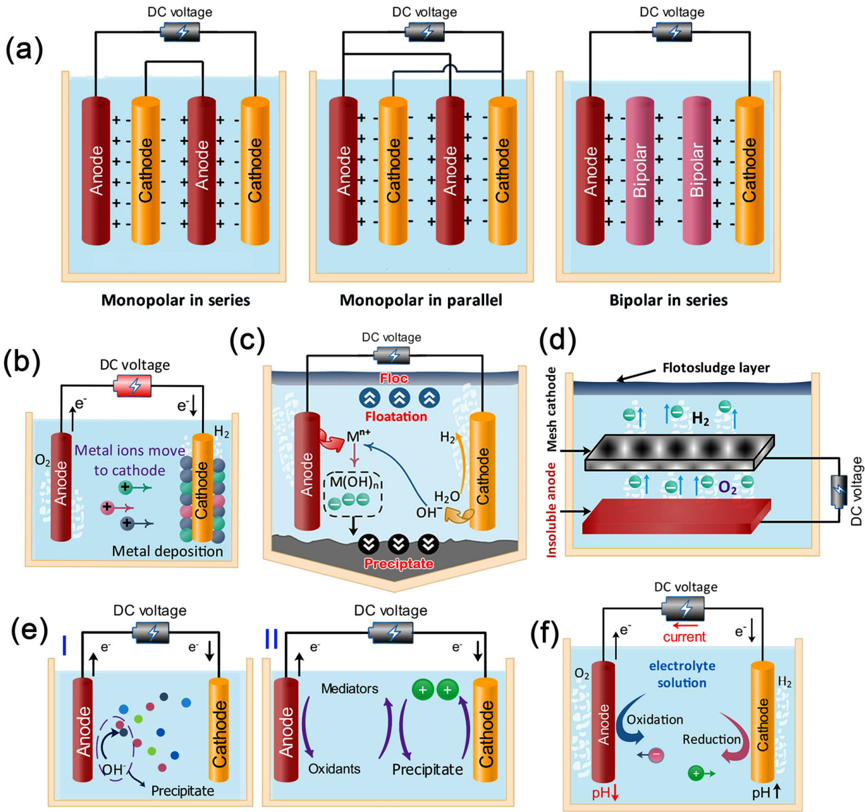
“d basic electroflotation methods-anions are released from anode to combine with cations (metal ions) and then floating over the water”
§ Removal of heavy metal ions from wastewater: a comprehensive and critical review > Electrochemical treatment
“and d electro-Fenton process in which OH -is released at anode and reacts with metal ions, and hence wastewater is purified due to precipitation.”
Rated minor: it would not touch a result — a value no result rests on, a p-value that stays on the same side of the significance level, or a conflict that is clerical, resolved elsewhere in the paper, or outside its own findings.
In the paper
§ Removal of heavy metal ions from wastewater: a comprehensive and critical review > Selection of the most appropriate technique for heavy ions
“The electric-and chemical-based methods are represented here for chemical precipitation and electrochemical processes, respectively 133 .”
§ Removal of heavy metal ions from wastewater: a comprehensive and critical review > Selection of the most appropriate technique for heavy ions
“chemical treatments (i.e., chemical precipitation, coagulation-flocculation, and flotation), electric treatments (i.e., electrochemical (reduction, EC, EF, and advanced oxidation) and ion exchange)”
Rated minor: it would not touch a result — a value no result rests on, a p-value that stays on the same side of the significance level, or a conflict that is clerical, resolved elsewhere in the paper, or outside its own findings.
In the paper
§ Removal of heavy metal ions from wastewater: a comprehensive and critical review > Electrochemical treatment
“Pt, Au, Mn, boron-doped diamond (PbO 2 ), and mixed metal oxide (MMO) (such as SnO 2 , PbO 2 , Ti/TiO 2 , IrO 2 , Sb 2 O 5 , RuO 2 ) are widely used as anodes 112 .”
§ Removal of heavy metal ions from wastewater: a comprehensive and critical review > Anode material Advantages Disadvantages
“PbO 2 -Relatively inexpensive. -Suitable for mineralizing organics -Toxic Pb could be formed. -Low efficiency in industry applications MMO -Relatively inexpensive. -High stability. -Good conductivity properties. -Toxic Sb could be formed. -Uneven coating.BDD -High potential for mineralizing organics.”
Cited works that were retracted
Works this paper cites that were later retracted, from the retraction notices publishers deposit. Major when the notice came out before this paper was published.
Rated major: it would touch a result — a value a result rests on, reported and recomputed p-values on opposite sides of the significance level, two passages that conflict with no sign which is right, or a cited work retracted before this paper was published.
In the paper
“Jamshidifard, S. et al. Incorporation of UiO-66-NH2 MOF into the PAN/chitosan nanofibers for adsorption and membrane filtration of Pb(II), Cd(II) and Cr(VI) ions from aqueous solutions. J. Hazard. Mater. 368, 10–20 (2019).”
Cited work 10.1016/j.jhazmat.2019.01.024 · retracted 2019-04-15 · notice 10.1016/j.jhazmat.2019.01.024 · this paper published 2021-07-08
Citations
Cites
1 retracted
Jamshidifard, S., Koushkbaghi, S., Hosseini, S., Rezaei, S., Karamipour, A., Jafari rad, A., & Irani, M. (2019) · Journal of Hazardous Materials · doi:10.1016/j.jhazmat.2019.01.024 · Cited by 540
RetractedRemoval of heavy metal ions from wastewaters: A review
Fu, F., & Wang, Q. (2011) · Journal of Environmental Management · doi:10.1016/j.jenvman.2010.11.011 · Cited by 8,703
New trends in removing heavy metals from industrial wastewater
Barakat, M. A. (2011) · Arabian Journal of Chemistry · doi:10.1016/j.arabjc.2010.07.019 · Cited by 3,094
Advantages and disadvantages of techniques used for wastewater treatment
Crini, G., & Lichtfouse, E. (2019) · Environmental Chemistry Letters · doi:10.1007/s10311-018-0785-9 · Cited by 2,971
Heavy metal removal from water/wastewater by nanosized metal oxides: A review
Hua, M., Zhang, S., Pan, B., Zhang, W., Lv, L., & Zhang, Q. (2012) · Journal of Hazardous Materials · doi:10.1016/j.jhazmat.2011.10.016 · Cited by 2,193
Physico–chemical treatment techniques for wastewater laden with heavy metals
Kurniawan, T. A., Chan, G. Y. S., Lo, W.-H., & Babel, S. (2006) · Chemical Engineering Journal · doi:10.1016/j.cej.2006.01.015 · Cited by 2,072
Martínez-Huitle, C. A., & Ferro, S. (2006) · Chem. Soc. Rev. · doi:10.1039/b517632h · Cited by 1,840
Da̧browski, A., Hubicki, Z., Podkościelny, P., & Robens, E. (2004) · Chemosphere · doi:10.1016/j.chemosphere.2004.03.006 · Cited by 1,717
Burakov, A. E., Galunin, E. V., Burakova, I. V., Kucherova, A. E., Agarwal, S., Tkachev, A. G., & Gupta, V. K. (2018) · Ecotoxicology and Environmental Safety · doi:10.1016/j.ecoenv.2017.11.034 · Cited by 1,612
Yang, X., Wan, Y., Zheng, Y., He, F., Yu, Z., Huang, J., Wang, H., Ok, Y. S., Jiang, Y., & Gao, B. (2019) · Chemical Engineering Journal · doi:10.1016/j.cej.2019.02.119 · Cited by 1,527
Research works printed but not linked: 3
- 80. Al-Hemaidi, W. K. Approach in choosing suitable technology for industrial wastewater. J. Civil & Envir. Eng. 2, 1000123 (2012).
- 98. Pretorius, W. A., Johannes, W. G. & Lempert, G. G. Electrolytic iron flocculant production with a bipolar electrode in series arrangement. Water SA 17, 133-138 (1991).
- WHO. Guidelines for drinking-water quality: Fourthedition incorporating the first addendum. Guidelines for Drinking-Water Quality: Fourth Edition Incorporating the First Addendum (2014).
Cited by
Items 701–800 of 2,197
Ziedan, W., Hussain, W. A., & Ismail, M. M. (2024) · Journal of Superconductivity and Novel Magnetism · doi:10.1007/s10948-024-06700-1 · Cited by 13
“The experimental results show that the condition of equilibrium is formed because the percent of Pb(II)ion removal increases with increasing adsorbent dose and subsequently reaches the maximum removal at a given amount of adsorbent [29].”
Wei, Q., He, R., Sun, H., Ding, Y., Wang, C., Ma, X., & Yang, G. (2024) · Journal of Water Process Engineering · doi:10.1016/j.jwpe.2024.105201 · Cited by 12
Syarifuddin, S., Heryanto, H., Suryani, S., & Tahir, D. (2024) · Desalination and Water Treatment · doi:10.1016/j.dwt.2024.100089 · Cited by 17
Application of coal fly ash for trace metal adsorption from wastewater: A review
Munyengabe, A., Banda, M. F., Augustyn, W. A., Netshiongolwe, K., & Ramutshatsha-Makhwedzha, D. (2024) · Heliyon · doi:10.1016/j.heliyon.2024.e31494 · Cited by 16
“Adsorption which can be physical or chemical is amongst the methods that use low-cost nanomaterials (activated carbon, CFA or CFA-based adsorbents and other cheap adsorbents from recycled waste raw materials) to decontaminate the environment [1,15,19,30].”
BackgroundMethodSong, B., Sikma, R. E., Meyerson, M., Leung, K., Sanchez, K. M. M., Smith, J. G., Gallis, D. F. S., & Ilgen, A. (2024) · Separation and Purification Technology · doi:10.1016/j.seppur.2024.129379 · Cited by 16
Kanjorian, A., Zinadini, S., Zinatizadeh, A. A., & Vatanpour, V. (2024) · Journal of environmental chemical engineering · doi:10.1016/j.jece.2024.114012 · Cited by 14
Sulfur-Dot-Mediated Synthesis of Smart Polymers for Heavy Metal Removal
Dolui, S., Sahu, B., Mandal, S., Bhattacharyya, S., & Banerjee, S. (2024) · ACS Applied Nano Materials · doi:10.1021/acsanm.4c03814 · Cited by 13
Gertsen, M., Perelomov, L. V., Kharkova, A. S., Burachevskaya, M., Hemalatha, S., & Atroshchenko, Y. M. (2024) · Toxics · doi:10.3390/toxics12100713 · Cited by 15
Chander, S., Yadav, S., Singh, R. R., Sharma, H. R., & Gupta, A. (2024) · Journal of Industrial and Engineering Chemistry · doi:10.1016/j.jiec.2024.10.027 · Cited by 13
Han, M., Shen, X., Zhang, G., Liu, Y., & Zhai, Y. (2024) · Journal of Water Process Engineering · doi:10.1016/j.jwpe.2024.106412 · Cited by 13
Sabry, N. M., Badry, R., Ibrahim, M., et al. (2024) · Scientific Reports · doi:10.1038/s41598-024-76285-1 · Cited by 13
Montenegro, R., Rincón, E., Rodríguez, A., et al. (2024) · Carbohydrate Polymers · doi:10.1016/j.carbpol.2024.122974 · Cited by 13
Ali, S. K., Hakami, O., Zelai, T., et al. (2024) · Inorganic Chemistry Communications · doi:10.1016/j.inoche.2024.113733 · Cited by 13
Fabrication of a MoS2@PAN composite membrane for efficient removal of toxic Cr(VI)
Zou, D., Nie, D., Wang, W., Xu, Q., & Nie, G. (2024) · Desalination · doi:10.1016/j.desal.2024.118460 · Cited by 13
Li, S., & Lee, B. (2025) · Separation and Purification Technology · doi:10.1016/j.seppur.2025.132479 · Cited by 16
Advances in graphene‐based nanomaterials for heavy metal removal from water: Mini review
Jalilian, M., Parvizi, P., & Zangeneh, M. R. (2025) · Water Environment Research · doi:10.1002/wer.70062 · Cited by 14
“Through DFT simulations, it has been FIGURE 14 Water purification process using magnetic GO (MGO) nanocomposites (NCs) (Qasem et al., 2021). confirmed that the UiO-66-NDC/GO NC exhibits superior dynamic stability and adsorption performance when compared to unmodified GO.”
A concise review on the removal of heavy metals from wastewater using adsorbents
Saritha, D. (2022) · Materials Today Proceedings · doi:10.1016/j.matpr.2022.04.579 · Cited by 14
Mokokwe, G., & Letshwenyo, M. W. (2022) · Physics and Chemistry of the Earth Parts A/B/C · doi:10.1016/j.pce.2022.103156 · Cited by 14
Wibowo, Y. G., Lululangi, B. R. G., Safitri, H., Rohman, A., Sudibyo, Priyanto, S., Syarifuddin, H., Maryani, A. T., Yuliansyah, A. T., Kurniawan, A. P., et al. (2023) · Environmental Nanotechnology Monitoring & Management · doi:10.1016/j.enmm.2023.100905 · Cited by 14
Mittal, S., Kumar, V., & Sharma, R. K. (2022) · Journal of the Indian Chemical Society · doi:10.1016/j.jics.2022.100481 · Cited by 13
Ivanchenko, A., Soroka, O. V., Yelatontsev, D. O., & Panasenko, V. (2025) · Desalination and Water Treatment · doi:10.1016/j.dwt.2025.101048 · Cited by 18
Advances in adsorbent materials for heavy metals remediation: a roadmap for sustainability
Nono, M. M., Mahmoud, A. E. D., Adamu, S., Tanimu, G., Salami, B. A., Gambo, Y., Sultan, N. S., & Somogyi, V. (2025) · Environmental Monitoring and Assessment · doi:10.1007/s10661-025-14289-8 · Cited by 16
Seromo, L., Greesh, N., & Mofokeng, J. P. (2025) · Carbon Trends · doi:10.1016/j.cartre.2025.100566 · Cited by 13
Wang, Y., Feng, X., Wen, Z., Chu, C., Luo, Y., Chen, H., Li, N., & Liu, X. (2025) · Journal of Cleaner Production · doi:10.1016/j.jclepro.2025.146976 · Cited by 13
Adsorption of heavy metals from acid mine drainage using poly (hydroxamic acid) ligand
Mzinyane, N. N. (2022) · South African Journal of Chemical Engineering · doi:10.1016/j.sajce.2022.09.007 · Cited by 13
Poly(ethylene glycol) Diacrylate Hydrogel with Silver Nanoclusters for Water Pb(II) Ions Filtering
Burratti, L., Zannotti, M., Maranges, V., Giovannetti, R., Duranti, L., Matteis, F. D., Francini, R., & Prosposito, P. (2023) · Gels · doi:10.3390/gels9020133 · Cited by 13
Wang, Y., Cui, K., Bai, J., Fang, B., & Wang, F. (2023) · Water · doi:10.3390/w15040669 · Cited by 12
Removal of heavy metal by using green synthesis ZnO NPs and ZnO-HNT composite
Canbaz, G. T., Açıkel, Ü., & Sağ, Y. (2023) · Biomass Conversion and Biorefinery · doi:10.1007/s13399-023-04393-5 · Cited by 14
“Among these meth-ods, adsorption is accepted as the most efficient and economical method in water treatment with its advantages such as cost effectiveness, high efficiency and easy applicability [13, 14].”
Kamali, M., Qotbi, A., Haghani, M., & Vatanpour, V. (2023) · Reactive and Functional Polymers · doi:10.1016/j.reactfunctpolym.2023.105758 · Cited by 12
Heavy Metal Pollution in Water: Cause and Remediation Strategies
Maithani, D., Dasila, H., Saxena, R., Tiwari, A. A., Bhatt, D., Rawat, K., & Suyal, D. C. (2023) · Springer eBooks · doi:10.1007/978-981-99-5018-8_8 · Cited by 19
Chemical Methods of Heavy Metal Management: Coagulation, Flocculation, and Floatation
Hussain, M., Ali, V., Pourebrahimi, S., Ahmadi, S., & Ghosh, S. B. (2023) · ACS symposium series · doi:10.1021/bk-2023-1456.ch015 · Cited by 19
New sulfonated covalent organic framework for highly effective As(III) removal from water
Khosravani, M. S., Dehghani, M., Moeinpour, F., & Parvaresh, H. (2024) · Heliyon · doi:10.1016/j.heliyon.2024.e25423 · Cited by 12
“Among these methods, adsorption shows promise due to its affordability and ease of implementation [5].”
BackgroundYe, P., Qin, L., He, M., Wu, F., Chen, Z., Liang, M., & Deng, L. (2024) · Acta Physico-Chimica Sinica · doi:10.3866/pku.whxb202311032 · Cited by 14
Xia, Q.-Q., Zhao, X., Guo, P., et al. (2024) · Separation and Purification Technology · doi:10.1016/j.seppur.2024.127048 · Cited by 12
Alizadeh, M., Akbari, A., Abdoli, S. M., Roghani‐Mamaqani, H., & Mardani, H. (2024) · Desalination · doi:10.1016/j.desal.2024.117551 · Cited by 14
Teaching Adsorption Chemistry by Constructing Surface Complexation Models (SCM) in PHREEQC
Bullen, J. C., Landa-Cansigno, O., & Weiss, D. J. (2024) · Journal of Chemical Education · doi:10.1021/acs.jchemed.3c01195 · Cited by 14
Šuránek, M., Melichová, Z., & Thomas, M. (2024) · Environmental Science and Pollution Research · doi:10.1007/s11356-024-33133-z · Cited by 14
“The use of a particular method or technology depends on the specific metal, the chemical form of its occurrence, and the level of contamination (Joseph et al. 2019; Qin et al. 2020; Qasem et al. 2021).”
Sharmila, K., Latha, S., Vijayalakshmi, K., Alshalwi, M. N., Alotaibi, K. M., Sudha, P. N., Prasad, P. S., Sugashini, S., Lavanya, G., & Deepa, M. (2024) · Biomass Conversion and Biorefinery · doi:10.1007/s13399-024-05522-4 · Cited by 13
“Massive volumes of metallic ion-containing industrial effluents are continuously released into ecosystems by a variety of industries, including the production of batteries, paper, fabric, dyeing, electrolysis processes, and mining [1, 2].”
Alabi, A. H., Adekunle, V. A., Azeez, A. A., et al. (2024) · Nano-Structures & Nano-Objects · doi:10.1016/j.nanoso.2024.101183 · Cited by 12
K–Co–Mo–S x chalcogel: high-capacity removal of Pb 2+ and Ag + and the underlying mechanisms
Nie, J., Roy, S. C., Dhami, S., Islam, T., Amin, R., Zhu, X., Taylor-Pashow, K. M. L., Han, F. X., & Islam, S. M. (2024) · Journal of Materials Chemistry A · doi:10.1039/d4ta05158k · Cited by 14
Li, W., Han, P., Hu, H., Zhu, X., Hou, Y., & Qian, G. (2024) · Desalination and Water Treatment · doi:10.1016/j.dwt.2024.100981 · Cited by 14
Jin, W., Wu, Q., Lou, Y., et al. (2024) · 中国科学通报:英文版 · doi:10.1016/j.scib.2024.12.043 · Cited by 12
An efficient fungi-biochar-based system for advancing sustainable management of combined pollution
Xia, Y., Deng, M., Zhang, T., Yu, J., & Lin, X. (2025) · Environmental Pollution · doi:10.1016/j.envpol.2025.125649 · Cited by 14
Khan, J., Fayyaz, M., Aslam, M. M., Gillani, S. R., Masood, S., Jahangir, M., Rehman, M., Ullah, F., Jamil, M. A., Saud, S., et al. (2025) · Journal of Umm Al-Qura University for Applied Sciences · doi:10.1007/s43994-024-00209-y · Cited by 13
“Heavy metals are not biodegradable and can cause cancer [2, 3], therefore, heavy metal-containing wastewater is thus released into the environment untreated can be extremely dangerous to ecosystems and living things [1].”
Wang, L., 邱丹, Zha, Y., et al. (2025) · Separation and Purification Technology · doi:10.1016/j.seppur.2025.131487 · Cited by 12
Unveiling the potency of graphene-based materials for water remediation: A brief review
Lestari, D. Y., Wijaya, K., Syoufian, A., et al. (2025) · Journal of Molecular Structure · doi:10.1016/j.molstruc.2025.142018 · Cited by 12
Alias, M. S., Ang, W. L., & Mohammad, A. W. (2025) · Journal of environmental chemical engineering · doi:10.1016/j.jece.2025.117641 · Cited by 11
Zavala, M. Á. L., & Bouchez, B. F. (2022) · Ceramics International · doi:10.1016/j.ceramint.2022.07.091 · Cited by 12
Yusaf, A., Usman, M., Ahmad, M., Siddiq, M., Mansha, A., Al‐Hussain, S. A., Zaki, M. E. A., & Rehman, H. F. (2022) · Molecules · doi:10.3390/molecules27238332 · Cited by 12
Lan, X., Chen, J., Xie, Y., et al. (2023) · Molecules · doi:10.3390/molecules28020469 · Cited by 12
Anion−π Interaction Powered Perrhenate Recognition and Extraction in Aqueous Media
Qin, H., Jiang, J. Y., Sun, X., et al. (2023) · Inorganic Chemistry · doi:10.1021/acs.inorgchem.3c00471 · Cited by 12
Predicting and classifying water quality, treatment, and usage: a comprehensive review
Sarang, Y., Devlekar, S., & Yeole, A. S. (2023) · International Journal of Information Technology · doi:10.1007/s41870-023-01285-9 · Cited by 12
“In “Artificial intelligence-based wastewater treatment plant operational process prediction using convolutional Table 1 Common heavy metals found in wastewater, their origins, and the health problems they cause [8]”
MethodMuntean, S. G., Halip, L., Nistor, M. A., & Păcurariu, C. (2023) · Magnetochemistry · doi:10.3390/magnetochemistry9070163 · Cited by 20
Achaiah, I. R., Gayathri, B. G., Banu, N., Kaliprasad, C. S., N, B. U. M. B., Ajeya, K. P., Balakrishna, K., Udayabhanu, Prashantha, K., Girish, Y. R., et al. (2023) · International Journal of Biological Macromolecules · doi:10.1016/j.ijbiomac.2023.125976 · Cited by 13
Zinatizadeh, A. A., Oulad, F., Moradi, S., et al. (2023) · Journal of Water Process Engineering · doi:10.1016/j.jwpe.2023.104373 · Cited by 12
Ahmed, M., & Nasar, A. (2023) · Arabian Journal for Science and Engineering · doi:10.1007/s13369-023-08518-w · Cited by 16
“Clay minerals, especially soil clays, have been widely studied for their strong adsorption capabilities, affordability, abundance, non-toxicity, and ion exchange potential [16–23].”
Novel nafion-palygorskite composite for Pb/Lead treatment
Sabbagh, M. F., Hussaini, M. Y., Ismail, U. M., Ahmed, H.-U.-R., Al-Suwaiyan, M. S., & Vohra, M. S. (2024) · International Journal of Environmental Science and Technology · doi:10.1007/s13762-024-05661-1 · Cited by 13
“…is a treat-ment technique that offers an effective yet comparatively simpler system, hence, several advanced and modified adsor-bents have been reported for specific environmental applications (Renu et al. 2017; Arora 2019; Qasem et al. 2021; Ibrahim and Vohra 2023; Ibrahim et al. 2023).”
Circular Economy Approach in Treatment of Galvanic Wastewater Employing Membrane Processes
Kowalik-Klimczak, A., Gajewska-Midziałek, A., Buczko, Z., et al. (2023) · Membranes · doi:10.3390/membranes13030325 · Cited by 12
Maity, T., Kumar, Y., Deb, A. K. S., Ali, S. M., & Maiti, P. K. (2025) · Langmuir · doi:10.1021/acs.langmuir.5c00280 · Cited by 11
Valorization of Agro-Industrial Lignin as a Functional Polymer for Sustainable Wastewater Treatment
Ungureanu, E. L., Tofanica, B.-M., Ulea, E., Ungureanu, O. C., Fortună, M. E., Rotaru, R., Volf, I., & Popa, V. (2025) · Polymers · doi:10.3390/polym17162263 · Cited by 15
“This aligns with the expectation that less metal had been removed from solution at these shorter durations, leaving the filtrate more toxic [3,5,6,15,17,19].”
Removal of Heavy Metals from Galvanic Industry Wastewater: A Review of Different Possible Methods
Kowalik-Klimczak, A. (2025) · Sustainability · doi:10.3390/su17198562 · Cited by 20
Heavy metal removal from wastewater using functionalized nano-structures and graphene oxide
Jassim, A. Y., Al-Ali, B. S., Kadhum, W. R., & Kianfar, E. (2025) · Hybrid Advances · doi:10.1016/j.hybadv.2025.100552 · Cited by 14
Zhen, Y.-Q., Che, T.-H., Song, Y.-X., Wan, Y.-M., Jiang, H.-H., Yu, Z.-Z., Yu, M., Xu, S., Li, C., & Zhou, J.-Y. (2025) · Journal of environmental chemical engineering · doi:10.1016/j.jece.2025.120174 · Cited by 15
Hemdan, M., Fayad, E., Binjawhar, D. N., El-Mekkawy, H. I., Ali, H. S., & Mubarak, M. F. (2026) · Scientific Reports · doi:10.1038/s41598-026-45525-x · Cited by 11
Versatile heavy metal ion separation via biological ion-channel-inspired membranes
Zhao, Y., Gao, H., Yu, L. J., Li, Q., Li, C., Jiang, L., & Gao, J. X. (2026) · Nature Nanotechnology · doi:10.1038/s41565-026-02147-8 · Cited by 19
“As a result, great effort has been made to develop all-aqueous adsorption-based separation methods using powders, fibres or membranes 5–9 .”
Leng, S., Guo, X., Ma, N., Li, B., Zhang, X., Ding, Y., & Zhao, L. (2023) · ACS ES&T Water · doi:10.1021/acsestwater.3c00136 · Cited by 11
Ma, X., Wang, Y., Tong, L., Luo, J., Chen, R., Wang, Y., Guo, X., Wang, J., Zhou, Z., Qi, J., et al. (2023) · Chemosphere · doi:10.1016/j.chemosphere.2023.139590 · Cited by 13
Latha, A., Ganesan, R., Venkatesan, G., et al. (2023) · Desalination and Water Treatment · doi:10.5004/dwt.2023.29952 · Cited by 11
Cai, S., Wen, Y., Zhang, Q., et al. (2024) · The Science of The Total Environment · doi:10.1016/j.scitotenv.2024.172353 · Cited by 11
Wang, H., Luo, L., Yan, B., & Luo, S. (2024) · Environmental Pollution · doi:10.1016/j.envpol.2024.124028 · Cited by 12
Laschi, S., Sfragano, P. S., Tadini‐Buoninsegni, F., et al. (2024) · The Analyst · doi:10.1039/d4an00616j · Cited by 11
Peter, S., Lyczko, N., Thomas, S., Leruth, D., Germeau, A., Fati, D., & Nzihou, A. (2024) · Chemosphere · doi:10.1016/j.chemosphere.2024.142779 · Cited by 15
“The surface complexation mechanism would also generate secondary complexes that can interact with pollutants leading to the pollutant ’ s removal (Dabrowski et al., 2004; Qasem et al., 2021).”
Neves, T. D. F., Lopes, C. B., Mastelaro, V. R., et al. (2024) · Chemical Engineering Journal · doi:10.1016/j.cej.2024.155496 · Cited by 11
Biswas, B., & Allen, H. C. (2024) · The Journal of Physical Chemistry A · doi:10.1021/acs.jpca.4c05142 · Cited by 11
Wołowicz, A., Wawrzkiewicz, M., Podkościelna, B., Tarasiuk, B., Gilev, J. B., & Sevastyanova, O. (2024) · Frontiers in Chemistry · doi:10.3389/fchem.2024.1496901 · Cited by 12
CRISPR: New promising biotechnological tool in wastewater treatment
Bhanu, L. S. M., Kataki, S., & Chatterjee, S. (2024) · Journal of Microbiological Methods · doi:10.1016/j.mimet.2024.107066 · Cited by 17
Fadhel, S. R. (2024) · Results in Engineering · doi:10.1016/j.rineng.2024.103293 · Cited by 11
Mechanisms and mass transfer kinetics of Pb(II) adsorption onto rice husk charcoal silica gel
Ramalah, D., Rohaeti, E., Fulazzaky, M. A., & Saprudin, D. (2024) · Journal of the Taiwan Institute of Chemical Engineers · doi:10.1016/j.jtice.2024.105833 · Cited by 11
Elimination of nickel ions in a packed column using clamshell waste as an adsorbent
Baskar, S., Sidhaarth, K. R. A., Mangaleshwaran, L., Lakkaboyana, S. K., Trilaksana, H., Kalla, R. M. N., Lee, J., Atanase, L. I., Kazi, M., & Praveenkumar, S. (2025) · Scientific Reports · doi:10.1038/s41598-024-82267-0 · Cited by 14
Mostafa, H. Y., Masoud, A. M., El–Zahhar, A. A., Alghamdi, M. M., Taha, E. H., Naggar, A. M. A. E., & Taha, M. H. (2025) · RSC Advances · doi:10.1039/d4ra08579e · Cited by 14
Vance, S. S. M., Chatzisymeon, E., Morrison, C. A., & Love, J. B. (2025) · Green Chemistry · doi:10.1039/d4gc06466f · Cited by 14
Mongioví, C., Lacalamita, D., Morin‐Crini, N., Gabrion, X., Placet, V., Ribeiro, A. R. L., Ivanovska, A., Kostić, M., Bradu, C., Staelens, J., et al. (2022) · Arabian Journal of Chemistry · doi:10.1016/j.arabjc.2022.103742 · Cited by 12
Cu(II) and Au(III) recovery with electrospun lignosulfonate CO2-activated carbon fiber
Wang, S.-H., & Chang, F. (2022) · International Journal of Biological Macromolecules · doi:10.1016/j.ijbiomac.2022.01.124 · Cited by 13
Molybdate Recovery by Adsorption onto Silica Matrix and Iron Oxide Based Composites
Matusoiu, F., Negrea, A., Ciopec, M., et al. (2022) · Gels · doi:10.3390/gels8020125 · Cited by 11
Mercury removal efficiency of disulfide- and thiol-functionalized lanthanide coordination polymers
Tapangpan, P., Chiangraeng, N., Boer, S. A., Semakul, N., Nimmanpipug, P., & Rujiwatra, A. (2022) · Chemosphere · doi:10.1016/j.chemosphere.2022.135330 · Cited by 12
Arslan, F., & Bulut, G. (2022) · Physicochemical Problems of Mineral Processing · doi:10.37190/ppmp/152061 · Cited by 19
“In this regard, nanoparticles have been proposed as new collectors that showed both benefits of synthetic-and biosurfactants (Peng et al., 2019; Taseidifar et al., 2019; Hoseinian et al., 2020; Qasem et al., 2021; Jia et. al.,2022).”
Nanofiltration membrane use for separation of heavy metals from wastewater
Siddique, J. A. (2022) · Elsevier eBooks · doi:10.1016/b978-0-12-822880-7.00010-8 · Cited by 21
Khereshki, N. A., Mohammadi, A., Mousavi, H. Z., Alizadeh, N., & Evazalipour, M. (2023) · Chemical Papers · doi:10.1007/s11696-023-02770-y · Cited by 11
“2021; Zhou and Wang 2019), so that these metals or metalloids are hazardous pollutions in natural water or even purified water, which cause serious health problems for humans and other living organisms (Masindi and Muedi 2018; Qasem et al. 2021; Sankhla et al. 2016; Singh et al. 2020; Wan et al. 2017).”
BackgroundAbed, K., Ahmed, E., Shehzad, H., Sharif, A., Farooqi, Z. H., Liu, Z., Zhou, L., Ouyang, J., Begum, R., Irfan, A., et al. (2023) · International Journal of Biological Macromolecules · doi:10.1016/j.ijbiomac.2023.125327 · Cited by 11
A Density Functional Theory Study on the Interaction of Cellulose Biopolymer and Atomic Arsenic
Munio, A. A. Z., Liboon, A., Lagud, Y. J., Patayon, U. B., Pido, A. A. G., Karouchi, M., & Ambolode, L. C. C. (2023) · Diffusion and defect data, solid state data. Part B, Solid state phenomena/Solid state phenomena · doi:10.4028/p-ppefx7 · Cited by 11
“Reports revealed that candidate materials for the adsorbent of As are graphene-based materials, metal-oxides, and biopolymers[4,5-9].”
BackgroundMethodSanad, M. N., Farouz, M., & ElFaham, M. M. (2023) · Advanced Engineering Letters · doi:10.46793/adeletters.2023.2.4.1 · Cited by 12
Acharya, C., Mohapatra, R. K., Sasmal, A., Panda, C. R., & Thatoi, H. (2024) · International Journal of Environmental Science and Technology · doi:10.1007/s13762-024-05460-8 · Cited by 11
“Several physicochemical methods including chemical precipitation, neutralization, nanofiltration, and chemical adsorption have been employed for removing heavy metals from contaminated aqueous solution (Qasem et al. 2021).”
Yao, Y., Wang, B., Zhao, F. J., Hu, Z., & Huang, Y. (2022) · ACS Applied Polymer Materials · doi:10.1021/acsapm.1c01452 · Cited by 14
Magnetite–graphene nanocomposites to treat contaminated water: a review
Jain, R. (2025) · Applied Water Science · doi:10.1007/s13201-025-02486-2 · Cited by 14
“Usually removal of metal ions is carried out in acidic medium, but it should be optimized for various metal ions (Qasem et al. 2021).”
Kumar, N., Singh, B. P., Chen, Y., Kafle, A., Zhu, W., Ray, R. L., Kumar, S., Shan, X., & Balan, V. (2025) · Applied Sciences · doi:10.3390/app15189896 · Cited by 18
Recent advances on catalytic potentials of copper oxides (I & II): fundamentals to applications
Jha, K., Raula, M., Gomey, S., & Kalyani, C. (2025) · Critical reviews in solid state and materials sciences/CRC critical reviews in solid state and materials sciences · doi:10.1080/10408436.2025.2560337 · Cited by 15
Chalcogenides: recent advances in their environmental applications
Alfred, M. O., Akor, E., Ayeni, B. C., Olorunnisola, C. G., Unuabonah, E. I., & Omorogie, M. O. (2025) · Energy Ecology and Environment · doi:10.1007/s40974-025-00389-1 · Cited by 19
Ye, M., & Huang, H. (2025) · Talanta · doi:10.1016/j.talanta.2025.128994 · Cited by 12
Recent trends in heavy metal removal technologies from water: mechanisms and advancements
Joshi, A. A., Chaudhari, K., & Ragupathy, G. (2026) · Environmental Science Water Research & Technology · doi:10.1039/d4ew01024h · Cited by 33
Kaswan, K., Khan, A., Chatterjee, S., Ray, M., Haji, H. S., Joshi, R., Pal, A., Wang, T. A., Chu, J. P., & Lin, Z. (2025) · Advanced Functional Materials · doi:10.1002/adfm.202526347 · Cited by 17
Metadata
- Authors
- Qasem, N. A. A., Mohammed, R. H., & Lawal, D. U.
- Affiliations
- King Fahd University of Petroleum and Minerals (SA)
- Zagazig University (EG)
- Corresponding author
- Qasem, Naef A. A.
- Venue
- npj Clean Water
- Published
- 2021-07-08
- Volume
- 4
- Issue
- 1
- ISSN
- 2059-7037 (ISSN-L)
- OpenAlex
- W3180677679
- Semantic Scholar
- e09dc879e764aecba0a92434e646e3d8569a1eb5
- Cited by
- 2,225
- References
- 136
- Citations by year
- 2026: 372 · 2025: 566 · 2024: 611 · 2023: 410 · 2022: 235 · 2021: 30
- FWCI
- 95.69
- Type
- journal article
- Language
- en
- Update notices
- correction (2021-12-07)
- Open access
- gold
- doi.org
- Licence
- cc-by
- creativecommons.org/licenses/by/4.0 (tdm)
- creativecommons.org/licenses/by/4.0 (vor)
- Locations
- npj Clean Water (publishedVersion, cc-by)
- DOAJ (DOAJ: Directory of Open Access Journals) (submittedVersion, cc-by-sa)
- Greater South Information System
- Funders
- King Fahd University of Petroleum and Minerals
- Topics
- Physical Sciences › Environmental Science › Water Science and Technology › Adsorption and biosorption for pollutant removal
- Physical Sciences › Environmental Science › Water Science and Technology › Heavy Metal Pollution Remediation
- Physical Sciences › Environmental Science › Environmental Engineering › Environmental remediation with nanomaterials
- Keywords
- heavy metal removal, wastewater treatment, adsorption, membrane separation, electrochemical treatment, photocatalysis, chemical precipitation, membrane fouling, sludge production
About these checks
Registry, retraction, Cites and statistics results are computed, not judged, with one exception: a printed reference that no index lists is read once by a model before it counts as a citation error. Claims are extracted by a model and kept only when their quote appears verbatim in the text; each cited source is then checked, with a model’s help, for whether it says what the claim relies on. Those verdicts can be wrong — read the claim’s quote and the cited source before relying on one.
The claim verdicts this report counts are experimental: their accuracy is not yet measured.
A language model drew the claims from the paper on 2026-10-10, under version 3 of the claim definition (model deepseek-v4.1-flash, prompt extract-v3).
A second model labelled each claim on 2026-10-10 (model jev-1.13-20260917, definition revision gold-guideline-v0.2).
Cited sources are checked with a language model’s help (gpt-6-sol).
Statistics and arithmetic are recomputed, not judged.
Confidence bands are shown only for fields calibrated on our annotated test set. None is calibrated yet, so no band is shown.
What counts as a claim ›How we measure confidence ›How we check this ›
Are you an author, or do you see a problem with this page? Request a review
Data sources
Bibliographic data: Semantic Scholar, OpenAlex, Crossref.
Contains information from the Semantic Scholar Academic Graph Datasets, made available under the ODC Attribution License (ODC-BY 1.0).
Semantic Scholar’s data is described in: Kinney, R., et al. (2023). The Semantic Scholar Open Data Platform. arXiv:2301.10140.
