

The DOI matches its Crossref record; 70 of the 70 references it cites were found in a registry or an index.
Hyaluronic acid–GPRC5C signalling promotes dormancy in haematopoietic stem cells
Abstract
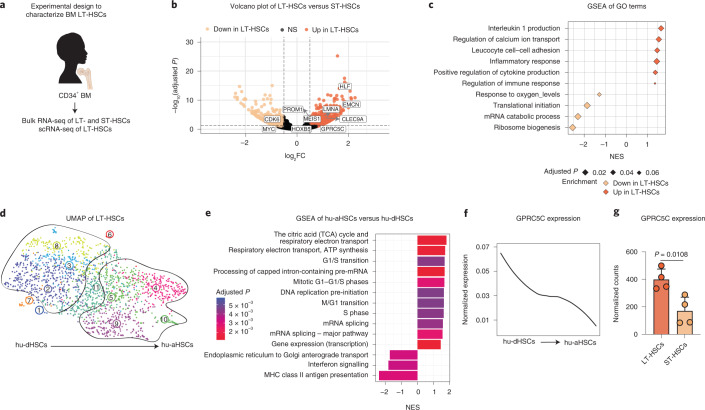
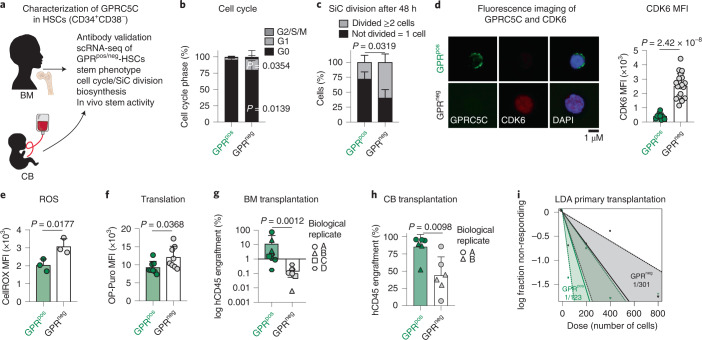
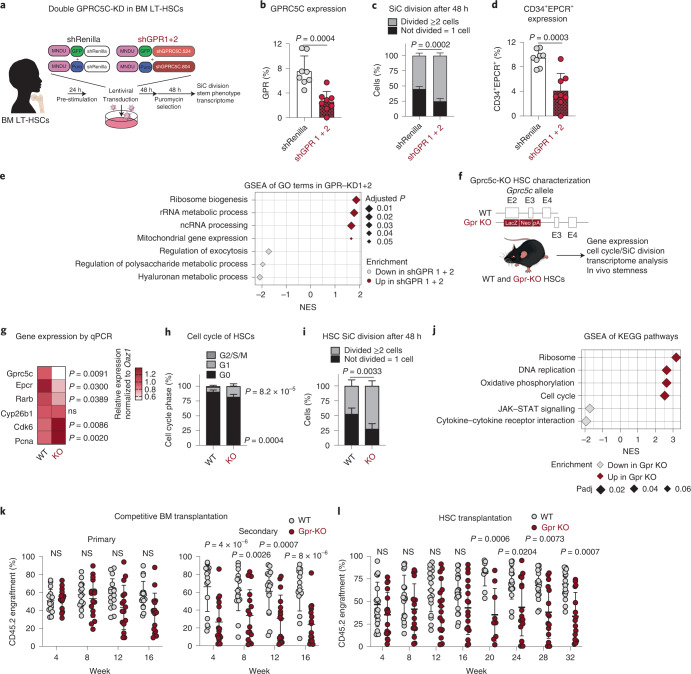
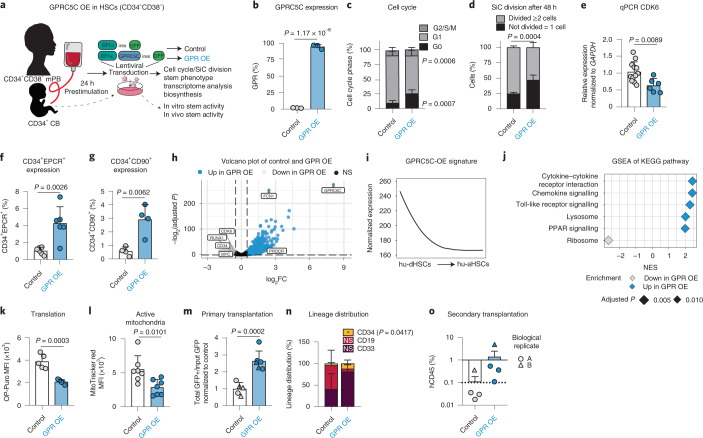
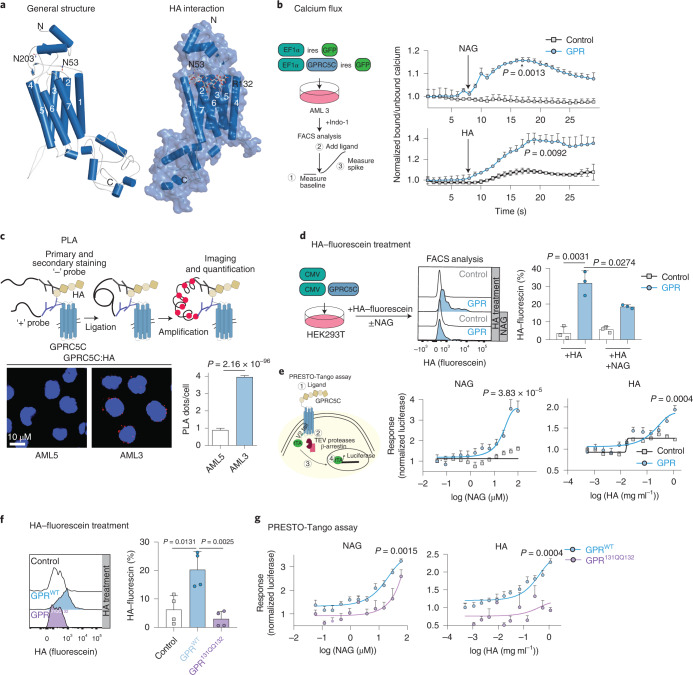
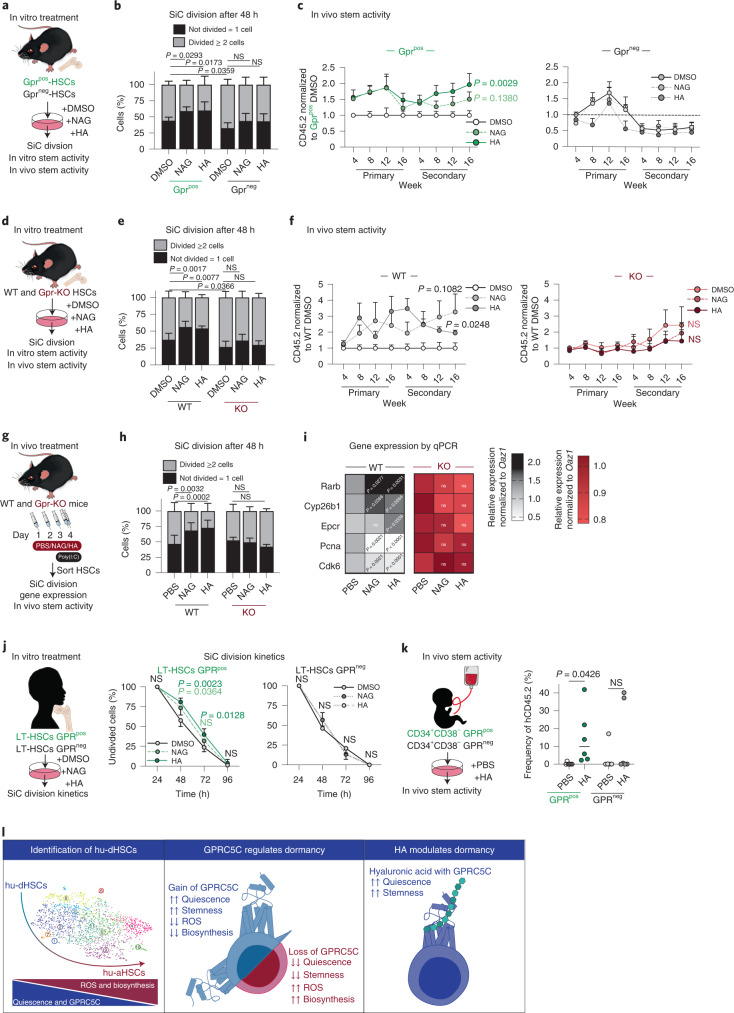
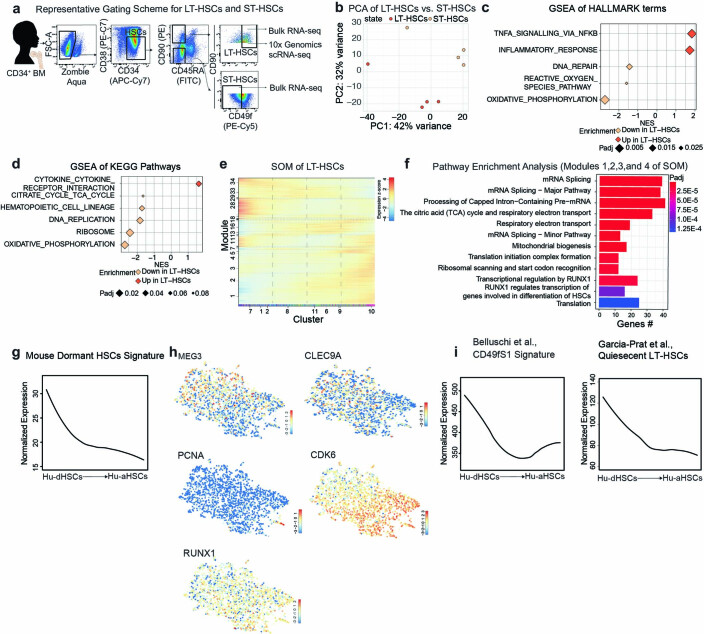
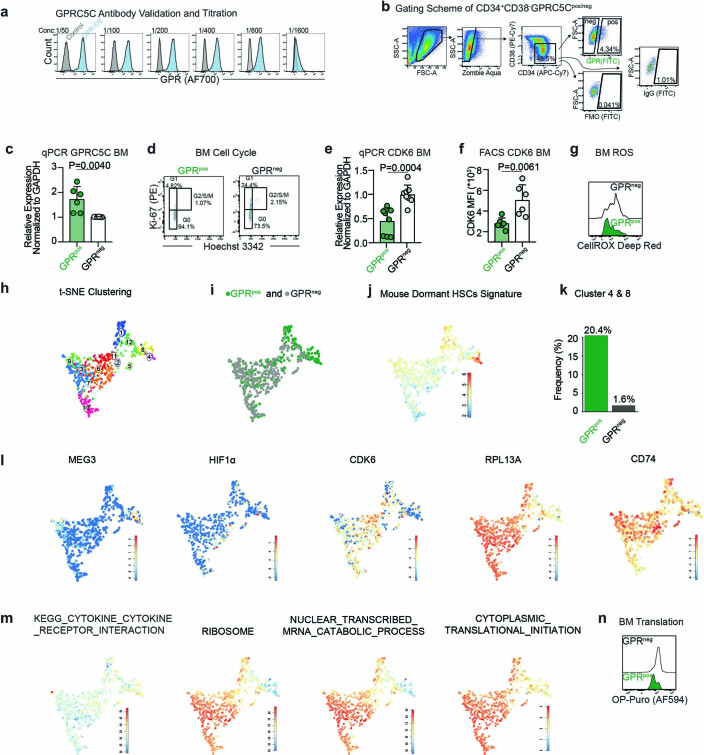
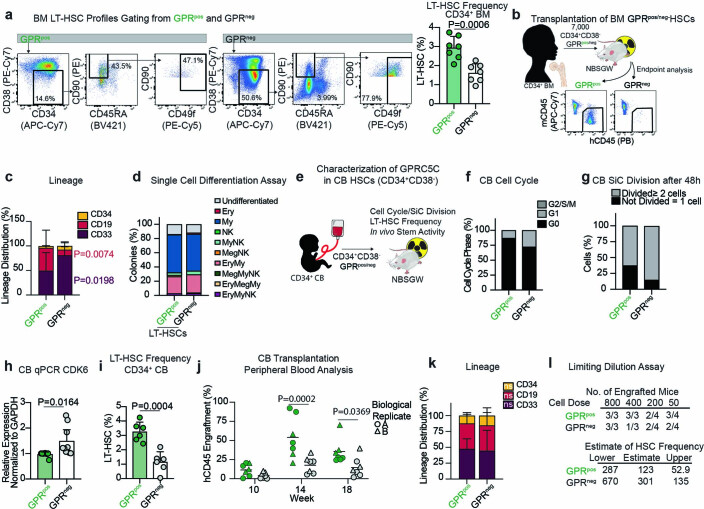
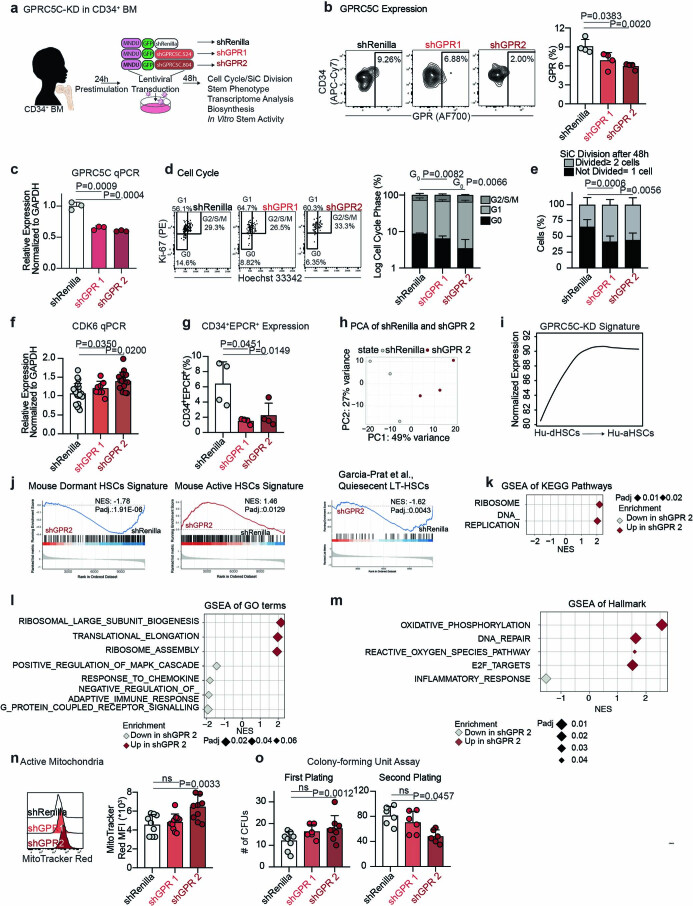
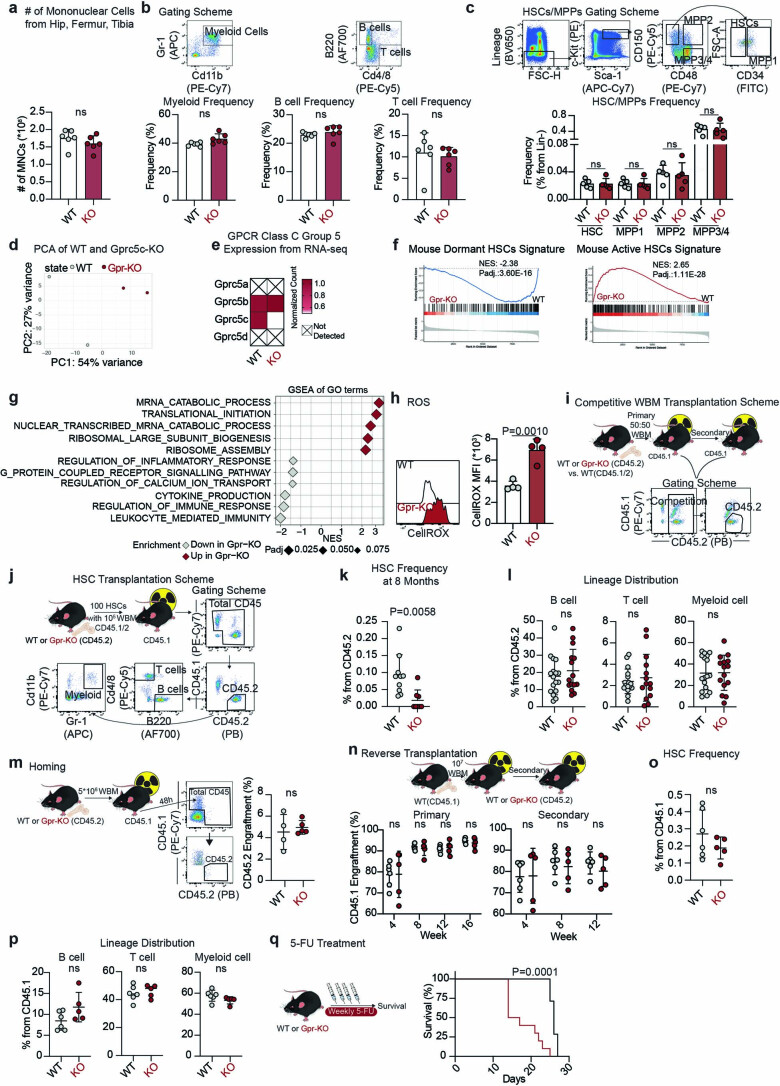
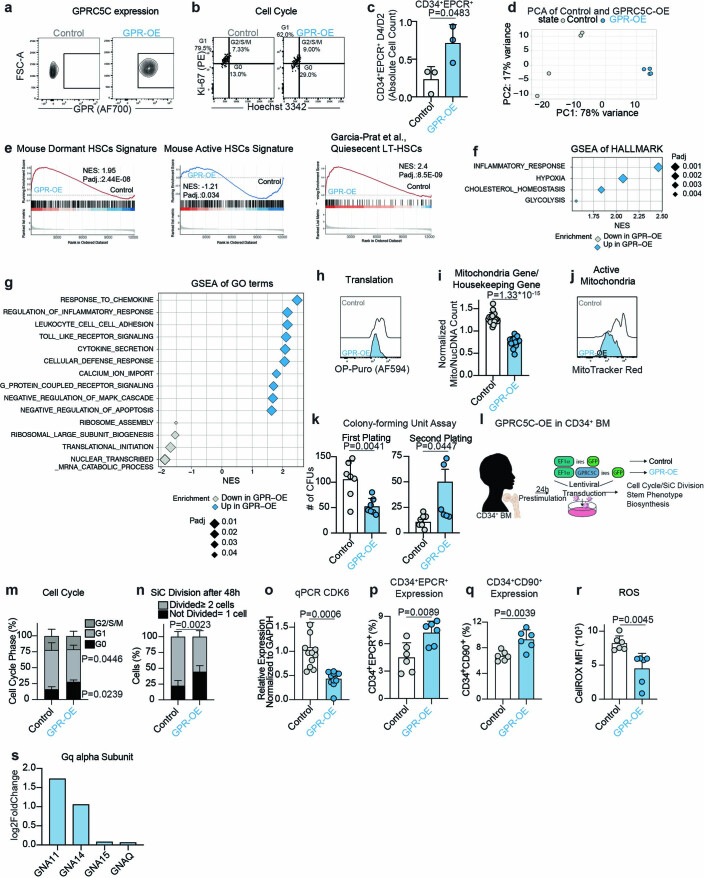
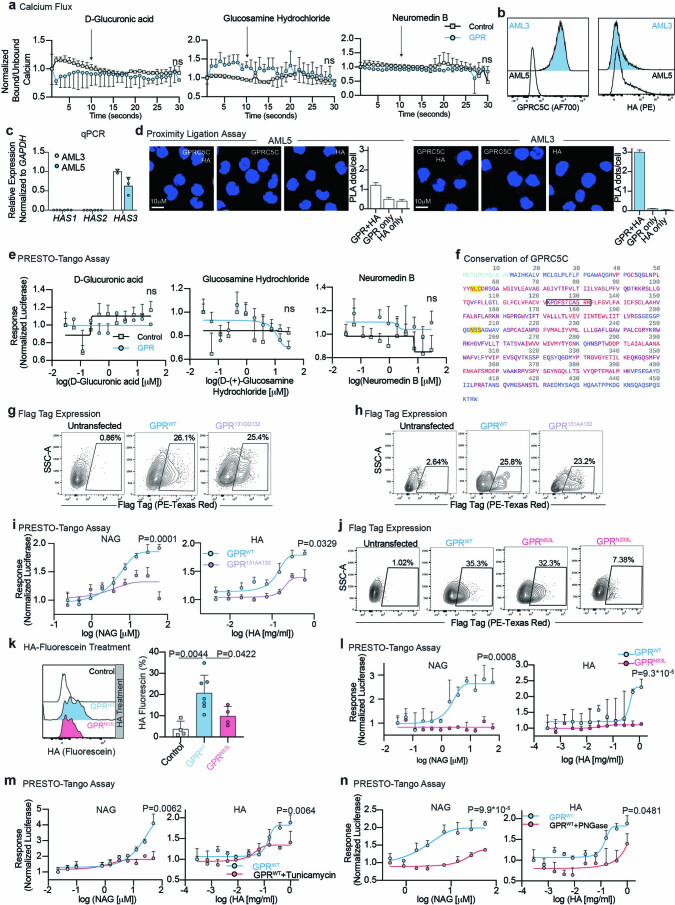
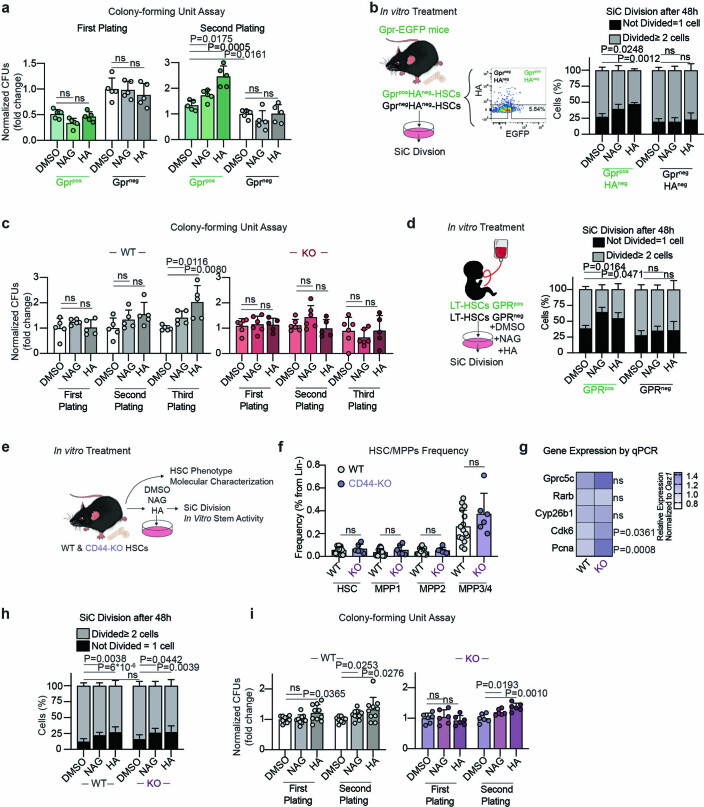
Bone marrow haematopoietic stem cells (HSCs) are vital for lifelong maintenance of healthy haematopoiesis. In inbred mice housed in gnotobiotic facilities, the top of the haematopoietic hierarchy is occupied by dormant HSCs, which reversibly exit quiescence during stress. Whether HSC dormancy exists in humans remains debatable. Here, using single-cell RNA sequencing, we show a continuous landscape of highly purified human bone marrow HSCs displaying varying degrees of dormancy. We identify the orphan receptor GPRC5C, which enriches for dormant human HSCs. GPRC5C is also essential for HSC function, as demonstrated by genetic loss- and gain-of-function analyses. Through structural modelling and biochemical assays, we show that hyaluronic acid, a bone marrow extracellular matrix component, preserves dormancy through GPRC5C. We identify the hyaluronic acid–GPRC5C signalling axis controlling the state of dormancy in mouse and human HSCs.
Overview
The claims and statistics of this paper haven’t been checked yet.
Run the check — free, no account needed. It reads the open-access text and checks the sources it cites.
Integrity signals
Registry
Cites
Statistics
Figures
Verification
Claims the paper makes
The claims and statistics of this paper haven’t been checked yet.
Run the check — free, no account needed. It reads the open-access text and checks the sources it cites.
Claims other papers make about this one
Each is checked against this paper’s own text: does it say what the citing paper says it does?
In the citing paper
“For example, HSC2 expressed lower levels of CDK6, which promotes exit from quiescence in LT-HSCs,92 and higher levels of GPRC5C, which marks dormant human BM HSCs.61”
From Selective advantage of mutant stem cells in human clonal hematopoiesis is associated with attenuated response to inflammation and aging (2024) · cites this paper as [61]
In the citing paper
“Interestingly, HSC2 expressed higher levels of TNF-α/NF-κB signaling, aged HSC, and quiescence signatures,61,89 and lower levels of the activated HSC signature.”
From Selective advantage of mutant stem cells in human clonal hematopoiesis is associated with attenuated response to inflammation and aging (2024) · cites this paper as [61]
In the citing paper
“For example, HSC2 expressed lower levels of CDK6, which promotes exit from quiescence in LT-HSCs,92 and higher levels of GPRC5C, which marks dormant human BM HSCs.61”
From Selective advantage of mutant stem cells in human clonal hematopoiesis is associated with attenuated response to inflammation and aging (2024) · cites this paper as [61]
Self-check
Percentages, sums and reported differences re-computed from the paper’s own numbers.
The self-check needs the paper’s full text.
Citations
Cites
Moderated estimation of fold change and dispersion for RNA-seq data with DESeq2
Love, M. I., Huber, W., & Anders, S. (2014) · Genome Biology · doi:10.1186/s13059-014-0550-8 · Cited by 95,106
Subramanian, A., Tamayo, P., Mootha, V. K., Mukherjee, S., Ebert, B. L., Gillette, M. A., Paulovich, A., Pomeroy, S. L., Golub, T. R., Lander, E. S., et al. (2005) · Proceedings of the National Academy of Sciences · doi:10.1073/pnas.0506580102 · Cited by 53,625
STAR: ultrafast universal RNA-seq aligner
Dobin, A., Davis, C. A., Schlesinger, F., Drenkow, J., Zaleski, C., Jha, S., Batut, P., Chaisson, M., & Gingeras, T. R. (2013) · Bioinformatics · doi:10.1093/bioinformatics/bts635 · Cited by 51,709
KEGG: Kyoto Encyclopedia of Genes and Genomes
Kanehisa, M. (2000) · Nucleic Acids Research · doi:10.1093/nar/28.1.27 · Cited by 37,077
clusterProfiler: an R Package for Comparing Biological Themes Among Gene Clusters
Yu, G., Wang, L.-G., Han, Y., & He, Q.-Y. (2012) · OMICS: A Journal of Integrative Biology · doi:10.1089/omi.2011.0118 · Cited by 36,259
KEGG: Kyoto Encyclopedia of Genes and Genomes
Ogata, H., Goto, S., Sato, K., Fujibuchi, W., Bono, H., & Kanehisa, M. (1999) · Nucleic Acids Research · doi:10.1093/nar/27.1.29 · Cited by 31,232
featureCounts: an efficient general purpose program for assigning sequence reads to genomic features
Liao, Y., Smyth, G. K., & Shi, W. (2014) · Bioinformatics · doi:10.1093/bioinformatics/btt656 · Cited by 27,219
The Molecular Signatures Database Hallmark Gene Set Collection
Liberzon, A., Birger, C., Thorvaldsdóttir, H., Ghandi, M., Mesirov, J. P., & Tamayo, P. (2015) · Cell Systems · doi:10.1016/j.cels.2015.12.004 · Cited by 13,807
Mootha, V. K., Lindgren, C. M., Eriksson, K.-F., Subramanian, A., Sihag, S., Lehar, J., Puigserver, P., Carlsson, E., Ridderstråle, M., Laurila, E., et al. (2003) · Nature Genetics · doi:10.1038/ng1180 · Cited by 10,197
deepTools2: a next generation web server for deep-sequencing data analysis
Ramírez, F., Ryan, D. P., Grüning, B., Bhardwaj, V., Kilpert, F., Richter, A. S., Heyne, S., Dündar, F., & Manke, T. (2016) · Nucleic Acids Research · doi:10.1093/nar/gkw257 · Cited by 8,096
Self-citation
Research works printed but not linked: 1
- Milić, D. & Veprintsev, D. B. Large-scale production and protein engineering of G protein-coupled receptors for structural studies. Front Pharm. 6, 66 (2015).
Cited by
Jakobsen, N. A., Turkalj, S., Zeng, A. G. X., Stoilova, B., Metzner, M., Rahmig, S., Nagree, M. S., Shah, S., Moore, R., Usukhbayar, B., et al. (2024) · Cell Stem Cell · doi:10.1016/j.stem.2024.05.010 · Cited by 130
Beneyto-Calabuig, S., Merbach, A. K., Kniffka, J.-A., Antes, M., Szu-Tu, C., Rohde, C., Waclawiczek, A., Stelmach, P., Gräßle, S., Pervan, P., et al. (2023) · Cell Stem Cell · doi:10.1016/j.stem.2023.04.001 · Cited by 96
Global analysis of protein turnover dynamics in single cells
Sabatier, P., Lechner, M., Guzmán, U. H., Beusch, C. M., Zeng, X., Wang, L., Izaguirre, F., Seth, A., Gritsenko, O., Rodin, S., et al. (2025) · Cell · doi:10.1016/j.cell.2025.03.002 · Cited by 41
Metadata
- Authors
- Zhang, Y. W., Mess, J., Aizarani, N., Mishra, P., Johnson, C., Romero-Mulero, M. C., Rettkowski, J., Schönberger, K., Obier, N., Jäcklein, K., Woessner, N. M., Lalioti, M.-E., Velasco-Hernandez, T., Sikora, K., Wäsch, R., Lehnertz, B., Sauvageau, G., Manke, T., Menendez, P., Walter, S. G., Minguet, S., Laurenti, E., Günther, S., Grün, D., & Cabezas-Wallscheid, N.
- Venue
- Nature Cell Biology
- Published
- 2022-06-20
- Volume
- 24
- Issue
- 7
- Pages
- 1038-1048
- ISSN
- 1465-7392
- 1476-4679
- PMC
- PMC9276531
- Cited by
- 72
- References
- 70
- Language
- en
- Licence
- creativecommons.org/licenses/by/4.0 (tdm)
- creativecommons.org/licenses/by/4.0 (vor)
- Funders
- Max-Planck-Gesellschaft (NA)
About these checks
Registry, retraction, Cites and statistics results are computed, not judged, with one exception: a printed reference that no index lists is read once by a model before it counts as a citation error. Claims are extracted by a model and kept only when their quote appears verbatim in the text; each cited source is then checked, with a model’s help, for whether it says what the claim relies on. Those verdicts can be wrong — read the claim’s quote and the cited source before relying on one.
Statistics and arithmetic are recomputed, not judged.
Confidence bands are shown only for fields calibrated on our annotated test set. None is calibrated yet, so no band is shown.
What counts as a claim ›How we measure confidence ›How we check this ›
Are you an author, or do you see a problem with this page? Request a review
How to cite
Cite CoChat for the checks on this page, and the paper for its own findings.
- This page
- CoChat. (2026). Citation check: Hyaluronic acid–GPRC5C signalling promotes dormancy in haematopoietic stem cells. https://app.cochat.ai/papers/10.1038/s41556-022-00931-x
- The paper
- Zhang, Y. W., Mess, J., Aizarani, N., Mishra, P., Johnson, C., Romero-Mulero, M. C., Rettkowski, J., Schönberger, K., Obier, N., Jäcklein, K., Woessner, N. M., Lalioti, M.-E., Velasco-Hernandez, T., Sikora, K., Wäsch, R., Lehnertz, B., Sauvageau, G., Manke, T., Menendez, P., . . . Cabezas-Wallscheid, N. (2022). Hyaluronic acid–GPRC5C signalling promotes dormancy in haematopoietic stem cells. Nature Cell Biology. https://doi.org/10.1038/s41556-022-00931-x
Data sources
Bibliographic data: Semantic Scholar, OpenAlex, Crossref.
Contains information from the Semantic Scholar Academic Graph Datasets, made available under the ODC Attribution License (ODC-BY 1.0).
Semantic Scholar’s data is described in: Kinney, R., et al. (2023). The Semantic Scholar Open Data Platform. arXiv:2301.10140.
