

The DOI matches its Crossref record; 64 of the 64 references it cites were found in a registry or an index.
Global reference mapping of human transcription factor footprints
Open accessPublished version of a preprint
Abstract
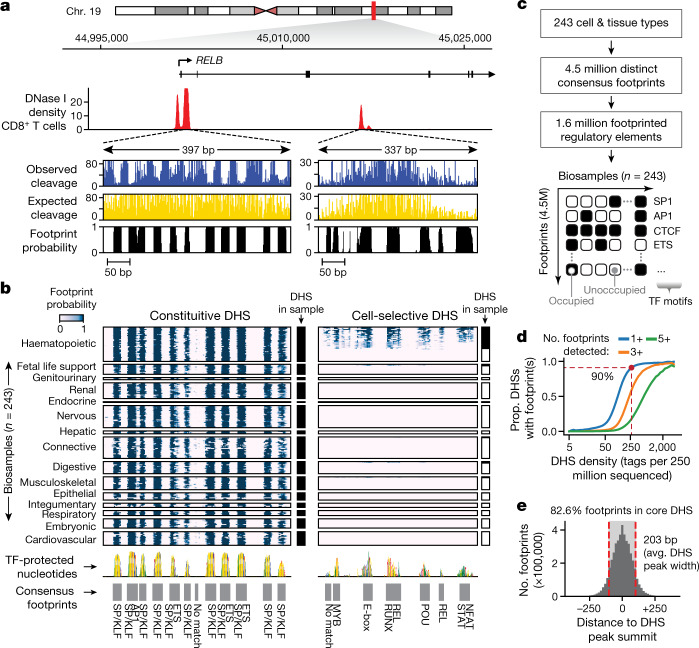
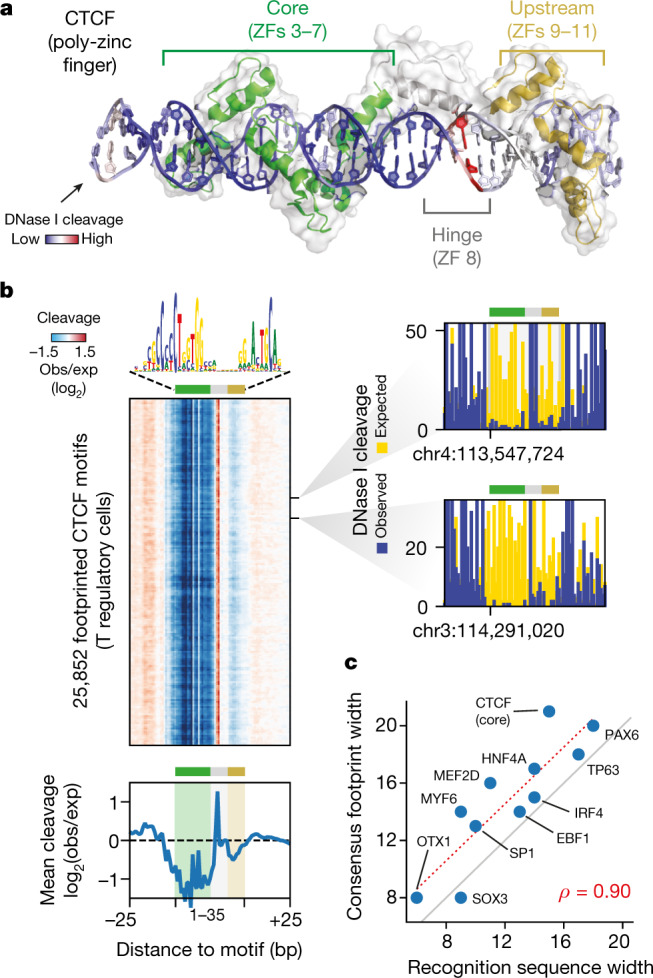
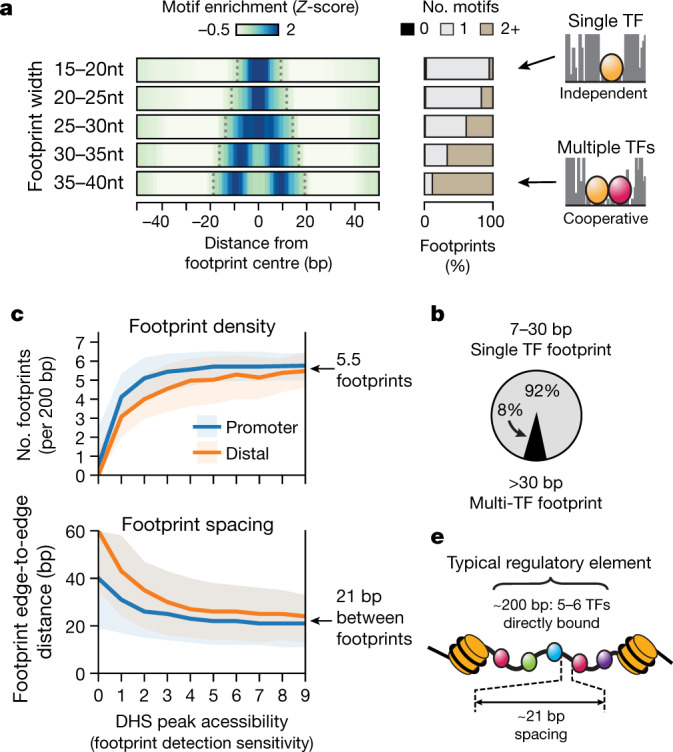
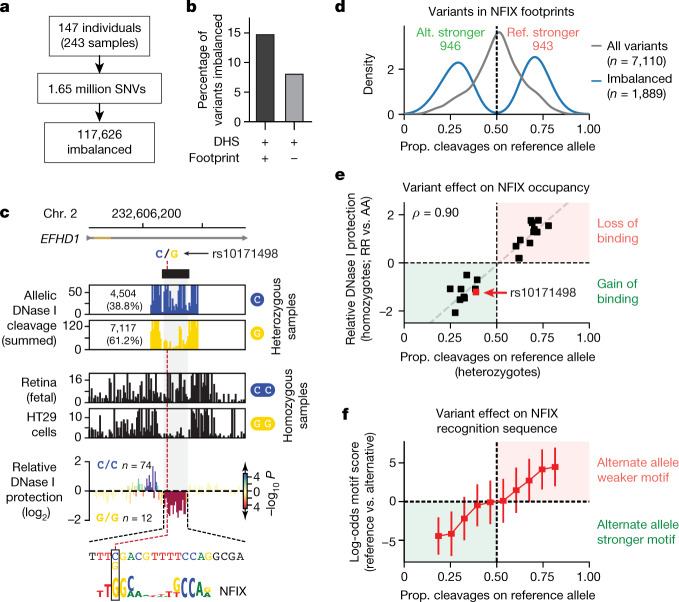
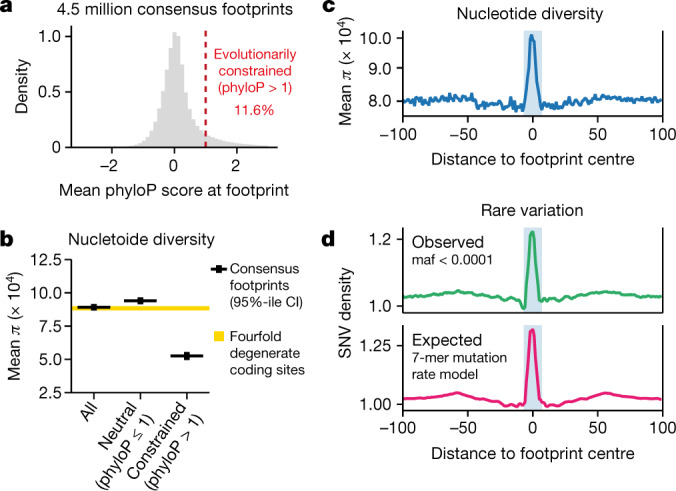
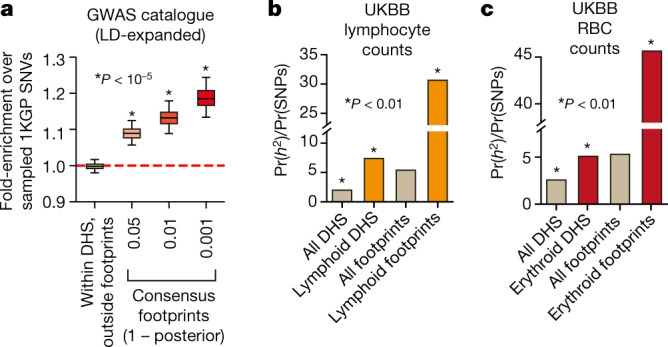
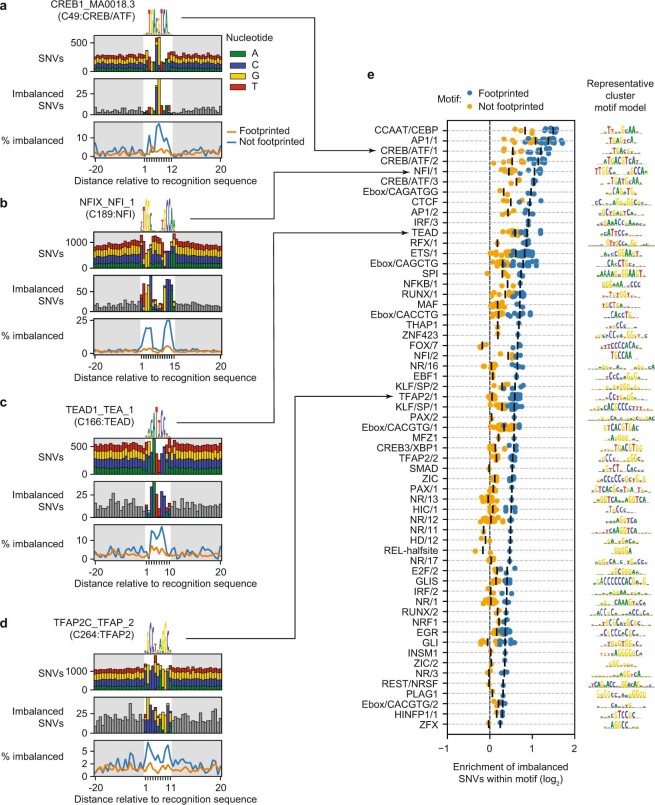
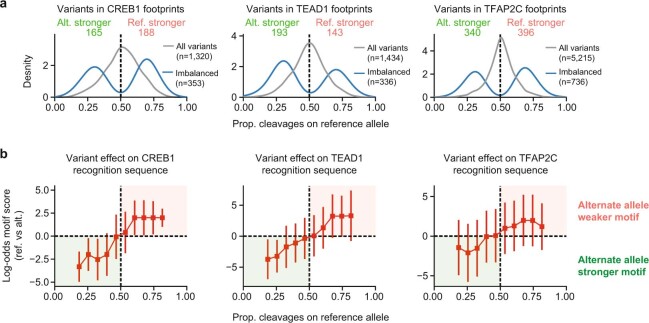
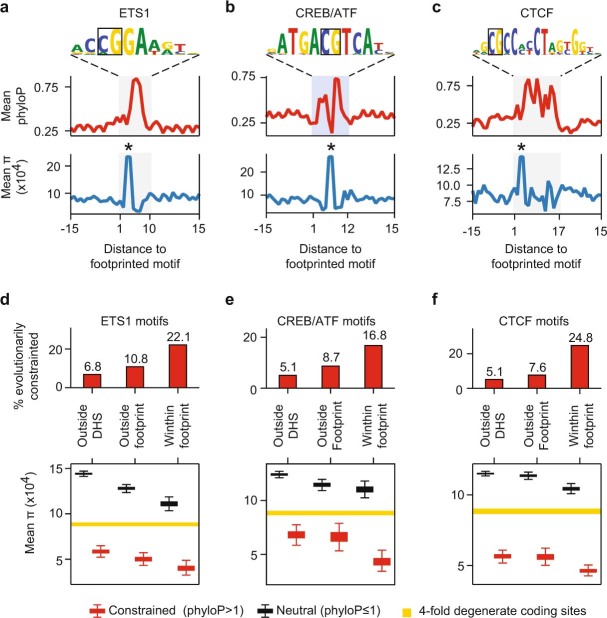
Abstract Combinatorial binding of transcription factors to regulatory DNA underpins gene regulation in all organisms. Genetic variation in regulatory regions has been connected with diseases and diverse phenotypic traits 1 , yet it remains challenging to distinguish variants that impact regulatory function 2 . Genomic DNase I footprinting enables quantitative, nucleotide-resolution delineation of sites of transcription factor occupancy within native chromatin 3–5 . However, to date only a small fraction of such sites have been precisely resolved on the human genome sequence 5 . To enable comprehensive mapping of transcription factor footprints, we produced high-density DNase I cleavage maps from 243 human cell and tissue types and states and integrated these data to delineate at nucleotide resolution ~4.5 million compact genomic elements encoding transcription factor occupancy. We map the fine-scale structure of ~1.6 million DHS and show that the overwhelming majority is populated by well-spaced sites of single transcription factor:DNA interaction. Cell context-dependent cis-regulation is chiefly executed by wholesale actuation of accessibility at regulatory DNA versus by differential transcription factor occupancy within accessible elements. We show further that the well-described enrichment of disease- and phenotypic trait-associated genetic variants in regulatory regions 1,6 is almost entirely attributable to variants localizing within footprints, and that functional variants impacting transcription factor occupancy are nearly evenly partitioned between loss- and gain-of-function alleles. Unexpectedly, we find that the global density of human genetic variation is markedly increased within transcription factor footprints, revealing an unappreciated driver of cis-regulatory evolution. Our results provide a new framework for both global and nucleotide-precision analyses of gene regulatory mechanisms and functional genetic variation.
Overview
The claims and statistics of this paper haven’t been checked yet.
Run the check — free, no account needed. It reads the open-access text and checks the sources it cites.
Integrity signals
Registry
Cites
Statistics
Figures
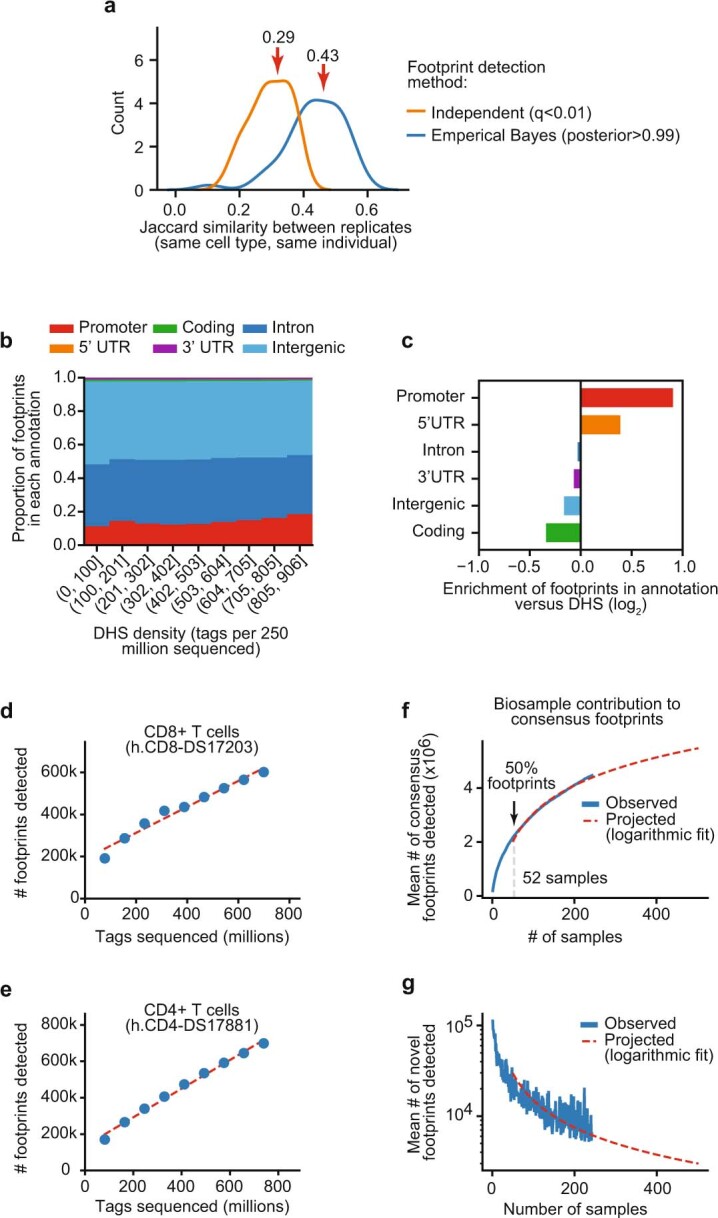
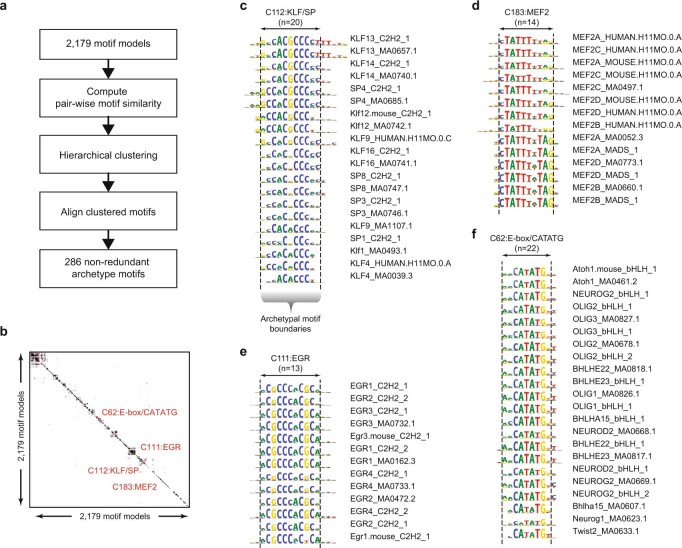
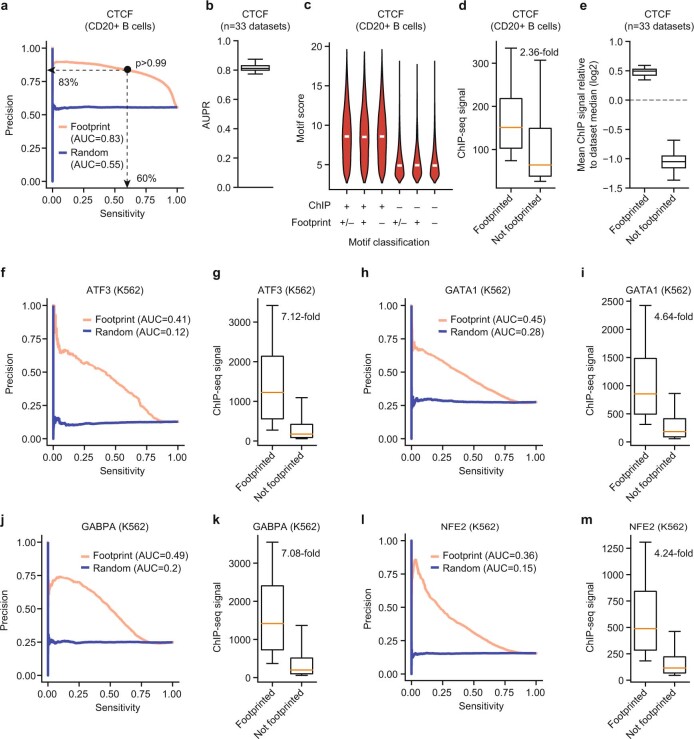
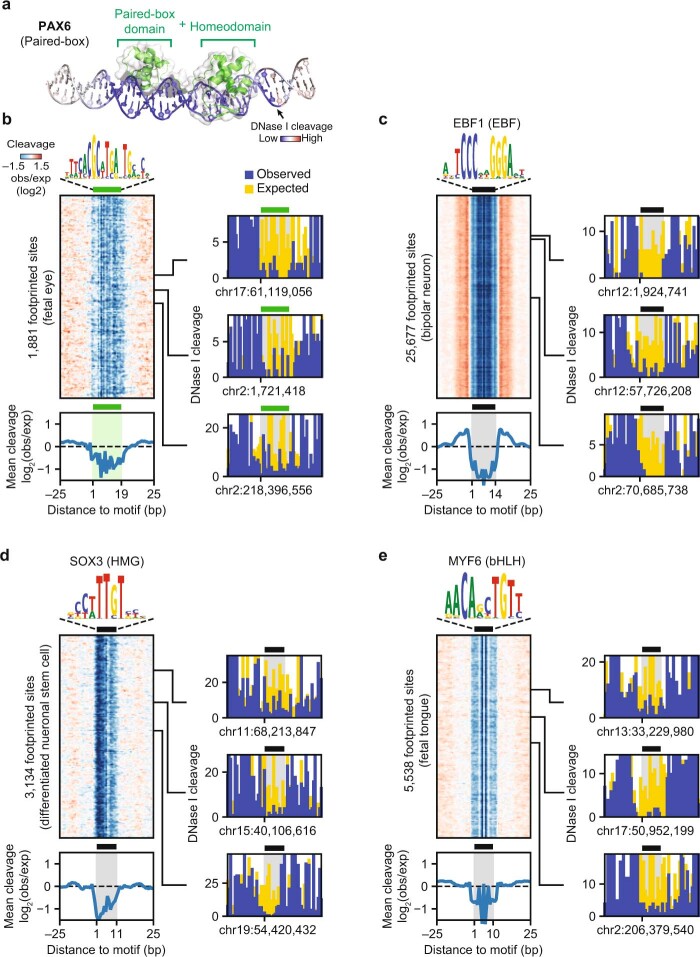
Verification
Claims the paper makes
The claims and statistics of this paper haven’t been checked yet.
Run the check — free, no account needed. It reads the open-access text and checks the sources it cites.
Claims other papers make about this one
Each is checked against this paper’s own text: does it say what the citing paper says it does?
The source backs part of the claim, not all of it — or backs it for a different population, condition or comparison.
In the citing paper
“In some cases, we found statistically weak evidence for stronger correlations with other factors from the same motif family,45 e.g., the activity of enhancers with Gfi1 sites was correlated with the expression of Gfi1b (Figure S3C).”
From Design principles of cell-state-specific enhancers in hematopoiesis (2025) · cites this paper as [45]
Experimental — accuracy not yet measured
Self-check
Percentages, sums and reported differences re-computed from the paper’s own numbers.
The self-check needs the paper’s full text.
Citations
Cites
A global reference for human genetic variation
The 1000 Genomes Project Consortium, authors, C., Auton, A., Abecasis, G. R., Steering committee, Altshuler, D. M., Durbin, R. M., Abecasis, G. R., Bentley, D. R., Chakravarti, A., et al. (2015) · Nature · doi:10.1038/nature15393 · Cited by 18,247
An integrated encyclopedia of DNA elements in the human genome
The ENCODE Project Consortium (2012) · Nature · doi:10.1038/nature11247 · Cited by 18,072
A map of human genome variation from population-scale sequencing.
The 1000 Genomes Project Consortium (2010) · Nature · doi:10.1038/nature09534 · Cited by 7,877
Integrative analysis of 111 reference human epigenomes
Roadmap Epigenomics Consortium, Kundaje, A., Meuleman, W., Ernst, J., Bilenky, M., Yen, A., Heravi-Moussavi, A., Kheradpour, P., Zhang, Z., Wang, J., et al. (2015) · Nature · doi:10.1038/nature14248 · Cited by 6,368
LD Score regression distinguishes confounding from polygenicity in genome-wide association studies
Schizophrenia Working Group of the Psychiatric Genomics Consortium, Bulik-Sullivan, B. K., Loh, P.-R., Finucane, H. K., Ripke, S., Yang, J., Patterson, N., Daly, M. J., Price, A. L., & Neale, B. M. (2015) · Nature Genetics · doi:10.1038/ng.3211 · Cited by 5,559
Buniello, A., MacArthur, J. A. L., Cerezo, M., Harris, L. W., Hayhurst, J., Malangone, C., McMahon, A., Morales, J., Mountjoy, E., Sollis, E., et al. (2019) · Nucleic Acids Research · doi:10.1093/nar/gky1120 · Cited by 4,000
Systematic Localization of Common Disease-Associated Variation in Regulatory DNA
Maurano, M. T., Humbert, R., Rynes, E., Thurman, R. E., Haugen, E., Wang, H., Reynolds, A. P., Sandstrom, R., Qu, H., Brody, J., et al. (2012) · Science · doi:10.1126/science.1222794 · Cited by 3,716
Self-citationThe Human Transcription Factors
Lambert, S. A., Jolma, A., Campitelli, L. F., Das, P. K., Yin, Y., Albu, M., Chen, X., Taipale, J., Hughes, T. R., & Weirauch, M. T. (2018) · Cell · doi:10.1016/j.cell.2018.01.029 · Cited by 3,399
The accessible chromatin landscape of the human genome
Thurman, R. E., Rynes, E., Humbert, R., Vierstra, J., Maurano, M. T., Haugen, E., Sheffield, N. C., Stergachis, A. B., Wang, H., Vernot, B., et al. (2012) · Nature · doi:10.1038/nature11232 · Cited by 2,679
Self-citationPartitioning heritability by functional annotation using genome-wide association summary statistics
ReproGen Consortium, Finucane, H. K., Schizophrenia Working Group of the Psychiatric Genomics Consortium, The RACI Consortium, Bulik-Sullivan, B., Gusev, A., Trynka, G., Reshef, Y., Loh, P.-R., Anttila, V., et al. (2015) · Nature Genetics · doi:10.1038/ng.3404 · Cited by 2,604
Cited by
Sorted by citations
Expanded encyclopaedias of DNA elements in the human and mouse genomes
The ENCODE Project Consortium, Abascal, F., Acosta, R., Addleman, N. J., Adrian, J., Afzal, V., Ai, R., Aken, B., Akiyama, J. A., Jammal, O. A., et al. (2020) · Nature · doi:10.1038/s41586-020-2493-4 · Cited by 2,378
JASPAR 2022: the 9th release of the open-access database of transcription factor binding profiles
Castro-Mondragon, J. A., Riudavets-Puig, R., Rauluseviciute, I., Berhanu Lemma, R., Turchi, L., Blanc-Mathieu, R., Lucas, J., Boddie, P., Khan, A., Manosalva Pérez, N., et al. (2022) · Nucleic Acids Research · doi:10.1093/nar/gkab1113 · Cited by 1,935
Haplotype-resolved diverse human genomes and integrated analysis of structural variation
Ebert, P., Audano, P. A., Zhu, Q., Rodriguez-Martin, B., Porubsky, D., Bonder, M. J., Sulovari, A., Ebler, J., Zhou, W., Serra Mari, R., et al. (2021) · Science · doi:10.1126/science.abf7117 · Cited by 702
Genome-wide enhancer maps link risk variants to disease genes
Nasser, J., Bergman, D. T., Fulco, C. P., Guckelberger, P., Doughty, B. R., Patwardhan, T. A., Jones, T. R., Nguyen, T. H., Ulirsch, J. C., Lekschas, F., et al. (2021) · Nature · doi:10.1038/s41586-021-03446-x · Cited by 669
“This is because, although the larger region is important for counting reads in H3K27ac ChIP–seq, which occur on flanking nucleosomes, DNA sequences important for enhancer function—such as transcription factor footprints—are most often found in the central nucleosome-free region 49 .”
BackgroundTrevino, A. E., Müller, F., Andersen, J., Sundaram, L., Kathiria, A., Shcherbina, A., Farh, K., Chang, H. Y., Pașca, A. M., Kundaje, A., et al. (2021) · Cell · doi:10.1016/j.cell.2021.07.039 · Cited by 478
Metadata
- Authors
- Vierstra, J., Lazar, J., Sandstrom, R., Halow, J., Lee, K., Bates, D., Diegel, M., Dunn, D., Neri, F., Haugen, E., Rynes, E., Reynolds, A., Nelson, J., Johnson, A., Frerker, M., Buckley, M., Kaul, R., Meuleman, W., & Stamatoyannopoulos, J. A.
- Affiliations
- Altius Institute for Biomedical Sciences (US)
- University of Washington (US)
- Corresponding author
- Vierstra, Jeff
- Stamatoyannopoulos, John A.
- ORCID
- Venue
- Nature
- Published
- 2020-07-29
- Volume
- 583
- Issue
- 7818
- Pages
- 729-736
- ISSN
- 0028-0836 (ISSN-L)
- 1476-4687
- PMC
- PMC7410829
- OpenAlex
- W3046196569
- Cited by
- 386
- References
- 62
- Citations by year
- 2026: 48 · 2025: 84 · 2024: 75 · 2023: 58 · 2022: 39 · 2021: 67 · 2020: 15
- FWCI
- 15.15
- Type
- journal article
- Language
- en
- Open access
- hybrid
- doi.org
- Locations
- Nature (publishedVersion, cc-by)
- bioRxiv (Cold Spring Harbor Laboratory) (acceptedVersion, cc-by-nc-nd)
- PubMed Central (publishedVersion, cc-by)
- PubMed (publishedVersion)
- RePEc: Research Papers in Economics (submittedVersion)
- Funders
- GlaxoSmithKline
- National Institutes of Health
- National Human Genome Research Institute (U54HG007010, UM1HG009444, R35HG011317)
- Topics
- Life Sciences › Biochemistry, Genetics and Molecular Biology › Molecular Biology › Genomics and Chromatin Dynamics
- Life Sciences › Biochemistry, Genetics and Molecular Biology › Genetics › Genetic Associations and Epidemiology
- Life Sciences › Biochemistry, Genetics and Molecular Biology › Molecular Biology › Chromatin Remodeling and Cancer
- Keywords
- transcription factor footprints, DNase I footprinting, DNase I hypersensitive sites, transcription factor occupancy, chromatin accessibility, cis-regulatory evolution, loss-of-function alleles, gain-of-function alleles, gene expression regulation, functional genetic variation
- MeSH terms
- Deoxyribonuclease I, DNA, Genetics, Population, Humans, Models, Molecular, Regulatory Sequences, Nucleic Acid, Transcription Factors, Genome, Human, Consensus Sequence, DNA Footprinting, Polymorphism, Single Nucleotide, Genome-Wide Association Study
About these checks
Registry, retraction, Cites and statistics results are computed, not judged, with one exception: a printed reference that no index lists is read once by a model before it counts as a citation error. Claims are extracted by a model and kept only when their quote appears verbatim in the text; each cited source is then checked, with a model’s help, for whether it says what the claim relies on. Those verdicts can be wrong — read the claim’s quote and the cited source before relying on one.
Statistics and arithmetic are recomputed, not judged.
Confidence bands are shown only for fields calibrated on our annotated test set. None is calibrated yet, so no band is shown.
What counts as a claim ›How we measure confidence ›How we check this ›
Are you an author, or do you see a problem with this page? Request a review
