

Molecular architecture of the developing mouse brain
Open accessPublished version of a preprint
The DOI matches its Crossref record; 62 of the 62 references it cites were found in a registry or an index.
Abstract
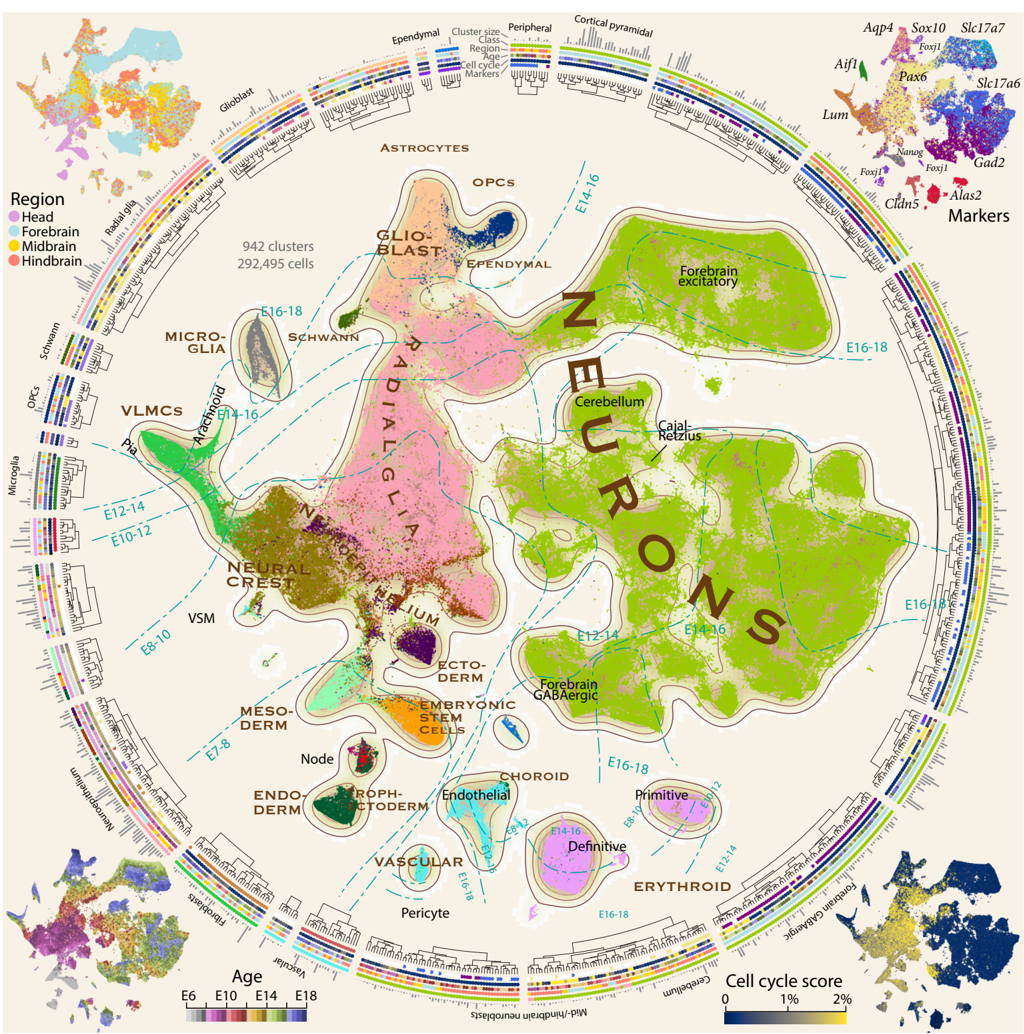
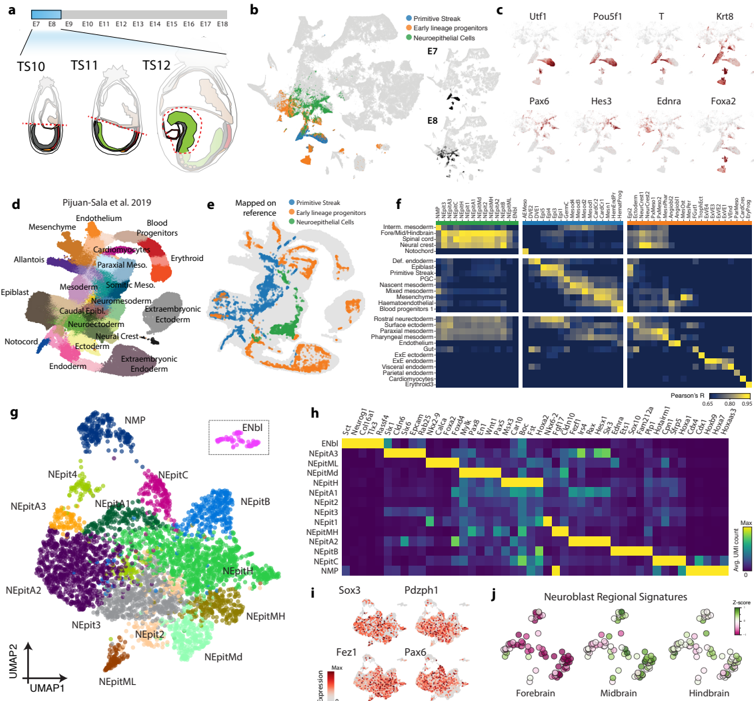
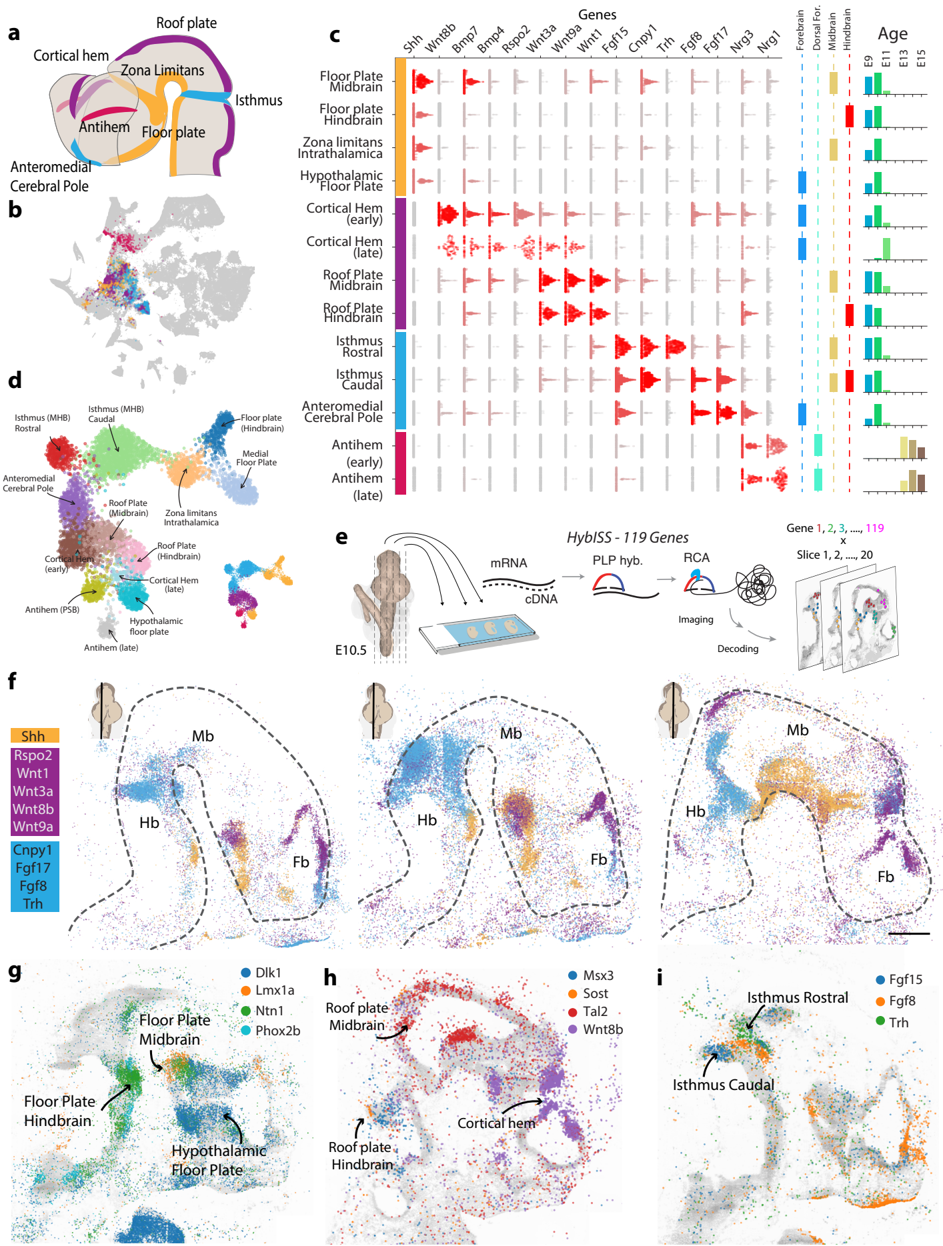
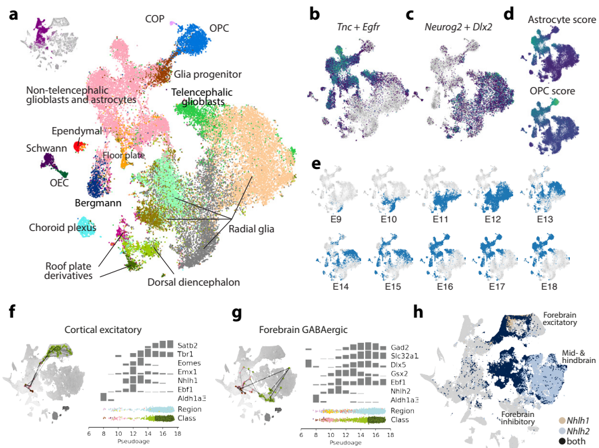
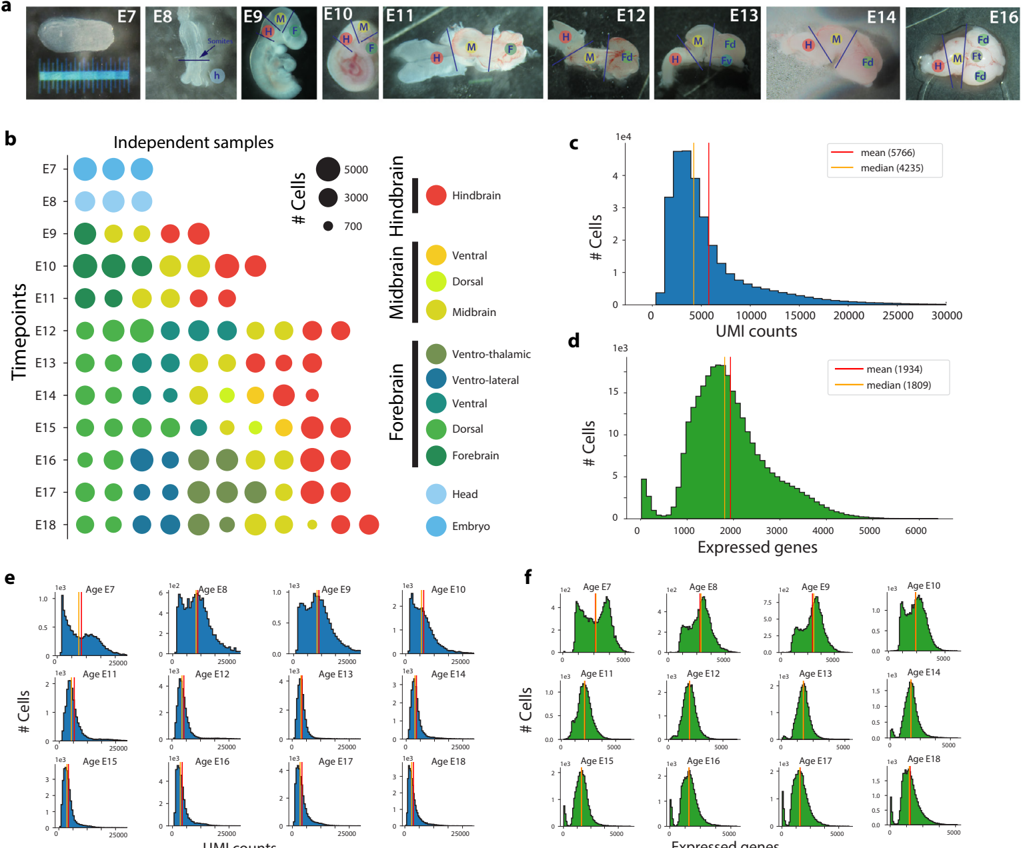
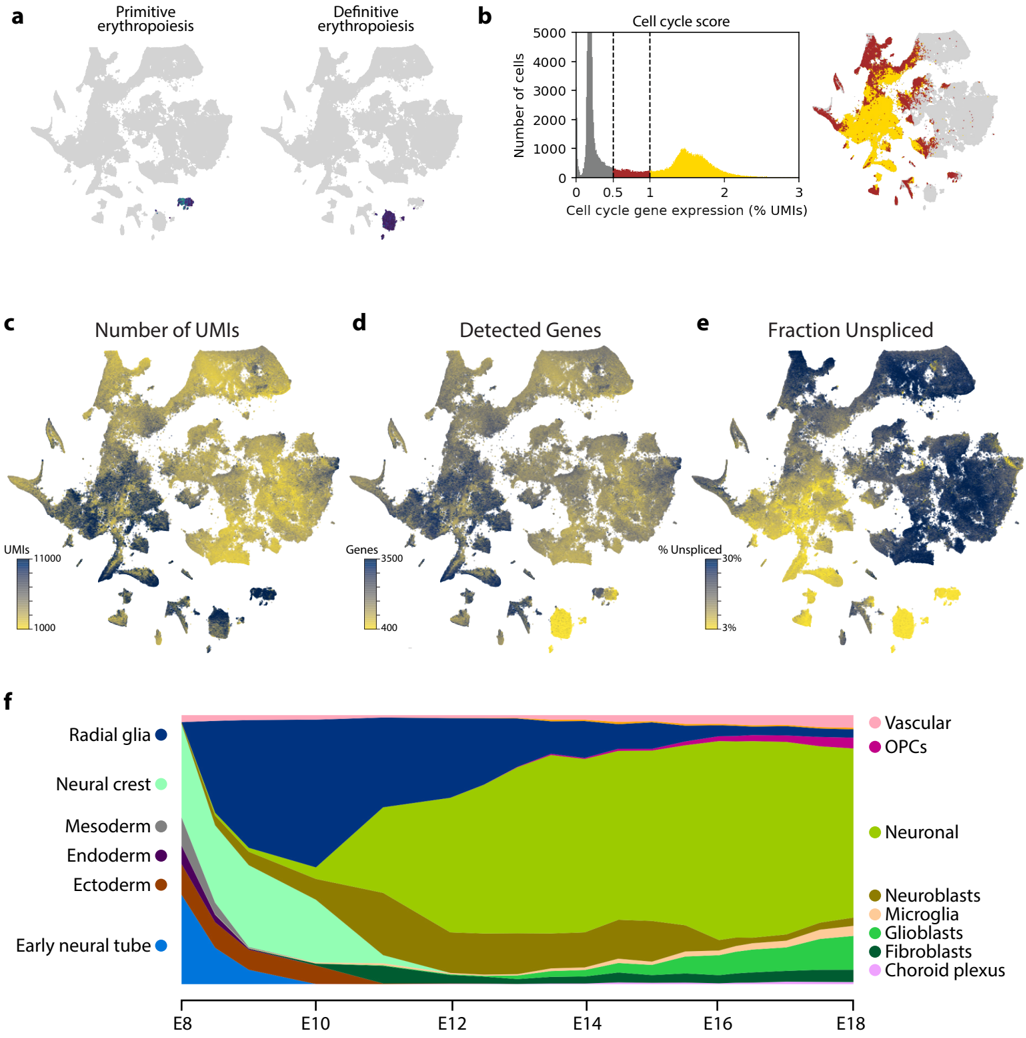
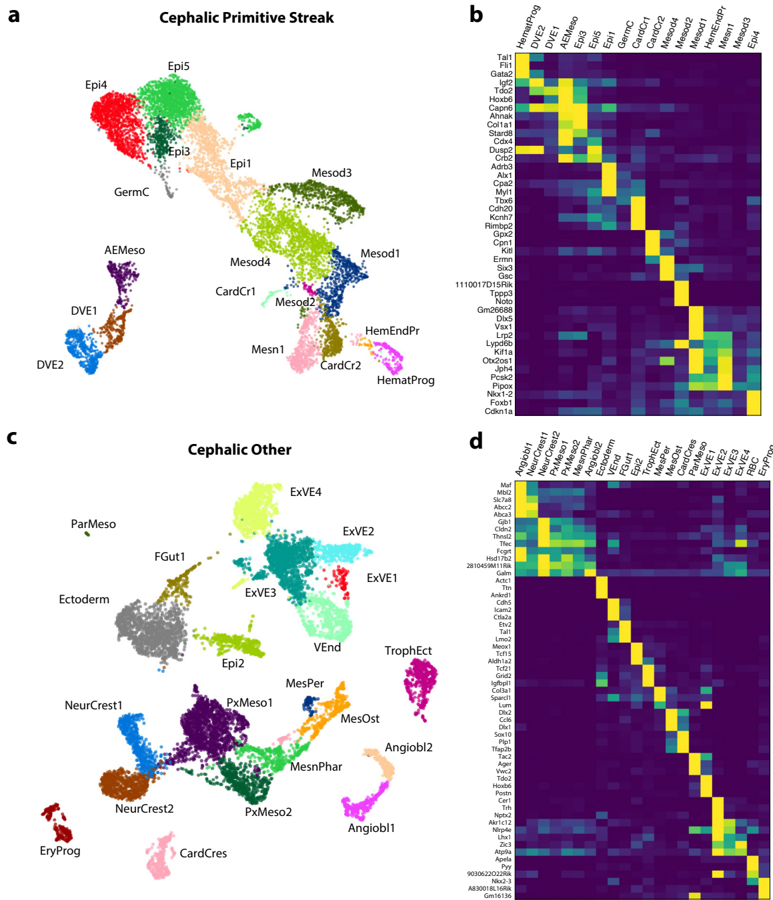
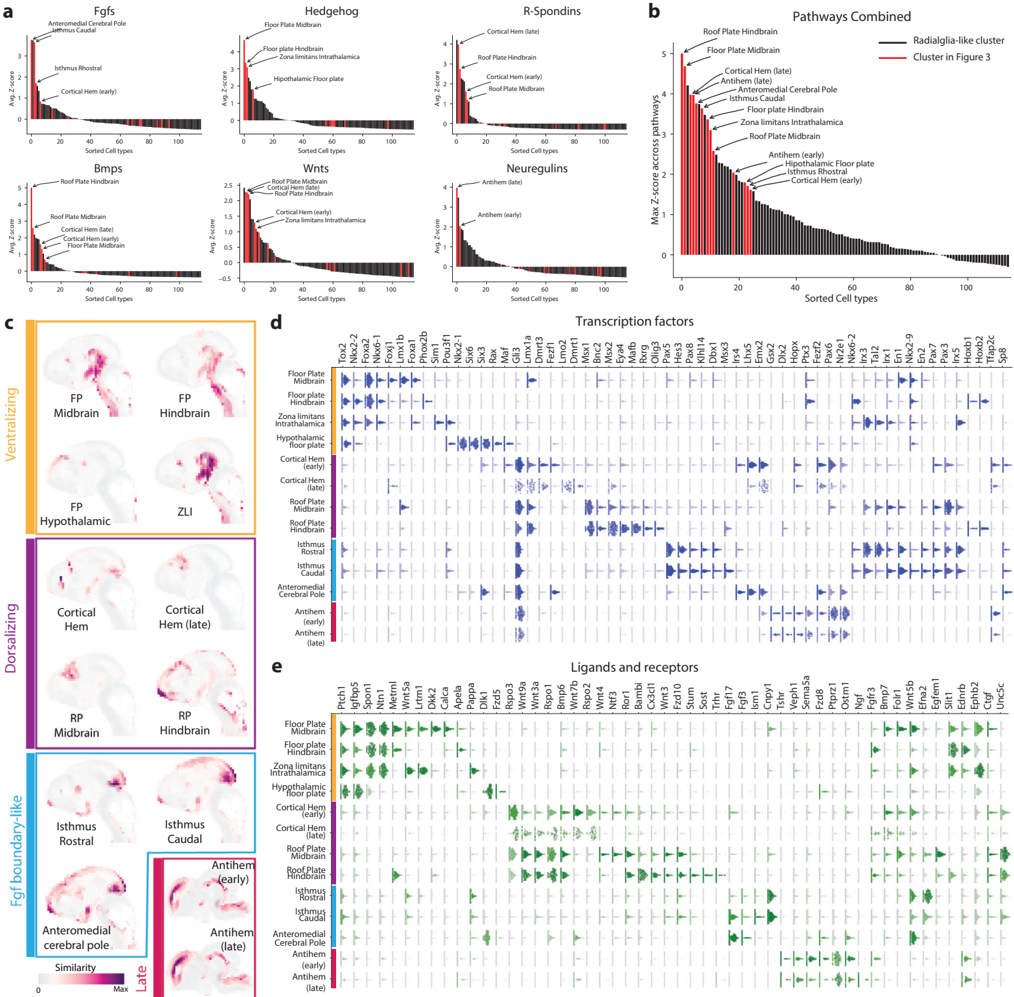
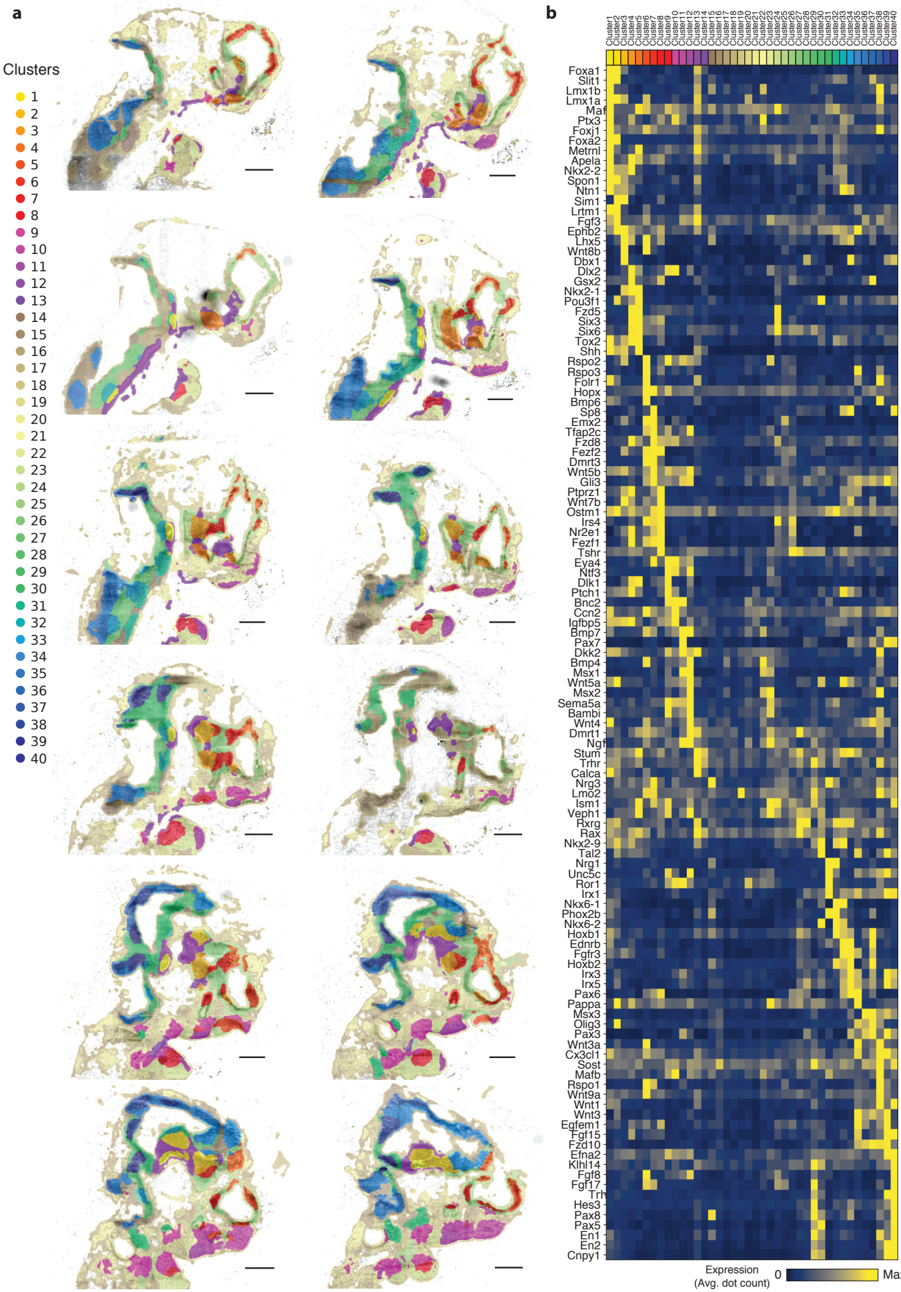
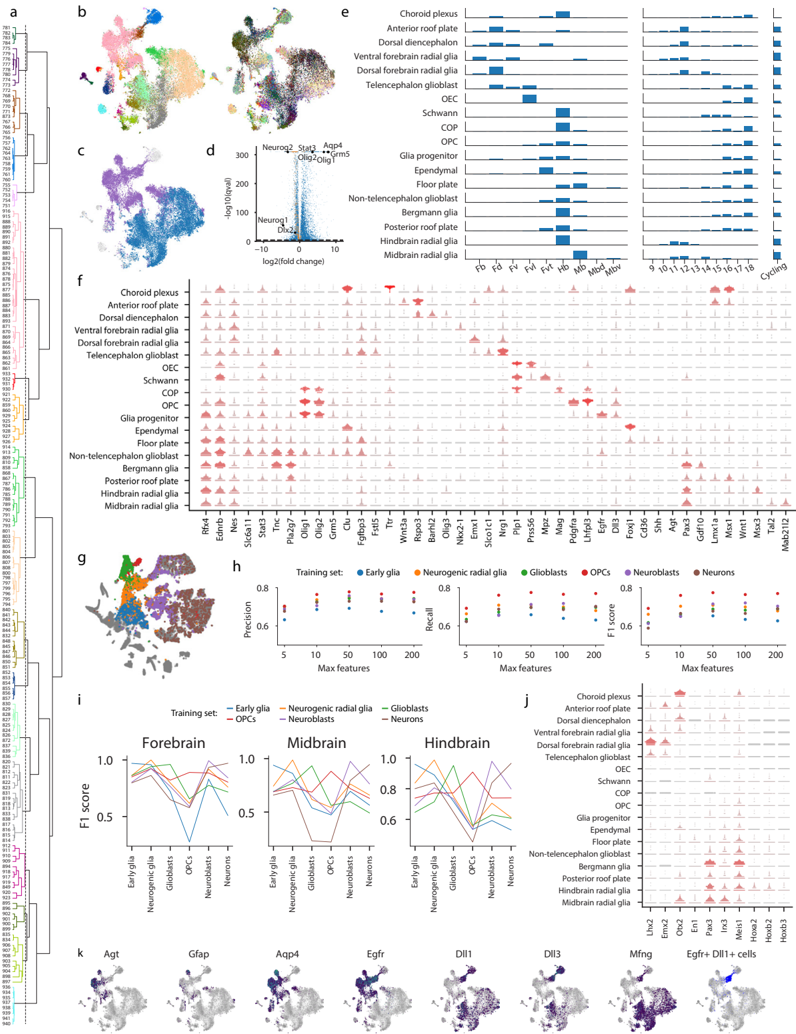
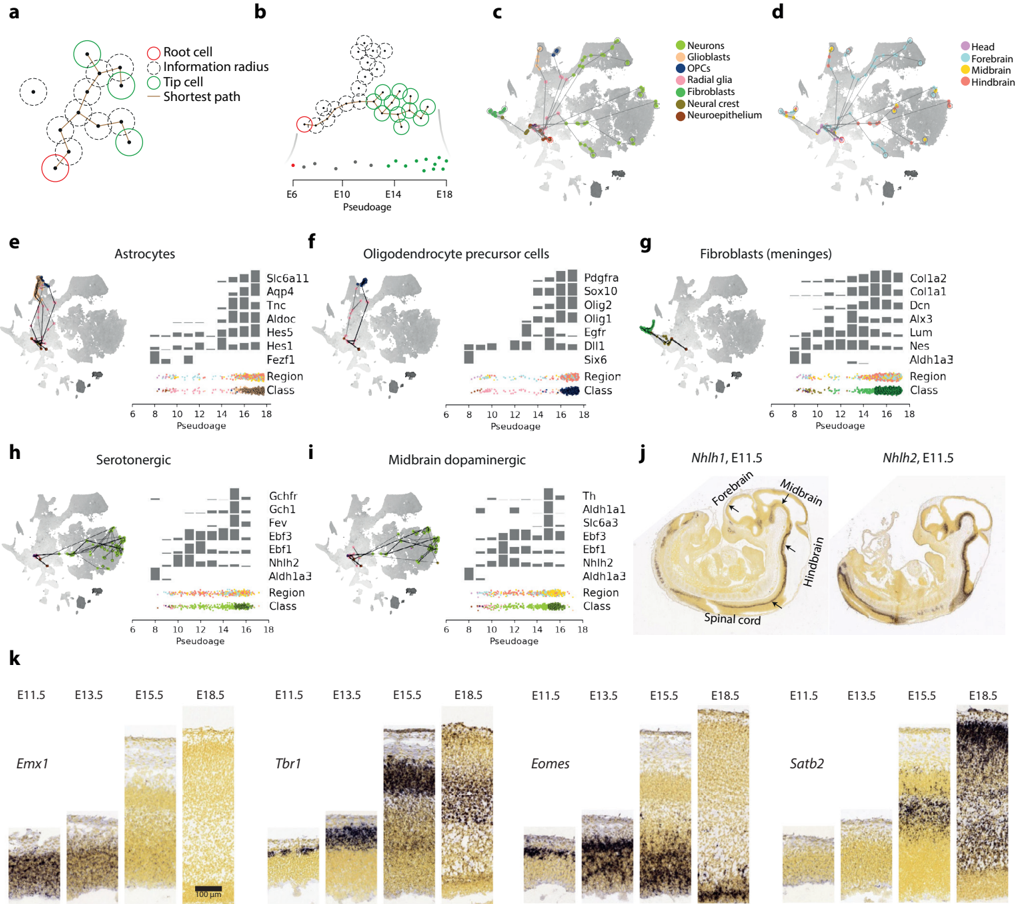
The mammalian brain develops through a complex interplay of spatial cues generated by diffusible morphogens, cell-cell interactions and intrinsic genetic programs that result in probably more than a thousand distinct cell types. A complete understanding of this process requires a systematic characterization of cell states over the entire spatiotemporal range of brain development. The ability of single-cell RNA sequencing and spatial transcriptomics to reveal the molecular heterogeneity of complex tissues has therefore been particularly powerful in the nervous system. Previous studies have explored development in specific brain regions 1-8, the whole adult brain 9 and even entire embryos 10. Here we report a comprehensive single-cell transcriptomic atlas of the embryonic mouse brain between gastrulation and birth. We identified almost eight hundred cellular states that describe a developmental program for the functional elements of the brain and its enclosing membranes, including the early neuroepithelium, region-specific secondary organizers, and both neurogenic and gliogenic progenitors. We also used in situ mRNA sequencing to map the spatial expression patterns of key developmental genes. Integrating the in situ data with our single-cell clusters revealed the precise spatial organization of neural progenitors during the patterning of the nervous system.
Overview
The claims and statistics of this paper haven’t been checked yet.
Free: it reads the open-access text and checks the first 5 claims that cite a source we can check. Create a free account to check every claim.
Integrity signals
Registry
Cites
Statistics
Figures
Verification
Claims the paper makes
The claims and statistics of this paper haven’t been checked yet.
Free: it reads the open-access text and checks the first 5 claims that cite a source we can check. Create a free account to check every claim.
Claims other papers make about this one
Each is checked against this paper’s own text: does it say what the citing paper says it does?
The source backs part of the claim, not all of it — or backs it for a different population, condition or comparison.
In the citing paper
“To validate our results, we aligned with scRNA-seq data using Tangram (Biancalani et al., 2021), which confirmed the reported probabilistic spatial profile for specific cell types such as choroid plexus, hindbrain glioblasts, forebrain GABAergic neuroblasts, midbrain glutamatergic neuroblasts, cortical and hippocampal glutamatergic neurons, and forebrain GABAergic neurons in the whole brain (La M”
From Spatiotemporal transcriptomic atlas of mouse organogenesis using DNA nanoball-patterned arrays (2022) · cites this paper as La Manno et al., 2021
Experimental — accuracy not yet measuredThe cited source says what the claim attributes to it.
In the citing paper
“Projection of publicly available scRNA-seq data (La Manno et al., 2021) of the developing brain onto the reclustered E9.5 brain using Tangram (Biancalani et al., 2021) identified the localization of progenitor cell types including secondary organizers (e.g., midbrain basal plate, midbrain floor plate, ventricle roof plate, and hindbrain floor plate) (Figure S3E), which are specialized substruct”
From Spatiotemporal transcriptomic atlas of mouse organogenesis using DNA nanoball-patterned arrays (2022) · cites this paper as La Manno et al., 2021
Self-check
Percentages, sums and reported differences re-computed from the paper’s own numbers.
The self-check needs the paper’s full text.
Citations
Cites
Spatial reconstruction of single-cell gene expression data
Satija, R., Farrell, J. A., Gennert, D., Schier, A. F., & Regev, A. (2015) · Nature Biotechnology · doi:10.1038/nbt.3192 · Cited by 7,055
Genome-wide atlas of gene expression in the adult mouse brain
Lein, E. S., Hawrylycz, M. J., Ao, N., Ayres, M., Bensinger, A., Bernard, A., Boe, A. F., Boguski, M. S., Brockway, K. S., Byrnes, E. J., et al. (2007) · Nature · doi:10.1038/nature05453 · Cited by 5,572
The single-cell transcriptional landscape of mammalian organogenesis
Cao, J., Spielmann, M., Qiu, X., Huang, X., Ibrahim, D. M., Hill, A. J., Zhang, F., Mundlos, S., Christiansen, L., Steemers, F. J., et al. (2019) · Nature · doi:10.1038/s41586-019-0969-x · Cited by 4,490
La Manno, G., Soldatov, R., Zeisel, A., Braun, E., Hochgerner, H., Petukhov, V., Lidschreiber, K., Kastriti, M. E., Lönnerberg, P., Furlan, A., et al. (2018) · Nature · doi:10.1038/s41586-018-0414-6 · Cited by 4,118
Self-citationNiwa, H., Miyazaki, J.-I., & Smith, A. G. (2000) · Nature Genetics · doi:10.1038/74199 · Cited by 3,596
An Integrative Model of Cellular States, Plasticity, and Genetics for Glioblastoma
Neftel, C., Laffy, J., Filbin, M. G., Hara, T., Shore, M. E., Rahme, G. J., Richman, A. R., Silverbush, D., Shaw, M. L., Hebert, C. M., et al. (2019) · Cell · doi:10.1016/j.cell.2019.06.024 · Cited by 2,873
Molecular Architecture of the Mouse Nervous System
Zeisel, A., Hochgerner, H., Lönnerberg, P., Johnsson, A., Memic, F., van der Zwan, J., Häring, M., Braun, E., Borm, L. E., La Manno, G., et al. (2018) · Cell · doi:10.1016/j.cell.2018.06.021 · Cited by 2,552
Self-citationLimb proportions show developmental plasticity in response to embryo movement
Pollard, A. S., Charlton, B. G., Hutchinson, J. R., Gustafsson, T., McGonnell, I. M., Timmons, J. A., & Pitsillides, A. A. (2017) · Scientific Reports · doi:10.1038/srep41926 · Cited by 2,364
Hammond, T. R., Dufort, C., Dissing-Olesen, L., Giera, S., Young, A., Wysoker, A., Walker, A. J., Segel, M., Nemesh, J., Saunders, A., et al. (2018) · doi:10.1101/406140 · Cited by 2,225
A molecular atlas of cell types and zonation in the brain vasculature
Vanlandewijck, M., He, L., Mäe, M. A., Andrae, J., Ando, K., Del Gaudio, F., Nahar, K., Lebouvier, T., Laviña, B., Gouveia, L., et al. (2018) · Nature · doi:10.1038/nature25739 · Cited by 1,892
Research works printed but not linked: 1
- Gopalan, P., Hofman, J. M. & Blei, D. M. Scalable recommendation with Poisson factorization. Preprint at https://arxiv.org/abs/1311.1704 (2013). · arXiv
Cited by
Spatiotemporal transcriptomic atlas of mouse organogenesis using DNA nanoball-patterned arrays
Chen, A., Liao, S., Cheng, M., Ma, K., Wu, L., Lai, Y., Qiu, X., Yang, J., Xu, J., Hao, S., et al. (2022) · Cell · doi:10.1016/j.cell.2022.04.003 · Cited by 1,784
Museum of spatial transcriptomics
Moses, L., & Pachter, L. (2022) · Nature Methods · doi:10.1038/s41592-022-01409-2 · Cited by 1,255
Museum of Spatial Transcriptomics
Moses, L., & Pachter, L. (2021) · doi:10.1101/2021.05.11.443152 · Cited by 1,255
A high-resolution transcriptomic and spatial atlas of cell types in the whole mouse brain
Yao, Z., van Velthoven, C. T. J., Kunst, M., Zhang, M., McMillen, D., Lee, C., Jung, W., Goldy, J., Abdelhak, A., Aitken, M., et al. (2023) · Nature · doi:10.1038/s41586-023-06812-z · Cited by 1,203
Clinical relevance of tumour-associated macrophages
Pittet, M. J., Michielin, O., & Migliorini, D. (2022) · Nature Reviews Clinical Oncology · doi:10.1038/s41571-022-00620-6 · Cited by 731
Metadata
- Authors
- La Manno, G., Siletti, K., Furlan, A., Gyllborg, D., Vinsland, E., Mossi Albiach, A., Mattsson Langseth, C., Khven, I., Lederer, A. R., Dratva, L. M., Johnsson, A., Nilsson, M., Lönnerberg, P., & Linnarsson, S.
- Affiliations
- Karolinska Institutet (SE)
- Cold Spring Harbor Laboratory (US)
- Stockholm University (SE)
- École Polytechnique Fédérale de Lausanne (CH)
- ORCID
- Venue
- Nature
- Published
- 2021-07-28
- Volume
- 596
- Issue
- 7870
- Pages
- 92-96
- ISSN
- 0028-0836 (ISSN-L)
- 1476-4687
- OpenAlex
- W3184208286
- Cited by
- 563
- References
- 60
- Citations by year
- 2026: 88 · 2025: 124 · 2024: 120 · 2023: 107 · 2022: 72 · 2021: 47
- FWCI
- 27.68
- Type
- journal article
- Language
- en
- Open access
- green
- doi.org
- Licence
- cc-by-nd
- www.springer.com/tdm (tdm)
- www.springer.com/tdm (vor)
- Locations
- Nature (publishedVersion)
- bioRxiv (Cold Spring Harbor Laboratory) (acceptedVersion, cc-by-nd)
- PubMed (publishedVersion)
- Cold Spring Harbor Laboratory Institutional Repository (Cold Spring Harbor Laboratory) (submittedVersion)
- RePEc: Research Papers in Economics (submittedVersion)
- Infoscience (Ecole Polytechnique Fédérale de Lausanne) (submittedVersion, cc-by-nc-nd)
- Funders
- National Science Foundation
- Silicon Valley Community Foundation
- Chan Zuckerberg Initiative
- Schweizerischer Nationalfonds zur Förderung der Wissenschaftlichen Forschung (191929, 190495)
- Stiftelsen för Strategisk Forskning (SB16-0065)
- Hjärnfonden (PS2018-0012)
- Karolinska Institutet
- Knut och Alice Wallenbergs Stiftelse (2018.0172, 2015.0041)
- Topics
- Life Sciences › Biochemistry, Genetics and Molecular Biology › Molecular Biology › Single-cell and spatial transcriptomics
- Life Sciences › Neuroscience › Developmental Neuroscience › Neurogenesis and neuroplasticity mechanisms
- Life Sciences › Biochemistry, Genetics and Molecular Biology › Molecular Biology › Developmental Biology and Gene Regulation
- Keywords
- single-cell transcriptomics, neural progenitor cells, neuroepithelium, spatial gene expression, brain membranes
- MeSH terms
- Animals, Animals, Newborn, Brain, Female, Male, Mice, Neural Tube, Gastrulation, Single-Cell Analysis, Transcriptome
About these checks
Registry, retraction, Cites and statistics results are computed, not judged, with one exception: a printed reference that no index lists is read once by a model before it counts as a citation error. Claims are extracted by a model and kept only when their quote appears verbatim in the text; each cited source is then checked, with a model’s help, for whether it says what the claim relies on. Those verdicts can be wrong — read the claim’s quote and the cited source before relying on one.
Statistics and arithmetic are recomputed, not judged.
Confidence bands are shown only for fields calibrated on our annotated test set. None is calibrated yet, so no band is shown.
What counts as a claim ›How we measure confidence ›How we check this ›
Are you an author, or do you see a problem with this page? Request a review
How to cite
Cite CoChat for the checks on this page, and the paper for its own findings.
- This page
- CoChat. (2026). Citation check: Molecular architecture of the developing mouse brain. https://app.cochat.ai/papers/10.1038/s41586-021-03775-x
- The paper
- La Manno, G., Siletti, K., Furlan, A., Gyllborg, D., Vinsland, E., Mossi Albiach, A., Mattsson Langseth, C., Khven, I., Lederer, A. R., Dratva, L. M., Johnsson, A., Nilsson, M., Lönnerberg, P., & Linnarsson, S. (2021). Molecular architecture of the developing mouse brain. Nature. https://doi.org/10.1038/s41586-021-03775-x
Data sources
Bibliographic data: Semantic Scholar, OpenAlex, Crossref.
Contains information from the Semantic Scholar Academic Graph Datasets, made available under the ODC Attribution License (ODC-BY 1.0).
Semantic Scholar’s data is described in: Kinney, R., et al. (2023). The Semantic Scholar Open Data Platform. arXiv:2301.10140.
